Who Knows God, Really? – #20

ENGLISH / ESPAÑOL

Welcome Back! Today, we’ll be looking at the Gospel of John and discussing who really knows the Father.

So let’s dive in.

(Click here to get a copy of the Gospel Sync document) 

John 1:15-18

John testified about Him and cried out, saying, “This was He of whom I said, ‘He who comes after me has a higher rank than I, because He existed before me.’” From His fullness we have all received grace upon grace. For the law was given through Moses; grace and truth came through Jesus Christ. No one has ever seen God, but the one and only Son, who is in the bosom of the Father, He has explained Him.

Some Thoughts 

Identity, identity, and more identity! In my last post, we talked about what the Father had to say about Jesus. In this passage, John the Baptist continues to explain who Jesus is. But what I really want to focus on is verse 18:

“No one has ever seen God, but the one and only Son, who is in the bosom of the Father, He has explained Him.”

According to John, Jesus is the ultimate authority on the Father’s identity. He knows the inside scoop on God Himself. Jesus agrees with John’s assessment:

“All things have been handed over to Me by My Father, and no one knows the Son except the Father, nor does anyone know the Father except the Son, and anyone to whom the Son wills to reveal Him.” (Matthew 11:27)

And where does Jesus get all this insider information? Straight from the inside – or rather, straight from the Father’s bosom. I’ve talked about alignment and intimacy with God before, and no one has been more aligned and intimate with the Father than Jesus. He knows the Father’s heart so well that He IS the Father’s heart. The writer of Hebrews puts it this way:

“God, after He spoke long ago to the fathers in the prophets in many portions and in many ways, in these last days has spoken to us in His Son, whom He appointed heir of all things, through whom also He made the world. And He is the radiance of His glory and the exact representation of His nature and upholds all things by the word of His power.” (Hebrews 1:1-3a)

The reason Jesus knows God the Father so well is that He is God the Son. He is one with the Father. Knowing the Father is like knowing Himself. And we could say the same about the Spirit. Three persons, one God in absolute unity. Jesus knows God.

But here’s the thing: the Father isn’t some distant, unknowable deity. No, the Father wants to be known. That’s one of the reasons He sent Jesus to us. He wants to reveal himself to us through His Son. Through His life, teachings, miracles, and ultimately His sacrificial death and resurrection, Jesus revealed God’s character and nature to us, making it possible for us to have a personal relationship with God.

As disciple-makers, it’s our job to spread the good news of the Father’s identity too. But here’s the catch: we can’t do it alone. We absolutely need Jesus. We need His wisdom and His insight. And where will we get this insight? From the Scriptures, and in particular, the Gospels. This is where we will get the clearest explanations about who God the Father is from Jesus. As disciple-makers, we need to be knee-deep in the Word and help others do the same. You will hear me say this often because I have found that a lot of people “making disciples” are merely dabbling in the Word of God. Without a strong influence of the Bible, we are really missing out on knowing God for real.

My Story

In the early 2000s, I made the decision to read a little of the Gospels every day. I was motivated to do this for several reasons, but one was the teaching of Dr. Howard Hendricks. He was a professor at Dallas Theological Seminary and extensively taught on discipleship. One of his common phrases, which I heard time and time again, was “We must master the Master.” In other words, if Jesus is the ultimate model of what it means to love God and people, shouldn’t we spend the lion’s share of our time in the Word of God studying Him?

Well, one of the unexpected side effects of “Mastering the Master” was getting to know the Father so much better. I saw His truths, love, mercy, grace, and justice more clearly as Jesus explained Him. I have no regrets about spending so much time getting to know Jesus because I’ve also gotten to know the Father (and the Spirit) better. I’ve been able to connect so many more dots in the Old Testament by focusing on the Messiah to reveal the Father to me. I highly recommend reading parts of the Gospels daily.

Here’s a link to one of my favorite messages from Dr. Howard Hendricks – The Dynamics of Discipleship

Our Action Plan

As we are making disciples of Jesus here are some ideas of how to seek Jesus for more clarity on who the Father is and how to communicate it to others;

  • Read through the Gospels of Matthew, Mark, Luke, and John. As you read, pay attention to passages that describe Jesus’ relationship with the Father, and how He talks about Him.
  • Look for keywords and phrases that describe the Father. Words such as “Abba,” “Father,” “God,” and “Heavenly Father” are often used to describe God the Father.
  • Pay attention to Jesus’ actions in the Gospels. How does He relate to the Father? What does He do in response to the Father’s will?
  • Study Jesus’ prayers in the Gospels. How does He address the Father? What does He ask for? How does He praise and thank the Father?
  • Look for Jesus’ specific teachings about the Father in the Gospels. What does He say about the Father’s character, attributes, and ways? How does He teach us to relate to the Father?
  • Look at the miracles that Jesus performs in the Gospels. How do they reveal the Father’s heart and character?
  • Finally, reflect on Jesus’ life as a whole. How does His life and ministry reveal the Father’s character and ways? What can you learn about the Father from Jesus’ life?

So let’s take John’s advice and go straight to the source. Let’s read the Bible and especially the Gospels, soak up Jesus’ teachings, and get to know the Father in all His glory.

¿Quién conoce a Dios, realmente? – 20

¡Bienvenido! Hoy, veremos el Evangelio de Juan y discutiremos quién conoce realmente al Padre.

El Evangelio – Juan 1,15-18

Juan dio testimonio de él, y clamó diciendo: Este es de quien yo decía: El que viene después de mí, es antes de mí; porque era primero que yo. Porque de su plenitud tomamos todos, y gracia sobre gracia.  Pues la ley por medio de Moisés fue dada, pero la gracia y la verdad vinieron por medio de Jesucristo. A Dios nadie le vio jamás; el unigénito Hijo, que está en el seno del Padre, él le ha dado a conocer.

Algunas Reflexiones

¡Identidad, identidad y más identidad! En mi última publicación, hablamos sobre lo que el Padre tenía que decir sobre Jesús. En este pasaje, Juan el Bautista continúa explicando quién es Jesús. Pero en lo que realmente quiero enfocarme es en el versículo 18:

” A Dios nadie le vio jamás; el unigénito Hijo, que está en el seno del Padre, él le ha dado a conocer”.

Según Juan, Jesús es la máxima autoridad sobre la identidad del Padre. Él conoce la primicia de Dios mismo. Jesús está de acuerdo con la evaluación de Juan:

 “Todas las cosas me fueron entregadas por mi Padre; y nadie conoce al Hijo, sino el Padre, ni al Padre conoce alguno, sino el Hijo, y aquel a quien el Hijo lo quiera revelar.” (Mateo 11:27)

¿Y de dónde saca Jesús toda esta información privilegiada? Directamente desde el interior, o mejor dicho, directamente desde el seno del Padre. He hablado antes sobre la alineación y la intimidad con Dios, y nadie ha estado más alineado e íntimo con el Padre que Jesús. Él conoce el corazón del Padre tan bien que Él ES el corazón del Padre. El escritor de Hebreos lo expresa de esta manera:

  Dios, habiendo hablado muchas veces y de muchas maneras en otro tiempo a los padres por los profetas, en estos postreros días nos ha hablado por el Hijo, a quien constituyó heredero de todo, y por quien asimismo hizo el universo; el cual, siendo el resplandor de su gloria, y la imagen misma de su sustancia, y quien sustenta todas las cosas con la palabra de su poder,” (Hebreos 1:1-3a)

La razón por la que Jesús conoce tan bien a Dios el Padre es que Él es Dios el Hijo. Él es uno con el Padre. Conocer al Padre es como conocerse a Sí mismo. Y podríamos decir lo mismo del Espíritu. Tres personas, un solo Dios en absoluta unidad. Jesús conoce a Dios.

Pero aquí está la cuestión: el Padre no es una deidad lejana e irreconocible. No, el Padre quiere ser conocido. Esa es una de las razones por las que Él nos envió a Jesús. Él quiere revelarse a nosotros a través de Su Hijo. A través de su vida, enseñanzas, milagros y, finalmente, su muerte sacrificial y su resurrección, Jesús nos reveló el carácter y la naturaleza de Dios, haciendo posible que tengamos una relación personal con Dios.

Como hacedores de discípulos, también es nuestro trabajo difundir las buenas nuevas de la identidad del Padre. Pero aquí hay una situación: no podemos hacerlo solos. Necesitamos absolutamente a Jesús. Necesitamos Su sabiduría y Su percepción. ¿Y de dónde sacaremos esta información? De las Escrituras, y en particular, de los Evangelios. Aquí es donde obtendremos las explicaciones más claras sobre quién es Dios el Padre de Jesús. Como hacedores de discípulos, necesitamos estar hasta las rodillas en la Palabra y ayudar a otros a hacer lo mismo. Me escucharán decir esto a menudo porque he descubierto que muchas personas que “hacen discípulos” simplemente están incursionando en la Palabra de Dios. Sin una fuerte influencia de la Biblia, realmente estamos perdiendo la oportunidad de conocer a Dios de verdad.

 Mi Historia

 A principios de la década de 2000, tomé la decisión de leer un poco de los Evangelios todos los días. Me motivé a hacer esto por varias razones, pero una fue la enseñanza del Dr. Howard Hendricks. Fue profesor en el Seminario Teológico de Dallas y enseñó extensamente sobre el discipulado. Una de sus frases comunes, que escuché una y otra vez, era: “Debemos tener una maestría en el Maestro”. En otras palabras, si Jesús es el modelo definitivo de lo que significa amar a Dios y a las personas, ¿no deberíamos dedicar la mayor parte de nuestro tiempo a la Palabra de Dios para estudiarlo?

Bueno, uno de los efectos secundarios inesperados de “Tener una maestría en el Maestro” fue llegar a conocer al Padre mucho mejor. Vi Sus verdades, amor, misericordia, gracia y justicia más claramente cuando Jesús lo explicó. No me arrepiento de haber pasado tanto tiempo conociendo a Jesús porque también he llegado a conocer mejor al Padre (y al Espíritu). He podido conectar muchos más puntos en el Antiguo Testamento al enfocarme en el Mesías para que me revelara al Padre. Les recomiendo encarecidamente leer partes de los Evangelios a diario.

 Aquí hay un enlace a uno de mis mensajes favoritos del Dr. Howard Hendricks: La dinámica del discipulado

 Nuestro Plan de Acción

A medida que hacemos discípulos de Jesús, hay aquí algunas ideas de cómo buscar a Jesús para obtener más claridad sobre quién es el Padre y cómo comunicarlo a los demás:

  • Lee los Evangelios de Mateo, Marcos, Lucas y Juan. A medida que leas, presta atención a los pasajes que describen la relación de Jesús con el Padre y cómo Él habla de Él.
  •   Busque palabras y frases clave que describan al Padre. Palabras como “Abba”, “Padre”, “Dios” y “Padre Celestial” se usan a menudo para describir a Dios el Padre.
  • Preste atención a las acciones de Jesús en los Evangelios. ¿Cómo se relaciona Él con el Padre? ¿Qué hace Él en respuesta a la voluntad del Padre?
  • Estudie las oraciones de Jesús en los Evangelios. ¿Cómo se dirige Él al Padre? ¿Qué es lo que pide? ¿Cómo alaba y agradece al Padre?
  • Busque las enseñanzas específicas de Jesús sobre el Padre en los Evangelios. ¿Qué dice Él acerca del carácter, los atributos y los caminos del Padre? ¿Cómo nos enseña Él a relacionarnos con el Padre?
  •  Mira los milagros que Jesús realiza en los Evangelios. ¿Cómo éstos revelan el corazón y el carácter del Padre?
  •  Por último, reflexiona sobre la vida de Jesús en su totalidad. ¿De qué manera Su vida y ministerio revelan el carácter y los caminos del Padre? ¿Qué puedes aprender acerca del Padre en la vida de Jesús?

 Así que sigamos el consejo de Juan y vayamos directamente a la fuente. Leamos la Biblia y especialmente los Evangelios, empapémonos de las enseñanzas de Jesús y conozcamos al Padre en toda su gloria.

Who Do You Think You Are? – #19

ENGLISH / ESPAÑOL

Welcome Back! Today, we’ll be combining the gospels of Matthew, Mark, and Luke as we look at the baptism of Jesus.

So let’s dive in.

(Click here to get a copy of the Gospel Sync document) 

Matthew 3:13–17, Mark 1:9–11, Luke 3:21–22

At that time, when all the people were being baptized, Jesus came from Nazareth in Galilee to the Jordan to be baptized by John too. But John tried to prevent Him, saying, “I need to be baptized by You, and do You come to me?” But Jesus answered him, “Let it be so now. It is fitting for us to fulfill all righteousness in this way.” Then John permitted Him. After being baptized, as soon as Jesus came up out of the water, and as He was praying, suddenly He saw the heavens were opened, and the Spirit of God descending in bodily form like a dove and resting on Him. And a voice from heaven said, “You are My beloved Son; in You I am well pleased.” “This is My beloved Son, in whom I am well pleased!”

Some Thoughts 

Have you ever found yourself in a situation where you wish someone could just vouch for you and tell everyone who you really are? Maybe you’re starting a new job or meeting people for the first time. Or even the awkward situation where someone is schooling you on something you’re pretty competent in and they don’t have a clue. We have a missionary friend in Egypt who is one of the most strategic thinkers I know. But men are constantly talking down to her because she’s a single female. It really ticks me off! I try to talk her up when I have the opportunity and let others know she’s more competent than you think. It’s always nice to have someone step in and let people know the real you.

Well, believe it or not, the Father did exactly this for His Son, Jesus. In the Gospel of Matthew, Jesus is being baptized by John the Baptist and a booming voice comes from Heaven; 

“This is My beloved Son, in whom I am well pleased!” (Matthew 3:17)

The Father is proclaiming to everyone who Jesus is and what He thinks about Him.  Imagine how Jesus felt when the Father stepped in and vouched for Him. But the Father had also spoken directly to His Son;

“You are My beloved Son; in You I am well pleased.” (Mark 1:11, Luke 3:22)

No wonder Jesus had so much confidence and authority. His identity was proudly proclaimed to the people and personally affirmed by God Almighty. And just like Jesus, we need to be affirmed in our own identity too. We need to know who we are and be confident in it, even if the world tries to tell us otherwise. 

It seems like the entire globe is going through an identity crisis. People are questioning who they are and what they stand for. It’s gotten to a point where people are paralyzed by pronouns for fear of offending someone. As disciple makers it’s our responsibility to help people embrace their God given identity and break the chains that so enslave the people in the lies of the world. 

Now we, as disciple makers, could tell people what their identity is ourselves but why be the middleman? Wouldn’t it be better for them to hear from the Father Himself on who He made them to be and what purpose He has given them? That’s why it’s so important to get them in the Word of God as soon as possible for themselves.

My Story

As a new believer, I quickly committed 2 Corinthians 5:17 to memory: 

Therefore if anyone is in Christ, he is a new creature; the old things passed away; behold, new things have come.” 

This verse deeply resonated with me, as I experienced a significant transformation in my life shortly after accepting Christ. I became a “new critter,” as we used to say, and this verse also gave me hope for the future.

I only regret not memorizing the verses that immediately follow. 

Now all these things are from God, who reconciled us to Himself through Christ and gave us the ministry of reconciliation, namely, that God was in Christ reconciling the world to Himself, not counting their trespasses against them, and He has committed to us the word of reconciliation. Therefore, we are ambassadors for Christ, as though God were making an appeal through us; we beg you on behalf of Christ, be reconciled to God. He made Him who knew no sin to be sin on our behalf, so that we might become the righteousness of God in Him. (2 Corinthians 5:18-21)

Wow! Now that’s some serious identity and purpose! Not only are we new creatures but these verses speak of God’s reconciliation of humanity to Himself through Christ. He’s also given us the ministry of reconciliation. As ambassadors for Christ, we have a purpose to proclaim the good news of reconciliation and urge others to be reconciled to God.

As a disciple maker, I always make sure to emphasize not only our identity in Christ but also our purpose in Him. Through our faith in Christ, we are not only made new but also called to serve as His ambassadors, spreading the message of reconciliation to the world.

Our Action Plan

So how are we going to help disciples discover and live out their identity (and purpose) in Christ? Here’s some suggestions;

  1. Get in the Word and come up with 20 verses that talk about our identity
  1. Begin listening to the people we’re discipling and discern what they think their identity and purpose is in Christ.
  1. Lead them to Scripture that informs them of who they are and their purpose.

So disciples and disciple makers of Jesus embrace your God given identity in Christ, confidently pressing forward into the world with the same assurance that Jesus had. And the next time someone asks, “Who do you think you are?” Let our bold response be, “I’m a Child of God well pleasing in His sight because the Father told me so!”

¿Quién Te Crees Que Eres? – 19

¡Bienvenido! Hoy, combinaremos los evangelios de Mateo, Marcos y Lucas mientras analizamos el bautismo de Jesús.

Mateo 3:13–17, Marcos 1:9–11, Lucas 3:21–22

Aconteció en aquellos días, que Jesús vino de Nazaret de Galilea, y fue bautizado por Juan en el Jordán. Mas Juan se le oponía, diciendo: Yo necesito ser bautizado por ti, ¿y tú vienes a mí? Pero Jesús le respondió: Deja ahora, porque así conviene que cumplamos toda justicia. Entonces le dejó.  Jesús, después que fue bautizado, subió luego del agua; y he aquí los cielos le fueron abiertos, y vio al Espíritu de Dios que descendía como paloma, y venía sobre él.  Y hubo una voz de los cielos, que decía: Este es mi Hijo amado, en quien tengo complacencia.

Mis Pensamientos

¿Alguna vez te has encontrado en una situación en la que desearías que alguien pudiera responder por ti y decirle a todo el mundo quién eres realmente? Tal vez estés comenzando un nuevo trabajo o conociendo gente por primera vez. O incluso la situación incómoda en la que alguien te está enseñando algo en lo que eres bastante competente y esta persona no tiene ni idea. Tenemos una amiga misionera en Egipto que es una de los pensadores más estratégicos que conozco. Pero los hombres la menosprecian constantemente porque es una mujer soltera. ¡Realmente me molesta! Trato de hablar con ella cuando tengo la oportunidad y hacerles saber a los demás que es más competente de lo que creen. Siempre es bueno tener a alguien que intervenga y le haga conocer a la gente quien realmente eres.

Bueno, lo creas o no, el Padre hizo exactamente esto por Su Hijo, Jesús. En el Evangelio de Mateo, Jesús está siendo bautizado por Juan el Bautista y una voz retumbante viene del Cielo;

“Este es mi Hijo amado, en quien tengo complacencia.” (Mateo3:17)

El Padre está proclamando a todos quién es Jesús y lo que Él piensa de Él.  Imagínese cómo se sintió Jesús cuando el Padre intervino y respondió por Él. Pero el Padre también había hablado directamente a Su Hijo;

“Tú eres mi Hijo amado; en ti tengo complacencia.” (Marcos 1:11, Lucas 3:22)

No es de extrañar que Jesús tuviera tanta confianza y autoridad. Su identidad fue proclamada con orgullo al pueblo y afirmada personalmente por Dios Todopoderoso. Y al igual que Jesús, nosotros también necesitamos ser afirmados en nuestra propia identidad. Necesitamos saber quiénes somos y tener confianza en ello, aunque el mundo intente decirnos lo contrario.

Parece que el mundo entero está pasando por una crisis de identidad. La gente se está preguntando quiénes son y qué representan. Se ha llegado a un punto en el que la gente se paraliza con los pronombres por miedo a ofender a alguien. Como hacedores de discípulos, es nuestra responsabilidad ayudar a las personas a abrazar la identidad que Dios les ha dado y romper las cadenas que tanto esclavizan a las personas en las mentiras del mundo. 

Ahora, nosotros, como hacedores de discípulos, podríamos decirle a la gente cuál es su identidad nosotros mismos, pero ¿por qué ser el intermediario? ¿No sería mejor para ellos escuchar del Padre mismo sobre quiénes los hizo ser y qué propósito les ha dado? Es por eso que es tan importante exhortarlos en el estudio personal de la Palabra de Dios tan pronto como sea posible.

Mi Historia

Como un nuevo creyente, rápidamente memoricé 2 Corintios 5:17: 

De modo que si alguno está en Cristo, nueva criatura es; las cosas viejas pasaron; he aquí todas son hechas nuevas..” 

Este versículo resonó profundamente en mí, ya que experimenté una transformación significativa en mi vida poco después de aceptar a Cristo. Me convertí en una “criatura nueva”, como solíamos decir, y este versículo también me dio esperanza para el futuro.

Lo único que lamento es no haber memorizado los versículos que siguen.

Y todo esto proviene de Dios, quien nos reconcilió consigo mismo por Cristo, y nos dio el ministerio de la reconciliación; que Dios estaba en Cristo reconciliando consigo al mundo, no tomándoles en cuenta a los hombres sus pecados, y nos encargó a nosotros la palabra de la reconciliación. Así que, somos embajadores en nombre de Cristo, como si Dios rogase por medio de nosotros; os rogamos en nombre de Cristo: Reconciliaos con Dios. Al que no conoció pecado, por nosotros lo hizo pecado, para que nosotros fuésemos hechos justicia de Dios en él. (2 Corintios 5:18-21)

¡Wow! ¡Eso sí que es una identidad y un propósito serios! No solo somos nuevas criaturas, sino que estos versículos hablan de la reconciliación de Dios de la humanidad consigo mismo a través de Cristo. También nos ha dado el ministerio de la reconciliación. Como embajadores de Cristo, tenemos el propósito de proclamar las buenas nuevas de la reconciliación e instar a otros a reconciliarse con Dios.

Como hacedor de discípulos, siempre me aseguro de enfatizar no solo nuestra identidad en Cristo, sino también nuestro propósito en Él. A través de nuestra fe en Cristo, no solo somos hechos nuevos, sino que también estamos llamados a servir como Sus embajadores, difundiendo el mensaje de reconciliación al mundo.

Nuestro Plan de Acción

Entonces, ¿cómo vamos a ayudar a los discípulos a descubrir y vivir su identidad (y propósito) en Cristo? Aquí hay algunas sugerencias;

1.    Entra en la Palabra y piensa en 20 versículos que hablen de nuestra identidad.

2.    Comience a escuchar a las personas que estamos discipulando y discierna lo que piensan que es su identidad y propósito en Cristo.

3.   Condúzcalos a las Escrituras que les informan quiénes son y cuál es su propósito.

Por lo tanto, los discípulos y los hacedores de discípulos de Jesús abrazan la identidad que Dios les ha dado en Cristo, avanzando con confianza en el mundo con la misma seguridad que Jesús tenía. Y la próxima vez que alguien pregunte: “¿Quién te crees que eres?” Que nuestra respuesta audaz sea: “Soy un Hijo de Dios agradable a Sus ojos porque el Padre me lo dijo”.

Made You Look!

ENGLISH / ESPAÑOL

Welcome Back! Today, for the first time, we’ll be syncing all four gospels. This is a rare opportunity to observe identical accounts in all of them, so let’s dive in.

(Click here to get a copy of the Gospel Sync document) 

Matthew 3:1-12, Mark 1:2-8, Luke 3:1-18, John 1:6-8

In those days; in the fifteenth year of the reign of Tiberius Caesar, while Pontius Pilate was governor of Judea, Herod tetrarch of Galilee, his brother Philip tetrarch of Ituraea and Trachonitis, and Lysanias tetrarch of Abilene, during the high priesthood of Annas and Caiaphas, there came a man who was sent from God. His name was John the Baptist. And the word of God came to John son of Zechariah in the wilderness. John came as a witness, preaching in the wilderness of Judea. He came to testify about the Light, so that through him everyone might believe. He was not the Light, but he came to testify about the Light.

He went into all the region around the Jordan, preaching a baptism of repentance for the forgiveness of sins, saying, “Repent, for the kingdom of heaven is near.” This is he who was spoken of through the prophet Isaiah. As it is written in the book of his words:

“Behold, I will send My messenger ahead of You, who will prepare Your way.” A voice of one calling in the wilderness, ‘Prepare the way for the Lord, make straight paths for Him.’” Every valley shall be filled in, and every mountain and hill made low. The crooked ways shall be made straight, and the rough ways smooth. And all humanity will see God’s salvation.’”

John wore a garment of camel’s hair, with a leather belt around his waist. His food was locusts and wild honey. People went out to him from Jerusalem and all Judea and the whole region around the Jordan. Confessing their sins, they were baptized by him in the Jordan River. But when John saw many of the Pharisees and Sadducees coming to his place of baptism, and the crowds coming out to be baptized by him, he said to them, “You brood of vipers, who warned you to flee from the coming wrath? Produce fruit, then, in keeping with repentance. And do not begin to say to yourselves, ‘We have Abraham as our father.’ For I tell you that God can raise up children for Abraham out of these stones. “The axe is already laid at the root of the trees; therefore every tree that does not bear good fruit is cut down and thrown into the fire.

The crowds asked him, “What then should we do?” John replied, “Whoever has two tunics should share with him who has none, and whoever has food should do the same.” Even tax collectors came to be baptized. “Teacher,” they asked, “what should we do?” “Collect no more than you are authorized,” he answered. Then some soldiers asked him, “And what should we do?” He said, “Do not take money by force or falsely accuse anyone and be content with your wages.”

The people were waiting expectantly and were all wondering in their hearts if John could be the Christ. “I baptize you with water for repentance, but after me will come One more powerful than I, whose sandals I am not worthy to carry or even stoop down and untie the straps. I baptize you with water, but He will baptize you with the Holy Spirit and with fire. His winnowing fork is in His hand to clear His threshing floor and to gather the wheat into His barn; but He will burn up the chaff with unquenchable fire.” With these and many other exhortations, John proclaimed the good news to the people.

My Thoughts 

Remember playing the game “Made You Look” as a kid? We can’t help ourselves. This is why a simple fender bender on the freeway can delay traffic for hours. Everyone has to slow down and see what happened. And oh, if there’s a train wreck, look out! It seems like God uses this tactic to “make us look.”

It’s true, sometimes God uses strange ways to get our attention. Isaiah walked around naked for three years (Isaiah 20:2-4). Hosea married a prostitute named Gomer to illustrate how God felt about the people’s unfaithfulness to Him (Hosea 1-3). Ezekiel laid on his side for 390 days, playing with little army men to announce the impending doom of Jerusalem (Ezekiel 4:1-6).

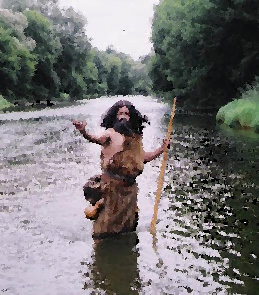
And then there’s John the Baptist, wearing fashionable camel hair with a leather belt, eating grasshoppers and wild honey. Yeah, that would “Make Me Look.” Maybe even twice! His message was one of repentance and preparation for the coming of the Messiah. And if I’m honest, his delivery was a little spicy: “You brood of vipers, who warned you to flee from the coming wrath?” Now, I used to think he was only talking to the religious leaders of the day, but this is where the Gospel Sync comes in. He wasn’t just talking to the Pharisees and Sadducees (Matthew 3:7), he was also diming out the crowd (Luke 3:7). Yikes! He exhorted them to grapple with their current reality and repent. 

In our contemporary culture, we often struggle to discuss opposing views or hear difficult truths. We are so sensitive to criticism and conflict that we often ignore or dismiss messages that challenge our beliefs or behavior. But it’s important to remember that God’s message can come packaged in ways we may not expect or necessarily like. Sometimes, it can be uncomfortable or difficult to hear, but it is ultimately for our own good.

Jesus came full of both grace and truth, and we need both in our lives (John 1:14, 17). Grace provides us with mercy, forgiveness, and compassion, while truth helps us see reality clearly and illuminates our sin. Truth provides a foundation to know what’s right and make positive changes in our lives. As disciple-makers helping people become more like Jesus, we need to exercise both grace and truth. We need to be both shepherding and prophetic.

The truth is that we tend to lean one way or the other. As someone who leans toward shepherding, I hear John the Baptist and want to take him aside and ask him to tone it down a little. Those of you who may lean toward the prophetic may be cheering John on; “Yeah, sic’em brother!” It’s essential to see that both approaches 1) are important and 2) can be overdone. We can’t muzzle the prophet. But that doesn’t give the prophet a license to indiscriminately blast everyone he sees (Ephesians 4:15). 

But as the consummate balancer, I digress. The main point here is that we need the truth. As disciple makers we need to hear from and be the prophetic messenger. Like a surgeon using a scalpel under a skilled hand, we may need to do some cutting to heal. This is part of truly loving people.  As the Apostle Paul instructed Timothy; 

Preach the word; be ready in season and out of season; reprove, rebuke, exhort, with great patience and instruction. (2 Timothy 4:2)

Lastly, notice the end of the passage: 

With these and many other exhortations, John proclaimed the good news to the people. (Luke 3.18)

In other words, the good news, the gospel, came with some bad news. John called the people sinners in need of repentance. These exhortations apply to us just as much today as they did to the people of John’s day. Quite frankly, a lot of the people I’ve shared the gospel with don’t even see their need for a Savior until they acknowledge they have a sin problem. Addressing the “sin problem” is part of sharing the gospel. Otherwise, why do we even need Jesus?

My Story

I hadn’t seen Ed for five years. We had been part of the same unit at Fort Campbell, and now we were attending the ten-week-long Advanced Non-Commissioned Officers Academy. I was a young believer when Ed and I had first met, and I hadn’t shared the gospel with him. I had ten weeks to drop the good news on him, and I planned to go slow and just rebuild a relationship with him first.

Eight weeks had gone by, and I still hadn’t found the “right time” to share. We were sitting in class waiting for the next block of instruction when a guy walked up and slammed a New Testament on the table in front of Ed and said, “You got one of these?” Ed responded very matter-of-factly, “No.” To which the guy responded, “Now you do, read it!” I was mortified. I was thinking to myself, “This guy just blew up eight weeks of hard work to win the right to share the gospel!” Jumping in to do a little damage control, I asked Ed, “Hey man, what are you thinking right now?” Ed responded, “Wow, I needed a good kick in the pants. I’m going to start reading this today.”

God not only works in mysterious ways, but He works in shocking, weird, and prophetic ways.

Our Action Plan

What do we need to do in order to embrace the uncomfortable truths of God that may come in some pretty strange ways? Maybe we need to…

  • Personally acknowledge that God often uses unconventional and uncomfortable methods to get our attention and the attention of others.
  • Practice the appropriate application of grace and truth in the lives of the people we are discipling.
  • Train disciples to share uncomfortable truths and confront sin as they share the gospel.

So, let us be open to hearing and delivering God’s message in whatever form it may come, even if it’s through a “strange” messenger like John the Baptist. And let us strive to balance grace and truth in our own lives so that we can fully live out our purpose and calling.

¡Te Hizo Mirar! – #18

Bienvenido! Hoy, por primera vez, sincronizaremos los cuatro evangelios. Esta es una oportunidad única para observar cuentas idénticas en todos ellos, así que profundicemos.

El Evangelio – Mateo 3:1-12, Marcos 1:2-8, Lucas 3:1-18, Juan 1:6-8

En aquellos días; en el año decimoquinto del imperio de Tiberio César, siendo gobernador de Judea Poncio Pilato, y Herodes tetrarca de Galilea, y su hermano Felipe tetrarca de Iturea y de la provincia de Traconite, y Lisanias tetrarca de Abilinia, y siendo sumos sacerdotes Anás y Caifás, vino palabra de Dios a Juan, hijo de Zacarías, en el desierto.  Hubo un hombre enviado de Dios, el cual se llamaba Juan. Este vino por testimonio, para que diese testimonio de la luz, a fin de que todos creyesen por él. No era él la Luz, sino para que diese testimonio de la Luz.

Recorrió toda la región alrededor del Jordán “Bautizaba Juan en el desierto, y predicaba el bautismo de arrepentimiento para perdón de pecados  y diciendo: Arrepentíos, porque el reino de los cielos se ha acercado. Este es aquel de quien se habló a través del profeta Isaías. Como está escrito en el libro de sus palabras: “He aquí yo envío mi mensajero delante de tu faz, el cual preparará tu camino delante de ti. Todo valle sea alzado, y bájese todo monte y collado; y lo torcido se enderece, y lo áspero se allane. Y se manifestará la gloria de Jehová, y toda carne juntamente la verá; porque la boca de Jehová ha hablado.”

 “Juan estaba vestido de pelo de camello, y tenía un cinto de cuero alrededor de sus lomos; y comía langostas y miel silvestre.  Y salían a él toda la provincia de Judea, y todos los de Jerusalén; y eran bautizados por él en el río Jordán, confesando sus pecados. Y decía a las multitudes que salían para ser bautizadas por él: ¡Oh generación de víboras! ¿Quién os enseñó a huir de la ira venidera?  Haced, pues, frutos dignos de arrepentimiento, y no comencéis a decir dentro de vosotros mismos: Tenemos a Abraham por padre; porque os digo que Dios puede levantar hijos a Abraham aun de estas piedras.  Y ya también el hacha está puesta a la raíz de los árboles; por tanto, todo árbol que no da buen fruto se corta y se echa en el fuego.”

“Y la gente le preguntaba, diciendo: Entonces, ¿qué haremos? Y respondiendo, les dijo: El que tiene dos túnicas, dé al que no tiene; y el que tiene qué comer, haga lo mismo. Vinieron también unos publicanos para ser bautizados, y le dijeron: Maestro, ¿qué haremos? Él les dijo: No exijáis más de lo que os está ordenado. También le preguntaron unos soldados, diciendo: Y nosotros, ¿qué haremos? Y les dijo: No hagáis extorsión a nadie, ni calumniéis; y contentaos con vuestro salario.”

 “Como el pueblo estaba en expectativa, preguntándose todos en sus corazones si acaso Juan sería el Cristo, respondió Juan, diciendo a todos: Yo a la verdad os bautizo en agua; pero viene uno más poderoso que yo, de quien no soy digno de desatar la correa de su calzado; él os bautizará en Espíritu Santo y fuego.  Su aventador está en su mano, y limpiará su era, y recogerá el trigo en su granero, y quemará la paja en fuego que nunca se apagará. Con estas y otras muchas exhortaciones anunciaba las buenas nuevas al pueblo.” 

 Mis Pensamientos

¿Recuerdas haber jugado al juego “Te hice mirar” cuando eras niño? No podemos evitarlo. Esta es la razón por la que un simple choque contra las cunetas en la autopista puede retrasar el tráfico durante horas. Todo el mundo tiene que ir más despacio y ver qué ha pasado. Y oh, si hay un choque de trenes, ¡cuidado! Parece que Dios usa esta táctica para “hacernos mirar”.

Es cierto, a veces Dios usa formas extrañas para llamar nuestra atención. Isaías anduvo desnudo durante tres años (Isaías 20:2-4). Oseas se casó con una prostituta llamada Gomer para ilustrar cómo se sentía Dios acerca de la infidelidad del pueblo hacia Él (Oseas 1-3). Ezequiel se acostó de costado durante 390 días, jugando con figuritas de soldados para anunciar la inminente condena de Jerusalén (Ezequiel 4:1-6).

Y luego está Juan el Bautista, vestido con pelo de camello a la moda con un cinturón de cuero, comiendo saltamontes y miel silvestre. Sí, eso me haría mirar. ¡Tal vez incluso dos veces! Su mensaje era de arrepentimiento y de preparación para la venida del Mesías. Y si soy honesto, su entrega fue un poco cortante: “Raza de víboras, ¿quién te advirtió que huyeras de la ira que se avecinaba?” Ahora, solía pensar que solo estaba hablando con los líderes religiosos de la época, pero aquí es donde entra en juego la Sincronía del Evangelio. No solo estaba hablando a los fariseos y saduceos (Mateo 3:7), sino que también estaba confrontando a la multitud (Lucas 3:7). ¡Vaya! Los exhortó a lidiar con su realidad actual y arrepentirse. 

 En nuestra cultura contemporánea, a menudo luchamos para discutir puntos de vista opuestos o escuchar verdades difíciles. Somos tan sensibles a las críticas y los conflictos que a menudo ignoramos o descartamos los mensajes que desafían nuestras creencias o comportamiento. Pero es importante recordar que el mensaje de Dios puede venir empaquetado de maneras que no esperamos o que no necesariamente nos gustan. A veces, puede ser incómodo o difícil de escuchar, pero en última instancia es por nuestro propio bien.

Jesús vino lleno de gracia y verdad, y necesitamos ambas en nuestras vidas (Juan 1:14, 17). La gracia nos proporciona misericordia, perdón y compasión, mientras que la verdad nos ayuda a ver la realidad con claridad e ilumina nuestro pecado. La verdad proporciona una base para saber lo que es correcto y hacer cambios positivos en nuestras vidas. Como hacedores de discípulos que ayudan a las personas a ser más como Jesús, necesitamos ejercer tanto la gracia como la verdad. Necesitamos  pastorear y profetizar. 

Lo cierto es que tendemos a inclinarnos hacia un lado u al otro. Como alguien que se inclina hacia el pastoreo, escucho a Juan el Bautista y quiero llevarlo hacia un lado y pedirle que baje un poco el tono. Aquellos de ustedes que se inclinen hacia lo profético pueden estar animando a Juan; “¡Sí, predícale hermano!” Es esencial ver que ambos enfoques 1) son importantes y 2) pueden ser exagerados. No podemos amordazar al profeta. Pero eso no le da al profeta una licencia para atacar indiscriminadamente a todos los que ve (Efesios 4:15).

Pero como el equilibrador consumado, estoy divagando. El punto principal aquí es que necesitamos la verdad. Como hacedores de discípulos, necesitamos escuchar y ser el mensajero profético. Al igual que un cirujano que usa un bisturí bajo una mano experta, es posible que necesitemos hacer algunos cortes para sanar. Esto es parte de amar verdaderamente a las personas.  Como el apóstol Pablo instruyó a Timoteo;

Que prediques la palabra; que instes a tiempo y fuera de tiempo; redarguye, reprende, exhorta con toda paciencia y doctrina. (2 Timoteo 4:2)

Por último, observe el final del pasaje:

Con estas y otras muchas exhortaciones anunciaba las buenas nuevas al pueblo (Lucas 3.18)

En otras palabras, las buenas nuevas, el Evangelio, vinieron con algunas malas noticias. Juan llamó al pueblo pecadores que necesitaban arrepentimiento. Estas exhortaciones se aplican a nosotros hoy tanto como lo hicieron a la gente de los días de Juan. Francamente, muchas de las personas con las que he compartido el evangelio ni siquiera ven la necesidad de un Salvador hasta que reconocen que tienen un problema de pecado. Abordar el “problema del pecado” es parte de compartir el evangelio. De lo contrario, ¿por qué necesitaríamos a Jesús?

Mi historia

Hacía cinco años que no veía a Ed. Habíamos sido parte de la misma unidad en Fort Campbell, y ahora asistíamos a la Academia Avanzada de Suboficiales de diez semanas de duración. Yo ya era un joven creyente cuando Ed y yo nos conocimos, y no había compartido el Evangelio con él. Tenía diez semanas para darle las buenas noticias, y planeé ir despacio y reconstruir una relación con él primero.

Habían pasado ocho semanas y todavía no había encontrado el “momento adecuado” para compartir. Estábamos sentados en clase esperando el siguiente bloque de instrucción cuando un hombre se acercó y plantó un Nuevo Testamento en la mesa frente a Ed y le dijo: “¿Tienes uno de estos?” Ed respondió con mucha naturalidad, “No”. Al escuchar eso el hombre  respondió: “¡Ahora que lo haces, léelo!” Yo estaba mortificado, pensando: “¡Este hombre acaba de arruinar ocho semanas de arduo trabajo para ganar el derecho a compartir el evangelio!” Saltando para tratar de arreglar las cosas le pregunté a Ed: “Oye, hombre, ¿qué estás pensando en este momento?” Ed respondió: “Wow, necesitaba una buena patada en los pantalones. Voy a empezar a leer esto hoy”.

Dios no solo obra de maneras misteriosas, sino que obra de maneras impactantes, extrañas y proféticas.

Nuestro Plan de Acción

¿Qué tenemos que hacer para abrazar las verdades incómodas de Dios que pueden venir de maneras bastante extrañas? Tal vez necesitemos…

* Reconocer personalmente que Dios a menudo usa métodos poco convencionales e incómodos para llamar nuestra atención y la atención de los demás.

* Practicar la aplicación apropiada de la gracia y la verdad en las vidas de las personas que estamos discipulando.

*Entrenar a los discípulos para que compartan verdades incómodas y confronten el pecado al compartir el evangelio.

Por lo tanto, estemos abiertos a escuchar y entregar el mensaje de Dios en cualquier forma que venga, incluso si es a través de un mensajero “extraño” como Juan el Bautista. Y esforcémonos por equilibrar la gracia y la verdad en nuestras propias vidas para que podamos vivir plenamente nuestro propósito y llamado.

An Awkward Season of Maturity – #17

ENGLISH / ESPAÑOL

Rather Listen? Click here…

Welcome Back! Today, we’ll be looking at the Gospel of Luke and see how Jesus and His parents navigated an awkward season of maturity

So let’s dive in.

(Click here to get a copy of the Gospel Sync document) 

Luke 2:41-52

Now every year Jesus’s parents went to Jerusalem for the Feast of the Passover. And when He was twelve years old, they went up according to the custom of the Feast. When those days were over and they were returning home, the boy Jesus remained behind and His parents were unaware He had stayed in Jerusalem. Assuming He was in their company, they traveled on for a day before they began to look for Him among their relatives and friends. When they could not find Him, they returned to Jerusalem to search for Him. Finally, after three days they found Him in the temple courts, sitting among the teachers, listening to them and asking them questions. And all who heard Him were amazed at His understanding and His answers. When His parents saw Him, they were astonished and His mother said to Him,“ Child, why have You done this to us? Your father and I have been anxiously searching for You.” And He said to them, “Why were you looking for Me? Did you not know that I had to be in My Father’s house?” But they did not understand the statement He was making to them. Then He went down to Nazareth with them and was obedient to them. But His mother treasured up all these things in her heart. And Jesus grew in wisdom and stature, and in favor with God and man.

Some Thoughts 

As disciples of Jesus Christ, our goal is to become more like Him in every aspect of our lives. We strive to emulate His character, His teachings, and His relationship with the Father. Our mentors play a huge role in helping us achieve this goal. However, as we grow in our faith, there comes a point where we begin to rely less on the guidance of our spiritual mentors and more on our personal relationship with God. It’s a natural part of the journey, but it can be challenging for those who have invested time and energy in discipleship.

Jesus Himself experienced this shift in His relationship with His earthly parents. At the age of 12, He stayed behind in the temple after the Passover celebration without informing Mary and Joseph. When they eventually found Him, they were understandably upset, but Jesus’ response was, “Why were you searching for me? Didn’t you know I had to be in my Father’s house?” (Luke 2:49). Jesus saw His relationship with the Father as the highest priority, and it seemed obvious to Him that His parents would understand this.

As disciple makers, we must understand that disciples can grow beyond our influence. We cannot be helicopter mentors, hovering over our spiritual children and trying to control every aspect of their lives. Instead, we must point them to Jesus and teach them to love God first and foremost. When we prioritize this relationship, Jesus Himself will instruct the disciple on how to live out their faith.

It’s essential to remember that when a disciple grows in their relationship with God, it’s not a sign of rebellion or disobedience. Instead, it’s a sign of spiritual maturity. As mentors, we should celebrate this growth and encourage the disciples to continue seeking God with their whole heart. It’s a beautiful thing to see a disciple becoming your peer.

Ultimately, we must trust that God is the primary mentor in every disciple’s life. While we may have played a role in their spiritual formation, our influence will never compare to the guidance and wisdom that comes directly from God. As we continue to disciple others, let us remember to prioritize God above all else, pointing our spiritual children to Him and celebrating their growth as they mature in their faith.

My Story 

As we journey through life, we often come across people who impact us in profound ways. Sometimes, these individuals become our mentors, guiding us through challenges and helping us to grow into our full potential. For me, one of those mentors was a man who played a significant role in my spiritual journey. However, there was a time when I disappointed him, and it’s a memory that still lingers with me today.

At the time, I was wrestling with a sense of calling to become an Army chaplain. I knew that this was the path that God was leading me down, but I also knew that my mentor wasn’t going to be too thrilled about it. He had a different vision for my future, and I could see the discouragement in his eyes when I shared my plans with him.

Despite his frustration, my mentor was wise enough to hold his tongue. He recognized that this was a test of my supreme loyalty to God and that I needed to follow the path that was laid out for me. Over time, my calling was authenticated with fruitful ministry, and he could see the hand of God at work in my life.

Looking back, I’m incredibly grateful for my mentor’s wisdom and restraint. He could have tried to dissuade me from pursuing my calling. He stepped aside when it was time for me to move on to the next phase of my journey. He could have tried to hold me back or exert control over my future, but he recognized that his role was to guide me, not dictate my path.

Our Action Plan

How can we apply this as disciple makers? Consider these suggestions:

  • Start by praying for wisdom and discernment. Ask God to alert you when you may be giving advice that goes beyond His intent for the disciple’s life.
  • Delve into the Scriptures and examine examples of leaders who have appropriately or inappropriately wielded their influence.
  • Seek the experiences of other disciple makers who have encountered similar situations and learn from their circumstances.

As disciple makers, we may experience disappointment with the choices our mentees make, but our response is crucial. Our goal is to instill in them unwavering loyalty to God and guide them on the path He has set for them. Gratitude is also due to the mentors who have helped us on our own journeys, even the unexpected twists and turns along the way. It is the journey that molds us into true followers of Christ, and we should strive to aid our mentees in following the path that Jesus has laid out for them.

Una Temporada Incómoda de Madurez – 17

¡Bienvenido! Hoy, veremos el Evangelio de Lucas y veremos cómo Jesús y sus padres navegaron por una temporada incómoda de madurez

Así que vamos a profundizar.

Lucas 2:41-52

Iban sus padres todos los años a Jerusalén en la fiesta de la pascua;  y cuando tuvo doce años, subieron a Jerusalén conforme a la costumbre de la fiesta.  Al regresar ellos, acabada la fiesta, se quedó el niño Jesús en Jerusalén, sin que lo supiesen José y su madre. Y pensando que estaba entre la compañía, anduvieron camino de un día; y le buscaban entre los parientes y los conocidos;  pero como no le hallaron, volvieron a Jerusalén buscándole.  Y aconteció que tres días después le hallaron en el templo, sentado en medio de los doctores de la ley, oyéndoles y preguntándoles.  Y todos los que le oían, se maravillaban de su inteligencia y de sus respuestas. Cuando le vieron, se sorprendieron; y le dijo su madre: Hijo, ¿por qué nos has hecho así? He aquí, tu padre y yo te hemos buscado con angustia.  Entonces él les dijo: ¿Por qué me buscabais? ¿No sabíais que en los negocios de mi Padre me es necesario estar?0 Mas ellos no entendieron las palabras que les habló. Y descendió con ellos, y volvió a Nazaret, y estaba sujeto a ellos. Y su madre guardaba todas estas cosas en su corazón.

Y Jesús crecía en sabiduría y en estatura, y en gracia para con Dios y los hombres.

Mis Pensamientos

Como discípulos de Jesucristo, nuestra meta es llegar a ser más como Él en todos los aspectos de nuestra vida. Nos esforzamos por emular Su carácter, Sus enseñanzas y Su relación con el Padre. Nuestros mentores juegan un papel muy importante para ayudarnos a lograr este objetivo. Sin embargo, a medida que crecemos en nuestra fe, llega un punto en el que comenzamos a confiar menos en la guía de nuestros mentores espirituales y más en nuestra relación personal con Dios. Es una parte natural en el curso de la vida espirtual, pero puede ser un desafío para aquellos que han invertido tiempo y energía en el discipulado.

Jesús mismo experimentó este cambio en su relación con sus padres terrenales. A la edad de 12 años, se quedó en el templo después de la celebración de la Pascua sin informar a María y José. Cuando finalmente lo encontraron, estaban comprensiblemente molestos, pero la respuesta de Jesús fue: “¿Por qué me buscabas? ¿No sabías que yo tenía que estar en la casa de mi Padre?” (Lucas 2:49). Jesús veía Su relación con el Padre como la máxima prioridad, y le parecía obvio que Sus padres lo entenderían.

Como hacedores de discípulos, debemos entender que los discípulos pueden crecer más allá de nuestra influencia. No podemos ser mentores tipo helicóptero, permaneciendo encima de nuestros hijos espirituales y tratando de controlar todos los aspectos de sus vidas. En cambio, debemos señalarles a Jesús y enseñarles a amar a Dios ante todo. Cuando priorizamos esta relación, Jesús mismo instruirá al discípulo sobre cómo vivir su fe.

Es esencial recordar que cuando un discípulo crece en su relación con Dios, no es una señal de rebelión o desobediencia. En cambio, es un signo de madurez espiritual. Como mentores, debemos celebrar este crecimiento y animar a los discípulos a seguir buscando a Dios con todo su corazón. Es algo hermoso ver a un discípulo convertirse pareciéndose a ti.

En última instancia, debemos confiar en que Dios es el mentor principal en la vida de cada discípulo. Si bien es posible que hayamos desempeñado un papel en su formación espiritual, nuestra influencia nunca se comparará con la guía y la sabiduría que provienen directamente de Dios. A medida que continuamos discipulando a otros, recordemos priorizar a Dios por encima de todo lo demás, señalando a nuestros hijos espirituales hacia Él y celebrando su crecimiento a medida que maduran en su fe.

Mi Historia

A medida que recorremos por la vida, a menudo nos encontramos con personas que nos impactan de manera profunda. A veces, estas personas se convierten en nuestros mentores, nos guían a través de los desafíos y nos ayudan a desarrollar todo nuestro potencial. Para mí, uno de esos mentores fue un hombre que jugó un papel importante en mi viaje espiritual. Sin embargo, hubo un momento en el que lo decepcioné, y es un recuerdo que aún perdura conmigo hoy.

En ese momento, estaba luchando con un sentido de llamado para convertirme en capellán del Ejército. Sabía que este era el camino por el que Dios me estaba guiando, pero también sabía que mi mentor no iba a estar demasiado emocionado por eso. Él tenía una visión diferente de mi futuro, y pude ver el desaliento en sus ojos cuando compartí mis planes con él.

A pesar de su frustración, mi mentor fue lo suficientemente sabio como para callarse. Reconoció que esto era una prueba de mi suprema lealtad a Dios y que necesitaba seguir el camino que se me había trazado. Con el tiempo, mi llamado fue autenticado con un ministerio fructífero, y él pudo ver la mano de Dios obrando en mi vida.

Mirando hacia atrás, estoy increíblemente agradecido por la sabiduría y la moderación de mi mentor. Podría haber tratado de disuadirme de seguir con mi vocación. Se hizo a un lado cuando llegó el momento de que yo pasara a la siguiente fase de mi recorrido espiritual. Podría haber tratado de retenerme o ejercer control sobre mi futuro, pero reconoció que su papel era guiarme, no dictar mi camino.

Nuestro Plan de Acción

¿Cómo podemos aplicar esto como hacedores de discípulos? Tenga en cuenta estas sugerencias:

–          Comience orando por sabiduría y discernimiento. Pídele a Dios que te alerte cuando estés dando consejos que van más allá de Su intención para la vida del discípulo.

–          Profundice en las Escrituras y examine ejemplos de líderes que han ejercido su influencia de manera apropiada o inapropiada.

–          Busca las experiencias de otros hacedores de discípulos que se hayan encontrado con situaciones similares y aprende de sus circunstancias.

Como hacedores de discípulos, podemos experimentar decepción con las decisiones que toman nuestros aprendices, pero nuestra respuesta es crucial. Nuestro objetivo es inculcar en ellos una lealtad inquebrantable a Dios y guiarlos por el camino que Él ha establecido para ellos. La gratitud también se debe a los mentores que nos han ayudado en nuestro propio recorrido espiritual, incluso en los giros inesperados en el camino. Es este camino el que nos moldea como verdaderos seguidores de Cristo, y debemos esforzarnos por ayudar a nuestros aprendices a seguir el camino que Jesús ha trazado para ellos.

No Microwave Discipleship -#16

ENGLISH / ESPAÑOL

Rather Listen? Click here…

Welcome Back! Today, we’ll be combining the gospels of Matthew and Luke and looking at Jesus’ process of maturation.  

So let’s dive in.

(Click here to get a copy of the Gospel Sync document) 

Matthew 2.22b-23, Luke 2:39b-40

Then after being warned by God in a dream, he left for the regions of Galilee, and came and lived in their own city called Nazareth. This was to fulfill what was spoken through the prophets: “He shall be called a Nazarene.” The Child continued to grow and become strong, increasing in wisdom; and the grace of God was upon Him.

My Thoughts 

Let’s focus on Luke 2:40;

“The Child continued to grow and become strong, increasing in wisdom; and the grace of God was upon Him.”

This verse highlights an important aspect of the life of Jesus, as it shows that He went through the natural process of growth and development. He did not come into the world as a fully-formed adult, but instead, He grew and matured like any other human being.

That means He cried when He needed to be fed, had messy diapers, skinned His knees, and went through puberty (that would have been a nice season of life to skip).

This aspect of Jesus’ life can be somewhat perplexing. After all, He was the Son of God, and one might assume that He would not need to go through the same process of growth and development as ordinary humans. However, this verse shows that Jesus was not exempt from the natural process of maturation.

In fact, Jesus’ growth and development serve as an ultimate example for us. He did not take any shortcuts or skip any steps along the way. Instead, He went through the process of growth and maturation just like everyone else. As disciple makers, we can learn from Jesus’ example and understand that we cannot take shortcuts when it comes to helping others grow in their faith. We cannot speed up maturity. This is because growth and development take time, and we must be patient with ourselves and with others. We can’t microwave what it takes a crockpot to do. 

Here’s some things a disciple maker can do to promote spiritual growth and transformation;

  1. Point to Jesus: As disciple makers we can unwittingly get in the way of a disciples relationship with God. Their loyalty belongs supremely to Him and we are trying to help them become His disciple not ours. Jesus pointed to Himself as the way to the Father. (John 14:6)
  1. Emphasize the importance of the Word and prayer: Disciple makers should encourage the person they are discipling to prioritize being in the Word and prayer in their spiritual journey. This can include modeling these practices, offering resources and guidance, and celebrating the person’s progress. (Matthew 4:4, Mark 1:35)
  1. Appropriate application of grace and truth: Disciple making is a lot like parenting. If the parent is too permissive and doesn’t teach adherence to Biblical principles, the children become self absorbed and unruly. If a child is raised by overbearing and demanding parents, it crushes the spirit and stifles initiative and creativity. Disciple makers need to apply both grace and truth appropriately. Jesus personified grace and truth. (John 1:14,17)
  1. Provide personalized attention: Disciple makers should take the time to get to know the person they are discipling and provide personalized attention to their spiritual needs. This can include asking questions, listening actively, and offering support and encouragement. Jesus spent significant time with His closest disciples. (Mark 3:14)
  1. Giving information in digestible chunks: Disciple makers should be mindful of the amount of information they provide at once, and break it down into digestible chunks that the person they are discipling can process and apply to their lives. Jesus told simple stories and discussed them with His closest disciples. (Mark 4.1-20)
  1. Encourage personal exploration: Disciple makers should create space for the person they are discipling to explore and discover their own spiritual journey. This can include asking open-ended questions, offering diverse perspectives, and encouraging experimentation. Jesus asked a lot of questions and often challenged traditional ways of doing things. See how Jesus answers a question with a story and a question of His own in Luke 10:25-37.

By focusing on these areas, disciple makers can create an environment that fosters spiritual growth and transformation in the people they are discipling.

While we cannot accelerate maturity, we can hinder it through actions that slow down the growth process. This often happens when disciple makers ignore some of the elements above and run the risk of impeding their growth.

And notice the phrase “the grace of God was upon Him” in Luke 2:40. It shows that Jesus had the favor and blessing of God throughout His life. This grace helped Him to grow and develop in wisdom and stature. As disciples and disciple makers, we too have access to God’s grace, and it will help us to grow and mature in our faith.

My Story

During my early days as a believer, I experienced tremendous pressure and guilt for taking a long time to memorize a set of 36 Bible verses. This discipline was a common practice among the people in our ministry, and most had already memorized the verses in just a few months. However, it had been three years, and I still hadn’t completed them. I felt like a failed disciple of Jesus.

Thankfully, I had a wise mentor who helped me out. He asked me a crucial question: “What other ways are you actively engaging with the Word of God?” At that time, I was reading the Bible every day, spending several hours a week studying it intensely, attending Sunday chapel to hear the Word preached, and constantly reflecting on what I learned. He reassured me that I was on the right track and advised me not to give up on scripture memory but not to worry about memorizing as quickly as others. He applied both grace and truth, emphasizing the importance of engaging with Scripture and encouraging me to focus on my relationship with Jesus, elevating the principle above the method. 40 years later, I’m still memorizing Scripture and love it!

Our Action Plan

How can we implement the crucial principle of being patient with the process of maturing? Here’s some ideas;

  • Do a study in one of the gospels and look for ways Jesus practiced “grace and truth.”
  • Check in with the people we are discipling and ask relevant questions to assess if the pace of their development is suitable.
  • Evaluate the amount of time dedicated to those we are discipling and whether we have sufficient knowledge of their personal lives and circumstances.

Jesus’ growth and development serve as an ultimate example for us, as He went through the process of growth and maturation just like everyone else. As disciple makers, we cannot take shortcuts when it comes to helping others grow in their faith, but we must understand that growth and development take time, and we must be patient with ourselves and with others. We must focus on pointing others to Jesus, emphasizing the importance of the Word and prayer, applying both grace and truth appropriately, providing personalized attention, giving information in digestible chunks, and encouraging personal exploration. By focusing on these areas, disciple makers can create an environment that fosters spiritual growth and transformation in the people they are discipling. We have access to God’s grace, and it will help us to grow and mature in our faith, just as it did for Jesus.

No Existe el Discipulado por Microondas – #16

¡Bienvenido! Hoy, combinaremos los evangelios de Mateo y Lucas y veremos el proceso de la madurez de Jesús.

Mateo 2.22b-23, Lucas 2:39b-40

Pero oyendo que Arquelao reinaba en Judea en lugar de Herodes su padre, tuvo temor de ir allá; pero avisado por revelación en sueños, se fue a la región de Galilea, 23 y vino y habitó en la ciudad que se llama Nazaret, para que se cumpliese lo que fue dicho por los profetas, que habría de ser llamado nazareno.

Mis Pensamientos

Centrémonos ahora en Lucas 2:40

Y el niño crecía y se fortalecía, y se llenaba de sabiduría; y la gracia de Dios era sobre él.”

Este versículo destaca un aspecto importante de la vida de Jesús, ya que muestra que Él pasó por el proceso natural de crecimiento y desarrollo. Él no vino al mundo como un adulto completamente formado, sino que creció y maduró como cualquier otro ser humano.

Eso significa que lloró cuando necesitó ser alimentado, tenía pañales sucios, se despellejó las rodillas y pasó por la pubertad (esa habría sido una buena etapa de la vida para poder saltársela).

Este aspecto de la vida de Jesús puede ser algo desconcertante. Después de todo, Él era el Hijo de Dios, y uno podría suponer que no necesitaría pasar por el mismo proceso de crecimiento y desarrollo por el que pasa la humanidad. Sin embargo, este versículo muestra que Jesús no estaba exento del proceso natural de maduración.

De hecho, el crecimiento y desarrollo de Jesús sirven como un ejemplo supremo para nosotros. No tomó ningún atajo ni se saltó ningún paso en el camino. En cambio, pasó por el proceso de crecimiento y maduración como todos los demás. Como hacedores de discípulos, podemos aprender del ejemplo de Jesús y entender que no podemos tomar atajos cuando se trata de ayudar a otros a crecer en su fe. No podemos acelerar la madurez. Esto se debe a que el crecimiento y el desarrollo llevan tiempo, y debemos ser pacientes con nosotros mismos y con los demás. No podemos calentar en el microondas lo que se necesita para hacer una olla de cocción lenta.

He aquí algunas cosas que un hacedor de discípulos puede hacer para promover el crecimiento espiritual y la transformación;

1.  Señale a Jesús: Como hacedores de discípulos, sin darnos cuenta, podemos interponernos involuntariamente en el camino de la relación de los discípulos con Dios. Su lealtad le pertenece supremamente a Él, y estamos tratando de ayudarlos en su conversión a ser Sus discípulo, no nuestros. Jesús se señaló a sí mismo como el camino hacia el Padre. (Juan 14:6.)

2.  Enfatizar la importancia de la Palabra y la oración: Los hacedores de discípulos deben alentar a la persona a la que están discipulando a priorizar estar en la Palabra y la oración en su trayectoria espiritual. Esto puede incluir modelar estas prácticas, ofrecer recursos y orientación, y celebrar el progreso de la persona (Mateo 4:4, Marcos 1:35).

3. Aplicación apropiada de la gracia y la verdad: Hacer discípulos es muy parecido a la crianza de los hijos. Si el padre es demasiado permisivo y no enseña a adherirse a los principios bíblicos, los niños se vuelven ensimismados y rebeldes. Si un niño es criado por padres autoritarios y exigentes, aplasta el espíritu y sofoca la iniciativa y la creatividad. Los hacedores de discípulos necesitan aplicar tanto la gracia como la verdad apropiadamente. Jesús personificó la gracia y la verdad (Juan 1:14,17).

4. Proporcionar atención personalizada: Los hacedores de discípulos deben tomarse el tiempo para conocer a la persona a la que están discipulando y proporcionar atención personalizada a sus necesidades espirituales. Esto puede incluir hacer preguntas, escuchar activamente y ofrecer apoyo y aliento. Jesús pasó mucho tiempo con sus discípulos más cercanos (Marcos 3:14).

5. Dar información pequeña y fácil de asimilar: Los hacedores de discípulos deben ser conscientes de la cantidad de información que proporcionan a la vez, y dividirla en pequeñas partes que las personas que están discipulando puedan procesar y aplicar a sus vidas. Jesús contaba historias sencillas y las discutía con sus discípulos más cercanos. (Marcos 4.1-20)

6. Fomentar la exploración personal: Los hacedores de discípulos deben crear un espacio para que la persona a la que están discipulando explore y descubra su propio viaje espiritual. Esto puede incluir hacer preguntas abiertas, ofrecer diversas perspectivas y fomentar la experimentación. Jesús hizo muchas preguntas y a menudo desafió las formas tradicionales de hacer las cosas. Vea cómo Jesús responde a una pregunta con una historia y una pregunta propia en Lucas 10:25-37.

Al enfocarse en estas áreas, los hacedores de discípulos pueden crear un ambiente que fomente el crecimiento espiritual y la transformación en las personas a las que están discipulando.

Si bien no podemos acelerar la madurez, podemos obstaculizarla a través de acciones que impiden el proceso de crecimiento. Esto sucede a menudo cuando los hacedores de discípulos ignoran algunos de los elementos anteriores y corren el riesgo de impedir su crecimiento.

Y fíjese en la frase “la gracia de Dios estaba sobre él” en Lucas 2:40. Muestra que Jesús tuvo el favor y la bendición de Dios durante toda su vida. Esta gracia le ayudó a crecer y desarrollarse en sabiduría y estatura. Como discípulos y hacedores de discípulos, nosotros también tenemos acceso a la gracia de Dios, que nos ayudará a crecer y madurar en nuestra fe.

Mi Historia

 Durante mis primeros días como creyente, experimenté una tremenda presión y culpa por tomarme mucho tiempo para memorizar un conjunto de 36 versículos de la Biblia. Esta disciplina era una práctica común entre las personas de nuestro ministerio, y la mayoría ya había memorizado los versículos en solo unos meses. Sin embargo, habían pasado tres años y yo todavía no los había completado. Me sentía como un discípulo de Jesús fracasado.

Afortunadamente, tuve un mentor sabio que me ayudó. Me hizo una pregunta crucial: “¿De qué otras maneras te estás involucrando activamente con la Palabra de Dios?” En ese momento, leía la Biblia todos los días, pasaba varias horas a la semana estudiándola intensamente, asistía a la capilla dominical para escuchar la predicación de la Palabra y reflexionaba constantemente sobre lo que aprendía. Me aquietó diciéndome que yo estaba en el camino correcto y me aconsejó que no renunciara a la memorización de las Escrituras, sino que no me preocupara por memorizar tan rápido como los demás. Él aplicó tanto la gracia como la verdad, enfatizando la importancia de comprometerse con las Escrituras y animándome a enfocarme en mi relación con Jesús, elevando el principio por encima del método. 40 años después, sigo memorizando las Escrituras y me encantan!

Nuestro Plan de Acción

¿Cómo podemos poner en práctica el principio crucial de ser paciente con el proceso de maduración? Aquí hay algunas ideas:

–  Haz un estudio en uno de los evangelios y busca formas en que Jesús practicó   “la gracia y la verdad”.

–   Verifica con las personas a las que estamos discipulando y haz preguntas relevantes para evaluar si el ritmo de su desarrollo es adecuado.

– Evalúe la cantidad de tiempo dedicado a aquellos a quienes estamos discipulando y si tenemos suficiente conocimiento de sus vidas y circunstancias personales.

El crecimiento y desarrollo de Jesús sirve como un ejemplo supremo para nosotros, ya que Él pasó por el proceso de crecimiento y maduración como todos los demás. Como hacedores de discípulos, no podemos tomar atajos cuando se trata de ayudar a otros a crecer en su fe, pero debemos entender que el crecimiento y el desarrollo llevan tiempo, y debemos ser pacientes con nosotros mismos y con los demás. Debemos enfocarnos en señalar a otros a Jesús, enfatizar la importancia de la Palabra y la oración, aplicar tanto la gracia como la verdad de manera adecuada, brindar atención personalizada, dar información en porciones pequeñas y fomentar la exploración personal. Al enfocarse en estas áreas, los hacedores de discípulos pueden: crear un ambiente que fomente el crecimiento espiritual y la transformación en las personas a las que están discipulando. Tenemos acceso a la gracia de Dios, y nos ayudará a crecer y madurar en nuestra fe, tal como lo hizo con Jesús.