
Welcome Back! Today, for the first time, we’ll be syncing all four gospels. This is a rare opportunity to observe identical accounts in all of them, so let’s dive in.
(Click here to get a copy of the Gospel Sync document)
Matthew 3:1-12, Mark 1:2-8, Luke 3:1-18, John 1:6-8
In those days; in the fifteenth year of the reign of Tiberius Caesar, while Pontius Pilate was governor of Judea, Herod tetrarch of Galilee, his brother Philip tetrarch of Ituraea and Trachonitis, and Lysanias tetrarch of Abilene, during the high priesthood of Annas and Caiaphas, there came a man who was sent from God. His name was John the Baptist. And the word of God came to John son of Zechariah in the wilderness. John came as a witness, preaching in the wilderness of Judea. He came to testify about the Light, so that through him everyone might believe. He was not the Light, but he came to testify about the Light.
He went into all the region around the Jordan, preaching a baptism of repentance for the forgiveness of sins, saying, “Repent, for the kingdom of heaven is near.” This is he who was spoken of through the prophet Isaiah. As it is written in the book of his words:
“Behold, I will send My messenger ahead of You, who will prepare Your way.” A voice of one calling in the wilderness, ‘Prepare the way for the Lord, make straight paths for Him.’” Every valley shall be filled in, and every mountain and hill made low. The crooked ways shall be made straight, and the rough ways smooth. And all humanity will see God’s salvation.’”
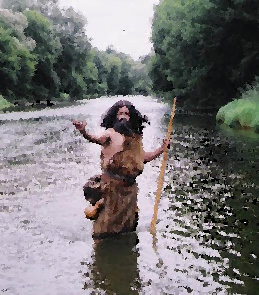
John wore a garment of camel’s hair, with a leather belt around his waist. His food was locusts and wild honey. People went out to him from Jerusalem and all Judea and the whole region around the Jordan. Confessing their sins, they were baptized by him in the Jordan River. But when John saw many of the Pharisees and Sadducees coming to his place of baptism, and the crowds coming out to be baptized by him, he said to them, “You brood of vipers, who warned you to flee from the coming wrath? Produce fruit, then, in keeping with repentance. And do not begin to say to yourselves, ‘We have Abraham as our father.’ For I tell you that God can raise up children for Abraham out of these stones. “The axe is already laid at the root of the trees; therefore every tree that does not bear good fruit is cut down and thrown into the fire.
The crowds asked him, “What then should we do?” John replied, “Whoever has two tunics should share with him who has none, and whoever has food should do the same.” Even tax collectors came to be baptized. “Teacher,” they asked, “what should we do?” “Collect no more than you are authorized,” he answered. Then some soldiers asked him, “And what should we do?” He said, “Do not take money by force or falsely accuse anyone and be content with your wages.”
The people were waiting expectantly and were all wondering in their hearts if John could be the Christ. “I baptize you with water for repentance, but after me will come One more powerful than I, whose sandals I am not worthy to carry or even stoop down and untie the straps. I baptize you with water, but He will baptize you with the Holy Spirit and with fire. His winnowing fork is in His hand to clear His threshing floor and to gather the wheat into His barn; but He will burn up the chaff with unquenchable fire.” With these and many other exhortations, John proclaimed the good news to the people.
My Thoughts
Remember playing the game “Made You Look” as a kid? We can’t help ourselves. This is why a simple fender bender on the freeway can delay traffic for hours. Everyone has to slow down and see what happened. And oh, if there’s a train wreck, look out! It seems like God uses this tactic to “make us look.”
It’s true, sometimes God uses strange ways to get our attention. Isaiah walked around naked for three years (Isaiah 20:2-4). Hosea married a prostitute named Gomer to illustrate how God felt about the people’s unfaithfulness to Him (Hosea 1-3). Ezekiel laid on his side for 390 days, playing with little army men to announce the impending doom of Jerusalem (Ezekiel 4:1-6).
And then there’s John the Baptist, wearing fashionable camel hair with a leather belt, eating grasshoppers and wild honey. Yeah, that would “Make Me Look.” Maybe even twice! His message was one of repentance and preparation for the coming of the Messiah. And if I’m honest, his delivery was a little spicy: “You brood of vipers, who warned you to flee from the coming wrath?” Now, I used to think he was only talking to the religious leaders of the day, but this is where the Gospel Sync comes in. He wasn’t just talking to the Pharisees and Sadducees (Matthew 3:7), he was also diming out the crowd (Luke 3:7). Yikes! He exhorted them to grapple with their current reality and repent.
In our contemporary culture, we often struggle to discuss opposing views or hear difficult truths. We are so sensitive to criticism and conflict that we often ignore or dismiss messages that challenge our beliefs or behavior. But it’s important to remember that God’s message can come packaged in ways we may not expect or necessarily like. Sometimes, it can be uncomfortable or difficult to hear, but it is ultimately for our own good.
Jesus came full of both grace and truth, and we need both in our lives (John 1:14, 17). Grace provides us with mercy, forgiveness, and compassion, while truth helps us see reality clearly and illuminates our sin. Truth provides a foundation to know what’s right and make positive changes in our lives. As disciple-makers helping people become more like Jesus, we need to exercise both grace and truth. We need to be both shepherding and prophetic.
The truth is that we tend to lean one way or the other. As someone who leans toward shepherding, I hear John the Baptist and want to take him aside and ask him to tone it down a little. Those of you who may lean toward the prophetic may be cheering John on; “Yeah, sic’em brother!” It’s essential to see that both approaches 1) are important and 2) can be overdone. We can’t muzzle the prophet. But that doesn’t give the prophet a license to indiscriminately blast everyone he sees (Ephesians 4:15).
But as the consummate balancer, I digress. The main point here is that we need the truth. As disciple makers we need to hear from and be the prophetic messenger. Like a surgeon using a scalpel under a skilled hand, we may need to do some cutting to heal. This is part of truly loving people. As the Apostle Paul instructed Timothy;
Preach the word; be ready in season and out of season; reprove, rebuke, exhort, with great patience and instruction. (2 Timothy 4:2)
Lastly, notice the end of the passage:
With these and many other exhortations, John proclaimed the good news to the people. (Luke 3.18)
In other words, the good news, the gospel, came with some bad news. John called the people sinners in need of repentance. These exhortations apply to us just as much today as they did to the people of John’s day. Quite frankly, a lot of the people I’ve shared the gospel with don’t even see their need for a Savior until they acknowledge they have a sin problem. Addressing the “sin problem” is part of sharing the gospel. Otherwise, why do we even need Jesus?
My Story
I hadn’t seen Ed for five years. We had been part of the same unit at Fort Campbell, and now we were attending the ten-week-long Advanced Non-Commissioned Officers Academy. I was a young believer when Ed and I had first met, and I hadn’t shared the gospel with him. I had ten weeks to drop the good news on him, and I planned to go slow and just rebuild a relationship with him first.
Eight weeks had gone by, and I still hadn’t found the “right time” to share. We were sitting in class waiting for the next block of instruction when a guy walked up and slammed a New Testament on the table in front of Ed and said, “You got one of these?” Ed responded very matter-of-factly, “No.” To which the guy responded, “Now you do, read it!” I was mortified. I was thinking to myself, “This guy just blew up eight weeks of hard work to win the right to share the gospel!” Jumping in to do a little damage control, I asked Ed, “Hey man, what are you thinking right now?” Ed responded, “Wow, I needed a good kick in the pants. I’m going to start reading this today.”
God not only works in mysterious ways, but He works in shocking, weird, and prophetic ways.
Our Action Plan
What do we need to do in order to embrace the uncomfortable truths of God that may come in some pretty strange ways? Maybe we need to…
- Personally acknowledge that God often uses unconventional and uncomfortable methods to get our attention and the attention of others.
- Practice the appropriate application of grace and truth in the lives of the people we are discipling.
- Train disciples to share uncomfortable truths and confront sin as they share the gospel.
So, let us be open to hearing and delivering God’s message in whatever form it may come, even if it’s through a “strange” messenger like John the Baptist. And let us strive to balance grace and truth in our own lives so that we can fully live out our purpose and calling.
¡Te Hizo Mirar! – #18
Bienvenido! Hoy, por primera vez, sincronizaremos los cuatro evangelios. Esta es una oportunidad única para observar cuentas idénticas en todos ellos, así que profundicemos.
El Evangelio – Mateo 3:1-12, Marcos 1:2-8, Lucas 3:1-18, Juan 1:6-8
En aquellos días; en el año decimoquinto del imperio de Tiberio César, siendo gobernador de Judea Poncio Pilato, y Herodes tetrarca de Galilea, y su hermano Felipe tetrarca de Iturea y de la provincia de Traconite, y Lisanias tetrarca de Abilinia, y siendo sumos sacerdotes Anás y Caifás, vino palabra de Dios a Juan, hijo de Zacarías, en el desierto. Hubo un hombre enviado de Dios, el cual se llamaba Juan. Este vino por testimonio, para que diese testimonio de la luz, a fin de que todos creyesen por él. No era él la Luz, sino para que diese testimonio de la Luz.
Recorrió toda la región alrededor del Jordán “Bautizaba Juan en el desierto, y predicaba el bautismo de arrepentimiento para perdón de pecados y diciendo: Arrepentíos, porque el reino de los cielos se ha acercado. Este es aquel de quien se habló a través del profeta Isaías. Como está escrito en el libro de sus palabras: “He aquí yo envío mi mensajero delante de tu faz, el cual preparará tu camino delante de ti. Todo valle sea alzado, y bájese todo monte y collado; y lo torcido se enderece, y lo áspero se allane. Y se manifestará la gloria de Jehová, y toda carne juntamente la verá; porque la boca de Jehová ha hablado.”
“Juan estaba vestido de pelo de camello, y tenía un cinto de cuero alrededor de sus lomos; y comía langostas y miel silvestre. Y salían a él toda la provincia de Judea, y todos los de Jerusalén; y eran bautizados por él en el río Jordán, confesando sus pecados. Y decía a las multitudes que salían para ser bautizadas por él: ¡Oh generación de víboras! ¿Quién os enseñó a huir de la ira venidera? Haced, pues, frutos dignos de arrepentimiento, y no comencéis a decir dentro de vosotros mismos: Tenemos a Abraham por padre; porque os digo que Dios puede levantar hijos a Abraham aun de estas piedras. Y ya también el hacha está puesta a la raíz de los árboles; por tanto, todo árbol que no da buen fruto se corta y se echa en el fuego.”
“Y la gente le preguntaba, diciendo: Entonces, ¿qué haremos? Y respondiendo, les dijo: El que tiene dos túnicas, dé al que no tiene; y el que tiene qué comer, haga lo mismo. Vinieron también unos publicanos para ser bautizados, y le dijeron: Maestro, ¿qué haremos? Él les dijo: No exijáis más de lo que os está ordenado. También le preguntaron unos soldados, diciendo: Y nosotros, ¿qué haremos? Y les dijo: No hagáis extorsión a nadie, ni calumniéis; y contentaos con vuestro salario.”
“Como el pueblo estaba en expectativa, preguntándose todos en sus corazones si acaso Juan sería el Cristo, respondió Juan, diciendo a todos: Yo a la verdad os bautizo en agua; pero viene uno más poderoso que yo, de quien no soy digno de desatar la correa de su calzado; él os bautizará en Espíritu Santo y fuego. Su aventador está en su mano, y limpiará su era, y recogerá el trigo en su granero, y quemará la paja en fuego que nunca se apagará. Con estas y otras muchas exhortaciones anunciaba las buenas nuevas al pueblo.”
Mis Pensamientos
¿Recuerdas haber jugado al juego “Te hice mirar” cuando eras niño? No podemos evitarlo. Esta es la razón por la que un simple choque contra las cunetas en la autopista puede retrasar el tráfico durante horas. Todo el mundo tiene que ir más despacio y ver qué ha pasado. Y oh, si hay un choque de trenes, ¡cuidado! Parece que Dios usa esta táctica para “hacernos mirar”.
Es cierto, a veces Dios usa formas extrañas para llamar nuestra atención. Isaías anduvo desnudo durante tres años (Isaías 20:2-4). Oseas se casó con una prostituta llamada Gomer para ilustrar cómo se sentía Dios acerca de la infidelidad del pueblo hacia Él (Oseas 1-3). Ezequiel se acostó de costado durante 390 días, jugando con figuritas de soldados para anunciar la inminente condena de Jerusalén (Ezequiel 4:1-6).
Y luego está Juan el Bautista, vestido con pelo de camello a la moda con un cinturón de cuero, comiendo saltamontes y miel silvestre. Sí, eso me haría mirar. ¡Tal vez incluso dos veces! Su mensaje era de arrepentimiento y de preparación para la venida del Mesías. Y si soy honesto, su entrega fue un poco cortante: “Raza de víboras, ¿quién te advirtió que huyeras de la ira que se avecinaba?” Ahora, solía pensar que solo estaba hablando con los líderes religiosos de la época, pero aquí es donde entra en juego la Sincronía del Evangelio. No solo estaba hablando a los fariseos y saduceos (Mateo 3:7), sino que también estaba confrontando a la multitud (Lucas 3:7). ¡Vaya! Los exhortó a lidiar con su realidad actual y arrepentirse.
En nuestra cultura contemporánea, a menudo luchamos para discutir puntos de vista opuestos o escuchar verdades difíciles. Somos tan sensibles a las críticas y los conflictos que a menudo ignoramos o descartamos los mensajes que desafían nuestras creencias o comportamiento. Pero es importante recordar que el mensaje de Dios puede venir empaquetado de maneras que no esperamos o que no necesariamente nos gustan. A veces, puede ser incómodo o difícil de escuchar, pero en última instancia es por nuestro propio bien.
Jesús vino lleno de gracia y verdad, y necesitamos ambas en nuestras vidas (Juan 1:14, 17). La gracia nos proporciona misericordia, perdón y compasión, mientras que la verdad nos ayuda a ver la realidad con claridad e ilumina nuestro pecado. La verdad proporciona una base para saber lo que es correcto y hacer cambios positivos en nuestras vidas. Como hacedores de discípulos que ayudan a las personas a ser más como Jesús, necesitamos ejercer tanto la gracia como la verdad. Necesitamos pastorear y profetizar.
Lo cierto es que tendemos a inclinarnos hacia un lado u al otro. Como alguien que se inclina hacia el pastoreo, escucho a Juan el Bautista y quiero llevarlo hacia un lado y pedirle que baje un poco el tono. Aquellos de ustedes que se inclinen hacia lo profético pueden estar animando a Juan; “¡Sí, predícale hermano!” Es esencial ver que ambos enfoques 1) son importantes y 2) pueden ser exagerados. No podemos amordazar al profeta. Pero eso no le da al profeta una licencia para atacar indiscriminadamente a todos los que ve (Efesios 4:15).
Pero como el equilibrador consumado, estoy divagando. El punto principal aquí es que necesitamos la verdad. Como hacedores de discípulos, necesitamos escuchar y ser el mensajero profético. Al igual que un cirujano que usa un bisturí bajo una mano experta, es posible que necesitemos hacer algunos cortes para sanar. Esto es parte de amar verdaderamente a las personas. Como el apóstol Pablo instruyó a Timoteo;
Que prediques la palabra; que instes a tiempo y fuera de tiempo; redarguye, reprende, exhorta con toda paciencia y doctrina. (2 Timoteo 4:2)
Por último, observe el final del pasaje:
Con estas y otras muchas exhortaciones anunciaba las buenas nuevas al pueblo (Lucas 3.18)
En otras palabras, las buenas nuevas, el Evangelio, vinieron con algunas malas noticias. Juan llamó al pueblo pecadores que necesitaban arrepentimiento. Estas exhortaciones se aplican a nosotros hoy tanto como lo hicieron a la gente de los días de Juan. Francamente, muchas de las personas con las que he compartido el evangelio ni siquiera ven la necesidad de un Salvador hasta que reconocen que tienen un problema de pecado. Abordar el “problema del pecado” es parte de compartir el evangelio. De lo contrario, ¿por qué necesitaríamos a Jesús?
Mi historia
Hacía cinco años que no veía a Ed. Habíamos sido parte de la misma unidad en Fort Campbell, y ahora asistíamos a la Academia Avanzada de Suboficiales de diez semanas de duración. Yo ya era un joven creyente cuando Ed y yo nos conocimos, y no había compartido el Evangelio con él. Tenía diez semanas para darle las buenas noticias, y planeé ir despacio y reconstruir una relación con él primero.
Habían pasado ocho semanas y todavía no había encontrado el “momento adecuado” para compartir. Estábamos sentados en clase esperando el siguiente bloque de instrucción cuando un hombre se acercó y plantó un Nuevo Testamento en la mesa frente a Ed y le dijo: “¿Tienes uno de estos?” Ed respondió con mucha naturalidad, “No”. Al escuchar eso el hombre respondió: “¡Ahora que lo haces, léelo!” Yo estaba mortificado, pensando: “¡Este hombre acaba de arruinar ocho semanas de arduo trabajo para ganar el derecho a compartir el evangelio!” Saltando para tratar de arreglar las cosas le pregunté a Ed: “Oye, hombre, ¿qué estás pensando en este momento?” Ed respondió: “Wow, necesitaba una buena patada en los pantalones. Voy a empezar a leer esto hoy”.
Dios no solo obra de maneras misteriosas, sino que obra de maneras impactantes, extrañas y proféticas.
Nuestro Plan de Acción
¿Qué tenemos que hacer para abrazar las verdades incómodas de Dios que pueden venir de maneras bastante extrañas? Tal vez necesitemos…
* Reconocer personalmente que Dios a menudo usa métodos poco convencionales e incómodos para llamar nuestra atención y la atención de los demás.
* Practicar la aplicación apropiada de la gracia y la verdad en las vidas de las personas que estamos discipulando.
*Entrenar a los discípulos para que compartan verdades incómodas y confronten el pecado al compartir el evangelio.
Por lo tanto, estemos abiertos a escuchar y entregar el mensaje de Dios en cualquier forma que venga, incluso si es a través de un mensajero “extraño” como Juan el Bautista. Y esforcémonos por equilibrar la gracia y la verdad en nuestras propias vidas para que podamos vivir plenamente nuestro propósito y llamado.

 ToBeLikeJesus
Thanks again for sharing these insights!