Choosing the 12 (Part 3) – Appointment

Read Mk 3.13-19, Lk 6.12-16

And He appointed twelve, so that they would be with Him and that He could send them out to preach,
(Mark 3:14)

And when day came, He called His disciples to Him and chose twelve of them, whom He also named as apostles:
(Luke 6:13)

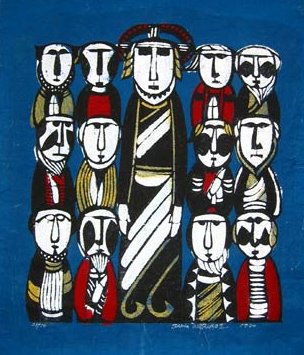
Jesus chooses 12 men from among all His disciples and appoints them as Apostles.

I find this act of choosing leadership completely counter to contemporary philosophies of leadership development. Jesus puts all His chips on men that are virtually untested. In fact as we watch the 12 closely throughout the Gospels, we continually see character traits that should eliminate them from leadership. We see pettiness, greed, pride, competition, and impulsiveness. They lacked wisdom, endurance, foresight, discretion, and the list goes on. On the other hand these men had shown qualities that had great potential. Characteristics like loyalty, commitment, integrity, and humility were evident in the 12. But Jesus appointed these men after concerted prayer. He did not choose them merely on what He saw but on what the Father saw in them. And they were by no means qualified for the promotion. Their apostolic authority would not be affectively used until after the ascension. Jesus chose them for what they would become.

I believe this is the key to developing Kingdom leaders. We take a man or woman under tutelage based on God’s calling for us to help people become what God desires rather than what they are. These disciples do not come prepackaged. Of course you may size up the raw material before investing, but God sees the end-state. He is not necessarily looking for the brightest, strongest, fastest, and most beautiful. But He is looking for heart. And I would suggest that we as Disciplemakers, should line up our criteria for selection with God’s criteria. But who among us is 100% on evaluating the heart. This brings us right back to prayer. God is fully aware of what is in a man or woman’s heart (1 Sam 16.7). He sees what they will become.

But praying does not eliminate all risk. God does not always give us clear guidance. He often allows us to choose for ourselves. He acts as a wise parent developing a child’s decision making process. Hence, we will make mistakes. And so did the Apostles. This brings another component of leadership development into the picture. The principle of self-selection. The Apostles were volunteers and Jesus treated them that way. He did not force or manipulate them. He set the table and it was up to them to eat. He gave them plenty of opportunities to leave the team. We need to remember that ultimately the decision to follow Christ or be a Kingdom Leader rests squarely on the shoulders of the person we are training. In a sense, they are choosing us. (There is so much more to say in this area…) FJ72

For questions or comments drop me a line at charleswood1@gmail.com or click the envelope below to send this post to a friend…
Goal: Subscribers from every State in the US

I’m praying about getting subscribers and visitors from every state in the Union. Can you help me out by passing the website on to your friends in the following States;

Washington
Alaska
Montana
Idaho
Nevada
Utah
Wyoming
North Dakota

Minnesota
Wisconsin
Illinois
Indiana
Kentucky

Thanks!

For questions or comments drop me a line at charleswood1@gmail.com or click the envelope below to send this post to a friend…

Choosing the 12 (Part 2) – Prayer


Read Mk 3.13-19, Lk 6.12-16

It was at this time that He went off to the mountain to pray, and He spent the whole night in prayer to God. And when day came, He called His disciples to Him and chose twelve of them, whom He also named as apostles:
(Luke 6:12-13)

Before choosing the 12 Apostles, Jesus prayed all night.

When we read this passage, we often talk about the need for wise selection but very seldom focus on the fact that Jesus prayed all night. Granted, Jesus was choosing the future leadership of the Church but He also had a very strong conviction that men came from the Father (Jn 6.44, 17.6). Jesus left nothing to chance. He depended on the Father to guide Him to the men He would invest in for the Kingdom’s sake.

Are you spending concerted time in prayer before choosing men to train? How are your resources? Do you have the time and energy to invest in people whom you know will do nothing for the Kingdom in exchange? Of course you will never know that for sure, but God does. How often do we charge into a disciplemaking relationship without ever praying? Jesus used every resource available, including those that were made available by the Father. We probably will not be faced with many situations where we need to pray intensely about those whom we should help (although we would be wise to be prayed up in this area as well). But when it comes to training men in ministry there is a huge need for God’s guidance before we lay hands on a man and invest so much of our time and energy. We ought to pray, Jesus did. FJ71

For questions or comments drop me a line at charleswood1@gmail.com or click the envelope below to send this post to a friend…

Choosing the 12 (Part 1) – Why?

Read Mk 3.13-19, Lk 6.12-16

And He appointed twelve, so that they would be with Him and that He could send them out to preach,
(Mark 3:14)

Jesus spends a night in prayer and from the many disciples he already has following Him He selects 12.

A little over a year into Jesus’ ministry it was quite evident that He had captured the people’s attention. They were flocking to Him “from Galilee and the Decapolis and Jerusalem and Judea and from beyond the Jordan” (Mt 4:25). After developing this following, Jesus makes a strategic move in His ministry. He chooses 12 men from among a great crowd of disciples (Lk 6.17) and appoints them as apostles. The question is why did Jesus do this? Isn’t there the risk of alienating many of His followers by culling out a hand full and giving them a “superior status” above the rest of the disciples? I see three main reasons for Jesus’ selection of the 12.

Logistics – I’ve said before that Jesus elected to be confined to time, space, and energy in His humanity. He chose to be human in order to model humanity. This affected every area of His life including His ministry. Jesus’ ministry had grown beyond His human capabilities and there was no way He could meet the needs of all these people. He was one man. But multiplication is the answer to logistical problems. If a farmer could not milk all his cows, he would train some hands to help him. Multiply the laboring force, increase productivity. Jesus was multiplying His ministry by enlisting leaders that could help Him shepherd the flock. And remember that Jesus’ interests lay in reaching the world with the gospel of the Kingdom. It will take many skilled hands to make disciples of the nations.

Leadership – These men were not only being groomed to share the gospel and make disciples. A disciple can make another disciple. These men were being groomed to be the future leadership of the church, apostles. More about that later.

Longevity – The Apostles were chosen to insure the next generation. The future of the Church was contingent upon these men knowing and being like Christ. They would be the reflection of the Master. Jesus knew that in order to create this kind of reflection of Himself, He had to bring them in close, let them see and imitate and be trained to impact the next generation. The generations rise and fall on leadership and Jesus understood and capitalized on this fact. His plan has succeeded some 2000 years.

Application to Disciplemaking: Although most of us are not making apostles we are making disciples and we are faced with the same logistical, leadership, and longevity challenges Jesus faced. Aren’t we confined to a limited amount of resources? Aren’t we trying to help people become spiritual leaders in their families, work place, and communities? Don’t we see the urgency of developing men and woman into the kind of disciples that can carry the Gospel to the next generation? To train these kinds of men and women we will need to give them concerted time and attention. We will have to operate within the confines of effectiveness and not be lured away by the attraction of numbers. We are compelled to use Jesus’ strategy of focusing on a few while ministering to the many. FJ70

For questions or comments drop me a line at charleswood1@gmail.com or click the envelope below to send this post to a friend…

Choosing the 12

Read Mk 3.13-19, Lk 6.12-16

And He appointed twelve, so that they would be with Him and that He could send them out to preach,
(Mark 3:14)

Over the next few days I’d like to camp out on the Choosing of the 12. This is a significant part of Jesus’ ministry strategy that goes beyond disciplemaking and there is much confusion and consternation over the concept of selection. Hopefully I can bring some clarity to the reasons and methods of selection. There are seven components of the Choosing of the 12 that I’d like to address;
· Why?
· Prayer
· Appointment
· With Him
· Future Responsibilities
· Apostolic Leadership
· Failure

For questions or comments drop me a line at charleswood1@gmail.com or click the envelope below to send this post to a friend…

Snuffed Out or Broken Off

Read Mt 12.16-21

“BEHOLD, MY SERVANT WHOM I HAVE CHOSEN; MY BELOVED IN WHOM MY SOUL is WELL-PLEASED; I WILL PUT MY SPIRIT UPON HIM, AND HE SHALL PROCLAIM JUSTICE TO THE GENTILES. “HE WILL NOT QUARREL, NOR CRY OUT; NOR WILL ANYONE HEAR HIS VOICE IN THE STREETS. “A BATTERED REED HE WILL NOT BREAK OFF, AND A SMOLDERING WICK HE WILL NOT PUT OUT, UNTIL HE LEADS JUSTICE TO VICTORY. “AND IN HIS NAME THE GENTILES WILL HOPE.”
(Matthew 12:18-21)

“A bruised reed He will not break And a dimly burning wick He will not extinguish; He will faithfully bring forth justice.”
(Isaiah 42:3)

Jesus’ ministry is characterized in the Old Testament prophecy as one of gentleness and compassion toward the weak and sick. He didn’t break the bruised or snuff out the smoldering.

If you look closely at Jesus’ style of discipleship, He does not bypass the slow, ugly, weak, sick, poor, or broken. In fact He probably saw everyone through this lens so He treated all men the same (unless of course you were self-righteous and didn’t see yourself as one of the infirmed). I believe He saw the whole of sinful humanity as a broken mess in desperate need of a Savior.

Do we see the world through Jesus’ eyes or have we bought into what our pop American culture would describe as “investing in the people of value?” Are we just looking for the smart, the beautiful, strong, healthy, and rich? On the other hand, do we practice reverse spiritual discrimination and only minister to what our culture would define as the “less fortunate.” Do we see all men (including ourselves) as broken as the rest and, like Jesus, we are “not partial to anyone” (Mt 22.16). Do a quick demographic study of your disciplemaking ministry. Can anyone who wants to follow Jesus make their way into your fellowship without being snuffed out or broken off? The fact of the matter is that no one comes prepackaged spiritually and we are in the business of nurturing back to health all who would seek the Great Physician.

For questions or comments drop me a line at charleswood1@gmail.com or click the envelope below to send this post to a friend…
Creating Space

Read Mt 12.15, Mk 3.7-12

And He told His disciples that a boat should stand ready for Him because of the crowd, so that they would not crowd Him;
(Mark 3:9)

The number of people trying to hear Jesus was growing so large it was hard to control. In order to keep from being crushed He creates space between Him and the crowd.

Jesus demonstrates His humanity in ministry once again. He could have done something crazy with His deity like set up a force field or hover over the crowd but instead He leaves us an example we can follow. Jesus confined Himself to time, space, and energy in order to provide a model of ministry that we could follow. In this instance it was space. He knew the crowds could get out of hand and practically smother Him. So Jesus uses water to put a boundary between Him and the people. He sat in the boat and taught the people from an affective distance.

Anyone who practices the art of disciplemaking would do well to learn from Jesus’ example of creating space. Whether it’s one person or a hundred, everyone will need space. For example; we have men living in our home for ministry training. We intentionally bought a home where the bedrooms are on one side of the house and the master bedroom is on the other. Or the times when you can tell the young disciple is “full” and needs a little time and space to digest what they have learned from you. Or you could be developing a few apostolic leaders and you need some time alone with them. An easy way to do that is by taking them a road trip. You put space between them and the flock so you can concentrate on your leaders. When we do not create space we start to experience fatigue or even burn-out if we allow people to smother us. How much space we need is dependent on our circumstances and personalities but we all need it. Think about your ministry. Is there a place to create space? FJ68

For questions or comments drop me a line at charleswood1@gmail.com or click the envelope below to send this post to a friend…

Never bring a Knife to a Gun Fight

Read Mt 12.9-14, Mk 3.1-6, Lk 6.6-11

On another Sabbath He entered the synagogue and was teaching; and there was a man there whose right hand was withered. The scribes and the Pharisees were watching Him closely to see if He healed on the Sabbath, so that they might find reason to accuse Him.
(Luke 6:6-7)

The religious leaders were watching Jesus to see if He would violate the “Traditions of the Elders” by healing on the Sabbath. Jesus calls them out by healing a man with a withered hand.

Generally speaking it is not smart to walk into an ambush on purpose. Unless of course, you have the fire power you need to take such a risk. The religious leaders were looking for solid evidence that Jesus was doing something wrong on the Sabbath. But their standards of right and wrong were based on a faulty premise. Instead of a correct interpretation the Word of God, the religious leaders went to their traditions. There’s an old saying, “Never bring a knife to a gun fight.” The religious leaders had no grounds for their accusations because their traditions carried no authority. Nowhere in the Law does it prohibit healing on the Sabbath (or doing any essential good deed for that matter) and Jesus knew it. The Word of God reigns supreme over all other writings or thought. To top it off, their poor judgment on the application of the Sabbath laws (Ex. 20: 8-11; 23:12-17; Deut. 5:12-15) prevented them from doing what God would naturally applaud. Their religious rules prevented them from loving people and that ticks God off! (Mk 3.5)

This event underscores the need for a Disciplemaker to draw his authority from the Word of God first before any other source (2 Tim 2.15; 3.16-17, 2 Pet 1.20-21). The man or woman who disciples another by primarily using sources other than the Bible is in grave danger. All truth is God’s truth but let’s make sure it’s truth. The Word of God is truth (Jn 17.17). I often see people studying books about the Bible more than the Bible itself. The Disciplemaker must be saturated in the Word. The only way to make disciples of Jesus is to know who He is. The way to know Him is to read the Gospels and the rest of the scripture through the lens of Jesus. Secondary sources are good but never trump the Word of God. FJ67

For questions or comments drop me a line at charleswood1@gmail.com or click the envelope below to send this post to a friend…

Intent vs Technique

Read Mat 12.1-8, Mk 2.23-28, Lk 6.1-5

“But if you had known what this means, ‘I DESIRE COMPASSION, AND NOT A SACRIFICE,’ you would not have condemned the innocent.
(Matthew 12:7)

Jesus rebukes the Pharisees about their legalistic practices of the Sabbath.

A very important part of discipleship is to recognize God’s intent for His commands. The Pharisees had “improved” on the commands of God and actually negated the intent. The Father established the Sabbath as a time of rest and spiritual focus. In order to enforce this spirituality the Pharisees attached additional rules for the sake of clarification and ended up muddying the water. They actually made the Sabbath a burden for the people.

Two thoughts; First, a disciple that has to be forced to follow is no disciple at all and Second, the principles are commanded not the techniques. Let me illustrate them both. If a person has to be forced to get into the Word, you as a disciplemaker are getting exactly what you are propagating, a person that has to be forced to follow Jesus. I’m not looking for men that I have to whip to follow Jesus; I’m looking for men who want to follow Jesus. On the other hand, there are many ways to get into the Word. To demand that a person get into the Word the way I do, is going beyond the principle and elevating technique above the command. Now don’t get me wrong, technique can be very helpful, but when they are demanded by the disciplemaker there is a real danger of missing God’s original intent. Take a close look at your ministry. Are people conforming to a set of traditions and to the way you do things? Or are they being transformed into the likeness of Christ? Is there room to be different or does everyone have to be in step? Is the goal being like “me” or to be like Jesus? FJ66

For questions or comments drop me a line at charleswood1@gmail.com or click the envelope below to send this post to a friend…

Living the Sermon

Read Mat 12.1-8, Mk 2.23-28, Lk 6.1-5


Now it happened that He was passing through some grainfields on a Sabbath; and His disciples were picking the heads of grain, rubbing them in their hands, and eating the grain.
(Luke 6:1)

Why were the disciples eating grain as they went? Was this a snack or a meal? Clues are in the text. This was not just one disciple who casually picks the head of grain as a between meal snack. Several disciples were engaged in eating. It mentions that they were hungry (Mt 12.1). And lastly, Jesus chided the Pharisees for not having compassion (Mt 12.7). It doesn’t seem to be wise to risk offending the Pharisees or potentially violating the Sabbath for a snack. The main point of this event is that Jesus knows what a violation of the Sabbath would be because He instituted it. But this also gives us a rare look at the poverty of the evangelistic team. They were in a foraging mode. They were living out Jesus’ sermon in Matthew 6 where He instructed His followers not to worry about their food. God would provide for those who sought the Kingdom first. For Jesus, the sermon was only half of the lesson. The second half was to live it before the congregation. Modeling is a key component to disciplemaking.

For questions or comments drop me a line at charleswood1@gmail.com or click the envelope below to send this post to a friend…