
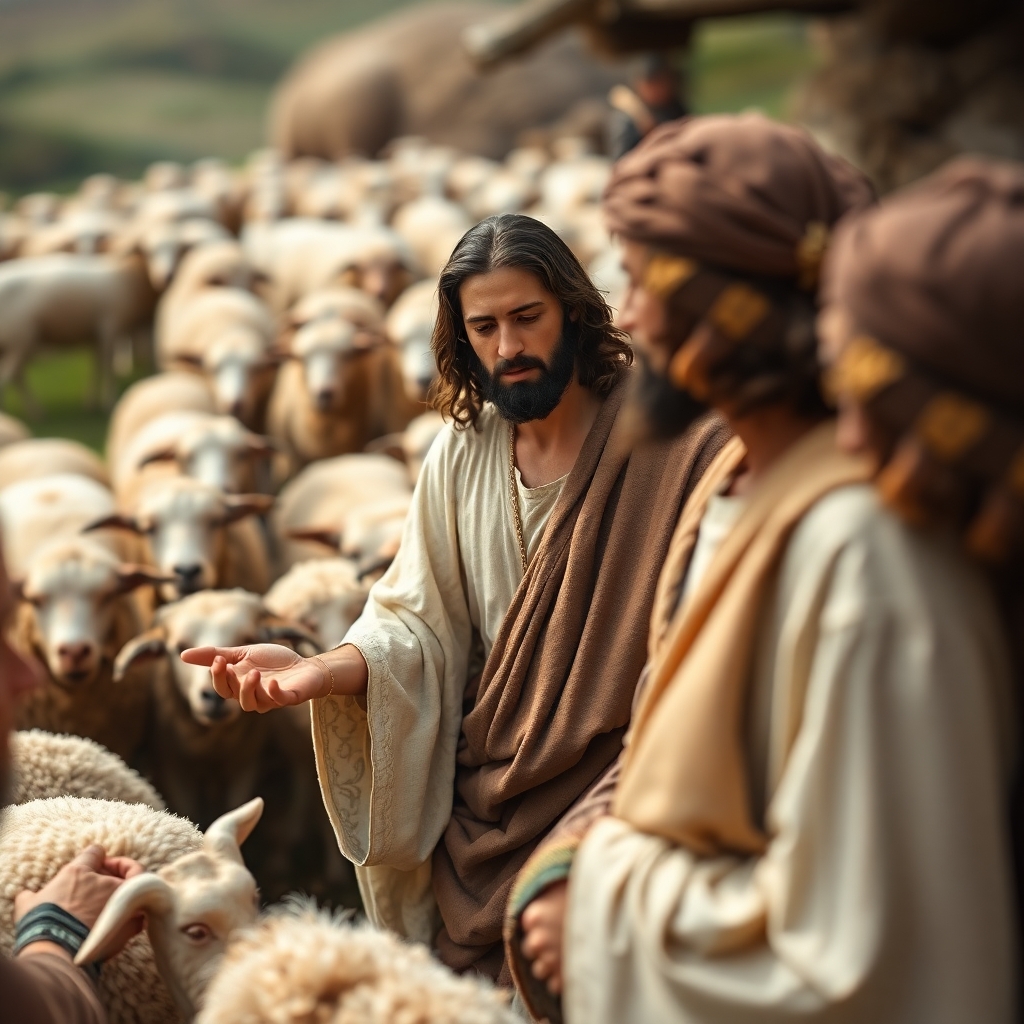
Jeremiah 23:1-8 – Shepherds of the Flock: Divine Leadership from Jeremiah’s Prophecy to Christ’s Perfect Model
The concept of “shepherds” in Jeremiah 23:1-8 serves as both a warning and an encouragement to disciple-makers, with Jesus Christ standing as the ultimate exemplar of shepherding leadership. This passage, set against the backdrop of Judah’s impending exile, presents a stark contrast between unfaithful leaders and the promise of a righteous shepherd-king.
Etymology and Biblical Context
The Hebrew word for shepherd, derives from the root raw-aw’ (Strongs H7462), meaning to pasture, tend, or graze. This term encompasses not only the literal occupation of caring for sheep but also metaphorically represents leadership, particularly in a spiritual or governmental context.
In Jeremiah 23:1-8, God pronounces judgment on the “shepherds” who have failed in their duty to care for His people. These leaders, primarily referring to the kings and religious authorities of Judah, have “scattered the flock” through their negligence and self-serving actions.
The Failure of Human Shepherds
The indictment against these shepherds is severe. They have:
1. Destroyed and scattered the sheep
2. Driven them away
3. Failed to attend to their needs
This failure of leadership resulted in the people’s spiritual and moral decay, ultimately leading to national calamity.
Jesus: The Perfect Shepherd
In contrast to these failed leaders, Jesus Christ emerges as the perfect shepherd. He embodies the ideal qualities that God demands of His shepherds:
1. Goodness: Jesus is inherently good, reflecting the very character of God. (John 10:11)
2. Protection: He safeguards His flock, ensuring their eternal security. (John 17:12)
3. Guidance: Jesus leads His followers in paths of righteousness. (John 10:3-4)
4. Nurture: He tenderly cares for the weak and vulnerable. (Matthew 11:28-30)
5. Sacrifice: Ultimately, Jesus lays down His life for His sheep. (John 10:11,15)
The Promise of Restoration
Jeremiah’s prophecy doesn’t end with condemnation. God promises to:
1. Gather the remnant of His flock
2. Bring them back to their pasture
3. Raise up shepherds who will care for them properly
4. Establish a righteous Branch from David’s line
This messianic promise finds its fulfillment in Jesus Christ, the Good Shepherd who perfectly embodies God’s leadership.
Implications for Disciple-Makers
For contemporary disciple-makers, this passage offers crucial lessons:
1. Warning: Leadership in God’s kingdom carries weighty responsibility. Neglect or self-interest can have devastating consequences on those under our care.
2. Encouragement: God Himself intervenes to restore and care for His people. Our efforts in discipleship are ultimately undergirded by His sovereign work.
3. Model: Jesus provides the perfect example of shepherding leadership. Disciple-makers should emulate His selfless care, protection, and guidance.
4. Hope: The promise of God’s restoration reminds us that our labor is not in vain. He is working to gather and nurture His flock, even in the face of human failure.
Jeremiah 23:1-8 presents a powerful contrast between human failure and divine faithfulness in spiritual leadership. It points us to Jesus Christ as the ultimate fulfillment of God’s promise to shepherd His people. For disciple-makers, this passage serves as both a sobering reminder of our responsibility and an encouraging assurance of God’s overarching care and provision for His flock.
Disciple-Maker’s Short Story
“The Gentle Shepherd’s Way”
The aroma of freshly brewed coffee wafted through Kathy’s cozy kitchen, mingling with the warm sunlight streaming through the windows. Sarah sat at the breakfast table, her hands wrapped around a steaming mug, her eyes fixed on Kathy with a mixture of affection and concern.
“Kathy,” Sarah began, her voice gentle but firm, “I’ve noticed you’ve been a bit… intense with Julie lately. I think it’s time we talked about the concept of shepherding like Jesus.”
Kathy’s brow furrowed. “What do you mean, Sarah? I’m just trying to help her grow in her faith.”
Sarah nodded, understanding in her eyes. “I know, and your heart is in the right place. But let’s explore this idea of ‘Shepherds of the Flock’ from Jeremiah’s prophecy to Christ’s perfect model. It might give us a new perspective.”
As Sarah began to explain, Kathy’s defensive posture slowly relaxed. She listened intently as Sarah painted a vivid picture of the failed shepherds in Jeremiah’s time, contrasting them with the promise of a righteous shepherd-king.
“You see,” Sarah continued, “Jesus exemplified what it truly means to be a good shepherd. He led with gentleness, protected His flock, and ultimately sacrificed Himself for them. That’s the model we’re called to follow in our discipleship.”
Kathy’s eyes widened with realization. “Oh,” she whispered, “I think I see what you mean. I’ve been pushing Julie so hard to pray more, but maybe I’ve been more of a taskmaster than a shepherd.”
Sarah reached across the table, squeezing Kathy’s hand. “It’s an easy trap to fall into. We all want to see growth, but we need to remember that true shepherding is about nurturing, not forcing.”
Just then, the doorbell chimed. Julie had arrived for their coffee date. As she entered the kitchen, Kathy felt a newfound sense of purpose and humility wash over her.
“Julie!” Kathy greeted her warmly. “We were just talking about prayer. How have you been doing with that lately?”
Julie’s shoulders slumped slightly. “To be honest, I’ve been struggling. I know I should pray more, but it feels like such a chore sometimes.”
Kathy caught Sarah’s eye, receiving an encouraging nod. Taking a deep breath, she reflected on the gentle shepherd she aspired to be.
“Julie, I want you to know that God loves you, regardless of how much you pray,” Kathy said softly. “Let’s think about prayer differently. Instead of a task to complete, what if we viewed it as a conversation with someone who cares deeply for us?”
Julie’s eyes glistened with unshed tears. “That… that sounds nice. But how do I start?”
“Why don’t we pray together right now?” Kathy suggested. “Nothing formal, just a chat with our Heavenly Father.”
As the three women bowed their heads, Kathy led a simple, heartfelt prayer. She thanked God for His love, asked for His guidance, and expressed gratitude for their friendship. When they finished, Julie’s face shone with a newfound peace.
“That felt different,” Julie admitted. “Like I was actually connecting with God, not just reciting words.”
Sarah beamed at Kathy, pride evident in her eyes. Kathy felt a warmth in her chest, realizing that in learning to shepherd like Jesus, she was not only helping Julie but also growing closer to Christ herself.
As they continued their conversation over coffee, Kathy marveled at the transformation. By embracing the role of a gentle shepherd, she had opened the door to deeper, more meaningful discipleship. And in doing so, she felt her own heart aligning more closely with the ultimate Shepherd, Jesus Christ.
 ToBeLikeJesus