Welcome Back! Today, I’ll be sharing some news that’s too good not to share.
So let’s dive in.
Acts 12:11-16
When Peter came to himself, he said, “Now I know for sure that the Lord has sent forth His angel and rescued me from the hand of Herod and from all that the Jewish people were expecting.” And when he realized this, he went to the house of Mary, the mother of John who was also called Mark, where many were gathered together and were praying. When he knocked at the door of the gate, a servant-girl named Rhoda came to answer. When she recognized Peter’s voice, because of her joy she did not open the gate, but ran in and announced that Peter was standing in front of the gate. They said to her, “You are out of your mind!” But she kept insisting that it was so. They kept saying, “It is his angel.” But Peter continued knocking; and when they had opened the door, they saw him and were amazed.
My Thoughts and Our Story
For those who follow my ramblings, you can tell this is not my normal MO. But this news is too extraordinary to just “rinse and repeat.”
Many of you know that my wife was diagnosed with Stage IV breast cancer three months ago. Her lungs were filling with fluid that had to be drained weekly by thoracentesis where they use a needle to insert into the outer lung cavity and then use a catheter to drain the fluid. Sometimes it was up to a liter. Deb was losing weight fast, and would become winded walking halfway across the room. She was eventually hospitalized and had two chest tubes inserted to continually drain the fluids. Finally, after jumping through a lot of medical system hoops, a biopsy was done and it came back positive for metastatic breast cancer.
This wasn’t our first rodeo. She had been through the cancer circus, chemo, radiation, and a few surgeries, twenty-five years ago. Now cancer was back. It was so bad, we actually were “getting our affairs in order.” This was really really bad news.
So we prayed. And we got our friends and family to pray. We had neighbors praying. Even strangers would drop us a note and say they were praying. At that point, what else are you going to do? But how do you respond when the Father answers your prayers?
Last Friday Deb went in for a CT scan. Her oncologist called today (14 Oct 26) and said there is no sign of the cancer. It “appears” to be gone. We were in shock! Like Peter finally realizing he had just made a prison break compliments of an angel, and Rhoda leaving him standing at the locked gate, and then the church telling her she’s crazy, we just sat there dumb founded. Really? Did we just hear what we thought we heard from our doctor?
I’ve seen a few miraculous things in my life but this has to be the most extraordinary and by far, the most meaningful. Please join us as we celebrate our amazing God, whose mercies and lovingkindnesses are indeed new every morning. We give Him all the glory and honor.
Organic Writing – No Artificial Intelligence or Sweeteners Added
Welcome Back! Today, we’ll be looking at the Gospel of Luke to see what Jesus said about excuses.
So let’s dive in.
Luke 14:15-24
When one of those reclining with Him heard this, he said to Jesus, “Blessed is everyone who will eat at the feast in the kingdom of God.” But Jesus replied, “A certain man prepared a great banquet and invited many guests. When it was time for the banquet, he sent his servant to tell those who had been invited, ‘Come, for everything is now ready.’ But one after another they all began to make excuses. The first one said, ‘I have bought a field, and I need to go see it. Please excuse me.’ Another said, ‘I have bought five yoke of oxen, and I am going to try them out. Please excuse me.’ Still another said, ‘I have married a wife, so I cannot come.’ The servant returned and reported all this to his master. Then the owner of the house became angry and said to his servant, ‘Go out quickly into the streets and alleys of the city, and bring in the poor, the crippled, the blind, and the lame.’ ‘Sir,’ the servant replied, ‘what you ordered has been done, and there is still room.’ So the master told his servant, ‘Go out to the highways and hedges and compel them to come in, so that my house will be full. For I tell you, not one of those men who were invited will taste my banquet.’”
My Thoughts
It was a very spiritual statement; “Blessed is everyone who will eat at the feast in the kingdom of God.” One you might suspect to hear around Jesus as people posture themselves as being “righteously in the know.” And yet, Jesus gives a warning to His “spiritual friend” and everyone else at the table. Not so fast. Maybe there’s something a little deeper at play here. Maybe, just maybe, those who think they will get a taste of the sumptuous dinner in heaven actually voided their invitation here on earth.
In the story Jesus states that all invitations have already been sent and now the great banquet is ready. All the guests have to do is let the servants know that they are on their way. But something strange takes place, well, maybe not so strange when one is invited to something they weren’t very interested in anyway. The excuses begin to fly. “I got some land.” “I got some cows.” “I got a wife.” All very important things and seemingly more important than this man’s big dinner.
Jesus intended the dinner guests and, oh by the way, us, to connect the dots. We see that these excuses are ordinary and common ones made every day for things we don’t want to do. We have our priorities. But we’re not talking about any old meal. We’re talking about the “feast in the kingdom of God!” Jesus is painting a picture of the stark difference between wanting to sound “spiritual” and actually “seeking the kingdom first (Matthew 6:33). In reality, those with excuses are posers. Their lifestyle doesn’t align with their platitudes. In plain words, they are hypocrites.
Now, let’s get personal. Have we ever used excuses to justify our priorities over kingdom priorities? I know I have. “I’ll read my Bible after I check my messages, people are important, you know.” “That person doesn’t look like they’d be interested in the gospel anyway.” “I’ll cut my prayers short today. God already knows what I’m gonna pray.” I’ll spare you and I any more illumination than necessary. We may not be making excuses that keep us from the celestial dinner with Jesus but aren’t these kinds of excuses robbing us of time with Him now?
My Story
“No excuse Sergeant!”
That was what we were taught to say from day one when the sergeant confronted us on one of our shortcomings. And why was this such an important lesson to teach soldiers right out of the gate. Well, new soldiers are being chastised for their errors every waking moment. And the most natural thing for a civilian wearing a uniform is to do what they have done all their lives, hide it, deny it, or blame it on someone else. And from personal and cultural experience, I know it’s not just new soldiers who are plagued with the “excuse disease.” It’s part of human DNA. We’ve been using them since the Garden of Eden. “That woman You gave me made me do it!”
But then my sergeant went one step further. After I replied with the canned response “No excuse Sergeant!” We were instructed to self evaluate and express line by line what we actually did and how we were going to correct our actions in the future (Of course this second step happens after giving him twenty push-ups).
Think about it. The Army was teaching us how to repent. Confess our wrong doings and take steps to correct them. Now you’ll probably never hear a sergeant say “You are forgiven.” But when we come clean before our heavenly Father, He will. And isn’t this a skill that desperately needs to be taught to people these days? Like my sergeants in basic training, we too as disciple makers, need to teach people the art of receiving correction, repentance, and coming up with a plan to avoid the pitfall in the future (minus the pushups).
Our Action Plan
Now it’s time for application. Here’s some questions and ideas:
When confronted with some sin or error (real or false), what is our first reaction?
The man who discipled me as a young believer gave me this advice; “Assume a rebuke from someone is at least 1% true. That will give you enough time to think about it before you put up your defenses.”
Do a Bible study with the men and women you are discipling on Receiving or Rejecting Correction.
Repentance is one of the first skills Jesus taught His disciples. To acknowledge the wrong and align future thoughts and actions with God’s design. It was crucial not only to their salvation but for maturity, healthy relationships, and even the ministry. Excuses get in the way of real life now and when we cross over to the next life.
Organic Writing – No Artificial Intelligence or Sweeteners Added
Welcome Back! Today, we’ll be looking at the Gospel of Luke to see what Jesus taught about honor and humility.
So let’s dive in.
Luke 14:7-11
When Jesus noticed how the guests chose the places of honor, He told them a parable: “When you are invited to a wedding banquet, do not sit in the place of honor, in case someone more distinguished than you has been invited. Then the host who invited both of you will come and tell you, ‘Give this man your seat.’ And in humiliation, you will have to take the last place. But when you are invited, go and sit in the last place, so that your host will come and tell you, ‘Friend, move up to a better place.’ Then you will be honored in front of everyone at the table with you. For everyone who exalts himself will be humbled, and the one who humbles himself will be exalted.”
My Thoughts
Jesus warns people about the folly of pride and arrogance several times throughout the Gospels. In fact, when you survey the entire Bible, you see God elevating the humble and tearing down the proud all the time. It is a consistent scenario from cover to cover.
So, why do the Scriptures pay so much attention to this theme?
Here’s my guess; I’ve heard it said that pride is the root of all sin and if left unchecked, it elevates oneself above people and more dangerously, above God. It is the beginning of rebellion against Him. It says; “I know better. I will choose what I like despite the Creator’s demands. I will be the captain of my own life.”
Pride is like cancer and the Holy Spirit is committed to removing it from our lives. You see the Great Surgeon using His skillful skalpel in men like Moses, David, Joseph, Peter, and Paul. They all had to go into the OR as they went from hero to zero and back to hero again. Other characters, despite the Surgeon’s efforts, never make it out alive.
But it would be a mistake to misunderstand Jesus. He is not against greatness or honor. In fact he explicitly instructs people on how to achieve both. “If you want to be great, serve. If you want to be honored, take the low place. It’s up to others and ultimately the Lord, to elevate us to places of honor and prominence.
Grabbing it for ourselves is a sure fire way to find the bottom.
My Story
I was having a discussion with my mentor. It was something we had been doing for more than twenty years. But this time it was different. I disagreed with him at some point in our dialogue and made sure he knew it. As I got up to get more coffee, I thought to myself, “That was a good comeback. Now the student is teaching the teacher.” Just then I stepped on a wet spot and slammed my knee straight into the floor of the restaurant. It shattered in three pieces and I was on my way to surgery and six months of recovery. Coincidence? Maybe. Was I being arrogant, prideful, and haughty? Without a doubt. Just saying…
Our Action Plan
Now it’s time for application. Here’s some questions and ideas:
Do a Bible study on pride and humility. Here’s some verses to begin with; (Proverbs 11:2, Proverbs 16:5, Proverbs 29:23, Isaiah 2:11, James 4:10, 1 Peter 5:5, Proverbs 18:12, Psalm 10:4, Proverbs 21:4, Jeremiah 9:23, 1 Corinthians 10:12, Galatians 6:3, Philippians 2:3, Proverbs 26:12, Isaiah 13:11, Romans 12:16, 1 John 2:16, Proverbs 15:25, 2 Chronicles 26:16, Proverbs 27:2)
Do a Bible character study and observe how God develops their humility.
Have a discussion with someone you are mentoring about pride. (Be careful not to step on any wet spots)
It is quite clear that God hates pride and is committed to rooting it out of us. As disciple makers we are stewards not only of outward actions but also the heart. Let’s allow the Holy Spirit to carve out this dangerous disease and help others do the same.
Organic Writing – No Artificial Intelligence or Sweeteners Added
Welcome Back! Today, we’ll be looking at the Gospel of Luke to see how our emotions can blind us to compassion, reason, and even the truth.
So let’s dive in.
Luke 14:1–6
One Sabbath, Jesus went to eat in the home of a leading Pharisee, and those in attendance were watching Him closely. Right there before Him was a man with dropsy. So Jesus asked the experts in the law and the Pharisees, “Is it lawful to heal on the Sabbath or not?” But they remained silent. Then Jesus took hold of the man, healed him, and sent him on his way. And He asked them, “Which of you whose son or ox falls into a pit on the Sabbath day will not immediately pull him out?” And they were unable to answer these questions.
My Thoughts
“They were unable to answer these questions” not because they were ignorant or uneducated. Their silence wasn’t due to some physical impediment. It wasn’t even the blinding flash of the obvious in Jesus’ questions. Their inability to answer such simple questions came from a deep seated set of character flaws. They weren’t even in the same mental space because of their anger, jealousy, contempt, arrogance, fear, shame, obsessions, extreme suspicion, and / or spite. In other words the religious leaders were such a hot mess of negative emotions they couldn’t even see straight. It was like the truth was from another planet. Common sense was completely alien to them. Sound familiar?
This is a tell tale sign of demonic influence straight from the pit. When people’s emotions become a runaway train and the only remedy is to kill the one telling the truth, we should recognize it for what it is. Satan has been using this tactic since Cain killed Abel.
The Apostle James spells this out clearly:
What is the source of quarrels and conflicts among you? Is not the source your pleasures that wage war in your members? You lust and do not have; so you commit murder. You are envious and cannot obtain; so you fight and quarrel. (James 4:1-2)
All we have to do is watch the news or scroll through YouTube for fifteen minutes to see these venomous emotions at work in our culture today (and some offenders are professing Christians). Where the source of these destructive attitudes and behaviors come from the Tempter, the antidote comes from the opposite player, the Holy Spirit.
But the fruit of the Spirit is love, joy, peace, patience, kindness, goodness, faithfulness, gentleness, self-control; against such things there is no law. Now those who belong to Christ Jesus have crucified the flesh with its passions and desires. (Galatians 5:22-24)
One who is indwelled by the Spirit and is submitting to His promptings should be exhibiting quite the opposite emotions that blind one to logic, reason, and the truth. This is a key part of character development, casting off the old and donning the new. And so it is a key part of our responsibility to help those we are mentoring to walk in the Spirit and to be transformed into the image of Christ (Romans 8:29).
My Story
I was trying to remember a time where I was so mad, I couldn’t see straight. Immediately an event jumped into my head. I was a young buck sergeant and we were in the middle of a training exercise. We were to conduct a separate reconnaissance mission of two enemy positions and rendezvous at a prescribed time and place afterwards. Needless to say, this is the kind of thing where absolute stealth and secrecy were required. My patrol had finished and was waiting at the rendezvous point when I saw my guys in the other patrol walking across a wide open field in plain sight.
I was livid! These guys knew better as part of an elite reconnaissance unit not to take the “easy way.” They should have remained concealed for the whole mission. I stood on the hood of my jeep and started a tirade that lasted a good half hour and cussing a blue streak the whole time. It was just a training exercise but our actions should reflect those of what we were supposed to do in actual combat. And now comes the confession. I was a professing follower of Jesus at that time and my actions were supposed to match the actual faith I professed.
It’s ok to get angry and correct people who are in error. But to be so spitting mad that you lose all self control and act like a crazy person, that’s a no go. I’m thankful Jesus and my mentor were patient with me and helped me express my emotions in a much healthier way. For years now, I have been letting the fruit of the Spirit soak in and helping other men and women do the same.
Our Action Plan
Now it’s time for application. Here’s some questions and ideas:
Self Check – Are you routinely allowing your emotions to boil over to the point you lose control?
What character traits do you intentionally work on as you are discipling others?
Make a list of the character traits Jesus worked on with His own disciples.
Jesus isn’t just concerned with our actions. He often talks about the heart, the inside. Our thoughts, motives, and attitudes matter. Let’s continue to listen to the Holy Spirit and be radically transformed on the inside as well as the outside.
Organic Writing – No Artificial Intelligence or Sweeteners Added
Welcome Back! Today, we’ll be looking at the Gospel of Luke to see the transformative power of trusting God’s purpose and timing in our lives.
So let’s dive in.
Luke 13:31-33
At that very hour, some Pharisees came to Jesus and told Him, “Leave this place and get away, because Herod wants to kill You.” But Jesus replied, “Go tell that fox, ‘Look, I will keep driving out demons and healing people today and tomorrow, and on the third day I will reach My goal.’ Nevertheless, I must keep going today and tomorrow and the next day, for it is not admissible for a prophet to perish outside of Jerusalem.
My Thoughts
I am amazed at two aspects of Jesus’ life: His confidence in the Father’s purpose and His confidence in the Father’s timing. And notice I am drawing attention to the Father’s part. You might automatically assume, “Well, Jesus is God. Of course He’s going to have confidence in His purpose and timing!” But you may miss the point. I’m shocked that the human part of Jesus trusted the Father with these two essential elements of life, stating it time and time again. In John 5:19 and 5:30, Jesus says He can do nothing on His own initiative, but only what He sees the Father doing. And in John 12:49–50, He makes it even clearer, saying He did not speak on His own initiative, but that the Father gave Him commandment regarding what to say. Jesus is modeling something for us here. He knew the purpose and timing given to Him by the Father, and He stewarded that to the nth degree.
Why am I so amazed? Because I have struggled with both. I have struggled with clearly knowing God’s purpose and timing in my own life, and even when I thought I knew what God was doing, I’ve had issues fleshing that out. (Pun intended and I know I’m not alone). That’s why I am convinced that being saturated with the Bible and with the example of Jesus is so important. It’s like pushing a “reset” button. I need to be reminded daily, if not hourly, of God’s grand design for my life as an individual and my role in the bigger picture of what He is doing. Scripture keeps bringing me back to the road, reminding me where I’m going, why I’m going there, and Who I’m following. This reminder, if we don’t kick against the goads, so to speak, will tell us we are on the right track. It gives us assurance that what we’re doing with our lives will matter in the eternal scheme of things.
Now how important is this in making disciples of Jesus? This is absolutely huge. First, all of us—and I mean all of us—have a built-in tendency to pursue our own purposes instead of God’s. We want to write the story, call the shots, and have God bless our plans. That road doesn’t just lead “nowhere”; it actually leads to death (Romans 3:23, 6:23). Second, a life without purpose is meaningless and is a death in itself. I’ve literally watched people sleep themselves or drink themselves to death because they felt like they had no purpose in life. As disciple makers, we have two essential truths we need to instill into a new disciple’s life from the very beginning: God has a purpose for their lives, and He has the right time for it to be fulfilled. In doing so, we will set the trajectory of this young follower of Jesus for a lifetime, teaching them not just how to believe in Jesus, but how to truly follow and trust Him as their King.
My Story
If you’ve been following my posts on Substack, you read my piece on “Bezalel and Oholiab.” In it, I outline the lives of these two obscure craftsmen and illuminate their crowning contribution to the children of Israel and to everyone who reads the Old Testament. They were literally chosen by God for a very special work—to build the meeting place for God and His people.
I spent days thinking about those men and the purpose and timing God had for them. I did a lot of reflection on my own life, asking the questions:
What has been my crowning contribution to this point in life?
How long did it take for God to prepare me for the task?
What were the specific events in my life where I saw His hand preparing me?
When did I recognize that this was my purpose in life?
How would I sum up what God has designed me to be and do?
That exercise was very encouraging and instructive.
I basically saw my purpose as “Helping others push the boulder of generational discipleship up and over the hill for Jesus.”
I have the advantage of looking in the rearview mirror and seeing a long way back. Sixty-seven years’ worth of training and practice have brought me to the point where several “boulders” are now rolling down the hill, and I ain’t pushing no more.
Disciples are reproducing more disciples of Jesus, and I have no control, influence, or say about what the fourth generations and beyond are doing. But it’s never been about who gets the credit (unless, of course, we’re talking about Jesus). It’s about making disciples of all nations so God gets the glory. Needless to say, I’m very thankful that God gave me a purpose—and that I have been walking in His timing all my life.
Now, I am confident of this:
Your eyes have seen my unformed substance;
And in Your book were all written
The days that were ordained for me,
When as yet there was not one of them.
Psalm 139:16
Our Action Plan
Now it’s time for application. Here’s some questions and ideas;
What is your purpose in life? Does it align with God’s purpose for your life?
Do you recognize the seasons, the “Stops and Goes,” and interruptions as God’s way of guiding you and others around you?
How will you help those you are discipling to discover and align themselves with God’s timing and purposes?
It’s easy for us to lose sight of God’s plan for our lives and head in our own direction. Or to simply be paralyzed by the myriad of choices we have set before us. As we live our lives and make disciples along the way, let’s align ourselves with His purpose and timing by staying in His Word and listening to His Holy Spirit.
We spend our lives reminding those we disciple of the truth. But what is the bedrock of that truth? Jesus did not attempt His ministry on a hunch; He built it on the absolute confidence that the Father would keep His Word.
Within the pages of Scripture, there are over seven thousand promises spoken by God. While they vary between blessings and warnings, conditional and unconditional, they are all profound treasures waiting to be uncovered. As His children, digging into these promises not only brings immense encouragement to our own lives, but it equips us to deeply encourage the people we are discipling. We’ve discovered over the years that when God’s promises become the bedrock of your ministry, they produce the lasting endurance and joyful zeal needed to multiply spiritual generations.
The Jesus Model
This trust was the fuel for His boldest invitations. When He told Peter and Andrew, “Follow Me, and I will make you fishers of men” (Matthew 4:19), He wasn’t just giving a command; He was making a promise. He trusted that if they provided the obedience (“Follow Me”), the Father would provide the transformation (“I will make you”). He knew that the burden of changing hearts rested on God, not on human effort.
Even at the end, as He commissioned the disciples for a task that seemed impossible—reaching all nations—He sandwiched the command between two realities: His authority and His presence. “All authority has been given to Me… and lo, I am with you always” (Matthew 28:18-20). He trusted that the Father had given Him all authority and it was sufficient to back the mission.
The Scriptural Model
Paul mirrored this absolute confidence in the divine guarantee. He did not view the promises of God as hopeful possibilities, but as current realities. Writing to the Corinthians, he declared, “For as many as are the promises of God, in Him they are yes; therefore also through Him is our Amen to the glory of God through us” (2 Corinthians 1:20).
Paul understood that in Christ, God’s answer to every promise He ever made is a resounding “Yes.” This gave Paul the audacity to claim that the Galatian believers were not merely converts, but “children of promise” (Galatians 4:28). Just as Isaac was born not by natural power but by divine promise, spiritual generations are born by God keeping His word. We do not birth spiritual children by our own effort alone, but by relying on the Promise-Maker.
Stories
The pursuit of generational discipleship is rarely a sprint; it’s a marathon through varying terrain. It requires a relentless blend of patience, hard work, and an unwavering trust in God’s timing. Deb and I have walked through many “deserts” in our journey—seasons where the ground felt cracked and the fruit seemed non-existent.
A few years ago, we felt a distinct stirring. It wasn’t an audible voice, but through the quiet rhythm of Scripture and prayer, the message was clear: start over. God led us to begin a church right in our living room with a simple promise: “I will fill this room, it will multiply, and you will see My hand.”
We set a date, arranged the furniture, and began to pray. Then, we waited. For two long years, our Tuesday night gathering consisted of exactly five participants: me, Deb, the Father, the Son, and the Holy Spirit.
Twenty-four months is a long time to stare at empty chairs. However, we didn’t panic or throw in the towel. Having leaned on God’s promises since our earliest days in ministry, we knew that a “dry season” didn’t mean a “dead season.” We kept showing up. We kept trusting.
Sure enough, the tide turned. Our living room didn’t just fill; it overflowed. That small circle multiplied into several groups of disciples making disciples, eventually sparking two or three new churches and even sending a missionary to Egypt.
Recently, coming off a sabbatical, we found ourselves leaning into the promise of Leviticus 26:9: “I will turn toward you and make you fruitful and multiply you, and I will confirm My covenant with you.” Just one month after that season of rest, we are seeing significant fruit. It’s a powerful reminder that when we rely on His covenant rather than our own speed, the multiplication is inevitable.
We need to remember God works on a much different timescale than we do. We get antsy after a few months, but God waited 20 years to give Abram his follow-up instructions.
Suggestions
Promise Journal: Encourage your disciples to keep a journal of specific promises from Scripture that they are standing on for their life and ministry.
Rehearse the Wins: Regularly share stories of how God has come through in the past. “Remember when we prayed for X, and God did Y?” This builds faith for the current battle.
The Faith Step: Challenge your disciples to do something that is doomed to fail unless God shows up (e.g., sharing the Gospel with a stranger). Help them exercise the “trust muscle.”
Application for Disciple Makers
For us, the WIGTake is moving from “hoping” God shows up to “trusting” He already has. We often hesitate to lead because we look at our own inadequacy. But spiritual reproduction isn’t based on your ability; it’s based on His promise. When you disciple someone, you are standing on the promise that He is the one who makes fishers of men. You are trusting that His authority is real and His presence is constant. You aren’t just crossing your fingers; you are saying “Amen” to God’s “Yes.”
Next Week: Trusting the promises is the “why” that allows us to exhibit the “how” of the long-term marathon. Next week, we conclude with the grit required to finish: Ingredient #12: Perseverance.
Last week, we looked at the posture of a servant. But even the best serving can be forgotten. Jesus knew that we drift and we forget. Because of this, His ministry was a relentless cycle of repetition and reminding.
The Jesus Model
Consider the scene in the boat in Mark 8. The disciples had just witnessed Jesus feeding thousands of people—twice. Yet, when they realized they had forgotten to bring bread, they immediately panicked. Jesus had to walk them back through the math of the miracles, asking, “When I broke the five loaves for the five thousand, how many baskets full of broken pieces did you pick up?” (Mark 8:14-21). He was frustrated, yes, but He was persistent. He refused to let them live in the “leaven” (the false teaching) of the Pharisees; He kept bringing them back to the reality of who He was.
This need for reminding is so central that Jesus revealed it as a specific role of the Holy Spirit. He told the disciples, “The Helper, the Holy Spirit… will teach you all things, and bring to your remembrance all that I said to you” (John 14:26). If the Third Person of the Trinity is dedicated to the ministry of reminding, we should not consider it beneath us.
The Scriptural Model
The apostles picked up this mantle of repetition. Paul, writing to his seasoned protégé Timothy, didn’t assume Timothy was on auto-pilot. He wrote, “For this reason I remind you to kindle afresh the gift of God which is in you” (2 Timothy 1:6). Even the most faithful leaders can let their fire dim; they need the external spark of a reminder to blaze again.
Peter was even more explicit about this strategy. He didn’t apologize for repeating himself. He declared, “Therefore, I will always be ready to remind you of these things, even though you already know them… I consider it right, as long as I am in this earthly dwelling, to stir you up by way of reminder” (2 Peter 1:12-13). Peter understood that knowledge isn’t enough; we need “stirring up.” The goal of reminding isn’t to inform the intellect but to awaken the will.
Stories
When I first grasped that discipleship was about becoming like Jesus, I realized I wasn’t the only one who had been missing the mark. For years, I treated discipleship like a Wednesday night line-up: a class to attend, a curriculum to finish, or a method to master. It was a program, not a pursuit.
I soon discovered that the core discipline of discipleship is the relentless effort to keep Jesus at the center. He isn’t just a distant Lord or a historical Savior; He is the target and the ultimate model. I started a constant internal rhythm, reminding myself to think, speak, and act like Him. Most importantly, I had to learn what it meant to simply abide in Him.
The power of this “constant reminding” became clear during a recent coaching session. I was working with a group of church leaders on the topic of healthy families. They were asking great questions. I paused and asked, “Before I give you an answer, where am I going to look first?”
“The Scriptures,” they answered confidently.
“Close,” I said with a smile.
They caught my drift immediately. “Jesus!” they shouted in unison.
Exactly. While the Scriptures are our map, Jesus is the destination. This is the art of discipleship: keeping the Master in sight when the “business” of religion tries to fog the view. Of course, this requires a fair amount of persistence. I often joke that there are only three ways to truly learn anything: repetition, blunt force trauma, and repetitive blunt force trauma.
While that’s a bit tongue-in-cheek, the truth remains. We are forgetful people. We need to be reminded—over and over—that every principle and every truth we teach must eventually lead us back to the same place: Jesus, Jesus, Jesus.
Suggestions
Jesus-Centered: In every lesson, no matter the topic (relationships, finances, work), find the thread that leads back to the Gospels. Remind them that Jesus is the hero of every story.
Review Identity and Purpose: Regularly bring them back to their identity in Christ and His purpose for their lives. Try to always bring these two together like Jesus did.
Review the Basics: Don’t be afraid to reteach the fundamentals annually (Time with Jesus, Sharing the Gospel, The Great Commission, etc.). Assume they leak and need a refill on the basics.
Application for Disciple Makers
For us, the WIGTake is accepting the role of “Chief Reminding Officer.” You will often feel like a broken record, repeating the same truths about grace, identity, and the Kingdom over and over. Do not be discouraged by this. Those you are discipling are being bombarded daily by the world’s counter-narratives. Your voice needs to be the steady rhythm of truth that cuts through the noise. Spiritual parenting isn’t just about teaching new things; it’s about helping people remember what is true when life tries to make them forget. It is not just about checking a box of information transfer; it is about “kindling afresh” the fire of God in them, knowing that sometimes the most profound ministry is simply reminding someone of who they already are in Christ.
Next Week: We remind people of the truth because the mission feels impossible. When the task feels too big, we have to lean on something sturdier than our memory. Next week: Ingredient #11: Trusting the Promises of God.
Welcome Back! Today, we’ll be looking at the gospel of John to see how Jesus discreetly chose to avoid persecution.
So let’s dive in.
John 10:39–42
At this, they tried again to seize Him, but He escaped their grasp. Then Jesus went back across the Jordan to the place where John had first been baptizing, and He stayed there. Many came to Him and said, “Although John never performed a sign, everything he said about this man was true.” And many in that place believed in Jesus.
My Thoughts
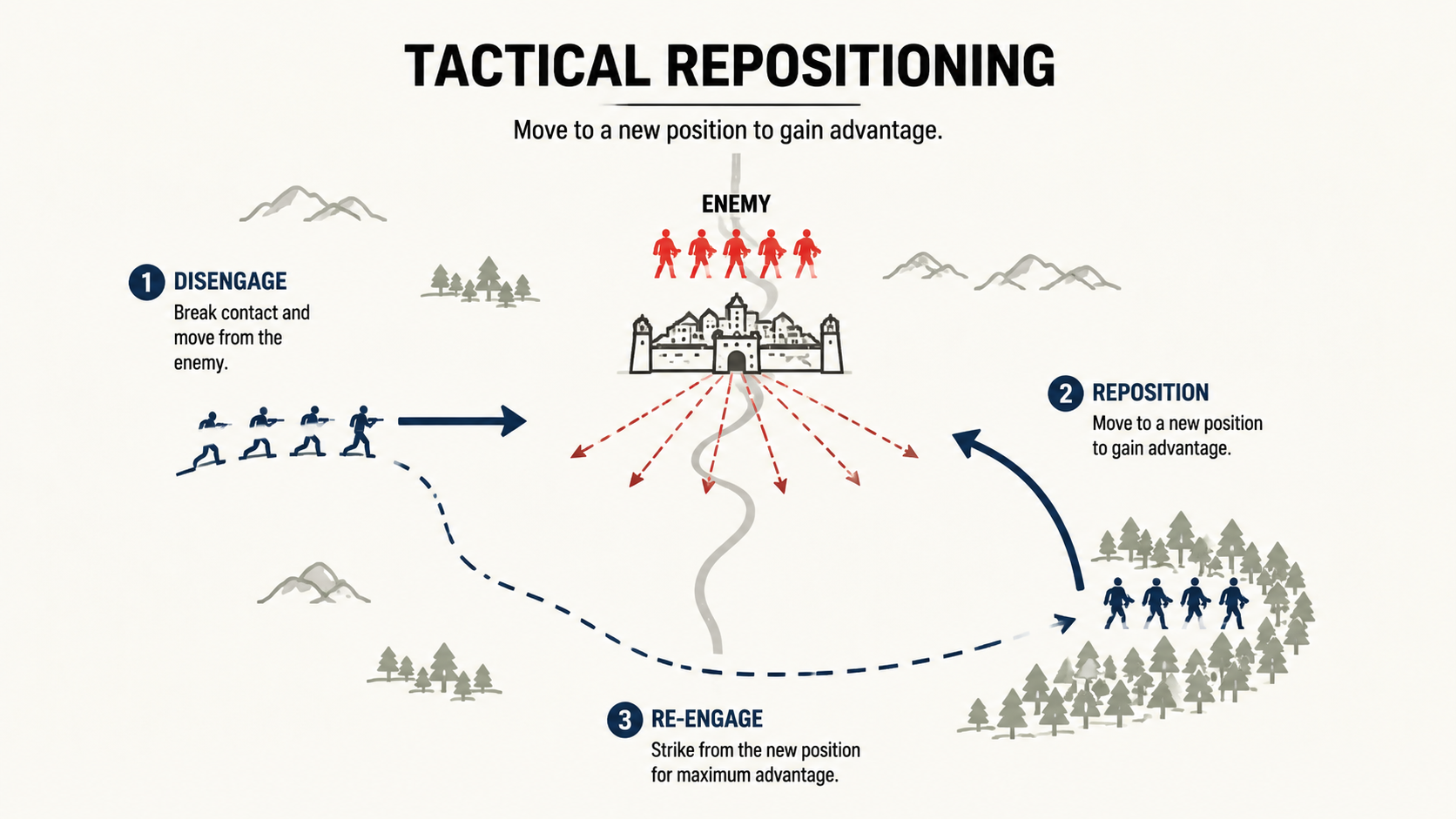
It’s interesting how Jesus responds to the heat He’s getting from the religious leaders in this season of His ministry. This is what we used to call in the Army a “tactical repositioning” not a “retreat.” In other words, “Run, run away. Live to fight another day.” It’s not an act of cowardice. No one could ever rightfully call Jesus a coward. It’s an act of stewardship. Jesus knows when to duck and weave and when to take a punch. There would come a day when He literally let’s them kill Him. But not this day. There was still work to do.
Notice how Jesus was in fact modeling for the disciples what He commanded them to do when things got a little too dicey on their mission.
“But whenever they persecute you in one city, flee to the next…” (Matthew 10:23)
Discretion is the better part of valor. There is a time to stand your ground and a time to move on.
So how did Jesus know when was the right time for a “tactical repositioning” and a time to go to the cross. Answer: Abiding deeply in the Father (John 5:39). And Jesus instructs us to abide in Him the way He abided in the Father. This is when we will know which to choose as we are living life and making disciples.
My Story
As an Army Chaplain, I had to learn early on which hills were truly worth dying on.
Sure, we encountered situations that felt sketchy, and a few that were just flat-out wrong. But I didn’t bat an eye when instructed to provide a Quran to a Muslim soldier or to ensure a Wiccan soldier wasn’t persecuted for their faith.
The Army was crystal clear on the difference between providing and performing. My job was to provide access to religious support for all soldiers. However, I was not required to perform a service that violated my personal convictions or my endorsing body’s theological standards.
Under our Constitution, every person has the right to practice their faith, provided it doesn’t infringe on the rights of others. As chaplains, we were the guardians of those rights.
If you think through the day-to-day scenarios, you can see where this gets a little tricky. There is a massive amount of gray area—or maybe not so massive, depending on your convictions—that a chaplain has to navigate.
One area I wrestled with was the expectation of “non-sectarian prayers.”
By definition, a non-sectarian prayer is kept general, intended to be inclusive of people from various faiths or no faith at all. My problem was simple: I don’t have a generic God.
The Triune God of the Christian faith specifically instructs us to invoke the name of the Son, the Lord Jesus Christ. I couldn’t bring myself to pray to a “vanilla god” or a “government god.” I could only pray to the God of all creation—the One who truly answers.
For years, I went about my duties without this being an issue, consistently praying in Jesus’ name. But eventually, it caught up with me. I was officially asked to resign my commission as an Army officer and chaplain.
This was the hill I was willing to die on.
Ironically, the situation was ultimately resolved when a higher-ranking chaplain stepped in and plainly pronounced, “Chaplain Wood has Constitutional rights, too.”
Ultimately, the instructions of Jesus helped me pick my battles wisely.
As we are discipling others for Him, it is only a matter of time before they face this kind of hostility. When that day comes, we will need to be ready to point them right back to His example.
Our Action Plan
Now it’s time for application. Here’s some questions and ideas.
Do you know how to discern when and when not to “fall on your sword?”
Are you training the folks you’re mentoring how to handle push back and persecution?
Read and study Daniel chapter 1 and learn how Daniel navigated some tricky situations.
It’s always good to prepare for the storm before it comes. And they will come. Let’s take a page out of Jesus’ playbook and be wise stewards of the life and circumstances God has given us.
Last week, we talked about the Hand of God moving through prayer. But spiritual reproduction fails when the second generation is merely echoing the convictions of the first. For the mission to survive our departure, the message must transfer with its original potency. Jesus did not want parrots; He wanted witnesses. He explicitly prayed for the next generation—“those also who believe in Me through their word” (John 17:20).
The Jesus Model
He understood that for the movement to survive His physical departure, the message had to transfer from the original twelve to others with the same potency.
But how does that transfer happen? It requires a shift from “I believe because you told me” to “I believe because I know Him.” We see this deep, sticky conviction in Peter. When the crowds deserted Jesus, He asked the twelve if they would leave too. Peter didn’t say, “We’re staying because we signed a contract.” He declared, “Lord, to whom shall we go? You have words of eternal life” (John 6:68). That is the kind of bedrock conviction that weathers storms—a personal realization that Jesus is the only viable option.
Perhaps the most poignant example is Thomas. He missed the first post-resurrection appearance and refused to believe on hearsay alone. A week later, Jesus showed up specifically for him. He didn’t shame Thomas for his doubt; He offered His wounds. The result was a personal, ownership-taking confession: “My Lord and my God!” (John 20:26-29). Jesus then pronounced a blessing on the coming generations—us—who would believe without seeing, relying on the conviction passed down through the Word.
The Scriptural Model
Paul codified this generational vision in his final letter to Timothy. He commanded, “The things which you have heard from me in the presence of many witnesses, entrust these to faithful men who will be able to teach others also” (2 Timothy 2:2). This is the biblical mandate for four spiritual generations: Paul -> Timothy -> Faithful Men -> Others.
However, Paul knew this chain would break if the conviction was weak. He immediately followed this command with metaphors of endurance: “Suffer hardship with me, as a good soldier of Christ Jesus” (2 Timothy 2:3). He likened the disciple-maker to a soldier in active service, an athlete competing by the rules, and a hard-working farmer waiting for the harvest (2 Timothy 2:1-7). Second-generation conviction isn’t just about agreeing with a doctrine; it’s about possessing the grit to carry that doctrine through the “fog of war” and the fatigue of labor.
Stories
Our son, Wes, grew up watching us make disciples of Jesus. Our living room wasn’t just a family space—it was a training ground for young Airborne Rangers from our ministry. These soldiers became his youth group, an unlikely congregation of faith and brotherhood under our roof.
When Wes graduated high school, he surprised me with a question that stung a little: “Who would you recommend to mentor me?”
Understanding that the bird must leave the nest, I swallowed my pride. “Andrew,” I said without hesitation.
Andrew didn’t disappoint. Under his guidance, Wes flourished in knowledge, conviction, and practice of Jesus’ Great Commission. He married Tina, joined the Army, blessed us with four grandchildren, and has risen to the rank of Major.
But what fills my heart most isn’t his military success—it’s what he does with it.
Every single place the Army stations them, Wes and Tina make disciples and host a church in their home. They carry the torch we’d lit, the same one Andrew and Cindy had carried before them.
His recent six month deployment to Japan proved the depth of his commitment. Within a week, he’d gathered fellow soldiers to read the Bible together. He’d seen his parents do it, Andrew and Cindy do it, countless others do it—disciples making disciples.
“The things which you have heard from me in the presence of many witnesses, entrust these to faithful men who will be able to teach others also. Suffer hardship with me, as a good soldier of Christ Jesus…” (2 Timothy 2:2-4)
While his knowledge of this passage is commendable, what is truly impressive is the way he lives it.
From our living room to bases around the world, the chain remains unbroken. Wes doesn’t just wear his country’s uniform—he wears the mantle of faith we passed down, now passing it forward to faithful soldiers who will teach others also.
Story #2
The difference was striking if you pause a minute to consider.
I recently heard a pastor at a legacy church talk about 6 (yes SIX!) teaching times that he leads throughout the week. It’s not that there aren’t others who could do some of that, and he’s not particularly prideful, it’s just the result of the paradigm. The main teacher teaches.
Juxtapose that with a disciple-maker I’m friends with. He sent me a picture of a discovery Bible study he is leading. I asked, “Who’s the guy praying in the front of the room?” His reply? “Oh, that’s Derek, he leads the Bible study now.”
We have to pass on leadership if we want to see spiritual generations.
Suggestions
The “Pass the Ball” Test: Stop doing all the training. Ask the person you are discipling to prepare the lesson or lead the church next week while you sit back and observe.
Ask “Who?”: Regularly ask those you are discipling, “How are your people doing?” or “Who are you focused on?” Keep them thinking about the next generation, not just their own consumption.
They Memorize the Mandate: Have them commit the Great Commission (Matthew 28:18-20) to memory. Have them quote it to you often.
Application for Disciple Makers
For us, the WIGTake is having the patience to let those we disciple wrestle until they own their faith. We often rush to provide answers or secure their compliance, but second-generation conviction is forged in the fire of personal discovery. We must lead them to the point where they are no longer following us, but are following Him with a conviction that is entirely their own. It means preparing them not just for success, but for the hardship of a soldier and the patience of a farmer. True conviction is proven when they can withstand the pressure to quit and still choose to entrust the truth to others.
Conviction isn’t built in a classroom; it’s caught in the context of a life lived together. Next week, we look at the “inefficient” necessity of the Master’s method: Ingredient #7: Time With.
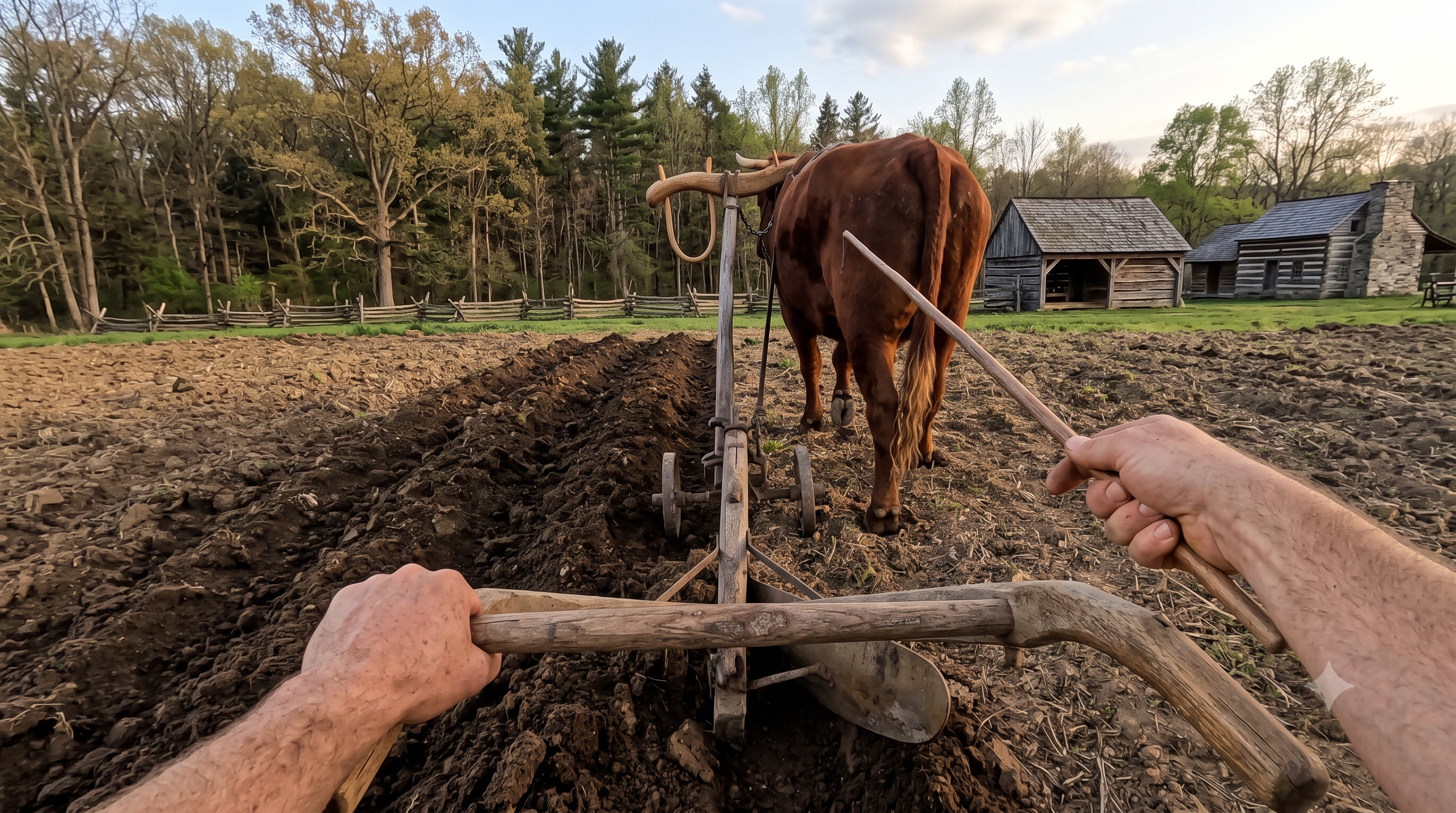
As they were going along the road, someone said to Him, “I will follow You wherever You go.” And Jesus said to him, “The foxes have holes and the birds of the air have nests, but the Son of Man has nowhere to lay His head.” And He said to another, “Follow Me.” But he said, “Lord, permit me first to go and bury my father.” But He said to him, “Allow the dead to bury their own dead; but as for you, go and proclaim everywhere the kingdom of God.” Another also said, “I will follow You, Lord; but first permit me to say good-bye to those at home.” But Jesus said to him, “No one, after putting his hand to the plow and looking back, is fit for the kingdom of God.” (Luke 9:57-62 NASB95)
Introduction
In this essay we will look at the challenge Jesus issues to all His would be followers. Some call this the cost of discipleship which is an entirely accurate statement. I would suggest it is the cost of entrance into the kingdom of God as well; Being willing to forsake all to follow Jesus.
Key Words and Phrases
Follow – ἀκολουθέω (Strong’s G190 – akoloutheō) to follow one who precedes, join him as his attendant, accompany him, to join one as a disciple, become or be his disciple, side with his party.
Looking back – βλέπω (Strong’s G991 – blepō) Looking – to see, discern, of the bodily eye, to see with the mind’s eye, in a geographical sense of places. Ὀπίσω (Strong’s G3694 – opisō) Back – back, behind, after, afterwards.
In a literal sense, looking back means the plowed rows become crooked if the farmer looks back instead of forward. Spiritually it is a lack of commitment to follow Jesus’ example, instructions, and commands.
Messianic Model – Focus on Jesus’ Example
“The foxes have holes and the birds of the air have nests, but the Son of Man has nowhere to lay His head.” – Jesus set an example of sacrificing comfort in order to advance the kingdom of God. He was more than willing to endure hardship to accomplish the Father’s desires.
“Allow the dead to bury their own dead; but as for you, go and proclaim everywhere the kingdom of God.” – Jesus prioritized the kingdom of God above all things including family. On one occasion Jesus’ mother and brothers were waiting outside for Him and requested His presence. Jesus continued to teach His disciples and responded with, “Who is My mother and who are My brothers?” And stretching out His hand toward His disciples, He said, “Behold My mother and My brothers! For whoever does the will of My Father who is in heaven, he is My brother and sister and mother.” (Matthew 12:48–50)
“No one, after putting his hand to the plow and looking back, is fit for the kingdom of God.” – Jesus was the epitome of focus and commitment. He only did what the Father was doing and only said what the Father told Him to say. (John 5:19, 12:49)
Key Theological Implications
Once again, this may seem like Jesus is establishing “salvation by works” or merit. Some have attempted to separate discipleship from conversion because of this apparent contradiction. The problem is that Jesus never said to make converts or ever insinuates that He expects anything less than discipleship. Jesus commands us to make disciples in the great commission, not converts. This is precisely why we have such spiritually weak people in the church and weak churches in turn. We are preaching free passes into heaven and not the goal of following and becoming like Jesus. We come across passages like this and we put those who take it seriously into a category of a “super saint” or the “special forces” of Christianity. There is no such distinction. Jesus expects all that profess Him as Savior to follow Him as Lord.
Now there is a distinction between a healthy disciple and an unhealthy disciple. An unhealthy disciple is one who pursues very little Christ-likeness in his or her own life. A healthy disciple is not perfect but aggressively pursuing their life in Christ. One is pretty obvious and the other we will leave for God and themselves to judge as to whether they are truly a disciple, really saved. (2 Corinthians 13:5)
All believers are to follow Christ’s example and be His disciples, not just “convert.” There is no such thing as “just a convert.”
If we enter the kingdom of God by grace and are sustained by His grace, then it is also by grace that we put our hands to the plow and do not look back. And if we do look back, it is by His grace that our eyes are turned again to the straight and narrow. “With God nothing is impossible.” (Mark 10:25–27)
It must be said, the standard Jesus expresses is a real expectation. And although it is by grace that any of us even move toward this standard of following Him, we must be willing to pursue it. To casually dismiss the requirements the King establishes as normative, is to reject the very grace required to achieve any advancement toward the goal. (Romans 6:1-2)
Contemporary Spiritual Significance
As stated earlier, one reason for such lethargy in the church is the false distinction between becoming a convert and the expectations of being a disciple of Jesus Christ. Discipleship, becoming like Jesus, must take center stage in our preaching, teaching, and training of the people of God. The fact that Jesus preached the “gospel of the kingdom” underscores there is a King and He sets the standards for living and faith. This should be taught from day one just as Jesus did. Failure to do so puts us in grave danger of preaching a false gospel. Yes, salvation is by grace. And by grace a true disciple of Jesus would be more than willing to place his or her life under the lordship of Christ. This should impact every part of what we think, do, and say as Christians.
The Transformative Power of the Cost of Discipleship
If we have taken Jesus’ call to be His disciple seriously, the very desire pulls at the heartstrings of God. It stands to reason God will respond in like manner to provide not only the grace to be forgiven but the grace to walk in His Son’s commands. But this is an ongoing process of maturity. As our desires conform to His and we renew our commitment day by day we’ll do exactly what the Apostle Peter said,
But grow in the grace and knowledge of our Lord and Savior Jesus Christ. To Him be the glory, both now and to the day of eternity. Amen. (2 Peter 3:18)
Conclusion
To be sure, the standard Jesus sets for following Him and living in His kingdom, discipleship, seems to be an impossible goal to achieve. And it is in any human strength. But with a willing and repentant heart the power of God’s grace is employed and conforms us to the image of His Son. We dare not make separate categories for those who just want to get into heaven and those who truly desire to follow Jesus as their King. Jesus’ call to all is to be His disciple, to become like Him. To aim at anything less is a very dangerous proposition.
Disciple-Maker’s Short Story
The Straight Line
The first cool breeze of early fall drifted through 74th Street, stirring the paper lantern above Mala’s Mochi & Tea, a tiny South Asian-owned shop wedged between a Bengali tailor and a Nepalese grocery.
Inside the community room upstairs—a windowless space the owner rented for “study groups”—five seekers huddled around a scarred table. The door was closed. One of them had checked it twice.
Ezra, a former Muslim-background believer himself, twenty years into following Isa, sat at the head of the table. He spent dozens of hours every week down in the shop, talking to anyone who wanted to ask questions. He loved the masses. But he only invited these specific five upstairs for deep training. He was intentionally practicing selection, and tonight, he was going to test the soil with one of the Master’s sharpest filters.
Sweating cups of mango passion fruit tea and guava slush crowded the table’s center. A plate of honey-drizzled mochi sat untouched.
Armaan, a Pakistani graduate student with quiet eyes, kept his phone face-down but within reach. Meera, from Sri Lanka, sat straight-backed, fingers wrapped around milk tea as if steadying something inside herself. Bibek, a jovial Nepali Uber driver, bounced his knee—his car was parked two blocks away with his Injil locked in the trunk. Next to him, Sutha, a Tamil mother of two, checked the time again. Her mother thought she was at English class. Farid, Afghan-born and a former interpreter, wore the expression of a man still deciding if hope was permitted.
Ezra set down his tea and smiled gently.
“Luke 9:57-62,” he said. “Isa’s high bar for following Him. You ready?”
Five heads nodded, though not evenly.
They read the passage aloud, voices soft and layered—Urdu, Tamil, Nepali, Sinhala—a mosaic of accents that somehow made the ancient words feel closer. Then, silence.
Ezra leaned back. “What do you see? What challenges you?”
Somewhere below, a scooter revved. Someone shouted in Urdu about cricket scores. Finally, Meera broke the stillness. “Isa… He doesn’t soften anything.” She stared at the text. “He tells this man He has nowhere to lay His head. Growing up, we learned Isa was honored, a great prophet. But this… This Isa asks for everything.”
Bibek laughed nervously. “I’ve slept in my car between airport runs. Following Isa wasn’t the reason, but it didn’t feel holy.” He tried to make it a joke. No one laughed.
Ezra nodded. “Why does He begin with discomfort?”
Armaan traced his finger along the page. “Because a disciple follows where the master goes. If Isa chose hardship, I can’t pretend comfort is my right.” His voice barely rose above a whisper. “But when I say that out loud, I feel exposed.”
The others nodded. They understood “exposed.”
Ezra let the moment breathe, gently turning the filter. “What about the next man? The one who wants to bury his father?”
Farid shifted, his Afghan accent thickening. “That line is harsh. Family is everything. Duty. Honor. If my father died and someone told me the Kingdom matters more…” He paused. “My relatives would say I have no heart.”
“And Isa?” Ezra prompted.
Farid looked up, eyes darker than his tea. “Isa says the Kingdom matters more than expectations. More than reputation.” His voice dropped. “More than shame.”
A long silence followed. Sutha had been quiet all evening. Now her hands trembled slightly around her cup.
“Sutha?” Ezra’s voice was gentle.
She swallowed hard. “My mother found my Injil last week.” The word came out in a whisper. Safer. “She didn’t burn it. Worse. She cried.” Sutha’s voice cracked. “She said, ‘After everything we sacrificed to raise you properly, you shame us with this shirk.'”
She pressed her palms together. “When I came tonight, I took two trains and walked four extra blocks so no one from the masjid would see me. I told my husband I’m at English tutoring.” She looked up, tears pooling. “Is this what Isa asks? To walk away even when your own mother weeps? When you’re called kafir by your own blood?”
No one breathed.
Farid’s jaw tightened. “My cousin stopped speaking to me last month. Not because I was baptized—I haven’t been. Just for reading about Isa. He said, ‘You’re dead to us.’ Just like that.”
Armaan added quietly, “My brother said if I’m ever baptized, I’m finished. Not metaphorically.”
The room felt smaller.
Ezra reached for his cup but didn’t drink. He didn’t offer a platitude. He was looking for 4th-soil believers, and 4th-soil requires deep roots to survive this kind of heat. “Let’s sit with the last image,” he said softly. “A farmer at the plow. Eyes forward. Not looking back. What is Isa really confronting here?”
Armaan spoke first. “Commitment. Focus. If the farmer looks back, the lines go crooked.” He mimed plowing. “The field becomes useless.”
“And spiritually?” Ezra asked.
Armaan exhaled slowly. “If I keep looking at what I left behind… I’ll never really follow Isa. The rows will always be crooked.”
The truth settled over them like a heavy weight.
Meera leaned forward. “But it feels impossible. My cousins ask why I study this book more than I ever studied the Quran. I try to explain I’m becoming like Isa. They laugh. They say no one lives like that anymore. And sometimes… I look back and wonder if they’re right.”
Ezra’s expression softened. “Let me ask you something. All of you. When you imagine becoming like Isa… what do you feel?”
Sutha’s voice broke. “Longing.” Farid nodded. “Hunger.” Armaan whispered, “Hope. And terror.” Bibek said, “Unworthiness.” Meera added, “Desire. And so much frustration.”
Ezra smiled, and something shifted in the room. “These feelings? They’re signs of grace. Not perfection. That ache to be like Him—that’s where following begins. Not in flawless obedience, but in willing pursuit.”
He tapped the page. “This text isn’t Isa pushing people away. It’s Isa telling the truth about life in the Kingdom. He lived it first. He carried the discomfort. He redefined family. He never turned from the Father’s will. He walked the straight line so we could learn to walk behind Him.”
Golden light from a street lamp slanted through the single high window.
Farid ran his thumb over his cup’s rim. “Ezra… when Isa says ‘follow Me,’ do you ever wonder if we’ll fail Him the way we’ve failed others?”
Ezra turned his cup slowly. “Every single day.” He looked up. “But discipleship isn’t about never looking back. It’s about what you do after you’ve looked. Do you turn forward again? By His grace, yes. The Spirit straightens our eyes. And that desire to become like Isa? That is evidence He’s already shaping you.”
The room fell into a deeper silence—not empty, but full.
Then Ezra lifted his Injil. He was ready to issue the invitation to the few. “Let’s do what we do. Answer honestly: What does Isa want you to do in response to this passage? Not as a group. You. Personally.”
One by one, they spoke.
Armaan: “Stop bargaining with comfort. Follow even into uncertainty.” Meera: “Fix my eyes forward. Stop romanticizing who I used to be.” Bibek: “Talk to my brother. Tell him I’m choosing Isa. No more jokes or deflecting.” Farid: “Return to real prayer. I’ve been avoiding God because I’m afraid He expects more than I can give.” Sutha hesitated longest. “I need to tell my mother the truth. Not defensively. Not fearfully. Just truthfully. I follow Isa because I want to become like Him. Even if she cries again.”
Ezra nodded as if receiving sacred vows. “And what will you do this week?”
The answers came slowly—texts they’d send, conversations they’d begin, prayers they’d attempt with trembling hands. When they finished, Ezra gathered his words carefully.
“Then we pray. Not that you become perfect, but that you grow into the likeness of Al-Masih. That your hearts stay forward. That grace keeps your rows straight.”
They bowed their heads. The smell of cardamom tea and roasted coffee drifted up from below. Ezra prayed simply, asking for courage and clarity, for the fear of cost to fade and the desire for the King to grow. He prayed in English but slipped into Arabic for one phrase: “Isa, ya Rabb…” Lord Jesus.
When they lifted their heads, something had shifted—not louder or softer, but more aligned. Like a field after the first straight row.
As they gathered their things, Meera glanced back at the table. Something in her chest loosened. She turned to Ezra. “You said Isa walked the straight line so we could walk behind Him.”
He nodded.
“So following Him isn’t about being fearless?”
“No,” Ezra said gently. “It’s about being willing.”
“And not looking back?”
“Not letting what’s behind you define what you do next.”
Meera breathed deeply. “Then I think I’m ready for the next step.”
Across the table, Sutha smiled—weak but brave. Farid adjusted his jacket as if preparing for something heavier than weather. Bibek lifted the last piece of mochi in a silent toast. Armaan’s eyes brightened with quiet resolve.
Ezra stood, fully confident in his selection. “Then let’s walk. One straight row at a time.”
They descended the narrow stairs single file, emerging onto 74th Street as the evening deepened. The sidewalk bustled with families, vendors, and couples walking hand-in-hand. The neon signs glowed in Bengali, Urdu, Tamil, and Nepali—a neighborhood holding a dozen worlds at once.
The disciples stepped into the flow of the crowd, carrying their hidden Injils, their unspoken questions, and the unsteady but undeniable desire to become like Isa. The lantern above Mala’s flickered to life, a small reminder that even ordinary streets in Queens can become Kingdom roads when the eyes of a disciple look forward.
And when they are willing to walk the straight line, no matter the cost.