
Living in the Tension of the “Already” and the “Not Yet”
When the hour had come, He reclined at the table, and the apostles with Him. And He said to them, “I have earnestly desired to eat this Passover with you before I suffer; for I say to you, I shall never again eat it until it is fulfilled in the kingdom of God.” And when He had taken a cup and given thanks, He said, “Take this and share it among yourselves; for I say to you, I will not drink of the fruit of the vine from now on until the kingdom of God comes.” And when He had taken some bread and given thanks, He broke it and gave it to them, saying, “This is My body which is given for you; do this in remembrance of Me.” And in the same way He took the cup after they had eaten, saying, “This cup which is poured out for you is the new covenant in My blood. ” (Luke 22:14-20)
Introduction
The Last Supper is far more than a somber farewell; it is a strategic anchoring for discipleship. In this moment of impending darkness, Jesus points His followers toward a future light—the “Until” that marks the end of all suffering. For the disciple-maker navigating a world of shifting sand, this eternal perspective provides an immovable foundation. We are not merely surviving the “now”; we are actively anticipating the “then.” This essay explores how holding the King’s future glory in view transforms our present grit into a joyful, sustainable hope.
Key Words and Phrases
Until – ἕως (Strong’s G2193 – heōs) till, until. The boy was looking out the window until his father came home.
Fulfilled – πληρόω (Strong’s G4137 – plēroō) to make full, to cause to abound, to furnish or supply liberally, to complete, fill to the brim, to consummate, to render perfect, to carry through to the end, to accomplish, to carry into effect, bring to realisation, of matters of duty: to perform, execute, of sayings, promises, prophecies, to bring to pass, ratify, accomplish
Messianic Model – Focus on Jesus’ Example
The Messianic Model, centered on Jesus’ example during the Passover, provides a profound guide for how we, as His followers, should live and engage in our faith. Jesus’ actions and mindset leading up to this defining event model a perfect balance of anticipation and eternal perspective. By looking forward to the future realization of the Kingdom of God—the time when He will drink the fruit of the vine anew with His disciples—He teaches us to live with a joyful, future-oriented hope. This anticipation is not passive; it is a present motivation to be working and living in light of that glorious culmination. We are called to embody this same eternal perspective, ensuring our daily actions are aligned with the ultimate destiny of God’s Kingdom.
Furthermore, Jesus’ example shows us the importance of aligning our inner life—our emotions and desires—with God’s Kingdom values. His earnest desire to eat the Passover with His disciples before His suffering (Luke 22:15) demonstrates a depth of holy emotion and purposeful intent. This teaches us that our deepest passions should be for the things of God and the advancement of His reign. To follow His example, we must actively cultivate desires for righteousness, peace, and the expansion of the Gospel, rather than worldly pursuits. This alignment of the heart is fundamental to being effective disciple-makers, as it allows us to present the Kingdom with the same enthusiasm and wholehearted dedication modeled by our King.
Key Theological Implications
The Kingdom of God stands as a profound theological reality that is simultaneously “already” and “not yet.” Jesus’ teaching and ministry inaugurated this Kingdom, as He declared in Matthew 4:17, “Repent, for the kingdom of heaven is at hand”. The Kingdom’s presence is evident in the power of the Holy Spirit, which led Jesus to say, “if I cast out demons by the Spirit of God, then the kingdom of God has come upon you” (Matthew 12:28). However, this present reality is not its final form. The Last Supper accounts point to a glorious future culmination, as Jesus says in Luke 22:18, “I will not drink of the fruit of the vine from now on until the kingdom of God comes”. This tension between the “now” and the “future” is the cornerstone of our present spiritual life.
This eschatological framework directly informs our prayer and action. We live out the Kingdom’s values now, even as we pray, “Your kingdom come. Your will be done, On earth as it is in heaven” (Matthew 6:10). This prayer is both an affirmation of God’s present sovereignty and an eager anticipation for its ultimate fulfillment, where the King will drink the fruit of the vine anew with His disciples (Matthew 26:29). This future hope is further illuminated by other references to the great final banquet, such as Jesus’ promise that “many will come from east and west, and recline at the table with Abraham, Isaac and Jacob in the kingdom of heaven” (Matthew 8:11). The ultimate expression of this joyous future is often called the Marriage Supper of the Lamb (Revelation 19:9), where the fellowship anticipated at the Last Supper will be perfectly realized in the presence of God.
Therefore, the Kingdom’s dual nature necessitates a life marked by patience, perseverance, and enduring hope. Knowing the King Himself is patiently awaiting the full realization of His kingdom, we are called to “seek first His kingdom and His righteousness” (Matthew 6:33). Our current labor, the work of those you are discipling, and faithfulness are all performed in the light of the future, perfect Kingdom. This eternal perspective fuels our perseverance, grounding our present work in the sure hope that all God’s promises will be fulfilled in His perfect timing.
Contemporary Spiritual Significance
In an era of instant gratification, the concept of “Until” is counter-cultural. For those of us navigating career uncertainties, family challenges, and ministry demands, the promise of the Kingdom’s fulfillment provides a “long-view” that gives us hope and sustainment for the long haul. This perspective is rooted in the principle of Steadfastness, knowing that “in the Lord your labor is not in vain” (1 Corinthians 15:58).
Our current activities—whether it’s training a mentee to read the Bible, a coffee with a friend, or time in personal prayer—take on eternal weight when we realize they are the investments of a future reward. We are called to “set your mind on the things above, not on the things that are on earth” (Colossians 3:2). This hope gives us a grit that is not fueled by immediate results, but by the certainty of the “inheritance which is imperishable and undefiled and will not fade away” (1 Peter 1:4). By keeping the “now” and “future” Kingdom in view, we find the strength to remain “faithful in a very little thing” (Luke 16:10), understanding that every small act of obedience is a seed planted for an eternal harvest.
The Transformative Power of Anticipation and Eternal Perspective
Anticipation is more than just waiting; it is an active preparation that shifts our current reality. When we live with a “long-view,” we operate under the Principle of Divine Delay, recognizing that God’s “slow” work is often His most thorough work. This eternal perspective allows us to “fix our eyes not on what is seen, but on what is unseen, since what is seen is temporary, but what is unseen is eternal” (2 Corinthians 4:18).
This perspective transforms several key areas of our lives:
- Resilience in Suffering: When we realize that our current trials are “momentary light affliction,” we gain the strength to endure, knowing they are “producing for us an eternal weight of glory far beyond all comparison” (2 Corinthians 4:17).
- Strategic Ministry: Anticipating the Marriage Supper of the Lamb (Revelation 19:9) changes how we treat those we are discipling for Jesus. We aren’t just teaching them “rules” or social etiquette; we are preparing them for a Royal Wedding. We are training them for a citizenship that is not of this world (Philippians 3:20).
- Joyful Urgency: Knowing the King is returning creates a “holy restlessness.” We work with urgency because the time is short, but we work with peace because the outcome is secure. We are like those who “eagerly wait for His son from heaven” (1 Thessalonians 1:10).
By anchoring our daily grind in the glory of the coming banquet, we move from being survivors of the present to architects of the future. Our “now” is no longer a burden to be carried, but a canvas on which the King’s future glory is already being painted.
Conclusion
Anticipating the Kingdom’s fulfillment is the catalyst for a life of radical faithfulness. When we realize that Jesus Himself is looking forward to the day He drinks the fruit of the vine with us, we find the dignity and purpose needed for our daily labor. We are not just waiting for the end of a long journey; we are preparing for the start of an eternal celebration. As you move forward today, let the “until” of Jesus be the heartbeat of your ministry and the source of your tireless hope.
Disciple-Maker’s Short Story
The Long View from the Mountain
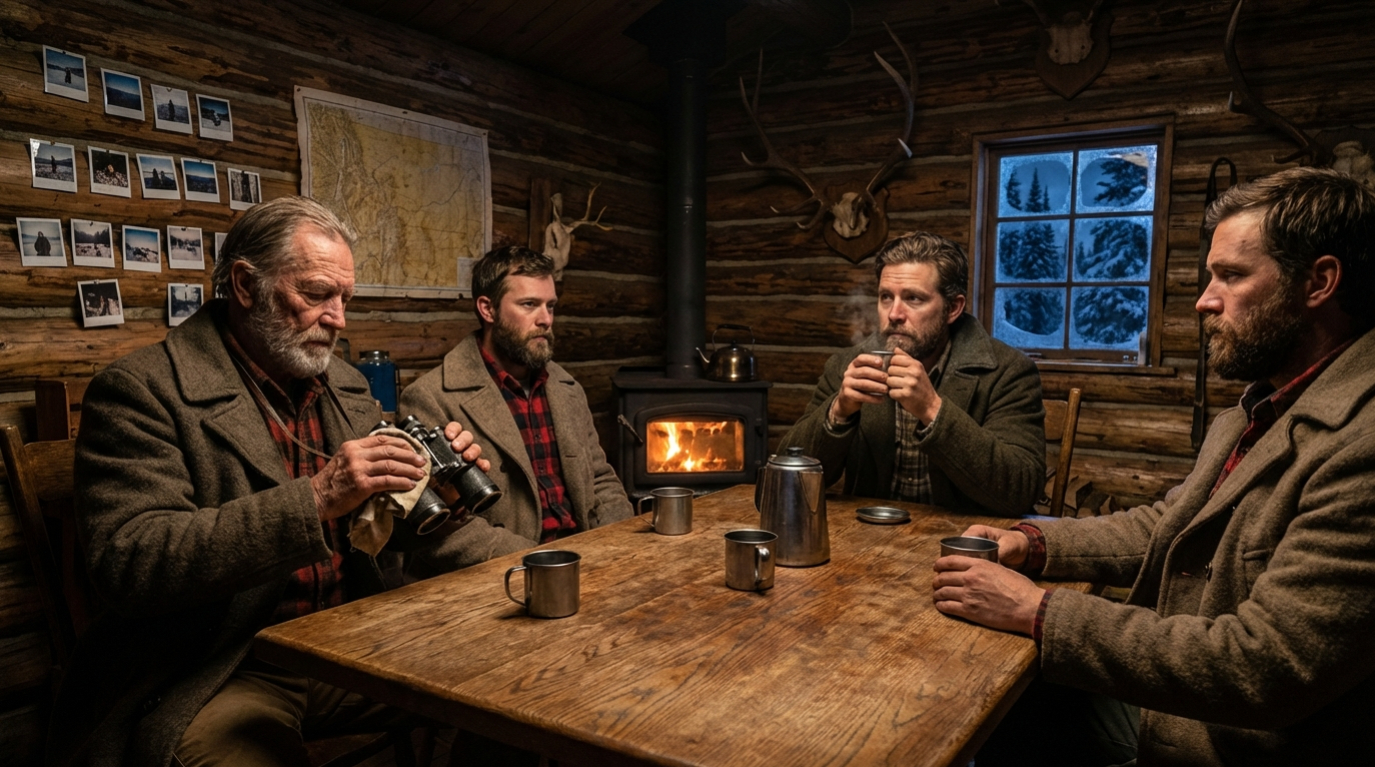
The smell of woodsmoke and wet pine filled the small, rustic cabin perched high in the Swan Range of Montana. Outside, the wind howled through the Douglas firs, but inside, the heavy cast-iron stove radiated a warmth that seeped into the bones of the four men gathered around the scarred oak table.
Elias, the eldest at fifty-four, was slowly cleaning his rifle, his movements rhythmic and seasoned. Hanging on the walls around him were decades of memories: grainy polaroids of the “Class of ’98” trip, sun-faded photos of elk racks that seemed impossibly large, and a tattered map of the Bitterroot Wilderness with handwritten notes in the margins. Next to him sat Marcus and Thomas, his lifelong friends, and Sarah’s younger brother, David.
David was forty-eight, but in this group, he felt like the kid. He was also the newest addition to their hunting party and the newest to the faith. Today had been a success; David had taken his first bull elk, a clean shot at three hundred yards. But as the adrenaline of the hunt faded into the quiet of the mountain night, a different kind of intensity took over.
“You guys have been doing this for thirty years,” David said, gesturing toward a photo of the three of them from the mid-nineties. “Doesn’t it ever get old? The hiking, the waiting in the cold, the work of discipling the younger guys back home? Sometimes I feel like I’m just spinning my wheels, Elias. Like the Kingdom work we talk about is just… a lot of effort for very little progress.”
Elias paused his cleaning and looked at the photo David was pointing to. He smiled, a web of fine lines crinkling around his eyes. “You see that photo, David? That was the year we spent ten days in a blizzard and didn’t see a single track. We were exhausted, frustrated, and ready to quit. But Thomas reminded us of something Elias’ father used to say: ‘You don’t hunt for the kill; you hunt for the return.'”
Thomas nodded, leaning back in his chair. “It’s about the ‘Until,’ David. Just like what we read this morning in Luke 22:18. Jesus didn’t just give the disciples a meal to remember Him by. He gave them a timeline. He said He wouldn’t drink the fruit of the vine until the Kingdom of God comes. He anchored His present suffering—the cross that was coming in just a few hours—to a future celebration.”
David frowned, stirring his coffee. “I get the theory. But how does that help when you’re dealing with a guy you’re discipling who just won’t get his life together? Or when your job feels like a dead end? It’s hard to stay motivated by a ‘future banquet’ when the ‘now’ is so draining.”
Marcus, who had been quiet, spoke up. “Look around this room, Dave. Why do we keep all these pictures? Why do we keep these racks on the wall? It’s not just to brag. It’s because these things are evidence. They remind us that the ‘Until’ is real. Every trip we’ve taken, every elk we’ve packed out, it’s a shadow of a greater satisfaction.”
He leaned forward, his voice low and earnest. “When I’m sitting with those guys I’m discipling for Jesus back in the city, and they’re struggling, I don’t just see their mess. I see them as future citizens of that banquet. I see them as guests at the table Jesus is currently preparing. That eternal perspective changes the way I invest in them. I’m not just trying to fix their behavior for Tuesday; I’m preparing them for eternity. If Jesus is patient enough to wait two thousand years for His drink, I can be patient enough to wait two years for a brother to grow.”
Elias set his rifle down and looked David directly in the eye. “David, the world tells us that if we don’t see results now, it’s not worth it. Instant gratification is the enemy of Kingdom grit. But Jesus models a different kind of ‘waiting.’ His anticipation wasn’t a passive ‘I hope this happens.’ It was a ‘This is so certain that I can face the nails because of it.’ That’s the Principle of Divine Delay we were talking about earlier.”
“Think about it,” Thomas added. “Jesus is the King. He could have inaugurated the full Kingdom that night. He could have called down legions of angels and set the table right then. But He chose to wait. He chose to enter into the ‘Already but Not Yet’ with us. He’s the first one to practice the patience He asks of us. He is literally waiting for us to join Him before He celebrates.”
The cabin fell silent for a moment, the only sound the crackle of the stove and the distant moan of the wind. David looked at the photos again. He saw the progression of time—the dark hair turning gray, the old gear being replaced by the new—but he also saw the consistency of the fellowship.
“So,” David said slowly, “the current labor… serving those in need, the long coffee sessions, listening to life’s problems, being patient with my kids… they aren’t just hurdles to get over? They’re actually investments?”
“Exactly,” Elias said. “They are seeds planted for an eternal harvest. When you realize that the King Himself is waiting, your ‘now’ loses its weight of frustration and gains a weight of glory (2 Corinthians 4:17). You start to realize that every act of faithfulness is a preparation for the Marriage Supper. We aren’t just hunters in the cold, David. We are architects of a future we haven’t seen yet, but one that is more real than this cabin.”
David looked at his own hands, calloused from the day’s work. He felt a shift in his spirit—a loosening of the knot of anxiety that had been tightening for months. The “Until” wasn’t a burden of delay; it was a promise of arrival.
“Jesus is waiting for me to drink that cup with Him,” David whispered, the reality of it finally sinking in.
“He is,” Elias said softly. “And He’s earnestly desiring it. If the King of the Universe has that kind of passion for the future, we can afford to have a little more patience for the present.”
As the men eventually climbed into their bunks, the fire in the stove began to die down. But in the heart of the newest hunter, a different fire was just beginning to burn—a quiet, enduring flame of hope that would sustain him long after he left the Montana mountains and returned to the everyday work of the Kingdom. He finally understood that the long-haul wasn’t something to be endured; it was something to be celebrated, one faithful step at a time, until the King says, “Join Me and feast at My table.”

 ToBeLikeJesus