Kingdom Kernel #49 – The Humble King

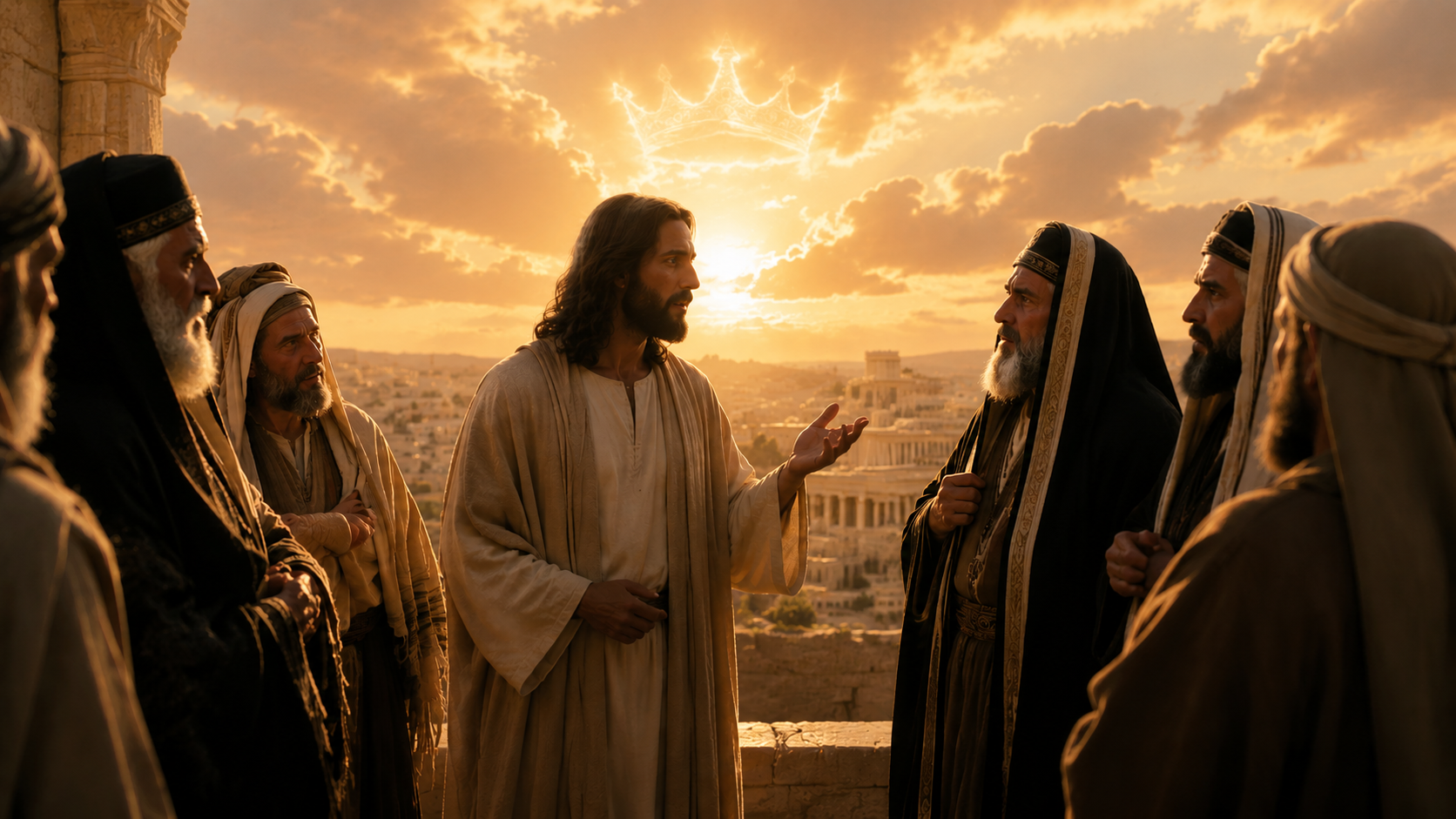
The Messiah Comes as a Humble Servant King

Kingdom Kernel Collection

Rather Listen? Click here…

Matthew 21:6-10, Mark 11:8-10, Luke 19:36-38, John 12:12-15

“On the next day the large crowd who had come to the feast, when they heard that Jesus was coming to Jerusalem, took the branches of the palm trees and went out to meet Him, and began to shout, ‘Hosanna! BLESSED IS HE WHO COMES IN THE NAME OF THE LORD, even the King of Israel.’ Jesus, finding a young donkey, sat on it; as it is written, ‘FEAR NOT, DAUGHTER OF ZION; BEHOLD, YOUR KING IS COMING, SEATED ON A DONKEY’S COLT.'” (John 12:12-15)

Introduction

Jesus’ triumphant entry into Jerusalem was the ultimate celebration—the inauguration of His Kingdom. But it didn’t look anything like the world expected.

In this Kernel, we are going to examine how our King fulfilled ancient prophecies while completely upending the crowd’s expectations. We’ll look at the stark contrast between His approach and the religious leaders’ reactions. Ultimately, we’ll see what Jesus’ quiet confidence in this moment means for us today as we follow Him and invest in discipling others.

Key Words and Phrases

Hosanna! – Closely related to the Hebrew word יָשַׁע (Strong’s H3467 – yāšaʿ from Psalm 118:25), meaning to save, be saved, or be delivered. It’s used simultaneously as a massive shout of praise and a desperate plea for the Messiah: “Please save us!” or “Our Savior!”

Son of David – This title points directly to a fulfilled promise. God told King David He would raise up a descendant to rule forever (2 Samuel 7:12-16). Later, Isaiah affirmed this exact covenant (Isaiah 9:6-7).

This covenant also highlighted the relational dynamics of “a son” in David’s lineage, pointing toward the Father/Son relationship between the Messiah and God the Father. God also promised David that his descendant would build a “house.” While David likely pictured a physical building, Jesus was referring to the ultimate temple: His body (John 2:19-21), and eventually, the church (1 Corinthians 6:19; Colossians 1:18).

Old Testament Prophecies:

  • “Blessed is the one who comes in the name of the LORD; We have blessed you from the house of the LORD.” (Psalm 118:26)
  • “Rejoice greatly, O daughter of Zion! Shout in triumph, O daughter of Jerusalem! Behold, your king is coming to you; He is just and endowed with salvation, Humble, and mounted on a donkey, Even on a colt, the foal of a donkey.” (Zechariah 9:9)

Messianic Model – Jesus the Humble Serving Ruler

Jesus knew exactly what to do—and when to do it—to fulfill His role as the King of kings. But as He rode into the city, He was modeling something profoundly counter-cultural for us: He was the Humble Servant King.

Jesus rode a donkey’s colt into Jerusalem, a blatant sign of humility. To put this in historical perspective, King David rode a mule, and Solomon rode that same royal mule for his coronation (1 Kings 1:38-40). Even Absalom, David’s rebellious son, rode a mule into battle (2 Samuel 18:9). In that era, the mule was royalty’s beast of choice, signifying majesty and power.

Yet Jesus chose a young, unbroken donkey. It’s the ancient equivalent of arriving at a presidential inauguration in a borrowed, beat-up economy car instead of an armored motorcade.

The people shouted “Hosannas,” laid down their coats, and waved palm branches. But Jesus knew that just five days later, this same crowd’s cheers would likely curdle into demands for His crucifixion. He knew all of this, yet He still came as the suffering servant (Isaiah 53:1-12)—not to conquer with a sword, but to conquer through humble sacrifice.

Paul exhorts us to have this exact same attitude (Philippians 2:5-11). Jesus emptied Himself, obeyed God, and allowed Himself to be murdered by His own creation to absorb God’s wrath and provide propitiation for our sins. Jesus expects us to lead with that same serving heart:

“It is not this way among you, but whoever wishes to become great among you shall be your servant… just as the Son of Man did not come to be served, but to serve, and to give His life a ransom for many.” (Matthew 20:25-28)

“If I then, the Lord and the Teacher, washed your feet, you also ought to wash one another’s feet. For I gave you an example that you also should do as I did to you.” (John 13:14-15)

Key Theological Implications

These Kingdom passages underscore the breathtaking humility of Christ. He entered our world as a fragile infant in the most austere conditions. He is the servant who doesn’t raise His voice in the streets, gentle with the bruised reed, giving His life for the downtrodden (Isaiah 42:1-4).

He stepped into our arena of brokenness, sorrow, and pain. He came so lowly that the religious elite completely missed Him, yet He is the Creator of all things. He fit right in with the marginalized, dining with tax collectors and outcasts. He allowed His prized creations to spit in His face, torture Him, and kill Him (Isaiah 53:3-7; Isaiah 61:1-11).

He did all this to be the sacrifice for our sins (Mark 10:45).

The crowds that day were looking for a military king to crush Rome. They missed that Jesus came to deliver them from a much deadlier slave owner: sin itself (John 8:34-36). To free us, He had to become the perfect sacrifice foretold in the Scriptures (1 Corinthians 15:3), dying in our place as the “Lamb of God who takes away the sin of the world” (John 1:29).

Oh, the incredible humility of our God!

Contemporary Spiritual Significance

Let’s be honest: true humility is incredibly rare today.

Often, what we see is feigned humility masking a self-centered culture of virtue signaling. Sometimes it’s disguised as self-deprecation, which might look humble on the surface, but is ultimately still obsessively focused on self.

True humility is being entirely secure in your identity and purpose, and then using those strengths to serve others at a personal cost. Jesus perfectly modeled this secure, costly humility as our King, and He invites us into that exact same rhythm.

The Transformative Power of Humble Leadership

Jesus repeatedly told His followers to be humble, especially as they stepped into roles of teaching and leading others (Matthew 23:12; Luke 14:11).

The rest of Scripture echoes this mandate (Philippians 2:3-4; 1 Peter 5:6; James 4:10). We are called to lead through service, rejecting the world’s power-hungry playbook. It feels completely counterintuitive in a culture—and sadly, sometimes even in the church—where power and control are the standard metrics for “strong leadership.”

But there is profound freedom in leading like Jesus. As we adopt His posture of service, our character deepens, our faith is strengthened, and our actual purpose becomes crystal clear (2 Corinthians 3:18).

Conclusion

As the ultimate leader, Jesus gave us the ultimate example of how to lead. He arrived as a humble servant, despite holding all authority and power to demand His own way. He sacrificed Himself on a cross, offering us the free choice to acknowledge Him not just as Savior, but as King and Lord.

Our best response? Receive His unmerited gift with joy, and then roll up our sleeves to lead others exactly as He led us.

Disciple-Maker’s Short Story

Not What You Expect from a CEO

The amber light filtered through the windshield as Maya stared at her hands, still faintly pink despite three rounds of scrubbing. The scent of industrial disinfectant clung to her clothes, a sharp reminder of the afternoon’s work at Mrs. Chen’s house.

“I can’t stop thinking about it,” she said finally, breaking the comfortable silence that had settled between them since leaving the elderly woman’s apartment. “The way you just… took over. The bathroom, those sheets…” She shook her head, still processing what she’d witnessed.

Rebecca glanced over from the driver’s seat, her own hands bearing the same telltale signs of their labor. At fifty-two, she moved with the quiet confidence Maya had always admired—the same presence that commanded boardrooms at Meridian Industries, where she’d built a reputation as one of the most respected CEOs in the region.

“You’ve seen other leaders in action,” Rebecca said, her voice gentle but probing. “At work, in church ministries. How do they typically handle situations like today?”

Maya let out a rueful laugh. “Usually? They delegate the gross stuff. Point and direct while keeping their manicures intact.”

She remembered Pastor Williams during last month’s community outreach, his pristine polo shirt untouched while volunteers sorted through donation bags reeking of mildew. “Even in women’s ministry, I’ve watched leaders hover around the food table while everyone else scrubs floors.”

The car slowed at a red light, and Rebecca’s fingers drummed thoughtfully against the steering wheel. Through the windshield, the sun hung low on the horizon, painting the sky in watercolor strokes of orange and rose.

“You know what changed everything for me?” Rebecca asked, her gaze distant. “Palm Sunday, about fifteen years ago. I was sitting in church, listening to the passage about Jesus riding that donkey into Jerusalem, and something clicked.”

Maya turned toward her, curious. She’d never heard this story.

“Here was the King of kings,” Rebecca continued, “the one person in all of history who actually deserved a red-carpet entrance, a golden chariot, armies of servants clearing his path. Instead, he chose a young donkey—probably stubborn, definitely unremarkable. The crowds threw down their coats because he didn’t even have proper royal transport.”

The light turned green, and they moved forward through the quiet residential streets.

“I was running a small consulting firm then,” Rebecca said. “Thought leadership meant commanding from the corner office, letting others handle the messy details while I focused on ‘strategy.'” Her voice carried a note of regret. “That sermon hit me like a freight train. If Jesus—the actual King of the universe—chose humility and service, what did that say about my approach?”

Maya watched her mentor’s profile, noting the way Rebecca’s expression had grown thoughtful, almost tender.

“Monday morning, I walked into the office and asked where I could help. Not delegate, not oversee—help. My assistant nearly fainted when I started organizing files with her. But you know what happened? Everything changed. Projects moved faster. People stopped dreading meetings. Revenue increased thirty percent that year.”

They turned onto Maya’s street, where apartment buildings stood shoulder to shoulder. Maya found herself hanging on every word.

“It wasn’t magic,” Rebecca continued. “It was just… Jesus’ model. When you’re willing to do the work you’re asking others to do, when you take the hardest jobs instead of the easiest ones, people notice. They trust you differently. They follow differently.”

The car pulled up to Maya’s building, but neither woman moved to get out. The engine ticked softly as it cooled.

“At Meridian, I still clean conference rooms after board meetings,” Rebecca said with a small smile. “Last month, I spent three hours helping our janitor replace fluorescent bulbs because he’d hurt his back. The board members who saw it didn’t think less of me—they respected the decision to pitch in rather than just send an email to facilities.”

Maya stared at the dashboard, her mind replaying the day’s events through this new lens. Rebecca hadn’t just happened to take the worst cleaning jobs; she’d deliberately sought them out. The overflowing toilet, the sheets stained with bodily fluids, the kitchen caked with months of neglect—she’d tackled each one with the same focused attention she brought to quarterly earnings reports.

“In my family, too,” Rebecca added softly. “When my teenagers were going through their worst phases, I didn’t just lay down rules from parental authority. I got down in the trenches with them. Drove them to late-night activities, sat through horrible amateur theater productions, helped with projects I couldn’t begin to understand. Served them, even when they didn’t deserve it.”

The silence stretched between them, filled with the weight of revelation. Maya felt something shifting in her chest.

“Someday,” she said finally, her voice barely above a whisper, “I want to be a leader like you.”

Rebecca turned fully toward her then, and Maya was surprised to see tears glistening in her mentor’s eyes. But she was also smiling—a broad, radiant expression that seemed to light up the entire car.

“No, sweetheart,” Rebecca said, reaching over to squeeze Maya’s hand. “You want to be a leader like Jesus.”

The words hung in the air between them, simple but profound. Not like Rebecca, impressive as she was. Like Jesus. The King who chose the donkey, who washed feet, who served rather than demanded service.

Kingdom Kernel Collection

Kingdom Kernel #48 – Who is in the Kingdom? – Matthew 21:28-31

Jesus’ Sober Warning to the Religious of His Day

Kingdom Kernel Collection

Rather Listen? Click here…

“But what do you think? A man had two sons, and he came to the first and said, ‘Son, go work today in the vineyard.’ “And he answered, ‘I will not’; but afterward he regretted it and went. “The man came to the second and said the same thing; and he answered, ‘I will, sir’; but he did not go. “Which of the two did the will of his father?” They said, “The first.” Jesus said to them, “Truly I say to you that the tax collectors and prostitutes will get into the kingdom of God before you. (Matthew 21:28-31 NASB95)

Introduction

In this parable Jesus is shining a light on the characteristics of a kingdom citizen. The true citizen of the kingdom of God is not just verbally compliant. They take action and ultimately do what the King has ordered. This essay will discuss verbal acknowledgements, thought processes and motives, and behavioral responses. We will also see how Jesus actually applied this in His own life with the Father.

 Key Words and Phrases 

“I will not” and “I will, sir” – Notice the second son even adds the word “sir” (κύριος – Lord – Strong’s G2962) to his response feigning respect. 

Regretted – μεταμέλομαι – metamelomai – Strong’s G3338 – Meaning “a care to one afterwards,” repent.

“Which of the two did the will of his father?” – Notice Jesus puts credibility on action, not verbal acknowledgement or intellectual ascent. 

 Messianic Model – Focus on Jesus’ Example

We know that Jesus always did His Father’s will both with verbal acknowledgement and in action. (John 5:19, 12:49) So how does Jesus illuminate and model the principles of this parable? First, we must acknowledge that Jesus had a choice. In the wilderness being tempted by Satan the temptations were real. He had the choice to renege on his statements and commitments, and choose to do His own will. The choice was His to make. Second, Jesus was cognizant of the cost of obeying the Father. In the Garden of Gethsemane He appealed to the Father to “take this cup away” and yet He yielded to the Father’s will at the price of His own life, by taking on the sins of the world and incurring the wrath of God. Jesus was an example of a son who not only verbally acknowledged his father’s desires and commands but fulfilled them trusting him.

Had He not lived out a relationship with the Father in perfect compliance in mind, spirit, and body, He would have failed to be the perfect sacrifice for sin. He could not have paid the substitutionary payment for man. He would not have satisfied the just punishment we all deserve which is death. (John 1:29, Hebrews 10:12-14, 1 Peter 1:19) 

 Key Theological Implications

We all know that salvation is by grace and not our works (Ephesians 2:8-9) and we are very careful to stay away from even a hint that it is. But Jesus isn’t afraid to dance on the edge of being misunderstood that salvation is based on what we do. He makes it clear that repentance is a requirement to enter the kingdom of God. Oftentimes people shy away from repentance for fear of presenting a “works based gospel.” It would do us well to 1.) Preach what Jesus preached. 2.) Understand repentance from a Biblical stand point of view. The Seven Stories of Hope (Repentance) are very helpful in this pursuit. 

In the parable the first son shows repentance through the “regret” he felt afterwards and does the will of the father. The second son gives verbal acknowledgement to his father but does not do his will.  Notice the second son even called him “sir”. This word in the Greek is κύριος which is normally translated “lord.” It is not enough. This brings to mind the statement from Jesus, 

“Not everyone who says to Me, ‘Lord, Lord,’ will enter the kingdom of heaven, but he who does the will of My Father who is in heaven will enter. Many will say to Me on that day, ‘Lord, Lord, did we not prophesy in Your name, and in Your name cast out demons, and in Your name perform many miracles?’ And then I will declare to them, ‘I never knew you; DEPART FROM ME, YOU WHO PRACTICE LAWLESSNESS.” (Matthew 7:21-23)

Action will always follow the heart. The first son had a change of heart which motivated him to do his father’s bidding. It’s not that the Jews failed to be religious and do “good things.” It was their hearts that had yet to be changed. They were very opposed to Jesus, His way of life and His teachings. Jesus makes it very clear what the “work” is and the change that it will take to do it.

“Therefore they said to Him, “What shall we do, so that we may work the works of God?” Jesus answered and said to them, “This is the work of God, that you believe in Him whom He has sent.” (John 6:28-29)

Now remember, this is not just verbal acknowledgement or intellectual assent. This is fully embracing Jesus for who He is as the Messiah, the King. The change of heart being made, the repentance, is to turn from one’s own ways and submit to Christ the King’s authority. This change of heart not only ushers one into the kingdom but appropriates all the grace necessary to live under the King’s authority and be forgiven when we fall short. Faith receives grace and grace produces action. 

I love Dallas Willard’s quote on this;

“Grace is not opposed to effort, it is opposed to earning. Earning is an attitude. Effort is an action. Grace, you know, does not just have to do with forgiveness of sins alone.”

“The true saint burns grace like a 747 jet burns fuel on takeoff. Become the kind of person who routinely does what Jesus did and said. You will consume much more grace by leading a holy life than you will by sinning, because every holy act you do will have to be upheld by the grace of God.”

(The Great Omission, Dallas Willard)

 Contemporary Spiritual Significance

Many times the gospel is proclaimed as data to acknowledge as true and a professional prayer of that acknowledgement. And although some have come into the kingdom through this act many are still “dead in their trespasses and sins.” (Ephesians 2:1) One of the reasons people are believing they are saved and are not is because a gospel without repentance is being taught. (Which is a false gospel). The disciple presenting the gospel must preach it as Jesus did. 

Jesus came into Galilee, preaching the gospel of God, and saying, “The time is fulfilled, and the kingdom of God is at hand; repent and believe in the gospel.” (Mark 1:14-15)

Notice Jesus is not only preaching the good news but how to appropriate it. There is a kingdom at hand and therefore there is a King with authority at hand. In light of the King and kingdom’s presence a person is commanded to turn from their ways to the ways of the King and believe that this is good news! This is the true gospel that Jesus preached and it is the gospel by which people are saved. There is a surrender, a willingness to embrace the authority of the Lord and Savior, Jesus the Christ.

We must evaluate the gospel we are preaching and conform it to the gospel the Author of the Gospel preached.

The Transformative Power of the True Gospel

Many “believers” in the church today are still as entrenched in the old life as they were before they “believed.” That is because they failed to receive the true gospel promises that transform the individual.

Therefore if anyone is in Christ, he is a new creature; the old things passed away; behold, new things have come. (2 Corinthians 5:17)

Although they are not perfected in the flesh, by grace that comes through the gospel they will notice change in their lives. They will no longer desire some of the things they did in their pregenerate state. And the things they are still battling will cause them great grief, a sorrow that leads to further repentance. (2 Corinthians 7:9-10) The saint’s life is like that of Zaccheus, he was a changed man and Jesus declares, “Today salvation has come to this house!” (Luke 19:9) 

Conclusion

Jesus preaches a parable to warn the religious leaders that they have a false sense of security in their relationship with God. Although being very religious and in strict adherence to the parts of the Law that made them appear holy, they fell woefully short of God’s plan for salvation. Like the son in the parable that said he would comply with the father’s will, they did not follow through with the action required to obey. They did not embrace Jesus, the King who ushered in the kingdom. Like the religious leaders of the day many “Christians” believe they have salvation because they believe in a creed, perform good works, or attend religious gatherings. They are also living in a false sense of security because they have failed to attend to the one thing that provides salvation. And the thing is not a thing, it’s a Who, Jesus Christ.

“You search the Scriptures because you think that in them you have eternal life; it is these that testify about Me; and you are unwilling to come to Me so that you may have life.” (John 5:39-40)

Disciple-Maker’s Short Story

Two Sons and General Tso’s

The amber glow of paper lanterns cast dancing shadows across Marcus’s weathered face as he carefully maneuvered his chopsticks around a piece of General Tso’s chicken. Steam rose from their shared plates, mingling with the soft chatter of other diners at Golden Dragon, their Thursday night sanctuary tucked between a bodega and a dry cleaner on 47th Street.

“You’re quieter than usual tonight,” Marcus observed, setting down his chopsticks and studying his mentee across the red vinyl booth. “Rough week at the firm?”

David pushed his lo mein around his plate, creating small mountains of noodles. “Actually, work’s been fine. It’s… something else.” He looked up, his eyes carrying the weight of genuine confusion. “I’ve been having this ongoing debate with some friends about what it really means to be saved. And honestly, Marcus, I’m more confused now than when I started.”

Marcus leaned back, a knowing smile creeping across his lips. “Ah. The great salvation debate. Let me guess—you’ve got friends on both sides of the fence?”

“Exactly.” David’s fork clinked against his plate as he gestured. “My buddy Jake from college keeps insisting that all you have to do is believe. He quotes John 3:16 like it’s a magic formula—just intellectual agreement that Jesus existed and died for sins. Done deal. But then there’s Sarah from our Bible study group who keeps talking about repentance and surrender, saying faith without works is dead.”

“And you’re caught in the crossfire.”

“Right. Jake makes it sound so simple, so… accessible. Just believe and you’re in. But Sarah’s version feels more demanding, more… I don’t know, authentic somehow? But also terrifying because how do you know if you’ve repented enough?”

Marcus reached for the teapot, refilling both their cups with jasmine tea. The ritual gave him a moment to think. “You know, I’ve been studying Jesus’s parables lately, particularly the ones about the kingdom. There’s one that speaks directly to what you’re wrestling with.”

David leaned forward, his dinner forgotten. “Which one?”

“The parable of the two sons. You familiar with it?”

“Vaguely. Refresh my memory.”

Marcus cupped his hands around his tea, the warmth seeping through the ceramic. “A father asks both his sons to work in the vineyard. The first son says, ‘I will not,’ but later changes his mind and goes to work. The second son says, ‘I will, sir’—very respectful, very religious—but never actually shows up to work.”

“Okay…”

“Jesus asks which son did the father’s will. The obvious answer is the first son, right? But here’s what makes it fascinating—Jesus wasn’t just telling a nice story about work ethic. He was talking to the religious leaders, the Pharisees, people who had all the right words, all the right religious credentials.”

David’s eyes widened slightly. “So the second son represents…”

“The religious elite. They called God ‘Lord,’ they knew all the right terminology, they performed all the religious duties. Perfect verbal acknowledgment. But when it came to actually embracing Jesus as Messiah, as King—when it came to the actual work of the kingdom—they refused.”

A waiter shuffled past their table, balancing a tray of sizzling plates. Marcus waited for the noise to subside before continuing.

“The first son, on the other hand, initially rejected his father’s request. But something happened—the text says he ‘regretted’ it. In Greek, it’s metamelomai—a deep change of heart that led to a change of action.”

David set down his tea cup with deliberate precision. “So you’re saying Jake’s wrong about the intellectual assent thing?”

“I’m saying Jesus himself put credibility on action, not just verbal acknowledgment. But David, here’s where it gets tricky—and where your friend Sarah might be missing something too. The first son’s work in the vineyard wasn’t what saved him. His change of heart was.”

“I’m not following.”

Marcus smiled, leaning forward conspiratorially. “Think about Jesus going through temptations in the wilderness. The temptations were real—he had genuine choices to make. And in the Garden of Gethsemane, He could have said no. But he consistently chose the Father’s will over his own, even when it meant the cross.”

“Right, but Jesus was perfect. That’s different.”

“Is it though? Here’s what I’ve been learning—Jesus didn’t just model perfect obedience, he modeled perfect faith. And that faith expressed itself in surrender to the Father’s authority, even at great personal cost.”

David pushed his plate away, his appetite completely gone. “So where does that leave someone like me? I want to believe, I really do. But if salvation requires this perfect surrender, this complete change of heart…”

“Who said anything about perfect?” Marcus’s voice carried a gentleness that seemed to wrap around David’s anxiety. “The first son didn’t perfectly obey from the beginning. He started with rebellion, remember? But he experienced what the text calls repentance—a fundamental reorientation toward his father’s will.”

“But how do you know if you’ve truly repented? How do you know if your faith is real or just… intellectual?”

Marcus pulled out his phone and scrolled through his notes. “Dallas Willard said something that revolutionized my thinking: ‘Grace is not opposed to effort, it is opposed to earning.’ You see the difference?”

“Not really.”

“Earning is an attitude—thinking your works purchase salvation. Effort is simply the natural expression of a changed heart. Grace doesn’t eliminate action; it empowers it.”

David stared at the table, processing. “So it’s not that I have to earn my salvation through good works…”

“But genuine faith—true belief—naturally produces obedience. Not perfect obedience, but a heart that’s been reoriented toward Christ’s authority. Think about it, David. If someone truly believes Jesus is King, how can they simultaneously refuse to acknowledge his reign over their life?”

“They can’t. That would be… contradictory.”

“Exactly. Your friend Jake’s ‘just believe’ gospel misses the fact that genuine belief includes submission to Jesus as Lord, not just Savior. And your friend Sarah’s emphasis on repentance is biblical, but she might be making a checklist of dos in her head that lead to the performance of religious laws, rather than a change of heart.”

David looked out the restaurant window at the blur of yellow cabs and hurried pedestrians. “So what does real faith look like then?”

Marcus’s eyes lit up. “You know what this reminds me of? Zacchaeus. Remember him? The tax collector who climbed the tree to see Jesus?”

“Yeah, the short guy.”

“Right, but here’s what’s remarkable about his story. When Jesus called him down and invited himself to dinner, something happened in Zacchaeus’s heart. He stood up and declared he would give half his possessions to the poor and repay anyone he’d cheated four times over.”

David frowned. “Okay, so he did good works…”

“But David, listen carefully—he hadn’t actually done any of those things yet. These were promises, declarations of intent. But Jesus looked at this transformed heart, at this evidence of genuine repentance, and said, ‘Today salvation has come to this house.'” Marcus leaned forward intently. “Today. Not after Zacchaeus followed through on his promises, but right then, when his heart had been changed.”

“So you’re saying…”

“I’m saying that the very fact that you’re wrestling with this, that you’re not satisfied with easy answers, that you want authentic faith—that’s your Zacchaeus moment. The work of God is already happening in your heart.”

David nodded slowly. “I think I need to have some conversations with Jake and Sarah.”

“Just remember,” Marcus said, signaling for the check, “the gospel Jesus preached wasn’t just ‘believe in me.’ It was ‘repent and believe.’ The kingdom has come, and there’s a King. The good news is that this King is also a Savior who provides everything necessary to live under his loving authority.”

As they gathered their coats and prepared to step back into the controlled chaos of Manhattan, David paused. “Marcus?”

“Yeah?”

“Thanks. For helping me see that it’s not an either-or thing. It’s both-and.”

Marcus smiled as he held the door open. “That’s the beauty of the kingdom, David. It’s both gift and calling, both grace and transformation. Both sons matter in the story—but only one did the father’s will.”

They stepped into the cool October air, the city lights reflecting off the wet pavement like scattered jewels. David felt something settling in his chest, a peace that came from understanding that the gospel was both simpler and more profound than he’d imagined. The work of the kingdom wasn’t about perfect performance—it was about a changed heart expressing itself in loving obedience to the King who had first loved him.

As they parted ways at the subway entrance, David carried with him not just the lingering taste of General Tso’s sauce, but a deeper hunger—to become the kind of person who, like Jesus, consistently chose the Father’s will out of love, not obligation. The parable wasn’t just about two sons; it was about the kind of son he wanted to become.

Kingdom Kernel Collection

Kingdom Kernels Introduction – Why a Focus on the Kingdom of God – Acts 1:3,6

The gap between kingdom acknowledgement and kingdom understanding

Kingdom Kernel Collection

Rather Listen? Click here…

To these He also presented Himself alive after His suffering, by many convincing proofs, appearing to them over [a period of] forty days and speaking of the things concerning the kingdom of God. …So when they had come together, they were asking Him, saying, “Lord, is it at this time You are restoring the kingdom to Israel?” (Acts 1:3, 6)

 Introduction

We often find ourselves living in the tension between simply acknowledging Jesus as King and deeply understanding—and applying—the realities of the Kingdom He modeled. In Acts 1:3, we find Jesus leading a remarkable forty-day intensive. He proved His resurrection and spoke directly about “the things concerning the kingdom of God.” This period served as a profound capstone to the previous three years, during which He relentlessly preached and demonstrated the Kingdom throughout His earthly ministry.

Yet, even after this post-resurrection masterclass, the first instinct of His closest followers was to pivot back to their own political comfort zones. They asked, “Lord, is it at this time You are restoring the kingdom to Israel?” (Acts 1:6). Their earthbound questions collided with a Risen King whose vision was infinitely broader than a national border.

Like those early followers, many of us struggle with that exact same gap: the space between acknowledging the Kingdom and actually understanding how it operates. We find it hard to trade our cultural scripts for Kingdom reality. To follow Jesus effectively—and to authentically guide those you are discipling into His way of life—we must move beyond seeking our own personal agendas and begin to grasp the radical, co-regent identity for which we were designed.

 Key Words and Phrases 

The kingdom of God

  • βασιλεία (Strong’s G932 – basileia) royal power, kingship, dominion, rule, of the royal power of Jesus as the triumphant Messiah, of the royal power and dignity conferred on Christians in the Messiah’s kingdom, a kingdom, the territory subject to the rule of a king, used in the N.T. to refer to the reign of the Messiah.
  • Θεός (Strong’s G2316 – theos) a god or goddess, a general name of deities or divinities, the Godhead, trinity, spoken of the only and true God, refers to the things of God, His counsels, interests, things due to Him, whatever can in any respect be likened unto God, or resemble Him in any way, God’s representative or viceregent, of magistrates and judges.
  • Jesus went about Galilee preaching the kingdom of God.

Restoring the kingdom to Israel

  • Ἀποκαθίστημι (Strong’s G600 – apokathistēmi) to restore to its former state, to be in its former state.
  • The Jewish people held prophetic expectations that the Messiah would restore the kingdom of Israel through military conquest. While they were correct that this restoration would eventually occur, it was first necessary for the suffering Servant King described in Isaiah 53:1 to come. This misunderstanding prompted the disciples to ask their question.

 Messianic Model – Focus on Jesus’ Example

When we look at this interaction in Acts 1, we see a profound model in how Jesus approached, understood, and taught the Kingdom of God:

  1. He learned about the Kingdom as a man. In His incarnation, Jesus emptied Himself (Philippians 2:7). During His earthly ministry, He did not rely on a “divine cheat code” to bypass human development. He had to learn about the Kingdom of God the exact same way we do—through deep submission to the Scriptures and the guidance of the Holy Spirit.
  2. The Kingdom was His absolute foundation. Because He had internalized the heart of the Father, Jesus lived and taught Kingdom values consistently and without error. This wasn’t a side-topic; it was the core of His three-year ministry, culminating in an intensive forty-day seminar strictly on this subject after His resurrection.
  3. He was relentlessly patient. In Acts 1:6, we see that His closest followers still didn’t get it. After all that time with the Master Teacher, their default was still earthbound. Yet, Jesus doesn’t express frustration or rage-quit on them. He patiently redirects their focus from political timelines to the empowerment of the Holy Spirit for global witness (Acts 1:7-8).

 Key Theological Implications

The disciples’ question reveals a deep truth: understanding the kingdom of God isn’t an optional elective; it’s essential to understanding our true identity and purpose. Jesus taught that the Kingdom must be our absolute highest priority. He told us to “seek first His kingdom and His righteousness” and compared it to a hidden treasure worth selling everything to obtain. It was the very reason He was sent, and it is what defines us as a “royal priesthood.” (Matthew 6:33; Matthew 13:44; Luke 4:43; 1 Peter 2:9)

But knowing the Kingdom is not just an intellectual pursuit or a theological puzzle to solve. It requires spiritual re-orientation. Jesus said that “unless one is born again he cannot see the kingdom of God.” Comprehension begins with a new birth, and it takes revelation from heaven, combined with modeling, assessment, relearning, and actually living it out. We don’t have to guess how to do this, because Jesus gave us the ultimate example. He did nothing of His own initiative, setting the standard so we could “walk in the same manner as He walked.” (John 3:3; Matthew 13:11; Matthew 16:17; John 13:13-15; John 5:19; 1 John 2:6)

When we truly understand the Kingdom, we understand the King. We see the Father through Him and realize we’ve been radically transferred into the kingdom of His beloved Son. Because the earth and everything in it belongs to Him and He holds all authority in heaven and on earth, His ownership completely shapes how we steward our lives. The King’s authority defines the scope of the kingdom we represent. (John 14:9; Colossians 1:13; Psalm 24:1; Matthew 28:18)

This brings us to a massive, mind-blowing reality: co-regency. To make any coherent sense of the Kingdom, we must understand our calling as co-regents. This isn’t a new idea; it’s the original design established in the dominion mandate in Eden. Jesus has made us a “kingdom and priests to our God; and they will reign upon the earth.” This co-regency isn’t just present-tense—it is eschatological. It is the ultimate trajectory of our eternal lives. We are promised that if we endure, we will also reign with Him, sit with Him on His throne, and “reign forever and ever.” Our highest calling isn’t just surviving until we go to heaven; the final word of Scripture on human vocation is partnering with the King to reign over His creation. (Genesis 1:26-28; Revelation 5:10; 2 Timothy 2:12; Revelation 3:21; Revelation 22:5)

 Contemporary Spiritual Significance

We live in an age—especially in a modern U.S. context—where the very idea of a “king” or a “kingdom” is frowned upon, if not completely odious. Authority in general is highly suspect because we have witnessed so many abuses of power, even by clergy. But it is not only unfair, it is profoundly unwise to project those human abuses onto God. Jesus is God, and God is love, which was perfectly displayed throughout His earthly life. (1 John 4:8-10; John 14:9; Acts 10:38)

While God is incredibly loving, He is also our Master and Creator, and He should be approached with profound reverence and awe. Furthermore, He is completely just and will eternally punish those who remain rebellious. It is foolish to trifle with, ignore, or challenge His absolute authority. (Genesis 1:1; Hebrews 12:28-29; Hebrews 10:31; 2 Thessalonians 1:7-9)

Because of who He is, it is absolutely essential for all believers to understand and actively live out their identity and purpose within His kingdom. This Kingdom is radically different from the world’s culture. To actually swim against the prevailing cultural currents, Kingdom living must be rigorously studied and intentionally practiced alongside those you are discipling. (1 Peter 2:9; Colossians 1:13; Matthew 6:33; Ephesians 2:10; Philippians 3:20; Matthew 7:13-14; 1 Peter 4:3-4; John 15:18-19; Philippians 2:15)

The Transformative Power of Kingdom Living

When we align ourselves with our Kingdom identity and purpose, we are ultimately aligning ourselves directly with the King. And when we align ourselves with Him, we begin to live out the exact design He created us for.

Think about it like a piece of high-performance machinery. When a machine is used for what it was specifically engineered to do, it runs powerfully and efficiently. But if you try to use it for something it wasn’t designed for—like trying to use a smartphone to hammer in a nail—the results are completely inadequate, incredibly frustrating, and ultimately destructive.

This is exactly why it is so crucial to read and submit to the “Owner’s Manual” (the Bible). Our Creator knows the proper functions of His creation and how we can best be used to experience true fulfillment and happiness. It is precisely because He knows our design that Jesus can extend the invitation: “Take My yoke upon you and learn from Me… for My yoke is easy and My burden is light.” (Matthew 11:29-30)

When we stop fighting against our design and align ourselves with the King, the exhausting hustle stops. We begin to genuinely experience His peace, joy, and love, along with an unshakeable hope for the future. And as we experience this transformation, we get to model that same peace and hope to those we are discipling.

Conclusion

Ultimately, bridging the gap between simply acknowledging Jesus as King and truly understanding His Kingdom is the journey of a lifetime. As we see in Acts 1, it requires intentionally moving past our earthbound expectations to embrace a much grander reality. We are not just subjects waiting for an afterlife; we are invited into an active, co-regent partnership with the Creator right now. By choosing to “seek first His kingdom” (Matthew 6:33) and submitting to our original design, we shed the exhaustion of cultural striving and step into true identity and purpose. This radical shift doesn’t happen by accident. It demands that we immerse ourselves in the King’s teachings, rely on the Holy Spirit, and patiently walk out these truths. As we do, we won’t just experience the transformative power of His reign firsthand—we will become a living model of the Kingdom, brilliantly reflecting His hope and authority to those we are discipling.

Disciple-Maker’s Short Story

A True Story and the Reason for this Book

The house is silent, save for the rhythmic hiss of the gas fireplace to my left. At 7:30 am, the world is still holding its breath, and I am holding mine. I am tucked into the corner nook of my couch—my designated “station”—wearing nothing more formal than pajama bottoms and a well-loved t-shirt celebrating the Texas Rangers’ past World Series victory.

To my right, the built-in bookshelves glow under soft LED lighting, illuminating the faces of our sons, their wives, and our grandchildren. They are our heart’s legacy, framed in wood and glass, watching over me as I begin my morning ritual. My bare toes burrow into the intricate patterns of the Persian rug, the wool soft against my skin. There is a sense of groundedness here. Like Moses before the burning bush, I feel the weight of the moment. My feet are bare because this corner of the living room has become holy ground.

Resting on the seat of my rollator is a homemade platter, serving as a makeshift table for my mug of hot tea. In my lap lies one of my most prized possessions: a Bible so worn the leather feels like silk. It is a map of my life, crisscrossed with underlines, tear stains, and margins crowded with notes from decades of seeking.

The Hundredth Reading

I turned the page to the beginning of Acts. I’ve traveled these roads with Luke and Paul many times—at least a hundred, if I’m being honest. I expected the familiar comfort of a story well-known, but as I smoothed down the pages of Acts 1, something shifted.

I stared at the text, struck by a sudden, jarring realization. The men in these verses had spent three years in the shadow of the Master. They had heard the parables, seen the healings, and walked through the trauma of the crucifixion. They had even spent forty days with the resurrected Christ, receiving “intense teaching” on the Kingdom of God. Yet, in Acts 1:6, their first question was about a political restoration of Israel.

After all that time, they still understood so little about the Kingdom.

The Question in the Room

The steam from my tea rose in the morning light, but my focus was locked on the page. A quiet, persistent voice began to echo in the stillness of the room. It wasn’t an accusation; it was an invitation that felt like a piercing light.

“And how much DO YOU understand about My Kingdom?”

I realized then that I had often treated the Kingdom as a theological concept to be studied rather than a reality to be inhabited. I had gleaned the “information” of the book of Acts and the Gospels, but I had barely scratched the surface of the “reign” of the King. That morning, the tea grew cold as a new fire started. I decided that my usual devotional routine or even my study time in the afternoons wasn’t enough. I committed to spending the bulk of my time in the afternoon—an hour to an hour and a half—rediscovering what it actually means to live under the rule of God.

A Journey Shared

I knew I couldn’t do this alone. The Kingdom is not a solitary island; it’s a city, a body, a family. I reached out to a few close friends, inviting them to journey into the depths with me. I told them I wanted to move past the surface-level Sunday school answers and really grapple with the “marvelous Kingdom” Jesus spoke of.

I thought it might be a six-month deep dive. I was wrong.

Six months dissolved into a year of intense discovery. One year bled into two. The more we looked, the more we realized how vast the landscape truly is. We found that the Kingdom isn’t just about where we go when we die; it’s about the staggering reality of Christ’s authority here and now—in our families, our suffering, our joys, and even in the quiet corners of our living rooms.

Today, as I sit in my nook with my feet on the rug, I’m no longer looking for a finish line. I’ve surrendered to the fact that I will spend the rest of my life as a student. I am a lifelong traveler, seeking to understand our wonderful King and the breadth of His reach. The “deficit” I felt that morning was actually a gift—it was the hunger that led me to the feast.


“But seek first His kingdom and His righteousness, and all these things will be added to you.” — Matthew 6:33

How to Use This Book: The Format and Our Approach

If you are going to lead others in the ways of Jesus, you must have a roadmap for your own heart first. As you progress through this book, you will notice that every chapter follows the exact rhythm you just experienced. This isn’t by accident. It is designed to move you systematically from head knowledge to holistic living.

  • Introduction: We always start by establishing the primary tension in the text—the gap between what we know and what we actually live.
  • Key Words and Phrases: We live in a culture that loves to project its own definitions onto ancient texts. By briefly digging into the original Greek and Hebrew words, we bypass our cultural assumptions and anchor our understanding to what was actually being said.
  • Messianic Model: We always look to Jesus. He is not just our Savior; He is the ultimate example of Kingdom living. We cannot guide those we are discipling if we are not first tracing His footsteps.
  • Theological & Contemporary Significance: Here, we bridge the ancient text to our modern context, pulling out the massive implications for our daily lives.
  • Transformative Power & Conclusion: We wrap up the teaching by exploring how yielding to this specific Kingdom truth changes us from the inside out.
  • Disciple-Maker’s Short Story: After this first true chapter, every chapter will end with a fictionalized vignette. While the names and exact scenarios may be fictional, every single one of these stories is heavily drawn from over forty-five years of real-life experience walking with people. They are designed to show you what these truths look like in the beautiful messiness of real life and relationships with those you are discipling.

The Approach: Unhurried Meditation We live in an age of rapid-fire information, endless scrolling, and instant gratification. This book is an invitation to do the exact opposite.

The insights in these chapters weren’t born from simply skimming verses; they were forged during those hour-and-a-half afternoon blocks of dedicated quiet. To truly grasp the Kingdom, I encourage you to slow down. Don’t just read these chapters—marinate in them. Wrestle with the text. Pray over the implications. Let the Holy Spirit do the heavy lifting in your heart before you attempt to pass these truths on to anyone else. You will find that this framework of studying, meditating, and practically applying the text is a highly reproducible model you can use directly with those you are guiding.

The Power of Community Finally, you cannot learn Kingdom realities in isolation. Just as I invited my close friends to journey into the depths with me, I encourage you to read this alongside others. I cannot overstate how incredibly helpful it was to bounce these ideas off my friends. Their ongoing encouragement was the fuel that kept me going when the study felt overwhelming, and their thoughtful challenges sharpened my perspectives along the way. Just as “iron sharpens iron,” their input was an essential part of this process.

Do the same. Bring these chapters into your living room, your coffee shop meetings, and your intentional relationships. Ask the hard questions together. The Kingdom is a family, and we learn its ways best when we are walking side by side.

Kingdom Kernel Collection

Kingdom Kernel #47 – The King’s Divine Tension

Embracing the Mystery of the King’s Invitation

Kingdom Kernel Collection

Rather Listen? Click here…

“The kingdom of heaven may be compared to a king who gave a wedding feast for his son. And he sent out his slaves to call those who had been invited to the wedding feast, and they were unwilling to come… For many are called, but few are chosen.”

— (Matthew 22:2-3, 14)

Introduction

In Matthew 22:1-14 and Luke 14:12-24, Jesus extends a wonderful invitation and a powerful warning regarding His kingdom. In Matthew, the parable depicts a king inviting his subjects to a wedding feast for his son. In Luke, a wealthy man invites guests to a sumptuous dinner. In both parables, the initial invitees make excuses for why they cannot attend such a prestigious event. Consequently, the king and the rich man instruct their servants to invite others, eventually bringing in the marginalized and less fortunate of society.

Both parables underscore the profound apathy many people have toward God’s invitation to join Him in His kingdom, challenging us to consider how we—and those we lead—respond to the King’s call.

Key Words and Phrases

  • Inviteκαλέω (Strong’s G2564kaleō): To call, to invite. The root word carries more weight than a casual invitation; it is often translated as a “command” or “order.”
  • Calledκλητός (Strong’s G2822klētos): Invited, called. In the context of Matthew 22:14, “For many are called,” it refers to those who have received the universal invitation to the King’s banquet, highlighting the broad offer of the Gospel to humanity.
  • Chosenἐκλεκτός (Strong’s G1588eklektos): Picked out, chosen by God. “…but few are chosen.” This punchline for the parable in Matthew means that while the whole of humanity is “invited” (called), only those who are foreordained for entrance into the kingdom will be properly prepared to enjoy the King’s Wedding Feast.

Messianic Model – Focus on Jesus’ Example

Although Jesus is speaking parabolically, His invitation (or command) is an authentic call to join Him and His Father in this grand celebration of celebrations. In Revelation, John describes a wedding feast at the end of time. While Matthew’s parable uses a wedding to illustrate a spiritual reality, the event John describes is the literal fulfillment of that promise. It is clear that those who responded to Christ’s invitation constitute the Bride of Christ—the Church entering into His consummated kingdom.

“Let us rejoice and be glad and give the glory to Him, for the marriage of the Lamb has come and His bride has made herself ready. It was given to her to clothe herself in fine linen, bright and clean; for the fine linen is the righteous acts of the saints. Then he said to me, ‘Write, “Blessed are those who are invited to the marriage supper of the Lamb.”‘ And he said to me, ‘These are true words of God.'” (Revelation 19:7-9)

Jesus represents the Son of the King in Matthew and the Wealthy Master in Luke. In both parables, an invitation is given to what would seem to be the obvious guests, yet they have excuses for why they will not attend. The most obvious guests to be invited by the Messiah into His kingdom would have been the religious leaders of the day and the Children of Israel—the ones who should have recognized Him. But most would not accept the invitation: “He came to His own, and those who were His own did not receive Him.” (John 1:11)

Instead, it was the least likely of society who received Him. Jesus bluntly told the religious elite, “Truly I say to you that the tax collectors and prostitutes will get into the kingdom of God before you” (Matthew 21:31).

In His sermon to His own hometown, He pointed to this refusal to recognize His Kingly invitation by alluding to Gentiles who were healed by Elijah and Elisha:

“And He said, ‘Truly I say to you, no prophet is welcome in his hometown. But I say to you in truth, there were many widows in Israel in the days of Elijah… and yet Elijah was sent to none of them, but only to Zarephath, in the land of Sidon, to a woman who was a widow. And there were many lepers in Israel in the time of Elisha the prophet; and none of them was cleansed, but only Naaman the Syrian.'” (Luke 4:24-27)

On the other hand, a lowly thief being crucified next to Jesus receives the invitation simply by asking, “Jesus, remember me when You come in Your kingdom!” (Luke 23:42).

Key Theological Implications

These two parables touch on several theological elements, but ironically, the two that are most clear are the doctrines of freewill and election.

  1. Freewill: The “invitation” affirms that man has a choice to accept and enter the kingdom of God (Matthew 11:28-29, Mark 8:34, John 1:12).
  2. Election: The last phrase in Matthew draws our attention to the doctrine of election: “For many are called, but few are chosen” (Matthew 22:14). Although everyone is invited and some will accept, only those who are “chosen” by God will enter His kingdom. Predestination and election are also a requisite for entrance into the kingdom (John 6:44, Romans 8:29-30, Ephesians 1:4-5, 2 Thessalonians 2:13).

Matthew’s parable vividly illustrates this when the king discovers a man who is not dressed properly for the occasion. The man accepted the invitation (freewill) and showed up to the feast, but he was not wearing “wedding clothes.” He is not clothed with “righteousness.” He is not “chosen” or elected (Isaiah 61:10, Job 29:14, Psalm 132:9, 2 Corinthians 5:21). Jesus delivers the sobering punchline as the man is summarily put out into outer darkness.

These two doctrines seem to oppose one another, yet they are not only evident in Matthew’s parable but throughout the entire Bible. Through the ages, good, wise, and godly men have chosen which side to take when it comes to election and freewill. And yet, as one simply takes the Scriptures at face value, the tension between the two still remains.

I call this a “Divine Tension.” It is an unexplainable violation of human logic, and yet it is clearly seen in the Bible. There are several choices one can make in their conclusion:

  1. Declare the Bible defies human logic and therefore is not truth.
  2. Choose one doctrine over another and ignore the other side.
  3. Use incredible mental gymnastics to explain away one side or the other.
  4. Accept both as a “Divine Tension” that defies human logic and yet is perfectly in the realm of possibility because nothing is impossible for God. “For My thoughts are not your thoughts, Nor are your ways My ways,” declares the Lord.” (Isaiah 55:8-9).

I have chosen the latter.

Contemporary Spiritual Significance

Although the theological wrestling with the doctrines of freewill and election is arduous, the point of the parables is not. An invitation has been given to us by God to enter His kingdom. Through the lens of other passages, we clearly see how to accept the invitation:

  • “The time is fulfilled, and the kingdom of God is at hand; repent and believe in the gospel.” (Mark 1:15)
  • “But as many as received Him, to them He gave the right to become children of God, even to those who believe in His name.” (John 1:12)
  • “Truly, truly, I say to you, he who hears My word, and believes Him who sent Me, has eternal life, and does not come into judgment, but has passed out of death into life.” (John 5:24)

For this generation overwhelmed by the need to have everything figured out and categorized, this is incredibly freeing. At the end of the day, we are responsible for our actions and we leave God’s choices in His hands, resting heavily on the grace and mercy provided by His Son on the cross.

The Transformative Power of Embracing the Divine Tension

Many people become paralyzed when they are confronted with these two doctrines. As they read their Bibles and see apparent paradoxes in Scripture, fear and doubt can begin to settle in. But when we leave freewill and election in the hands of the Divine, there is a liberating faith that grounds the believer.

It allows us to take responsibility for our part while leaving the rest to a loving and benevolent God. It actually takes more faith to leave the doctrines intact, and that posture pleases the Lord as we humbly trust His Word.

Conclusion

Most people who listen to or read these two kingdom parables may not initially wrestle with the tensions between doctrines like freewill and election. They will either fully embrace the invitation Jesus is extending to them or harden their hearts and reject it. But as they grow in their faith and understanding, they will inevitably be confronted with the apparent paradox.

As disciple-makers, we must be prepared to answer the tough questions that will arise. As serious students of the Bible, you and those you are discipling will be challenged with explaining difficult concepts. These parables—especially the one in Matthew—are a fantastic starting point to identify, explain, and ultimately embrace the beautiful, divine tension of our King.

Disciple-Maker’s Short Story

The Divine Tension – Sovereignty and Freewill 

The little brass bell on the door jingled as Calvin and Owen pushed open the door. The cool air immediately struck their flushed cheeks that were red from walking the streets of the adopted towns of Detroit. The smell of waffle cones, vanilla, and a whisper of fresh brewed coffee filled their nostrils with the aroma of comfort. Wes, their short-term mission coach looked up, smiled and moved to the glass case showing off a parade of flavors. He motioned toward the ice cream with a gesture that said, “I’m buying”. They both slid their backpacks into the cracked leather bond booth and joined Wes at the freezer display. “You guys look like you’ve had a day.” Wes said with a smirk of joy on his face as the two were busy surveying the vast choices before them. The college students had been walking hours in the urban neighborhoods of immigrated muslims, approaching front porches, casual conversations on street corners, along cracked sidewalks lined with tired maples.

Licking the drips of generous helpings of iced sweetness on their cones they both slid into the booth across from Wes. After some chit chat about the humidity and the architecture of the weathered town, Wes started their debrief;

“So, remember the traffic light analogy we used for assessing gospel conversations?”

Both students nodded and Calvin said, “Yeah, Red stands for not interested, yellow for not ready to commit but interested in further discussion, and green for they repented and made a profession of belief in Jesus.”

Owen chimed in, “We certainly didn’t get any of those today! Green lights that is.”

Calvin continued, “We got a lot of red lights though! It was like they saw us coming and were ready with a solid ‘Not Interested!’ We must have run into a couple of dozen like that.”

Wes pressed in, “Any yellow lights?”

Owen holding his forehead with his thumb and index finger massaging away a brain freeze answered, “Well some listened politely and then gave us the ‘Inshallah.'”

Wes raised his eyebrows in a knowing fashion and asked, “Do you know what that means?”

“Yeah, of course.” If God wills. Calvin replied leaning in, elbows sliding forward on the table, and getting quieter as he continued. “Why are Muslims so fatalistic?”

“What do you mean by fatalistic?” questioned Wes.

Calvin thought for a second, “Well you know, they think God is a puppet master and we have no choices.”

Owen interrupted, “But aren’t some Christians fatalistic?”

Wes smiled, “Now that’s a good question, how so?”

Owen’s mouth was half cocked trying to talk through a large bite of waffle cone, “Everything is predetermined. God’s sovereign and we’re just going through the motions.”

Wes nodded thoughtfully, then reached for his worn leather Bible tucked beside him in the booth. The pages fell open easily to a familiar passage, clearly marked with years of study. “Let me read you something from Matthew 22. Jesus is telling a parable about a wedding feast.”

He began reading verses 1-14, his voice steady as he shared the story of the king who invited guests to his son’s wedding, how they refused to come, and how the servants were sent to gather anyone they could find from the streets. When he finished with the sobering words about the man without wedding clothes being cast out, Calvin shifted uncomfortably.

“See?” Owen said, pointing at the Bible. “That guy who got thrown out – he didn’t have a choice! The servants just grabbed him off the street. How was he supposed to know about wedding clothes?”

Calvin frowned, “Yeah, and it says ‘many are called, but few are chosen.’ That sounds pretty fatalistic to me.”

Wes closed the Bible gently and leaned back. “You know, you both just identified what theologians have wrestled with for centuries. It’s what I call the ‘Divine Tension.'”

“Divine Tension?” Calvin asked, his ice cream momentarily forgotten.

“Think about it this way,” Wes said, gesturing with his hands as if he were holding two invisible objects. “In one hand, we have God’s absolute sovereignty – His complete control and foreknowledge. In the other hand, we have human responsibility – our genuine ability to choose and be held accountable for those choices.”

Owen shook his head. “But those can’t both be true. Either God controls everything, or we have real choices.”

“That’s exactly what I used to think,” Wes smiled. “But what if the tension itself is the point? What if God is so magnificently beyond our understanding that He can be completely sovereign while we remain genuinely responsible?”

Calvin leaned forward. “I don’t get it. How does that work?”

Wes paused, watching a family with young children order sundaes at the counter. “Look at that little girl,” he said, nodding toward a four-year-old tugging on her father’s shirt. “She’s genuinely choosing chocolate sauce over caramel. Her choice is real – she’s not being forced. But her father already knew what she’d pick because he knows her heart. He even brought her here, knowing she’d choose chocolate, because he loves her and wants to give her joy.”

“So God knows what we’ll choose because He knows our hearts?” Owen asked.

“It’s deeper than that,” Wes continued. “The father didn’t just know – he arranged the whole scenario because of his love. Similarly, God doesn’t just observe our choices from a distance. He works through circumstances, through His Spirit, through His Word, and through people like you two today on those streets, to draw people to Himself. Yet when someone responds, their faith is genuine. When someone rejects the gospel, their rejection is real.”

Calvin stared at his melting cone. “But what about that guy in the parable without wedding clothes?”

“Great question. The wedding garment represents the righteousness of Christ – it’s what makes us acceptable before a holy God. Everyone who enters God’s kingdom must be clothed in Christ’s righteousness, not their own good works or religious efforts. The man wasn’t thrown out for being poor – he was thrown out because he tried to come before the King in his own filthy rags instead of being clothed with the perfect righteousness that God provides through faith in Jesus.”

Owen was quiet for a moment. “So when our Muslim friends say ‘Inshallah’…”

“They might be expressing humble submission to God’s will,” Wes said. “But they might also be avoiding responsibility for their response to the gospel. The key is discerning which one it is.”

“But how do we know the difference?” Calvin asked.

Wes smiled. “That’s where the art of disciple-making comes in. Sometimes ‘Inshallah’ means ‘I need time to think and pray about this.’ Sometimes it means ‘I’m not interested but don’t want to offend you.’ And sometimes it means ‘I want to believe, but I’m afraid of what it will cost me.'”

The ice cream shop had grown quieter as the afternoon wore on. Wes continued, “The Divine Tension means we preach with urgency because people’s choices matter eternally. But we also preach with confidence because God’s purposes will not be thwarted. We’re not responsible for changing hearts – only for faithfully planting and watering seeds.”

Calvin nodded slowly. “So we don’t have to manipulate people into decisions?”

“Exactly. And we don’t have to despair when they say no. God is working in ways we can’t see. Our job is to be faithful witnesses and trust the results to Him.”

Owen finished his cone and wiped his hands on a napkin. “So the Divine Tension isn’t a problem to solve?”

“It’s a mystery to embrace,” Wes said. “It keeps us humble – we can’t take credit for conversions or blame for rejections. It keeps us dependent on God while taking our role seriously. It prevents both pride and despair.”

As they prepared to leave, Calvin looked back at his mentor. “So tomorrow, when we’re back out there…”

“You’ll preach the gospel with both boldness and humility,” Wes said, gathering his things. “You’ll invite people to make real choices while trusting that God is sovereign over the outcomes. And when someone says ‘Inshallah,’ you’ll listen carefully to discern what they really mean.”

The brass bell jingled again as they stepped back into the Detroit evening, the Divine Tension no longer a theological problem to solve, but a profound truth to live by.


“For my thoughts are not your thoughts, neither are your ways my ways, declares the Lord. For as the heavens are higher than the earth, so are my ways higher than your ways and my thoughts than your thoughts.” – Isaiah 55:8-9

Kingdom Kernel Collection

Kingdom Kernel #46: The Path to Honor in God’s Kingdom

Why True Greatness Requires Radical Servanthood

Kingdom Kernel Collection

Rather Listen? Click here…

Then the mother of the sons of Zebedee came to Jesus with her sons, bowing down and making a request of Him. And He said to her, “What do you wish?” She said to Him, “Command that in Your kingdom these two sons of mine may sit one on Your right and one on Your left.” But Jesus answered, “You do not know what you are asking. Are you able to drink the cup that I am about to drink?” They said to Him, “We are able.” He said to them, “My cup you shall drink; but to sit on My right and on My left, this is not Mine to give, but it is for those for whom it has been prepared by My Father.”

And hearing this, the ten became indignant with the two brothers. But Jesus called them to Himself and said, “You know that the rulers of the Gentiles lord it over them, and their great men exercise authority over them. It is not this way among you, but whoever wishes to become great among you shall be your servant, and whoever wishes to be first among you shall be your slave; just as the Son of Man did not come to be served, but to serve, and to give His life a ransom for many.”

Matthew 20:20-28

Introduction

In this passage, Jesus’ followers are caught seeking positions of status and influence. James and John, through their mother, attempt a political power play to secure the ultimate seats of greatness in the Kingdom. We live in a culture obsessed with platforms, influence, and climbing the ladder, so their ambition feels incredibly familiar. Yet, Jesus recognizes this maneuvering and addresses it—not with crushing condemnation, but by revealing the actual, upside-down formula for achieving true honor.

In God’s Kingdom, the path upward is always downward. Jesus shatters the worldly paradigms of power and introduces a revolutionary framework where greatness is measured not by how many people serve you, but by how sacrificially you serve others. In this study, we will discover the surefire, albeit countercultural, formula for being honored in the Kingdom of God.

Key Words and Phrases

  • Lord it overκατακυριεύω (katakyrieuō) | Strong’s G2634: To exercise absolute dominion, to bring under one’s power, or to subject. It describes worldly leadership principles governed by position, power, or purchased influence—opposite to Kingdom leadership.
  • Servantδιάκονος (diakonos) | Strong’s G1249: One who executes the commands of another; an attendant, a waiter, or one who voluntarily serves others out of love.
  • Slaveδοῦλος (doulos) | Strong’s G1401: One who gives himself up entirely to another’s will; bound to serve. In the Kingdom context, it is a bondservant who completely surrenders their own rights to serve God and others.
  • Greatμέγας (megas) | Strong’s G3173: Big, grand, important, highly esteemed.
  • Firstπρῶτος (prōtos) | Strong’s G4413: First in time, place, rank, or influence.
  • Seats on Right and Left: The places of ultimate honor attending to a higher authority. Typically, the right carries the most honor, but both signify ultimate inner-circle access and prestige.

The Messianic Model: Jesus the Servant

Matthew 20:28 makes it crystal clear that Jesus’ mission and leadership were entirely predicated on serving people. Although He served humanity in countless ways—casting out demons, healing the sick, feeding the hungry, and teaching the truth—His ultimate act of service was giving His very life as a ransom on the cross.

Ironically, the prophet Isaiah outlined this exact path to honor for the Messiah centuries before James and John made their selfish request. Isaiah begins by declaring the ultimate greatness that would be ascribed to the Messiah:

“Behold, My servant will prosper, He will be high and lifted up and greatly exalted.” — Isaiah 52:13

But then, the prophet describes the grueling path that the Son of God would take to reach that exaltation. It was a path of humiliation, pain, and ultimate sacrifice as the “Suffering Servant”:

“He was despised and forsaken of men, a man of sorrows and acquainted with grief… Surely our griefs He Himself bore, and our sorrows He carried… But He was pierced through for our transgressions, He was crushed for our iniquities; the chastening for our well-being fell upon Him, and by His scourging we are healed… He was oppressed and He was afflicted, yet He did not open His mouth; He was led as a lamb to the slaughter… Therefore I will allot Him a portion with the great, and He will divide the booty with the strong; because He poured out His life unto death…” — Isaiah 53:3-5, 7, 12

Key Theological Implications

Stewardship and service go hand-in-hand in the Kingdom of God. It stands to reason that if the God of the universe stooped down to serve us, we are called to lay down our lives to serve one another.

Theologically, it is not actually a moral deficit to want to be great in the Kingdom. Jesus didn’t rebuke the brothers for wanting to be great; He corrected their method. You just have to take the right path. Jesus repeatedly hammered this inverted Kingdom logic throughout His entire ministry, insisting that the way up is down:

Contemporary Spiritual Significance

It is deeply concerning how many modern Christian leaders have simply “borrowed” the world’s leadership and organizational principles, baptizing them in Christian language. At first glance, corporate structures and CEO-style leadership may give the appearance of efficiency and wisdom. But when the second and third-order effects are evaluated, the profound folly of unbiblical tactics is exposed.

In these worldly models, directive leadership quickly devolves into domineering leadership. Ministry positions become places of privilege and posturing. Leaders lower their expectations of the people under the guise of “protecting the flock,” but in reality, they are often just protecting their own brands, egos, and organizations. This is the natural tendency of worldly power: it fleeces the flock to feed the shepherd. God harshly rebuked this exact behavior in Israel’s leaders:

“Woe, shepherds of Israel who have been feeding themselves! Should not the shepherds feed the flock? You eat the fat and clothe yourselves with the wool, you slaughter the fat sheep without feeding the flock… but with force and with severity you have dominated them.” — Ezekiel 34:2-4

Jesus not only offers a better form of leadership; He prescribes and models it. He led as a suffering servant who always had the people’s best interests at heart—and He proved it by bleeding for them on the cross.

The Transformative Power of “I Want To” Leadership

Worldly leaders often lead people who have to do what they say out of obligation, fear, or a paycheck. The way of servant leadership is entirely different: you only lead those who want to be led.

Although it requires immense patience, the “I want to” style of leadership produces authentic, lasting transformation. When Jesus invited His followers, they had a choice. He didn’t force, coerce, manipulate, or guilt-trip people into doing what He commanded. He simply led by radical example and clear decree. The people made the decision to obey or walk away. This kind of leadership creates deep internal change that is sustained long after the leader leaves the room.

Servant leaders operate voluntarily. Paul highlights this “I want to” principle when instructing Timothy about appointing elders: “If any man aspires to the office of overseer…” (1 Timothy 3:1). Peter echoes this exact sentiment, pleading with leaders to shepherd God’s flock “not under compulsion, but voluntarily” (1 Peter 5:2).

Conclusion

The way to greatness in the Kingdom of God is the exact opposite of the world’s playbook. It is not inherently wrong to desire to be great, but we must abandon our culture’s methods of achieving it. Jesus prescribed and modeled a radically different paradigm: the way up is down. For those you are discipling, this reality must be modeled clearly. The path to true honor and lasting greatness for any follower of Jesus is to pick up a towel, lay down your life, and become a servant like Him.

Disciple-Maker’s Short Story

Service in Action

The grandfather clock in Kevin and Pam’s living room chimed nine-thirty as Constantine finished his presentation, closing his worn leather Bible with a soft thud. Twenty-five young leaders sat scattered across mismatched couches, floor cushions, and borrowed dining room chairs, their notebooks filled with scribbled insights about servant leadership. The fire crackled in the stone hearth, casting dancing shadows across faces still processing the weight of what they’d just heard.

“Any questions about what Constantine shared?” Kevin asked from his perch on the ottoman, coffee mug balanced on his knee.

Sarah shifted forward. “Actually, I have a comment more than a question.” She looked around the room, then back at Kevin and Pam, who sat curled together on the loveseat. “Constantine, that was beautiful teaching about leading like Jesus, but…”

“But what, Sarah?” Constantine encouraged, his Nigerian accent lending warmth to the words.

“But I’m sitting here realizing we’ve been watching it in action all weekend.” Sarah’s voice grew stronger. “Kevin, Pam—you’ve been serving us nonstop since we walked through your door Friday night.”

Marcus, barely twenty-two and leading his first small group, nodded vigorously. “That’s exactly what I was thinking! Remember when I spilled coffee on your carpet yesterday morning? You didn’t even flinch. You just grabbed a towel and said, ‘Don’t worry about it—people are more important than things.'”

Pam laughed softly. “Yes, we’ve seen much worse than coffee, trust me.”

“That’s the point,” interrupted Elena, her usually quiet voice cutting through the room’s gentle hum. Everyone turned toward the young woman who typically observed more than she spoke. “The point is your first instinct wasn’t to protect your stuff—it was to protect Marcus from feeling bad.”

“Elena’s right,” said David, a seasoned ministry leader in his forties who’d been unusually contemplative all evening. “Kevin, I’ve watched you this weekend. You organized this whole retreat, opened your home, coordinated speakers, arranged meals—and yet you’ve spent more time serving coffee and asking if people need anything than you have talking about yourself or your own ministry.”

Kevin set down his mug, looking genuinely uncomfortable with the attention. “Guys, that’s just—”

“No, let me finish,” David pressed gently. “At dinner tonight, when that couple with the screaming baby came to pick up the babysitter next door, what did you do? You went over and offered to help carry groceries. You didn’t even know them.”

“They looked overwhelmed,” Kevin said simply.

“Exactly!” Sarah leaned forward, her eyes bright. “That’s what Constantine was talking about—looking for opportunities to serve, not waiting to be asked.”

Amy, who’d been silent since the presentation ended, finally spoke up. “Pam, can I ask you something?” When Pam nodded, Amy continued, “Yesterday when I mentioned I was nervous about leading that workshop on conflict resolution, you didn’t just encourage me. You spent two hours helping me prepare, sharing your own materials, role-playing difficult scenarios. Why?”

Pam tucked her legs under her, considering. “Because I remember what it felt like to be in your shoes. And because watching you succeed brings me more joy than doing it myself ever could.”

“There it is again,” Marcus said, turning to Constantine. “Everything you taught us about Jesus not coming to be served but to serve—they’re living it.”

Constantine smiled, stroking his graying beard. “I noticed this too. Kevin, Pam, you delegated every session this weekend except the welcome. You interjected nuggets of wisdom here and there as we moved through the weekend but you didn’t control the whole thing or feel like you had to be the focus of attention. You could have been the star speakers, yes? But instead, you gave others the platform.”

“Because they have valuable things to share,” Kevin replied. “Constantine’s knowledge of Scripture makes my understanding look elementary. Sarah’s experience with urban ministry challenges my suburban perspective. Why would I hoard the mic when I can learn alongside everyone else?”

“But that’s the beautiful irony,” said Elena, growing more animated. “By stepping back, by serving instead of performing, you’ve actually led us more effectively than any conference I’ve ever attended.”

Rachel, who ran a nonprofit downtown, nodded thoughtfully. “It’s like that verse about losing your life to find it. You’ve given up the typical leadership spotlight, and somehow that makes us trust you more, not less.”

“Where did you learn this?” asked Amy. “Because I’ve been in ministry for eight years, and I still default to wanting recognition, wanting credit.”

Kevin and Pam exchanged a look, and Pam smiled. “We were discipled. Just like what we’ve done for you.”

“Tell us,” pressed David.

Kevin shifted forward, his eyes distant with memory. “When we were first married, we joined a small church where this elderly couple, Frank and Betty, basically adopted us. They invited us over for Sunday dinners, asked about our dreams, our struggles.They discipled us. Frank was a congressman, but you’d never know it from how he acted. He’d arrive early to set up chairs, stay late to clean bathrooms.”

“One Sunday, the pastor got food poisoning right before service,” Pam continued. “Frank didn’t panic about the sermon. He explained the situation, led the congregation in prayer, and then shared what he had gotten out of his Bible reading that morning. It wasn’t flashy or to draw attention to himself. It just seemed — natural. He just served us. That stuck with me.”

“Betty was the same way,” Kevin added. “She’d notice if someone looked sad and have a casserole on their doorstep by evening. Never made a big deal about it. She just said, ‘This is what Jesus would do if He lived on Maple Street.'”

Sarah wiped at her eyes. “What happened to them?”

“Frank passed five years ago, Betty two years after that,” Pam said softly. “But before Betty died, she told us something I’ll never forget. She said, ‘The kingdom of God isn’t a pyramid where you climb to the top. It’s a circle where you kneel to wash feet. The view is better down there anyway.'”

The room fell silent except for the fire’s gentle crackling. Finally, Constantine spoke. “This is why I wanted to teach about Jesus as servant leader. Not just theology, but to see it lived out. Kevin, Pam, you are showing us it is possible.”

Marcus cleared his throat. “I have to confess something. When I first heard about this retreat, I was hoping to network, maybe impress some older leaders, get my name out there. But watching you two…” He paused, struggling with the words. “I want to be like Jesus. Not just say it—actually be like Him.”

“Same here,” whispered Amy. “I’ve been so focused on building my ministry that I forgot ministry is supposed to be about building others up.”

Elena nodded slowly. “I came here thinking I needed better leadership techniques. But what I really need is a better understanding of who Jesus is.”

David leaned back in his chair, a wry smile crossing his face. “You know what’s funny? I’ve been doing ministry for twenty years, and I just realized I’ve been leading like the Gentiles Constantine talked about—lording it over people instead of serving them.”

“The good news,” Kevin said gently, “is that Jesus is patient with leaders who are still learning to lead like Him. Frank used to tell me, ‘God doesn’t call the equipped; He equips the called.'”

“And the equipping never stops,” added Pam. “Every day, we have to choose again whether we’ll serve or be served.”

Kingdom Kernel Collection

Kingdom Kernel #45 – The King is Extravagantly Generous and Gracious – Matthew 20:1-16

Trading an Empire of Dust for Extravagant Grace

Kingdom Kernel Collection

Rather Listen? Click here…

 “For the kingdom of heaven is like a landowner who went out early in the morning to hire laborers for his vineyard. “When he had agreed with the laborers for a denarius for the day, he sent them into his vineyard. “And he went out about the third hour and saw others standing idle in the market place; and to those he said, ‘You also go into the vineyard, and whatever is right I will give you.’ And so they went. “Again he went out about the sixth and the ninth hour, and did the same thing. “And about the eleventh hour he went out and found others standing around; and he said to them, ‘Why have you been standing here idle all day long?’ “They said to him, ‘Because no one hired us.’ He said to them, ‘You go into the vineyard too.’ “When evening came, the owner of the vineyard said to his foreman, ‘Call the laborers and pay them their wages, beginning with the last group to the first.’ “When those hired about the eleventh hour came, each one received a denarius. “When those hired first came, they thought that they would receive more; but each of them also received a denarius. “When they received it, they grumbled at the landowner, saying, ‘These last men have worked only one hour, and you have made them equal to us who have borne the burden and the scorching heat of the day.’ “But he answered and said to one of them, ‘Friend, I am doing you no wrong; did you not agree with me for a denarius? ‘Take what is yours and go, but I wish to give to this last man the same as to you. ‘Is it not lawful for me to do what I wish with what is my own? Or is your eye envious because I am generous?’ “So the last shall be first, and the first last.” (Matthew 20:1-16)

Introduction

The worker in this parable calls the master’s ethics into question. When he agreed to work in the fields for a certain amount, others, who hadn’t worked as long or as hard as he, were given the same amount. The worker is appealing to an issue of fairness or equity. The master reminds the man that he has given him what they agreed on and it was his prerogative to be generous with that which belongs to him. Several questions arise; 

  • Isn’t God supposed to be fair?
  • Is this to be normative in Christian business practices?
  • What is Jesus really getting after in telling this parable?

 Key Words and Phrases 

Agree – συμφωνέω (Strong’s G4856) – symphōneō – to agree together, to be in accord, to sound together, to be in harmony, to make an agreement, to stipulate. The team agreed on the project’s timeline before getting to work.

Envious – πονηρός (Strong’s G4190) – ponēros – bad, of a bad nature or condition, base, wrong, wicked. In the context of an “evil eye” (ὀφθαλμός πονηρός) found in Matthew 20:15, it specifically refers to being envious, jealous, or grudging of another’s blessing or good fortune. It is easy to become envious when someone else gets the promotion you worked so hard for.

Generous – ἀγαθός (Strong’s G18) – agathos – of good constitution or nature, useful, salutary, good, pleasant, agreeable, joyful, excellent, distinguished, upright, honorable. In this context, it carries the specific idea of being benevolent, kind, and extravagantly generous in giving. The mentor was incredibly generous with his time, deeply investing in those he was discipling.

 Messianic Model – Focus on Jesus’ Example

In Matthew 20:1-16, the landowner’s extravagant, “rule-breaking generosity” is a direct reflection of how Jesus lived and ministered. In our modern culture, where we are trained to hustle, earn our keep, and climb the corporate ladder, the idea of equal reward for unequal work feels deeply unfair. Yet, Jesus constantly flipped this merit-based script. He bypassed the religious elite—those who felt they had “borne the burden and the scorching heat of the day” (Matthew 20:12)—to lavish His grace on the outcasts, the broken, and the marginalized.

Jesus modeled this by warmly welcoming the “eleventh-hour” workers into His kingdom. He dined with tax collectors like Zacchaeus, offered living water to the Samaritan woman, and, in his final moments, promised paradise to the thief on the cross (Luke 23:43). That thief literally did zero work for the Kingdom, yet he received the full “denarius” of eternal life. Jesus didn’t operate on a transactional basis; He operated out of limitless, transformational love.

Furthermore, Jesus perfectly embodied the generous landowner by paying the ultimate wage with His own life. Just a few verses after this parable, He declares that He did not come to be served, but to serve, and to give His life as a ransom for many (Matthew 20:28). 

Key Theological Implications

Most people demand fairness, much like the first workers in the parable. But do we really want strict fairness from God? While fairness sounds good and is generally the right standard in our daily circumstances, if God were to give us exactly what we deserve, our tune would quickly change. The theological reality is that even our best efforts fall drastically short; as Isaiah 64:6 reminds us, all our righteous deeds are like a filthy garment. If God operated strictly on fairness, the result would be devastating, because “the wages of sin is death” (Romans 6:23). What we desperately need from God is the other side of His character: compassion, mercy, and grace.

This brings up a practical question: Is this parable meant to be a normative blueprint for Christian business practices today? Should a business owner pay their part-time employees the same as their full-time staff? The short answer is no. Jesus is not giving an economics lesson or establishing modern HR policies; He is illustrating the spiritual economy of the Kingdom of Heaven.

So, what is Jesus really getting after in telling this parable? He is confronting the religious leaders of His day—and the self-righteousness in our own hearts—who believed they could earn their standing before God through hard work and rule-keeping. He is establishing that salvation cannot be merited. As Paul writes, “For by grace you have been saved through faith; and that not of yourselves, it is the gift of God; not as a result of works, so that no one may boast” (Ephesians 2:8). Our standing in the Kingdom is based entirely on the extravagant generosity of the King, who saved us “not on the basis of deeds which we have done in righteousness, but according to His mercy” (Titus 3:5). Whether someone has walked with Christ for decades or turns to Him in their final hour, the reward of eternal life is a free gift, prompting us to worship rather than grumble.

Contemporary Spiritual Significance

It is highly unlikely that Jesus meant for this parable to serve as a literal best practice for running a modern business. If a company adopted this compensation model today, especially with employees who don’t understand Kingdom principles, it would quickly lead to chaos and resentment. You would probably lose your entire staff!

Instead, Jesus is making a profound point about the stark contrast between the character of God and the character of humanity. Human nature is inherently comparative and self-centered. We are constantly looking over our shoulders, measuring our share against others, and demanding more when we feel slighted. God, however, operates on an entirely different plane. He is extravagantly generous to anyone who joins Him in His work, no matter when they started or what they have accomplished. For us today, the spiritual challenge is to stop comparing our journeys or our blessings with those around us, and to simply rest in the generous character of a King who gives us far more than we could ever earn.

On the other hand, while this parable might not be a blueprint for modern corporate payroll, it is absolutely a blueprint for our personal lives. We should intentionally strive to emulate God’s wildly generous and gracious character as often as we can with the people around us—our friends, our coworkers, and those we are discipling. When we truly grasp the grace we’ve been given, it should naturally overflow into how we treat others. Paul urges us in Ephesians 4:32 to “be kind to one another, tender-hearted, forgiving each other, just as God in Christ also has forgiven you.” Furthermore, our giving of ourselves and our resources should be a joyful reflection of our King, for as 2 Corinthians 9:6-7 reminds us, “…he who sows bountifully will also reap bountifully. Each one must do just as he has purposed in his heart, not grudgingly or under compulsion, for God loves a cheerful giver.”

The Transformative Power of the Generous and Gracious Character of God

As followers of Jesus, we need to grasp that God is a generous and gracious God who lavishes His gifts even on those who don’t deserve it. In fact, when Jesus is making a case to love our enemies, He points out that God even blesses the wicked:

“You have heard that it was said, ‘YOU SHALL LOVE YOUR NEIGHBOR and hate your enemy.’ But I say to you, love your enemies and pray for those who persecute you, so that you may be sons of your Father who is in heaven; for He causes His sun to rise on the evil and the good, and sends rain on the righteous and the unrighteous.” (Matthew 5:43-45)

“But love your enemies, and do good, and lend, expecting nothing in return; and your reward will be great, and you will be sons of the Most High; for He Himself is kind to ungrateful and evil men.” (Luke 6:35)

You can clearly see that the primary Kingdom value we should emulate is generosity and grace. We are challenged to follow God’s example of loving people—including those you are discipling and even your enemies—when they do not deserve it. As His followers, we should celebrate the breathtaking generosity and grace of God, consciously avoiding the comparative and bitter attitudes of the religious leaders of the day.

Disciple Maker’s Short Story 

The Eleventh Hour

The campfire crackled between them, sending sparks spiraling into the Montana darkness. Above, the Milky Way stretched across an unpolluted sky, but Sebastian’s eyes remained fixed on the dying embers. His weathered hands trembled slightly—not from the mountain chill, but from something deeper.

“Forty-three years, Ethan.” His voice carried the weight of decades. “Forty-three years I spent chasing everything but Him.”

Ethan stirred the coals with a long stick, considering his response. Two days ago, beside this same river, he’d watched his lifelong friend surrender his life to Christ. The transformation had been immediate—tears streaming down Sebastian’s face as he confessed Jesus as Lord, the peace that settled over him afterward. But tonight, the older businessman looked haunted.

“Tell me what you’re thinking,” Ethan said softly.

Sebastian’s laugh held no humor. “You know what I built my life on? Stock portfolios. Real estate deals. Making sure I had more than the next guy.” He picked up a smooth river stone and turned it over in his palm. “Forty-three years of meetings that meant nothing. Relationships I used instead of loved. My kids barely knew me—I was always working late, always chasing the next deal.”

The fire popped, and an ember landed near Sebastian’s boot. He didn’t notice.

“Sarah used to beg me to come to church with her and the kids. ‘Just once,’ she’d say. But Sunday mornings were for golf with clients. For networking. For building my empire of dust.” His voice cracked. “She died praying for me, Ethan. Three years ago, cancer took her, and she was still praying for my soul.”

Ethan felt the familiar ache of watching someone wrestle with regret. He’d seen it before—new believers suddenly confronted with the arithmetic of their wasted years. The weight of opportunities missed, of people hurt, of time that couldn’t be reclaimed.

“Sebastian, I won’t minimize your pain,” Ethan said, his words careful and deliberate. “There’s truth in what you’re feeling. Those years—they mattered. The kingdom work you could have done, the example you could have set for your children, the witness Sarah needed from you—all of that was real, and its absence left real wounds.”

Sebastian nodded, tears catching the firelight.

“But,” Ethan continued, leaning forward, “let me tell you a story Jesus told about some vineyard workers.”

“The what?”

“Yeah, Jesus told a story once. A landowner needed workers for his vineyard. Early in the morning, he hired some men for a full day’s wage. Then at nine, at noon, at three in the afternoon, he hired more workers. And get this—at five o’clock, just one hour before quitting time, he found more men and hired them too.”

Sebastian looked up from the stone in his hands.

“When evening came,” Ethan continued, “the owner paid all the workers the same wage. The men who’d worked all day complained. ‘These last guys only worked one hour, but you paid them the same as us who worked through the scorching heat all day!'”

The river murmured in the background, a constant whisper over stones worn smooth by centuries of current.

“But the landowner said, ‘Friend, I’m not being unfair. You got what we agreed on. I want to give these last workers the same as you. Don’t I have the right to be generous with my own money? Are you envious because I’m generous?'”

Sebastian was quiet for a long moment. “So I’m the guy who showed up at five o’clock.”

“You showed up, Sebastian. That’s what matters to God.” Ethan’s voice carried conviction born from years of pastoral care. “His generosity isn’t limited by human schedules. His grace doesn’t operate on a merit system.”

“But the waste—”

“Is real. I won’t lie to you about that.” Ethan met his friend’s eyes across the fire. “But here’s what you’re missing: your story of waste, of waiting, of finally coming to Christ—that’s not just your burden to bear. It’s your gift to give.”

Sebastian frowned. “I don’t follow.”

“You think some thirty-year-old executive climbing the corporate ladder is going to listen to me talk about the emptiness of success? I’m a truck driver, Sebastian. He’ll dismiss me as someone who never played in his league.” Ethan smiled. “But you? You built an empire. You had everything the world says should make a man happy. And you can tell him why it didn’t work.”

The older man’s eyes widened slightly.

“Your regret,” Ethan continued, “your pain over the years you lost—that’s going to reach men that I never could. Young fathers working the corporate grind will listen to you. Executives sacrificing their families on the altar of success will hear you. Because you’ve been where they are, and you know where it leads.”

Sebastian set the river stone down carefully. “You really think God could use someone like me?”

“Sebastian, do you think it was a coincidence that you finally surrendered your life to Christ on a fishing trip? Jesus called fishermen to follow Him. He called a tax collector. He called a zealot. He specializes in taking broken people and making them whole, then using their brokenness to heal others.”

The fire had burned down to a steady glow now, painting both men in warm amber light.

“Besides,” Ethan added with a gentle smile, “you’re already doing kingdom work and don’t even realize it.”

“How?”

“Your kids called you yesterday, didn’t they? Both of them?”

Sebastian nodded. “Rachel drove up from Denver. She said something had changed in my voice. And Tom—Tom actually asked me about Jesus. That’s a first!”

“You see? The same man who spent decades building walls is now becoming a bridge. The father who was absent is becoming present. The husband who failed to lead his family spiritually is finally showing them what transformation looks like.”

Sebastian wiped his eyes with the back of his hand. “Sarah would have liked that.”

They sat in comfortable silence for a while, watching the coals pulse like a slow heartbeat. An owl called from across the river, and somewhere in the distance, a fish jumped.

“Ethan?” Sebastian’s voice was different now—steadier, more hopeful.

“Yeah?”

“How do I become like Him? Like Jesus, I mean. I’ve wasted so much time being someone else.”

Ethan smiled. “The same way those workers in the vineyard became valuable to the landowner. Show up. Every day from now on, just show up. Read your Bible and especially the Gospels. Talk to Him. Serve others. Love people—especially the ones who are hardest to love. And remember that His generosity toward you isn’t the end of the story—it’s the beginning.”

“The beginning of what?”

“Of you becoming the kind of man who shows that same generosity to others. Who forgives people who don’t deserve it. Who gives grace instead of keeping score. Who loves his enemies and prays for those who hurt him.” Ethan’s eyes reflected the dying fire. “You want to be like Jesus? Learn to be as generous and gracious with others as God has been with you.”

Sebastian picked up the river stone again, but this time he smiled. “Forty-three years of taking. It’s time to spend whatever years I have left giving.”

“Now you’re talking like a kingdom worker,” Ethan said.

Above them, the stars wheeled in their ancient dance, indifferent to human timekeeping. But here by the river, beside a dying fire, a man had discovered that in God’s economy, it’s never too late to begin again. The wages of grace are always the same, whether you work all day or just the final hour.

And sometimes, those who come last bring the most powerful testimony of what it means to be found.

Kingdom Kernel Collection

Kingdom Kernel #44 – Is Jesus Anti-Wealth? – Matthew 19:16-30, Mark 10:23-25, Luke 18:24-30

Lordship is the Problem, not Wealth

Kingdom Kernel Collection

Rather Listen? Click here… 

And someone came to Him and said, “Teacher, what good thing shall I do that I may obtain eternal life?” And He said to him, “Why are you asking Me about what is good? There is only One who is good; but if you wish to enter into life, keep the commandments.” Then he said to Him, “Which ones?” And Jesus said, “YOU SHALL NOT COMMIT MURDER; YOU SHALL NOT COMMIT ADULTERY; YOU SHALL NOT STEAL; YOU SHALL NOT BEAR FALSE WITNESS;  HONOR YOUR FATHER AND MOTHER; and YOU SHALL LOVE YOUR NEIGHBOR AS YOURSELF.” The young man said to Him, “All these things I have kept; what am I still lacking?” Jesus said to him, “If you wish to be complete, go and sell your possessions and give to the poor, and you will have treasure in heaven; and come, follow Me.” But when the young man heard this statement, he went away grieving; for he was one who owned much property. And Jesus said to His disciples, “Truly I say to you, it is hard for a rich man to enter the kingdom of heaven. “Again I say to you, it is easier for a camel to go through the eye of a needle, than for a rich man to enter the kingdom of God.” When the disciples heard this, they were very astonished and said, “Then who can be saved?” And looking at them Jesus said to them, “With people this is impossible, but with God all things are possible.” Then Peter said to Him, “Behold, we have left everything and followed You; what then will there be for us?” And Jesus said to them, “Truly I say to you, that you who have followed Me, in the regeneration when the Son of Man will sit on His glorious throne, you also shall sit upon twelve thrones, judging the twelve tribes of Israel. “And everyone who has left houses or brothers or sisters or father or mother or children or farms for My name’s sake, will receive many times as much, and will inherit eternal life. “But many who are first will be last; and the last, first. (Matthew 19:16-30)

Introduction

In this essay we’ll look at Jesus’ response to the rich young ruler and discuss the issue of wealth and entrance into the kingdom of God. We will use other supporting Scripture to correctly interpret the meaning of Jesus’ admonition to the disciples on riches being a hindrance to entering the kingdom. 

 Key Words and Phrases 

  • Eternal Life – αἰώνιος (Strong’s G166) & ζωή (Strong’s G2222)
  • Eternal – without beginning and end, that which always has been and always will be, without beginning, without end, never to cease, everlasting
  • Life – Life, the state of one who is possessed of vitality or is animate, every living soul, of the absolute fulness of life, both essential and ethical, which belongs to God, and through him both to the hypostatic “logos” and to Christ in whom the “logos” put on human nature, life real and genuine, a life active and vigorous, devoted to God, blessed, in the portion even in this world of those who put their trust in Christ, but after the resurrection to be consummated by new accessions (among them a more perfect body), and to last for ever. Knowing the only true God and Jesus Christ whom He sent – John 17:3
  • Complete – τέλειος (Strong’s G5046) brought to its end, finished, wanting nothing necessary to completeness, Perfect, that which is perfect, consummate human integrity and virtue, of men – full grown, adult, of full age, mature
  • Enter – εἰσέρχομαι – (Strong’s G1525) to go out or come in: to enter, of men or animals, as into a house or a city, of Satan taking possession of the body of a person, of things: as food, that enters into the eater’s mouth, of entrance into any condition, state of things, society, employment, to arise, come into existence, begin to be, of men, to come before the public, to come into life, of thoughts that come into the mind
  • Saved – σῴζω – (Strong’s G4982) to save, keep safe and sound, to rescue from danger or destruction, one (from injury or peril), to save a suffering one (from perishing), i.e. one suffering from disease, to make well, heal, restore to health, to preserve one who is in danger of destruction, to save or rescue, to save in the technical biblical sense

Negatively, to deliver from the penalties of the Messianic judgment, to save from the evils which obstruct the reception of the Messianic deliverance

 Messianic Model – Focus on Jesus’ example

At first glance it may appear that Jesus is against having wealth. But on a closer look we see that Jesus is actually aiming at something below the surface of riches. He’s aiming at a lack of commitment to the King, in other words Lordship. After some dialog about keeping the commands Jesus challenges the man to give everything to the poor and follow Him. Jesus admonishes the man, “if you want to be complete.” That Greek word for “complete” can also be translated “perfect” (and is done so in many other trustworthy translations). The man is unwilling and despite his sorrow, he walks away from Jesus.

As we flesh out our theology we find that even if one does give away all he owns, it will not suffice to enter the kingdom (1 Corinthians 13:3). We know from Scripture that perfection is only achieved by the shed blood of the Savior on the cross and our faith in Him (Matthew 19:21, Matthew 19:26, Ephesians 1:4, Ephesians 2:6-7, Ephesians 5:26-27, Colossians 1:22, Romans 8:1, Titus 3:5).

We see this principle perfectly modeled in how Jesus Himself interacted with riches. He did not condemn the righteous use of expensive items when they were offered in true devotion. For example, when Mary anointed Jesus with extremely costly perfume—worth nearly a year’s wages—it was argued that it should have been sold and the money given to the poor. Yet, Jesus defended her extravagant gift, declaring she had done a “good deed” in preparing Him for burial (Matthew 26:6-13). The issue was never the financial value of the perfume, but Mary’s heart of complete, unhindered worship. Unlike the rich young ruler who held tightly to his possessions, Mary gladly poured hers out at the feet of the King. Jesus’ call was for the rich man’s unwavering allegiance to the King, not his money.

 Key Theological Implications

Let’s turn our attention to some other indicators that Jesus is not against possessing wealth in this passage and in other parts of Scripture. First, within the very context of Mark’s rendition of the story we see that Jesus is actually alluding to His disciples possessing “riches.” 

Peter began to say to Him, “Behold, we have left everything and followed You.” Jesus said, “Truly I say to you, there is no one who has left house or brothers or sisters or mother or father or children or farms, for My sake and for the gospel’s sake, but that he will receive a hundred times as much now in the present age, houses and brothers and sisters and mothers and children and farms, along with persecutions; and in the age to come, eternal life. (Mark 10:28-30)

A hundred times more than what was given up is a lot. And notice that is not just in heaven. It is here in this present age. I would consider that pretty wealthy! 

And there is Zacchaeus (Luke 19:1-10), a rich tax collector who only gives half his wealth to the poor. And for doing so Jesus declares, “Today salvation has come to this house!”  Why would Jesus ask one man to give all that he owns and another only required to give half. Because it’s not about the wealth, it’s about the heart. Jesus wants our complete allegiance. 

But before we completely side step Jesus’ warning about riches, we need to take His admonition seriously. In the passage Jesus clearly states that it’s hard for the wealthy to enter the kingdom (Matthew 19:24). In another passage He states it impossible to serve two masters, wealth being one of them and God being the other (Matthew 6:24). In a different setting Jesus offers a parable where a man decides to build two barns to store all his produce and he dies having invested in earthly wealth but being bankrupt when it comes to eternal treasures.

 Contemporary Spiritual Significance

I would imagine that most of my audience are middle class Americans with a steady income. This is well above the majority population living in the first century in Palestine who lived hand to mouth. And as much as we may complain about not being able to “make ends meet” most of us would be considered rich by the standards the disciples of Jesus were used to seeing. And we can see the effects of affluence, comfort, and leisure has taken on the spirituality of our culture. And although some have been able to escape the snare of wealth, Jesus’ admonition still rings true. But as a reminder it is not only wealth that’s the problem, it’s the level of commitment to the Lord and King. And like the first century, many will not enter the kingdom because of it. 

The Transformative Power of the Lordship of Jesus Christ

The comparison between Zacchaeus and the rich young ruler gives insight into how one can be transformed even when possessing great riches. It is evident that where one was unwilling to part with his wealth the other gave it freely to the poor and made a generous restitution for his shady deals. Being willing to part with wealth is a sign of loyalty, allegiance, and sincerity to follow Jesus. And in Zacchaeus’ case it only took half to prove his devotion to Christ. This transformation takes place by surrendering the lesser for the greater and the practice of generosity and restitution. Jesus deserves our total allegiance. 

Conclusion

Ultimately, Jesus is not condemning the possession of wealth, but rather the tragedy of allowing our possessions to possess us. As we navigate building careers and managing our finances in an affluent culture, we must constantly evaluate whether our money is a tool for God’s purposes or a master demanding our allegiance. True transformation requires a heart that joyfully surrenders everything to the absolute Lordship of Christ, proving our devotion through open-handed generosity. May we hold our earthly treasures loosely, always remembering that we cannot serve both God and wealth (Matthew 6:24).

Disciple-Maker’s Short Story

The Weight of Silver

The Mercedes gleamed under the morning sun like a freshly minted accusation. Trevor felt his jaw tighten as Pastor Caldwell stepped out of the silver sedan, adjusting his tailored suit jacket with the unconscious ease of someone who had never known want.

“Unbelievable,” Trevor muttered, his grip tightening on the steering wheel of his ten-year-old Honda. Beside him, his mentor Samuel followed his gaze with quiet observation.

“What’s eating at you, son?”

“Look at that.” Trevor gestured toward the luxury vehicle now parked among the congregation’s collection of SUVs and sports cars. “How can he stand up there and preach about serving the poor when he’s driving around in a car worth more than most people make in a year?”

Samuel shifted in the passenger seat, his weathered hands folding calmly in his lap. At seventy-two, he carried the particular stillness of a man who had wrestled with angels and emerged humbled rather than triumphant.

“Tell me about Pastor Caldwell’s wife,” Samuel said quietly.

The unexpected question caught Trevor off-guard. “Elena? What about her?”

“What kind of car does she drive?”

Trevor frowned, scanning the parking lot until he spotted the familiar dented Toyota Camry with the faded paint. “That old thing over there. But what does that have to—”

“And their house?”

“It’s… modest, I guess. Three bedrooms in that older neighborhood off Maple Street.” Trevor’s voice carried a note of reluctant admission. “But Samuel, that doesn’t excuse—”

“Do you know about the Rodriguezes?”

The abrupt shift left Trevor fumbling. “The family that lost everything in the fire? What about them?”

“Who paid for their temporary housing while insurance sorted itself out?”

The pieces began clicking into place with uncomfortable precision. Trevor had heard whispers, fragments of conversations quickly hushed when others approached. Anonymous donations. Quiet acts of generosity that somehow always seemed to trace back to sources people preferred not to discuss publicly.

“And the Chen boy’s cancer treatments?”

Trevor’s shoulders sagged slightly. “That was… that was covered by some fund.”

“The Caldwell Family Foundation,” Samuel said gently. “Established five years ago. They’ve quietly handled seventeen major medical crises in our church alone.”

A BMW pulled up beside them, its owner stepping out with keys that caught the light like tiny silver promises. Trevor felt his indignation reignite. “So what, Samuel? Are you saying we should applaud them for having expensive taste while people are struggling?”

Samuel’s smile carried the patient warmth of a grandfather explaining why storms were necessary for growth. “I’m saying you’re asking the wrong questions, Trevor. You’re looking at what they have instead of asking what they’ve given up to have it.”

“What do you mean?”

“Pastor Caldwell inherited his father’s construction business at twenty-five. Do you know what that company was worth when he decided to enter ministry instead of expanding it?”

The question hung in the air like incense, heavy with implications Trevor wasn’t ready to consider.

“He could have built an empire, son. Could have owned half this county by now. Instead, he kept just enough of the business running to support his family and fund his real calling.” Samuel paused, watching as the pastor stopped to help an elderly woman navigate the curb with her walker. “That Mercedes? Old man Peterson wrecked it two years ago and was going to junk it. Instead, he gave it to Pastor Caldwell as a gift. Half the men in our congregation spent their Saturdays for three months fixing it up—new engine, bodywork, paint job. It was their labor of love.”

Trevor felt something uncomfortable shifting in his chest, like furniture being rearranged in a room he’d grown accustomed to navigating in the dark.

“But it still looks wrong,” he protested weakly. “People see the car and make assumptions.”

“The same assumptions you made?”

The words struck with surgical precision. Trevor winced but couldn’t argue.

“You know what Jesus told the rich young ruler?” Samuel continued. “Give everything away and follow me. But do you remember what he promised those who had already given everything to follow him?”

Trevor shook his head.

“‘A hundred times as much in this present age—houses and brothers and sisters and mothers and children and farms, along with persecutions.’ Not just in heaven, Marcus. Here. Now. In this life.”

A Lexus pulled into the space in front of them, followed by a compact car with a cracked windshield and a fading “Jesus Loves You” bumper sticker.

“The problem isn’t wealth,” Samuel said, watching both families emerge and greet each other with equal warmth. “The problem is lordship. What rules your heart? Your money, or your Master?”

Trevor thought about his own modest savings account, carefully guarded against any request that might diminish it. About the mission trip fundraiser he’d avoided contributing to because he was saving for a new laptop. About the homeless man he’d walked past yesterday, clutching his wallet tighter instead of reaching into it.

“I don’t give much either, do I?” he asked quietly.

“Do you know why it’s hard for rich people to enter the kingdom of heaven?”

Trevor waited, sensing this was more than rhetorical.

“Because wealth whispers promises that God alone should make. Security. Significance. Control.” Samuel’s voice carried the weight of personal experience. “The more you have, the harder it becomes to remember that everything—everything—belongs to Him. You become the steward of great resources, and stewardship is one of the heaviest responsibilities God can place on a human heart.”

Pastor Caldwell had reached the church entrance now, but instead of going inside, he stood greeting each family personally, remembering names, asking about sick relatives, celebrating small victories with the enthusiasm of someone for whom every congregation member mattered deeply.

“Watch him,” Samuel murmured. “Really watch.”

Trevor observed more carefully. The pastor’s suit, while well-tailored, showed signs of careful maintenance—a small repair near the pocket, shoes that had been resoled. His attention wasn’t on himself but completely focused on others, as if each person approaching was the most important individual in the world.

“He carries wealth like a cross,” Samuel said softly. “Every dollar is a decision. Every purchase is weighed against a hundred other needs he could meet. You think it’s easy being wealthy and faithful? Try carrying the weight of knowing that your comfort could be someone else’s survival.”

A young couple approached them, the woman visibly pregnant, the man’s clothes bearing the distinctive marks of blue-collar work. Pastor Caldwell’s face lit up as if they were royalty, and Trevor watched him slip something into the man’s hand with the practiced discretion of someone who understood dignity.

“But why not just give it all away?” Trevor asked. “Wouldn’t that be more… Christian?”

“Would it?” Samuel countered. “If he gave away the business, who would employ the forty-three people who work there? If he liquidated everything, where would the steady stream of support for missions, medical bills, and emergency needs come from? Sometimes stewardship means keeping resources flowing, not just dispersing them once.”

Trevor felt the foundations of his judgment shifting, revealing the shaky ground on which he’d built his moral indignation.

“Remember Zacchaeus?” Samuel continued. “Jesus didn’t ask him to give away everything. Half was enough to prove his heart had changed. But the rich young ruler? Jesus saw that his wealth owned him, not the other way around. Same question, different answers, because Jesus was looking at hearts, not bank accounts.”

They sat in comfortable silence as the parking lot gradually emptied, families making their way toward worship. Trevor found himself reconsidering every luxury vehicle, every designer outfit, every visible sign of prosperity he’d catalogued and condemned.

“The real question,” Samuel said as they prepared to leave the car, “isn’t whether someone should have wealth. It’s whether wealth has them. And that’s a question only God can answer about any of us.”

As they walked toward the church entrance, Trevor caught sight of his reflection in a store window—his carefully maintained appearance, his defensive posture toward generosity, his quick judgment of others. He wondered if his poverty of spirit might be more dangerous than anyone’s abundance of resources.

Pastor Caldwell held the door open for them, his smile genuine and welcoming. “Good morning, gentlemen. Beautiful day the Lord has made, isn’t it?”

“Yes, it is,” Trevor replied, meaning it in ways he was only beginning to understand.

Inside, as they settled into their seats, Samuel leaned over one final time. “You know what the most dangerous thing about wealth is, Trevor?”

“What?”

“It’s not that it might keep someone out of heaven. It’s that we might use our judgment of wealthy people as an excuse to avoid examining our own hearts. Pride, envy, self-righteousness—these are just as deadly as greed, and often harder to see.”

The service began with a call to worship, voices joining together regardless of the value of the cars outside or the labels inside their clothes. In that moment, Trevor understood that transformation—his own included—wasn’t about achieving some perfect standard of poverty or wealth, but about surrendering whatever he had, much or little, to the lordship of Christ.

He thought of the hundred-fold promise, not as material reward, but as the exponential blessing that comes from holding everything loosely enough for God to use it as He wills. And for the first time in months, when the offering plate passed, Trevor gave not out of obligation, but out of a heart that was learning to trust that generosity, like grace, multiplies in ways that make earthly accounting seem almost absurdly small.

The weight of silver, he realized, was nothing compared to the weight of glory that awaited those who learned to carry both wealth and poverty as Christ had carried His cross—not as a burden, but as an instrument of redemption.

Kingdom Kernel Collection

Kingdom Kernel #43 – Anticipating the Fulfilment of the Kingdom – Matthew 26:26-29, Mark 14:25, Luke 22:14-20 

Living in the Tension of the “Already” and the “Not Yet”

Kingdom Kernel Collection

Rather Listen? Click here…

When the hour had come, He reclined at the table, and the apostles with Him. And He said to them, “I have earnestly desired to eat this Passover with you before I suffer; for I say to you, I shall never again eat it until it is fulfilled in the kingdom of God.” And when He had taken a cup and given thanks, He said, “Take this and share it among yourselves; for I say to you, I will not drink of the fruit of the vine from now on until the kingdom of God comes.” And when He had taken some bread and given thanks, He broke it and gave it to them, saying, “This is My body which is given for you; do this in remembrance of Me.” And in the same way He took the cup after they had eaten, saying, “This cup which is poured out for you is the new covenant in My blood. ”     (Luke 22:14-20) 

 Introduction

The Last Supper is far more than a somber farewell; it is a strategic anchoring for discipleship. In this moment of impending darkness, Jesus points His followers toward a future light—the “Until” that marks the end of all suffering. For the disciple-maker navigating a world of shifting sand, this eternal perspective provides an immovable foundation. We are not merely surviving the “now”; we are actively anticipating the “then.” This essay explores how holding the King’s future glory in view transforms our present grit into a joyful, sustainable hope.

 Key Words and Phrases 

Until – ἕως (Strong’s G2193 – heōs) till, until. The boy was looking out the window until his father came home.

Fulfilled – πληρόω (Strong’s G4137 – plēroō) to make full, to cause to abound, to furnish or supply liberally, to complete, fill to the brim, to consummate, to render perfect, to carry through to the end, to accomplish, to carry into effect, bring to realisation, of matters of duty: to perform, execute, of sayings, promises, prophecies, to bring to pass, ratify, accomplish

 Messianic Model – Focus on Jesus’ Example

The Messianic Model, centered on Jesus’ example during the Passover, provides a profound guide for how we, as His followers, should live and engage in our faith. Jesus’ actions and mindset leading up to this defining event model a perfect balance of anticipation and eternal perspective. By looking forward to the future realization of the Kingdom of God—the time when He will drink the fruit of the vine anew with His disciples—He teaches us to live with a joyful, future-oriented hope. This anticipation is not passive; it is a present motivation to be working and living in light of that glorious culmination. We are called to embody this same eternal perspective, ensuring our daily actions are aligned with the ultimate destiny of God’s Kingdom.

Furthermore, Jesus’ example shows us the importance of aligning our inner life—our emotions and desires—with God’s Kingdom values. His earnest desire to eat the Passover with His disciples before His suffering (Luke 22:15) demonstrates a depth of holy emotion and purposeful intent. This teaches us that our deepest passions should be for the things of God and the advancement of His reign. To follow His example, we must actively cultivate desires for righteousness, peace, and the expansion of the Gospel, rather than worldly pursuits. This alignment of the heart is fundamental to being effective disciple-makers, as it allows us to present the Kingdom with the same enthusiasm and wholehearted dedication modeled by our King.

 Key Theological Implications

The Kingdom of God stands as a profound theological reality that is simultaneously “already” and “not yet.” Jesus’ teaching and ministry inaugurated this Kingdom, as He declared in Matthew 4:17, “Repent, for the kingdom of heaven is at hand”. The Kingdom’s presence is evident in the power of the Holy Spirit, which led Jesus to say, “if I cast out demons by the Spirit of God, then the kingdom of God has come upon you” (Matthew 12:28). However, this present reality is not its final form. The Last Supper accounts point to a glorious future culmination, as Jesus says in Luke 22:18, “I will not drink of the fruit of the vine from now on until the kingdom of God comes”. This tension between the “now” and the “future” is the cornerstone of our present spiritual life.

This eschatological framework directly informs our prayer and action. We live out the Kingdom’s values now, even as we pray, “Your kingdom come. Your will be done, On earth as it is in heaven” (Matthew 6:10). This prayer is both an affirmation of God’s present sovereignty and an eager anticipation for its ultimate fulfillment, where the King will drink the fruit of the vine anew with His disciples (Matthew 26:29). This future hope is further illuminated by other references to the great final banquet, such as Jesus’ promise that “many will come from east and west, and recline at the table with Abraham, Isaac and Jacob in the kingdom of heaven” (Matthew 8:11). The ultimate expression of this joyous future is often called the Marriage Supper of the Lamb (Revelation 19:9), where the fellowship anticipated at the Last Supper will be perfectly realized in the presence of God.

Therefore, the Kingdom’s dual nature necessitates a life marked by patience, perseverance, and enduring hope. Knowing the King Himself is patiently awaiting the full realization of His kingdom, we are called to “seek first His kingdom and His righteousness” (Matthew 6:33). Our current labor, the work of those you are discipling, and faithfulness are all performed in the light of the future, perfect Kingdom. This eternal perspective fuels our perseverance, grounding our present work in the sure hope that all God’s promises will be fulfilled in His perfect timing.

 Contemporary Spiritual Significance

In an era of instant gratification, the concept of “Until” is counter-cultural. For those of us navigating career uncertainties, family challenges, and ministry demands, the promise of the Kingdom’s fulfillment provides a “long-view” that gives us hope and sustainment for the long haul. This perspective is rooted in the principle of Steadfastness, knowing that “in the Lord your labor is not in vain” (1 Corinthians 15:58).

Our current activities—whether it’s training a mentee to read the Bible, a coffee with a friend, or time in personal prayer—take on eternal weight when we realize they are the investments of a future reward. We are called to “set your mind on the things above, not on the things that are on earth” (Colossians 3:2). This hope gives us a grit that is not fueled by immediate results, but by the certainty of the “inheritance which is imperishable and undefiled and will not fade away” (1 Peter 1:4). By keeping the “now” and “future” Kingdom in view, we find the strength to remain “faithful in a very little thing” (Luke 16:10), understanding that every small act of obedience is a seed planted for an eternal harvest.

The Transformative Power of Anticipation and Eternal Perspective

Anticipation is more than just waiting; it is an active preparation that shifts our current reality. When we live with a “long-view,” we operate under the Principle of Divine Delay, recognizing that God’s “slow” work is often His most thorough work. This eternal perspective allows us to “fix our eyes not on what is seen, but on what is unseen, since what is seen is temporary, but what is unseen is eternal” (2 Corinthians 4:18).

This perspective transforms several key areas of our lives:

  1. Resilience in Suffering: When we realize that our current trials are “momentary light affliction,” we gain the strength to endure, knowing they are “producing for us an eternal weight of glory far beyond all comparison” (2 Corinthians 4:17).
  2. Strategic Ministry: Anticipating the Marriage Supper of the Lamb (Revelation 19:9) changes how we treat those we are discipling for Jesus. We aren’t just teaching them “rules” or social etiquette; we are preparing them for a Royal Wedding. We are training them for a citizenship that is not of this world (Philippians 3:20).
  3. Joyful Urgency: Knowing the King is returning creates a “holy restlessness.” We work with urgency because the time is short, but we work with peace because the outcome is secure. We are like those who “eagerly wait for His son from heaven” (1 Thessalonians 1:10).

By anchoring our daily grind in the glory of the coming banquet, we move from being survivors of the present to architects of the future. Our “now” is no longer a burden to be carried, but a canvas on which the King’s future glory is already being painted.

Conclusion

Anticipating the Kingdom’s fulfillment is the catalyst for a life of radical faithfulness. When we realize that Jesus Himself is looking forward to the day He drinks the fruit of the vine with us, we find the dignity and purpose needed for our daily labor. We are not just waiting for the end of a long journey; we are preparing for the start of an eternal celebration. As you move forward today, let the “until” of Jesus be the heartbeat of your ministry and the source of your tireless hope.

Disciple-Maker’s Short Story

The Long View from the Mountain

The smell of woodsmoke and wet pine filled the small, rustic cabin perched high in the Swan Range of Montana. Outside, the wind howled through the Douglas firs, but inside, the heavy cast-iron stove radiated a warmth that seeped into the bones of the four men gathered around the scarred oak table.

Elias, the eldest at fifty-four, was slowly cleaning his rifle, his movements rhythmic and seasoned. Hanging on the walls around him were decades of memories: grainy polaroids of the “Class of ’98” trip, sun-faded photos of elk racks that seemed impossibly large, and a tattered map of the Bitterroot Wilderness with handwritten notes in the margins. Next to him sat Marcus and Thomas, his lifelong friends, and Sarah’s younger brother, David.

David was forty-eight, but in this group, he felt like the kid. He was also the newest addition to their hunting party and the newest to the faith. Today had been a success; David had taken his first bull elk, a clean shot at three hundred yards. But as the adrenaline of the hunt faded into the quiet of the mountain night, a different kind of intensity took over.

“You guys have been doing this for thirty years,” David said, gesturing toward a photo of the three of them from the mid-nineties. “Doesn’t it ever get old? The hiking, the waiting in the cold, the work of discipling the younger guys back home? Sometimes I feel like I’m just spinning my wheels, Elias. Like the Kingdom work we talk about is just… a lot of effort for very little progress.”

Elias paused his cleaning and looked at the photo David was pointing to. He smiled, a web of fine lines crinkling around his eyes. “You see that photo, David? That was the year we spent ten days in a blizzard and didn’t see a single track. We were exhausted, frustrated, and ready to quit. But Thomas reminded us of something Elias’ father used to say: ‘You don’t hunt for the kill; you hunt for the return.'”

Thomas nodded, leaning back in his chair. “It’s about the ‘Until,’ David. Just like what we read this morning in Luke 22:18. Jesus didn’t just give the disciples a meal to remember Him by. He gave them a timeline. He said He wouldn’t drink the fruit of the vine until the Kingdom of God comes. He anchored His present suffering—the cross that was coming in just a few hours—to a future celebration.”

David frowned, stirring his coffee. “I get the theory. But how does that help when you’re dealing with a guy you’re discipling who just won’t get his life together? Or when your job feels like a dead end? It’s hard to stay motivated by a ‘future banquet’ when the ‘now’ is so draining.”

Marcus, who had been quiet, spoke up. “Look around this room, Dave. Why do we keep all these pictures? Why do we keep these racks on the wall? It’s not just to brag. It’s because these things are evidence. They remind us that the ‘Until’ is real. Every trip we’ve taken, every elk we’ve packed out, it’s a shadow of a greater satisfaction.”

He leaned forward, his voice low and earnest. “When I’m sitting with those guys I’m discipling for Jesus back in the city, and they’re struggling, I don’t just see their mess. I see them as future citizens of that banquet. I see them as guests at the table Jesus is currently preparing. That eternal perspective changes the way I invest in them. I’m not just trying to fix their behavior for Tuesday; I’m preparing them for eternity. If Jesus is patient enough to wait two thousand years for His drink, I can be patient enough to wait two years for a brother to grow.”

Elias set his rifle down and looked David directly in the eye. “David, the world tells us that if we don’t see results now, it’s not worth it. Instant gratification is the enemy of Kingdom grit. But Jesus models a different kind of ‘waiting.’ His anticipation wasn’t a passive ‘I hope this happens.’ It was a ‘This is so certain that I can face the nails because of it.’ That’s the Principle of Divine Delay we were talking about earlier.”

“Think about it,” Thomas added. “Jesus is the King. He could have inaugurated the full Kingdom that night. He could have called down legions of angels and set the table right then. But He chose to wait. He chose to enter into the ‘Already but Not Yet’ with us. He’s the first one to practice the patience He asks of us. He is literally waiting for us to join Him before He celebrates.”

The cabin fell silent for a moment, the only sound the crackle of the stove and the distant moan of the wind. David looked at the photos again. He saw the progression of time—the dark hair turning gray, the old gear being replaced by the new—but he also saw the consistency of the fellowship.

“So,” David said slowly, “the current labor… serving those in need, the long coffee sessions, listening to life’s problems, being patient with my kids… they aren’t just hurdles to get over? They’re actually investments?” 

“Exactly,” Elias said. “They are seeds planted for an eternal harvest. When you realize that the King Himself is waiting, your ‘now’ loses its weight of frustration and gains a weight of glory (2 Corinthians 4:17). You start to realize that every act of faithfulness is a preparation for the Marriage Supper. We aren’t just hunters in the cold, David. We are architects of a future we haven’t seen yet, but one that is more real than this cabin.”

David looked at his own hands, calloused from the day’s work. He felt a shift in his spirit—a loosening of the knot of anxiety that had been tightening for months. The “Until” wasn’t a burden of delay; it was a promise of arrival.

“Jesus is waiting for me to drink that cup with Him,” David whispered, the reality of it finally sinking in.

“He is,” Elias said softly. “And He’s earnestly desiring it. If the King of the Universe has that kind of passion for the future, we can afford to have a little more patience for the present.”

As the men eventually climbed into their bunks, the fire in the stove began to die down. But in the heart of the newest hunter, a different fire was just beginning to burn—a quiet, enduring flame of hope that would sustain him long after he left the Montana mountains and returned to the everyday work of the Kingdom. He finally understood that the long-haul wasn’t something to be endured; it was something to be celebrated, one faithful step at a time, until the King says, “Join Me and feast at My table.”

Kingdom Kernel Collection

Kingdom Kernel #42 – Forgiveness from the Heart – Matthew 18:23-35 

The King’s Radical Demand for Authentic Mercy

Kingdom Kernel Collection

Rather Listen? Click here…

“For this reason the kingdom of heaven may be compared to a king who wished to settle accounts with his slaves. When he had begun to settle them, one who owed him ten thousand talents was brought to him. But since he did not have the means to repay, his lord commanded him to be sold, along with his wife and children and all that he had, and repayment to be made. So the slave fell to the ground and prostrated himself before him, saying, ‘Have patience with me and I will repay you everything.’ And the lord of that slave felt compassion and released him and forgave him the debt. But that slave went out and found one of his fellow slaves who owed him a hundred denarii; and he seized him and began to choke him, saying, ‘Pay back what you owe.’ So his fellow slave fell to the ground and began to plead with him, saying, ‘Have patience with me and I will repay you.’ But he was unwilling and went and threw him in prison until he should pay back what was owed. So when his fellow slaves saw what had happened, they were deeply grieved and came and reported to their lord all that had happened. Then summoning him, his lord said to him, ‘You wicked slave, I forgave you all that debt because you pleaded with me. Should you not also have had mercy on your fellow slave, in the same way that I had mercy on you?’ And his lord, moved with anger, handed him over to the torturers until he should repay all that was owed him. My heavenly Father will also do the same to you, if each of you does not forgive his brother from your heart.” (Matthew 18:23-35)

Introduction

The parable of the unmerciful servant in Matthew 18:23-35 stands as one of Jesus’ most penetrating teachings on the nature of divine forgiveness and its implications for kingdom living. Situated within Matthew’s broader discourse on community relationships and church discipline, this parable culminates with the haunting declaration that the heavenly Father will deliver the unforgiving to tormentors “if each of you does not forgive his brother from your heart” (Matthew 18:35). This reveals the profound depth of forgiveness required in God’s kingdom and points unmistakably to Christ’s own sacrificial love as both the model and enabling power for such radical mercy.

 Key Words and Phrases 

“forgive” – ἀφίημι (Strong’s G863 – aphiemi) means “to send away” or “to release,” suggesting a complete dismissal of the debt or offense and actively releasing one’s claim against the offender. This term appears in contexts like the remission of sins Matthew 6:12 and the releasing of captives Luke 4:18.

“from your heart” – καρδία (Strong’s G2588 – kardia) represents the center of human personality—the seat of intellect, emotion, and will. This comprehensive understanding indicates that authentic forgiveness (ἐκ καρδιῶν, ek kardion) must flow from the heart’s depths, involving inward transformation, rather than being merely superficial compliance.

 Messianic Model – Focus on Jesus’ example 

This parable finds its ultimate fulfillment in Jesus Christ, who embodies both the king’s mercy and the perfect servant’s response. Christ’s sacrificial death on the cross represents the ultimate expression of forgiveness “from the heart”—a love so profound that it willingly bears the punishment for humanity’s unpayable debt (2 Corinthians 5:21). Jesus’ prayer from the cross, “Father, forgive them, for they do not know what they are doing” (Luke 23:34), exemplifies the heart-level forgiveness demanded in this parable.

Moreover, Jesus’ teaching on forgiveness throughout the Gospels consistently emphasizes its radical nature. The Lord’s Prayer includes the petition to “forgive us our debts, as we also have forgiven our debtors” (Matthew 6:12), directly connecting divine and human forgiveness. His command to forgive “seventy times seven” (Matthew 18:22) immediately precedes this parable, establishing the limitless scope of kingdom forgiveness.

Theological Significance 

The parable reveals profound truths about the nature of God’s kingdom and the character of its King. The king’s initial forgiveness of the ten-thousand-talent debt—an astronomical sum representing an unpayable obligation—demonstrates the infinite scope of divine mercy. This forgiveness is not earned through the servant’s plea for patience but flows from the king’s compassionate nature (σπλαγχνίζομαι, splagchnizomai, Strong’s G4697), a term describing visceral, gut-level compassion.

However, the king’s subsequent judgment reveals that divine mercy and divine justice are not contradictory but complementary aspects of God’s character. The king’s anger (ὀργισθείς, orgistheis) at the servant’s hardness of heart demonstrates that God’s forgiveness creates both privilege and responsibility. Those who have received mercy must extend mercy, not as payment for their forgiveness but as its natural fruit.

 Contemporary Spiritual Significance

The parable’s kingdom implications extend beyond individual relationships to encompass the very nature of Christian community. The phrase “kingdom of heaven” (βασιλεία τῶν οὐρανῶν) in Matthew 18:23 indicates that forgiveness from the heart is not merely a moral ideal but a present reality of God’s reign. The Lordship of Jesus Christ is not exclusively future but actively transforms hearts and relationships in this age, though awaiting ultimate fulfillment in the end-times.

This present-tense reality of Christ’s kingdom means that believers possess both the mandate and the supernatural capacity for heart-level forgiveness. The Holy Spirit’s indwelling presence enables the kind of radical forgiveness that mirrors the king’s character (Galatians 5:22-23), making possible what human nature finds impossible.

Transformative Power of Forgiveness

The transformative power of forgiveness, as illustrated by the parable, lies in its ability to reframe it as both a divine command and a privileged opportunity. When believers grasp the magnitude of their forgiveness in Christ—the cancellation of an infinite debt—extending mercy to others is seen as an act of obedience to the King’s mandate that transforms into a privilege, not a burden. The phrase “from your heart” challenges surface-level reconciliation and calls for the deep work of the Spirit that transforms resentment into genuine love. This heart-level forgiveness serves as a powerful witness to the reality of God’s kingdom. In a world marked by division, revenge, and unforgiveness, the Christian community’s practice of radical mercy demonstrates the supernatural power of the gospel. Such forgiveness becomes a means of evangelism, revealing the character of the King to a watching world.

Conclusion 

The parable of the unmerciful servant ultimately reveals that forgiveness “from your heart” is not merely a kingdom principle but a reflection of the King’s very nature. As believers embrace this radical call to mercy, they participate in the expansive, eternal nature of God’s kingdom, where divine love transforms human hearts and relationships. The phrase “from your heart” serves as both a standard and a promise—a standard that reveals the depth of kingdom living and a promise that God’s grace enables such transformative love. In practicing heart-level forgiveness, believers not only reflect their King’s character but also proclaim the present reality of His reign, anticipating the day when all things will be made new under His perfect rule.

Disciple-Maker’s Short Story

The Weight of Ten Thousand Talents

The aluminum bleachers still held the day’s heat, metal warm against Sally’s bare legs as she peeled off her lacrosse cleats. Her stick lay abandoned beside her, the mesh pocket dark with sweat and afternoon shadows. Across the field, the sprinklers had begun their rhythmic dance, sending arcs of water across the scorched grass where she’d spent the last two hours running drills, trying to outpace the restlessness that had been building in her chest for weeks.

“You’re doing that thing again,” Debbie said, settling beside her with the careful grace of someone who’d learned to read the weather patterns of her friend’s moods. She pulled a water bottle from her bag and took a long drink, her eyes never leaving Sally’s face.

“What thing?”

“That thing where you get all knotted up inside and pretend you’re fine.” Debbie’s voice carried the gentle authority of someone who’d walked through her own valleys. “It’s about your dad again, isn’t it?”

Sally’s fingers found the laces of her cleats, working them loose with more force than necessary. The late afternoon sun cast long shadows across the empty field, and somewhere in the distance, she could hear the faint laughter of students walking back to their dorms. The normalcy of it all felt surreal against the storm brewing in her chest.

“Everyone keeps telling me to forgive and forget,” Sally said finally, her voice barely above a whisper. “Like it’s some kind of package deal. Like I can just flip a switch and—poof—twenty years of him being…” She paused, searching for the right word. “Present but not really there.”

Debbie shifted on the bleacher, the metal creaking softly. “Tell me about forgetting.”

“I can’t.” The words came out sharp, brittle. “I remember every soccer game he missed, every recital where he sat in the back row checking his phone. I remember the way he’d nod when I told him about my day, but his eyes were always somewhere else. He wasn’t abusive, wasn’t absent—he was just… absent while being present. Does that make sense?”

“Perfect sense.” Debbie’s response came without hesitation, without the usual platitudes Sally had grown to expect. “But can I tell you something? I think you’re carrying around a debt that was never yours to carry.”

Sally looked up, her brow furrowed. “What do you mean?”

Debbie was quiet for a moment, her gaze drifting across the field where the sprinklers continued their patient work. When she spoke again, her voice carried the weight of someone who’d wrestled with sacred texts and emerged changed.

“Jesus told this story once about a servant who owed his king an impossible amount—ten thousand talents. Picture it: a debt so massive it would take multiple lifetimes to repay. The servant falls on his face, begging for mercy, and the king—moved by compassion—forgives the entire debt. Just like that. Gone.”

Sally’s hands stilled on her laces. Something in Debbie’s tone suggested this wasn’t just another Sunday school story.

“But then,” Debbie continued, “this same servant finds a fellow worker who owes him a hundred denarii—pocket change compared to what he’d been forgiven. And instead of showing mercy, he demands payment. Throws the man in prison.”

“That’s horrible.”

“It gets worse. When the king hears about it, he’s furious. He calls the servant wicked and hands him over to the torturers until he pays back everything—the full ten thousand talents he’d been forgiven.”

Sally felt something shift in her chest, a recognition she couldn’t quite name. “Why are you telling me this?”

“Because Jesus ended the story with these words: ‘My heavenly Father will also do the same to you, if each of you does not forgive his brother from your heart.'” Debbie turned to face her fully now, her expression gentle but serious. “From your heart, Sally. Not from your head, not from obligation, but from the deepest part of who you are.”

The afternoon air seemed to thicken around them. Sally could feel her pulse in her temples, the familiar tightness in her chest that always came when she thought about her father. “I don’t understand what that has to do with forgetting.”

“Everything.” Debbie’s voice was soft now, almost reverent. “The words for ‘from your heart’ isn’t about emotion—it’s about the center of your being, the place where your thoughts, feelings, and will all come together. It’s about releasing someone from the deepest part of yourself, not because you’ve forgotten what they did, but because you’ve remembered what’s been done for you.”

Sally stared at her cleats, the leather scuffed and worn from countless practices. “I don’t feel like I’ve been forgiven of anything that massive.”

“Haven’t you?” Debbie’s question hung in the air between them. “Sally, three weeks ago you told me about the lies you’d told to make yourself seem more interesting, the way you’d betrayed your roommate’s trust to get ahead in class, the nights you’d compromised yourself with guys just hoping they’d stick around. You said you were exhausted from the masks, from the manipulation, from all the ways you’d twisted yourself into knots trying to earn love—from your dad, from anyone who might fill that void. And when you finally understood that Jesus loves you not despite those dark places but right through them—what did that feel like?”

The memory hit Sally like a physical blow. She’d been sitting in her dorm room at 2 AM, staring at the ceiling, when the weight of twenty years of striving had finally cracked something open inside her. The realization that she was loved—completely, unconditionally, eternally—had left her sobbing on her narrow dorm bed.

“Like I could breathe for the first time,” she whispered.

“That’s your ten thousand talents,” Debbie said softly. “That’s the impossible debt Jesus paid for you. And your dad? The man who was present but not present, who loved you but didn’t know how to show it, who was probably fighting his own battles while you were fighting yours? His debt to you is real, Sally. It’s not nothing. But compared to what you’ve been forgiven…”

Sally felt tears she hadn’t expected burning behind her eyes. “It’s a hundred denarii.”

“It’s a hundred denarii.”

They sat in silence for a moment, watching the sprinklers complete their circuit. The campus was settling into evening now, the sky beginning to blush with the promise of sunset. Sally thought about the parable, about the servant who’d been forgiven everything but couldn’t forgive a fraction in return.

“I want to be like Jesus,” she said finally, the words coming out broken and honest. “I want to forgive from my heart, not just from my head. But I don’t know how to do it without forgetting.”

Debbie reached over and squeezed her hand. “Maybe that’s the point. Maybe forgiveness isn’t about forgetting—it’s about remembering differently. Instead of remembering your father’s absence as evidence of your unworthiness, maybe you can remember it as evidence of his brokenness. Instead of carrying his debt like a weight in your chest, maybe you can carry it like a bridge.”

“A bridge?”

“To understanding. To compassion. To the kind of love that doesn’t demand payment because it’s already been paid.” Debbie’s voice grew stronger, more certain. “Your father’s debt to you was real, Sally. But it was also paid in full by someone who knows what it means to be rejected—someone who was crucified by His own creation. Someone who understands what it feels like to need love and not receive it the way you expected.”

Sally felt something loosening in her chest, a knot that had been there so long she’d forgotten it wasn’t part of her natural anatomy. “So when Jesus says to forgive from the heart…”

“He’s not asking you to forget. He’s asking you to remember the cross. To remember that the debt has been paid—not just your father’s debt to you, but your debt to God. And from that place of remembering, to release him the way you’ve been released.”

The sprinklers had finished their work now, leaving the field glistening in the golden light. Sally picked up her lacrosse stick, running her fingers along the worn tape on the handle. She thought about all the games her father had missed, all the conversations that had never happened, all the ways she’d longed for his attention and approval.

But for the first time, she also thought about Jesus on the cross, crying out in abandonment, choosing to forgive from the deepest place of his suffering. She thought about the ten thousand talents of her own sin, her own striving, her own desperate attempts to earn love—all of it cancelled, forgiven, sent away.

“I want to try,” she said, her voice steady now. “I want to forgive him from my heart. Not because I’ve forgotten, but because I’ve remembered what it means to be forgiven.”

Debbie smiled, and in that smile Sally saw something she was only beginning to understand—the reflection of a love that had already paid every debt, conquered every absence, and transformed every heart willing to receive it.

As they gathered their things and walked across the wet grass toward the dormitories, Sally felt the weight of ten thousand talents lifting from her shoulders, replaced by something infinitely lighter and infinitely more powerful: the freedom to forgive from a heart that had learned, finally, what it meant to be forgiven.

Kingdom Kernel Collection

Kingdom Kernel #41 – Becoming Like a Child

Humility as the Gateway to the Kingdom of God

Kingdom Kernel Collection

At that time the disciples came to Jesus and said, “Who then is greatest in the kingdom of heaven?” And He called a child to Himself and set him before them, and said, “Truly I say to you, unless you are converted and become like children, you will not enter the kingdom of heaven. Whoever then humbles himself as this child, he is the greatest in the kingdom of heaven. And whoever receives one such child in My name receives Me; but whoever causes one of these little ones who believe in Me to stumble, it would be better for him to have a heavy millstone hung around his neck, and to be drowned in the depth of the sea. (Matthew 18:1-6)

Introduction 

In Matthew 18:1-6, Mark 9:42-48, and Luke 22:24-30, Jesus responds to the disciples’ disputes about greatness in the kingdom of heaven. By placing a child before them, He redefines greatness through the lens of humility, declaring, “Unless you are converted and become like children, you will not enter the kingdom of heaven”(Matthew 18:3). This essay analyzes the concept of becoming like a child, focusing on humility as the explicit attribute, exploring its linguistic roots, theological significance, and its revelation of Jesus as Messiah and King, whose lordship is real now and eternal.

 Key Words and Phrases 

“Converted” – στρέφω (Strong’s G4762 – strephō) means to turn or change direction, implying a transformative reorientation toward God’s kingdom, akin to repentance Acts 3:19.

“become like children” – παιδίον (Strong’s G3813 – paidion) denotes a young child, symbolizing vulnerability, dependence, and trust—qualities Jesus elevates as kingdom virtues.

“Humbles” – ταπεινόω (Strong’s G5013 – tapeinoō) means to lower oneself, reflecting humility as a posture of submission, contrasting worldly pride. In the Septuagint, tapeinoō describes God’s favor toward the humble Psalm 18:27.

The Messianic Model – Focus on Jesus’ Example

The Messianic Model is defined less by what Jesus said and more by what He did. His humility was not merely a teaching topic; it was the very fabric of His earthly existence. It began with the Incarnation, where the Almighty God emptied Himself to become a man, entering human history as a helpless child. This act of self-emptying (Philippians 2:7) set the trajectory for His entire life. He exhibited humility at every turn, culminating in the ultimate paradox: the Creator allowing His own creation to crucify Him. By choosing to die at the hands of those He made, Jesus demonstrated that true greatness is found in radical submission and self-sacrifice, embodied from the manger to the cross.

Key Theological Implications

This focus on humility is not merely a behavioral suggestion but a revelation of divine attributes. Scripture declares that “God is opposed to the proud, but gives grace to the humble” (James 4:6). Jesus personifies this as the Servant-King who characterized His messianic identity through self-emptying obedience. He “humbled Himself” even to the point of the cross (Philippians 2:8), directly fulfilling Isaiah’s ancient prophecy of a suffering servant (Isaiah 53:3-5). In doing so, He aligned Kingdom values with God’s redemptive plan, proving that true exaltation comes only through humility (1 Samuel 2:7-8).

Contemporary Spiritual Significance

The humility of the King is not just a historical fact or a future hope; it is active right now. Christ reigns in the lives of believers who have been transferred to His kingdom through submission to His lordship (Colossians 1:13). The call to “become like children” serves as a prophetic pointer to Christ’s eternal reign, establishing a reality where the humble will eventually rule with Him (2 Timothy 2:12). This present reality challenges us to view our current spiritual state not as a ladder to climb, but as a position of service within His sovereign rule.

The Transformative Power of Humility

Humility is the catalyst that fundamentally alters a disciple of Jesus in both character and practice. In character, it shifts the heart from self-reliance to total dependence on God, mirroring the childlike humility Jesus commended. It dismantles pride, allowing the believer to find their identity securely in Christ rather than in worldly status. In practice, this internal reality manifests as tangible service. It moves a believer from seeking to be served to actively serving others, just as Christ did (Luke 22:27). This practical obedience—valuing others above oneself—is the evidence of Jesus’ Lordship in a person’s life. By living this way, believers not only prepare for their future rule with Christ (Revelation 3:21 ) but also become living invitations to His Kingdom today.

Conclusion

Ultimately, entrance into the Kingdom of Heaven hinges on an essential, non-negotiable step: we must “become like children” (Matthew 18:3). Jesus explicitly ties our very inclusion in His Kingdom to this radical conversion—a turning away from the pursuit of status and toward a posture of humble dependence. In a culture that idolized power, Jesus elevated the child—socially powerless and dependent—as the archetype of the Kingdom citizen. This implies that the requirement for entry is not strength, but trust. To enter His Kingdom and share in His reign, we must strip away the illusion of self-sufficiency and embrace the vulnerability of a child, fully relying on the grace of our Father and the example of our Servant-King.

Disciple-Maker’s Short Story 

TThe Crux of the Climb

The Colorado sun sank behind Eldorado Canyon’s rugged cliffs, painting golden streaks across the granite where Charlie and Lorenzo climbed. The air was sharp with pine and dust as Charlie belayed his mentor, Lorenzo, who was tackling a tricky overhang. Lorenzo’s fingers clung to a narrow crack, his body taut with focus.

“You got this, Lorenzo!” Charlie shouted, feeding rope through the belay device. “Just have that childlike faith!”

Lorenzo’s foot found a hold, and with a smooth pull, he cleared the crux, grinning as he clipped the anchor. “Thanks for the hype, Charlie!” he called down, his voice bouncing off the canyon walls.

Later, sprawled on the tailgate of Lorenzo’s weathered pickup, they sipped water from dented canteens, the rock face looming like a silent witness. Lorenzo, wiping chalk from his hands with a rag, looked over at Charlie with a thoughtful smile.

“I appreciate the encouragement up there,” Lorenzo said. “But it got me thinking. You know the phrase ‘childlike faith’ isn’t actually in the Bible?”

Charlie paused mid-sip, his eyebrows knitting together. He sifted through memories—Sunday school, sermons, aimlessly thumbing through his worn Bible—but drew a blank. “Wait, really? I thought Jesus talked about kids and the Kingdom all the time.”

“He does,” Lorenzo nodded, his tone gentle. “But we often mix up our own sayings with Scripture. It’s like assuming the Bible mentions ‘three wise men visiting baby Jesus’ or Paul getting knocked off his horse—traditions we add to the text. Jesus doesn’t explicitly say ‘have faith like a child.’ He points to something even harder to swallow.”

Charlie leaned in, curious. “Okay, so what’s the real deal?”

“Humility,” Lorenzo said, his voice steady. “In Matthew 18:3-4, Jesus says, ‘Unless you are converted and become like children, you will not enter the kingdom of heaven.’ And then He drops the hammer: ‘Whoever humbles himself as this child, he is the greatest.’”

“So it’s not about believing hard enough?”

“Faith is crucial, obviously,” Lorenzo explained. “But in that context, Jesus was addressing disciples who were arguing about who was the greatest. He wasn’t telling them to be innocent or gullible. In that culture, a child had zero status. They were totally dependent on their father for survival. To ‘become like a child’ isn’t just about trusting; it’s about lowering yourself. It’s admitting you bring nothing to the table.”

Charlie nodded slowly, looking back at the cliff they had just ascended. “So, when I said ‘childlike faith’…”

“You were focusing on our determination to believe and that’s good,” Lorenzo finished for him. “But here, Jesus is focusing on the posture of the heart. It’s like climbing. You didn’t get up that wall by just believing you could do it. You also had the attitude, respecting gravity, trusting your climbing buddy, and realizing you’re small compared to the rock. That’s humility. It’s submitting to the reality that God is God and we are not.”

Lorenzo tapped the tailgate. “Jesus modeled this perfectly. He didn’t just have a positive attitude; His faith was demonstrated through humility. He ‘humbled Himself by becoming obedient’ to the point of death (Philippians 2:8). And that’s another aspect of the Kingdom. He redefined greatness. It’s not about how much you know or how strong you are—it’s about how low you’re willing to go to serve.”

Charlie gazed at the darkening canyon, the lesson sinking in deeper than the climb. “I guess I’ve been using a cliché without realizing what Jesus really said.”

Lorenzo smiled, clapping a hand on Charlie’s shoulder. “We all do, kid. And look at you! Admitting your weakness! You got that child-like humility already. And that’s the climb. We study the Word to get the holds right, and we practice a little humility to keep from falling.”As they packed up, Charlie felt a shift. He realized that following Jesus wasn’t just about bold declarations of faith, but just as much about quietly, humbly walking with the Lord—mirroring the King who served (Mark 10:45).

Kingdom Kernel Collection