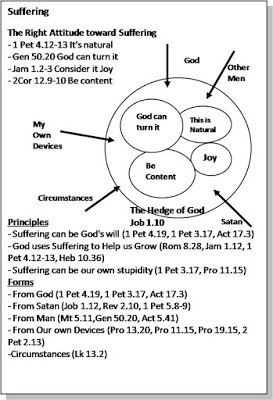
Illustration – The Components of Suffering

One of the things I find young disciples need is a good theology of suffering. And they need it before they start suffering because it’s a whole lot easier to form logical convictions before you are in pain. We know that it’s not a matter of if a person will suffer; it’s a matter of when.

For questions or comments drop me a line at charleswood1@gmail.com or click the envelope below to send this post to a friend…

Restoring the Image (Part 12) – The Holy Spirit: Indwelling

Do you not know that you are a temple of God and that the Spirit of God dwells in you?
(1 Corinthians 3:16)
As we continue in our discussion about the Holy Spirit’s role in the restoration process, we must acknowledge there is much confusion in Christendom today. Our personal convictions on this doctrine affect how we disciple young believers.

I believe every true born-again follower of Jesus is indwelled by the Holy Spirit (Rom 8.9). I believe upon conversion, a disciple is baptized with the Holy Spirit (Ac 2.38, 10.47, 11.16-17, Rom 8.9). I also believe the baptism of the Holy Spirit and the filling of the Holy Spirit can be two separate events (Ac 2.4, Ac 13.52 NASB). But in these beliefs, I choose not to wrangle with my Pentecostal or Fundamental brethren. We all agree the presence and the work of the Holy Spirit is essential to every believer’s transformation in pursuing the image of God (1 Cor 3.18, 12.13, Rom 8.9).
However, there are two grave errors in Christianity today regarding the doctrine of the Holy Spirit. One is to focus on the Holy Spirit and his supporting role as primarily an emotional event rather than a life-changing agent. I find many who are so “filled with the Holy Ghost” on Sunday bear no evidence of the Holy Spirit’s transforming power during the rest of the week (1 Cor 3.11-17, 14.7-11,26, 2 Cor 3.18).
The second error is just as dangerous. Some fundamental Christians, in reaction to the abuses of the doctrine of the Holy Spirit, have completely discounted any role or function of the Holy Spirit in the Christian’s life. Jesus give a very stern warning against such an abuse (Mk 3.28-29).
The Holy Spirit abides in every authentic believer and is the true power for real transformation (2 Cor 3.18, Gal 5.22-23).

(Part 1) – The Glory of His Image

(Part 2) – Too Much of a Good Thing

(Part 3) – We Need a Savior

(Part 4) – The Restoration Process: The Father

(Part 5) – The Restoration Process: The Son

(Part 6) – The Restoration Process: Discipleship

(Part 7) – The Restoration Process: Discipleship Continued

(Part 8) – The Restoration Process: One-on-One Discipleship

(Part 9) – The Restoration Process: Tools and Techniques

(Part 10) – The Restoration Process: Dangers

(Part 11) – The Holy Spirit: The Breath of Life

(Part 12) – The Holy Spirit: Indwelling

(Part 13) – The Holy Spirit: His Work

(Part 14) – The Word of God: Essential

(Part 15) – The Word of God: Essential but Neglected

(Part 16) – The Word of God: Setting the Heart

(Part 17) – The Word of God: Intake

(Part 18) – The Word of God: Application

(Part 19) – The Word of God: Passing it On

(Part 20) – Interaction with Others: The Image is not and Island

(Part 21) – Interaction with Others: Intentional Co-Restoration

(Part 22) – Interaction with Others: An Invitation to Restoration

(Part 23) – Interaction with Others: Restoration begins with Explanation

(Part 24) – An Evangelistic Obstacle to Following Jesus

(Part 25) – The Transforming Power of Prayer

(Part 26) – It’s Me, O Lord Standing in the Need of Prayer

(Part 27) – Reproduction: Creative like the Creator

(Part 28) – Reproduction: Helping Others Changes Us

(Part 29) – Reproduction: Changing the World

(Part 30) – Pressing On Toward the Finish Line

(Part 31) – Crossing the Finish Line

(Conclusion) – To Be Like Jesus

For questions or comments drop me a line at charleswood1@gmail.com or click the envelope below to send this post to a friend…

Restoring the Image (Part 11) – The Holy Spirit: The Breath of Life

I’ve been talking a lot about the role that Jesus Christ plays in restoring us to the original image of God. To summarize, first, He is the only perfect example of both morality and ministry. Second, there are many methods in both group sizes and tools that we use to help people follow His example. And last, we are responsible for using the techniques that are effective in helping others become like Him. The bottom line is that He is the only adequate model we have in order to rebuild the original image (Col 1.15, Heb 1.3). The restoration process requires us to continuously examine Christ’s life and conform ours lives to His. This is true discipleship.
So all of us who have had that veil removed can see and reflect the glory of the Lord. And the Lord—who is the Spirit—makes us more and more like him as we are changed into his glorious image. (2 Cor 3.18 NLT)
We discussed two persons of the Trinity: the Father and the Son; now I’d like to talk about the Holy Spirit’s role in the restoration process. First, we need to recognize the parallel between God breathing into his nostrils of Adam (Gen 2.7) and the Holy Spirit being our spiritual breath of life. The powerful residence of the Holy Spirit is promised with Jesus’ arrival by John the Baptist (Mt 3.11, 1 Cor 3.16). Jesus alludes to the Holy Spirit’s coming in the future (Jn 7.37-39). Then in John chapter 20, He breathes on them and they receive the Holy Spirit (Jn 20.22). As the breath of God filled Adam’s lungs so the breath of Jesus filled the spiritual lungs of the apostles with the Holy Spirit. The regeneration of the Spirit is the only means for the beginnings of real spiritual transformation (Titus 3.5). The Holy Spirit is the power for every believer to live life in the original image of God (2 Cor 3.18).

(Part 1) – The Glory of His Image

(Part 2) – Too Much of a Good Thing

(Part 3) – We Need a Savior

(Part 4) – The Restoration Process: The Father

(Part 5) – The Restoration Process: The Son

(Part 6) – The Restoration Process: Discipleship

(Part 7) – The Restoration Process: Discipleship Continued

(Part 8) – The Restoration Process: One-on-One Discipleship

(Part 9) – The Restoration Process: Tools and Techniques

(Part 10) – The Restoration Process: Dangers

(Part 11) – The Holy Spirit: The Breath of Life

(Part 12) – The Holy Spirit: Indwelling

(Part 13) – The Holy Spirit: His Work

(Part 14) – The Word of God: Essential

(Part 15) – The Word of God: Essential but Neglected

(Part 16) – The Word of God: Setting the Heart

(Part 17) – The Word of God: Intake

(Part 18) – The Word of God: Application

(Part 19) – The Word of God: Passing it On

(Part 20) – Interaction with Others: The Image is not and Island

(Part 21) – Interaction with Others: Intentional Co-Restoration

(Part 22) – Interaction with Others: An Invitation to Restoration

(Part 23) – Interaction with Others: Restoration begins with Explanation

(Part 24) – An Evangelistic Obstacle to Following Jesus

(Part 25) – The Transforming Power of Prayer

(Part 26) – It’s Me, O Lord Standing in the Need of Prayer

(Part 27) – Reproduction: Creative like the Creator

(Part 28) – Reproduction: Helping Others Changes Us

(Part 29) – Reproduction: Changing the World

(Part 30) – Pressing On Toward the Finish Line

(Part 31) – Crossing the Finish Line

(Conclusion) – To Be Like Jesus

For questions or comments drop me a line at charleswood1@gmail.com or click the envelope below to send this post to a friend…

Chuck’s Bio

Chuck was born in San Francisco, California in 1959

He started following Jesus Christ in December 1979 as a young soldier in the US Army.

He served 29 years as an Infantryman and Chaplain in the US Army. 

Chuck is married to Deb and has two sons, Chuck and Wes

Chuck and Deb have been making disciples in Christ for over 30 years and continue to minister to men and women across the nation by helping them start their own Disciple-Making Communities (DMCs).
All to the glory of Christ Jesus his Savior and Lord
To read Chuck’s Testimony click on the link below:
You can contact Chuck at: Charleswood1@gmail.com

For questions or comments drop me a line at charleswood1@gmail.com or click the envelope below to send this post to a friend…

Testimony 5: The Geographical Solution

Chapter 5

Where can I go from your Spirit? Where can I flee from your presence? If I go up to the heavens, you are there; if I make my bed in the depths, you are there. If I rise on the wings of the dawn, if I settle on the far side of the sea, even there your hand will guide me; Your right hand will hold me fast. (PSALM 139:7-10)

But things did change. They changed for the worse. I was feeling pretty good about myself as a soldier but my activities with my friends were beginning to impact my life in a negative way. We were doing things that the Army frowned on. (Not a lot of detail because I don’t want to give my sons any bright ideas.) You know the kind of stuff privates do and normally get themselves booted out of the Army. Well, I was having fun but I knew I was eventually going to wind up in big trouble. So I had a better idea. I thought “If I get away from these characters, it will solve my problems.” Ah, yes. The geographical solution. Don’t change your behavior, run away. Change your location. So I pushed to be assigned to a Special Operations Unit (like I had asked my recruiter in the first place!) and I figured that the hard core, Hooah ranger guys would never think about doing the things my buds and I were doing. After much paperwork, a Ranger recruiting team, and the promise of the XVIII Airborne Corps Commander ( I was too young to realize that when a General says to a young Recondo school graduate, “If there’s anything I can do for you, boy, let me know,” he was just making conversation.) I found myself at the 2nd Ranger Battalion at Ft. Lewis, WA.

Chapter 1: The Beginning
Chapter 2: Jesus is Watching You
Chapter 3: Paratrooper Religion
Chapter 4: Afraid of being Left Behind
Chapter 5: The Geographical Solution
Chapter 6: The Geographical Solution Fails

For questions or comments drop me a line at charleswood1@gmail.com or click the envelope below to send this post to a friend…

Restoring the Image (Part 10) – The Restoration Process: Dangers

Jesus said to them, “Is this not the reason you are mistaken, that you do not understand the Scriptures or the power of God?
(Mark 12:24)
At this point many of you may be becoming uncomfortable. And probably rightfully so. Or some of you may be asking, “why are you belaboring this point.” The fact of the matter is that there are two extremes in the discipleship camp.

On one extreme, discipleship has become so compartmentalized that only one technique is acceptable and they are in grave danger of becoming like the Pharisees (Mt 15.3, Col 2.16-23). Now there is no room for creativity, the gifts of the body, or even God himself to do His work. The other extreme is so loosey-goosey that it lacks any form of intentionality and those being discipled lack for spiritual nutrition. These are in grave danger of becoming mystics without substance (Eph 4.14, Col 2.8, 1 Tim 4.7-8)
I believe the Scriptures and Jesus’ ministry provide plenty of room for difference and yet provide the intentionality required to see real transformation in people’s lives. Let me give you an example. There are those who rely heavily on illustrations (drawings used to explain biblical principles) and those who do not like to use them at all in their ministries. I would say that this is a personal preference and probably has something to do with their gifting and the reception of the disciples that they are presently ministering to. But to say illustrations are wrong would completely fly in the face Jesus’ ministry. His parables were spoken illustrations in order to communicate spiritual concepts. Illustrations are simply a technique, they are an amoral method. But for one to say that illustrations are the only way to disciple men and women would put limits on God’s work, individual gifting, and different learning styles.
However , we must acknowledge that some techniques work better than others with certain people and settings. To fail to acknowledge this lacks integrity. I’m not saying that we are to do whatever works, but if it falls in the realm of biblical truth or example, then by all means, we ought to use a technique that is effective. But it’s really not about the technique at all. It’s about the effect. Are the techniques and methods we are using actually helping people to transform their lives into the image of Christ? Are they returning to the original image of God that he designed?
The task of discipleship is to help people become like Jesus. There are many techniques we can use in order to accomplish this task but the techniques should never drive the task. The task always drives the techniques. Therefore, we need to use methods that are effective in helping people become like Jesus.
Normally, it’s a combination of many methods that help people grow in their relationship of Christ. The two dangers that I see are one, people zeroing in on a technique and then dogmatically defining that technique as discipleship. Or two, using methods of “discipleship” that do not actually help a person follow Christ and then blindly practicing them without ever asking the question; “is this working?”
Consider this one of “Chuck’s Soap Boxes”

(Part 1) – The Glory of His Image

(Part 2) – Too Much of a Good Thing

(Part 3) – We Need a Savior

(Part 4) – The Restoration Process: The Father

(Part 5) – The Restoration Process: The Son

(Part 6) – The Restoration Process: Discipleship

(Part 7) – The Restoration Process: Discipleship Continued

(Part 8) – The Restoration Process: One-on-One Discipleship

(Part 9) – The Restoration Process: Tools and Techniques

(Part 10) – The Restoration Process: Dangers

(Part 11) – The Holy Spirit: The Breath of Life

(Part 12) – The Holy Spirit: Indwelling

(Part 13) – The Holy Spirit: His Work

(Part 14) – The Word of God: Essential

(Part 15) – The Word of God: Essential but Neglected

(Part 16) – The Word of God: Setting the Heart

(Part 17) – The Word of God: Intake

(Part 18) – The Word of God: Application

(Part 19) – The Word of God: Passing it On

(Part 20) – Interaction with Others: The Image is not and Island

(Part 21) – Interaction with Others: Intentional Co-Restoration

(Part 22) – Interaction with Others: An Invitation to Restoration

(Part 23) – Interaction with Others: Restoration begins with Explanation

(Part 24) – An Evangelistic Obstacle to Following Jesus

(Part 25) – The Transforming Power of Prayer

(Part 26) – It’s Me, O Lord Standing in the Need of Prayer

(Part 27) – Reproduction: Creative like the Creator

(Part 28) – Reproduction: Helping Others Changes Us

(Part 29) – Reproduction: Changing the World

(Part 30) – Pressing On Toward the Finish Line

(Part 31) – Crossing the Finish Line

(Conclusion) – To Be Like Jesus

For questions or comments drop me a line at charleswood1@gmail.com or click the envelope below to send this post to a friend…

Restoring the Image (Part 9) – The Restoration Process: Tools and Techniques

According to the grace of God which was given to me, like a wise master builder I laid a foundation, and another is building on it. But each man must be careful how he builds on it. For no man can lay a foundation other than the one which is laid, which is Jesus Christ.
(1 Corinthians 3:10-11)
We have been talking about techniques that have to do with the number of people that are being discipled at any given time. Let’s press on to the various tools that may be used in order to help a person become like Jesus.

One of the most common tools used is a curriculum that focuses on the basic disciplines of the Christian life. This is a great tool but it does not cover all the venues that help a person follow Christ. Let me challenge your thinking. When a person listens to a sermon and he is moved into his heart and his thinking to become more like Jesus, is he not being discipled? The answer is obviously yes. So a sermon is an acceptable tool for discipling people.
Can a person be discipled by someone who’s dead? This sounds a little squarely, but think about all the authors that have written tremendous books about following Jesus. Many of us have been mentored by people like DL Moody, Hudson Taylor, Dawson Trotman, and Bill Bright. Are they not part of the disciplemaking process? We could even include the writers of Scripture as some of our primary disciplers.
And what about music? Does it inspire us to follow Christ more closely, to become like Him? In the Middle Ages music and art were the primarily tools used to disciple people who were mostly illiterate.
I would submit to you, that anything that helps us follow Jesus and become like him, is an acceptable tool or method for discipleship. But remember the tool or technique must have its effect. If my methods are not helping people to follow Christ more effectively, then I need to change my methods.

(Part 1) – The Glory of His Image

(Part 2) – Too Much of a Good Thing

(Part 3) – We Need a Savior

(Part 4) – The Restoration Process: The Father

(Part 5) – The Restoration Process: The Son

(Part 6) – The Restoration Process: Discipleship

(Part 7) – The Restoration Process: Discipleship Continued

(Part 8) – The Restoration Process: One-on-One Discipleship

(Part 9) – The Restoration Process: Tools and Techniques

(Part 10) – The Restoration Process: Dangers

(Part 11) – The Holy Spirit: The Breath of Life

(Part 12) – The Holy Spirit: Indwelling

(Part 13) – The Holy Spirit: His Work

(Part 14) – The Word of God: Essential

(Part 15) – The Word of God: Essential but Neglected

(Part 16) – The Word of God: Setting the Heart

(Part 17) – The Word of God: Intake

(Part 18) – The Word of God: Application

(Part 19) – The Word of God: Passing it On

(Part 20) – Interaction with Others: The Image is not and Island

(Part 21) – Interaction with Others: Intentional Co-Restoration

(Part 22) – Interaction with Others: An Invitation to Restoration

(Part 23) – Interaction with Others: Restoration begins with Explanation

(Part 24) – An Evangelistic Obstacle to Following Jesus

(Part 25) – The Transforming Power of Prayer

(Part 26) – It’s Me, O Lord Standing in the Need of Prayer

(Part 27) – Reproduction: Creative like the Creator

(Part 28) – Reproduction: Helping Others Changes Us

(Part 29) – Reproduction: Changing the World

(Part 30) – Pressing On Toward the Finish Line

(Part 31) – Crossing the Finish Line

(Conclusion) – To Be Like Jesus

For questions or comments drop me a line at charleswood1@gmail.com or click the envelope below to send this post to a friend…

Restoring the Image (Part 8) – The Restoration Process: One-on-One Discipleship

Now there was a man of the Pharisees, named Nicodemus, a ruler of the Jews; this man came to Jesus by night and said to Him, “Rabbi, we know that You have come from God as a teacher; for no one can do these signs that You do unless God is with him.”
(John 3:1-2)

We were discussing the fact that Jesus discipled people in many group sizes from one-on-one to the masses. So why am I so big on one-on-one discipleship? It has everything to do with effect. My goal is to help someone become like Jesus. Eloquent speakers may be able to help people know what they ought to do but I find a sermon will usually fall short of application. Modern American Christianity is filled with Christians who know a lot. But that is not the objective in becoming a follower of Christ, knowledge is not enough. Jesus expresses this in his Parable of the Foundation (Lk 6.46-49). The man who builds his house on the rock is like a man who hears the word and applies it. James, the brother of Jesus, expresses the same principle. He says that we should “not be merely hearers who were but doers of the word” (Jm 1.22). Jesus, in His Great Commission, instructs His apostles to teach in such a way that the would be disciple will apply, obey, observe, all that He has commanded (Mt 28.18-20). Teaching about Jesus is not enough. We must help people become like Jesus by doing the things He did.

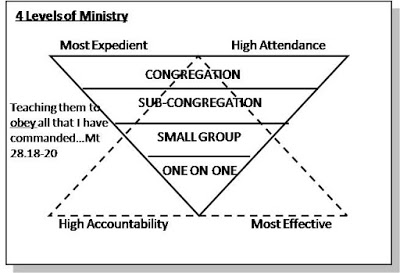
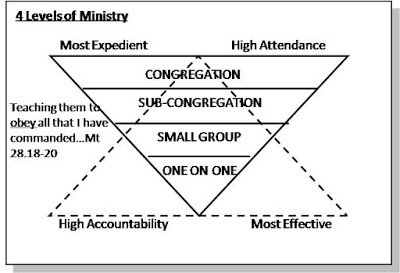
In the diagram you see four levels of ministry; congregational, sub congregational, small groups, one-on-one. The top part of the triangle represents the number of people that you can teach at each level. Although at the congregational level has the highest attendance and is most expedient, it generally produces the least amount of application. But as we move down the triangle to small groups and one-on-one, the likelihood of application increases significantly. I believe there is greater application at the bottom for several different reasons. One is accountability. It’s hard to hide when you are nose to nose, looking someone in the eyes and ask an application question. But in the congregation setting, for a pastor to point someone out and ask “Hey Bob! How are you doing with that lust problem?” is totally inappropriate. Another reason why one-on-one is so effective, is because it’s highly relational and the curriculum can be adapted to the individual’s needs. As I enter into a one-on-one relationship one of my first questions is “How can I help you?” In the congregational and sub congregational settings I have to make assumptions on what’s most helpful to the people that I’m addressing. Finally, I practice one-on-one discipleship because almost anyone can do it and it is highly reproducible. I do not need to be a gifted speaker or preacher. I simply need to be relational and know enough of the Scriptures to encourage another to follow Jesus.So my preference for a discipleship method is one-on-one but this does not mean that people cannot be discipled at the other levels of ministry. Jesus discipled people at all four levels. I have personally experienced discipleship at all four levels. But after seeing the results of any particular technique, it would stand to reason that a person would use the method that would cause the most effect. And unless a person is called to a particular ministry, it would seem both biblical and logical to use the methods that are most effective. At times the techniques are dictated by gifting or individual preference, but I think we ought to take our cues from Jesus ministry. When you evaluate Jesus ministry, you also see a greater effect in the 12 apostles and the one-on-one encounters that He has. This argument is not to make the case that one-on-one discipleship is the only way to disciple men and women. That is exactly what I am trying to avoid. I believe we greatly benefit from all four levels of ministry. But if you’re not seeing the results of people following Jesus zealously in your own personal ministry, I would consider changing your technique. The goal is not the method, the goal is to help people become like Jesus and restore the original image.

(Part 1) – The Glory of His Image

(Part 2) – Too Much of a Good Thing

(Part 3) – We Need a Savior

(Part 4) – The Restoration Process: The Father

(Part 5) – The Restoration Process: The Son

(Part 6) – The Restoration Process: Discipleship

(Part 7) – The Restoration Process: Discipleship Continued

(Part 8) – The Restoration Process: One-on-One Discipleship

(Part 9) – The Restoration Process: Tools and Techniques

(Part 10) – The Restoration Process: Dangers

(Part 11) – The Holy Spirit: The Breath of Life

(Part 12) – The Holy Spirit: Indwelling

(Part 13) – The Holy Spirit: His Work

(Part 14) – The Word of God: Essential

(Part 15) – The Word of God: Essential but Neglected

(Part 16) – The Word of God: Setting the Heart

(Part 17) – The Word of God: Intake

(Part 18) – The Word of God: Application

(Part 19) – The Word of God: Passing it On

(Part 20) – Interaction with Others: The Image is not and Island

(Part 21) – Interaction with Others: Intentional Co-Restoration

(Part 22) – Interaction with Others: An Invitation to Restoration

(Part 23) – Interaction with Others: Restoration begins with Explanation

(Part 24) – An Evangelistic Obstacle to Following Jesus

(Part 25) – The Transforming Power of Prayer

(Part 26) – It’s Me, O Lord Standing in the Need of Prayer

(Part 27) – Reproduction: Creative like the Creator

(Part 28) – Reproduction: Helping Others Changes Us

(Part 29) – Reproduction: Changing the World

(Part 30) – Pressing On Toward the Finish Line

(Part 31) – Crossing the Finish Line

(Conclusion) – To Be Like Jesus

For questions or comments drop me a line at charleswood1@gmail.com or click the envelope below to send this post to a friend…
Restoring the Image (Part 7) – The Restoration Process: Discipleship Continued

And when day came, He called His disciples to Him and chose twelve of them, whom He also named as apostles…Jesus came down with them and stood on a level place; and there was a large crowd of His disciples, and a great throng of people from all Judea and Jerusalem and the coastal region of Tyre and Sidon, (Luke 6:13,17)

Yesterday I talked about the definitions of discipleship as a process of following Jesus and becoming like Him. I also tried to illuminate from the gospel of John how evangelism is part of discipleship. Today I want to talk about the methods of discipleship (or the methods of becoming like Jesus).
For the last 80 years of modern American Christianity, much has been said and written about discipleship. Dawson Trotman, the founder of the Navigator’s, was instrumental in developing tools and techniques for discipleship. Various para-church and local church organizations have adopted and adapted many of these methods for their ministers. And although these tools and methods are very helpful they are not the centerpiece of the discipleship process. The centerpiece of discipleship is becoming like Jesus and therefore any tool or technique that helps me to do so is fair game.
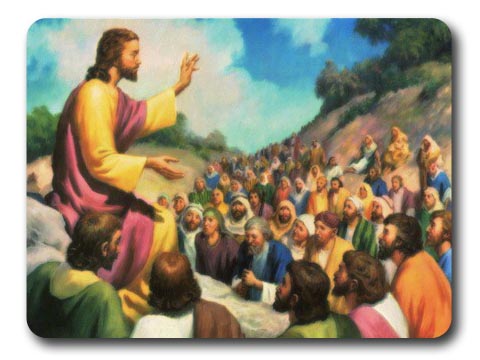
Let me illustrate. Navigators have put a premium on one-on-one discipleship. Is this the only technique for discipling men and women? As we look to Jesus’ ministry the obvious answer is no. Men and women were becoming Jesus’ disciples in various sizes and group settings. In Luke 6.12-17, we see three distinct people groups; the 12 apostles, a large crowd of disciples, and a great throng of people. The group that I’m most concerned with for this discussion is the middle group, the large crowd of disciples. The question must be asked; how did this large crowd of disciples become disciples? The answer is primarily through Jesus’ teaching in a large group setting.
But he also chose the 12 because he wanted to spend significant time with them in order to train them as apostles. He formed a small group in order to be more effective. Later in John chapter 21, when Jesus is exhorting Peter, Jesus speaks to him man-to-man. Jesus wanted to make sure that Peter got the message so he speaks to him one-on-one. Jesus uses this technique for effect.
So we can observe from Jesus’ ministry that He had different levels of discipleship. I separate these levels into four distinct groups; congregation, sub congregation, small groups, and one-on-one. It should not escape our notice that the effects of becoming like Jesus increase as groups get smaller. But this does not negate the fact that Jesus was able to help people follow him and become disciples in large groups.

(Part 1) – The Glory of His Image

(Part 2) – Too Much of a Good Thing

(Part 3) – We Need a Savior

(Part 4) – The Restoration Process: The Father

(Part 5) – The Restoration Process: The Son

(Part 6) – The Restoration Process: Discipleship

(Part 7) – The Restoration Process: Discipleship Continued

(Part 8) – The Restoration Process: One-on-One Discipleship

(Part 9) – The Restoration Process: Tools and Techniques

(Part 10) – The Restoration Process: Dangers

(Part 11) – The Holy Spirit: The Breath of Life

(Part 12) – The Holy Spirit: Indwelling

(Part 13) – The Holy Spirit: His Work

(Part 14) – The Word of God: Essential

(Part 15) – The Word of God: Essential but Neglected

(Part 16) – The Word of God: Setting the Heart

(Part 17) – The Word of God: Intake

(Part 18) – The Word of God: Application

(Part 19) – The Word of God: Passing it On

(Part 20) – Interaction with Others: The Image is not and Island

(Part 21) – Interaction with Others: Intentional Co-Restoration

(Part 22) – Interaction with Others: An Invitation to Restoration

(Part 23) – Interaction with Others: Restoration begins with Explanation

(Part 24) – An Evangelistic Obstacle to Following Jesus

(Part 25) – The Transforming Power of Prayer

(Part 26) – It’s Me, O Lord Standing in the Need of Prayer

(Part 27) – Reproduction: Creative like the Creator

(Part 28) – Reproduction: Helping Others Changes Us

(Part 29) – Reproduction: Changing the World

(Part 30) – Pressing On Toward the Finish Line

(Part 31) – Crossing the Finish Line

(Conclusion) – To Be Like Jesus

For questions or comments drop me a line at charleswood1@gmail.com or click the envelope below to send this post to a friend…
Restoring the Image (Part 6) – The Restoration Process: Discipleship

And He *said to them, “Follow Me, and I will make you fishers of men.”
(Matthew 4:19)
Yesterday we discussed the importance of why we need to follow Jesus and become like Him. Today, I will make the case that the act of following Jesus and becoming like Him can be summed up with one word; discipleship. When Jesus calls men and women to follow Him they become his disciples and the process of becoming a disciple is called discipleship. But this is not necessarily our contemporary understanding of discipleship. Modern Christianity has boiled discipleship down to a program. We have books, Wednesday night programs, and even people trained to do discipleship.
Discipleship cannot be relegated to an hour a week or pressed into the pages of a book. We have become so indoctrinated in this way of thinking that our definitions of discipleship have actually limited our understanding of what it means to be Christ’s disciple. Our definitions are mostly derived by our methods or techniques rather than the person we are trying to become like. We need to go back to the gospels for our definition. It is a lifestyle of becoming like Jesus and anything that facilitates that process can be called discipleship. If discipleship is following Jesus then anything that helps me to follow Jesus is discipleship.
Let me develop this argument around evangelism. Can a person be a disciple of Jesus and not be a convert? Yes. Let me rephrase the question: can a person follow Jesus and not be a Christian? Many did and were called disciples. We have clear examples of this in John chapter 6 where we see people following Jesus prior to their conversion. They were called disciples. When Jesus makes the statement, “Truly, truly, I say to you, unless you eat the flesh of the Son of Man and drink His blood, you have no life in yourselves. (John 6:53) the gospel writer notes that “many of His disciples withdrew and were not walking with Him anymore.” (John 6.66)Later in the chapter Jesus points out that even Judas was a disciples who did not experience conversion. But the fact remains that these people were actively following Jesus and defined as disciples by the apostle John. They were disciples in the sense that they were investigating who Jesus was. I call this pre-conversion discipleship (in other words pre-salvation followers of Jesus).

A person’s conversion does not normally come in a nice neat package. Usually conversion happens when a person is introduced to Jesus and considers who He is and surrenders their lives to him as both Savior and Lord. This process takes time. Certainly, an individual can become a true Christian in 15 minutes but that is not usually the case. Under normal circumstances, it takes an individual days, months, or even years to understand the redemptive work of Jesus and make an intelligent decision to make Him Lord of their lives. I believe that this pre-conversion process is just as much discipleship as what happens after a person becomes a Christian. So this would make evangelism (the act of informing and persuading a person to become a follower of Christ) a part of discipleship.
This has a huge impact on the way we do evangelism. Now, instead of trying to get a person to pray a prayer, we are simply introducing them to Jesus. We are not trying to get them to make a statement of faith; we are trying to help them follow Jesus. And this was how Jesus practiced evangelism. He simply asked people to follow him and as they followed him, they became convinced that he was the Messiah. Or, in instances of disbelief they stopped following Him and were not converted.
Still not convinced? Let me phrase it this way; what part of conversion is not a part of following Christ? No part. On the other hand, what part of following Christ is not a component of conversion? Many parts (Lordship, giving, practice of spiritual gifts, etc.). It is important for us to gain a biblical understanding of discipleship in order to keep from compartmentalizing the process of following Jesus.

(Part 1) – The Glory of His Image

(Part 2) – Too Much of a Good Thing

(Part 3) – We Need a Savior

(Part 4) – The Restoration Process: The Father

(Part 5) – The Restoration Process: The Son

(Part 6) – The Restoration Process: Discipleship

(Part 7) – The Restoration Process: Discipleship Continued

(Part 8) – The Restoration Process: One-on-One Discipleship

(Part 9) – The Restoration Process: Tools and Techniques

(Part 10) – The Restoration Process: Dangers

(Part 11) – The Holy Spirit: The Breath of Life

(Part 12) – The Holy Spirit: Indwelling

(Part 13) – The Holy Spirit: His Work

(Part 14) – The Word of God: Essential

(Part 15) – The Word of God: Essential but Neglected

(Part 16) – The Word of God: Setting the Heart

(Part 17) – The Word of God: Intake

(Part 18) – The Word of God: Application

(Part 19) – The Word of God: Passing it On

(Part 20) – Interaction with Others: The Image is not and Island

(Part 21) – Interaction with Others: Intentional Co-Restoration

(Part 22) – Interaction with Others: An Invitation to Restoration

(Part 23) – Interaction with Others: Restoration begins with Explanation

(Part 24) – An Evangelistic Obstacle to Following Jesus

(Part 25) – The Transforming Power of Prayer

(Part 26) – It’s Me, O Lord Standing in the Need of Prayer

(Part 27) – Reproduction: Creative like the Creator

(Part 28) – Reproduction: Helping Others Changes Us

(Part 29) – Reproduction: Changing the World

(Part 30) – Pressing On Toward the Finish Line

(Part 31) – Crossing the Finish Line

(Conclusion) – To Be Like Jesus

For questions or comments drop me a line at charleswood1@gmail.com or click the envelope below to send this post to a friend…