But He said to them, “I have food to eat that you do not know about…My food is to do the will of Him who sent Me and to accomplish His work.”
John 4:32 & 34
Scavenge to Survive
There was no centralized issue facility in Ranger School. The students were taken to abandoned structures and vehicles where antique equipment, ammunition, and rations were cached. Once they identified the cache, they had to determine the priority of what to take or leave. Wade’s squad was taken to a landing pad where a dilapidated UH-60 Blackhawk helicopter stood as a silent sentinel on the sun-baked tarmac of Camp Darby. Its faded paint and patches of rust were a stark contrast to the pristine olive drab uniforms of the assembled Ranger students. The once-proud war machine now served as a testament to the enduring legacy of Ranger training, even in this era of advanced technology. First Sergeant Miller’s voice boomed across the area, silencing the nervous chatter of the students.
“Listen up, Rangers! This relic is about to become your home for the next few hours. Welcome to the Darby Phase, where you’ll learn to improvise, adapt, and overcome using methods that have stood the test of time.”
Wade smiled, a mix of anticipation and determination in his eyes. Beside him, Ranger Metropax shifted nervously, his lanky frame dwarfed by the lifeless hulk that used to be a helicopter.
“Think they’ll let us fly it, Smith?” Metropax whispered, joking with his buddy.
Smith chuckled, shaking his head. “Not a chance, Metro. It’d take a miracle to get this baby off the ground again.”
The Rangers were divided into squads and tasked with scavenging gear from the helicopter’s interior. As they clambered into the cabin, the smell of stale fuel and dust filled their nostrils. Smith and Metropax found themselves in the cargo compartment, surrounded by olive drab canvas bags and wooden crates.
As they assembled their rucksacks and load-bearing equipment, Wade felt a connection to the Rangers who had come before him. “These packs were state-of-the-art back then,” Smith explained, showing Metropax how to adjust the straps. “They’ll do the job if you know how to use them.” They stuffed their rucks to the hilt with the necessary blank ammunition, rations, and other gear. They were surprised that the ancient backpack could hold over a hundred pounds if packed correctly.
The Darby Queen
First Sergeant Miller’s voice echoed in their minds as they navigated the challenging terrain. “This phase will test your ability to plan, prepare, and execute reconnaissance patrols. You’ll be evaluated on your leadership skills, your tactical proficiency, and your ability to work as a team. But first, you gotta make it through the Darby Queen.”
The infamous Darby Queen Obstacle Course, a grueling test of physical endurance and mental fortitude, consisted of 20 obstacles spread over a mile of uneven, hilly terrain.
As Wade approached the course, he could feel the eyes of the instructors upon him. He knew that his performance here would be a critical factor in his overall evaluation. Taking a deep breath, he launched himself into the first obstacle.
The course was a blur of rope climbs, wall scales, and log carries. Wade’s muscles screamed in protest as he pushed himself to the limit. His prosthetic hand, usually an asset, didn’t seem to present any advantage to the unique challenge as he navigated the obstacles.
Beside him, Metropax struggled with a particularly difficult rope climb. Without hesitation, Smith paused to offer encouragement and advice. “Keep going, Metro,” he called out. “Use your legs, not just your arms. You’ve got this!”
Metropax nodded, gritting his teeth as he redoubled his efforts. Together, they pushed through the pain and fatigue, crossing the finish line with nothing left in the tank.
As they collapsed to the ground, gasping for breath, Wade felt a hand on his shoulder. He looked up to see First Sergeant Miller standing over them, a rare smile on his weathered face.
“That’s what I like to see,” Miller said. “Rangers never leave a man behind. You two exemplify the spirit of this course.”
Recon
The next morning, the Rangers set out on their first patrol. The Georgia pines towered above them, casting long shadows across the forest floor. The air was thick with the scent of pine needles and damp earth. They moved in tactical “V” formations, their boots crunching on fallen leaves and twigs.
The Rangers faced a series of graded patrols, each one designed to test a different aspect of their training. They conducted far and near reconnaissance missions and even participated in a simulated dropship operation.
When it was Smith’s turn to lead, he felt the weight of responsibility settle on his shoulders. He gathered his squad, issuing the warning order and assigning roles. As he spoke, he could see the trust in his teammates’ eyes. They were ready to follow him into the unknown.
As they pushed deeper into the forest, Wade recalled the fast-paced instruction they had received on troop leading procedures and principles of patrolling. Now, it was time to put that knowledge into practice.
The squad came to a halt at the edge of a clearing. Wade, who had been designated as squad leader for this patrol, gathered his fellow Rangers around him. “Alright, listen up,” he said in a low voice. “We’ve got a recon mission. Our objective is to gather intel on an enemy position about two klicks northeast of here.”
He quickly issued the operation order, assigning roles and responsibilities to each team member. Metropax would be the point man, leading the way with his keen eye for detail and natural instinct for navigation.
As they moved out, Wade felt the weight of responsibility on his shoulders. He knew that his performance as a leader would be scrutinized not only by the instructors but also by his peers. The peer evaluation system was a crucial component of Ranger School, ensuring that only those who could earn the respect and trust of their fellow Rangers would advance.
The patrol moved silently through the underbrush, each Ranger hyper-aware of their surroundings. Suddenly, Metropax raised his fist, the signal to freeze. Then he motioned for Ranger Smith to move forward to join him.
“Whatcha got?” Wade whispered.
Metropax pointed to his ear. “Vehicle up ahead,” he murmured. “You can barely hear it. It must be on the dirt road here on the map.”
It was obvious that the Op-FOR (Opposing Forces, a simulated enemy unit) was patrolling the roads, looking for any unsuspecting Ranger students.
Smith nodded, his mind racing as he assessed the situation. This unexpected development could complicate their mission, but it also presented an opportunity to demonstrate their tactical awareness and adaptability.
“Good catch, Metro,” Smith whispered. “We’ll stay on azimuth, but stay alert. They’re probably looking for us but we found them first.”
They moved to their objective rally point, posted security, and performed a leader’s recon to get the lay of the land and confirm the location of the objective. Wade knew that if the Op-FOR were to discover them, he would automatically fail his patrol. Reconnaissance wasn’t something you could shoot your way out of. It took the utmost stealth and cunning, and by no means could they be discovered or compromised. The RI, Sergeant Kilby, looked on, scrutinizing Ranger Smith’s every move.
As Wade scoped out the area, he noticed a tall tree about 300 meters from the objective with a large open area between the two. Wade signaled to Metropax and whispered, “If I could climb the tree with my binos, I could probably get a pretty good look at the objective.”
Metropax looked concerned. “That’s pretty unorthodox, Smith. No one mentioned tree climbing in any of our training. You think the RI will go for it?”
Wade thought for a moment. “Well… if we have security posted, don’t violate any principles, and get all the priority intelligence requirements… I can’t see why not.”
Metropax grimaced but complied.
They slowly moved to the tree, and Wade had his men cover their three, six, and nine o’clock positions at the base. The RI looked at Wade and asked, “Ranger Smith, what in the world are you doing?”
“I’m going to climb this tree and do my recon from here,” Wade said with very little conviction.
The RI raised one eyebrow and shook his head. “Well Ranger, it’s YOUR patrol.”
Wade and Metropax glanced at each other, displaying their fear that this may have been a stupid idea.
It was an easy climb to get about 20 feet above the ground, but there was little concealment. Wade held his breath, hoping and praying the Op-FOR would never suspect such an unorthodox approach to reconnaissance. If they spotted him, it would be a No Go for sure.
He nervously jotted in his notebook the number of personnel, weapons and their types, structures and vehicles, and drew a simple sketch, remembering to annotate the compass heading and distances. He scrambled back down the tree and whispered to his men, “Let’s get the heck out of here!”
They moved most of the night and finally set up a patrol base eight kilometers from the objective, making double sure they weren’t followed. The RI changed the leadership positions, and Wade and Metropax moved to the perimeter to keep watch and pull security. It was 0330 in the morning, and they would each trade positions to get one hour of sleep before “stand to.”
The hours passed too quickly. It was as though they hadn’t slept at all. The RI called Wade to the center of the perimeter to counsel him on his performance the day before. Wade was almost certain the Sergeant didn’t approve of his harebrained idea.
“Ranger Smith, how do you think you did on your recon?” he asked with a blank face.
Wade was so sleepy, he had to pinch himself to stay alert enough to answer the RI’s question. “Well, Sergeant… I don’t think it was by the book… but I didn’t violate any principles that I know of?”
The RI let Wade stew a moment before he addressed the weary Ranger. “Well, Ranger… This is the first time I have ever seen a recon done like a monkey. Very unorthodox, indeed… But you are correct. You didn’t violate any principles of patrolling, and you retrieved all the priority intel requirements. Not only am I going to give you a Go on your patrol, I want you to sign this major positive spot report for initiative and ingenuity.”
Wade sat there dumbfounded. The RI snapped his fingers in front of Wade’s face. “Well Ranger, are you going to sign this or not?!”
Wade quickly snatched the pen from the RI’s grip. “Oh, uh, yes, Sergeant! Roger that!”
A new set of RIs replaced the old ones, and a new day of relentless trudging through the Georgia terrain continued. But Ranger Smith had the assurance he was going to the next phase, the mountains, if he just didn’t do anything dumb in the next few days.
Hallucinations
As they continued their patrols, the physical and mental strain began to take its toll. The Rangers had been operating on minimal sleep and limited rations, pushing their bodies and minds to the limit. This grueling regimen was designed to assess their physical stamina and mental toughness, key attributes of a Ranger.
By the fifth day of patrols, fatigue had set in hard. Smith found himself battling hallucinations brought on by sleep deprivation. As they moved through a particularly dense thicket, he swore he saw leopards leaping across his path. He blinked hard, forcing himself to focus and clear his head.
Beside him, Metropax was faring no better. During a brief rest halt, Smith watched in bemused concern as his friend stumbled toward a nearby tree, fumbling with imaginary coins.
“I could really go for a Snickers,” Metropax mumbled, his voice slurred with exhaustion as he attempted to insert the non-existent currency into what he perceived as a vending machine.
Wade gently pulled Metropax away from the tree. “Come on, buddy,” he said, his voice a mixture of amusement and concern. “Let’s get some shut-eye. We’ll be back on patrol soon enough.”
Despite their exhaustion and hallucinations, Smith and Metropax pressed on. They had learned to rely on each other, to draw strength from their shared determination. This bond, forged in the furnace of Ranger School, was as vital to their success as any tactical skill they had learned.
Driving On
As the days wore on, the challenges intensified.
The mission was a success, with the squad achieving their objectives and exfiltrating without detection. As they regrouped at the designated rally point, Smith could see the exhaustion on his teammates’ faces, but also the glimmer of satisfaction in their eyes. They had faced a challenge and overcome it together.
The final week of the Darby Phase brought a series of increasingly complex reconnaissance missions. But they had finally finished, each having passed their patrols. As the Rangers prepared for their transition to the Mountain Phase, there was a foreboding sense of anticipation in the air.
On their last night at Camp Darby, Smith and Metropax sat by a small pup tent in the dark, reflecting on their journey. The moonlight cast shadows across their faces, highlighting the changes wrought by their experiences.
“You know, Smith,” Metropax said, his voice quiet but steady, “I wasn’t sure I had what it took when we started this. But now…” He trailed off, gesturing at the camp around them.
Smith nodded, understanding the unspoken sentiment. “We’ve come a long way, Metro. But this is just the beginning. The Mountain Phase is going to push us even harder.”
As they sat in companionable silence, Wade pulled out his pocket New Testament and started reading, illuminating the pages with his red lens flashlight. His thoughts drifted to the challenges that lay ahead. The Mountain Phase, conducted in the rugged terrain near Dahlonega, Georgia, would test their skills in a whole new environment. They would face steep ascents, treacherous descents of the Tennessee Valley Divide (the TVD), and the constant battle against the elements.
But as he looked at Metropax, Wade felt a surge of conviction. He had not shared his faith with his Ranger buddy. “Metro, can I pray and ask God to help us make it through the mountain phase?”
Metro looked at Wade matter-of-factly. “Absolutely, Ranger buddy… if you think it will help.”
Wade gave a curious glance over his shoulder. “Have you ever heard the gospel?”
Metro looked skyward, pondering the question. “No… Don’t think I have.”
Wade leaned back on his ruck. “This book tells the story of God’s love for us and how we have all rebelled against Him in spite of that love. But God, our creator, didn’t reject us for our rebellion but actually leaned into it by sending His Son, Jesus Christ, to die for us. His death satisfied the penalty we should have paid for our own wrongdoing. The Bible calls this wrongdoing sin. And the penalty for sinning against God is death. But like I said, He sent His Son to pay that penalty for us by dying on a cross. But He didn’t stay dead. In three days, He rose from the dead to prove He is the King over everything, including death. And now He sits at the right hand of God pleading our case to God.”
Metro’s face twisted. “And you believe this?!”
“Well, yes… but not at first. But once I opened myself to learning more about Him and His love, God started showing Himself to me in very crazy ways.”
“Well… no offense, but that’s what it’s going to take for me… I mean… I need some proof.” Metro leaned back and looked to the sky again. “You can certainly pray for that and that we will make it through the mountains.”
They both laid back to get some sleep under the stars. Wade looked at the brilliant expanse and prayed for Metro and himself. He prayed for Kristen and remembered to lift up Jay as well. The prayer was simple, short, and sincere. Then before he could say Amen, sleep overwhelmed him.
High Altitude Insertion
The next morning, as they prepared to board the awaiting Thunderhawk dropships that would take them to the Mountain Phase, First Sergeant Miller addressed the Rangers one last time. He gave a briefing about their extreme high altitude insertion into Mosby Army Airfield, at Camp Merrill, the mountain phase.
“You’ve proven yourselves worthy to move to the next phase,” First Sergeant Miller said, his voice carrying across the assembly area. “But your journey is far from over. The mountains will test you in ways you can’t imagine. Remember your training, trust in your Ranger buddies, and never, ever quit.” Miller continued, “This next insertion… nothing new to you, you’ve all been through Dropship Insertion School and you’ve all got a few Extreme High Altitude drops under your belts. Your mission is an airfield seizure and making the insertion from the edge of space into Mosby Army Airfield.” A few Rangers exchanged nervous glances. Miller let the weight of his statement sink in and continued.
“Mosby is a 400-meter-long grass strip, barely enough room to land a bird, let alone 30 drop pods. You will be jumping from 120,000 feet, retro-assisted fall for over three minutes, reaching speeds of over 600 miles per hour. You’ll have to rely on your equipment and your training to guide you safely to the ground.” He paused, his eyes scanning the faces of the Rangers. “This is not a simulated drop. This is the real deal. The Op-FOR will be waiting for you, and you’ll need to be prepared to fight as soon as you hit the ground.”
“Any questions?” Miller asked.
The Rangers shook their heads, their faces grim with confidence. They had come too far to have second thoughts now.
“Good,” Miller said. “Get your gear and board the birds. We launch in 30 mikes.”
The Rangers boarded the dropships that would take them to the edge of the atmosphere and then the Mountain Phase, a mix of excitement and apprehension swirling within them.
As the Thunderhawk ascended and the Rangers entered their drop pods, Smith looked out the viewport and watched as the Earth shrunk beneath him. The curve of the planet was clearly visible, and he could see the vast expanse of the Atlantic Ocean. The sky above was a deep, inky black, studded with stars. Wade remembered feeling this small and insignificant on the first drop in DIS. Yet, at the same time, he felt an exhilarating sense of freedom. He was on the edge of space, about to embark on one of the best thrill rides the military had to offer.
The RI acting as the Drop Master came over the comms. “Approaching drop altitude. Get ready!”
Wade took a deep breath and closed his eyes. He could feel the dropship slowing as it reached its final altitude. Then, the order came: “Green light! DROP!” The pods exploded to the side and the initial moments of freefall were disorienting. Wade felt weightless, as if he were floating in a dream. The Rangers had entered the void. Suddenly the retros fired to begin their descent.
He could see the Earth rushing towards him, but it seemed to take forever to get closer. He knew he was falling at an incredible speed, but it didn’t feel like it. It felt like he was suspended in time. Then, the atmosphere began to thicken. Wade could feel the air resistance building, slowing his descent. The G-forces pressed up on him, making it difficult to breathe.
Wade fought the blood rushing to his head, focusing on his training. He could see the airstrip and the drop zone rushing up to meet him. This was it… the Mountain Phase.
Welcome Back! Today, we’ll be looking at the Gospels of Matthew and Mark to see how Jesus responded to persistent faith and how He modeled rhythms of rest.
Leaving that place, Jesus withdrew to the district of Tyre and Sidon. Not wanting anyone to know He was there, He entered a house, but was unable to escape their notice. Instead, a Canaanite woman from that region whose little daughter had an unclean spirit soon heard about Jesus, and she came and fell at His feet. Now she was a Greek woman of Syrophoenician origin, and she kept asking Jesus to drive the demon out of her daughter, saying “Lord, Son of David, have mercy on me! My daughter is miserably possessed by a demon.”
But Jesus did not answer a word. So His disciples came and urged Him, “Send her away, for she keeps crying out after us.” He answered, “I was sent only to the lost sheep of the house of Israel.” The woman came and knelt before Him. “Lord, help me!” she said. But Jesus replied, “First let the children have their fill. It is not right to take the children’s bread and toss it to the dogs.” “Yes, Lord,” she said, “even the dogs under the table eat the children’s crumbs that fall from their master’s table.” “O woman,” Jesus answered, “your faith is great! Because of this answer you may go and let it be done for you as you desire.” And she went home and found her child lying on the bed, and the demon was gone and she was healed from that very hour.
My Thoughts
I want to draw your attention to two insights from this passage. One is most commonly written about and the other a little bit more obscure but just as important.
The first is the woman whose daughter was tormented by a demon. She was a Gentile and outside of the scope of Jesus’ targeted ministry. She was a pest and the disciples were begging Jesus to get rid of her. After all, they were on vacation enjoying the beach (more on that in my second insight). Jesus finally addresses the woman with what could have only been received as an insult;
“First let the children have their fill. It is not right to take the children’s bread and toss it to the dogs.”
Did Jesus just call this lady a dog? That’s how I would have taken it! But notice her humility and faith. She doesn’t get mad and storm off. She doesn’t call the cops for what could have been perceived as a racial slur (AKA hate speech). No, she humbly bows before the King of kings and wisely presents her petition in a way that Jesus cannot ignore;
“Yes, Lord,” she said, “even the dogs under the table eat the children’s crumbs that fall from their master’s table.”
Now there are a few things that really get Jesus excited and one of them is extraordinary faith. (Remember the centurion who had more faith than anyone in israel? Matthew 8:5-13) Yes, although this woman was not part of the focus group and even a bother, Jesus was compelled to honor her request. Now that says a lot about how much joy God gets when we really trust Him and place our faith in Him! By the way, when you compare the two, I’d rather be called a dog than a sheep. Just saying.
On to the second insight. Notice where Jesus was – Tyre and Sidon. And notice why He was there – “Not wanting anyone to know He was there.” Wait, what? Is Jesus taking a break? You better believe He was! And the district Tyre and Sidon is a coastal region on the Mediterranean. Could Jesus have been spending time on the beach? Why not? I can just hear the disciples gasp when they see the vastness of the Med compared to their “Sea of Galilee.” Here’s my question; Why would it be so incredibly hard to believe that Jesus and His men were taking a vacation? I mean, think about the pace they were keeping. Even when Jesus suggested that they “Come away by themselves to a secluded place and rest a while.” 5000 people showed up to dinner. They were keeping a hectic schedule, frequently going without meals themselves. (Mark 6:31)
As often as Jesus was wrongfully chastised for violating the law of rest you’ve got to believe the Lord of the Sabbath would show us how to take a break. He actually goes on retreat at least two more times to be alone with His disciples. (Mark 8:27, John 11:54)
My Story
We built a 10×10 cabin on the backside of our property for the purpose of having a place to get away and spend time with God in solitude. We had some folks visit our place and we gave them the grand tour of our property and the “Quiet Time Cabin.” Later we found out that the cabin was jokingly renamed the “Shack of Shame.” It was supposed to be a joke but you know what they say, “A joke is just a veiled way to say what you’re really thinking.”
You have to ask the question, “Why would our friends be adverse to a place of rest and contemplation?” Well, one, these were Paratroopers and Special Forces folks and they rest when they die. And secondly, hard core disciple-makers are not known for taking rest seriously. And then again, neither were the children of Israel.
But as I look at Jesus taking a nap during a storm, the Omnipotent Father resting on the seventh day of creation, and the penalty for breaking the Sabbath in the Old Testament (look it up, it’s the same as witchcraft, sorcery, and adultery), I’m pretty convinced that God is serious about rest. It’s only for our own good and we’d do well to “Take 5” on a regular basis.
Our Action Plan
Now it’s time for some applications. Here’s some ideas;
As a disciple-maker, are you looking for people with extraordinary faith, even if it’s outside your “ministry target?”
Talk to those you are discipling and come up with a profile of someone with extraordinary faith
Do a personal inventory – Do you have an adequate rest rhythm?
In reflecting on Jesus’ encounter with the Canaanite woman and His retreat to Tyre and Sidon, we see the importance of persistent faith and the value of rest in our lives. By embracing these lessons, we can deepen our trust in God and cultivate a healthier balance between ministry and rest, just as Jesus modeled for us.
La señora del perro en la playa – 105
¡Bienvenidos nuevamente! Hoy, analizaremos los Evangelios de Mateo y Marcos para ver cómo respondió Jesús a la fe persistente y cómo modeló ritmos de descanso.
Comencemos.
Mateo 15:21-28, Marcos 7:24-30
De allí partió Jesús y se fue a la región de Tiro y Sidón. No queriendo que nadie supiera que estaba allí, entró en una casa, pero no pudo pasar desapercibido. En cambio, una mujer cananea de aquella región, cuya hijita tenía un espíritu inmundo, oyó hablar de Jesús, y fue y se postró a sus pies. Era una mujer griega de origen sirofenicio, y le pedía que expulsara al demonio de su hija, diciendo: «Señor, Hijo de David, ten compasión de mí; mi hija está miserablemente poseída por un demonio».
Pero Jesús no respondió ni una palabra. Entonces sus discípulos se acercaron y le rogaron: «Despídela, porque sigue gritando detrás de nosotros». Él respondió: «Sólo a las ovejas perdidas de la casa de Israel fui enviado». La mujer se acercó y se arrodilló ante Él. «Señor, ayúdame», le dijo. Pero Jesús le respondió: «Primero deja que los niños se sacien. No está bien tomar el pan de los hijos y echárselo a los perros. Ella le respondió: «Sí, Señor, hasta los perros comen debajo de la mesa las migajas que caen de la mesa de sus amos». Jesús le respondió: «Mujer, ¡qué grande es tu fe! Por esta respuesta puedes irte y que se cumpla lo que deseas». Cuando volvió a su casa, encontró al niño acostado en la cama; el demonio había desaparecido y ella quedó sana desde aquel mismo momento.
Mis Pensamientos
Quiero llamar su atención sobre dos ideas de este pasaje. Una es la más comúnmente escrita y la otra un poco más oscura pero igual de importante.
La primera es la mujer cuya hija estaba atormentada por un demonio. Ella era gentil y estaba fuera del alcance del ministerio de Jesús. Era una plaga y los discípulos le rogaban a Jesús que se deshiciera de ella. Después de todo, estaban de vacaciones disfrutando de la playa (más sobre eso en mi segunda idea). Jesús finalmente se dirige a la mujer con lo que solo podría haber sido recibido como un insulto:
“Deja primero que los hijos se sacien. No está bien tomar el pan de los hijos y echarlo a los perros”.
¿Jesús acaba de llamar a esta mujer perro? ¡Así es como lo habría tomado yo! Pero note su humildad y fe. Ella no se enoja y se va furiosa. Ella no llama a la policía por lo que podría haber sido percibido como un insulto racial (también conocido como discurso de odio). No, ella humildemente se inclina ante el Rey de reyes y sabiamente presenta su petición de una manera que Jesús no puede ignorar;
“Sí, Señor”, dijo ella, “hasta los perrillos comen debajo de la mesa las migajas que caen de la mesa de sus amos”.
Ahora bien, hay algunas cosas que realmente entusiasman a Jesús y una de ellas es una fe extraordinaria. (¿Recuerdas al centurión que tenía más fe que nadie en Israel? Mateo 8:5-13) Sí, aunque esta mujer no era parte del grupo de enfoque e incluso una molestia, Jesús se vio obligado a honrar su pedido. ¡Eso dice mucho sobre cuánto gozo obtiene Dios cuando realmente confiamos en Él y ponemos nuestra fe en Él! Por cierto, cuando comparas los dos, prefiero que me llamen perro que oveja. Solo lo digo.
Pasemos a la segunda idea. Observa dónde estaba Jesús: Tiro y Sidón. Y observa por qué estaba allí: “No quería que nadie supiera que estaba allí”. Espera, ¿qué? ¿Jesús se está tomando un descanso? ¡Será mejor que creas que lo estaba! Y el distrito de Tiro y Sidón es una región costera del Mediterráneo. ¿Podría haber estado Jesús pasando tiempo en la playa? ¿Por qué no? Casi puedo oír a los discípulos jadear cuando vieron la inmensidad del Mediterráneo en comparación con su “Mar de Galilea”. Mi pregunta es: ¿por qué sería tan increíblemente difícil creer que Jesús y sus hombres se estaban tomando unas vacaciones? Piensen en el ritmo que llevaban. Incluso cuando Jesús sugirió que “se retiraran a un lugar solitario para descansar un poco”, 5000 personas se presentaron a cenar. Tenían un horario muy apretado y con frecuencia se quedaban sin comer. (Marcos 6:31)
Por más que Jesús fuera injustamente reprendido por violar la ley del descanso, hay que creer que el Señor del sábado nos mostraría cómo tomar un descanso. De hecho, se retira al menos dos veces más para estar a solas con sus discípulos. (Marcos 8:27, Juan 11:54)
Mi Historia
Construimos una cabaña de 10×10 en la parte trasera de nuestra propiedad con el propósito de tener un lugar para alejarnos y pasar tiempo con Dios en soledad. Tuvimos algunas personas que visitaron nuestra propiedad y les mostramos un recorrido por nuestra propiedad y la “cabaña del tiempo de silencio”. Más tarde descubrimos que la cabaña había sido rebautizada en broma como “la cabaña de la vergüenza”. Se suponía que era una broma, pero ya sabes lo que dicen: “Una broma es solo una forma velada de decir lo que realmente estás pensando”.
Tienes que hacerte la pregunta: “¿Por qué nuestros amigos serían reacios a un lugar de descanso y contemplación?” Bueno, en primer lugar, estos eran paracaidistas y miembros de las Fuerzas Especiales y descansan cuando mueren. Y en segundo lugar, los hacedores de discípulos incondicionales no son conocidos por tomarse el descanso en serio. Y, por otra parte, tampoco lo eran los hijos de Israel.
Pero cuando veo a Jesús durmiendo la siesta durante una tormenta, al Padre Omnipotente descansando en el séptimo día de la creación y el castigo por quebrantar el Sabbath en el Antiguo Testamento (búscalo, es lo mismo que la brujería, la hechicería y el adulterio), estoy bastante convencido de que Dios se toma en serio el descanso. Es solo para nuestro propio bien y haríamos bien en descansar de forma regular.
Nuestro Plan de Acción
Ahora es el momento de aplicar algunas ideas. Aquí hay algunas:
Como hacedor de discípulos, ¿está buscando personas con una fe extraordinaria, incluso si está fuera de su “meta ministerial”?
Hable con aquellos a quienes está discipulando y elabore un perfil de alguien con una fe extraordinaria.
Haga un inventario personal: ¿tiene un ritmo de descanso adecuado?
Al reflexionar sobre el encuentro de Jesús con la mujer cananea y su retiro a Tiro y Sidón, vemos la importancia de la fe persistente y el valor del descanso en nuestras vidas. Al aceptar estas lecciones, podemos profundizar nuestra confianza en Dios y cultivar un equilibrio más saludable entre el ministerio y el descanso, tal como Jesús nos lo demostró.
Si ve un problema importante en la traducción, envíeme una corrección por correo electrónico a charleswood1@gmail.com
“Let us hold fast the confession of our hope without wavering, for He who promised is faithful…”
Hebrews 10:23
Confirmation
The sterile corridors of the morgue echoed with Kristen’s determined footsteps. This was her third visit in as many weeks, each time armed with the same unshakable conviction: Wade was alive.
As she approached the desk, the clerk’s face softened with recognition and pity. “Dr. Kitzler, I’m sorry, but nothing’s changed. Corporal Kovacs’ remains aren’t here.”
Kristen nodded, her expression a mask of professional detachment. “I understand. Thank you.”
Outside, she leaned against the cool stone of the building, letting out a shaky breath. The absence of Wade’s body only strengthened her belief. She closed her eyes, remembering their last moment together, Wade’s promise ringing in her ears: “Always.”
With renewed determination, Kristen straightened her shoulders and headed back to the hospital. The war raged on, and she had a job to do. But beneath her calm exterior, a fierce hope burned.
In quiet moments between patients, Kristen found herself whispering prayers. “Lord, keep him safe. Bring him back to me.”
As weeks turned to months, doubt tried to creep in. But Kristen held fast to her faith and the memories that sustained her. She threw herself into her work, comforting those who had seen so much carnage and mending broken minds and hearts, all while holding space in her own heart for the man she knew would return.
“Always,” she whispered each night before sleep claimed her. It was a promise, a prayer, and a declaration of unwavering love. Whatever battles Wade was fighting, whatever secrets kept them apart, Kristen knew one thing with absolute certainty: their story was far from over.
Deceptive Calm
The aroma of perfectly grilled steak wafted through the air as Wade savored each bite, still marveling at the stark contrast between his current surroundings and the rustic boot camp on Carthis 7. The administrative staff at Ranger School had welcomed him with unexpected warmth, their efficiency tinged with a genuine friendliness that felt almost surreal after weeks of secrecy and tension. He knew this special treatment wouldn’t last long.
As he waited for his paperwork to be processed, Wade’s gaze drifted to the window, taking in the lush greenery that stretched as far as the eye could see. Earth had changed dramatically in the century and a half since the devastating Skravak attack. The scorched-earth tactics employed by the aliens had razed cities to the ground, slashing the global population from 8 billion to a mere 1 billion souls, now scattered primarily across rural landscapes.
The irony wasn’t lost on Wade. Humanity had been forcibly regressed to a lifestyle reminiscent of the late 1800s, with only pockets of advanced technology persisting in crucial areas like agriculture, transportation, and communication. The collective trauma of the AI betrayal that had facilitated the alien invasion left most Earthers deeply mistrustful of complex computer systems.
Wade chuckled to himself, realizing how strange Earth seemed compared to the more technologically advanced colonies. The planet’s inhabitants clung to their “backward” ways with fierce pride, their traditions a bulwark against the terrors of the past.
Yet, from this devastation had sprung an unexpected boon. Free from centuries of industrial pollutants and harmful agricultural practices, Earth’s soil had rejuvenated. The planet now stood as one of the most fertile in the entire confederacy, its economy revolving primarily around agriculture and the export of organic materials to resource-hungry colonies.
As Wade shouldered his duffle bag and made his way to the barracks, he couldn’t help but feel a sense of nostalgia. All the changes, including his new identity, felt like he had stepped back in time. An epoch he had read about in high school history books.
As Wade shouldered his duffle bag and made his way to the barracks, he was immediately paired with Ranger Metropax, a lanky, tall, awkward man with a sheepish half-smile. “Smith,” Metropax nodded, extending his hand. “Looks like we’re ranger buddies.” Wade returned the firm handshake, recognizing the look and demeanor of a Marine Lieutenant. Rangers wore no rank in training and were all considered peers, but the chasm between officer and enlisted was always apparent.
The barracks were a far cry from the sterile environments of military spaceships. The scent of polished wood and fresh linens filled the air as Wade and Metropax claimed adjacent bunks, tossing their duffels down in unison. Around them, other Ranger pairs were settling in, their faces a mix of excitement and apprehension.
The rhythmic sound of footsteps drew everyone’s attention. A barrel-chested Ranger Instructor strolled casually down the center aisle, his posture relaxed yet commanding. He sported a form-fitting black t-shirt, emblazoned with a large gold Ranger tab on the front and his white name tag proudly displayed above it. When he spoke, his voice was calm and almost friendly, belying the intensity of the training to come.
“Welcome, Rangers,” he announced, his gaze sweeping over the assembled Ranger students. “Get a good night’s sleep. We’ll get started at 07 hundred hours in the morning.”
As the instructor turned and exited the barracks, Metropax leaned over to Wade. “You’ve been through this before? You’re a Bat Boy, right, I mean.” Metropax was referring to enlisted rangers headed to an assignment in one of the Ranger Battalions. Wade nodded slightly, and in a hushed tone suppressing a chuckle, said, “07 hundred, ha. Don’t you believe it for a second!”
As they began unpacking their gear, Wade’s thoughts drifted to Kristen. He wondered what she was doing, if she was safe, if she still believed in him. The weight of the promise reassuring him – “This is the woman you’re going to marry” – settled in his heart and mind as a source of strength.
Tomorrow would bring challenges, that much was certain. Wade pulled the sheets tight and folded six inches over the blanket at the head, perfectly made to military standards. He carefully lay on top of the blanket and sheets, fully dressed and ready to move on a moment’s notice. He knew better than to get between the sheets. There would be no time to get dressed, let alone make his bed to pass inspection. As Wade lay on his bunk, listening to the quiet rustling of his fellow Rangers settling in for the night, he warned Metropax and those closest to him to do as he had done. The Lieutenant was eager to follow Wade’s lead. A few others took his advice. But most bunked up like they were at boy scout camp. Confident he was ready for the morning’s festivities, he felt a sense of purpose ignite within him. This was his path forward – to become a Ranger, to serve, and ultimately, to find his way back to Kristen.
With a silent prayer of gratitude and a renewed commitment to his goals, Wade pulled his patrol cap over his face and closed his eyes. Sleep would be a precious commodity from here on out.
The Storm Breaks
At 03 hundred, Wade and Metropax’s eyes snapped open simultaneously as a cacophony of metal against metal shattered the pre-dawn silence. They were on their feet before the trash can finished its thunderous journey down the center aisle. This was the start of what would be the most grueling week of many Rangers’ lives.
Chaos erupted as Ranger Instructors (RIs) burst into the barracks, their voices a tempest of commands and reprimands. “Get out! Get on the street now!” they bellowed, leaving no room for hesitation or questions.
“Stay close Metro.” Wade muttered as they moved through the chaos. The buddy system was already proving its worth – while other Rangers stumbled alone in confusion, Wade and Metropax quickly navigated their way through the maelstrom and found their positions in formation.
There was no time for niceties. Students were shoved, pushed, and herded out onto the street, many still in various states of undress. Some stood at attention with nothing on but their underwear. The formation that assembled outside was a far cry from military precision – a motley crew of disheveled, disoriented individuals struggling to find their assigned positions.
At the head of this chaotic assembly stood a lone RI, his face a mask of disgust as he berated the student company commander. “What in the name of all that’s holy is this?!” he roared, gesturing at the disarray before him. “You call this a formation? I’ve seen better organization on a kindergarten playground!”
As if summoned by the commotion, more RIs materialized, descending upon the platoon and squad leaders like wolves on wounded prey. Their voices joined the cacophony, a symphony of criticism and demands for perfection.
Within moments, it seemed as though the entire cadre of RIs had engulfed the formation. They moved through the ranks like sharks scenting blood in the water, their keen eyes missing nothing. Every uniform infraction, every flicker of defiance or confusion in a Ranger’s eyes became grounds for punishment.
“Drop and give me twenty!” became the refrain of the morning, punctuated by the rhythmic counting of push-ups and the labored breathing of Rangers struggling through flutter kicks.
A short, stocky RI materialized before them, eyes scanning the ranger buddies with predatory intensity. “Well, well… Smith and Metropax. The dynamic duo.” His coffee-scented breath washed over them as he searched for deficiencies. Finding none, he moved on, but not before growling, “Don’t get comfortable, studs. There’s plenty of time to royally mess up.”
Wade blinked and the RI was on to the next victim. He knew it was only a matter of time before the RIs found something to harass him for. This was merely the opening salvo of “City Week,” the crucible designed to separate the wheat from the chaff.
For the next seven days, the concept of “civilization” would be twisted into an exquisite form of torment. It was boot camp on steroids – a gauntlet designed with one primary purpose: to make Ranger students quit.
Wade steeled himself for what was to come. Right now, he stood in the eye of the storm because he was prepared. But he knew the winds would eventually circle around for him. You can’t prepare for everything. He knew the statistics – only 40% would survive this first week. But he also knew something else, something that burned in his chest with an intensity that matched the rising sun.
He had a promise to trust and a promise to keep.
The storm of City Week had broken, and Wade Kovacs – now Ranger Smith – stood ready to weather it, come what may. His ranger buddy was a quick study and followed Wade’s cue, and together they made a good team. Metropax was smart. Not just book smart either. He had a savvy about him that Wade knew he would benefit from in time.
Survival of the Fittest
“Rangers, on the command of fall out, get back in the barracks and prepare for inspection! You have 30 seconds to be standing by your bunk! Fall out!” The command was given, and as one, the students surged towards the barracks. Inside, chaos erupted as dozens of students were cornered by RIs, forced to sign negative spot reports for infractions both real and imagined.
“Ranger Smith!” An RI’s voice cut through the commotion. “Your bunk has a thread hanging from it! Sign here.” Wade knew it was just a matter of time. The RI wrote on the top of the card, “Ranger James Smith, Roster number 47.” Wade felt an urge to correct the Sergeant but immediately recognized that would be a big mistake in two ways. First, it was his new name and second, you never correct an RI.
Ranger Smith gritted his teeth but complied, knowing each signature was a strike against his chances of completing the course.
Back in formation, the group stood ready for PT. The air was thick with anticipation and the acrid smell of nervous sweat. As calisthenics began, Ranger Smith pushed through the burn in his muscles; he’d been here before. Reminiscent of boot camp.
The confidence course loomed ahead, a gauntlet of twelve obstacles designed to break body and spirit. Wade and Metropax tackled each obstacle in tandem. At the Worm Pit, each one in adjacent lanes next to each other, they prepared to negotiate the obstacle. The Worm Pit was a slimy mix of mud, sawdust, and some unidentified substance that made it reek to high heaven.
Wade took a deep breath, steeling himself before plunging in. The stench was overwhelming, threatening to gag him as he inched forward. The back pocket of his trousers caught on the barbed wire, and for a heart-stopping moment, he thought he might be stuck.
“Move it, Smith! And get your fourth point of contact out of the air! You want to get your butt shot off?” an RI bellowed. “Or do you have parts to spare?” The RI obviously making a snide remark referencing his prosthetic.
Gritting his teeth, Ranger Smith wrenched his pants free and pressed on. He emerged on the other side, gasping and covered in muck, only to hear the dreaded command:
“Not good enough! Do it again!”
Three more times, Rangers Smith and Metropax navigated the Worm Pit before finally satisfying the RI’s exacting standards. Wade was embarrassed that he had let his ranger buddy down, but Metropax took it all in stride. Each obstacle that followed brought its own unique brand of misery, but both Rangers tackled them all with grim determination.
The five-mile run that followed was a study in controlled agony. Ranger Smith focused on the back of the runner in front of him, knowing that falling more than two steps behind meant failure. His lungs burned, his legs screamed for relief, but he pushed on, the mantra “Never Quit!” echoing with each footfall. Both Wade and Metropax, side by side, matched stride for stride, subtly adjusting their pace to stay together while maintaining formation standards.
Beside him, a fellow student stumbled, falling out of formation. “Get on the truck, Ranger!” an RI screamed. The “No Go Truck” drove slowly behind the formation, loading student after student who could not keep up the grueling pace. Ranger Smith spared a moment of sympathy for his fallen comrade but kept his eyes forward. There would be time for camaraderie later; now was the time for survival.
Breakfast in the mess hall was a cruel joke. Platters of gourmet food tantalized the famished students, but there was no time to savor it. RIs stalked the aisles, their voices a constant barrage of urgency and intimidation.
“Hurry up, Studs! Woof it down! We got some bugs that need killin’ and your chow is slowin’ me down!”
Ranger Smith shoveled food into his mouth mechanically, barely tasting it. Across the table, he saw a student attempt to pocket a roll. The RI’s response was swift and merciless.
“Thinking of saving that for later, sunshine? Get down and give me fifty push-ups! Sign this major unsat spot report. Now get out of my sight!”
The day continued in a brutal parade of challenges. Marine Martial Arts training left them battered and bruised. Classes on antique weapons and explosives tested their mental acuity when their bodies screamed for rest. The principles of patrolling, drilled into their heads with relentless repetition, were adhered to with almost religious fervor.
As 2100 hours approached, Ranger Smith felt a glimmer of relief. Showers and bed beckoned, promising a brief respite from the day’s torments. But even as he stood under the lukewarm spray, scrubbing away layers of grime and sweat, he knew tomorrow would bring more of the same.
Lying in his bunk that night, every muscle aching, Wade closed his eyes and saw Kristen’s face. He remembered their last moments together, the feel of her in his arms, the warmth of her smile. It seemed a lifetime ago, but the memory gave him strength.
He prayed quietly to himself, “Father, you have a plan and I have Your promise. I will stay the course. Give me strength and protect me from all that could go wrong. I believe You’re right here with me every step of the way. And Lord…please be with Kristen and give her faith in You and in me.” Sleep claimed Wade as “Ranger Smith” could be set aside until tomorrow.
Rugged Resilience
As Ranger Smith acclimated to Ranger School’s brutal routine, he marveled at its anachronistic nature. Despite being 350 years in the future, the Marine Corps had steadfastly preserved the training methods of the late 20th century. This dedication to tradition was both a point of pride and a constant challenge.
The school’s history resonated through every aspect of training. Founded in 1951 during the Korean War, it had always emphasized leadership development over pure tactical proficiency. This philosophy endured, with instructors pushing students to their limits to forge resilient leaders.
During patrolling tactics classes, Smith found himself transported to another era. The instructors used terminology that seemed pulled directly from 1980s field manuals. Despite centuries of technological advancement, the fundamentals of small-unit tactics remained surprisingly relevant.
One morning, Wade had finished personal hygiene with ten precious minutes before formation. Rather than being idle, he spotted a manual push mower against the barracks and began trimming scattered grass between pine needles and bare ground.
An RI approached, barking, “Ranger! What on earth are you doing?”
Wade’s mind scrambled. “Mowing the grass, Sergeant!”
“Well, there’s some grass that needs attention, but mostly you’re mowing dirt. Sign here, Ranger.”
Wade’s face fell as he withdrew his antiquated government-issue pen, expecting the worst. To his surprise, it was a major positive spot report, nullifying his previous negative.
“Good initiative, Ranger,” the RI growled. “Keep it up, Smith!”
Wade replaced the mower and double-timed to formation.
At chow, another lavish meal awaited them. They salivated at the prospect of even a small taste before being rushed out. Their last meal using tables and chairs was behind them.
The Ranger First Sergeant waited outside the D-FAC, bellowing, “Since you Rangers think you’re on a cruise ship taking your sweet time, rules have changed! File in the front, out the back. Whatever you eat on the way is yours, but you will not sit, stop, or even blink in my mess hall! Is that clear?”
Rangers filed past servers, grabbing food with their hands – no time for utensils. They gorged themselves, cramming their cheeks full before reaching the exit. Wade managed a decent amount, with just a banana remaining. Peeling it while holding a tray proved challenging, but he stuffed the whole thing in his mouth at the cleaning station.
Still struggling to swallow, he faced an RI at the exit. “What’s in your mouth, Ranger?”
Wade could only mumble, “Nana?”
“Drop and give me fifty, Ranger Smith!”
Wade and Metropax immediately dropped into the prone and started knocking out push-ups.
The RI continued, “And I’ve got something for you to sign when you finish choking that down.”
Once again, Wade was back in the negative and was the reason for his buddy’s pain.
As they finished their push-ups, Wade signed the spot report and they were off toward the barracks at a double time.
“Sorry about that Metro… my bad,” Wade growled apologetically.
“Don’t even think about it, Smith. If it weren’t for you, I wouldn’t have made it past the first day. Nothing but a thing… and for all practical purposes, ‘City Week’ is done. On to Camp Darby,” Metropax said energetically.
“For the first phase of patrolling!” Wade finished. Both of them headed into the barracks and checked their gear one final time.
Isaiah 9:1-7 & Jeremiah 23:1-8 – The Multiplicative Nature of God’s Kingdom: A Prophetic and Christological Exploration
Introduction
The concept of the multiplicative nature of the Kingdom of God is a profound theme woven throughout Scripture, revealing the expansive and transformative power of God’s reign. This essay will analyze this concept, focusing on the word “multiply” in the context of Isaiah 9:1-7 and Jeremiah 23:1-8, while using Jesus as the perfect example to follow.
Etymological Analysis
In Hebrew, the word for “multiply” is רָבָה (rabah – Strong’s H7235), which means to increase, become numerous, or grow. This term appears in Isaiah 9:7, where it is prophesied that “of the increase (מִרְבֵּה, mirbeh- Strong’s H4766) of his government and of peace there will be no end.” The root word carries connotations of abundance, expansion, and fruitfulness, all of which are central to understanding the nature of God’s kingdom.
Theological Significance
Biblical Foundation
The concept of multiplication is foundational to God’s interaction with humanity. In Genesis 1:22,28, God’s first command to living creatures and humans is to “be fruitful and multiply.” This command is reiterated to Noah and his sons after the flood (Genesis 9:1,7), establishing multiplication as a divine mandate for creation.
Covenant Promises
God’s covenant with Abraham further emphasizes this theme. In Genesis 17:2,6, God promises to multiply Abraham exceedingly and make him fruitful. This promise becomes a cornerstone of Israel’s identity, as seen when Moses reminds God of His promise to multiply Abraham’s descendants (Exodus 32:13).
Isaiah 9:1-7
This passage presents a powerful prophecy of the coming Messiah who will bring light to those in darkness and increase the nation’s joy. The prophecy culminates in the promise of an eternal kingdom established and upheld with justice and righteousness. Jesus fulfills this prophecy, bringing light to the world (John 8:12) and establishing a kingdom that continually expands.
Jeremiah 23:1-8
This text further illustrates the multiplicative concept, promising a righteous Branch from David’s line who will reign wisely and execute justice. This Messianic figure, identified as Jesus, will gather the remnant of God’s flock and cause them to be fruitful and multiply (Jeremiah 23:3). This multiplication is not just in number but in righteousness and faithfulness to God.
Jesus as the Perfect Example
Jesus, as the perfect embodiment of God’s kingdom, exemplifies this multiplicative nature throughout His ministry. He begins with twelve disciples but ultimately commands them to “go and make disciples of all nations” (Matthew 28:19), initiating a process of exponential growth. This multiplication is not merely numerical but encompasses spiritual transformation and the spread of God’s reign.
The multiplicative nature of God’s kingdom is evident in Jesus’ parables and actions. In the parable of the mustard seed (Matthew 13:31-32), Jesus describes the kingdom starting small but growing into something vast and life-sustaining. Similarly, the parable of the yeast (Matthew 13:33) illustrates how the kingdom’s influence permeates and transforms society. Jesus demonstrates divine multiplication in action by feeding the 5,000 with five loaves and two fish (Luke 9:16), a physical manifestation of God’s ability to multiply resources beyond human expectation.
Divine Attributes and Redemptive Plan
This concept reveals God’s desire for His reign to extend to all aspects of creation. It demonstrates His redemptive plan to restore and multiply what was lost through sin. The multiplicative nature of the kingdom points to Christ’s eternal reign, which will continue to expand in influence and power throughout eternity. This is further illustrated in Ezekiel 36:10-11, where God declares He will multiply people and animals on the land of Israel, symbolizing the restoration and growth of His kingdom.
Implications for Believers
For believers today, understanding this concept transforms our perspective on kingdom work. It encourages us to see our small acts of faithfulness as seeds of exponential growth in God’s hands. The parable of the talents (Matthew 25:20-21) illustrates spiritual multiplication through faithful stewardship, challenging believers to actively participate in the kingdom’s expansion. We are called to recognize that our efforts, empowered by the Holy Spirit, can have far-reaching effects.
Conclusion
The multiplicative nature of God’s kingdom, exemplified perfectly in Jesus, reveals a dynamic, ever-expanding reign that transforms individuals, communities, and ultimately the entire creation. It calls us to embrace our role in this divine multiplication, trusting that God can use our faithful obedience to produce abundant fruit for His kingdom. This concept illuminates Jesus’ kingship and the expansive, eternal nature of God’s kingdom, offering both scholarly insight and inspirational truth for contemporary Christian understanding.
Disciple-Maker’s Short Story
The Mission to Multiply
The mess hall buzzed with the usual lunchtime chatter, but in a quiet corner, Sergeant First Class Hernandez and Lieutenant Banks sat engrossed in conversation. Their trays of food lay half-forgotten as they leaned in, discussing matters far beyond the day’s training schedule.
“So, LT, what’s on your mind today?” SFC Hernandez asked, noticing the thoughtful expression on his young platoon leader’s face.
Lieutenant Banks hesitated, then spoke. “Sergeant, I was reading Jeremiah 23 and Matthew 28 this morning. There’s something about God wanting to multiply His followers that’s got me thinking.”
Hernandez nodded, a small smile playing on his lips. “Ah, you’ve stumbled upon the Great Commission, sir. It’s the heart of what we’re called to do as believers.”
“The Great Commission?” Banks furrowed his brow. “I’ve heard that term, but I’m not sure I fully grasp it.”
Hernandez leaned back, his eyes alight with passion. “It’s simple, yet profound, sir. Jesus, after His resurrection, gave us a mission. He said, ‘Go and make disciples of all nations, baptizing them in the name of the Father and of the Son and of the Holy Spirit, and teaching them to obey everything I have commanded you.'”
Banks nodded slowly, absorbing the words. “So it’s about spreading the faith?”
“It’s more than that, sir. It’s about multiplication. Think of it like our military strategy. We don’t just want to hold ground; we want to expand our influence, right?”
“Right,” Banks agreed.
“Well, the Great Commission is God’s strategy for expanding His kingdom. It’s not just about converting people; it’s about making disciples who will, in turn, make more disciples. It’s exponential growth.”
Banks’ eyes widened with understanding. “Like a chain reaction.”
“Exactly, sir. And here’s the kicker – this isn’t a new idea. It goes all the way back to God’s promise to Abraham that all peoples on Earth would be blessed through him. The Great Commission is the fulfillment of that ancient promise.”
Banks leaned forward, his food completely forgotten now. “So how do we do this, Sergeant? How do we fulfill this Commission?”
Hernandez smiled warmly. “Sir, we’ve been doing it since the day we met. Remember when I first shared my faith with you? That was the Great Commission in action. And now, look at you, diving into Scripture, asking questions, growing in your faith. That’s discipleship.”
Banks sat back, a look of awe on his face. “I never thought of it that way. You’ve been living this out all along, haven’t you?”
“You caught me with my hand in the cookie jar, sir!” They both laughed. “It’s our mission and it’s not always easy, but it’s what we’re called to do. Just like we train our soldiers to be leaders who can train others, we’re called to be disciples who make disciples.”
“It’s a big responsibility,” Banks mused.
“It is,” Hernandez agreed. “But remember, Jesus said He has all authority in heaven and on earth, and He promised to be with us always. We’re not doing this alone.”
As they finished their lunch, Banks looked at Hernandez with newfound respect. “Thank you, Sergeant. For living this out, for showing me what it means to follow Christ. I want to be like that – like Jesus, multiplying His love and truth wherever I go.”
Hernandez nodded, his eyes shining. “That’s the goal, sir. To become more like Jesus every day, and to help others do the same. That’s the heart of the Great Commission.”
As they stood to leave, both men felt a renewed sense of purpose. Their mission as soldiers took on a deeper meaning, intertwined with a greater calling – to be part of God’s multiplicative kingdom, spreading His love and truth to all nations, starting right here in their own platoon.
Jesus called the crowd to Him and said, “All of you, listen to Me and understand: A man is not defiled by what enters his mouth, but by what comes out of it.” If anyone has ears to hear, let him hear.”
After Jesus had left the crowd and gone into the house, His disciples inquired about the parable. They said, “Are You aware that the Pharisees were offended when they heard this?” But Jesus replied, “Every plant that My heavenly Father has not planted will be pulled up by its roots. Disregard them! They are blind guides. If a blind man leads a blind man, both will fall into a pit.”
Peter said to Him, “Explain this parable to us.” Jesus asked “Are you still so dull? Do you still not understand? Do you not yet realize that whatever enters the mouth goes into the stomach and then is eliminated? But the things that come out of the mouth come from the heart, and these things defile a man. Nothing that enters a man from the outside can defile him, because it does not enter his heart, but it goes into the stomach and then is eliminated.” (Thus all foods are clean.) He continued: “What comes out of a man, that is what defiles him. For out of the heart come evil thoughts, murder, adultery, sexual immorality, theft, false testimony, greed, wickedness, deceit, debauchery, envy, slander, arrogance, and foolishness. All these evils come from within, and these are what defile a man, but eating with unwashed hands does not defile him.”
My Thoughts
I’m not sure, after reading Jesus, I want to use the phrase, “From the bottom of my heart” as a way to express my sincere love. Jesus addressed the heart many times in His teaching. It usually exposes the “true you.” I don’t know about you but when I look inside, I’m shocked at my innards. I would have to agree with the prophet Jeremiah;
“The heart is more deceitful than all else and is desperately sick; Who can understand it?” (Jeremiah 17:9 NASB)
The next verse is even more scary;
“I, the LORD, search the heart, I test the mind, even to give to each man according to his ways, according to the results of his deeds.” (Jeremiah 17:10 NASB)
But thank God, He’s in the business of changing hearts!
“Moreover, I will give you a new heart and put a new spirit within you; and I will remove the heart of stone from your flesh and give you a heart of flesh.” (Ezekiel 36:26 NASB)
“I will give them a heart to know Me, for I am the LORD; and they will be My people, and I will be their God, for they will return to Me with their whole heart.” (Jeremiah 31:33 NASB)
“being manifested that you are a letter of Christ, cared for by us, written not with ink but with the Spirit of the living God, not on tablets of stone but on tablets of human hearts.” (2 Corinthians 3:3 NASB)
Now on the last day, the great day of the feast, Jesus stood and cried out, saying, “If anyone is thirsty, let him come to Me and drink. He who believes in Me, as the Scripture said, ‘From his innermost being will flow rivers of living water.'” (John 7:37-38 NASB)
As disciple-makers, we acknowledge our sinfulness from the depths of our hearts, yet we also rejoice and share the good news that the Great Heart Surgeon is at work in those who seek His help.
My Story
After 45 years of professing Christ as Lord and Savior I’ve become a pretty good person…on the outside. In recent years I’ve become painfully aware that the Christian camouflage I wear on the exterior is not enough to “walk in a worthy manner” before the Lord. (Colossians 1:10) As Jesus clearly states, God sees it all, outside and INSIDE!
I’ve taken several steps to correct my “stinking thinking.” I’ve memorized key passages like;
We are destroying speculations and every lofty thing raised up against the knowledge of God, and we are taking every thought captive to the obedience of Christ (2 Corinthians 10:5)
And
Finally, brethren, whatever is true, whatever is honorable, whatever is right, whatever is pure, whatever is lovely, whatever is of good repute, if there is any excellence and if anything worthy of praise, dwell on these things. (Philippians 4:8)
I’ve read a couple of very helpful books that were very helpful;
A Deeper Walk: A Proven Path for Developing a More Vibrant Faith
By: Marcus Warner
Winning the War in Your Mind: Change Your Thinking, Change Your Life
By: Craig Groeschel
But the most significant things I’ve done is to pray and ask for God’s help and to intentionally work on this area of life. By His grace I’ve seen some transformation but am committed to staying vigilant in the heart.
Our Action Plan
Now it’s time for application. Here’s some ideas;
Answer this question from Scripture: “Can God hear our thoughts?”
Do a Bible study with those you are discipling on what Jesus says about the heart.
Wear a Heart Monitor – Intentionally keep track of your thoughts throughout the day and identify those that honor God and those that do not.
Jesus’ teachings on the heart emphasize the importance of inner transformation and aligning our thoughts with God’s will. He reminds us that true discipleship involves not just outward actions, but a genuine change of heart, requiring constant vigilance and reliance on God’s Word and grace to cultivate pure thoughts and intentions.
¿Desde lo más profundo de mi corazón? – 104
¡Bienvenidos nuevamente! Hoy, analizaremos los Evangelios de Mateo y Marcos para ver algunas de las opiniones de Jesús sobre el corazón.
Comencemos.
Mateo 15:10-20, Marcos 7:14-23
Jesús llamó a la multitud y les dijo: «Escúchenme todos y entiendan: el hombre no se contamina por lo que entra en su boca, sino por lo que sale de ella. Si alguno tiene oídos para oír, que oiga».
Después de que Jesús dejó a la multitud y entró en la casa, sus discípulos le preguntaron sobre la parábola. Dijeron: «¿Saben que los fariseos se ofendieron al oír esto?». Pero Jesús respondió: «Toda planta que mi Padre celestial no haya plantado será arrancada de raíz. No les hagan caso, son guías ciegos. Si un ciego guía a otro ciego, ambos caerán en un hoyo».
Pedro le dijo: «Explícanos esta parábola». Jesús les preguntó: «¿Todavía son tan torpes? ¿Todavía no entienden? ¿Todavía no se dan cuenta de que todo lo que entra por la boca va al estómago y luego se elimina? Pero lo que sale de la boca, del corazón sale; y eso es lo que contamina al hombre. Nada de lo que entra en el hombre desde fuera puede contaminarlo, porque no entra en el corazón, sino que va al estómago y luego es expulsado. (Así que todos los alimentos son limpios.) Y continuó: “Lo que sale del hombre, eso es lo que lo contamina. Porque del corazón salen los malos pensamientos, los homicidios, los adulterios, la inmoralidad sexual, los robos, los falsos testimonios, la avaricia, la maldad, el engaño, la lujuria, la envidia, la calumnia, la arrogancia y la insensatez. Todos estos males salen de dentro, y eso es lo que contamina al hombre, pero comer con las manos sin lavar no lo contamina”.
Mis Pensamientos
No estoy seguro de que, después de leer a Jesús, quiera usar la frase “desde lo más profundo de mi corazón” como una forma de expresar mi amor sincero. Jesús se dirigió al corazón muchas veces en sus enseñanzas. Por lo general, expone el “verdadero yo”. No sé ustedes, pero cuando miro hacia dentro, me quedo impactado por mis entrañas. Tendría que estar de acuerdo con el profeta Jeremías:
“El corazón es más engañoso que todo lo demás y es perverso; ¿quién lo entenderá?” (Jeremías 17:9 NVI)
El siguiente versículo es aún más aterrador:
“Yo, el Señor, escudriño el corazón, pruebo la mente, para dar a cada uno según su camino, según el resultado de sus obras” (Jeremías 17:10 NVI)
Pero gracias a Dios, ¡Él se dedica a cambiar corazones!
“Además, les daré un corazón nuevo y pondré un espíritu nuevo dentro de ustedes; quitaré de su carne el corazón de piedra y les daré un corazón de carne.” (Ezequiel 36:26 NVI)
“Les daré un corazón para que me conozcan, porque yo soy el Señor; y ellos serán mi pueblo y yo seré su Dios, porque volverán a mí con todo su corazón.” (Jeremías 31:33 NVI)
“Siendo manifiesto que ustedes son una carta de Cristo, escrita no con tinta, sino con el Espíritu de Dios vivo; no en tablas de piedra, sino en tablas de corazones humanos.” (2 Corintios 3:3 NVI)
En el último y gran día de la fiesta, Jesús se puso en pie y alzó la voz, diciendo: «Si alguno tiene sed, venga a mí y beba. El que cree en mí, como dice la Escritura: De su interior correrán ríos de agua viva». (Juan 7:37-38 NVI)
Como hacedores de discípulos, reconocemos nuestra pecaminosidad desde lo más profundo de nuestro corazón, pero también nos regocijamos y compartimos la buena noticia de que el Gran Cirujano del Corazón está obrando en aquellos que buscan Su ayuda.
Mi Historia
Después de 45 años de profesar a Cristo como Señor y Salvador, me he convertido en una persona bastante buena… por fuera. En los últimos años me he dado cuenta dolorosamente de que el camuflaje cristiano que llevo por fuera no es suficiente para “andar como es digno” delante del Señor. (Colosenses 1:10) Como Jesús afirma claramente, Dios lo ve todo, ¡por fuera y por dentro!
He tomado varias medidas para corregir mi “pensamiento apestoso”. He memorizado pasajes clave como:
Destruimos especulaciones y toda altivez que se levanta contra el conocimiento de Dios, y llevamos cautivo todo pensamiento a la obediencia a Cristo (2 Corintios 10:5)
Y
Por lo demás, hermanos, todo lo que es verdadero, todo lo honesto, todo lo justo, todo lo puro, todo lo amable, todo lo que es de buen nombre; si hay virtud alguna, si algo digno de alabanza, en esto pensad. (Filipenses 4:8)
He leído un par de libros que me resultaron muy útiles:
A Deeper Walk: A Proven Path for Developing a More Vibrant Faith
Por: Marcus Warner
Winning the War in Your Mind: Change Your Thinking, Change Your Life
Por: Craig Groeschel
Pero lo más importante que he hecho es orar y pedirle ayuda a Dios y trabajar intencionalmente en esta área de mi vida. Por Su gracia he visto cierta transformación, pero estoy comprometido a permanecer vigilante en el corazón.
Nuestro Plan de Acción
Ahora es el momento de ponerlo en práctica. Aquí hay algunas ideas:
Responda a esta pregunta de las Escrituras: “¿Puede Dios escuchar nuestros pensamientos?”
Realice un estudio bíblico con aquellos a quienes está discipulando sobre lo que Jesús dice acerca del corazón.
Use un monitor cardíaco: lleve un registro intencional de sus pensamientos a lo largo del día e identifique aquellos que honran a Dios y aquellos que no.
Las enseñanzas de Jesús sobre el corazón enfatizan la importancia de la transformación interior y de alinear nuestros pensamientos con la voluntad de Dios. Él nos recuerda que el verdadero discipulado no solo implica acciones externas, sino un cambio genuino de corazón, que requiere vigilancia constante y confianza en la Palabra y la gracia de Dios para cultivar pensamientos e intenciones puros.
Si ve un problema importante en la traducción, envíeme una corrección por correo electrónico a charleswood1@gmail.com
The Art of Discussion – A Laughable Look at a Very Serious Subject. This book humorously talks about different communication weaknesses using drama, dance, orchestra, and sports to depict a comical look at discussion faux pas and how to self-correct before having a conversational meltdown.
Is your communication style more “competitive interpretive dance” than “civil discourse?” 😅 My book’s got you covered! Learn to avoid awkward silences & verbal sparring matches using drama, dance, orchestras & sports! Get ready to LOL your way to better convos! [Link to book] communication humor books awkward
Introduction: Communication Chaos – A Divine Comedy of Conversation
Ever felt like your conversations are more awkward than a middle school dance? Welcome to the wild world of communication, where misunderstandings are an Olympic sport, and meaningful dialogue feels like solving a Rubik’s cube blindfolded!
The Communication Struggle: You’re Not Alone
Picture this: Nearly 70% of people communicate about as smoothly as a hippo doing ballet. That’s right – you’re in good company! If you’ve ever:
– Accidentally insulted your mother-in-law
– Turned a simple “How are you?” into an existential crisis
– Created more awkward silence than a bad first date
Then congratulations! You’re a certified member of the “Communication Struggle” club.
The Communication Spectrum: From Verbal Warfare to Holy Harmony
Imagine conversations as a comedy routine where:
– Debate equals Verbal Cage Match
– Discussion equals Collaborative Improv
– Dialogue equals Spiritual Dance Party
Your Communication Rescue Mission
This book isn’t just another boring communication guide. It’s your ticket to:
– Transforming awkward encounters into meaningful connections
– Learning how to talk (and listen) without causing international incidents
– Discovering that effective communication is less about perfection and more about genuine human connection
The Divine Punchline
Jesus was the ultimate communication coach. While others were arguing, He was dropping conversational mic-drops that transformed hearts faster than you can say “parable.”
Colossians 4:6 (NASB) basically says, “Let your speech always be with grace, as though seasoned with salt” – which sounds suspiciously like a divine recipe for not completely bombing every social interaction.
Communication isn’t about being the smoothest talker. It’s about creating moments of genuine understanding, sprinkled with grace, humor, and a dash of holy wisdom.
So buckle up, communication adventurers! We’re about to turn your conversational catastrophes into connection masterpieces. Get ready to laugh, learn, and become the communication superhero you were always meant to be.
Chapter 1: Communication Characters – The Hilarious Hall of Conversational Chaos
Ever wondered why some conversations feel like verbal obstacle courses? Welcome to the wild world of communication characters – the cast of communication catastrophes that can turn any dialogue into a comedy of errors!
The Magnificent Misfits of Conversation
Imagine a sitcom where communication goes hilariously wrong. Our ensemble cast includes:
The Cutter: Conversation Interruptus Extraordinaire
Meet the Cutter – the human equivalent of a pop-up ad in a conversation. They’re so eager to speak, they’ll gladly perform linguistic surgery on your sentences before you can finish a thought. Their motto? “I’ll complete your sentence faster than you can say, ‘Wait, what?'”
The Monopolizer: The Talk Show Host Nobody Invited
Picture someone who treats every conversation like their personal TED Talk. The Monopolizer doesn’t just speak; they verbally colonize the entire discussion landscape. They’re so in love with their own voice, they could win an award for “Most Likely to Make Everyone Else Contemplate Escape Routes.”
The Dumper: The Emotional Overshare Champion
Ah, the Dumper – the person who treats conversations like an emotional landfill. Within moments of meeting, they’ll unload their entire life story, complete with every microscopic detail you never wanted to know. Buckle up for an unsolicited tour of their recent dental work, relationship drama, and that weird rash they can’t explain.
The Dominator: Debate Club Dropout
Enter the Dominator – where every conversation is a WWE wrestling match of words. They don’t discuss; they verbally wrestle topics into submission. Winning isn’t just important; it’s the only acceptable outcome. Compromise? That’s a foreign concept in their communication universe.
The Shadow: The Silent Film Star of Conversations
Meet the Shadow – the communication ninja who’s mentally composing a Pulitzer-worthy response but will never, ever actually say it out loud. They’re so good at being invisible, they could win hide-and-seek championships in adult conversation circles.
The Shift-Changer: The Conversational GPS with Faulty Routing
This character treats conversations like a randomized playlist. Just when you think you’re discussing work projects, suddenly you’re hearing about their cousin’s exotic pet lizard. Conversational focus? That’s for amateurs!
Bonus Communication Characters: The Extended Cast
The Oversharer: The Personal Information Vending Machine
The Oversharer treats conversations like an unfiltered diary dump. Within moments of meeting, they’ll reveal intimate details about medical procedures, relationship drama, and family secrets. Their communication style transforms casual encounters into unexpected therapy sessions, leaving listeners simultaneously stunned and uncomfortably informed.
The Passive-Aggressive Poet: Master of the Subtle Burn
This character communicates through a complex language of veiled criticism and sarcastic undertones. They don’t argue directly; instead, they craft intricate verbal landmines designed to make their point while maintaining plausible deniability. A simple “Nice shirt” from them could mean anything from genuine appreciation to a scathing critique.
The Stonewaller: The Human Brick Wall
Stoic and minimalist, the Stonewaller responds to conversations with monosyllabic grunts and non-committal phrases. “Hmm,” “Maybe,” and “Whatever” are their primary linguistic tools. They could be in a deep internal dialogue or simply practicing the art of saying absolutely nothing while technically participating in a conversation.
The One-Upper: The Olympic Champion of Competitive Storytelling
No matter what story you tell, the One-Upper has a more extreme, impressive, or dramatic version. Broke your arm? They’ve broken three. Went on a challenging hike? They’ve climbed Everest blindfolded. Their entire conversational strategy revolves around transforming every shared experience into a personal highlight reel.
The Generalizer: The Stereotype Sommelier
Masters of broad, sweeping statements, Generalizers reduce complex human experiences to simplistic categories. They speak in absolutes, turning nuanced topics into black-and-white proclamations that would make sociologists cringe. Their favorite phrases start with “All people…” or “Everyone knows that…”
Each of these characters represents a communication archetype that can transform conversations from potential connections into awkward encounters. Recognizing these patterns is the first step toward more meaningful dialogue.
The Redemption Arc
Here’s the plot twist: These communication characters aren’t villains. They’re humans navigating the complex world of interaction, each with their own quirks, fears, and communication baggage.
Your Mission, Should You Choose to Accept It
Recognize yourself in any of these characters? Congratulations! Self-awareness is step one. Step two? Practice, patience, and a healthy dose of humor.
As we journey through this book, we’ll transform these communication caricatures into connection champions. Get ready to laugh, learn, and become the communication superhero you were always meant to be!
Stay tuned for Chapter 2, where we’ll dive deeper into the art of actually hearing what people are saying – without planning your grocery list or wondering what’s for lunch.
Chapter 2: Active Listening – The Communication Comedy of Errors
Welcome to the Wild World of Hearing… Actually Hearing!
Ever feel like your ears are just decorative accessories? Welcome to the Listening Olympics, where most people are gold medalists in selective hearing and world-class champions of mental wandering!
The Listening Struggle: A Comedic Catastrophe
Picture this: You’re pouring your heart out, and the person across from you looks like they’re solving complex quantum physics equations in their head – or worse, mentally planning their grocery list. Congratulations! You’ve just experienced the Universal Communication Breakdown.
The Listening Landscape: From Zombie Stares to Superhero Connections
Imagine conversations as a bizarre communication theme park where:
Hearing equals Accidentally Tuning In
Listening equals Spiritual Mind-Reading
Active Listening equals Conversational Jedi Training
Your Listening Rescue Mission
This isn’t your grandmother’s boring listening lecture. This is your ticket to:
Transforming awkward encounters into meaningful connections
Learning how to actually hear people without your brain doing a Netflix binge
Discovering that true listening is less about perfect technique and more about human connection
The Comedy of Attention
Listening isn’t about being the most perfect, silent statue. It’s about creating moments of genuine understanding, sprinkled with empathy, curiosity, and a dash of holy wisdom.
The Listening Characters: Communication’s Most Wanted
The Distractor: The Human Notification Center
Imagine someone whose attention span is shorter than a TikTok video. They’re so busy ping-ponging between phone notifications, internal monologues, and random thoughts that actual listening is a mythical concept.
The Interrupter Pro: Conversation Ninja
This communication ninja has an uncanny ability to jump into conversations faster than a cat chasing a laser pointer. Before you can complete a sentence, they’ve already rewritten your story in their head and are ready to hijack the narrative.
The Mental Traveler: The Daydream Adventurer
While you’re sharing your life’s most profound moment, they’re mentally planning their next vacation, solving world hunger, and wondering what’s for dinner – all simultaneously.
The Rehearser: The Comeback King/Queen
These conversational strategists are so busy crafting their next brilliant response that they’ve completely missed everything you’ve said. Their listening skills are basically a sophisticated game of verbal chess played entirely in their imagination.
The Art of Truly Hearing
Have you ever felt like you’re talking to a wall? Or worse, to someone who’s physically present but mentally elsewhere? We’ve all been there, and it’s frustrating. But what if I told you that mastering the art of listening could transform your relationships, boost your career, and even deepen your faith?
The Listening Revolution: Your New Superpower
Imagine a world where every conversation leaves you feeling heard, understood, and valued. That’s the power of active listening, and it’s a skill you can master. Whether you’re chatting with a friend, negotiating at work, or seeking to understand God’s will, the ability to truly listen is your secret weapon.
Core Listening Techniques
1. Paying Full Attention: The Gift of Your Presence
Remember the last time someone gave you their undivided attention? It felt good, didn’t it? That’s because full attention is one of the most precious gifts we can offer another person. It says, “You matter. What you’re saying is important to me.”
Practical tips for paying full attention:
Put away your phone.
Face the speaker directly.
Resist the urge to formulate your response while they’re still talking.
Practice mindfulness techniques to stay present in the moment.
2. Maintaining Eye Contact: Windows to the Soul
Eye contact is powerful. It builds trust, shows respect, and helps you pick up on non-verbal cues. But for many, it can feel uncomfortable or even intimidating. The key is finding the right balance – enough to show you’re engaged, but not so much that it becomes a staring contest.
Tips for comfortable eye contact:
Aim for about 70% eye contact during a conversation.
If direct eye contact feels too intense, try looking at the bridge of their nose.
Remember to blink naturally and occasionally look away to avoid staring.
3. Demonstrating Understanding: The Art of Feedback
Active listening isn’t just about being quiet while someone else talks. It’s about showing that you’re tracking with them, processing what they’re saying, and truly getting it. This involves both verbal and non-verbal cues.
Verbal cues to show understanding:
Use brief affirmations like “I see,” “Mm-hmm,” or “Go on.”
Paraphrase key points: “So, what you’re saying is…”
Ask clarifying questions: “Can you tell me more about that?”
4. The Power of Non-Judgmental Listening: Creating a Safe Space
One of the most powerful gifts we can give another person is the space to be heard without fear of judgment. This doesn’t mean you have to agree with everything they say, but it does mean suspending your immediate reactions and truly trying to understand their perspective.
Practicing non-judgmental listening:
Be aware of your facial expressions and body language.
Resist the urge to immediately offer solutions or advice.
Use open-ended questions to encourage deeper sharing.
Acknowledge emotions without trying to change them: “That sounds really frustrating.”
The Transformative Impact of Active Listening
As we wrap up this chapter, let’s consider the profound impact that mastering these listening skills can have:
1. Deeper Relationships: When people feel truly heard, they’re more likely to open up, leading to more meaningful connections.
2. Improved Problem-Solving: By fully understanding others’ perspectives, you’re better equipped to find solutions that work for everyone.
3. Enhanced Empathy: Regular practice of active listening helps develop your ability to see the world through others’ eyes.
4. Spiritual Growth: Applying these skills to your prayer life and Bible study can deepen your relationship with God.
5. Conflict Resolution: Many conflicts arise from misunderstandings. Active listening can prevent or resolve these issues more effectively.
The Divine Punchline
The Bible offers a wealth of practical guidance for our relationships, filled with guidance, cautionary tales, and inspiring examples. For instance,
“This you know, my beloved brethren. But everyone must be quick to hear, slow to speak and slow to anger” (James 1:19 NASB).
These words from the Bible aren’t just good advice; they’re a blueprint for meaningful communication.
Your Listening Challenge
Now that you’re armed with these core listening techniques, here’s your challenge: In your next conversation, try implementing at least two of these skills. Pay attention to how it changes the dynamic. Does the other person open up more? Do you feel more connected?
Remember, becoming a great listener is a journey, not a destination. It takes practice, patience, and a willingness to put others first. But the rewards – in your relationships, your work, and your spiritual life – are immeasurable.
As you move forward, keep in mind the words of Proverbs 18:13 (NASB): “He who gives an answer before he hears, it is folly and shame to him.” Let’s commit to being quick to listen, slow to speak, and always eager to understand.
Stay tuned for the next chapter, where we’ll dive into the mysterious world of asking questions that don’t make people want to run away screaming!
Chapter 3: The Art of Asking Questions – Unlocking Hearts and Minds
Ever felt like your conversations are as exciting as watching paint dry? Welcome to the wild world of questioning, where the right inquiry can turn small talk into a thrilling adventure of discovery!
The Question Conundrum: You’re Not Alone
Picture this: 90% of people ask questions about as effectively as a fish trying to climb a tree. That’s right – you’re in good company! If you’ve ever:
– Asked “How are you?” and immediately regretted it
– Turned a simple query into an accidental interrogation
– Created more awkward silence than a mime convention
Then congratulations! You’re a certified member of the “Question Quagmire” club.
The Power of Purposeful Questioning
Imagine conversations as a treasure hunt where:
– Small Talk equals Digging in the Sandbox
– Casual Questions equals Metal Detecting at the Beach
– Powerful Questions equals Uncovering Lost Civilizations
Your Questioning Toolkit
1. Open-Ended Questions: The Conversation Crowbar
Forget yes/no questions. They’re the conversational equivalent of a dead-end street. Open-ended questions are your ticket to Dialogue Disneyland.
– Instead of: “Did you have a good day?”
– Try: “What was the most interesting part of your day?”
Think of open-ended questions as the WD-40 of conversations – they loosen up even the rustiest of interactions. They invite the other person to share more than just facts, but experiences, opinions, and emotions.
2. Follow-Up Questions: The Curiosity Compass
Show genuine interest by digging deeper. It’s like being a conversational archaeologist, but without the dusty bones.
– “That sounds challenging. How did you handle it?”
– “What made you decide to take that approach?”
Follow-up questions are like adding seasoning to a bland dish. They transform a basic exchange into a flavorful dialogue. Plus, they show you’re actually listening and not just waiting for your turn to talk.
3. Reflective Questions: The Mirror of Understanding
Hold up a verbal mirror to ensure you’re on the same page. It’s like being a conversational fact-checker, but way less boring.
– “So, if I’m understanding correctly, you’re saying…”
– “It sounds like you felt… Is that accurate?”
Reflective questions are your secret weapon against misunderstandings. They’re like hitting the “Are you sure you want to send this email?” button before you accidentally reply-all to the entire company.
4. Hypothetical Questions: The Imagination Igniter
Spark creativity and reveal values with “what if” scenarios. It’s like being a conversational time traveler, minus the paradoxes.
– “If you could have dinner with any historical figure, who would it be and why?”
– “What would you do if you won the lottery tomorrow?”
Hypothetical questions are the roller coasters of conversation – they take unexpected twists and turns, revealing hidden depths and sometimes making your stomach do funny things.
The Question Hall of Fame (or Shame)
The Conversation Killers:
– “How are you?” (The zombie of small talk)
– “What do you do?” (The corporate equivalent of “What’s your sign?”)
These questions are like the elevator music of conversation – they’re there, but nobody really enjoys them.
The Conversation Catalysts:
– “What’s the story behind that?” (Instant intrigue activator)
– “What’s been the highlight of your week so far?” (Positivity magnet)
These questions are like conversational defibrillators – they can bring even the flattest dialogue back to life.
The Art of Not Asking: When Silence Speaks Louder
Sometimes, the most powerful question is the one you don’t ask. Job’s friends started well by sitting silently with him for seven days (Job 2:13). It was only when they opened their mouths that things went downhill faster than a greased toboggan.
Silence in a conversation is like the pause between musical notes – it gives meaning and depth to what comes before and after. Don’t be afraid to let a moment of quiet linger. It might just be the space someone needs to share something truly meaningful.
Mastering the Art of Questioning
Becoming a question master is like learning to cook – it takes practice, experimentation, and a willingness to occasionally burn the metaphorical toast. Here are some tips to hone your skills:
1. Be genuinely curious: People can tell when you’re asking questions out of obligation versus real interest. Cultivate a sense of wonder about others’ experiences and perspectives.
2. Listen actively: Remember Chapter 2? Great questions often arise from truly hearing what the other person is saying (or not saying).
3. Embrace the unexpected: Sometimes the best conversations come from questions that seem a bit out of left field. Don’t be afraid to get creative!
4. Practice empathy: Try to put yourself in the other person’s shoes. What might they be feeling or thinking that they haven’t expressed?
5. Be patient: Give people time to respond. Some questions require a bit of reflection before answering.
The Divine Punchline
Remember when God asked Adam, “Where are you?” (Genesis 3:9)? He wasn’t playing cosmic hide-and-seek. God knew exactly where Adam was, but He wanted Adam to reflect on his own situation. That’s the power of a well-placed question!
Jesus was the ultimate question master. While others were giving boring lectures, He was dropping question bombs that made people’s minds explode faster than you can say “What?”
He even answered questions with questions. When asked about paying taxes, He replied, “Whose likeness and inscription is this?” (Matthew 22:20 NASB). Talk about turning the tables!
Your Questioning Challenge
Ready to level up your question game? Here’s your mission:
1. In your next conversation, use at least three open-ended questions.
2. Practice active listening and ask at least two follow-up questions based on what you hear.
3. Try one hypothetical question to spark a more imaginative discussion.
4. Bonus round: Think Jesus! Answer a question with a thought-provoking question of your own.
Remember, becoming a question master is like learning to juggle chainsaws – it takes practice, and you might make a few messes along the way. But keep at it, and soon you’ll be turning every interaction into an opportunity for connection, insight, and maybe even a few laughs.
As Proverbs 20:5 says, “A plan in the heart of a man is like deep water, But a man of understanding draws it out.” (NASB) Your insightful questions are the bucket that draws out those deep waters of the heart.
In the grand conversation of life, your questions are the plot twists that keep the story interesting. So go forth, brave conversationalist, and may your inquiries be as intriguing as a mystery novel and as refreshing as a cool drink on a hot day!
Stay tuned for Chapter 4, where we’ll explore the art of navigating difficult conversations without causing an interpersonal apocalypse. Get ready to learn how to discuss hot topics without setting your relationships on fire!
Ever felt like some conversations are more dangerous than walking through a minefield blindfolded? Welcome to the wild world of difficult discussions, where one wrong word can set off an explosion of emotions!
The Conversation Conundrum: You’re Not Alone
Picture this: 99% of people navigate tough talks about as gracefully as a bull in a china shop. That’s right – you’re in good company! If you’ve ever:
Turned a simple disagreement into World War III
Accidentally offended someone and spent the next week in apology purgatory
Avoided necessary conversations like they’re contagious diseases
Then congratulations! You’re a certified member of the “Difficult Dialogue Disaster” club.
The Power of Purposeful Conflict Resolution
Imagine tough conversations as a high-stakes game where:
– Avoidance equals Playing Hide and Seek with Problems
Before diving into the conversational deep end, take a moment to:
– Check your motives (Are you seeking understanding, or just trying to prove you’re right?)
– Practice empathy (Imagine walking a mile in their shoes, bunions and all!)
– Plan your opening line (Hint: “You always…” is not a great start.)
Think of preparation as the conversational equivalent of putting on your emotional armor. You wouldn’t go into battle wearing flip-flops, would you?
2. Active Listening: The Secret Weapon
Remember Chapter 2? It’s time to put those skills into overdrive. In tough talks, listening is your superpower. It’s like being a conversational Jedi – you can deflect negativity and find common ground.
– Use reflective listening: “So, what I’m hearing is…”
– Ask clarifying questions: “Can you help me understand why you feel that way?”
– Acknowledge emotions: “It sounds like this is really frustrating for you.”
3. “I” Statements: The Verbal Shield
Instead of pointing fingers, use “I” statements to express your feelings and needs. It’s like wrapping your words in a soft, fluffy blanket instead of hurling them like verbal daggers.
– Instead of: “You never listen to me!”
– Try: “I feel unheard when I’m interrupted.”
4. Finding Common Ground: The Bridge Builder
Look for areas of agreement, no matter how small. It’s like finding a tiny island of peace in a sea of disagreement. Once you’re both on that island, you can start building a settlement (pun intended).
– “We both want what’s best for the team, right?”
– “I agree that this situation is frustrating. Let’s figure out how to improve it together.”
The Art of Apologizing: When You’ve Stepped on a Conversational Landmine
Sometimes, despite our best efforts, we mess up. That’s when a sincere apology becomes your secret weapon. It’s like a conversational reset button.
Elements of a good apology:
1. Acknowledge the specific wrong.
2. Express genuine remorse.
3. Make amends.
4. Commit to doing better.
Remember, “A gentle answer turns away wrath, but a harsh word stirs up anger.” (Proverbs 15:1 NASB). It’s like choosing between a fire extinguisher and a flamethrower in a conversation.
Dealing with Emotional Hijacks: When Feelings Take the Wheel
Sometimes emotions can overwhelm us faster than a cat video goes viral. When that happens:
– Take a deep breath (or ten).
– Name the emotion you’re feeling.
– If needed, take a time-out: “I need a moment to collect my thoughts.”
It’s like being your own emotional air traffic controller – sometimes you need to delay the landing until the runway is clear.
The Power of Forgiveness: The Ultimate Conversation Closer
Holding onto grudges is like drinking poison and expecting the other person to get sick. Forgiveness isn’t about excusing bad behavior; it’s about freeing yourself from the burden of resentment.
“Bearing with one another, and forgiving each other, whoever has a complaint against anyone; just as the Lord forgave you, so also should you.” (Colossians 3:13 NASB).
The Anatomy of a Difficult Conversation
Every tough talk has three key ingredients:
1. The Facts: What actually happened.
2. The Feelings: Emotions tied to the situation.
3. The Identity: How the issue affects our self-image.
Understanding these components is like having X-ray vision for conversations. It helps you see beyond the surface-level conflict to the underlying issues.
Facts: Just the Truth, Ma’am
Stick to observable, verifiable information. It’s like being a conversational detective – gather evidence, not assumptions.
– Instead of: “You always leave a mess in the kitchen!”
– Try: “I’ve noticed dirty dishes in the sink three times this week.”
Feelings: The Emotional Elephant in the Room
Acknowledging emotions (yours and theirs) is like giving a pressure cooker a release valve. It prevents explosive outbursts and fosters understanding.
– “I feel frustrated when I come home to a messy kitchen.”
– “How do you feel about our current cleaning arrangement?”
Identity: The Core of the Matter
Often, what seems like a simple disagreement is actually touching on deeper issues of self-worth or values. It’s like an iceberg – the visible conflict is just the tip, with much more lurking beneath the surface.
– “Does this situation make you feel undervalued?”
– “I realize I might be overreacting because I tie my self-worth to a clean home.”
The LEAP Method: A Framework for Tough Talks
When you’re about to dive into a difficult conversation, remember to LEAP:
L – Listen actively (Chapter 2 skills, activate!)
E – Empathize genuinely.
A – Ask open-ended questions.
P – Paraphrase to ensure understanding.
It’s like having a conversational safety net. Even if things get heated, you can always fall back on these principles to regain your footing.
Conflict Styles: Know Your Communication Karate
Just as martial artists have different fighting styles, we all have default approaches to conflict. Recognizing your style (and the other person’s) can help you navigate tough talks more effectively.
1. The Avoider: Runs from conflict faster than a cat from a cucumber.
2. The Accommodator: Gives in quicker than ice cream on a hot day.
3. The Competitor: Treats every disagreement like the final round of a debate tournament.
4. The Compromiser: Splits the difference, even when it doesn’t make sense.
5. The Collaborator: Seeks win-win solutions like a relationship detective.
None of these styles is inherently good or bad – they all have their time and place. The key is flexibility. Can you adapt your style to the situation and the other person’s needs?
The Divine Punchline
Jesus was the ultimate conflict resolver. While others were busy burning bridges, He was building them faster than you can say “turn the other cheek.”
Remember when Jesus dealt with the woman caught in adultery? He didn’t avoid the issue or condemn her. Instead, He addressed the situation with wisdom and compassion (John 8:1-11). Talk about handling a tough conversation like a boss!
As Ephesians 4:15 encourages us, “But speaking the truth in love, we are to grow up in all aspects into Him who is the head, even Christ.” (NASB)
Your Difficult Conversation Challenge
Ready to level up your tough talk game? Here’s your mission:
1. Identify a conversation you’ve been avoiding.
2. Use the preparation techniques to plan your approach.
3. During the conversation, use at least three active listening techniques.
4. Afterward, reflect on what went well and what you could improve next time.
Remember, navigating difficult conversations is like learning to dance the tango – it takes two people working together, each adjusting to the other’s moves. Sometimes you lead, sometimes you follow, but always with grace and respect.
In the grand adventure of relationships, difficult conversations are the plot twists that keep the story interesting. So go forth, brave communicator, and may your tough talks be as productive as a motivational speaker on caffeine!
Stay tuned for Chapter 5! Get ready to decode the secret messages your body’s been sending all along. After all, you might think you’re saying one thing, but your eyebrows are telling a completely different story!
Chapter 5: The Silent Symphony – Mastering the Art of Non-Verbal Communication
Ever felt like your body was speaking a different language than your mouth? Welcome to the wild world of non-verbal communication, where a raised eyebrow can say more than a thousand words!
The Non-Verbal Nuance: You’re Louder Than You Think
Picture this: 93% of communication is non-verbal. That’s right – your body is basically shouting while your mouth is whispering! If you’ve ever:
– Accidentally rolled your eyes during a serious conversation
– Crossed your arms and wondered why people suddenly think you’re angry
– Realized your face was expressing emotions you didn’t even know you had
Then congratulations! You’re fluent in the universal language of non-verbal communication.
The Non-Verbal Spectrum: From Awkward Fumbling to Masterful Messaging
Imagine your body language as a silent movie where:
– Novice equals Charlie Chaplin on a bad day
– Intermediate equals Mime in training
– Expert equals Charlie Chaplin on a great day
The Non-Verbal Toolkit: Your Silent Communication Superpowers
1. The Face: Your Emotional Billboard
Your face is like a 24/7 news ticker of your inner world. It’s constantly broadcasting, whether you like it or not.
Facial Finesse:
– Practice “neutral face” in the mirror (it’s harder than you think!)
– Use your smile as a secret weapon of warmth
– Remember: your eyebrows have a mind of their own – tame them!
2. The Eyes: Windows to the Soul (and Occasionally, the Buffet Table)
Eye contact is powerful stuff. Too little, and you seem shifty. Too much, and you’re one step away from a staring contest champion.
Eye Contact Etiquette:
– Aim for the 50/70 rule: maintain eye contact 50% of the time while speaking, 70% while listening
– Break eye contact occasionally to avoid the “creepy stare”
– When in doubt, look at the bridge of their nose (they’ll never know!)
3. The Hands: Your Personal Interpretive Dancers
Your hands are like overeager backup dancers – they want to be part of the show, but sometimes they steal the spotlight.
Handy Tips:
– Use open palm gestures to appear honest and open
– Avoid pointing – it’s the finger-wagging of doom
– Keep your hands visible, not hidden in pockets or under the table
4. Posture: The Backbone of Non-Verbal Communication
Your posture is basically shouting your confidence level to the world. No pressure!
Posture Pointers:
– Stand up straight (your mother was right all along)
– Lean in slightly to show interest (but not so much that you’re in kissing range)
– Avoid the “power pose” unless you’re actually Superman
5. Personal Space: The Invisible Bubble of Comfort
Everyone has a personal space bubble. Pop it at your own risk!
Space Savvy:
– Respect cultural differences in personal space
– Use the arm’s length rule as a general guide
– If you can smell their breath, you’re too close (unless you’re their dentist)
The Non-Verbal Nightmares: Avoiding Body Language Blunders
The Fidgeter: The Human Stress Ball
The Fidgeter treats every conversation like a full-body workout. They’re tapping, twirling, and twisting faster than a caffeinated squirrel.
Calming the Fidget Storm:
– Identify your go-to fidget moves
– Channel that energy into subtle, less distracting movements
– When in doubt, sit on your hands (kidding… sort of)
The Space Invader: The Close Talker’s Cousin
The Space Invader has never met a personal bubble they didn’t want to pop. They’re the human equivalent of a pop-up ad – always there, even when you don’t want them to be.
Respecting the Bubble:
– Be aware of cultural norms around personal space
– Watch for signs of discomfort in others (like subtle leaning away)
– Remember: if you can count their eyelashes, you’re too close
The Statue: The Living Mannequin
The Statue has mastered the art of being so still, people check for a pulse. They’re so unexpressive, poker players take notes.
Bringing the Statue to Life:
– Practice using more animated facial expressions
– Incorporate natural hand gestures
– Remember to blink occasionally (you’re not actually made of stone)
Advanced Non-Verbal Techniques: Becoming a Body Language Beethoven
The Proxemics-Pro
Proxemics is the fancy term for how we use space in communication. It’s like a dance, but with less actual dancing and more strategic standing.
Proxemics Prowess:
– Understand the four space zones: intimate, personal, social, and public
– Adjust your distance based on relationship and context
– Use furniture and objects to create comfortable spacing
Putting It All Together: Your Non-Verbal Symphony
1. Start with a body language check-in. Are you sending the signals you want to send?
2. Practice aligning your facial expressions with your words
3. Incorporate purposeful hand gestures
4. Pay attention to your posture and adjust as needed
5. Bring it all together in a harmonious non-verbal performance
The Divine Punchline
Jesus was the ultimate non-verbal communicator. He didn’t just talk about love – He showed it through His actions. Let’s look at some of His techniques:
1. He used touch to heal and comfort: He actually touches a leper (Matthew 8:1-3)
2. He used actions to teach: Washing the disciples’ feet (John 13:1-17)
3. He used facial expressions to convey emotion: Weeping at Lazarus’ tomb (John 11:35)
4. He used body language to show authority: Clearing the temple (Matthew 21:12-13)
As 1 Samuel 16:7 reminds us, “for man looks at the outward appearance, but the LORD looks at the heart.” (NASB) While we can’t read hearts, mastering non-verbal cues helps us better express what’s in our hearts and understand what’s in others’.
The Non-Verbal Challenge: Your Silent Communication Choreography
Ready to put your new non-verbal superpowers to the test? Here’s your challenge:
1. Choose a day to be hyper-aware of your non-verbal communication
2. Pay attention to how others respond to your body language
3. Experiment with different non-verbal cues and note the results
4. Try to “read” others’ non-verbal cues more intentionally
5. Reflect on how increased awareness changes your interactions
Remember, becoming a non-verbal virtuoso takes practice. You might have a few awkward moments along the way, but keep at it! With time, you’ll be conducting silent symphonies of communication like a pro.
So go forth, communication maestros! It’s time to let your body do the talking (but maybe not all the talking – we still need words sometimes). Get ready to transform your silent signals into connection masterpieces and learn to dance with the best of them in chapter 6!
Chapter 6: The Dialogue Dance – From Verbal Tango to Spiritual Salsa
Ever feel like your conversations are more awkward than a flamingo at a penguin party? Welcome to the Dialogue Dance, where we’ll transform your verbal stumbling into a graceful communication waltz!
The Dialogue Dilemma: You’re Not Alone
Picture this: 75% of people navigate dialogue with all the finesse of an elephant knitting a sweater. If you’ve ever:
– Turned a friendly chat into an accidental debate
– Created more tension than a suspension bridge
– Left a conversation feeling more confused than when you started
Then congratulations! You’ve experienced the joys of dialogue dysfunction.
The Dialogue Spectrum: From Verbal Combat to Holy Harmony
Imagine conversations as a dance floor where:
– Debate equals Aggressive Tango
– Discussion equals Collaborative Cha-Cha
– Dialogue equals Spiritual Salsa
The Dialogue Toolkit: Your Communication Dance Moves
1. The Empathy Embrace
Empathy is the secret sauce of meaningful dialogue. It’s about stepping into someone else’s dance shoes and feeling the rhythm of their perspective.
– Use phrases like “I can see why you’d feel that way.”
Remember, empathy doesn’t mean agreement. It’s about understanding, not necessarily concurring.
2. The Curiosity Cha-Cha
Curiosity is the spice that keeps dialogue fresh and engaging. Remember chapter 3? It’s about asking questions that make people want to share, not hide.
Curiosity Boosters:
– Ask open-ended questions: “What led you to that conclusion?”
– Show genuine interest: “Tell me more about that.”
– Explore different angles: “How might someone else see this?”
3. The Respect Rumba
Respect is the foundation of any good dialogue. It’s about treating every conversation partner as a valuable contributor, even when you disagree.
Respect in Practice:
– Acknowledge others’ viewpoints: “I appreciate your perspective.”
– Avoid dismissive language or tone.
– Look for common ground: “We both seem to care deeply about this issue.”
4. The Vulnerability Viennese Waltz
Vulnerability in dialogue is like adding a dash of authenticity to your conversational recipe. It’s about being willing to share your own struggles and uncertainties.
Vulnerability Tips:
– Share personal experiences: “I’ve struggled with this too.”
– Admit when you don’t know something.
– Be open to changing your mind.
5. The Patience Paso Doble
Patience is the unsung hero of great dialogue. It’s about resisting the urge to rush to conclusions or force your point.
Patience Pointers:
– Allow for moments of silence.
– Give others time to process and respond.
– Resist the urge to interrupt or finish others’ sentences.
The Dialogue Disasters: Avoiding Communication Catastrophes
1. The Debate Demon: When Dialogue Turns to Duel
The Debate Demon turns every conversation into a verbal boxing match. They’re not interested in understanding; they’re here to win.
Exorcising the Debate Demon:
– Recognize when you’re slipping into debate mode.
– Shift focus from winning to understanding.
– Ask yourself, “Am I trying to prove a point or build a connection?”
2. The Monologue Monster: The One-Person Show
The Monologue Monster treats dialogue like a solo performance. They talk, and talk, and talk, leaving others feeling like mere spectators.
Taming the Monologue Monster:
– Practice the art of the pause.
– Actively invite others’ input: “What are your thoughts on this?”
– Set a mental timer to limit your speaking time.
3. The Assumption Assassin: The Mind-Reader-Wannabe
The Assumption Assassin jumps to conclusions faster than a kangaroo in Nike running shoes. They think they know what others are thinking, feeling, or about to say.
Defeating the Assumption Assassin:
– Catch yourself when you’re making assumptions.
– Ask for clarification: “Am I understanding you correctly?”
– Practice saying, “I don’t know,” or “Tell me more.”
Advanced Dialogue Techniques: Leveling Up Your Conversation Game
1. The Mirroring Moonwalk
Mirroring is a powerful technique that builds rapport and shows you’re in sync with your conversation partner.
How to Mirror:
– Subtly match the other person’s tone and pace of speech.
– Adopt similar body language and gestures.
– Use some of the same words or phrases they use.
Remember, the goal is to create harmony, not to mimic like a parrot!
2. The Summarizing Samba
Periodically summarizing what you’ve heard shows you’re actively listening and helps clarify any misunderstandings.
Summarizing Steps:
– Briefly restate the main points: “So, if I understand correctly…”
– Check for accuracy: “Have I got that right?”
– Invite corrections: “Please let me know if I’ve misunderstood anything.”
3. The Perspective Pirouette
This advanced move involves temporarily stepping into the other person’s viewpoint, even if you disagree.
Perspective Shift Tips:
– Use phrases like “From your perspective, it seems that…”
– Imagine how you might feel in their situation.
– Look for valid points in their argument, even if you disagree overall.
The Conversational Stairway: Ascending to Authentic Connection
Remember those awkward elevator rides where you just stare at the numbers, praying for your floor to arrive? Conversations can feel like that too, stuck on a superficial level, never truly connecting. But fear not, dialogue dancers! Just like ascending a stairway, we can climb to deeper, more meaningful levels of communication.
Let’s imagine the “Five Levels of Communication” as our conversational stairway:
1. The Ritual Landing (Greeting & Pleasantries): This is the ground floor, the automatic “Hi, how are you?” The “elevator music” of conversation. It’s polite, but rarely profound. It’s necessary and foundational, but you wouldn’t want to build your relationship on this floor alone.
2. The Superficial Steps (Weather & News): A slight upgrade. We’re talking about the surface of things—the latest headlines, the weather forecast, the game last night. Good for casual acquaintances, but not for close confidantes. This is the “water cooler” talk. You’re being friendly and social but not really baring your soul.
3. The Factual Flight (Interests & Activities): Now we’re getting somewhere! Talking about hobbies, work projects, books you’re reading, personal interests. This is where you discover shared passions and build a foundation of understanding. You start to see the “real” person and find areas where you are connected by similarities.
4. The Opinion Outlook (Beliefs & Perspectives): Getting warmer! Sharing your opinions on art, politics, social issues, favorite ice cream flavors (okay, maybe not that last one, unless you’re really committed to your pistachio). This level requires more vulnerability, as opinions can sometimes clash. However, this level can be greatly rewarding and can foster strong respect for each other.
5. The Feeling Summit (Emotions & Vulnerabilities): The comfort of your living room in your PJs! This is where true connection happens. Sharing your fears, joys, dreams, insecurities, and vulnerabilities. It requires trust, courage, and a willingness to be authentic. Like the Samaritan woman at the well, who was willing to be honest about herself, the vulnerability of being honest brings about the most fruitful relationships.
Navigating the Conversational Stairway
Start at the Bottom: Don’t jump straight into the “Feeling Summit” with someone you just met! Build trust by ascending the steps gradually.
Pace Yourself: Some conversations might linger on the “Factual Flight” for a while. That’s okay! There’s no need to rush to the top.
Check for Comfort: Be mindful of your conversation partner’s comfort level. If they seem hesitant to share opinions or feelings, don’t push.
Embrace the View: Reaching the “Feeling Summit” is rewarding, but remember to appreciate the views from each level. Every step contributes to a richer understanding.
Dialogue Disaster Alert: Getting Stuck on the Superficial Steps!
Ever had a relationship that felt like it was perpetually stuck on the “Superficial Steps?” Always talking about the weather, never truly connecting? It’s time to dust off your dialogue dancing shoes and invite your partner to climb higher!
Real-World Dialogue Applications
In the Workplace
Effective dialogue skills can transform your professional life:
– Improve team collaboration and problem-solving.
– Navigate difficult conversations with colleagues or superiors.
– Enhance client relationships and negotiations.
In Personal Relationships
Apply these dialogue techniques to deepen your personal connections:
– Resolve conflicts more effectively with friends or family members.
– Build stronger friendships through deeper understanding.
– Improve parent-child communication.
In Community Engagement
Use dialogue skills to make a difference in your community:
– Facilitate productive discussions on local issues.
– Bridge divides between different groups or viewpoints.
– Encourage civic participation and collaborative problem-solving.
Putting It All Together: Your Dialogue Dance Routine
1. Warm-up: Start with an open mind and a willingness to learn.
2. Initial Steps: Practice active listening and empathy.
3. Find the Rhythm: Ask curious questions and show genuine interest.
4. Advanced Moves: Share vulnerably and navigate disagreements respectfully.
5. Cool Down: Reflect on what you’ve learned and how you’ve grown.
The Divine Punchline
Dialogue isn’t about being the smoothest talker or winning every argument. It’s about creating moments of genuine connection, sprinkled with empathy, curiosity, and a dash of holy wisdom.
Jesus, the ultimate dialogue maestro, showed us how to turn confrontational moments into transformative encounters. While others were busy stepping on toes, He was choreographing conversational masterpieces that changed hearts and minds. He engaged in conversations that were transformative, challenging, and deeply personal. Let’s look at some of His techniques:
1. He asked powerful questions: “Who do you say I am?” (Matthew 16:15)
2. He used stories to illustrate points: The Parables
3. He met people where they were: The Woman at the Well (John 4)
4. He listened deeply: Martha explaining about Lazarus (John 11:21-27)
As Proverbs 18:13 reminds us, “To answer before listening—that is folly and shame.” So let’s commit to dancing through our dialogues with open ears, open minds, and open hearts.
The Dialogue Challenge: Your Communication Choreography
Ready to put your new dialogue dance moves into practice? Here’s your challenge:
1. Choose a topic you usually avoid or find challenging.
2. Engage in a dialogue about it with someone who might have a different perspective.
3. Focus on understanding, not convincing.
4. Use at least three techniques from the Dialogue Toolkit.
5. Reflect on how the conversation felt different from your usual approach.
Remember, becoming a dialogue dancer extraordinaire takes practice. You might step on some toes along the way, but keep at it! With time, you’ll be gliding through conversations with the grace of a spiritual salsa champion and spice things up with a little silence. On to chapter 7!
Chapter 7: The Art of Awkward Silence – When Words Take a Coffee Break
Welcome to the Uncomfortable Pause Olympics!
Ever felt like your conversations have more dead air than a small-town radio station at 3 AM? Congratulations! You’ve just entered the twilight zone of awkward silences, where time seems to stretch like a piece of saltwater taffy and your brain suddenly forgets how words work.
The Silence Struggle: You’re in Good (Quiet) Company
Picture this: 99% of people handle silence about as gracefully as a giraffe on roller skates. If you’ve ever:
Blurted out your deepest secrets just to fill the void
Suddenly become fascinated with the nearest potted plant
Considered faking a phone call from your “sick goldfish”
Then welcome to the “Awkward Silence Survivors” club! We meet on Tuesdays. Silently, of course.
The Silent Spectrum: From Cringeworthy to Holy
Imagine silences as different flavors of ice cream:
Awkward Silence equals Rocky Road (bumpy and uncomfortable)
Thoughtful Pause equals Vanilla (classic and understated)
Holy Hush equals Heavenly Hash (a divine mixture of reflection and peace)
The Silent Types: A Comedy of Quietude
The Panic Babbler: Silence Allergy Sufferer This character treats silence like it’s radioactive. The moment a conversation lulls, they’ll fill the air with a stream of consciousness so random, it makes a schizophrenic look coherent.
The Human Statue: Master of the Poker Face When silence strikes, this person transforms into a living sculpture. They’re so still, you might be tempted to check for a pulse or toss them a coin for their performance.
The Awkward Giggler: Laugh Track Gone Rogue For this character, silence triggers an uncontrollable case of the giggles. It starts as a snicker and escalates to full-blown laughter that would make hyenas uncomfortable.
The Fidgeter: Silent Movie Star This person’s body language during silence could rival Charlie Chaplin. They’ll adjust their clothes, play with their hair, or suddenly discover a fascinating speck of dust on their sleeve.
The Power of Pause: Silence as a Communication Tool
Contrary to popular belief, silence isn’t just the absence of noise – it’s a powerful communication tool when used effectively. Here’s how you can harness the power of the pause:
The Dramatic Pause: For Emphasis and Impact Ever noticed how great speakers use pauses to drive their point home? It’s like verbal punctuation. Next time you’re making an important point, try pausing for a beat or two. Watch as your listeners lean in, hanging on your every (non) word.
The Reflective Silence: Giving Space for Thought In our rapid-fire world, we often rush to fill every moment with words. But sometimes, the most profound conversations happen in the spaces between words. Give others (and yourself) the gift of reflection time. You might be surprised at the depth of insights that emerge from these quiet moments.
The Listening Pause: Encouraging Others to Share When you’re actively listening (remember Chapter 2?), strategic silences can encourage the other person to elaborate. It’s like leaving a conversational door open, inviting them to walk through with more thoughts and feelings.
The Tension-Breaking Silence: Diffusing Heated Moments In conflict situations, a well-timed pause can work wonders. It gives everyone a chance to take a breath, step back from emotional reactions, and approach the issue more calmly.
Embracing the Awkward: A Spiritual Perspective
Proverbs 17:28 reminds us, “Even fools are thought wise if they keep silent.” So next time you’re tempted to fill the air with word salad, remember: sometimes the wisest response is no response at all.
But let’s take it a step further. What if those awkward silences are actually divine invitations? Moments where God is nudging us to:
Practice Patience: Waiting in silence can be a spiritual discipline, teaching us to trust in God’s timing rather than rushing to fill every moment with our own agenda.
Listen More Deeply: In the quiet, we might hear the still, small voice of God – or pick up on subtle cues from others that we’d miss in the noise of constant chatter.
Embrace Humility: Sitting comfortably in silence, especially when it feels awkward, requires us to let go of our need to always have the right words or be in control of the conversation.
Build Genuine Connection: When we push through the initial discomfort of silence, we often find deeper, more authentic ways of relating to others on the other side.
Practical Tips for Navigating the Silent Seas
The 5-Second Rule: When silence strikes, resist the urge to jump in immediately. Count to five in your head. This brief pause can feel like an eternity, but it often gives others the space to contribute or allows a natural flow to resume.
Mindful Breathing: Use silent moments as “thinking” opportunities. Focus on your breath, fix yourself in the present moment rather than spiraling into anxiety about the quiet.
Observe and Appreciate: Instead of panicking about what to say next, use silent moments to really observe the person you’re with. Notice details about their expression, body language, or surroundings. This can lead to more meaningful conversation topics.
The Art of the Segue: If silence truly becomes unbearable, have a few gentle conversation transitions in your back pocket. “That reminds me…” or “I’ve been meaning to ask you…” can be helpful bridges without sounding forced.
Embrace the Shared Experience: Remember, if you’re feeling awkward in the silence, chances are the other person is too. A simple acknowledgment like, “Wow, we really hit a quiet patch there!” said with a smile, can break the tension and even lead to laughter.
The Divine Punchline
As we wrap up this chapter, let’s return to the spiritual significance of silence. In Psalm 46:10, God says, “Be still, and know that I am God.” There’s profound wisdom in stillness, both in our relationship with the divine and in our human interactions.
Remember, even Jesus took time for silent reflection. He wasn’t avoiding small talk; He was tapping into divine wisdom. (Mark 1:35)
Your Silent Mission (Should You Choose to Accept It)
This week, challenge yourself to:
Embrace one awkward silence without trying to fill it.
Use a thoughtful pause before responding in a conversation.
Take five minutes of complete silence for reflection (bonus points if you don’t check your phone).
Practice using silence strategically in an important conversation or presentation.
Remember, mastering the art of silence doesn’t mean becoming a mime. It’s about creating space for deeper connection, reflection, and occasionally, comedic gold.
So the next time you find yourself in a conversational void, take a deep breath, find your inner monk, and remember: in the grand comedy of communication, sometimes the best punchlines are delivered in silence. You might just find that the most meaningful connections happen in the quiet spaces between words.
Stay tuned for Chapter 8, where we’ll explore the wild world of group discussion – or how to herd cats.
Chapter 8: Small Group Circus – Turning Awkward Circles into Miraculous Discussions
Welcome to the Ringmaster’s Guide to Conversational Circus Acts!
Ever felt like leading a small group discussion is about as easy as herding cats while juggling flaming torches? Congratulations! You’ve just stepped into the thrilling world of small group facilitation, where silence is deafening, tangents are magnetic, and keeping everyone engaged feels like a Herculean task.
The Small Group Struggle: You’re in Good (Chaotic) Company
Picture this: 95% of small group facilitators feel about as prepared as a penguin in a heatwave. If you’ve ever:
Watched your carefully crafted discussion questions fall flatter than a pancake
Felt like you’re hosting a one-person show while everyone else plays statue
Considered faking a power outage just to end the awkwardness
Then welcome to the “Small Group Survivors” club! We meet on Thursdays. Bring snacks and a sense of humor.
The Discussion Spectrum: From Painful Silence to Holy Harmony
Imagine small group discussions as different garden plots:
Awkward Silence equals Untended Plot (Overgrown with weeds, barren, and uncomfortable.)
Chaotic Chatter equals Jungle (Dense, overgrown, and difficult to navigate; lots of noise but little direction.)
Balanced Dialogue equals Well-Tended Garden (A harmonious blend of different plants and flowers, carefully cultivated and beautiful to behold.)
Your Small Group Toolkit
This isn’t just another boring chapter on leading discussions. It’s your handbook for:
Transforming awkward silences into moments of profound reflection
Turning tangents into teachable moments
Discovering that effective facilitation is less about having all the answers and more about asking the right questions
The Small Group Characters: A Comedy of Conversational Quirks
The Chatty Cathy: Verbal Marathoner This character treats every question like an invitation to deliver a TED Talk. They’ve got stories for days and opinions on everything from ancient philosophy to last night’s reality TV drama.
The Silent Sam: Master of the Poker Face When discussion time strikes, this person transforms into a living statue. They’re so still and quiet, you might be tempted to check for signs of life or offer them a participation trophy just for breathing.
The Tangent Titan: Explorer of Conversational Rabbit Holes For this character, every topic is a jumping-off point to an entirely unrelated subject. One minute you’re discussing forgiveness, the next you’re deep into a debate about the merits of various pizza toppings.
The Devil’s Advocate: Professional Contrarian This person never met an opinion they couldn’t argue against. They’ll challenge every statement, playing mental gymnastics that would make Olympic judges dizzy.
The Art of Question Crafting: Your Secret Weapon
Remember our chapter on asking questions? It’s time to level up those skills for the small group arena:
The Open-Ended Secret Craft questions that can’t be answered with a simple “yes” or “no.” Instead of “Did you like the passage?” try “What stood out to you in this passage and why?”
The Personal Connection Secret Link questions to real-life experiences. “How have you seen this principle play out in your own life?” invites deeper, more meaningful sharing.
The Hypothetical Scenario Secret Use “what if” questions to encourage creative thinking. “If you were in Joseph’s position, how might you have handled the situation with your brothers differently?”
The Follow-Up Secret Don’t be afraid to dig deeper. When someone shares, follow up with “Can you tell us more about that?” or “How did that experience affect you?”
Mastering the Flow: Conducting the Conversational Orchestra
The Art of the Segue: Smooth Transitions Learn to gracefully guide the discussion from one point to the next. “That’s an interesting perspective, Sarah. How does that connect to the rest of the passage…”
The Tangent Tamer: Bringing It Back When discussions veer off course, gently steer them back. “That’s a fascinating point about pizza toppings, Bob. How might we relate that back to our discussion on forgiveness?”
The Silence Embracer: Comfortable Pauses Remember our chapter on silence? Use it strategically. After asking a thought-provoking question, count to ten in your head. Give people time to reflect before jumping in to fill the void.
The Participation Encourager: Drawing Out the Quiet Ones Use gentle invitations to include less vocal members. “Jenny, I’d love to hear your thoughts on this. What’s your take?”
The Active Listener: Superhero of Small Groups Remember our chapter on active listening? It’s time to level up those skills for the small group arena. As a leader, your listening superpowers are crucial:
Give your full attention: Put away your phone and leader’s guide. Face the group directly.
Maintain appropriate eye contact: Aim for about 70% eye contact. If it feels too intense, look at the bridge of their nose.
Show understanding: Use brief affirmations like “I see” or “Mm-hmm.” Occasionally paraphrase key points.
Create a judgment-free zone: Suspend immediate reactions and try to truly understand each perspective shared.
By modeling these listening skills, you’ll encourage others in the group to do the same, creating a space where everyone feels heard and valued. Remember, in the grand comedy of small group facilitation, sometimes the best direction comes from saying nothing at all and simply listening well.
Creating a Safe Space: The Foundation of Great Discussions
The Assassination-Free Zone Decree Establish early on that all perspectives are welcome. Everyone is allowed to express themselves. We’re all learning together. If correction is needed, it will be done with grace and compassion.
The Confidentiality Covenant Ensure what’s shared in the group stays in the group. This encourages more open and honest sharing.
The Equal Airtime Commitment Gently manage dominant talkers and create space for others. “Thanks for those insights, Tom. Let’s hear from someone we haven’t heard from yet.”
The Affirmation Amplifier Validate contributions, even if you disagree. “I appreciate you sharing that perspective, Sarah. It’s given us something important to consider.”
Handling Challenges: Your Troubleshooting Toolkit
The Conflict Diffuser When disagreements arise, acknowledge both perspectives and redirect to the core message. “Both John and Mary have raised interesting points. How do these different views reflect the complexity of the issue we’re discussing?”
The Topic Deepener When discussions stay surface-level, probe deeper. “We’ve talked about what happened in the story. How do you think the characters felt during this event?”
The Overtalker Redirect For those who dominate, use non-verbal cues (like breaking eye contact) or gentle verbal redirects. “Thanks for those insights, Greg. Let’s see what others think about this.” If overtalking persists, try sitting next to them. Oftentimes, eye contact from a facilitator can make an overtalker uncomfortable and they feel compelled to speak less. If all else fails, you may need to confront the issue privately.
The Application Alchemist Always strive to make discussions practical. “How might we apply this principle in our daily lives this week?”
The Divine Punchline
As we wrap up this chapter, let’s return to the spiritual significance of small group facilitation. In 1 Peter 4:10, we’re reminded, “As each one has received a special gift, employ it in serving one another as good stewards of the manifold grace of God.” (NASB)
Facilitating a small group isn’t about having all the answers or being the smartest person in the room. It’s about creating a space where God’s truth can be explored, questions can be asked, and lives can be transformed through community and conversation.
Remember, even Jesus had his small group moments with the disciples. He wasn’t just lecturing; He was creating space for growth, questions, and occasional face-palms. (Mark 4:10-13)
Your Small Group Mission (Should You Choose to Accept It)
This week, challenge yourself to:
Craft three open-ended questions for your next discussion
Practice using strategic silence in your group
Intentionally draw out a quieter member of your group
Turn a potential tangent into a meaningful connection to the main topic
Remember, mastering the art of small group leadership isn’t about perfection. It’s about creating space for authentic connection, spiritual growth, and occasionally, divinely inspired moments of humor and insight.
So the next time you find yourself leading a small group, take a deep breath, tap into your inner ringmaster, and remember: in the grand circus of spiritual discussion, sometimes the most profound moments happen when you least expect them.
Conclusion – From Finger Painting to Picasso
As we reach the final act of our communication comedy, it’s time to take a bow and reflect on the hilarious journey we’ve embarked upon together. From awkward silences to small group gymnastics, we’ve laughed, cringed, and hopefully learned a thing or two about the art of human connection.
Remember when we first met our cast of conversational characters? The Chatty Cathy, the Silent Sam, and all their quirky companions? Well, guess what – we’ve all played these roles at some point. The beauty of communication is that we’re all works in progress, stumbling through the divine comedy of connection.
Throughout this book, we’ve explored the many facets of communication:
We learned to listen with more than just our ears, transforming into conversation Jedis.
We discovered the power of asking questions that don’t make people want to run for the hills.
We embraced the awkward silences, turning them into moments of profound reflection (or at least really good inside jokes).
And we even tackled the Herculean task of leading small group discussions without inducing mass comas.
But here’s the real punchline: effective communication isn’t about perfection. It’s about genuine human connection, sprinkled with a healthy dose of grace, humor, and humility. It’s about creating spaces where people feel heard, valued, and maybe even entertained by our conversational mishaps.
As we close this chapter (pun intended), let’s remember the words of Proverbs 18:21: “The tongue has the power of life and death.” Our words, our listening ears, and even our silences have the power to build up or tear down. Let’s choose to use that power wisely – and with a side of laughter.
So, dear reader, as you venture forth into the wild world of human interaction, armed with your new communication superpowers, remember this: every conversation is an opportunity. An opportunity to learn, to grow, to connect, and glorify our Creator.
May your future conversations be filled with more “aha” moments than “um, WHAT?” moments. May your listening be active, your questions be intriguing, and your small group discussions be more engaging than an aurora borealis.
And when you inevitably stumble (because let’s face it, we all do), may you have the grace to laugh at yourself, dust off your conversational cape, and try again.
Now go forth and converse, brave communication warrior! Your next great conversation awaits. Just remember to bring your sense of humor – you’re going to need it.
“O Lord, I beseech You, may Your ear be attentive to the prayer of Your servant and the prayer of Your servants who delight to revere Your name, and make Your servant successful today and grant him compassion before this man.”
Nehemiah 1:11
In the Shadow of Grief
The hospital buzzed with a whirlwind of organized chaos. Kristen moved with a sense of purpose and proficiency, her hands steady as she triaged patients and coordinated with the overwhelmed medical staff. The acrid smell of burnt flesh and the metallic tang of blood filled the air, a grim reminder of the battle that had raged outside.
As she finished stabilizing a Marine with a severe plasma burn, Kristen caught sight of Captain Hollister approaching. His face was a mask of grim determination, but there was something in his eyes that set her on edge. She straightened, steeling herself for whatever news he brought.
“Dr. Kitzler,” Hollister began, his voice uncharacteristically subdued. “I… I’m afraid I have some bad news about Corporal Kovacs.”
Kristen’s heart skipped a beat, but her training kicked in. She observed Hollister’s body language, the slight hesitation in his words, the way his eyes couldn’t quite meet hers and blinking faster than usual. Her mind raced, piecing together the puzzle.
“Wade was killed in action during the Skravak assault,” Hollister continued, his words sounding rehearsed. “He died protecting his fellow Marines and…”
Kristen tuned out the rest of Hollister’s prepared speech. She knew he was lying. The signs were all there – the inconsistencies in his story, the forced emotion in his voice. But more than that, she knew Wade. She had felt his presence, his determination when he rescued her from the bunker.
“Always,” he had promised. And she believed him.
Tears welled up in Kristen’s eyes, not from grief but from the sudden, crushing realization of what this meant. Wade wasn’t dead, but he might as well be. Whatever had happened, whatever he was involved in, it was big enough to fake his death. Big enough to tear them apart.
She thought back to their brief reunion, the feeling of safety in his arms, the way his prosthetic hand had gently cupped her cheek. How long would it be before she felt that touch again? Would she ever?
Hollister mistook her tears for grief, awkwardly patting her shoulder. “I’m sorry for your loss, Doctor. Kovacs was a fine Marine and…”
“Thank you, Captain,” Kristen cut him off, her voice surprisingly steady. “If you’ll excuse me, I have patients who need me.”
As Hollister nodded and turned away, Kristen took a deep breath, pushing down the storm of emotions threatening to overwhelm her. She had a job to do, lives to save. And somewhere out there, Wade was fighting his own battle. She had to believe they would find their way back to each other.
For now, all she could do was hold onto his promise. Always.
Behind Closed Visors
The hangar bay thrummed with nervous energy as Marines and sailors scrambled to prepare for the next wave of Skravak attacks. Amidst the organized chaos, Wade and Mayumi stood silently, their newly anonymous personna a stark reminder of their altered reality.
Captain Venn approached, his face etched with the weight of command. “Briggs, Torres,” he barked, “you’re on escort duty. Top secret cargo to the ISC Yorktown.” His eyes flickered meaningfully towards Wade and Mayumi.
Briggs nodded sharply. “Understood, sir.”
“Kovacs…Kato!” Venn continued, his voice low, “scrape those name plates off your armor. Visors stay down at all times. As far as anyone’s concerned, you’re KIA. Don’t give them reason to think otherwise.”
Wade’s hands moved mechanically, pulling out his K-bar and using it to erase the paint stamped plate from his battle-scarred armor. Each scrape of metal against metal felt like severing another tie to his life, to Kristen.
As they prepared to board the dropship, Venn pulled Wade aside. “I expect you to keep your commitment, Marine,” he said, his tone softening slightly. “The Rangers will be waiting for you when this is over.”
Wade nodded, but his mind was elsewhere. The promise of joining the Rangers, once his driving ambition, now felt hollow compared to the ache in his chest. How would Kristen handle the news of his “death”? What would their future look like, if they even had one?
As he stepped onto the dropship’s ramp, a memory surfaced – clear and vivid as the day it happened. The first time he saw Kristen, that voice in his head: “This is the woman you are going to marry.” At the time, it had seemed like a fleeting thought, a romantic notion. Now, it felt like a lifeline, a promise from the Lord Himself.
The Thunderhawk’s engines roared to life, drowning out the cacophony of the hangar. Wade took his seat, his anonymity preserved behind the darkened visor. Across from him, Mayumi sat equally silent, her own thoughts hidden behind her faceless helmet.
As the craft lifted off, Wade’s gaze was drawn to the planet below. Somewhere down there, Kristen was facing a world that believed him dead. The thought twisted in his gut like a knife.
“You okay in there, cargo?” Briggs’ gruff voice crackled over the comm.
Wade managed a weak chuckle. “Just peachy, Briggs.”
The dropship broke atmosphere, the blue sky fading to the star-speckled black of space. The ISC Yorktown loomed ahead, a behemoth of human engineering against the cosmic backdrop.
As they approached the carrier, Wade closed his eyes, focusing on that memory, that promise. “This is the woman you are going to marry.” He clung to those words, letting them fill him with a renewed sense of purpose and hope.
Whatever trials lay ahead, whatever battles he would face, Wade knew one thing with absolute certainty – he would find his way back to Kristen. Their story wasn’t over; it was just on pause.
The dropship touched down in the Yorktown’s hangar with a gentle thud. As the ramp lowered, Wade took a deep breath, steeling himself for whatever came next. He might be officially dead to the world, but his heart beat stronger than ever, fueled by love, faith, and an unshakable promise.
“Let’s move, cargo,” Alex called out, his voice tinged with a mix of amusement and sympathy.
The Brig
Alex immediately requested directions to the carrier’s brig, a compact detention facility designed for confining wayward marines and sailors. The ISC Yorktown’s brig was a far cry from the prison cells Wade had encountered planetside. Despite not being actual prisoners, Wade and Mayumi found themselves surrounded by reinforced doors and bare necessities—stark reminders of their delicate circumstances. Their fabricated “deaths” necessitated absolute secrecy, making the rarely frequented brig the ideal location for their security.
Briggs and Torres. took their roles as sentries with characteristic Ranger dedication. They stood guard in 4-hour shifts, their imposing Ranger armor deterring curious crew members who wandered too close.
“Nothing to see here, sailor,” Briggs would growl, his voice pitched low enough to send even the bravest scurrying away.
Inside the brig, Wade and Mayumi tried to maintain some semblance of normalcy. They exercised, prayed, read their Bibles, and spent hours in quiet conversation, carefully avoiding the topic that weighed heaviest on their minds – the loved ones they’d left behind.
Alex, ever resourceful, managed to smuggle in creature comforts – real coffee, fresh fruit, even a datapad loaded with books and games. “Can’t have our ‘top secret cargo’ going stir-crazy, can we?” he quipped, his eyes twinkling behind his visor.
The carrier’s captain, true to his orders, never questioned Briggs and Torres’ requests. Extra rations, specialized equipment, even a secure comm link to communicate with Captain Venn, all were provided without hesitation.
Days blurred into weeks. Wade found himself losing track of time, the constant hum of the carrier’s engines a monotonous backdrop to their isolation. He clung to his memories of Kristen, replaying their moments together like a lifeline to sanity.
Mayumi, ever observant, noticed Wade’s struggle. “We’ll see them again,” she said softly one night, her voice barely audible over the ship’s ambient noise. “This isn’t the end, Wade. It’s just a detour. You know God has a plan and this is all going to work out for His glory.”
Wade nodded, grateful for her unwavering faith. “I know,” he replied, managing a small smile. “We’ve got unfinished business and promises to keep.”
As their third week in space drew to a close, there was a discernible shift in the energy aboard the Yorktown. The massive carrier began deceleration maneuvers, and through the small viewport in their cell, Wade and Mayumi caught glimpses of another behemoth ship – the ISC Dominion.
Briggs entered their cell, his usual gruff demeanor softened slightly. “Time to move out,” he announced. “General Redside is waiting for you on the Dominion.”
As they prepared to transfer ships, Torres appeared, his Ranger armor gleaming under the harsh lights of the brig. “Looks like this is where we part ways, cargo,” he said, a hint of fondness in his voice.
Wade and Mayumi exchanged glances, suddenly realizing how much they’d come to rely on the two friends. “Thank you,” Wade said simply, knowing words couldn’t fully express their gratitude.
Briggs cleared his throat awkwardly. “It’s been our honor, buddy,” he mumbled. “Now get out there and finish whatever secret squirrel mission you two have been assigned, and come back in one piece. Remember, the second battalion will be waiting for you when you do.” They exchanged clasped hands and chest bumps and resumed their prisoner escort theatrics. Wade and Mayumi closed their visors and prepared to disembark.
As they boarded the shuttle to the Dominion, Wade took one last look at the Yorktown through the viewport. For three weeks, it had been their floating fortress, a safe haven in a sea of uncertainty. Now, they were diving back into the unknown.
General Redside was waiting as they disembarked onto the Dominion, his weathered face a mask of determination. “Welcome aboard,” he said grimly. “We’ve got work to do.”
The Disappearing Act
General Redside’s command post was a stark contrast to the comfortable corridors of the ISC Dominion. Maps and tactical displays covered the walls, and the air hummed with the quiet efficiency of a high-level command center.
“Your contributions have been invaluable,” Redside began, his voice grave. “But it’s put an interstellar target on your backs. We need to make you disappear.”
Wade and Mayumi exchanged glances, tension evident in their postures.
“There’s a new colony,” Redside continued, “on the far side of the Delphi Quadrant. You’ll be assigned to the Marine detachment there. It’s so remote, the Skravaks will never find you. Think of it as a year or two of laying low.”
He slid two packets across his desk. “New identities, credentials, and battlefield commissions to 2nd Lieutenant. It’s well-deserved, but it’ll also throw off any Skravak or AI intel gathering.”
Wade’s hand trembled slightly as he reached for the packet. Inside, a stranger’s name stared back at him. A new life, forced upon him by circumstance and duty.
“Dismissed,” Redside said softly, a hint of sympathy in his eyes. “You ship out at 09 hundred tomorrow.”
In the privacy of his temporary quarters, Wade stared at his new identity. Lieutenant James Smith, born on a distant colony, distinguished service record carefully fabricated. It felt wrong, like a betrayal of everything he’d fought for.
His thoughts turned to Kristen, to his friend Jay, to the life he was leaving behind. The weight of it all pressed down on him, threatening to crush his spirit.
In desperation, Wade fell to his knees. “Father,” he whispered, his voice cracking, “I don’t understand. What am I supposed to do? How can this be Your plan?”
Silence answered him, broken only by the faint hum of the ship’s engines.
With a heavy sigh, Wade reached for his worn Bible. It fell open to where he’d last left off – Nehemiah, chapter one. His eyes were drawn to the final verse:
“O Lord, I beseech You, may Your ear be attentive to the prayer of Your servant and the prayer of Your servants who delight to revere Your name, and make Your servant successful today and grant him compassion before this man. Now I was the cupbearer to the king.”
Wade read the words again, then a third time. Something stirred in his heart – a flicker of hope, an ember of inspiration.
Nehemiah had been a cupbearer, close to the king but not in a position of power. Yet he had found a way to convince the king to follow what he thought was God’s plan for his life and the lives of his people.
Wade’s mind raced. Maybe there was another way. Maybe he didn’t have to disappear to the far reaches of the galaxy. Maybe, like Nehemiah, he could find a way to be with his people and carry on with his purpose.
He glanced at the clock – 02 hundred. Seven hours until departure. Seven hours to change the course of his future.
With newfound determination, Wade stood. He would talk to General Redside in the morning. He didn’t know if it would work, if Redside would listen, but he had to try.
As he prepared for the conversation ahead, Wade felt a sense of peace wash over him. Whatever happened, he knew he wasn’t alone. He had his faith, his training, and the memory of Kristen to guide him. He climbed into his bunk.
“Always,” he whispered to the empty room, a promise to himself and to those he loved. Come what may, he would find a way back to them. He finally drifted off to sleep.
Promises and Possibilities
His datapad alarm woke Wade with a start. He got out of his bunk and got ready for what he felt was the meeting of his life. The corridors of the ISC Dominion buzzed with activity as he, now officially 2nd Lieutenant James Smith, made his way to General Redside’s makeshift 1st Division Headquarters. His heart raced, fueled by a mixture of determination and anxiety.
As he rounded the corner, he nearly collided with a towering figure – the Division’s Sergeant Major, a man whose very presence commanded respect.
“Watch where you’re going, Lieutenant! And…why are you in full kit with your visor down, LT? You know something we don’t know?” the Sergeant Major growled, his eyes narrowing as he stared at his own reflection in Wade’s visor.
Wade straightened, fighting the urge to give some smart aleck answer because he technically out ranked the Sergeant Major and he was in no mood to be lectured, but that would be a huge mistake. “My apologies, Sergeant Major. My…my visor…well that’s classified. I’m here to see General Redside.”
The Sergeant Major’s expression hardened. “Classified, huh? Well your General is in a classified briefing. He’s not to be disturbed.”
Wade felt his resolve waver for a moment, but the memory of Nehemiah’s courage steeled him. “I understand, Sergeant Major. I’ll wait.”
Hours ticked by as Wade stood outside the briefing room, his posture rigid, his mind racing through potential arguments. Crew members passed by, casting curious glances at the young officer who seemed to have taken up residence in the corridor and was awkwardly “overdressed.”
Finally, the briefing room door slid open. General Redside emerged, deep in conversation with a group of senior officers. The Sergeant Major immediately stepped forward, placing himself between Wade and the General.
“Sir, this Lieutenant has been waiting to speak with you, but I’ve informed him you’re not to be disturbed,” the Sergeant Major reported, his tone making it clear he expected Wade to be dismissed.
Wade held his breath, watching Redside’s eyes. For a moment, he feared the General wouldn’t recognize him, that his new identity had already erased who he truly was.
But then Redside nodded, a flicker of curiosity crossing his weathered features. “It’s alright, Sergeant Major. I’ll speak with the Lieutenant.”
The Sergeant Major’s surprise was evident, but he stepped aside without further comment.
Redside gestured for Wade to follow him back into the briefing room. As the hatch closed behind them, shutting out the busy corridor, Wade felt the weight of the moment settle on his shoulders and took off his helmet.
“Well, Lieutenant Smith,” Redside said, emphasizing the unfamiliar name, “what’s so urgent that you’d spend hours waiting outside my door?”
Wade took a deep breath, squaring his shoulders. “Sir, I’ve been thinking about the assignment you gave me and Corporal… I mean, Lieutenant Hawkins.”
Redside’s eyebrow raised slightly. “Having second thoughts about your new identity already?”
“No, sir,” Wade replied quickly. “Well, yes, but that’s not… Sir, I believe I can be of more use to the war effort than being stuck on some rock babysitting a distant colony.”
The General’s expression remained neutral, but Wade sensed a shift in his posture – he was listening.
Encouraged, Wade pressed on. “Last night, I was thinking about why I joined the Marine Corps and my contributions to our war against the Skravaks…
Redside leaned back, his eyes never leaving Wade’s face. “Go on, Lieutenant.”
Wade felt a surge of hope. The General hadn’t dismissed him outright. He had a chance.
Drawing a deep breath, Wade stood taller. The memory of Kristen, of his promise – “Always” – gave him strength. Whatever came next, he knew he was fighting for something greater than himself.
“Sir,” he began, his voice steady despite the turmoil in his heart, “I’d like to propose a different path – one that keeps me in the fight, on my original plan, while still maintaining the secrecy we need…”
Another Way
Wade took a deep breath, drawing on every ounce of courage he possessed. “Sir, do you remember what you told me in the hospital? You said, ‘If there’s ever anything I can do for you, come and see me.’ Well, I’m here now, and I want to take you up on that offer.”
General Redside’s eyes squinted, a mix of surprise and intrigue crossing his face. “So you’re cashing in all your chips…I remember… continue, Lieutenant.”
“Sir, instead of sending me to a distant colony, what if you kept me as a corporal and sent me to Ranger School instead?” Wade’s words tumbled out, fueled by passion and conviction. “There’s limited contact with the outside world, and no one would suspect I’m hidden away in Earth’s mountains or swamps. I could still serve, still make a difference, without compromising my security. Sir…that’s what I signed up to be…a Deep Space Ranger.”
For a long moment, Redside said nothing. His eyes bored into Wade’s, as if searching for something deep within the young Marine’s soul. When he finally spoke, his voice was a mixture of irritation and admiration.
“Do you have any idea how much trouble we’ve gone to, changing your identities, creating new backgrounds, arranging for your protection on that colony?” Redside’s tone was stern, but Wade detected a hint of something else – respect, perhaps?
“I understand, sir,” Wade replied, his voice steady despite his racing heart. “And I’m grateful for everything you and the Corps has done for me. But I believe this could work. It keeps me safe, keeps me useful, and…” he hesitated for a moment, then pressed on, “…it keeps me closer to New Quantico, sir.”
Redside’s expression softened almost imperceptibly. He stood, walking to the viewport that overlooked the vastness of space. For what felt like an eternity, he said nothing, simply staring out at the stars.
Finally, he turned back to Wade. “You know, Smith, when I first met you in that dropship before our recon, missing a hand, running a smokin’ fever. I saw something in you. I saw grit, a drive and determination that set you apart.” He chuckled softly. “I should have known you wouldn’t settle for being shipped off to some backwater planet.”
Hope surged in Wade’s chest. “Does that mean…?”
Redside held up a hand, silencing him. “It means I’m considering it. But let me ask you this – with all you’ve been through…are you sure about this? Ranger School, I mean…haven’t you more than proved yourself? I can make this happen but I got to know you’re sure.
Wade nodded solemnly. “I’m sure, sir. It’s where I belong. It’s my calling.”
The General scratched his chin thoughtfully. “Well, then. I suppose that settles it.” A sly grin spread across his face. “But will you at least let me demote you to sergeant?”
For a moment, Wade was stunned. Then, a laugh bubbled up from deep within him, releasing weeks of tension and fear. “You’ve got yourself a deal, General.”
Redside stepped forward, extending his hand. As Wade shook it, the General shook his head in amazement. “Sergeant Smith, you are going to make one heck of a Ranger!”
As the laughter subsided, a comfortable silence fell between them. Wade felt a weight lift from his shoulders, replaced by a sense of purpose and direction.
“Thank you, sir,” he said with all the sincerity he could muster. “For listening, for understanding.”
Redside nodded, his expression turning serious once more. “Don’t thank me yet, Sergeant. We’ve still got some details to work out, and you’ve got one long tough journey ahead of you.”
Wade straightened, feeling more like himself than he had in weeks. “I won’t let you down, sir.”
Wade donned his helmet as he exited the briefing room, passing the sneering Sergeant Major. Silently, he thanked God for the courage and words granted during his “Nehemiah-like” discussion with the general. He felt his Lord’s presence every step of the way.
“Always,” he whispered, renewing his promise to all he held dear. Whatever trials lay ahead, he would face them head-on, armed with the strength of his convictions and the power of his faith. The path forward was clear now, and “Sergeant James Smith” stood ready to take his first step towards becoming a Ranger and reuniting with Kristen.
Jeremiah 23:1-8 – Shepherds of the Flock: Divine Leadership from Jeremiah’s Prophecy to Christ’s Perfect Model
The concept of “shepherds” in Jeremiah 23:1-8 serves as both a warning and an encouragement to disciple-makers, with Jesus Christ standing as the ultimate exemplar of shepherding leadership. This passage, set against the backdrop of Judah’s impending exile, presents a stark contrast between unfaithful leaders and the promise of a righteous shepherd-king.
Etymology and Biblical Context
The Hebrew word for shepherd, derives from the root raw-aw’ (Strongs H7462), meaning to pasture, tend, or graze. This term encompasses not only the literal occupation of caring for sheep but also metaphorically represents leadership, particularly in a spiritual or governmental context.
In Jeremiah 23:1-8, God pronounces judgment on the “shepherds” who have failed in their duty to care for His people. These leaders, primarily referring to the kings and religious authorities of Judah, have “scattered the flock” through their negligence and self-serving actions.
The Failure of Human Shepherds
The indictment against these shepherds is severe. They have:
1. Destroyed and scattered the sheep
2. Driven them away
3. Failed to attend to their needs
This failure of leadership resulted in the people’s spiritual and moral decay, ultimately leading to national calamity.
Jesus: The Perfect Shepherd
In contrast to these failed leaders, Jesus Christ emerges as the perfect shepherd. He embodies the ideal qualities that God demands of His shepherds:
1. Goodness: Jesus is inherently good, reflecting the very character of God. (John 10:11)
2. Protection: He safeguards His flock, ensuring their eternal security. (John 17:12)
3. Guidance: Jesus leads His followers in paths of righteousness. (John 10:3-4)
4. Nurture: He tenderly cares for the weak and vulnerable. (Matthew 11:28-30)
5. Sacrifice: Ultimately, Jesus lays down His life for His sheep. (John 10:11,15)
The Promise of Restoration
Jeremiah’s prophecy doesn’t end with condemnation. God promises to:
1. Gather the remnant of His flock
2. Bring them back to their pasture
3. Raise up shepherds who will care for them properly
4. Establish a righteous Branch from David’s line
This messianic promise finds its fulfillment in Jesus Christ, the Good Shepherd who perfectly embodies God’s leadership.
Implications for Disciple-Makers
For contemporary disciple-makers, this passage offers crucial lessons:
1. Warning: Leadership in God’s kingdom carries weighty responsibility. Neglect or self-interest can have devastating consequences on those under our care.
2. Encouragement: God Himself intervenes to restore and care for His people. Our efforts in discipleship are ultimately undergirded by His sovereign work.
3. Model: Jesus provides the perfect example of shepherding leadership. Disciple-makers should emulate His selfless care, protection, and guidance.
4. Hope: The promise of God’s restoration reminds us that our labor is not in vain. He is working to gather and nurture His flock, even in the face of human failure.
Jeremiah 23:1-8 presents a powerful contrast between human failure and divine faithfulness in spiritual leadership. It points us to Jesus Christ as the ultimate fulfillment of God’s promise to shepherd His people. For disciple-makers, this passage serves as both a sobering reminder of our responsibility and an encouraging assurance of God’s overarching care and provision for His flock.
Disciple-Maker’s Short Story
“The Gentle Shepherd’s Way”
The aroma of freshly brewed coffee wafted through Kathy’s cozy kitchen, mingling with the warm sunlight streaming through the windows. Sarah sat at the breakfast table, her hands wrapped around a steaming mug, her eyes fixed on Kathy with a mixture of affection and concern.
“Kathy,” Sarah began, her voice gentle but firm, “I’ve noticed you’ve been a bit… intense with Julie lately. I think it’s time we talked about the concept of shepherding like Jesus.”
Kathy’s brow furrowed. “What do you mean, Sarah? I’m just trying to help her grow in her faith.”
Sarah nodded, understanding in her eyes. “I know, and your heart is in the right place. But let’s explore this idea of ‘Shepherds of the Flock’ from Jeremiah’s prophecy to Christ’s perfect model. It might give us a new perspective.”
As Sarah began to explain, Kathy’s defensive posture slowly relaxed. She listened intently as Sarah painted a vivid picture of the failed shepherds in Jeremiah’s time, contrasting them with the promise of a righteous shepherd-king.
“You see,” Sarah continued, “Jesus exemplified what it truly means to be a good shepherd. He led with gentleness, protected His flock, and ultimately sacrificed Himself for them. That’s the model we’re called to follow in our discipleship.”
Kathy’s eyes widened with realization. “Oh,” she whispered, “I think I see what you mean. I’ve been pushing Julie so hard to pray more, but maybe I’ve been more of a taskmaster than a shepherd.”
Sarah reached across the table, squeezing Kathy’s hand. “It’s an easy trap to fall into. We all want to see growth, but we need to remember that true shepherding is about nurturing, not forcing.”
Just then, the doorbell chimed. Julie had arrived for their coffee date. As she entered the kitchen, Kathy felt a newfound sense of purpose and humility wash over her.
“Julie!” Kathy greeted her warmly. “We were just talking about prayer. How have you been doing with that lately?”
Julie’s shoulders slumped slightly. “To be honest, I’ve been struggling. I know I should pray more, but it feels like such a chore sometimes.”
Kathy caught Sarah’s eye, receiving an encouraging nod. Taking a deep breath, she reflected on the gentle shepherd she aspired to be.
“Julie, I want you to know that God loves you, regardless of how much you pray,” Kathy said softly. “Let’s think about prayer differently. Instead of a task to complete, what if we viewed it as a conversation with someone who cares deeply for us?”
Julie’s eyes glistened with unshed tears. “That… that sounds nice. But how do I start?”
“Why don’t we pray together right now?” Kathy suggested. “Nothing formal, just a chat with our Heavenly Father.”
As the three women bowed their heads, Kathy led a simple, heartfelt prayer. She thanked God for His love, asked for His guidance, and expressed gratitude for their friendship. When they finished, Julie’s face shone with a newfound peace.
“That felt different,” Julie admitted. “Like I was actually connecting with God, not just reciting words.”
Sarah beamed at Kathy, pride evident in her eyes. Kathy felt a warmth in her chest, realizing that in learning to shepherd like Jesus, she was not only helping Julie but also growing closer to Christ herself.
As they continued their conversation over coffee, Kathy marveled at the transformation. By embracing the role of a gentle shepherd, she had opened the door to deeper, more meaningful discipleship. And in doing so, she felt her own heart aligning more closely with the ultimate Shepherd, Jesus Christ.
Welcome Back! Today, we’ll be looking at the Gospels of Matthew, Mark, and John to see what Jesus thinks about traditions that trump the commands of God.
After this, Jesus traveled throughout Galilee. He did not want to travel in Judea, because the Jews there were trying to kill Him. Then some Pharisees and scribes came to Jesus from Jerusalem and gathered around Him and they saw some of His disciples eating with hands that were defiled—that is, unwashed. Now in holding to the tradition of the elders, the Pharisees and all the Jews do not eat until they wash their hands ceremonially. And on returning from the market, they do not eat unless they wash. And there are many other traditions for them to observe, including the washing of cups, pitchers, kettles, and couches for dining.
So the Pharisees and scribes questioned Jesus: “Why do Your disciples break the tradition of the elders and not walk according to them? They do not wash their hands before they eat. Instead, they eat with defiled hands.”
Jesus answered them, “Isaiah prophesied correctly about you hypocrites, as it is written:
‘These people honor Me with their lips, but their hearts are far from Me. They worship Me in vain; they teach as doctrine the precepts of men.’
You have disregarded the commandment of God to keep the tradition of men. So why do you break the command of God for the sake of your tradition?” He went on to say, “You neatly set aside the command of God to maintain your own tradition. For God said through Moses, ‘Honor your father and mother’ and ‘Anyone who curses his father or mother must be put to death.’ But you say that if anyone says to his father or mother, ‘Whatever you would have received from me is Corban’ (that is, a gift devoted to God)’he is no longer permitted to do anything for his father or mother. Thus you nullify the word of God by the tradition you have handed down. And you do so in many such matters.”
My Thoughts
Think about how traditions can sometimes work against their original purpose like when men over engineer a mighty river. Just as a diverted river can leave its natural bed dry and lifeless, human-made traditions can sometimes drain the life from God’s commandments.
Consider the ancient practice of “Corban” mentioned in the Biblical passage. Here was a tradition that, on its surface, appeared to honor God through dedicated offerings. Yet in practice, it created a loophole that allowed people to circumvent their basic responsibility to care for their aging parents. It’s like building a dam that redirects a river’s life-giving water away from the communities that depend on it, all while claiming to “improve water management.”
This example reveals a crucial distinction: not all traditions serve their intended purpose. While some traditions carry forward vital values like rivers carrying water, others can become like stagnant pools that trap and distort the original flow of divine wisdom. The religious leaders of the time had created an intricate delta of rules and traditions that, rather than clearly expressing God’s commandments, effectively buried them under layers of human interpretation and nefarious motives.
The warning here is clear – when our traditions begin to contradict or supersede fundamental moral obligations, we’ve lost our way. It’s akin to a river that’s been so extensively engineered that it no longer serves its essential purpose of sustaining life along its banks. The religious leaders had become such skilled navigators of their traditional rules that they’d forgotten the destination – showing love and honor to both God and people.
Tradition isn’t meant to be a clever system of bypassing moral obligations, but rather a channel through which eternal truths can flow freely from one generation to the next. Just as a healthy river system needs regular clearing of obstacles and restoration of natural flows, our traditions need constant examination to ensure they’re not damming up the very values they’re meant to convey.
The solution isn’t to abandon tradition entirely – that would be like trying to live without rivers. Instead, we need to ensure our traditions remain true to their source, allowing divine love to flow freely through them rather than being diverted by human convenience. When traditions begin to obstruct rather than facilitate our ability to honor God and care for others, it’s time to clear the channel and let the original flow resume its course.
My Story
How long does it take for some good practice to become a tradition in danger of losing its purpose? Can it happen in 6 months? You bet your boots it can! Deb and I were introduced to a method of sharing the gospel that was not only effective, it went viral. People were using it around the world in multiple languages and it was intoxicatingly exciting. But something started to happen very quickly that tarnished our enthusiasm. Without people recognizing their actions, it became “THE” way to share. They started pitching the method as the “silver bullet.” There were even cases where people resented someone suggesting another way to share the gospel. Pride had crept in and had done its dirty damage to what started out so well. And yes, it only took 6 months.
The most striking aspect of this mistake is its relevance today. How often do we find ourselves upholding traditions that, while comfortable and familiar, might actually be preventing us from fulfilling our allegiance and obedience to God? Like those religious leaders of old, we might be excellent navigators of our traditional practices while missing the deeper current of compassion and obedience that should guide our actions.
Just as every river eventually seeks its true path, our traditions must ultimately serve, not subvert, the timeless commandments they were meant to preserve and transmit. Otherwise, we risk creating elaborate systems of practice that leave the heart of faith as dry as a riverbed that once flowed freely.
Our Action Plan
Now it’s time for application. Here’s some ideas;
Do a personal inventory of your “traditions.” Are they truly fulfilling the original intent?
Do a Bible study on what Jesus and Paul said about tradition with those you are discipling.
As you look at Scripture, make a distinction between Principles and Methods. Principles should drive the method, never methods the principles.
Traditions, like rivers, should flow with life-giving purpose, not dam up our obedience to God’s commands. Let’s ensure our practices channel divine love freely, rather than diverting it for human convenience.
Cuando la tradición se desmorona – 103
¡Bienvenidos nuevamente! Hoy, analizaremos los Evangelios de Mateo, Marcos y Juan para ver qué piensa Jesús sobre las tradiciones que prevalecen sobre los mandamientos de Dios.
Comencemos.
Mateo 15:1-9, Marcos 7:1-13, Juan 7:1
Después de esto, Jesús viajó por toda Galilea. No quería viajar por Judea, porque los judíos de allí estaban tratando de matarlo. Entonces algunos fariseos y escribas vinieron a Jesús desde Jerusalén y se reunieron alrededor de Él. Y vieron a algunos de Sus discípulos comiendo con manos impuras, es decir, sin lavar. Ahora bien, según la tradición de los ancianos, los fariseos y todos los judíos no comen sin lavarse las manos ceremonialmente. Y al regresar del mercado, no comen sin lavarse. Y hay muchas otras tradiciones que ellos deben observar, incluyendo el lavamiento de vasos, jarras, teteras y lechos para comer.
Entonces los fariseos y escribas preguntaron a Jesús: “¿Por qué Tus discípulos quebrantan la tradición de los ancianos y no andan conforme a ellos? No se lavan las manos antes de comer. En cambio, comen con manos impuras”.
Jesús les respondió: «Hipócritas, bien profetizó Isaías de vosotros, como está escrito:
“Este pueblo me honra con los labios, pero su corazón está lejos de mí. Me rinden culto en vano; enseñan como doctrina preceptos de hombres”.
Habéis dejado de lado el mandamiento de Dios de guardar la tradición de los hombres. ¿Por qué, pues, quebrantáis el mandamiento de Dios por vuestra tradición?»
Habéis dejado de lado el mandamiento de Dios para guardar vuestra propia tradición. Pues Dios dijo por medio de Moisés: “Honra a tu padre y a tu madre”, y: “El que maldiga a su padre o a su madre será condenado a muerte”. Pero vosotros decís que si alguien dice a su padre o a su madre: “Todo lo que quisieras recibir de mí es Corbán (es decir, un regalo consagrado a Dios), ya no le está permitido hacer nada por su padre o por su madre. De este modo, anuláis la palabra de Dios con la tradición que habéis transmitido. Y lo mismo hacéis en muchas cosas como éstas».
Mis Pensamientos
Pensemos en cómo las tradiciones a veces pueden ir en contra de su propósito original, como cuando los hombres sobredimensionan un río caudaloso. Así como un río desviado puede dejar su lecho natural seco y sin vida, las tradiciones creadas por el hombre a veces pueden quitarle vida a los mandamientos de Dios.
Pensemos en la antigua práctica del “Corbán” mencionada en el pasaje bíblico. Se trataba de una tradición que, en la superficie, parecía honrar a Dios mediante ofrendas dedicadas, pero en la práctica creaba un vacío legal que permitía a las personas eludir su responsabilidad básica de cuidar a sus padres ancianos. Es como construir una presa que redirige el agua vivificante de un río lejos de las comunidades que dependen de ella, todo mientras se afirma que “mejora la gestión del agua”.
Este ejemplo revela una distinción crucial: no todas las tradiciones cumplen su propósito original. Mientras que algunas tradiciones transmiten valores vitales como los ríos que transportan agua, otras pueden convertirse en estanques estancados que atrapan y distorsionan el flujo original de la sabiduría divina. Los líderes religiosos de la época habían creado un intrincado delta de reglas y tradiciones que, en lugar de expresar claramente los mandamientos de Dios, los enterraban bajo capas de interpretación humana y motivos nefastos.
La advertencia aquí es clara: cuando nuestras tradiciones comienzan a contradecir o reemplazar obligaciones morales fundamentales, hemos perdido el rumbo. Es como un río que ha sido diseñado de manera tan exhaustiva que ya no cumple su propósito esencial de sustentar la vida a lo largo de sus orillas. Los líderes religiosos se habían convertido en navegantes tan hábiles de sus reglas tradicionales que habían olvidado el destino: mostrar amor y honor tanto a Dios como a las personas.
La tradición no tiene por objeto ser un sistema inteligente para eludir las obligaciones morales, sino más bien un canal a través del cual las verdades eternas pueden fluir libremente de una generación a la siguiente. Así como un sistema fluvial saludable necesita la limpieza regular de obstáculos y la restauración de los flujos naturales, nuestras tradiciones necesitan un examen constante para asegurar que no estén obstaculizando los mismos valores que se supone que deben transmitir.
La solución no es abandonar por completo la tradición, pues eso sería como intentar vivir sin ríos. En cambio, debemos asegurarnos de que nuestras tradiciones permanezcan fieles a su fuente, permitiendo que el amor divino fluya libremente a través de ellas en lugar de desviarse por conveniencia humana. Cuando las tradiciones comienzan a obstruir en lugar de facilitar nuestra capacidad de honrar a Dios y cuidar de los demás, es hora de despejar el canal y dejar que el flujo original reanude su curso.
Mi Historia
¿Cuánto tiempo se necesita para que una buena práctica se convierta en una tradición que corre el riesgo de perder su propósito? ¿Puede suceder en seis meses? ¡Puede apostar a que sí! Deb y yo conocimos un método para compartir el evangelio que no solo era eficaz, sino que se volvió viral. La gente lo usaba en todo el mundo en varios idiomas y era embriagadoramente emocionante. Pero algo comenzó a suceder muy rápidamente que empañó nuestro entusiasmo. Sin que la gente reconociera sus acciones, se convirtió en “LA” manera de compartir. Comenzaron a promocionar el método como la “bala de plata”. Incluso hubo casos en los que la gente se resintió cuando alguien sugirió otra manera de compartir el evangelio. El orgullo se había infiltrado y había hecho su sucio daño a lo que comenzó tan bien. Y sí, solo tomó seis meses.
El aspecto más llamativo de este error es su relevancia hoy. ¿Con qué frecuencia nos encontramos defendiendo tradiciones que, aunque cómodas y familiares, en realidad podrían estar impidiéndonos cumplir con nuestra lealtad y obediencia a Dios? Al igual que aquellos líderes religiosos de la antigüedad, podemos ser excelentes navegantes de nuestras prácticas tradicionales, pero perder de vista la corriente más profunda de compasión y obediencia que debería guiar nuestras acciones.
Así como todo río finalmente busca su verdadero camino, nuestras tradiciones deben, en última instancia, servir, y no subvertir, los mandamientos eternos que se suponía que debían preservar y transmitir. De lo contrario, corremos el riesgo de crear sistemas elaborados de práctica que dejan el corazón de la fe tan seco como el lecho de un río que alguna vez fluyó libremente.
Nuestro Plan de Acción
Ahora es el momento de ponerlas en práctica. Aquí tienes algunas ideas:
Haz un inventario personal de tus “tradiciones”. ¿Están cumpliendo verdaderamente la intención original?
Haz un estudio bíblico sobre lo que dijeron Jesús y Pablo acerca de la tradición con aquellos a quienes estás discipulando.
Al examinar las Escrituras, haz una distinción entre principios y métodos. Los principios deben impulsar el método, nunca los métodos los principios.
Las tradiciones, como los ríos, deben fluir con un propósito vivificante, no obstaculizar nuestra obediencia a los mandamientos de Dios. Asegurémonos de que nuestras prácticas canalicen libremente el amor divino, en lugar de desviarlo para la conveniencia humana.
Si ve un problema importante en la traducción, envíeme una corrección por correo electrónico a charleswood1@gmail.com
He arose and struck the Philistines until his hand was weary and clung to the sword, and the LORD brought about a great victory that day…
2 Samuel 23:10
Leaning Forward in the Foxhole
The piercing wail of air raid sirens shattered the morning calm, sending a surge of adrenaline through Wade’s body. In an instant, the base erupted into organized chaos as Marines, Sailors, and Rangers scrambled to assemble with their units. Wade’s mind was on autopilot, months of training kicking in as he sprinted towards the barracks.
The company armorer was already in position, efficiently distributing weapons and ammunition to the arriving troops. Wade grabbed his pulse rifle, checking it with practiced ease before slinging it across his back. He paused for a moment, flexing his prosthetic hand as he loaded extra magazines into his tactical armor.
“Kovacs!” a voice called out. Wade turned to see Captain Hollister, his face a mask of grim determination. “Get to your squad. We’re establishing defensive positions.”
As Wade jogged to join his unit, he caught glimpses of the company COs huddled around the battalion commander, their voices low and urgent as they received their orders. The gravity of the situation was palpable, electric tension crackling through the air.
Captain Hollister’s voice cut through the din as he rallied the platoon leaders, then addressed the entire company. “Listen up, Marines! We’re moving to our pre-assigned defensive positions. Secure, fortify, and await further orders. This is not a drill. The enemy is coming, and we’re going to give them one heck of a welcome party!”
A chorus of “Oorah!” echoed across the assembly, but Wade’s mind momentarily drifted to Kristen. He wished he could contact her, make sure she was safe in the bunker. But he knew she was smart and well-trained – she would have already taken shelter. He had to trust in her abilities and focus on the task at hand.
Wade’s squad moved out, double-timing it to their assigned position overlooking the military prison two miles away. As they began to set up their heavy weapons, Wade’s gaze was drawn to the facility. It was a stark, fortified complex, currently housing the government officials implicated in the Skravak conspiracy. He couldn’t help but wonder if their presence made the base a priority target.
Wade’s squad leader barked out orders, his voice tense with urgency. “Kovacs! Take Keller and Rutherford. Set up motion detection and anti-armor mines 300 meters to our front. Move it!”
Nodding sharply, Wade gestured to the two privates. They quickly loaded the mines onto the Mule, a compact wheeled robot designed for such tasks. As they moved out, the weight of their mission pressed down on them. Being so far in front of their lines left them exposed and vulnerable.
The trio worked efficiently, their movements precise despite the nervous energy crackling between them. Wade’s prosthetic hand proved invaluable, allowing him to handle the delicate sensors with unexpected dexterity. Keller kept watch while Rutherford assisted with the placement.
“Last one,” Wade muttered, carefully positioning the final anti-armor mine. The Mule beeped softly, confirming the activation of the minefield’s network.
“Let’s get out of here,” Rutherford whispered, his eyes darting across the eerily quiet landscape.
They hustled back to their fighting position, relief washing over them as they rejoined their squad. Wade couldn’t shake the feeling that they’d just set up the first line of defense against an impending storm.
First Blood
Suddenly, the sky erupted in a dazzling, terrifying light show. Bright flashes illuminated the clouds as the Confederation Navy engaged the attacking ships just above the atmosphere. Wade’s heart swelled with pride, knowing that Mayumi’s intel from the Skravak ship had provided crucial information on the weaknesses of the AI-operated vessels. Their sacrifices and risks were already paying off.
“Here they come!” Bikram’s voice cut through the tense silence, drawing all eyes to the horizon.
Lieutenant Jordan, their platoon leader, steadied the troops with a calm command. “Easy, Marines. Pick your targets and aim for the neck. Make your shots count.”
Wade peered through his scope, tracking the incoming threats. His finger tensed on the trigger, ready to unleash plasma wrath. But before they could engage, a blinding flash and deafening roar shook the earth. Plasma rockets slammed into the prison, vaporizing the structure in an instant. The shockwave hit their position like a freight train, showering them with shrapnel, rocks, and dirt.
As the dust began to settle, Wade’s blood ran cold. The prison was gone, replaced by a smoldering crater. And descending through the clouds came a swarm of Skravak landing craft, disgorging hundreds of armored personnel carriers that began to advance on New Quantico.
“Anti-armor teams, engage!” Lieutenant Jordan bellowed. Marines scrambled to ready their heavy weapons, sending streaks of plasma screaming towards the approaching APCs. Above them, the distinctive roar of Nova Eagles filled the air as close air support joined the fray, their precision strikes turning Skravak vehicles into twisted, burning husks.
The Nova Eagle strike aircraft was a marvel of human engineering, designed to dominate both atmospheric and low-orbit combat scenarios. Its sleek, delta-wing design was crafted from advanced metamaterials that could adapt to different atmospheric conditions, allowing for unprecedented maneuverability. Powered by a compact fusion reactor, the Nova Eagle could achieve hypersonic speeds with ease. Its arsenal included plasma-based weaponry, smart missiles with AI-driven targeting systems, and an electromagnetic pulse generator for disabling enemy electronics. The cockpit featured a neural interface, allowing navy pilots to control the aircraft with thought alone, while an advanced AI co-pilot managed complex systems and provided tactical support. With its ability to operate in space and rapidly deploy from orbital platforms, the Nova Eagle represented the pinnacle of the Confederation’s aerospace technology in the fight against the Skravak threat.
But for every APC they destroyed, it seemed two more took its place. The relentless advance of the Skravak forces was a terrifying sight, their armored vehicles grinding forward with mechanical precision.
Private Rutherford, his face streaked with dirt and sweat, let out a nervous laugh. “They’re in for a big surprise in about 50 more meters,” he said, his eyes fixed on the approaching enemy.
Wade nodded grimly, his grip tightening on his weapon. The air was thick with tension as they watched the Skravak forces draw closer to the minefield they had so carefully laid.
The Trap Sprung
Suddenly, the front erupted in a huge ball of fire making a towering mushroom smoke cloud. The first APC hit a motion-activated mine, triggering a massive explosion that rocked the ground beneath them. The vehicle’s front end disintegrated, sending shrapnel and alien body parts flying in all directions.
Before the dust could settle, more explosions followed in rapid succession. Anti-armor mines detonated with devastating effect, tearing through the Skravak vehicles like they were made of paper. The carefully placed pattern of explosives created a domino effect, each blast triggering the next in a symphony of destruction.
Skravak warriors caught in the blasts were vaporized instantly, while others were thrown from their vehicles, their chitinous bodies shattered by the force of the explosions. The air filled with acrid smoke and the agonized screeches of dying aliens.
The minefield had turned into a killing zone, halting the Skravak advance in its tracks. Burning wreckage and alien corpses littered the battlefield, creating a gruesome obstacle course for any survivors attempting to press forward.
Keller and Rutherford exchanged wide-eyed looks of disbelief before breaking into grins. They slapped each other’s hands in a triumphant high five, their earlier nervousness replaced by a surge of adrenaline-fueled excitement.
“Get down!” Wade’s sharp command cut through their moment of celebration. His prosthetic hand gripped Rutherford’s shoulder, yanking him back into cover as a stray plasma bolt sizzled overhead.
The sobering reality of their situation crashed back over them. The mines had bought them time and thinned the enemy’s numbers, but the battle was far from over. Wade’s stern gaze brought the two privates back to focus, reminding them that this was no time for celebration.
“Eyes front,” Wade ordered, his voice steady despite the chaos around them. “They’ll be looking for a way around. Be ready.”
The privates nodded, their expressions hardening as they readied their weapons. The brief moment of triumph faded, replaced by grim determination as they prepared to face the next wave of the Skravak assault.
The hillside was alive with explosions and weapons fire as Easy Company fought desperately to hold the line. Wade’s ears rang with the constant barrage, his nostrils filled with the acrid stench of ozone and burning metal.
To their left, Wade caught glimpses of Ranger units engaging the Skravak forces with terrifying efficiency. Their advanced weaponry and tactics were taking a heavy toll on the alien invaders, but still, the enemy pressed forward, their singular focus on breaching New Quantico’s defenses.
Clash of the Titans
Without warning, the APCs ground to a halt, their ramps slamming down to disgorge a nightmarish horde of Skravak Hunters. The aliens charged up the hill with inhuman speed, their chitinous bodies gleaming in the fire fight.
“Hold the line!” Jordan screamed, but it was a futile command. The Skravak warriors tore through their defenses like tissue paper, tossing Marine bodies left and right as if they were ragdolls.
A blood-curdling scream drew Wade’s attention. His heart stopped as he saw Bikram, lifted high by a massive Skravak Hunter, its mandibles tearing into his friend’s body. “No!” Wade roared, emptying his magazine into the creature, but it was too late.
Mayumi dove into the fighting position beside him, her eyes wide with terror. Wade grabbed her arm, steadying her as he shouted, “We’ve got to fall back!” Through the chaos, he could see the remnants of their unit rallying near the water tower, preparing for a last stand.
They sprinted towards their comrades, Keller and Rutherford followed, pulse rounds and plasma bolts crisscrossing the air around them. The Skravak force had been bloodied, but they still outnumbered the Marines significantly. As they reached the defensive circle, he knew in his heart that this might be their final moments.
But just as the Skravak warriors closed in for the kill, the battlefield erupted in a new cacophony of sound and fury. Ranger all-terrain hovercraft slammed into the alien’s flank, their weapons carving bloody swathes through the enemy.
The Ranger all terrain hovercraft, the Badger, is a rugged combat vehicle designed for rapid deployment and overwhelming firepower. Its sleek, low-profile design allows it to glide effortlessly over various terrains, from rough battlefield landscapes to water surfaces. The craft is propelled by advanced repulsor technology, creating a cushion of air that enables it to move swiftly and silently. Most notably, it features twin plasma chain guns mounted on its sides, capable of unleashing a devastating barrage of energy bolts that can shred through Skravak armor with ease. The hovercraft’s reinforced hull provides excellent protection for its operators, while its modular design allows for quick repairs and upgrades in the field. With its combination of speed, firepower, and versatility, the Ranger’s Badgers proved to be a game-changing asset in the battle against the alien invaders.
In their wake came figures that seemed to defy gravity – Rangers in exoskeleton suits, leaping impossibly high before crashing down onto the Hunters with devastating force. The Ranger’s exoskeleton suits are an advanced powered armor systems enhance the wearer’s strength, speed, and durability to superhuman levels. The suits are sleek and form-fitting, crafted from a combination of advanced alloys and reactive polymers that provide exceptional protection while maintaining flexibility. Servo-motors and hydraulics integrated into the exoskeleton multiply the user’s strength, allowing them to leap great distances, lift incredible weights, and deliver devastating blows in close combat. Advanced sensors and heads-up displays provide real-time battlefield information, while built-in weapon systems and energy shields further augment the Ranger’s combat capabilities. In action, Rangers in these exoskeletons move with inhuman grace and power, easily outmaneuvering and overpowering the Skravak warriors.
“Cease fire!” Wade yelled in order to prevent friendly fire as the Rangers maneuvered to their front. The tables turned in an instant. The Skravak charge faltered, then collapsed entirely as the Rangers tore into them with ruthless efficiency. Insectoid limbs and viscous black blood filled the air, creating a grotesque tableau of destruction.
The last of the Hunters fell, twitching, to the ground. The abrupt silence was almost as deafening as the battle had been.
Pursue and Rescue
But their reprieve was short-lived. Movement on the adjacent hill caught Wade’s eye – another Skravak assault force, this one moving with singular purpose towards the hospital five miles away. His heart plummeted as a single thought consumed him: Kristen.
Before he could voice his fears, a familiar gravelly voice cut through the post-battle haze. “On your feet, Marines!” Captain Venn bellowed, his Ranger armor scorched and dented but still imposing. “We’ve got more bugs to squash!”
Wade watched in disbelief as Captain Hollister seemed to shrink before Venn’s forceful presence, ceding control without argument. But he had no time to dwell on the shift in command dynamics.
Briggs and Alex, resplendent in their Ranger exoskeletons, appeared before him and Mayumi. “Marines, you’re with us,” Briggs growled. “Move!”
Without warning, Briggs grabbed Wade, his augmented strength easily lifting the Marine as if he weighed nothing. Alex did the same with Mayumi, and then they were off, bounding across the war torn landscape with inhuman speed.
Despite the awkward position, Wade and Mayumi managed to bring their weapons to bear, picking off Skravak stragglers as they raced to intercept the force threatening the hospital. The exoskeletons’ stabilizers compensated for much of the jarring motion, allowing them to land surprisingly accurate shots.
As they closed on the rear of the Skravak formation, Briggs and Alex released their passengers, immediately opening fire on the unsuspecting aliens. The Rangers tore into the enemy’s flank and rear, their advanced weaponry and augmented abilities giving them a decisive edge.
Wade and Mayumi sprinted towards the hospital’s reinforced bunker, their hearts pounding with fear and exertion. They rounded a corner to find a group of Hunters attempting to breach the bunker’s heavy doors.
Without hesitation, Wade pulled a plasma grenade from his belt. “Grenade out!” he shouted, lobbing the device into the midst of the aliens. The resulting explosion turned three Hunters into a spray of ichor and chitin fragments.
The Rangers quickly mopped up the remaining threats, their efficiency almost clinical in its brutality. As the last Hunter fell, an eerie quiet once again descended over the battlefield.
Wade approached the bunker door, his hand shaking slightly as he input his override code. With a hiss of hydraulics, the massive portal swung open, revealing a crowd of frightened medical personnel and patients.
And there, in the center of it all, stood Kristen. Her eyes locked with Wade’s, and in an instant, she was in his arms, holding him tight as if she never wanted to let go.
“You came,” she whispered, her voice thick with emotion.
Wade pulled back just enough to look into her eyes, his prosthetic hand gently cupping her cheek. “Always,” he replied, the single word carrying the weight of a vow.
As Good as Dead
As Wade held Kristen, savoring the momentary respite from the chaos outside, a gruff voice cut through the air. “Corporal Kovacs!” he growled.
Wade turned to see Easy Company’s First Sergeant, his face etched with urgency. “They want to see you and Corporal Kato in the TOC pronto!”
Reluctantly, Wade released Kristen, exchanging a worried glance with Mayumi. “We’ll be back,” he promised, squeezing Kristen’s hand before following the First Sergeant out of the bunker.
They were led to a makeshift Tactical Operations Center near the hospital, a hive of activity as officers and NCOs coordinated the ongoing defense of New Quantico. In the center of it all stood Captains Venn and Hollister, deep in conversation with the Battalion Commander.
As Wade and Mayumi approached, the officers fell silent, their expressions grim. Captain Venn gestured for them to join the huddle.
“Corporal Kovacs, Corporal Kato,” the Battalion Commander began, his voice low and tense. “We’ve been analyzing the Skravak attack patterns. It’s become clear that they’re systematically targeting specific personnel and intelligence assets from our previous operations.”
Wade felt a chill run down his spine as the implications sank in. Captain Hollister continued, his usual bravado subdued. “We believe… you were the target.”
The words hit Wade like a physical blow. He glanced at Mayumi, seeing his own shock mirrored in her eyes.
“The prison was their first target,” Venn added, his voice heavy. “The Admiral and Senator were almost certainly killed in that initial strike.”
Wade’s mind reeled, remembering the blinding flash that had vaporized the prison complex. He thought of Bikram, torn apart by the Skravak Hunter, and felt a wave of nausea.
“Unfortunately, Corporal Singh was killed in action,” the Battalion Commander confirmed, as if reading Wade’s thoughts. “You two are the only survivors of the original team.”
Captain Venn leaned in, his voice dropping even lower. “Which is why, as of this moment, you’re both officially listed as KIA.”
“Sir?” Mayumi questioned, her brow furrowed in confusion.
“It’s the only way to throw the Skravaks off your trail,” Hollister explained. “You’ll be assigned to the carrier orbiting the planet until further orders can be given. In the meantime, absolutely no news feeds. As far as the world is concerned, you’re dead.”
Wade’s mind raced, trying to process the sudden shift in his reality. Then, like a bolt of lightning, a thought struck him. “Jay,” he blurted out, drawing curious looks from the officers. “My brother… he was with us on the Skravak ship and during our recon… he was on his way to Ranger School. Did the Skravaks intercept that information too?”
The officers exchanged glances, a silent conversation passing between them. Finally, Captain Venn spoke. “We can’t be certain, but we have to assume they might have. We’ll take precautions to ensure his safety.”
Wade nodded, a knot of worry forming in his gut. He thought of Kristen, of the brief moment of reunion they’d just shared. How could he leave her now, let her believe he was dead?
As if sensing his thoughts, the Battalion Commander placed a hand on Wade’s shoulder. “I know this is difficult, Corporal. But right now, your survival – and the information you carry – is crucial to turning the tide of this war. Can we count on you?”
Wade straightened, pushing aside his personal concerns. He met Mayumi’s gaze, seeing the same resolve reflected there. “Yes, sir,” they answered in unison.
“Good,” Venn nodded. “Prepare for immediate evac. And remember, from this moment on, Wade Kovacs and Mayumi Kato no longer exist.”
As they left the TOC stepping back into the aftermath of battle, Wade couldn’t shake the feeling that this was more than just a tactical retreat. His guts were churning as he thought of Kristen getting the news that he was …dead.





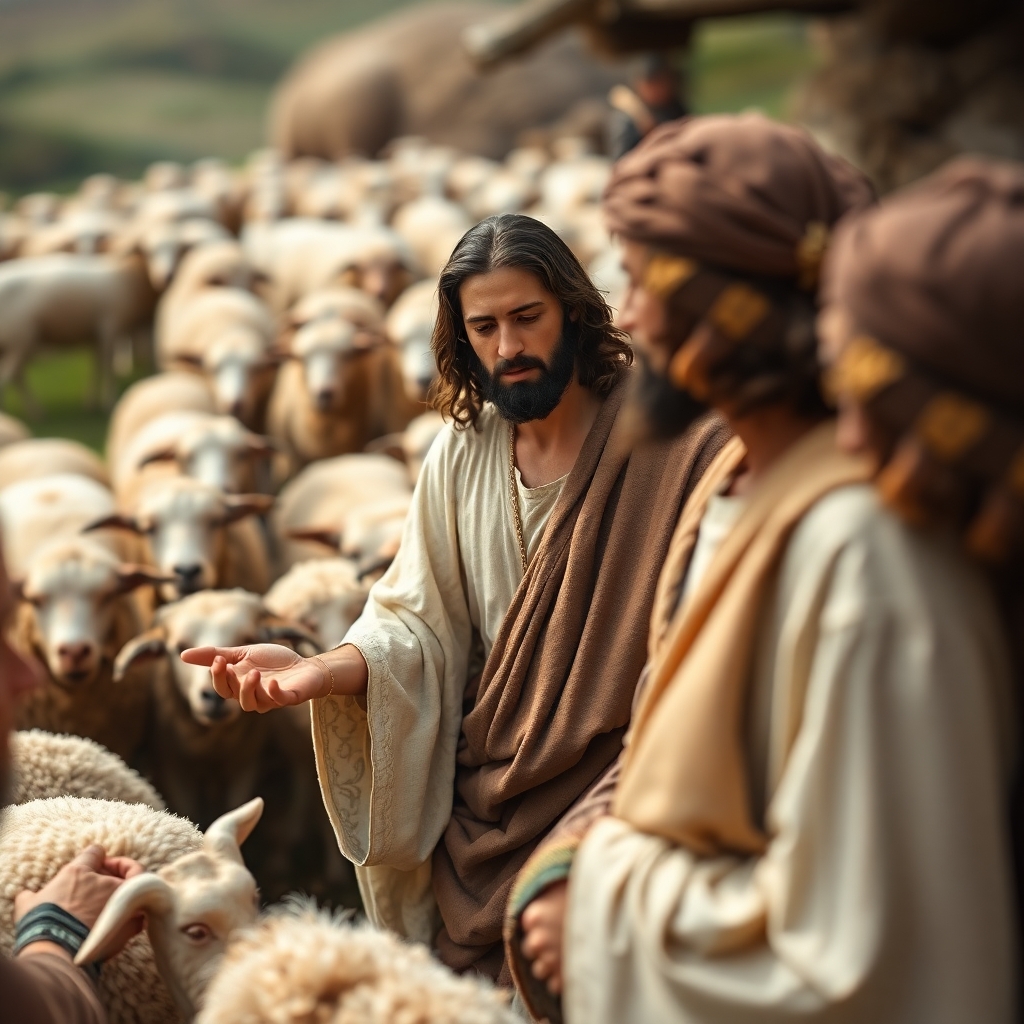

 ToBeLikeJesus