Surprise, Surprise! – #160

| Gospel Sync | Kingdom Kernels | Discipleship Matters Podcast | Website

ENGLISH / ESPAÑOL

Rather Listen? Click here…

Welcome Back! Today, we’ll be looking at the Gospel of Luke to see two ways Jesus will surprise people.

So let’s dive in.

(Click here to get a copy of the Gospel Sync document) 

Luke 12:35-40

Be dressed for service and keep your lamps burning. Then you will be like servants waiting for their master to return from the wedding banquet, so that when he comes and knocks, they can open the door for him at once. Blessed are those servants whom the master finds on watch when he returns. Truly I tell you, he will dress himself to serve and will have them recline at the table, and he himself will come and wait on them. Even if he comes in the second or third watch of the night and finds them alert, those servants will be blessed. But understand this: If the homeowner had known at what hour the thief was coming, he would not have let his house be broken into. You also must be ready, because the Son of Man will come at an hour you do not expect.”

My Thoughts

Some people like surprises and some don’t. I guess it all depends on what kind of condition the surprise comes in. If it’s a birthday party, ok I can deal with that even though it’s not my favorite. But if it were a tax audit and my wife is on a “girlfriend getaway,” I’m sunk. Some surprises can be down right disastrous. That’s one of the surprises Jesus is talking about but with much greater implications. This is a surprise with eternal consequences. 

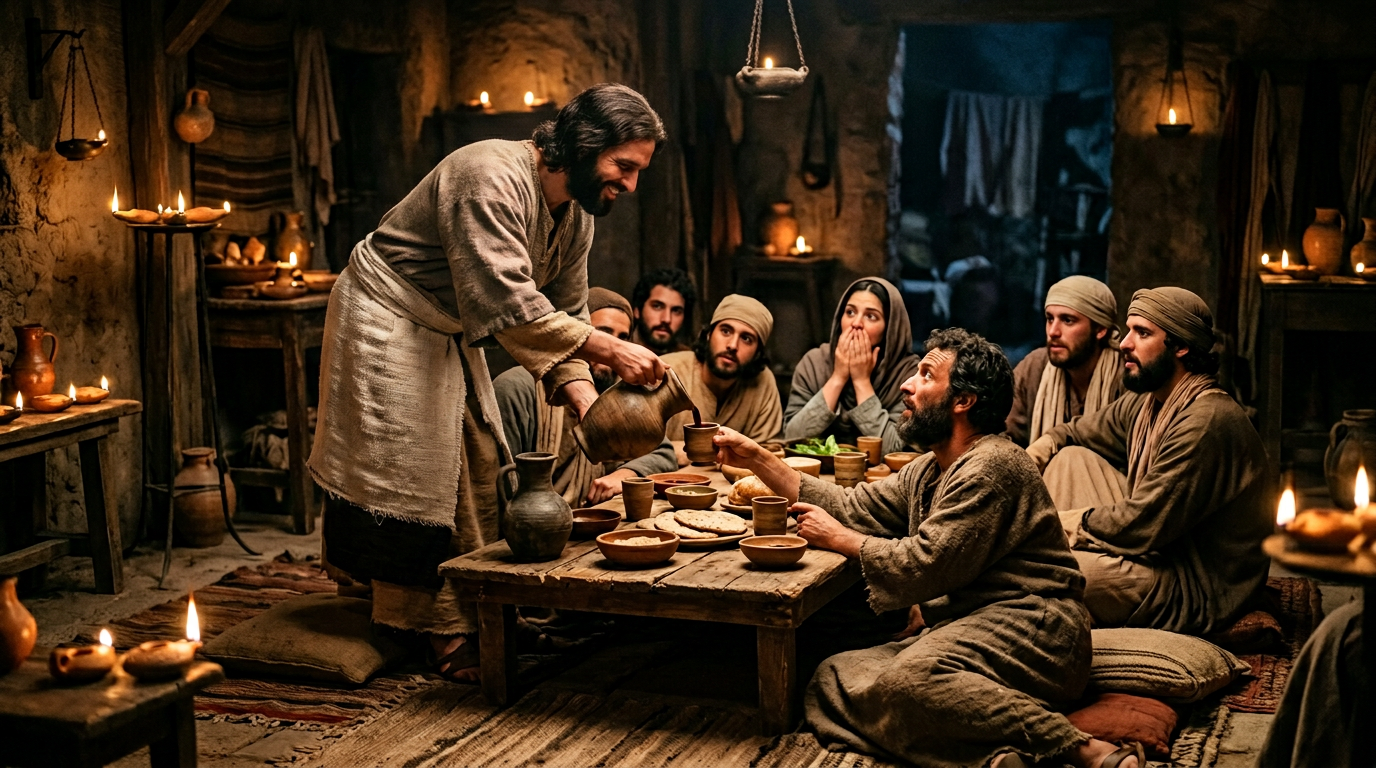
But there’s another surprise that if we are not careful we’ll completely miss. The Master will serve His servants. What!? Did I read that right!? Yes, we did. Jesus will serve a sumptuous dinner to those servants whom He catches ready when He returns. Now that should blow our minds.

But isn’t that just like Jesus? The One who serves. The One who washes feet. The One who humbled Himself and took on our penalty. It’s absolutely unthinkable that God would serve His servants and yet it is the way of the kingdom of God. 

“For even the Son of Man did not come to be served, but to serve, and to give His life a ransom for many.” (Mark 10:45)

So how does this apply to us as disciples and disciple makers? If the goal is to become and help others become like Jesus, then we ought to surprise people with our upside down (or should I say rightside up) kingdom values of serving others. It should be so significantly different from the worldly form of leadership, that it is shocking. Shocking like… the Creator of the Universe seating us in a place of honor and saying, “How may I serve you?”

My Story

He was in the latrine mopping the floor when two privates walked in. They froze and gawked at him like he was from outer space. Why? Because he was their First Sergeant, almost the highest rank among the enlisted in the army. Privates mop floors, not First Sergeants.

He was stirring a mixture of burning poop and diesel in a half steel drum in the middle of the Kuwaiti desert. A couple of privates walked up and stood paralyzed in shock as they watched their Captain clean the contents of the crude outhouse. Why? Because Privates burn poop, not Captains. 

Some of the leaders in their ministry sat with their jaws on the floor when they announced they were moving an old friend next door. Not any old friend. A friend they were moving from one city to their city to nurse him until he died of colon cancer. Why were their fellow leaders surprised? Because they were leading a booming ministry and taking care of Bill would take away vital time from “the ministry.” But SURPRISE! Bill WAS their ministry. They served him until he passed in the arms of Jesus in Whom he put his faith, just a week before he died.

If we want to be like Jesus, our service should surprise people.

Our Action Plan

Now it’s time for application. Here’s some ideas and questions;

  • Who among your acquaintances would be shocked if you served them?
  • What menial tasks would people consider to be “beneath” you?
  • When will you serve others in these “menial tasks?”

Service is a key kingdom value. It was the way Jesus led and exhorted others to lead. Let’s surprise the world around us with our servanthood.

Organic Writing – No Artificial Intelligence or Sweeteners Added

| Gospel Sync | Kingdom Kernels | Discipleship Matters Podcast | Website

¡Sorpresa, sorpresa! — #160

¡Bienvenidos de nuevo! Hoy nos adentraremos en el Evangelio de Lucas para ver dos maneras en las que Jesús sorprenderá a las personas.

Así que, ¡manos a la obra!

Lucas 12:35-40

Mis Pensamientos

A algunas personas les gustan las sorpresas, y a otras no. Supongo que todo depende de la naturaleza de la sorpresa. Si se trata de una fiesta de cumpleaños, bueno, puedo lidiar con eso, aunque no sea mi cosa favorita. Pero si fuera una auditoría fiscal y mi esposa estuviera de «escapada con sus amigas», estaría perdido. Algunas sorpresas pueden ser francamente desastrosas. Esa es una de las sorpresas de las que habla Jesús, pero con implicaciones mucho mayores. Se trata de una sorpresa con consecuencias eternas.

Pero hay otra sorpresa que, si no tenemos cuidado, pasaremos completamente por alto. El Maestro servirá a sus siervos. ¿¡Qué!? ¿¡Leí bien!? Sí, así es. Jesús servirá una cena suntuosa a aquellos siervos a quienes encuentre preparados cuando Él regrese. Eso debería dejarnos atónitos.

¿Pero no es eso precisamente lo que cabe esperar de Jesús? Aquel que sirve. Aquel que lava los pies. Aquel que se humilló a sí mismo y asumió nuestra pena. Resulta absolutamente impensable que Dios sirva a sus siervos; y, sin embargo, ese es el camino del reino de Dios.

«Porque ni siquiera el Hijo del Hombre vino para que le sirvan, sino para servir y para dar su vida en rescate por muchos». (Marcos 10:45)

Entonces, ¿cómo se aplica esto a nosotros como discípulos y formadores de discípulos? Si el objetivo es llegar a ser como Jesús —y ayudar a otros a serlo también—, entonces deberíamos sorprender a la gente con nuestros valores del reino, que parecen «invertidos» (¿o debería decir «puestos en su lugar correcto»?), basados ​​en el servicio a los demás. Debería ser algo tan radicalmente distinto de la forma de liderazgo mundana que resulte impactante. Impactante como… el Creador del Universo sentándonos en un lugar de honor y diciéndonos: «¿En qué puedo servirles?».

Mi Historia

Él estaba en la letrina fregando el suelo cuando entraron dos soldados rasos. Se quedaron paralizados y lo miraron boquiabiertos, como si fuera de otro planeta. ¿Por qué? Porque él era su Primer Sargento, casi el rango más alto entre la tropa del ejército. Los soldados rasos friegan suelos; los Primeros Sargentos, no.

Él estaba removiendo una mezcla de excrementos ardiendo y diésel dentro de un medio barril de acero, en medio del desierto kuwaití. Un par de soldados rasos se acercaron y se quedaron petrificados por la conmoción al ver a su Capitán limpiar el contenido de aquella rudimentaria letrina. ¿Por qué? Porque los soldados rasos queman los excrementos; los Capitanes, no.

Algunos de los líderes de su ministerio se quedaron con la mandíbula desencajada cuando anunciaron que iban a instalar a un viejo amigo en la casa de al lado. No un amigo cualquiera. Un amigo al que trasladaban desde otra ciudad hasta la suya para cuidarlo hasta que falleciera a causa de un cáncer de colon. ¿Por qué se sorprendieron sus compañeros líderes? Porque dirigían un ministerio en pleno auge, y cuidar de Bill les restaría un tiempo vital que debían dedicar a «el ministerio». Pero, ¡SORPRESA! Bill ERA su ministerio. Lo atendieron con devoción hasta que él partió a los brazos de Jesús, en quien había depositado su fe apenas una semana antes de morir.

Si queremos ser como Jesús, nuestro servicio debería sorprender a la gente.

Nuestro Plan de Acción

Ahora es el momento de ponerlo en práctica. Aquí tienes algunas ideas y preguntas:

¿Quién, entre tus conocidos, se quedaría atónito si decidieras servirle?

¿Qué tareas humildes consideraría la gente que están «por debajo» de tu dignidad?

¿Cuándo servirás a los demás realizando estas «tareas humildes»?

El servicio es un valor fundamental del Reino. Fue la manera en que Jesús lideró, y la forma en que exhortó a otros a liderar. Sorprendamos al mundo que nos rodea con nuestra actitud de servicio.

Escritura orgánica: sin inteligencia artificial ni edulcorantes añadidos.

Si ve un problema importante en la traducción, envíeme una corrección por correo electrónico a charleswood1@gmail.com


When the Kingdom is the Priority – #159

| Gospel Sync | Kingdom Kernels | Discipleship Matters Podcast | Website

ENGLISH / ESPAÑOL

Rather Listen? Click here…

Welcome Back! Today, we’ll be looking at the Gospel of Luke to see what He says our priorities should be.

So let’s dive in.

(Click here to get a copy of the Gospel Sync document) 

Luke 12:22-34

Then Jesus said to His disciples, “Therefore I tell you, do not worry about your life, what you will eat, or about your body, what you will wear. For life is more than food, and the body more than clothes. Consider the ravens: They do not sow or reap, they have no storehouse or barn; yet God feeds them. How much more valuable you are than the birds! Who of you by worrying can add a single hour to his life? So if you cannot do such a small thing, why do you worry about the rest? Consider how the lilies grow: They do not labor or spin. Yet I tell you, not even Solomon in all his glory was adorned like one of these. If that is how God clothes the grass of the field, which is here today and tomorrow is thrown into the furnace, how much more will He clothe you, O you of little faith! And do not be concerned about what you will eat or drink. Do not worry about it. For the Gentiles of the world strive after all these things, and your Father knows that you need them. But seek His kingdom, and these things will be added unto you. Do not be afraid, little flock, for your Father is pleased to give you the kingdom. Sell your possessions and give to the poor. Provide yourselves with purses that will not wear out, an inexhaustible treasure in heaven, where no thief approaches and no moth destroys. For where your treasure is, there your heart will be also. 

My Thoughts

Where are our hearts and minds? Are they fixated on that which is temporal or eternal? Are we grabbing for the here and now or are we firmly pressing into the things of God? Are we grinding away at our own security or trusting God for the mundane in order to focus on the extraordinary? I think that’s what Jesus is talking about here. He’s not saying quit your job, live off the land, and become a freeloader off other people who work for a living. No, He’s saying get our priorities straight. Are we worried about getting our slice of the proverbial pie or are we more intune with the Divine Enterprise, the kingdom of God. 

 I think this is what gets most believers in trouble. They start out well sharing the gospel and helping others grow in Christ. At first, it’s easy. We’re single, maybe just happy with getting by. Then comes marriage, kids, a serious job that is more demanding, and on and on until the kingdom’s priority is squeezed out by everything else. It’s hard to make disciples and serve others when the first priority is to build our own nest first.

Jesus is telling His disciples (then and now) that our first priority is the kingdom, not what we have energy left over after all other essentials are done. No, the kingdom is the essential. Everything else is to be leveraged in pursuit of the one great goal, His glory, His kingdom. So we need to ask ourselves, is our marriage advancing the kingdom? Is the way we raise our kids causing people to wonder what makes us tick (in a good way). Are we so different in our appetites that the folks around say, “Now that’s different!” (again in a good way). Are we trusting God in all these very good things in order to reach people with the gospel and make disciples even when it’s looking a little sketchy for our own comfort and well being?

My Story

When our sons, Chuck and Wes, were in high school the idea of sending them to a good youth group at a traditional church came up. Deb and I were asking the question; “Are we really providing the right mix of parenting and outside influence for their spiritual growth?” We decided they didn’t need the youth group. Now that decision may surprise you but here’s how we came to that conclusion.

We had been moving young soldiers into our home for discipleship to advance the kingdom of God. Most of them were young Airborne Rangers living in the spare bedrooms next to our boys. Both sons thought these guys were the coolest. We also thought they were “cool” because they were really getting after it for Jesus. In addition most of the stories of the youth groups in our area were not so great. They were basically “babysitting teens” or at worst the teens themselves were setting the agenda and the agenda wasn’t good. We could either divide our time by running back and forth to various youth activities or just trust that God would use the men we were discipling to disciple our boys. The kingdom was first in our home and these young men and our sons knew it. It wasn’t perfect but it was one of the best decisions we made as parents.

Our Action Plan

Now it’s time for application. Here’s some ideas and questions;

  • When making decisions about marriage, family, career, etc… is your impact on the kingdom one of the first considerations?
  • Are you teaching those you are discipling to have “kingdom priorities?”
  • Do a Bible study on the kingdom of God (Here’s mine 🙂).

Jesus makes a promise that when we focus on the kingdom of God and make it the priority, He takes care of everything else. This frees us up from the anxiety of the world and allows us to zero in on the eternal. His kingdom is our treasure, the heartbeat of the true disciple of Jesus. 

Organic Writing – No Artificial Intelligence or Sweeteners Added

| Gospel Sync | Kingdom Kernels | Discipleship Matters Podcast | Website

Cuando el Reino es la prioridad – #159

¡Bienvenidos de nuevo! Hoy nos adentraremos en el Evangelio de Lucas para ver qué dice Él sobre cuáles deberían ser nuestras prioridades.

Así que, entremos en materia.

Lucas 12:22-34

Mis Pensamientos

¿Dónde residen nuestros corazones y nuestras mentes? ¿Están fijos en lo temporal o en lo eterno? ¿Nos aferramos al aquí y al ahora, o avanzamos con firmeza hacia las cosas de Dios? ¿Nos desgastamos luchando por nuestra propia seguridad, o confiamos en Dios para los asuntos mundanos a fin de poder enfocarnos en lo extraordinario? Creo que de eso es de lo que Jesús está hablando aquí. Él no nos dice que renunciemos a nuestros trabajos, que vivamos de la tierra y que nos convirtamos en parásitos que viven a costa de quienes trabajan para ganarse la vida. No; lo que Él nos dice es que pongamos nuestras prioridades en orden. ¿Nos preocupa conseguir nuestra propia porción del proverbial pastel, o estamos más sintonizados con la Empresa Divina: el reino de Dios?

Creo que esto es lo que causa problemas a la mayoría de los creyentes. Comienzan bien, compartiendo el evangelio y ayudando a otros a crecer en Cristo. Al principio, resulta fácil. Estamos solteros y tal vez nos basta con simplemente ir tirando. Luego llegan el matrimonio, los hijos, un trabajo serio y más exigente, y así sucesivamente, hasta que la prioridad del reino termina siendo desplazada por todo lo demás. Resulta difícil hacer discípulos y servir a los demás cuando la prioridad número uno es, ante todo, construir nuestro propio nido.

Jesús les dice a sus discípulos —tanto a los de entonces como a los de ahora— que nuestra prioridad principal es el reino, y no aquello a lo que dedicamos la energía que nos sobra una vez cubiertas todas las demás necesidades básicas. No; el reino es lo verdaderamente esencial. Todo lo demás debe ponerse al servicio de ese único y gran objetivo: Su gloria, Su reino. Por lo tanto, debemos preguntarnos: ¿contribuye nuestro matrimonio al avance del reino? ¿Hace que la manera en que criamos a nuestros hijos despierte la curiosidad de la gente, llevándolos a preguntarse qué es lo que nos mueve (en el buen sentido)? ¿Somos tan distintos en nuestros anhelos y apetitos que quienes nos rodean exclaman: «¡Vaya, eso sí que es diferente!» (nuevamente, en el buen sentido)? ¿Confiamos en Dios en medio de todas estas cosas tan buenas, con el fin de alcanzar a las personas con el evangelio y hacer discípulos, incluso cuando la situación parece un tanto incierta para nuestra propia comodidad y bienestar?

Mi Historia

Cuando nuestros hijos, Chuck y Wes, cursaban la escuela secundaria, surgió la idea de enviarlos a un buen grupo de jóvenes en una iglesia tradicional. Deb y yo nos planteábamos la siguiente pregunta: «¿Estamos realmente proporcionando la combinación adecuada de crianza e influencias externas para su crecimiento espiritual?». Decidimos que no necesitaban el grupo de jóvenes. Tal vez esa decisión les sorprenda, pero he aquí cómo llegamos a esa conclusión.

Habíamos estado acogiendo en nuestro hogar a jóvenes soldados con el fin de discipularlos y así hacer avanzar el reino de Dios. La mayoría de ellos eran jóvenes *Rangers* aerotransportados que se alojaban en las habitaciones libres, justo al lado de las de nuestros hijos. Ambos chicos consideraban que estos jóvenes eran lo máximo. Nosotros también pensábamos que eran «geniales», pues se entregaban de lleno a la causa de Jesús. Además, la mayoría de las historias que se contaban sobre los grupos de jóvenes de nuestra zona no eran muy alentadoras. Básicamente consistían en «hacer de niñeros de adolescentes» o, en el peor de los casos, eran los propios adolescentes quienes marcaban la pauta, y esa pauta no era buena. Podíamos optar por dividir nuestro tiempo yendo y viniendo a las diversas actividades juveniles, o simplemente confiar en que Dios utilizaría a los hombres que estábamos discipulando para que, a su vez, discipularan a nuestros hijos. El reino ocupaba el primer lugar en nuestro hogar, y tanto aquellos jóvenes como nuestros hijos lo sabían. No fue un proceso perfecto, pero constituyó una de las mejores decisiones que tomamos como padres.

Nuestro Plan de Acción

Ahora es el momento de la aplicación práctica. Aquí tienes algunas ideas y preguntas:

Al tomar decisiones sobre el matrimonio, la familia, la carrera profesional, etc., ¿es tu impacto en el Reino una de las primeras consideraciones?

¿Estás enseñando a aquellos a quienes discipulas a tener «prioridades del Reino»?

Realiza un estudio bíblico sobre el Reino de Dios.

Jesús hace una promesa: cuando nos enfocamos en el Reino de Dios y lo convertimos en nuestra prioridad, Él se encarga de todo lo demás. Esto nos libera de la ansiedad del mundo y nos permite centrarnos plenamente en lo eterno. Su Reino es nuestro tesoro; es el latido del corazón del verdadero discípulo de Jesús.

Escritura orgánica: sin inteligencia artificial ni edulcorantes añadidos.

Si ve un problema importante en la traducción, envíeme una corrección por correo electrónico a charleswood1@gmail.com

The Deeper Issue – #158

| Gospel Sync | Kingdom Kernels | Discipleship Matters Podcast | Website

ENGLISH / ESPAÑOL

Rather Listen? Click here…

Welcome Back! Today, we’ll be looking at the Gospel of Luke to see how Jesus got below the surface issues and addressed the real ones. 

So let’s dive in.

(Click here to get a copy of the Gospel Sync document) 

Luke 12:13-21

Someone in the crowd said to Him, “Teacher, tell my brother to divide the inheritance with me.” But Jesus replied, “Man, who appointed Me judge or executor between you?” And He said to them, “Watch out! Guard yourselves against every form of greed, for one’s life does not consist in the abundance of his possessions.”

Then He told them a parable: “The ground of a certain rich man produced an abundance. So he thought to himself, ‘What shall I do, since I have nowhere to store my crops?’ Then he said, ‘This is what I will do: I will tear down my barns and will build bigger ones, and there I will store up all my grain and my goods. Then I will say to myself, “You have plenty of good things laid up for many years. Take it easy. Eat, drink, and be merry!”’ But God said to him, ‘You fool! This very night your life will be required of you. Then who will own what you have accumulated?’ This is how it will be for anyone who stores up treasure for himself but is not rich toward God.”

My Thoughts

One of the things we must learn as disciple makers is that we are to serve but we are not at the mercy of everyone’s whims. There are times when we need to see through the requests of others and address the deeper need. At first glance we may have said to the man, “Oh you poor soul. Of course we want to see justice done. Where is your greedy brother? Let’s fix this.” But no, Jesus clearly saw that it is this man, not his brother, being tempted with greed. 

Jesus is unwilling to grant every request that comes His way. He is a servant but He serves within the context of His calling and with complete righteousness and justice. When some friends made a hole in the roof to lower their paralyzed friend before Jesus, He forgave his sins first (Mark 2:5). And when Martha wanted Jesus to rebuke her sister for not helping, He set her straight, not Mary (Luke 10:40-42).

So how does one see through the presenting problems and address the real issues? We always need to go back to the relationship between the Father and the Son. Jesus was so in tune with the Father who knows all and sees all that He is able to help Jesus to discern the right way to minister to this man. Jesus was abiding in the Father the way we should abide in Him (John 5:19, 15:5). When we abide the way Jesus did, we will be able to solve complex relational problems like these as well.

My Story

I was in a real pickle. My theological views on “church” were creating some friction between some brothers and I. I was told it was divisive and I needed to stop talking about a particular way to gather for fellowship. I knew I wasn’t violating any principles governing church but I also knew I was irritating people. Although I was convinced I needed to stick to my convictions, I really needed to stop “stirring the pot.” So I decided to separate for a season until emotions died down and we could reconcile our differences calmly.

In that period of separation God clearly told me, “Do not tear down your brother’s house to build your own.” I knew a lot of people and had a lot of influence in that particular organization. Jesus wanted me to quit recruiting people from that “church” to start a new “church.” I had to start over from scratch.

The presenting problem was that my views on church were irritating people. But I think the real problem was that my influence was causing division among the brothers by bringing people to my way of thinking. The Holy Spirit made that abundantly clear to me when He told me, “Do not tear down your brother’s house to build your own.”

That was a very tricky situation in which I believe the Holy Spirit was talking to both parties. We eventually did reconcile even though our views of “church” remain different for the most part. But had we not been listening to what God was saying on the subject more damage could have been done and reconciliation could have been much more difficult. But the real win for me was that God is faithful to develop my character by peeling back the onion to see the real issues in my life. Thank You Holy Spirit!

Our Action Plan

Now it’s time for application. Here’s some ideas:

  • The next time someone brings you a problem to solve, ask yourself, “Is this the real issue or is there something deeper?”
  • As you are discipling people, teach them to not only ask questions about problems, have them bring at least two solutions to the issue at hand.
  • Be quick to ask questions first before giving advice or solutions.

There are always two sides to the story. A wise disciple maker will not only try to discern both but will also teach those he or she is discipling to do the same. We can’t settle for polishing veneer. Get to the root problems. 

Organic Writing – No Artificial Intelligence or Sweeteners Added

| Gospel Sync | Kingdom Kernels | Discipleship Matters Podcast | Website

La cuestión de fondo – #158

¡Bienvenidos de nuevo! Hoy nos adentraremos en el Evangelio de Lucas para ver cómo Jesús fue más allá de las cuestiones superficiales y abordó las verdaderas.

Así que, ¡manos a la obra!

Lucas 12:13-21

Mis Pensamientos

Una de las cosas que debemos aprender como formadores de discípulos es que estamos llamados a servir, pero no estamos a merced de los caprichos de todos. Hay ocasiones en las que necesitamos mirar más allá de las peticiones de los demás y abordar la necesidad más profunda. A primera vista, podríamos haberle dicho al hombre: «Oh, pobre alma. Por supuesto que queremos que se haga justicia. ¿Dónde está tu hermano codicioso? Arreglemos esto». Pero no; Jesús vio con claridad que era este hombre —y no su hermano— quien estaba siendo tentado por la codicia.

Jesús no está dispuesto a conceder cada petición que se le presenta. Él es un siervo, pero sirve dentro del contexto de su llamado y con absoluta rectitud y justicia. Cuando unos amigos abrieron un agujero en el techo para bajar a su amigo paralítico ante Jesús, Él perdonó primero sus pecados (Marcos 2:5). Y cuando Marta quiso que Jesús reprendiera a su hermana por no ayudar, Él la corrigió a ella, y no a María (Lucas 10:40-42).

Entonces, ¿cómo logra uno mirar más allá de los problemas aparentes y abordar las cuestiones reales? Siempre debemos volver a la relación entre el Padre y el Hijo. Jesús estaba tan en sintonía con el Padre —quien todo lo sabe y todo lo ve— que este pudo ayudarle a discernir la manera correcta de ministrar a aquel hombre. Jesús permanecía en el Padre tal como nosotros debemos permanecer en Él (Juan 5:19; 15:5). Cuando permanecemos en Él de la misma manera en que lo hizo Jesús, también nosotros seremos capaces de resolver problemas relacionales complejos como estos.

Mi Historia

Me encontraba en un verdadero aprieto. Mis puntos de vista teológicos sobre la «iglesia» estaban generando cierta fricción entre algunos hermanos y yo. Se me dijo que tales ideas eran divisivas y que debía dejar de hablar sobre una forma particular de congregarse para la comunión. Yo sabía que no estaba violando ningún principio que rigiera la iglesia, pero también sabía que estaba irritando a la gente. Aunque estaba convencido de que debía mantenerme firme en mis convicciones, realmente necesitaba dejar de «revolver el avispero». Así que decidí apartarme por un tiempo, hasta que los ánimos se calmaran y pudiéramos conciliar nuestras diferencias con tranquilidad.

Durante ese periodo de separación, Dios me dijo con total claridad: «No derribes la casa de tu hermano para construir la tuya propia». Yo conocía a mucha gente y ejercía una gran influencia dentro de esa organización en particular. Jesús quería que dejara de captar personas de esa «iglesia» para fundar una nueva «iglesia». Tenía que empezar de nuevo, desde cero.

El problema aparente era que mis puntos de vista sobre la iglesia irritaban a la gente. Pero creo que el problema real radicaba en que mi influencia estaba sembrando la división entre los hermanos al atraer a las personas hacia mi propia forma de pensar. El Espíritu Santo me lo dejó meridianamente claro cuando me dijo: «No derribes la casa de tu hermano para construir la tuya propia».

Fue una situación muy delicada en la que, a mi parecer, el Espíritu Santo estaba hablándoles a ambas partes. Finalmente logramos reconciliarnos, a pesar de que nuestros puntos de vista sobre la «iglesia» siguen siendo, en su mayor parte, diferentes. Sin embargo, de no haber estado atentos a lo que Dios decía sobre el asunto, se habría podido causar un daño mayor y la reconciliación habría resultado mucho más difícil. Pero la verdadera victoria para mí fue comprobar que Dios es fiel para moldear mi carácter, deshojando las capas de la «cebolla» para sacar a la luz los problemas reales de mi vida. ¡Gracias, Espíritu Santo!

Nuestro Plan de Acción

Ahora es el momento de la aplicación práctica. Aquí tienes algunas ideas:

La próxima vez que alguien acuda a ti con un problema por resolver, pregúntate: «¿Es este el verdadero problema, o hay algo más profundo detrás?».

Mientras discipulas a otras personas, enséñales no solo a formular preguntas sobre los problemas, sino también a proponer al menos dos soluciones para el asunto en cuestión.

Sé diligente en hacer preguntas primero, antes de ofrecer consejos o soluciones.

Siempre hay dos caras en toda historia. Un discipulador sabio no solo intentará discernir ambas perspectivas, sino que también enseñará a aquellos a quienes discipula a hacer lo mismo. No podemos conformarnos con pulir la superficie; debemos llegar a la raíz de los problemas.

Escritura orgánica: sin inteligencia artificial ni edulcorantes añadidos.

Si ve un problema importante en la traducción, envíeme una corrección por correo electrónico a charleswood1@gmail.com
Talking about Jesus – #157

| Gospel Sync | Kingdom Kernels | Discipleship Matters Podcast | Website

Rather Listen? Click here…

ENGLISH / ESPAÑOL

Welcome Back! Today, we’ll be looking at the Gospel of Luke to see what Jesus thinks about us talking about Him.

So let’s dive in.

(Click here to get a copy of the Gospel Sync document) 

Luke 12:8–12

“I tell you, everyone who confesses Me before men, the Son of Man will also confess him before the angels of God. But whoever denies Me before men will be denied before the angels of God. And everyone who speaks a word against the Son of Man will be forgiven, but whoever blasphemes against the Holy Spirit will not be forgiven. When you are brought before synagogues, rulers, and authorities, do not worry about how to defend yourselves or what to say. For at that time the Holy Spirit will teach you what you should say.”

My Thoughts

Jesus is thrilled when we confess Him before men. In fact, He is so thrilled He turns to the Heavenly Host and says, “Look at that! My friend is talking about me again!” It’s not that He’s on some ego trip just trying to get attention. No, when we express the pure joy of knowing Him and being known by Him, He is elated. And that goes for the Holy Spirit as well. We might get away with saying something bad about Jesus, but the Holy Spirit…no way! Now I’ll be the first to admit that I don’t completely understand why that is but here’s one thing I do understand, Jesus, the Spirit, and even the Father are ecstatic about having a deep intimate relationship with us. And they are proud as punch when we express the same feeling we have toward them to others.

So why all the hubbub in heaven about our confession? 

First, when we consider the immenseness of who God is and what He has done for us, it’s like realizing you’ve just been given the best gift you never knew you needed. You know the gift you unwrap and it’s like, “Oh Yeah! This is going to be a part of my every waking moment!” 

Secondly, it’s the gift that keeps on giving! And that is no understatement in so many ways. People have a chance to receive the same gift we did and inherit eternal life. The gift transforms lives from brokenness to wholeness. The gift gives true identity and purpose. Why wouldn’t the Triune God and the Celestial Assembly be throwing a party over that? 

These are just some of the reasons why we help people to be confident, competent, and committed to sharing the gospel. Check out Deb and I’s video: Simplified 411

My Story

A great example of the kind of emotion I imagine Jesus having when we confess Him to others is when I think of my Dad-in-law. Deb’s folks moved back to San Antonio last year and ever since then they have been joining us as we share the gospel with soldiers, sailors, and airmen on Fort Sam Houston on Sunday mornings. Dad is so excited to share the gospel he looks like a puppy that greets you at the door when you come home, bouncing around, yapping, and tugging on your pant leg. All this activity to say, “It’s you! My favorite person! I’m so glad you’re home!”  Now Dad is a dignified older gentleman, so most of this enthusiasm is on the inside, most of it. 😉 But he can’t wait to get out and share his testimony with these young men and women in uniform. His enthusiasm is contagious! I love watching the pure joy just burst from his being. And I can imagine that’s exactly what the Father, Son, and Holy Spirit are feeling as they watch any of us talk about Him. Isn’t it amazing to think about the God of the universe being so emotionally invested in our lives? I am awe struck!

Our Action Plan

Now it’s time for application. Here’s some ideas;

  • Before you teach anyone to share the gospel, help them consider this aspect of God’s character.
  • Before you share the gospel imagine Jesus telling His Heavenly Host about what you’re doing. 
  • It’s also probably a good idea to have people acknowledge the other side of the coin Jesus is talking about: “But whoever denies Me before men will be denied before the angels of God.”

Instead of thinking of evangelism as a chore or even worse, something we hate, we ought to think about how it makes God feel. That simple thought process will probably change our perspective and motivate us to confess Him more. We have a wonderful Savior people need to hear about.

Organic Writing – No Artificial Intelligence or Sweeteners Added

| Gospel Sync | Kingdom Kernels | Discipleship Matters Podcast | Website

Hablando de Jesús – #157

Lucas 12:8–12

Mis Pensamientos

Jesús se llena de gozo cuando lo confesamos ante los hombres. De hecho, se alegra tanto que se vuelve hacia las huestes celestiales y dice: «¡Miren eso! ¡Mi amigo está hablando de mí otra vez!». No es que Él esté en un viaje de ego, tratando simplemente de llamar la atención. No; cuando expresamos la pura alegría de conocerlo y de ser conocidos por Él, Él se siente exultante. Y lo mismo ocurre con el Espíritu Santo. Tal vez salgamos impunes si decimos algo negativo sobre Jesús, pero con el Espíritu Santo… ¡de ninguna manera! Ahora bien, seré el primero en admitir que no comprendo del todo por qué es así; pero hay una cosa que sí entiendo: Jesús, el Espíritu e incluso el Padre están extasiados por tener una relación profunda e íntima con nosotros. Y se sienten inmensamente orgullosos cuando expresamos ante los demás ese mismo sentimiento que tenemos hacia ellos.

Entonces, ¿a qué se debe tanto alboroto en el cielo por nuestra confesión?

En primer lugar, cuando consideramos la inmensidad de quién es Dios y lo que ha hecho por nosotros, es como darse cuenta de que acabas de recibir el mejor regalo que nunca supiste que necesitabas. Ya saben, ese regalo que desenvuelves y ante el cual exclamas: «¡Oh, sí! ¡Esto va a formar parte de cada momento de mi vida!». (Algunas personas llamarían a eso un teléfono celular, pero, claro, probablemente no conozcan a Jesús).

En segundo lugar, ¡es el regalo que nunca deja de dar! Y esto no es una exageración en muchísimos sentidos. Las personas tienen la oportunidad de recibir el mismo regalo que nosotros recibimos y de heredar la vida eterna. Este regalo transforma vidas, pasando de la fragmentación a la plenitud. Este regalo otorga una verdadera identidad y un propósito. ¿Por qué no habrían de estar de fiesta el Dios Trino y la asamblea celestial ante semejante acontecimiento?

Estas son solo algunas de las razones por las que ayudamos a las personas a sentirse seguras, competentes y comprometidas a compartir el evangelio. Echen un vistazo al video de Deb y mío: https://youtu.be/bTWfOrZSBAI 

Mi Historia

Un gran ejemplo del tipo de emoción que imagino que siente Jesús cuando lo confesamos ante los demás es el que me viene a la mente al pensar en mi suegro. Los padres de Deb regresaron a San Antonio el año pasado y, desde entonces, nos han estado acompañando mientras compartimos el evangelio con soldados, marineros y aviadores en Fort Sam Houston los domingos por la mañana. Mi suegro está tan entusiasmado por compartir el evangelio que parece un cachorrito que te recibe en la puerta al llegar a casa: saltando, ladrando y tironeando de la pernera de tu pantalón. Toda esta actividad parece decir: «¡Eres tú! ¡Mi persona favorita! ¡Qué alegría que estés en casa!». Ahora bien, mi suegro es un caballero mayor y digno, por lo que la mayor parte de este entusiasmo lo lleva por dentro… o casi todo. 😉 Pero se muere de ganas de salir a compartir su testimonio con estos jóvenes y mujeres uniformados. ¡Su entusiasmo es contagioso! Me encanta ver cómo esa alegría pura brota espontáneamente de todo su ser. Y puedo imaginar que eso es exactamente lo que sienten el Padre, el Hijo y el Espíritu Santo al vernos a cualquiera de nosotros hablar acerca de Él. ¿Acaso no es asombroso pensar que el Dios del universo esté tan emocionalmente involucrado en nuestras vidas? ¡Me siento sobrecogido!

Nuestro Plan de Acción

Ahora es el momento de la aplicación práctica. Aquí tienes algunas ideas:

Antes de enseñar a alguien a compartir el evangelio, ayúdale a reflexionar sobre este aspecto del carácter de Dios.

Antes de compartir el evangelio, imagina a Jesús contándole a su hueste celestial lo que estás haciendo.

Probablemente también sea buena idea invitar a las personas a reconocer la otra cara de la moneda de la que habla Jesús: «Pero a cualquiera que me niegue delante de los hombres, yo también lo negaré delante de los ángeles de Dios».

En lugar de ver el evangelismo como una obligación —o, peor aún, como algo que detestamos—, deberíamos reflexionar sobre cómo hace sentir a Dios. Ese sencillo proceso mental probablemente transformará nuestra perspectiva y nos motivará a confesarle con mayor frecuencia. Tenemos un Salvador maravilloso del que la gente necesita oír hablar.

Escritura orgánica: sin inteligencia artificial ni edulcorantes añadidos.

Si ve un problema importante en la traducción, envíeme una corrección por correo electrónico a charleswood1@gmail.com

To Fear or Not to Fear? – #156

| Gospel Sync | Kingdom Kernels | Discipleship Matters Podcast | Website

ENGLISH / ESPAÑOL

Rather Listen? Click here…

Welcome Back! Today, we’ll be looking at the Gospel of Luke to see what Jesus said we should fear and what not to fear.

So let’s dive in.

(Click here to get a copy of the Gospel Sync document) 

Luke 12:1–7

In the meantime, a crowd of many thousands had gathered, so that they were trampling one another. Jesus began to speak first to His disciples: “Beware of the leaven of the Pharisees, which is hypocrisy. There is nothing concealed that will not be disclosed, and nothing hidden that will not be made known. What you have spoken in the dark will be heard in the daylight, and what you have whispered in the inner rooms will be proclaimed from the housetops. I tell you, My friends, do not be afraid of those who kill the body and after that can do no more. But I will show you whom you should fear: Fear the One who, after you have been killed, has authority to throw you into hell. Yes, I tell you, fear Him! Are not five sparrows sold for two pennies? Yet not one of them is forgotten by God. And even the very hairs of your head are all numbered. So do not be afraid; you are worth more than many sparrows.

My Thoughts

In one moment Jesus tells His disciples to be afraid of God and in the next He tells them not to be afraid of God (same Greek word – φοβέω – phobeō). So should we fear God or not? 

Now it’s time for all good disciple makers to put on their thinking caps. If it hasn’t happened to you yet  it will. Where someone you’re discipling opens their Bible, puts their finger on the page, and says “What gives!? Is this a contradiction?” So let’s analyze Jesus’ teaching. 

He begins with a warning; “Beware of the leaven of the Pharisees, which is hypocrisy.” In the context Jesus is instructing them on the hypocrisy of the religious leaders. They think their duplicity is hidden but there will come a day when it is all exposed. There are many reasons why we may be tempted to portray something we are not (hypocrisy). These include hiding our shame, maintaining our standing with others, or trying to posture ourselves as authorities who are superior. Ultimately, we fear losing our reputation or influence. This fear is focused on the wrong audience. God sees it all and He definitely sees through fake intentions and actions. We should be very aware that the Righteous Judge knows the finest measure of our hearts and thoughts. We should fear that Judge because He will judge rightly and thoroughly. 

On the other hand, when we look at the greater context of what Jesus taught and even the whole of Scripture, we get a glimpse into the “fear not” part of Jesus’ message. To a certain degree we are all guilty of hypocrisy because our first inclination is to hide as Adam and Eve did in the Garden. This “hiding” is the first indicator that something is wrong.  We can choose to fake it or just come clean.  If a follower of Jesus has integrity of heart and confesses his sin and even his hypocrisy, Our Father is quick to forgive. He is ready and willing to forgive and purify the humble. One who lays their lives naked and exposed to His light has no need to fear for His love stays the hand of judgment when we approach Him with such integrity.

The Apostle John summed it up well when he talks about walking in the light:

This is the message we have heard from Him and announce to you, that God is Light, and in Him there is no darkness at all. If we say that we have fellowship with Him and yet walk in the darkness, we lie and do not practice the truth; but if we walk in the Light as He Himself is in the Light, we have fellowship with one another, and the blood of Jesus His Son cleanses us from all sin. If we say that we have no sin, we are deceiving ourselves and the truth is not in us. If we confess our sins, He is faithful and righteous to forgive us our sins and to cleanse us from all unrighteousness. If we say that we have not sinned, we make Him a liar and His word is not in us. (1 John 1:5-10)

So we see a reason to fear AND not to fear God in Jesus’ exhortation and His Apostle’s explanation. If we are trying to hide our sin (through hypocrisy or any other means), be very afraid. If we come clean and confess our sin, perfect love casts out all fear (1 John 4:18).

My Story

I often refer to myself as a “sinner saved by grace.” Some of my friends take exception to the “sinner” part. Their reasoning is that as children of God we have a new identity and being a “sinner” is not part of being a new creature (2 Corinthians 5:17). I politely disagree based on the fact that I still sin, every day, all day. You, as a casual observer may not catch me with my hand in the cookie jar but God sees the thoughts and intentions of my heart. And, quite frankly, I know myself too well.

I understand their reason for not wanting to “own” the sinner moniker. They believe it is an affront to the new identity we have in Christ and to the very Scriptures that describe our new standing with God. And even though I disagree, I respect their thinking. On the other hand, I don’t think they understand me. The self labeling of one as a sinner, a Christian still sinning, is not only true but is also in touch with our current reality. It is actually a testament to God’s patient kindness toward me as a confessing repentant child of His who has eagerly embraced His grace. It reminds me to be ever vigilant to not fall into licentiousness or complacency. It reminds me to fear God in a healthy way while simultaneously not fearing Him because I’m covered with His blood. Which, by the way, I get from the Scriptures.

I think the Chief of All Sinners, the Apostle Paul put it well;

Wretched man that I am! Who will set me free from the body of this death? Thanks be to God through Jesus Christ our Lord! So then, on the one hand I myself with my mind am serving the law of God, but on the other, with my flesh the law of sin…Oh, the depth of the riches both of the wisdom and knowledge of God! How unsearchable are His judgments and unfathomable His ways! For WHO HAS KNOWN THE MIND OF THE LORD, OR WHO BECAME HIS COUNSELOR? Or WHO HAS FIRST GIVEN TO HIM THAT IT MIGHT BE PAID BACK TO HIM AGAIN? For from Him and through Him and to Him are all things. To Him be the glory forever. Amen. (Romans 7:24-25, 11:33-36)

Our Action Plan

Now it’s time for application. Here’s some ideas;

  • Call to remembrance the last time you changed your mind about something because you saw the whole scope of Scripture and not just part.
  • Make a list of other such tensions you have identified in the Bible.
  • Ask others what they think about those tensions and ask them for Scripture to back up their claims.

There will be many such times when you will come across such “apparent” contradictions in the Bible. This is why we need to keep studying and learning. I have always found satisfactory answers to the tough questions when I just kept pursuing the truth. Even whether or not to fear God. 

Organic Writing – No Artificial Intelligence or Sweeteners Added

| Gospel Sync | Kingdom Kernels | Discipleship Matters Podcast | Website

¿Temer o no temer? — #156

¡Bienvenidos de nuevo! Hoy examinaremos el Evangelio de Lucas para ver qué dijo Jesús acerca de qué debemos temer y qué no.

Así que, ¡entremos en materia!

Lucas 12:1–7

Mis Pensamientos

En un momento, Jesús les dice a sus discípulos que teman a Dios, y al momento siguiente les dice que no teman a Dios (se utiliza la misma palabra griega: φοβέω — *phobeō*). Entonces, ¿debemos temer a Dios o no?

Ahora es el momento de que todos los buenos formadores de discípulos pongan a trabajar su intelecto. Si aún no les ha sucedido, les sucederá: llegará el momento en que alguien a quien están discipulando abra su Biblia, ponga el dedo sobre una página y exclame: «¡¿Qué significa esto?! ¿Es una contradicción?». Así que analicemos la enseñanza de Jesús.

Él comienza con una advertencia: «Guardaos de la levadura de los fariseos, que es la hipocresía». En este contexto, Jesús les está instruyendo acerca de la hipocresía de los líderes religiosos. Ellos creen que su duplicidad permanece oculta, pero llegará el día en que todo quede al descubierto. Existen muchas razones por las cuales podríamos sentirnos tentados a aparentar ser algo que no somos (hipocresía). Entre ellas se encuentran el ocultar nuestra vergüenza, el mantener nuestra posición ante los demás o el intentar posicionarnos como autoridades superiores. En última instancia, tememos perder nuestra reputación o nuestra influencia. Este temor, sin embargo, está enfocado en la audiencia equivocada. Dios lo ve todo y, sin duda alguna, discierne a través de las intenciones y acciones fingidas. Debemos ser plenamente conscientes de que el Juez Justo conoce hasta el más ínfimo detalle de nuestros corazones y pensamientos. Debemos temer a ese Juez, pues Él juzgará con justicia y exhaustividad.

Por otro lado, cuando observamos el contexto más amplio de lo que Jesús enseñó —e incluso la totalidad de las Escrituras—, vislumbramos la faceta del mensaje de Jesús que dice: «no temáis». Hasta cierto punto, todos somos culpables de hipocresía, ya que nuestra primera inclinación es ocultarnos, tal como hicieron Adán y Eva en el Jardín. Este acto de «ocultarse» es el primer indicio de que algo anda mal. Podemos elegir fingir o, simplemente, sincerarnos. Si un seguidor de Jesús posee integridad de corazón y confiesa su pecado —e incluso su propia hipocresía—, nuestro Padre se apresura a perdonar. Él está dispuesto y presto a perdonar y purificar a los humildes. Aquel que expone su vida, desnuda y al descubierto, ante la luz de Dios, no tiene por qué temer; pues el amor de Dios detiene la mano del juicio cuando nos acercamos a Él con tal integridad. El apóstol Juan lo resumió bien cuando habla de caminar en la luz:

Este es el mensaje que hemos oído de Él y que les anunciamos: que Dios es Luz, y en Él no hay ninguna oscuridad. Si decimos que tenemos comunión con Él y, sin embargo, caminamos en la oscuridad, mentimos y no practicamos la verdad; pero si caminamos en la Luz, tal como Él mismo está en la Luz, tenemos comunión unos con otros, y la sangre de Jesús, su Hijo, nos limpia de todo pecado. Si decimos que no tenemos pecado, nos engañamos a nosotros mismos y la verdad no está en nosotros. Si confesamos nuestros pecados, Él es fiel y justo para perdonarnos nuestros pecados y limpiarnos de toda injusticia. Si decimos que no hemos pecado, lo hacemos a Él mentiroso y su palabra no está en nosotros. (1 Juan 1:5-10)

Así pues, vemos una razón tanto para temer a Dios como para no temerle, en la exhortación de Jesús y en la explicación de su apóstol. Si intentamos ocultar nuestro pecado (mediante la hipocresía o cualquier otro medio), tengamos mucho miedo. Si somos sinceros y confesamos nuestro pecado, el amor perfecto expulsa todo temor (1 Juan 4:18).

Mi Historia

A menudo me refiero a mí mismo como un «pecador salvado por gracia». Algunos de mis amigos ponen objeciones a la parte de «pecador». Su razonamiento es que, como hijos de Dios, tenemos una nueva identidad, y ser un «pecador» no forma parte de ser una nueva criatura (2 Corintios 5:17). Discrepo cortésmente, basándome en el hecho de que sigo pecando: todos los días, todo el día. Usted, como observador casual, tal vez no me sorprenda con la mano en la masa, pero Dios ve los pensamientos y las intenciones de mi corazón. Y, francamente, me conozco demasiado bien.

Entiendo su razón para no querer «asumir» el calificativo de pecador. Creen que es una afrenta a la nueva identidad que tenemos en Cristo y a las mismas Escrituras que describen nuestra nueva posición ante Dios. Y, aunque discrepo, respeto su modo de pensar. Por otro lado, no creo que ellos me entiendan a mí. El autocalificarse como pecador —un cristiano que todavía peca— no solo es cierto, sino que también está en sintonía con nuestra realidad actual. De hecho, es un testimonio de la paciente bondad de Dios hacia mí, como hijo suyo arrepentido y confeso que ha abrazado con entusiasmo Su gracia. Me recuerda que debo mantenerme siempre vigilante para no caer en el libertinaje o la complacencia. Me recuerda que debo temer a Dios de una manera sana y, al mismo tiempo, no temerle, pues estoy cubierto por Su sangre. Lo cual, por cierto, extraigo de las Escrituras.

Creo que el «principal de todos los pecadores», el apóstol Pablo, lo expresó muy bien:

¡Miserable de mí! ¿Quién me librará de este cuerpo de muerte? ¡Gracias sean dadas a Dios por medio de Jesucristo nuestro Señor! Así que, por un lado, yo mismo con mi mente sirvo a la ley de Dios; pero, por el otro, con mi carne, a la ley del pecado… ¡Oh, la profundidad de las riquezas, tanto de la sabiduría como del conocimiento de Dios! ¡Cuán insondables son Sus juicios e inescrutables Sus caminos! Porque: ¿QUIÉN HA CONOCIDO LA MENTE DEL SEÑOR? ¿O QUIÉN LLEGÓ A SER SU CONSEJERO? ¿O QUIÉN LE HA DADO A ÉL PRIMERO PARA QUE LE SEA RECOMPENSADO? Porque de Él, por Él y para Él son todas las cosas. A Él sea la gloria por siempre. Amén. (Romanos 7:24-25; 11:33-36)

Nuestro Plan de Acción

Ahora es el momento de la aplicación práctica. Aquí tienes algunas ideas:

Recuerda la última vez que cambiaste de opinión sobre algo porque lograste ver el alcance completo de las Escrituras y no solo una parte.

Elabora una lista de otras tensiones similares que hayas identificado en la Biblia.

Pregunta a otras personas qué opinan sobre esas tensiones y pídeles que citen pasajes de las Escrituras para respaldar sus afirmaciones.

Habrá muchas ocasiones en las que te encontrarás con este tipo de contradicciones «aparentes» en la Biblia. Por eso necesitamos seguir estudiando y aprendiendo. Siempre he encontrado respuestas satisfactorias a las preguntas difíciles cuando simplemente he persistido en la búsqueda de la verdad. Incluso en cuestiones como si se debe temer a Dios o no.

Escritura orgánica: sin inteligencia artificial ni edulcorantes añadidos.

Si ve un problema importante en la traducción, envíeme una corrección por correo electrónico a charleswood1@gmail.com

The Main Thing is to Keep the Main Thing the Main Thing – #155

| Gospel Sync | Kingdom Kernels | Discipleship Matters Podcast | Website

ENGLISH / ESPAÑOL

Rather Listen? Click here…

Welcome Back! Today, we’ll be looking at the Gospel of Luke to how Jesus focused His disciples’ attention on Him, not lesser things.

So let’s dive in.

(Click here to get a copy of the Gospel Sync document) 

Luke 10:38-42

As they traveled along, Jesus entered a village where a woman named Martha welcomed Him into her home. She had a sister named Mary, who sat at the Lord’s feet listening to His message. But Martha was distracted by all the preparations to be made. She came to Jesus and said, “Lord, do You not care that my sister has left me to serve alone? Tell her to help me!” “Martha, Martha,” the Lord replied, “you are worried and upset about many things. But only one thing is necessary. Mary has chosen the good portion, and it will not be taken away from her.”

My Thoughts

At first glance the story about Mary and Martha may lead us to believe that Jesus is exhorting us to have a solid devotional life (John 6:35). And although that would be one good application from the story I think it would be missing the main thing Jesus is talking about. Or one could extract the discipline of fellowshipping with Jesus by being with His people (Matthew 18:20), or making disciples (Matthew 28:20), or doing good works (Ephesians 2:10) or… we could go on and on. 

I think the main thing is that Mary was with Jesus. For instance, if Jesus was preparing food for guests and Martha was with Him, she, not Mary, would have chosen the “good portion.” We would miss the point if we didn’t see Jesus as the “Main Thing.” I like to say, “The main thing is to keep the main thing the main thing. And the main thing is not a thing, it’s a WHO!”

So in our devotional life, is Jesus the center of it all? As we fellowship with other believers, is Jesus the center? As we make disciples and do good deeds, is Jesus the center of it all? Whatever we think, whatever we do, whatever we say, wherever we are, is Jesus the center. Jesus has promised He will be with us but are we with Him? 

My Story

I was recently doing a podcast with a friend. The topic was about pioneering a new ministry and I asked the question “How can we look at Jesus’ perfectly un-rushed, three-year ministry to find that “sweet spot” in our own timelines today?” Before he answered the question he made this comment, “If you know anything about Chuck, he’s always going to bring us back to Jesus.” He meant it as a compliment and believe me, I took it that way.

But you need to know that the posture of making sure every podcast, every lesson, every discussion, every blog post is brought back to Jesus Christ is a hard won discipline. The propensity to drift to lesser things is startling easy. Our enemy is always dangling some other “shiny object” to our left or right to distract us from our first love. I have to intentionally remind myself everyday, “Jesus is the center of everything you say and do today.”

I wish I could say I was alone with this seemingly grotesque problem for disciples of Jesus but as I listen, read, and watch I can see that I am not. The “Martha Syndrome” is epidemic. And that is why, my friends, it will be no problem for me to remind us; keep making Jesus the center of everything.

The great danger in aiming at anything lesser is that you might actually hit it. 

Our Action Plan

Now it’s time for application. Here’s an idea;

  • Read Colossians chapter 1 and time how long it takes to read out loud. 
  • Count the number of times Paul refers to Jesus (Christ, He, Him, etc…).
  • Ask the question; “If I said another person’s name that many times in that short span of time, what would they think about me?”

The focus of the story of Mary and Martha is not necessarily the fact that Jesus was “teaching” Mary and she was “listening.” There are so many other things that Jesus did and His disciples joined Him for the “good portion.” The challenge is to recognize what He is doing and join Him in it just as He did with the Father (John 5:19). 

Organic Writing – No Artificial Intelligence or Sweeteners Added

| Gospel Sync | Kingdom Kernels | Discipleship Matters Podcast | Website

Lo principal es mantener lo principal como lo principal — #155

Lucas 10:38-42

Mis Pensamientos

A primera vista, la historia de María y Marta podría llevarnos a creer que Jesús nos está exhortando a mantener una vida devocional sólida (Juan 6:35). Y aunque esa sería una buena aplicación de la historia, creo que pasaría por alto el punto principal del que Jesús está hablando. O uno podría extraer la disciplina de tener comunión con Jesús al estar con su pueblo (Mateo 18:20), o la de hacer discípulos (Mateo 28:20), o la de realizar buenas obras (Efesios 2:10)… y así podríamos seguir indefinidamente.

Creo que lo fundamental es que María estaba con Jesús. Por ejemplo, si Jesús hubiera estado preparando comida para unos invitados y Marta hubiera estado con Él, ella —y no María— habría elegido la «buena parte». Perderíamos de vista el sentido si no viéramos a Jesús como «lo principal». Me gusta decir: «Lo principal es mantener lo principal como lo principal. Y lo principal no es una cosa; ¡es una PERSONA!».

Así pues, en nuestra vida devocional, ¿es Jesús el centro de todo? Cuando tenemos comunión con otros creyentes, ¿es Jesús el centro? Cuando hacemos discípulos y realizamos buenas obras, ¿es Jesús el centro de todo? Pensemos lo que pensemos, hagamos lo que hagamos, digamos lo que digamos, estemos donde estemos: ¿es Jesús el centro? Jesús ha prometido que estará con nosotros; pero, ¿estamos nosotros con Él?

Mi Historia

Recientemente estaba grabando un pódcast con un amigo. El tema trataba sobre la puesta en marcha de un nuevo ministerio, y planteé la siguiente pregunta: «¿Cómo podemos observar el ministerio de Jesús —perfectamente pausado y de tres años de duración— para encontrar ese “punto ideal” en nuestros propios cronogramas hoy en día?». Antes de responder a la pregunta, él hizo este comentario: «Si saben algo sobre Chuck, sabrán que él siempre nos hará volver a Jesús». Lo dijo como un cumplido y, créanme, así me lo tomé.

Pero deben saber que la actitud de asegurar que cada pódcast, cada lección, cada debate y cada entrada de blog se remitan a Jesucristo es una disciplina arduamente conquistada. La propensión a desviarse hacia cosas de menor importancia es asombrosamente fácil. Nuestro enemigo siempre nos pone delante algún otro «objeto reluciente» —a nuestra izquierda o a nuestra derecha— para distraernos de nuestro primer amor. Debo recordarme a mí mismo, de manera intencional y cada día: «Jesús es el centro de todo lo que dices y haces hoy».

Desearía poder decir que soy el único que lidia con este problema, aparentemente grotesco para los discípulos de Jesús; pero, al escuchar, leer y observar, veo que no es así. El «síndrome de Marta» es epidémico. Y es por eso, amigos míos, que no me supondrá ningún problema recordárnoslo: sigan haciendo de Jesús el centro de todo.

El gran peligro de apuntar a cualquier cosa que sea inferior es que, de hecho, podrías acertarle.

Nuestro Plan de Acción

Ahora es el momento de la aplicación práctica. Aquí tienes una idea:

Lee el capítulo 1 de Colosenses y cronometra cuánto tiempo te toma leerlo en voz alta.

Cuenta el número de veces que Pablo se refiere a Jesús (Cristo, Él, a Él, etc.).

Hazte la siguiente pregunta: «Si yo mencionara el nombre de otra persona tantas veces en un lapso de tiempo tan breve, ¿qué pensaría esa persona de mí?».

El enfoque de la historia de María y Marta no reside necesariamente en el hecho de que Jesús estuviera «enseñando» a María y que ella estuviera «escuchando». Hay muchísimas otras cosas que Jesús hizo, y en las cuales sus discípulos se unieron a Él para participar de la «buena parte». El desafío consiste en discernir lo que Él está haciendo y unirse a Él en ello, tal como Él lo hizo con el Padre (Juan 5:19).

Escritura orgánica: sin inteligencia artificial ni edulcorantes añadidos.

Si ve un problema importante en la traducción, envíeme una corrección por correo electrónico a charleswood1@gmail.com

The Master Teacher – #154

| Gospel Sync | Kingdom Kernels | Discipleship Matters Podcast | Website

ENGLISH / ESPAÑOL

Rather Listen? Click Here…

Welcome Back! Today, we’ll be looking at the Gospel of Luke to see the Master Teacher in action.

So let’s dive in.

(Click here to get a copy of the Gospel Sync document) 

Luke 10:25-37

One day an expert in the law stood up to test Him. “Teacher,” he asked, “what must I do to inherit eternal life?” “What is written in the Law?” Jesus replied. “How do you read it?” He answered, “‘Love the Lord your God with all your heart and with all your soul and with all your strength and with all your mind’ and ‘Love your neighbor as yourself.’” “You have answered correctly,” Jesus said. “Do this and you will live.”

But wanting to justify himself, he asked Jesus, “And who is my neighbor?” Jesus took up this question and said, “A man was going down from Jerusalem to Jericho when he fell into the hands of robbers. They stripped him, beat him, and went away, leaving him half dead. Now by chance a priest was going down the same road, but when he saw him, he passed by on the other side. So too, when a Levite came to that spot and saw him, he passed by on the other side. But when a Samaritan on a journey came upon him, he looked at him and had compassion. He went to him and bandaged his wounds, pouring on oil and wine. Then he put him on his own animal, brought him to an inn, and took care of him. The next day he took out two denarii and gave them to the innkeeper. ‘Take care of him,’ he said, ‘and on my return I will repay you for any additional expense.’ Which of these three do you think was a neighbor to the man who fell into the hands of robbers?” “The one who showed him mercy,” replied the expert in the law. Then Jesus told him, “Go and do likewise.”

My Thoughts

Do you think we ought to dissect the story of the Good Samaritan even though you’ve probably heard the story a hundred times? Maybe, but remember, the aim of our study is to become better disciple makers. So let’s dissect the way Jesus taught instead. 

First, Jesus asks a question. He even asks a question to answer a question. In fact He asks two questions;

“What is written in the Law?” Jesus replied. “How do you read it?”

And the questions He asks are just as important as the teaching technique itself. The first question points the person to an unshakable authority, the Word of God. And the second tests the person’s alignment with that authority. 

Now we have to ask ourselves several questions;

  • In our teaching, are we asking questions or do we automatically launch into a monologue?
  • Are we pointing people to the Word of God as the authority or to ourselves?
  • Are we trying to identify the person’s commitment, understanding, and application of the Word?

As the situation unfolds the religious leader gives us the right answer; Love God and love people. But Jesus is not satisfied with intellectual assent, He challenges the “expert” to actually apply what he knows;

“You have answered correctly,” Jesus said. “Do this and you will live.”

  • Are we teaching with the expectation that people will not just know information but actually do something with it?
  • Are the people we are discipling trained to make the jump from being satisfied with a “good sermon” to making an assessment that leads to personal action?

Lesson over right? Nope! The religious leader exposes his lack of understanding of God’s Word and his own propensity to dodge the application.

But wanting to justify himself, he asked Jesus, “And who is my neighbor?” 

Now Jesus could have gone into a tirade telling him how deceptive, wicked, and incorrigible he was but instead, as the Master Teacher, He tells a short story. And not just any old story. He tells a story pitting feigned and positional religiosity against a true lover of God and people. He puts His finger dead into this impostor’s heart without accusing him of anything. 

The Master Teacher is not done. He asked another question to see if the story landed.

“Which of these three do you think was a neighbor to the man who fell into the hands of robbers?”

  • As disciple makers, do we know the power of story telling and asking questions?
  • Are we observant and patient enough to see whether a person is getting the point or looking at us like a dog hearing a strange whistle?

Seeing the man got the point, Jesus then puts the icing on the cake with a challenge to once more…you guessed it…apply what he has learned.

Then Jesus told him, “Go and do likewise.”

Now that is a master class on teaching from the Master Disciple-Maker! There are many elements of Jesus’ life and example that we need to emulate but if we are going to become like the Master Teacher, this is a great place to start. 

My Story

I was an excellent teacher. Or so I thought. I was trained in the art of military instruction by the best. First as an Air Assault Instructor and then as a Ranger Instructor. When the Army trains someone they do a pretty thorough job of it. In fact, our final evaluation was called a “Murder Board.” The student instructor would prepare their class to be taught in front of the most critical nitpicking bunch of pitbulls the school could produce and then be torn to shreds after their first attempt. That was just the start. Then you had to lead your students through the Crawl, Walk, Run PE (Practical Exercise) giving them an example of what “right looks like” and ample time to actually practice the things you just taught. The cherry on top was the AAR (After Action Review) where you guided soldiers through what needs to be improved and what they need to sustain. Nobody passes their first presentation and PE. But, over time, I became a well trained instructor and even trained a few instructors myself.

Then I took preaching classes in Bible college and seminary. The standards the professors were looking for were quite simple; thorough sermon preparation and delivery. That’s it. As I transitioned from Army Instructor to Pastor I was waxing eloquent two to three times a week but I can’t say my “students” were being taught. They were hearing a lot of good things but the actual transition from knowing to doing was severely lacking. 

As I reflected on my military and clerical teacher experience, the stark differences were apparent. I realized I was giving a great monologue but not necessarily being a “great teacher.” I had to change my approach from what modern Christianity might call a “best practice” to practicing something that actually produced disciples that would do what Jesus said and not just know what Jesus said. I went back to the drawing board and to the Master Teacher. The more I read Jesus and the more I sat under some expert disciple makers, the more my instruction looked like my military days (without all the yelling and push-ups). I had to go back to the drawing board so to speak and relearn the art of asking questions (not just rhetorical questions). I had to actually learn to be patient and wait during an awkward amount of silence before jumping back in. I had to learn to answer a question with a question. I had to relearn the art of monitoring the audience for facial expressions and body language to gauge the level of understanding. And most importantly, I had to relearn that the initial lecture was only the beginning of the “class.” The real goal was following through with application and accountability until a sufficient level of mastery was reached before I could say “I taught them.”  

If we are wondering why our attempt to make disciples in the American context (and many others) is so anemic, it’s because the “monologue only technique” is rarely sufficient for real transformation. Don’t get me wrong, the occasional lecture can be effective but not as an exclusive form of teaching. I think Jesus was more like a Ranger Instructor than a typical preacher we see today. 

Our Action Plan

Now it’s time for application. Here’s some ideas;

  • The next time one of your mentees asks you a question, begin your answer with a question.
  • Tell a short personal story or Bible story to answer questions.
  • Ask them what they plan to do with your discussion. 

Becoming a good teacher or disciple maker takes far more than just dispensing information. Your aim is to stimulate understanding through self discovery and to actually put the new knowledge into action. Through patient, persistent, clear instruction like Jesus we will become more like Him and help others do the same.

Organic Writing – No Artificial Intelligence or Sweeteners Added

| Gospel Sync | Kingdom Kernels | Discipleship Matters Podcast | Website

El Maestro de Maestros – #154

¡Bienvenidos de nuevo! Hoy analizaremos el Evangelio de Lucas para ver al Maestro de Maestros en acción.

¡Comencemos!

Lucas 10:25-37

Mis Pensamientos

¿Crees que deberíamos analizar la historia del Buen Samaritano aunque probablemente la hayas escuchado cientos de veces? Quizás, pero recuerda que el objetivo de nuestro estudio es convertirnos en mejores hacedores de discípulos. Así que, en lugar de eso, analicemos la forma en que Jesús enseñaba.

Primero, Jesús hace una pregunta. Incluso hace una pregunta para responder a otra. De hecho, hace dos preguntas:

“¿Qué está escrito en la Ley?”, respondió Jesús. “¿Cómo la lees?”.

Y las preguntas que hace son tan importantes como la técnica de enseñanza misma. La primera pregunta dirige a la persona hacia una autoridad inquebrantable: la Palabra de Dios. Y la segunda prueba su alineamiento con esa autoridad.

Ahora debemos hacernos varias preguntas:

En nuestra enseñanza, ¿hacemos preguntas o nos lanzamos automáticamente a un monólogo?

¿Llevamos a la gente a la Palabra de Dios como autoridad o a nosotros mismos?

¿Intentamos identificar el compromiso, la comprensión y la aplicación de la Palabra de la persona?

A medida que la situación se desarrolla, el líder religioso nos da la respuesta correcta: amar a Dios y amar a las personas. Pero Jesús no se conforma con la aprobación intelectual; desafía al “experto” a aplicar realmente lo que sabe.

“Has respondido correctamente”, dijo Jesús. “Haz esto y vivirás”.

¿Acaso enseñamos con la expectativa de que la gente no solo conozca la información, sino que realmente la utilice?

¿Están las personas a quienes discipulamos preparadas para dar el salto de la satisfacción con un “buen sermón” a una evaluación que conduzca a la acción personal?

¿Se acabó la lección, verdad? ¡No! El líder religioso expone su falta de comprensión de la Palabra de Dios y su propia propensión a evadir la aplicación.

Pero, queriendo justificarse, le preguntó a Jesús: “¿Y quién es mi prójimo?”.

Jesús podría haberle lanzado una diatriba diciéndole lo engañoso, malvado e incorregible que era, pero en cambio, como Maestro de maestros, le cuenta una historia corta. Y no una historia cualquiera. Cuenta una historia que enfrenta la religiosidad fingida y posicional contra un verdadero amante de Dios y de las personas. Mete la pata en el corazón de este impostor sin acusarlo de nada.

El Maestro de Maestros no termina. Hizo otra pregunta para ver si la historia tenía sentido.

“¿Quién de estos tres crees que fue prójimo del hombre que cayó en manos de ladrones?”

Como hacedores de discípulos, ¿conocemos el poder de contar historias y hacer preguntas?

¿Somos lo suficientemente observadores y pacientes para ver si alguien capta la idea o nos mira como un perro que escucha un silbido extraño?

Al ver que el hombre captó la idea, Jesús le pone la guinda del pastel con el reto de aplicar una vez más… como ya habrás adivinado… lo que había aprendido.

Entonces Jesús le dijo: “Ve y haz tú lo mismo”.

¡Esa sí que es una clase magistral de enseñanza del Maestro Hacedor de Discípulos! Hay muchos elementos de la vida y el ejemplo de Jesús que debemos emular, pero si vamos a llegar a ser como el Maestro, este es un gran lugar para comenzar.

Mi Historia

Fui un excelente profesor. O eso creía. Me formaron en el arte de la instrucción militar los mejores. Primero como instructor de asalto aéreo y luego como instructor de rangers. Cuando el Ejército entrena a alguien, lo hace con bastante minuciosidad. De hecho, nuestra evaluación final se llamaba “Junta de Asesinato”. El alumno instructor preparaba su clase para que la enseñaran frente a la panda de pitbulls más críticos y quisquillosos que la escuela pudiera producir, y luego los destrozaban en su primer intento. Eso era solo el principio. Después, tenías que guiar a tus alumnos en el ejercicio práctico de gatear, caminar y correr, dándoles un ejemplo de lo que significa “hacer lo correcto” y tiempo suficiente para practicar lo que acababas de enseñar. La guinda del pastel era la Revisión Posterior a la Acción (RAA), donde guiabas a los soldados sobre qué debían mejorar y qué debían mantener. Nadie aprueba su primera presentación y su primera evaluación física. Con el tiempo, incluso me eligieron para ser uno de los “pitbulls”.

Luego tomé clases de predicación en el instituto bíblico y el seminario. Los estándares que buscaban los profesores eran bastante simples: una preparación y presentación minuciosa de sermones. Eso era todo. Al pasar de instructor del ejército a pastor, me deshacía en elocuencia dos o tres veces por semana, pero no puedo decir que mis “alumnos” aprendieran. Escuchaban muchas cosas buenas, pero la transición real del saber al hacer era muy deficiente.

Al reflexionar sobre mi experiencia como profesor militar y clérigo, las marcadas diferencias eran evidentes. Me di cuenta de que estaba dando un gran monólogo, pero no era necesariamente un “gran maestro”. Tuve que cambiar mi enfoque, de lo que el cristianismo moderno podría llamar una “mejor práctica”, a practicar algo que realmente produjera discípulos que hicieran lo que Jesús decía y no solo supieran lo que Jesús decía. Volví a la mesa de dibujo y al Maestro de maestros. Cuanto más leía a Jesús y más me sentaba con algunos expertos hacedores de discípulos, más se parecía mi instrucción a mis días en el ejército (sin todos los gritos y las flexiones). Tuve que volver a empezar desde cero, por así decirlo, y reaprender el arte de hacer preguntas (no solo preguntas retóricas). De hecho, tuve que aprender a ser paciente y esperar durante un silencio incómodo antes de volver a intervenir. Tuve que aprender a responder a una pregunta con otra pregunta. Tuve que reaprender el arte de observar las expresiones faciales y el lenguaje corporal del público para evaluar su nivel de comprensión. Y lo más importante, tuve que reaprender que la discusión inicial era solo el comienzo de la “clase”. El verdadero objetivo era seguir adelante con la aplicación y la responsabilidad hasta alcanzar un nivel de dominio suficiente antes de poder decir “Les enseñé”.

Si nos preguntamos por qué nuestro intento de hacer discípulos en el contexto estadounidense (y en muchos otros) es tan débil, es porque la “técnica del solo monólogo” rara vez es suficiente para una verdadera transformación.

Nuestro Plan de Acción

Ahora es momento de aplicar. Aquí tienes algunas ideas:

La próxima vez que uno de tus aprendices te haga una pregunta, comienza tu respuesta con una pregunta.

Cuenta una breve historia personal o bíblica para responder.

Pregúntales qué planean hacer con la conversación.

Convertirse en un buen maestro o hacedor de discípulos implica mucho más que simplemente impartir información. Tu objetivo es estimular la comprensión a través del autodescubrimiento y poner en práctica el nuevo conocimiento. Mediante una instrucción paciente, persistente y clara como la de Jesús, nos asemejaremos más a Él y ayudaremos a otros a hacer lo mismo.

Escritura orgánica: sin inteligencia artificial ni edulcorantes añadidos

Si ve un problema importante en la traducción, envíeme una corrección por correo electrónico a charleswood1@gmail.com

Cheetah Flips? – #153

| Gospel Sync | Kingdom Kernels | Discipleship Matters Podcast | Website

ENGLISH / ESPAÑOL

Rather Listen? Click here…

Welcome Back! Today, we’ll be looking at the Gospel of Luke to see what Jesus got most excited about in His earthly ministry. 

So let’s dive in.

(Click here to get a copy of the Gospel Sync document) 

Luke 10:21–24

At that time Jesus rejoiced in the Holy Spirit and declared, “I praise You, Father, Lord of heaven and earth, because You have hidden these things from the wise and learned, and revealed them to little children. Yes, Father, for this was well-pleasing in Your sight. All things have been entrusted to Me by My Father. No one knows who the Son is except the Father, and no one knows who the Father is except the Son and those to whom the Son chooses to reveal Him.”

Then Jesus turned to the disciples and said privately, “Blessed are the eyes that see what you see. For I tell you that many prophets and kings desired to see what you see but did not see it, and to hear what you hear but did not hear it.”

My Thoughts

Where in the gospels do we really see Jesus getting jazzed? I mean really excited? We see Him demonstrating many emotions; anger, grief, frustration, happiness, etc… But excitement? This is the only place I see Him doing “Cheetah Flips.”

Now you’re wondering, “What in the world are “Cheetah Flips?” This dates me but when I was a kid, I used to watch a weekly serial of Tarzan on a black and white TV. You know, the kind where if you wanted to change the channel, you had to actually get up, go to the TV, and turn the dial to get to a different channel. (I’ve already lost most of you). Any who…Tarzan had a pet chimpanzee named Cheetah and every time Cheetah would get excited he’d do back flips. Hence, “Cheetah Flips.” Really excited!

Well, this is the only time in the gospels you see Jesus that excited. And one has to ask, “And what was Jesus so excited about?” I can think of several things. First, Jesus was fulfilling His calling. The Father had sent Him to do these very things and both the Father and the Son were being glorified. Another thing was that His disciples were seeing the long awaited fulfillment of the kingdom coming in power and they were just as excited about it as He was.  But, as I mentioned in the last post, Jesus told His men to rejoice that their names are written in heaven. And as a result of Jesus’ obedience to the Father and the disciple’s obedience to Jesus, the gospel of the kingdom was being spread far and wide. Jesus started a chain reaction that would lead to billions of people’s names that would also be written in heaven. 

Jesus came to “seek and save that which is lost.” From that point forward, many, many lost people would be found. That’s pretty exciting!

My Story

I’ve been excited about a lot of things in my life from getting a new bike for Christmas as a kid to coming home after serving a long deployment in Kuwait as a soldier. But I have to say the most exciting things in my life were watching my new bride, Deb, walking down the aisle on our wedding day, and officiating the weddings for our sons and daughter-in-laws, Chuck & Jessica and Wes & Tina, and the births of our seven grandkids. 

It’s interesting how these have a few things in common; They are relational, new beginnings, a sign of maturity, and multiplicative. In a lot of ways, it was like I had arrived and at the same time I was just getting started. It was partnership with the Creator and alignment with His design. It was the pinnacle of a journey to more pinnacles. I still get butterflies in my stomach when I look at pictures of those days.

But I need to be honest, “having my name written in heaven” seems a little surreal right now. I’m kind of like, I know it will be the most exciting thing that ever happened to me in my existence, but since I can’t see, smell, touch, hear, or taste it right now, it seems like a dream just out of reach. I’m sure the disciples probably felt the same way when Jesus told them where to place their joy. They had to trust His excitement and put their faith in His words that all this would be just as He describes. So until then, I will believe in a day where all other exciting events in my life will pale in comparison. And the excitement will bear the same qualities;  I will have arrived and at the same time just getting started. It will be in partnership with the Creator and alignment with His design. It will be the pinnacle of a journey to more pinnacles. And I’m sure I will be doing more than a few “Cheetah Flips.”

Our Action Plan

Now it’s time for application. Here’s some questions and ideas;

  • What would it take for you and those you disciple to get really excited about heaven?
  • Do a Bible study on heaven with those you’re discipling.
  • Do a Bible study on “names written in heaven.”

It seems like Jesus had all the emotions we do, including excitement. Let’s spend time meditating on the things He was excited about and align our emotions with His.

Organic Writing – No Artificial Intelligence or Sweeteners Added

| Gospel Sync | Kingdom Kernels | Discipleship Matters Podcast | Website

¿Guepardos Volteretas? – #153

¡Bienvenidos de nuevo! Hoy analizaremos el Evangelio de Lucas para ver qué era lo que más entusiasmaba a Jesús en su ministerio terrenal.

¡Profundicemos!

Lucas 10:21–24

Mis Pensamientos

¿En qué parte de los evangelios vemos realmente a Jesús entusiasmado? O mejor dicho, ¿emocionado de verdad? Lo vemos demostrando muchas emociones: ira, dolor, frustración, felicidad, etc. ¿Pero emoción? Este es el único lugar donde lo veo haciendo volteretas.

Ahora te estarás preguntando: “¿Qué son esas volteretas?”. Esto me delata, pero de niño veía una serie semanal de Tarzán en blanco y negro. Ya sabes, de esas en las que, para cambiar de canal, tenías que levantarte, ir al televisor y girar el dial. (Ya he perdido a la mayoría). Alguien sabe… Tarzán tenía un chimpancé llamado Chita, y cada vez que Chita se emocionaba, hacía volteretas. De ahí las “volteretas”. ¡Qué emoción!

Bueno, este es el único momento en los evangelios donde vemos a Jesús tan emocionado. Y uno se pregunta: “¿Y por qué estaba tan emocionado Jesús?”. Se me ocurren varias cosas. Primero, Jesús estaba cumpliendo su llamado. El Padre lo había enviado para hacer precisamente esto, y tanto el Padre como el Hijo estaban siendo glorificados. Además, sus discípulos veían el tan esperado cumplimiento del reino viniendo con poder, y estaban tan emocionados como él. Pero, como mencioné en la publicación anterior, Jesús les dijo a sus hombres que se regocijaran porque sus nombres estaban escritos en el cielo. Y como resultado de la obediencia de Jesús al Padre y de los discípulos a él, el evangelio del reino se estaba difundiendo por todas partes. Jesús inició una reacción en cadena que llevaría a que los nombres de miles de millones de personas también estuvieran escritos en el cielo.

Jesús vino a “buscar y salvar lo que se había perdido”. A partir de ese momento, muchísimas personas perdidas serían encontradas. ¡Qué emocionante!

Mi Historia

He estado entusiasmado con muchas cosas en mi vida, desde recibir una bicicleta nueva para Navidad hasta volver a casa después de un largo despliegue en Kuwait. Pero debo decir que lo más emocionante de mi vida fue ver a mi recién casada, Deb, caminar hacia el altar el día de nuestra boda, y el nacimiento de nuestros dos hijos, Chuck y Wes, y nuestros siete nietos.

Es interesante cómo estos momentos tienen algunas cosas en común: son relacionales, nuevos comienzos, una señal de madurez y multiplicación. En muchos sentidos, fue como si hubiera llegado y, al mismo tiempo, apenas estuviera empezando. Fue una alianza con el Creador y una alineación con su diseño. Fue la cima de un viaje hacia más cimas. Todavía siento mariposas en el estómago cuando veo fotos de aquellos días.

Pero, para ser honesto, “tener mi nombre escrito en el cielo” me parece un poco surrealista ahora mismo. Sé que será lo más emocionante que me ha pasado en la vida, pero como no puedo verlo, olerlo, tocarlo, oírlo ni saborearlo ahora mismo, parece un sueño inalcanzable. Estoy seguro de que los discípulos sintieron lo mismo cuando Jesús les dijo dónde poner su alegría. Tuvieron que confiar en su entusiasmo y confiar en sus palabras de que todo sería tal como él lo describe. Así que, hasta entonces, creeré en un día en el que todos los demás eventos emocionantes de mi vida palidecerán en comparación. Y la emoción tendrá las mismas cualidades: habré llegado y, al mismo tiempo, apenas estaré empezando. Será en colaboración con el Creador y en alineación con su diseño. Será la cima de un viaje hacia más cimas. Y estoy seguro de que haré más que unas cuantas “Cheetah Flips”.

Nuestro Plan de Acción

Ahora es momento de aplicarlo. Aquí tienes algunas preguntas e ideas:

¿Qué se necesitaría para que tú y tus discípulos se entusiasmen con el cielo?

Realiza un estudio bíblico sobre el cielo con tus discípulos.

Realiza un estudio bíblico sobre los “nombres escritos en el cielo”.

Parece que Jesús sentía todas las mismas emociones que nosotros, incluyendo la emoción. Dediquemos tiempo a meditar en las cosas que le entusiasmaban y alineemos nuestras emociones con las suyas.

Si ve un problema importante en la traducción, envíeme una corrección por correo electrónico a charleswood1@gmail.com

Putting Your Joy in the Right Place – #152

| Gospel Sync | Kingdom Kernels | Discipleship Matters Podcast | Website

ENGLISH / ESPAÑOL

Rather Listen – Click here!

Welcome Back! Today, we’ll be looking at the Gospel of Luke for where Jesus told His disciples to place their joy.  

So let’s dive in.

(Click here to get a copy of the Gospel Sync document) 

Luke 10:17–20

The seventy-two returned with joy and said, “Lord, even the demons submit to us in Your name.” So He told them, “I saw Satan fall like lightning from heaven. Behold, I have given you authority to tread on snakes and scorpions, and over all the power of the enemy. Nothing will harm you. Nevertheless, do not rejoice that the spirits submit to you, but rejoice that your names are written in heaven.”

My Thoughts

When Jesus’ disciples returned from their short-term mission trip they were pumped! They had met their spiritual enemy face to face and crushed him. They even gave Jesus all the credit. They used Jesus’ name as instructed and the evil spirits fled. It was like a football team in the locker room after they had just pummeled the opposition 50 to zero and knew it was the coach that got them to the summit. There were highfives, chest bumps, and… well, I guess they didn’t have Gatorade back then. But you can just imagine the scene and how excited these disciples were.

Then the coach, Jesus, puts everything in perspective. He acknowledges the reality of their success. Satan didn’t stand a chance. The power of His players was so overwhelming nothing could stop them. Then He pauses for effect. “Nevertheless…” cheering, claps on the back, fist pumps all stop and all eyes are on Him. “the win over your opponent is not the biggest victory. Your real excitement should be placed in the fact that the Father and I know you and your names are engraved on the real trophy, heaven.” Silence erupts into chaos as the disciples roar and a chant breaks forth, Je-sus, Je-sus, Je-sus!

I’m sure it probably wasn’t anything like that…maybe. But I can only imagine if I were there and those words fell on my ears.

But let’s stop a second and consider what the Master said. All the suffering you’ve endured, all the good deeds you’ve done, all the prayers you’ve prayed, all the disciples you’ve made, Jesus acknowledges it all. But then He wraps His arm around your shoulders and says “But do you know what’s really exciting? The Father and I know you and you’re going to be with us forever.”

A good disciple maker can bring things into perspective. They can separate the good things from the most meaningful things without pitting them against each other. We need to learn and master this skill from Jesus. Too many times we get excited about the immediate and fail to point the disciples of Jesus to the ultimate goal. Or we fail to give credit for the advances that have been made and bring the highest value in like a sledgehammer. Let’s remember to highlight the good things but draw their attention to the most important, their eternal relationship with Him.

My Story

I had been mentoring a guy for about a year and he looked at me in exasperation and asked this question; “Isn’t Jesus enough?” He was obviously detecting my impatience with him as he struggled to reproduce in another person what I was doing with him. You know, meeting weekly, dropping knowledge, sharing life with him, serving him, loving him, modeling for him, etc… 

Now I was exasperated! I didn’t answer his question but my mind was fashioning a rebuke; “What do you mean is Jesus enough? Of course He is! But you need to get on the ball. You need to do what I’m training you to do. Get with it pal!” But instead of words, I just sat there speechless. He had checkmated me.

Now you need to know that my friend really needed to shore up some significant weaknesses. He had parried me with his question because he wanted me to get off his back but the reality was his walk with Jesus was in shambles. Jesus is enough but he was nowhere close to having his cup full of living waters. But even a broken clock is right twice a day and his question was a frontal assault on my priorities. Was I just trying to get this guy to jump through my hoops or was I trying to help him follow the Master?

That question; “Is Jesus enough?” has been a gauge for my mentoring relationships ever since. I’m constantly asking myself, “Am I making Jesus the goal in this person’s life or am I aiming at something good but less?”

Our Action Plan

Now it’s time for application. Here’s some questions and ideas;

  • Are you pointing people to Jesus or something lesser?
  • Is a relationship with Jesus and being with Him for all eternity enough?
  • Make it a point to talk about Jesus every time you get together.

Jesus reminds the disciples where they need to find their greatest joy without throwing a wet blanket on their other accomplishments. As disciple makers, this is an important skill to master; to bring attention to the highest value without diminishing their good deeds in the process.

Organic Writing – No Artificial Intelligence or Sweeteners Added

| Gospel Sync | Kingdom Kernels | Discipleship Matters Podcast | Website

Poniendo nuestra alegría en el lugar correcto – #152

¡Bienvenidos de nuevo! Hoy analizaremos el Evangelio de Lucas para descubrir dónde les dijo Jesús a sus discípulos que debían depositar su alegría.

Así que, ¡comencemos!

Lucas 10:17-20

Mis Pensamientos

Cuando los discípulos de Jesús regresaron de su breve viaje misionero, ¡estaban eufóricos! Se habían enfrentado cara a cara con su enemigo espiritual y lo habían derrotado. Incluso le dieron todo el crédito a Jesús. Usaron el nombre de Jesús, como se les había indicado, y los espíritus malignos huyeron. Era como un equipo de fútbol en el vestuario después de haber aplastado al equipo contrario 50 a 0 y sabiendo que fue el entrenador quien los llevó a la victoria. Había palmadas en la espalda, choques de puños y… bueno, supongo que no tenían Gatorade en aquel entonces. Pero pueden imaginarse la escena y lo emocionados que estaban estos discípulos.

Entonces el entrenador, Jesús, pone todo en perspectiva. Reconoce la realidad de su éxito. Satanás no tuvo ninguna oportunidad. El poder de sus discípulos era tan abrumador que nada podía detenerlos. Luego hace una pausa para crear expectación. “Sin embargo…” los vítores, las palmadas en la espalda, los puños en alto se detienen y todas las miradas se dirigen a Él. “La victoria sobre su oponente no es la mayor victoria. Su verdadera alegría debe estar en el hecho de que el Padre y yo los conocemos y sus nombres están grabados en el verdadero trofeo: el cielo”. El silencio se convierte en un estallido de alegría cuando los discípulos gritan y un cántico surge: ¡Jesús, Jesús, Jesús!

Estoy seguro de que probablemente no fue así… quizás. Pero solo puedo imaginarme si hubiera estado allí y esas palabras hubieran llegado a mis oídos.

Pero detengámonos un segundo y consideremos lo que dijo el Maestro. Todo el sufrimiento que han soportado, todas las buenas obras que han hecho, todas las oraciones que han rezado, todos los discípulos que han formado, Jesús lo reconoce todo. Pero luego les rodea con el brazo y dice: “¿Pero saben qué es lo realmente emocionante? El Padre y yo los conocemos y estarán con nosotros para siempre”.

Un buen formador de discípulos puede poner las cosas en perspectiva. Puede separar las cosas buenas de las cosas más significativas sin enfrentarlas entre sí. Necesitamos aprender y dominar esta habilidad de Jesús. Demasiadas veces nos emocionamos con lo inmediato y no logramos guiar a los discípulos de Jesús hacia la meta final. O no damos crédito por los avances logrados y presentamos el valor más alto de forma abrupta. Recordemos destacar las cosas buenas, pero también llamar su atención sobre lo más importante: su relación eterna con Él.

Mi Historia

Había estado guiando a un joven durante aproximadamente un año, y un día me miró con exasperación y me hizo esta pregunta: “¿No es suficiente Jesús?”. Era evidente que notaba mi impaciencia, ya que le costaba replicar en otra persona lo que yo estaba haciendo con él: reunirnos semanalmente, compartir conocimientos, compartir la vida, servirle, amarlo, ser un ejemplo para él, etc.

¡Ahora yo era el que estaba exasperado! No respondí a su pregunta, pero en mi mente se gestaba una reprimenda: “¿Qué quieres decir con que si Jesús es suficiente? ¡Claro que lo es! Pero tienes que ponerte las pilas. Tienes que hacer lo que te estoy enseñando. ¡Espabila, amigo!”. Pero en lugar de palabras, me quedé allí sentado, sin habla. Me había dejado sin argumentos.

Ahora bien, deben saber que mi amigo realmente necesitaba fortalecer algunas debilidades importantes. Me había respondido con esa pregunta porque quería que lo dejara en paz, pero la realidad era que su relación con Jesús estaba hecha un desastre. Jesús es suficiente, pero él estaba muy lejos de tener su copa llena de agua viva. Pero incluso un reloj averiado da la hora correcta dos veces al día, y su pregunta fue un ataque frontal a mis prioridades. ¿Acaso solo intentaba que este chico hiciera lo que yo quería o intentaba ayudarlo a seguir al Maestro?

Esa pregunta: “¿Es suficiente Jesús?” se ha convertido en un indicador de mis relaciones de mentoría desde entonces. Constantemente me pregunto: “¿Estoy haciendo de Jesús el objetivo en la vida de esta persona o estoy apuntando a algo bueno, pero inferior?”.

Nuestro Plan de Acción

Ahora es el momento de la aplicación práctica. Aquí tienes algunas preguntas e ideas:

  • ¿Estás guiando a las personas hacia Jesús o hacia algo inferior?
  • ¿Es suficiente una relación con Jesús y estar con Él por toda la eternidad?
  • Propónte hablar de Jesús cada vez que se reúnan.

Jesús les recuerda a los discípulos dónde deben encontrar su mayor alegría, sin restarle importancia a sus otros logros. Como formadores de discípulos, esta es una habilidad importante que debemos dominar: dirigir la atención hacia lo más valioso sin menospreciar sus buenas acciones en el proceso.

Escritura original – Sin inteligencia artificial ni añadidos artificiales.

Si ve un problema importante en la traducción, envíeme una corrección por correo electrónico a charleswood1@gmail.com

Seeing Jesus in 3D – #151

| Gospel Sync | Kingdom Kernels | Discipleship Matters Podcast | Website

ENGLISH / ESPAÑOL

Welcome Back! Today, we’ll be looking at the Gospel of Luke to see another essential side of disciple-making Jesus modeled.

So let’s dive in.

(Click here to get a copy of the Gospel Sync document) 

Luke 10:10–16

But if you enter a town and they do not welcome you, go into the streets and declare, ‘Even the dust of your town that clings to our feet, we wipe off as a testimony against you. Yet be sure of this: The kingdom of God is near.’ I tell you, it will be more bearable on that day for Sodom than for that town.

Woe to you, Chorazin! Woe to you, Bethsaida! For if the miracles that were performed in you had been performed in Tyre and Sidon, they would have repented long ago, sitting in sackcloth and ashes. But it will be more bearable for Tyre and Sidon at the judgment than for you. And you, Capernaum, will you be lifted up to heaven? No, you will be brought down to Hades! Whoever listens to you listens to Me; whoever rejects you rejects Me; and whoever rejects Me rejects the One who sent Me.”

My Thoughts

For us pastoral types we might be thinking, “Woah, that seems kind of harsh, Jesus.” And for the prophetic types they’re saying, “Yeah, sic ‘em Jesus!” We kind of prefer to paint Jesus in the shades we enjoy and most value but we may end up seeing Jesus in 2D rather than 3D.

We’re not seeing the Lamb here. We’re seeing the Lion. This is part of who He really is! He will bring justice and judgment. He will hold people accountable. He will crush His enemies. He will bring the sword. And He’s not only giving us fair warning, He’s instructing His disciples to bring the warning as His ambassadors. We bring terms of peace and war at the same time. 

But what if I feel uncomfortable about telling people the truth about rebelling against the King? What if I’d rather get along with everyone and not make any waves? You’re probably operating out of your personality and gifting and we need you to do that. But if our goal is to become more like Jesus and obey His commands we are going to have to face the cold hard facts that not everyone is going to like us and we will eventually tick a few people off.

For us pastoral types, we may try to hide behind the banner of love to avoid this kind of rhetoric. But is it really love or do I just not like being in conflict or hurting people’s feelings? If the bridge is out and I kindly wave them on as though nothing were wrong, am I really loving them when they crash and burn at the bottom of the gorge? No, we have to say something even though it may be inconvenient, sound judgy, or hurt their feelings. Real love brings both grace and truth.

For the Law was given through Moses; grace and truth were realized through Jesus Christ. (John 1:17)

And for you prophetic types, I’ll pick on you later. 😀

My Story

Being more pastoral by nature and gifting I’ve had to learn how to be more prophetic. In fact I’ve had some prophetic friends in my life that really tick me off on occasions. But when the Holy Spirit gets a hold of me and said, “You know Chuck, they have a point.” I’ve had to go back and actually thank them for what I thought was a bit strong and hurt my feelings. These friends have been good for me. I have other friends who are more evangelistic, more instructive, or more apostolic than I am. They make me feel just as uncomfortable. They kind of rub me the wrong way only to find out through the Spirit or through the Word they were rubbing me the RIGHT way, in the direction of Christlikeness (Ephesians 4:11-13). 

But back to the prophets. I can think of three distinct times in my life where I’ve been asked a question that made me madder than a wet hen.

  • Chuck, what does that have to do with Jesus?
  • When’s the last time you shared the gospel?
  • Why does the gospel stop at the front gate of this army post?

You might be thinking to yourself, “Those questions sound pretty benign to me Chuck. What’s the big deal?”  Yeah, unless the person asking you the question caught you in some character flaw or deficiency that called you on the carpet. You’re caught in the open, naked and nowhere to hide. You go from embarrassment to anger faster than a sports car can go 0-60. Yeah, we’ve all been there. But if they’re right and we are humble enough to admit our failure, the prophet has done their job and a major transformation takes place. Being transformed into the image of Christ. 

 Rather than voting them off the island, let’s celebrate the prophets in our lives and learn to be a bit more like them. And in turn we will become a bit more like Jesus.

Our Action Plan

Now it’s time for application. Here’s some questions and ideas;

  • Do you have some “Truth Tellers” in your life to sharpen you?
  • When was the last time you reproved or rebuked someone who needed it?
  • The next time you share the gospel, include the element of judgment.

Jesus is the Lamb and the Lion. He brings both truth and grace. If we are going to be like Him, we need to see Him in 3D. We take all of Him, not just the parts we like.

Organic Writing – No Artificial Intelligence or Sweeteners Added

| Gospel Sync | Kingdom Kernels | Discipleship Matters Podcast | Website

Viendo a Jesús en 3D – #151

¡Bienvenidos de nuevo! Hoy, analizaremos el Evangelio de Lucas para ver otra faceta esencial del discipulado que Jesús ejemplificó.

Así que, ¡manos a la obra!

Lucas 10:10-16

Mis Pensamientos

Los que tenemos una inclinación pastoral podríamos pensar: «¡Vaya, eso suena un poco duro, Jesús!». Y los que tienen una inclinación profética dirían: «¡Sí, dales su merecido, Jesús!». Solemos pintar a Jesús con los colores que nos gustan y valoramos, pero corremos el riesgo de verlo en 2D en lugar de en 3D.

Aquí no vemos al Cordero, sino al León. ¡Esto es parte de quién es Él realmente! Él traerá justicia y juicio. Pedirá cuentas a las personas. Aplastará a sus enemigos. Desenvainará la espada. Y no solo nos está dando una advertencia, sino que también instruye a sus discípulos a que transmitan esa advertencia como sus embajadores. Llevamos un mensaje de paz y de guerra al mismo tiempo.

Pero, ¿qué pasa si me incomoda decirle a la gente la verdad sobre rebelarse contra el Rey? ¿Qué pasa si prefiero llevarme bien con todos y no causar problemas? Probablemente estés actuando según tu personalidad y dones, y necesitamos que lo hagas. Pero si nuestra meta es parecernos más a Jesús y obedecer sus mandamientos, tendremos que afrontar la cruda realidad de que no le gustaremos a todo el mundo y, tarde o temprano, molestaremos a algunas personas.

Los que tenemos una inclinación pastoral podríamos intentar escondernos detrás de la bandera del amor para evitar este tipo de discurso. Pero, ¿es realmente amor o simplemente no me gusta el conflicto ni herir los sentimientos de los demás? Si el puente está caído y les hago señas amablemente como si nada pasara, ¿los estoy amando de verdad cuando se estrellan en el fondo del barranco? No, tenemos que decir algo, aunque sea incómodo, suene a juicio o hiera sus sentimientos. El verdadero amor trae gracia y verdad.

Porque la ley fue dada por medio de Moisés; la gracia y la verdad vinieron por medio de Jesucristo (Juan 1:17).

Y a ustedes, los de inclinación profética, ya les tocará su turno. 😀

Mi Historia

Siendo por naturaleza y dones más inclinado al ministerio pastoral, he tenido que aprender a ser más profético. De hecho, he tenido algunos amigos proféticos en mi vida que me han irritado mucho en ocasiones. Pero cuando el Espíritu Santo me tocó y me dijo: “Sabes, Chuck, tienen razón”, tuve que volver y agradecerles por lo que pensé que había sido un poco fuerte y me había herido. Estos amigos me han hecho bien. Tengo otros amigos que son más evangelizadores, más instructivos o más apostólicos que yo. Me hacen sentir igual de incómodo. Me incomodan, solo para descubrir, a través del Espíritu o de la Palabra, que me estaban guiando en la dirección correcta, hacia la semejanza de Cristo.

Pero volviendo a los profetas. Recuerdo tres ocasiones distintas en mi vida en las que me hicieron una pregunta que me enfureció muchísimo.

Chuck, ¿qué tiene que ver eso con Jesús?

¿Cuándo fue la última vez que compartiste el evangelio?

¿Por qué el evangelio se detiene en la entrada de este cuartel militar?

Quizás estés pensando: “Esas preguntas me parecen bastante inofensivas, Chuck. ¿Cuál es el problema?”. Sí, a menos que la persona que te hizo la pregunta te haya descubierto en alguna falla o deficiencia de carácter que te haya puesto en evidencia. Te sientes expuesto, vulnerable y sin dónde esconderte. Pasas de la vergüenza a la ira más rápido que un coche deportivo de 0 a 100 km/h. Sí, todos hemos pasado por eso. Pero si tienen razón y somos lo suficientemente humildes como para admitir nuestro error, el profeta ha cumplido su función y se produce una gran transformación: ser transformados a la imagen de Cristo.

En lugar de excluirlos, celebremos a los profetas en nuestras vidas y aprendamos a ser un poco más como ellos. Y a su vez, nos pareceremos un poco más a Jesús.

Nuestro Plan de Acción

Ahora es el momento de la aplicación. Aquí tienes algunas preguntas e ideas:

¿Tienes en tu vida personas que te digan la verdad para ayudarte a crecer?

¿Cuándo fue la última vez que reprendiste o amonestaste a alguien que lo necesitaba?

La próxima vez que compartas el evangelio, incluye el elemento del juicio.

Jesús es el Cordero y el León. Él trae tanto la verdad como la gracia. Si queremos ser como Él, necesitamos verlo en tres dimensiones. Debemos aceptarlo tal como es, no solo las partes que nos gustan.

Escritura orgánica: sin inteligencia artificial ni aditivos.

Si ve un problema importante en la traducción, envíeme una corrección por correo electrónico a charleswood1@gmail.com