Risky Business

Read Mt 8.2-4, Mk 1.40-45, Lk 5.12-16

While He was in one of the cities, behold, there was a man covered with leprosy; and when he saw Jesus, he fell on his face and implored Him, saying, “Lord, if You are willing, You can make me clean.” And He stretched out His hand and touched him, saying, “I am willing; be cleansed.” And immediately the leprosy left him.
(Luke 5:12-13)

The Leper came to Jesus with an attitude of humility and faith, “if you as willing, You can make me clean.” Jesus response to him with confidence and compassion; touching the leper and saying “I am willing be cleansed.”

I am amazed at how an attitude of humility and faith will move the Son of God to respond confidently and compassionately every time. It’s almost as though these are the two irresistible traits Jesus is compelled to honor in any person. And when He does act in compassion, it seems so personal. He touched the Leper. You’re not supposed to do that. You can end up with the disease yourself. Meeting people’s needs is the risky business of the disciplemaking. What if all this guy wants is physical healing? Maybe he will become co-dependent. Perhaps he will drag me down with some hidden agenda. All these things and more can happen. But isn’t helping a person become whole in Jesus Christ worth the risk? And if we are doing ministry like Jesus we too should look for an attitude of humility and faith. These two character traits usually mitigate the risks associated with helping a people. Is there some risky person in your life who believes you can help them? Reach out and touch them.

Other questions for your meditation:

· How many people could Jesus help at one time? How many did He? Why?
· What limitations did Jesus have in helping people?
· Did Jesus ever force His help on others?
· Did Jesus challenge those who thought they didn’t need help?
· Was training the 12 Apostles a risky propitiation?

FJ55

For questions or comments drop me a line at charleswood1@gmail.com or click the envelope below to send this post to a friend…

Quiet Time Illustration

As I help men and women start their devotional life I use the first three verses in the illustration as the motivation for having a Quiet Time. I emphases that the main goal is to know and become like Jesus in a personal relationship.

Secondly, I explain the mechanics of a QT as a Prayer Sandwich; Pray, Read, Pray. Initially, pray that God would give understanding and open my spiritual eyes and ears. Then I read in the scriptures looking for what the Father may speak to me personally. And then lastly, pray about what God has just showed me in the scriptures and for other concerns.

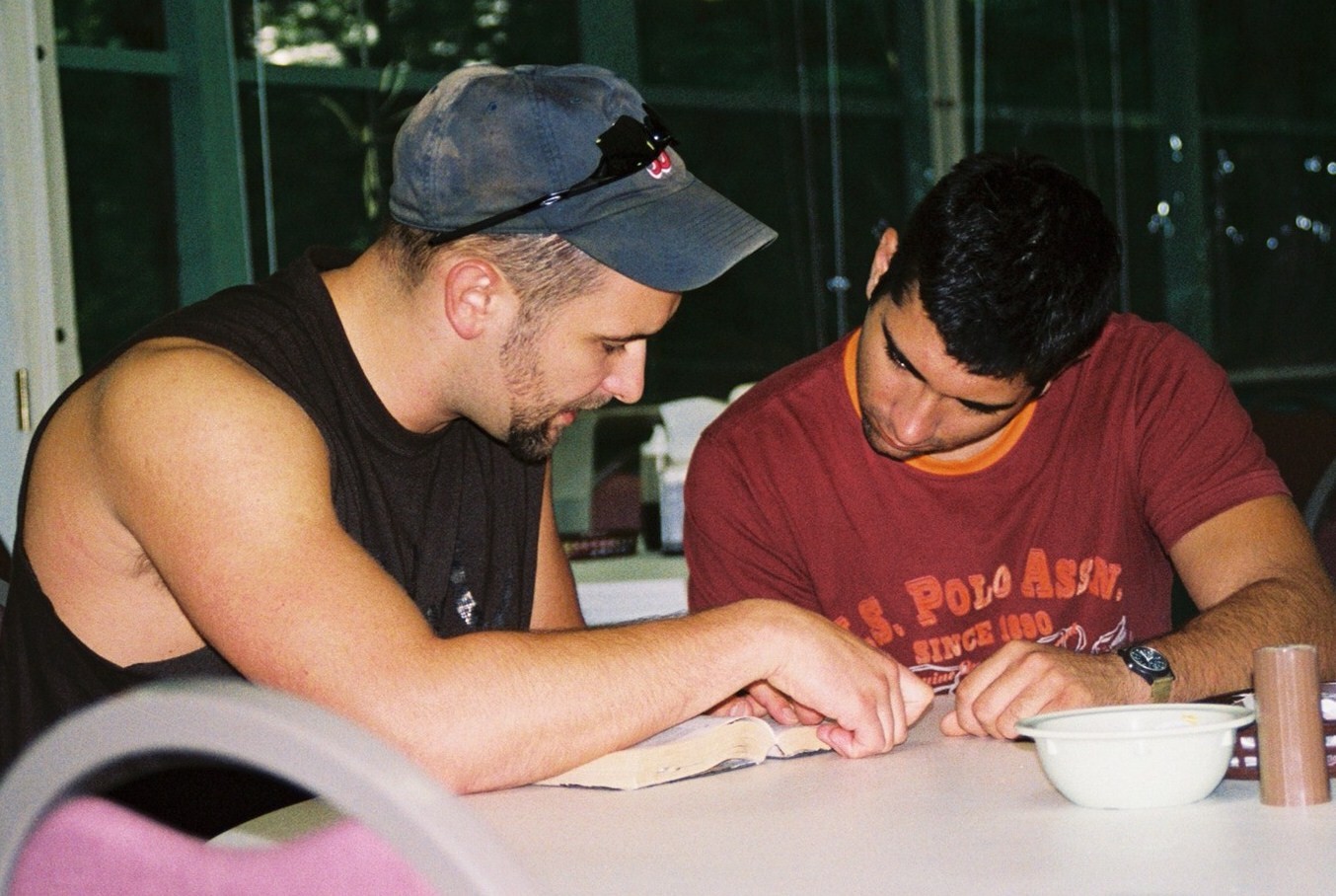
I generally do not tell them how to have a QT but show them. I actually pray, read the first chapter of Mark, have them put their finger on something that jumped out of the Word at them. Then we pray about that one thing got from the scriptures and a few family members and friends. It’s takes between 8 to 10 minutes.

I have found this to be the number one spiritual discipline in every godly man or woman’s life. It has certainly been the chief method for my personal transformation into Christ-likeness.

For questions or comments drop me a line at charleswood1@gmail.com or click the envelope below to send this post to a friend…

Don’t be a Ministry Hog

Read Lk 5.1-11

And He got into one of the boats, which was Simon’s, and asked him to put out a little way from the land. And He sat down and began teaching the people from the boat.
(Luke 5:3)

To avoid being pressed by the crowd, Jesus asks Peter if He could borrow His boat. Peter complies by assisting the Master. Jesus can now teach the crowds at a comfortable distance and Peter was able to participate in His ministry.

It can go unnoticed with a cursory reading but my friend Jim Cameron picked this up in a Quiet Time recently. It’s a Discipler’s simple act of great significance, ask for help. Jesus asked to use Peter’s boat. He provided Peter with an opportunity to participate in a very important event, the Rabbi’s teaching. This may seem trivial to the untrained eye but it has huge ramifications in relationship and ministry. I think most people want to be helpful, Christian or non. Asking for assistance can actually lead to a deeper level of relationship and trust. Peter didn’t seem to hesitate with the Rabbi’s request to use his boat. In fact, this was Peter’s first opportunity to demonstrate his allegiance to the Messiah. Often times we think, as Disciplemakers, we should be doing all the work and never asking for assistance. This would be a big mistake. Not even the Messiah had the “Messiah Complex.” If we don’t ask for help, we rob people of their chance to serve and more importantly miss a key opportunity to integrate them into ministry. This is also a way to prevent the “Hired Gun” syndrome where the clergy do all the ministry because they have been to cemetery…ah, I mean seminary. You’ve probably seen guys in sports who always want the ball. We call them “ball hogs.” If we aren’t careful we could do the same thing in ministry.
Tips for integrating people into ministry;
· When asked if they can help, say yes
· Start with small requests
· Delegate components of ministry
· Don’t do anything by yourself
· Affirm others as you speak and teach
· Get out of the way, let someone else do something
· Give feed back
· Always thank the person (publically, if you can)

Can you think of other ways to integrate people into ministry? Email me with your ideas. FJ54

For questions or comments drop me a line at charleswood1@gmail.com or click the envelope below to send this post to a friend…

Avoiding the Extremes

Read Mt 4.23-24, Mk 1.35-39, Lk 4.42-44

Jesus was going throughout all Galilee, teaching in their synagogues and proclaiming the gospel of the kingdom, and healing every kind of disease and every kind of sickness among the people. The news about Him spread throughout all Syria; and they brought to Him all who were ill, those suffering with various diseases and pains, demoniacs, epileptics, paralytics; and He healed them.
(Matthew 4:23-24)

The main of objective of Jesus’ job description was to proclaim the Gospel of the Kingdom of God. His method was healing and exercising people as He went. It was not His preaching that attracted most people, it was the secondary purpose of helping people that brought them out. He did not hesitate in healing their physical infirmities but He was mostly concerned for their spiritual brokenness. So the Kingdom message was always coupled with His service. Mark and Luke pick up on the Kingdom focus in their respective accounts.

Satan is the great mover of the pendulum to its extremes. I’ve seen people cross the oceans to help needy people who are unwilling to serve in their community. I’ve seen “Christian” deeds being done where not one spiritual word is said, not even the name of Jesus for fear that it will offend. I’ve witnessed the “be warm, be filled” that James talks about (Jam 2.16), and people with legitimate needs are turned away. I’ve watched the gospel be used as a weapon to repel the undesirable. How have I been so close to such spiritual atrocities? I am the one who committed them! Satan has a way of taking good and turning it into bad and I am often his vehicle. Watching Jesus share the Kingdom of God with others while serving them is the antidote to the extremes. Following His example keeps me from neglecting a person’s real needs while being able to address the main need, knowing Christ.

Tips for a balanced approach to sharing the Gospel

· Be an aggressive servant
· Keep your eyes open to people in need
· Don’t cross the ocean until you cross the street
· Have both first aid kits ready (Physical and Spiritual)
· Do not dress people in tuxedos to send them to Hell
· Give the reason for your kindness, Jesus
· Use the Word of God to salt your conversation
· Save some for tomorrow
· Use heart, brain, feet, hands, and mouth for the Kingdom

“The lifestyle without the Word is a mystery; the Word without the lifestyle is hypocrisy.” Chuck Swindoll
FJ53

For questions or comments drop me a line at charleswood1@gmail.com or click the envelope below to send this post to a friend…

All in a Day’s Work

Read Mat 8.14-17, Mk 1.29-34, Lk 4.38-41

Jesus begins His day by teaching in the synagogue and casting out a demon. (Mark 1.21-26) After church, which apparently lasted into the afternoon, He heals a Centurion’s servant (Matthew 8.5-13) and Peter’s mother-in-law. (Mark 1.29-31) By sundown the whole city is at the door waiting to see Dr. Jesus. (Mark 1.32-34) He heals many so it probably went late into the night. Before the crack of dawn, He was out of the house getting some time alone with the Father. (Mark 1.35) And probably about sun up His disciples find Him and inform Him the town’s people are looking for Him for another day at the clinic. He presses on to the next town and starts the whole process over again.

Our Lord sets an amazing example in work ethic. I’ve tried to keep this kind of pace in disciplemaking but couldn’t! He exhibited an incredible capacity and endurance in His day to day work of serving. Although we would probably fall short if we tried to keep up, I think there is a lesson for us here. Work hard in the Kingdom. Sometime I think we treat our relationship with God or our ministry like a hobby, strictly entertainment. We would certainly stay late if the boss asked us to or work up a good sweat playing basketball with the guys. Why not put a little sweat on the brow working in the Father’s vineyard? Consider the following questions:

· Ever miss a meal for the sake of disciplemaking?
· Up early or to bed late in order to help someone?
· Change your plans with family to talk to someone in need?
· Are interruptions an opportunity for ministry or an inconvenience?


If these are happening on a regular basis, welcome to the Kingdom work. You are becoming like more Jesus.
(Don’t worry we’ll talk about rest too)
FJ52

For questions or comments drop me a line at charleswood1@gmail.com or click the envelope below to send this post to a friend…

Knowledge is not Enough

Read Mk 1.21-28, Lk 4.31b-37

In the synagogue there was a man possessed by the spirit of an unclean demon, and he cried out with a loud voice, “Let us alone! What business do we have with each other, Jesus of Nazareth? Have You come to destroy us? I know who You are–the Holy One of God!”
(Luke 4:33-34)

The demons acknowledge Jesus on every level. They recognize Him as Lord having the power to command them and punish them. They call Him by His personal name, Jesus of Nazareth, acknowledging both His humanity and His fulfillment of scripture. (Mt 2.23) Finally, they say that they “know” He is the Holy One of God, the coming Messiah (the Christ) acknowledging His deity.

The demons knew Jesus better than most Christians. But the Disciples of Jesus possess more than knowledge, they have embraced Him as their way of life. They are adherents in faith and practice. Jesus has changed not only their intellect, but their actions. A disciple is being transformed by the same knowledge that the demons had. The demons, on the other hand, are doomed not because of their lack of knowledge but because of their rebellion against the King of kings. (Jam 2.19) As Disciplemakers we must discern that knowledge without action falls far short of Jesus’ intent for our lives. (Lk 6.46-49) Everything we encourage a young disciple to know about Jesus should have its ultimate end in a changed life. Being and doing can never be separated from truly knowing Him. (2 Cor 13.5) FJ51

For questions or comments drop me a line at charleswood1@gmail.com

Authority: Confidence in the Father

Read Mk 1.21-28, Lk 4.31b-37

They were amazed at His teaching; for He was teaching them as one having authority, and not as the scribes.
(Mark 1:22)
They were all amazed, so that they debated among themselves, saying, “What is this? A new teaching with authority! He commands even the unclean spirits, and they obey Him.”
(Mark 1:27)

A new teacher had come on the scene. He was one who commanded the crowds with a message that went beyond the power of words. His confidence in speech and actions drew a distinct contrast between Him and all other teachers of the day. This Teacher taught with authority. And from this authority alone they should have recognized Jesus as the Messiah.

I believe Jesus’ authority came from His confidence in three areas; Confidence in the Father, Confidence in the Word of God, and Confidence in the Work of God.

He was confident in the Father and His relationship with Him. (Jn 10.15) Every part of Jesus’ life was governed by His relationship with the Father. Ultimately, everything Jesus says or does springs out of His supreme loyalty to the Father and His assurance in who the Father is. Because he was confident in the Father’s identity, He was certain of His own identity. (Jn 8.14-16)

Jesus placed extraordinary confidence in the Word of God. (Mt 4.4) It was God’s Word that sent Him, motivated Him and ultimately put Him on a cross. Jesus never uttered one word that did not first pass the scrutiny of the Father. His words were the Father’s words. He had authority because He was confident He was speaking the very Word of God. (Jn 12.49-50)

And lastly, Jesus had complete confidence in the Work of God. (Mt 26.39) Jesus was in perfect synchronization with the will and work of the Father. The Father’s work was His work. (Jn 5.36)

Do you want to have authority in your ministry? Would you like to have the influence to change people’s lives into exactly what the Father desires? There is no authority but God’s authority. If we are to minister deeply in people’s lives we must be completely confident in our relationship with the Father, the Father’s words and the Father’s work. As we align our lives with the life of Jesus, we align our lives with the Father. That is the way to make disciples with authority. FJ50

For questions or comments drop me a line at charleswood1@gmail.com

Seeing Jesus Clearly

Read Mt 4.18-22, Mk 1.16-20, Lk 5.1-11

But when Simon Peter saw that, he fell down at Jesus’ feet, saying, “Go away from me Lord, for I am a sinful man!” For amazement had seized him and all his companions because of the catch of fish which they had taken;
(Luke 5:8-9)

When Peter was confronted with Jesus’ miraculous powers, he not only discovers the Messiah but his own identity is revealed as well. “I am a sinful man!” Peter’s immediate response is that of a man who understands he is standing in the presence of absolute holiness. He responds like Isaiah when he is brought into the presence of God and is overwhelmed at His holiness. (Isa 6.1-5)

When a man looks at the Sun he may initially take it for granted and go about his life totally ignorant of its significance. But when the same man is educated on its enormity, energy potential and its role in his existence, the man comes to grips with his minuscule place in the solar system. The more he learns, the more he is awe struck by every aspect of the Sun. That’s our objective in helping people see Christ. When we are correctly introduced to Jesus, the disparity between our depravity and His absolute holiness is painfully obvious. Most men are very aware of their short-comings. The challenge is getting them to see Jesus for who He really is and to repent in light of His character. I see three distinct tools in our kit bag as disciplers in order to help others see Him for who He really is. First is prayer and enlisting the Holy Spirit’s help in opening spiritual eyes and ears. (Eph 3.14-19) Secondly, the Word of God will display Jesus Christ in the most vivid and complete manner. (Heb 4.12) And lastly, our example of loving like Him is a compelling representation His love for them. (Jn 13.34-35) FJ49

For questions or comments drop me a line at charleswood1@gmail.com