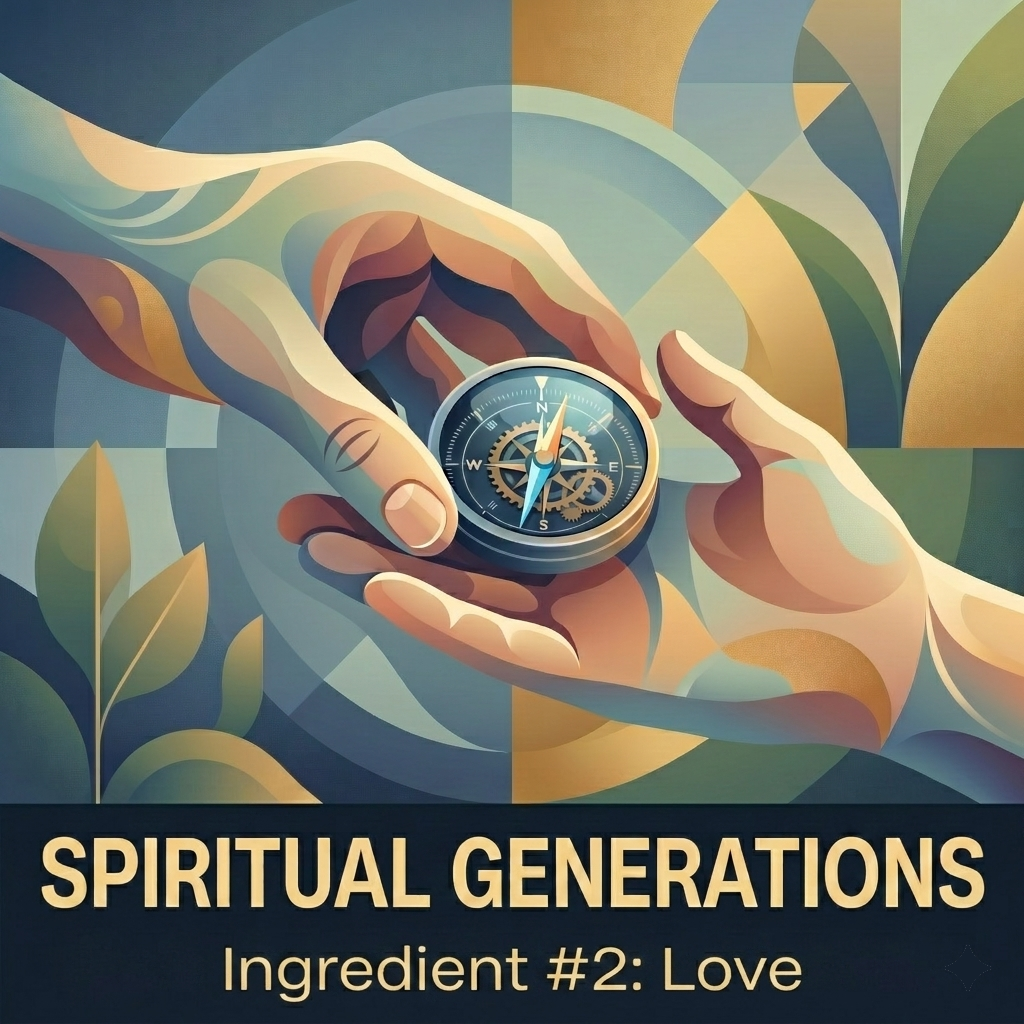
Last week, we looked at the foundation: being the right kind of person. But character in a vacuum is just morality. To move from a “good person” to a generational leader, that character must be set on fire by the engine of love.
Originally we placed this ingredient as #8. But after consideration, we were compelled to move this ingredient to the front. Ultimately, the engine that drives spiritual reproduction is love. Without it, vision casting becomes manipulation and “time with” becomes a burden. Jesus made love the non-negotiable hallmark of His ministry, stating clearly: “Just as the Father has loved Me, I have also loved you; abide in My love” (John 15:9).
The Jesus Model
Notice the flow of this love: it originates with the Father, flows to the Son, and then extends to the disciples. Jesus did not manufacture love for His followers out of human willpower; He loved them out of the overflow of His relationship with the Father. This is crucial because the disciples were not always lovable. They were ambitious, dense, and prone to failure. Yet, Jesus “having loved His own who were in the world, He loved them to the end” (John 13:1). His love was not a response to their performance; it was a reflection of His source.
This command to “abide” means that love is the atmosphere in which discipleship happens. It is not just a feeling; it is a commitment to the highest good of the other person. Jesus’ love was tough enough to rebuke Peter but tender enough to wash Judas’ feet. It was a love that sacrificed everything for their redemption.
The Scriptural Model
When Paul wrote to the Philippians, he didn’t sound like a distant CEO running a non-profit; he sounded like a father missing his kids. He confessed, “For it is only right for me to feel this way about you all, because I have you in my heart… For God is my witness, how I long for you all with the affection of Christ Jesus” (Philippians 1:7-8).
The word for “affection” (splanchna) refers to the gut, the seat of intense emotion. Paul didn’t just tolerate these people; he delighted in them. His ministry wasn’t fueled by duty but by a deep-seated emotional attachment that mirrored the heart of Jesus. He shows us that you cannot separate the mission from the relationship. You cannot efficiently mass-produce disciples; you have to love them individually.
Stories
When Cecil moved my brother and me into his basement, he didn’t just give us a roof; he gave us a home. We were more than mentees; we became family. Every night, we sat at the dinner table—a true luxury for two single guys, especially for an Army sergeant like me used to eating at the mess hall. They cared for us as if we were their own sons.
But my most vivid memory isn’t a Sunday School Lesson in a classroom; it’s a joystick in a convenience store.
It became a daily ritual. I would get home from work, and Cecil and I would walk the four blocks to the store. On that pavement, we talked about everything: life, the struggles of manhood, what we were reading in Scripture, and how to help other men follow Jesus.
The store had three arcade cabinets: Centipede, Ms. Pac-Man, and OUR battlefield, Pac-Man. The stakes were low but serious: whoever lost the last game paid. We’d spend a buck-fifty and twenty minutes chasing ghosts before heading home for dinner.
Looking back forty-five years later, the specific words of those conversations have faded. I can’t quote the advice he gave me between levels. But I remember the man, and I remember that Cecil loved me with a depth I had never experienced before.
He didn’t just teach me a curriculum; he loved me. That was the key ingredient I’ve carried ever since. As 1 John 4:19 reminds us, “We love, because He first loved us.” God loved Cecil. Cecil loved me. And because of that, I learned to love God and the men I disciple. It wasn’t the game that changed my life; it was the player standing next to me.
Another Story from a Friend
A friend and I have been meeting for a couple of years for mutual discipleship. He challenges me with his bold witness; I challenge him to disciple people. But at this particular meeting, he was dealing with the grief of his wife’s recent miscarriage.
He said: “Honestly, I’m tired of talking about it, because people just don’t get it.” I responded: “We can talk about it if it’s helpful, or we can talk about whatever else you want… I just want to help you, brother.”
He paused and said, “You’re different. I know you actually care for me. Most other people in my life don’t actually know me well enough to empathize, but I know you do.”
That’s the type of love we’re aiming for.
Suggestions
Inconvenient Service: Look for a practical need they have (a ride to the airport at 4 AM, help moving apartments, a hospital visit) and meet it, even if it messes up your schedule.
Verbalize It: It may feel awkward, but tell them, “I love you, and I am for you.” Many young adults… and most adult men in particular…today have never heard an older mentor express genuine, non-transactional affection.
Active Listening: When they are talking, put your phone away. Give them your eyes and your undivided attention. Listening is one of the purest forms of love.
Application for Disciple Makers
For us, the WIGTake is recognizing that you cannot effectively disciple someone you do not genuinely love. People can tell when they are projects to be managed rather than people to be cherished. Paul carried his spiritual children in his heart, not just in his calendar. If you want to impact the next generation, you must ask God to give you His heart for them. We must love those we are discipling not for what they can do for us or our organization, but for who they are in Christ. When people feel safe in the security of your love—a love that is both a decision to abide and an emotion to cherish—they are free to grow, ask hard questions, and eventually, pass that same love on to others.
Love is the atmosphere, but love without focus can lead to exhaustion. Next week, we’ll look at why the most loving thing Jesus did for the world was to be highly selective with His time: Ingredient #3: Finding the Right People.
Jesus answered, “My kingdom is not of this world. If My kingdom were of this world, then My servants would be fighting so that I would not be handed over to the Jews; but as it is, My kingdom is not of this realm.” (John 18:36)
Introduction
In this essay, we will explore the profound contrast between earthly kingdoms and the kingdom of God. We will consider how this distinction shaped Jesus’ ministry and actions, and reflect on the implications it holds for our own lives and ministries.
Key Words and Phrases
World – κόσμος (Strong’s G2889 – kosmos)
an apt and harmonious arrangement or constitution, order, government
ornament, decoration, adornment, i.e. the arrangement of the stars, ‘the heavenly hosts’, as the ornament of the heavens. (1 Peter 3:3)
the world, the universe
the circle of the earth, the earth
the inhabitants of the earth, men, the human family
the ungodly multitude; the whole mass of men alienated from God, and therefore hostile to the cause of Christ
world affairs, the aggregate of things earthly
Realm – ἐντεῦθεν (Strong’s G1782 – enteuthen)
from this place, hence
on the one side and on the other, on each side
“My servants would be fighting” – John 18:36 teaches that Christ’s kingdom is not of this world, meaning it is distinct from earthly governments and systems. Jesus’s followers advance God’s kingdom through spiritual means, not violence or force, embodying courage and love even when facing opposition. As disciple-makers, we are called to align with God’s kingdom values, demonstrating faith and nonviolence while representing Christ’s reign in every realm.
Messianic Model – Focus on Jesus’ example
Jesus lived a life that was “other worldly” so to speak. Although He was fully human bound by earthly limitations, He lived in complete dependance and confidence in the power of His Father in heaven and always acted in light of eternity. This exceptional perspective and activity demonstrated His ability to live life in a different realm, the kingdom of God as a reality. Jesus was able to be “so heavenly minded” and yet do so much “earthly good.” He showed us how to live in this brief span we call human existence, with eternity in mind. Even as He faced false accusations and the prospect of death, Jesus remained anchored in His divine calling, refusing to let the immediate circumstances dictate His purpose or be overwhelmed by fear.
Key Theological Implications
There is a stark difference between this world and the kingdom of God. They are not only different realms; they differ physically, morally, governmentally, and spiritually—operating by entirely distinct principles, values, and sources of authority. The chief difference between the two lies in who rules and how they rule. In this world, Satan is ultimately the ruler—marked by deception, pride, and a desire to destroy—and human authorities are mere pawns in his rebellion against God. By contrast, the kingdom of God is ruled by Jesus Christ, whose authority is marked by perfect righteousness, sacrificial love, and divine sovereignty. His reign transforms lives not through compulsion, but through grace, truth, and the renewing power of the Holy Spirit. (Isaiah 9:6–7; Matthew 28:18; John 8:44; 12:31; 14:6; 2 Corinthians 4:4; Ephesians 2:2; Colossians 1:13–14; 2 Timothy 2:26; Hebrews 1:8; 1 Peter 5:8; Revelation 19:16)
Followers of Jesus are called to live as He did, with eternal perspective. They live life knowing there is something greater to look forward to.They are pilgrims just passing through this physical world, patiently and courageously waiting for the day when they pass from this short stay on the planet to eternity in His presence. (Matthew 6:19–21; John 14:2–3; 15:19; 16:33; 17:14–16; 2 Corinthians 4:17–18; Philippians 3:20–21; Colossians 3:1–4; Hebrews 11:13–16; 1 Peter 2:11; 1 John 2:15–17).
So-called believers who fail to recognize the distinctions between these two realms are in great danger of living carnal lives—and may not truly belong to God’s kingdom at all. How we view this world and the kingdom of God should profoundly shape our values, affecting our thoughts, words, and actions as Christians. (Matthew 7:21; Romans 8:5–8; Philippians 3:18–20; Colossians 3:1–3; James 4:4; 1 John 2:15–17)
Contemporary Spiritual Significance
As disciples of Jesus Christ, it is vital not only to recognize the distinction between this earthly realm and the kingdom of God, but also to align our lives with the realities of Christ’s reign. Our choices impact both our present circumstances and have far-reaching consequences, even into eternity. Jesus, in His Sermon on the Mount, reminds us that the life we now live is fleeting, and calls us to set our affections, loyalties, and investments on the eternal kingdom. This perspective shapes how we live today and influences the rewards awaiting us in eternity. Having been called out of darkness into His marvelous light, we are summoned to let our lives reflect the values and priorities of His kingdom. (Matthew 6:19-21, Romans 12:2, Colossians 3:1-2, Philippians 3:20, 1 Peter 2:9)
The Transformative Power of a Kingdom Perspective
There is no such thing as casual discipleship in the kingdom of God. The true Christian is being radically transformed by the stark contrast between this present age and the realities of Christ’s kingdom. As we fix our eyes on the future with Christ, that hope reshapes our daily decisions and steadily conforms us to the image of God’s Son. With this mindset and these priorities, it becomes impossible to blend in with those who blindly follow the ruler of this world. We are distinct in identity, purpose, and conduct. (Matthew 10:39,16:24, Romans 8:29, 2 Corinthians 5:17, Galatians 2:20, 1 Peter 1:15–16)
Conclusion
Jesus’ statement, “My kingdom is not of this world,” is more than a saying—it reveals His very reality, identity, and purpose. Throughout His life, He lived with the values and principles of that kingdom, walking in perfect obedience to the Father. He calls His followers to do the same, modeling His example and passing it on to others. This vision of a heavenly kingdom shapes and transforms every disciple of Jesus Christ, making them a radiant light of hope for those who would turn from darkness to light.
Disciple-Maker’s Short Story
The Weight of Gilded Things
The Galleria’s marble floors threw back their reflections like a mirror to heaven—or perhaps to something far less celestial. Trisha watched Maya’s eyes track a woman in head-to-toe Zimmermann, the kind of effortless wealth that announced itself in whispers rather than shouts.
“Did you see her bag?” Sienna murmured, not quite quietly enough. “That’s the new Bottega. Emily had one at church last week—the woven one? I died.”
Trisha said nothing. She’d learned that silence often taught better than sermons.
They passed Gucci, then Valentino. In the window, a mannequin wore a dress that cost more than Trisha’s monthly rent. Maya had stopped walking.
“Sometimes I wonder,” Maya said, her voice careful, practiced, “what it would feel like. To not have to check the price tag. To just… belong in places like this.”
Sienna nodded, her thumb already scrolling through Instagram, comparing her life to the curated squares of strangers.
Trisha studied them both—these brilliant, beautiful young women she’d been meeting with for six months now. Maya, who volunteered at the homeless shelter but couldn’t pass a Sephora without feeling inadequate. Sienna, who could quote half a couple of dozen verses but measured her worth in likes and follows.
“Can I tell you what I see when I look at that woman?” Trisha finally asked.
They turned to her, expectant.
“I see someone chasing the same thing you are. The same thing I used to chase.” She gestured toward the gleaming storefronts. “This whole place—it’s built on a promise it can never keep. That the right clothes, the right look, the right image will finally make you feel like you’ve arrived.”
“But she has arrived,” Maya said. “Look at her.”
“Has she?” Trisha’s voice was gentle but firm. “Or is she just further down a road that doesn’t actually lead anywhere?”
An elderly woman pushing a cleaning cart passed them, invisible to the shoppers streaming by. Trisha watched her disappear into a service corridor.
“I’m not saying this to shame you,” Trisha continued. “I’m saying it because I love you both too much to watch you build your lives on sand.” She paused, choosing her words with care. “We live in another kingdom. Not this one.”
Sienna’s scrolling thumb went still.
“I know you know that,” Trisha said. “Theologically. But knowing it and living it—that’s where the rubber meets the road. When Jesus stood before Pilate, about to be executed, He said His kingdom wasn’t of this world. And He proved it. He had every right to fight, to call down armies, to save Himself. But He didn’t. Because He was operating by different rules. Playing a different game entirely.”
Maya’s reflection stared back at her from the polished floor. “So we’re just supposed to… what? Not care about how we look? Wear burlap sacks?”
“No.” Trisha smiled. “But maybe ask yourself why you care. What are you actually hoping those things will do for you?”
The question hung in the air between them.
A group of teenagers burst past, loud and laughing, weighed down with shopping bags. Trisha waited until they passed.
“The kingdom of God isn’t about denying that we live in the world. It’s about refusing to let the world tell us who we are.” She looked at both of them. “You want to know what freedom looks like? It looks like being able to walk through this mall and feel absolutely content when that woman walks by. Not contempt. Not envy. Contentment. Because your identity isn’t up for grabs anymore.”
Sienna’s eyes had gone bright. “I don’t think I’ve ever felt that way.”
“I know,” Trisha said quietly. “Most of us haven’t. That’s why Jesus spent so much time talking about where we store our treasure. He knew. He knew this would be our struggle—this constant pull to find our worth in temporary things.”
They started walking again, slower now. In a window display, perfect mannequins posed in perfect clothes against a perfect backdrop. The scene was beautiful and completely lifeless.
“I spent my twenties trying to keep up,” Trisha said. “Different decade, same trap. I’d see women at church, at work, on social media, and I’d feel this… hollowness. Like I was always one purchase, one promotion, one compliment away from finally feeling like enough.” She shook her head. “It was exhausting. And it was never enough because it couldn’t be enough. I was asking the wrong kingdom to give me what only God could give.”
Maya had stopped again, but this time she wasn’t looking at the stores. She was looking at Trisha.
“How did you stop?”
“I started taking Jesus seriously when He said we can’t serve two masters. I had to choose which kingdom I was going to live in. Not theoretically. Practically. Daily.” Trisha’s voice grew softer. “And here’s what I discovered—when you start living with eternity in mind, the things that used to own you lose their power. Not because they’re evil, but because they’re just… small. Compared to what’s coming.”
Sienna had put her phone away. “What do you mean, what’s coming?”
“Everything.” Trisha’s face lit up. “An actual kingdom. A real one. Where Jesus is the center and we’re finally, fully ourselves—no striving, no comparing, no measuring. Just life. Real life. The kind we were made for all along.”
They’d reached the end of the corridor. Beyond the glass doors, the parking lot stretched out under an overcast sky. The world outside looked decidedly less magical than the world inside.
“But that’s later,” Maya said. “What about now?”
“Now is when it matters most.” Trisha turned to face them fully. “Because the person you’re becoming now is the person you’ll be then. Jesus didn’t come just to get us into heaven someday. He came to teach us how to live in His kingdom now. To show us what it looks like when someone is so rooted in the Father’s love that nothing else can shake them.”
She reached out, taking each of their hands.
“You want to know what discipleship looks like? It looks like this—learning to see what Jesus saw, to value what He valued, to find your identity where He found His. In the Father’s delight. Not in whether you can afford what’s in that window or whether you look like the women on your feed.”
A child ran past, clutching a balloon, followed by a tired-looking mother. The balloon was red and ordinary and the child’s face was pure joy.
“I want that,” Sienna said suddenly. “That freedom you’re talking about. I’m so tired of feeling like I’m falling behind.”
“Then stop running that race,” Trisha said simply. “You’re already ahead. You’re already chosen. You’re already His. Everything else is just… scenery.”
They stood there for a moment, the three of them, while around them the mall pulsed with its urgent, glittering promises. But in that small circle, something else was happening. Something quieter. Something that would last.
“So what do we do?” Maya asked. “Practically. Tomorrow. Next week.”
“You practice,” Trisha said. “You practice seeing yourself the way Jesus sees you. You practice saying no to the voice that says you’re not enough. You practice investing in things that will matter in a thousand years from now.” She squeezed their hands. “And you practice being patient with yourself. This is a lifelong thing. Becoming like Jesus—that’s the work. That’s the whole point.”
Sienna nodded slowly. “Will you keep showing us?”
“Every step,” Trisha promised. “That’s what we’re here for—to help each other remember which kingdom we belong to. Especially when everything around us is screaming that we belong here.”
They walked toward the exit together, leaving the pristine marble and perfect lighting behind. Outside, the world was gray and ordinary. But in the ordinariness, there was something true. Something solid.
As they reached Trisha’s car, Maya paused. “I deleted my shopping cart,” she said quietly. “Just now. Three hundred dollars of stuff I don’t need.”
Trisha smiled. “How does it feel?”
Maya considered. “Lighter,” she said finally. “It feels lighter.”
And in the fading afternoon light, with the kingdom of God spreading invisible and irresistible around them, that seemed like exactly the right place to begin.
Last week, we teased the WIGTake (What’s It Gonna take?) to seeing spiritual generations of disciples for Jesus. Making good on our promise, we start today by focusing on you—the number one ingredient. In the economy of the Kingdom, you cannot impart what you do not possess. The first and most critical ingredient for spiritual generations is not a strategy, a curriculum, or a charismatic personality—it is you. Specifically, it is the quality of your walk with God and your character.
The Jesus Model
If we want to become a generational leader, we need to look no further than Jesus. He is the right person, We see this vividly in His life. Before He preached a sermon or healed a leper, the Father established His identity. At His baptism, a voice came out of the heavens: “You are My beloved Son, in You I am well-pleased” (Mark 1:11). Jesus operated from a place of beloved security, not a desperate need for approval.
Furthermore, Jesus did not emerge from the womb fully formed in His humanity; He submitted to the process of growth. Scripture tells us He “continued to grow and become strong, increasing in wisdom; and the grace of God was upon Him” (Luke 2:40, 52). If the Son of God prioritized spiritual and personal development, how much more must we? This growth created a person who was magnetic yet holy. The Father later reiterated on the Mount of Transfiguration, “This is My Son, My Chosen One; listen to Him!” (Luke 9:35). His authority to lead flowed directly from His identity as the Chosen Son.
We also see the heart of His leadership in His priestly role. Jesus was never a mechanical taskmaster driving His followers to production; He was a sympathetic partner committed to their restoration. Scripture tells us He “always lives to make intercession for them” (Hebrews 7:25), meaning His primary work was going to the Father on their behalf. He remained approachable and safe, a High Priest who “sympathizes with our weaknesses” (Hebrews 4:14-16), understanding the struggle rather than condemning the stumbler.
At its core, being a disciple of Jesus means becoming like Him (Matthew 10:24-25; Luke 6:40; 1 John 2:6). We must “master the Master,” as the late Howard Hendricks famously put it. If we want to see generations impacted, we must look closely at His ways, His words, and His intent, aligning our lives to the pattern He set.
The Scriptural Model
When we move from the Gospels to the Epistles, we see this principle codified in the life of Paul. Writing to his spiritual son, Timothy, Paul reflects on his own calling: “I thank Christ Jesus our Lord, who has strengthened me, because He considered me faithful, putting me into service” (1 Timothy 1:12).
Notice the order of operations. Paul does not say Christ considered him “talented,” “educated,” or “strategic.” He considered him faithful. The Greek word here implies trustworthiness. Before Paul was entrusted with the care of the churches, he had to be entrusted with the character of Christ. The appointment to service was the result, not the cause, of his faithfulness.
This challenges our modern tendency to promote people based on potential or charisma. In the Scriptures, the “right kind of person” is one who has proven they can be trusted. This aligns with the explicit requirement for stewardship: “In this case, moreover, it is required of stewards that one be found trustworthy” (1 Corinthians 4:2). Paul acknowledges that the capacity for ministry comes from Christ (“who has strengthened me“), but the requirement for the assignment was his own faithfulness. This creates a powerful dynamic: we rely on His strength, but He requires our faithfulness. God is looking for a vessel that is reliable, one that won’t crack under the weight of the ministry He intends to pour into it.
Stories
The words hit me like a rifle report. My mentor leaned across the table. “You know the kind of men Jesus chose, Chuck? Fishermen. Working men. Men who’d drop their nets and follow.”
I was a young Army sergeant then, hungry to prove myself. But something in those words planted deep.
I wanted to be that kind of man.
The decision came at Fort Campbell. I’d just finished my tour as an Air Assault Instructor—a prestigious assignment, a golden ticket upward. The smart move was to become a squad leader in the Ranger Battalion, pad my résumé, and play the army promotion game. Instead, I volunteered to be a Ranger Instructor.
“Back-to-back instructor jobs?! Career suicide,” my peers said, shaking their heads. “You’ll never recover.”
But I saw something they didn’t. Ranger School meant predictable hours, no deployments. Time I could pour into ministry and into becoming the man I’d promised to be.
The Army’s promotion timeline is brutal. E7, Sergeant First Class, in seven and a half years? Ask any leader—they’ll tell you it’s theoretically possible but practically impossible.
Yet there I stood, receiving my stripes ahead of everyone who’d played it safe. Even ahead of those who called me foolish.
Matthew 6:33 became my compass: “Seek first His kingdom and His righteousness, and all these things will be given to you.”
God honored that sacrifice in ways I couldn’t have engineered. Not just the promotion, but something better—He surrounded me with men and women cut from the same cloth. People who’d drop their nets. People who understood that some things matter more than career trajectories.
I’d become the kind of person Jesus was looking for.
And He gave me a whole platoon of the same kind of men.
Suggestions
The “Secret” Meeting: Schedule a daily, non-negotiable appointment with Jesus before you meet with anyone else. If your public ministry exceeds your private intimacy, you are heading for a crash. Saturate yourself in the Scriptures, especially the Gospels.
Integrity Audit: Ask a trusted friend or spouse, “Where is my character inconsistent with my message?” Give them permission to be brutally honest, and then take action on what they say.
Holistic Health: Do not neglect your physical or emotional health in the name of “spiritual” service. Establish a regular rhythm of exercise and rest to ensure you are a vessel built to last.
Application for Disciple Makers
For us, being the “right kind of person” requires embodying the full spectrum of this biblical witness. We must lead from a place of secure identity, knowing we are beloved by the Father (like Jesus), while simultaneously proving ourselves trustworthy in the small things (like Paul). We must commit to our own growth, constantly increasing in wisdom so our lives carry the weight of experience. And we must lead with sympathy, offering a safe harbor for others’ struggles. The WIGTake here is simple but weighty: the ceiling of your influence on those you are discipling is your own personal transformation in Christ.
Next Week: Character is the vessel, but what good is a vessel if it’s empty? Next week, we look at the fire that fills the vessel and the engine that drives spiritual reproduction: Ingredient #2: Love.
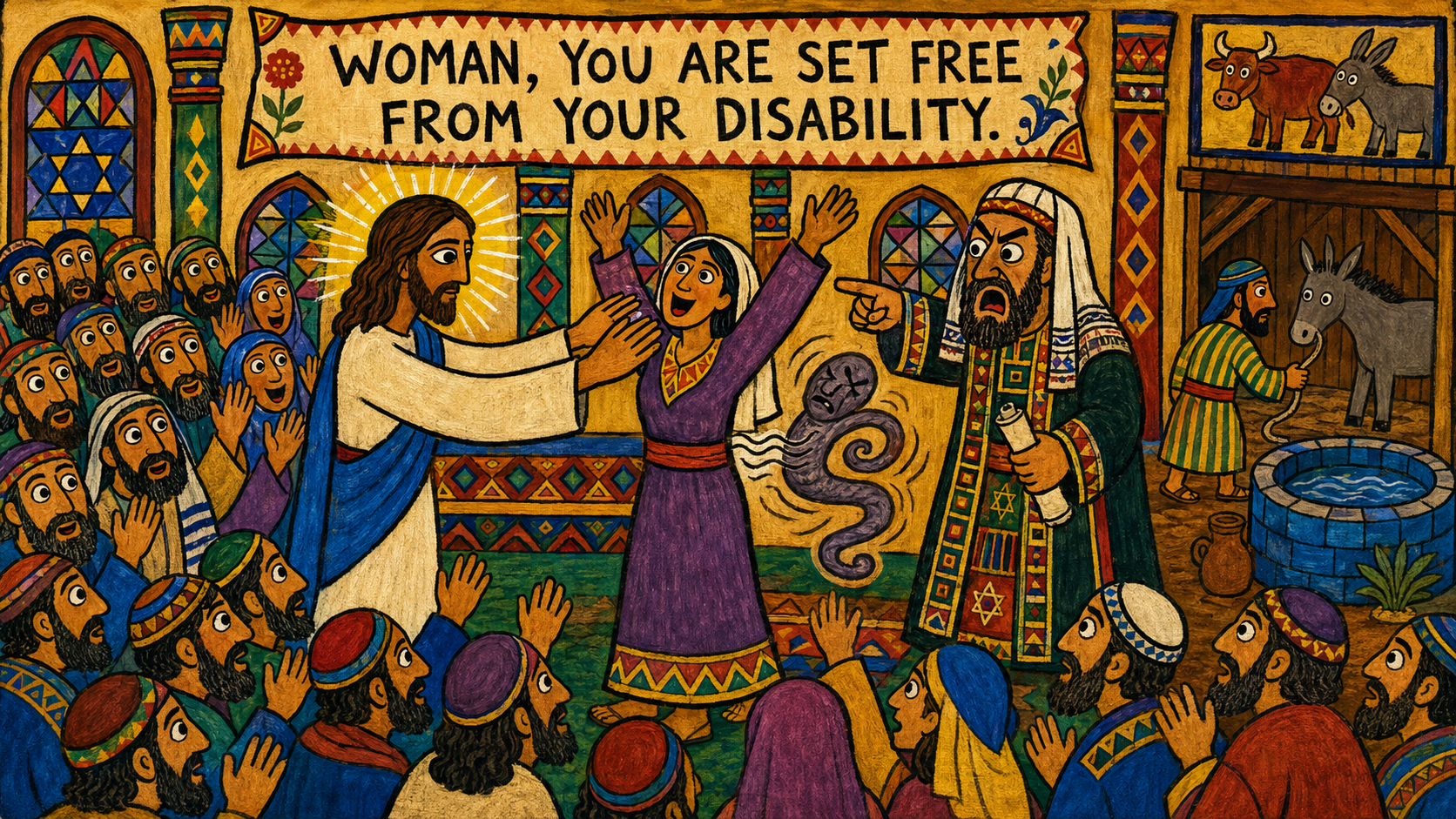
One Sabbath Jesus was teaching in one of the synagogues, and a woman there had been disabled by a spirit for eighteen years. She was hunched over and could not stand up straight. When Jesus saw her, He called her over and said, “Woman, you are set free from your disability.” Then He placed His hands on her, and immediately she straightened up and began to glorify God. But the synagogue leader was indignant that Jesus had healed on the Sabbath. “There are six days for work,” he told the crowd. “So come and be healed on those days and not on the Sabbath.” “You hypocrites!” the Lord replied. “Does not each of you on the Sabbath untie his ox or donkey from the stall and lead it to water? Then should not this daughter of Abraham, whom Satan has kept bound for eighteen long years, be released from her bondage on the Sabbath day?” When Jesus said this, all His adversaries were humiliated. And the whole crowd rejoiced at all the glorious things He was doing.
My Thoughts
There is so much freedom being handed out in this passage. First, the obvious physical healing: Jesus sets this woman free from a debilitating, eighteen-year bondage. But he doesn’t stop there. He names the spiritual reality, setting her free from the direct grip of Satan.
And then, look at how He handles the synagogue leader. In that moment, Jesus is setting the people there—and us today—free from the crushing bondage of legalism. He cuts right through the red tape of religious rules to get to the heart of God’s compassion.
This shouldn’t surprise us. It’s exactly what the Scriptures promised the Messiah would do. Isaiah 61:1 says:
“The Spirit of the Lord GOD is upon me, Because the LORD has anointed me To bring good news to the afflicted; He has sent me to bind up the brokenhearted, To proclaim liberty to captives And freedom to prisoners…”
Jesus is the Great Rescuer. But as incredible as physical healing is, His absolute greatest rescue mission was the one He accomplished on the cross: rescuing us from our sins. Remember the angel’s words in Matthew 1:21:
“She will bear a Son; and you shall call His name Jesus, for He will save His people from their sins.”
Here’s the takeaway for us today: As disciple-makers, we are called to join this rescue mission. We don’t do the saving—only Jesus saves people from their sins. But we get the incredible privilege of carrying the powerful message of the Gospel. We get a front-row seat to watch the captives be set free.
Who needs that message of freedom from you today?
My Story
Freedom is one of my highest values. I think I first recognized that in elementary school. I used to sit and watch the clock on the classroom wall, counting down the minutes until 3:00 p.m., when the bell would ring and we would be released from what felt like prison. That mindset continued through high school, although I often took matters into my own hands and simply stopped going to class.
Ironically, after dropping out, I joined the Army. Before long, I found myself anxiously waiting for basic training to end, then infantry training, and then one demanding school and assignment after another. I seemed trapped in an endless cycle of waiting for the next release. No matter where I was, I was always looking forward to being somewhere else.
At the same time, I recognized my bondage to sin. I knew I was heading in the wrong direction. When someone shared the Gospel with me, I didn’t try to justify myself or make excuses. I knew beyond a shadow of a doubt that I was a sinner. The problem was that I couldn’t clean myself up. I was chained to substance abuse, sexual immorality, and a host of other behaviors that I knew did not please God.
Then came the day when I finally surrendered. I did an about-face, stopped trying to fix myself, and received God’s gift of forgiveness through Christ Jesus. For the first time in my life, I was truly free. Many of the sins that had dominated my life simply vanished overnight. Don’t get me wrong—I still had plenty of areas where I needed to grow, and I still do. But the crushing weight of so many things that had burdened my soul was gone.
I was a new man, and I was free. I am so glad a Special Forces Sergeant had the guts to share the gospel with me.
Our Action Plan
Now it’s time for application. Here’s some ideas:
Think about the times in life you were “set free.” Thank God for those times!
Join God on His rescue mission and share the gospel regularly.
Reflect on our ultimate freedom in heaven, where we will be forever free from sin and death. Share your thoughts with a friend.
We have the incredible privilege of joining Jesus in the great rescue mission. Let’s get out and share the best news humanity has ever heard and truly let freedom ring!
Si los estás leyendo en español, envíame un correo electrónico y seguiré traduciéndolos.
We all want our lives to count for something that outlasts us. However, there is a distinct difference between leading a ministry that adds followers and leading a life that multiplies generations. The latter requires a shift in mindset—from performing a role to stewardship of a life.
What does it actually take to see spiritual generations emerge from your time on campus, in your workplace, or in your city? It requires a holistic approach that touches everything from your personal character to your exit strategy.
We have tried to identify the key ingredients that bridge the gap between good intentions and generational impact. Whether it is the “Authoritative Vision Casting” required to inspire action, or the “Time With” necessary to build trust, these are the elements that define a ministry of spiritual reproduction.
A quick note before we begin: This list is not exhaustive or a silver bullet. The Kingdom of God is vast, and there are certainly more than twelve components to a thriving ministry. However, these are the top ingredients that have risen to the surface in our own journey. They are the non-negotiables that we want to pass on from our experience—the ones we have seen consistently produce fruit over decades of ministry.
To fully grasp this “WIGTake”—What It’s Gonna Take—we cannot rely on theory alone. We will explore these essential ingredients through four distinct lenses, a framework we call JSSS:
Jesus: We begin with the ultimate model. We will examine how Jesus Himself embodied these ingredients.
Scripture: We broaden our scope to the rest of the Bible to see how the early church and others applied these principles.
Stories: We will share personal stories to illustrate what these ingredients look like in real life.
Suggestions: We will offer practical advice for cultivating these ingredients.
So next week we’ll get started in earnest by looking at what kind of person it’s gonna take to see generations of disciples.
A note on this series: Chuck and Deb did the bulk of the writing work, and when you read ‘we’ you should think of them. Peter “Pheaney” Lindell added some stories, editing, and streamlining.
Some of the most important people in Scripture are not kings, prophets, or warriors. They are craftsmen.
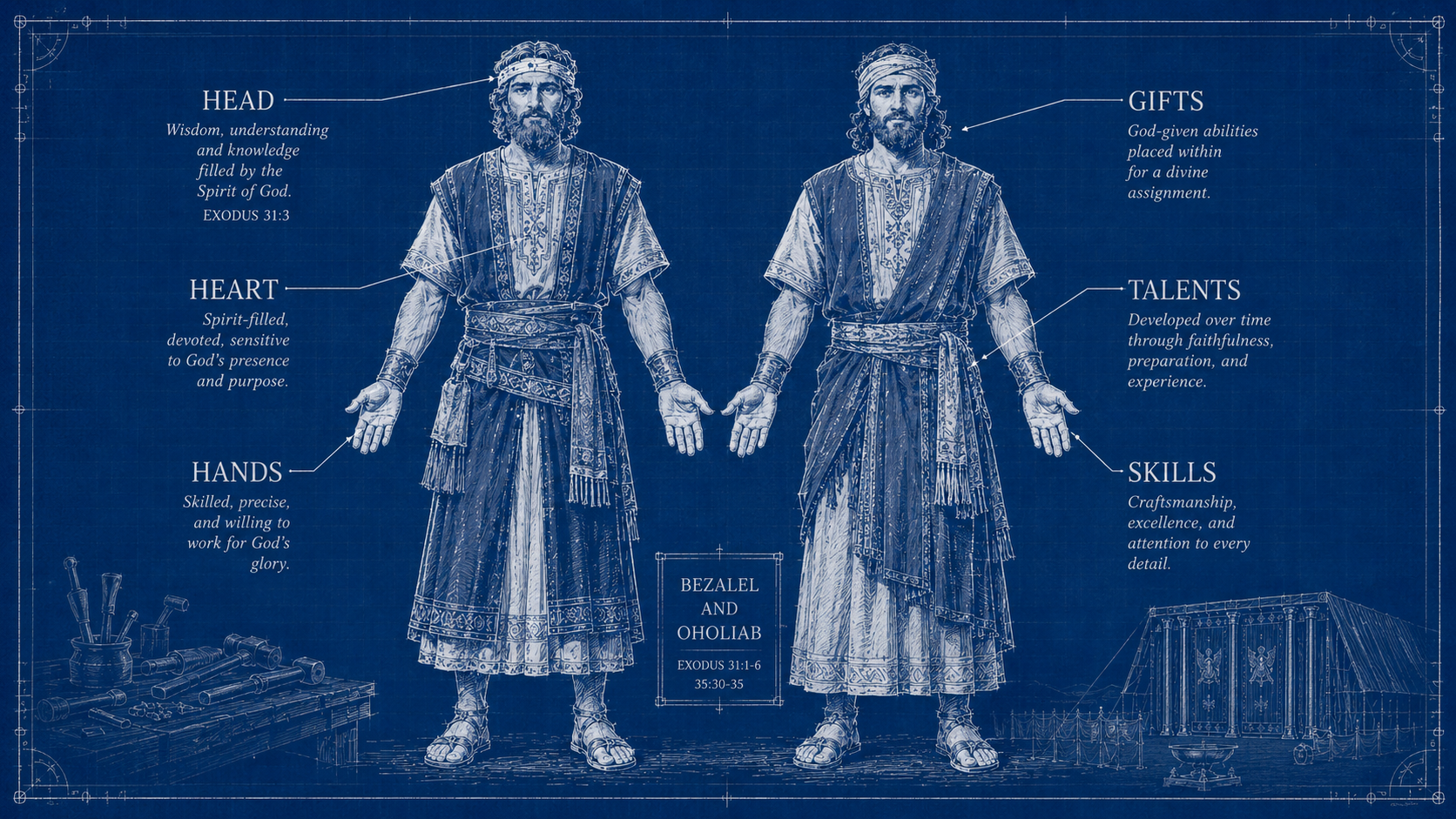
In Exodus 31, God names Bezalel and Oholiab and entrusts them with one of the most sacred assignments in Israel’s history: building the tabernacle, the dwelling place of God among His people. This was not a random appointment. The Lord said, “I have chosen Bezalel… and I have filled him with the Spirit of God, with wisdom, with understanding, with knowledge and with all kinds of skills” (Exodus 31:2–3).
That statement reveals something profound about the way God works through people. He does not merely recognize natural ability. He fills, directs, and empowers it.
Chosen and Filled
Bezalel and Oholiab were not just gifted men. They were Spirit-filled men. Their craftsmanship was not merely technical — it was spiritual. Their work was an act of worship.
This gives us a helpful framework: head, heart, and hands. They had wisdom and knowledge in the mind. They had spiritual sensitivity in the heart. They had skill and precision in the hands. Their calling was narrow in one sense — craftsmanship — but staggering in its reach. Through their work, the entire nation of Israel would encounter the presence of God.
And neither man worked alone. Moses did not do the building himself. God chose men to help him. Bezalel did not carry the assignment by himself — Oholiab was appointed alongside him. And their work was never meant to stop with just the two of them. God also gave them the ability to teach others, so that the work could multiply beyond what any one person could accomplish.
God’s work is never designed to be a solo venture.
Prepared Over Time
It is unlikely these men received all their skill in a single moment. God could have granted instant ability if He wished — but Scripture shows another pattern: preparation before presentation, development before distinction, training before the crowning contribution.
Moses was shaped over forty years in the wilderness. Joseph was formed through suffering and long delays before his defining moment. The patriarchs endured seasons of obscurity before their purposes became clear. In the same way, Bezalel and Oholiab were almost certainly being prepared long before Exodus 31 for the moment when their gifts would be needed most. What looked like ordinary work in the early years was God’s quiet preparation for an extraordinary assignment.
Jesus Himself models this perfectly. He grew in wisdom and stature. He lived as a carpenter. He spent years at a workbench before His public ministry began — and every hour of that hidden life prepared Him for His ultimate work on the cross. If the Son of God walked the path of quiet development and faithful obscurity, we should not despise the seasons in which God is shaping us. Faithfulness in the hidden years is never wasted.
Publicly Commissioned
In Exodus 35:30–35, Moses publicly announces their calling before the whole congregation. This was not a private arrangement between God and two craftsmen. It was an open commissioning before the entire community — because the work they were doing mattered to the whole nation.
They were building the place where God would dwell among His covenant people. This was not merely creative labor. It was sacred work.
Verse 34 becomes especially significant: God gave them the ability to teach others. That is the multiplication principle at work. They were not only to build — they were to train. Not only to work — but to reproduce their skill in others, ensuring the work could outlast any single season of effort.
The Work Begins
Exodus 36:1–2 marks the turn from calling to action. Moses summons Bezalel, Oholiab, and every skilled person whose heart had been stirred and whose ability had been given by God. The work begins.
Now the weight of the assignment becomes real. They were constructing the meeting place between a holy God and His people. That required exactness, reverence, and obedience. Every curtain, every piece of furniture, every detail had to be made according to God’s command.
The hardest part of a crowning contribution is often simply starting. Fear can freeze us. Doubt can delay us. We may think the assignment is too large — or we may dismiss it as too small. But Ephesians 2:10 makes this clear: “For we are His workmanship, created in Christ Jesus for good works, which God prepared beforehand so that we would walk in them.” Every assignment is intentional. Every calling matters. We cannot afford to hesitate.
Contribution, Not Achievement
This is where we have to make a distinction that cuts close.
Achievement is measured by applause, visibility, and personal success. It asks, What did I accomplish? Contribution is measured by faithfulness, service, and lasting impact. It asks, What did I give? Who did I build up? What did I help others become?
Bezalel and Oholiab were not chasing achievement. They were making a contribution to the worship life of Israel — one that would shape the spiritual formation of an entire nation.
This is exactly why Matthew 28:18–20 and 2 Timothy 2:2 fit so naturally into their story. In the Great Commission, the risen Christ does not merely call people to admire Him — He sends His disciples to make disciples of all nations, to baptize and teach and reproduce His followers across generations. In 2 Timothy, Paul gives Timothy the same pattern in compact form: what you have received, entrust to faithful people who will be able to teach others also. That is a four-generation chain of ministry. Discipleship is meant to be passed on, not held.
Bezalel and Oholiab lived that principle centuries before it was written down. Multiplication is not a modern strategy. It is a biblical standard.
Finishing Well
It is one thing to cast a grand vision, but it is another entirely to drive the final nail. The gap between starting a project and completing it is where most of us give up, yet Scripture captures Bezalel’s follow-through with striking simplicity: “Now Bezalel the son of Uri, the son of Hur, of the tribe of Judah, made all that the LORD had commanded Moses. With him was Oholiab the son of Ahisamach, of the tribe of Dan…” (Exodus 38:22-23).
They finished.
That is no small thing. Many start well and do not finish well. Many receive a calling but never see it through. Passion fades. Endurance gives out. The assignment gets set aside. Bezalel and Oholiab stand out precisely because they carried their work all the way to completion. They did not stop when the work was mostly done. They did not settle for close enough. They finished — faithfully, obediently, thoroughly.
Their legacy is not the tabernacle itself, which no longer stands. Their legacy is the example they leave: that faithfulness, precision, perseverance, and obedience are not minor virtues. They are the marks of a life well spent.
A Final Challenge
Every believer should sit with some honest questions.
What has God been preparing you for — even since childhood? What gifts, talents, and skills has He placed in your hands? Do you know the difference between doing something in your own strength and doing it empowered by the Holy Spirit? Is any assignment from God too great for you — or have you been dismissing something as too small?
Who are you meant to train, strengthen, or build up so that the work continues beyond you? Are you chasing achievement, or are you pursuing contribution?
And here is perhaps the hardest question of all: What if your crowning contribution is still ahead of you — and you have been waiting instead of working?
Not every calling will be public. Not every assignment will be dramatic or celebrated. But every assignment given by God is holy.
Bezalel and Oholiab were hidden heroes. Their names appear in a handful of chapters, in a book most people skim. But they built the place where heaven met earth, trained those who came after them, and finished everything God asked of them.
The question is not whether your life will impress the world. The question is whether you will step into the work God prepared for you, develop what He has placed in your hands, multiply it in others — and finish well.
Then Jesus told this parable: “A man had a fig tree that was planted in his vineyard. He went to look for fruit on it, but did not find any. So he said to the keeper of the vineyard, ‘Look, for the past three years I have come to search for fruit on this fig tree and haven’t found any. Therefore cut it down! Why should it use up the soil?’ ‘Sir,’ the man replied, ‘leave it alone again this year, until I dig around it and fertilize it. If it bears fruit next year, fine. But if not, you can cut it down.’”
My Thoughts
This is one of those quotes from Jesus that doesn’t preach well to a congregation that only wants a loving Savior and not a Lord with expectations. Jesus is clearly expressing in story form what He not only desires of every follower but demands. Jesus talks about fruit (or fruitlessness) a lot. He says that we know a tree by its fruit (Matthew 7:16-20), that we can’t bear fruit without Him (John 15:5), bearing much fruit glorifies the Father (John 15:8), and He sent us to bear fruit (John 15:16). And I think He even gives us an object lesson before His entry into Jerusalem when He curses the fig tree (Matthew 21:18–22). The writers of the rest of the New Testament have some things to say about bearing fruit as well. Paul talks about the fruit of the Spirit (Galatians 5:22-23). The writer of Hebrews describes praise and worship as “the fruit of lips that confess His name” (Hebrews 13:15). James says righteousness is “sown in peace by those who make peace.” Peace-making produces righteous fruit (James 3:17-18). And Peter teaches that growing in Christian virtues keeps believers from being “unfruitful” in the knowledge of Christ (2 Peter 1:5-8). Just to name a few.
So what is the fruit Jesus and His Apostles are talking about? It can be several things:
Repentance
Christlike character
Obedience
Holiness
Good works
Perseverance
Worship and praise
Generosity
Disciple-making
Kingdom impact
Righteous living
Spiritual maturity
But if we spend all our time just defining what spiritual fruit looks like without actually bearing it, we miss the heart of Jesus’ parable. The Master expects a harvest. He is incredibly patient with us, graciously supplying the soil, the water, fertilizer, and the time we need to grow. But as we see in Luke 13:6-9, that patience isn’t a pass for endless stagnation. A tree that continually refuses to yield fruit is eventually “cut down.”
When it comes to discipleship, our responsibility doesn’t stop at our own personal growth. We are called to instruct, encourage, and boldly exhort those we are discipling to step into that same fruitful reality. We have to be willing to pass on both the gracious, high expectations of the Master, as well as His sobering warnings.
My Story
For a few years, Deb and I spent our summers in New York. We rented a small one-bedroom apartment with a beautiful private entryway — stone walls on either side, and neglected garden plots lining the walkway. You could tell someone had tended them once, but the beds had long since been overtaken by weeds. The one conspicuous exception was a single type of flower — Impatiens — a single color, scattered sporadically throughout the overgrowth, quietly thriving despite being nearly hidden from view.
I’m no green thumb — quite the opposite, really — but we decided to clean the beds up and plant more of what was already doing well. Impatiens it was.
We headed to the local Home Depot and bought three dozen little planters. It wouldn’t come close to filling all the space we’d cleared, but it was a start — more of an experiment than anything else. We got them in the ground, added a little fertilizer, and kept them watered. If you know anything about Impatiens, you know they have little seedling pods that pop when you touch them. They literally explode with seeds and can cover a pretty good area in no time. By the end of that summer both sides of the walkway were filled with color. The neighbors even started commenting on our horticultural expertise. Ha!
We were so pleased with those little flowers that we’d sit out on the stoop just to admire them. There was something wonderful about watching something so simple become something so beautiful — the seedlings dropping and spreading until the whole walkway was covered in blooms.
I’m sure God feels the same way about our fruitfulness.
Our Action Plan
Now it’s time for application. Here’s some ideas:
Conduct a focused Bible study specifically on “fruit.”
Discuss with those you are discipling what it truly means to bear fruit in their lives.
Identify the categories of spiritual fruit present in your life and pinpoint areas for improvement.
The Master’s expectation is clear: our lives must produce fruit. The challenge lies in identifying what that Biblical fruit is, and actively producing it. Let’s commit to being fruitful disciples of Jesus and help those we disciple do the same, moving beyond definition to demonstration.
Esta es una de esas citas de Jesús que no resulta fácil de predicar ante una congregación que solo desea un Salvador amoroso, y no un Señor con expectativas. Jesús expresa claramente, a través de una historia, aquello que no solo desea de cada seguidor, sino que también exige. Jesús habla mucho acerca del fruto (o de la falta de fruto). Él dice que conocemos al árbol por sus frutos (Mateo 7:16-20), que no podemos dar fruto sin Él (Juan 15:5), que dar mucho fruto glorifica al Padre (Juan 15:8), y que Él nos envió para dar fruto (Juan 15:16). Y creo que incluso nos ofrece una lección práctica, justo antes de su entrada en Jerusalén, cuando maldice la higuera (Mateo 21:18–22). Los autores del resto del Nuevo Testamento también tienen algo que decir sobre el dar fruto. Pablo habla del fruto del Espíritu (Gálatas 5:22-23). El autor de Hebreos describe la alabanza y la adoración como «el fruto de labios que confiesan su nombre» (Hebreos 13:15). Santiago afirma que la justicia es «sembrada en paz por aquellos que hacen la paz». El hacer la paz produce un fruto de justicia (Santiago 3:17-18). Y Pedro enseña que crecer en las virtudes cristianas evita que los creyentes sean «infructuosos» en el conocimiento de Cristo (2 Pedro 1:5-8). Por nombrar solo algunos ejemplos.
Entonces, ¿a qué fruto se refieren Jesús y sus apóstoles? Puede tratarse de varias cosas:
Arrepentimiento
Carácter semejante al de Cristo
Obediencia
Santidad
Buenas obras
Perseverancia
Adoración y alabanza
Generosidad
Hacer discípulos
Impacto en el Reino
Vida justa
Madurez espiritual
Pero si pasamos todo nuestro tiempo simplemente definiendo cómo es el fruto espiritual sin llegar a producirlo realmente, nos perdemos el corazón de la parábola de Jesús. El Maestro espera una cosecha. Él es increíblemente paciente con nosotros, proveyendo con gracia la tierra, el agua, el abono y el tiempo que necesitamos para crecer. Pero, como vemos en Lucas 13:6-9, esa paciencia no constituye un permiso para una inactividad perpetua. Un árbol que se niega continuamente a dar fruto termina siendo «cortado». En lo que respecta al discipulado, nuestra responsabilidad no se limita a nuestro propio crecimiento personal. Estamos llamados a instruir, alentar y exhortar con valentía a aquellos a quienes discipulamos, para que entren en esa misma realidad fructífera. Debemos estar dispuestos a transmitir tanto las benévolas y elevadas expectativas del Maestro, como sus serias advertencias.
Mi Historia
Durante unos años, Deb y yo pasamos nuestros veranos en Nueva York. Alquilamos un pequeño apartamento de un dormitorio con una hermosa entrada privada: muros de piedra a ambos lados y unos parterres descuidados que bordeaban el sendero. Se notaba que alguien los había cuidado en el pasado, pero hacía mucho tiempo que la maleza se había apoderado de ellos. La única excepción notable eran los pensamientos: de un solo color, dispersos esporádicamente entre la vegetación silvestre, prosperando silenciosamente a pesar de estar casi ocultos a la vista.
No tengo mano para la jardinería —más bien todo lo contrario, a decir verdad—, pero decidimos limpiar los parterres y plantar más de aquello que ya estaba prosperando. Y así, nos decidimos por los pensamientos.
Fuimos al Home Depot local y compramos tres docenas de pequeñas macetas. Aquello no bastaría ni de lejos para llenar todo el espacio que habíamos despejado, pero era un comienzo; más que nada, un experimento. Los plantamos en la tierra, añadimos un poco de fertilizante, los regamos con regularidad y, para el final de aquel verano, ambos lados del sendero estaban rebosantes de color. Los vecinos incluso empezaron a comentar nuestra pericia en la jardinería.
Quedamos tan complacidos con aquellas florecillas que solíamos sentarnos en el porche solo para admirarlas. Había algo maravilloso en ver cómo algo tan sencillo se transformaba en algo tan hermoso: las plantitas echando raíces y extendiéndose hasta que todo el sendero quedaba cubierto de flores.
Estoy seguro de que Dios siente lo mismo respecto a nuestra propia fecundidad.
Nuestro Plan de Acción
Ahora es el momento de la aplicación. Aquí tienes algunas ideas:
Realiza un estudio bíblico enfocado específicamente en el «fruto».
Conversa con aquellos a quienes estás discipulando sobre lo que significa verdaderamente dar fruto en sus vidas.
Identifica las categorías de fruto espiritual presentes en tu propia vida y señala las áreas que requieren mejora.
La expectativa del Maestro es clara: nuestras vidas deben producir fruto. El desafío radica en identificar cuál es ese fruto bíblico y producirlo activamente. Comprometámonos a ser discípulos fructíferos de Jesús y ayudemos a quienes discipulamos a hacer lo mismo, pasando de la definición a la demostración.
Si ve un problema importante en la traducción, envíeme una corrección por correo electrónico a charleswood1@gmail.com