Kingdom Kernels Introduction – Why a Focus on the Kingdom of God – Acts 1:3,6

The gap between kingdom acknowledgement and kingdom understanding

Kingdom Kernel Collection

Rather Listen? Click here…

To these He also presented Himself alive after His suffering, by many convincing proofs, appearing to them over [a period of] forty days and speaking of the things concerning the kingdom of God. …So when they had come together, they were asking Him, saying, “Lord, is it at this time You are restoring the kingdom to Israel?” (Acts 1:3, 6)

 Introduction

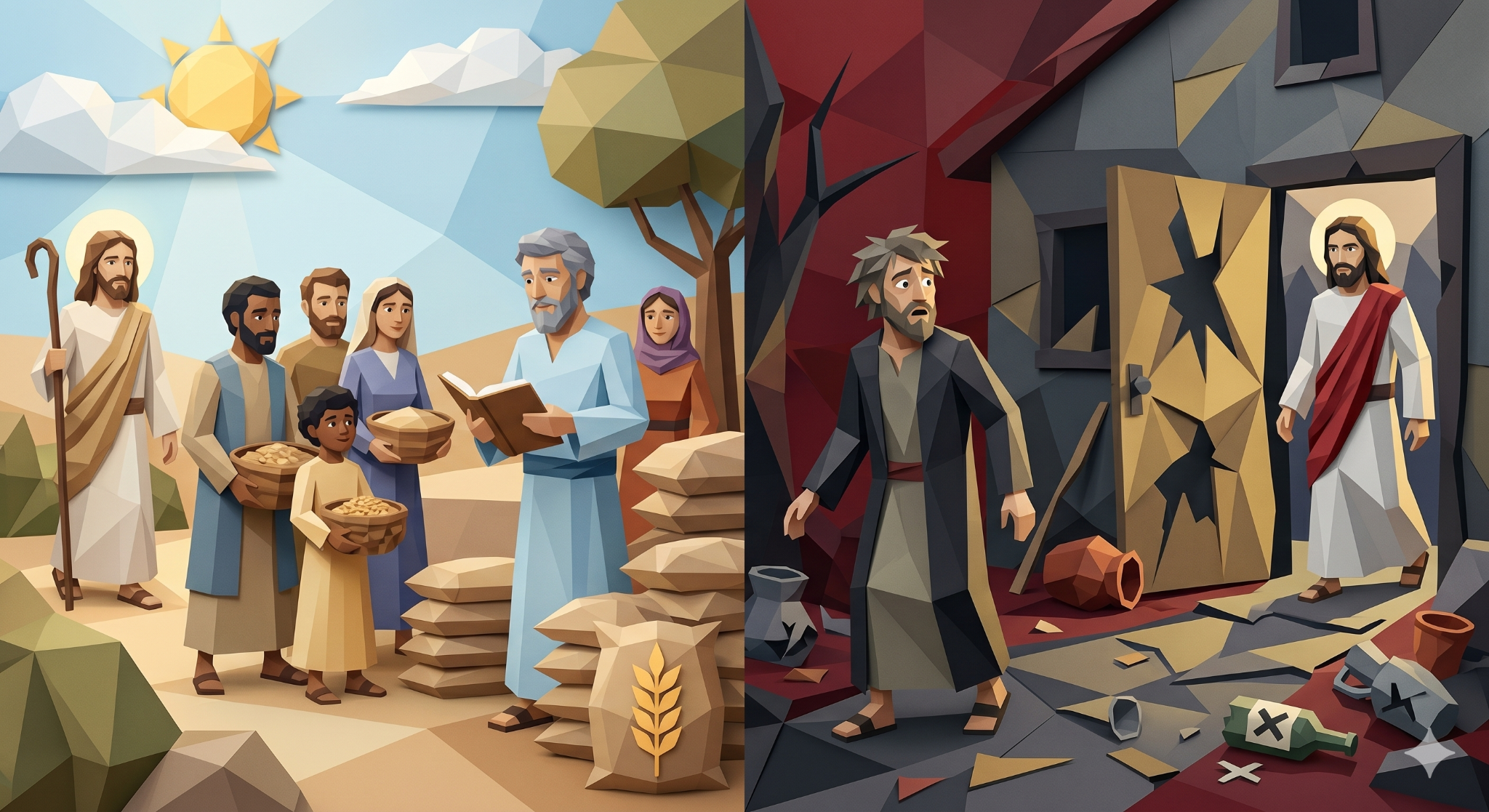
We often find ourselves living in the tension between simply acknowledging Jesus as King and deeply understanding—and applying—the realities of the Kingdom He modeled. In Acts 1:3, we find Jesus leading a remarkable forty-day intensive. He proved His resurrection and spoke directly about “the things concerning the kingdom of God.” This period served as a profound capstone to the previous three years, during which He relentlessly preached and demonstrated the Kingdom throughout His earthly ministry.

Yet, even after this post-resurrection masterclass, the first instinct of His closest followers was to pivot back to their own political comfort zones. They asked, “Lord, is it at this time You are restoring the kingdom to Israel?” (Acts 1:6). Their earthbound questions collided with a Risen King whose vision was infinitely broader than a national border.

Like those early followers, many of us struggle with that exact same gap: the space between acknowledging the Kingdom and actually understanding how it operates. We find it hard to trade our cultural scripts for Kingdom reality. To follow Jesus effectively—and to authentically guide those you are discipling into His way of life—we must move beyond seeking our own personal agendas and begin to grasp the radical, co-regent identity for which we were designed.

 Key Words and Phrases 

The kingdom of God

  • βασιλεία (Strong’s G932 – basileia) royal power, kingship, dominion, rule, of the royal power of Jesus as the triumphant Messiah, of the royal power and dignity conferred on Christians in the Messiah’s kingdom, a kingdom, the territory subject to the rule of a king, used in the N.T. to refer to the reign of the Messiah.
  • Θεός (Strong’s G2316 – theos) a god or goddess, a general name of deities or divinities, the Godhead, trinity, spoken of the only and true God, refers to the things of God, His counsels, interests, things due to Him, whatever can in any respect be likened unto God, or resemble Him in any way, God’s representative or viceregent, of magistrates and judges.
  • Jesus went about Galilee preaching the kingdom of God.

Restoring the kingdom to Israel

  • Ἀποκαθίστημι (Strong’s G600 – apokathistēmi) to restore to its former state, to be in its former state.
  • The Jewish people held prophetic expectations that the Messiah would restore the kingdom of Israel through military conquest. While they were correct that this restoration would eventually occur, it was first necessary for the suffering Servant King described in Isaiah 53:1 to come. This misunderstanding prompted the disciples to ask their question.

 Messianic Model – Focus on Jesus’ Example

When we look at this interaction in Acts 1, we see a profound model in how Jesus approached, understood, and taught the Kingdom of God:

  1. He learned about the Kingdom as a man. In His incarnation, Jesus emptied Himself (Philippians 2:7). During His earthly ministry, He did not rely on a “divine cheat code” to bypass human development. He had to learn about the Kingdom of God the exact same way we do—through deep submission to the Scriptures and the guidance of the Holy Spirit.
  2. The Kingdom was His absolute foundation. Because He had internalized the heart of the Father, Jesus lived and taught Kingdom values consistently and without error. This wasn’t a side-topic; it was the core of His three-year ministry, culminating in an intensive forty-day seminar strictly on this subject after His resurrection.
  3. He was relentlessly patient. In Acts 1:6, we see that His closest followers still didn’t get it. After all that time with the Master Teacher, their default was still earthbound. Yet, Jesus doesn’t express frustration or rage-quit on them. He patiently redirects their focus from political timelines to the empowerment of the Holy Spirit for global witness (Acts 1:7-8).

 Key Theological Implications

The disciples’ question reveals a deep truth: understanding the kingdom of God isn’t an optional elective; it’s essential to understanding our true identity and purpose. Jesus taught that the Kingdom must be our absolute highest priority. He told us to “seek first His kingdom and His righteousness” and compared it to a hidden treasure worth selling everything to obtain. It was the very reason He was sent, and it is what defines us as a “royal priesthood.” (Matthew 6:33; Matthew 13:44; Luke 4:43; 1 Peter 2:9)

But knowing the Kingdom is not just an intellectual pursuit or a theological puzzle to solve. It requires spiritual re-orientation. Jesus said that “unless one is born again he cannot see the kingdom of God.” Comprehension begins with a new birth, and it takes revelation from heaven, combined with modeling, assessment, relearning, and actually living it out. We don’t have to guess how to do this, because Jesus gave us the ultimate example. He did nothing of His own initiative, setting the standard so we could “walk in the same manner as He walked.” (John 3:3; Matthew 13:11; Matthew 16:17; John 13:13-15; John 5:19; 1 John 2:6)

When we truly understand the Kingdom, we understand the King. We see the Father through Him and realize we’ve been radically transferred into the kingdom of His beloved Son. Because the earth and everything in it belongs to Him and He holds all authority in heaven and on earth, His ownership completely shapes how we steward our lives. The King’s authority defines the scope of the kingdom we represent. (John 14:9; Colossians 1:13; Psalm 24:1; Matthew 28:18)

This brings us to a massive, mind-blowing reality: co-regency. To make any coherent sense of the Kingdom, we must understand our calling as co-regents. This isn’t a new idea; it’s the original design established in the dominion mandate in Eden. Jesus has made us a “kingdom and priests to our God; and they will reign upon the earth.” This co-regency isn’t just present-tense—it is eschatological. It is the ultimate trajectory of our eternal lives. We are promised that if we endure, we will also reign with Him, sit with Him on His throne, and “reign forever and ever.” Our highest calling isn’t just surviving until we go to heaven; the final word of Scripture on human vocation is partnering with the King to reign over His creation. (Genesis 1:26-28; Revelation 5:10; 2 Timothy 2:12; Revelation 3:21; Revelation 22:5)

 Contemporary Spiritual Significance

We live in an age—especially in a modern U.S. context—where the very idea of a “king” or a “kingdom” is frowned upon, if not completely odious. Authority in general is highly suspect because we have witnessed so many abuses of power, even by clergy. But it is not only unfair, it is profoundly unwise to project those human abuses onto God. Jesus is God, and God is love, which was perfectly displayed throughout His earthly life. (1 John 4:8-10; John 14:9; Acts 10:38)

While God is incredibly loving, He is also our Master and Creator, and He should be approached with profound reverence and awe. Furthermore, He is completely just and will eternally punish those who remain rebellious. It is foolish to trifle with, ignore, or challenge His absolute authority. (Genesis 1:1; Hebrews 12:28-29; Hebrews 10:31; 2 Thessalonians 1:7-9)

Because of who He is, it is absolutely essential for all believers to understand and actively live out their identity and purpose within His kingdom. This Kingdom is radically different from the world’s culture. To actually swim against the prevailing cultural currents, Kingdom living must be rigorously studied and intentionally practiced alongside those you are discipling. (1 Peter 2:9; Colossians 1:13; Matthew 6:33; Ephesians 2:10; Philippians 3:20; Matthew 7:13-14; 1 Peter 4:3-4; John 15:18-19; Philippians 2:15)

The Transformative Power of Kingdom Living

When we align ourselves with our Kingdom identity and purpose, we are ultimately aligning ourselves directly with the King. And when we align ourselves with Him, we begin to live out the exact design He created us for.

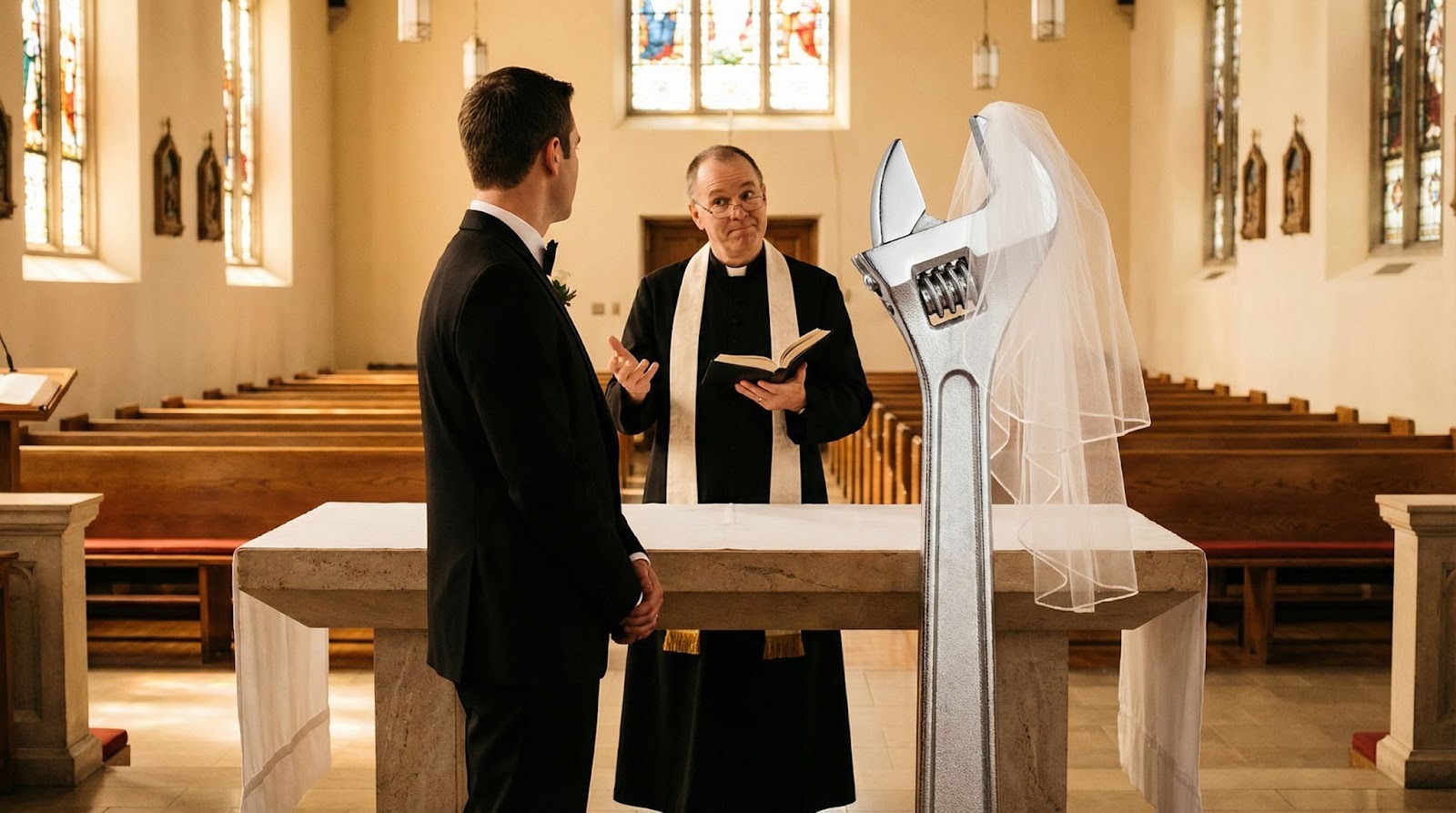
Think about it like a piece of high-performance machinery. When a machine is used for what it was specifically engineered to do, it runs powerfully and efficiently. But if you try to use it for something it wasn’t designed for—like trying to use a smartphone to hammer in a nail—the results are completely inadequate, incredibly frustrating, and ultimately destructive.

This is exactly why it is so crucial to read and submit to the “Owner’s Manual” (the Bible). Our Creator knows the proper functions of His creation and how we can best be used to experience true fulfillment and happiness. It is precisely because He knows our design that Jesus can extend the invitation: “Take My yoke upon you and learn from Me… for My yoke is easy and My burden is light.” (Matthew 11:29-30)

When we stop fighting against our design and align ourselves with the King, the exhausting hustle stops. We begin to genuinely experience His peace, joy, and love, along with an unshakeable hope for the future. And as we experience this transformation, we get to model that same peace and hope to those we are discipling.

Conclusion

Ultimately, bridging the gap between simply acknowledging Jesus as King and truly understanding His Kingdom is the journey of a lifetime. As we see in Acts 1, it requires intentionally moving past our earthbound expectations to embrace a much grander reality. We are not just subjects waiting for an afterlife; we are invited into an active, co-regent partnership with the Creator right now. By choosing to “seek first His kingdom” (Matthew 6:33) and submitting to our original design, we shed the exhaustion of cultural striving and step into true identity and purpose. This radical shift doesn’t happen by accident. It demands that we immerse ourselves in the King’s teachings, rely on the Holy Spirit, and patiently walk out these truths. As we do, we won’t just experience the transformative power of His reign firsthand—we will become a living model of the Kingdom, brilliantly reflecting His hope and authority to those we are discipling.

Disciple-Maker’s Short Story

A True Story and the Reason for this Book

The house is silent, save for the rhythmic hiss of the gas fireplace to my left. At 7:30 am, the world is still holding its breath, and I am holding mine. I am tucked into the corner nook of my couch—my designated “station”—wearing nothing more formal than pajama bottoms and a well-loved t-shirt celebrating the Texas Rangers’ past World Series victory.

To my right, the built-in bookshelves glow under soft LED lighting, illuminating the faces of our sons, their wives, and our grandchildren. They are our heart’s legacy, framed in wood and glass, watching over me as I begin my morning ritual. My bare toes burrow into the intricate patterns of the Persian rug, the wool soft against my skin. There is a sense of groundedness here. Like Moses before the burning bush, I feel the weight of the moment. My feet are bare because this corner of the living room has become holy ground.

Resting on the seat of my rollator is a homemade platter, serving as a makeshift table for my mug of hot tea. In my lap lies one of my most prized possessions: a Bible so worn the leather feels like silk. It is a map of my life, crisscrossed with underlines, tear stains, and margins crowded with notes from decades of seeking.

The Hundredth Reading

I turned the page to the beginning of Acts. I’ve traveled these roads with Luke and Paul many times—at least a hundred, if I’m being honest. I expected the familiar comfort of a story well-known, but as I smoothed down the pages of Acts 1, something shifted.

I stared at the text, struck by a sudden, jarring realization. The men in these verses had spent three years in the shadow of the Master. They had heard the parables, seen the healings, and walked through the trauma of the crucifixion. They had even spent forty days with the resurrected Christ, receiving “intense teaching” on the Kingdom of God. Yet, in Acts 1:6, their first question was about a political restoration of Israel.

After all that time, they still understood so little about the Kingdom.

The Question in the Room

The steam from my tea rose in the morning light, but my focus was locked on the page. A quiet, persistent voice began to echo in the stillness of the room. It wasn’t an accusation; it was an invitation that felt like a piercing light.

“And how much DO YOU understand about My Kingdom?”

I realized then that I had often treated the Kingdom as a theological concept to be studied rather than a reality to be inhabited. I had gleaned the “information” of the book of Acts and the Gospels, but I had barely scratched the surface of the “reign” of the King. That morning, the tea grew cold as a new fire started. I decided that my usual devotional routine or even my study time in the afternoons wasn’t enough. I committed to spending the bulk of my time in the afternoon—an hour to an hour and a half—rediscovering what it actually means to live under the rule of God.

A Journey Shared

I knew I couldn’t do this alone. The Kingdom is not a solitary island; it’s a city, a body, a family. I reached out to a few close friends, inviting them to journey into the depths with me. I told them I wanted to move past the surface-level Sunday school answers and really grapple with the “marvelous Kingdom” Jesus spoke of.

I thought it might be a six-month deep dive. I was wrong.

Six months dissolved into a year of intense discovery. One year bled into two. The more we looked, the more we realized how vast the landscape truly is. We found that the Kingdom isn’t just about where we go when we die; it’s about the staggering reality of Christ’s authority here and now—in our families, our suffering, our joys, and even in the quiet corners of our living rooms.

Today, as I sit in my nook with my feet on the rug, I’m no longer looking for a finish line. I’ve surrendered to the fact that I will spend the rest of my life as a student. I am a lifelong traveler, seeking to understand our wonderful King and the breadth of His reach. The “deficit” I felt that morning was actually a gift—it was the hunger that led me to the feast.


“But seek first His kingdom and His righteousness, and all these things will be added to you.” — Matthew 6:33

How to Use This Book: The Format and Our Approach

If you are going to lead others in the ways of Jesus, you must have a roadmap for your own heart first. As you progress through this book, you will notice that every chapter follows the exact rhythm you just experienced. This isn’t by accident. It is designed to move you systematically from head knowledge to holistic living.

  • Introduction: We always start by establishing the primary tension in the text—the gap between what we know and what we actually live.
  • Key Words and Phrases: We live in a culture that loves to project its own definitions onto ancient texts. By briefly digging into the original Greek and Hebrew words, we bypass our cultural assumptions and anchor our understanding to what was actually being said.
  • Messianic Model: We always look to Jesus. He is not just our Savior; He is the ultimate example of Kingdom living. We cannot guide those we are discipling if we are not first tracing His footsteps.
  • Theological & Contemporary Significance: Here, we bridge the ancient text to our modern context, pulling out the massive implications for our daily lives.
  • Transformative Power & Conclusion: We wrap up the teaching by exploring how yielding to this specific Kingdom truth changes us from the inside out.
  • Disciple-Maker’s Short Story: After this first true chapter, every chapter will end with a fictionalized vignette. While the names and exact scenarios may be fictional, every single one of these stories is heavily drawn from over forty-five years of real-life experience walking with people. They are designed to show you what these truths look like in the beautiful messiness of real life and relationships with those you are discipling.

The Approach: Unhurried Meditation We live in an age of rapid-fire information, endless scrolling, and instant gratification. This book is an invitation to do the exact opposite.

The insights in these chapters weren’t born from simply skimming verses; they were forged during those hour-and-a-half afternoon blocks of dedicated quiet. To truly grasp the Kingdom, I encourage you to slow down. Don’t just read these chapters—marinate in them. Wrestle with the text. Pray over the implications. Let the Holy Spirit do the heavy lifting in your heart before you attempt to pass these truths on to anyone else. You will find that this framework of studying, meditating, and practically applying the text is a highly reproducible model you can use directly with those you are guiding.

The Power of Community Finally, you cannot learn Kingdom realities in isolation. Just as I invited my close friends to journey into the depths with me, I encourage you to read this alongside others. I cannot overstate how incredibly helpful it was to bounce these ideas off my friends. Their ongoing encouragement was the fuel that kept me going when the study felt overwhelming, and their thoughtful challenges sharpened my perspectives along the way. Just as “iron sharpens iron,” their input was an essential part of this process.

Do the same. Bring these chapters into your living room, your coffee shop meetings, and your intentional relationships. Ask the hard questions together. The Kingdom is a family, and we learn its ways best when we are walking side by side.

Kingdom Kernel Collection

Surprise, Surprise! – #160

| Gospel Sync | Kingdom Kernels | Discipleship Matters Podcast | Website

ENGLISH / ESPAÑOL

Rather Listen? Click here…

Welcome Back! Today, we’ll be looking at the Gospel of Luke to see two ways Jesus will surprise people.

So let’s dive in.

(Click here to get a copy of the Gospel Sync document) 

Luke 12:35-40

Be dressed for service and keep your lamps burning. Then you will be like servants waiting for their master to return from the wedding banquet, so that when he comes and knocks, they can open the door for him at once. Blessed are those servants whom the master finds on watch when he returns. Truly I tell you, he will dress himself to serve and will have them recline at the table, and he himself will come and wait on them. Even if he comes in the second or third watch of the night and finds them alert, those servants will be blessed. But understand this: If the homeowner had known at what hour the thief was coming, he would not have let his house be broken into. You also must be ready, because the Son of Man will come at an hour you do not expect.”

My Thoughts

Some people like surprises and some don’t. I guess it all depends on what kind of condition the surprise comes in. If it’s a birthday party, ok I can deal with that even though it’s not my favorite. But if it were a tax audit and my wife is on a “girlfriend getaway,” I’m sunk. Some surprises can be down right disastrous. That’s one of the surprises Jesus is talking about but with much greater implications. This is a surprise with eternal consequences. 

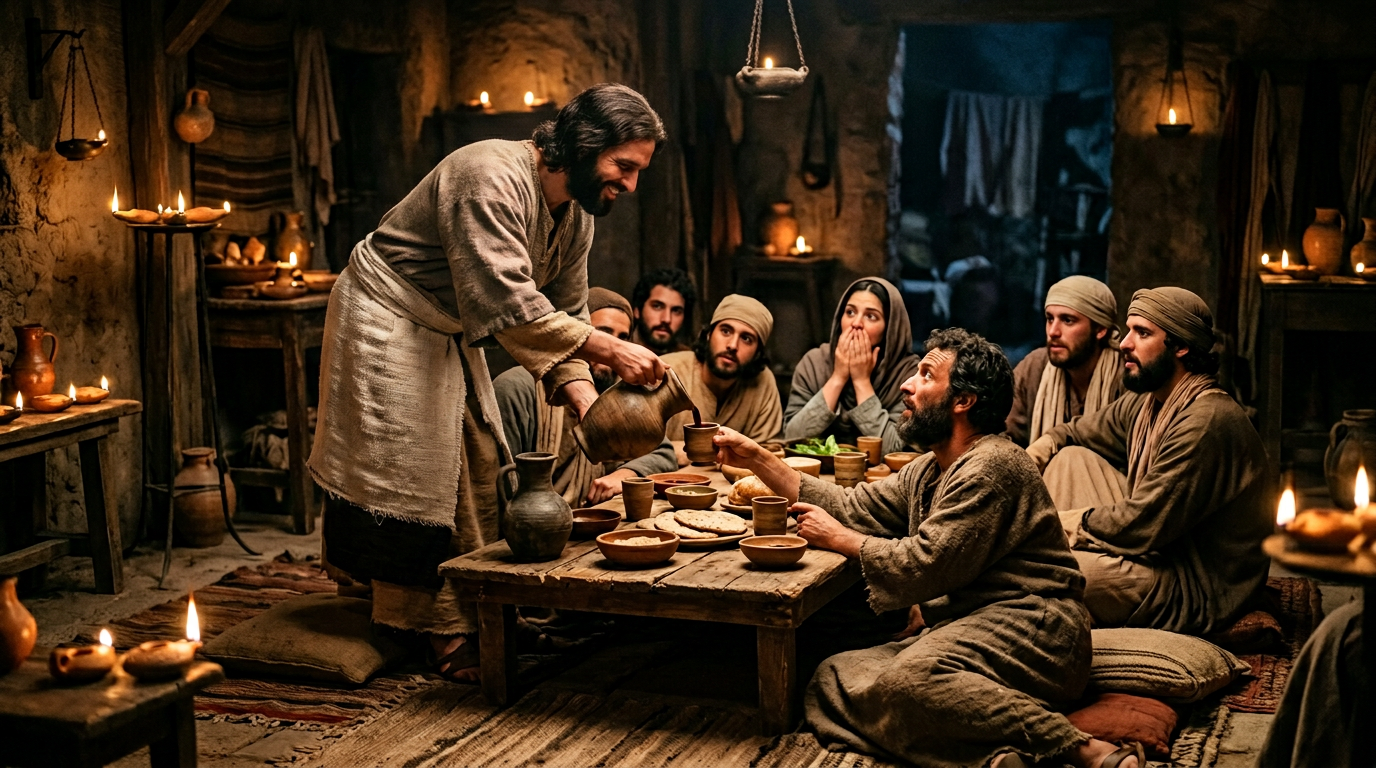
But there’s another surprise that if we are not careful we’ll completely miss. The Master will serve His servants. What!? Did I read that right!? Yes, we did. Jesus will serve a sumptuous dinner to those servants whom He catches ready when He returns. Now that should blow our minds.

But isn’t that just like Jesus? The One who serves. The One who washes feet. The One who humbled Himself and took on our penalty. It’s absolutely unthinkable that God would serve His servants and yet it is the way of the kingdom of God. 

“For even the Son of Man did not come to be served, but to serve, and to give His life a ransom for many.” (Mark 10:45)

So how does this apply to us as disciples and disciple makers? If the goal is to become and help others become like Jesus, then we ought to surprise people with our upside down (or should I say rightside up) kingdom values of serving others. It should be so significantly different from the worldly form of leadership, that it is shocking. Shocking like… the Creator of the Universe seating us in a place of honor and saying, “How may I serve you?”

My Story

He was in the latrine mopping the floor when two privates walked in. They froze and gawked at him like he was from outer space. Why? Because he was their First Sergeant, almost the highest rank among the enlisted in the army. Privates mop floors, not First Sergeants.

He was stirring a mixture of burning poop and diesel in a half steel drum in the middle of the Kuwaiti desert. A couple of privates walked up and stood paralyzed in shock as they watched their Captain clean the contents of the crude outhouse. Why? Because Privates burn poop, not Captains. 

Some of the leaders in their ministry sat with their jaws on the floor when they announced they were moving an old friend next door. Not any old friend. A friend they were moving from one city to their city to nurse him until he died of colon cancer. Why were their fellow leaders surprised? Because they were leading a booming ministry and taking care of Bill would take away vital time from “the ministry.” But SURPRISE! Bill WAS their ministry. They served him until he passed in the arms of Jesus in Whom he put his faith, just a week before he died.

If we want to be like Jesus, our service should surprise people.

Our Action Plan

Now it’s time for application. Here’s some ideas and questions;

  • Who among your acquaintances would be shocked if you served them?
  • What menial tasks would people consider to be “beneath” you?
  • When will you serve others in these “menial tasks?”

Service is a key kingdom value. It was the way Jesus led and exhorted others to lead. Let’s surprise the world around us with our servanthood.

Organic Writing – No Artificial Intelligence or Sweeteners Added

| Gospel Sync | Kingdom Kernels | Discipleship Matters Podcast | Website

¡Sorpresa, sorpresa! — #160

¡Bienvenidos de nuevo! Hoy nos adentraremos en el Evangelio de Lucas para ver dos maneras en las que Jesús sorprenderá a las personas.

Así que, ¡manos a la obra!

Lucas 12:35-40

Mis Pensamientos

A algunas personas les gustan las sorpresas, y a otras no. Supongo que todo depende de la naturaleza de la sorpresa. Si se trata de una fiesta de cumpleaños, bueno, puedo lidiar con eso, aunque no sea mi cosa favorita. Pero si fuera una auditoría fiscal y mi esposa estuviera de «escapada con sus amigas», estaría perdido. Algunas sorpresas pueden ser francamente desastrosas. Esa es una de las sorpresas de las que habla Jesús, pero con implicaciones mucho mayores. Se trata de una sorpresa con consecuencias eternas.

Pero hay otra sorpresa que, si no tenemos cuidado, pasaremos completamente por alto. El Maestro servirá a sus siervos. ¿¡Qué!? ¿¡Leí bien!? Sí, así es. Jesús servirá una cena suntuosa a aquellos siervos a quienes encuentre preparados cuando Él regrese. Eso debería dejarnos atónitos.

¿Pero no es eso precisamente lo que cabe esperar de Jesús? Aquel que sirve. Aquel que lava los pies. Aquel que se humilló a sí mismo y asumió nuestra pena. Resulta absolutamente impensable que Dios sirva a sus siervos; y, sin embargo, ese es el camino del reino de Dios.

«Porque ni siquiera el Hijo del Hombre vino para que le sirvan, sino para servir y para dar su vida en rescate por muchos». (Marcos 10:45)

Entonces, ¿cómo se aplica esto a nosotros como discípulos y formadores de discípulos? Si el objetivo es llegar a ser como Jesús —y ayudar a otros a serlo también—, entonces deberíamos sorprender a la gente con nuestros valores del reino, que parecen «invertidos» (¿o debería decir «puestos en su lugar correcto»?), basados ​​en el servicio a los demás. Debería ser algo tan radicalmente distinto de la forma de liderazgo mundana que resulte impactante. Impactante como… el Creador del Universo sentándonos en un lugar de honor y diciéndonos: «¿En qué puedo servirles?».

Mi Historia

Él estaba en la letrina fregando el suelo cuando entraron dos soldados rasos. Se quedaron paralizados y lo miraron boquiabiertos, como si fuera de otro planeta. ¿Por qué? Porque él era su Primer Sargento, casi el rango más alto entre la tropa del ejército. Los soldados rasos friegan suelos; los Primeros Sargentos, no.

Él estaba removiendo una mezcla de excrementos ardiendo y diésel dentro de un medio barril de acero, en medio del desierto kuwaití. Un par de soldados rasos se acercaron y se quedaron petrificados por la conmoción al ver a su Capitán limpiar el contenido de aquella rudimentaria letrina. ¿Por qué? Porque los soldados rasos queman los excrementos; los Capitanes, no.

Algunos de los líderes de su ministerio se quedaron con la mandíbula desencajada cuando anunciaron que iban a instalar a un viejo amigo en la casa de al lado. No un amigo cualquiera. Un amigo al que trasladaban desde otra ciudad hasta la suya para cuidarlo hasta que falleciera a causa de un cáncer de colon. ¿Por qué se sorprendieron sus compañeros líderes? Porque dirigían un ministerio en pleno auge, y cuidar de Bill les restaría un tiempo vital que debían dedicar a «el ministerio». Pero, ¡SORPRESA! Bill ERA su ministerio. Lo atendieron con devoción hasta que él partió a los brazos de Jesús, en quien había depositado su fe apenas una semana antes de morir.

Si queremos ser como Jesús, nuestro servicio debería sorprender a la gente.

Nuestro Plan de Acción

Ahora es el momento de ponerlo en práctica. Aquí tienes algunas ideas y preguntas:

¿Quién, entre tus conocidos, se quedaría atónito si decidieras servirle?

¿Qué tareas humildes consideraría la gente que están «por debajo» de tu dignidad?

¿Cuándo servirás a los demás realizando estas «tareas humildes»?

El servicio es un valor fundamental del Reino. Fue la manera en que Jesús lideró, y la forma en que exhortó a otros a liderar. Sorprendamos al mundo que nos rodea con nuestra actitud de servicio.

Escritura orgánica: sin inteligencia artificial ni edulcorantes añadidos.

Si ve un problema importante en la traducción, envíeme una corrección por correo electrónico a charleswood1@gmail.com

When the Kingdom is the Priority – #159

| Gospel Sync | Kingdom Kernels | Discipleship Matters Podcast | Website

ENGLISH / ESPAÑOL

Rather Listen? Click here…

Welcome Back! Today, we’ll be looking at the Gospel of Luke to see what He says our priorities should be.

So let’s dive in.

(Click here to get a copy of the Gospel Sync document) 

Luke 12:22-34

Then Jesus said to His disciples, “Therefore I tell you, do not worry about your life, what you will eat, or about your body, what you will wear. For life is more than food, and the body more than clothes. Consider the ravens: They do not sow or reap, they have no storehouse or barn; yet God feeds them. How much more valuable you are than the birds! Who of you by worrying can add a single hour to his life? So if you cannot do such a small thing, why do you worry about the rest? Consider how the lilies grow: They do not labor or spin. Yet I tell you, not even Solomon in all his glory was adorned like one of these. If that is how God clothes the grass of the field, which is here today and tomorrow is thrown into the furnace, how much more will He clothe you, O you of little faith! And do not be concerned about what you will eat or drink. Do not worry about it. For the Gentiles of the world strive after all these things, and your Father knows that you need them. But seek His kingdom, and these things will be added unto you. Do not be afraid, little flock, for your Father is pleased to give you the kingdom. Sell your possessions and give to the poor. Provide yourselves with purses that will not wear out, an inexhaustible treasure in heaven, where no thief approaches and no moth destroys. For where your treasure is, there your heart will be also. 

My Thoughts

Where are our hearts and minds? Are they fixated on that which is temporal or eternal? Are we grabbing for the here and now or are we firmly pressing into the things of God? Are we grinding away at our own security or trusting God for the mundane in order to focus on the extraordinary? I think that’s what Jesus is talking about here. He’s not saying quit your job, live off the land, and become a freeloader off other people who work for a living. No, He’s saying get our priorities straight. Are we worried about getting our slice of the proverbial pie or are we more intune with the Divine Enterprise, the kingdom of God. 

 I think this is what gets most believers in trouble. They start out well sharing the gospel and helping others grow in Christ. At first, it’s easy. We’re single, maybe just happy with getting by. Then comes marriage, kids, a serious job that is more demanding, and on and on until the kingdom’s priority is squeezed out by everything else. It’s hard to make disciples and serve others when the first priority is to build our own nest first.

Jesus is telling His disciples (then and now) that our first priority is the kingdom, not what we have energy left over after all other essentials are done. No, the kingdom is the essential. Everything else is to be leveraged in pursuit of the one great goal, His glory, His kingdom. So we need to ask ourselves, is our marriage advancing the kingdom? Is the way we raise our kids causing people to wonder what makes us tick (in a good way). Are we so different in our appetites that the folks around say, “Now that’s different!” (again in a good way). Are we trusting God in all these very good things in order to reach people with the gospel and make disciples even when it’s looking a little sketchy for our own comfort and well being?

My Story

When our sons, Chuck and Wes, were in high school the idea of sending them to a good youth group at a traditional church came up. Deb and I were asking the question; “Are we really providing the right mix of parenting and outside influence for their spiritual growth?” We decided they didn’t need the youth group. Now that decision may surprise you but here’s how we came to that conclusion.

We had been moving young soldiers into our home for discipleship to advance the kingdom of God. Most of them were young Airborne Rangers living in the spare bedrooms next to our boys. Both sons thought these guys were the coolest. We also thought they were “cool” because they were really getting after it for Jesus. In addition most of the stories of the youth groups in our area were not so great. They were basically “babysitting teens” or at worst the teens themselves were setting the agenda and the agenda wasn’t good. We could either divide our time by running back and forth to various youth activities or just trust that God would use the men we were discipling to disciple our boys. The kingdom was first in our home and these young men and our sons knew it. It wasn’t perfect but it was one of the best decisions we made as parents.

Our Action Plan

Now it’s time for application. Here’s some ideas and questions;

  • When making decisions about marriage, family, career, etc… is your impact on the kingdom one of the first considerations?
  • Are you teaching those you are discipling to have “kingdom priorities?”
  • Do a Bible study on the kingdom of God (Here’s mine 🙂).

Jesus makes a promise that when we focus on the kingdom of God and make it the priority, He takes care of everything else. This frees us up from the anxiety of the world and allows us to zero in on the eternal. His kingdom is our treasure, the heartbeat of the true disciple of Jesus. 

Organic Writing – No Artificial Intelligence or Sweeteners Added

| Gospel Sync | Kingdom Kernels | Discipleship Matters Podcast | Website

Cuando el Reino es la prioridad – #159

¡Bienvenidos de nuevo! Hoy nos adentraremos en el Evangelio de Lucas para ver qué dice Él sobre cuáles deberían ser nuestras prioridades.

Así que, entremos en materia.

Lucas 12:22-34

Mis Pensamientos

¿Dónde residen nuestros corazones y nuestras mentes? ¿Están fijos en lo temporal o en lo eterno? ¿Nos aferramos al aquí y al ahora, o avanzamos con firmeza hacia las cosas de Dios? ¿Nos desgastamos luchando por nuestra propia seguridad, o confiamos en Dios para los asuntos mundanos a fin de poder enfocarnos en lo extraordinario? Creo que de eso es de lo que Jesús está hablando aquí. Él no nos dice que renunciemos a nuestros trabajos, que vivamos de la tierra y que nos convirtamos en parásitos que viven a costa de quienes trabajan para ganarse la vida. No; lo que Él nos dice es que pongamos nuestras prioridades en orden. ¿Nos preocupa conseguir nuestra propia porción del proverbial pastel, o estamos más sintonizados con la Empresa Divina: el reino de Dios?

Creo que esto es lo que causa problemas a la mayoría de los creyentes. Comienzan bien, compartiendo el evangelio y ayudando a otros a crecer en Cristo. Al principio, resulta fácil. Estamos solteros y tal vez nos basta con simplemente ir tirando. Luego llegan el matrimonio, los hijos, un trabajo serio y más exigente, y así sucesivamente, hasta que la prioridad del reino termina siendo desplazada por todo lo demás. Resulta difícil hacer discípulos y servir a los demás cuando la prioridad número uno es, ante todo, construir nuestro propio nido.

Jesús les dice a sus discípulos —tanto a los de entonces como a los de ahora— que nuestra prioridad principal es el reino, y no aquello a lo que dedicamos la energía que nos sobra una vez cubiertas todas las demás necesidades básicas. No; el reino es lo verdaderamente esencial. Todo lo demás debe ponerse al servicio de ese único y gran objetivo: Su gloria, Su reino. Por lo tanto, debemos preguntarnos: ¿contribuye nuestro matrimonio al avance del reino? ¿Hace que la manera en que criamos a nuestros hijos despierte la curiosidad de la gente, llevándolos a preguntarse qué es lo que nos mueve (en el buen sentido)? ¿Somos tan distintos en nuestros anhelos y apetitos que quienes nos rodean exclaman: «¡Vaya, eso sí que es diferente!» (nuevamente, en el buen sentido)? ¿Confiamos en Dios en medio de todas estas cosas tan buenas, con el fin de alcanzar a las personas con el evangelio y hacer discípulos, incluso cuando la situación parece un tanto incierta para nuestra propia comodidad y bienestar?

Mi Historia

Cuando nuestros hijos, Chuck y Wes, cursaban la escuela secundaria, surgió la idea de enviarlos a un buen grupo de jóvenes en una iglesia tradicional. Deb y yo nos planteábamos la siguiente pregunta: «¿Estamos realmente proporcionando la combinación adecuada de crianza e influencias externas para su crecimiento espiritual?». Decidimos que no necesitaban el grupo de jóvenes. Tal vez esa decisión les sorprenda, pero he aquí cómo llegamos a esa conclusión.

Habíamos estado acogiendo en nuestro hogar a jóvenes soldados con el fin de discipularlos y así hacer avanzar el reino de Dios. La mayoría de ellos eran jóvenes *Rangers* aerotransportados que se alojaban en las habitaciones libres, justo al lado de las de nuestros hijos. Ambos chicos consideraban que estos jóvenes eran lo máximo. Nosotros también pensábamos que eran «geniales», pues se entregaban de lleno a la causa de Jesús. Además, la mayoría de las historias que se contaban sobre los grupos de jóvenes de nuestra zona no eran muy alentadoras. Básicamente consistían en «hacer de niñeros de adolescentes» o, en el peor de los casos, eran los propios adolescentes quienes marcaban la pauta, y esa pauta no era buena. Podíamos optar por dividir nuestro tiempo yendo y viniendo a las diversas actividades juveniles, o simplemente confiar en que Dios utilizaría a los hombres que estábamos discipulando para que, a su vez, discipularan a nuestros hijos. El reino ocupaba el primer lugar en nuestro hogar, y tanto aquellos jóvenes como nuestros hijos lo sabían. No fue un proceso perfecto, pero constituyó una de las mejores decisiones que tomamos como padres.

Nuestro Plan de Acción

Ahora es el momento de la aplicación práctica. Aquí tienes algunas ideas y preguntas:

Al tomar decisiones sobre el matrimonio, la familia, la carrera profesional, etc., ¿es tu impacto en el Reino una de las primeras consideraciones?

¿Estás enseñando a aquellos a quienes discipulas a tener «prioridades del Reino»?

Realiza un estudio bíblico sobre el Reino de Dios.

Jesús hace una promesa: cuando nos enfocamos en el Reino de Dios y lo convertimos en nuestra prioridad, Él se encarga de todo lo demás. Esto nos libera de la ansiedad del mundo y nos permite centrarnos plenamente en lo eterno. Su Reino es nuestro tesoro; es el latido del corazón del verdadero discípulo de Jesús.

Escritura orgánica: sin inteligencia artificial ni edulcorantes añadidos.

Si ve un problema importante en la traducción, envíeme una corrección por correo electrónico a charleswood1@gmail.com

The Deeper Issue – #158

| Gospel Sync | Kingdom Kernels | Discipleship Matters Podcast | Website

ENGLISH / ESPAÑOL

Rather Listen? Click here…

Welcome Back! Today, we’ll be looking at the Gospel of Luke to see how Jesus got below the surface issues and addressed the real ones. 

So let’s dive in.

(Click here to get a copy of the Gospel Sync document) 

Luke 12:13-21

Someone in the crowd said to Him, “Teacher, tell my brother to divide the inheritance with me.” But Jesus replied, “Man, who appointed Me judge or executor between you?” And He said to them, “Watch out! Guard yourselves against every form of greed, for one’s life does not consist in the abundance of his possessions.”

Then He told them a parable: “The ground of a certain rich man produced an abundance. So he thought to himself, ‘What shall I do, since I have nowhere to store my crops?’ Then he said, ‘This is what I will do: I will tear down my barns and will build bigger ones, and there I will store up all my grain and my goods. Then I will say to myself, “You have plenty of good things laid up for many years. Take it easy. Eat, drink, and be merry!”’ But God said to him, ‘You fool! This very night your life will be required of you. Then who will own what you have accumulated?’ This is how it will be for anyone who stores up treasure for himself but is not rich toward God.”

My Thoughts

One of the things we must learn as disciple makers is that we are to serve but we are not at the mercy of everyone’s whims. There are times when we need to see through the requests of others and address the deeper need. At first glance we may have said to the man, “Oh you poor soul. Of course we want to see justice done. Where is your greedy brother? Let’s fix this.” But no, Jesus clearly saw that it is this man, not his brother, being tempted with greed. 

Jesus is unwilling to grant every request that comes His way. He is a servant but He serves within the context of His calling and with complete righteousness and justice. When some friends made a hole in the roof to lower their paralyzed friend before Jesus, He forgave his sins first (Mark 2:5). And when Martha wanted Jesus to rebuke her sister for not helping, He set her straight, not Mary (Luke 10:40-42).

So how does one see through the presenting problems and address the real issues? We always need to go back to the relationship between the Father and the Son. Jesus was so in tune with the Father who knows all and sees all that He is able to help Jesus to discern the right way to minister to this man. Jesus was abiding in the Father the way we should abide in Him (John 5:19, 15:5). When we abide the way Jesus did, we will be able to solve complex relational problems like these as well.

My Story

I was in a real pickle. My theological views on “church” were creating some friction between some brothers and I. I was told it was divisive and I needed to stop talking about a particular way to gather for fellowship. I knew I wasn’t violating any principles governing church but I also knew I was irritating people. Although I was convinced I needed to stick to my convictions, I really needed to stop “stirring the pot.” So I decided to separate for a season until emotions died down and we could reconcile our differences calmly.

In that period of separation God clearly told me, “Do not tear down your brother’s house to build your own.” I knew a lot of people and had a lot of influence in that particular organization. Jesus wanted me to quit recruiting people from that “church” to start a new “church.” I had to start over from scratch.

The presenting problem was that my views on church were irritating people. But I think the real problem was that my influence was causing division among the brothers by bringing people to my way of thinking. The Holy Spirit made that abundantly clear to me when He told me, “Do not tear down your brother’s house to build your own.”

That was a very tricky situation in which I believe the Holy Spirit was talking to both parties. We eventually did reconcile even though our views of “church” remain different for the most part. But had we not been listening to what God was saying on the subject more damage could have been done and reconciliation could have been much more difficult. But the real win for me was that God is faithful to develop my character by peeling back the onion to see the real issues in my life. Thank You Holy Spirit!

Our Action Plan

Now it’s time for application. Here’s some ideas:

  • The next time someone brings you a problem to solve, ask yourself, “Is this the real issue or is there something deeper?”
  • As you are discipling people, teach them to not only ask questions about problems, have them bring at least two solutions to the issue at hand.
  • Be quick to ask questions first before giving advice or solutions.

There are always two sides to the story. A wise disciple maker will not only try to discern both but will also teach those he or she is discipling to do the same. We can’t settle for polishing veneer. Get to the root problems. 

Organic Writing – No Artificial Intelligence or Sweeteners Added

| Gospel Sync | Kingdom Kernels | Discipleship Matters Podcast | Website

La cuestión de fondo – #158

¡Bienvenidos de nuevo! Hoy nos adentraremos en el Evangelio de Lucas para ver cómo Jesús fue más allá de las cuestiones superficiales y abordó las verdaderas.

Así que, ¡manos a la obra!

Lucas 12:13-21

Mis Pensamientos

Una de las cosas que debemos aprender como formadores de discípulos es que estamos llamados a servir, pero no estamos a merced de los caprichos de todos. Hay ocasiones en las que necesitamos mirar más allá de las peticiones de los demás y abordar la necesidad más profunda. A primera vista, podríamos haberle dicho al hombre: «Oh, pobre alma. Por supuesto que queremos que se haga justicia. ¿Dónde está tu hermano codicioso? Arreglemos esto». Pero no; Jesús vio con claridad que era este hombre —y no su hermano— quien estaba siendo tentado por la codicia.

Jesús no está dispuesto a conceder cada petición que se le presenta. Él es un siervo, pero sirve dentro del contexto de su llamado y con absoluta rectitud y justicia. Cuando unos amigos abrieron un agujero en el techo para bajar a su amigo paralítico ante Jesús, Él perdonó primero sus pecados (Marcos 2:5). Y cuando Marta quiso que Jesús reprendiera a su hermana por no ayudar, Él la corrigió a ella, y no a María (Lucas 10:40-42).

Entonces, ¿cómo logra uno mirar más allá de los problemas aparentes y abordar las cuestiones reales? Siempre debemos volver a la relación entre el Padre y el Hijo. Jesús estaba tan en sintonía con el Padre —quien todo lo sabe y todo lo ve— que este pudo ayudarle a discernir la manera correcta de ministrar a aquel hombre. Jesús permanecía en el Padre tal como nosotros debemos permanecer en Él (Juan 5:19; 15:5). Cuando permanecemos en Él de la misma manera en que lo hizo Jesús, también nosotros seremos capaces de resolver problemas relacionales complejos como estos.

Mi Historia

Me encontraba en un verdadero aprieto. Mis puntos de vista teológicos sobre la «iglesia» estaban generando cierta fricción entre algunos hermanos y yo. Se me dijo que tales ideas eran divisivas y que debía dejar de hablar sobre una forma particular de congregarse para la comunión. Yo sabía que no estaba violando ningún principio que rigiera la iglesia, pero también sabía que estaba irritando a la gente. Aunque estaba convencido de que debía mantenerme firme en mis convicciones, realmente necesitaba dejar de «revolver el avispero». Así que decidí apartarme por un tiempo, hasta que los ánimos se calmaran y pudiéramos conciliar nuestras diferencias con tranquilidad.

Durante ese periodo de separación, Dios me dijo con total claridad: «No derribes la casa de tu hermano para construir la tuya propia». Yo conocía a mucha gente y ejercía una gran influencia dentro de esa organización en particular. Jesús quería que dejara de captar personas de esa «iglesia» para fundar una nueva «iglesia». Tenía que empezar de nuevo, desde cero.

El problema aparente era que mis puntos de vista sobre la iglesia irritaban a la gente. Pero creo que el problema real radicaba en que mi influencia estaba sembrando la división entre los hermanos al atraer a las personas hacia mi propia forma de pensar. El Espíritu Santo me lo dejó meridianamente claro cuando me dijo: «No derribes la casa de tu hermano para construir la tuya propia».

Fue una situación muy delicada en la que, a mi parecer, el Espíritu Santo estaba hablándoles a ambas partes. Finalmente logramos reconciliarnos, a pesar de que nuestros puntos de vista sobre la «iglesia» siguen siendo, en su mayor parte, diferentes. Sin embargo, de no haber estado atentos a lo que Dios decía sobre el asunto, se habría podido causar un daño mayor y la reconciliación habría resultado mucho más difícil. Pero la verdadera victoria para mí fue comprobar que Dios es fiel para moldear mi carácter, deshojando las capas de la «cebolla» para sacar a la luz los problemas reales de mi vida. ¡Gracias, Espíritu Santo!

Nuestro Plan de Acción

Ahora es el momento de la aplicación práctica. Aquí tienes algunas ideas:

La próxima vez que alguien acuda a ti con un problema por resolver, pregúntate: «¿Es este el verdadero problema, o hay algo más profundo detrás?».

Mientras discipulas a otras personas, enséñales no solo a formular preguntas sobre los problemas, sino también a proponer al menos dos soluciones para el asunto en cuestión.

Sé diligente en hacer preguntas primero, antes de ofrecer consejos o soluciones.

Siempre hay dos caras en toda historia. Un discipulador sabio no solo intentará discernir ambas perspectivas, sino que también enseñará a aquellos a quienes discipula a hacer lo mismo. No podemos conformarnos con pulir la superficie; debemos llegar a la raíz de los problemas.

Escritura orgánica: sin inteligencia artificial ni edulcorantes añadidos.

Si ve un problema importante en la traducción, envíeme una corrección por correo electrónico a charleswood1@gmail.com

Are We Married to Our Methods?

The Difference Between Principle and Practice (Form and Function)

Rather Listen? Click here…

I sat across the table from Sam, a passionate younger co-laborer, listening intently as he described his ministry. As the conversation unfolded, a knot of concern began to tighten in my stomach. The direction we were heading felt off.

Finally, I paused and asked, “Sam, how exactly do you define discipleship?”

He didn’t miss a beat. “Well, it’s what we do with all our guys,” he answered confidently. “You know, we meet one-on-one at a coffee shop and talk about life and ministry.”

My heart sank a little. I knew right then we were in trouble. Sam was confusing the practice with the principle. In his mind, the method—coffee shop meetups—had become the main thing. The tail was wagging the dog. I realized we needed to pump the brakes and steer the conversation back toward a biblical definition of discipleship, stripping away the methods to rediscover the actual principles.

When we try to navigate faith, community, and life as disciple makers, we often run into this exact kind of friction. Most of the time, this friction isn’t actually a disagreement about what is true, but a confusion between two vital concepts: Principle and Practice—or, in design terms, Function and Form.

Understanding the difference between the two is the key to maintaining a deeply rooted faith that is also vibrant, adaptable, and culturally engaged. It also helps us maintain Biblical fellowship with those who don’t do ministry exactly like we do. 

1. The Principle (The Function / The “Why”)

A principle is the foundational truth, the universal value, or the ultimate goal. It is the function—what something is supposed to accomplish at its core.

Principles are timeless, unchanging, and transcend culture. They are the bedrock of biblical truth. No matter what century or country you live in, the principles remain identical.

Examples of Principles:

  • Worship God in spirit and truth.
  • Love your neighbor as yourself.
  • Be guided by the Word of God.
  • Live a life of generous hospitality.

Think of the principle as the water. It is the life-giving substance that we actually need to survive and thrive.

2. The Practice (The Form / The “How”)

A practice is the specific application of a principle. It is the form—the tangible shape that the principle takes in a specific time, place, and culture.

Practices are flexible, highly contextual, and subject to change. They are the methods we use to express the unchanging truths of our faith.

  • Examples of Practices:
    • Principle: Worship God. Practice: Singing hymns with an organ, or singing contemporary songs with an acoustic guitar.
    • Principle: Love your neighbor. Practice: Taking a meal to a sick friend, or helping someone change a flat tire.
    • Principle: Be guided by the Word of God. Practice: Reading a physical Bible every morning with coffee, or listening to an audio Bible during your daily commute.

If the principle is the water, the practice is the cup. A cup is incredibly useful—it helps you drink the water. But the cup is not the water itself. You can drink water out of a glass, a ceramic mug, or a plastic bottle. The form changes; the function remains exactly the same.

The Danger: Confusing the Two

To be clear: practices, methods, tools, and traditions are not bad in and of themselves. In fact, they are absolutely necessary! Every principle needs a method in order to actually be practiced in the real world. You simply can’t drink the water without a cup. The trouble only starts when we put the cart before the horse—when the method becomes more important than the principle it was meant to serve.

When we blur the lines between form and function, we usually fall into one of two traps:

Trap 1: Elevating Practice to Principle (Legalism)

This happens when we take a specific cultural practice and treat it as a universal principle. We start believing that our specific “cup” is the only valid way to hold the “water.” This leads to rigidity, judgment, and the classic “we’ve always done it this way” mentality.

  • Example: Jesus confronted the religious leaders about this constantly. They had taken the beautiful principle of the Sabbath and buried it under hundreds of rigid practices. Jesus reminded them of the true function in Mark 2:27: “The Sabbath was made for man, and not man for the Sabbath.”

Trap 2: Discarding the Principle because of the Practice (Drifting)

This is especially common today. When a traditional practice (form) no longer resonates or feels authentic, people sometimes throw the baby (the underlying principle) out the window with the bathwater.

  • Example: Someone might get burned out by the specific corporate structure like a megachurch, house church, denomination, etc… (a practice) and decide to abandon gathering with other believers altogether (a principle).

A Stern Warning: When Tradition Invalidates Truth

Jesus had incredibly strong, sobering words for leaders who fell into the trap of elevating their practices above God’s principles. In Matthew 15:1-9, He gives us a stern warning about what happens when we cling so tightly to a practice (“the tradition of the elders”) that it causes us to break God’s clear commands:

Then some Pharisees and scribes came to Jesus from Jerusalem and said, “Why do Your disciples break the tradition of the elders? For they do not wash their hands when they eat bread.” And He answered and said to them, “Why do you yourselves transgress the commandment of God for the sake of your tradition? For God said, ‘HONOR YOUR FATHER AND MOTHER,’ and, ‘HE WHO SPEAKS EVIL OF FATHER OR MOTHER IS TO BE PUT TO DEATH.’ But you say, ‘Whoever says to his father or mother, “Whatever I have that would help you has been given to God,” he is not to honor his father or his mother.’ And by this you invalidated the word of God for the sake of your tradition. You hypocrites, rightly did Isaiah prophesy of you:

‘THIS PEOPLE HONORS ME WITH THEIR LIPS,

BUT THEIR HEART IS FAR AWAY FROM ME.

‘BUT IN VAIN DO THEY WORSHIP ME,

TEACHING AS DOCTRINES THE PRECEPTS OF MEN.'”

Here, the religious leaders had created a practice—dedicating their money or resources to God—which they then used as a loophole to ignore the foundational principle of honoring and caring for their parents. Jesus calls them hypocrites.

This is a terrifying warning for us as disciple makers: if we enforce our preferred traditions, structures, or methods at the expense of God’s actual principles (love, mercy, honor, justice), our worship becomes “vain.” We must constantly examine our hearts to ensure we are teaching the precepts of God, not merely the traditions of men.

Beyond just invalidating truth, another grave danger of elevating practice over principle is breaking fellowship over ancillary issues and lesser doctrines. In Romans 14:1, the early church was fiercely divided over specific practices: what kind of food was acceptable to eat and which days should be considered holy. The Apostle Paul warns them not to pass judgment on each other over these disputable matters—the forms. He points them back to the core principle in Romans 14:17: “for the kingdom of God is not eating and drinking, but righteousness and peace and joy in the Holy Spirit.”

When we demand that those we are discipling conform to our specific secondary practices, we risk fracturing the body of Christ over the “cup” rather than unifying around the “water.” We must relentlessly guard against breaking fellowship over lesser doctrines, choosing instead to “pursue the things which make for peace and the building up of one another” (Romans 14:19).

A Scriptural Case Study: Washing Feet

In John 13:14, Jesus washes His followers’ feet and says, “If I then, the Lord and the Teacher, washed your feet, you also ought to wash one another’s feet.”

  • The Form (Practice) in the 1st Century: People wore sandals and walked on dusty, manure-covered roads. Washing feet was a necessary, practical, and highly degrading task usually reserved for the lowest servant. Jesus doing it was a radical cultural statement.
  • The Function (Principle): Humble, self-sacrificial service to others, regardless of your status.
  • The Form (Practice) Today: If you invite friends over for dinner today and insist on washing their feet, it would likely be awkward, weird, and unhelpful. Their feet are already clean. To fulfill the principle today, the practice must change. It might look like helping a friend move out of a third-floor apartment in the Texas heat, or stepping in to babysit for a stressed single parent.

Beware of the “Best Practice”

In our modern ministry culture, the equivalent of clinging to “the tradition of the elders” is often packaged under a much more corporate, appealing phrase: The Best Practice.

Best practices are a double-edged sword. On one hand, learning from what has worked well for others can save us time and give us a great starting point. But on the other hand, blindly copy-pasting a “best practice” into your unique context can actually make matters worse. What works beautifully in a college town might completely flop in an inner-city neighborhood or a rural community.

Often, leaders and authors will try to sell their specific method as a universal “best practice” simply because… well… they are married to it. It worked for them, they wrote a book or launched a podcast about it, and now they truly believe it’s the only valid “cup” for the water. We have to be discerning. We must remember that just because a method is highly effective for someone else doesn’t mean it is the Holy Spirit’s blueprint for the specific people you are discipling.

Navigating Conflicting Principles

Sometimes the hardest friction isn’t between a principle and a practice, but between two competing principles. What happens when two foundational truths seem to be at odds in a specific, messy real-world situation? This requires deep spiritual wisdom and reliance on the Holy Spirit.

My wife, Deb, and I experienced this firsthand while in Denver for a conference. Since we had never explored the city, I promised to take her on a proper downtown date. But then, a good friend attending the same conference asked me to accompany him on a tough, nerve-wracking fundraising appointment down in Colorado Springs.

Suddenly, I was caught between two competing principles: Love and honor my wife, or Serve and support my friend.

You would think the answer was a no-brainer—especially since the absolute last thing I wanted to do was fundraise! But when I paused to listen to the Holy Spirit, the answer surprised me: I chose to help my friend.

Why? Deb and I had just finished a week-long vacation together. Our relational tank was full. When I explained the situation to her, she entirely agreed that doing the harder, more uncomfortable thing to support my buddy was the right call in that specific moment. Had I not stopped to think through the context, relied on the Holy Spirit’s guidance, and leaned on my incredibly understanding wife, I would have defaulted to the easiest option and let the wrong principle win out.

We see this same tension, on a much larger scale, in Scripture. A perfect example of this is the woman caught in adultery in John 8. The religious leaders brought her to Jesus and presented a sharp conflict:

  • Principle 1: God’s Righteous Law and Justice. The Law of Moses clearly stated the consequence for this sin (John 8:4-5).
  • Principle 2: God’s Grace and Mercy. The heart of God desires redemption and restoration.

Jesus navigates this brilliantly. He doesn’t discard justice or ignore the sin, but He elevates mercy. By saying, “He who is without sin among you, let him be the first to throw a stone at her” (John 8:7), He forces the accusers to look at their own need for grace. Then, He extends that mercy to the woman: “I do not condemn you, either. Go. From now on sin no more.” (John 8:11).

When guiding those you are discipling, they will inevitably face complex situations where principles seem to collide—like deciding between speaking hard truth or showing patient grace to a difficult friend or family member. We must teach them not just what the principles are, but how to search the Word of God and seek the Holy Spirit’s wisdom to weigh them, remembering that God’s ultimate wisdom will guide them through their most complex circumstances.

Application: Mentoring and Life

When you are pouring into those you are discipling, it is crucial to teach them the difference. If you only teach them practices (read your Bible at 6:00 AM, listen to this specific worship music, pray using this exact method), you are simply giving them a fragile checklist. When their life circumstances change—when they get a demanding new job or have their first child—their practices will break, and their faith might crumble.

However, if you teach them principles (the necessity of daily abiding in Christ, the function of learning from Him, obeying Him, and becoming like Him), you give them the tools to build new practices. They learn how to design a new “cup” that fits their current season of life, ensuring they never stop drinking the water.

One of the things we often do at the end of a Bible study or teaching is to have a discussion about the principles and practices that correspond to the topic. You’d be amazed at how difficult it is for those you are discipling (and maybe some older believers, too) to accurately distinguish between the two. Try asking these questions:

  • What are some ways we can practice what we have discussed today? (The cup we would use to drink today’s living water?)
  • What is the core “why” behind this specific “how”? (If this method is just the “cup,” what is the actual “living water”—the unchanging, biblical command from Jesus—that we are trying to drink?)

Summary: Form follows function. Practices must always serve the principles. Hold tightly to the principles, but hold loosely to the practices.

Talking about Jesus – #157

| Gospel Sync | Kingdom Kernels | Discipleship Matters Podcast | Website

Rather Listen? Click here…

ENGLISH / ESPAÑOL

Welcome Back! Today, we’ll be looking at the Gospel of Luke to see what Jesus thinks about us talking about Him.

So let’s dive in.

(Click here to get a copy of the Gospel Sync document) 

Luke 12:8–12

“I tell you, everyone who confesses Me before men, the Son of Man will also confess him before the angels of God. But whoever denies Me before men will be denied before the angels of God. And everyone who speaks a word against the Son of Man will be forgiven, but whoever blasphemes against the Holy Spirit will not be forgiven. When you are brought before synagogues, rulers, and authorities, do not worry about how to defend yourselves or what to say. For at that time the Holy Spirit will teach you what you should say.”

My Thoughts

Jesus is thrilled when we confess Him before men. In fact, He is so thrilled He turns to the Heavenly Host and says, “Look at that! My friend is talking about me again!” It’s not that He’s on some ego trip just trying to get attention. No, when we express the pure joy of knowing Him and being known by Him, He is elated. And that goes for the Holy Spirit as well. We might get away with saying something bad about Jesus, but the Holy Spirit…no way! Now I’ll be the first to admit that I don’t completely understand why that is but here’s one thing I do understand, Jesus, the Spirit, and even the Father are ecstatic about having a deep intimate relationship with us. And they are proud as punch when we express the same feeling we have toward them to others.

So why all the hubbub in heaven about our confession? 

First, when we consider the immenseness of who God is and what He has done for us, it’s like realizing you’ve just been given the best gift you never knew you needed. You know the gift you unwrap and it’s like, “Oh Yeah! This is going to be a part of my every waking moment!” 

Secondly, it’s the gift that keeps on giving! And that is no understatement in so many ways. People have a chance to receive the same gift we did and inherit eternal life. The gift transforms lives from brokenness to wholeness. The gift gives true identity and purpose. Why wouldn’t the Triune God and the Celestial Assembly be throwing a party over that? 

These are just some of the reasons why we help people to be confident, competent, and committed to sharing the gospel. Check out Deb and I’s video: Simplified 411

My Story

A great example of the kind of emotion I imagine Jesus having when we confess Him to others is when I think of my Dad-in-law. Deb’s folks moved back to San Antonio last year and ever since then they have been joining us as we share the gospel with soldiers, sailors, and airmen on Fort Sam Houston on Sunday mornings. Dad is so excited to share the gospel he looks like a puppy that greets you at the door when you come home, bouncing around, yapping, and tugging on your pant leg. All this activity to say, “It’s you! My favorite person! I’m so glad you’re home!”  Now Dad is a dignified older gentleman, so most of this enthusiasm is on the inside, most of it. 😉 But he can’t wait to get out and share his testimony with these young men and women in uniform. His enthusiasm is contagious! I love watching the pure joy just burst from his being. And I can imagine that’s exactly what the Father, Son, and Holy Spirit are feeling as they watch any of us talk about Him. Isn’t it amazing to think about the God of the universe being so emotionally invested in our lives? I am awe struck!

Our Action Plan

Now it’s time for application. Here’s some ideas;

  • Before you teach anyone to share the gospel, help them consider this aspect of God’s character.
  • Before you share the gospel imagine Jesus telling His Heavenly Host about what you’re doing. 
  • It’s also probably a good idea to have people acknowledge the other side of the coin Jesus is talking about: “But whoever denies Me before men will be denied before the angels of God.”

Instead of thinking of evangelism as a chore or even worse, something we hate, we ought to think about how it makes God feel. That simple thought process will probably change our perspective and motivate us to confess Him more. We have a wonderful Savior people need to hear about.

Organic Writing – No Artificial Intelligence or Sweeteners Added

| Gospel Sync | Kingdom Kernels | Discipleship Matters Podcast | Website

Hablando de Jesús – #157

Lucas 12:8–12

Mis Pensamientos

Jesús se llena de gozo cuando lo confesamos ante los hombres. De hecho, se alegra tanto que se vuelve hacia las huestes celestiales y dice: «¡Miren eso! ¡Mi amigo está hablando de mí otra vez!». No es que Él esté en un viaje de ego, tratando simplemente de llamar la atención. No; cuando expresamos la pura alegría de conocerlo y de ser conocidos por Él, Él se siente exultante. Y lo mismo ocurre con el Espíritu Santo. Tal vez salgamos impunes si decimos algo negativo sobre Jesús, pero con el Espíritu Santo… ¡de ninguna manera! Ahora bien, seré el primero en admitir que no comprendo del todo por qué es así; pero hay una cosa que sí entiendo: Jesús, el Espíritu e incluso el Padre están extasiados por tener una relación profunda e íntima con nosotros. Y se sienten inmensamente orgullosos cuando expresamos ante los demás ese mismo sentimiento que tenemos hacia ellos.

Entonces, ¿a qué se debe tanto alboroto en el cielo por nuestra confesión?

En primer lugar, cuando consideramos la inmensidad de quién es Dios y lo que ha hecho por nosotros, es como darse cuenta de que acabas de recibir el mejor regalo que nunca supiste que necesitabas. Ya saben, ese regalo que desenvuelves y ante el cual exclamas: «¡Oh, sí! ¡Esto va a formar parte de cada momento de mi vida!». (Algunas personas llamarían a eso un teléfono celular, pero, claro, probablemente no conozcan a Jesús).

En segundo lugar, ¡es el regalo que nunca deja de dar! Y esto no es una exageración en muchísimos sentidos. Las personas tienen la oportunidad de recibir el mismo regalo que nosotros recibimos y de heredar la vida eterna. Este regalo transforma vidas, pasando de la fragmentación a la plenitud. Este regalo otorga una verdadera identidad y un propósito. ¿Por qué no habrían de estar de fiesta el Dios Trino y la asamblea celestial ante semejante acontecimiento?

Estas son solo algunas de las razones por las que ayudamos a las personas a sentirse seguras, competentes y comprometidas a compartir el evangelio. Echen un vistazo al video de Deb y mío: https://youtu.be/bTWfOrZSBAI 

Mi Historia

Un gran ejemplo del tipo de emoción que imagino que siente Jesús cuando lo confesamos ante los demás es el que me viene a la mente al pensar en mi suegro. Los padres de Deb regresaron a San Antonio el año pasado y, desde entonces, nos han estado acompañando mientras compartimos el evangelio con soldados, marineros y aviadores en Fort Sam Houston los domingos por la mañana. Mi suegro está tan entusiasmado por compartir el evangelio que parece un cachorrito que te recibe en la puerta al llegar a casa: saltando, ladrando y tironeando de la pernera de tu pantalón. Toda esta actividad parece decir: «¡Eres tú! ¡Mi persona favorita! ¡Qué alegría que estés en casa!». Ahora bien, mi suegro es un caballero mayor y digno, por lo que la mayor parte de este entusiasmo lo lleva por dentro… o casi todo. 😉 Pero se muere de ganas de salir a compartir su testimonio con estos jóvenes y mujeres uniformados. ¡Su entusiasmo es contagioso! Me encanta ver cómo esa alegría pura brota espontáneamente de todo su ser. Y puedo imaginar que eso es exactamente lo que sienten el Padre, el Hijo y el Espíritu Santo al vernos a cualquiera de nosotros hablar acerca de Él. ¿Acaso no es asombroso pensar que el Dios del universo esté tan emocionalmente involucrado en nuestras vidas? ¡Me siento sobrecogido!

Nuestro Plan de Acción

Ahora es el momento de la aplicación práctica. Aquí tienes algunas ideas:

Antes de enseñar a alguien a compartir el evangelio, ayúdale a reflexionar sobre este aspecto del carácter de Dios.

Antes de compartir el evangelio, imagina a Jesús contándole a su hueste celestial lo que estás haciendo.

Probablemente también sea buena idea invitar a las personas a reconocer la otra cara de la moneda de la que habla Jesús: «Pero a cualquiera que me niegue delante de los hombres, yo también lo negaré delante de los ángeles de Dios».

En lugar de ver el evangelismo como una obligación —o, peor aún, como algo que detestamos—, deberíamos reflexionar sobre cómo hace sentir a Dios. Ese sencillo proceso mental probablemente transformará nuestra perspectiva y nos motivará a confesarle con mayor frecuencia. Tenemos un Salvador maravilloso del que la gente necesita oír hablar.

Escritura orgánica: sin inteligencia artificial ni edulcorantes añadidos.

Si ve un problema importante en la traducción, envíeme una corrección por correo electrónico a charleswood1@gmail.com