
Index for all posts in the Gospel Sync Series

Welcome Back! Today, we’ll be looking at the Gospels of Matthew, Mark, and Luke to see how God the Father helped the disciples to focus on His Son.
So let’s get started.
(Click here to get a copy of the Gospel Sync document)
Matthew 17:1–8, Mark 9:2–8, Luke 9:28–36
After about six to eight days Jesus took with Him Peter, James, and John the brother of James, and led them up a high mountain by themselves to pray. And as He was praying, He was transfigured before them. The appearance of His face changed and shone like the sun. His clothes became radiantly white as the light, brighter than any launderer on earth could bleach them. Suddenly two men, Moses and Elijah, began talking with Jesus. They appeared in glory and spoke about His departure, which He was about to accomplish at Jerusalem.
Meanwhile Peter and his companions were overcome by sleep, but when they awoke, they saw Jesus’ glory and the two men standing with Him. As Moses and Elijah were leaving, Peter said to Jesus, “Rabbi, Lord, Master, it is good for us to be here. If You wish, Let us put up three shelters—one for You, one for Moses, and one for Elijah.” (For they were all so terrified that Peter did not know what else to say.)
While Peter was still speaking, a bright cloud enveloped them, and they were afraid as they entered the cloud. And a voice from the cloud said, “This is My beloved Son, whom I have chosen and in whom I am well pleased. Listen to HIM!” When the disciples heard this, they fell facedown in terror. Then Jesus came over and touched them. “Get up,” He said. “Do not be afraid.” And when they looked up, they saw no one except Jesus. The disciples kept this to themselves, and in those days they did not tell anyone what they had seen.
My Thoughts
Have you ever searched for something only to realize it was right in front of you? My wife, Deb, often gently points out the obvious when I’m hunting for my reading glasses—usually perched on my head. “Oh, duh!” It’s a humbling moment when someone highlights what we’ve overlooked. I believe that’s what God the Father was doing for Jesus’ disciples during the Transfiguration.
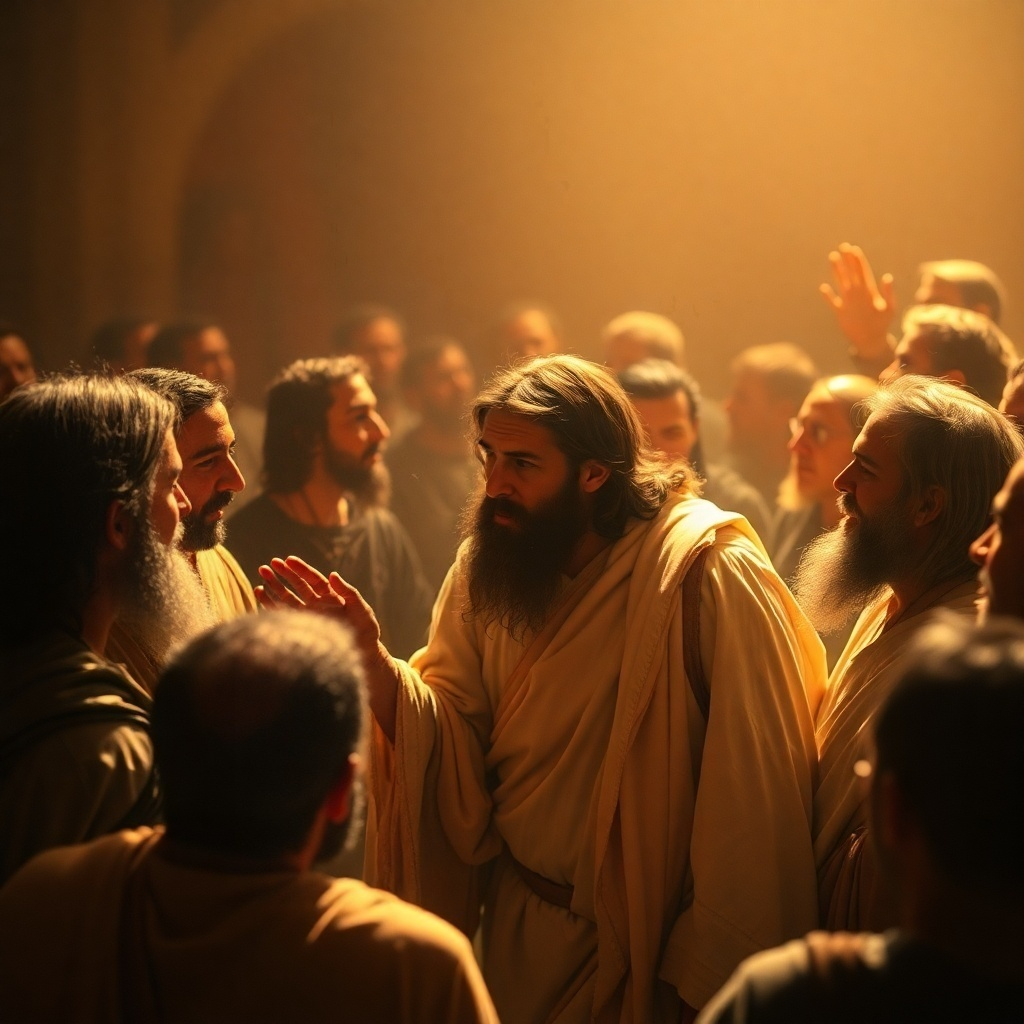
Picture this: Jesus, radiant like a beacon, standing with Moses and Elijah. The disciples are awestruck, and honestly, who wouldn’t be? But Peter, unsure of what to say, blurts out, “Master, let’s build three tents—one for You, one for Moses, and one for Elijah.” In his excitement, he misses the point.
Then God the Father steps in. A cloud envelops them, and a voice declares, “This is My beloved Son, whom I have chosen and in whom I am well pleased. Listen to HIM!” The message is clear: Jesus is the focus. Not Moses, not Elijah, as great as they were. The Transfiguration is about God’s Son.
The writer of Hebrews echoes this, emphasizing that Jesus, the High Priestly King, surpasses Moses, angels, and all others (Hebrews 1:1-14, 3:1-6). Today, I find myself constantly redirecting people to the supremacy of Jesus over Paul, Peter, the Apostles, preachers, or anyone else we might elevate.
Do you see this in today’s church? Listen closely to what’s celebrated in some “Christian” circles, and you might notice Jesus is often conspicuously missing. Let’s heed the Father’s words: “This is My beloved Son… Listen to HIM!”
My Story
For decades, I’ve encouraged people, “Read the Gospels every day.” Yes, I believe in reading the whole counsel of God, but before you think I’m minimizing the rest of the Bible, hear me out.
The Gospels offer the clearest picture of Jesus, whose every word came directly from the Father (John 12:49-50). Jesus is our ultimate example of love, life, and service in God’s kingdom (John 5:19, 8:28). As the “exact representation of God” (Hebrews 1:3-4), He reveals the Father like nothing else this side of heaven. Want to know God? Look at Jesus. Want to see humanity as God intended before the fall? Look at Jesus. Want to know Jesus? Read the Gospels.
You might raise some valid points. First, “All Scripture is inspired by God and points to Jesus!” (John 5:39, 2 Timothy 3:16). Absolutely true. But even Scripture acknowledges that some truths are “mysterious” (Colossians 1:26-27) and we see Jesus directly revealing some of them in the Gospels. Second, “Aren’t you pitting Scripture against itself?” Not at all. The writer of Hebrews didn’t undermine Scripture by highlighting Christ’s supremacy over Moses and angels (Hebrews 1:1-14, 3:1-6). Finally, “We learn about Jesus outside the Gospels too!” (Philippians 2:5-11). Correct, but nowhere matches the sheer volume and clarity of the Gospels (John 1:16-18, Matthew 11:27).
So, read the Gospels daily to get to know Jesus better. He’s your Lord and Savior. For the record, I read or listen to the entire Bible about three times every two years—every word matters! But make seeing Jesus in the Gospels a daily priority.
Our Action Plan
Now it’s time for application. Here’s some ideas;
- Start reading a little of the gospels daily.
- Teach others to do the same.
- Memorize these passages, John 1:16-18, 5:19,39, 8:28, 12:49-50, Philippians 2:5-11, Hebrews 1:1-14 & 3:1-6.
In the end, it’s all about Jesus—God’s beloved Son who shows us the Father’s heart. So, grab your Bible, read it all and the Gospels daily. Listen to HIM!
Index for all posts in the Gospel Sync Series
¡Escúchenlo a Él! – #115
¡Bienvenidos de nuevo! Hoy analizaremos los Evangelios de Mateo, Marcos y Lucas para ver cómo Dios Padre ayudó a los discípulos a centrarse en su Hijo.
Comencemos.
Mateo 17:1-8, Marcos 9:2-8, Lucas 9:28-36
Después de unos seis u ocho días, Jesús tomó consigo a Pedro, a Jacobo y a Juan, el hermano de Jacobo, y los llevó aparte a un monte alto para orar. Y mientras oraba, se transfiguró delante de ellos. La apariencia de su rostro cambió y brilló como el sol. Sus vestiduras se volvieron blancas como la luz, más brillantes que cualquier lavandero en la tierra. De repente, dos hombres, Moisés y Elías, comenzaron a hablar con Jesús. Aparecieron en gloria y le hablaron de su partida, que estaba a punto de cumplir en Jerusalén.
Mientras tanto, Pedro y sus compañeros estaban sumidos en el sueño, pero al despertar, vieron la gloria de Jesús y a los dos hombres que estaban con él. Mientras Moisés y Elías se marchaban, Pedro le dijo a Jesús: «Rabí, Señor, Maestro, es bueno que estemos aquí. Si quieres, podemos hacer tres carpas: una para ti, otra para Moisés y otra para Elías». (Porque todos estaban tan aterrorizados que Pedro no supo qué más decir).
Mientras Pedro aún hablaba, una nube brillante los envolvió, y al entrar en ella, sintieron miedo. Y una voz desde la nube dijo: «Este es mi Hijo amado, a quien he elegido y en quien tengo complacencia. ¡Escúchenlo!». Al oír esto, los discípulos cayeron rostro en tierra aterrorizados. Entonces Jesús se acercó, los tocó y les dijo: «Levántense, no tengan miedo». Y cuando levantaron la vista, no vieron a nadie más que a Jesús. Los discípulos guardaron silencio, y en aquellos días no contaron a nadie lo que habían visto.
Mis Pensamientos
¿Alguna vez has buscado algo solo para darte cuenta de que estaba justo frente a ti? Mi esposa, Deb, a menudo me señala con delicadeza lo obvio cuando busco mis gafas, generalmente puestas en mi cabeza. “¡Oh, claro!” Es un momento de humildad cuando alguien resalta lo que hemos pasado por alto. Creo que eso es lo que Dios Padre estaba haciendo por los discípulos de Jesús durante la Transfiguración.
Imagínate esto: Jesús, radiante como un faro, de pie con Moisés y Elías. Los discípulos están asombrados, y honestamente, ¿quién no lo estaría? Pero Pedro, sin saber qué decir, exclama: “Maestro, construyamos tres tiendas: una para ti, una para Moisés y una para Elías”. En su emoción, no entiende lo importante.
Entonces Dios Padre interviene. Una nube los envuelve y una voz declara: “Este es mi Hijo amado, a quien he elegido y en quien tengo complacencia. ¡Escúchenlo!”. El mensaje es claro: Jesús es el centro. Ni Moisés ni Elías, por muy grandes que fueran. La Transfiguración se trata del Hijo de Dios.
El escritor de Hebreos hace eco de esto, enfatizando que Jesús, el Rey Sumo Sacerdote, supera a Moisés, a los ángeles y a todos los demás (Hebreos 1:1-14, 3:1-6). Hoy en día, me encuentro constantemente redireccionando a la gente a la supremacía de Jesús sobre Pablo, los apóstoles, los predicadores o cualquier otra persona a quien podamos elevar.
¿Ves esto en la iglesia actual? Presta atención a lo que se celebra en algunos círculos “cristianos”, y quizás notes que Jesús a menudo brilla por su ausencia. Prestemos atención a las palabras del Padre: “Este es mi Hijo amado… ¡Escúchalo!”
Mi Historia
Durante décadas, he animado a la gente a leer los Evangelios todos los días. Sí, creo en leer todo el consejo de Dios, pero antes de que piensen que estoy minimizando el resto de la Biblia, escúchenme.
Los Evangelios ofrecen la imagen más clara de Jesús, cuyas palabras vinieron directamente del Padre (Juan 12:49-50). Jesús es nuestro máximo ejemplo de amor, vida y servicio en el reino de Dios (Juan 5:19, 8:28). Como la “representación exacta de Dios” (Hebreos 1:3-4), revela al Padre como nadie más en este lado del cielo. ¿Quieren conocer a Dios? Observen a Jesús. ¿Quieren ver a la humanidad como Dios la concibió antes de la caída? Observen a Jesús. ¿Quieren conocer a Jesús? Lean los Evangelios.
Podrían plantear algunos puntos válidos. Primero: “¡Toda la Escritura es inspirada por Dios y apunta a Jesús!” (Juan 5:39, 1 Timoteo 3:16). Totalmente cierto. Pero incluso la Escritura reconoce que algunas verdades son “misteriosas” (Colosenses 1:26-27) y vemos a Jesús revelar directamente algunas de ellas en los Evangelios. En segundo lugar, “¿No estás contradiciendo la Escritura?”. Para nada. El escritor de Hebreos no menospreció la Escritura al destacar la supremacía de Cristo sobre Moisés y los ángeles (Hebreos 1:1-14, 3:1-6). Finalmente, “¡También aprendemos sobre Jesús fuera de los Evangelios!” (Filipenses 2:5-11). Correcto, pero en ningún otro lugar se compara con la gran cantidad y claridad de los Evangelios (Juan 1:16-18, Mateo 11:27).
Así que, lee los Evangelios a diario para acercarte más a Jesús, tu Señor y Salvador. Para que conste, leo o escucho la Biblia completa unas tres veces cada dos años; ¡cada palabra importa! Pero haz de los Evangelios y ver a Jesús mismo una prioridad diaria.
Nuestro Plan de Acción
Ahora es momento de aplicarlo. Aquí tienes algunas ideas:
Empieza a leer un poco de los Evangelios a diario.
Enseña a otros a hacer lo mismo.
Memoriza estos pasajes: Juan 1:16-18, 5:19,39, 8:28, 12:49-50, Filipenses 2:5-11, Hebreos 1:1-14 y 3:1-6.
Al final, todo se trata de Jesús, el Hijo amado de Dios que nos muestra el corazón del Padre. Así que, toma tu Biblia, léela completa y los Evangelios a diario. ¡Escúchalo!
Si ve un problema importante en la traducción, envíeme una corrección por correo electrónico a charleswood1@gmail.com




 ToBeLikeJesus