
The Exclusive Rulership of the LORD Over All the Earth: A Christological Exploration from Zechariah 14:9
Introduction
Zechariah 14:9 states, “And the LORD will be king over all the earth; in that day the LORD will be the only one, and His name the only one.” This passage encapsulates a pivotal eschatological vision where the LORD’s sovereignty is universally acknowledged. This essay explores the concept of the LORD’s rulership, focusing on “LORD” and its implications for Jesus Christ, emphasizing that His lordship is not merely a future reality but profoundly present in this age, though not yet in its ultimate form.
Etymology and Linguistic Analysis
In Zechariah 14:9, “LORD” translates from the Hebrew YHWH (Strong’s H3068), often pronounced as “Yahweh” (YAH-way), symbolizing God’s eternal and self-existent nature. In the New Testament, this translates to Kyrios (Strong’s G2962) when referring to Jesus, affirming His divine identity and authority (Philippians 2:11). This linguistic connection underscores that the God of the Old Testament is the same as Jesus in the New Testament, highlighting continuity in divine sovereignty.
Theological Significance
The proclamation of YHWH as king over all the earth in Zechariah signifies not only a future hope but also a present reality through Jesus Christ. His lordship is active in this age, influencing the lives of believers through the Holy Spirit and the Church’s mission. This dual aspect of Christ’s reign – present and future – is central to Christian theology, where He is already reigning in the hearts of His followers, even as we await the full manifestation of His kingdom.
Christological Fulfillment
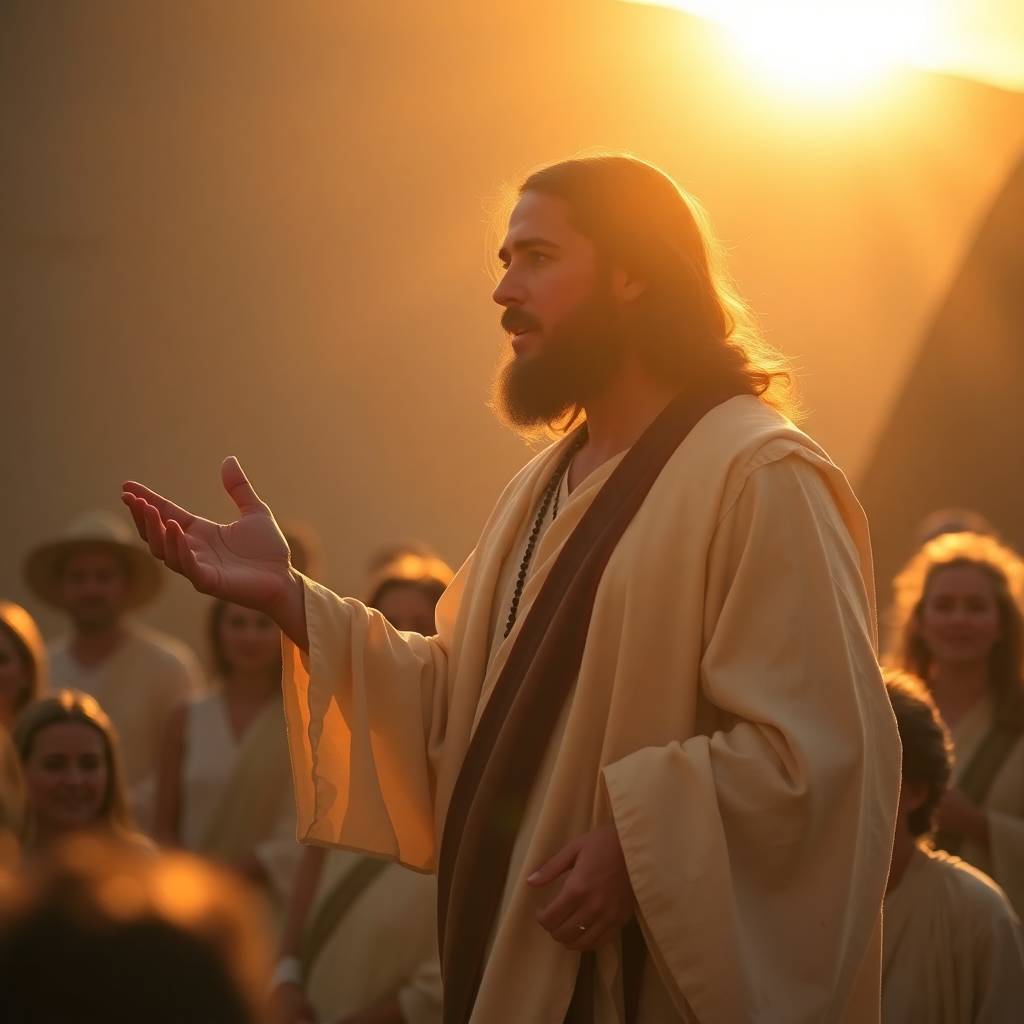
Jesus, recognized as Kyrios, embodies this kingship in both His earthly ministry and His ongoing spiritual presence. Scriptures like Matthew 28:18, where Jesus declares, “All authority in heaven and on earth has been given to me,” affirm His current lordship. His life, death, and resurrection are seen as the inauguration of God’s kingdom on earth, a kingdom that continues to grow and exert influence through the Church.
Implications for Understanding the Kingdom of God
This understanding of Christ’s lordship reveals:
Immediate Applicability: The kingdom’s principles are to be lived out now; justice, love, and peace are to be enacted in the present through His followers individually and corporately as the Church.
Divine Attributes: Christ’s current reign showcases His attributes like wisdom, power, and mercy, which believers are to emulate.
Redemption: His lordship in this age is part of the ongoing redemptive work, transforming individuals and societies.
Transformative Power for Believers
For believers, recognizing Jesus’ lordship in the present:
Guides Daily Living: It shapes ethical decisions, community life, and personal holiness, reflecting the kingdom’s values.
Inspires Mission: The Church is called to proclaim this lordship, making disciples and extending Christ’s reign through love and service.
Provides Hope: Even as we await the ultimate fulfillment, the current reality of Christ’s lordship offers comfort and direction.
Conclusion
The rule and reign of God is manifested through the Father, the Son, and the Holy Spirit throughout all ages and is past, present, and future (Although not fully exhibited until the end). The lordship of Jesus Christ, as prophesied in Zechariah 14:9, is both a future expectation and a present reality. Through His resurrection, Jesus has already begun His reign, offering a foretaste of the kingdom to come. This dual reality – present yet not fully consummated – informs Christian life, worship, and mission, urging believers to live under His lordship now while anticipating its full revelation in the age to come. Thus, Christ’s kingship bridges the temporal with the eternal, grounding our faith in both the now and the not yet.
Disciple-maker’s Short Story
Flight of Faith
Anne stared out the plane window, the clouds beneath them like a vast canvas being painted by the setting sun. The half-empty cabin hummed with white noise as passengers dozed or worked quietly on laptops.
“I can’t stop thinking about that conversation on our last flight,” Anne said, turning to her mother Mary beside her.
Mary looked up from her Bible. “With the engineering student? James, was it?”
“Yes.” Anne’s voice carried both conviction and concern. “I shared my testimony, told him about God’s love, but I feel like I missed something essential.”
Mary studied her daughter’s troubled expression. “What do you think you missed?”
“I talked about how Jesus loves us and died for us,” Anne said, her fingers tracing the outline of her own Bible in her lap. “But I never clearly explained what the gospel actually demands of us.”
The plane hit a patch of turbulence, causing a momentary tremor through the cabin. The pilot’s calm voice announced they’d be experiencing some “light chop” for the next few minutes.
“You know,” Mary said thoughtfully, “Jesus began His entire ministry with specific words: ‘Repent, for the kingdom of heaven is at hand.’ He didn’t start with ‘God loves you and has a wonderful plan for your life.'”
Anne nodded slowly. “Repentance. I didn’t really emphasize that part.”
“It’s become unfashionable,” Mary said. “We want to present a Jesus who only comforts and never confronts. But that’s not the Jesus of Scripture.”
A flight attendant passed by, offering drinks. Both women asked for tea.
“Paul said he declared the whole counsel of God,” Mary continued, turning pages in her Bible until she found Acts 20. “He proclaimed ‘repentance toward God and faith in our Lord Jesus Christ.’ Both elements are essential.”
Anne leaned back in her seat. “So the gospel isn’t just that Jesus died for our sins?”
“That’s central, absolutely. ‘Christ died for our sins according to the Scriptures, was buried, and rose again the third day,'” Mary quoted from memory. “But the proper response to that message includes both receiving Him as Savior who forgives and submitting to Him as Lord who commands.”
Outside, the sky was darkening. Anne thought about the discipleship conference they were flying to attend, how much she still had to learn.
“I think I’ve been afraid,” she admitted quietly. “Afraid that if I tell people they need to repent—to turn from sin and submit to Christ as King—they’ll reject the message. It’s easier to just talk about God’s love.”
Mary reached for her daughter’s hand. “The message we’re called to proclaim isn’t primarily about making people comfortable. It’s about calling them to a completely new life under a new King.”
The cabin lights dimmed as several passengers prepared for sleep. In the subtle glow, Anne opened her own Bible to Matthew’s gospel.
“‘From that time Jesus began to preach, saying, “Repent, for the kingdom of heaven is at hand,”‘” she read aloud softly. “Kingdom. Lordship. Not just forgiveness, but a whole new allegiance.”
Mary smiled. “That’s why Jesus told us to make disciples, not just converts. He calls people to ‘deny themselves, take up their cross daily, and follow Me.’ The gospel is an announcement that the rightful King has come and calls all people everywhere to surrender to His rule.”
Anne sat quietly for a moment, conviction growing. “I need to be clearer next time. The gospel isn’t just that Jesus died for our sins—though He did, praise God. It’s that through His death and resurrection, He’s established His kingdom and calls everyone to turn from sin and self-rule to follow Him as Lord.”
“That’s right,” Mary affirmed. “And that message requires words—clear, bold proclamation. Our kindness might adorn the gospel, but it can never replace speaking the actual message.”
As the plane continued through the night sky, Anne felt a renewed sense of purpose. The conference awaiting them wasn’t just about strategy or technique—it was about faithfulness to the King’s commission. Next time she had an opportunity to share her faith, she would speak of both the grace of the Savior and the claims of the Lord, calling for the repentance Jesus Himself demanded.
The gospel was good news, but it was also royal news—the announcement of a Kingdom that would never end, under a King who deserved nothing less than complete allegiance.
 ToBeLikeJesus