The Spiritual Jackhammer – #133

Index for all posts in the Gospel Sync Series
ENGLISH / ESPAÑOL

Welcome Back! Today, we’ll be looking at the Gospel of John to see the people most hostile and opposed to God’s love and discover how some actually turned to follow Him later.

So let’s get started.

(Click here to get a copy of the Gospel Sync document) 

John 7:45-53

Then the officers returned to the chief priests and Pharisees, who asked them, “Why didn’t you bring Him in?” “Never has anyone spoken like this man!” the officers answered. “Have you also been deceived?” replied the Pharisees. “Have any of the rulers or Pharisees believed in Him? But this crowd that does not know the law—they are under a curse.” Nicodemus, who had gone to Jesus earlier and who himself was one of them, asked, Does our law convict a man without first hearing from him to determine what he has done?” “Aren’t you also from Galilee?” they replied. “Look into it, and you will see that no prophet comes out of Galilee.” Then each went to his own home.

My Thoughts 

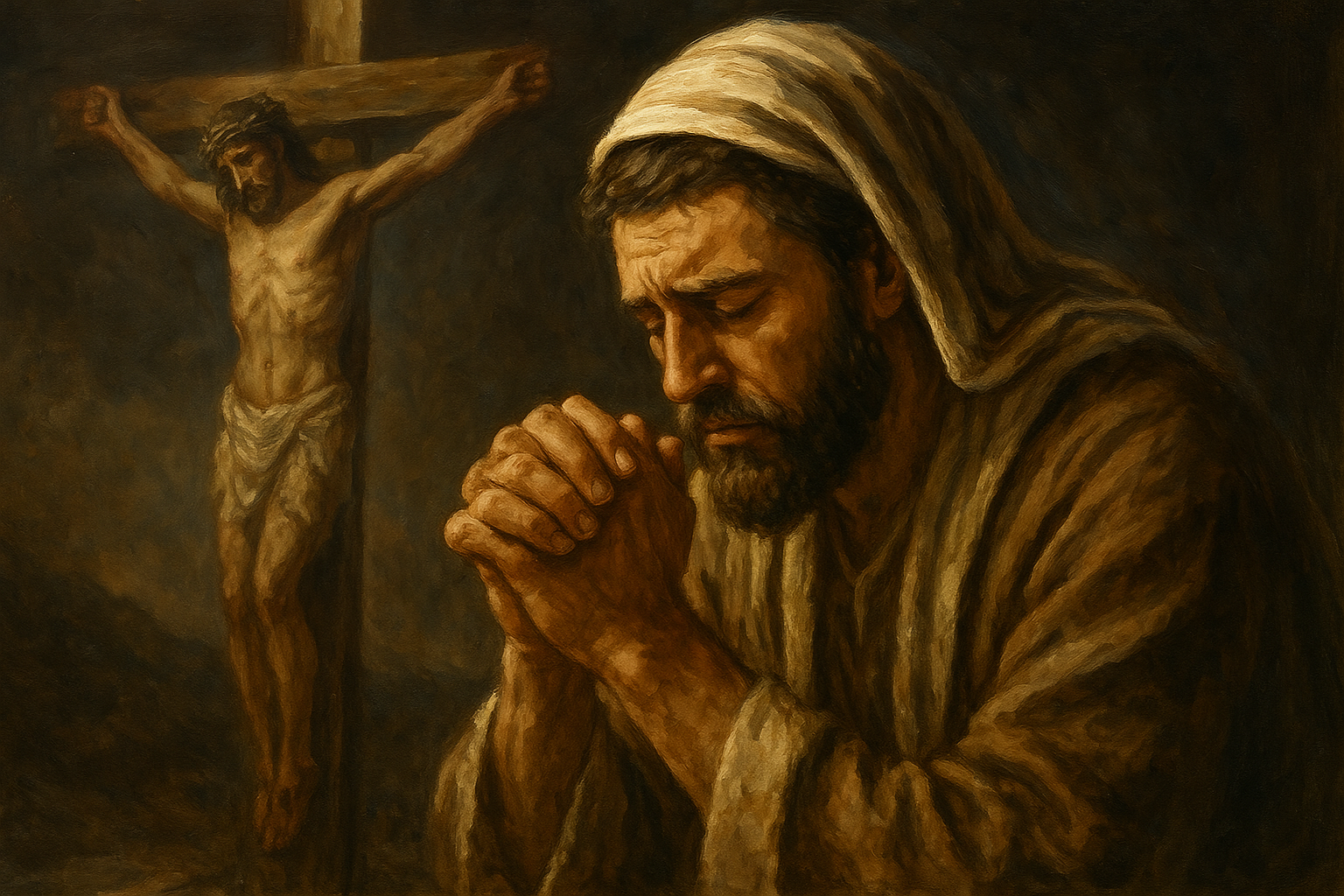
I have a saying; “You can’t push a rope.” In other words, no matter how hard you try, you aren’t going to change that person’s mind. The religious leaders of the day had set their minds in rebar and concrete and it would take a spiritual jackhammer to change it. Sometimes you just have to pray and let the Holy Spirit go to work. He is that “Spiritual Jackhammer.” And although these characters railroaded Jesus to the cross, many of them crossed the tracks. They saw the light. They gave their lives to Jesus as the Messiah.

The word of God kept on spreading; and the number of the disciples continued to increase greatly in Jerusalem, and a great many of the priests were becoming obedient to the faith. (Acts 6:7)

Do you have family members, friends, neighbors, co-workers, acquaintances who you’ve shared the gospel with and they stubbornly hold to their own devices? Keep praying! You can’t push a rope, but God can. 

My Story

We are living in very interesting times. Never have I seen people so divided. Truth has been trashed for opinion. Even “Mother Nature,” the false goddess of the last several centuries, has been kicked to the curb by many who can’t even acknowledge simple biology. We are in chaotic times. People are angry and spew their vileness on each other in ways that seem to look like we are on the brink of the end of civilization. 

But I have hope. Hope in a God that can take a murderer and turn him into a staunch proclaimer of the very truth he opposed. And he did it to such a degree it cost him his own life. Of course I’m talking about the Apostle Paul. And many such opposers in our time are seeing the lies the enemy has fed them and just like the Apostle Paul and many of those guilty of hanging Jesus on the cross are turning to the very Truth they persecuted. As disciple makers, now more than ever, we need to cast the nets wide. Share the gospel. Train the young believer to follow Jesus and then train them to make disciples themselves. But above all, we need to pray that the “Great Spiritual Jackhammer” does His work in people’s lives.

I see the Light shining through. I am witnessing the Holy Spirit at work. I see Jesus Christ breaking in. And the Father having His way. I have hope!

If you want to follow Jesus and be a part of the process called discipleship (Matthew 28:18-20) that makes a difference in this world, email me: Charleswood1@gmail.com

Our Action Plan

Now it’s time for application. Here’s some ideas;

  • Pray for the people in your relational network daily (family members, friends, neighbors, co-workers, acquaintances, etc…) Video
  • Share the gospel with them. Video 
  • Keep praying for them daily

It can be very discouraging to see the people you love dearly reject Christ. It is painful to God to see anyone reject Him. Let’s keep praying in faith that the Holy Spirit will do the work needed to change the hearts and minds of the people around us.

Organic Writing – No Artificial Intelligence or Sweeteners Added

Index for all posts in the Gospel Sync Series

Los de Corazón Duro – #133

¡Bienvenidos de nuevo! Hoy analizaremos el Evangelio de Juan para ver quiénes eran las personas más hostiles y opuestas al amor de Dios, y descubriremos cómo algunos lo siguieron posteriormente.

Comencemos.

Juan 7:45-53

Entonces los guardias regresaron adonde estaban los principales sacerdotes y los fariseos, quienes les preguntaron: “¿Por qué no lo trajeron?”. “¡Jamás nadie ha hablado como este hombre!”, respondieron los guardias. “¿También ustedes han sido engañados?”, respondieron los fariseos. “¿Acaso alguno de los gobernantes o fariseos ha creído en él? Pero esta gente que no conoce la ley, está bajo maldición”. Nicodemo, quien había ido antes a Jesús y que era uno de ellos, preguntó: “¿Acaso nuestra ley condena a un hombre sin escucharlo primero para determinar lo que ha hecho?”. “¿No son ustedes también de Galilea?”, respondieron. “Infórmense, y verán que ningún profeta sale de Galilea”. Luego cada uno se fue a su casa.

Mis Pensamientos

Tengo un dicho: “No se puede empujar una cuerda”. En otras palabras, por mucho que lo intentes, no vas a cambiar la opinión de esa persona. Los líderes religiosos de la época tenían la mente puesta en las varillas y el hormigón, y se necesitaría un martillo neumático espiritual para cambiarla. A veces solo hay que orar y dejar que el Espíritu Santo actúe. Él es ese “Martillo Neumático Espiritual”. Y aunque estos personajes llevaron a Jesús a la cruz, muchos cruzaron las vías. Vieron la luz. Entregaron sus vidas a Jesús como el Mesías.

La palabra de Dios seguía difundiéndose; y el número de los discípulos seguía aumentando mucho en Jerusalén, y muchos sacerdotes se hacían obedientes a la fe. (Hechos 6:7)

¿Tienes familiares, amigos, vecinos, compañeros de trabajo o conocidos con quienes has compartido el evangelio y se aferran obstinadamente a sus propios recursos? ¡Sigue orando! Tú no puedes empujar una cuerda, pero Dios sí.

Mi Historia

Vivimos tiempos muy interesantes. Nunca había visto a la gente tan dividida. La verdad ha sido destrozada por la opinión. Incluso la “Madre Naturaleza”, la falsa diosa de los últimos siglos, ha sido desechada por muchos que ni siquiera reconocen la simple biología. Vivimos tiempos caóticos. La gente está enojada y se lanza su vileza unos a otros de maneras que parecen indicar que estamos al borde del fin de la civilización.

Pero tengo esperanza. Esperanza en un Dios que puede tomar a un asesino y convertirlo en un firme proclamador de la misma verdad a la que se oponía. Y lo hizo a tal grado que le costó la vida. Por supuesto, me refiero al apóstol Pablo. Y muchos de estos opositores en nuestro tiempo están viendo las mentiras que el enemigo les ha dado y, al igual que el apóstol Pablo y muchos de los culpables de colgar a Jesús en la cruz, están recurriendo a la misma Verdad que persiguieron. Como hacedores de discípulos, ahora más que nunca, necesitamos extender las redes. Compartir el evangelio. Capacita a los jóvenes creyentes para seguir a Jesús y luego capacítalos para que ellos mismos hagan discípulos. Pero sobre todo, necesitamos orar para que el “Gran Martillo Neumático Espiritual” haga su obra en la vida de las personas.

Veo la Luz brillando. Presencio la obra del Espíritu Santo. Veo a Jesucristo irrumpiendo. Y al Padre haciendo su voluntad. ¡Tengo esperanza!

Si quieres seguir a Jesús y ser parte del proceso llamado discipulado (Mateo 28:18-20) que marca la diferencia en este mundo, escríbeme a: Charleswood1@gmail.com

Nuestro Plan de Acción

Ahora es momento de aplicarlo. Aquí tienes algunas ideas:

Ora por las personas de tu red de relaciones a diario (familiares, amigos, vecinos, compañeros de trabajo, conocidos, etc.).

Comparte el evangelio con ellos.

Sigue orando por ellos a diario.

Puede ser muy desalentador ver a tus seres queridos rechazar a Cristo. A Dios le duele ver a alguien rechazarlo. Sigamos orando con fe para que el Espíritu Santo haga la obra necesaria para cambiar los corazones y las mentes de quienes nos rodean.

Escritura orgánica: sin inteligencia artificial ni edulcorantes añadidos.

Si ve un problema importante en la traducción, envíeme una corrección por correo electrónico a charleswood1@gmail.com


Kingdom Kernel #27 – Grace Empowered Obedience as the Foundation of Kingdom Entrance: A Theological Analysis of Matthew 7:15-27

Kingdom Kernel Collection

“Beware of the false prophets, who come to you in sheep’s clothing, but inwardly are ravenous wolves. You will know them by their fruits. Grapes are not gathered from thorn bushes nor figs from thistles, are they? So every good tree bears good fruit, but the bad tree bears bad fruit. A good tree cannot produce bad fruit, nor can a bad tree produce good fruit. Every tree that does not bear good fruit is cut down and thrown into the fire. So then, you will know them by their fruits.

“Not everyone who says to Me, ‘Lord, Lord,’ will enter the kingdom of heaven, but he who does the will of My Father who is in heaven will enter. Many will say to Me on that day, ‘Lord, Lord, did we not prophesy in Your name, and in Your name cast out demons, and in Your name perform many miracles?’ And then I will declare to them, ‘I never knew you; DEPART FROM ME, YOU WHO PRACTICE LAWLESSNESS.’

“Therefore everyone who hears these words of Mine and acts on them, may be compared to a wise man who built his house on the rock. And the rain fell, and the floods came, and the winds blew and slammed against that house; and yet it did not fall, for it had been founded on the rock. Everyone who hears these words of Mine and does not act on them, will be like a foolish man who built his house on the sand. The rain fell, and the floods came, and the winds blew and slammed against that house; and it fell—and great was its fall.”

Matthew 7:15-27

Introduction

Matthew 7:15-27 concludes Jesus’ Sermon on the Mount with a sobering discourse on authentic discipleship. Within this passage, three pivotal concepts – enter (εἰσέρχομαι, G1525), does the will (θέλημα, G2307), and acts on them (ποιέω, G4160) – reveal a tension between professed faith and lived obedience. Set against warnings about false prophets and the parable of two builders, Jesus establishes that verbal allegiance alone cannot secure entry into God’s kingdom. This essay explores how these terms linguistically and theologically underscore the necessity of grace-empowered obedience to Christ’s lordship.

Key Words and Phrases

Enter (εἰσέρχομαι, G1525): This compound Greek term (eis = “into,” erchomai = “come”) denotes intentional movement across a threshold. In Jewish eschatology, “entering the kingdom” (Matt 7:21) implied participation in God’s redemptive reign. Unlike passive admission, the term carries covenantal overtones – one actively aligns with divine authority.

Does the Will (θέλημα, G2307): Thelēma refers to God’s determined purpose, distinct from human whims. In the Septuagint, it often translates rāṣôn (“pleasure”), emphasizing God’s sovereign desire (Ps 40:8). Jesus redefines obedience as participation in the Father’s redemptive agenda rather than legalistic observance.

Acts On Them (ποιέω, G4160): Meaning “to make, do, or practice,” poieō implies habitual action. The wise builder “acts” (Matt 7:24) by embodying Christ’s teachings, contrasting with the folly of mere hearing.

Theological Significance

1. The King’s Authority and Judgment

Jesus presents Himself as the Messianic arbiter who discerns true allegiance (Matt 7:22-23). The shocking rejection of those performing miracles in His name (v22) exposes a critical distinction: external works devoid of internal submission constitute “lawlessness” (ἀνομία, G458). This aligns with His earlier warning against wolves in sheep’s clothing (7:15) – outward religiosity masks spiritual bankruptcy.

2. Kingdom Ethics: Grace and Obedience Intertwined

The passage resolves the faith-works paradox: salvation is by grace (Eph 2:8-9), yet genuine faith inevitably produces “fruit” (Matt 7:16-20). Christ’s lordship demands transformative obedience, as exemplified in His own fulfillment of the Father’s will (Heb 10:7). The ability to obey stems from the New Covenant promise: “I will put my law within them, and I will write it on their hearts” (Jer 31:33).

3. Christological Fulfillment

Jesus embodies the “rock” foundation (7:25), fulfilling Isaiah’s prophecy of a tested cornerstone (Isa 28:16). His teachings transcend Moses’ law (Matt 5:17), establishing a kingdom where love and humility define righteousness. The rejection of false followers (7:23) parallels Luke 13:27 (““And He will say, ‘I tell you, I do not know where you are from; depart from Me, all you evildoers.’”), asserting His divine authority.

Contemporary Implications

1. Lordship in the Present Age

Christ’s kingship is not deferred to eternity; believers now live under His active reign (Col 1:13). The call to “build on the rock” (7:24) demands daily obedience, enabled by God’s empowerment (Phil 2:12-13). Modern discipleship must confront cultural Christianity that prioritizes verbal confessions over sacrificial love.

2. Transformative Power of Grace

Augustine noted, “God crowns not your merits but His own gifts.” The ability to obey – itself a grace – dismantles pride and fosters dependence. As Bonhoeffer warned, “Cheap grace is grace without discipleship”; costly grace compels action.

Conclusion

Matthew 7:15-27 dismantles performative religion, revealing Grace empowered obedience as the hallmark of kingdom citizenship. Through careful linguistic analysis and theological reflection, we see Christ not merely as a future judge but as the present foundation for life. His words, when enacted through Spirit-empowered faith, create an unshakable identity that withstands life’s storms. This passage ultimately points to the gospel’s heart: we are saved by grace for obedience (Eph 2:10), participants in a kingdom where the King’s will becomes our joy.

Disciple-Maker’s Short Story

Chai and the Cornerstone

The apartment smelled of cardamom and cinnamon, a warm haze curling from the steaming chai in chipped ceramic cups. Sally sat cross-legged on a woven rug, her Bible open on her lap, its pages creased from years of thumbing. Across from her, three women—Fatima, Aisha, and Priya—nestled into mismatched cushions, their dark eyes flickering between curiosity and quiet skepticism. The late afternoon sun slanted through the window of Priya’s modest apartment, gilding the edges of a faded tapestry on the wall. A ceiling fan whirred lazily overhead, stirring the spiced air.

They’d been meeting like this for weeks, these discovery Bible studies, peeling back layers of scripture with questions that hung heavy between sips of tea. Today, they’d reached Matthew 7:15-27, Jesus’ words slicing through the text like a blade through silk. Sally had just finished reading aloud, her voice steady but soft, letting the weight of “Depart from me, you who practice lawlessness” settle into the room.

Priya tilted her head, her braid slipping over her shoulder. Her voice, lilting with the cadence of Hyderabad, broke the silence. “Sally, this Jesus, He says only those who do His Father’s will, will enter the kingdom. Then why do I see American Christians no live this way? They say ‘Lord, Lord,’ but I see fighting, greed, so much noise. Where is this obedience?”

The question wasn’t accusatory, but it carried an ache, a thread of disillusionment woven into her words. Fatima nodded faintly, her fingers tracing the rim of her cup, while Aisha’s gaze dropped to the rug, as if searching its patterns for an answer.

Sally exhaled, feeling the weight of Priya’s observation settle into her chest. She set her Bible down, letting her hands rest on her knees. “You’re right to notice that,” she said, her tone gentle but unflinching. “It’s a paradox, isn’t it? Jesus warns us about this exact thing—people who look like they belong to Him but don’t live it out. He calls them wolves in sheep’s clothing, or houses built on sand that collapse when the storms come.”

She paused, glancing at each of them, their faces a mosaic of doubt and longing. “But here’s the thing: being a follower of Jesus isn’t about what we say or even what we do on our own strength. It’s about grace. We’re saved by faith—by trusting Him, not by earning it. But that faith, if it’s real, changes us. It’s like He gives us the ability to obey, to build our lives on His words, because He’s the rock that holds us up.”

Fatima’s brow furrowed, her voice barely above a whisper. “So, you’re saying it’s not just rules? Not like… a list we follow to be good?”

“No,” Sally said, leaning forward slightly. “It’s deeper than that. It’s about knowing Him, letting His love and His will become yours. Those people Jesus rejects—they did miracles, big things, but their hearts weren’t His. They didn’t want Him as Lord, just as a name to use. True followers, though? They’re not perfect, but they’re being shaped by Him, step by step.”

Aisha looked up now, her eyes sharp with something unspoken. “But how do you know? How do you know if you’re the wise one or the foolish one?”

Sally smiled faintly, a flicker of vulnerability crossing her face. “That’s the sober part, isn’t it? Jesus says we’ll know by the fruit—the way we live, the love we show, the obedience that grows out of trusting Him. It’s not about judging others; it’s about looking at ourselves. I ask myself that question too, Aisha. Am I building on the rock? Or am I just hearing and not doing?”

The room grew quiet, the hum of the fan blending with the distant clatter of pots from a neighbor’s kitchen. Priya sipped her chai, her gaze distant. “I like this Jesus,” she said finally, her voice low. “He sees the heart. But it’s hard. To live that way—it’s not what I see around me.”

Sally nodded, her own cup warm against her palms. “It is hard. And I won’t pretend it’s not. But here’s the encouragement: if you want to follow Him, really follow Him, He doesn’t leave you to do it alone. He promises to put His law in your heart, to give you His Spirit. It’s not about being strong enough—it’s about wanting to be like Him, and letting Him make you that way.”

Fatima shifted, her scarf slipping slightly as she met Sally’s eyes. “Like Him,” she echoed, the words tasting new on her tongue. “You mean… kind? Forgiving? The way He was with people?”

“Yes,” Sally said, her voice softening with a quiet fire. “And obedient to His Father, even when it cost Him everything. That’s the rock we build on—His life, His love. I want that too. Every day, I’m asking Him to help me be more like Him, because I can’t do it on my own.”

Priya set her cup down, her fingers lingering on its edge. “Then maybe we should ask that too,” she said, almost to herself. “To be like this Jesus. Not just to hear, but to do.”

The air shifted, a subtle tension giving way to something fragile and alive. Outside, the sun dipped lower, casting long shadows across the rug. Sally picked up her Bible again, but she didn’t open it—not yet. For now, it was enough to sit there, the chai cooling between them, as the words of the Carpenter from Galilee lingered like an invitation.

Kingdom Kernel Collection

Real Spiritual Sustenance – #132

Index for all posts in the Gospel Sync Series

ENGLISH / ESPAÑOL

Welcome Back! Today, we’ll be looking at the Gospel of John to see what spiritual sustenance Jesus offers. 

So let’s get started.

(Click here to get a copy of the Gospel Sync document) 

John 7:37-44

On the last and greatest day of the feast, Jesus stood up and called out in a loud voice, “If anyone is thirsty, let him come to Me and drink. Whoever believes in Me, as the Scripture has said: ‘Streams of living water will flow from within him.’” He was speaking about the Spirit, whom those who believed in Him were later to receive. For the Spirit had not yet been given, because Jesus had not yet been glorified. On hearing these words, some of the people said, “This is truly the Prophet.” Others declared, “This is the Christ.” But still others asked, “How can the Christ come from Galilee? Doesn’t the Scripture say that the Christ will come from the line of David and from Bethlehem, the village where David lived?” So there was division in the crowd because of Jesus. Some of them wanted to seize Him, but no one laid a hand on Him.

My Thoughts 

Jesus provides us with a spiritual sustenance that no one else can give. Here He promises “Living Waters” flowing from within those who come to Him. Of course He’s talking about the coming of the Holy Spirit in this passage but Jesus makes many such references to spiritual food and drink coming from a relationship with Him. Earlier in John, He told the woman at the well He would give her living waters if she simply asked for it. (John 4:7-14) In the same chapter when His disciples offer Him food, He replies, “I have food to eat that you do not know about. My food is to do the will of Him who sent Me and to accomplish His work.” (John 4:31-34) Two chapters later He says, “I am the bread of life; he who comes to Me will not hunger, and he who believes in Me will never thirst.” (John 6:35) And in Matthew 4:4 He says, “It is written, ‘MAN SHALL NOT LIVE ON BREAD ALONE, BUT ON EVERY WORD THAT PROCEEDS OUT OF THE MOUTH OF GOD.’” 

There is a spiritual sustenance that is, do I dare say, more important than physical nourishment. Jesus not only modeled this, He promises and provides this spiritual food and drink. How does one appropriate such provisions? By relating, by abiding in Jesus. It comes through His Word and His Spirit. It comes with faith and obedience. It comes by our asking and His giving.

Oftentimes, spiritual leaders unwittingly get in the way of this sustenance. By constantly feeding people their predigested food they treat people like baby birds, regurgitating on them what is now missing a vital nutrient called “self-discovery.” Instead of teaching the flock to seek Jesus on their own, we have created an unhealthy dependency. The spiritual leader is expected to spoon feed the sheep when they should be learning how to feed themselves. As disciple makers this is one of our highest priorities, to teach people to feast on spiritual food and drink for themselves in their relationship with Christ. We want to exhort them to read the Scriptures for themselves and obey them in love for God. We want them to seek the Lord in a vibrant prayer life. We want to help every disciple to become a self-feeder.

My Story

One of the greatest gifts I was given as a baby Christian was the exhortation to read the Scriptures and pray daily. A guy named Randy would meet with me regularly and ask me, “What are you getting out of the Word?” The lion share of our discussions were centered around what God was saying to us and how we were applying it to our lives. Not only have I been in the Word daily for 45+ years but I have been allowing it to shape and transform my character and actions. I have no clue where I would be today had Randy not taken the time to mentor me this way. In fact I have been asking other men the same question since he modeled it for me in the early ‘80s. He taught me to be a self-feeder from the very beginning. What are you getting out of the Word?

The second thing I needed to learn was the answer to this question; “What are you hearing from the Holy Spirit?” I learned this from the very Scriptures I was reading. I had to distinguish between what I might be telling myself and what was coming from God. As I saturated myself in the Scriptures and prayer, it became easier to tell the difference. Through experience and practice I’ve gotten better at hearing from the Spirit.

Now a tip for disciple makers. I almost always ask people what they are getting out of the Word but for a season I would ask people what they were hearing from God. It was a challenge to get new disciples to read the Word on a consistent basis. But it was interesting anytime I asked someone what they were hearing from God they would always have an answer. On the surface that sounds wonderful but with some of the answers I was getting I wondered if it was indeed from the Holy Spirit or from another spirit. People who are not knee deep in their Bibles are very susceptible to the lies of the enemy. They have a hard time distinguishing the voices in their head. The Scriptures are the best way to authenticate the things we hear. The Holy Spirit and the Bible will always be in alignment with one another.  

Here’s another important pointer I’ve learned as a disciple maker; I make a very poor “Junior Holy Spirit” and an even worse “Jesus.” As mentors we can make the easy mistake of causing an unhealthy dependency on us rather than God. I try to always point people back to God for the answers and authority in their lives. Get them in the Bible for themselves. Teach them how to recognize the Holy Spirit’s voice. Always have this caveat, “Take what I say with a grain of salt. Do what Jesus tells you to do.”

Our Action Plan

Now it’s time for application. Here’s some ideas;

  • Have a simple plan to help people read the Bible and pray daily
  • Ask them “What are you getting out of the Word?”
  • Ask them “How do you distinguish between the voice of the Holy Spirit and other voices?”

It is essential that disciple makers are making disciples of Jesus and not themselves. The best way to do that is by getting people in the Word for themselves and listening to the Holy Spirit. This creates a healthy mentoring relationship that always points them to the One who provides the real spiritual sustenance. 

Organic Writing – No Artificial Intelligence or Sweeteners Added

Index for all posts in the Gospel Sync Series

Verdadero Sustento Espiritual – #132

¡Bienvenidos de nuevo! Hoy analizaremos el Evangelio de Juan para ver qué sustento espiritual nos ofrece.

Comencemos.

Juan 7:37-44

En el último y gran día de la fiesta, Jesús se puso de pie y exclamó a gran voz: «Si alguno tiene sed, venga a mí y beba. El que cree en mí, como dice la Escritura: “De su interior correrán ríos de agua viva”». Hablaba del Espíritu, que más tarde recibirían los que creyeran en él. Pues el Espíritu aún no había sido dado, porque Jesús aún no había sido glorificado. Al oír estas palabras, algunos decían: «Verdaderamente este es el profeta». Otros decían: «Este es el Cristo». Pero otros preguntaban: «¿Cómo puede venir el Cristo de Galilea? ¿No dice la Escritura que el Cristo vendrá del linaje de David y de Belén, la aldea donde vivía David?». Así que hubo división entre la multitud a causa de Jesús. Algunos querían prenderle, pero nadie le echó mano.

Mis Pensamientos

Jesús nos provee de un sustento espiritual que nadie más puede dar. Aquí promete “Aguas Vivas” que fluyen desde el interior de quienes acuden a Él. Por supuesto, en este pasaje habla de la venida del Espíritu Santo, pero Jesús hace muchas referencias similares al alimento y la bebida espirituales que provienen de una relación con Él. Anteriormente en Juan, le dijo a la mujer junto al pozo que le daría agua viva si simplemente la pedía (Juan 4:7-14). En el mismo capítulo, cuando sus discípulos le ofrecen comida, él responde: “Yo tengo una comida que comer que ustedes no conocen. Mi comida es hacer la voluntad del que me envió y llevar a cabo su obra” (Juan 4:31-34). Dos capítulos más adelante, dice: “Yo soy el pan de vida; el que a mí viene, no tendrá hambre, y el que en mí cree, no tendrá sed jamás”. (Juan 6:35) Y en Mateo 4:4 dice: “Escrito está: ‘NO SOLO DE PAN VIVIRÁ EL HOMBRE, SINO DE TODA PALABRA QUE SALE DE LA BOCA DE DIOS’”.

Existe un sustento espiritual que es, me atrevo a decir, más importante que el alimento físico. Jesús no solo lo modeló, sino que promete y provee este alimento y bebida espiritual. ¿Cómo podemos apropiarnos de estas provisiones? Relacionándonos con Él, permaneciendo en Él. Viene a través de Su Palabra y Su Espíritu. Viene con fe y obediencia. Viene por nuestras peticiones y Su dádiva.

A menudo, los líderes espirituales, sin darse cuenta, obstaculizan este sustento. Al alimentar constantemente a las personas con su comida predigerida, las tratan como pajaritos, regurgitándoles lo que ahora les falta: un nutriente vital llamado «autodescubrimiento». En lugar de enseñar al rebaño a buscar a Jesús por sí solo, hemos creado una dependencia malsana. Se espera que el líder espiritual alimente a las ovejas con cuchara cuando deberían estar aprendiendo a alimentarse a sí mismas. Como hacedores de discípulos, esta es una de nuestras mayores prioridades: enseñar a las personas a deleitarse con el alimento y la bebida espirituales para sí mismas en su relación con Cristo. Queremos exhortarlas a leer las Escrituras por sí mismas y obedecerlas con amor a Dios. Queremos que busquen al Señor en una vida de oración vibrante. Queremos ayudar a cada discípulo a alimentarse a sí mismo.

Mi Historia

Uno de los mayores regalos que recibí cuando era un cristiano incipiente fue la exhortación a leer las Escrituras y orar a diario. Un hombre llamado Randy se reunía conmigo con regularidad y me preguntaba: “¿Qué te aporta la Palabra?”. La mayor parte de nuestras conversaciones se centraban en lo que Dios nos decía y cómo lo aplicábamos a nuestras vidas. No solo he estado en la Palabra a diario durante más de 45 años, sino que también he permitido que moldee y transforme mi carácter y mis acciones. No tengo ni idea de dónde estaría hoy si Randy no se hubiera tomado el tiempo de guiarme de esta manera. De hecho, le he estado haciendo a otros hombres la misma pregunta desde que él me la enseñó a principios de los 80. Me enseñó a alimentarme por mí mismo desde el principio. ¿Qué te aporta la Palabra?

Lo segundo que necesitaba aprender era la respuesta a esta pregunta: “¿Qué estás escuchando del Espíritu Santo?”. Aprendí esto de las mismas Escrituras que leía. Tenía que distinguir entre lo que me decía a mí mismo y lo que venía de Dios. A medida que me empapé de las Escrituras y la oración, me fue más fácil distinguir la diferencia. Con la experiencia y la práctica, he mejorado mi capacidad para escuchar al Espíritu.

Un consejo para quienes hacen discípulos: casi siempre pregunto a la gente qué perciben de la Palabra, pero durante un tiempo les pregunté qué escuchaban de Dios. Era un reto conseguir que los nuevos discípulos leyeran la Palabra con regularidad. Pero era interesante que cada vez que le preguntaba a alguien qué escuchaba de Dios, siempre recibía una respuesta. A primera vista, suena maravilloso, pero con algunas de las respuestas que recibía, me preguntaba si provenía realmente del Espíritu Santo o de otro espíritu. Las personas que no están inmersas en la Biblia son muy susceptibles a las mentiras del enemigo. Les cuesta distinguir las voces en su cabeza. Las Escrituras son la mejor manera de confirmar lo que escuchamos. El Espíritu Santo y la Biblia siempre estarán en sintonía.

Aquí hay otro consejo importante que he aprendido como hacedor de discípulos: Soy un pésimo “Espíritu Santo Menor” y un “Jesús” aún peor. Como mentores, podemos cometer el error de crear una dependencia malsana de nosotros mismos en lugar de Dios. Siempre intento guiar a las personas hacia Dios para que encuentren las respuestas y la autoridad en sus vidas. Que se adentren en la Biblia por sí mismos. Enséñenles a reconocer la voz del Espíritu Santo. Siempre tengan esta advertencia: “Tomen lo que digo con pinzas. Hagan lo que Jesús les dice”.

Nuestro Plan de Acción

Ahora es momento de aplicarlo. Aquí tienes algunas ideas:

Ten un plan sencillo para ayudar a las personas a leer la Biblia y orar a diario.

Pregúntales: “¿Qué te aporta la Palabra?”.

Pregúntales: “¿Cómo distingues la voz del Espíritu Santo de otras voces?”.

Es esencial que quienes hacen discípulos hagan discípulos de Jesús, no de sí mismos. La mejor manera de lograrlo es involucrando a las personas en la Palabra por sí mismas y escuchando al Espíritu Santo. Esto crea una sana relación de mentoría que siempre las guía hacia Aquel que proporciona el verdadero sustento espiritual.

Si ve un problema importante en la traducción, envíeme una corrección por correo electrónico a charleswood1@gmail.com

Kingdom Kernel #26 – Redefining Kingdom Citizenship: Faith Over Heritage in Matthew 8:5-13

Kingdom Kernel Collection

Introduction

The account of Jesus healing the centurion’s servant (Matthew 8:5-13) delivers a seismic theological shift in understanding kingdom citizenship. At its climax, Jesus declares that “the sons of the kingdom will be cast out into outer darkness” (v. 12), contrasting Jewish religious presumption with a Gentile soldier’s extraordinary faith. This essay examines the linguistic roots of “sons of the kingdom” and “cast out,” revealing how Christ redefines divine election around faith-driven allegiance to His lordship.

Linguistic Foundations

The phrase “sons of the kingdom” (οἱ υἱοὶ τῆς βασιλείας) employs:

  • υἱός (huios): Denotes legal heirs, implying covenantal privileges assumed by Jews as Abraham’s descendants.
  • βασιλεία (basileia): God’s reign, historically tied to Israel’s Messianic expectations.

“Cast out” translates ἐκβάλλω (ekballō), a forceful term meaning to “expel violently” or “thrust away.” Used for exorcisms and agricultural purging, it connotes irreversible exclusion from divine favor.

Theological Implications

Jesus’ warning dismantles three presumptions:

  1. Ethnic Entitlement: First-century Jews believed biological descent from Abraham guaranteed salvation. Christ decouples genealogy from election, mirroring John the Baptist’s warning.
  2. Religious Ritualism: Temple practices and Torah adherence became substitutes for heart-level faith, a theme Jesus amplifies in the Sermon on the Mount.
  3. National Exclusivity: The centurion—a Gentile and Roman oppressor—embodies the “many from east and west” who inherit Abraham’s blessings through faith.

The “outer darkness” symbolizes total separation from God’s presence, combining Jewish apocalyptic imagery with Greco-Roman banquet customs where unworthy guests faced expulsion into night streets.

Christological Fulfillment

As Messiah-King, Jesus exercises divine authority to:

  • Rewrite Covenant Terms: The centurion’s confession (“Lord, I am not worthy”) mirrors Davidic humility, contrasting Jewish leaders’ arrogance.
  • Enact Cross-Cultural Inclusion: By healing a Gentile’s servant, Jesus fulfills Isaiah’s vision of a “light to the nations.”
  • Judge False Assurance: Christ’s warning prefigures the Temple’s destruction, where unfruitful Israel faced national exile.

Transformative Power for Believers

This passage demands:

  • Active Faith: The centurion’s trust in Jesus’ spoken word models kingdom access through spiritual reliance, not ritual.
  • Eternal Perspective: While ultimate kingdom consummation awaits Christ’s return, believers now experience His reign through surrendered obedience.
  • Urgent Evangelism: Paul later echoes this text, urging disciples to graft Gentiles into God’s story while warning against Jewish complacency.

Conclusion

Matthew 8:5-13 proclaims Christ as the cosmic threshold of God’s kingdom—a King who excludes the self-assured and welcomes the penitent. By wielding ἐκβάλλω as both surgical scalpel and royal decree, Jesus dismantles human meritocracy, establishing cross-centered faith as the sole passport to His eternal reign. For modern believers, this narrative compels radical dependence on Christ’s finished work, vigilant humility, and zealous proclamation of His inclusive lordship.

A Disciple-Makers Short Story

Nationality or Faith

The aroma of freshly baked bread mingled with the savory scent of roasted beef and potatoes as Arthur’s house church gathered around the long wooden table. The room was alive with the sounds of laughter, clinking dishes, and heartfelt conversation. It was a weekly rhythm: a shared meal followed by a time of open discussion about faith, life, and Scripture. Tonight’s gathering felt particularly warm, the kind of evening where hearts seemed ready to receive.

Arthur, a soft-spoken man in his late forties with kind eyes and a weathered Bible resting on his lap, leaned back in his chair. He loved these moments—ordinary yet sacred. As plates were cleared and cups refilled, he cleared his throat to signal the transition to their Q&A time.

“Alright,” he began, his voice steady but inviting, “who’s got something on their heart tonight?”

Travis, a young man with an earnest demeanor and a slight furrow in his brow, raised his hand hesitantly. “I’ve got one,” he said, leaning forward. “It’s been bugging me all week.”

Arthur nodded. “Go ahead.”

Travis shifted in his seat, clearly replaying something in his mind. “So, I was sharing the gospel with this guy at work—just trying to talk about Jesus—and I asked him if he was a Christian. And he looked at me like I’d insulted him or something and said, ‘I’m an American, aren’t I?’” Travis paused, shaking his head. “I didn’t even know what to say. It caught me so off guard.”

A murmur rippled through the group as others processed the story. Arthur leaned forward slightly, his expression thoughtful.

“So,” Arthur asked, “what do you guys think? How should Travis have responded? Or… what does that even mean?”

The room grew quiet for a moment as everyone considered the question. Finally, Sarah, a middle-aged woman with a sharp mind for Scripture, spoke up. “It sounds like he’s equating being American with being Christian—like it’s part of his identity by default.”

“Yeah,” chimed in Marcus, a retired teacher known for his practical wisdom. “It’s not an uncommon mindset. Some people think being born into a certain culture or nation automatically makes them part of God’s kingdom.”

Others nodded in agreement, but Arthur remained silent, letting the conversation unfold naturally. After several more comments, he raised his hand slightly to signal he had something to add.

“Let’s take this back to Scripture,” Arthur said gently. “Travis’ experience reminds me of something we’ve been studying recently—Matthew 8:5-13.”

He opened his Bible and began reading aloud the story of the centurion who approached Jesus on behalf of his paralyzed servant. The church listened intently as Arthur’s voice carried the words: “…‘Truly I say to you, I have not found such great faith with anyone in Israel… but the sons of the kingdom will be cast out into outer darkness.’”

Arthur closed the Bible softly and looked around the room. “This passage is powerful because it challenges assumptions about who belongs in God’s kingdom. The centurion wasn’t Jewish—he was a Roman soldier, an outsider by every cultural and religious standard of that time. Yet Jesus marveled at his faith.”

He paused for emphasis before continuing. “Now contrast that with Jesus’ warning about ‘the sons of the kingdom.’ He’s talking about people who assumed they were part of God’s family simply because of their heritage or status—because they were Israelites by birth. But Jesus makes it clear: faith is what matters.”

Travis leaned forward, visibly intrigued. “So… you’re saying it’s kind of like that guy I talked to? He thought being American automatically made him Christian?”

“Exactly,” Arthur replied with a nod. “It’s easy for people to confuse cultural identity with spiritual reality. But Jesus teaches us that being part of His kingdom isn’t about where you’re from or what label you wear—it’s about faith in Him.”

Sarah chimed in thoughtfully, “And not just any faith—a faith like the centurion’s. Humble. Trusting. Recognizing Jesus’ authority.”

Arthur smiled warmly at her comment before addressing Travis directly. “Next time you encounter someone like that coworker, you might gently point them back to this truth: God isn’t looking for national pride or cultural affiliation; He’s looking for hearts that trust Him fully.”

The group sat quietly for a moment, letting Arthur’s words sink in. Then Marcus broke the silence with a chuckle. “Well,” he said wryly, “I guess that means none of us can just coast on our church attendance either!”

Laughter rippled through the room as everyone nodded in agreement.

As the evening wound down and people began gathering their belongings, Travis approached Arthur privately.

“Thanks for that,” Travis said earnestly. “I’ve been feeling like I failed that conversation—but now I see it differently.”

Arthur placed a reassuring hand on Travis’ shoulder. “You didn’t fail,” he said gently. “You planted a seed—and now you’re learning how to water it better next time.”

Travis smiled faintly but sincerely. “I want to be more like Jesus—to be able to see people who have faith and respond with wisdom to those who don’t.”

Arthur nodded approvingly. “That’s what it’s all about.”

As Travis walked out into the cool night air, he felt more confident about sharing his faith—like he’d caught a glimpse of something deeper than himself: a kingdom not built on borders or traditions but on faith that moves mountains and changes lives.

Kingdom Kernel Collection

The Muddy Boots Leader – by Mark Goering

I wanted to use this opportunity to recommend some excellent pieces by my friend Mark!

This collection explores the revolutionary “muddy boots” ministry approach of Jesus as revealed in the Gospel of Mark. You will see how genuine kingdom growth emerges from micro to macro by leaders who follow Christ’s example–embodying muddy boots by living the mission and multiplying their life into others.

Mark GoeringAugust 2025

Introduction


Mark 1:9-13


Mark 1:14-20

https://muddybootsleader.com/

Kingdom Kernel #25 – Proclaiming the Nearness of God’s Kingdom

Eschatological Urgency and Christological Authority

Kingdom Kernel Collection

Introduction

The command to “preach” and “proclaim” the kingdom of God as “at hand” forms the backbone of Jesus’ commissioning of His disciples in Matthew 10:7, Luke 9:2, and Luke 10:1–12. These passages emphasize both the immediacy of God’s reign and the authority vested in Christ’s messengers. By analyzing the Greek terms for “preach” (κηρύσσω) and “proclaim” (διαγγέλλω, προκηρύσσω), their etymological roots, and their theological implications, this essay explores how Jesus’ ministry inaugurated the kingdom’s presence while pointing to its future consummation.

Linguistic Foundations: The Vocabulary of Proclamation

Preach (κηρύσσω)

The Greek term κηρύσσω (G2784) means “to herald” or “proclaim publicly,” often with the urgency of a town crier. In Luke 9:2, Jesus commissions the Twelve to “proclaim the kingdom of God” (κηρύσσειν τὴν βασιλείαν τοῦ θεοῦ), linking their authority to His messianic mission. The act of κηρύσσω implies official, authoritative announcement, akin to a royal decree.

Proclaim (διαγγέλλω, προκηρύσσω)

Διαγγέλλω (G1229): Derived from διὰ (“through”) and ἀγγέλλω (“announce”), this term signifies a thorough, widespread declaration. In Luke 9:60, Jesus commands a would-be-disciple to “go and proclaim [διαγγέλλω] the kingdom,” emphasizing comprehensive dissemination.

Προκηρύσσω (G4296): Combining πρό (“before”) and κηρύσσω, it denotes heralding in advance. Matthew 3:1–3 uses it for John the Baptist’s preparatory role, framing Jesus’ arrival as the fulfillment of covenantal promises.

These terms collectively underscore the disciples’ role as authorized heralds announcing the kingdom’s inbreaking.

Theological Significance: The Kingdom “At Hand”

Immediacy and Spatial Nearness

The phrase “ἤγγικεν ἡ βασιλεία” (“the kingdom has come near”) in Matthew 10:7 and Luke 10:9 carries spatial and temporal weight. The Greek ἐγγίζω (“draw near”) suggests proximity, not merely futurity. Jesus’ miracles (Luke 10:9) and teachings demonstrated the kingdom’s tangible presence, challenging listeners to repent and realign with God’s rule.

Christ as the Kingdom’s Embodiment

Jesus’ declaration that the kingdom is “at hand” (Mark 1:15) centers on His identity as the Davidic Messiah. He is the autobasileia—the “kingdom in person”—whose authority to forgive sins (Luke 5:24) and defeat evil (Luke 10:17–20) confirms His lordship. The disciples’ healing ministry (Luke 9:2) authenticated their message, showing the kingdom’s power operative through Christ.

Already-Not Yet Tension

While the kingdom’s fullness awaits Christ’s return, its “nearness” signifies its transformative intrusion into the present age. Rejecting the message (Luke 10:10–12) carries eternal consequences, as the kingdom’s arrival demands decisive response.

Christological Fulfillment and Redemptive Plan

Messianic Herald and King

Jesus’ use of προκηρύσσω in Luke 10:1–12 ties His disciples’ mission to John the Baptist’s preparatory work (Matthew 3:2; Acts 13:24). Yet, Jesus transcends John’s role: He is both the Herald and the King, inaugurating the kingdom through His death and resurrection.

Covenantal Continuity

The kingdom’s language echoes Old Testament promises (e.g., Daniel 2:44; Isaiah 52:7). By healing and preaching, the disciples enact Isaiah’s vision of restoration (Luke 4:18–19), positioning Jesus as the covenant-keeping Messiah.

Transformative Power for Believers

Living Under Christ’s Present Reign

Paul notes that believers are “transferred” into the kingdom (Colossians 1:13), a present reality demanding allegiance to Christ’s lordship. The kingdom’s ethics (Matthew 5–7) and communal life (Acts 2:42–47) reflect its countercultural nature.

Mission as Kingdom Witness

Disciple-makers today embody the kingdom by:

  1. Proclaiming Christ’s Authority: Preaching centers on Jesus’ resurrection and reign (Acts 17:6–7).
  2. Demonstrating Kingdom Power: Prayer, healing, and justice work signal the Spirit’s activity (Luke 10:9).
  3. Urging Response: The kingdom’s nearness calls for repentance and faith (Matthew 4:17).

Conclusion

The proclamation “the kingdom of God has come near” encapsulates the gospel’s heart: in Jesus, God’s reign has dawned, demanding repentance and offering redemption. The Greek terms’ urgency and authority challenge the church to preach Christ’s lordship unapologetically, live as kingdom citizens, and anticipate its consummation. As both present reality and future hope, the kingdom transforms believers into heralds of the King who is “near to all who call on Him” (Psalm 145:18).

Disciple-Makers Short Story

The King of Light

The backyard was a kaleidoscope of colors—streamers fluttered in the breeze, balloons bobbed against the sky, and the laughter of children rang out like tiny bells. Lydia sat under the shade of the porch, a cool glass of lemonade in her hand. Her daughters were darting across the lawn, their giggles mingling with the other children’s as they played tag. It was a perfect day—sun-dappled and warm, with just enough breeze to keep the heat at bay.

The women gathered around her were chatting amiably, their voices weaving in and out of conversation topics: recipes, school schedules, and summer plans. Lydia smiled as she listened, grateful for these moments of connection. She had prayed for opportunities to share her faith in natural, meaningful ways, and today felt like one of those moments waiting to unfold.

As the conversation meandered, one of the women—Claire—leaned back in her chair and asked, “Do you believe in guardian angels?” Her tone was casual, but her eyes sparkled with curiosity.

Lydia paused for a moment, considering her response. She didn’t want to come across as preachy or dismissive, but she also felt a nudge in her spirit to speak truthfully. “Maybe,” she said thoughtfully. “I think guardian angels are possible. But there’s someone much more powerful than guardian angels.”

The group grew quiet, their attention shifting to Lydia. Claire tilted her head. “Who’s that?”

“Jesus,” Lydia said simply, her voice steady but warm. “He’s not just powerful—He’s the King.”

A ripple of surprise passed through the group. Lydia could see it in their faces—the mix of intrigue and hesitation that often came when spiritual matters were brought into everyday conversation. But she pressed on gently, sensing that this was a moment God had prepared.

“You see,” she continued, “there are two kingdoms in this world: the kingdom of darkness and the kingdom of light. Jesus is the King of light, and He has our best interests at heart. Satan—the ruler of darkness—doesn’t care about us at all. He wants to deceive us and lead us away from what’s good.”

Claire frowned slightly but didn’t interrupt. Another woman, Sarah, leaned forward with a curious expression. “So you’re saying Jesus is like…what? A protector?”

Lydia smiled softly. “Not just a protector—though He does protect us—but also a Savior and a King who loves us deeply. He came to rescue us from the kingdom of darkness so we could live in His light forever.” She glanced toward her daughters playing on the lawn and added, “That’s why I want my girls to know Him—not just as someone who helps them when they’re scared but as someone who leads them into what’s good and true.”

The women exchanged glances, their expressions ranging from skeptical to thoughtful. Claire broke the silence first. “I’ve always thought about God as…distant, you know? Like He’s up there somewhere but not really involved in our lives.”

Lydia nodded empathetically. “I used to think that too,” she admitted. “But then I realized that Jesus didn’t stay distant—He came down to be with us. He lived among us, showed us what God is like, and even gave His life so we could be part of His kingdom.” Her voice softened as she added, “He’s not far away; He’s near to anyone who calls on Him.”

Sarah smiled faintly but didn’t say anything right away. Claire looked down at her hands, turning her wedding ring absently around her finger. The moment hung in the air like a held breath—fragile yet full of possibility.

One of the children ran up to Lydia then—a little girl with strawberry-blonde curls and chocolate smudged on her cheek. “Mommy!” she exclaimed breathlessly. “Can we have cake now?”

Lydia laughed and ruffled her daughter’s hair. “Of course,” she said warmly before turning back to the group. “Let’s talk more later if you’d like.” She met Claire’s gaze briefly before standing up to help with the cake.

As she walked toward the dessert table with her daughter skipping beside her, Lydia felt a quiet joy settle over her heart—a sense that seeds had been planted today. She didn’t know how or when they might grow, but she trusted that God would water them in His time.

Her motivation to share Jesus wasn’t just about words; it was about becoming more like Him—living out His love in every interaction, every moment of grace-filled truth-telling. And as she watched her daughters laugh and play under the bright afternoon sun, Lydia whispered a silent prayer: “Please Lord, help these ladies hear, see, and feel Your kingdom presence in their midst and ask Jesus to show them the way. The way to You”

The party continued around her—balloons bobbing in the breeze, laughter echoing through the yard—but Lydia’s heart was fixed on something eternal: the kingdom of light breaking through into this ordinary backyard moment.

And it was beautiful beyond words.

Kingdom Kernel Collection

When He’s Gone – #131

Index for all posts in the Gospel Sync Series

ENGLISH / ESPAÑOL

Welcome Back! Today, we’ll be looking at the Gospel of John and pondering the announcement of Jesus’ physical departure.

So let’s get started.

(Click here to get a copy of the Gospel Sync document) 

John 7:32-36

When the Pharisees heard the crowd whispering these things about Jesus, they and the chief priests sent officers to arrest Him. So Jesus said, “I am with you only a little while longer, and then I am going to the One who sent Me. You will look for Me, but you will not find Me; and where I am, you cannot come.” At this, the Jews said to one another, “Where does He intend to go that we will not find Him? Will He go where the Jews are dispersed among the Greeks, and teach the Greeks? What does He mean by saying, ‘You will look for Me, but you will not find Me,’ and, ‘Where I am, you cannot come’?”

My Thoughts 

Jesus’ statement about His departure created a lot of confusion to say the least. Of course we have the advantage of looking in the rear view mirror and know that He was talking about His death and ultimately His ascension to the Father. As I think about those in the crowd who heard this I wonder how they felt after His death. I’m sure there was still confusion as to what He was saying to them in this passage but the fact that He was gone was pretty evident to all after the crucifixion and ascension.

I can imagine three sets of people. Those who were glad He was gone or didn’t care. Those who wished they had gotten to know Him better. And those that knew Him well and were grieving the loss of the physical presence of their Master and friend. 

The first group of people are marked by hostility toward God or ambivalence. Some were even “religious” and yet when Jesus was finally out of the picture they could go back to the same dead rituals they were practicing without Him meddling in their affairs. For the ambivalent, life as usual, the deadness of spirit without even knowing they were dead.

The second group is struggling with “should’ve, would’ve, could’ve.” They missed the boat. The opportunity of knowing the Messiah in person had passed them by. Oh, they could say they saw Him, heard Him teach, or even had Him cast out their demons but did they really know Him. There’s the ache of knowing you missed something big but can’t even describe what a huge privilege it would have been to really get to know Him.

And then there’s the third group of people. Those disciples that got to know the real Jesus. They ate with Him, walked the dusty roads together, slept under the stars, rocked the boat both literally and figuratively, and were captivated by His person and His teaching. They would probably say they didn’t know everything about Him because He was kind of a mysterious figure, but they believed He was the Messiah and had the words of eternal life. And now the ache in the pit of their stomachs was constant as they missed His physical presence and told His story. I could only imagine the mixture of grief and joy of really knowing Jesus at that point.

But there is a fourth set of people that would come later. Jesus said “Because you have seen Me, have you believed? Blessed are they who did not see, and yet believed.” (John 20:29) We are the people who believe and never saw Him, never heard His physical voice, never experienced His hand on our shoulder. But we are blessed. We have heard His voice in our hearts saying “Follow Me.” We have seen His work in transforming our lives and the lives of others through us. We have felt His presence in the midst of pain and joy alike. We believe and therefore are blessed to know Him.

My Story

I’ve heard a lot of sermons about leaving a legacy. It usually comes in the form of “What do you want people to remember about you?” or “What do you want people to put on your tombstone?” or “What will it be like to see the crowd in heaven you ushered into the kingdom?” Actually, in recent years I really don’t care about that. I have been simply aching to see and be with Jesus. He is enough. I know I can’t completely identify with the disciples who were with Him during His earthly ministry. But I can say this, “I want to be with Him, physically. I want to see Him, talk to Him, listen to Him, and above all, worship Him in person.” That’s what I’m looking forward to and the only thing I want to leave behind is my admonition ringing in your ears, “Be like Jesus.”  

Our Action Plan

Now it’s time for application. Here’s some ideas;

  • Spend some time in contemplation and prayer about the day you stand face to face with Jesus
  • Ask someone “What will you do when you meet Jesus face to face?”
  • Do a Bible study on how different people have met God and record their acts, emotions, and words

It must have been a sobering situation when the disciples realized they would no longer have physical access to the Son of God until He returns. But just before He left He gave them this promise; “And surely I will be with you till the end of the age.” He is with us, that is certain. But we also long for the day when we will see Him face to face.

Organic Writing – No Artificial Intelligence or Sweeteners Added

Index for all posts in the Gospel Sync Series

Cuando Él se haya ido – #131

¡Bienvenidos de nuevo! Hoy analizaremos el Evangelio de Juan y reflexionaremos sobre el anuncio de la partida física de Jesús.

Comencemos.

Juan 7:32-36

Cuando los fariseos oyeron a la multitud murmurar estas cosas sobre Jesús, ellos y los principales sacerdotes enviaron guardias para arrestarlo. Jesús les dijo: «Solo un poco más de tiempo estaré con ustedes, y luego iré al que me envió. Me buscarán, pero no me encontrarán; y donde yo estoy, ustedes no pueden venir». Ante esto, los judíos se decían unos a otros: «¿Adónde pretende ir que no lo encontremos? ¿Irá donde los judíos están dispersos entre los griegos y enseñará a los griegos? ¿Qué quiere decir con eso de: “Me buscarán, pero no me encontrarán” y “Donde yo estoy, ustedes no pueden venir”?».

Mis Pensamientos

La declaración de Jesús sobre su partida generó mucha confusión, como mínimo. Claro que tenemos la ventaja de mirar atrás y saber que hablaba de su muerte y, en última instancia, de su ascensión al Padre. Al pensar en quienes entre la multitud escucharon esto, me pregunto cómo se sintieron después de su muerte. Estoy seguro de que aún había confusión sobre lo que les decía en este pasaje, pero su partida era bastante evidente para todos después de la crucifixión y la ascensión.

Puedo imaginar tres grupos de personas: los que se alegraban de su partida o a quienes no les importaba. Los que deseaban haberlo conocido mejor. Y los que lo conocían bien y lamentaban la pérdida de la presencia física de su Maestro y amigo.

El primer grupo se caracteriza por la hostilidad hacia Dios o la ambivalencia. Algunos incluso eran “religiosos” y, sin embargo, cuando Jesús finalmente desapareció, pudieron volver a los mismos rituales que practicaban sin que él se entrometiera en sus asuntos. Para los ambivalentes, la vida como siempre, la muerte de espíritu sin siquiera saber que estaban muertos.

El segundo grupo lucha con el “debería, habría, podría”. Perdieron la oportunidad. La oportunidad de conocer al Mesías en persona se les escapó. Ah, podían decir que lo vieron, lo oyeron enseñar o incluso que expulsó sus demonios, pero ¿realmente lo conocieron? Existe el dolor de saber que se perdieron algo grande, pero ni siquiera se puede describir el inmenso privilegio que habría sido conocerlo realmente.

Y luego está el tercer grupo de personas. Aquellos discípulos que conocieron al verdadero Jesús. Comieron con él, caminaron juntos por caminos polvorientos, durmieron bajo las estrellas, sacudieron el barco tanto literal como figurativamente, y quedaron cautivados por su persona y sus enseñanzas. Probablemente dirían que no lo sabían todo sobre él porque era una figura un tanto misteriosa, pero creían que era el Mesías y tenía palabras de vida eterna. Y ahora, el dolor en la boca del estómago era constante al extrañar su presencia física y contar su historia. Solo podía imaginar la mezcla de dolor y alegría de conocer realmente a Jesús en ese momento.

Pero hay un cuarto grupo de personas que vendría después. Jesús dijo: «Porque me has visto, creíste. Bienaventurados los que no vieron, y creyeron» (Juan 20:29). Somos los que creemos y nunca lo vimos, nunca escuchamos su voz física, nunca sentimos su mano en nuestro hombro. Pero somos bendecidos. Hemos escuchado su voz en nuestros corazones diciendo: «Sígueme». Hemos visto su obra transformando nuestras vidas y las de otros a través de nosotros. Hemos sentido su presencia tanto en medio del dolor como de la alegría. Creemos y, por lo tanto, somos bendecidos al conocerlo.

Mi Historia

He escuchado muchos sermones sobre dejar un legado. Suele ser algo como: “¿Qué quieres que la gente recuerde de ti?”, “¿Qué quieres que pongan en tu lápida?” o “¿Cómo será ver a la multitud en el cielo que llevaste al reino?”. En realidad, en los últimos años eso no me importa. Simplemente anhelo ver y estar con Jesús. Él me basta. Sé que no puedo identificarme del todo con los discípulos que lo acompañaron durante su ministerio terrenal. Pero puedo decir esto: “Quiero estar con Él físicamente. Quiero verlo, hablar con Él, escucharlo y, sobre todo, adorarlo en persona”. Eso es lo que anhelo y lo único que quiero dejarles es mi exhortación resonando en sus oídos: “Sean como Jesús”.

Nuestro Plan de Acción

Ahora es momento de aplicarlo. Aquí tienes algunas ideas:

Dedica un tiempo a la contemplación y la oración sobre el día en que te encuentres cara a cara con Jesús.

Pregúntale a alguien: “¿Qué harás cuando te encuentres cara a cara con Jesús?”.

Haz un estudio bíblico sobre cómo diferentes personas han conocido a Dios y registra sus actos, emociones y palabras.

Debió ser una situación aleccionadora cuando los discípulos se dieron cuenta de que ya no tendrían acceso físico al Hijo de Dios hasta su regreso. Pero justo antes de partir, les hizo esta promesa: “Y ciertamente estaré con vosotros hasta el fin del mundo”. Él está con nosotros, eso es seguro. Pero también anhelamos el día en que lo veamos cara a cara.

Escritura orgánica: sin inteligencia artificial ni edulcorantes añadidos.

Si ve un problema importante en la traducción, envíeme una corrección por correo electrónico a charleswood1@gmail.com

Kingdom Kernel #24 – The Paradox of Greatness

The Paradox of Greatness: John the Baptist, the Kingdom of God, and Christ’s Lordship

Kingdom Kernel Collection

“Truly I say to you, among those born of women there has not arisen anyone greater than John the Baptist! Yet the one who is least in the kingdom of heaven is greater than he. “From the days of John the Baptist until now the kingdom of heaven suffers violence, and violent men take it by force. (Matthew 11:11-12)

“I say to you, among those born of women there is no one greater than John; yet he who is least in the kingdom of God is greater than he.” (Luke 7:28)

Introduction

In Matthew 11:11 and Luke 7:28, Jesus declares, “Among those born of women no one greater than John the Baptist has appeared, yet the least in the kingdom of heaven is greater than he.” This paradoxical statement hinges on two Greek terms: μείζων (meizōn, G3187) for “greater” and μικρότερος (mikroteros, G3398) for “least.” By examining their linguistic roots, theological implications, and connection to Jesus’ messianic mission, we uncover how Christ’s kingdom redefines greatness through humility and inaugurated eschatology.

Linguistic Foundations: Unpacking “Greater” and “Least”

μείζων (G3187): The Greatness of John

Derived from μέγας (megas, “great”), meizōn reflects John’s unparalleled role as the final Old Testament prophet (Luke 16:16) and herald of the Messiah. The term’s Proto-Indo-European root (méǵh₂s) denotes magnitude, aligning with John’s prophetic stature (Malachi 3:1). Yet this greatness remains tethered to the old covenant, where prophets prepared Israel for the coming King.

μικρότερος (G3398) and Ἐλάχιστος (G1646): The Surprising “Least”

The comparative mikroteros (“lesser”) and superlative elachistos (“smallest”) invert human metrics of value. Elachistos appears in James 3:4 for the “smallest” rudder, illustrating disproportionate impact. In Luke 16:10, faithfulness “in very little” (en elachistō) mirrors Jesus’ emphasis on humility as the pathway to exaltation (Luke 14:11).

Theological Significance: The Kingdom’s Inaugurated Reality

John as the Pinnacle of the Old Covenant

Jesus affirms John’s supremacy among prophets (Matthew 11:9–10) but clarifies that even “the least” in the new covenant surpasses him. This shift marks the arrival of God’s kingdom through Christ, where participation in redemption eclipses preparation for it. John, though “born of women” (natural birth), stands outside the kingdom’s fullness inaugurated at Pentecost (Acts 2), where believers are “born of the Spirit” (John 3:5–6).

Christ as the Archetype of Kingdom Greatness

Jesus embodies the paradox: the King who serves (Mark 10:45). His lordship, already present (Luke 17:21), redefines power as self-emptying love (Philippians 2:6–8). The “least” in His kingdom share this identity—not by merit but by grace (Ephesians 2:8–9). As the true greater one, Jesus fulfills the Law and Prophets (Matthew 5:17), granting believers a status surpassing John’s.

The Kingdom’s Dual Nature: “Now and Not Yet”

Present Authority and Future Fulfillment

The “violence” in Matthew 11:12 (βίαζεται, biazetai) reflects the kingdom’s contested advance: persecuted yet unstoppable (Acts 14:22). Jesus’ resurrection inaugurates His reign (Colossians 1:13), but its consummation awaits His return (Revelation 11:15). Thus, the “least” experience the kingdom’s present power while anticipating its future glory.

Implications for Discipleship

Embrace Servanthood: Follow Christ’s model of humility (John 13:14–15).

Pursue Spiritual Zeal: The kingdom demands wholehearted pursuit (Matthew 6:33).

Live in inaugurated Hope: Rejoice in current citizenship (Philippians 3:20) while laboring for its fullness.

Conclusion: Redefining Greatness in Christ’s Image

Jesus’ words dissolve earthly hierarchies, revealing a kingdom where the meek inherit the earth (Matthew 5:5). By linking John’s greatness to the old covenant and the “least” to the new, He underscores the transformative power of His lordship—a reality both present and eternal. For believers, this truth compels a life of radical humility, anchored in the certainty that “the last will be first” (Matthew 20:16). In Christ, greatness becomes a gift, not a conquest, illuminating the heart of God’s redemptive plan.

Disciple-Maker’s Short Story

A Different Kind of Leadership

The aroma of sizzling bacon cheese burger and fresh coffee filled the air as Chuck and Deb settled into their favorite corner booth at the local diner. The place had a comforting charm—checkered tablecloths, faded posters of classic movies, and the hum of quiet conversations. Chuck stirred his coffee absentmindedly, his brow furrowed as he tried to organize his thoughts.

Deb watched him for a moment before breaking the silence. “You’ve been quiet since we got here. What’s on your mind?”

Chuck sighed, setting his spoon down. “I’m just… tired, Deb. Tired of chasing something that always seems out of reach.”

Chuck leaned back against the worn cushion of the booth, his gaze fixed on the swirling steam rising from his cup. “I scheduled a meeting with that visionary leader I told you about,” he began. “His approach sounded promising—flat leadership, community-focused, no hierarchies. But when I read through the material he sent me beforehand, it was the same old thing: demographics, interviews with church leaders, profiles to fit the team… It’s all so polished and professional, but it always ends up being top-down leadership wrapped in a new package.”

Deb nodded thoughtfully, her fork paused mid-air over her salad. “You were hoping for something different—something closer to how Jesus led.”

“Exactly!” Chuck exclaimed, leaning forward. “Jesus didn’t come with org charts or recruitment profiles. He didn’t pick people based on their credentials or who fit some mold. He chose fishermen and tax collectors—people society overlooked—and He led by serving them. That’s what I’ve been searching for: leadership that looks like Him.”

Chuck hesitated before continuing, his voice quieter now. “But maybe I’m just being unrealistic. Maybe I’m a weirdo for thinking there’s a better way—a way that reflects the new covenant Jesus talked about.”

Deb set her fork down and looked at him earnestly. “Chuck, you’re not a weirdo,” she said firmly. “Jesus did teach a different kind of leadership—a servant leadership rooted in humility and love. Remember what He said about John the Baptist? ‘No one greater has been born of women, yet the least in the kingdom is greater than he.’ Jesus flipped every expectation upside down. Greatness in His kingdom isn’t about power or position; it’s about humility and serving others.”

Chuck nodded slowly, her words sinking in. “But where do I even start? How do I find people who share that vision?”

Deb smiled gently, sensing the spark of hope reigniting in him. “Start by looking for people who value relationship over systems—people who care more about serving than leading. Jesus didn’t build His kingdom with strategies; He built it with love and sacrifice. And if you want to lead like Him, you need to follow Him first.”

Her words reminded Chuck of something he’d read recently: ‘The last will be first.’ Jesus had lived that truth every day—washing His disciples’ feet (John 13:14), welcoming children (Matthew 19:14), eating with outcasts (Luke 15:1–2). His leadership wasn’t flashy or strategic; it was deeply personal and profoundly humble.

As their lunch wrapped up, Chuck felt a quiet resolve settling over him. He didn’t need to chase polished systems or visionary leaders anymore; he needed to chase Jesus—to learn from Him how to lead by serving others and valuing the least over the greatest.

Deb reached across the table and squeezed his hand gently. “Keep looking for people of like heart,” she said softly. “And keep becoming like Jesus yourself.”

Chuck smiled for the first time that day—a genuine smile filled with hope instead of frustration. Maybe he wasn’t a weirdo after all; maybe he was just starting to understand what it meant to lead like Christ.

As they walked out of the diner into the crisp afternoon air, Chuck felt lighter somehow—as though a burden had been lifted from his shoulders. His search wasn’t over, but now he knew where to begin: not with systems or strategies but with humility, love, and a heart fixed on Jesus.

For Chuck, greatness wasn’t about climbing higher; it was about stooping lower—serving others as Christ had served him—and trusting that God’s kingdom would flourish through faithfulness rather than ambition.

In that moment, Chuck realized something profound: true leadership doesn’t start at the top; it starts at the feet of those you serve. And in following Jesus’ example, he could finally find what he’d been searching for all along—a different kind of leadership rooted in the paradoxical greatness of humility in God’s kingdom.

Kingdom Kernel Collection

The Courage of Christ – #130

Index for all posts in the Gospel Sync Series

ENGLISH / ESPAÑOL

Welcome Back! Today, we’ll be looking at the Gospel of John to see the courage of Jesus and answer the question, “Where did all that courage come from?”   

So let’s get started.

(Click here to get a copy of the Gospel Sync document) 

John 7:25-31

Then some of the people of Jerusalem began to say, “Isn’t this the man they are trying to kill? Yet here He is, speaking publicly, and they are not saying anything to Him. Have the rulers truly recognized that this is the Christ? But we know where this man is from. When the Christ comes, no one will know where He is from.” Then Jesus, still teaching in the temple courts, cried out, “You know Me, and you know where I am from. I have not come of My own accord, but He who sent Me is true. You do not know Him, but I know Him, because I am from Him and He sent Me.” So they tried to seize Him, but no one laid a hand on Him, because His hour had not yet come. Many in the crowd, however, believed in Him and said, “When the Christ comes, will He perform more signs than this man?”

My Thoughts 

Jesus marches right into the proverbial lion’s den. He knew the rumors were true because the Father had told Him as much beforehand. (Matthew 17:22-23) And yet, even with that knowledge He faces danger head on. What gave Him such courage? I can think of several things.

  • He loved the Father. (Mark 12:30)
  • He knew the Father loved Him. (John 3:35)
  • He knew the Father’s timing. (John 12:27)
  • He was confident in His identity. (John 8:58)
  • He was confident in His purpose. (Mark 10:45)
  • He loved people. (1 John 3:16)

As you look at that list, is it any wonder how Jesus had confidence, assurance, faith, and here in the face of death, courage? We can see how these elements had their effect on the Master.

But as a disciple maker, take another look at that list from a different vantage point. Look at the list through the lens of a disciple and a disciple maker. If discipleship is becoming more like Jesus Christ, wouldn’t that be a good list to guide us in the process? YES! It’s simple. It’s true. And it’s a great guideline to being His disciple and helping more people become like Him. And I bet ten dollars and a doughnut if we lined those six elements up in our lives, we would be a little more courageous as well!

My Story

I’ve said it before and I’ll say it again. I’ve done a lot of dangerous things in my life that took a lot of courage. But there’s a kind of courage I had to learn later in life. Not because it was all that difficult, but because I was afraid to face the facts. I was afraid of sharing the gospel. I believed the gospel was true. I believed believing it saved me. But I was afraid people would think I’m an idiot, uncool, or a religious nutcase. I didn’t buy the “persecution” line. No, I’m an American who is supposed to be sharing the gospel with my people. I’ve never heard of an American getting killed or even beat up for sharing the gospel. No, I was a chicken because I was afraid of damaging my own reputation.

What’s the cure? Thinking about my reputation before God. I knew He loved me but did I love Him. He commanded me to share the good news and I was scared of what people might think. Once I put my love for God in front of what people might think about me, I started sharing a lot more. And as I did, my identity and purpose became much clearer. As I shared the gospel I was preaching the good news to myself and my understanding of His love for me and my love for people deepened. I got to the point where I would pick the meanest baddest looking Hombre and walk right up and lay it on them. Now don’t get me wrong, my knees still knock. Courage isn’t the absence of fear. It’s doing the right thing in the face of fear. 

Our Action Plan

Now it’s time for application. Here’s some ideas;

  • Spend some time praying through the list of Jesus attributes above and ask which ones you need to work on.
  • Do a Bible study on the “courage of Jesus”
  • Discuss your findings with those you are discipling

If our goal is to become more like Jesus, we need to be as courageous as He was. Understanding our love for God and His love for us, His timing, our God given identity and purpose will certainly give us a firm foundation to imitate Jesus with the same kind of courage. 

Organic Writing – No Artificial Intelligence or Sweeteners Added

Index for all posts in the Gospel Sync Series

La Valentía de Cristo – #130

¡Bienvenidos de nuevo! Hoy analizaremos el Evangelio de Juan para comprender la valentía de Jesús y responder a la pregunta: “¿De dónde surgió toda esa valentía?”.

Comencemos.

Juan 7:25-31

Entonces algunos de Jerusalén comenzaron a decir: “¿No es este el hombre a quien intentan matar? Y aquí está, hablando públicamente, y no le dicen nada. ¿Acaso los gobernantes han reconocido realmente que este es el Cristo? Pero nosotros sabemos de dónde es este hombre. Cuando el Cristo venga, nadie sabrá de dónde es”. Entonces Jesús, enseñando aún en el templo, exclamó: “Ustedes me conocen y saben de dónde soy. No he venido por mi propia cuenta, pero el que me envió es veraz. Ustedes no lo conocen, pero yo lo conozco, porque vengo de él y él me envió”. Intentaron, pues, prenderle, pero nadie le echó mano, porque aún no había llegado su hora. Sin embargo, muchos de la multitud creyeron en él y decían: “Cuando el Cristo venga, ¿hará más señales que este hombre?”.

Mis Pensamientos

Jesús se lanza directamente al foso de los leones. Sabía que los rumores eran ciertos porque el Padre se lo había dicho de antemano (Mateo 17:22-23). ​​Y, aun así, con ese conocimiento, afronta el peligro de frente. ¿Qué le dio tal valentía? Se me ocurren varias cosas.

  • Amaba al Padre (Marcos 12:30).
  • Sabía que el Padre lo amaba (Juan 3:35).
  • Conocía el tiempo del Padre (Juan 12:27).
  • Tenía confianza en su identidad (Juan 8:58).
  • Tenía confianza en su propósito (Marcos 10:45).
  • Amaba a la gente (1 Juan 3:16).

Al observar esa lista, ¿es de extrañar que Jesús tuviera confianza, seguridad, fe y, ante la muerte, valentía? Podemos ver cómo estos elementos influyeron en el Maestro.

Pero como hacedor de discípulos, analiza esa lista desde una perspectiva diferente. Mírala desde la perspectiva de un discípulo y un hacedor de discípulos. Si el discipulado consiste en asemejarnos más a Jesucristo, ¿no sería esa una buena lista para guiarnos en el proceso? ¡SÍ! Es simple. Es cierto. Y es una excelente guía para ser su discípulo y ayudar a más personas a ser como él. ¡Y apuesto a que si alineáramos esos seis elementos en nuestras vidas, también seríamos un poco más valientes!

Mi Historia

Lo he dicho antes y lo diré de nuevo. He hecho muchas cosas peligrosas en mi vida que requirieron mucho coraje. Pero hay una clase de coraje que tuve que aprender más adelante. No porque fuera tan difícil, sino porque tenía miedo de afrontar la realidad. Tenía miedo de compartir el evangelio. Creía que el evangelio era verdadero. Creía que creerlo me salvaba. Pero temía que la gente pensara que era idiota, poco popular o un religioso chiflado. No me creí el argumento de la “persecución”. No, soy un estadounidense que se supone que debe compartir el evangelio con su gente. Nunca he oído hablar de un estadounidense asesinado o incluso golpeado por compartir el evangelio. No, fui un cobarde porque tenía miedo de dañar mi propia reputación.

¿Cuál es la cura? Pensar en mi reputación ante Dios. Sabía que Él me amaba, pero ¿lo amaba yo? Él me mandó a compartir las buenas noticias y tenía miedo de lo que la gente pudiera pensar. Una vez que puse mi amor por Dios por encima de lo que la gente pudiera pensar de mí, empecé a compartir mucho más. Y al hacerlo, mi identidad y mi propósito se aclararon mucho. Al compartir el evangelio, me predicaba la buena nueva a mí mismo, y mi comprensión de su amor por mí y mi amor por la gente se profundizó. Llegué al punto de elegir al hombre más cruel y con peor aspecto, ir directamente a él y arremeter contra él. No me malinterpreten, todavía me tiemblan las rodillas. La valentía no es la ausencia de miedo. Es hacer lo correcto frente al miedo.

Nuestro Plan de Acción

Ahora es momento de aplicar. Aquí tienes algunas ideas:

Dedica un tiempo a orar sobre la lista de atributos de Jesús mencionada anteriormente y pregúntate cuáles necesitas mejorar.

Realiza un estudio bíblico sobre la “valentía de Jesús”.

Comparte tus hallazgos con quienes estás discipulando.

Si nuestra meta es llegar a ser más como Jesús, necesitamos ser tan valientes como él. Comprender nuestro amor por Dios y el suyo por nosotros, su tiempo, la identidad y el propósito que Dios nos dio, sin duda nos dará una base sólida para imitar a Jesús con la misma valentía.

Escritura orgánica: sin inteligencia artificial ni edulcorantes añadidos.

Si ve un problema importante en la traducción, envíeme una corrección por correo electrónico a charleswood1@gmail.com