
Index for all posts in the Gospel Sync Series
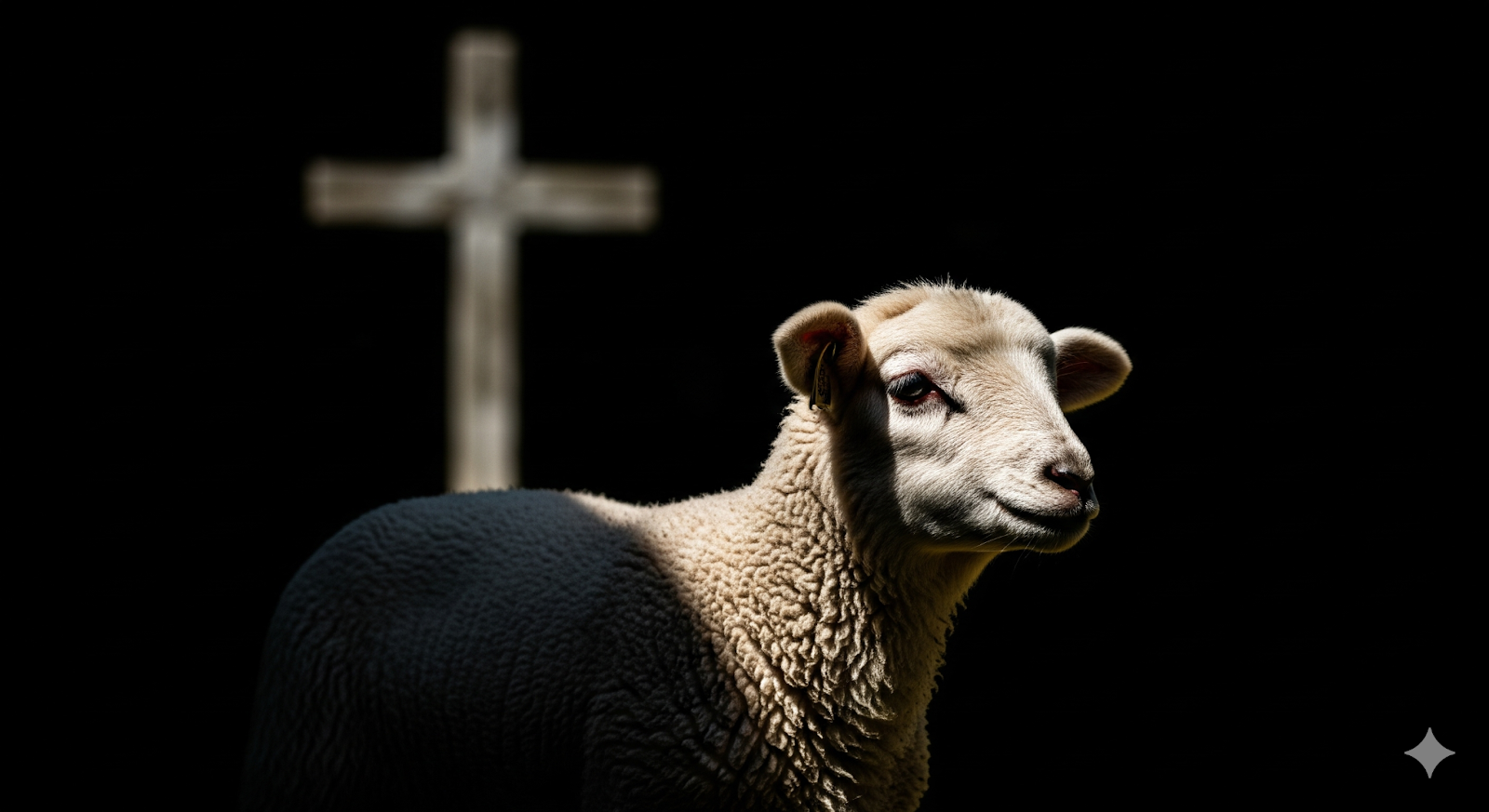
Welcome Back! Today, we’ll be looking at the Gospel of John to see the last of the three metaphors Jesus refers to Himself as in John 10.
So let’s dive in.
(Click here to get a copy of the Gospel Sync document)
John 10:17–21
The reason the Father loves Me is that I lay down My life in order to take it up again. No one takes it from Me, but I lay it down of My own accord. I have authority to lay it down and authority to take it up again. This charge I have received from My Father.” Again there was division among the Jews because of Jesus’ message. Many of them said, “He is demon-possessed and insane. Why would you listen to Him?” But others replied, “These are not the words of a man possessed by a demon. Can a demon open the eyes of the blind?”
My Thoughts
And now we come to the last of the three metaphors. But this one is hidden in plain sight. It is the Sacrificial Lamb. Jesus has been painting a picture about His identity and purpose. He starts with calling Himself the Gate of the sheep pen. He is the only legitimate passage to God, the only way. Then in transition, He calls Himself the Good Shepherd. He is the only One who can lead the sheep in and out of the Gate. And now He alludes to Himself as the Sacrificial Lamb in an even more mysterious way.
“The reason the Father loves Me is that I lay down My life in order to take it up again.“
He actually alluded to this earlier in verse 11.
“I am the good shepherd; the good shepherd lays down His life for the sheep.”
Tucked away in Jesus’ discourse with the religious leaders is the most significant event in human history, God the Father and God the Son collaborate in His sacrificial death for the redemption of mankind.
Earlier in the Old Testament, God the Father actually institutes a foreshadowing ceremony called the Passover to point to what Jesus is saying here. Before the last plague inflicted on Egypt the Children of Israel were instructed to kill a lamb and paint the blood on the doorposts and lintel of their dwellings. This was a sign for the Destroyer to “pass over” them when slaying the first born of every creature in Egypt (Exodus 12:1-27). They were commanded to keep it as a perpetual ceremony to point them to THE Lamb of God who ultimately shed His blood and would pass over their sins. Unfortunately, many in Israel then and today missed the full intent of this prophetic observance.
This was the message of many prophets throughout history and John the Baptist put it most clearly.
“Behold, the Lamb of God who takes away the sin of the world!” (John 1:29)
That brings us to the role of the disciple maker. It’s our responsibility to help people see the significance of Jesus being that Passover Lamb. We bring the gospel message and train others to preach the death, burial, and resurrection of the Christ. We teach them how to live in a never ending state of passover rather than just practicing a ritual once a year. As disciple makers we point to a life in Christ that is guided, protected, and empowered by the Blood of the Lamb.
Then I heard a loud voice in heaven, saying,
“Now the salvation, and the power, and the kingdom of our God and the authority of His Christ have come, for the accuser of our brethren has been thrown down, he who accuses them before our God day and night. And they overcame him because of the blood of the Lamb and because of the word of their testimony, and they did not love their life even when faced with death. (Revelation 12:10-11)
My Story
As a soldier I saw a lot of blood even though I was never really on the frontlines, so to speak. But I saw enough in training and accidents where it became kind of “normal.” I went from being a little queasy at the sight of the red stuff to “such is life.” I even watched our Physician Assistant in the Ranger Battalion surgically remove a piece of metal jammed into my knee cap. So I had become pretty accustomed to the sight of blood.
Until…my four year old son, Charles William Wood III, cut himself so bad we had to take him to the emergency room. The sight of that blood, the blood of my son, made my head spin and I almost couldn’t drive because I thought I was going to pass out. I don’t want to use the word “faint” because it sounds kind of wimpy. But I have to admit, at the time, I was feeling pretty wimpy. The sight of my son’s blood was not “normal.” It was gut-wrenching!
I can only imagine what God the Father was feeling as His Son’s blood was being spilled out for you and I. It’s not the sanitized kid’s version of the torture and crucifixion. It’s watching the horrifying nauseating reality of a loved one’s life drain from them. That’s how much God loves us and I am compelled to tell others His story about the sacrificial Lamb.
Our Action Plan
Now it’s time for application. Here’s some questions and ideas;
- What other insights from the Old Testament point to the sacrifice Jesus makes on the cross?
- How are you as a disciple maker helping people connect the dots between the Old and the New Testaments?
- Help those you are discipling prepare a Discovery Bible Study on the Passover and its significance to us as followers of Jesus.
Jesus points to the Old Testament often to shed light on His identity and purpose. This makes it important to have a handle on both the Old and the New in order to see Jesus clearly and plumb the depth of His richness. As disciple makers, we should encourage those we mentor to read and study the whole counsel of God.
Index for all posts in the Gospel Sync Series
Organic Writing – No Artificial Intelligence or Sweeteners Added
Una puerta, un pastor y un cordero (Parte 3) – #148
¡Bienvenidos de nuevo! Hoy analizaremos el Evangelio de Juan para ver la última de las tres metáforas con las que Jesús se describe a sí mismo en Juan 10.
Así que, ¡comencemos!
Juan 10:17-21
Mis Pensamientos
Y ahora llegamos a la última de las tres metáforas. Pero esta está oculta a plena vista. Es el Cordero Sacrificial. Jesús ha estado describiendo su identidad y propósito. Comienza llamándose a sí mismo la Puerta del redil. Él es el único camino legítimo hacia Dios, la única vía. Luego, en la transición, se llama a sí mismo el Buen Pastor. Él es el único que puede guiar a las ovejas dentro y fuera de la Puerta. Y ahora alude a sí mismo como el Cordero Sacrificial de una manera aún más misteriosa.
La razón por la que el Padre me ama es que doy mi vida para volver a tomarla.
De hecho, ya había aludido a esto anteriormente en el versículo 11:
Yo soy el buen pastor; el buen pastor da su vida por las ovejas.
Escondido en el discurso de Jesús con los líderes religiosos se encuentra el acontecimiento más significativo de la historia de la humanidad: Dios Padre y Dios Hijo colaboran en su muerte sacrificial para la redención de la humanidad.
Anteriormente, en el Antiguo Testamento, Dios Padre instituyó una ceremonia prefigurativa llamada la Pascua para señalar lo que Jesús está diciendo aquí. Antes de la última plaga infligida a Egipto, a los hijos de Israel se les ordenó matar un cordero y pintar la sangre en los postes y el dintel de las puertas de sus casas. Esta era una señal para que el Destructor los “pasara por alto” al matar a los primogénitos de todas las criaturas en Egipto (Éxodo 12:1-27). Se les ordenó que la guardaran como una ceremonia perpetua para que recordaran al Cordero de Dios que finalmente derramaría su sangre y perdonaría sus pecados. Desafortunadamente, muchos en Israel, tanto entonces como ahora, no comprendieron el significado completo de esta observancia profética.
Este fue el mensaje de muchos profetas a lo largo de la historia, y Juan el Bautista lo expresó con mayor claridad:
«He aquí el Cordero de Dios, que quita el pecado del mundo» (Juan 1:29).
Esto nos lleva al papel del hacedor de discípulos. Es nuestra responsabilidad ayudar a las personas a comprender la importancia de que Jesús sea ese Cordero Pascual. Llevamos el mensaje del evangelio y capacitamos a otros para que prediquen la muerte, la sepultura y la resurrección de Cristo. Les enseñamos a vivir en un estado constante de Pascua, en lugar de simplemente practicar un ritual una vez al año. Como formadores de discípulos, señalamos una vida en Cristo que es guiada, protegida y fortalecida por la sangre del Cordero.
Entonces oí una gran voz en el cielo que decía:
«Ahora ha llegado la salvación, el poder, el reino de nuestro Dios y la autoridad de su Cristo, porque el acusador de nuestros hermanos ha sido derribado, el que los acusaba día y noche delante de nuestro Dios. Y ellos lo vencieron por medio de la sangre del Cordero y por la palabra de su testimonio, y no amaron sus vidas hasta la muerte.» (Apocalipsis 12:10-11)
Mi Historia
Como soldado, vi mucha sangre, aunque nunca estuve realmente en la primera línea de combate, por así decirlo. Pero vi suficiente durante el entrenamiento y en accidentes como para que se volviera algo “normal”. Pasé de sentirme un poco mareado al ver sangre a pensar: “Así es la vida”. Incluso vi al asistente médico de nuestro batallón de Rangers extirpar quirúrgicamente un trozo de metal que se me había incrustado en la rótula. Así que me había acostumbrado bastante a la vista de la sangre.
Hasta que… mi hijo de cuatro años, Charles William Wood III, se cortó tan gravemente que tuvimos que llevarlo a la sala de emergencias. La vista de esa sangre, la sangre de mi hijo, me hizo sentir mareado y casi no pude conducir porque pensé que me iba a desmayar. No quiero usar la palabra “desmayarme” porque suena un poco cobarde. Pero tengo que admitir que, en ese momento, me sentía bastante débil. La vista de la sangre de mi hijo no era “normal”. ¡Fue desgarrador!
Solo puedo imaginar lo que sintió Dios Padre al ver la sangre de su Hijo derramada por ti y por mí. No se trata de la versión edulcorada para niños de la tortura y la crucifixión. Se trata de presenciar la horrible y nauseabunda realidad de ver cómo la vida de un ser querido se escapa. Así de grande es el amor de Dios por nosotros, y me siento impulsado a contarles a otros su historia sobre el Cordero sacrificial.
Nuestro Plan de Acción
Ahora es el momento de la aplicación. Aquí tienes algunas preguntas e ideas:
¿Qué otras enseñanzas del Antiguo Testamento apuntan al sacrificio que Jesús hizo en la cruz?
Como formador de discípulos, ¿cómo ayudas a las personas a conectar el Antiguo y el Nuevo Testamento?
Ayuda a quienes estás discipulando a preparar un estudio bíblico de descubrimiento sobre la Pascua y su significado para nosotros como seguidores de Jesús.
Jesús se refiere a menudo al Antiguo Testamento para arrojar luz sobre su identidad y propósito. Por lo tanto, es importante comprender tanto el Antiguo como el Nuevo Testamento para ver a Jesús con claridad y profundizar en la riqueza de su mensaje. Como formadores de discípulos, debemos animar a quienes discipulamos a leer y estudiar toda la Palabra de Dios.
Si ve un problema importante en la traducción, envíeme una corrección por correo electrónico a charleswood1@gmail.com

 ToBeLikeJesus