The Discipleship Test – #96

ENGLISH / ESPAÑOL

Welcome Back! Today, we’ll be looking at all four Gospels to see how Jesus tested His disciples.

So let’s get started.

(Click here to get a copy of the Gospel Sync document) 

Matthew 14:15-21, Mark 6:35–44, Luke 9:12–17, John 6:5–13

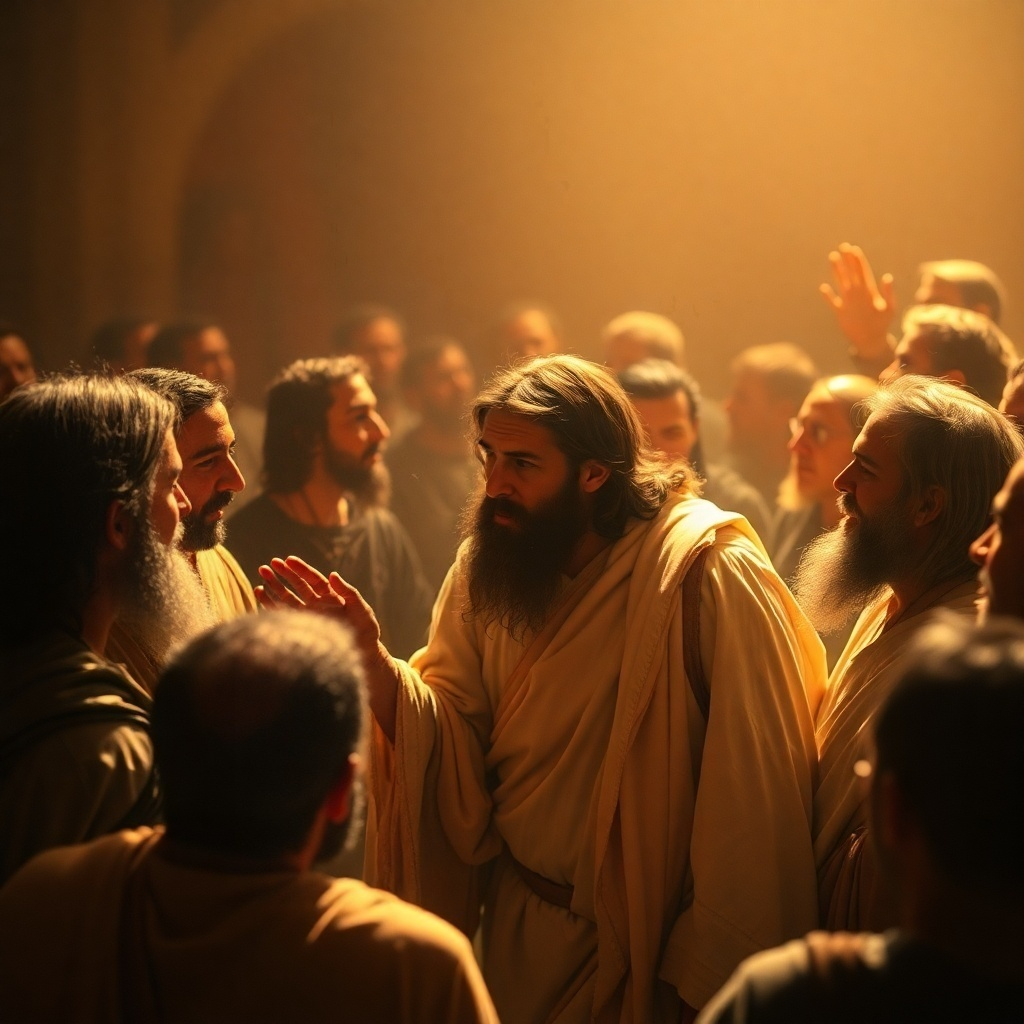
By now the hour was already late and the day neared its end. When Jesus looked up and saw a large crowd coming toward Him. So the twelve disciples came to Jesus and said, “This is a desolate place, and the hour is already late. Dismiss the crowds so they can go to the surrounding villages and countryside for lodging and provisions for themselves. For we are in a desolate place here.”

“They do not need to go away,” Jesus replied. “You give them something to eat.” He said to Philip, “Where can we buy bread for these people to eat?” But He was asking this to test him, for He knew what He was about to do. Philip answered, “Two hundred denarii would not buy enough bread for each of them to have a small piece.”

“Go and see how many loaves you have,” He told them. And after checking, one of His disciples, Andrew, Simon Peter’s brother, said to Him, “Here is a boy with five barley loaves and two small fish. But what difference will these make among so many unless we go and buy food for all these people?”

“Bring them here to Me,” Jesus said. Then Jesus directed His disciples to have the people sit down in groups of about a hundred or fifty each on the green grass (now there was plenty of grass in that place). So the men sat down, about five thousand of them.

Then Jesus took the five loaves and the two fish, He gave thanks and spoke a blessing. Then He broke the loaves and gave them to the disciples, and the disciples gave them to the people, as much as they wanted. And He divided the two fish among them all. They all ate and were satisfied and full. Jesus said to His disciples, “Gather the pieces that are left over, so that nothing will be wasted.” The disciples picked up and filled twelve basketfuls of broken pieces of the barley bread and fish that were left over by those who had eaten. About five thousand men were fed, in addition to women and children.

My Thoughts 

A lot of disciple-making treasures are lost in the spectacular. This event is a case in point. Most of us would see and teach on the feeding of 5000 people. But in focusing on the miracle of the loaves and fish we might completely miss the pure genius of the Master Disciple-Maker. The genius you ask? It was testing Philip with a problem that only significant faith in God could solve.

Jesus gives the disciples a command to feed the hungry throng. Then He turns to Philip and asks a question meant to test the young apprentice; “Where can we buy bread for these people to eat?”  I can picture Philip’s response in my mind. “What? Who, me?! You’re asking me where we are going to buy bread for all these people!?”

And then once the Master Disciple-Maker has created enough tension, He models what it looks like to have the kind of faith in the Father to pull off such a miracle. And here’s the kicker. I think Jesus really expected us to not only believe that He could do the miracle but He expects us to have enough faith in the Father for us to do the miracle ourselves. That’s the true test in Jesus’ discipleship.

Am I suggesting you need to test those you are discipling? Do you want to be like Jesus? Make disciples like Jesus? Then, yes, I am.

My Story

I have a saying: “Sling him in the breach.” For those unfamiliar, a breach is a gap or opening created in our fortification or defensive line, usually resulting from an enemy attack. In military contexts, this breach allows attacking forces to rush in and potentially overcome the defender’s position.

When I say “Sling him in the breach,” I mean we should actively seek out risky situations and intentionally place our emerging leaders in those challenging gaps. This approach generates a significant level of spiritual tension, compelling them to trust in God. It serves as a strategy to test both their faith and their resilience. 

I actually do this all the time. Most recently, Deb and I were training a church on how to engage strangers in conversation and then share our testimony. We were doing this at several different levels all at once. Sound confusing? Let me explain.

We had a young single guy that we had trained the week before so he was only one step ahead of the other folks we were modeling for on this particular Sunday. Being short on laborers, we asked the single guy to go with two people and model what we had modeled for him the week before. Sling him in the breach number one.

Then, after I had modeled for two guys, I immediately turned to them and asked “Ok, who’s going to go next?” They both looked shocked that I would put the ball in their court so quickly. One, mustering up his courage, volunteered.  Sling him in the breach number two.

And then at the end of our foray into the harvest, I designated a young budding leader to do the debrief of our evangelistic efforts. Sling him in the breach number three.

You might say that these tests were simply delegation before the delegate felt confident and you would be right. That’s exactly what Jesus did with Philip and the rest of His disciples. I think He’s still doing it today.

Our Action Plan

Now it’s time for application. Here’s some ideas;

  • Reflect on Past Experiences: Recall times when leaders entrusted you with responsibilities that required you to trust God for the outcomes.
  • Delegate with Purpose: After training, intentionally place a young leader in charge of a task that will challenge their faith and growth.
  • Assess Your Delegation Skills: Give yourself a grade as a delegator and set goals to improve over the next month.

The art of discipleship involves strategically challenging emerging leaders to grow in faith, capability, and capacity. By following Jesus’ example of testing His disciples, we can cultivate resilient, God-dependent leaders who are prepared to face the challenges of ministry and life.

La prueba del discipulado – 96

¡Bienvenidos de nuevo! Hoy, analizaremos los cuatro Evangelios para ver cómo Jesús puso a prueba a sus discípulos.

Comencemos.

Mateo 14:15-21, Marcos 6:35-44, Lucas 9:12-17, Juan 6:5-13

Ya era tarde y el día estaba por terminar. Cuando Jesús levantó la vista, vio que una gran multitud venía hacia él. Los doce discípulos se acercaron a Jesús y le dijeron: «Este lugar es desolado y la hora ya está avanzada. Despide a la multitud para que se vaya a los pueblos y campos de los alrededores a buscar alojamiento y comida, porque estamos en un lugar desolado».

Jesús les respondió: «No tienen por qué irse. Dales tú de comer». Entonces le preguntó a Felipe: «¿Dónde podemos comprar pan para que coman estos?». Pero Jesús le preguntó esto para ponerlo a prueba, porque sabía lo que iba a hacer. Felipe le respondió: «Doscientos denarios no bastarían para que cada uno de ellos comiera un pedazo».

Jesús les dijo: «Vayan y vean cuántos panes tienen». Después de comprobarlo, uno de sus discípulos, Andrés, hermano de Simón Pedro, le dijo: «Aquí hay un muchacho que tiene cinco panes de cebada y dos pececillos. Pero ¿qué diferencia habrá entre tanta gente, si no vamos a comprar alimentos para toda esta gente?»

«Traédmelos aquí», dijo Jesús. Entonces Jesús ordenó a sus discípulos que hicieran que la gente se sentara en grupos de unos ciento o cincuenta cada uno sobre la hierba verde (pues había mucha hierba en ese lugar). Así que se sentaron los hombres, unos cinco mil.

Entonces Jesús tomó los cinco panes y los dos peces, dio gracias y pronunció una bendición. Luego partió los panes y se los dio a los discípulos, y los discípulos se los dieron a la gente, según lo que quisieron. Luego repartió los dos peces entre todos. Todos comieron y quedaron saciados y satisfechos. Jesús dijo a sus discípulos: «Recoged los pedazos que sobraron, para que no se desperdicie nada». Los discípulos recogieron los pedazos de pan de cebada y de pescado que sobraron a los que habían comido y llenaron doce cestas. Fueron alimentados unos cinco mil hombres, además de las mujeres y los niños.

Mis Pensamientos

Muchos tesoros de la formación de discípulos se pierden en lo espectacular. Este evento es un buen ejemplo. La mayoría de nosotros veríamos y enseñaríamos acerca de la alimentación de 5000 personas. Pero al centrarnos en el milagro de los panes y los peces, podríamos pasar por alto por completo el genio puro del Maestro Hacedor de Discípulos. ¿El genio, te preguntarás? Estaba probando a Felipe con un problema que solo una fe significativa en Dios podría resolver.

Jesús da a los discípulos una orden de alimentar a la multitud hambrienta. Luego se vuelve hacia Felipe y le hace una pregunta destinada a poner a prueba al joven aprendiz: “¿Dónde podemos comprar pan para que coman estas personas?”. Puedo imaginar la respuesta de Felipe en mi mente. “¿Qué? ¿Quién, yo? ¿Me estás preguntando dónde vamos a comprar pan para todas estas personas?”.

Y luego, una vez que el Maestro Hacedor de Discípulos ha creado suficiente tensión, modela lo que significa tener el tipo de fe en el Padre para lograr semejante milagro. Y aquí está el truco. Creo que Jesús realmente esperaba que no solo creyéramos que Él podía hacer el milagro, sino que también esperaba que tuviéramos suficiente fe en el Padre para que nosotros mismos hiciéramos el milagro. Esa es la verdadera prueba del discipulado de Jesús.

¿Estoy sugiriendo que necesitas poner a prueba a aquellos a quienes estás discipulando? ¿Quieres ser como Jesús? ¿Hacer discípulos como Jesús? Entonces, sí, lo estoy haciendo.

Mi Historia

Tengo un dicho: “Lánzalo a la brecha”. Para aquellos que no lo conocen, una brecha es una brecha o abertura creada en nuestra fortificación o línea defensiva, generalmente como resultado de un ataque enemigo. En contextos militares, esta brecha permite que las fuerzas atacantes ingresen rápidamente y potencialmente superen la posición del defensor.

Cuando digo “Lánzalo a la brecha”, quiero decir que debemos buscar activamente situaciones de riesgo y colocar intencionalmente a nuestros líderes emergentes en esas brechas desafiantes. Este enfoque genera un nivel significativo de tensión espiritual, lo que los obliga a confiar en Dios. Sirve como una estrategia para probar tanto su fe como su resiliencia.

De hecho, hago esto todo el tiempo. Más recientemente, Deb y yo estábamos capacitando a una iglesia sobre cómo entablar una conversación con extraños y luego compartir nuestro testimonio. Estábamos haciendo esto en varios niveles diferentes a la vez. ¿Suena confuso? Déjame explicarte.

Teníamos un joven soltero al que habíamos capacitado la semana anterior, por lo que estaba solo un paso por delante de las otras personas para las que estábamos modelando ese domingo en particular. Como no teníamos suficientes obreros, le pedimos al hombre soltero que fuera con dos personas y que siguiera el ejemplo que le habíamos dado la semana anterior. Primero, lánzalo a la brecha.

Luego, después de haberle dado el ejemplo a dos hombres, inmediatamente me volví hacia ellos y les pregunté: “Bien, ¿quién va a ir después?”. Ambos se sorprendieron de que yo les pusiera la pelota en la cancha tan rápidamente. Uno, reuniendo su coraje, se ofreció como voluntario. Después, lánzalo a la brecha número dos.

Y luego, al final de nuestra incursión en la cosecha, designé a un joven líder en ciernes para que hiciera el informe de nuestros esfuerzos evangelísticos. Después, lánzalo a la brecha número tres.

Podría decir que estas pruebas fueron simplemente una delegación antes de que el delegado se sintiera seguro y estaría en lo cierto. Eso es exactamente lo que Jesús hizo con Felipe y el resto de sus discípulos. Creo que todavía lo está haciendo hoy.

Nuestro Plan de Acción

Ahora es el momento de ponerlo en práctica. A continuación, se ofrecen algunas ideas:

Reflexione sobre experiencias pasadas: recuerde momentos en los que los líderes le confiaron responsabilidades que requerían que confiara en Dios para obtener los resultados.

Delegue con un propósito: después de la capacitación, coloque intencionalmente a un líder joven a cargo de una tarea que desafiará su fe y su crecimiento.

Evalúe sus habilidades para delegar: califíquese como delegador y establezca metas para mejorar durante el próximo mes.

El arte del discipulado implica desafiar estratégicamente a los líderes emergentes para que crezcan en fe, capacidad y aptitud. Al seguir el ejemplo de Jesús de poner a prueba a sus discípulos, podemos cultivar líderes resilientes y dependientes de Dios que estén preparados para enfrentar los desafíos del ministerio y de la vida.

Si ve un problema importante en la traducción, envíeme una corrección por correo electrónico a charleswood1@gmail.com

Spiraling Out of Control – #94

ENGLISH / ESPAÑOL

Welcome Back! Today, we’ll be combining the gospels of Matthew and Mark to see the downward spiral of poor decisions. 

So let’s dive in.

(Click here to get a copy of the Gospel Sync document) 

Matthew 14:3–12, Mark 6:17–29 

For Herod himself had ordered that John be arrested and bound and imprisoned, on account of Herodias, his brother Philip’s wife, whom Herod had married. For John had been telling Herod, “It is not lawful for you to have your brother’s wife!” So Herodias held a grudge against John and she and Herod wanted to kill him, but had been unable, because Herod was afraid of the people, because they regarded John as a prophet. So Herod feared John and protected him, knowing that he was a righteous and holy man and when he heard John’s words, he was greatly perplexed; yet he listened to him gladly.

But on Herod’s birthday, her opportunity arose. Herod held a banquet for his nobles and military commanders and the leading men of Galilee. When the daughter of Herodias came and danced, she pleased Herod and his guests, so much the king said to the girl, “Ask me for whatever you wish, and I will give it to you.” And he swore to her, “Whatever you ask of me, I will give you, up to half my kingdom!” Then she went out and asked her mother, “What should I request?” And her mother answered, “The head of John the Baptist.” At once the girl hurried back to the king with her request prompted by her mother,: “I want you to give me the head of John the Baptist on a platter immediately.”

The king was grieved and was consumed with sorrow, but because of his oaths and his guests, he did not want to refuse her and he ordered that her wish be granted and sent to have John beheaded in the prison. So without delay, the executioner went and beheaded John in the prison. The man brought John’s head on a platter and presented it to the girl, who gave it to her mother. Then John’s disciples came and took his body and buried it. And they went and informed Jesus.

My Thoughts

Herod and his wife are making one bad decision after another and each one leads to deeper adverse consequences. Here’s a list of errors they made;

  • Getting married (Herod married his brother’s wife while he was still alive contrary to Jewish law)
  • Not listening to John the Baptist and repenting
  • Having his step daughter “dance” in front of all these men
  • Promising to give the daughter a blank check (up to ½ the kingdom)
  • Not being willing to do the right thing because of his reputation
  • Not having the moral courage to deny a request fueled by revenge
  • Having an innocent man executed (murdered) in order to save face

Now that’s what I call “spiraling out of control” with bad decision making. But that’s exactly what our enemy wants to do to us. He wants to start a chain reaction of sin that ultimately leads to our complete destruction. But God has given us an off-ramp for this craziness;

No temptation has overtaken you but such as is common to man; and God is faithful, who will not allow you to be tempted beyond what you are able, but with the temptation will provide the way of escape also, so that you will be able to endure it. (1 Corinthians 10:13)

As disciple-makers, our responsibility extends beyond merely teaching principles; we must also embody them. It’s important to share our weaknesses and failures with those we mentor, as well as to provide examples of how to take the “off-ramp” when faced with temptations. This approach fosters authenticity and encourages growth in those we guide.

My Story

I’ve probably told this story before but it fits so appropriately, I have to share it again.

I had been training Ranger students for 36 hours straight and was finally back at the camp. I was tired and just wanted to get some sleep. But as I jumped off a helicopter, I saw my Platoon Sergeant waiting for me on the landing zone and he didn’t look happy. “Sergeant Wood,” he motioned for me to join him. “Did you tell a Ranger student to throw away ammo?” On the defensive I immediately said “No.” He relaxed his tense expression and said “I knew you of all people wouldn’t do anything stupid like that!” 

Only one problem. I had done something stupid like that. I had just lied to my Platoon Sergeant. He continued, “Well go talk to the Captain and tell him what you told me.” And here’s where things started to “spiral out of control.” I could have taken the “off-ramp” right there. But no, I told my Captain the same lie and he sent me to the Battalion Commander. And you can see where this is going. I was spiraling up the chain of command and spiraling out of control with my sin. I was getting ready to crash and burn.

The next morning during my time with Jesus I was reading the Psalms and I read;

I said in my alarm, “All men are liars.”  Psalm 116:11 

That was enough to cause me to repent and I immediately went to my Battalion Commander and told him the truth. Then I worked my way back down the chain of command, confessing my sin and telling them the truth. I was given a Letter of Reprimand by my C.O. but that wasn’t the worst of it. After the formal reading of the LOR my Captain said; “I thought you were a Christian Sergeant Wood?” That stung more than anything else.

I share this story for two reasons. First, I want to be real and share my weaknesses and failures. And second, I want all of us to see how easy it is to spiral out of control if we don’t immediately take the off-ramp.

Our Action Plan

Now it’s time for application, here’s some ideas;

  • You and the people you’re mentoring memorize 1 Corinthians 10:13
  • Discuss the “Off Ramp.” What does this look like in some common temptations?
  • Share your weaknesses and failures with those you are discipling

Looking at both Herod’s tragic story and our personal experiences, we can see how a single poor choice can spiral into a tragic chain of consequences if we don’t take the “off-ramp” God always offers  through repentance. The key to avoiding such spirals lies in having the humility and courage to admit our mistakes early, turn back to truth, and accept the temporal consequences rather than compound our errors through pride or fear.

Espiral fuera de control – 94

¡Bienvenidos nuevamente! Hoy, combinaremos los evangelios de Mateo y Marcos para ver la espiral descendente de las malas decisiones.

Así que profundicemos.

Mateo 14:3-12, Marcos 6:17-29

Porque el mismo Herodes había ordenado que Juan fuera arrestado, atado y encarcelado, por causa de Herodías, la esposa de Felipe su hermano, con la cual Herodes se había casado. Porque Juan le decía a Herodes: «No te es lícito tener la esposa de tu hermano». Así que Herodías guardaba rencor contra Juan y ella y Herodes querían matarlo, pero no pudieron, porque Herodes tenía miedo del pueblo, porque éste consideraba a Juan un profeta. Por eso Herodes temía a Juan y lo protegía, sabiendo que era un hombre justo y santo. Cuando oyó las palabras de Juan, quedó muy perplejo; sin embargo, lo escuchó con gusto.

Pero el día del cumpleaños de Herodes, se le presentó la oportunidad. Herodes celebró un banquete para sus nobles, comandantes militares y los hombres principales de Galilea. La hija de Herodías llegó y danzó, y agradó a Herodes y a los invitados. El rey le dijo a la muchacha: «Pídeme lo que quieras y te lo daré». Y le juró: «Te daré todo lo que me pidas, hasta la mitad de mi reino». Ella salió y preguntó a su madre: «¿Qué quiero pedir?». Su madre le respondió: «La cabeza de Juan el Bautista». Inmediatamente la muchacha se apresuró a volver al rey y le dijo: «Quiero que me des en una bandeja la cabeza de Juan el Bautista».

El rey se entristeció y se entristeció mucho, pero a causa de sus juramentos y de los invitados, no quiso negarle nada y ordenó que se le concediera su deseo y mandó decapitar a Juan en la cárcel. El verdugo fue sin demora y decapitó a Juan en la cárcel. El hombre trajo la cabeza de Juan en una bandeja y se la presentó a la muchacha, quien se la dio a su madre. Entonces los discípulos de Juan fueron y tomaron el cuerpo y lo sepultaron. Luego fueron y se lo hicieron saber a Jesús.

Mis Pensamientos

Herodes y su esposa toman una mala decisión tras otra y cada una de ellas conduce a consecuencias adversas más profundas. Aquí hay una lista de errores que cometieron:

Casarse (Herodes se casó con la esposa de su hermano mientras aún estaba vivo en contra de la ley judía)

No escuchar a Juan el Bautista y arrepentirse

Hacer que su hijastra “baile” frente a todos estos hombres

Prometerle a la hija un cheque en blanco (hasta la mitad del reino)

No estar dispuesto a hacer lo correcto debido a su reputación

No tener el coraje moral para negar una solicitud impulsada por la venganza

Hacer que ejecuten (asesinen) a un hombre inocente para salvar las apariencias

Eso es lo que yo llamo “salir de control” con una mala toma de decisiones. Pero eso es exactamente lo que nuestro enemigo quiere hacernos. Quiere iniciar una reacción en cadena de pecado que, en última instancia, conduce a nuestra destrucción total. Pero Dios nos ha dado una salida para esta locura;

No os ha sobrevenido ninguna tentación que no sea común al hombre; Y fiel es Dios, que no os dejará ser tentados más de lo que podéis resistir, sino que dará también juntamente con la tentación la salida, para que podáis soportarla. (1 Corintios 10:13)

Como hacedores de discípulos, nuestra responsabilidad se extiende más allá de simplemente enseñar principios; también debemos encarnarlos. Es importante compartir nuestras debilidades y fracasos con aquellos a quienes guiamos, así como también dar ejemplos de cómo tomar la “rampa de salida” cuando nos enfrentamos a las tentaciones. Este enfoque fomenta la autenticidad y alienta el crecimiento en aquellos a quienes guiamos.

Mi Historia

Probablemente ya he contado esta historia antes, pero encaja tan bien que tengo que compartirla de nuevo.

Había estado entrenando a estudiantes de Rangers durante 36 horas seguidas y finalmente había regresado al campamento. Estaba cansado y solo quería dormir un poco. Pero cuando salté de un helicóptero, vi a mi sargento de pelotón esperándome en la zona de aterrizaje y no parecía feliz. “Sargento Wood”, me hizo un gesto para que me uniera a él. “¿Le dijiste a un estudiante de Ranger que tirara munición?” A la defensiva, dije inmediatamente “No”. Relajó su expresión tensa y dijo “¡Sabía que tú de todas las personas no harías algo tan estúpido como eso!”

Solo había un problema. Había hecho algo estúpido como eso. Acababa de mentirle a mi sargento de pelotón. Continuó: “Bueno, ve a hablar con el capitán y dile lo que me dijiste”. Y aquí es donde las cosas comenzaron a “salir de control”. Podría haber tomado la “rampa de salida” allí mismo. Pero no, le dije a mi capitán la misma mentira y él me envió al comandante del batallón. Y puedes ver a dónde va esto. Estaba subiendo en espiral por la cadena de mando y perdiendo el control con mi pecado. Me estaba preparando para estrellarme y arder.

A la mañana siguiente, durante mi tiempo con Jesús, estaba leyendo los Salmos y leí:

Dije alarmado: “Todos los hombres son mentirosos”. Salmo 116:11

Eso fue suficiente para hacerme arrepentir e inmediatamente fui a mi comandante del batallón y le dije la verdad. Luego volví a bajar por la cadena de mando, confesando mi pecado y diciéndoles la verdad. Mi oficial al mando me dio una carta de reprimenda, pero eso no fue lo peor. Después de la lectura formal de la carta de reprimenda, mi capitán dijo: “Pensé que eras cristiano, sargento Wood”. Eso me dolió más que cualquier otra cosa.

Comparto esta historia por dos razones. Primero, quiero ser real y compartir mis debilidades y fracasos. Y segundo, quiero que todos veamos lo fácil que es perder el control si no tomamos la salida inmediatamente.

Nuestro Plan de Acción

Ahora es el momento de la aplicación. Aquí hay algunas ideas:

Usted y las personas a las que está asesorando deben memorizar 1 Corintios 10:13

Hablen sobre la “rampa de salida”. ¿Cómo se manifiesta esto en algunas tentaciones comunes?

Compartan sus debilidades y fracasos con aquellos a quienes están discipulando

Si analizamos la trágica historia de Herodes y nuestras experiencias personales, podemos ver cómo una sola mala decisión puede convertirse en una trágica cadena de consecuencias si no tomamos la “rampa de salida” que Dios siempre ofrece a través del arrepentimiento. La clave para evitar tales espirales radica en tener la humildad y el coraje de admitir nuestros errores pronto, volver a la verdad y aceptar las consecuencias temporales en lugar de agravar nuestros errores a través del orgullo o el miedo.

Si ve un problema importante en la traducción, envíeme una corrección por correo electrónico a charleswood1@gmail.com

The Muddy Boots General – #92

ENGLISH / ESPAÑOL

Rather Listen?

Welcome Back! Today, we’ll be looking at the Gospels of Matthew, Mark, and Luke to see how Jesus never ascended to the “ivory tower” and was the supreme example of what He expected others to do.  

So let’s get started.

(Click here to get a copy of the Gospel Sync document) 

Matthew 11:1, Mark 6:12–13, Luke 9:6

After Jesus had finished instructing His twelve disciples, they set out and went from village to village, preaching the gospel and that the people should repent. They also drove out many demons and healed many of the sick people everywhere, anointing them with oil. And Jesus too, went on from there to teach and preach in their cities.

My Thoughts 

Jesus’ leadership style consistently demonstrated a commitment to leading by example, even in moments when He could have justifiably rested. After instructing and sending out His disciples, Jesus did not retreat to claim the privileges of rank. Instead, He continued to drive on with the very mission He had tasked his followers with.

Many leaders might have seized this opportunity for a well-deserved break, citing the common refrain “rank has its privileges.” After all, Jesus had invested significant time and effort in training, teaching, and modeling the mission for His disciples. However, Jesus chose a different path, one that exemplified His “lead by example” approach to leadership.

Rather than stepping back, Jesus stepped forward, engaging in the same work He had assigned to His followers. This action reinforced His teachings and demonstrated that He was not above the tasks He asked of others. By doing so, Jesus showcased a leadership style characterized by humility, dedication, and an exemplary model of a leader to be emulated.

My Story

This week I met with my friend Alex, who is the BSM (Baptist Student Ministries) director for San Antonio. He had just gotten back from a mission trip to Mexico and was completely out of gas. He had been burning the candle at both ends for weeks and we were discussing ways to maintain a more sustainable pace. We talked about things he could potentially eliminate from his schedule. But a couple of things were non-negotiables for him; Sharing the Gospel and Discipleship. He was adamant about keeping these two elements the centerpiece of the ministry.

I’ve got to say I’m very proud of him for modeling these two priorities for his staff and students. Clearly he needs to slow down and take some things off his plate but his kingdom values are in the right place. He is a muddy boots general. 

Our Action Plan

Now let’s look at some ideas for application;

  • Do an assessment of your leadership; Are you asking people to do things you are unwilling to do yourself.
  • Encourage those you are discipling to be a “DO as I DO” leader.
  • Do the tough stuff together – Go share the gospel! 

Jesus exemplified the ultimate “muddy boots” leadership style, never asking His followers to do anything He wasn’t willing to do Himself. By continuing to teach and preach alongside His disciples, He set a powerful example for all leaders to follow, showing that true leadership means getting your hands (and feet) dirty and leading from the front lines.

El general de las botas embarradas – 92

¡Bienvenidos de nuevo! Hoy, analizaremos los evangelios de Mateo, Marcos y Lucas para ver cómo Jesús nunca ascendió a la “torre de marfil” y fue el ejemplo supremo de lo que esperaba que hicieran los demás.

Comencemos.

Mateo 11:1, Marcos 6:12-13, Lucas 9:6

Después de que Jesús terminó de instruir a sus doce discípulos, ellos se pusieron en camino y fueron de aldea en aldea, predicando el evangelio y que la gente se arrepintiera. También expulsaron a muchos demonios y sanaron a muchos enfermos por todas partes, ungiéndolos con aceite. Y Jesús también se fue de allí a enseñar y predicar en sus ciudades.

Mis Pensamientos

El estilo de liderazgo de Jesús demostró constantemente un compromiso con el liderazgo con el ejemplo, incluso en momentos en los que justificadamente podría haber descansado. Después de instruir y enviar a sus discípulos, Jesús no se retiró para reclamar los privilegios del rango. En cambio, continuó avanzando con la misma misión que había encomendado a sus seguidores.

Muchos líderes podrían haber aprovechado esta oportunidad para un merecido descanso, citando el refrán común “el rango tiene sus privilegios”. Después de todo, Jesús había invertido mucho tiempo y esfuerzo en capacitar, enseñar y modelar la misión para sus discípulos. Sin embargo, Jesús eligió un camino diferente, uno que ejemplificaba su enfoque de liderazgo de “liderar con el ejemplo”.

En lugar de dar un paso atrás, Jesús dio un paso adelante, participando en el mismo trabajo que había asignado a sus seguidores. Esta acción reforzó sus enseñanzas y demostró que no estaba por encima de las tareas que pedía a los demás. Al hacerlo, Jesús mostró un estilo de liderazgo caracterizado por la humildad, la dedicación y un modelo ejemplar de un líder a imitar.

Mi Historia

Esta semana me reuní con mi amigo Alex, quien es el director de BSM (Ministerio de Estudiantes Bautistas) en San Antonio. Acababa de regresar de un viaje misionero a México y estaba completamente sin energía. Había estado trabajando duro durante semanas y estábamos discutiendo formas de mantener un ritmo más sostenible. Hablamos sobre cosas que podría eliminar de su agenda, pero había un par de cosas que no eran negociables para él: compartir el evangelio y el discipulado. Se mantuvo firme en mantener estos dos elementos como la pieza central del ministerio.

Tengo que decir que estoy muy orgulloso de él por ser el modelo de estas dos prioridades para su personal y sus estudiantes. Claramente necesita bajar el ritmo y quitarse algunas cosas de encima, pero sus valores del reino están en el lugar correcto. Es un general con botas embarradas.

Nuestro Plan de Acción

Ahora veamos algunas ideas para aplicarlas:

  • Haz una evaluación de tu liderazgo: ¿estás pidiendo a la gente que haga cosas que tú no estás dispuesto a hacer?
  • Anima a quienes estás discipulando a ser líderes que “hagan lo que yo hago”.
  • Hagan las cosas difíciles juntos: ¡vayan a compartir el evangelio!

Jesús ejemplificó el estilo de liderazgo de “botas embarradas” por excelencia, nunca pidió a sus seguidores que hicieran algo que él no estuviera dispuesto a hacer. Al continuar enseñando y predicando junto a sus discípulos, dio un poderoso ejemplo para que todos los líderes lo sigan, mostrando que el verdadero liderazgo significa ensuciarse las manos (y los pies) y liderar desde el frente.

Si ve un problema importante en la traducción, envíeme una corrección por correo electrónico a charleswood1@gmail.com

Wet Blanket Leadership – #86

ENGLISH / ESPAÑOL

Rather Listen?

Welcome Back! Today, we’ll be looking at the Gospel of Matthew to see how to avoid being a wet blanket leader.

So let’s get started.

(Click here to get a copy of the Gospel Sync document) 

Matthew 9:27-34

As Jesus went on from there, two blind men followed Him, crying out, “Have mercy on us, Son of David!” After Jesus had entered the house, the blind men came to Him. “Do you believe that I am able to do this?” He asked. “Yes, Lord,” they answered. Then He touched their eyes and said, “According to your faith will it be done to you.” And their eyes were opened. Jesus warned them sternly, “See that no one finds out about this!” But they went out and spread the news about Him throughout the land.

As they were leaving, a demon-possessed man who was mute was brought to Jesus. And when the demon had been driven out, the man began to speak. The crowds were amazed and said, “Nothing like this has ever been seen in Israel!” But the Pharisees said, “It is by the prince of demons that He drives out demons.”

My Thoughts 

Have you ever been criticized for doing ministry? It always amazes me that the religious leaders of His day elected to attack Jesus for things like healing people and casting out demons. Why did they get so upset about such good deeds? It was all about their reputations and power. The more Jesus performed legitimate miracles from the Father, the more the religious leader’s hypocrisy and spiritual bankruptcy was exposed. It was that way then and it’s still that way today.

In fact, in one of my favorite quotes from Jesus He warns us that “It is enough for the disciple that he become like his teacher, and the slave like his master. If they have called the head of the house Beelzebul, how much more will they malign the members of his household!” (Matthew 10:25) In other words, heads up! If they persecuted the Master, they will persecute the servants. And boy is this true to the bone. 

I’m amazed at how so-called spiritual men and women get enraged and vindictive when their reputations and power is threatened by someone in the flock. There’s a full court press to try to extinguish anything that might encroach on their turf. They throw a wet blanket on anything that they didn’t initiate. This is especially true when the threat is a younger zealous disciple.

But before we start comparing wounds and battle scars, let’s do a little inventory. Have we committed this sin ourselves? As disciple-makers, have we felt the need to put someone in their place because our reputation was being tarnished or we were losing control of a situation. I don’t know about you, but I have been seriously tempted in this area!

We have to stay teachable and humble. We have to expect that those we are mentoring will gain insights that we have yet to grasp, do things much more effectively than we do, and even surpass us in our impact in the kingdom. But shouldn’t that be every disciple-maker’s dream? Shouldn’t we be proud of those we mentor when they outstrip us in their efforts to glorify God? Yes! That should be our goal as we say right alongside Jesus; 

Truly, truly, I say to you, he who believes in Me, the works that I do, he will do also; and greater works than these he will do; because I go to the Father. (John 14:12)

My Story

I remember the time I was excited about something I had just read in my Bible. I was young in the faith and I was pulling things out of Scripture daily that was blowing my mind.  I couldn’t wait to share what I had learned. That day I met with a person who was quite a bit further along in their walk with Jesus and I shared my little treasure with them. They responded with; “Oh bro, you’re just seeing that? That’s basic Christianity. Here, let me show you what I’m getting out of the Word.” He put me in my place and I was totally deflated.

A few years later I was discipling men and asking them what they were getting out of their Bible reading. One of the guys was excited about something they had read that day and dropped it on me. I responded with;  “Oh bro, you’re just seeing that? That’s basic Christianity. Here, let me show you…” Right then and there the Holy Spirit brought to my mind when an older religious leader had done that to me. I apologized to my brother and committed myself to celebrate even the smallest discoveries and accomplishments of those I mentor and not be a “wet blanket leader.” I don’t have to be the lead dog in every discussion and “lord over” the flock. I never made that mistake again.

Shepherd the flock of God among you, exercising oversight not under compulsion, but voluntarily, according to the will of God; and not for sordid gain, but with eagerness; nor yet as lording it over those allotted to your charge, but proving to be examples to the flock. (1 Peter 5:2-3)

Our Action Plan

Now we’ll look at some ideas on how to help us as disciple-makers stay humble and teachable even to those we are mentoring.

  • Confess sin and share your weaknesses with those you are discipling
  • Delegate – Let others take the lead in meetings and gathering
  • Celebrate even the smallest discoveries and accomplishments of those you mentor

Avoiding wet blanket leadership requires humility, celebrating others’ growth, and resisting the urge to always be the expert. By staying teachable and encouraging those we mentor, we can create an environment where everyone feels valued and empowered to contribute their insights and talents.

¡Liderazgo Aguafiestas – 86

¡Bienvenido de nuevo! Hoy veremos el Evangelio de Mateo para ver cómo evitar ser un líder que desanima a  sus discípulos.

Así que comencemos.

Mateo 9:27-34

Al salir Jesús de allí, dos ciegos le siguieron clamando: «¡Ten piedad de nosotros, Hijo de David!» Cuando Jesús entró en la casa, los ciegos se le acercaron. “¿Crees que soy capaz de hacer esto?” Él preguntó. “Sí, Señor”, respondieron. Luego les tocó los ojos y dijo: “Conforme a vuestra fe os será hecho”. Y sus ojos fueron abiertos. Jesús les advirtió severamente: “¡Mirad que nadie se entere de esto!” Pero ellos salieron y difundieron la noticia acerca de Él por toda la tierra.

Cuando se iban, trajeron a Jesús un endemoniado que estaba mudo. Y cuando el demonio fue expulsado, el hombre comenzó a hablar. La multitud estaba asombrada y decía: ¡Nunca se ha visto algo así en Israel! Pero los fariseos decían: “Por el príncipe de los demonios expulsa los demonios”.

Mis Pensamientos 

¿Alguna vez ha sido criticado por hacer ministerio? Siempre me sorprende que los líderes religiosos de su época eligieron atacar a Jesús por cosas como sanar personas y expulsar demonios. ¿Por qué se enojaron tanto por tan buenas obras? Se trataba de su reputación y poder. Cuanto más Jesús realizaba milagros legítimos del Padre, más quedaba al descubierto la hipocresía y la bancarrota espiritual del líder religioso. Era así entonces y sigue siendo así hoy.

De hecho, en una de mis citas favoritas de Jesús nos advierte que “le basta al discípulo llegar a ser como su maestro, y al esclavo como su amo. Si al cabeza de familia llamaron Beelzebú, ¡cuánto más calumniarán a los miembros de su casa! (Mateo 10:25) En otras palabras, ¡Atención! Si persiguieron al Maestro, perseguirán a los siervos. Y vaya, esto es fiel hasta el tuétano. 

Me sorprende cómo los llamados hombres y mujeres espirituales se enfurecen y se vuelven vengativos cuando su reputación y su poder se ven amenazados por alguien del rebaño. Hay una presión en toda la cancha para tratar de extinguir cualquier cosa que pueda invadir su territorio. Arrojan desánimo sobre cualquier cosa que ellos no hayan iniciado. Esto es especialmente cierto cuando la amenaza es un discípulo más joven y celoso de las cosas de Dios.

Pero antes de empezar a comparar heridas y cicatrices de batalla, hagamos un pequeño inventario. ¿Hemos cometido este pecado nosotros mismos? Como hacedores de discípulos, ¿hemos sentido la necesidad de poner a alguien en su lugar porque nuestra reputación estaba siendo manchada o estábamos perdiendo el control de una situación? ¡No sé ustedes, pero yo me he sentido seriamente tentado en esta área!

Tenemos que seguir siendo enseñables y humildes. Tenemos que esperar que aquellos a quienes asesoramos obtengan conocimientos que nosotros aún tenemos que comprender, hagan las cosas mucho más eficazmente que nosotros e incluso nos superen en nuestro impacto en el reino. ¿Pero no debería ser ese el sueño de todo hacedor de discípulos? ¿No deberíamos estar orgullosos de aquellos a quienes asesoramos cuando nos superan en sus esfuerzos por glorificar a Dios? ¡Sí! Ese debería ser nuestro objetivo así mismo como lo dijo Jesús; 

De cierto, de cierto os digo, el que cree en Mí, las obras que Yo hago, él también las hará; y mayores obras que éstas hará; porque voy al Padre. (Juan 14:12)

Mi Historia

Recuerdo la vez que estaba emocionado por algo que acababa de leer en mi Biblia. Yo era joven en la fe y diariamente sacaba cosas de las Escrituras que me dejaban boquiabierto.  No podía esperar para compartir lo que había aprendido. Ese día me encontré con una persona que estaba bastante más avanzada en su caminar con Jesús y le compartí mi pequeño tesoro. Ellos respondieron con; “Oh hermano, ¿recién estás viendo eso? Ese es el cristianismo básico. Aquí, déjame mostrarte lo que estoy obteniendo de la Palabra”. Me puso en mi lugar y quedé totalmente desinflado.

Unos años más tarde estaba discipulando a hombres y preguntándoles qué estaban obteniendo de su lectura de la Biblia. Uno de los chicos estaba entusiasmado con algo que habían leído ese día y me lo contó. Respondí con;  “Oh hermano, ¿recién estás viendo eso? Ese es el cristianismo básico. Aquí, déjame mostrarte…” En ese mismo momento, el Espíritu Santo me recordó cuando un líder religioso mayor me había hecho eso. Me disculpé con mi hermano y me comprometí a celebrar incluso los descubrimientos y logros más pequeños de aquellos a quienes discipulo y no ser un “líder aguafiestas”. No tengo que ser el perro guía en cada discusión y “señorearme” del rebaño. Nunca volví a cometer ese error.

Pastoreen el rebaño de Dios entre ustedes, ejerciendo vigilancia no por obligación, sino voluntariamente, según la voluntad de Dios; y no por ganancia sórdida, sino con afán; ni como enseñoreándose de los que están a su cargo, sino siendo ejemplos para el rebaño. (1 Pedro 5:2-3)

Nuestro Plan de Acción

Ahora veremos algunas ideas sobre cómo ayudarnos como hacedores de discípulos a mantenernos humildes y dispuestos a aprender incluso con aquellos a quienes estamos guiando.

  • Confiesa tus pecados y comparte tus debilidades con aquellos a quienes estás discipulando
  • Delega: deja que otros tomen la iniciativa en reuniones y encuentros
  • Celebra hasta los descubrimientos y logros más pequeños de aquellos a quienes estás guiando

Evitar un liderazgo aguafiestas requiere humildad, celebrar el crecimiento de los demás y resistir la tentación de ser siempre el experto. Si nos mantenemos dispuestos a aprender y alentamos a aquellos a quienes guiamos, podemos crear un entorno en el que todos se sientan valorados y capacitados para contribuir con sus ideas y talentos.

Translation by Norma Klingler

When Ministry is Interrupted – #84

ENGLISH / ESPAÑOL

Index for all posts in the Gospel Sync Series

Welcome Back! Today, we’ll be combining the Gospels of Matthew, Mark, and Luke to see how Jesus handled opportunities that might appear to be distractions. 

So let’s get started.

(Click here to get a copy of the Gospel Sync document) 

Matthew 9:18–22, Mark 5:21–34, Luke 8:40–48

When Jesus returned and had again crossed by boat to the other side, a large crowd gathered around Him beside the sea and welcomed Him for they had all been waiting for Him.

While Jesus was speaking to them, a synagogue leader named Jairus came and knelt before Him. He begged urgently for Him to come to his house because his only daughter, who was about twelve, was dying. He said, “My little daughter is near death. Please come and place Your hands on her, so that she will be healed and live.”

So Jesus got up and went with him, along with His disciples and a large crowd followed and pressed around Him. And a woman was there who had suffered from bleeding for twelve years. She had borne much agony under the care of many physicians and had spent all she had, but no one was able to heal her. Instead, her condition had only grown worse.

When the woman heard about Jesus, she came up through the crowd behind Him and touched the fringe of His cloak. For she kept saying, “If only I touch His garments, I will be healed.” Immediately her bleeding stopped, and she sensed in her body that she was healed of her affliction. At once Jesus was aware that power had gone out from Him. Turning to the crowd, He asked, “Who touched My garments?” But they all denied it. His disciples answered, “You can see the crowd pressing in on You, and yet You ask, ‘Who touched Me?’” But He kept looking around to see who had done this.” Peter said, “Master, the people are crowding and pressing against You.” But Jesus declared, “Someone touched Me, for I know that power has gone out from Me.”

Then the woman, seeing that she could not escape notice, knowing what had happened to her, came and fell down before Him trembling in fear, and Jesus turned and saw her. She told Him the whole truth and in the presence of all the people, she explained why she had touched Him and how she had immediately been healed. “Daughter,” said Jesus, “your faith has healed you. Go in peace and be free of your affliction.” And the woman was cured from that very hour.

My Thoughts

As disciple makers, how do we handle interruptions and distractions in our ministries? We see how Jesus did. A woman with enough faith to reach out and just touch His clothes stopped Him in His tracks. But why? He was on a mission. He had no time to lose, the little girl was dying! Besides, it’s first come, first serve, right? How does the dad feel when Jesus suddenly stops and is wondering “who touched Him.” Doesn’t He have bigger fish to fry?

But Jesus not only stops, He is taking precious time to acknowledge a secret believer and affirm her faith. Jesus is like that. He is the “Good Samaritan.” He doesn’t just walk by the wounded guy (or lady) like a Pharisee or Scribe because He’s got more “religious stuff” to do. He takes the time not only to find the lady in the crowd but to announce to all, “Daughter, your faith has healed you. Go in peace and be free of your affliction.”

Disciple makers must balance focus with flexibility. While maintaining dedication to the core mission is crucial, it’s equally important to remain attuned to divine opportunities that arise unexpectedly.

Discerning distractions from opportunities requires developing spiritual sensitivity through a deepening relationship with God and cultivating guidance from the Holy Spirit. This discernment is honed through practice and experience in discipleship, allowing us to refine our ability to identify situations that align with our mission to glorify God. While maintaining focus on the primary goal of making disciples, it’s crucial to remain flexible and open to unexpected ways God may work. Jesus exemplified this balance by recognizing apparent interruptions as divine appointments to demonstrate God’s love and power. As His followers, we should pray for the Father to develop this same perceptiveness, enabling us to stay committed to our mission while remaining responsive to divine interventions and opportunities to serve.

My Story

As I have mentioned many times and even in my last post, Deb and I love going to Fort Sam every Sunday to share the gospel with soldiers, sailors, and airmen. Every Sunday, one of the guys who waits tables, engages us with a friendly chat. His name is Andrew and he has an intellectual disability. Andrew has responded to our friendliness by making it a custom to greet Deb and I and then fill us in on the latest Batman comic. “Do you know who the Joker is?” Andrew asked. Then he will very briefly bring us up to speed on the “Caped Crusader’s” activities.  Although extremely friendly, he lacks the social skills and awareness to know when is a good time to approach people and when not to. 

On several occasions, Andrew has interrupted me while I’m sharing the gospel with our young military members. Usually, I’ve already had a chat with Andrew and I can simply say, “Andrew, I’m talking to these people now. I’ll catch up with you later.” I’m always gentle but firm and Andrew has never responded in an inappropriate way. 

Even during my meeting with Mike on Monday, one of the men I mentor, Andrew “interrupted” us. I seized that opportunity to model for Mike how to respond with kindness and navigate so-called “interruptions.”

We started talking to Andrew about our favorite “superhero” named Jesus. Deb and I are going to give him a little New Testament and ask what he’s learning about our King. Andrew’s interruptions are not a curse, they are a blessing. 

Our Action Plan

Now it’s time for application. Here’s some ideas.

  • Reflect on past “interruptions.” How did you handle them?
  • Pray and ask God for wisdom and discernment 
  • Model how to handle these “interruptions” with those you are discipling

Ministry interruptions often present divine opportunities to demonstrate Christ’s love and compassion in unexpected ways. By remaining sensitive to the Holy Spirit’s guidance and flexible in our approach, we can turn apparent distractions into powerful moments of discipleship and spiritual growth.

Index for all posts in the Gospel Sync Series

Cuando el Ministerio se Interrumpe – #84

¡Bienvenido! Hoy vamos a combinar los Evangelios de Mateo, Marcos y Lucas para ver cómo Jesús manejó las oportunidades que podrían parecer distracciones.

Así que empecemos.

Mateo 9:18–22, Marcos 5:21–34, Lucas 8:40–48

Pasando otra vez Jesús en una barca a la otra orilla, se reunió alrededor de él una gran multitud; y él estaba junto al mar.  Y vino uno de los principales de la sinagoga, llamado Jairo; y luego que le vio, se postró a sus pies,  y le rogaba mucho, diciendo: Mi hija está agonizando; ven y pon las manos sobre ella para que sea salva, y vivirá.

Así que Jesús se levantó y fue con él, junto con sus discípulos, y una gran multitud le siguió y se apretó a su alrededor. Y había una mujer allí que había sufrido hemorragias durante doce años. Había soportado mucha agonía bajo el cuidado de muchos médicos y había gastado todo lo que tenía, pero nadie pudo curarla. En cambio, su condición solo había empeorado.

Cuando la mujer oyó hablar de Jesús, se abrió paso entre la multitud detrás de Él y tocó el borde de su manto. Porque ella seguía diciendo: “Si tan solo toco sus ropas, seré sanado.” Inmediatamente su sangrado cesó y sintió en su cuerpo que estaba curada de su aflicción. Jesús se dió cuenta enseguida y volviéndose hacia la multitud, preguntó: “¿Quién tocó mis ropas?” Pero todos lo negaron. Sus discípulos respondieron: “Podéis ver a la multitud presionándose, y sin embargo preguntais: ‘¿Quién me ha tocado?'” Pero no paraba de mirar a su alrededor para ver quién había hecho esto.” Peter dijo: “Maestro, la gente se está amontonando y presionando contra Ti.” Pero Jesús dijo: Alguien me ha tocado; porque yo he conocido que ha salido poder de mí. Entonces, cuando la mujer vió que no había quedado oculta, vino temblando, y postrándose a sus pies, le declaró delante de todo el pueblo por qué causa le había tocado, y cómo al instante había sido sanada. Y él le dijo: Hija, tu fe te ha salvado; ve en paz.

Mis Pensamientos

Como hacedores de discípulos, ¿cómo gestionamos las interrupciones y distracciones en nuestros ministerios? Vemos cómo lo hizo Jesús. Una mujer con suficiente fe como para tocar Su ropa le detuvo en seco. ¿Pero por qué? Estaba en una misión. No tenía tiempo que perder, ¡la niña se estaba muriendo! Además, es por orden de llegada, ¿no? ¿Cómo se siente el padre cuando Jesús de repente se detiene y se pregunta “quién le tocó”? ¿No tiene Él asuntos más importantes que hacer?

Pero Jesús no solo se detiene, sino que se toma un tiempo valioso para reconocer a una creyente secreta y afirmar su fe. Jesús es así. Él es el “Buen Samaritano.” No pasa simplemente junto al herido (o la señora) como un fariseo o un escriba porque tenga más “cosas religiosas” que hacer. Se toma el tiempo no solo para encontrar a la dama entre la multitud, sino para anunciar a todos: “Hija, tu fe te ha sanado. Ve en paz.”

Los hacedores de discípulos deben equilibrar el enfoque con la flexibilidad. Aunque mantener la dedicación a la misión central es crucial, es igual de importante estar atento a las oportunidades divinas que surgen inesperadamente.

Discernir distracciones de las oportunidades requiere desarrollar una sensibilidad espiritual a través de una relación más profunda con Dios y cultivando la guía del Espíritu Santo. Este discernimiento se perfecciona a través de la práctica y la experiencia en el discipulado, permitiéndonos perfeccionar nuestra capacidad para identificar situaciones que se alinean con nuestra misión de glorificar a Dios. Mientras mantienes el enfoque en el objetivo principal de hacer discípulos, es fundamental mantenerse flexible y abierto a formas inesperadas en que Dios pueda actuar. Jesús demostró este equilibrio al reconocer las aparentes interrupciones como citas divinas para demostrar el amor y el poder de Dios. Como Sus seguidores, debemos orar para que el Padre desarrolle esta misma perspicacia, permitiéndonos mantenernos comprometidos con nuestra misión mientras seguimos siendo receptivos a las intervenciones divinas y a las oportunidades de servir.

Mi Historia

Como he mencionado muchas veces e incluso en mi última publicación, a Deb y a mí nos encanta ir a Fort Sam cada domingo para compartir el evangelio con soldados, marineros y aviadores. Cada domingo, uno de los chicos que sirve de mesa inició una charla amistosa. Se llama Andrew y tiene una discapacidad intelectual. Andrew ha respondido a nuestra amabilidad haciendo una costumbre de saludar a Deb y a mí y luego ponernos al día sobre el último cómic de Batman. “¿Sabes quién es el Joker?” preguntó Andrew. Luego nos pone al día muy brevemente sobre las actividades del “Activista Encapuchado”.  Aunque es extremadamente amigable, Andrew carece de las habilidades sociales y la conciencia para saber cuándo es buen momento acercarse a la gente y cuándo no.

En varias ocasiones, Andrew me ha interrumpido mientras compartía el evangelio con nuestros jóvenes militares. Normalmente, ya he hablado con Andrew y puedo simplemente decir: “Andrew, ahora estoy hablando con estas personas. Te alcanzaré luego.” Siempre soy amable pero firme y Andrew nunca ha respondido de forma inapropiada.

Incluso durante mi reunión con Mike el lunes, uno de los hombres a los que mentoreo, Andrew, nos “interrumpió”. Aproveché esa oportunidad para mostrarle a Mike cómo responder con amabilidad y navegar las llamadas “interrupciones”.

Empezamos a hablar con Andrew sobre nuestro “superhéroe” favorito llamado Jesús. Deb y yo le vamos a dar un poco del Nuevo Testamento y preguntarle qué está aprendiendo sobre nuestro Rey. Las interrupciones de Andrew no son una maldición, son una bendición.

Nuestro Plan de Acción

Ahora es el momento de la aplicación. Aquí van algunas ideas.

–       Reflexiona sobre las “interrupciones” pasadas. ¿Cómo los manejaste?

–       Ora y pide a Dios sabiduría y discernimiento

–       Modela cómo manejar estas “interrupciones” con aquellos que estás discipulando

Las interrupciones del ministerio suelen presentar oportunidades divinas para demostrar el amor y la compasión de Cristo de formas inesperadas. Al mantenernos sensibles a la guía del Espíritu Santo y ser flexibles en nuestro enfoque, podemos convertir distracciones aparentes en momentos poderosos de discipulado y crecimiento espiritual.

The Calling – Preface and Introduction

The Saga of a Deep Space Ranger

Download Free PDF

Preface 

I’m writing a science fiction novel for fun, drawing inspiration from my love of space combat movies and books. However, I’ve found it challenging to discover “wholesome” material in this genre that aligns with my values and avoids profanity, explicit content, and anti-Christian narratives. Consequently, I decided to embark on writing my own book, hoping you, the reader, will enjoy it. Please note that I have no intention of pursuing traditional publishing or commercializing this material.

While crafting the storyline and situations within the book, I have drawn upon my experiences during my military service in the U.S. Army. Over the course of my 19-year career as an infantryman and subsequent 10 years as an Army Chaplain, I have gained valuable insights that inform my writing, but I do not claim to have been a war hero or to have had significant combat experiences akin to the main character in this book, despite my participation in Operations Desert Fox and Joint Guardian.

While there is no profanity or sexual content, the story does contain some violent scenes, leading me to rate it PG-13. Furthermore, for my fellow brothers and sisters coping with PTSD, I would recommend avoiding this as a form of entertainment.

As a follower of Jesus Christ, I have intentionally incorporated Biblical principles and spiritual components into the narrative. Unapologetically loyal to my King, I seize every opportunity to share the faith and eagerly invite others to become His subjects, embracing the same identity and purpose I have found in Christ. Through my writing, I aim to provide practical examples of how to follow Jesus and encourage others to do the same.

Additionally, I have utilized Artificial Intelligence (AI) technology to assist in providing framework, ideas, and editing for this e-book. While AI has been a helpful tool, please understand that for every 10 minutes of AI usage, I have invested 3 to 4 hours of personal work per chapter to refine and ensure the final product aligns with my desires. Therefore, although not entirely original, this work is ultimately my creation.

Enjoy and be inspired by a hero finding his way to Jesus Christ.

Introduction

In the 25th century, humanity’s expansion into the stars has ushered in a new era of prosperity and unbounded possibility. Yet this budding interstellar renaissance has also brought unprecedented peril in the form of the Skravaks – a merciless insect-like alien species fixated on the wholesale eradication of human civilization.

What began as scattered clashes on the fringes of known space has erupted into total war, with the monstrous Skravaks relentlessly encroaching on human colony worlds with scorched-earth tactics and overwhelming force. Outmatched in numbers and technological prowess, mankind’s survival has come to hinge on the courage, skill, and unwavering spirit of its elite front-line warriors – the legendary Deep Space Rangers.

Forged in the crucible of the Confederation Military’s grueling training program, the Rangers are an unstoppable fusion of medieval knights and 25th century space Marines. These deathless guardians represent the absolute apex of human bravery, fortitude, and lethality, having undergone a years-long grueling process designed to reforge them as fine-tuned instruments of war. Only a handful of recruits ultimately pass the training gauntlets required to join the Rangers’ storied ranks.

This is the story of Wade Winston Kovacs, a naively idealistic 17-year-old an aspiring Ranger candidate living on one of Mars’ colonies.

What follows is an odyssey guided by God’s sovereign hand, where Wade’s development unfolds through sacrifice, raw perseverance, and faith. Wade and his new brothers-in-arms are systematically broken down and rebuilt into the unyielding human weapons the Confederation so desperately needs to repel the unstoppable Skravak menace. In this battle-scarred new reality, failure is not an option. Yet, it is a journey where Wade’s unwavering trust in divine providence sustains him, as he surrenders to a higher purpose amidst the trials and transformations he must endure. God’s guiding hand shapes Wade’s path, imbuing his struggles with sacred meaning and fortifying his resolve to emerge victorious against the formidable enemies, both seen and unseen.

Link to all Chapters – Text & Audio

New Sci-Fi Novel

I’ve decided to try my hand at writing a sci-fi novel. In “The Calling: The Saga of a Deep Space Ranger,” I invite you to the 25th-century where humanity’s survival against the ruthless alien incursion hinges on the valor of the elite Deep Space Rangers. As young Wade Winston Kovacs embarks on his journey to become a Ranger, he navigates a perilous path of sacrifice and faith, guided by divine providence and fortified by his unwavering trust in God. This gripping tale, infused with Biblical principles and inspired by my personal military experiences, offers a wholesome yet thrilling adventure of courage and spiritual awakening in the face of formidable alien threats.

Mark your calendars for the first chapter release next Saturday! I will be releasing an additional chapter every other week. You’ll be able to access the ebook in several different ways. 

6 May 2025 – I’m almost finished with the book!

Link to all Chapters – Text & Audio

Links in vid description below

#TheCallingRanger
Here’s a link to the Preface and Introduction if you want early access!

August 2024 – Update – The Kingdom Advances

Latin America

Bob and Mary mentor many key leaders throughout much of Latin America who make disciples of Jesus. They sent this picture of eight baptisms in a Shuar community, where there were no known Christians. And three baptisms in a gang controlled area on the Ecuador Coast. God has provided another contact in Argentina. Noemi started a “church in the market” in Bolivia and it is growing with the participation of several vendors. Andres has been asked to train in both Thailand and Turkey. 

Japan

David and Danielle mentor several key leaders in Japan including Tex and Mayumi who sent these pictures of late teens and early 20s coming to Christ in Okinawa.

Eight were baptized assisted by the pastor. Five (1st generation), who led the Eight (2nd generation) men and women to Christ.

Alaska

Our son and daughter-in-law, Wes & Tina, have a church of Jesus followers in their home. James, a Specialist in the Army who works with Wes, decided during their discussion on the story about the Ethiopian eunuch that he wanted to be baptized. So they found the closest lake on google maps and baptized him that day (even though it was well past 9pm).

US & Pakistan

I was recently on a Zoom call with other missionaries Jim and Justin are facilitating on the topic of leadership development. We are taking a close look at how Jesus has shaped us over the years to be His servants. There were four generations of disciples represented on the call.

San Antonio

Deb and I had the privilege of debriefing two young college students from their summer mission training. Alex and Morgan have been MAWLing them in the ways of Jesus all summer (Model, Assist, Watch, & Launch). Trenton and Jared are third generation disciples. Grant got to be the “cool uncle.” The “cool uncle” effect is when another disciple-maker reinforces what a primary disciple-maker has been trying to teach.


This month Deb and I will fly to Alaska for a family reunion and celebrate our 40th wedding anniversary. We praise God for His faithfulness throughout all the years. Thank You Jesus!

 Please Pray…

1 Jn 5.19We would be secure in our identity as children of God and not be worldly
2 Jn 1.3We would experience mercy, peace, truth, and love in the Father, Son, and the Holy Spirit
3 Jn 1.4We would see our children and our spiritual children walking in the truth
Jude 1.3We would contend for the faith
Rev 1.8We would see God for all He is and does
Rev 2.26-27We will wisely invest now to co-rule with Him in the future
Rev 3.10We would obey His commands and patiently endure
Rev 4.10We would learn to worship God here on earth the way it is done in heaven
Rev 5.12We would give glory and honor to the Lamb
Rev 7.16-17We would look forward to the day we are with Jesus
Rev 10.6We would be prepared to meet the Lord Jesus Christ when He comes
Rev 11.15We would advance the gospel into the nations
Rev 12.9We would resist the devil and be good spiritual warriors
Rev 13.10We would endure suffering with perseverance and patience
Rev 14.13Our deeds would honor the Lord and follow us as an offering to Him

New is Good and Old is… – #80

ENGLISH / ESPAÑOL

Welcome Back! Today, we’ll be looking at the Gospel of Matthew to see how Jesus emphasizes that new and old can be good.  

So let’s dive in.

(Click here to get a copy of the Gospel Sync document) 

 Matthew 13:51-53

Have you understood all these things?” “Yes,” they answered. Then He told them, “For this reason, every scribe who has been discipled in the kingdom of heaven is like a homeowner who brings out of his storeroom new treasures as well as old.” When Jesus had finished these parables, He withdrew from that place.

My Thoughts

Sometimes we pit the new against the old and vice versa. But Jesus didn’t do that here. It wasn’t the age of the matter that made it right or wrong. It was truth. Jesus is principle based. Principles are very driven by truth. They are timeless. Both govern our actions. Truth has to do more with realities, where principles have to do with the application of truth based on these realities.

In modern philosophy we have made truth so subjective, our principles have become shaky as well. But if we were to read the Bible and did what the Pharisees did and equated only the “old” with “good” without considering truth and principle, we would be in just as much trouble with God as they were. Truth and principle have got to be our plumbline for both the old and the new.

The scribe was a very smart and often wise elder who taught the people based on the Scriptures. The Bible was their ultimate base for authority on truth and principle. A scribe that enters the kingdom of heaven is one who embraces the truths and principles of both the Old and New Testaments. And these truths and principles, according to Jesus, are pure gold. 

So how does this apply to us as disciple makers? We are to be ‘Scribe-like.” We are to teach the disciples of Jesus both the old ways and the new ways of following Jesus based on the fundamental truths and principles of the Bible. We should be knee deep in the Book ourselves and instructing others to do the same. And it is not just about gaining and passing on knowledge. It’s just as important that we are actually applying what we learn

My Story

Right now our church is going through a set of Biblical conviction studies on the basics of the faith. Our first step is to find five verses from Jesus (the Gospels) on the topic. Then we find five more passages from the rest of the Bible. We then ask two questions;

  1. WHY is mastering this particular topic so important?
  2. What do the Scriptures say about HOW to practice this topic?

During our gathering we discuss our findings. The homework for the next meeting is to look at these verses and ask two more questions;

  1. What are the principles and truths we find in these passages?
  2. How will we practice (method) the principles and truths we discovered?

This exercise of studying the Bible as a church does several things;

  1. We learn the principles and truths in the Word of God
  2. We actually apply what we are learning
  3. We discover the principles and truths are universal and timeless
  4. We practice various methods to live out the principles and truths
  5. We never put the methods before the principles and truths (Mark 7:1-13)

Here’s an example of my last conviction study on the Word of God

Our Action Plan

Now we’ll look at some ideas on how to help us as disciple-makers help others find principles and truths and distinguish between them and methods or forms.

  • Study Mark 7:1-13 and identify  why Jesus was so upset with the religious leaders
  • Do a Bible study on a topic and identify principles, truths, and methods
  • Make a list of your tools and traditions and identify the principles and truths behind them
  • Ask this question; “Are we married to the method or to the principle?”

As disciple-makers, we need to encourage believers to actively study the Bible while discerning timeless principles from contextual methods. By emphasizing both understanding and application, it fosters a deeper, more practical way to live out our faith and we can adapt to different cultural contexts while remaining faithful to core biblical truths.

Index for all posts in the Gospel Sync Series

Lo Nuevo es Bueno y lo Viejo es… – #80

¡Bienvenido! Hoy, veremos el Evangelio de Mateo para ver cómo Jesús enfatiza que lo nuevo y lo viejo pueden ser buenos.

Así que comencemos

 Mateo 13:51-53

Jesús les dijo: ¿Habéis entendido todas estas cosas? Ellos respondieron: Sí, Señor.  Él les dijo: Por eso todo escriba docto en el reino de los cielos es semejante a un padre de familia, que saca de su tesoro cosas nuevas y cosas viejas. Aconteció que cuando terminó Jesús estas parábolas, se fue de allí. 

Mis Pensamientos

A veces enfrentamos lo nuevo en contra de lo viejo y viceversa. Pero Jesús no hizo eso aquí. No era la edad del asunto lo que lo hacía correcto o incorrecto. Era la verdad. Jesús se basa en principios. Los principios están muy impulsados por la verdad. Son atemporales. Ambos gobiernan nuestras acciones. La verdad tiene que ver más con las realidades, donde los principios tienen que ver con la aplicación de la verdad basada en estas realidades.

La filosofía moderna ha hecho que la verdad sea tan subjetiva que nuestros principios también se han vuelto inestables. Pero si leyéramos la Biblia e hiciéramos lo que hicieron los fariseos y equipáramos solo lo “viejo” con lo “bueno” sin considerar la verdad y los principios, estaríamos en tantos problemas con Dios como ellos. La verdad y los principios tienen que ser nuestra plomada tanto para lo viejo como para lo nuevo.

El escriba era un anciano muy inteligente y a menudo sabio que enseñaba a la gente basándose en las Escrituras. La Biblia era su base última para la autoridad en la verdad y los principios. Un escriba que entra en el reino de los cielos es aquel que abraza las verdades y principios tanto del Antiguo como del Nuevo Testamento. Y estas verdades y principios, según Jesús, son oro puro.

Entonces, ¿cómo se aplica esto a nosotros como hacedores de discípulos? Debemos ser ‘como escribas’. Debemos enseñar a los discípulos de Jesús tanto las viejas como las nuevas formas de seguir a Jesús basadas en las verdades y principios fundamentales de la Biblia. Nosotros mismos debemos estar metidos hasta las rodillas en el Libro e instruir a otros para que hagan lo mismo. Y no se trata solo de adquirir y transmitir conocimientos. Es igual de importante que realmente apliquemos lo que aprendemos

Mi Historia

En este momento, nuestra iglesia está pasando por un conjunto de estudios de convicción bíblica sobre los fundamentos de la fe. Nuestro primer paso es encontrar cinco versículos de Jesús (los Evangelios) sobre el tema. Luego encontramos cinco pasajes más del resto de la Biblia. Luego hacemos dos preguntas:

  •   ¿POR QUÉ es tan importante dominar este tema en particular?
  • ¿Qué dicen las Escrituras acerca de CÓMO practicar este tema?

Durante nuestra reunión discutimos nuestros hallazgos. La tarea para la próxima reunión es mirar estos versículos y hacer dos preguntas más:

  • ¿Cuáles son los principios y verdades que encontramos en estos pasajes?
  • ¿Cómo practicaremos (métodos) los principios y verdades que descubrimos?

Este ejercicio de estudiar la Biblia como iglesia hace varias cosas;

  •  Aprendemos los principios y las verdades de la Palabra de Dios
  • De hecho, aplicamos lo que estamos aprendiendo
  •  Descubrimos que los principios y las verdades son universales y atemporales
  •  Practicamos varios métodos para vivir los principios y las verdades
  • Nunca anteponemos los métodos a los principios y las verdades (Marcos 7:1-13) 

Aquí hay un ejemplo de mi último estudio de convicción sobre la Palabra de Dios

Nuestro Plan de Acción

Ahora veremos algunas ideas sobre como hacedores de discípulos podemos ayudar a otros a encontrar principios y verdades, y distinguir entre ellos y los métodos o formas.

  •   Estudiar Marcos 7:1-13 y determine por qué Jesús estaba tan molesto con los líderes religiosos
  • Hacer un estudio bíblico sobre un tema e identifique principios, verdades y métodos
  • Hacer una lista de tus herramientas y tradiciones e identifica los principios y verdades detrás de ellas
  • Pregunta esto: “¿Estamos casados con el método o con el principio?”

Como hacedores de discípulos, debemos alentar a los creyentes a estudiar activamente la Biblia mientras disciernen los principios eternos de los métodos contextuales. Al enfatizar tanto la comprensión como la aplicación, ello fomenta una forma más profunda y práctica de vivir nuestra fe, y nos permite adaptarnos a diferentes contextos culturales sin dejar de ser fieles a las verdades bíblicas fundamentales.

Translated by Norma Klingler

Bad Fish – #79

Index for all posts in the Gospel Sync Series

ENGLISH / ESPAÑOL

Welcome Back! Today, we’ll be looking at the Gospel of Matthew to see how Jesus warned people of the coming judgment. 

So let’s dive in.

(Click here to get a copy of the Gospel Sync document) 

Matthew 13:47-50

Once again, the kingdom of heaven is like a net that was cast into the sea and caught all kinds of fish. When it was full, the men pulled it ashore. Then they sat down and sorted the good fish into containers, but threw the bad away. So will it be at the end of the age: The angels will come and separate the wicked from the righteous, and throw them into the fiery furnace, where there will be weeping and gnashing of teeth.

My Thoughts 

Once again, Jesus doesn’t pull any punches, He tells it like it is. There are some who are in the kingdom and some who are not. In this age of inclusivism we hear a lot of rhetoric about God being so loving, He couldn’t send anyone to Hell. The problem is that they fail to recognize the other attribute of God that is as equally strong. And that is justice. God cannot allow sin in His presence. He must either see the sinner through the lens of Christ’s blood which was appropriated by a humble and penitent heart. Or, for those who reject His grace, He will cast away from His loving companionship. And He has given ample warning to everyone.

For since the creation of the world His invisible attributes, His eternal power and divine nature, have been clearly seen, being understood through what has been made, so that they are without excuse. (Romans 1:20)

Part of our job as disciple-makers is to deliver the message. That message, the gospel, includes both grace and justice. We cannot change the message or the rules because God has two more attributes that will never change; immutability, the unchangeableness of God. And truth, He cannot lie. There will be a judgment for those who do not turn to Him and repent.

My Story

As I’m writing this my alarm set for 10:02 am went off. I set it to remind me daily to obey Jesus’s command to pray for laborers in Luke 10:2;

And He was saying to them, “The harvest is plentiful, but the laborers are few; therefore beseech the Lord of the harvest to send out laborers into His harvest.

As I pray this prayer, I work around a map in my head or literally stand in front of a world map in my study. I pray for laborers to be sent to Oceana, all of Asia, Europe, Africa, Latin America, North America, and our living room. (I also lift up a prayer for the Japanese people who have a special place in my heart). I pray for two reasons. First, because I’m commanded by the Lord Jesus to pray for laborers to be sent into God’s harvest fields. And secondly, I want as few bad fish to be cast into the fiery furnace as possible. If I’m really that concerned about people going to Hell, I’m not going to try and change the message or the rules. I’m going to share the gospel and try to change the hearts of those who are headed to an eternity of destruction. In addition, I’m going to pray, recruit, and train as many disciples of Jesus to join me in this endeavor. 

Our Action Plan

Now we’ll look at some ideas on how to help us as disciple-makers warn those who don’t know God of the coming judgment.

  • Inject Hell and judgment into your gospel presentation. (Jesus did)
  • Share the gospel often and train others to do the same
  • Join me in praying for laborers to be sent into the harvest daily at 10:02

The parable of the fishes serves as a sobering reminder of the final judgment, where the righteous will be separated from the wicked. As disciples, it is our duty to share the gospel truthfully, emphasizing both God’s grace and His justice, while fervently praying for more laborers to join us in this mission.

Pez Malo – #79

¡Bienvenido! Hoy, veremos el Evangelio de Mateo para ver cómo Jesús advirtió a la gente del juicio venidero.

Así que vamos a comenzar

Mateo 13:47-50

Asimismo el reino de los cielos es semejante a una red, que echada en el mar, recoge de toda clase de peces;  y una vez llena, la sacan a la orilla; y sentados, recogen lo bueno en cestas, y lo malo echan fuera.  Así será al fin del siglo: saldrán los ángeles, y apartarán a los malos de entre los justos, y los echarán en el horno de fuego; allí será el lloro y el crujir de dientes.

Mis Pensamientos

Una vez más, Jesús no anda con rodeos, dice las cosas como son. Hay algunos que están en el reino y otros que no. En esta era de inclusión escuchamos mucha retórica sobre Dios siendo tan amoroso que no podía enviar a nadie al infierno. El problema es que no reconocen el otro atributo de Dios que es igualmente fuerte. Y eso es justicia. Dios no puede permitir el pecado en Su presencia. Debe ver al pecador a través de la lente de la sangre de Cristo que fue apropiada por un corazón humilde y arrepentido. O, para aquellos que rechazan Su gracia, Él alejará Su amorosa compañía de ellos. Y Él lo ha advertido ampliamente a todos.

Porque las cosas invisibles de él, su eterno poder y deidad, se hacen claramente visibles desde la creación del mundo, siendo entendidas por medio de las cosas hechas, de modo que no tienen excusa. (Romanos 1:20)

Parte de nuestro trabajo como hacedores de discípulos es entregar el mensaje. Ese mensaje, el evangelio, incluye tanto la gracia como la justicia. No podemos cambiar el mensaje o las reglas porque Dios tiene dos atributos más que nunca cambiarán; la inmutabilidad, y la justicia de Dios. Y la verdad, Él no puede mentir. Habrá un juicio para aquellos que no se arrepientan y no se vuelvan a Él.

Mi Historia

Mientras escribo esto, sonó mi alarma programada para las 10:02 am. Lo configuré para recordarme diariamente que debo obedecer el mandato de Jesús de orar por los obreros en Lucas 10:2:

 Y les decía: La mies a la verdad es mucha, mas los obreros pocos; por tanto, rogad al Señor de la mies que envíe obreros a su mies.

Mientras hago esta oración, trabajo alrededor de un mapa en mi cabeza o literalmente me paro frente a un mapa del mundo en mi estudio. Oro para que se envíen obreros a Oceanía, a toda Asia, Europa, África, América Latina, América del Norte y a nuestra sala de estar. (También elevo una oración por el pueblo japonés que tiene un lugar especial en mi corazón). Mi oración es por dos razones. Primero, porque el Señor Jesús me ordena orar para que se envíen obreros a los campos de cosecha de Dios. Y en segundo lugar, quiero que se arroje la menor cantidad posible de peces malos al horno de fuego. Si realmente me preocupa que la gente vaya al infierno, no voy a tratar de cambiar el mensaje o las reglas. Voy a compartir el evangelio y tratar de cambiar los corazones de aquellos que se dirigen a una eternidad de destrucción. Además, voy a orar, reclutar y capacitar a tantos discípulos de Jesús para que se unan a mí en este esfuerzo.

Nuestro Plan de Acción

Ahora veremos algunas ideas sobre cómo ayudarnos como hacedores de discípulos a dar advertencia del juicio venidero a aquellos que no conocen a Dios.

–       Inyecta el infierno y el juicio en tu presentación del evangelio. (Jesús lo hizo)

–       Comparte el Evangelio con frecuencia y capacita a otros para que hagan lo mismo

–       Únete a mí para orar a las 10:02 para que los obreros sean enviados a la cosecha todos los días 

La parábola de los peces sirve como un recordatorio aleccionador del juicio final, donde los justos serán separados de los malvados. Como discípulos, es nuestro deber compartir el evangelio con sinceridad, enfatizando tanto la gracia de Dios como su justicia, mientras oramos fervientemente para que más obreros se unan a nosotros en esta misión.

Translation by Norma Klingler