Kingdom Kernel #23 – A Kingdom Divided

The Unassailable Kingdom: Christ’s Logic of Divine Unity

Kingdom Kernel Collection

And knowing their thoughts Jesus said to them, “Any kingdom divided against itself is laid waste; and any city or house divided against itself will not stand. If Satan casts out Satan, he is divided against himself; how then will his kingdom stand? If I by Beelzebul cast out demons, by whom do your sons cast them out? For this reason they will be your judges. But if I cast out demons by the Spirit of God, then the kingdom of God has come upon you. (Matthew 12:25–28)

Introduction

In Matthew 12:25–28, Mark 3:22–30, and Luke 11:17–23, Jesus dismantles accusations of demonic collusion not by asserting Satan’s internal division but by exposing the absurdity of such a premise. The Greek term διαμερίζω (diamerizō), meaning “to divide” or “rend apart,” becomes the linchpin of His argument: if Satan’s kingdom were divided, it would collapse—a reality antithetical to Christ’s unified, divine mission. This emphasizes Jesus’ logical defense of His authority and the present reality of His lordship.

Key Words and Phrases: A Conditional Argument

Jesus employs διαμερίζω (Strong’s G1266) in a hypothetical conditional clause (εἰ + aorist passive, “if Satan were divided”) to refute the Pharisees’ charge. The term’s passive voice (diameristhē) in Luke 11:18 underscores a theoretical scenario, not an observed fact. By framing division as a self-annihilating impossibility, Jesus reveals Satan’s kingdom cannot logically oppose itself while maintaining power. The Pharisees’ accusation collapses under the weight of this syllogism:

Satan’s dominion relies on cohesion to endure.

If Satan were divided (διαμερίζω), his kingdom would self-destruct.

Since Satan’s kingdom persists, Christ’s power must originate elsewhere—the Spirit of God (Matthew 12:28).

Theological Implications: Satan’s kingdom is Doomed

Jesus’ exorcisms—acts of “plundering the strong man’s house” (Mark 3:27)—prove Satan’s kingdom remains externally besieged, not internally divided. The Enemy’s authority is intact but inferior, as Christ’s miracles demonstrate God’s kingdom is already “upon you” (Luke 11:20).

Christological Focus: The Binding of the Strong Man

Jesus’ lordship operates in two dimensions:

Present Subjugation: By casting out demons “by the finger of God” (Luke 11:20), Jesus enacts Isaiah 49:24–25, binding Satan (the “strong man”) to liberate captives. This is not a future hope but a current reality (Colossians 2:15), affirming His authority in this age.

Eternal Reign: The kingdom’s ultimate fulfillment—a “new heaven and earth” (Revelation 21:1)—rests on Christ’s undivided unity with the Father (John 10:30).

The Pharisees’ accusation inadvertently highlights Satan’s strategic coherence: his kingdom endures precisely because it remains united in opposition to God. Jesus’ rebuttal thus elevates His divine authority, not Satan’s disarray.

Transformative Truth for Believers

Unity as Identity: Just as God’s kingdom thrives on Trinitarian unity (John 17:21), the Church must reject division (1 Corinthians 1:10), embodying Psalm 133:1’s “good and pleasant” harmony.

Spiritual Warfare Clarity: Satan’s undivided front demands vigilance (1 Peter 5:8), but Christ’s victory assures believers they “overcome by the blood of the Lamb” (Revelation 12:11).

Proclaiming Present Authority: Disciple-makers must declare that Christ’s reign is now—binding evil (Matthew 16:19), healing brokenness, and gathering disciples (Luke 11:23).

Conclusion

Jesus’ conditional statement—“if Satan were divided”—serves not to diagnose the Enemy’s condition but to highlight the irrefutable logic of divine power. In a world where Satan’s kingdom persists through malignant unity, Christ’s undivided lordship offers liberation and purpose. The Church, as the “pillar of truth” (1 Timothy 3:15), stands unshaken, not by denying spiritual conflict but by resting in the King whose kingdom—already advancing and eternally secure—cannot be divided.

Disciple-Maker’s Short Story – A Divided Kingdom?

The aroma of dark roast and quiet chatter filled “The Daily Grind,” Eric’s usual sanctuary after morning prayer walks. Today, the comforting atmosphere did little to quell the frustration simmering within him as he absently swirled the remaining foam in his cup.

“Rough morning?” Rodney’s voice, warm and perceptive, cut through Eric’s brooding. His mentor settled into the worn armchair opposite him with the ease of longtime friendship.

Eric sighed heavily. “You wouldn’t believe it, Rodney. I met this guy, John, on my walk. Seemed genuinely open. I started sharing the gospel, everything flowing naturally, when I mentioned my church—and suddenly, it was like hitting a wall.”

Rodney raised an eyebrow, inviting elaboration.

“He’s a Christian,” Eric explained, incredulity edging his voice. “Professing and all. But because I wasn’t part of his denomination, because our interpretations differed on some peripheral doctrines, he completely shut down. Said we couldn’t possibly have a meaningful conversation.” Eric’s knuckles whitened around his cup. “I was reading Matthew this morning—’a kingdom divided against itself cannot stand.’ If we, Christ’s body, are this fractured, this unwilling to even listen across our self-made barriers, how can God’s kingdom possibly endure?”

Rodney leaned forward, compassion softening his weathered features. “That’s a weighty question, Eric, and your frustration is legitimate. But let’s examine that verse in context.”

Eric frowned. “Isn’t Jesus emphasizing unity?”

“He is,” Rodney nodded thoughtfully, “but in that passage, Jesus was refuting the Pharisees who accused him of casting out demons through demonic power. His point was logical: would Satan undermine his own authority? Of course not.”

Rodney’s gaze intensified. “The kingdom of God isn’t as vulnerable as we fear. It’s not a political entity that collapses under internal discord. It’s anchored in Christ himself, the unshakable cornerstone. Our flaws can wound others, impede our growth, and mar the church’s witness—but they cannot fundamentally fracture what God has established. His kingdom transcends our divisions.”

“So what’s the solution?” Eric pressed. “How do we navigate these theological chasms while presenting a united witness, especially with fellow believers?”

Rodney smiled, wisdom gleaming in his eyes. “It begins with humility—acknowledging our understanding is filtered through personal experience and bias. It demands genuine listening, even in disagreement. It means prioritizing our faith’s core tenets—God’s love, Christ’s sacrifice, the Spirit’s power—above the secondary issues that typically divide us.”

“But doesn’t truth matter?” Eric challenged.

“Absolutely,” Rodney affirmed. “But truth wielded without love becomes merely a weapon. Ephesians calls us to speak truth in love—engaging in respectful dialogue seeking understanding, not victory. Remember, we’re parts of one body striving toward the same mission: making disciples of all nations.”

He paused, sipping his coffee. “Think of God’s kingdom as a mighty river. It encounters rapids, bends, even debris on its surface, but flows unstoppably toward its destination. Our divisions are like those obstacles—they may create turbulence but cannot halt the river’s course.”

Eric pondered this, his frustration gradually receding. “What about John then?”

“Pray for him,” Rodney suggested. “Ask God to soften his heart and grant you wisdom to engage truthfully yet lovingly. Remember that Christ’s love compels us toward reconciliation. Try to find some common ground and discuss that. And ask God to use even your disagreements as demonstrations of His grace.”

“What drives you to live this way—to be like Jesus?” Eric asked.

Rodney’s expression deepened with profound purpose. “I want to reflect Jesus because I witnessed how he loved people. He could stand among religious leaders plotting his death and still offer them only love and truth.”

Eric nodded slowly, a fresh resolve forming within him. His encounter with John wasn’t a failure but an opportunity—to practice humility, extend grace, and demonstrate Christ’s unifying love. Pursuing unity wasn’t merely about minimizing division; it was about embodying God’s very nature. It was about becoming more like Jesus.

As they stepped out into the morning sunshine breaking through clouds, Eric felt renewed purpose. God’s kingdom stood unshakable not through human effort, but through Christ’s steadfast love—a force capable of bridging any divide.

Kingdom Kernel Collection

Kingdom Kernel #22 – The Kingdom Conflict

The Spiritual Warfare Between God and Evil in Daniel 7:9-28

Kingdom Kernel Collection

9 “I kept looking until thrones were set up, and the Ancient of Days took His seat; His vesture was like white snow, and the hair of His head like pure wool. His throne was ablaze with flames, its wheels a burning fire. 10 A river of fire was flowing and coming out from before Him; thousands upon thousands were attending Him, and myriads upon myriads were standing before Him; the court sat, and the books were opened. 11 Then I kept looking because of the sound of the boastful words which the horn was speaking; I kept looking until the beast was slain, and its body was destroyed and given to the burning fire. 12 As for the rest of the beasts, their dominion was taken away, but an extension of life was granted to them for an appointed period of time. 13 I kept looking in the night visions, and behold, with the clouds of heaven one like a Son of Man was coming, and He came up to the Ancient of Days and was presented before Him. 14 And to Him was given dominion, glory, and a kingdom, that all the peoples, nations, and men of every language might serve Him. His dominion is an everlasting dominion which will not pass away; and His kingdom is one which will not be destroyed. 15 As for me, Daniel, my spirit was distressed within me, and the visions in my mind kept alarming me. 16 I approached one of those who were standing by and began asking him the exact meaning of all this. So he told me and made known to me the interpretation of these things: 17 ‘These great beasts, which are four in number, are four kings who will arise from the earth. 18 But the saints of the Highest One will receive the kingdom and possess the kingdom forever, for all ages to come.’ 19 Then I desired to know the exact meaning of the fourth beast, which was different from all the others, exceedingly dreadful, with its teeth of iron and its claws of bronze, and which devoured, crushed, and trampled down the remainder with its feet, 20 and the meaning of the ten horns that were on its head and the other horn which came up, and before which three of them fell, namely, that horn which had eyes and a mouth uttering great boasts and which was larger in appearance than its associates. 21 I kept looking, and that horn was waging war with the saints and overpowering them 22 until the Ancient of Days came and judgment was passed in favor of the saints of the Highest One, and the time arrived when the saints took possession of the kingdom. 23 Thus he said: ‘The fourth beast will be a fourth kingdom on the earth, which will be different from all the other kingdoms and will devour the whole earth and tread it down and crush it. 24 As for the ten horns, out of this kingdom ten kings will arise; and another will arise after them, and he will be different from the previous ones and will subdue three kings. 25 He will speak out against the Most High and wear down the saints of the Highest One, and he will intend to make alterations in times and in law; and they will be given into his hand for a time, times, and half a time. 26 But the court will sit for judgment, and his dominion will be taken away, annihilated and destroyed forever. 27 Then the sovereignty, the dominion, and the greatness of all the kingdoms under the whole heaven will be given to the people of the saints of the Highest One; His kingdom will be an everlasting kingdom, and all the dominions will serve and obey Him.’ 28 At this point the revelation ended. As for me, Daniel, my thoughts were greatly alarming me and my face grew pale, but I kept the matter to myself.” (Daniel 7:9-28)

Introduction: Context of Daniel 7:9-28

Daniel 7:9-28 presents a prophetic vision of a cosmic struggle between divine authority and the forces of evil. The passage is rich with apocalyptic imagery, including the “Ancient of Days” (God), the “Son of Man” (Christ), and the “fourth beast” with its blasphemous “horn.” This vision symbolizes the ultimate triumph of God’s eternal kingdom over all earthly and spiritual opposition. At its core, the passage illustrates spiritual warfare—a battle between good and evil that transcends human history and points to Christ’s messianic reign.

Defining Spiritual Warfare: Linguistic Roots

The term warfare in this context can be understood through the Hebrew and Aramaic words used in Daniel. The word “wage war” in Daniel 7:21, rendered from Aramaic as qarab (Strong’s H7128), denotes conflict or battle. Its root carries connotations of drawing near for confrontation, emphasizing the direct opposition between the horn (evil) and the saints (God’s people). Similarly, the Greek term strateia (used in New Testament contexts like 2 Corinthians 10:4) refers to spiritual conflict, highlighting that this warfare is not physical but deeply rooted in divine versus demonic forces.

Theological Significance of Spiritual Warfare

The concept of spiritual warfare in Daniel 7 reveals profound theological truths about God’s sovereignty, justice, and redemptive plan. The “Ancient of Days” is depicted as a majestic judge seated on a fiery throne, symbolizing His ultimate authority to judge evil (Daniel 7:9-10). The “books were opened” (v.10), signifying divine omniscience and accountability. This judgment culminates in the destruction of the beast and the horn (v.11, 26), affirming God’s power to decisively defeat evil.

The warfare also underscores the temporary nature of evil’s dominion. The horn’s persecution of the saints for “a time, times, and half a time” (v.25) reflects God’s sovereign control over history, allowing evil only limited influence before divine intervention.

Christological Fulfillment: Jesus as the Son of Man

The “Son of Man” in Daniel 7:13-14 is a direct messianic reference to Jesus Christ. This title, which Jesus frequently applied to Himself (e.g., Matthew 26:64), signifies His role as both divine King and human representative. In Daniel’s vision, the Son of Man approaches the Ancient of Days and receives everlasting dominion, glory, and a kingdom that will never be destroyed (v.14). This scene prophetically points to Christ’s victory over sin and death through His crucifixion and resurrection.

Jesus embodies the perfect example of spiritual warfare. In His earthly ministry, He confronted Satan directly during His temptation in the wilderness (Matthew 4:1-11), using Scripture as His weapon. On the cross, He disarmed principalities and powers, triumphing over them (Colossians 2:15). His victory assures believers that evil has been defeated, even as we await its ultimate eradication at His second coming.

Divine Attributes Revealed in Spiritual Warfare

  1. Sovereignty: God’s control over history is evident in His timing—allowing evil to prevail temporarily but ensuring its ultimate defeat.
  2. Justice: The judgment scene highlights God’s commitment to righteousness and accountability.
  3. Faithfulness: The promise of an eternal kingdom for the saints (v.18, 27) reflects God’s covenant faithfulness to His people.

Implications for Understanding God’s Kingdom

The warfare described in Daniel 7 illuminates key aspects of God’s kingdom:

  • It is eternal and indestructible (v.14).
  • It is inclusive, encompassing “all peoples, nations, and people of every language” who will serve Christ (v.14).
  • It integrates believers into its reign; they are co-heirs with Christ who will possess the kingdom forever (v.27).

This vision challenges believers to view Christ’s lordship not merely as a future reality but as an active truth today. Though not yet fully realized, Jesus’ reign is already present through His resurrection power and the work of the Holy Spirit.

Transformative Power for Believers

For Christians today, understanding spiritual warfare equips us to live victoriously amidst trials:

  1. Christ-Centered Identity: Recognizing Jesus as our victorious King empowers us to resist evil with confidence.
  2. Spiritual Readiness: Like Jesus, believers are called to wield spiritual weapons such as prayer, Scripture, and faith (Ephesians 6:10-18).
  3. Hope in Tribulation: The certainty of God’s judgment against evil provides hope amidst persecution or suffering.

Conclusion: Jesus’ Kingship Now and Forever

Daniel 7:9-28 reveals that spiritual warfare is not just a cosmic struggle but a testament to God’s sovereignty and Christ’s kingship. Jesus’ victory over evil assures believers that His lordship is both a present reality and an eternal promise. As we await His ultimate reign, we are called to live as faithful participants in His kingdom—empowered by His Spirit to overcome darkness with light.

This transformative truth invites us into deeper worship and service under Christ’s lordship, knowing that His eternal dominion will one day be fully realized when every knee bows before Him as King of kings.

Disciple-Maker’s Short Story – The End of All Wars

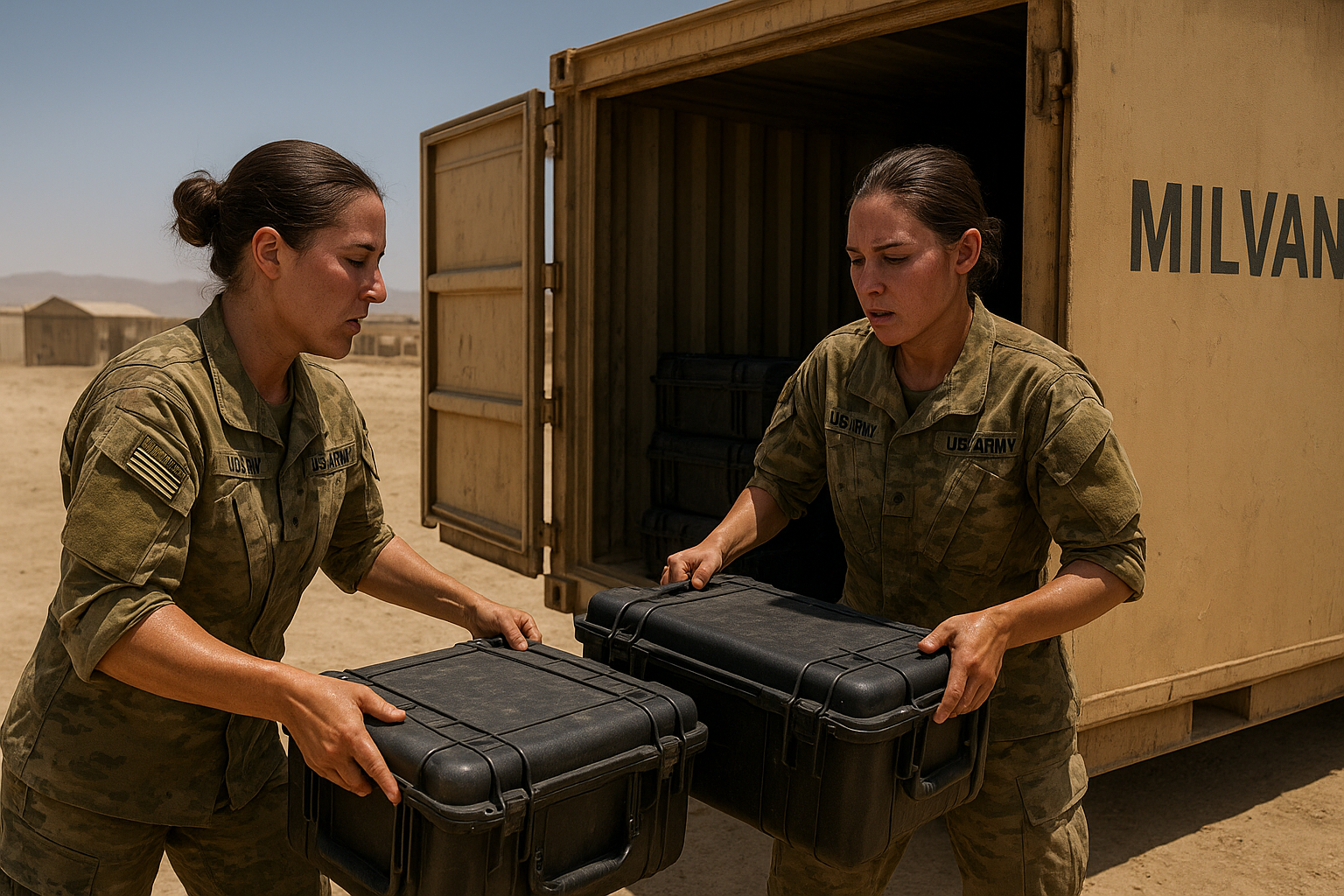
The desert sun blazed relentlessly, its heat shimmering over the endless expanse of sand. Patti wiped the sweat from her brow, her fingers brushing against the grit that clung to her skin. Beside her, Tisha heaved another crate into the MILVAN, her movements sharp, her expression grim.  

“Will the wars never end?” Tisha muttered, her voice low but laced with frustration. She straightened, brushing sand from her fatigues. “Every time we think we’re done, another conflict flares up. What’s the point?”  

Patti paused, her hands resting on the edge of the crate. She’d heard the weariness in Tisha’s voice before, but today it seemed heavier, almost suffocating. She glanced at her friend, noticing the shadows under her eyes, the way her shoulders slumped as if carrying the weight of the world.  

“I was reading something this morning,” Patti began, her tone gentle but deliberate. “Daniel 7. It’s about a vision of the end times—of a kingdom that will never end.”  

Tisha raised an eyebrow, her skepticism evident. “Another prophecy? Sounds like more of the same.”  

“Not exactly,” Patti replied, her voice steady. “It talks about a time when all the wars, all the suffering, will finally be over. There’s this beast—a symbol of evil—and it looks unstoppable. But then the Ancient of Days steps in. He’s God, sitting on a throne of fire, and He judges the beast. It’s destroyed, and the Son of Man—Jesus—is given an everlasting kingdom.”  

Tisha crossed her arms, her gaze fixed on the horizon. “Sounds nice, but what does that have to do with us? We’re stuck here, packing up gear, while people are still fighting out there.”  

Patti stepped closer, her voice softening. “It’s a reminder that we’re on the winning side, Tisha. As disciples of Jesus, subjects of God’s kingdom, no matter how bad things look now, no matter how much evil seems to be winning, it’s temporary. One day, Jesus will reign, and all this—the wars, the pain, the suffering—it’ll end. Forever.”  

Tisha’s eyes flicked to Patti, a flicker of something—hope? doubt?—crossing her face. “How can you be so sure?”  

“Because it’s not just a story,” Patti said, her conviction unwavering. “It’s a promise. And promises like that don’t get broken. We might not see the end of it here, but we’re part of something bigger. Something eternal.”  

For a moment, silence hung between them, broken only by the distant hum of machinery. Then Tisha sighed, her shoulders relaxing slightly. “I want to believe that. I really do. But it’s hard to see past all this.”  

“I know,” Patti said, placing a hand on Tisha’s shoulder. “But that’s why we keep going. Why we keep fighting. Not just for the battles here, but for the kingdom that’s coming. And when it does, we’ll be on the right side of it.”  

Tisha nodded slowly, her gaze drifting back to the horizon. “I guess it’s something to hold onto.”  

Patti smiled, a small but genuine expression. “It’s everything to hold onto.”  

As they returned to their work, the heat of the desert seemed less oppressive, the weight of their fatigue a little lighter. For in that moment, they weren’t just soldiers packing equipment; they were warriors of faith, standing firm in the promise of a kingdom where wars would cease, and peace would reign. And though the battles around them raged on, they knew—deep down—that the ultimate victory was already assured.

Kingdom Kernel Collection

Kingdom Kernel #21 – Repent! – Matthew 3:1-2, Mark 1:14-15, and Matthew 4:17

Repentance: A Requirement for Entrance into the Kingdom of God


Kingdom Kernel Collection

“Now in those days John the Baptist came, preaching in the wilderness of Judea, saying, “Repent, for the kingdom of heaven is at hand.”” (Matthew 3:1-2)

“Now after John had been taken into custody, Jesus came into Galilee, preaching the gospel of God, and saying, “The time is fulfilled, and the kingdom of God is at hand; repent and believe in the gospel.”” (Mark 1:14-15)

“From that time Jesus began to preach and say, “Repent, for the kingdom of heaven is at hand.”” (Matthew 4:17)

Introduction: The Call to Repentance

The message of repentance is central to the teachings of John the Baptist and Jesus Christ, as seen in Matthew 3:1-2, Mark 1:14-15, and Matthew 4:17. These passages emphasize that repentance is not merely an optional response but a divine requirement for entering the Kingdom of God. John the Baptist proclaimed, “Repent, for the kingdom of heaven is at hand” (Matthew 3:2), and Jesus echoed this message, beginning His ministry with the same call (Matthew 4:17). This essay explores the biblical concept of repentance by examining its linguistic roots, theological significance, and connection to Jesus as the Messiah and King. It also highlights how repentance reveals God’s redemptive plan and points to Christ’s eternal reign.

Etymology and Meaning of “Repent”

The Greek word for “repent” used in these passages is metanoeō (Strong’s G3340). Etymologically, metanoeō combines meta (change) and noeō (mind or understanding), signifying a transformative change in one’s mindset and direction. It implies turning away from sin and toward God with a renewed purpose. This term transcends mere regret or sorrow for wrongdoing; it entails a decisive redirection of life toward obedience to God’s will.

In Hebrew thought, repentance aligns with the term shuv, meaning “to turn back” or “return” (Strong’s H7725). Both terms emphasize an active response—leaving behind sin and embracing God’s righteous path. Jesus’ use of metanoeō in Matthew 4:17 underscores this profound shift in allegiance, calling individuals to prepare their hearts for the arrival of God’s kingdom.

Theological Significance of Repentance

Repentance as Preparation for the Kingdom

The call to repent is intrinsically tied to the nearness of God’s kingdom. John the Baptist prepared the way for Jesus by urging people to repent, symbolizing their readiness to receive the Messiah (Matthew 3:1-2). Jesus continued this message, declaring that “the time is fulfilled, and the kingdom of God is at hand; repent and believe in the gospel” (Mark 1:15). This dual command—repentance and faith—demonstrates that entering God’s kingdom requires both a turning from sin and a turning toward Christ.

Repentance as an Act of Grace

Repentance is not merely a human effort; it is initiated by God’s grace. Acts 11:18 describes repentance as something “granted” by God, highlighting its divine origin. It reflects God’s mercy in offering sinners an opportunity to turn back to Him before judgment arrives. Thus, repentance becomes a response to God’s gracious invitation into His kingdom.

Christological Fulfillment in Repentance

Jesus embodies perfect obedience and serves as the ultimate example of allegiance to God, demonstrating that genuine obedience is indeed possible for humanity. As both fully divine and yet fully human, Christ was sinless and had no need for repentance, but instead showcased unwavering submission to God’s will throughout His earthly life. His sinless existence fulfilled all righteousness (Matthew 3:15), offering believers a model of complete obedience and extreme allegiance to God.

In His humanity, Jesus experienced temptation, hunger, weariness, and the full range of human emotions, yet remained without sin. This demonstrates that obedience to God is attainable, even in the face of human limitations and trials. Christ’s perfect obedience was not merely passive but active, as He fulfilled both the moral and ceremonial laws, as well as the specific mediatorial commands given by the Father.

Through His life, death, and resurrection, Jesus not only exemplified perfect obedience but also provided the means for believers to be reconciled to God. His sacrifice enables forgiveness and empowers believers to pursue a life of obedience, as they repent and respond to God’s grace and Christ’s example of unwavering allegiance.

Jesus’ message that “the kingdom of heaven is at hand” points to His role as King. Through His miracles and teachings, Jesus showed that God’s rule is real and accessible through repentance and belief. While the fullness of His reign awaits His second coming, His lordship is already present in this age. Repentance acknowledges Jesus as King now, anticipating His ultimate reign in the future.

Implications for Believers

Transformative Power of Repentance

Repentance transforms believers by aligning their hearts with God’s purposes. It produces spiritual fruit (Matthew 3:8) and leads to ongoing sanctification through the Holy Spirit. As Paul writes in 2 Corinthians 7:10, “godly grief produces a repentance that leads to salvation without regret.” True repentance involves not only turning away from sin but also embracing a life characterized by faithfulness and obedience.

New Testament Examples of Repentance

In the following examples identify the act of repentance and the proclamation of absolution or forgiveness;

1. Zacchaeus (Luke 19.1-10)

2. Sinner’s Prayer (Luke 18:9-14)

3. Repentant Woman (Luke 7:36-50)

4. The Wayward Son (Luke 15.11-24)

5. The Woman at the Well (John 4:4-38)

6. Simon the Fisherman (Luke 5:1-11)

7. The Thief on the Cross (Luke 23:32-43)

Proclaiming Repentance as Disciple-Makers

As followers of Christ, believers are called to preach repentance as part of their mission. Just as John prepared the way for Jesus, Christians are tasked with preparing others for Christ’s return by proclaiming the gospel message: “Repent and believe” (Mark 1:15). This call remains urgent because God’s kingdom demands a response from every individual.

Conclusion: The Eternal Reign of Christ

Repentance is foundational for entering God’s kingdom because it reflects a heart transformed by grace and aligned with God’s will. It reveals divine attributes such as mercy, justice, and holiness while pointing to Christ’s redemptive work on behalf of sinners. By responding to Jesus’ call to repent, believers acknowledge His present lordship while anticipating His eternal reign.

Ultimately, repentance serves as both an invitation and a command—an invitation into God’s grace-filled kingdom and a command to live under Christ’s authority today as their King. For those who heed this call, it offers not only entrance into God’s kingdom but also participation in its expansive and eternal reality.

Disciple-Maker’s Short Story

There’s Something Missing

The bus hummed softly as it rolled through the quiet streets, its passengers scattered in their seats. Bud sat near the middle, his Bible resting on his lap, while Matt leaned forward across the aisle, his face still lit with excitement from the day’s events. They had spent the afternoon sharing the gospel, and Matt had taken a big step by talking to one of his friends about Jesus for the first time. Bud had been proud to see him take that leap of faith, but now it was time for some feedback.

“You did really well today,” Bud began, his voice warm and encouraging. “You were clear, and your friend seemed genuinely interested.”

Matt grinned. “Thanks! I was nervous, but I just kept thinking about what you taught me—how important it is to share the good news.”

Bud nodded. “That’s right. But there’s something I want to talk about.” He paused, giving Matt a moment to prepare. “When you told your friend that ‘Jesus doesn’t expect you to do anything,’ I think you missed an important part of the gospel.”

Matt frowned slightly, leaning back in his seat. “What do you mean? I thought salvation was a free gift. Isn’t it just about believing?”

“It is a free gift,” Bud said gently, “but Jesus calls us to respond with repentance. It’s not just about believing facts; it’s about turning away from sin and surrendering to Him as King.”

Matt tilted his head, clearly thinking it over. “I didn’t want to make it sound too hard to follow Jesus.”

“I get that,” Bud said with a smile. He leaned forward slightly, his voice taking on a storytelling tone. “You know, this reminds me of my Army days. Back in basic training, we learned a command called ‘About, FACE.’ When the drill sergeant shouted it, we’d pivot 180 degrees on our toe and heel and turn to face the opposite direction.”

Matt’s eyebrows raised slightly as he listened.

“Repentance is like that ‘About, FACE’ command,” Bud continued, his voice steady and calm. “It’s a decisive turn in your heart and mind—a complete change of direction. You turn away from sin and face God instead. And here’s the thing: where your heart and mind go, your actions will follow. Just like in the Army, when we turned our bodies to face a new direction, repentance leads to a change in how we live.”

Matt nodded slowly as understanding dawned on his face.

Before he could respond, a voice from behind them broke into the conversation. “Wait—what does that mean? To repent?”

Both men turned to see Steve sitting two rows back. He had earbuds dangling around his neck and an uncertain look on his face.

Bud shifted in his seat so he could see him better. “It means turning away from your old way of living—your sins—and turning toward Jesus with a heart that’s ready to follow Him.”

Steve hesitated for a moment before leaning forward slightly. “I’ve been thinking about this for a while,” he admitted quietly. “I don’t like who I’ve become. I want to change… but I don’t know how.”

Matt looked at Steve in surprise but stayed silent as Bud spoke again.

“Steve,” Bud said gently but firmly, “Jesus invites you to come as you are—but He doesn’t leave you there. When you turn to Him in repentance and faith, He forgives your sins and gives you a new heart—a heart that wants to follow Him as King.”

Steve swallowed hard, his voice barely above a whisper. “So… I have to be willing to give up everything?”

Bud nodded slowly but kindly. “Everything that keeps you from Him—yes. But what you gain is so much greater: forgiveness, peace with God, and the joy of living under His rule.”

Steve looked down at his hands for a long moment before meeting Bud’s gaze again. “I think I’m ready,” he said softly.

Bud smiled warmly and motioned for Steve to come closer, inviting him to pray together. As Steve sat down beside him, Matt watched intently, feeling humbled by the moment.

Bud asked Steve if he believed that God loved him, sent His Son Jesus to die for his sins, and rose from the dead three days later. Steve nodded in affirmation, saying, “I do.”

“Are you ready to make Him your King and let Him guide your life?” Bud asked. Steve straightened up with conviction and replied, “I am.”

Bud then led Steve in a heartfelt prayer, confessing sin and surrendering to Jesus. Matt felt something stir deep within him, realizing that sharing the gospel wasn’t just about presenting facts, but about inviting people into a life-changing relationship with Jesus as their King.

After they finished praying, Steve looked up with tears in his eyes, yet an unmistakable peace on his face. “Thank you,” he said simply.

Bud placed a hand on Steve’s shoulder and smiled warmly. “This is just the beginning,” he said. “Since we ride the bus together daily, let’s discuss next steps as you learn to walk with Jesus next time we meet.”

As the bus slowed to their stop, Matt stood up with renewed determination in his heart. He wanted to be more like Bud—not just knowledgeable about the gospel but someone who lived it out with grace and truth. More than that, he wanted to be like Jesus—the King who called people not only to believe but also to turn and follow Him wholeheartedly.

As they stepped off the bus together into the cool night air, Matt glanced at Bud and said quietly, “Thanks for teaching me today.”

Bud chuckled softly as they walked toward their apartment building—three men now bound by their shared hope in Christ—and replied simply, “We’re all learning.”

Kingdom Kernel Collection

Kingdom Kernel #20 – A Catalytic Message – Matthew 4:23, 9:35, Luke 4:43, 8:1

Kingdom Kernel Collection

Preaching and Teaching the Kingdom: A Catalyst for Transformation

The Biblical Concept of Proclaiming God’s Reign

Jesus Christ, the perfect exemplar of kingdom proclamation, demonstrated a powerful ministry of teaching, preaching, and healing that serves as our model for spreading the good news of God’s reign. The Greek terms used in Matthew 4:23, 9:35, Luke 4:43, and 8:1 provide rich insight into this transformative mission.

Linguistic Analysis

The key Greek words in these passages are:

Didaskō (Strong’s G1321): “to teach”

Kēryssō (Strong’s G2784): “to proclaim, preach”

Euangelizō (Strong’s G2097): “to bring good news, evangelize”

These terms collectively paint a picture of comprehensive communication, combining instruction, public declaration, and joyful announcement.

Jesus as the Messiah-King

Jesus embodied these actions as the long-awaited Messiah and King. His teaching (didaskō) in synagogues demonstrated authoritative exposition of Scripture. His proclamation (kēryssō) of the kingdom gospel was a royal announcement of God’s reign. His evangelizing (euangelizō) brought hope to the masses.

The Present and Future Kingdom

Christ’s ministry emphasized that God’s kingdom was both “at hand” (Matthew 4:17) and yet to come in fullness. This dual nature of the kingdom—present reality and future hope—was central to Jesus’ message and remains crucial for our understanding today.

Implications for Disciple-Makers

Comprehensive Communication: Like Jesus, we must employ varied methods of sharing the kingdom message—teaching, proclaiming, and evangelizing.

Authoritative Teaching: Our instruction should be grounded in Scripture and delivered with Christ-given authority.

Public Declaration: Bold, open proclamation of the kingdom should characterize our ministry.

Joyful Evangelism: The good news of God’s reign should be shared with enthusiasm and hope.

Holistic Ministry: Jesus’ pattern of teaching, preaching, and healing calls us to address both spiritual and physical needs.

Wide Reach: Christ’s itinerant ministry challenges us to expand our influence beyond comfortable boundaries.

Present Reality: We must emphasize the current Lordship of Jesus, not just future expectations.

Conclusion: The Transformative Power of Kingdom Proclamation

The concept of teaching and preaching the kingdom as exemplified by Jesus reveals God’s heart for comprehensive restoration. It demonstrates His redemptive plan unfolding in history and points to Christ’s eternal reign. By embracing this model, we participate in the expansion of God’s kingdom, inviting others to experience the transformative power of His reign—both now and in the age to come.

This approach to ministry, rooted in Jesus’ example, has the potential to catalyze profound change in individuals and communities. As we faithfully teach, proclaim, and demonstrate the reality of God’s kingdom, we become agents of His divine purpose, extending the influence of His reign “on earth as it is in heaven” (Matthew 6:10).

Disciple-Maker’s Short Story

“The Ripple Effect”

Isaac leaned against the weathered oak outside the college library, the faint hum of campus life swirling around him as the day slipped into dusk. Nathan approached, his backpack slung over one shoulder, weaving through the throng of students chattering about the upcoming outreach event. The crisp autumn air carried the scent of fallen leaves, but Isaac’s furrowed brow hinted at a weight far heavier than the evening’s promise of fellowship.

“Nathan, I’ve been thinking,” Isaac began, his voice tinged with hesitation. “Maybe I should step back from evangelizing for a while. I’ve got so many guys to follow up with in discipleship, and I’m feeling overwhelmed.”

Nathan, a seasoned mentor with eyes that sparkled with wisdom, raised an eyebrow. “Is that so?” he mused, his tone gentle but probing. “Tell me, Isaac, did Jesus ever stop sharing the gospel?”

Isaac’s brow furrowed. “Well, no, but—”

“Let’s sit for a moment,” Nathan suggested, gesturing to a nearby bench. As they settled, he continued, “Consider this: Jesus focused intensely on the twelve disciples, yet He never ceased proclaiming the kingdom to the masses. In fact, He often brought the twelve along as He spread the message. It was a brilliant strategy of multiplication.”

Isaac leaned back, skepticism etched on his features. “That sounds great in theory, Nathan, but I’m not Jesus. I don’t know if I can manage both.”

A knowing smile played on Nathan’s lips. “Let me share a story that might change your perspective. Do you remember the account of the demon-possessed man in the region of the Gerasenes?”

Isaac nodded slowly, curiosity piquing his interest.

“This man was tormented by a legion of demons,” Nathan recounted, his voice taking on a storyteller’s cadence. “Jesus freed him from his bondage, and the man was so grateful he begged to follow Jesus. But do you recall what Jesus told him?”

Isaac shook his head, engrossed in the narrative.

“Jesus said no,” Nathan revealed. “There was no room in the boat. Instead, He instructed the man to return home and share the good news with his people. And do you know what happened?”

Isaac leaned forward, anticipation building.

“That one man,” Nathan continued, his eyes alight with passion, “went on to spread the kingdom message throughout the entire Decapolis—ten cities! Imagine the impact of his testimony.”

A moment of silence fell between them as Isaac absorbed the implications. The setting sun painted the sky in hues of orange and pink, mirroring the dawning realization on Isaac’s face.

“I… I never thought of it that way,” Isaac admitted, his voice barely above a whisper.

Nathan continued. “You see, Isaac, by continuing to evangelize while discipling, you’re not just adding to the kingdom—you’re multiplying it. Each person you reach has the potential to become a catalyst for transformation in their own sphere of influence.”

Isaac’s eyes widened, a newfound determination kindling within them. “Like ripples in a pond,” he murmured.

“Exactly,” Nathan affirmed. “Jesus understood the power of this two pronged approach. He focused on discipling a few leaders and yet taught, proclaimed, and brought good news of the kingdom to the masses. It was a comprehensive communication of the kingdom, addressing both immediate needs and eternal truths.”

As they stood to resume their walk, Isaac’s steps had a renewed vigor. “I want to be more like Jesus,” he declared, his voice firm with resolve. “To balance the intimate discipleship with the wide-reaching proclamation of the kingdom.”

Nathan nodded approvingly. “Remember, advancing the kingdom of God is a both/and activity. Focus on a few while helping many. By embracing this dual nature in your ministry, you become an agent of divine purpose, extending the influence of His reign ‘on earth as it is in heaven.'”

The campus came alive around them as students gathered for the outreach event. Isaac surveyed the crowd, no longer seeing a daunting task but a field ripe for harvest. With a deep breath, he stepped forward, ready to teach, proclaim, and bring the good news of the kingdom—just as Jesus did.

As Nathan watched his protégé move into the throng, he smiled, knowing that the ripples of Isaac’s renewed commitment would spread far beyond this campus, touching lives in ways neither of them could yet imagine.

Kingdom Kernel Collection

Kingdom Kernel #19 – The Kingdom Belongs to the Poor in Spirit

Kingdom Kernel Collection

Introduction

In Matthew 5:3 and Luke 6:20, Jesus introduces a profound concept that challenges conventional wisdom: “Blessed are the poor in spirit, for theirs is the kingdom of heaven” (Matthew 5:3). This beatitude, part of Jesus’ Sermon on the Mount, reveals a fundamental truth about the nature of God’s kingdom and those who inherit it.

Linguistic Analysis

The Greek term for “poor” in these passages is “πτωχός” (ptōchos, Strong’s G4434), which literally means “reduced to beggary” or “destitute”. This word goes beyond mere financial poverty, especially when coupled with “τῷ πνεύματι” (tō pneumati, “in spirit”) in Matthew’s account. It describes a state of complete spiritual destitution and dependence on God.

Theological Significance

The Nature of Spiritual Poverty

To be “poor in spirit” means recognizing one’s utter spiritual bankruptcy before God. It is an acknowledgment that we have nothing inherently worthy to offer God for our salvation or to earn His favor, and we are entirely dependent on His grace. While God delights in our worship and allegiance, these are responses to His goodness rather than transactions to gain His blessing. This attitude of humility stands in stark contrast to the self-righteousness of the Pharisees and reflects the proper posture necessary to enter God’s kingdom.

Jesus as the Perfect Example

Jesus Himself exemplifies this spiritual poverty. Despite being divine, He “emptied himself, by taking the form of a servant” (Philippians 2:7). Christ’s incarnation and ministry demonstrate complete dependence on the Father, showing us the way to true blessedness.

The Kingdom of God

Present and Future Reality

The kingdom Jesus speaks of is both a present reality and a future hope. When He declares, “theirs is the kingdom of heaven,” He uses the present tense, indicating that those who are poor in spirit already possess the kingdom. This underscores the Lordship of Jesus Christ as a current reality, not just a future promise.

Inverted Values

Jesus’ teaching inverts worldly values. In God’s kingdom, it is not the self-sufficient or materially rich who are blessed, but those who recognize their spiritual need. This concept challenges believers to reassess their priorities and dependence on worldly resources.

Implications for Believers

Cultivating Spiritual Poverty

Disciples of Christ are called to cultivate an attitude of spiritual poverty. This involves:

  • Recognizing our complete dependence on God
  • Approaching God with humility and openness
  • Continually seeking God’s grace and provision

Transformative Power

Understanding and embracing spiritual poverty transforms believers by:

  • Fostering genuine humility
  • Increasing reliance on God’s strength
  • Deepening appreciation for God’s grace

Conclusion

The concept of being “poor in spirit” is central to understanding the nature of God’s kingdom and our place within it. It reveals a God who exalts the humble and fills the hungry with good things (Luke 1:52-53). As we embrace our spiritual poverty, we paradoxically become rich in the things of God, inheriting the fullness of His kingdom both now and in eternity.

Disciple-Maker’s Short Story

The Wealth of Humility

The late afternoon sun cast long shadows across the soccer field as Lucas and Noah sprawled on the grass, their cleats discarded beside them. Sweat glistened on their foreheads as they gulped down neon-colored sports drinks, the silence between them comfortable after an intense practice.

Lucas fished his phone out of his gym bag, his brow furrowing as he scrolled through his Bible app. “Hey Noah,” he said, his voice tinged with concern, “what do you make of this verse? Luke 6:20 – ‘Blessed are you who are poor, for yours is the kingdom of God.'”

Noah propped himself up on his elbows, sensing the weight in his younger teammate’s question. “What’s on your mind, Luke?”

Lucas hesitated, his fingers tracing the outline of his phone case – the latest model, a gift from his parents. “It’s just… my family, we’re not poor. Far from it. Does that mean we can’t inherit God’s kingdom?”

Noah sat up fully, his eyes softening with understanding. He’d mentored Lucas for months now, both on and off the field, and he knew the struggle his young friend faced reconciling his faith with his family’s affluence.

“It’s not that simple,” Noah began, choosing his words carefully. “Remember Matthew’s version? ‘Blessed are the poor in spirit.’ It’s not about how much money you have in the bank, but about your heart’s posture before God.”

Lucas’s brow remained furrowed. “But what’s the difference? Isn’t being rich kind of… the opposite of what Jesus wants?”

Noah reached for his own gym bag, pulling out a battered leather-bound Bible. He flipped through the pages with practiced ease. “Look here,” he said, pointing to a passage. “In 1 Timothy, Paul writes to Timothy about instructing the rich. He doesn’t tell them to give everything away, but to ‘be rich in good works, generous, and ready to share.'”

Lucas leaned in, his eyes scanning the verses. Noah continued, “Being ‘poor in spirit’ means recognizing that no matter how much we have – money, talent, status – we’re utterly dependent on God’s grace. It’s about humility, not bank accounts.”

A glimmer of understanding dawned in Lucas’s eyes. “So… it’s not wrong to be rich, but it’s wrong to trust in riches instead of God?”

Noah nodded, a smile spreading across his face. “Exactly. Jesus had wealthy followers too, you know. Joseph of Arimathea, Nicodemus – they used their resources to serve God’s kingdom.”

Lucas sat back, processing this new perspective. “But how do I make sure I’m being ‘poor in spirit’ when I have so much?”

Noah’s eyes lit up with an idea. “Remember last month when your family donated those new uniforms to the youth league in the inner city? That’s using your wealth for the kingdom. It’s not about feeling guilty for what you have, but being grateful and generous with it.”

Lucas nodded slowly, a weight lifting from his shoulders. “I want to be more like that – more like Jesus. Using what I have to serve others, not just myself.”

Noah clapped him on the shoulder. “That’s the spirit, Luke. It’s a journey we’re all on – learning to hold our blessings with open hands, ready to use them for God’s purposes.”

As the sun dipped lower, casting a golden glow across the field, the two friends continued to talk. Their conversation flowed from scripture to practical applications, from personal struggles to dreams of making a difference. In that moment, on a simple soccer field, a profound truth was taking root in Lucas’s heart – the paradoxical wealth found in spiritual poverty, and the joy of using earthly riches for heavenly purposes.

The true wealth of humility reveals itself not in what we possess, but in how we steward our blessings. Lucas had begun to understand that wealth itself wasn’t an obstacle to faith, but rather an opportunity for service. That evening, walking home with his gym bag slung over his shoulder, he noticed details he’d overlooked before – the elderly neighbor struggling with groceries, the community center with its fading paint, the homeless man on the corner with eyes that held untold stories.

Each scene sparked ideas in Lucas’s mind – ways his family could engage, invest, and embody the kingdom values Noah had spoken about. He realized that being “poor in spirit” wasn’t about denying abundance but acknowledging its source and purpose. It meant approaching life with open hands rather than clenched fists, seeing resources not as entitlements but as tools for transformation.

When he arrived home to his family’s spacious house, Lucas didn’t feel the usual twinge of guilt. Instead, he felt a new sense of responsibility and possibility. The wealth around him wasn’t an indictment but an invitation – to practice generous living, to cultivate gratitude, and to partner with God in bringing glimpses of His kingdom to earth.

Kingdom Kernel Collection

Kingdom Kernel #17 – Beyond the Law: Understanding Obedience in the Kingdom

Kingdom Kernel Collection

The Significance of Obeying and Teaching God’s Commands in the Kingdom

Whoever then annuls one of the least of these commandments, and teaches others to do the same, shall be called least in the kingdom of heaven; but whoever keeps and teaches them, he shall be called great in the kingdom of heaven. “For I say to you that unless your righteousness surpasses that of the scribes and Pharisees, you will not enter the kingdom of heaven. (Matthew 5:19-20)

Introduction

In Matthew 5:19-20, Jesus emphasizes the importance of obeying and teaching God’s commands, and how this affects one’s standing in the kingdom of heaven. This passage provides crucial insights into the nature of discipleship and the expectations of those who follow Christ.

Linguistic Analysis

The key terms in this passage are “annuls” (λύω, lyō, Strong’s G3089), “keeps” (ποιέω, poieō, Strong’s G4160), and “teach” (διδάσκω, didaskō, Strong’s G1321).

  • “Annuls” (λύω) means to loosen, break up, destroy, or dissolve.
  • “Keeps” (ποιέω) implies doing, making, or accomplishing.
  • “Teach” (διδάσκω) refers to instructing or imparting knowledge.

Theological Significance

The King’s Commandments

Jesus, as the perfect embodiment of obedience, emphasizes the enduring nature of God’s commandments. He declares that even the least of these commandments holds significance in the kingdom. This underscores the comprehensive nature of God’s law and the importance of holistic obedience.

Kingdom Hierarchy

The passage reveals a hierarchy within the kingdom based on one’s approach to God’s commandments. Those who keep and teach the commandments “shall be called great in the kingdom of heaven,” while those who break and teach others to do so “shall be called least”. This hierarchy reflects the value God places on obedience and the responsibility of teaching others.

Christ as the Perfect Example

Jesus himself is the ultimate example of keeping and teaching God’s commands. Throughout his ministry, he consistently upheld the law while revealing its true spirit and intent. His perfect obedience, culminating in his sacrificial death, demonstrates the highest form of keeping God’s commandments.

Implications for Believers

Present Reality of Christ’s Lordship

The Lordship of Jesus Christ is not merely a future reality but a present truth. As believers, we are called to live under his authority now, recognizing that our obedience to God’s commands is an expression of our submission to Christ’s kingship.

Exceeding Righteousness

Jesus sets a high standard by stating that our righteousness must surpass that of the scribes and Pharisees. This calls for a righteousness that goes beyond external compliance to a heart-level transformation that results in genuine obedience.

The Tension Between the Mosaic Law and the New Covenant

Continuity and Discontinuity

While the New Covenant replaces the Mosaic Covenant, there is both continuity and discontinuity between them. The moral principles underlying the Mosaic Law remain valid, but the ceremonial and civil aspects are no longer binding. This creates a challenge in discerning which aspects of the Old Testament law still apply to Christians today.

“For Christ is the end of the law for righteousness to everyone who believes” (Romans 10:4).

Jesus’ Fulfillment of the Law

Jesus stated, “Do not think that I have come to abolish the Law or the Prophets; I have not come to abolish them but to fulfill them” (Matthew 5:17). This fulfillment simultaneously affirms the Law’s validity while also marking a significant shift in how it applies to believers.

The Role of the Holy Spirit

Under the New Covenant, the Holy Spirit empowers believers to live righteously, internalizing God’s law in their hearts. This internal transformation contrasts with the external nature of the Mosaic Law, creating a new paradigm for obedience and holiness.

“I will put my law within them, and I will write it on their hearts” (Jeremiah 31:33).

Grace vs. Works

The New Covenant emphasizes grace and faith over works-based righteousness. This shift can create tension in understanding how good works and obedience relate to salvation and Christian living under the New Covenant.

“For by grace you have been saved through faith. And this is not your own doing; it is the gift of God, not a result of works, so that no one may boast” (Ephesians 2:8-9).

Cultural and Historical Context

Many Mosaic laws were specific to Israel’s cultural and historical context. Determining how these laws apply (if at all) in different cultural settings can be challenging and contributes to the tension between adhering to Scripture and recognizing contextual differences.

“For he himself is our peace, who has made us both one and has broken down in his flesh the dividing wall of hostility by abolishing the law of commandments expressed in ordinances” (Ephesians 2:14-15).

Ethical Implications

While Christians are not bound by the Mosaic Law, many of its ethical principles remain relevant. Discerning how to apply these principles in a New Covenant context without falling into legalism requires careful theological reflection and spiritual wisdom.

“For the law was given through Moses; grace and truth came through Jesus Christ” (John 1:17).

This tension ultimately calls for a nuanced understanding of Scripture, recognizing both the enduring moral principles of God’s law and the transformative power of Christ’s work in establishing the New Covenant. It invites believers to live in the freedom of grace while still pursuing holiness and obedience to God’s will.

Conclusion

The concept of obeying and teaching God’s commands as presented in Matthew 5:19-20 reveals the character of God’s kingdom and the expectations placed on its citizens. It challenges believers to take God’s commandments seriously, to teach them faithfully, and to pursue a righteousness that reflects the transformative power of Christ’s reign. As we embrace this calling, we not only align ourselves with the will of our King but also participate in the expansion of his kingdom on earth.

Disciple-Maker’s Short Story

“The Weight of Grace”

The old pickup truck groaned under the burden of the ratty couch strapped to its bed, its worn suspension creaking with every pothole on the winding, gravel-strewn road to the dump. Ed gripped the steering wheel tightly, his knuckles whitening with the tension that mirrored the set of his jaw. Dust swirled behind them, catching the late afternoon sunlight in a hazy glow. Beside him sat Charles, his mentor, a man whose presence carried the quiet authority of years spent walking with Jesus. The silence between them hung heavy, thick with unspoken words, until Ed finally broke it.

“Look, Charles, I appreciate your guidance, but all these accountability questions you keep asking… they feel like legalism to me. Aren’t we free from the law now? Isn’t that what grace is all about?”

Charles turned his weathered face toward Ed, his gray eyes soft with understanding yet piercing with wisdom. “I hear you, son. I do. But let me ask you something. When Jesus spoke of loving God with all your heart, soul, mind, and strength, and loving your neighbor as yourself, was He being legalistic?”

Ed’s brow furrowed as he navigated a curve in the road. “Of course not. That’s from Mark, right? The Great Commandment.”

“Indeed,” Charles nodded, his voice steady as the truck rattled on. “Mark 12:28-34. Jesus wasn’t piling on burdens; He was revealing the heart of God’s law—its essence, not its chains.”

The truck hit a particularly deep pothole, jolting them both. Ed winced, using the moment to gather his thoughts. “But that’s different. That’s about love, not rules. Rules feel like they choke the life out of faith.”

Charles smiled gently, the lines around his eyes crinkling with warmth. “Is it really so different? Obedience born of love isn’t legalism, Ed. It’s relationship. It’s the difference between a servant fearing a master and a son trusting his father.”

As they crested a hill, the sprawling expanse of the dump came into view—a chaotic sea of discarded things, a graveyard of the unwanted. Ed slowed the truck, his mind churning like the dust in their wake. “I get that, but doesn’t grace free us from all that? From the weight of having to measure up?”

“Ah, there’s the tension,” Charles said, his voice warm with affection, yet tinged with a knowing edge. “Grace doesn’t negate obedience; it empowers it. Think of Matthew 5:19—Jesus said whoever keeps and teaches the commandments will be called great in the kingdom of heaven. Grace lifts the curse, not the call.”

Ed parked the truck near a heap of debris, the engine’s rumble fading into an uneasy silence. “But how do we balance that with the New Covenant? Aren’t we free from the law’s grip entirely?”

Charles placed a calloused hand on Ed’s shoulder, grounding him. “We’re free from the law’s condemnation, not its guidance. The Holy Spirit writes God’s law on our hearts now—Jeremiah promised that, didn’t he? It’s not about external compliance anymore, but internal transformation. The law isn’t our jailer; it’s our mirror.”

They climbed out and began untying the couch, its frayed ropes stubborn against their efforts. Ed grunted as he tugged at a knot. “So, what’s the difference between obedience and legalism then? Where’s the line?”

Charles paused, his eyes twinkling with a spark of insight. “Legalism is about earning God’s favor—like a wage you hustle for. Obedience is about expressing our love for Him, a response to a gift already given. Jesus perfectly embodied this. He obeyed not to earn the Father’s love, but because He already had it, deep and unshakable.”

Together, they hefted the couch off the truck, its worn fabric snagging on the rusty bed. Ed stumbled slightly under its weight, and as it thudded onto the pile, he felt something shift inside him—something heavier than the furniture they’d carried, a burden of confusion he’d been wrestling with for weeks.

“I want that,” Ed said softly, almost to himself. “To obey like Jesus did. Out of love, not obligation. But it’s hard to shake the feeling that I’m still trying to prove something.”

Charles smiled, pride and affection evident in his gaze as he wiped sweat from his brow. “That’s the heart of it, Ed. That’s what becoming like Jesus is all about. It’s not about rules for their own sake; it’s about relationship. About letting His love transform you from the inside out, until obedience feels less like a chore and more like a song.”

As they tossed the couch onto the growing pile, Ed felt a weight lift from his shoulders—not just the physical burden of the furniture, but the spiritual weight of misunderstanding that had clouded his faith. He turned to Charles, a new light flickering in his eyes, tentative but growing.

“I think I’m beginning to understand,” Ed said, his voice steadier now. “It’s not about being under the law or even free from it in some reckless way. It’s about being under grace and letting that grace work through us in obedience. It’s about trust, isn’t it?”

Charles nodded, clapping Ed on the back as they trudged back to the truck, their boots crunching on the gravel. “Exactly. And that, my boy, is the beautiful tension of the Christian life. Living in the freedom of grace while pursuing the holiness of obedience. It’s a dance, not a drudge.”

As they drove away from the dump, the truck felt lighter, unburdened by the load they’d left behind. The sinking sun painted the sky in hues of orange and gold, and in the cab, two hearts beat with a renewed understanding of what it meant to follow Christ—not in the shackles of legalism, but in the liberating bonds of love-driven obedience. Ed glanced at Charles, who hummed an old hymn under his breath, and for the first time in a long while, he felt the weight of obedience not as a burden, but as a gift.

Kingdom Kernel Collection

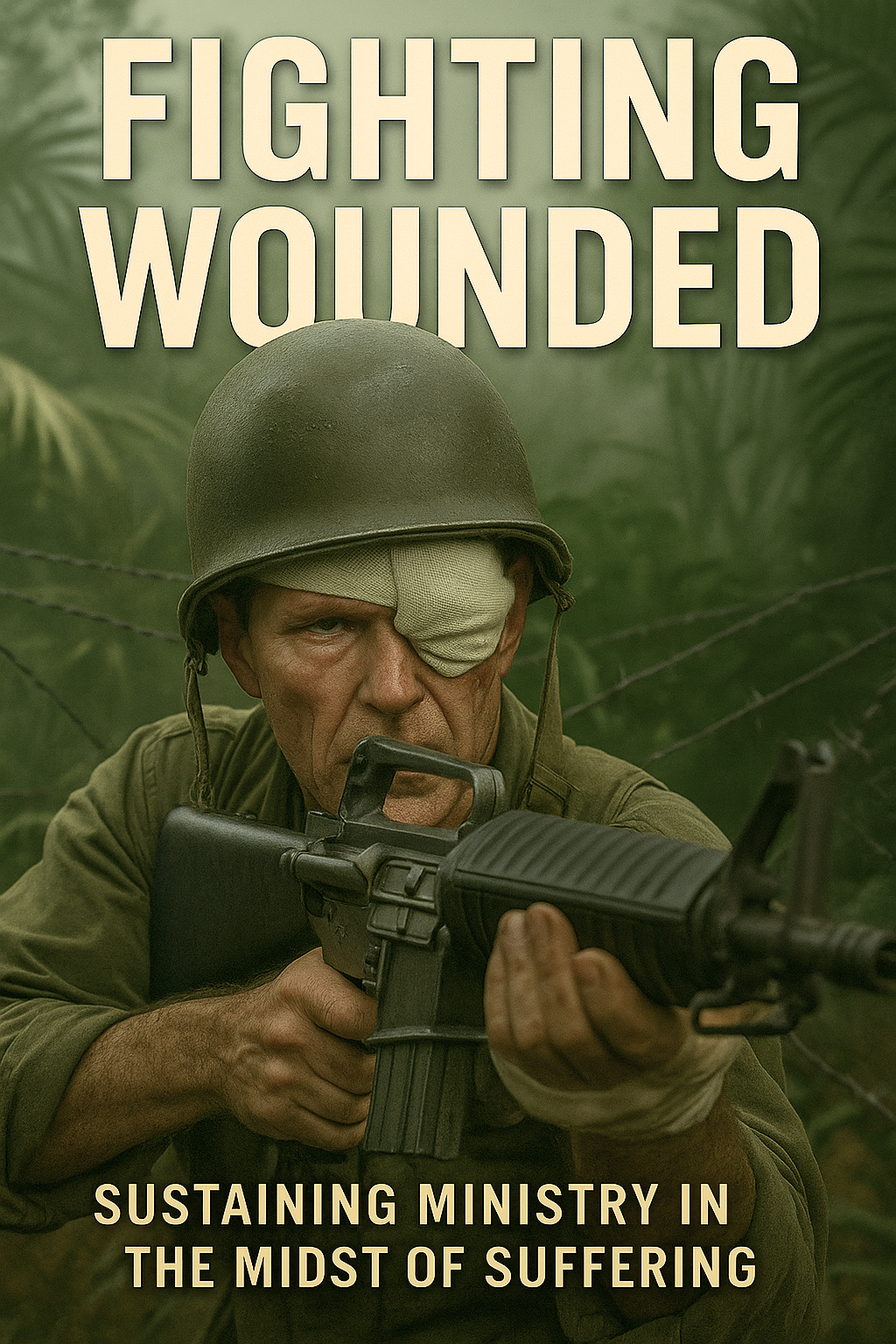
 Fighting Wounded

Sustaining Ministry in the Midst of Suffering

Introduction

“Suffer hardship with me, as a good soldier of Christ Jesus. No soldier in active service entangles himself in the affairs of everyday life, so that he may please the one who enlisted him as a soldier.”
(2 Timothy 2:3-4)

Firebase Echo

The jungle breathed around them like a living thing, its humid darkness pressing against Firebase Echo with the weight of a thousand secrets. In the trenches and bunkers, American soldiers waited with the peculiar stillness that comes before violence—that electric moment when every nerve stands at attention, when the smallest sound might herald death.

For three days, intelligence reports had whispered of something coming. A major assault. The kind that left bases as nothing more than smoking craters and casualty reports. The men of the infantry platoon knew the arithmetic of war: they were outnumbered, outgunned, and fighting an enemy that knew every root and shadow of this hostile green world.

They went through the rituals of preparation—cleaning weapons that were already clean, checking ammunition that had been checked a dozen times, sharing C-rations and quiet jokes that might be their last. Some wrote letters they hoped would never need to be mailed. Others simply stared into the impenetrable blackness beyond the wire, willing their eyes to pierce the veil that hid their fate.

At precisely 0200 hours, the night exploded.

The first mortar rounds fell like thunder from a malevolent spirit, tearing the silence into screaming fragments. The earth convulsed beneath their feet as the jungle erupted in a symphony of destruction—the sharp crack of small arms fire, the deeper boom of rocket-propelled grenades, the primal shouts of men locked in mortal combat.

Sergeant Wilson was manning the perimeter when the shell found him. The blast wave hit like an invisible fist, lifting him from his feet and slamming him into the mud. His ears rang with a high, piercing whine that seemed to come from inside his skull. Hot metal fragments had torn through his right arm, but it was his hand that told the true story of the night’s cruelty—his trigger finger was gone, simply erased by the indifferent mathematics of war.

The platoon medic materialized through the smoke and chaos, his hands steady despite the melee unfolding around them. He worked with practiced efficiency, wrapping Wilson’s mangled hand in field dressings that bloomed red almost immediately.

“You’re done, Sarge,” the medic said, his voice barely audible above the cacophony. “We need to get you out of here.”

Wilson looked at the medic with eyes that had seen too much but refused to close. Around them, the firebase was being overrun. Dark figures moved through the wire like deadly shadows, and the defensive line was buckling under the relentless assault. There was no evacuation, no rear area to retreat to. There was only here, now, and the terrible choice between fighting and dying.

“No,” Wilson said, his voice hoarse but determined. “Not yet.”

With his right hand useless, Wilson picked up his rifle with his left. The weapon felt alien in his grip, the balance all wrong, but necessity has a way of making the impossible merely difficult. He braced himself in the trench, squinting through the smoke to identify targets among the chaos.

Around him, wounded men made the same impossible choice. A private with a bandaged head rose from where he’d been knocked down, blood streaming down his face but his rifle steady. A corporal with shrapnel in his leg limped to his position, gritting his teeth against the pain. Some men, overwhelmed by wounds or shock, couldn’t continue—but most understood the brutal equation of survival: fight or die.

The night became a kaleidoscope of violence. Muzzle flashes strobed like deadly lightning, illuminating faces streaked with mud and blood. Wilson’s voice cut through the chaos, steady and sure, directing fire and encouraging his men. Despite his injury, despite the pain that shot up his arm with every movement, he held the line.

“Left flank! Movement in the wire!” he shouted, his left-handed shots finding their mark. “Johnson, cover the gap! Martinez, watch your six!”

His leadership became a beacon in the darkness, a steady point around which the defense could rally. Men looked to him and found courage they didn’t know they possessed. If their sergeant could fight one-handed, bleeding and battered, then they could find the strength to continue.

The battle raged through the darkest hours before dawn, each minute an eternity of violence and survival. When the first pale light finally crept across the horizon, it revealed a scene of devastation—the firebase battered but unbroken, the ground torn and scarred but still held by American hands.

Later, in the antiseptic environment of a field hospital, they would pin the Silver Star to Wilson’s chest. The citation spoke of extraordinary heroism, of leadership under fire, of actions above and beyond the call of duty. When reporters asked him about that night, about what drove him to fight with such determination despite his wounds, Wilson’s response was characteristically simple.

“It wasn’t about medals,” he said, his left hand unconsciously flexing where his right could no longer feel. “It was about staying alive. All of us.”

The story of Firebase Echo lived on in the telling, passed from soldier to soldier, from generation to generation. It became more than just another battle report—it became a testament to the human capacity for courage in the face of impossible odds, for adaptation when everything familiar falls away, and for the will to fight when fighting seems futile.

In the end, it wasn’t about the medals or the citations or the official recognition. It was about ordinary men who found extraordinary strength when their world came apart, who chose to stand and fight when every instinct screamed to run. It was about the night when Firebase Echo proved that when the mission demands our all, we can and will fight wounded.

The School of Hard Knocks

I learned to endure physical and mental suffering as a young child. Coming from a broken home where survival meant staying invisible and disappointment was the only constant. There are no badges or awards for such endurance. In fact, it is so common today, people barely notice the devastating turmoil infidelity, divorce, sexual and physical abuse, and neglect has on children. They are expected to muscle through it like any other adult, carrying wounds that never quite heal, learning to smile through the pain because nobody wants to hear about it.

By the time I dropped out of High School and joined the US Army I had already been through “Hard Knocks 101” and was ready for 201. But this time I would actually be paid to suffer and even get some shiny trinkets to pin on my uniform. Sleepless nights, subjected to the elements, real hunger, and a constant barrage of profanity that could peel the paint off of a Jeep were all par for the course and normal life. At least now the suffering had purpose, structure, and camaraderie. I wasn’t alone in it anymore.

By the time I gave my life to Christ, I was pretty well numb to the 101 and 201 suffering that comes with military life, but I would realize that God was actually preparing me for 301 and something far more significant – to bring Him glory through ministry. Shortly after I committed to being Jesus’ disciple I was carrying an extremely heavy backpack and slipped a disc in my back (I would suffer with the injury for the rest of my career in the Army). As a squad leader I was supposed to be with my men as they conducted maneuvers in the dead of winter but I was confined to a desk taking pain pills every four hours. My back was not the only thing hurting. My pride had been severely damaged when as a “Big Bad Airborne Ranger” I could barely walk let alone lead my soldiers. And to top it all off I was driving home after pulling guard duty all night, painkillers making me all the more drowsy, I totaled my car having fallen asleep at the wheel.

I don’t know about you but I kind of thought being a Christian would make life easier, not harder. Wasn’t faith supposed to be a shield against trouble? Some kind of divine insurance policy? Fortunately I was reading my Bible every day and after I washed the blood from my nose from the tangle with my steering wheel, I thought it might be best to bring some grievances before God. My reading for the day was 1 Corinthians chapter 16. As I read having a semi-pity party, I came across verse 13:

Be on the alert, stand firm in the faith, act like men, be strong. (1 Corinthians 16:13)

The words jumped off the page at me. It wasn’t a slap in the face. The Holy Spirit knew I didn’t need insult added to injury. But it was the reassuring firmness of a Father who understood but was exhorting me to endure. I felt strangely understood and above all loved. The challenge was both strengthening and encouraging.I suddenly grasped something profound in my early faith journey – the Creator of the entire universe actually noticed me personally. Among all the vastness of creation, on this tiny planet Earth, He saw and cared about one small human being named Chuck Wood. The thought that an infinite God would give me such personal attention absolutely blew me away!

I wish I could say that suffering is a “one and done” lesson and once you get enough of it you pass the class. Nope. Jesus has great things planned for our lives and suffering, trials, and tribulations is one of the primary ways He accomplishes those plans. It’s His strange curriculum for character development.

But there’s a lot of books written on suffering, do we really need another one? I think we do. Not just a book on suffering but a book on how to continue to make disciples while we’re going through the ringer. I’ve seen believers wade through hard times with patience and civility. But what is rare is when Christians actually steward their ministries while going through said suffering. Many simply “tap out” because they are going through a rough patch.

Life’s inevitable hardships – illness, broken relationships, financial strain, family crises – have a way of turning our focus inward. When we’re hurting, it feels natural, even justified, to pull back from others and concentrate on our own healing. Suffering seems to grant us a “free pass” from the normal expectations of loving, caring, and nurturing those around us. Sometimes this withdrawal is absolutely necessary for our recovery and restoration. But at some point, we must learn what Paul called “the secret” – how to comfort others with the same comfort we’ve received from God (2 Corinthians 1:3-4). The danger lies in using our pain as a permanent excuse to abandon our calling to serve others.

Yet there’s another category of suffering that cuts even deeper than personal hardship – the unique pain that comes from ministry itself. As the saying goes, “There’s no hurt like church hurt.” And I get it. Ministry suffering cuts deeper than personal suffering. When you’re pouring your life into people and they turn on you, betray your trust, or walk away from the faith entirely – that’s a special kind of heartbreak. When politics tear apart what you’ve built, when your own leadership questions your methods, when financial stress threatens your family because you chose ministry over a “real job” – the temptation to quit becomes overwhelming. When people you’ve baptized, married, and buried their loved ones suddenly treat you like a stranger, when your teenage kids resent the ministry because it “stole” their dad or mom, when your spouse begins to question whether this calling was really from God – these are the moments when even the strongest soldiers consider desertion.

Or maybe you feel like God Himself has abandoned you – or even worse, deliberately cut you off at the knees out of spite or anger. The silence from heaven feels deafening when you’re desperate for His voice. You’ve undoubtedly heard many sermons about “Divine Appointments” – those moments when God orchestrates circumstances for His purposes. But I want to remind you that there are also what I call “Divine Disappointments.” These are the times when you feel like God has failed to bring justice to a glaringly unfair situation, when it seems He’s broken a promise He clearly made, or when He appears to ignore prayers that were specifically crafted to bring Him glory.

Maybe you prayed for healing for a faithful saint who died anyway. Perhaps you begged God to save your marriage, your ministry, or your wayward child, only to watch everything crumble despite your desperate pleas. You might have trusted Him with a vision He gave you, only to see it collapse spectacularly. You know intellectually that God is good, faithful, and just – your theology is sound. But your heart is screaming something entirely different. The disconnect between what you know about God and what you’re experiencing feels like it might tear you apart. In these moments, even seasoned believers find themselves questioning not just God’s methods, but His very character.

This small booklet is meant for those who are knee deep in ministry and wrestling with suffering at this very moment or sensing it’s waiting around the corner. Simply put, I want to encourage you to “Fight Wounded.” As the Apostle Paul encouraged his young protégé:

Fight the good fight of faith; take hold of the eternal life to which you were called… (1 Timothy 6:12)

Paul wasn’t writing to someone living in comfort and ease. Timothy was facing real opposition, genuine hardship, and the kind of ministry challenges that make you question everything. Yet Paul’s command was clear: keep fighting, even when you’re hurt. Don’t retreat. Don’t quit. Fight wounded.

In the pages that follow, we’ll walk alongside biblical heroes who mastered this art – from Moses leading a rebellious nation while nursing his own disappointments, to Paul planting churches from prison cells, to David worshiping God even when running for his life. We’ll examine the Scriptures that sustained them through their darkest hours and discover the theological foundations that make fighting wounded not just possible, but essential to our calling. You’ll also hear from modern-day warriors who’ve learned to minister effectively while their own hearts were breaking – pastors, missionaries, and ministry leaders who chose to keep serving others even when everything in them wanted to quit.

This isn’t about denial or pretending everything is fine. It’s about discovering how to remain faithful to your calling when faithfulness feels impossible. It’s about learning to comfort others with the comfort you’ve received from God, even when that comfort feels distant. Most importantly, it’s about understanding that your greatest ministry often happens not in spite of your wounds, but because of them.

Kingdom Kernel #16 – “Thy Kingdom Come”

Kingdom Kernel Collection

The Significance of “Thy Kingdom Come”: A Prayer for God’s Reign Through Christ

Introduction: The Prayer of Jesus and Its Context

In Matthew 6:9-13 and Luke 11:2-4, Jesus teaches His disciples how to pray, offering a model that encapsulates the heart of God’s redemptive plan. Central to this prayer is the petition “Thy kingdom come,” a plea rich with theological depth and prophetic hope. Spoken in a Roman-occupied Judea, where earthly kings dominated, Jesus redirects His followers to the ultimate sovereignty of God. This essay explores the linguistic roots, theological significance, and christological fulfillment of “Thy kingdom come,” revealing Jesus as the Messiah-King whose lordship transforms believers today and anticipates the fullness of God’s eternal reign.

Etymological Roots: Defining “Thy Kingdom Come”

The phrase “Thy kingdom come” in Matthew 6:10 (Greek: ἐλθάτω ἡ βασιλεία σου, elthatō hē basileia sou) and Luke 11:2 centers on basileia (G932 in Strong’s Concordance), meaning “kingdom” or “reign.” Derived from basis (“foundation”) and bainō (“to walk”), it suggests a dynamic rule grounded in authority. The verb elthatō (from erchomai, G2064), meaning “to come” or “arrive,” conveys urgency and expectation. In Aramaic, which Jesus likely spoke, the phrase parallels the Hebrew malkut (kingdom), often tied to God’s covenantal reign in the Old Testament (e.g., Psalm 145:13). This linguistic foundation frames the prayer as a request for God’s active, sovereign intervention—fulfilled supremely in Jesus, the Messianic King.

Theological Significance: The Kingdom and God’s Will

Theologically, “Thy kingdom come” is inseparable from “Thy will be done” (Matthew 6:10), linking God’s reign to His purpose. In heaven, His will is perfectly executed; on earth, it contends with human rebellion. Jesus, as the obedient Son, models this alignment, praying in Gethsemane, “Not My will, but Yours, be done” (Luke 22:42). His life—teaching, healing, and defeating evil—embodies the kingdom’s inbreaking (Matthew 12:28). This prayer thus reveals divine attributes: God’s holiness (“Hallowed be Your name”), sovereignty, and redemptive intent. It prophetically anticipates Christ’s return, when “the kingdom of the world” becomes “the kingdom of our Lord and of His Christ” (Revelation 11:15).

Christological Fulfillment: Jesus as King Now and Forever

Jesus is the perfect exemplar of this prayer. As Messiah, He inaugurates God’s kingdom, declaring, “The kingdom of God is at hand” (Mark 1:15). His miracles and authority over sin and death (John 11:25-26) demonstrate His present lordship, not merely a future hope. Yet, the kingdom’s ultimate fulfillment awaits His return (Matthew 25:31-34). This dual reality—Christ reigning now amid a fallen world, yet fully in eternity—echoes Hebrews 2:8-9: “At present, we do not yet see everything in subjection to Him. But we see Jesus… crowned with glory.” Praying “Thy kingdom come” aligns us with His kingship today while yearning for its consummation.

Implications for Believers: Transformative Prayer

For contemporary Christians, this prayer is transformative. It reorients us to God as Father/Son-King, fosters dependence (John 15:5), and compels kingdom living—justice, mercy, and humility (Micah 6:8). Modeled by Jesus, it calls disciple-makers to teach others to seek God’s will, embodying His reign in a broken world. Its power lies in its revelation of Jesus’ lordship—real now, yet expansive in eternity—uniting ancient hope with present faith.

Conclusion: A Prayer That Shapes Eternity

“Thy kingdom come” is more than words; it’s a declaration of God’s redemptive plan through Christ. From its linguistic richness to its theological depth, it unveils a King who reigns today and forever. For believers, it’s a call to live under Jesus’ lordship now, anticipating the day when every knee bows (Philippians 2:10-11). This prayer, taught by the Messiah Himself, bridges heaven and earth, past and future, inviting us into the eternal values of God’s kingdom.

Disciple-Maker’s Short Story

The Road Home

The minivan rumbled over the frost-dusted road, tires grinding against the February grit. Sam’s hands rested steady on the wheel, his eyes flicking between the windshield and the rearview mirror, where the kids’ silhouettes jostled in the back. Beside him, Julie tugged her scarf loose, her breath fogging faintly in the chilly cabin as she scrolled through her phone—likely skimming the church app’s sermon notes.

“So,” Sam said, his voice cutting through the hum of the engine, “what did you two think of the Lord’s Prayer today? You know, when Pastor Bill had us all say it?”

Eleven-year-old Mia twisted a strand of dark hair, her sneakers scuffing the seatback. “It’s kinda old-timey. ‘Hallowed be Thy name’—who even says ‘Thy’ anymore?”

“Yeah,” Ethan piped up, nine and wiry, his tone brimming with mischief. “And ‘Thy kingdom come’? I saw God dropping out of the sky with a giant crown, like—BOOM!—‘Here’s My kingdom, peasants!’” He flung his arms wide, smacking Mia’s elbow.

“Ow! Stop it!” Mia shoved him back, her scowl sharpening. “It’s not a cartoon, dummy. It’s serious.”

Sam’s lips quirked, but he kept his eyes on the road. “Hey, no brawling back there. Ethan, hands to yourself. Mia, easy on the names. But you’re both in the ballpark. What do you think happens when we pray ‘Thy kingdom come’?”

Ethan leaned forward, seatbelt taut, grinning unabashedly. “Maybe aliens invade! God’s kingdom’s a spaceship, and Jesus is the captain, zapping bad guys with lasers!”

Julie stifled a laugh, tucking her phone into her coat pocket. “Lasers? Creative, but I think Jesus has better moves. What about you, Mia?”

Mia crossed her arms, staring out at the skeletal trees whipping past. “I dunno. Maybe… it’s asking for everything to be perfect? Like no more fights or mean people. But that sounds boring. Nothing would happen.”

The van quieted, the engine’s drone filling the space. Sam’s fingers tightened on the wheel, his mind brushing against that essay Julie had shared—how “Thy kingdom come” wasn’t a passive wish, but a bold cry for Jesus’ reign to crash into the now. He caught Julie’s eye, and she nodded, picking up the thread.

“That’s not boring, Mia,” Julie said, her voice warm but steady. “Think about Jesus—He didn’t wait for perfect. He healed people, fed them, faced down the Pharisees. When we pray that, we’re asking for His kingdom to break in—right here, messy as it is.”

Ethan’s brow furrowed, his earlier glee softening into curiosity. “So… it’s not just God zapping stuff? We do stuff too?”

Sam eased the van around a curve, his tone brightening with that quiet fire Julie adored. “You got it, bud. Jesus said the kingdom’s already here—like a seed growing. Remember how He prayed in the garden? ‘Not My will, but Yours’? He didn’t dodge the hard stuff. He stepped into it, trusting God. Praying ‘Thy kingdom come’ means we want that too—His will, His way, even when it’s tough.”

Mia uncrossed her arms, her voice thinning. “But what if I mess up? I yelled at Ethan today, and I wasn’t nice to Lily at recess last week. Does that mean the kingdom’s not coming?”

Julie turned in her seat, the red glow of a stoplight washing over her face as Sam slowed the van. “No, sweetie. It’s not about being perfect. It’s about wanting to be like Jesus—bit by bit. He’s the King who forgives, who keeps shaping us. Praying it means letting Him change us, not just the world.”

Ethan’s eyes widened, his voice unusually soft. “So it’s like… asking to be brave like Him? Like when He faced the cross?”

Sam reached back with one hand, ruffling Ethan’s hair while keeping the other on the wheel. “Nailed it. Brave, kind, full of love—even when it’s scary. That’s His kingdom breaking in. And every time we try that, it’s like heaven touches down a little.”

The light flipped green, and Sam nudged the van forward, the road unfurling like a whispered vow. Mia nudged Ethan—a peace offering—and he grinned, muttering something about Jesus with a lightsaber. Laughter erupted, raw and free, mingling with the engine’s hum.

As the familiar streets of their neighborhood emerged from the blur of trees, Julie felt it—a spark of that kingdom, fragile yet fierce, flickering in their voices, their questions, their untamed hope. She murmured a prayer under her breath: Thy kingdom come—in us, through us, like You, Jesus. The road home stretched on, and somehow, it shimmered with something sacred.

Kingdom Kernel Collection

Kingdom Kernel #15 – Why Did the Father Give the Kingdom to the Son?

Kingdom Kernel Collection

As I was praying the Lord’s Prayer one morning, I was reflecting on this question: “Why did the Father give the Son (Jesus) the kingdom?”—especially in light of the fact that He would give it back to His Father in the end.

“Then comes the end, when He hands over the kingdom to the God and Father, when He has abolished all rule and all authority and power.” (1 Corinthians 15:24)

Why Did the Father Give the Kingdom to the Son?

The Father entrusted the kingdom to Jesus to restore humanity’s original purpose, correcting the failures of the first Adam, demonstrating perfect dominion, and empowering believers to live as faithful stewards of God’s creation. This essay explores this divine plan through four key elements: the contrast between the First Adam and the Last Adam, the restoration of God’s kingdom, Jesus as the perfect example, and the renewal of humanity’s role through Christ.

The First Adam vs. the Last Adam

The Bible contrasts the first Adam, who failed in his God-given role, with Jesus, the “Last Adam” 1 Corinthians 15:45. Adam was created to rule over creation as God’s representative Genesis 1:26-28, but his disobedience introduced sin, corrupting humanity and creation Romans 5:12. Jesus, however, succeeded where Adam failed. Through His perfect obedience, even unto death Philippians 2:8, and His resurrection, Jesus overcame sin and death, redeeming creation and establishing His authority as King Philippians 2:9-11.

Restoring God’s Kingdom

By giving Jesus authority over all things Matthew 28:18, the Father restores His design for creation. Jesus’ reign demonstrates how humanity was meant to live—under God’s authority with humility, love, and righteousness. Romans 5:18-19 underscores this: through Adam’s disobedience, many were made sinners, but through Jesus’ obedience, many are made righteous. His kingship defeats sin and rebellion, aligning creation with God’s will 1 Corinthians 15:24-28. Jesus’ rule reflects God’s character, bringing life and peace, and prepares creation for its ultimate restoration when He delivers the kingdom to the Father 1 Corinthians 15:24.

Jesus as the Perfect Example

Jesus, as the Last Adam 1 Corinthians 15:45, models God’s original design for dominion. His life exemplified servant leadership Mark 10:45, humility Philippians 2:5-8, and sacrificial love John 15:13. Through His teachings and miracles—such as healing the sick and calming storms—Jesus showed care for creation and humanity, reflecting God’s desire for flourishing. His righteous rule, marked by justice and peace Isaiah 9:6-7, sets the standard for how humanity was meant to steward creation, in harmony with God’s will, rather than exploiting it as Adam did.

Restoring Our Role Through Christ

Through Jesus’ redemptive work, believers are restored to their role as God’s image-bearers, called to steward creation faithfully. Empowered by the Holy Spirit, we are conformed to Christ’s image Romans 8:29 to fulfill our original mandate: to care for creation Genesis 2:15, lead with humility Matthew 20:26-28, and live righteously Micah 6:8. As Ephesians 2:10 states, we are created in Christ for good works, renewing our purpose to reflect God’s glory in our stewardship of His kingdom.

Conclusion

The Father gave the kingdom to Jesus to correct Adam’s failure, restore God’s design for creation, and provide a perfect example of righteous dominion. Through Christ, believers are empowered to fulfill their calling as stewards of God’s creation, living with humility, love, and righteousness. Jesus’ reign not only redeems humanity but also points to the ultimate restoration of all things, when the kingdom is returned to the Father, fulfilling God’s redemptive plan.

Disciple-Maker’s Short Story

The Kingdom’s Yield

The sun cracked the horizon, spilling gold across the Kansas wheat fields, the stalks swaying like a silent hymn. Jared and Phil leaned against the hulking green frame of a John Deere combine harvester, its metal cool against their backs despite the warming dawn. Steam curled from their thermos of coffee, the bitter scent mingling with the earth’s damp breath. They’d been up since before light, preparing for the harvest, but now they paused, Bibles open, voices low in prayer.

“‘Thy kingdom come,’” Jared murmured, finishing the Lord’s Prayer, his breath visible in the crisp air. He was young, barely twenty, his hands calloused but his faith still tender, searching. Phil, weathered and sixty, with eyes like the sky before a storm, nodded quietly, his own prayer a steady undercurrent.

They turned to 1 Corinthians 15, reading in turns, their voices weaving with the rustle of wheat. When they reached verse 24—“Then comes the end, when He hands over the kingdom to the God and Father, when He has abolished all rule and all authority and power.”—Jared paused, his finger tracing the words. He frowned, his brow knitting.

“I’ve read this before,” he said, voice low, almost to himself, “but I never saw it like this. The Son… giving the kingdom back to the Father? Why’s that matter so much?”

Phil took a slow sip of coffee, his eyes on the horizon where the sun climbed higher, painting the fields in fire. He set the thermos on the combine’s step, his movements deliberate, like a man who’d learned to measure time by seasons, not seconds.

“It’s the heart of it all, Jared,” Phil said, his voice gravelly but warm, like soil turned after rain. “The Father gave the kingdom to the Son to fix what we broke. Adam—first man—messed it up. Sin, pride, all that. Jesus, the Last Adam, He’s the one who makes it right. He rules like we were meant to—humble, just, full of love. And when He’s done, He hands it all back to the Father, pure and whole.”

Jared shifted, his boots scuffing the dirt. He was a thinker, always wrestling with the why of things. Raised in church, he knew the stories, but this felt different—bigger, like the fields stretching endless before them. “So, it’s about… what? Showing us how to live?”

Phil chuckled, a sound like dry leaves. “More than that. It’s about why we live. Look at this field.” He gestured to the wheat, golden heads bowing under their own weight. “God gave Adam a garden to tend, to rule with care. He didn’t. We’ve been breaking things ever since—land, people, ourselves. Jesus takes the kingdom, shows us how it’s done. He heals, He serves, He loves even to the cross. That’s what dominion looks like. Not grabbing power, but giving it back, clean.”

Jared’s eyes followed the wheat, imagining Jesus walking these fields, His hands brushing the stalks, His voice calming storms. He thought of his own life—his temper, his doubts, the way he’d snapped at his sister last week over nothing. “I don’t know if I can live like that,” he admitted, his voice barely above a whisper.

Phil turned, his gaze steady, not judging but seeing, the way he could spot a blight in the crop from a hundred yards. “None of us can, not on our own. That’s why He sent the Spirit. You read Romans 8:29? We’re being shaped into His image, Jared. Every time you choose patience over anger, love over pride, you’re stepping into that. You’re tending the kingdom, same as this field.”

The combine loomed behind them, a machine of precision and power, built to reap what was sown. Jared thought of the harvest—how the machine separated grain from chaff, how it gathered what was good and left the rest behind. He wanted that clarity in himself, to cut away the mess and keep what mattered.

“I want to be like Him,” Jared said, the words spilling out, raw and earnest. “Like Jesus. Not just… doing good, but living like He did. Humble. True.”

Phil smiled, lines deepening around his eyes. “That’s the prayer, son. Start small. Tend what’s in front of you—your family, this land, your heart. The Spirit’ll do the rest, same as He grows this wheat. You just keep showing up.”

The sun was fully up now, the fields ablaze with light. Jared felt a stirring, not just in his chest but deeper, like a seed breaking open. He looked at Phil, then at the Bible still open in his hands, the words of 1 Corinthians 15:24 glowing like the dawn. The kingdom wasn’t just a place, he realized—it was a way of being, a life surrendered, given back to the Father.

“C’mon,” Phil said, clapping Jared’s shoulder. “Let’s get this combine running. Got a harvest to bring in.”

As he climbed into the cab, Jared felt the weight of the moment settle, not heavy but hopeful. He’d tend the field today, and maybe, with God’s help, he’d tend his soul too—step by step, toward the One who’d shown the way.

Kingdom Kernel Collection

Kingdom Kernel #14 – Kingdom Priorities

Seeking First the Kingdom

Kingdom Kernel Collection

But seek first His kingdom and His righteousness, and all these things will be added to you. 

(Matthew 6:33)

But seek His kingdom, and these things will be added to you. Do not be afraid, little flock, for your Father has chosen gladly to give you the kingdom. 

(Luke 12:31-32)

 Introduction

Matthew 6:33 and Luke 12:31-32 present a profound concept central to Jesus’ teaching: the priority of God’s kingdom. This essay explores the depth and implications of this directive, focusing on the phrase “seek first” and its connection to Jesus as the Messiah and King.

 Linguistic Analysis

The Greek term for “seek” is ζητέω (zēteō, Strong’s G2212), which carries the nuance of actively pursuing or striving after something. In the context of Matthew 6:33, it implies a deliberate, ongoing effort to prioritize God’s kingdom above all else. This seeking is not passive but requires intentional action and commitment.

 Theological Significance

 The Kingdom Concept

Jesus’ emphasis on seeking the kingdom first reveals several key attributes of God:

1. Sovereignty: The kingdom belongs to God, highlighting His supreme authority.

2. Righteousness: The kingdom is intrinsically linked with God’s righteousness, reflecting His perfect moral character.

3. Provision: God promises to meet the needs of those who prioritize His kingdom.

 Christological Fulfillment

Jesus, as the perfect embodiment of seeking God’s kingdom, demonstrated this principle throughout His earthly ministry. He consistently prioritized the Father’s will, even to the point of death on the cross. His life serves as the ultimate example of what it means to seek first the kingdom.

 Practical Implications

Seeking first the kingdom involves:

1. Prioritizing God’s purposes in all areas of life.

2. Actively pursuing righteousness.

3. Trusting God for provision rather than worrying about material needs.

4. Shifting focus from worldly pursuits to eternal values.

 The Present Reality of Christ’s Lordship

It’s crucial to understand that the Lordship of Jesus Christ is not merely a future reality but a present truth. While the kingdom will reach its ultimate fulfillment in the future, believers are called to live under Christ’s authority now, recognizing His sovereignty in every aspect of life.

 Conclusion

The concept of seeking first God’s kingdom is transformative, calling believers to a radical reorientation of priorities. It illuminates Jesus’ kingship and the expansive, eternal nature of God’s reign. As we align our lives with this principle, we participate in the unfolding of God’s redemptive plan, experiencing the provision and peace that come from trusting in His sovereignty.

Disciple-Maker’s Short Story

Choosing the Kingdom Over the Crown

The mall buzzed with the frenetic energy of teenagers hunting for the perfect prom night dress. Carol stood paralyzed before a rack of shimmering gowns, her inner turmoil mirroring the glittering chaos around her.

“What do you think, Jenny?” Carol finally asked, her voice a hesitant whisper. She held up a sapphire dress, its intricate beadwork catching the light.

Jenny, her mentor, leaned against a nearby display, her gaze perceptive. “It’s stunning, Carol. But I sense there’s a deeper question swirling beneath the surface than just which dress to wear.”

Carol’s shoulders slumped, the weight of her indecision dragging her down. “You’re right. Two guys asked me to prom… and I’m completely torn.”

Jenny nodded knowingly. “Let me guess. One embodies every teenage girl’s dream – popular, handsome, the king of the social scene?”

“That’s Jake,” Carol confirmed with a sigh. “Everyone expects me to go with him. It would be… easy. But then there’s Mark. He’s… different. He’s not the most popular, but he’s kind, thoughtful, a true gentleman.”

Jenny sat beside her on a small bench, her eyes full of gentle wisdom. “I see. So, how do we unravel this tangle? Let’s start with a few questions. Which choice do you think aligns more closely with seeking God’s kingdom?”

Carol looked down at her hands, picking at an imaginary thread. “Well, Mark is always volunteering, helping people. Jake… Jake mostly focuses on himself.”

Jenny smiled encouragingly. “Okay. Now, second question: How might each choice reflect Christ’s character and values?”

“That’s the problem!” Carol exclaimed, throwing her hands up in exasperation. “Jake is… arrogant. He thinks he’s better than everyone. Mark treats everyone with respect, no matter who they are.”

“Interesting,” Jenny replied thoughtfully. “Third question: Think about the long game. Which person would be more likely to encourage your spiritual growth and walk with God?”

A flicker of sadness crossed Carol’s face. “I know Jake wouldn’t. He doesn’t even understand my faith. Mark is always asking questions, wanting to learn. We talk about God all the time.”

Jenny leaned closer, her voice soft. “Last question, Carol, and this is where we tie it all together. Remember Matthew 6:33? ‘But seek first his kingdom and his righteousness, and all these things will be given to you as well.’ How might applying this verse guide your decision?”

Carol closed her eyes, picturing Jesus’s humble, selfless love. The faces of Jake and Mark flashed in her mind. A deep breath filled her lungs as she opened her eyes, a newfound resolve etched on her face.

“I’ve been so caught up in what everyone else expects,” Carol admitted, her voice stronger now. “I’ve been chasing the crown instead of the kingdom. But seeking first God’s kingdom… that means choosing the person who reflects His character, who will encourage me to grow closer to Him, even if it’s not the popular choice.”

Jenny beamed, squeezing Carol’s hand. “And what does that look like for you, right here, right now?”

A genuine smile bloomed on Carol’s face. “It means I’m going to call Mark. And I’m going to wear a dress that makes me feel comfortable and confident, not one that tries to impress anyone else.”

As they walked away from the glittering gowns, Carol felt a sense of peace she hadn’t expected. She hadn’t chosen the crown of popularity, but in choosing Mark, she knew she was taking a step toward a kingdom of true value, a kingdom ruled by love, humility, and grace, driven by her motivation to be more like Jesus.

Kingdom Kernel Collection