In those days the crowd once again became very large, and they had nothing to eat. Then Jesus called His disciples to Him and said, “I have compassion for this crowd, because they have already been with Me three days and have nothing to eat. I do not want to send them away hungry, or they may faint along the way.” For some of them have come a great distance.” The disciples replied, “Where in this desolate place could we find enough bread to feed such a large crowd?” “How many loaves do you have?” Jesus asked. “Seven,” they replied, “and a few small fish.” And He instructed the crowd to sit down on the ground. Taking the seven loaves and the fish, He gave thanks and blessed them and broke them. Then He gave them to His disciples to set before the people. And they distributed them to the crowd. They all ate and were satisfied, and the disciples picked up seven basketfuls of broken pieces that were left over. A total of four thousand men were fed, in addition to women and children. After Jesus had dismissed the crowds, He got into the boat and went to the region of Magadan, the district of Dalmanutha.
My Thoughts
This is the second time Jesus fed thousands of people. The first time the people’s motives were exposed as superficial and certainly not spiritually oriented. Jesus put His finger dead in their hearts with this saying;
“Truly, truly, I say to you, you seek Me, not because you saw signs, but because you ate of the loaves and were filled.”
OUCH! So they were there for the free fish and chips and to fill their gullets. But that’s not the end of the story. And during that first feeding…things went from bad to worse. He drops the “eat My flesh and drink My blood” bombshell on them and He disintegrates a mega-church to a small group in a single day.
So why is Jesus feeding the crowd again?! The people’s motives were probably the same. I can think of two reasons. The first is explicit, Jesus has compassion for them. Jesus’ motives were crystal clear on this, He loved the people. He loved them enough to feed them, heal them, and teach them (even if some of His teaching included hard truths). This was not a transactional relationship and is profoundly evident by His willingness to do it a second time.
The second observation is not as evident and like many of Jesus’ discipleship techniques, it’s kind of hidden under the miraculous. Jesus uses repetition to teach His disciples crucial lessons. Later He would remind them of these two events and chide them for not getting it. (Matthew 16:5-12)
This is why I jokingly say there are three ways to learn;
Repetition
Bluntforce Trama
And Repetitive Bluntforce Trama
So as we are becoming more like Jesus in our disciple-making, are we becoming more compassionate? Are we willing to teach the same lessons over and over again? These are two key ways we can emulate the Master.
My Story
Just the other day I was using these two elements in my disciple-making efforts. I asked Mike and Perla to join Deb and I as we engaged with some fellow laborers at a retreat. We sat down at the table with some folks and went into the “mentoring mode.” As I thumbed through my Bible, asked questions about how Jesus would define discipleship, and how He made disciples, the couple was watching me help others. I was multiplying spiritual food from the Word of God and they watched us feed these hungry souls.
I could tell that one of the couples sitting around the table was discouraged because their ministry efforts weren’t panning out quite like they expected. Compassion was pulling at my pastoral heart strings. I shifted gears and gave appropriate verses to encourage them and then we prayed.
This whole time I was modeling for Mike and Perla. They had heard almost everything I was dropping on the others before, so it was nothing new. But repetition was helping the concepts sink deeper into their hearts and minds. And I had the chance to show some compassion in the process.
Our Action Plan
Now it’s time for application. Here’s some ideas;
Are you and those you are discipling showing compassion and modeling it for others
Are you teaching sessions as a “One and Done” type of thing or are you “Recycling” to make it stick
Do a study on God’s repeated themes in the Scriptures (Warning: This is going to take you a while 🙂 )
Jesus’ second miracle of feeding thousands shows His enduring compassion and His knack for teaching through repetition, reminding us that discipleship is all about love and learning through repetition. Let’s follow His lead by showing compassion and recycling lessons until they stick.
Lecciones de Panes, Peces y Refritos – #107
¡Bienvenidos de nuevo! Hoy analizaremos los Evangelios de Mateo y Marcos para ver qué motivó a Jesús a alimentar a miles una vez más.
Comencemos.
Mateo 15:32-39, Marcos 8:1-10
En aquellos días, la multitud volvió a ser muy numerosa y no tenían qué comer. Entonces Jesús llamó a sus discípulos y les dijo: «Tengo compasión de esta multitud, porque ya llevan tres días conmigo y no tienen qué comer. No quiero despedirlos con hambre, no sea que desfallezcan en el camino». Algunos de ellos han venido desde muy lejos. Los discípulos respondieron: «¿Dónde, en este lugar desolado, podríamos encontrar suficiente pan para alimentar a tanta gente?». «¿Cuántos panes tienen?», preguntó Jesús. «Siete», respondieron, «y unos pocos pececillos». Y mandó a la multitud que se sentara en el suelo. Tomó los siete panes y los peces, dio gracias, los bendijo y los partió. Luego los dio a sus discípulos para que los sirvieran al pueblo. Y ellos los repartieron a la multitud. Todos comieron y se saciaron, y los discípulos recogieron siete cestas llenas de los pedazos que sobraron. Se alimentó a un total de cuatro mil hombres, además de mujeres y niños. Después de despedir a la multitud, Jesús subió a la barca y se dirigió a la región de Magadán, en el distrito de Dalmanuta.
Mis Pensamientos
Esta es la segunda vez que Jesús alimenta a miles de personas. La primera vez, se expuso que las motivaciones de la gente eran superficiales y, ciertamente, no espirituales. Jesús les clavó el dedo en el corazón con estas palabras:
“De cierto, de cierto os digo que me buscáis, no porque habéis visto señales, sino porque comisteis el pan y os saciasteis”.
¡Ay! Así que estaban allí por el pescado con patatas fritas gratis y para saciarse. Pero ese no es el final de la historia. Y durante esa primera alimentación… las cosas fueron de mal en peor. Les suelta la bomba de “comed mi carne y bebed mi sangre” y desintegra una megaiglesia en un pequeño grupo en un solo día.
Entonces, ¿por qué Jesús alimenta a la multitud otra vez? Las motivaciones de la gente probablemente eran las mismas. Se me ocurren dos razones. La primera es explícita: Jesús siente compasión por ellos. Sus motivaciones eran clarísimas: amaba a la gente. Los amó lo suficiente como para alimentarlos, sanarlos y enseñarles (aunque algunas de sus enseñanzas incluían verdades difíciles). Esta no era una relación transaccional y se evidencia profundamente en su disposición a repetirlo.
La segunda observación no es tan evidente y, como muchas de las técnicas de discipulado de Jesús, se esconde tras lo milagroso. Jesús usa la repetición para enseñar a sus discípulos lecciones cruciales. Más tarde, les recordaría estos dos eventos y los reprendería por no haberlos comprendido. (Mateo 16:5-12)
Por eso digo en broma que hay tres maneras de aprender:
Repetición
Trauma contundente
Y Trauma contundente repetitivo
Así que, a medida que nos asemejamos más a Jesús en nuestro discipulado, ¿nos volvemos más compasivos? ¿Estamos dispuestos a enseñar las mismas lecciones una y otra vez? Estas son dos maneras clave de emular al Maestro.
Mi Historia
Justo el otro día usaba estos dos elementos en mi labor de hacer discípulos. Les pedí a Mike y a Perla que se unieran a Deb y a mí mientras conversábamos con algunos compañeros en un retiro. Nos sentamos a la mesa con otras personas y entramos en modo mentoría. Mientras hojeaba mi Biblia, hacía preguntas sobre cómo Jesús definiría el discipulado y cómo hacía discípulos, la pareja me observaba ayudar a otros. Multiplicaba el alimento espiritual de la Palabra de Dios y ellos nos observaban alimentar a estas almas hambrientas.
Me di cuenta de que una de las parejas sentadas a la mesa estaba desanimada porque sus esfuerzos ministeriales no estaban dando los resultados que esperaban. La compasión me conmovía profundamente como pastor. Cambié de tema y les compartí versículos apropiados para animarlos, y luego oramos.
Durante todo este tiempo, les estaba dando un ejemplo a Mike y a Perla. Ya habían escuchado casi todo lo que les decía a los demás, así que no era nada nuevo. Pero la repetición ayudaba a que los conceptos calaran más profundamente en sus corazones y mentes. Y tuve la oportunidad de mostrar algo de compasión en el proceso.
Nuestro Plan de Acción
Ahora es momento de aplicar. Aquí tienes algunas ideas:
¿Tú y quienes discipulas muestran compasión y la modelan para los demás?
¿Enseñas de una sola vez o reciclas para que perdure?
Estudia los temas recurrentes de Dios en las Escrituras (Advertencia: Esto te llevará un tiempo 🙂).
El segundo milagro de Jesús al alimentar a miles muestra su compasión inagotable y su habilidad para enseñar mediante la repetición, recordándonos que el discipulado se trata de amor y aprendizaje mediante la repetición. Sigamos su ejemplo mostrando compasión y reciclando lecciones hasta que perduren.
Si ve un problema importante en la traducción, envíeme una corrección por correo electrónico a charleswood1@gmail.com
“I will raise my eyes to the mountains; from where will my help come? My help comes from the Lord, who made heaven and earth. He will not allow your foot to slip; He who watches over you will not slumber.”
Psalm 121:1-3
High Highs & Low Lows
The crunch of boots against frozen earth echoed through the pre-dawn darkness as Wade’s team executed their airfield seizure. His breath formed small clouds in the bitter mountain air, a stark reminder of the challenges that lay ahead. The operation had gone smoothly – too smoothly, he thought, exchanging knowing glances with Metro. In Ranger School, easy beginnings often heralded the harshest trials.
The austere beauty of Camp Frank D. Merrill stretched before them, dwarfed by the looming heights of the Georgia mountains. Wade’s boots crunched through a carpet of fallen leaves and pine needles as he and Metro made their way to the assembly area on Mosby. An unusual stillness had settled over the gathered Rangers, the typical chaos of training replaced by an anticipatory quiet that seemed to pulse with its own energy.
The approach of the Ranger Instructors drew every eye. Their weathered faces told stories of countless seasons spent in these unforgiving mountaintops. The lead RI stepped forward, and Wade braced himself for the familiar bark of command. Instead, the instructor’s voice carried across the formation with an almost contemplative tone.
“Welcome to the mountain phase, Rangers.” His words held none of the typical drill instructor fury. “We do things differently here. We don’t need to smoke you – the mountains and weather will extract their pound of flesh for us.” He gestured toward a cluster of crude wooden structures. “Those are your quarters. Basic, but you’ll be begging for them when you hit the TVD. Each hut has a pot-belly stove. Master it, or the cold will be unforgiving.”
As the company dispersed, Wade’s heart nearly stopped. There, framed in a hut doorway, stood a ghost from his past – Jay, his friend who had recycled the mountain phase. Joy and concern warred in Wade’s chest at the sight of his friend’s familiar face.
“Jay!” The name escaped before Wade could stop himself. He quickly corrected, “I mean, Ranger Owens!” The slip felt like sandpaper on his tongue. Security protocols demanded they maintain their cover identities, even here.
Jay’s eyes widened in recognition. “Wade? I mean… Ranger Smith!” They both froze, acutely aware of their mistake.
Metro’s gaze darted between them, his expression a mixture of curiosity and suspicion. Wade could almost hear the gears turning in Metro’s head, filing away this interaction for future reference.
Inside the hut, Wade found himself surrounded by history written in permanent ink. Every surface bore the marks of Rangers who had come before – names, units, and dates scrawled wherever space allowed. His fingers traced over the faded writing:
Ranger Dugway, 1/75, 2-2358, “The Frozen Chosen”
Ranger Hathaway, 4/75, 6-2304, “Death from Above”
Ranger Huong, 3/75, “Pain is just weakness leaving the body.”
Even markings from before the Military Consolidation Act of 2362 remained, like whispers from the past:
Ranger Wood, 2/75, 9-2279, “The Last Hard Class”
The weight of tradition pressed down on Wade’s shoulders as he stowed his gear. These walls held decades of triumph and failure, of dreams realized and shattered. Metro appeared equally affected, his usual sharp wit temporarily silenced by the gravity of their surroundings.
An RI’s shadow darkened the doorway. “Listen up, Rangers.” His voice carried the weight of experience. “The next five days will test you in ways you can’t imagine. It’s not just about endurance anymore – it’s about mastering the climb. You’ll learn basic mountaineering skills here at Camp Merrill, then it’s on to Mount Yonah for advanced climbing techniques.” A grim smile crossed his weathered face. “Remember this: it’s not the fall that’s going to kill you. It’s that sudden stop at the bottom. We call it rock poisoning.”
As the RI’s footsteps faded, Metro turned to Wade, his eyes narrowing. “So, Smith,” he said, emphasizing the last name with subtle emphasis. “Looks like you’ve got a friend here. Care to share how you two know each other so well?”
Wade’s mind raced through possible responses, weighing the delicate balance between trust and operational security. The bond between Ranger candidates was sacred, but so were the protocols that kept them safe. He opted for a partial truth, letting sincerity color his voice. “We served together briefly before Ranger School. Didn’t expect to see him here.”
Metro nodded slowly, his expression suggesting he knew there was more to the story but was willing to let it rest – for now. Outside their window, the mountains loomed silent and indifferent, their creasts disappearing into the gathering clouds of late fall.
Mountaineering
The next morning dawned crisp and clear, sunlight filtering through the pines as Wade and his fellow Rangers gathered for their first day of mountaineering training. The instructors wasted no time with pleasantries, diving straight into the complexities of knot tying and rope bridge construction. Sleep-deprived fingers fumbled with unfamiliar patterns, the importance of each knot emphasized by the instructors’ stern reminders of what failure could cost.
“Recon for Jaws!” The unexpected command cut through the morning air. Confusion rippled through the group until understanding dawned – they were about to become intimately acquainted with the icy stream that cut through the lower mountaineering area. The shock of submersion sent electricity through Wade’s nerves, chasing away any lingering fatigue with brutal efficiency.
Shivering and alert, they faced their next challenge – the 60-foot cliff that would serve as their introduction to rappelling. Wade’s prosthetic hand gripped the rope as he approached the edge, the instructor’s earlier warning echoing in his mind: “It’s not the fall that’ll kill you, it’s the sudden stop at the bottom.”
The first lean back into empty space set his heart racing, trust in equipment and training warring with instinct. The Australian rappel came next, forcing them to face the ground as they descended – a technique that demanded not just skill but the courage to embrace the counter-intuitive. Wade found himself grinning despite the challenge, adrenaline singing through his veins as he mastered each new technique.
The buddy evacuation rappel proved the most demanding challenge yet – both physically and mentally. Wade found himself harnessed to Metro’s back, the combined weight of their bodies and gear straining against the rope as they descended awkwardly down the cliff face. Every movement required precise coordination; a single misstep could send them both spinning out of control.
Mount Yonah brought new challenges and moments of transcendent beauty. The 120-foot night rappel under a full moon transformed the ordinary into something almost mystical. Wade hung suspended between earth and sky, the moonlight painting the Georgia mountains in shades of silver and shadow. The rope hummed softly through his hands as he controlled his descent, each breath visible in the cold mountain air. For a brief moment, the weight of his mission, his false identity, and even his separation from Kristin seemed to fall away, leaving only the pure focus of the present moment.
The primitive nature of their climbing gear added an extra edge to every evolution. Modern safety systems had been deliberately excluded from the training, forcing them to rely on basic equipment and technique. When a Marine from another squad suffered severe “rock rash” after his belay man failed to check his descent quickly enough, the harsh scraping sound and his cry of pain served as a visceral reminder of the consequences of complacency.
On their final night at Mount Yonah, the Ranger Chaplain held a service that offered a welcome respite from the physical demands of training. The chaplain’s voice carried across the gathering of exhausted Rangers, his words finding purchase in their weary spirits as he shared the story of the paralytic and his four faithful friends.
“Now, these guys,” the chaplain began, a hint of humor in his voice, “they weren’t afraid of a little property damage to accomplish the mission – tearing through that roof to get their friend to Jesus!” The tired Rangers chuckled, finding familiar echoes of their own determination in the ancient tale.
The chaplain’s expression grew more thoughtful. “But here’s what really strikes me about this story, Rangers. Before Jesus dealt with the man’s obvious physical need, He addressed something deeper – his spiritual condition. As you push your bodies to the limit here, don’t neglect what’s happening in your spirits.”
Wade found his eyes drawn to Jay during the service, remembering their shared experiences aboard the Skravak ship. They had seen horrors that would haunt them forever, yet here they were, still pushing forward, still fighting. The chaplain’s words about spiritual healing resonated deeply with Wade’s own journey over the past two years.
The next morning brought a sharp wind and the knowledge that their time at Mount Yonah was ending. As the Rangers broke camp and prepared for their descent, Wade, Jay, and Metro exchanged fist bumps – a gesture that carried more weight than words could express. Their shared experiences had forged a bond that transcended their cover identities, even if they couldn’t speak of it openly.
The Back Story
The terrain model took shape under Wade and Jay’s careful hands, a miniature representation of Hawk Mountain emerging from carefully placed rocks and twigs. The task offered a rare opportunity for conversation, though both men kept their voices low and their eyes on their work.
“Still can’t believe what happened at New Quantico,” Wade murmured, his prosthetic hand placing a small marker with precise care. “Feels like a lifetime ago, but it’s only been a few weeks.”
Jay nodded, his focus seemingly on the model but his mind clearly elsewhere. “I heard about it while I was still en route to Ranger School. Security team boarded our transport after refueling on Mars. Next thing I know, I’m ‘Frederick Owens,’ newly promoted sergeant, continuing on my way here.” He paused, adding quietly, “They said I’d get further instructions after graduation… if I graduate.”
Wade looked up from the terrain model, studying his friend’s face. “What do you mean, ‘if’? You seem different this time around – stronger, more focused.”
Jay’s hands stilled over the model. “I failed two patrols in my last class,” he admitted, his voice carrying the weight of past disappointment. “That’s why they recycled me in the mountain phase. I was trying too hard to be everyone’s friend, to be the nice guy. My fellow Rangers didn’t respond to that approach, and I paid the price for it.”
“Sounds rough,” Wade said softly, understanding flooding his features. “Leadership isn’t always about being liked.”
“That’s exactly it.” Jay’s fingers traced the contours of their miniature mountain. “I’ve been wrestling with this tension between being a Christian and being a warrior-leader. How do you love your neighbor while pushing them beyond their limits? How do you balance compassion with the aggression this job demands?”
Wade considered this, remembering the chaos of New Quantico. “Sometimes the most loving thing you can do is push people to be their best,” he offered. “Even when they hate you for it in the moment.”
Their conversation was interrupted by Metro’s approach. His footsteps faltered as he neared the model, his eyes widening with sudden recognition. “Wait a minute… I know who you are,” he breathed, glancing between Wade and Jay. “You’re two of the Marines who broke open the Skravak conspiracy!”
The air seemed to freeze between them. Wade straightened slowly, his posture shifting almost imperceptibly into a more guarded stance. “That’s right,” he confirmed quietly. “But we’d appreciate it if you could keep that information to yourself, Metro.”
Metro nodded eagerly, though his excitement was visible. “Of course, of course. But… the news feeds were buzzing about what you did for weeks! The infiltration, the rescued prisoners…”
“The feeds don’t tell the whole story,” Jay cut in, his voice carrying an edge that made Metro’s enthusiasm fade. “What we saw on that ship…” He shuddered, memories flickering behind his eyes.
“We found hundreds of humans in stasis,” Wade explained, his voice barely above a whisper. “Men, women, children… all being kept as food. The stench of that place, the darkness…” He shook his head, unable to continue.
Metro’s face had lost its color. “I knew it was bad, but… I had no idea.”
“That’s why what we’re doing here matters so much,” Wade said, gesturing to the terrain model. “We need every edge we can get to end this war. And that’s why our involvement needs to stay quiet. We can’t afford any distractions.”
Metro straightened, newfound respect evident in his bearing. “You have my word. But… thank you. For what you did, and what you’re still doing.”
The conversation shifted back to the mission at hand, but something had changed between the three Rangers. A deeper understanding had been forged, rooted in shared purpose and mutual respect.
As they finished the terrain model, Ranger Metropax gathered the section for the operations order. The raid on the observation post atop Hawk Mountain would be their first test as a unit. Weather reports warned of an incoming storm system, adding another layer of complexity to an already challenging mission.
“This is going to be a hard one to start with,” Metro addressed the patrol, his voice steady despite the gravity of the task ahead. “But I’m confident if we all do our job and stay motivated, we’ll succeed. We move out at 1800 hours. Hit time is 02.”
The Ascent
Dusk painted the mountains in deepening shades of purple as the Rangers assembled for movement. The bank of dark clouds rolling in from the west promised more than just rain – it carried the threat of a mountain storm that could turn their already challenging mission into a battle for survival.
Wade adjusted his ruck one final time, the weight settling against his shoulders like an old enemy. His arm ached where the prosthetic hand met flesh, the cold already seeping into the connection point. He pushed the discomfort aside, focusing instead on the mission ahead. Beside him, Jay moved with a newfound confidence that spoke of lessons learned through failure and redemption.
The silence of their initial movement was broken only by the soft crunch of boots on rocky ground and the occasional muted clink of equipment. As they began their ascent of the Tennessee Valley Divide (TVD), the first scattered raindrops struck their faces – harbingers of the misery to come.
Within an hour, the weather transformed their world into a cold, wet torture. The rain, driven by gusting winds, seemed to find every gap in their wet weather gear. The steep terrain became treacherous, each step requiring careful placement to avoid a potentially fatal slip. What had started as a tactical movement was rapidly becoming a test of raw endurance and will.
Wade found his thoughts turning to Kristin as he pushed through the pain. The ache in his shoulder had become a constant companion, intensifying with every step. The cold seemed to have a particular hatred for his prosthetic, the connection point feeling like ice against his flesh. Yet in this struggle, he found a strange comfort – every step up this mountain was a step toward proving himself worthy of the sacrifice she had unknowingly made.
Jay moved through the darkness with purpose, his movements exhibiting none of the hesitation that had marked his previous attempt at the mountain phase. His voice, when he spoke to check on his team members, carried the quiet authority of someone who had finally found the balance between leadership and compassion.
Metro called a halt as they reached what felt like the halfway point, though in the darkness and driving sleet, distance had become an abstract concept. The Rangers huddled against the mountainside, checking maps and trying to conserve what little warmth remained in their bodies. The Ranger Instructors stood like sentinels in the storm, their stoic endurance a silent challenge to the struggling students.
The sleet intensified, the icy particles stinging exposed skin like tiny needles. Wade watched his breath form ghost-like clouds in the beam of his red-lens flashlight as he checked his map. The op-order replaying in his head, its words burned into his memory: raid, capture, report. Simple objectives made desperately complicated by terrain and weather.
Pressing On
The final days of mountain phase tested them in ways none had expected. The weather never improved, seeming instead to find new ways to make them miserable. Sleep deprivation played tricks with their minds – shadows became enemy patrols, rocks transformed into living creatures, and sometimes took on the eerie shapes of the Skravaks themselves. Yet through it all, Wade, Jay, and Metro found strength in their shared struggle and unwavering faith.
Their bodies shed weight at an alarming rate, uniforms hanging loose where they had once been tight. The constant physical exertion combined with minimal food created a hunger that became another test of will. Yet somehow, the hardship forged stronger bonds between them. They learned to read each other’s needs without words, to offer support before it was requested.
When word finally came of their successful completion of the mountain phase, the three Rangers shared a moment of quiet triumph. There was no energy for celebration – their bodies and minds were too depleted for anything more than grateful acknowledgment. They had survived the mountains, but they all knew that another challenge awaited them in the swamps to the south.
As they prepared for movement to the Florida phase, Wade caught Jay’s eye across the assembly area. They shared a look that contained volumes – pride in their accomplishment, recognition of how far they’d come, and determination for what lay ahead. Metro joined them, and no words were needed as they gathered their gear. They had conquered the mountains together, and the swamps, however daunting, would face the same unified front.
The mountains had changed them, stripping away pretense and revealing the core of who they were as Rangers and as men. As their transport arrived to carry them south, Wade took one last look at the Georgia mountaintops. They had entered the mountain phase as individuals seeking to prove themselves. They would leave it as brothers, forged in the crucible of cold, wet, and endless vertical challenges.
The swamps awaited, bringing their own unique brand of misery. But for now, they had earned the right to move to the next phase, and that knowledge would carry them through whatever hardship lay ahead.
Then Jesus left the region of Tyre and went through Sidon and went along the Sea of Galilee and into the region of the Decapolis. Then He went up on a mountain and sat down. Large crowds came to Him, bringing the lame, the blind, the crippled, the mute, and many others, and laid them at His feet, and He healed them.
Some people brought to Him a man who was deaf and hardly able to speak, and they begged Jesus to place His hand on him. So Jesus took him aside privately, away from the crowd, and put His fingers into the man’s ears. Then He spit and touched the man’s tongue. And looking up to heaven, He sighed deeply and said to him, “Ephphatha!” (which means, “Be opened!”). Immediately the man’s ears were opened and his tongue was released, and he began to speak plainly. Jesus ordered them not to tell anyone. But the more He ordered them, the more widely they proclaimed it.
The people were utterly amazed when they saw the mute speaking, the crippled restored, the lame walking, and the blind seeing. They said, “He has done all things well! He makes even the deaf hear and the mute speak!” And they glorified the God of Israel.
My Thoughts
Remember the last time Jesus was in this region? (Matthew 8:28-34, Luke 8:26-39, Mark 5:1-20) Jesus had healed some men possessed by a legion of demons, drowned a herd of pigs, and was shooed off by a bunch of freaked out people. The crowd couldn’t get rid of Jesus fast enough. Now we see throngs of people (probably Jews and Gentiles alike) showing up to be healed by Jesus. The people had gone from “Freaked Out” to “Focused In.” So now they can’t say enough good things about Jesus!
So what made the difference? One man’s testimony. One of the men delivered from demons went to the Decapolis (10 cities) and told them everything God (Jesus) had done for him just as the Lord had instructed him. (Luke 8:38-39) Apparently, this infamous man’s story and radical transformation was enough to convince people who were originally scared spitless to not only trust Jesus to heal them but gave Him their overwhelming stamp of approval.
Never underestimate the impact of someone’s personal testimony paired with a lifestyle that supports it! As disciple-makers, it’s crucial that we equip those we mentor to share their story in a concise and compelling manner, highlighting the gospel of the kingdom.
My Story
For years, my wife Deb and I have been teaching people how to share a simple testimony with the gospel at its core. We’ve developed a method that we use to teach this important skill. Here’s a link to what we teach. Over the past 15 years, I’ve had the privilege of sharing my story with thousands of people – and that’s not an exaggeration.
In all that time, I’ve kept track of how many people have declined to hear my story. The number might surprise you: only 11. Most of those were apologetic, citing a lack of time rather than a lack of interest.
One of my most memorable experiences occurred in Tokyo’s Shibuya Crossing, arguably one of the busiest and most chaotic places on Earth. I called out to a Japanese man riding a bike and listening to earbuds, asking if I could tell him my story. To my amazement, he stopped, removed his earbuds, and in excellent English said, “Of course.” This unconventional approach worked because it’s perhaps the simplest, most non-threatening way to share the gospel.
There have been occasions where I’ve approached someone to share my story, only to realize I had already shared with them before. Twice, guys told me they had started attending church and reading their Bible as a result of our previous conversation. I made sure to remind them that my goal was to point them towards Jesus.
While I can’t claim to have led vast numbers of people to salvation, I can say with certainty that sharing the gospel has brought me incredible joy and radically transformed my own life. All of this stems from obeying a simple command: “Go and tell them all the good things God has done for you”.
And as for that Japanese man on the bike in Shibuya Crossing? He gave his life to Christ as Lord and Savior that day. It’s a powerful reminder that God can work in the most unexpected places and circumstances when we’re willing to share our story.
Our Action Plan
Now it’s time for application. Here’s some ideas;
Develop a personal 1-2 minute testimony that has the gospel clearly articulated in it
Develop a simple, Biblical, reproducing method to train others to share their 1-2 minute story
Make a list of all the people you associate with and set a goal to share your story with all of them
The power of personal testimony, when paired with a transformed life, can have a profound impact on others and lead to unexpected opportunities for sharing the gospel. By equipping ourselves and those we mentor with concise, compelling stories that highlight the gospel of the kingdom, we can effectively spread the message of Christ and potentially transform lives, just as the healed man’s testimony changed the hearts of an entire region.
El poder de su historia – #106
¡Bienvenidos nuevamente! Hoy, analizaremos los Evangelios de Mateo y Marcos para ver los resultados del testimonio de un hombre.
Comencemos.
Mateo 15:29-31, Marcos 7:31-37
Luego Jesús dejó la región de Tiro y pasó por Sidón, y bordeando el mar de Galilea, llegó a la región de Decápolis. Luego subió a un monte y se sentó. Grandes multitudes acudieron a Él trayendo a cojos, ciegos, lisiados, mudos y muchos otros enfermos; los pusieron a sus pies y los sanó.
Le trajeron a un hombre sordo y casi sin habla, y le rogaron que pusiera la mano sobre él. Jesús lo tomó aparte, apartado de la multitud, y metió los dedos en los oídos del hombre. Luego escupió y le tocó la lengua. Y levantando los ojos al cielo, suspiró profundamente y le dijo: «Effatá» (que significa: «Ábrete»). Al instante se le abrieron los oídos y se le soltó la lengua, y comenzó a hablar claramente. Jesús les ordenó que no se lo dijeran a nadie. Pero cuanto más les ordenaba, más lo divulgaban.
El pueblo se quedó estupefacto al ver que los mudos hablaban, los lisiados recobraban la salud, los cojos andaban y los ciegos veían. Decían: «Todo lo ha hecho bien; hace oír a los sordos y hablar a los mudos». Y glorificaban al Dios de Israel.
Mis Pensamientos
¿Recuerdas la última vez que Jesús estuvo en esta región? (Mateo 8:28-34, Lucas 8:26-39, Marcos 5:1-20) Jesús había sanado a unos hombres poseídos por una legión de demonios, había ahogado una manada de cerdos y un grupo de personas asustadas lo había echado. La multitud no podía deshacerse de Jesús lo suficientemente rápido. Ahora vemos multitudes de personas (probablemente judíos y gentiles por igual) que se presentan para ser sanadas por Jesús. La gente había pasado de estar “asustada” a estar “concentrada”. ¡Así que ahora no pueden decir suficientes cosas buenas sobre Jesús!
Entonces, ¿qué hizo la diferencia? El testimonio de un hombre. Uno de los hombres liberados de los demonios fue a la Decápolis (10 ciudades) y les contó todo lo que Dios (Jesús) había hecho por él tal como el Señor le había instruido. (Lucas 8:38-39) Aparentemente, la historia de este hombre infame y su transformación radical fueron suficientes para convencer a las personas que originalmente estaban muertas de miedo no solo de confiar en que Jesús los sanaría, sino que también le dieron su abrumadora aprobación.
¡Nunca subestimes el impacto del testimonio personal de alguien acompañado de un estilo de vida que lo respalde! Como hacedores de discípulos, es crucial que equipemos a aquellos a quienes asesoramos para que compartan su historia de una manera concisa y convincente, resaltando el evangelio del reino.
Mi Historia
Durante años, mi esposa Deb y yo hemos estado enseñando a las personas cómo compartir un testimonio sencillo con el evangelio como eje central. Hemos desarrollado un método que utilizamos para enseñar esta importante habilidad. Aquí hay un enlace a lo que enseñamos. Durante los últimos 15 años, he tenido el privilegio de compartir mi historia con miles de personas, y no es una exageración.
En todo ese tiempo, he llevado un registro de cuántas personas se han negado a escuchar mi historia. La cifra puede sorprenderle: solo 11. La mayoría de ellos se disculparon, citando falta de tiempo en lugar de falta de interés.
Una de mis experiencias más memorables ocurrió en el cruce de Shibuya de Tokio, posiblemente uno de los lugares más concurridos y caóticos de la Tierra. Llamé a un hombre japonés que iba en bicicleta y escuchaba con auriculares y le pregunté si podía contarle mi historia. Para mi asombro, se detuvo, se quitó los auriculares y, en un inglés excelente, dijo: “Por supuesto”. Este enfoque poco convencional funcionó porque es quizás la manera más simple y menos amenazante de compartir el evangelio.
Ha habido ocasiones en las que me he acercado a alguien para compartir mi historia, solo para darme cuenta de que ya la había compartido con esa persona antes. Dos veces, los chicos me dijeron que habían comenzado a asistir a la iglesia y a leer su Biblia como resultado de nuestra conversación anterior. Me aseguré de recordarles que mi objetivo era guiarlos hacia Jesús.
Si bien no puedo afirmar que haya guiado a una gran cantidad de personas a la salvación, puedo decir con certeza que compartir el evangelio me ha traído una alegría increíble y ha transformado radicalmente mi propia vida. Todo esto se debe a obedecer un simple mandato: “Ve y cuéntales todas las cosas buenas que Dios ha hecho por ti”.
¿Y en cuanto a ese hombre japonés en la bicicleta en el cruce de Shibuya? Él entregó su vida a Cristo como Señor y Salvador ese día. Es un poderoso recordatorio de que Dios puede obrar en los lugares y circunstancias más inesperados cuando estamos dispuestos a compartir nuestra historia.
Nuestro Plan de Acción
Ahora es el momento de la aplicación. Aquí hay algunas ideas:
Desarrolle un testimonio personal de 1 a 2 minutos que articule claramente el evangelio
Desarrolle un método simple, bíblico y reproducible para capacitar a otros para que compartan su historia de 1 a 2 minutos
Haga una lista de todas las personas con las que se relaciona y establezca una meta para compartir su historia con todas ellas
El poder del testimonio personal, cuando se combina con una vida transformada, puede tener un profundo impacto en los demás y conducir a oportunidades inesperadas para compartir el evangelio. Al equiparnos a nosotros mismos y a aquellos a quienes asesoramos con historias concisas y convincentes que resalten el evangelio del reino, podemos difundir eficazmente el mensaje de Cristo y potencialmente transformar vidas, tal como el testimonio del hombre sanado cambió los corazones de toda una región.
Si ve un problema importante en la traducción, envíeme una corrección por correo electrónico a charleswood1@gmail.com
2 Samuel 7:11b-16 – The Dual Nature of Prophecy: Iniquity, Kingdom, and Christ’s Eternal Reign
Introduction: The Davidic Covenant’s Prophetic Depth
The prophecy in 2 Samuel 7:11b-16 presents a fascinating dual nature1, applying both to Solomon and Jesus the Messiah. This passage, known as the Davidic Covenant, establishes God’s promise to David regarding his royal lineage and the eternal nature of his kingdom.
Linguistic Foundations: Understanding Iniquity
The Hebrew word for “iniquity” used in this passage is “עָוֹן” (avon, Strong’s H5771), which carries the meaning of perversity, depravity, or guilt. This term is crucial in understanding the dual application of the prophecy.
In the immediate context, God promises David that He will establish the kingdom of his son (Solomon) and that this son will build a house for God’s name. The prophecy then states, “When he commits iniquity, I will correct him with the rod of men and the strokes of the sons of men”. This clearly applies to Solomon, who, despite his wisdom, did indeed fall into sin later in his life.
However, the prophecy extends beyond Solomon to the ultimate fulfillment in Jesus Christ. The promise of an eternal kingdom and throne (v. 13, 16) points to a greater reality than Solomon’s reign. Jesus, as the perfect Son of David, fulfills this prophecy in a way that transcends its initial application to Solomon.
Theological Significance: Bearing Iniquity
The concept of “iniquity” takes on profound significance when applied to Jesus. Unlike Solomon, Jesus did not commit iniquity.He never sinned (Hebrews 4:15, 1 John 3:5, 2 Corinthians 5:21). Instead, He bore the iniquity of others. Isaiah 53:6 states, “The Lord has laid on him the iniquity of us all”. This vicarious bearing of iniquity is central to Jesus’ messianic role and His establishment of an eternal kingdom.
Divine Kingship: Righteousness Embodied
Jesus’ sinlessness and His bearing of others’ iniquities reveal key aspects of God’s character and redemptive plan. While Solomon’s reign foreshadowed Christ’s kingdom, Jesus perfectly embodies the ideal king who rules in righteousness. His kingship is not marred by personal sin but is characterized by taking on the sins of His people.
Eternal Kingdom: Beyond Temporal Limitations
The eternal nature of the kingdom promised in 2 Samuel 7 finds its true fulfillment in Christ. Jesus’ resurrection and ascension establish Him as the eternal king, seated at the right hand of the Father. His kingdom, unlike Solomon’s, will truly have no end.
Redemptive Plan: God’s Unfolding Purpose
This prophecy illuminates the expansive nature of God’s redemptive plan. What began as a promise to David regarding his son Solomon unfolds into a grand narrative of salvation history, culminating in Christ. It demonstrates God’s faithfulness across generations and His ultimate purpose of establishing an eternal kingdom through His Son.
Transformative Implications: Living in the Kingdom
For believers, this concept of Christ bearing our iniquities while establishing an eternal kingdom is transformative. It offers assurance of forgiveness and participation in an unshakeable kingdom. As we recognize Jesus as the perfect fulfillment of this prophecy, we are called to live as citizens of His kingdom, reflecting His righteousness and participating in the expansion of His reign on earth.
Prophetic Fulfillment and Spiritual Reality
The dual nature of this prophecy in 2 Samuel 7, particularly focusing on the concept of iniquity, reveals the intricate interweaving of immediate historical fulfillment and ultimate messianic realization. It points us to Jesus as the perfect king who, rather than committing iniquity, bears it on behalf of His people, establishing an eternal kingdom of righteousness and peace.
Disciple-Maker’s Short Story
After Sermon Confusion
The vinyl booth squeaked as Jerry settled in beside his wife Claire at Chang’s Garden, their usual post-service haunt. Across the booth, Bill fidgeted with his paper napkin, folding and unfolding it while his wife Anne studied the menu she’d memorized months ago. The familiar scent of ginger and garlic wafted from the kitchen, mingling with the quiet murmur of other after-church diners.
“So,” Jerry began, noting the troubled expression on Bill’s face, “Pastor Mike’s sermon on Second Samuel really got you thinking, didn’t it?”
Bill set down his crumpled napkin. “Yeah, actually. I’m… well, I’m confused.” He leaned forward, lowering his voice despite the relative privacy of their corner booth. “The passage talks about David’s son committing iniquity, right? But if this is supposed to be about Jesus, how does that work? I mean, Jesus was sinless. Everyone knows that.”
Anne reached for Bill’s hand under the table, her own brow furrowed. “That’s what’s bothering me too. It feels like a contradiction.”
Claire exchanged a knowing glance with Jerry. They’d been mentoring the younger couple for almost a year now, and these moments of genuine wrestling with scripture were becoming more frequent – and more precious.
A server appeared with steaming cups of tea, and Jerry waited until she’d moved away before responding. “You know,” he said, warming his hands around his cup, “I had the exact same question when I first encountered that passage. But there’s something beautiful happening here that I’d love to share with you.”
“Please,” Anne said, abandoning all pretense of studying the menu.
“The prophecy in Second Samuel is like a painting with two layers,” Claire added, stirring honey into her tea. “The first layer shows Solomon – David’s immediate son who would build the temple. He did commit sin, and God did correct him, just as the prophecy said.”
Jerry nodded. “But there’s a deeper layer that points to Jesus. Think of it like… remember how last month we talked about those Magic Eye pictures? How you have to look through the surface pattern to see the hidden image?”
Bill’s eyes lit up with understanding. “So Solomon is the surface pattern, and Jesus is the hidden image?”
“Exactly,” Claire smiled. “And here’s where it gets really interesting with the ‘iniquity’ part. Solomon committed his own sins, but Jesus – though completely sinless himself – bore our iniquities. He took them upon himself.”
The server returned to take their orders, and Anne used the interruption to process this new perspective. After rattling off their usual selections, she leaned in. “So when the prophecy talks about iniquity, with Jesus it’s not about Him sinning, but about Him carrying our sins?”
“That’s it,” Jerry confirmed. “Isaiah puts it beautifully in chapter 56 verse 3: ‘The Lord has laid on him the iniquity of us all.’ Same word, different context. Solomon needed correction for his own sin, but Jesus voluntarily took on our punishment.”
Bill sat back, his earlier agitation replaced with wonder. “That’s… that’s incredible actually. It makes me want to be more like Him – not just avoiding sin, but being willing to bear others’ burdens.”
“Even when they don’t deserve it,” Anne added softly, squeezing Bill’s hand.
Claire’s eyes lit up, “That’s exactly what makes His kingdom eternal, while Solomon’s was temporary. Jesus’s perfect love and sacrifice establish something that transcends human failings.”
The arrival of their food created a natural pause in the conversation, but as Jerry watched Bill and Anne exchange glances full of new understanding, he knew the real feast wasn’t the Chinese food being set before them. It was the deeper grasp of Christ’s character taking root in their hearts.
As they began to eat, the afternoon light streaming through Chang’s Garden’s windows seemed to glow a little brighter, illuminating not just their corner booth but the truth they’d uncovered together: that in the mystery of dual prophecy lay the beauty of a love willing to bear what others deserved, transforming confusion into clarity and doubt into devotion.
Biblical prophecies occasionally demonstrate a dual nature, finding both immediate and ultimate fulfillments. The Davidic Covenant in 2 Samuel 7:11b-16 applies to Solomon and Jesus, with the concept of “iniquity” highlighting Christ’s sinless reign. God’s promise to David about his son building a house for God was initially fulfilled by Solomon but ultimately by Jesus’ eternal kingdom. Isaiah’s Immanuel prophecy had an immediate application in Isaiah’s time but found its true fulfillment in Christ’s virgin birth. Joel’s prophecy of the Holy Spirit’s outpouring manifested at Pentecost but awaits a final, end-times realization. Jesus’ prophecy of the “abomination of desolation” saw partial fulfillment in 70 AD but points to future events. These examples illustrate how biblical prophecies occasionally have near-term, partial fulfillments and long-term, complete realizations in Christ, revealing the multi-layered nature of God’s prophetic word and His redemptive plan throughout history. ↩︎
But He said to them, “I have food to eat that you do not know about…My food is to do the will of Him who sent Me and to accomplish His work.”
John 4:32 & 34
Scavenge to Survive
There was no centralized issue facility in Ranger School. The students were taken to abandoned structures and vehicles where antique equipment, ammunition, and rations were cached. Once they identified the cache, they had to determine the priority of what to take or leave. Wade’s squad was taken to a landing pad where a dilapidated UH-60 Blackhawk helicopter stood as a silent sentinel on the sun-baked tarmac of Camp Darby. Its faded paint and patches of rust were a stark contrast to the pristine olive drab uniforms of the assembled Ranger students. The once-proud war machine now served as a testament to the enduring legacy of Ranger training, even in this era of advanced technology. First Sergeant Miller’s voice boomed across the area, silencing the nervous chatter of the students.
“Listen up, Rangers! This relic is about to become your home for the next few hours. Welcome to the Darby Phase, where you’ll learn to improvise, adapt, and overcome using methods that have stood the test of time.”
Wade smiled, a mix of anticipation and determination in his eyes. Beside him, Ranger Metropax shifted nervously, his lanky frame dwarfed by the lifeless hulk that used to be a helicopter.
“Think they’ll let us fly it, Smith?” Metropax whispered, joking with his buddy.
Smith chuckled, shaking his head. “Not a chance, Metro. It’d take a miracle to get this baby off the ground again.”
The Rangers were divided into squads and tasked with scavenging gear from the helicopter’s interior. As they clambered into the cabin, the smell of stale fuel and dust filled their nostrils. Smith and Metropax found themselves in the cargo compartment, surrounded by olive drab canvas bags and wooden crates.
As they assembled their rucksacks and load-bearing equipment, Wade felt a connection to the Rangers who had come before him. “These packs were state-of-the-art back then,” Smith explained, showing Metropax how to adjust the straps. “They’ll do the job if you know how to use them.” They stuffed their rucks to the hilt with the necessary blank ammunition, rations, and other gear. They were surprised that the ancient backpack could hold over a hundred pounds if packed correctly.
The Darby Queen
First Sergeant Miller’s voice echoed in their minds as they navigated the challenging terrain. “This phase will test your ability to plan, prepare, and execute reconnaissance patrols. You’ll be evaluated on your leadership skills, your tactical proficiency, and your ability to work as a team. But first, you gotta make it through the Darby Queen.”
The infamous Darby Queen Obstacle Course, a grueling test of physical endurance and mental fortitude, consisted of 20 obstacles spread over a mile of uneven, hilly terrain.
As Wade approached the course, he could feel the eyes of the instructors upon him. He knew that his performance here would be a critical factor in his overall evaluation. Taking a deep breath, he launched himself into the first obstacle.
The course was a blur of rope climbs, wall scales, and log carries. Wade’s muscles screamed in protest as he pushed himself to the limit. His prosthetic hand, usually an asset, didn’t seem to present any advantage to the unique challenge as he navigated the obstacles.
Beside him, Metropax struggled with a particularly difficult rope climb. Without hesitation, Smith paused to offer encouragement and advice. “Keep going, Metro,” he called out. “Use your legs, not just your arms. You’ve got this!”
Metropax nodded, gritting his teeth as he redoubled his efforts. Together, they pushed through the pain and fatigue, crossing the finish line with nothing left in the tank.
As they collapsed to the ground, gasping for breath, Wade felt a hand on his shoulder. He looked up to see First Sergeant Miller standing over them, a rare smile on his weathered face.
“That’s what I like to see,” Miller said. “Rangers never leave a man behind. You two exemplify the spirit of this course.”
Recon
The next morning, the Rangers set out on their first patrol. The Georgia pines towered above them, casting long shadows across the forest floor. The air was thick with the scent of pine needles and damp earth. They moved in tactical “V” formations, their boots crunching on fallen leaves and twigs.
The Rangers faced a series of graded patrols, each one designed to test a different aspect of their training. They conducted far and near reconnaissance missions and even participated in a simulated dropship operation.
When it was Smith’s turn to lead, he felt the weight of responsibility settle on his shoulders. He gathered his squad, issuing the warning order and assigning roles. As he spoke, he could see the trust in his teammates’ eyes. They were ready to follow him into the unknown.
As they pushed deeper into the forest, Wade recalled the fast-paced instruction they had received on troop leading procedures and principles of patrolling. Now, it was time to put that knowledge into practice.
The squad came to a halt at the edge of a clearing. Wade, who had been designated as squad leader for this patrol, gathered his fellow Rangers around him. “Alright, listen up,” he said in a low voice. “We’ve got a recon mission. Our objective is to gather intel on an enemy position about two klicks northeast of here.”
He quickly issued the operation order, assigning roles and responsibilities to each team member. Metropax would be the point man, leading the way with his keen eye for detail and natural instinct for navigation.
As they moved out, Wade felt the weight of responsibility on his shoulders. He knew that his performance as a leader would be scrutinized not only by the instructors but also by his peers. The peer evaluation system was a crucial component of Ranger School, ensuring that only those who could earn the respect and trust of their fellow Rangers would advance.
The patrol moved silently through the underbrush, each Ranger hyper-aware of their surroundings. Suddenly, Metropax raised his fist, the signal to freeze. Then he motioned for Ranger Smith to move forward to join him.
“Whatcha got?” Wade whispered.
Metropax pointed to his ear. “Vehicle up ahead,” he murmured. “You can barely hear it. It must be on the dirt road here on the map.”
It was obvious that the Op-FOR (Opposing Forces, a simulated enemy unit) was patrolling the roads, looking for any unsuspecting Ranger students.
Smith nodded, his mind racing as he assessed the situation. This unexpected development could complicate their mission, but it also presented an opportunity to demonstrate their tactical awareness and adaptability.
“Good catch, Metro,” Smith whispered. “We’ll stay on azimuth, but stay alert. They’re probably looking for us but we found them first.”
They moved to their objective rally point, posted security, and performed a leader’s recon to get the lay of the land and confirm the location of the objective. Wade knew that if the Op-FOR were to discover them, he would automatically fail his patrol. Reconnaissance wasn’t something you could shoot your way out of. It took the utmost stealth and cunning, and by no means could they be discovered or compromised. The RI, Sergeant Kilby, looked on, scrutinizing Ranger Smith’s every move.
As Wade scoped out the area, he noticed a tall tree about 300 meters from the objective with a large open area between the two. Wade signaled to Metropax and whispered, “If I could climb the tree with my binos, I could probably get a pretty good look at the objective.”
Metropax looked concerned. “That’s pretty unorthodox, Smith. No one mentioned tree climbing in any of our training. You think the RI will go for it?”
Wade thought for a moment. “Well… if we have security posted, don’t violate any principles, and get all the priority intelligence requirements… I can’t see why not.”
Metropax grimaced but complied.
They slowly moved to the tree, and Wade had his men cover their three, six, and nine o’clock positions at the base. The RI looked at Wade and asked, “Ranger Smith, what in the world are you doing?”
“I’m going to climb this tree and do my recon from here,” Wade said with very little conviction.
The RI raised one eyebrow and shook his head. “Well Ranger, it’s YOUR patrol.”
Wade and Metropax glanced at each other, displaying their fear that this may have been a stupid idea.
It was an easy climb to get about 20 feet above the ground, but there was little concealment. Wade held his breath, hoping and praying the Op-FOR would never suspect such an unorthodox approach to reconnaissance. If they spotted him, it would be a No Go for sure.
He nervously jotted in his notebook the number of personnel, weapons and their types, structures and vehicles, and drew a simple sketch, remembering to annotate the compass heading and distances. He scrambled back down the tree and whispered to his men, “Let’s get the heck out of here!”
They moved most of the night and finally set up a patrol base eight kilometers from the objective, making double sure they weren’t followed. The RI changed the leadership positions, and Wade and Metropax moved to the perimeter to keep watch and pull security. It was 0330 in the morning, and they would each trade positions to get one hour of sleep before “stand to.”
The hours passed too quickly. It was as though they hadn’t slept at all. The RI called Wade to the center of the perimeter to counsel him on his performance the day before. Wade was almost certain the Sergeant didn’t approve of his harebrained idea.
“Ranger Smith, how do you think you did on your recon?” he asked with a blank face.
Wade was so sleepy, he had to pinch himself to stay alert enough to answer the RI’s question. “Well, Sergeant… I don’t think it was by the book… but I didn’t violate any principles that I know of?”
The RI let Wade stew a moment before he addressed the weary Ranger. “Well, Ranger… This is the first time I have ever seen a recon done like a monkey. Very unorthodox, indeed… But you are correct. You didn’t violate any principles of patrolling, and you retrieved all the priority intel requirements. Not only am I going to give you a Go on your patrol, I want you to sign this major positive spot report for initiative and ingenuity.”
Wade sat there dumbfounded. The RI snapped his fingers in front of Wade’s face. “Well Ranger, are you going to sign this or not?!”
Wade quickly snatched the pen from the RI’s grip. “Oh, uh, yes, Sergeant! Roger that!”
A new set of RIs replaced the old ones, and a new day of relentless trudging through the Georgia terrain continued. But Ranger Smith had the assurance he was going to the next phase, the mountains, if he just didn’t do anything dumb in the next few days.
Hallucinations
As they continued their patrols, the physical and mental strain began to take its toll. The Rangers had been operating on minimal sleep and limited rations, pushing their bodies and minds to the limit. This grueling regimen was designed to assess their physical stamina and mental toughness, key attributes of a Ranger.
By the fifth day of patrols, fatigue had set in hard. Smith found himself battling hallucinations brought on by sleep deprivation. As they moved through a particularly dense thicket, he swore he saw leopards leaping across his path. He blinked hard, forcing himself to focus and clear his head.
Beside him, Metropax was faring no better. During a brief rest halt, Smith watched in bemused concern as his friend stumbled toward a nearby tree, fumbling with imaginary coins.
“I could really go for a Snickers,” Metropax mumbled, his voice slurred with exhaustion as he attempted to insert the non-existent currency into what he perceived as a vending machine.
Wade gently pulled Metropax away from the tree. “Come on, buddy,” he said, his voice a mixture of amusement and concern. “Let’s get some shut-eye. We’ll be back on patrol soon enough.”
Despite their exhaustion and hallucinations, Smith and Metropax pressed on. They had learned to rely on each other, to draw strength from their shared determination. This bond, forged in the furnace of Ranger School, was as vital to their success as any tactical skill they had learned.
Driving On
As the days wore on, the challenges intensified.
The mission was a success, with the squad achieving their objectives and exfiltrating without detection. As they regrouped at the designated rally point, Smith could see the exhaustion on his teammates’ faces, but also the glimmer of satisfaction in their eyes. They had faced a challenge and overcome it together.
The final week of the Darby Phase brought a series of increasingly complex reconnaissance missions. But they had finally finished, each having passed their patrols. As the Rangers prepared for their transition to the Mountain Phase, there was a foreboding sense of anticipation in the air.
On their last night at Camp Darby, Smith and Metropax sat by a small pup tent in the dark, reflecting on their journey. The moonlight cast shadows across their faces, highlighting the changes wrought by their experiences.
“You know, Smith,” Metropax said, his voice quiet but steady, “I wasn’t sure I had what it took when we started this. But now…” He trailed off, gesturing at the camp around them.
Smith nodded, understanding the unspoken sentiment. “We’ve come a long way, Metro. But this is just the beginning. The Mountain Phase is going to push us even harder.”
As they sat in companionable silence, Wade pulled out his pocket New Testament and started reading, illuminating the pages with his red lens flashlight. His thoughts drifted to the challenges that lay ahead. The Mountain Phase, conducted in the rugged terrain near Dahlonega, Georgia, would test their skills in a whole new environment. They would face steep ascents, treacherous descents of the Tennessee Valley Divide (the TVD), and the constant battle against the elements.
But as he looked at Metropax, Wade felt a surge of conviction. He had not shared his faith with his Ranger buddy. “Metro, can I pray and ask God to help us make it through the mountain phase?”
Metro looked at Wade matter-of-factly. “Absolutely, Ranger buddy… if you think it will help.”
Wade gave a curious glance over his shoulder. “Have you ever heard the gospel?”
Metro looked skyward, pondering the question. “No… Don’t think I have.”
Wade leaned back on his ruck. “This book tells the story of God’s love for us and how we have all rebelled against Him in spite of that love. But God, our creator, didn’t reject us for our rebellion but actually leaned into it by sending His Son, Jesus Christ, to die for us. His death satisfied the penalty we should have paid for our own wrongdoing. The Bible calls this wrongdoing sin. And the penalty for sinning against God is death. But like I said, He sent His Son to pay that penalty for us by dying on a cross. But He didn’t stay dead. In three days, He rose from the dead to prove He is the King over everything, including death. And now He sits at the right hand of God pleading our case to God.”
Metro’s face twisted. “And you believe this?!”
“Well, yes… but not at first. But once I opened myself to learning more about Him and His love, God started showing Himself to me in very crazy ways.”
“Well… no offense, but that’s what it’s going to take for me… I mean… I need some proof.” Metro leaned back and looked to the sky again. “You can certainly pray for that and that we will make it through the mountains.”
They both laid back to get some sleep under the stars. Wade looked at the brilliant expanse and prayed for Metro and himself. He prayed for Kristen and remembered to lift up Jay as well. The prayer was simple, short, and sincere. Then before he could say Amen, sleep overwhelmed him.
High Altitude Insertion
The next morning, as they prepared to board the awaiting Thunderhawk dropships that would take them to the Mountain Phase, First Sergeant Miller addressed the Rangers one last time. He gave a briefing about their extreme high altitude insertion into Mosby Army Airfield, at Camp Merrill, the mountain phase.
“You’ve proven yourselves worthy to move to the next phase,” First Sergeant Miller said, his voice carrying across the assembly area. “But your journey is far from over. The mountains will test you in ways you can’t imagine. Remember your training, trust in your Ranger buddies, and never, ever quit.” Miller continued, “This next insertion… nothing new to you, you’ve all been through Dropship Insertion School and you’ve all got a few Extreme High Altitude drops under your belts. Your mission is an airfield seizure and making the insertion from the edge of space into Mosby Army Airfield.” A few Rangers exchanged nervous glances. Miller let the weight of his statement sink in and continued.
“Mosby is a 400-meter-long grass strip, barely enough room to land a bird, let alone 30 drop pods. You will be jumping from 120,000 feet, retro-assisted fall for over three minutes, reaching speeds of over 600 miles per hour. You’ll have to rely on your equipment and your training to guide you safely to the ground.” He paused, his eyes scanning the faces of the Rangers. “This is not a simulated drop. This is the real deal. The Op-FOR will be waiting for you, and you’ll need to be prepared to fight as soon as you hit the ground.”
“Any questions?” Miller asked.
The Rangers shook their heads, their faces grim with confidence. They had come too far to have second thoughts now.
“Good,” Miller said. “Get your gear and board the birds. We launch in 30 mikes.”
The Rangers boarded the dropships that would take them to the edge of the atmosphere and then the Mountain Phase, a mix of excitement and apprehension swirling within them.
As the Thunderhawk ascended and the Rangers entered their drop pods, Smith looked out the viewport and watched as the Earth shrunk beneath him. The curve of the planet was clearly visible, and he could see the vast expanse of the Atlantic Ocean. The sky above was a deep, inky black, studded with stars. Wade remembered feeling this small and insignificant on the first drop in DIS. Yet, at the same time, he felt an exhilarating sense of freedom. He was on the edge of space, about to embark on one of the best thrill rides the military had to offer.
The RI acting as the Drop Master came over the comms. “Approaching drop altitude. Get ready!”
Wade took a deep breath and closed his eyes. He could feel the dropship slowing as it reached its final altitude. Then, the order came: “Green light! DROP!” The pods exploded to the side and the initial moments of freefall were disorienting. Wade felt weightless, as if he were floating in a dream. The Rangers had entered the void. Suddenly the retros fired to begin their descent.
He could see the Earth rushing towards him, but it seemed to take forever to get closer. He knew he was falling at an incredible speed, but it didn’t feel like it. It felt like he was suspended in time. Then, the atmosphere began to thicken. Wade could feel the air resistance building, slowing his descent. The G-forces pressed up on him, making it difficult to breathe.
Wade fought the blood rushing to his head, focusing on his training. He could see the airstrip and the drop zone rushing up to meet him. This was it… the Mountain Phase.
Welcome Back! Today, we’ll be looking at the Gospels of Matthew and Mark to see how Jesus responded to persistent faith and how He modeled rhythms of rest.
Leaving that place, Jesus withdrew to the district of Tyre and Sidon. Not wanting anyone to know He was there, He entered a house, but was unable to escape their notice. Instead, a Canaanite woman from that region whose little daughter had an unclean spirit soon heard about Jesus, and she came and fell at His feet. Now she was a Greek woman of Syrophoenician origin, and she kept asking Jesus to drive the demon out of her daughter, saying “Lord, Son of David, have mercy on me! My daughter is miserably possessed by a demon.”
But Jesus did not answer a word. So His disciples came and urged Him, “Send her away, for she keeps crying out after us.” He answered, “I was sent only to the lost sheep of the house of Israel.” The woman came and knelt before Him. “Lord, help me!” she said. But Jesus replied, “First let the children have their fill. It is not right to take the children’s bread and toss it to the dogs.” “Yes, Lord,” she said, “even the dogs under the table eat the children’s crumbs that fall from their master’s table.” “O woman,” Jesus answered, “your faith is great! Because of this answer you may go and let it be done for you as you desire.” And she went home and found her child lying on the bed, and the demon was gone and she was healed from that very hour.
My Thoughts
I want to draw your attention to two insights from this passage. One is most commonly written about and the other a little bit more obscure but just as important.
The first is the woman whose daughter was tormented by a demon. She was a Gentile and outside of the scope of Jesus’ targeted ministry. She was a pest and the disciples were begging Jesus to get rid of her. After all, they were on vacation enjoying the beach (more on that in my second insight). Jesus finally addresses the woman with what could have only been received as an insult;
“First let the children have their fill. It is not right to take the children’s bread and toss it to the dogs.”
Did Jesus just call this lady a dog? That’s how I would have taken it! But notice her humility and faith. She doesn’t get mad and storm off. She doesn’t call the cops for what could have been perceived as a racial slur (AKA hate speech). No, she humbly bows before the King of kings and wisely presents her petition in a way that Jesus cannot ignore;
“Yes, Lord,” she said, “even the dogs under the table eat the children’s crumbs that fall from their master’s table.”
Now there are a few things that really get Jesus excited and one of them is extraordinary faith. (Remember the centurion who had more faith than anyone in israel? Matthew 8:5-13) Yes, although this woman was not part of the focus group and even a bother, Jesus was compelled to honor her request. Now that says a lot about how much joy God gets when we really trust Him and place our faith in Him! By the way, when you compare the two, I’d rather be called a dog than a sheep. Just saying.
On to the second insight. Notice where Jesus was – Tyre and Sidon. And notice why He was there – “Not wanting anyone to know He was there.” Wait, what? Is Jesus taking a break? You better believe He was! And the district Tyre and Sidon is a coastal region on the Mediterranean. Could Jesus have been spending time on the beach? Why not? I can just hear the disciples gasp when they see the vastness of the Med compared to their “Sea of Galilee.” Here’s my question; Why would it be so incredibly hard to believe that Jesus and His men were taking a vacation? I mean, think about the pace they were keeping. Even when Jesus suggested that they “Come away by themselves to a secluded place and rest a while.” 5000 people showed up to dinner. They were keeping a hectic schedule, frequently going without meals themselves. (Mark 6:31)
As often as Jesus was wrongfully chastised for violating the law of rest you’ve got to believe the Lord of the Sabbath would show us how to take a break. He actually goes on retreat at least two more times to be alone with His disciples. (Mark 8:27, John 11:54)
My Story
We built a 10×10 cabin on the backside of our property for the purpose of having a place to get away and spend time with God in solitude. We had some folks visit our place and we gave them the grand tour of our property and the “Quiet Time Cabin.” Later we found out that the cabin was jokingly renamed the “Shack of Shame.” It was supposed to be a joke but you know what they say, “A joke is just a veiled way to say what you’re really thinking.”
You have to ask the question, “Why would our friends be adverse to a place of rest and contemplation?” Well, one, these were Paratroopers and Special Forces folks and they rest when they die. And secondly, hard core disciple-makers are not known for taking rest seriously. And then again, neither were the children of Israel.
But as I look at Jesus taking a nap during a storm, the Omnipotent Father resting on the seventh day of creation, and the penalty for breaking the Sabbath in the Old Testament (look it up, it’s the same as witchcraft, sorcery, and adultery), I’m pretty convinced that God is serious about rest. It’s only for our own good and we’d do well to “Take 5” on a regular basis.
Our Action Plan
Now it’s time for some applications. Here’s some ideas;
As a disciple-maker, are you looking for people with extraordinary faith, even if it’s outside your “ministry target?”
Talk to those you are discipling and come up with a profile of someone with extraordinary faith
Do a personal inventory – Do you have an adequate rest rhythm?
In reflecting on Jesus’ encounter with the Canaanite woman and His retreat to Tyre and Sidon, we see the importance of persistent faith and the value of rest in our lives. By embracing these lessons, we can deepen our trust in God and cultivate a healthier balance between ministry and rest, just as Jesus modeled for us.
La señora del perro en la playa – 105
¡Bienvenidos nuevamente! Hoy, analizaremos los Evangelios de Mateo y Marcos para ver cómo respondió Jesús a la fe persistente y cómo modeló ritmos de descanso.
Comencemos.
Mateo 15:21-28, Marcos 7:24-30
De allí partió Jesús y se fue a la región de Tiro y Sidón. No queriendo que nadie supiera que estaba allí, entró en una casa, pero no pudo pasar desapercibido. En cambio, una mujer cananea de aquella región, cuya hijita tenía un espíritu inmundo, oyó hablar de Jesús, y fue y se postró a sus pies. Era una mujer griega de origen sirofenicio, y le pedía que expulsara al demonio de su hija, diciendo: «Señor, Hijo de David, ten compasión de mí; mi hija está miserablemente poseída por un demonio».
Pero Jesús no respondió ni una palabra. Entonces sus discípulos se acercaron y le rogaron: «Despídela, porque sigue gritando detrás de nosotros». Él respondió: «Sólo a las ovejas perdidas de la casa de Israel fui enviado». La mujer se acercó y se arrodilló ante Él. «Señor, ayúdame», le dijo. Pero Jesús le respondió: «Primero deja que los niños se sacien. No está bien tomar el pan de los hijos y echárselo a los perros. Ella le respondió: «Sí, Señor, hasta los perros comen debajo de la mesa las migajas que caen de la mesa de sus amos». Jesús le respondió: «Mujer, ¡qué grande es tu fe! Por esta respuesta puedes irte y que se cumpla lo que deseas». Cuando volvió a su casa, encontró al niño acostado en la cama; el demonio había desaparecido y ella quedó sana desde aquel mismo momento.
Mis Pensamientos
Quiero llamar su atención sobre dos ideas de este pasaje. Una es la más comúnmente escrita y la otra un poco más oscura pero igual de importante.
La primera es la mujer cuya hija estaba atormentada por un demonio. Ella era gentil y estaba fuera del alcance del ministerio de Jesús. Era una plaga y los discípulos le rogaban a Jesús que se deshiciera de ella. Después de todo, estaban de vacaciones disfrutando de la playa (más sobre eso en mi segunda idea). Jesús finalmente se dirige a la mujer con lo que solo podría haber sido recibido como un insulto:
“Deja primero que los hijos se sacien. No está bien tomar el pan de los hijos y echarlo a los perros”.
¿Jesús acaba de llamar a esta mujer perro? ¡Así es como lo habría tomado yo! Pero note su humildad y fe. Ella no se enoja y se va furiosa. Ella no llama a la policía por lo que podría haber sido percibido como un insulto racial (también conocido como discurso de odio). No, ella humildemente se inclina ante el Rey de reyes y sabiamente presenta su petición de una manera que Jesús no puede ignorar;
“Sí, Señor”, dijo ella, “hasta los perrillos comen debajo de la mesa las migajas que caen de la mesa de sus amos”.
Ahora bien, hay algunas cosas que realmente entusiasman a Jesús y una de ellas es una fe extraordinaria. (¿Recuerdas al centurión que tenía más fe que nadie en Israel? Mateo 8:5-13) Sí, aunque esta mujer no era parte del grupo de enfoque e incluso una molestia, Jesús se vio obligado a honrar su pedido. ¡Eso dice mucho sobre cuánto gozo obtiene Dios cuando realmente confiamos en Él y ponemos nuestra fe en Él! Por cierto, cuando comparas los dos, prefiero que me llamen perro que oveja. Solo lo digo.
Pasemos a la segunda idea. Observa dónde estaba Jesús: Tiro y Sidón. Y observa por qué estaba allí: “No quería que nadie supiera que estaba allí”. Espera, ¿qué? ¿Jesús se está tomando un descanso? ¡Será mejor que creas que lo estaba! Y el distrito de Tiro y Sidón es una región costera del Mediterráneo. ¿Podría haber estado Jesús pasando tiempo en la playa? ¿Por qué no? Casi puedo oír a los discípulos jadear cuando vieron la inmensidad del Mediterráneo en comparación con su “Mar de Galilea”. Mi pregunta es: ¿por qué sería tan increíblemente difícil creer que Jesús y sus hombres se estaban tomando unas vacaciones? Piensen en el ritmo que llevaban. Incluso cuando Jesús sugirió que “se retiraran a un lugar solitario para descansar un poco”, 5000 personas se presentaron a cenar. Tenían un horario muy apretado y con frecuencia se quedaban sin comer. (Marcos 6:31)
Por más que Jesús fuera injustamente reprendido por violar la ley del descanso, hay que creer que el Señor del sábado nos mostraría cómo tomar un descanso. De hecho, se retira al menos dos veces más para estar a solas con sus discípulos. (Marcos 8:27, Juan 11:54)
Mi Historia
Construimos una cabaña de 10×10 en la parte trasera de nuestra propiedad con el propósito de tener un lugar para alejarnos y pasar tiempo con Dios en soledad. Tuvimos algunas personas que visitaron nuestra propiedad y les mostramos un recorrido por nuestra propiedad y la “cabaña del tiempo de silencio”. Más tarde descubrimos que la cabaña había sido rebautizada en broma como “la cabaña de la vergüenza”. Se suponía que era una broma, pero ya sabes lo que dicen: “Una broma es solo una forma velada de decir lo que realmente estás pensando”.
Tienes que hacerte la pregunta: “¿Por qué nuestros amigos serían reacios a un lugar de descanso y contemplación?” Bueno, en primer lugar, estos eran paracaidistas y miembros de las Fuerzas Especiales y descansan cuando mueren. Y en segundo lugar, los hacedores de discípulos incondicionales no son conocidos por tomarse el descanso en serio. Y, por otra parte, tampoco lo eran los hijos de Israel.
Pero cuando veo a Jesús durmiendo la siesta durante una tormenta, al Padre Omnipotente descansando en el séptimo día de la creación y el castigo por quebrantar el Sabbath en el Antiguo Testamento (búscalo, es lo mismo que la brujería, la hechicería y el adulterio), estoy bastante convencido de que Dios se toma en serio el descanso. Es solo para nuestro propio bien y haríamos bien en descansar de forma regular.
Nuestro Plan de Acción
Ahora es el momento de aplicar algunas ideas. Aquí hay algunas:
Como hacedor de discípulos, ¿está buscando personas con una fe extraordinaria, incluso si está fuera de su “meta ministerial”?
Hable con aquellos a quienes está discipulando y elabore un perfil de alguien con una fe extraordinaria.
Haga un inventario personal: ¿tiene un ritmo de descanso adecuado?
Al reflexionar sobre el encuentro de Jesús con la mujer cananea y su retiro a Tiro y Sidón, vemos la importancia de la fe persistente y el valor del descanso en nuestras vidas. Al aceptar estas lecciones, podemos profundizar nuestra confianza en Dios y cultivar un equilibrio más saludable entre el ministerio y el descanso, tal como Jesús nos lo demostró.
Si ve un problema importante en la traducción, envíeme una corrección por correo electrónico a charleswood1@gmail.com
Isaiah 9:1-7 & Jeremiah 23:1-8 – The Multiplicative Nature of God’s Kingdom: A Prophetic and Christological Exploration
Introduction
The concept of the multiplicative nature of the Kingdom of God is a profound theme woven throughout Scripture, revealing the expansive and transformative power of God’s reign. This essay will analyze this concept, focusing on the word “multiply” in the context of Isaiah 9:1-7 and Jeremiah 23:1-8, while using Jesus as the perfect example to follow.
Etymological Analysis
In Hebrew, the word for “multiply” is רָבָה (rabah – Strong’s H7235), which means to increase, become numerous, or grow. This term appears in Isaiah 9:7, where it is prophesied that “of the increase (מִרְבֵּה, mirbeh- Strong’s H4766) of his government and of peace there will be no end.” The root word carries connotations of abundance, expansion, and fruitfulness, all of which are central to understanding the nature of God’s kingdom.
Theological Significance
Biblical Foundation
The concept of multiplication is foundational to God’s interaction with humanity. In Genesis 1:22,28, God’s first command to living creatures and humans is to “be fruitful and multiply.” This command is reiterated to Noah and his sons after the flood (Genesis 9:1,7), establishing multiplication as a divine mandate for creation.
Covenant Promises
God’s covenant with Abraham further emphasizes this theme. In Genesis 17:2,6, God promises to multiply Abraham exceedingly and make him fruitful. This promise becomes a cornerstone of Israel’s identity, as seen when Moses reminds God of His promise to multiply Abraham’s descendants (Exodus 32:13).
Isaiah 9:1-7
This passage presents a powerful prophecy of the coming Messiah who will bring light to those in darkness and increase the nation’s joy. The prophecy culminates in the promise of an eternal kingdom established and upheld with justice and righteousness. Jesus fulfills this prophecy, bringing light to the world (John 8:12) and establishing a kingdom that continually expands.
Jeremiah 23:1-8
This text further illustrates the multiplicative concept, promising a righteous Branch from David’s line who will reign wisely and execute justice. This Messianic figure, identified as Jesus, will gather the remnant of God’s flock and cause them to be fruitful and multiply (Jeremiah 23:3). This multiplication is not just in number but in righteousness and faithfulness to God.
Jesus as the Perfect Example
Jesus, as the perfect embodiment of God’s kingdom, exemplifies this multiplicative nature throughout His ministry. He begins with twelve disciples but ultimately commands them to “go and make disciples of all nations” (Matthew 28:19), initiating a process of exponential growth. This multiplication is not merely numerical but encompasses spiritual transformation and the spread of God’s reign.
The multiplicative nature of God’s kingdom is evident in Jesus’ parables and actions. In the parable of the mustard seed (Matthew 13:31-32), Jesus describes the kingdom starting small but growing into something vast and life-sustaining. Similarly, the parable of the yeast (Matthew 13:33) illustrates how the kingdom’s influence permeates and transforms society. Jesus demonstrates divine multiplication in action by feeding the 5,000 with five loaves and two fish (Luke 9:16), a physical manifestation of God’s ability to multiply resources beyond human expectation.
Divine Attributes and Redemptive Plan
This concept reveals God’s desire for His reign to extend to all aspects of creation. It demonstrates His redemptive plan to restore and multiply what was lost through sin. The multiplicative nature of the kingdom points to Christ’s eternal reign, which will continue to expand in influence and power throughout eternity. This is further illustrated in Ezekiel 36:10-11, where God declares He will multiply people and animals on the land of Israel, symbolizing the restoration and growth of His kingdom.
Implications for Believers
For believers today, understanding this concept transforms our perspective on kingdom work. It encourages us to see our small acts of faithfulness as seeds of exponential growth in God’s hands. The parable of the talents (Matthew 25:20-21) illustrates spiritual multiplication through faithful stewardship, challenging believers to actively participate in the kingdom’s expansion. We are called to recognize that our efforts, empowered by the Holy Spirit, can have far-reaching effects.
Conclusion
The multiplicative nature of God’s kingdom, exemplified perfectly in Jesus, reveals a dynamic, ever-expanding reign that transforms individuals, communities, and ultimately the entire creation. It calls us to embrace our role in this divine multiplication, trusting that God can use our faithful obedience to produce abundant fruit for His kingdom. This concept illuminates Jesus’ kingship and the expansive, eternal nature of God’s kingdom, offering both scholarly insight and inspirational truth for contemporary Christian understanding.
Disciple-Maker’s Short Story
The Mission to Multiply
The mess hall buzzed with the usual lunchtime chatter, but in a quiet corner, Sergeant First Class Hernandez and Lieutenant Banks sat engrossed in conversation. Their trays of food lay half-forgotten as they leaned in, discussing matters far beyond the day’s training schedule.
“So, LT, what’s on your mind today?” SFC Hernandez asked, noticing the thoughtful expression on his young platoon leader’s face.
Lieutenant Banks hesitated, then spoke. “Sergeant, I was reading Jeremiah 23 and Matthew 28 this morning. There’s something about God wanting to multiply His followers that’s got me thinking.”
Hernandez nodded, a small smile playing on his lips. “Ah, you’ve stumbled upon the Great Commission, sir. It’s the heart of what we’re called to do as believers.”
“The Great Commission?” Banks furrowed his brow. “I’ve heard that term, but I’m not sure I fully grasp it.”
Hernandez leaned back, his eyes alight with passion. “It’s simple, yet profound, sir. Jesus, after His resurrection, gave us a mission. He said, ‘Go and make disciples of all nations, baptizing them in the name of the Father and of the Son and of the Holy Spirit, and teaching them to obey everything I have commanded you.'”
Banks nodded slowly, absorbing the words. “So it’s about spreading the faith?”
“It’s more than that, sir. It’s about multiplication. Think of it like our military strategy. We don’t just want to hold ground; we want to expand our influence, right?”
“Right,” Banks agreed.
“Well, the Great Commission is God’s strategy for expanding His kingdom. It’s not just about converting people; it’s about making disciples who will, in turn, make more disciples. It’s exponential growth.”
Banks’ eyes widened with understanding. “Like a chain reaction.”
“Exactly, sir. And here’s the kicker – this isn’t a new idea. It goes all the way back to God’s promise to Abraham that all peoples on Earth would be blessed through him. The Great Commission is the fulfillment of that ancient promise.”
Banks leaned forward, his food completely forgotten now. “So how do we do this, Sergeant? How do we fulfill this Commission?”
Hernandez smiled warmly. “Sir, we’ve been doing it since the day we met. Remember when I first shared my faith with you? That was the Great Commission in action. And now, look at you, diving into Scripture, asking questions, growing in your faith. That’s discipleship.”
Banks sat back, a look of awe on his face. “I never thought of it that way. You’ve been living this out all along, haven’t you?”
“You caught me with my hand in the cookie jar, sir!” They both laughed. “It’s our mission and it’s not always easy, but it’s what we’re called to do. Just like we train our soldiers to be leaders who can train others, we’re called to be disciples who make disciples.”
“It’s a big responsibility,” Banks mused.
“It is,” Hernandez agreed. “But remember, Jesus said He has all authority in heaven and on earth, and He promised to be with us always. We’re not doing this alone.”
As they finished their lunch, Banks looked at Hernandez with newfound respect. “Thank you, Sergeant. For living this out, for showing me what it means to follow Christ. I want to be like that – like Jesus, multiplying His love and truth wherever I go.”
Hernandez nodded, his eyes shining. “That’s the goal, sir. To become more like Jesus every day, and to help others do the same. That’s the heart of the Great Commission.”
As they stood to leave, both men felt a renewed sense of purpose. Their mission as soldiers took on a deeper meaning, intertwined with a greater calling – to be part of God’s multiplicative kingdom, spreading His love and truth to all nations, starting right here in their own platoon.
Jesus called the crowd to Him and said, “All of you, listen to Me and understand: A man is not defiled by what enters his mouth, but by what comes out of it.” If anyone has ears to hear, let him hear.”
After Jesus had left the crowd and gone into the house, His disciples inquired about the parable. They said, “Are You aware that the Pharisees were offended when they heard this?” But Jesus replied, “Every plant that My heavenly Father has not planted will be pulled up by its roots. Disregard them! They are blind guides. If a blind man leads a blind man, both will fall into a pit.”
Peter said to Him, “Explain this parable to us.” Jesus asked “Are you still so dull? Do you still not understand? Do you not yet realize that whatever enters the mouth goes into the stomach and then is eliminated? But the things that come out of the mouth come from the heart, and these things defile a man. Nothing that enters a man from the outside can defile him, because it does not enter his heart, but it goes into the stomach and then is eliminated.” (Thus all foods are clean.) He continued: “What comes out of a man, that is what defiles him. For out of the heart come evil thoughts, murder, adultery, sexual immorality, theft, false testimony, greed, wickedness, deceit, debauchery, envy, slander, arrogance, and foolishness. All these evils come from within, and these are what defile a man, but eating with unwashed hands does not defile him.”
My Thoughts
I’m not sure, after reading Jesus, I want to use the phrase, “From the bottom of my heart” as a way to express my sincere love. Jesus addressed the heart many times in His teaching. It usually exposes the “true you.” I don’t know about you but when I look inside, I’m shocked at my innards. I would have to agree with the prophet Jeremiah;
“The heart is more deceitful than all else and is desperately sick; Who can understand it?” (Jeremiah 17:9 NASB)
The next verse is even more scary;
“I, the LORD, search the heart, I test the mind, even to give to each man according to his ways, according to the results of his deeds.” (Jeremiah 17:10 NASB)
But thank God, He’s in the business of changing hearts!
“Moreover, I will give you a new heart and put a new spirit within you; and I will remove the heart of stone from your flesh and give you a heart of flesh.” (Ezekiel 36:26 NASB)
“I will give them a heart to know Me, for I am the LORD; and they will be My people, and I will be their God, for they will return to Me with their whole heart.” (Jeremiah 31:33 NASB)
“being manifested that you are a letter of Christ, cared for by us, written not with ink but with the Spirit of the living God, not on tablets of stone but on tablets of human hearts.” (2 Corinthians 3:3 NASB)
Now on the last day, the great day of the feast, Jesus stood and cried out, saying, “If anyone is thirsty, let him come to Me and drink. He who believes in Me, as the Scripture said, ‘From his innermost being will flow rivers of living water.'” (John 7:37-38 NASB)
As disciple-makers, we acknowledge our sinfulness from the depths of our hearts, yet we also rejoice and share the good news that the Great Heart Surgeon is at work in those who seek His help.
My Story
After 45 years of professing Christ as Lord and Savior I’ve become a pretty good person…on the outside. In recent years I’ve become painfully aware that the Christian camouflage I wear on the exterior is not enough to “walk in a worthy manner” before the Lord. (Colossians 1:10) As Jesus clearly states, God sees it all, outside and INSIDE!
I’ve taken several steps to correct my “stinking thinking.” I’ve memorized key passages like;
We are destroying speculations and every lofty thing raised up against the knowledge of God, and we are taking every thought captive to the obedience of Christ (2 Corinthians 10:5)
And
Finally, brethren, whatever is true, whatever is honorable, whatever is right, whatever is pure, whatever is lovely, whatever is of good repute, if there is any excellence and if anything worthy of praise, dwell on these things. (Philippians 4:8)
I’ve read a couple of very helpful books that were very helpful;
A Deeper Walk: A Proven Path for Developing a More Vibrant Faith
By: Marcus Warner
Winning the War in Your Mind: Change Your Thinking, Change Your Life
By: Craig Groeschel
But the most significant things I’ve done is to pray and ask for God’s help and to intentionally work on this area of life. By His grace I’ve seen some transformation but am committed to staying vigilant in the heart.
Our Action Plan
Now it’s time for application. Here’s some ideas;
Answer this question from Scripture: “Can God hear our thoughts?”
Do a Bible study with those you are discipling on what Jesus says about the heart.
Wear a Heart Monitor – Intentionally keep track of your thoughts throughout the day and identify those that honor God and those that do not.
Jesus’ teachings on the heart emphasize the importance of inner transformation and aligning our thoughts with God’s will. He reminds us that true discipleship involves not just outward actions, but a genuine change of heart, requiring constant vigilance and reliance on God’s Word and grace to cultivate pure thoughts and intentions.
¿Desde lo más profundo de mi corazón? – 104
¡Bienvenidos nuevamente! Hoy, analizaremos los Evangelios de Mateo y Marcos para ver algunas de las opiniones de Jesús sobre el corazón.
Comencemos.
Mateo 15:10-20, Marcos 7:14-23
Jesús llamó a la multitud y les dijo: «Escúchenme todos y entiendan: el hombre no se contamina por lo que entra en su boca, sino por lo que sale de ella. Si alguno tiene oídos para oír, que oiga».
Después de que Jesús dejó a la multitud y entró en la casa, sus discípulos le preguntaron sobre la parábola. Dijeron: «¿Saben que los fariseos se ofendieron al oír esto?». Pero Jesús respondió: «Toda planta que mi Padre celestial no haya plantado será arrancada de raíz. No les hagan caso, son guías ciegos. Si un ciego guía a otro ciego, ambos caerán en un hoyo».
Pedro le dijo: «Explícanos esta parábola». Jesús les preguntó: «¿Todavía son tan torpes? ¿Todavía no entienden? ¿Todavía no se dan cuenta de que todo lo que entra por la boca va al estómago y luego se elimina? Pero lo que sale de la boca, del corazón sale; y eso es lo que contamina al hombre. Nada de lo que entra en el hombre desde fuera puede contaminarlo, porque no entra en el corazón, sino que va al estómago y luego es expulsado. (Así que todos los alimentos son limpios.) Y continuó: “Lo que sale del hombre, eso es lo que lo contamina. Porque del corazón salen los malos pensamientos, los homicidios, los adulterios, la inmoralidad sexual, los robos, los falsos testimonios, la avaricia, la maldad, el engaño, la lujuria, la envidia, la calumnia, la arrogancia y la insensatez. Todos estos males salen de dentro, y eso es lo que contamina al hombre, pero comer con las manos sin lavar no lo contamina”.
Mis Pensamientos
No estoy seguro de que, después de leer a Jesús, quiera usar la frase “desde lo más profundo de mi corazón” como una forma de expresar mi amor sincero. Jesús se dirigió al corazón muchas veces en sus enseñanzas. Por lo general, expone el “verdadero yo”. No sé ustedes, pero cuando miro hacia dentro, me quedo impactado por mis entrañas. Tendría que estar de acuerdo con el profeta Jeremías:
“El corazón es más engañoso que todo lo demás y es perverso; ¿quién lo entenderá?” (Jeremías 17:9 NVI)
El siguiente versículo es aún más aterrador:
“Yo, el Señor, escudriño el corazón, pruebo la mente, para dar a cada uno según su camino, según el resultado de sus obras” (Jeremías 17:10 NVI)
Pero gracias a Dios, ¡Él se dedica a cambiar corazones!
“Además, les daré un corazón nuevo y pondré un espíritu nuevo dentro de ustedes; quitaré de su carne el corazón de piedra y les daré un corazón de carne.” (Ezequiel 36:26 NVI)
“Les daré un corazón para que me conozcan, porque yo soy el Señor; y ellos serán mi pueblo y yo seré su Dios, porque volverán a mí con todo su corazón.” (Jeremías 31:33 NVI)
“Siendo manifiesto que ustedes son una carta de Cristo, escrita no con tinta, sino con el Espíritu de Dios vivo; no en tablas de piedra, sino en tablas de corazones humanos.” (2 Corintios 3:3 NVI)
En el último y gran día de la fiesta, Jesús se puso en pie y alzó la voz, diciendo: «Si alguno tiene sed, venga a mí y beba. El que cree en mí, como dice la Escritura: De su interior correrán ríos de agua viva». (Juan 7:37-38 NVI)
Como hacedores de discípulos, reconocemos nuestra pecaminosidad desde lo más profundo de nuestro corazón, pero también nos regocijamos y compartimos la buena noticia de que el Gran Cirujano del Corazón está obrando en aquellos que buscan Su ayuda.
Mi Historia
Después de 45 años de profesar a Cristo como Señor y Salvador, me he convertido en una persona bastante buena… por fuera. En los últimos años me he dado cuenta dolorosamente de que el camuflaje cristiano que llevo por fuera no es suficiente para “andar como es digno” delante del Señor. (Colosenses 1:10) Como Jesús afirma claramente, Dios lo ve todo, ¡por fuera y por dentro!
He tomado varias medidas para corregir mi “pensamiento apestoso”. He memorizado pasajes clave como:
Destruimos especulaciones y toda altivez que se levanta contra el conocimiento de Dios, y llevamos cautivo todo pensamiento a la obediencia a Cristo (2 Corintios 10:5)
Y
Por lo demás, hermanos, todo lo que es verdadero, todo lo honesto, todo lo justo, todo lo puro, todo lo amable, todo lo que es de buen nombre; si hay virtud alguna, si algo digno de alabanza, en esto pensad. (Filipenses 4:8)
He leído un par de libros que me resultaron muy útiles:
A Deeper Walk: A Proven Path for Developing a More Vibrant Faith
Por: Marcus Warner
Winning the War in Your Mind: Change Your Thinking, Change Your Life
Por: Craig Groeschel
Pero lo más importante que he hecho es orar y pedirle ayuda a Dios y trabajar intencionalmente en esta área de mi vida. Por Su gracia he visto cierta transformación, pero estoy comprometido a permanecer vigilante en el corazón.
Nuestro Plan de Acción
Ahora es el momento de ponerlo en práctica. Aquí hay algunas ideas:
Responda a esta pregunta de las Escrituras: “¿Puede Dios escuchar nuestros pensamientos?”
Realice un estudio bíblico con aquellos a quienes está discipulando sobre lo que Jesús dice acerca del corazón.
Use un monitor cardíaco: lleve un registro intencional de sus pensamientos a lo largo del día e identifique aquellos que honran a Dios y aquellos que no.
Las enseñanzas de Jesús sobre el corazón enfatizan la importancia de la transformación interior y de alinear nuestros pensamientos con la voluntad de Dios. Él nos recuerda que el verdadero discipulado no solo implica acciones externas, sino un cambio genuino de corazón, que requiere vigilancia constante y confianza en la Palabra y la gracia de Dios para cultivar pensamientos e intenciones puros.
Si ve un problema importante en la traducción, envíeme una corrección por correo electrónico a charleswood1@gmail.com
“O Lord, I beseech You, may Your ear be attentive to the prayer of Your servant and the prayer of Your servants who delight to revere Your name, and make Your servant successful today and grant him compassion before this man.”
Nehemiah 1:11
In the Shadow of Grief
The hospital buzzed with a whirlwind of organized chaos. Kristen moved with a sense of purpose and proficiency, her hands steady as she triaged patients and coordinated with the overwhelmed medical staff. The acrid smell of burnt flesh and the metallic tang of blood filled the air, a grim reminder of the battle that had raged outside.
As she finished stabilizing a Marine with a severe plasma burn, Kristen caught sight of Captain Hollister approaching. His face was a mask of grim determination, but there was something in his eyes that set her on edge. She straightened, steeling herself for whatever news he brought.
“Dr. Kitzler,” Hollister began, his voice uncharacteristically subdued. “I… I’m afraid I have some bad news about Corporal Kovacs.”
Kristen’s heart skipped a beat, but her training kicked in. She observed Hollister’s body language, the slight hesitation in his words, the way his eyes couldn’t quite meet hers and blinking faster than usual. Her mind raced, piecing together the puzzle.
“Wade was killed in action during the Skravak assault,” Hollister continued, his words sounding rehearsed. “He died protecting his fellow Marines and…”
Kristen tuned out the rest of Hollister’s prepared speech. She knew he was lying. The signs were all there – the inconsistencies in his story, the forced emotion in his voice. But more than that, she knew Wade. She had felt his presence, his determination when he rescued her from the bunker.
“Always,” he had promised. And she believed him.
Tears welled up in Kristen’s eyes, not from grief but from the sudden, crushing realization of what this meant. Wade wasn’t dead, but he might as well be. Whatever had happened, whatever he was involved in, it was big enough to fake his death. Big enough to tear them apart.
She thought back to their brief reunion, the feeling of safety in his arms, the way his prosthetic hand had gently cupped her cheek. How long would it be before she felt that touch again? Would she ever?
Hollister mistook her tears for grief, awkwardly patting her shoulder. “I’m sorry for your loss, Doctor. Kovacs was a fine Marine and…”
“Thank you, Captain,” Kristen cut him off, her voice surprisingly steady. “If you’ll excuse me, I have patients who need me.”
As Hollister nodded and turned away, Kristen took a deep breath, pushing down the storm of emotions threatening to overwhelm her. She had a job to do, lives to save. And somewhere out there, Wade was fighting his own battle. She had to believe they would find their way back to each other.
For now, all she could do was hold onto his promise. Always.
Behind Closed Visors
The hangar bay thrummed with nervous energy as Marines and sailors scrambled to prepare for the next wave of Skravak attacks. Amidst the organized chaos, Wade and Mayumi stood silently, their newly anonymous personna a stark reminder of their altered reality.
Captain Venn approached, his face etched with the weight of command. “Briggs, Torres,” he barked, “you’re on escort duty. Top secret cargo to the ISC Yorktown.” His eyes flickered meaningfully towards Wade and Mayumi.
Briggs nodded sharply. “Understood, sir.”
“Kovacs…Kato!” Venn continued, his voice low, “scrape those name plates off your armor. Visors stay down at all times. As far as anyone’s concerned, you’re KIA. Don’t give them reason to think otherwise.”
Wade’s hands moved mechanically, pulling out his K-bar and using it to erase the paint stamped plate from his battle-scarred armor. Each scrape of metal against metal felt like severing another tie to his life, to Kristen.
As they prepared to board the dropship, Venn pulled Wade aside. “I expect you to keep your commitment, Marine,” he said, his tone softening slightly. “The Rangers will be waiting for you when this is over.”
Wade nodded, but his mind was elsewhere. The promise of joining the Rangers, once his driving ambition, now felt hollow compared to the ache in his chest. How would Kristen handle the news of his “death”? What would their future look like, if they even had one?
As he stepped onto the dropship’s ramp, a memory surfaced – clear and vivid as the day it happened. The first time he saw Kristen, that voice in his head: “This is the woman you are going to marry.” At the time, it had seemed like a fleeting thought, a romantic notion. Now, it felt like a lifeline, a promise from the Lord Himself.
The Thunderhawk’s engines roared to life, drowning out the cacophony of the hangar. Wade took his seat, his anonymity preserved behind the darkened visor. Across from him, Mayumi sat equally silent, her own thoughts hidden behind her faceless helmet.
As the craft lifted off, Wade’s gaze was drawn to the planet below. Somewhere down there, Kristen was facing a world that believed him dead. The thought twisted in his gut like a knife.
“You okay in there, cargo?” Briggs’ gruff voice crackled over the comm.
Wade managed a weak chuckle. “Just peachy, Briggs.”
The dropship broke atmosphere, the blue sky fading to the star-speckled black of space. The ISC Yorktown loomed ahead, a behemoth of human engineering against the cosmic backdrop.
As they approached the carrier, Wade closed his eyes, focusing on that memory, that promise. “This is the woman you are going to marry.” He clung to those words, letting them fill him with a renewed sense of purpose and hope.
Whatever trials lay ahead, whatever battles he would face, Wade knew one thing with absolute certainty – he would find his way back to Kristen. Their story wasn’t over; it was just on pause.
The dropship touched down in the Yorktown’s hangar with a gentle thud. As the ramp lowered, Wade took a deep breath, steeling himself for whatever came next. He might be officially dead to the world, but his heart beat stronger than ever, fueled by love, faith, and an unshakable promise.
“Let’s move, cargo,” Alex called out, his voice tinged with a mix of amusement and sympathy.
The Brig
Alex immediately requested directions to the carrier’s brig, a compact detention facility designed for confining wayward marines and sailors. The ISC Yorktown’s brig was a far cry from the prison cells Wade had encountered planetside. Despite not being actual prisoners, Wade and Mayumi found themselves surrounded by reinforced doors and bare necessities—stark reminders of their delicate circumstances. Their fabricated “deaths” necessitated absolute secrecy, making the rarely frequented brig the ideal location for their security.
Briggs and Torres. took their roles as sentries with characteristic Ranger dedication. They stood guard in 4-hour shifts, their imposing Ranger armor deterring curious crew members who wandered too close.
“Nothing to see here, sailor,” Briggs would growl, his voice pitched low enough to send even the bravest scurrying away.
Inside the brig, Wade and Mayumi tried to maintain some semblance of normalcy. They exercised, prayed, read their Bibles, and spent hours in quiet conversation, carefully avoiding the topic that weighed heaviest on their minds – the loved ones they’d left behind.
Alex, ever resourceful, managed to smuggle in creature comforts – real coffee, fresh fruit, even a datapad loaded with books and games. “Can’t have our ‘top secret cargo’ going stir-crazy, can we?” he quipped, his eyes twinkling behind his visor.
The carrier’s captain, true to his orders, never questioned Briggs and Torres’ requests. Extra rations, specialized equipment, even a secure comm link to communicate with Captain Venn, all were provided without hesitation.
Days blurred into weeks. Wade found himself losing track of time, the constant hum of the carrier’s engines a monotonous backdrop to their isolation. He clung to his memories of Kristen, replaying their moments together like a lifeline to sanity.
Mayumi, ever observant, noticed Wade’s struggle. “We’ll see them again,” she said softly one night, her voice barely audible over the ship’s ambient noise. “This isn’t the end, Wade. It’s just a detour. You know God has a plan and this is all going to work out for His glory.”
Wade nodded, grateful for her unwavering faith. “I know,” he replied, managing a small smile. “We’ve got unfinished business and promises to keep.”
As their third week in space drew to a close, there was a discernible shift in the energy aboard the Yorktown. The massive carrier began deceleration maneuvers, and through the small viewport in their cell, Wade and Mayumi caught glimpses of another behemoth ship – the ISC Dominion.
Briggs entered their cell, his usual gruff demeanor softened slightly. “Time to move out,” he announced. “General Redside is waiting for you on the Dominion.”
As they prepared to transfer ships, Torres appeared, his Ranger armor gleaming under the harsh lights of the brig. “Looks like this is where we part ways, cargo,” he said, a hint of fondness in his voice.
Wade and Mayumi exchanged glances, suddenly realizing how much they’d come to rely on the two friends. “Thank you,” Wade said simply, knowing words couldn’t fully express their gratitude.
Briggs cleared his throat awkwardly. “It’s been our honor, buddy,” he mumbled. “Now get out there and finish whatever secret squirrel mission you two have been assigned, and come back in one piece. Remember, the second battalion will be waiting for you when you do.” They exchanged clasped hands and chest bumps and resumed their prisoner escort theatrics. Wade and Mayumi closed their visors and prepared to disembark.
As they boarded the shuttle to the Dominion, Wade took one last look at the Yorktown through the viewport. For three weeks, it had been their floating fortress, a safe haven in a sea of uncertainty. Now, they were diving back into the unknown.
General Redside was waiting as they disembarked onto the Dominion, his weathered face a mask of determination. “Welcome aboard,” he said grimly. “We’ve got work to do.”
The Disappearing Act
General Redside’s command post was a stark contrast to the comfortable corridors of the ISC Dominion. Maps and tactical displays covered the walls, and the air hummed with the quiet efficiency of a high-level command center.
“Your contributions have been invaluable,” Redside began, his voice grave. “But it’s put an interstellar target on your backs. We need to make you disappear.”
Wade and Mayumi exchanged glances, tension evident in their postures.
“There’s a new colony,” Redside continued, “on the far side of the Delphi Quadrant. You’ll be assigned to the Marine detachment there. It’s so remote, the Skravaks will never find you. Think of it as a year or two of laying low.”
He slid two packets across his desk. “New identities, credentials, and battlefield commissions to 2nd Lieutenant. It’s well-deserved, but it’ll also throw off any Skravak or AI intel gathering.”
Wade’s hand trembled slightly as he reached for the packet. Inside, a stranger’s name stared back at him. A new life, forced upon him by circumstance and duty.
“Dismissed,” Redside said softly, a hint of sympathy in his eyes. “You ship out at 09 hundred tomorrow.”
In the privacy of his temporary quarters, Wade stared at his new identity. Lieutenant James Smith, born on a distant colony, distinguished service record carefully fabricated. It felt wrong, like a betrayal of everything he’d fought for.
His thoughts turned to Kristen, to his friend Jay, to the life he was leaving behind. The weight of it all pressed down on him, threatening to crush his spirit.
In desperation, Wade fell to his knees. “Father,” he whispered, his voice cracking, “I don’t understand. What am I supposed to do? How can this be Your plan?”
Silence answered him, broken only by the faint hum of the ship’s engines.
With a heavy sigh, Wade reached for his worn Bible. It fell open to where he’d last left off – Nehemiah, chapter one. His eyes were drawn to the final verse:
“O Lord, I beseech You, may Your ear be attentive to the prayer of Your servant and the prayer of Your servants who delight to revere Your name, and make Your servant successful today and grant him compassion before this man. Now I was the cupbearer to the king.”
Wade read the words again, then a third time. Something stirred in his heart – a flicker of hope, an ember of inspiration.
Nehemiah had been a cupbearer, close to the king but not in a position of power. Yet he had found a way to convince the king to follow what he thought was God’s plan for his life and the lives of his people.
Wade’s mind raced. Maybe there was another way. Maybe he didn’t have to disappear to the far reaches of the galaxy. Maybe, like Nehemiah, he could find a way to be with his people and carry on with his purpose.
He glanced at the clock – 02 hundred. Seven hours until departure. Seven hours to change the course of his future.
With newfound determination, Wade stood. He would talk to General Redside in the morning. He didn’t know if it would work, if Redside would listen, but he had to try.
As he prepared for the conversation ahead, Wade felt a sense of peace wash over him. Whatever happened, he knew he wasn’t alone. He had his faith, his training, and the memory of Kristen to guide him. He climbed into his bunk.
“Always,” he whispered to the empty room, a promise to himself and to those he loved. Come what may, he would find a way back to them. He finally drifted off to sleep.
Promises and Possibilities
His datapad alarm woke Wade with a start. He got out of his bunk and got ready for what he felt was the meeting of his life. The corridors of the ISC Dominion buzzed with activity as he, now officially 2nd Lieutenant James Smith, made his way to General Redside’s makeshift 1st Division Headquarters. His heart raced, fueled by a mixture of determination and anxiety.
As he rounded the corner, he nearly collided with a towering figure – the Division’s Sergeant Major, a man whose very presence commanded respect.
“Watch where you’re going, Lieutenant! And…why are you in full kit with your visor down, LT? You know something we don’t know?” the Sergeant Major growled, his eyes narrowing as he stared at his own reflection in Wade’s visor.
Wade straightened, fighting the urge to give some smart aleck answer because he technically out ranked the Sergeant Major and he was in no mood to be lectured, but that would be a huge mistake. “My apologies, Sergeant Major. My…my visor…well that’s classified. I’m here to see General Redside.”
The Sergeant Major’s expression hardened. “Classified, huh? Well your General is in a classified briefing. He’s not to be disturbed.”
Wade felt his resolve waver for a moment, but the memory of Nehemiah’s courage steeled him. “I understand, Sergeant Major. I’ll wait.”
Hours ticked by as Wade stood outside the briefing room, his posture rigid, his mind racing through potential arguments. Crew members passed by, casting curious glances at the young officer who seemed to have taken up residence in the corridor and was awkwardly “overdressed.”
Finally, the briefing room door slid open. General Redside emerged, deep in conversation with a group of senior officers. The Sergeant Major immediately stepped forward, placing himself between Wade and the General.
“Sir, this Lieutenant has been waiting to speak with you, but I’ve informed him you’re not to be disturbed,” the Sergeant Major reported, his tone making it clear he expected Wade to be dismissed.
Wade held his breath, watching Redside’s eyes. For a moment, he feared the General wouldn’t recognize him, that his new identity had already erased who he truly was.
But then Redside nodded, a flicker of curiosity crossing his weathered features. “It’s alright, Sergeant Major. I’ll speak with the Lieutenant.”
The Sergeant Major’s surprise was evident, but he stepped aside without further comment.
Redside gestured for Wade to follow him back into the briefing room. As the hatch closed behind them, shutting out the busy corridor, Wade felt the weight of the moment settle on his shoulders and took off his helmet.
“Well, Lieutenant Smith,” Redside said, emphasizing the unfamiliar name, “what’s so urgent that you’d spend hours waiting outside my door?”
Wade took a deep breath, squaring his shoulders. “Sir, I’ve been thinking about the assignment you gave me and Corporal… I mean, Lieutenant Hawkins.”
Redside’s eyebrow raised slightly. “Having second thoughts about your new identity already?”
“No, sir,” Wade replied quickly. “Well, yes, but that’s not… Sir, I believe I can be of more use to the war effort than being stuck on some rock babysitting a distant colony.”
The General’s expression remained neutral, but Wade sensed a shift in his posture – he was listening.
Encouraged, Wade pressed on. “Last night, I was thinking about why I joined the Marine Corps and my contributions to our war against the Skravaks…
Redside leaned back, his eyes never leaving Wade’s face. “Go on, Lieutenant.”
Wade felt a surge of hope. The General hadn’t dismissed him outright. He had a chance.
Drawing a deep breath, Wade stood taller. The memory of Kristen, of his promise – “Always” – gave him strength. Whatever came next, he knew he was fighting for something greater than himself.
“Sir,” he began, his voice steady despite the turmoil in his heart, “I’d like to propose a different path – one that keeps me in the fight, on my original plan, while still maintaining the secrecy we need…”
Another Way
Wade took a deep breath, drawing on every ounce of courage he possessed. “Sir, do you remember what you told me in the hospital? You said, ‘If there’s ever anything I can do for you, come and see me.’ Well, I’m here now, and I want to take you up on that offer.”
General Redside’s eyes squinted, a mix of surprise and intrigue crossing his face. “So you’re cashing in all your chips…I remember… continue, Lieutenant.”
“Sir, instead of sending me to a distant colony, what if you kept me as a corporal and sent me to Ranger School instead?” Wade’s words tumbled out, fueled by passion and conviction. “There’s limited contact with the outside world, and no one would suspect I’m hidden away in Earth’s mountains or swamps. I could still serve, still make a difference, without compromising my security. Sir…that’s what I signed up to be…a Deep Space Ranger.”
For a long moment, Redside said nothing. His eyes bored into Wade’s, as if searching for something deep within the young Marine’s soul. When he finally spoke, his voice was a mixture of irritation and admiration.
“Do you have any idea how much trouble we’ve gone to, changing your identities, creating new backgrounds, arranging for your protection on that colony?” Redside’s tone was stern, but Wade detected a hint of something else – respect, perhaps?
“I understand, sir,” Wade replied, his voice steady despite his racing heart. “And I’m grateful for everything you and the Corps has done for me. But I believe this could work. It keeps me safe, keeps me useful, and…” he hesitated for a moment, then pressed on, “…it keeps me closer to New Quantico, sir.”
Redside’s expression softened almost imperceptibly. He stood, walking to the viewport that overlooked the vastness of space. For what felt like an eternity, he said nothing, simply staring out at the stars.
Finally, he turned back to Wade. “You know, Smith, when I first met you in that dropship before our recon, missing a hand, running a smokin’ fever. I saw something in you. I saw grit, a drive and determination that set you apart.” He chuckled softly. “I should have known you wouldn’t settle for being shipped off to some backwater planet.”
Hope surged in Wade’s chest. “Does that mean…?”
Redside held up a hand, silencing him. “It means I’m considering it. But let me ask you this – with all you’ve been through…are you sure about this? Ranger School, I mean…haven’t you more than proved yourself? I can make this happen but I got to know you’re sure.
Wade nodded solemnly. “I’m sure, sir. It’s where I belong. It’s my calling.”
The General scratched his chin thoughtfully. “Well, then. I suppose that settles it.” A sly grin spread across his face. “But will you at least let me demote you to sergeant?”
For a moment, Wade was stunned. Then, a laugh bubbled up from deep within him, releasing weeks of tension and fear. “You’ve got yourself a deal, General.”
Redside stepped forward, extending his hand. As Wade shook it, the General shook his head in amazement. “Sergeant Smith, you are going to make one heck of a Ranger!”
As the laughter subsided, a comfortable silence fell between them. Wade felt a weight lift from his shoulders, replaced by a sense of purpose and direction.
“Thank you, sir,” he said with all the sincerity he could muster. “For listening, for understanding.”
Redside nodded, his expression turning serious once more. “Don’t thank me yet, Sergeant. We’ve still got some details to work out, and you’ve got one long tough journey ahead of you.”
Wade straightened, feeling more like himself than he had in weeks. “I won’t let you down, sir.”
Wade donned his helmet as he exited the briefing room, passing the sneering Sergeant Major. Silently, he thanked God for the courage and words granted during his “Nehemiah-like” discussion with the general. He felt his Lord’s presence every step of the way.
“Always,” he whispered, renewing his promise to all he held dear. Whatever trials lay ahead, he would face them head-on, armed with the strength of his convictions and the power of his faith. The path forward was clear now, and “Sergeant James Smith” stood ready to take his first step towards becoming a Ranger and reuniting with Kristen.
Jeremiah 23:1-8 – Shepherds of the Flock: Divine Leadership from Jeremiah’s Prophecy to Christ’s Perfect Model
The concept of “shepherds” in Jeremiah 23:1-8 serves as both a warning and an encouragement to disciple-makers, with Jesus Christ standing as the ultimate exemplar of shepherding leadership. This passage, set against the backdrop of Judah’s impending exile, presents a stark contrast between unfaithful leaders and the promise of a righteous shepherd-king.
Etymology and Biblical Context
The Hebrew word for shepherd, derives from the root raw-aw’ (Strongs H7462), meaning to pasture, tend, or graze. This term encompasses not only the literal occupation of caring for sheep but also metaphorically represents leadership, particularly in a spiritual or governmental context.
In Jeremiah 23:1-8, God pronounces judgment on the “shepherds” who have failed in their duty to care for His people. These leaders, primarily referring to the kings and religious authorities of Judah, have “scattered the flock” through their negligence and self-serving actions.
The Failure of Human Shepherds
The indictment against these shepherds is severe. They have:
1. Destroyed and scattered the sheep
2. Driven them away
3. Failed to attend to their needs
This failure of leadership resulted in the people’s spiritual and moral decay, ultimately leading to national calamity.
Jesus: The Perfect Shepherd
In contrast to these failed leaders, Jesus Christ emerges as the perfect shepherd. He embodies the ideal qualities that God demands of His shepherds:
1. Goodness: Jesus is inherently good, reflecting the very character of God. (John 10:11)
2. Protection: He safeguards His flock, ensuring their eternal security. (John 17:12)
3. Guidance: Jesus leads His followers in paths of righteousness. (John 10:3-4)
4. Nurture: He tenderly cares for the weak and vulnerable. (Matthew 11:28-30)
5. Sacrifice: Ultimately, Jesus lays down His life for His sheep. (John 10:11,15)
The Promise of Restoration
Jeremiah’s prophecy doesn’t end with condemnation. God promises to:
1. Gather the remnant of His flock
2. Bring them back to their pasture
3. Raise up shepherds who will care for them properly
4. Establish a righteous Branch from David’s line
This messianic promise finds its fulfillment in Jesus Christ, the Good Shepherd who perfectly embodies God’s leadership.
Implications for Disciple-Makers
For contemporary disciple-makers, this passage offers crucial lessons:
1. Warning: Leadership in God’s kingdom carries weighty responsibility. Neglect or self-interest can have devastating consequences on those under our care.
2. Encouragement: God Himself intervenes to restore and care for His people. Our efforts in discipleship are ultimately undergirded by His sovereign work.
3. Model: Jesus provides the perfect example of shepherding leadership. Disciple-makers should emulate His selfless care, protection, and guidance.
4. Hope: The promise of God’s restoration reminds us that our labor is not in vain. He is working to gather and nurture His flock, even in the face of human failure.
Jeremiah 23:1-8 presents a powerful contrast between human failure and divine faithfulness in spiritual leadership. It points us to Jesus Christ as the ultimate fulfillment of God’s promise to shepherd His people. For disciple-makers, this passage serves as both a sobering reminder of our responsibility and an encouraging assurance of God’s overarching care and provision for His flock.
Disciple-Maker’s Short Story
“The Gentle Shepherd’s Way”
The aroma of freshly brewed coffee wafted through Kathy’s cozy kitchen, mingling with the warm sunlight streaming through the windows. Sarah sat at the breakfast table, her hands wrapped around a steaming mug, her eyes fixed on Kathy with a mixture of affection and concern.
“Kathy,” Sarah began, her voice gentle but firm, “I’ve noticed you’ve been a bit… intense with Julie lately. I think it’s time we talked about the concept of shepherding like Jesus.”
Kathy’s brow furrowed. “What do you mean, Sarah? I’m just trying to help her grow in her faith.”
Sarah nodded, understanding in her eyes. “I know, and your heart is in the right place. But let’s explore this idea of ‘Shepherds of the Flock’ from Jeremiah’s prophecy to Christ’s perfect model. It might give us a new perspective.”
As Sarah began to explain, Kathy’s defensive posture slowly relaxed. She listened intently as Sarah painted a vivid picture of the failed shepherds in Jeremiah’s time, contrasting them with the promise of a righteous shepherd-king.
“You see,” Sarah continued, “Jesus exemplified what it truly means to be a good shepherd. He led with gentleness, protected His flock, and ultimately sacrificed Himself for them. That’s the model we’re called to follow in our discipleship.”
Kathy’s eyes widened with realization. “Oh,” she whispered, “I think I see what you mean. I’ve been pushing Julie so hard to pray more, but maybe I’ve been more of a taskmaster than a shepherd.”
Sarah reached across the table, squeezing Kathy’s hand. “It’s an easy trap to fall into. We all want to see growth, but we need to remember that true shepherding is about nurturing, not forcing.”
Just then, the doorbell chimed. Julie had arrived for their coffee date. As she entered the kitchen, Kathy felt a newfound sense of purpose and humility wash over her.
“Julie!” Kathy greeted her warmly. “We were just talking about prayer. How have you been doing with that lately?”
Julie’s shoulders slumped slightly. “To be honest, I’ve been struggling. I know I should pray more, but it feels like such a chore sometimes.”
Kathy caught Sarah’s eye, receiving an encouraging nod. Taking a deep breath, she reflected on the gentle shepherd she aspired to be.
“Julie, I want you to know that God loves you, regardless of how much you pray,” Kathy said softly. “Let’s think about prayer differently. Instead of a task to complete, what if we viewed it as a conversation with someone who cares deeply for us?”
Julie’s eyes glistened with unshed tears. “That… that sounds nice. But how do I start?”
“Why don’t we pray together right now?” Kathy suggested. “Nothing formal, just a chat with our Heavenly Father.”
As the three women bowed their heads, Kathy led a simple, heartfelt prayer. She thanked God for His love, asked for His guidance, and expressed gratitude for their friendship. When they finished, Julie’s face shone with a newfound peace.
“That felt different,” Julie admitted. “Like I was actually connecting with God, not just reciting words.”
Sarah beamed at Kathy, pride evident in her eyes. Kathy felt a warmth in her chest, realizing that in learning to shepherd like Jesus, she was not only helping Julie but also growing closer to Christ herself.
As they continued their conversation over coffee, Kathy marveled at the transformation. By embracing the role of a gentle shepherd, she had opened the door to deeper, more meaningful discipleship. And in doing so, she felt her own heart aligning more closely with the ultimate Shepherd, Jesus Christ.

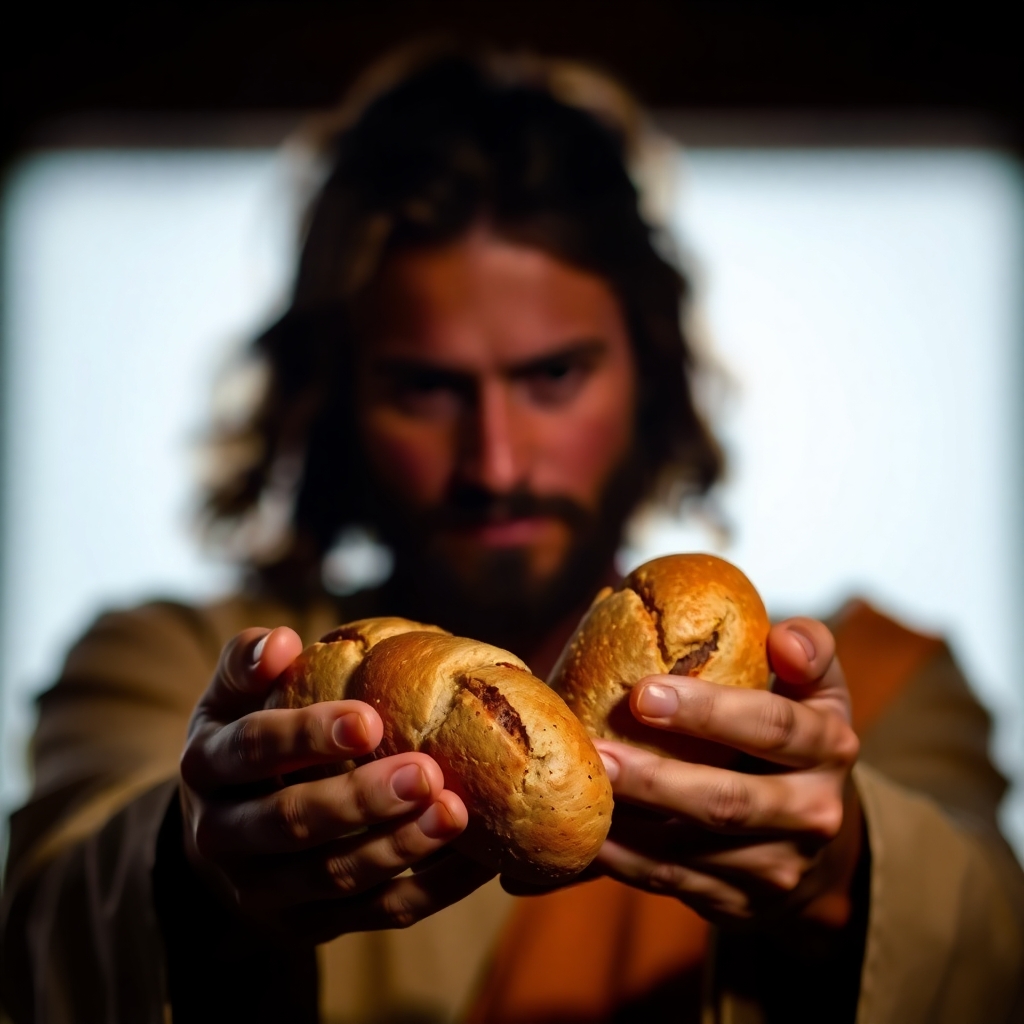








 ToBeLikeJesus