The Greatest Disciple-Maker Said… – #113

ENGLISH / ESPAÑOL

Welcome Back! Today, we’ll be looking at the Gospels of Matthew, Mark, and Luke to align ourselves more closely with Jesus’ definition of discipleship.

So let’s get started.

(Click here to get a copy of the Gospel Sync document) 

Matthew 16:24–26, Mark 8:34-37, Luke 9:23–25

Then Jesus called the crowd to Him along with His disciples, and He said to all of them, “If anyone wants to come after Me, he must deny himself and take up his cross daily and follow Me. For whoever wants to save his life will lose it, but whoever loses his life for My sake and for the gospel will save it. What will it profit a man if he gains the whole world, yet loses or forfeit his soul, his very self? For what can a man give in exchange for his soul?

My Thoughts 

We ought to notice that Jesus is not only talking to His disciples but to the crowd as well. He says “if anyone…” In other words, this statement applies to “All y’all.” I’ve heard people try to make a distinction between a Convert and a Disciple. They would describe a convert as one who believes in Jesus and is going to heaven but a disciple is one who is the “Special Forces” of the faith. They do the harder things that Jesus talks about like “denies themselves and takes up their cross.” 

The mentality of intellectual assent and stating that they’re on “Team Jesus” is not what He was looking for. He was looking for people who are “All In.” Watering down His commands distorts the “believer’s” identity and purpose. It reduces their identity to a shallow, passive state of the “casual Christian.” They are totally disconnected from the transformative, obedient lifestyle every disciple is called to. They failed the first step of entering the kingdom, repentance. And this misunderstanding of the true fellowship with the Master shrinks their purpose from an active mission to glorify God, make disciples, and advance His kingdom into a self-focused, consumerism that has become the god of our time. This faulty thinking leaves the would-be followers empty and under the delusion of being saved when in fact they are deceived by the Father of Lies.

Jesus makes no distinction. A convert is a disciple and a disciple is a convert. “If anyone wishes to come after me he must…”

My Story

I was recently reading a book that talked about this very issue. In fact it went into greater detail of how we have taken the idea of discipleship and dumbed it down into something that undermines Jesus’ original intent. (Of course I believe in the sovereignty of God, so nothing can really undermine His intentions, despite our worst efforts.) They expressed it this way; “Discipleship is not something the church “bolts on.” It should be “baked in” to everything we do as the church.” I really like that. 

Said another way, I once had a commander who coined the phrase; “Training is everything and everything is training.” He was trying to convey the idea that everything we did as soldiers should lead to greater effectiveness as war fighters. I took that to heart and coined my own phrase as a disciple of Jesus; “Everything is about following Jesus and following Jesus is everything.” And that my friends is what Jesus was communicating when it comes to being His disciple. 

You may ask, “Where’s the grace in all of this?” The grace is found in the fact that people actually decide to follow Jesus as His disciples. It is a gift of God. They reject the standards set by the world and have a mind set to please the One they call their King. When you see a person like that, you see a person who has had the grace of God lavished on them. They’re not perfect but their heart has been surrendered to the Great Disciple-Maker.

Our Action Plan

Now it’s time for application. Here some ideas;

  • Ask those you are mentoring, “What is a disciple of Jesus?”
  • Compare and contrast the cultural definition of discipleship with Jesus’ definition of discipleship.
  • Start discipling people the way Jesus discipled people.

So let’s not overcomplicate it—Jesus made it clear: following Him means surrender, obedience, and daily devotion. Discipleship isn’t optional or elite; it’s the normal Christian life for anyone who truly wants to come after Him.

El Mayor Hacedor de Discípulos Dijo… – #113

¡Bienvenidos de nuevo! Hoy, estaremos viendo los evangelios de Mateo, Marcos y Lucas para alinearnos más de cerca con la definición de discipulado de Jesús.

Así que, ¡comencemos!

Mateo 16:24–26, Marcos 8:34-37, Lucas 9:23–25 

Entonces Jesús llamó a la multitud junto con sus discípulos, y les dijo a todos:
“Si alguien quiere venir en pos de mí, debe negarse a sí mismo, tomar su cruz cada día y seguirme. Porque el que quiera salvar su vida, la perderá; pero el que pierda su vida por causa de mí y del evangelio, la salvará. ¿De qué le sirve al hombre ganar el mundo entero, si pierde su alma, su propio ser? ¿O qué puede dar el hombre a cambio de su alma?

Mis Pensamientos

Debemos notar que Jesús no solo está hablando a sus discípulos, sino también a la multitud. Él dice: “Si alguien…” En otras palabras, esta declaración aplica a todos ustedes.

He escuchado a personas tratar de hacer una distinción entre un converso y un discípulo. Describen al converso como alguien que cree en Jesús y va al cielo, pero al discípulo como uno que pertenece a las “fuerzas especiales” de la fe —aquellos que hacen las cosas difíciles que Jesús menciona como “negarse a sí mismos y tomar su cruz”.

La mentalidad de que solo el asentimiento intelectual o declararse cristiano es suficiente, sin perseguir el discipulado como Jesús manda, distorsiona la identidad y el propósito del creyente. Reduce su identidad a un estado superficial y pasivo de “cristiano casual”, desconectado del discípulo transformado y obediente llamado a reflejar a Cristo y a ser parte activa de Su cuerpo (2 Corintios 5:17, 1 Corintios 12:27). Al mismo tiempo, encoge su propósito de una misión activa para glorificar a Dios, hacer discípulos y avanzar Su reino, a una existencia mínima y enfocada en sí mismo que descuida el crecimiento espiritual, el impacto comunitario y la Gran Comisión (Juan 15:8, Mateo 28:18-20). Este pensamiento defectuoso alimenta la inmadurez espiritual, el aislamiento y la desobediencia, limitando el testimonio del creyente y su rol en la obra redentora de Dios.

Jesús no hace distinción. Un converso es un discípulo, y un discípulo es un converso. “Si alguien quiere venir en pos de mí, debe…”

Mi Historia

Recientemente estaba leyendo un libro que hablaba exactamente de este tema. De hecho, profundizaba aún más en cómo hemos tomado la idea del discipulado y la hemos empaquetado de una forma que casi socava la intención original de Jesús. (Por supuesto, creo en la soberanía de Dios, así que nada puede realmente socavar Sus propósitos, a pesar de nuestros mejores esfuerzos).

Lo expresaron de esta manera:
“El discipulado no es algo que la iglesia ‘añade’ por fuera. Debe estar ‘integrado’ en todo lo que hacemos como iglesia.”
Me encantó esa frase.

Dicho de otra forma, una vez tuve un comandante que acuñó la frase:
“El entrenamiento lo es todo y todo es entrenamiento.”
Él intentaba transmitir la idea de que todo lo que hacíamos como soldados debía llevarnos a ser más efectivos como combatientes. Tomé esa idea en serio y acuñé mi propia frase como discípulo de Jesús:
“Todo se trata de seguir a Jesús, y seguir a Jesús lo es todo.”
Y eso, mis amigos, es exactamente lo que Jesús estaba comunicando cuando se trata de ser Su discípulo.

Nuestro Plan de Acción

Ahora es momento de aplicar lo aprendido. Aquí van algunas ideas:

  • Pregúntales a aquellos que estás discipulando: “¿Qué es un discípulo de Jesús?”
  • Compara y contrasta la definición cultural de discipulado con la definición de Jesús.
  • Comienza a discipular a las personas como Jesús discipuló a las personas.

Así que no lo compliquemos demasiado—Jesús lo dejó claro: seguirle significa entrega, obediencia y devoción diaria.
El discipulado no es opcional ni exclusivo; es la vida cristiana normal para cualquiera que realmente desea venir en pos de Él.

Si ve un problema importante en la traducción, envíeme una corrección por correo electrónico a charleswood1@gmail.com


I’m Not THAT Smart – #111

ENGLISH / ESPAÑOL

Welcome Back! Today, we’ll be looking at the Gospels of Matthew, Mark, and Luke to see where to give credit when one of Jesus’ men comes up with a good answer.

So let’s get started.

(Click here to get a copy of the Gospel Sync document) 

Matthew 16:13–20, Mark 8:27–30, Luke 9:18–21

Then Jesus and His disciples went on to the villages around Caesarea Philippi. One day, on the way, Jesus was praying in private and He questioned His disciples: “Who do people say I, the Son of Man, am?” They replied, “Some say John the Baptist; others say Elijah; and still others, Jeremiah or one of the prophets of old has arisen.” “But what about you?” Jesus asked. “Who do you say I am?” Simon Peter answered, “You are the Christ, the Son of the living God.” Jesus replied, “Blessed are you, Simon son of Jonah! For this was not revealed to you by flesh and blood, but by My Father in heaven. And I tell you that you are Peter, and on this rock I will build My church, and the gates of Hades will not prevail against it. I will give you the keys of the kingdom of heaven. Whatever you bind on earth will be bound in heaven, and whatever you loose on earth will be loosed in heaven.” Then He strictly admonished the disciples not to tell anyone that He was the Christ.

My Thoughts 

Once again the “Master of the Question” gets to the core of the disciple’s faith. They had been with Jesus for some time now and Jesus wanted to measure His impact. He starts with those outside the intimate circle; “Who do people say I, the Son of Man, am?”  The masses were just guessing. They really had no clue who Jesus was. Then He asks His own. (Surely His disciples would have a fighting chance to come up with the correct answer.) And once again, it’s Peter; “You are the Christ, the Son of the living God.” 

It would be very natural for us to say; “Wow Peter! You’re on it like a bonnet!” Surely we’d like to take credit if we made such a simple and yet profound statement. But that’s where we would be so so wrong. (Peter will prove in just a few minutes that he’s not all that we and he thinks he is. More on that later.)

No, Peter has nothing to be proud of. He was given the right answer “by the Father in heaven.” And this underscores two essential qualities we are looking for in our disciple-making. First, humility and second, that the people we are mentoring are hearing from God Himself.

My Story

It’s happened to me a hundred times. I’ll be talking, preaching, or writing and I’ll walk away from the experience saying; “WOW, There is no way I came up with that on my own!” Yes, I feel an incredible sense of joy to know that I’m not that smart or wise or intuitive or…whatever. It was a gift from heaven and just as Jesus pointed that out to Peter, I think we need to remind ourselves and those we are discipling that the Holy Spirit is actually speaking through us. 

But as I’m writing this I’m wondering; “As I have gotten older and more experienced, am I starting to think I’m coming up with all this good stuff?” Or even worse, in my pride I might be telling God, “I got this Lord, don’t worry, I’m on the job.” I think that would be a huge mistake!

So let me give credit to where credit is due. If you have thought something I said was wise, or you’ve read something I wrote and it was transformative, let’s give all glory to God. Let’s acknowledge where the true wisdom comes from and be exhilarated as disciple-makers that He is actually using us to advance His kingdom. If you’ve thought just the opposite and thought I was way off, I’ll take full credit for that. But, would you let me know where I’m messing up…gently, please. 😀

Our Action Plan

Now it’s time for application. Here’s some ideas;

  • If you have experienced the Holy Spirit giving you things to say that you know you didn’t come up with, take time right now to thank God and acknowledge His gift.
  • Do some reflection. Did you take credit for something God had done? Make that right by confession and repentance.
  • Are those you’re discipling growing in humility and acknowledging God’s work in their lives?

At the end of the day, it’s all about giving credit where credit is due—God’s the one who gives us the right words and wisdom. Let’s stay humble, thank Him for working through us, and keep cheering each other on as we grow in faith together.

No soy tan inteligente – #111

¡Bienvenidos de nuevo! Hoy analizaremos los Evangelios de Mateo, Marcos y Lucas para ver a quién reconocer cuando uno de sus discípulos da una buena respuesta.

¡Comencemos!

Mateo 16:13-20, Marcos 8:27-30, Lucas 9:18-21

Luego, Jesús y sus discípulos se dirigieron a los pueblos de los alrededores de Cesarea de Filipo. Un día, en el camino, Jesús estaba orando en privado y preguntó a sus discípulos: «¿Quién dice la gente que soy yo, el Hijo del Hombre?». Ellos respondieron: «Unos dicen que Juan el Bautista; otros, que Elías; y otros, que Jeremías o uno de los antiguos profetas ha surgido». «¿Y ustedes, qué?», preguntó Jesús. «¿Quién dicen que soy yo?». Simón Pedro respondió: «Tú eres el Cristo, el Hijo de Dios vivo». Jesús respondió: «¡Bienaventurado eres, Simón, hijo de Jonás! Porque esto no te lo reveló carne ni sangre, sino mi Padre celestial. Y yo te digo que tú eres Pedro, y sobre esta roca edificaré mi iglesia, y las puertas del Hades no prevalecerán contra ella. Te daré las llaves del reino de los cielos. Todo lo que ates en la tierra quedará atado en los cielos, y todo lo que desates en la tierra quedará desatado en los cielos». Luego amonestó severamente a los discípulos para que no dijeran a nadie que él era el Cristo.

Mis Pensamientos

Una vez más, el “Maestro de la Pregunta” llega al corazón de la fe de los discípulos. Llevaban tiempo con Jesús, y Jesús quería medir su impacto. Comienza con quienes estaban fuera de su círculo íntimo: “¿Quién dice la gente que soy yo, el Hijo del Hombre?”. La gente solo adivinaba. No tenían ni idea de quién era Jesús. Entonces les pregunta a los suyos. Seguramente sus discípulos tendrían una oportunidad de dar la respuesta correcta. Y una vez más, es Pedro: “Tú eres el Cristo, el Hijo de Dios vivo”.

Sería muy natural que dijéramos: “¡Guau, Pedro! ¡Estás en lo más alto!”. Seguramente nos gustaría atribuirnos el mérito si hiciéramos una afirmación tan simple y a la vez tan profunda. Pero ahí es donde estaríamos totalmente equivocados. (Pedro demostrará en unos minutos que no es todo lo que nosotros y él cree ser. Hablaremos de eso más adelante).

No, Pedro no tiene nada de qué enorgullecerse. Recibió la respuesta correcta “del Padre celestial”. Y esto subraya dos cualidades esenciales que buscamos en nuestro discipulado: primero, la humildad; y segundo, que las personas a quienes mentoreamos escuchen a Dios mismo.

Mi Historia

Me ha pasado cientos de veces. Estoy hablando, predicando o escribiendo y al final de la experiencia me voy diciendo: “¡Guau! ¡Es imposible que se me haya ocurrido eso solo!”. Sí, siento una alegría increíble al saber que no soy tan inteligente, ni sabio, ni intuitivo, ni nada. Fue un regalo del cielo y, tal como Jesús se lo señaló a Pedro, creo que debemos recordarnos a nosotros mismos y a quienes estamos discipulando que el Espíritu Santo realmente está hablando a través de nosotros.

Pero mientras escribo esto, me pregunto: “Con la edad y la experiencia que he adquirido, ¿estoy empezando a pensar que se me están ocurriendo todas estas cosas buenas?”. O peor aún, en mi orgullo, podría estarle diciendo a Dios: “Ya lo tengo, Señor, no te preocupes, estoy trabajando”. ¡Creo que sería un gran error!

Así que, permítanme reconocer quién lo merece. Si has pensado que algo que dije fue sabio, o has leído algo que escribí y te resultó transformador, demos toda la gloria a Dios. Reconozcamos de dónde proviene la verdadera sabiduría y, como hacedores de discípulos, sintamos la alegría de que Él realmente nos esté usando para el avance de su reino. Si has pensado justo lo contrario y has pensado que estaba muy equivocado, me atribuyo todo el mérito. Pero, ¿podrías decirme dónde me estoy equivocando? Con delicadeza, por favor. 😀

Nuestro Plan de Acción

Ahora es momento de aplicar. Aquí tienes algunas ideas:

Si has sentido que el Espíritu Santo te ha dado cosas que decir que sabes que no se te ocurrieron, tómate un tiempo ahora mismo para agradecer a Dios y reconocer su don.

Reflexiona. ¿Te atribuyeste el mérito de algo que Dios hizo? Repártelo con la confesión y el arrepentimiento.

¿Están tus discípulos creciendo en humildad y reconociendo la obra de Dios en sus vidas?

Al final, se trata de reconocer a quien lo merece: Dios es quien nos da las palabras y la sabiduría adecuadas. Mantengámonos humildes, agradezcamos su obra a través de nosotros y animémonos mutuamente mientras crecemos juntos en la fe.

Si ve un problema importante en la traducción, envíeme una corrección por correo electrónico a charleswood1@gmail.com

Spit? – #110

ENGLISH / ESPAÑOL

Welcome Back! Today, we’ll be looking at the Gospel of Mark to see how Jesus uses a very unique way to heal a blind man and why He would do something so…unexpected.

So let’s get started.

(Click here to get a copy of the Gospel Sync document) 

Mark 8:22–26

When they arrived at Bethsaida, some people brought a blind man and begged Jesus to touch him. So He took the blind man by the hand and led him out of the village. Then He spit on the man’s eyes and placed His hands on him. “Can you see anything?” He asked. The man looked up and said, “I can see the people, but they look like trees walking around.” Once again Jesus placed His hands on the man’s eyes, and when he opened them his sight was restored, and he could see everything clearly. Jesus sent him home and said, “Do not go back into the village.”

My Thoughts 

Have you ever prayed and asked God to do something, only for Him to do something totally unexpected?

Imagine you’re reading this for the first time (and maybe some of you are). A blind man is brought to Jesus by “some people.” I hope it was his family or friends, not just some folks wanting to see the “Jesus Freak Show.” Anyways, I digress. There’s great anticipation that the Master is going to do what they’ve all heard about: “Heals the sick, raises the dead, and even casts out demons.”

As the man is brought forward with shaky steps, the crowd goes silent. The blind man’s eyes are lifeless, but his ears are finely tuned out of necessity. He hears “Ptooey”—and spray splashes his eyelids. In shock, he’s thinking to himself, “Did the Healer just spit in my eyes!? Wait! Now He’s rubbing it in with His hands. LIGHT! I CAN SEE LIGHT! And men like trees!”

Jesus places His hands on the man’s eyes again—and he can see clearly. Hallelujah!!!

Wait a minute. Spit!? Yup. Probably the last thing the man, the people, or His disciples expected. And that’s probably where we got the saying, “God works in mysterious ways.” But that’s not the only time God has done something totally unexpected to heal, communicate His grace, or even pass judgment.

The list is long, but my favorite example in the Old Testament is Naaman the Leper. Elisha tells a mighty general of a foreign army to go dip himself seven times in the Jordan River to be healed. The commander is furious, saying that “there are cleaner rivers back home. Why would I go dunk myself in a mudhole like the Jordan—and do that multiple times?” His servants talk some sense into him, and he obeys the prophet’s strange command. He is cleansed and has skin like that of a child!

Was it the Jordan that healed his leprosy? No. Was it the magic number seven? No. It was obedience in faith. And that, my friends, carries a major lesson about our discipleship methods.

I think Jesus healed in multiple different ways for two reasons:

  1. Because the Father told Him to.
  1. Because He didn’t want the method to get in the way of God’s glory—or of the faith and obedience of the recipient.

So be careful not to let your methods hijack either one!

My Story

I was just telling this story to a new friend last night. I was having a very successful career in the Army and one morning, decided to head to a nearby lake and spend some concerted time in prayer. As I was looking across the lake I noticed how full and vibrant the trees were. One tree in particular stood out. It was a bit weirdly shaped and had three distinct branches. The first was moderately full of leaves, the second more and than the third was absolutely exploding with leaves. Then God spoke. Not in an audible voice but clear as day. (For those who have had this happen to you, and there are many, you know what I’m talking about). 

God was telling me this was a picture of the fruitfulness of my life. Phase one was now over. I had experienced some fruitfulness and I was very excited about what Jesus was doing in and through Deb and I’s lives. But He was telling me that phase was now ending and I was heading into the second branch. Even more fruit! He was telling me He was going to change my life. It was shortly after that God called me out of the Army to go to college and seminary and then go back into the Army as a chaplain. I definitely didn’t see that one coming! The Holy Spirit uses a weird looking tree to call me into the next fruitful phase of my life. A tree.

Now that wasn’t His last word on the calling. There was confirmation from my Bible reading, answered prayer, wise counsel, and circumstances that lined up. But it all started with the Holy Spirit showing me a vision for what could be through a tree. 

Our Action Plan 

Now it’s time for application. Here’s some ideas;

  • Ask those you are discipling, “How has God done something totally unexpected in your life?”
  • Ask them if they think He does that “unexpected thing” everytime or with everyone.
  • Ask “What is the crucial lesson that comes from God’s creative ways of speaking and ministering to His people?”

God’s ways are often unexpected, but they always serve a purpose far greater than we can imagine. Whether through spit, a tree, or a muddy river, He calls us to trust Him fully, obey in faith, and let His glory shine through the unconventional.

¿Escupir? – #110

¡Bienvenidos de nuevo! Hoy analizaremos el Evangelio de Marcos para ver cómo Jesús sana a un ciego de una forma tan singular y por qué hizo algo tan… inesperado.

¡Comencemos!

Marcos 8:22-26

Al llegar a Betsaida, trajeron a un ciego y le rogaron a Jesús que lo tocara. Él, tomándolo de la mano, lo sacó del pueblo. Luego, escupió en los ojos del ciego y le impuso las manos. “¿Ves algo?”, le preguntó. El hombre levantó la vista y dijo: “Veo a la gente, pero parecen árboles que caminan”. Jesús volvió a poner las manos sobre los ojos del ciego, y al abrirlos, recuperó la vista y pudo ver todo con claridad. Lo envió a su casa y le dijo: “No vuelvas al pueblo”.

Mis Pensamientos

¿Alguna vez has orado y le has pedido a Dios que haga algo, solo para que Él haga algo totalmente inesperado?

Imagina que estás leyendo esto por primera vez (y quizás algunos de ustedes lo estén haciendo). Un hombre ciego es llevado ante Jesús por “algunas personas”. Espero que hayan sido su familia o amigos, no solo algunos que quieren ver el “Espectáculo de Jesús Freak”. En fin, me estoy desviando del tema. Hay una gran expectación de que el Maestro haga lo que todos han oído: “Sana enfermos, resucita muertos e incluso expulsa demonios”.

Mientras el hombre es llevado al frente con pasos temblorosos, la multitud guarda silencio. Los ojos del ciego están inertes, pero sus oídos están afinados por necesidad. Oye “Ptooey” y el agua salpica sus párpados. En estado de shock, piensa: “¿¡El Sanador me acaba de escupir en los ojos!? ¡Espera! Ahora me lo frota con las manos. ¡LUZ! ¡PUEDO VER LA LUZ! ¡Y los hombres como árboles!”

Jesús vuelve a poner las manos sobre los ojos del hombre, y este puede ver con claridad. ¡Aleluya!

Un momento. ¿¡Escupir!? Sí. Probablemente lo último que el hombre, la gente o sus discípulos esperaban. Y de ahí probablemente viene el dicho: “Dios obra de maneras misteriosas”. Pero esa no es la única vez que Dios ha hecho algo totalmente inesperado para sanar, comunicar su gracia o incluso juzgar.

La lista es larga, pero mi ejemplo favorito del Antiguo Testamento es el de Naamán el leproso. Eliseo le dice a un poderoso general de un ejército extranjero que se sumerja siete veces en el río Jordán para sanar. El comandante se enfurece y dice: “Hay ríos más limpios en casa. ¿Por qué me sumergiría en un charco de lodo como el Jordán, y lo haría varias veces?” Sus sirvientes lo convencen de entrar en razón, y obedece la extraña orden del profeta. ¡Queda limpio y tiene la piel como la de un niño!

¿Fue el Jordán lo que sanó su lepra? No. ¿Fue el mágico número siete? No. Fue la obediencia en la fe. Y eso, amigos míos, nos enseña una lección importante sobre nuestros métodos de discipulado.

Creo que Jesús sanó de muchas maneras diferentes por dos razones:

Porque el Padre se lo ordenó.

Porque no quería que el método interfiriera con la gloria de Dios ni con la fe y la obediencia del receptor.

Así que tengan cuidado de no dejar que sus métodos se apropien de ninguno de los dos.

Mi Historia

Anoche le contaba esta historia a un nuevo amigo. Tenía una carrera muy exitosa en el ejército y una mañana decidí ir a un lago cercano y dedicar un tiempo a la oración. Mientras miraba al otro lado del lago, noté lo frondosos y vibrantes que estaban los árboles. Un árbol en particular destacaba. Tenía una forma un poco extraña y tres ramas distintas. La primera estaba bastante llena de hojas, la segunda más y la tercera estaba completamente llena de hojas. Entonces Dios habló. No con una voz audible, sino con la claridad del día. (Para quienes les haya pasado esto, y hay muchos, saben de qué hablo).

Dios me decía que esto era una imagen de la fecundidad de mi vida. La primera fase ya había terminado. Había experimentado cierta fecundidad y estaba muy emocionado por lo que Jesús estaba haciendo en y a través de la vida de Deb y la mía. Pero Él me decía que esa fase estaba terminando y que me dirigía hacia la segunda rama. ¡Aún más fruto! Me decía que iba a cambiar mi vida. Poco después, Dios me llamó a dejar el ejército para ir a la universidad y al seminario, y luego a regresar al ejército como capellán. ¡Definitivamente no lo vi venir! El Espíritu Santo usa un árbol de aspecto extraño para llamarme a la siguiente etapa fructífera de mi vida. Un árbol.

Esa no fue su última palabra sobre el llamado. Hubo confirmación en mi lectura de la Biblia, oración contestada, consejos sabios y circunstancias que se alinearon. Pero todo comenzó cuando el Espíritu Santo me mostró una visión de lo que podría suceder a través de un árbol.

Nuestro Plan de Acción

Ahora es momento de aplicarlo. Aquí tienes algunas ideas:

Pregúntales a quienes estás discipulando: “¿Cómo ha hecho Dios algo totalmente inesperado en tu vida?”.

Pregúntales si creen que Él hace esa “cosa inesperada” siempre o con todos.

Pregúntales: “¿Cuál es la lección crucial que se desprende de las maneras creativas en que Dios habla y ministra a su pueblo?”.

Los caminos de Dios a menudo son inesperados, pero siempre tienen un propósito mucho mayor del que podemos imaginar. Ya sea a través de saliva, un árbol o un río fangoso, Él nos llama a confiar plenamente en Él, a obedecer con fe y a dejar que su gloria brille a través de lo inusual.

Si ve un problema importante en la traducción, envíeme una corrección por correo electrónico a charleswood1@gmail.com

Head on a swivel! – #109

ENGLISH / ESPAÑOL

Welcome Back! Today, we’ll be looking at the Gospels of Matthew and Mark to hear Jesus’ warning about the ambushes the leaders of His day walked into.  

So let’s get started.

(Click here to get a copy of the Gospel Sync document) 

Matthew 16:5–12, Mark 8:14–21

When they crossed to the other side, the disciples forgot to take bread, except for one loaf they had with them in the boat. “Watch out!” Jesus cautioned them. “Beware of the leaven of the Pharisees, Sadducees, and of Herod.” So they began to discuss with one another the fact that they had no bread. They concluded, “It is because we did not bring any bread.”

Aware of their conversation, Jesus said, “You of little faith, why are you debating among yourselves about having no bread? Do you still not understand? Do you have such hard hearts? ‘Having eyes, do you not see? And having ears, do you not hear?’ Do you not remember the five loaves for the five thousand. When I broke the five loaves for the five thousand, how many basketfuls of broken pieces did you collect?” “Twelve,” they answered. “And when I broke the seven loaves for the four thousand, how many basketfuls of broken pieces did you collect?” “Seven,” they said. How do you not understand that I was not telling you about bread? But beware of the leaven of the Pharisees and Sadducees.” Then they understood that He was not telling them to beware of the leaven used in bread, but of the teaching of the Pharisees and Sadducees.

My Thoughts 

“Keep your head on a swivel!” This is a common admonition of many infantry leaders to their troops going into hostile territory. In other words, “Watch out! Keep looking around for the enemy!” And that’s what Jesus is saying to His men here about the leadership in their country, both religious and secular.

The religious leaders I mentioned in the last post had “lost the bubble” in their spirituality by becoming focused on their own ambitions and success. They were playing a religious game to maintain control of the people and reap the financial benefits. Jesus basically gives His disciples this warning, “Look out! You’re in enemy territory and you could fall into the same trap they had succumbed to. Whatever ambush had waylaid them, could also take you out!”

And it’s interesting in Mark’s rendition, Jesus even includes Herod, a secular leader. So this ambush isn’t just taking out the religious. It’s getting the political leadership as well. And I think if we looked at it closely, we would see the potential danger for ALL leaders. 

So what is the sneaky ambush the enemy had used on these leaders to warrant such a warning from the Messiah? What is the “leaven?” Here’s my guess. I’ve seen in the Scriptures and in life that leaders are normally taken out by two things; Power and Greed. Sex, alcohol, drugs, crime and many more things are pretty obvious when it comes to the danger zones for leaders. But power and greed are subtle. They sneak up on you a little at a time… like leaven leavens the whole lump of dough. They are the enemy’s ambush hiding in the bushes.

Let me give you two really prevalent examples;

  1. A ministry leader starts with a humble vision, guiding his Christian organization with a servant’s heart. As his influence grows, so does the taste for power. He relishes the way his words sway the organization and how his decisions shape their lives. Slowly, the thrill of control intoxicates him—staff meetings become battlegrounds, and dissent feels like betrayal. His once-warm counsel turns into commands, his care for souls overshadowed by a need to dominate. Unaware, he trades his calling as a servant for the mantle of fear. The meek man who once knelt in prayer now stands tall, clutching authority like a scepter. His organization, once partners in faith, shrink into subjects under his unyielding grip.
  1. A pastor begins his journey with noble intentions, shepherding a small congregation while earning a modest salary to supplement his part-time job. His heart burns with zeal for the Lord and a genuine love for his flock. Then comes an unexpected call to a larger church, offering a full-time salary that promises stability. He accepts, feeling it’s a divine step forward. Over the years, more calls follow—each to a bigger church, each with a heftier paycheck. He moves from one pulpit to the next, convinced he’s following a higher purpose. Yet, beneath the surface, something shifts. He fails to notice that his fiery devotion to God and his tender care for people are quietly eroding, steadily replaced by an unspoken greed for more money and the comforts it brings. The thrill of a larger salary begins to outweigh the joy of ministry. By the time he’s leading a sprawling congregation, his sermons feel polished but hollow, his prayers more routine than heartfelt. The man who once sought to serve now chases the next raise, blind to how far he’s drifted from the calling that once defined him.

These are just two real-life examples of many I’ve seen over my 45 years in the faith. They are examples of people that did not keep their “head on a swivel.” They did not “watch out.” Sad but true. “Beware of the leaven of the Pharisees, Sadducees, and of Herod.” 

My Story

I have to admit that there have been times where I didn’t follow Jesus’ advice to “keep my head on a swivel” and watch out for “the leaven of the Pharisees, Sadducees, and of Herod.” One such time when we were restructuring a leadership team. The “Director” asked us what we thought a potential title we should be called and much to my chagrin I said “Directors of XYZ.” It just makes sense right? He was the Director over the whole and we were Directors over the parts. 

I have regretted the word “Director” coming out of my mouth ever since. My heart wasn’t right and this was immediately apparent as soon as I took “charge.” I rushed into a problem area like the Master Sergeant I once was in the Army and made the situation even more of a disaster than it already was. You should have heard the “beep, beep, beep” as I threw my leadership in reverse when I realized I had grabbed the tiger by the tail. These people were not going to follow me or change no matter what my title was.

I had let the power go to my head and it was a painful lesson. Fortunately, pain is a great teacher and I have not used that power play since. I have a whole different philosophy of spiritual leadership as a result. If I had to do it over again, when asked what my position should have been called? I would say “Servant of XYZ” not “Director.”

If you want more lessons learned about spiritual leadership, just ask. I’ve got stories coming out of my ears.

Our Action Plan

Now it’s time for application. Here’s some ideas;

  • Have you seen or experienced the pull of these two insidious poisons; Power or Greed?
  • How did you recognize them and what did you do about them?
  • Do a Bible study on these two ambushes with those you’re discipling.

“Keep your head on a swivel” and beware the leaven of power and greed. This remains a timeless caution for leaders, as these subtle ambushes can quietly corrupt even the most well-intentioned hearts. By staying vigilant and rooted in servanthood, we can avoid the traps that ensnared the Pharisees, Sadducees, and Herod. Let’s ensure our leadership reflects the humility and purpose of Christ.

¡Gira la cabeza! – #109

¡Bienvenidos de nuevo! Hoy analizaremos los Evangelios de Mateo y Marcos para escuchar la advertencia de Jesús sobre las emboscadas en las que cayeron los líderes de su época.

¡Comencemos!

Mateo 16:5-12, Marcos 8:14-21

Cuando cruzaron al otro lado, los discípulos olvidaron llevar pan, excepto uno que llevaban en la barca. «¡Cuidado!», les advirtió Jesús. «Cuídense de la levadura de los fariseos, de los saduceos y de Herodes». Así que comenzaron a discutir entre sí sobre la falta de pan. Concluyeron: «Es porque no trajimos pan».

Al tanto de su conversación, Jesús dijo: «Hombres de poca fe, ¿por qué discuten entre ustedes sobre la falta de pan? ¿Aún no entienden? ¿Tienen un corazón tan duro? «Teniendo ojos, ¿no ven? ¿Y teniendo oídos, ¿no oyen?» ¿No recuerdan los cinco panes para los cinco mil? Cuando partí los cinco panes para los cinco mil, ¿cuántas cestas llenas de pedazos recogieron? «Doce», respondieron. Y cuando partí los siete panes para los cuatro mil, ¿cuántas cestas llenas de pedazos recogieron? «Siete», dijeron. «¿Cómo no entienden que no les estaba hablando del pan? Pero cuídense de la levadura de los fariseos y de los saduceos». Entonces comprendieron que no les estaba diciendo que se cuidaran de la levadura del pan, sino de la enseñanza de los fariseos y de los saduceos.

Mis Pensamientos

“¡Manténganse alerta!” Esta es una advertencia común de muchos líderes de infantería a sus tropas al entrar en territorio hostil. En otras palabras: “¡Cuidado! ¡Manténganse alertas por si ven al enemigo!”. Y eso es lo que Jesús les dice a sus hombres aquí sobre el liderazgo en su país, tanto religioso como secular.

Los líderes religiosos que mencioné en la publicación anterior habían perdido la espiritualidad al centrarse en sus propias ambiciones y éxito. Estaban jugando un juego religioso para mantener el control del pueblo y obtener beneficios económicos. Jesús básicamente les advierte a sus discípulos: “¡Cuidado! Están en territorio enemigo y podrían caer en la misma trampa en la que ellos sucumbieron. Cualquier emboscada que los haya acechado, ¡también podría acabar con ustedes!”.

Y es interesante que, en la interpretación de Marcos, Jesús incluso incluya a Herodes, un líder secular. Así que esta emboscada no solo está acabando con los religiosos, sino también con el liderazgo político. Y creo que, si lo analizamos con atención, veremos el peligro potencial para TODOS los líderes. Entonces, ¿cuál es la emboscada furtiva que el enemigo había usado contra estos líderes para justificar tal advertencia del Mesías? ¿Qué es la “levadura”? Mi suposición es esta: he visto en las Escrituras y en la vida que los líderes normalmente son derrotados por dos cosas: el poder y la codicia. El sexo, el alcohol, las drogas, el crimen y muchas otras cosas son bastante obvias cuando se trata de las zonas de peligro para los líderes. Pero el poder y la codicia son sutiles. Te acechan poco a poco… como la levadura leuda toda la masa. Son la emboscada del enemigo escondida entre los arbustos.

Permítanme darles dos ejemplos muy comunes:

Un líder ministerial comienza con una visión humilde, guiando a su organización cristiana con un corazón de siervo. A medida que su influencia crece, también crece su deseo de poder. Disfruta de cómo sus palabras influyen en la organización y cómo sus decisiones moldean sus vidas. Poco a poco, la emoción del control lo embriaga: las reuniones de personal se convierten en campos de batalla y la disidencia se siente como una traición. Sus consejos, antes cálidos, se convierten en órdenes; su preocupación por las almas se ve eclipsada por la necesidad de dominar. Sin darse cuenta, cambia su llamado de siervo por el manto del miedo. El hombre manso que una vez se arrodilló para orar ahora se yergue erguido, aferrándose a la autoridad como a un cetro. Su organización, antes compañera en la fe, se reduce a súbditos bajo su férreo control.

Un pastor comienza su camino con nobles intenciones, pastoreando una pequeña congregación mientras gana un salario modesto para complementar su trabajo de medio tiempo. Su corazón arde de celo por el Señor y un amor genuino por su rebaño. Entonces llega un llamado inesperado a una iglesia más grande, ofreciéndole un salario de tiempo completo que promete estabilidad. Acepta, sintiendo que es un paso divino hacia adelante. Con el paso de los años, siguen más llamados, cada uno a una iglesia más grande, cada uno con un sueldo más cuantioso. Pasa de un púlpito a otro, convencido de que persigue un propósito superior. Sin embargo, bajo la superficie, algo cambia. No se da cuenta de que su ardiente devoción a Dios y su tierno cuidado por los demás se están erosionando silenciosamente, reemplazados constantemente por una codicia tácita de más dinero y las comodidades que este brinda. La emoción de un salario mayor comienza a superar la alegría del ministerio. Para cuando dirige una congregación extensa, sus sermones se sienten pulidos pero vacíos, sus oraciones más rutinarias que sinceras. El hombre que una vez buscó servir ahora persigue el siguiente aumento, ciego a cuánto se ha desviado del llamado que una vez lo definió.

Estos son solo dos ejemplos reales de muchos que he visto en mis 45 años de fe. Son ejemplos de personas que no mantuvieron la cabeza en alto. No se cuidaron. Triste pero cierto. «Cuídense de la levadura de los fariseos, de los saduceos y de Herodes».

Mi Historia

Debo admitir que a veces no seguí el consejo de Jesús de “mantener la cabeza alerta” y cuidarme de “la levadura de los fariseos, saduceos y Herodes”. Una de esas ocasiones, cuando estábamos reestructurando un equipo de liderazgo, el “Director” nos preguntó qué título creíamos que deberíamos llamar y, para mi disgusto, dije “Directores de XYZ”. Tiene sentido, ¿verdad? Él era el Director del todo y nosotros, los Directores de las partes.

Desde entonces, me he arrepentido de haber pronunciado la palabra “Director”. No tenía buen corazón y esto se hizo evidente en cuanto asumí el “cargo”. Me precipité en un área problemática como el Sargento Mayor que una vez fui en el Ejército y agravé la situación. Deberían haber oído el “bip, bip, bip” cuando di marcha atrás en mi liderazgo al darme cuenta de que había agarrado al tigre por la cola. Estas personas no iban a seguirme ni a cambiar, sin importar mi título. Se me había subido el poder a la cabeza y fue una lección dolorosa. Por suerte, el dolor es un gran maestro y no he vuelto a usar ese poder desde entonces. Como resultado, tengo una filosofía de liderazgo espiritual completamente diferente. Si tuviera que volver a empezar, si me preguntaran cómo debería haberse llamado mi puesto, diría “Servidor de XYZ”, no “Director”.

Si quieres aprender más lecciones sobre liderazgo espiritual, solo pregúntame. Tengo historias que me salen de los oídos.

Nuestro Plan de Acción

Ahora es momento de aplicar. Aquí tienes algunas ideas:

¿Has visto o experimentado la atracción de estos dos venenos insidiosos: el poder o la avaricia?

¿Cómo los reconociste y qué hiciste al respecto?

Realiza un estudio bíblico sobre estas dos emboscadas con tus discípulos.

Mantén la cabeza alerta y cuidate de la levadura del poder y la avaricia. Esta es una advertencia intemporal para los líderes, ya que estas sutiles emboscadas pueden corromper silenciosamente incluso los corazones mejor intencionados. Al mantenernos vigilantes y arraigados en el servicio, podemos evitar las trampas que atraparon a los fariseos, saduceos y Herodes. Asegurémonos de que nuestro liderazgo refleje la humildad y el propósito de Cristo.

Si ve un problema importante en la traducción, envíeme una corrección por correo electrónico a charleswood1@gmail.com
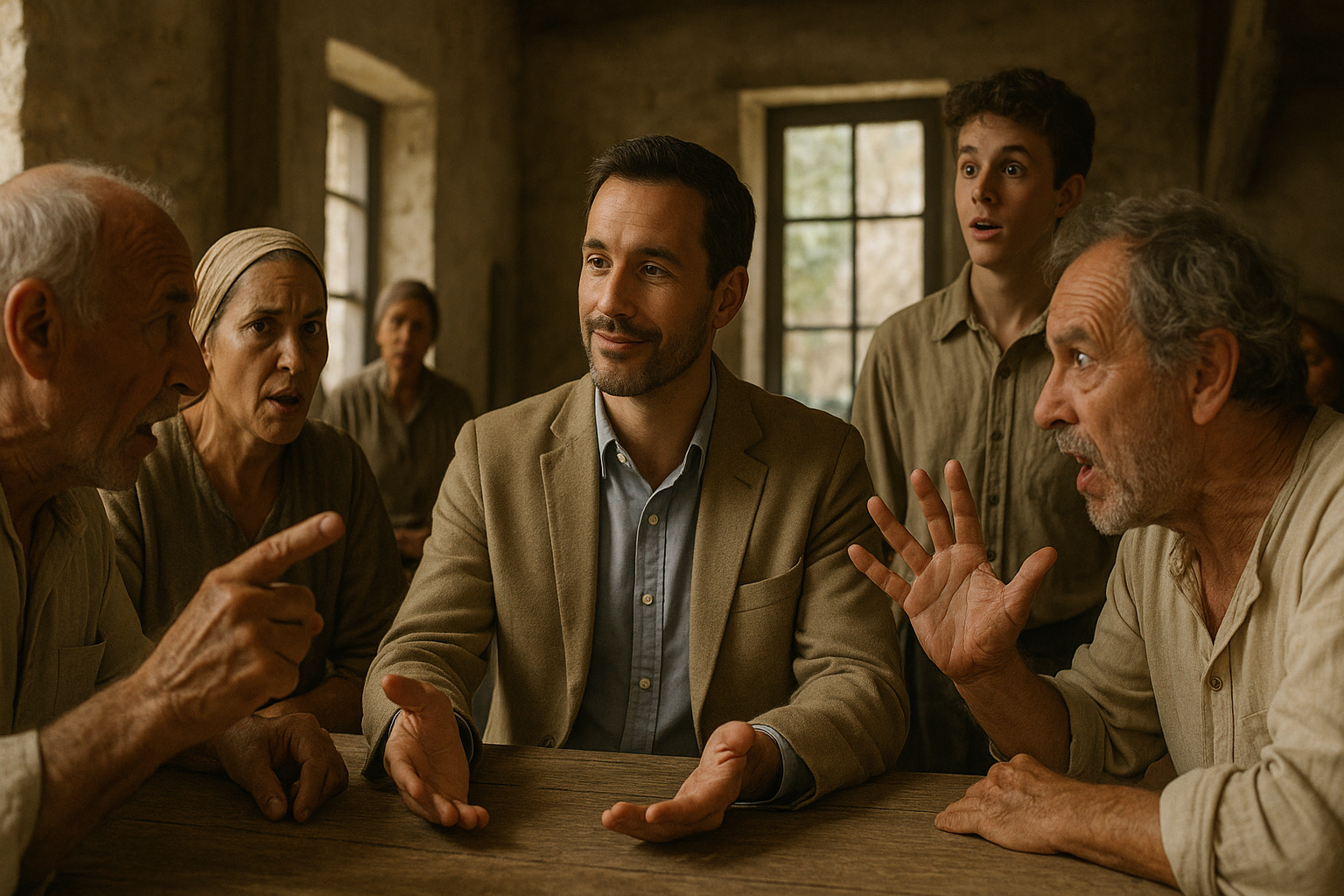
Religious Haters – #108

ENGLISH / ESPAÑOL

Welcome Back! Today, we’ll be looking at the Gospels of Matthew and Mark to see how Jesus responded to “religious haters.”  

So let’s get started.

(Click here to get a copy of the Gospel Sync document) 

Matthew 16:1-4, Mark 8:11–13

Then the Pharisees and Sadducees came and began to argue with Jesus and test Him by demanding Him to show them a sign from heaven. Jesus sighed deeply in His spirit and said, “Why does this generation demand a sign? “When evening comes, you say, ‘The weather will be fair, for the sky is red,’ and in the morning, ‘Today it will be stormy, for the sky is red and overcast.’ You know how to interpret the appearance of the sky, but not the signs of the times. A wicked and adulterous generation demands a sign, Truly I tell you, no sign will be given to this generation except the sign of Jonah.” And He left them, got back into the boat, and crossed to the other side.

My Thoughts 

Jesus took a lot of heat from the religious leaders of the day. They were constantly bringing accusations and badgering Him for signs that would give them clear authentication that He had authority to do and say the things He did and said. These attacks started pretty early in Jesus’ ministry. But why? Why so much hate for a simple carpenter turned rabbi with a following of common people? 

Here’s some of the things we pick up from the Scriptures about these religious leaders;

  1. They were jealous  (John 7:48-49).
  2. They were envious (Matthew 27:18, Mark 15:10)
  3. He was a threat to their authority  (John 7:48-49).
  4. He violated their traditions  (Matthew 15:1-9).
  5. He caused Sabbath controversies (John 5:18).
  6. He claimed divine Sonship (John 5:18).
  7. He performed miracles  (John 11:53, John 12:10-11).
  8. They were suppressing the truth (Romans 1:18).
  9. He called out their hypocrisy  (Matthew 23:13-36).
  10. They did not understand the Scriptures (1 Peter 2:7, Matthew 21:42, John 5:39).
  11. They feared losing their position (John 11:48).
  12. He associated with sinners (Matthew 9:11).
  13. They thought He was in league with Satan (Matthew 12:24).

That’s quite the list! As a disciple-maker have you ever met resistance like any mentioned above? And here’s the real kicker. Have you ever caused harm to a brother or sister with the kind of weapons mentioned above? 

When we read the accounts of Jesus and His disciples in the New Testament, it always seems like it’s the “religious” that are doing the most harm. It’s almost like you need to fear the “insiders” more than the “outsiders.” Jesus gave ample warning, “If they persecute Me, they will persecute you.” (Matthew 10:22, Luke 21:12, John 15:20). But in our zeal we need to be careful that we are not the ones doing the persecuting.

As we used to say in the Army, “Friendly fire ain’t so friendly.” 

My Story

Continuing with this line of thinking, I can also say “Social media ain’t so social.” I am shocked how “Christian” people feel the freedom to spew anger, hate, and bitterness. And over the smallest issues. Instead of dialog, we’ve chosen to judge the whole person’s character by “sound bites.” I’ve been the recipient of such harsh criticism for doing church in a home. Really? Are we going to go to war with a brother over that?

Now to be sure there are some things on social media that are way out there and some down right heresy. But does that give us the freedom to load both verbal barrels and open fire? I see a lot of that when we should seek to understand first, lovingly correct in private second, and try to bring people back to central truths by pointing them to the Bible.

I don’t want to fall into the trap of being angry at angry people. But I just see so much anger out there that something needs to be said. Let’s talk, discuss, dialogue and try to bring the truth in love as the first move instead of being uncharitable, spiteful, or even cruel. 

This is a a good place to point people to my free eBook: The Art of Discussion – A Laughable Look at a very Serious Subject

Our Action Plan

Now it’s time for application. Here’s some ideas;

  • Look back at your social media posts. Were you mean spirited in any of them? Do you need to apologize?
  • Look at the posts of those you are discipling. Is correction needed?
  • War game with those you are discipling “how to correct someone in love.”

As followers of Jesus, let’s ensure our actions and words reflect His love whether online or in person. Let’s strive to speak the truth in love, seek understanding first, and avoid becoming the very source of harm we aim to stand against, remembering that our ultimate goal is to glorify God by becoming like His Son.

Detractores de la religión – #108

¡Bienvenidos de nuevo! Hoy analizaremos los Evangelios de Mateo y Marcos para ver cómo respondió Jesús a los detractores de la religión.

Comencemos.

Mateo 16:1-4, Marcos 8:11-13

Entonces los fariseos y los saduceos vinieron y comenzaron a discutir con Jesús y a tentarlo, exigiéndole que les mostrara una señal del cielo. Jesús suspiró profundamente y dijo: “¿Por qué esta generación pide una señal? Al anochecer, dicen: ‘Buen tiempo habrá, porque el cielo está rojo’, y por la mañana: ‘Hoy habrá tormenta, porque el cielo está rojo y nublado’. Saben interpretar el aspecto del cielo, pero no las señales de los tiempos. Una generación malvada y adúltera pide una señal. De cierto les digo que a esta generación no se le dará otra señal que la de Jonás”. Y los dejó, volvió a la barca y cruzó a la otra orilla.

Mis Pensamientos

Jesús recibió muchas críticas de los líderes religiosos de la época. Constantemente lo acusaban y lo acosaban para que les diera señales que les confirmaran claramente que tenía autoridad para hacer y decir lo que hacía y decía. Estos ataques comenzaron bastante temprano en el ministerio de Jesús. Pero ¿por qué? ¿Por qué tanto odio hacia un simple carpintero convertido en rabino con un grupo de seguidores de la gente común?

Aquí hay algunas cosas que aprendemos de las Escrituras sobre estos líderes religiosos:

  • Tenían celos (Juan 7:48-49).
  • Tenían envidia (Mateo 27:18; Marcos 15:10).
  • Él era una amenaza para su autoridad (Juan 7:48-49).
  • Violaba sus tradiciones (Mateo 15:1-9).
  • Provocaba controversias sobre el sábado (Juan 5:18).
  • Afirmaba ser hijo divino (Juan 5:18). Obró milagros (Juan 11:53, Juan 12:10-11).
  • Estaban suprimiendo la verdad (Romanos 1:18).
  • Denunció su hipocresía (Mateo 23:13-36).
  • No entendían las Escrituras (1 Pedro 2:7, Mateo 21:42, Juan 5:39).
  • Temían perder su posición (Juan 11:48).
  • Se relacionó con pecadores (Mateo 9:11).
  • Pensaron que estaba aliado con Satanás (Mateo 12:24).

¡Menuda lista! Como hacedor de discípulos, ¿alguna vez te has encontrado con resistencia como las mencionadas anteriormente? Y aquí está la clave: ¿alguna vez has causado daño a un hermano o hermana con las armas mencionadas? Cuando leemos los relatos de Jesús y sus discípulos en el Nuevo Testamento, siempre parece que son los religiosos los que más daño causan. Es casi como si debiéramos temer más a los de adentro que a los de afuera. Jesús dio una amplia advertencia: «Si me persiguen a mí, os perseguirán a vosotros» (Mateo 10:22; Lucas 21:12; Juan 15:20). Pero en nuestro celo, debemos tener cuidado de no ser nosotros quienes persigamos.

Como solíamos decir en el ejército: «El fuego amigo no es tan amigo».

Mi Historia

Siguiendo con esta línea de pensamiento, también puedo decir: “Las redes sociales no son tan sociales”. Me sorprende cómo los cristianos se sienten libres de expresar ira, odio y amargura, incluso por los problemas más pequeños. En lugar de dialogar, hemos optado por juzgar el carácter integral de la persona por frases breves. He recibido duras críticas por tener la iglesia en casa. ¿En serio? ¿Vamos a entrar en guerra con un hermano por eso?

Claro que hay cosas en las redes sociales que son muy raras y otras que son una auténtica herejía. Pero ¿nos da eso la libertad de usar la palabra y abrir fuego? Veo mucho de eso cuando deberíamos buscar primero comprender, luego corregir con amor en privado y tratar de que la gente vuelva a las verdades fundamentales guiándoles hacia la Biblia.

No quiero caer en la trampa de enojarme con la gente enojada. Pero veo tanta ira que es necesario decir algo. Hablemos, discutamos, dialoguemos y tratemos de llevar la verdad en el amor como primer paso en lugar de ser poco caritativos, rencorosos o incluso crueles.

Nuestro Plan de Acción

Ahora es momento de aplicar. Aquí tienes algunas ideas:

Revisa tus publicaciones en redes sociales. ¿Fuiste cruel en alguna? ¿Necesitas disculparte?

Mira las publicaciones de quienes estás discipulando. ¿Es necesaria la corrección?

Entrena a quienes estás discipulando: “¿Cómo corregir a alguien con amor?”.

Como seguidores de Jesús, asegurémonos de que nuestras acciones y palabras reflejen su amor, ya sea en línea o en persona. Esforcémonos por hablar la verdad con amor, busquemos primero la comprensión y evitemos convertirnos en la causa del daño que buscamos combatir, recordando que nuestro objetivo final es glorificar a Dios siendo como su Hijo.

Si ve un problema importante en la traducción, envíeme una corrección por correo electrónico a charleswood1@gmail.com

Loaves, Fish, and Refried Lessons – #107 

ENGLISH / ESPAÑOL

Welcome Back! Today, we’ll be looking at the Gospels of Matthew and Mark to see what motivated Jesus to feed thousands yet again.  

So let’s get started.

(Click here to get a copy of the Gospel Sync document) 

Matthew 15:32–39, Mark 8:1–10

In those days the crowd once again became very large, and they had nothing to eat. Then Jesus called His disciples to Him and said, “I have compassion for this crowd, because they have already been with Me three days and have nothing to eat. I do not want to send them away hungry, or they may faint along the way.” For some of them have come a great distance.” The disciples replied, “Where in this desolate place could we find enough bread to feed such a large crowd?” “How many loaves do you have?” Jesus asked. “Seven,” they replied, “and a few small fish.” And He instructed the crowd to sit down on the ground. Taking the seven loaves and the fish, He gave thanks and blessed them and broke them. Then He gave them to His disciples to set before the people. And they distributed them to the crowd. They all ate and were satisfied, and the disciples picked up seven basketfuls of broken pieces that were left over. A total of four thousand men were fed, in addition to women and children. After Jesus had dismissed the crowds, He got into the boat and went to the region of Magadan, the district of Dalmanutha.

My Thoughts 

This is the second time Jesus fed thousands of people. The first time the people’s motives were exposed as superficial and certainly not spiritually oriented. Jesus put His finger dead in their hearts with this saying;

“Truly, truly, I say to you, you seek Me, not because you saw signs, but because you ate of the loaves and were filled.”

OUCH! So they were there for the free fish and chips and to fill their gullets. But that’s not the end of the story. And during that first feeding…things went from bad to worse. He drops the “eat My flesh and drink My blood” bombshell on them and He disintegrates a mega-church to a small group in a single day.

So why is Jesus feeding the crowd again?! The people’s motives were probably the same. I can think of two reasons. The first is explicit, Jesus has compassion for them. Jesus’ motives were crystal clear on this, He loved the people. He loved them enough to feed them, heal them, and teach them (even if some of His teaching included hard truths). This was not a transactional relationship and is profoundly evident by His willingness to do it a second time. 

The second observation is not as evident and like many of Jesus’ discipleship techniques, it’s kind of hidden under the miraculous. Jesus uses repetition to teach His disciples crucial lessons. Later He would remind them of these two events and chide them for not getting it. (Matthew 16:5-12)

This is why I jokingly say there are three ways to learn;

  1. Repetition
  2. Bluntforce Trama
  3. And Repetitive Bluntforce Trama

So as we are becoming more like Jesus in our disciple-making, are we becoming more compassionate? Are we willing to teach the same lessons over and over again? These are two key ways we can emulate the Master.

My Story

Just the other day I was using these two elements in my disciple-making efforts. I asked Mike and Perla to join Deb and I as we engaged with some fellow laborers at a retreat. We sat down at the table with some folks and went into the “mentoring mode.” As I thumbed through my Bible, asked questions about how Jesus would define discipleship, and how He made disciples, the couple was watching me help others. I was multiplying spiritual food from the Word of God and they watched us feed these hungry souls. 

I could tell that one of the couples sitting around the table was discouraged because their ministry efforts weren’t panning out quite like they expected. Compassion was pulling at my pastoral heart strings. I shifted gears and gave appropriate verses to encourage them and then we prayed. 

This whole time I was modeling for Mike and Perla. They had heard almost everything I was dropping on the others before, so it was nothing new. But repetition was helping the concepts sink deeper into their hearts and minds. And I had the chance to show some compassion in the process.

Our Action Plan

Now it’s time for application. Here’s some ideas;

  • Are you and those you are discipling showing compassion and modeling it for others
  • Are you teaching sessions as a “One and Done” type of thing or are you “Recycling” to make it stick
  • Do a study on God’s repeated themes in the Scriptures (Warning: This is going to take you a while 🙂 )

Jesus’ second miracle of feeding thousands shows His enduring compassion and His knack for teaching through repetition, reminding us that discipleship is all about love and learning through repetition. Let’s follow His lead by showing compassion and recycling lessons until they stick.

Lecciones de Panes, Peces y Refritos – #107

¡Bienvenidos de nuevo! Hoy analizaremos los Evangelios de Mateo y Marcos para ver qué motivó a Jesús a alimentar a miles una vez más.

Comencemos.

Mateo 15:32-39, Marcos 8:1-10

En aquellos días, la multitud volvió a ser muy numerosa y no tenían qué comer. Entonces Jesús llamó a sus discípulos y les dijo: «Tengo compasión de esta multitud, porque ya llevan tres días conmigo y no tienen qué comer. No quiero despedirlos con hambre, no sea que desfallezcan en el camino». Algunos de ellos han venido desde muy lejos. Los discípulos respondieron: «¿Dónde, en este lugar desolado, podríamos encontrar suficiente pan para alimentar a tanta gente?». «¿Cuántos panes tienen?», preguntó Jesús. «Siete», respondieron, «y unos pocos pececillos». Y mandó a la multitud que se sentara en el suelo. Tomó los siete panes y los peces, dio gracias, los bendijo y los partió. Luego los dio a sus discípulos para que los sirvieran al pueblo. Y ellos los repartieron a la multitud. Todos comieron y se saciaron, y los discípulos recogieron siete cestas llenas de los pedazos que sobraron. Se alimentó a un total de cuatro mil hombres, además de mujeres y niños. Después de despedir a la multitud, Jesús subió a la barca y se dirigió a la región de Magadán, en el distrito de Dalmanuta.

Mis Pensamientos

Esta es la segunda vez que Jesús alimenta a miles de personas. La primera vez, se expuso que las motivaciones de la gente eran superficiales y, ciertamente, no espirituales. Jesús les clavó el dedo en el corazón con estas palabras:

“De cierto, de cierto os digo que me buscáis, no porque habéis visto señales, sino porque comisteis el pan y os saciasteis”.

¡Ay! Así que estaban allí por el pescado con patatas fritas gratis y para saciarse. Pero ese no es el final de la historia. Y durante esa primera alimentación… las cosas fueron de mal en peor. Les suelta la bomba de “comed mi carne y bebed mi sangre” y desintegra una megaiglesia en un pequeño grupo en un solo día.

Entonces, ¿por qué Jesús alimenta a la multitud otra vez? Las motivaciones de la gente probablemente eran las mismas. Se me ocurren dos razones. La primera es explícita: Jesús siente compasión por ellos. Sus motivaciones eran clarísimas: amaba a la gente. Los amó lo suficiente como para alimentarlos, sanarlos y enseñarles (aunque algunas de sus enseñanzas incluían verdades difíciles). Esta no era una relación transaccional y se evidencia profundamente en su disposición a repetirlo.

La segunda observación no es tan evidente y, como muchas de las técnicas de discipulado de Jesús, se esconde tras lo milagroso. Jesús usa la repetición para enseñar a sus discípulos lecciones cruciales. Más tarde, les recordaría estos dos eventos y los reprendería por no haberlos comprendido. (Mateo 16:5-12)

Por eso digo en broma que hay tres maneras de aprender:

Repetición

Trauma contundente

Y Trauma contundente repetitivo

Así que, a medida que nos asemejamos más a Jesús en nuestro discipulado, ¿nos volvemos más compasivos? ¿Estamos dispuestos a enseñar las mismas lecciones una y otra vez? Estas son dos maneras clave de emular al Maestro.

Mi Historia

Justo el otro día usaba estos dos elementos en mi labor de hacer discípulos. Les pedí a Mike y a Perla que se unieran a Deb y a mí mientras conversábamos con algunos compañeros en un retiro. Nos sentamos a la mesa con otras personas y entramos en modo mentoría. Mientras hojeaba mi Biblia, hacía preguntas sobre cómo Jesús definiría el discipulado y cómo hacía discípulos, la pareja me observaba ayudar a otros. Multiplicaba el alimento espiritual de la Palabra de Dios y ellos nos observaban alimentar a estas almas hambrientas.

Me di cuenta de que una de las parejas sentadas a la mesa estaba desanimada porque sus esfuerzos ministeriales no estaban dando los resultados que esperaban. La compasión me conmovía profundamente como pastor. Cambié de tema y les compartí versículos apropiados para animarlos, y luego oramos.

Durante todo este tiempo, les estaba dando un ejemplo a Mike y a Perla. Ya habían escuchado casi todo lo que les decía a los demás, así que no era nada nuevo. Pero la repetición ayudaba a que los conceptos calaran más profundamente en sus corazones y mentes. Y tuve la oportunidad de mostrar algo de compasión en el proceso.

Nuestro Plan de Acción

Ahora es momento de aplicar. Aquí tienes algunas ideas:

¿Tú y quienes discipulas muestran compasión y la modelan para los demás?

¿Enseñas de una sola vez o reciclas para que perdure?

Estudia los temas recurrentes de Dios en las Escrituras (Advertencia: Esto te llevará un tiempo 🙂).

El segundo milagro de Jesús al alimentar a miles muestra su compasión inagotable y su habilidad para enseñar mediante la repetición, recordándonos que el discipulado se trata de amor y aprendizaje mediante la repetición. Sigamos su ejemplo mostrando compasión y reciclando lecciones hasta que perduren.

Si ve un problema importante en la traducción, envíeme una corrección por correo electrónico a charleswood1@gmail.com

The Power of Their Story – #106

ENGLISH / ESPAÑOL

Welcome Back! Today, we’ll be looking at the Gospels of Matthew and Mark to see the results of one man’s testimony.  

So let’s get started.

(Click here to get a copy of the Gospel Sync document) 

Matthew 15:29–31, Mark 7:31–37

Then Jesus left the region of Tyre and went through Sidon and went along the Sea of Galilee and into the region of the Decapolis. Then He went up on a mountain and sat down. Large crowds came to Him, bringing the lame, the blind, the crippled, the mute, and many others, and laid them at His feet, and He healed them. 

Some people brought to Him a man who was deaf and hardly able to speak, and they begged Jesus to place His hand on him. So Jesus took him aside privately, away from the crowd, and put His fingers into the man’s ears. Then He spit and touched the man’s tongue. And looking up to heaven, He sighed deeply and said to him, “Ephphatha!” (which means, “Be opened!”). Immediately the man’s ears were opened and his tongue was released, and he began to speak plainly. Jesus ordered them not to tell anyone. But the more He ordered them, the more widely they proclaimed it.

The people were utterly amazed when they saw the mute speaking, the crippled restored, the lame walking, and the blind seeing. They said, “He has done all things well! He makes even the deaf hear and the mute speak!” And they glorified the God of Israel.

My Thoughts 

Remember the last time Jesus was in this region? (Matthew 8:28-34, Luke 8:26-39, Mark 5:1-20) Jesus had healed some men possessed by a legion of demons, drowned a herd of pigs, and was shooed off by a bunch of freaked out people. The crowd couldn’t get rid of Jesus fast enough. Now we see throngs of people (probably Jews and Gentiles alike) showing up to be healed by Jesus. The people had gone from “Freaked Out” to “Focused In.” So now they can’t say enough good things about Jesus!

So what made the difference? One man’s testimony. One of the men delivered from demons went to the Decapolis (10 cities) and told them everything God (Jesus) had done for him just as the Lord had instructed him. (Luke 8:38-39) Apparently, this infamous man’s story and radical transformation was enough to convince people who were originally scared spitless to not only trust Jesus to heal them but gave Him their overwhelming stamp of approval. 

Never underestimate the impact of someone’s personal testimony paired with a lifestyle that supports it! As disciple-makers, it’s crucial that we equip those we mentor to share their story in a concise and compelling manner, highlighting the gospel of the kingdom.

My Story

For years, my wife Deb and I have been teaching people how to share a simple testimony with the gospel at its core. We’ve developed a method that we use to teach this important skill.  Here’s a link to what we teach. Over the past 15 years, I’ve had the privilege of sharing my story with thousands of people – and that’s not an exaggeration.

In all that time, I’ve kept track of how many people have declined to hear my story. The number might surprise you: only 11. Most of those were apologetic, citing a lack of time rather than a lack of interest.

One of my most memorable experiences occurred in Tokyo’s Shibuya Crossing, arguably one of the busiest and most chaotic places on Earth. I called out to a Japanese man riding a bike and listening to earbuds, asking if I could tell him my story. To my amazement, he stopped, removed his earbuds, and in excellent English said, “Of course.” This unconventional approach worked because it’s perhaps the simplest, most non-threatening way to share the gospel.

There have been occasions where I’ve approached someone to share my story, only to realize I had already shared with them before. Twice, guys told me they had started attending church and reading their Bible as a result of our previous conversation. I made sure to remind them that my goal was to point them towards Jesus.

While I can’t claim to have led vast numbers of people to salvation, I can say with certainty that sharing the gospel has brought me incredible joy and radically transformed my own life. All of this stems from obeying a simple command: “Go and tell them all the good things God has done for you”.

And as for that Japanese man on the bike in Shibuya Crossing? He gave his life to Christ as Lord and Savior that day. It’s a powerful reminder that God can work in the most unexpected places and circumstances when we’re willing to share our story.

Our Action Plan

Now it’s time for application. Here’s some ideas;

  • Develop a personal 1-2 minute testimony that has the gospel clearly articulated in it
  • Develop a simple, Biblical, reproducing method to train others to share their 1-2 minute story
  • Make a list of all the people you associate with and set a goal to share your story with all of them

The power of personal testimony, when paired with a transformed life, can have a profound impact on others and lead to unexpected opportunities for sharing the gospel. By equipping ourselves and those we mentor with concise, compelling stories that highlight the gospel of the kingdom, we can effectively spread the message of Christ and potentially transform lives, just as the healed man’s testimony changed the hearts of an entire region.

El poder de su historia – #106

¡Bienvenidos nuevamente! Hoy, analizaremos los Evangelios de Mateo y Marcos para ver los resultados del testimonio de un hombre.

Comencemos.

Mateo 15:29-31, Marcos 7:31-37

Luego Jesús dejó la región de Tiro y pasó por Sidón, y bordeando el mar de Galilea, llegó a la región de Decápolis. Luego subió a un monte y se sentó. Grandes multitudes acudieron a Él trayendo a cojos, ciegos, lisiados, mudos y muchos otros enfermos; los pusieron a sus pies y los sanó.

Le trajeron a un hombre sordo y casi sin habla, y le rogaron que pusiera la mano sobre él. Jesús lo tomó aparte, apartado de la multitud, y metió los dedos en los oídos del hombre. Luego escupió y le tocó la lengua. Y levantando los ojos al cielo, suspiró profundamente y le dijo: «Effatá» (que significa: «Ábrete»). Al instante se le abrieron los oídos y se le soltó la lengua, y comenzó a hablar claramente. Jesús les ordenó que no se lo dijeran a nadie. Pero cuanto más les ordenaba, más lo divulgaban.

El pueblo se quedó estupefacto al ver que los mudos hablaban, los lisiados recobraban la salud, los cojos andaban y los ciegos veían. Decían: «Todo lo ha hecho bien; hace oír a los sordos y hablar a los mudos». Y glorificaban al Dios de Israel.

Mis Pensamientos

¿Recuerdas la última vez que Jesús estuvo en esta región? (Mateo 8:28-34, Lucas 8:26-39, Marcos 5:1-20) Jesús había sanado a unos hombres poseídos por una legión de demonios, había ahogado una manada de cerdos y un grupo de personas asustadas lo había echado. La multitud no podía deshacerse de Jesús lo suficientemente rápido. Ahora vemos multitudes de personas (probablemente judíos y gentiles por igual) que se presentan para ser sanadas por Jesús. La gente había pasado de estar “asustada” a estar “concentrada”. ¡Así que ahora no pueden decir suficientes cosas buenas sobre Jesús!

Entonces, ¿qué hizo la diferencia? El testimonio de un hombre. Uno de los hombres liberados de los demonios fue a la Decápolis (10 ciudades) y les contó todo lo que Dios (Jesús) había hecho por él tal como el Señor le había instruido. (Lucas 8:38-39) Aparentemente, la historia de este hombre infame y su transformación radical fueron suficientes para convencer a las personas que originalmente estaban muertas de miedo no solo de confiar en que Jesús los sanaría, sino que también le dieron su abrumadora aprobación.

¡Nunca subestimes el impacto del testimonio personal de alguien acompañado de un estilo de vida que lo respalde! Como hacedores de discípulos, es crucial que equipemos a aquellos a quienes asesoramos para que compartan su historia de una manera concisa y convincente, resaltando el evangelio del reino.

Mi Historia

Durante años, mi esposa Deb y yo hemos estado enseñando a las personas cómo compartir un testimonio sencillo con el evangelio como eje central. Hemos desarrollado un método que utilizamos para enseñar esta importante habilidad. Aquí hay un enlace a lo que enseñamos. Durante los últimos 15 años, he tenido el privilegio de compartir mi historia con miles de personas, y no es una exageración.

En todo ese tiempo, he llevado un registro de cuántas personas se han negado a escuchar mi historia. La cifra puede sorprenderle: solo 11. La mayoría de ellos se disculparon, citando falta de tiempo en lugar de falta de interés.

Una de mis experiencias más memorables ocurrió en el cruce de Shibuya de Tokio, posiblemente uno de los lugares más concurridos y caóticos de la Tierra. Llamé a un hombre japonés que iba en bicicleta y escuchaba con auriculares y le pregunté si podía contarle mi historia. Para mi asombro, se detuvo, se quitó los auriculares y, en un inglés excelente, dijo: “Por supuesto”. Este enfoque poco convencional funcionó porque es quizás la manera más simple y menos amenazante de compartir el evangelio.

Ha habido ocasiones en las que me he acercado a alguien para compartir mi historia, solo para darme cuenta de que ya la había compartido con esa persona antes. Dos veces, los chicos me dijeron que habían comenzado a asistir a la iglesia y a leer su Biblia como resultado de nuestra conversación anterior. Me aseguré de recordarles que mi objetivo era guiarlos hacia Jesús.

Si bien no puedo afirmar que haya guiado a una gran cantidad de personas a la salvación, puedo decir con certeza que compartir el evangelio me ha traído una alegría increíble y ha transformado radicalmente mi propia vida. Todo esto se debe a obedecer un simple mandato: “Ve y cuéntales todas las cosas buenas que Dios ha hecho por ti”.

¿Y en cuanto a ese hombre japonés en la bicicleta en el cruce de Shibuya? Él entregó su vida a Cristo como Señor y Salvador ese día. Es un poderoso recordatorio de que Dios puede obrar en los lugares y circunstancias más inesperados cuando estamos dispuestos a compartir nuestra historia.

Nuestro Plan de Acción

Ahora es el momento de la aplicación. Aquí hay algunas ideas:

Desarrolle un testimonio personal de 1 a 2 minutos que articule claramente el evangelio

Desarrolle un método simple, bíblico y reproducible para capacitar a otros para que compartan su historia de 1 a 2 minutos

Haga una lista de todas las personas con las que se relaciona y establezca una meta para compartir su historia con todas ellas

El poder del testimonio personal, cuando se combina con una vida transformada, puede tener un profundo impacto en los demás y conducir a oportunidades inesperadas para compartir el evangelio. Al equiparnos a nosotros mismos y a aquellos a quienes asesoramos con historias concisas y convincentes que resalten el evangelio del reino, podemos difundir eficazmente el mensaje de Cristo y potencialmente transformar vidas, tal como el testimonio del hombre sanado cambió los corazones de toda una región.

Si ve un problema importante en la traducción, envíeme una corrección por correo electrónico a charleswood1@gmail.com

The Dog Lady on the Beach – #105

ENGLISH / ESPAÑOL

Welcome Back! Today, we’ll be looking at the Gospels of Matthew and Mark to see how Jesus responded to persistent faith and how He modeled rhythms of rest.  

So let’s get started.

(Click here to get a copy of the Gospel Sync document) 

Matthew 15:21–28, Mark 7:24–30

Leaving that place, Jesus withdrew to the district of Tyre and Sidon. Not wanting anyone to know He was there, He entered a house, but was unable to escape their notice. Instead, a Canaanite woman from that region whose little daughter had an unclean spirit soon heard about Jesus, and she came and fell at His feet. Now she was a Greek woman of Syrophoenician origin, and she kept asking Jesus to drive the demon out of her daughter, saying “Lord, Son of David, have mercy on me! My daughter is miserably possessed by a demon.” 

But Jesus did not answer a word. So His disciples came and urged Him, “Send her away, for she keeps crying out after us.” He answered, “I was sent only to the lost sheep of the house of Israel.” The woman came and knelt before Him. “Lord, help me!” she said. But Jesus replied, “First let the children have their fill. It is not right to take the children’s bread and toss it to the dogs.” “Yes, Lord,” she said, “even the dogs under the table eat the children’s crumbs that fall from their master’s table.” “O woman,” Jesus answered, “your faith is great! Because of this answer you may go and let it be done for you as you desire.” And she went home and found her child lying on the bed, and the demon was gone and she was healed from that very hour.

My Thoughts 

I want to draw your attention to two insights from this passage. One is most commonly written about and the other a little bit more obscure but just as important.

The first is the woman whose daughter was tormented by a demon. She was a Gentile and outside of the scope of Jesus’ targeted ministry. She was a pest and the disciples were begging Jesus to get rid of her. After all, they were on vacation enjoying the beach (more on that in my second insight). Jesus finally addresses the woman with what could have only been received as an insult;

 “First let the children have their fill. It is not right to take the children’s bread and toss it to the dogs.”

Did Jesus just call this lady a dog? That’s how I would have taken it! But notice her humility and faith. She doesn’t get mad and storm off. She doesn’t call the cops for what could have been perceived as a racial slur (AKA hate speech). No, she humbly bows before the King of kings and wisely presents her petition in a way that Jesus cannot ignore;

 “Yes, Lord,” she said, “even the dogs under the table eat the children’s crumbs that fall from their master’s table.” 

Now there are a few things that really get Jesus excited and one of them is extraordinary faith. (Remember the centurion who had more faith than anyone in israel? Matthew 8:5-13) Yes, although this woman was not part of the focus group and even a bother, Jesus was compelled to honor her request. Now that says a lot about how much joy God gets when we really trust Him and place our faith in Him! By the way, when you compare the two, I’d rather be called a dog than a sheep. Just saying.

On to the second insight. Notice where Jesus was – Tyre and Sidon.  And notice why He was there – Not wanting anyone to know He was there.”  Wait, what? Is Jesus taking a break? You better believe He was! And the district Tyre and Sidon is a coastal region on the Mediterranean. Could Jesus have been spending time on the beach? Why not? I can just hear the disciples gasp when they see the vastness of the Med compared to their “Sea of Galilee.” Here’s my question; Why would it be so incredibly hard to believe that Jesus and His men were taking a vacation? I mean, think about the pace they were keeping. Even when Jesus suggested that they “Come away by themselves to a secluded place and rest a while.”   5000 people showed up to dinner. They were keeping a hectic schedule, frequently going without meals themselves. (Mark 6:31)

As often as Jesus was wrongfully chastised for violating the law of rest you’ve got to believe the Lord of the Sabbath would show us how to take a break. He actually goes on retreat at least two more times to be alone with His disciples. (Mark 8:27, John 11:54)

My Story

We built a 10×10 cabin on the backside of our property for the purpose of having a place to get away and spend time with God in solitude. We had some folks visit our place and we gave them the grand tour of our property and the “Quiet Time Cabin.” Later we found out that the cabin was jokingly renamed the “Shack of Shame.” It was supposed to be a joke but you know what they say, “A joke is just a veiled way to say what you’re really thinking.” 

You have to ask the question, “Why would our friends be adverse to a place of rest and contemplation?” Well, one, these were Paratroopers and Special Forces folks and they rest when they die. And secondly, hard core disciple-makers are not known for taking rest seriously. And then again, neither were the children of Israel. 

But as I look at Jesus taking a nap during a storm, the Omnipotent Father resting on the seventh day of creation, and the penalty for breaking the Sabbath in the Old Testament (look it up, it’s the same as witchcraft, sorcery, and adultery), I’m pretty convinced that God is serious about rest. It’s only for our own good and we’d do well to “Take 5” on a regular basis. 

Our Action Plan

Now it’s time for some applications. Here’s some ideas;

  • As a disciple-maker, are you looking for people with extraordinary faith, even if it’s outside your “ministry target?”
  • Talk to those you are discipling and come up with a profile of someone with extraordinary faith
  • Do a personal inventory – Do you have an adequate rest rhythm? 

In reflecting on Jesus’ encounter with the Canaanite woman and His retreat to Tyre and Sidon, we see the importance of persistent faith and the value of rest in our lives. By embracing these lessons, we can deepen our trust in God and cultivate a healthier balance between ministry and rest, just as Jesus modeled for us.

La señora del perro en la playa – 105

¡Bienvenidos nuevamente! Hoy, analizaremos los Evangelios de Mateo y Marcos para ver cómo respondió Jesús a la fe persistente y cómo modeló ritmos de descanso.

Comencemos.

Mateo 15:21-28, Marcos 7:24-30

De allí partió Jesús y se fue a la región de Tiro y Sidón. No queriendo que nadie supiera que estaba allí, entró en una casa, pero no pudo pasar desapercibido. En cambio, una mujer cananea de aquella región, cuya hijita tenía un espíritu inmundo, oyó hablar de Jesús, y fue y se postró a sus pies. Era una mujer griega de origen sirofenicio, y le pedía que expulsara al demonio de su hija, diciendo: «Señor, Hijo de David, ten compasión de mí; mi hija está miserablemente poseída por un demonio».

Pero Jesús no respondió ni una palabra. Entonces sus discípulos se acercaron y le rogaron: «Despídela, porque sigue gritando detrás de nosotros». Él respondió: «Sólo a las ovejas perdidas de la casa de Israel fui enviado». La mujer se acercó y se arrodilló ante Él. «Señor, ayúdame», le dijo. Pero Jesús le respondió: «Primero deja que los niños se sacien. No está bien tomar el pan de los hijos y echárselo a los perros. Ella le respondió: «Sí, Señor, hasta los perros comen debajo de la mesa las migajas que caen de la mesa de sus amos». Jesús le respondió: «Mujer, ¡qué grande es tu fe! Por esta respuesta puedes irte y que se cumpla lo que deseas». Cuando volvió a su casa, encontró al niño acostado en la cama; el demonio había desaparecido y ella quedó sana desde aquel mismo momento.

Mis Pensamientos

Quiero llamar su atención sobre dos ideas de este pasaje. Una es la más comúnmente escrita y la otra un poco más oscura pero igual de importante.

La primera es la mujer cuya hija estaba atormentada por un demonio. Ella era gentil y estaba fuera del alcance del ministerio de Jesús. Era una plaga y los discípulos le rogaban a Jesús que se deshiciera de ella. Después de todo, estaban de vacaciones disfrutando de la playa (más sobre eso en mi segunda idea). Jesús finalmente se dirige a la mujer con lo que solo podría haber sido recibido como un insulto:

“Deja primero que los hijos se sacien. No está bien tomar el pan de los hijos y echarlo a los perros”.

¿Jesús acaba de llamar a esta mujer perro? ¡Así es como lo habría tomado yo! Pero note su humildad y fe. Ella no se enoja y se va furiosa. Ella no llama a la policía por lo que podría haber sido percibido como un insulto racial (también conocido como discurso de odio). No, ella humildemente se inclina ante el Rey de reyes y sabiamente presenta su petición de una manera que Jesús no puede ignorar;

“Sí, Señor”, dijo ella, “hasta los perrillos comen debajo de la mesa las migajas que caen de la mesa de sus amos”.

Ahora bien, hay algunas cosas que realmente entusiasman a Jesús y una de ellas es una fe extraordinaria. (¿Recuerdas al centurión que tenía más fe que nadie en Israel? Mateo 8:5-13) Sí, aunque esta mujer no era parte del grupo de enfoque e incluso una molestia, Jesús se vio obligado a honrar su pedido. ¡Eso dice mucho sobre cuánto gozo obtiene Dios cuando realmente confiamos en Él y ponemos nuestra fe en Él! Por cierto, cuando comparas los dos, prefiero que me llamen perro que oveja. Solo lo digo.

Pasemos a la segunda idea. Observa dónde estaba Jesús: Tiro y Sidón. Y observa por qué estaba allí: “No quería que nadie supiera que estaba allí”. Espera, ¿qué? ¿Jesús se está tomando un descanso? ​​¡Será mejor que creas que lo estaba! Y el distrito de Tiro y Sidón es una región costera del Mediterráneo. ¿Podría haber estado Jesús pasando tiempo en la playa? ¿Por qué no? Casi puedo oír a los discípulos jadear cuando vieron la inmensidad del Mediterráneo en comparación con su “Mar de Galilea”. Mi pregunta es: ¿por qué sería tan increíblemente difícil creer que Jesús y sus hombres se estaban tomando unas vacaciones? Piensen en el ritmo que llevaban. Incluso cuando Jesús sugirió que “se retiraran a un lugar solitario para descansar un poco”, 5000 personas se presentaron a cenar. Tenían un horario muy apretado y con frecuencia se quedaban sin comer. (Marcos 6:31)

Por más que Jesús fuera injustamente reprendido por violar la ley del descanso, hay que creer que el Señor del sábado nos mostraría cómo tomar un descanso. De hecho, se retira al menos dos veces más para estar a solas con sus discípulos. (Marcos 8:27, Juan 11:54)

Mi Historia

Construimos una cabaña de 10×10 en la parte trasera de nuestra propiedad con el propósito de tener un lugar para alejarnos y pasar tiempo con Dios en soledad. Tuvimos algunas personas que visitaron nuestra propiedad y les mostramos un recorrido por nuestra propiedad y la “cabaña del tiempo de silencio”. Más tarde descubrimos que la cabaña había sido rebautizada en broma como “la cabaña de la vergüenza”. Se suponía que era una broma, pero ya sabes lo que dicen: “Una broma es solo una forma velada de decir lo que realmente estás pensando”.

Tienes que hacerte la pregunta: “¿Por qué nuestros amigos serían reacios a un lugar de descanso y contemplación?” Bueno, en primer lugar, estos eran paracaidistas y miembros de las Fuerzas Especiales y descansan cuando mueren. Y en segundo lugar, los hacedores de discípulos incondicionales no son conocidos por tomarse el descanso en serio. Y, por otra parte, tampoco lo eran los hijos de Israel.

Pero cuando veo a Jesús durmiendo la siesta durante una tormenta, al Padre Omnipotente descansando en el séptimo día de la creación y el castigo por quebrantar el Sabbath en el Antiguo Testamento (búscalo, es lo mismo que la brujería, la hechicería y el adulterio), estoy bastante convencido de que Dios se toma en serio el descanso. Es solo para nuestro propio bien y haríamos bien en descansar de forma regular.

Nuestro Plan de Acción

Ahora es el momento de aplicar algunas ideas. Aquí hay algunas:

Como hacedor de discípulos, ¿está buscando personas con una fe extraordinaria, incluso si está fuera de su “meta ministerial”?

Hable con aquellos a quienes está discipulando y elabore un perfil de alguien con una fe extraordinaria.

Haga un inventario personal: ¿tiene un ritmo de descanso adecuado?

Al reflexionar sobre el encuentro de Jesús con la mujer cananea y su retiro a Tiro y Sidón, vemos la importancia de la fe persistente y el valor del descanso en nuestras vidas. Al aceptar estas lecciones, podemos profundizar nuestra confianza en Dios y cultivar un equilibrio más saludable entre el ministerio y el descanso, tal como Jesús nos lo demostró.

Si ve un problema importante en la traducción, envíeme una corrección por correo electrónico a charleswood1@gmail.com

From the Bottom of My Heart? – #104

ENGLISH / ESPAÑOL

Welcome Back! Today, we’ll be looking at the Gospels of Matthew and Mark to see some of Jesus’ views of the heart. 

So let’s get started.

(Click here to get a copy of the Gospel Sync document) 

Matthew 15:10–20, Mark 7:14–23

Jesus called the crowd to Him and said, “All of you, listen to Me and understand: A man is not defiled by what enters his mouth, but by what comes out of it.” If anyone has ears to hear, let him hear.” 

After Jesus had left the crowd and gone into the house, His disciples inquired about the parable. They said, “Are You aware that the Pharisees were offended when they heard this?” But Jesus replied, “Every plant that My heavenly Father has not planted will be pulled up by its roots. Disregard them! They are blind guides. If a blind man leads a blind man, both will fall into a pit.”

Peter said to Him, “Explain this parable to us.” Jesus asked “Are you still so dull? Do you still not understand? Do you not yet realize that whatever enters the mouth goes into the stomach and then is eliminated? But the things that come out of the mouth come from the heart, and these things defile a man. Nothing that enters a man from the outside can defile him, because it does not enter his heart, but it goes into the stomach and then is eliminated.” (Thus all foods are clean.) He continued: “What comes out of a man, that is what defiles him. For out of the heart come evil thoughts, murder, adultery, sexual immorality, theft, false testimony, greed, wickedness, deceit, debauchery, envy, slander, arrogance, and foolishness. All these evils come from within, and these are what defile a man, but eating with unwashed hands does not defile him.”

My Thoughts 

I’m not sure, after reading Jesus, I want to use the phrase, “From the bottom of my heart” as a way to express my sincere love. Jesus addressed the heart many times in His teaching. It usually exposes the “true you.” I don’t know about you but when I look inside, I’m shocked at my innards. I would have to agree with the prophet Jeremiah;

“The heart is more deceitful than all else and is desperately sick; Who can understand it?” (Jeremiah 17:9 NASB)

The next verse is even more scary;

“I, the LORD, search the heart, I test the mind, even to give to each man according to his ways, according to the results of his deeds.” (Jeremiah 17:10 NASB)

But thank God, He’s in the business of changing hearts!

“Moreover, I will give you a new heart and put a new spirit within you; and I will remove the heart of stone from your flesh and give you a heart of flesh.” (Ezekiel 36:26 NASB)

“I will give them a heart to know Me, for I am the LORD; and they will be My people, and I will be their God, for they will return to Me with their whole heart.”  (Jeremiah 31:33 NASB)

“being manifested that you are a letter of Christ, cared for by us, written not with ink but with the Spirit of the living God, not on tablets of stone but on tablets of human hearts.” (2 Corinthians 3:3 NASB)

Now on the last day, the great day of the feast, Jesus stood and cried out, saying, “If anyone is thirsty, let him come to Me and drink. He who believes in Me, as the Scripture said, ‘From his innermost being will flow rivers of living water.'” (John 7:37-38 NASB)

As disciple-makers, we acknowledge our sinfulness from the depths of our hearts, yet we also rejoice and share the good news that the Great Heart Surgeon is at work in those who seek His help.

My Story

After 45 years of professing Christ as Lord and Savior I’ve become a pretty good person…on the outside. In recent years I’ve become painfully aware that the Christian camouflage I wear on the exterior is not enough to “walk in a worthy manner” before the Lord. (Colossians 1:10) As Jesus clearly states, God sees it all, outside and INSIDE!

I’ve taken several steps to correct my “stinking thinking.” I’ve memorized key passages like;

We are destroying speculations and every lofty thing raised up against the knowledge of God, and we are taking every thought captive to the obedience of Christ (2 Corinthians 10:5)

And

Finally, brethren, whatever is true, whatever is honorable, whatever is right, whatever is pure, whatever is lovely, whatever is of good repute, if there is any excellence and if anything worthy of praise, dwell on these things. (Philippians 4:8)

I’ve read a couple of very helpful books that were very helpful;

A Deeper Walk: A Proven Path for Developing a More Vibrant Faith

By: Marcus Warner

Winning the War in Your Mind: Change Your Thinking, Change Your Life

By: Craig Groeschel 

But the most significant things I’ve done is to pray and ask for God’s help and to intentionally work on this area of life. By His grace I’ve seen some transformation but am committed to staying vigilant in the heart. 

Our Action Plan

Now it’s time for application. Here’s some ideas;

  • Answer this question from Scripture: “Can God hear our thoughts?”
  • Do a Bible study with those you are discipling on what Jesus says about the heart.
  • Wear a Heart Monitor – Intentionally keep track of your thoughts throughout the day and identify those that honor God and those that do not.

Jesus’ teachings on the heart emphasize the importance of inner transformation and aligning our thoughts with God’s will. He reminds us that true discipleship involves not just outward actions, but a genuine change of heart, requiring constant vigilance and reliance on God’s Word and grace to cultivate pure thoughts and intentions.

¿Desde lo más profundo de mi corazón? – 104

¡Bienvenidos nuevamente! Hoy, analizaremos los Evangelios de Mateo y Marcos para ver algunas de las opiniones de Jesús sobre el corazón.

Comencemos.

Mateo 15:10-20, Marcos 7:14-23

Jesús llamó a la multitud y les dijo: «Escúchenme todos y entiendan: el hombre no se contamina por lo que entra en su boca, sino por lo que sale de ella. Si alguno tiene oídos para oír, que oiga».

Después de que Jesús dejó a la multitud y entró en la casa, sus discípulos le preguntaron sobre la parábola. Dijeron: «¿Saben que los fariseos se ofendieron al oír esto?». Pero Jesús respondió: «Toda planta que mi Padre celestial no haya plantado será arrancada de raíz. No les hagan caso, son guías ciegos. Si un ciego guía a otro ciego, ambos caerán en un hoyo».

Pedro le dijo: «Explícanos esta parábola». Jesús les preguntó: «¿Todavía son tan torpes? ¿Todavía no entienden? ¿Todavía no se dan cuenta de que todo lo que entra por la boca va al estómago y luego se elimina? Pero lo que sale de la boca, del corazón sale; y eso es lo que contamina al hombre. Nada de lo que entra en el hombre desde fuera puede contaminarlo, porque no entra en el corazón, sino que va al estómago y luego es expulsado. (Así que todos los alimentos son limpios.) Y continuó: “Lo que sale del hombre, eso es lo que lo contamina. Porque del corazón salen los malos pensamientos, los homicidios, los adulterios, la inmoralidad sexual, los robos, los falsos testimonios, la avaricia, la maldad, el engaño, la lujuria, la envidia, la calumnia, la arrogancia y la insensatez. Todos estos males salen de dentro, y eso es lo que contamina al hombre, pero comer con las manos sin lavar no lo contamina”.

Mis Pensamientos

No estoy seguro de que, después de leer a Jesús, quiera usar la frase “desde lo más profundo de mi corazón” como una forma de expresar mi amor sincero. Jesús se dirigió al corazón muchas veces en sus enseñanzas. Por lo general, expone el “verdadero yo”. No sé ustedes, pero cuando miro hacia dentro, me quedo impactado por mis entrañas. Tendría que estar de acuerdo con el profeta Jeremías:

“El corazón es más engañoso que todo lo demás y es perverso; ¿quién lo entenderá?” (Jeremías 17:9 NVI)

El siguiente versículo es aún más aterrador:

“Yo, el Señor, escudriño el corazón, pruebo la mente, para dar a cada uno según su camino, según el resultado de sus obras” (Jeremías 17:10 NVI)

Pero gracias a Dios, ¡Él se dedica a cambiar corazones!

“Además, les daré un corazón nuevo y pondré un espíritu nuevo dentro de ustedes; quitaré de su carne el corazón de piedra y les daré un corazón de carne.” (Ezequiel 36:26 NVI)

“Les daré un corazón para que me conozcan, porque yo soy el Señor; y ellos serán mi pueblo y yo seré su Dios, porque volverán a mí con todo su corazón.” (Jeremías 31:33 NVI)

“Siendo manifiesto que ustedes son una carta de Cristo, escrita no con tinta, sino con el Espíritu de Dios vivo; no en tablas de piedra, sino en tablas de corazones humanos.” (2 Corintios 3:3 NVI)

En el último y gran día de la fiesta, Jesús se puso en pie y alzó la voz, diciendo: «Si alguno tiene sed, venga a mí y beba. El que cree en mí, como dice la Escritura: De su interior correrán ríos de agua viva». (Juan 7:37-38 NVI)

Como hacedores de discípulos, reconocemos nuestra pecaminosidad desde lo más profundo de nuestro corazón, pero también nos regocijamos y compartimos la buena noticia de que el Gran Cirujano del Corazón está obrando en aquellos que buscan Su ayuda.

Mi Historia

Después de 45 años de profesar a Cristo como Señor y Salvador, me he convertido en una persona bastante buena… por fuera. En los últimos años me he dado cuenta dolorosamente de que el camuflaje cristiano que llevo por fuera no es suficiente para “andar como es digno” delante del Señor. (Colosenses 1:10) Como Jesús afirma claramente, Dios lo ve todo, ¡por fuera y por dentro!

He tomado varias medidas para corregir mi “pensamiento apestoso”. He memorizado pasajes clave como:

Destruimos especulaciones y toda altivez que se levanta contra el conocimiento de Dios, y llevamos cautivo todo pensamiento a la obediencia a Cristo (2 Corintios 10:5)

Y

Por lo demás, hermanos, todo lo que es verdadero, todo lo honesto, todo lo justo, todo lo puro, todo lo amable, todo lo que es de buen nombre; si hay virtud alguna, si algo digno de alabanza, en esto pensad. (Filipenses 4:8)

He leído un par de libros que me resultaron muy útiles:

A Deeper Walk: A Proven Path for Developing a More Vibrant Faith

Por: Marcus Warner

Winning the War in Your Mind: Change Your Thinking, Change Your Life

Por: Craig Groeschel

Pero lo más importante que he hecho es orar y pedirle ayuda a Dios y trabajar intencionalmente en esta área de mi vida. Por Su gracia he visto cierta transformación, pero estoy comprometido a permanecer vigilante en el corazón.

Nuestro Plan de Acción

Ahora es el momento de ponerlo en práctica. Aquí hay algunas ideas:

Responda a esta pregunta de las Escrituras: “¿Puede Dios escuchar nuestros pensamientos?”

Realice un estudio bíblico con aquellos a quienes está discipulando sobre lo que Jesús dice acerca del corazón.

Use un monitor cardíaco: lleve un registro intencional de sus pensamientos a lo largo del día e identifique aquellos que honran a Dios y aquellos que no.

Las enseñanzas de Jesús sobre el corazón enfatizan la importancia de la transformación interior y de alinear nuestros pensamientos con la voluntad de Dios. Él nos recuerda que el verdadero discipulado no solo implica acciones externas, sino un cambio genuino de corazón, que requiere vigilancia constante y confianza en la Palabra y la gracia de Dios para cultivar pensamientos e intenciones puros.

Si ve un problema importante en la traducción, envíeme una corrección por correo electrónico a charleswood1@gmail.com

When Tradition Goes South – #103

ENGLISH / ESPAÑOL

Welcome Back! Today, we’ll be looking at the Gospels of Matthew, Mark, and John to see what Jesus thinks about traditions that trump the commands of God. 

So let’s get started.

(Click here to get a copy of the Gospel Sync document) 

Matthew 15:1–9, Mark 7:1–13, John 7:1

After this, Jesus traveled throughout Galilee. He did not want to travel in Judea, because the Jews there were trying to kill Him. Then some Pharisees and scribes came to Jesus from Jerusalem and gathered around Him and they saw some of His disciples eating with hands that were defiled—that is, unwashed. Now in holding to the tradition of the elders, the Pharisees and all the Jews do not eat until they wash their hands ceremonially. And on returning from the market, they do not eat unless they wash. And there are many other traditions for them to observe, including the washing of cups, pitchers, kettles, and couches for dining.

So the Pharisees and scribes questioned Jesus: “Why do Your disciples break the tradition of the elders and not walk according to them? They do not wash their hands before they eat. Instead, they eat with defiled hands.”

Jesus answered them, “Isaiah prophesied correctly about you hypocrites, as it is written: 

‘These people honor Me with their lips, but their hearts are far from Me. They worship Me in vain; they teach as doctrine the precepts of men.’ 

You have disregarded the commandment of God to keep the tradition of men. So why do you break the command of God for the sake of your tradition?” He went on to say, “You neatly set aside the command of God to maintain your own tradition. For God said through Moses, ‘Honor your father and mother’ and ‘Anyone who curses his father or mother must be put to death.’ But you say that if anyone says to his father or mother, ‘Whatever you would have received from me is Corban’ (that is, a gift devoted to God)’he is no longer permitted to do anything for his father or mother. Thus you nullify the word of God by the tradition you have handed down. And you do so in many such matters.” 

My Thoughts 

Think about how traditions can sometimes work against their original purpose like when men over engineer a mighty river. Just as a diverted river can leave its natural bed dry and lifeless, human-made traditions can sometimes drain the life from God’s commandments.

Consider the ancient practice of “Corban” mentioned in the Biblical passage. Here was a tradition that, on its surface, appeared to honor God through dedicated offerings. Yet in practice, it created a loophole that allowed people to circumvent their basic responsibility to care for their aging parents. It’s like building a dam that redirects a river’s life-giving water away from the communities that depend on it, all while claiming to “improve water management.”

This example reveals a crucial distinction: not all traditions serve their intended purpose. While some traditions carry forward vital values like rivers carrying water, others can become like stagnant pools that trap and distort the original flow of divine wisdom. The religious leaders of the time had created an intricate delta of rules and traditions that, rather than clearly expressing God’s commandments, effectively buried them under layers of human interpretation and nefarious motives.

The warning here is clear – when our traditions begin to contradict or supersede fundamental moral obligations, we’ve lost our way. It’s akin to a river that’s been so extensively engineered that it no longer serves its essential purpose of sustaining life along its banks. The religious leaders had become such skilled navigators of their traditional rules that they’d forgotten the destination – showing love and honor to both God and people.

Tradition isn’t meant to be a clever system of bypassing moral obligations, but rather a channel through which eternal truths can flow freely from one generation to the next. Just as a healthy river system needs regular clearing of obstacles and restoration of natural flows, our traditions need constant examination to ensure they’re not damming up the very values they’re meant to convey.

The solution isn’t to abandon tradition entirely – that would be like trying to live without rivers. Instead, we need to ensure our traditions remain true to their source, allowing divine love to flow freely through them rather than being diverted by human convenience. When traditions begin to obstruct rather than facilitate our ability to honor God and care for others, it’s time to clear the channel and let the original flow resume its course.

My Story

How long does it take for some good practice to become a tradition in danger of losing its purpose? Can it happen in 6 months? You bet your boots it can! Deb and I were introduced to a method of sharing the gospel that was not only effective, it went viral. People were using it around the world in multiple languages and it was intoxicatingly exciting. But something started to happen very quickly that tarnished our enthusiasm. Without people recognizing their actions, it became “THE” way to share. They started pitching the method as the “silver bullet.” There were even cases where people resented someone suggesting another way to share the gospel. Pride had crept in and had done its dirty damage to what started out so well. And yes, it only took 6 months.

The most striking aspect of this mistake is its relevance today. How often do we find ourselves upholding traditions that, while comfortable and familiar, might actually be preventing us from fulfilling our allegiance and obedience to God? Like those religious leaders of old, we might be excellent navigators of our traditional practices while missing the deeper current of compassion and obedience that should guide our actions.

Just as every river eventually seeks its true path, our traditions must ultimately serve, not subvert, the timeless commandments they were meant to preserve and transmit. Otherwise, we risk creating elaborate systems of practice that leave the heart of faith as dry as a riverbed that once flowed freely.

Our Action Plan

Now it’s time for application. Here’s some ideas;

  • Do a personal inventory of your “traditions.” Are they truly fulfilling the original intent? 
  • Do a Bible study on what Jesus and Paul said about tradition with those you are discipling.
  • As you look at Scripture, make a distinction between Principles and Methods. Principles should drive the method, never methods the principles.

Traditions, like rivers, should flow with life-giving purpose, not dam up our obedience to God’s commands. Let’s ensure our practices channel divine love freely, rather than diverting it for human convenience.

Cuando la tradición se desmorona – 103

¡Bienvenidos nuevamente! Hoy, analizaremos los Evangelios de Mateo, Marcos y Juan para ver qué piensa Jesús sobre las tradiciones que prevalecen sobre los mandamientos de Dios.

Comencemos.

Mateo 15:1-9, Marcos 7:1-13, Juan 7:1

Después de esto, Jesús viajó por toda Galilea. No quería viajar por Judea, porque los judíos de allí estaban tratando de matarlo. Entonces algunos fariseos y escribas vinieron a Jesús desde Jerusalén y se reunieron alrededor de Él. Y vieron a algunos de Sus discípulos comiendo con manos impuras, es decir, sin lavar. Ahora bien, según la tradición de los ancianos, los fariseos y todos los judíos no comen sin lavarse las manos ceremonialmente. Y al regresar del mercado, no comen sin lavarse. Y hay muchas otras tradiciones que ellos deben observar, incluyendo el lavamiento de vasos, jarras, teteras y lechos para comer.

Entonces los fariseos y escribas preguntaron a Jesús: “¿Por qué Tus discípulos quebrantan la tradición de los ancianos y no andan conforme a ellos? No se lavan las manos antes de comer. En cambio, comen con manos impuras”.

Jesús les respondió: «Hipócritas, bien profetizó Isaías de vosotros, como está escrito:

“Este pueblo me honra con los labios, pero su corazón está lejos de mí. Me rinden culto en vano; enseñan como doctrina preceptos de hombres”.

Habéis dejado de lado el mandamiento de Dios de guardar la tradición de los hombres. ¿Por qué, pues, quebrantáis el mandamiento de Dios por vuestra tradición?»

Habéis dejado de lado el mandamiento de Dios para guardar vuestra propia tradición. Pues Dios dijo por medio de Moisés: “Honra a tu padre y a tu madre”, y: “El que maldiga a su padre o a su madre será condenado a muerte”. Pero vosotros decís que si alguien dice a su padre o a su madre: “Todo lo que quisieras recibir de mí es Corbán (es decir, un regalo consagrado a Dios), ya no le está permitido hacer nada por su padre o por su madre. De este modo, anuláis la palabra de Dios con la tradición que habéis transmitido. Y lo mismo hacéis en muchas cosas como éstas».

Mis Pensamientos

Pensemos en cómo las tradiciones a veces pueden ir en contra de su propósito original, como cuando los hombres sobredimensionan un río caudaloso. Así como un río desviado puede dejar su lecho natural seco y sin vida, las tradiciones creadas por el hombre a veces pueden quitarle vida a los mandamientos de Dios.

Pensemos en la antigua práctica del “Corbán” mencionada en el pasaje bíblico. Se trataba de una tradición que, en la superficie, parecía honrar a Dios mediante ofrendas dedicadas, pero en la práctica creaba un vacío legal que permitía a las personas eludir su responsabilidad básica de cuidar a sus padres ancianos. Es como construir una presa que redirige el agua vivificante de un río lejos de las comunidades que dependen de ella, todo mientras se afirma que “mejora la gestión del agua”.

Este ejemplo revela una distinción crucial: no todas las tradiciones cumplen su propósito original. Mientras que algunas tradiciones transmiten valores vitales como los ríos que transportan agua, otras pueden convertirse en estanques estancados que atrapan y distorsionan el flujo original de la sabiduría divina. Los líderes religiosos de la época habían creado un intrincado delta de reglas y tradiciones que, en lugar de expresar claramente los mandamientos de Dios, los enterraban bajo capas de interpretación humana y motivos nefastos.

La advertencia aquí es clara: cuando nuestras tradiciones comienzan a contradecir o reemplazar obligaciones morales fundamentales, hemos perdido el rumbo. Es como un río que ha sido diseñado de manera tan exhaustiva que ya no cumple su propósito esencial de sustentar la vida a lo largo de sus orillas. Los líderes religiosos se habían convertido en navegantes tan hábiles de sus reglas tradicionales que habían olvidado el destino: mostrar amor y honor tanto a Dios como a las personas.

La tradición no tiene por objeto ser un sistema inteligente para eludir las obligaciones morales, sino más bien un canal a través del cual las verdades eternas pueden fluir libremente de una generación a la siguiente. Así como un sistema fluvial saludable necesita la limpieza regular de obstáculos y la restauración de los flujos naturales, nuestras tradiciones necesitan un examen constante para asegurar que no estén obstaculizando los mismos valores que se supone que deben transmitir.

La solución no es abandonar por completo la tradición, pues eso sería como intentar vivir sin ríos. En cambio, debemos asegurarnos de que nuestras tradiciones permanezcan fieles a su fuente, permitiendo que el amor divino fluya libremente a través de ellas en lugar de desviarse por conveniencia humana. Cuando las tradiciones comienzan a obstruir en lugar de facilitar nuestra capacidad de honrar a Dios y cuidar de los demás, es hora de despejar el canal y dejar que el flujo original reanude su curso.

Mi Historia

¿Cuánto tiempo se necesita para que una buena práctica se convierta en una tradición que corre el riesgo de perder su propósito? ¿Puede suceder en seis meses? ¡Puede apostar a que sí! Deb y yo conocimos un método para compartir el evangelio que no solo era eficaz, sino que se volvió viral. La gente lo usaba en todo el mundo en varios idiomas y era embriagadoramente emocionante. Pero algo comenzó a suceder muy rápidamente que empañó nuestro entusiasmo. Sin que la gente reconociera sus acciones, se convirtió en “LA” manera de compartir. Comenzaron a promocionar el método como la “bala de plata”. Incluso hubo casos en los que la gente se resintió cuando alguien sugirió otra manera de compartir el evangelio. El orgullo se había infiltrado y había hecho su sucio daño a lo que comenzó tan bien. Y sí, solo tomó seis meses.

El aspecto más llamativo de este error es su relevancia hoy. ¿Con qué frecuencia nos encontramos defendiendo tradiciones que, aunque cómodas y familiares, en realidad podrían estar impidiéndonos cumplir con nuestra lealtad y obediencia a Dios? Al igual que aquellos líderes religiosos de la antigüedad, podemos ser excelentes navegantes de nuestras prácticas tradicionales, pero perder de vista la corriente más profunda de compasión y obediencia que debería guiar nuestras acciones.

Así como todo río finalmente busca su verdadero camino, nuestras tradiciones deben, en última instancia, servir, y no subvertir, los mandamientos eternos que se suponía que debían preservar y transmitir. De lo contrario, corremos el riesgo de crear sistemas elaborados de práctica que dejan el corazón de la fe tan seco como el lecho de un río que alguna vez fluyó libremente.

Nuestro Plan de Acción

Ahora es el momento de ponerlas en práctica. Aquí tienes algunas ideas:

Haz un inventario personal de tus “tradiciones”. ¿Están cumpliendo verdaderamente la intención original?

Haz un estudio bíblico sobre lo que dijeron Jesús y Pablo acerca de la tradición con aquellos a quienes estás discipulando.

Al examinar las Escrituras, haz una distinción entre principios y métodos. Los principios deben impulsar el método, nunca los métodos los principios.

Las tradiciones, como los ríos, deben fluir con un propósito vivificante, no obstaculizar nuestra obediencia a los mandamientos de Dios. Asegurémonos de que nuestras prácticas canalicen libremente el amor divino, en lugar de desviarlo para la conveniencia humana.

Si ve un problema importante en la traducción, envíeme una corrección por correo electrónico a charleswood1@gmail.com