Kingdom Kernel #4 – The Good Shepherd’s Example

Jeremiah 23:1-8 – Shepherds of the Flock: Divine Leadership from Jeremiah’s Prophecy to Christ’s Perfect Model

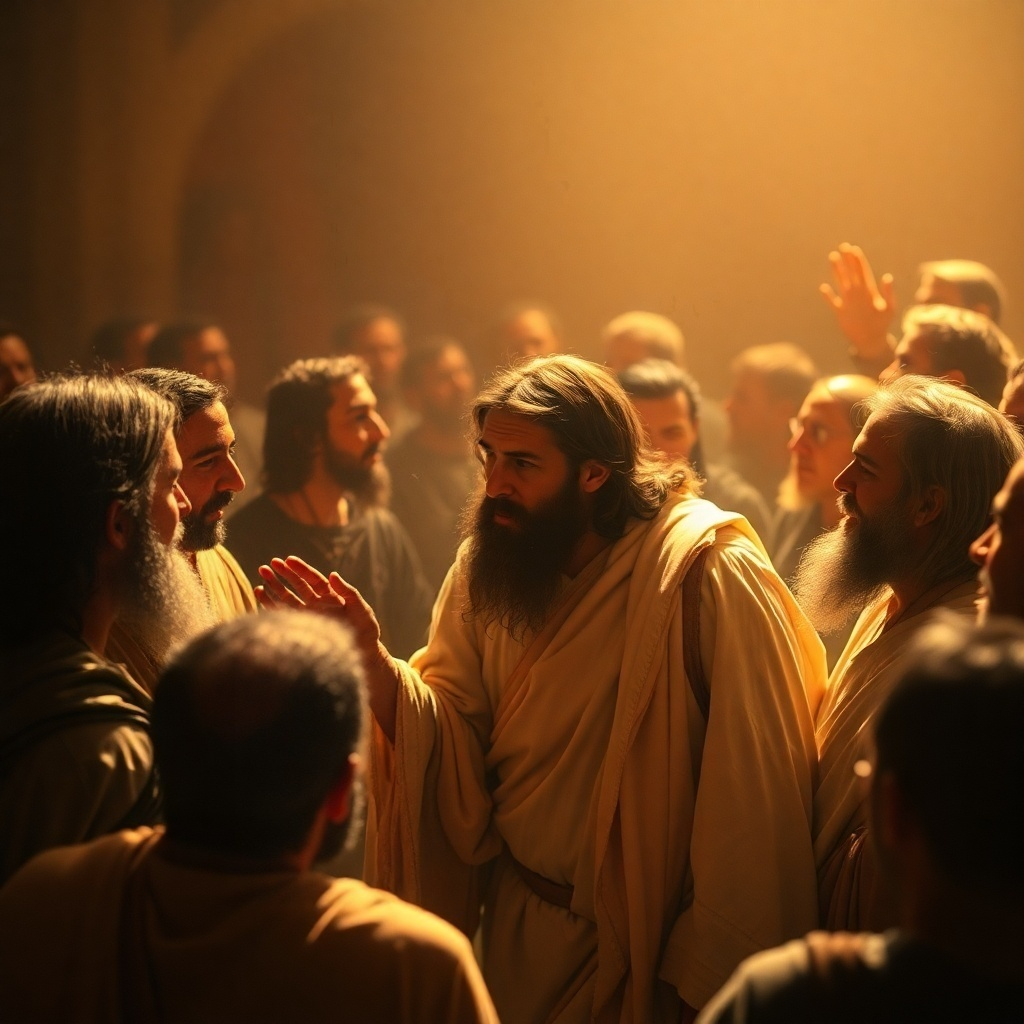
The concept of “shepherds” in Jeremiah 23:1-8 serves as both a warning and an encouragement to disciple-makers, with Jesus Christ standing as the ultimate exemplar of shepherding leadership. This passage, set against the backdrop of Judah’s impending exile, presents a stark contrast between unfaithful leaders and the promise of a righteous shepherd-king.

 Etymology and Biblical Context

The Hebrew word for shepherd, derives from the root raw-aw’ (Strongs H7462), meaning to pasture, tend, or graze. This term encompasses not only the literal occupation of caring for sheep but also metaphorically represents leadership, particularly in a spiritual or governmental context.

In Jeremiah 23:1-8, God pronounces judgment on the “shepherds” who have failed in their duty to care for His people. These leaders, primarily referring to the kings and religious authorities of Judah, have “scattered the flock” through their negligence and self-serving actions.

 The Failure of Human Shepherds

The indictment against these shepherds is severe. They have:

1. Destroyed and scattered the sheep

2. Driven them away

3. Failed to attend to their needs

This failure of leadership resulted in the people’s spiritual and moral decay, ultimately leading to national calamity.

 Jesus: The Perfect Shepherd

In contrast to these failed leaders, Jesus Christ emerges as the perfect shepherd. He embodies the ideal qualities that God demands of His shepherds:

1. Goodness: Jesus is inherently good, reflecting the very character of God. (John 10:11)

2. Protection: He safeguards His flock, ensuring their eternal security.  (John 17:12)

3. Guidance: Jesus leads His followers in paths of righteousness. (John 10:3-4)

4. Nurture: He tenderly cares for the weak and vulnerable. (Matthew 11:28-30)

5. Sacrifice: Ultimately, Jesus lays down His life for His sheep. (John 10:11,15)

 The Promise of Restoration

Jeremiah’s prophecy doesn’t end with condemnation. God promises to:

1. Gather the remnant of His flock

2. Bring them back to their pasture

3. Raise up shepherds who will care for them properly

4. Establish a righteous Branch from David’s line

This messianic promise finds its fulfillment in Jesus Christ, the Good Shepherd who perfectly embodies God’s leadership.

 Implications for Disciple-Makers

For contemporary disciple-makers, this passage offers crucial lessons:

1. Warning: Leadership in God’s kingdom carries weighty responsibility. Neglect or self-interest can have devastating consequences on those under our care.

2. Encouragement: God Himself intervenes to restore and care for His people. Our efforts in discipleship are ultimately undergirded by His sovereign work.

3. Model: Jesus provides the perfect example of shepherding leadership. Disciple-makers should emulate His selfless care, protection, and guidance.

4. Hope: The promise of God’s restoration reminds us that our labor is not in vain. He is working to gather and nurture His flock, even in the face of human failure.

Jeremiah 23:1-8 presents a powerful contrast between human failure and divine faithfulness in spiritual leadership. It points us to Jesus Christ as the ultimate fulfillment of God’s promise to shepherd His people. For disciple-makers, this passage serves as both a sobering reminder of our responsibility and an encouraging assurance of God’s overarching care and provision for His flock.

Disciple-Maker’s Short Story

“The Gentle Shepherd’s Way”

The aroma of freshly brewed coffee wafted through Kathy’s cozy kitchen, mingling with the warm sunlight streaming through the windows. Sarah sat at the breakfast table, her hands wrapped around a steaming mug, her eyes fixed on Kathy with a mixture of affection and concern.

“Kathy,” Sarah began, her voice gentle but firm, “I’ve noticed you’ve been a bit… intense with Julie lately. I think it’s time we talked about the concept of shepherding like Jesus.”

Kathy’s brow furrowed. “What do you mean, Sarah? I’m just trying to help her grow in her faith.”

Sarah nodded, understanding in her eyes. “I know, and your heart is in the right place. But let’s explore this idea of ‘Shepherds of the Flock’ from Jeremiah’s prophecy to Christ’s perfect model. It might give us a new perspective.”

As Sarah began to explain, Kathy’s defensive posture slowly relaxed. She listened intently as Sarah painted a vivid picture of the failed shepherds in Jeremiah’s time, contrasting them with the promise of a righteous shepherd-king.

“You see,” Sarah continued, “Jesus exemplified what it truly means to be a good shepherd. He led with gentleness, protected His flock, and ultimately sacrificed Himself for them. That’s the model we’re called to follow in our discipleship.”

Kathy’s eyes widened with realization. “Oh,” she whispered, “I think I see what you mean. I’ve been pushing Julie so hard to pray more, but maybe I’ve been more of a taskmaster than a shepherd.”

Sarah reached across the table, squeezing Kathy’s hand. “It’s an easy trap to fall into. We all want to see growth, but we need to remember that true shepherding is about nurturing, not forcing.”

Just then, the doorbell chimed. Julie had arrived for their coffee date. As she entered the kitchen, Kathy felt a newfound sense of purpose and humility wash over her.

“Julie!” Kathy greeted her warmly. “We were just talking about prayer. How have you been doing with that lately?”

Julie’s shoulders slumped slightly. “To be honest, I’ve been struggling. I know I should pray more, but it feels like such a chore sometimes.”

Kathy caught Sarah’s eye, receiving an encouraging nod. Taking a deep breath, she reflected on the gentle shepherd she aspired to be.

“Julie, I want you to know that God loves you, regardless of how much you pray,” Kathy said softly. “Let’s think about prayer differently. Instead of a task to complete, what if we viewed it as a conversation with someone who cares deeply for us?”

Julie’s eyes glistened with unshed tears. “That… that sounds nice. But how do I start?”

“Why don’t we pray together right now?” Kathy suggested. “Nothing formal, just a chat with our Heavenly Father.”

As the three women bowed their heads, Kathy led a simple, heartfelt prayer. She thanked God for His love, asked for His guidance, and expressed gratitude for their friendship. When they finished, Julie’s face shone with a newfound peace.

“That felt different,” Julie admitted. “Like I was actually connecting with God, not just reciting words.”

Sarah beamed at Kathy, pride evident in her eyes. Kathy felt a warmth in her chest, realizing that in learning to shepherd like Jesus, she was not only helping Julie but also growing closer to Christ herself.

As they continued their conversation over coffee, Kathy marveled at the transformation. By embracing the role of a gentle shepherd, she had opened the door to deeper, more meaningful discipleship. And in doing so, she felt her own heart aligning more closely with the ultimate Shepherd, Jesus Christ.

When Tradition Goes South – #103

ENGLISH / ESPAÑOL

Welcome Back! Today, we’ll be looking at the Gospels of Matthew, Mark, and John to see what Jesus thinks about traditions that trump the commands of God. 

So let’s get started.

(Click here to get a copy of the Gospel Sync document) 

Matthew 15:1–9, Mark 7:1–13, John 7:1

After this, Jesus traveled throughout Galilee. He did not want to travel in Judea, because the Jews there were trying to kill Him. Then some Pharisees and scribes came to Jesus from Jerusalem and gathered around Him and they saw some of His disciples eating with hands that were defiled—that is, unwashed. Now in holding to the tradition of the elders, the Pharisees and all the Jews do not eat until they wash their hands ceremonially. And on returning from the market, they do not eat unless they wash. And there are many other traditions for them to observe, including the washing of cups, pitchers, kettles, and couches for dining.

So the Pharisees and scribes questioned Jesus: “Why do Your disciples break the tradition of the elders and not walk according to them? They do not wash their hands before they eat. Instead, they eat with defiled hands.”

Jesus answered them, “Isaiah prophesied correctly about you hypocrites, as it is written: 

‘These people honor Me with their lips, but their hearts are far from Me. They worship Me in vain; they teach as doctrine the precepts of men.’ 

You have disregarded the commandment of God to keep the tradition of men. So why do you break the command of God for the sake of your tradition?” He went on to say, “You neatly set aside the command of God to maintain your own tradition. For God said through Moses, ‘Honor your father and mother’ and ‘Anyone who curses his father or mother must be put to death.’ But you say that if anyone says to his father or mother, ‘Whatever you would have received from me is Corban’ (that is, a gift devoted to God)’he is no longer permitted to do anything for his father or mother. Thus you nullify the word of God by the tradition you have handed down. And you do so in many such matters.” 

My Thoughts 

Think about how traditions can sometimes work against their original purpose like when men over engineer a mighty river. Just as a diverted river can leave its natural bed dry and lifeless, human-made traditions can sometimes drain the life from God’s commandments.

Consider the ancient practice of “Corban” mentioned in the Biblical passage. Here was a tradition that, on its surface, appeared to honor God through dedicated offerings. Yet in practice, it created a loophole that allowed people to circumvent their basic responsibility to care for their aging parents. It’s like building a dam that redirects a river’s life-giving water away from the communities that depend on it, all while claiming to “improve water management.”

This example reveals a crucial distinction: not all traditions serve their intended purpose. While some traditions carry forward vital values like rivers carrying water, others can become like stagnant pools that trap and distort the original flow of divine wisdom. The religious leaders of the time had created an intricate delta of rules and traditions that, rather than clearly expressing God’s commandments, effectively buried them under layers of human interpretation and nefarious motives.

The warning here is clear – when our traditions begin to contradict or supersede fundamental moral obligations, we’ve lost our way. It’s akin to a river that’s been so extensively engineered that it no longer serves its essential purpose of sustaining life along its banks. The religious leaders had become such skilled navigators of their traditional rules that they’d forgotten the destination – showing love and honor to both God and people.

Tradition isn’t meant to be a clever system of bypassing moral obligations, but rather a channel through which eternal truths can flow freely from one generation to the next. Just as a healthy river system needs regular clearing of obstacles and restoration of natural flows, our traditions need constant examination to ensure they’re not damming up the very values they’re meant to convey.

The solution isn’t to abandon tradition entirely – that would be like trying to live without rivers. Instead, we need to ensure our traditions remain true to their source, allowing divine love to flow freely through them rather than being diverted by human convenience. When traditions begin to obstruct rather than facilitate our ability to honor God and care for others, it’s time to clear the channel and let the original flow resume its course.

My Story

How long does it take for some good practice to become a tradition in danger of losing its purpose? Can it happen in 6 months? You bet your boots it can! Deb and I were introduced to a method of sharing the gospel that was not only effective, it went viral. People were using it around the world in multiple languages and it was intoxicatingly exciting. But something started to happen very quickly that tarnished our enthusiasm. Without people recognizing their actions, it became “THE” way to share. They started pitching the method as the “silver bullet.” There were even cases where people resented someone suggesting another way to share the gospel. Pride had crept in and had done its dirty damage to what started out so well. And yes, it only took 6 months.

The most striking aspect of this mistake is its relevance today. How often do we find ourselves upholding traditions that, while comfortable and familiar, might actually be preventing us from fulfilling our allegiance and obedience to God? Like those religious leaders of old, we might be excellent navigators of our traditional practices while missing the deeper current of compassion and obedience that should guide our actions.

Just as every river eventually seeks its true path, our traditions must ultimately serve, not subvert, the timeless commandments they were meant to preserve and transmit. Otherwise, we risk creating elaborate systems of practice that leave the heart of faith as dry as a riverbed that once flowed freely.

Our Action Plan

Now it’s time for application. Here’s some ideas;

  • Do a personal inventory of your “traditions.” Are they truly fulfilling the original intent? 
  • Do a Bible study on what Jesus and Paul said about tradition with those you are discipling.
  • As you look at Scripture, make a distinction between Principles and Methods. Principles should drive the method, never methods the principles.

Traditions, like rivers, should flow with life-giving purpose, not dam up our obedience to God’s commands. Let’s ensure our practices channel divine love freely, rather than diverting it for human convenience.

Cuando la tradición se desmorona – 103

¡Bienvenidos nuevamente! Hoy, analizaremos los Evangelios de Mateo, Marcos y Juan para ver qué piensa Jesús sobre las tradiciones que prevalecen sobre los mandamientos de Dios.

Comencemos.

Mateo 15:1-9, Marcos 7:1-13, Juan 7:1

Después de esto, Jesús viajó por toda Galilea. No quería viajar por Judea, porque los judíos de allí estaban tratando de matarlo. Entonces algunos fariseos y escribas vinieron a Jesús desde Jerusalén y se reunieron alrededor de Él. Y vieron a algunos de Sus discípulos comiendo con manos impuras, es decir, sin lavar. Ahora bien, según la tradición de los ancianos, los fariseos y todos los judíos no comen sin lavarse las manos ceremonialmente. Y al regresar del mercado, no comen sin lavarse. Y hay muchas otras tradiciones que ellos deben observar, incluyendo el lavamiento de vasos, jarras, teteras y lechos para comer.

Entonces los fariseos y escribas preguntaron a Jesús: “¿Por qué Tus discípulos quebrantan la tradición de los ancianos y no andan conforme a ellos? No se lavan las manos antes de comer. En cambio, comen con manos impuras”.

Jesús les respondió: «Hipócritas, bien profetizó Isaías de vosotros, como está escrito:

“Este pueblo me honra con los labios, pero su corazón está lejos de mí. Me rinden culto en vano; enseñan como doctrina preceptos de hombres”.

Habéis dejado de lado el mandamiento de Dios de guardar la tradición de los hombres. ¿Por qué, pues, quebrantáis el mandamiento de Dios por vuestra tradición?»

Habéis dejado de lado el mandamiento de Dios para guardar vuestra propia tradición. Pues Dios dijo por medio de Moisés: “Honra a tu padre y a tu madre”, y: “El que maldiga a su padre o a su madre será condenado a muerte”. Pero vosotros decís que si alguien dice a su padre o a su madre: “Todo lo que quisieras recibir de mí es Corbán (es decir, un regalo consagrado a Dios), ya no le está permitido hacer nada por su padre o por su madre. De este modo, anuláis la palabra de Dios con la tradición que habéis transmitido. Y lo mismo hacéis en muchas cosas como éstas».

Mis Pensamientos

Pensemos en cómo las tradiciones a veces pueden ir en contra de su propósito original, como cuando los hombres sobredimensionan un río caudaloso. Así como un río desviado puede dejar su lecho natural seco y sin vida, las tradiciones creadas por el hombre a veces pueden quitarle vida a los mandamientos de Dios.

Pensemos en la antigua práctica del “Corbán” mencionada en el pasaje bíblico. Se trataba de una tradición que, en la superficie, parecía honrar a Dios mediante ofrendas dedicadas, pero en la práctica creaba un vacío legal que permitía a las personas eludir su responsabilidad básica de cuidar a sus padres ancianos. Es como construir una presa que redirige el agua vivificante de un río lejos de las comunidades que dependen de ella, todo mientras se afirma que “mejora la gestión del agua”.

Este ejemplo revela una distinción crucial: no todas las tradiciones cumplen su propósito original. Mientras que algunas tradiciones transmiten valores vitales como los ríos que transportan agua, otras pueden convertirse en estanques estancados que atrapan y distorsionan el flujo original de la sabiduría divina. Los líderes religiosos de la época habían creado un intrincado delta de reglas y tradiciones que, en lugar de expresar claramente los mandamientos de Dios, los enterraban bajo capas de interpretación humana y motivos nefastos.

La advertencia aquí es clara: cuando nuestras tradiciones comienzan a contradecir o reemplazar obligaciones morales fundamentales, hemos perdido el rumbo. Es como un río que ha sido diseñado de manera tan exhaustiva que ya no cumple su propósito esencial de sustentar la vida a lo largo de sus orillas. Los líderes religiosos se habían convertido en navegantes tan hábiles de sus reglas tradicionales que habían olvidado el destino: mostrar amor y honor tanto a Dios como a las personas.

La tradición no tiene por objeto ser un sistema inteligente para eludir las obligaciones morales, sino más bien un canal a través del cual las verdades eternas pueden fluir libremente de una generación a la siguiente. Así como un sistema fluvial saludable necesita la limpieza regular de obstáculos y la restauración de los flujos naturales, nuestras tradiciones necesitan un examen constante para asegurar que no estén obstaculizando los mismos valores que se supone que deben transmitir.

La solución no es abandonar por completo la tradición, pues eso sería como intentar vivir sin ríos. En cambio, debemos asegurarnos de que nuestras tradiciones permanezcan fieles a su fuente, permitiendo que el amor divino fluya libremente a través de ellas en lugar de desviarse por conveniencia humana. Cuando las tradiciones comienzan a obstruir en lugar de facilitar nuestra capacidad de honrar a Dios y cuidar de los demás, es hora de despejar el canal y dejar que el flujo original reanude su curso.

Mi Historia

¿Cuánto tiempo se necesita para que una buena práctica se convierta en una tradición que corre el riesgo de perder su propósito? ¿Puede suceder en seis meses? ¡Puede apostar a que sí! Deb y yo conocimos un método para compartir el evangelio que no solo era eficaz, sino que se volvió viral. La gente lo usaba en todo el mundo en varios idiomas y era embriagadoramente emocionante. Pero algo comenzó a suceder muy rápidamente que empañó nuestro entusiasmo. Sin que la gente reconociera sus acciones, se convirtió en “LA” manera de compartir. Comenzaron a promocionar el método como la “bala de plata”. Incluso hubo casos en los que la gente se resintió cuando alguien sugirió otra manera de compartir el evangelio. El orgullo se había infiltrado y había hecho su sucio daño a lo que comenzó tan bien. Y sí, solo tomó seis meses.

El aspecto más llamativo de este error es su relevancia hoy. ¿Con qué frecuencia nos encontramos defendiendo tradiciones que, aunque cómodas y familiares, en realidad podrían estar impidiéndonos cumplir con nuestra lealtad y obediencia a Dios? Al igual que aquellos líderes religiosos de la antigüedad, podemos ser excelentes navegantes de nuestras prácticas tradicionales, pero perder de vista la corriente más profunda de compasión y obediencia que debería guiar nuestras acciones.

Así como todo río finalmente busca su verdadero camino, nuestras tradiciones deben, en última instancia, servir, y no subvertir, los mandamientos eternos que se suponía que debían preservar y transmitir. De lo contrario, corremos el riesgo de crear sistemas elaborados de práctica que dejan el corazón de la fe tan seco como el lecho de un río que alguna vez fluyó libremente.

Nuestro Plan de Acción

Ahora es el momento de ponerlas en práctica. Aquí tienes algunas ideas:

Haz un inventario personal de tus “tradiciones”. ¿Están cumpliendo verdaderamente la intención original?

Haz un estudio bíblico sobre lo que dijeron Jesús y Pablo acerca de la tradición con aquellos a quienes estás discipulando.

Al examinar las Escrituras, haz una distinción entre principios y métodos. Los principios deben impulsar el método, nunca los métodos los principios.

Las tradiciones, como los ríos, deben fluir con un propósito vivificante, no obstaculizar nuestra obediencia a los mandamientos de Dios. Asegurémonos de que nuestras prácticas canalicen libremente el amor divino, en lugar de desviarlo para la conveniencia humana.

Si ve un problema importante en la traducción, envíeme una corrección por correo electrónico a charleswood1@gmail.com

Kingdom Kernel #3 – “There Is None Like You”

Jeremiah 10:6-7 – “There Is None Like You”: Divine Uniqueness and the Eternal Kingdom of Christ

The biblical concept “There is none like You” as expressed in Jeremiah 10:6-7 encapsulates a profound theological truth about God’s unparalleled nature and sovereign rule. This phrase, rooted in the Hebrew “‘în kᵊmô” (Strongs H369 and H3644) literally translates to “there is not like you,” emphasizing God’s absolute uniqueness.

 Linguistic and Theological Significance

The Hebrew construction uses the negative particle “‘în” combined with the preposition “ka” (like) and the second-person masculine singular pronoun “mocha” (you). This grammatical structure intensifies the concept of God’s incomparability. The repetition of this idea throughout Scripture underscores its centrality to biblical theology.

In the context of Jeremiah 10:6-7, this phrase is juxtaposed with God’s greatness and might, as well as His rightful position as “King of the nations.” This juxtaposition reveals that God’s uniqueness extends beyond mere attributes to His very essence and authority.

 Christological Fulfillment

Jesus Christ, as the incarnate Word, perfectly embodies this concept of divine uniqueness. In Him, we see the fullness of God’s incomparable nature made visible (Colossians 1:15). Jesus’ teachings about the Kingdom of God directly connect to this idea of God’s unique sovereignty.

Christ’s miracles, teachings, and ultimately His resurrection demonstrate that there is indeed none like Him. He is the perfect representation of the Father’s unparalleled nature (Hebrews 1:3). Jesus’ claim to have “all authority in heaven and on earth” (Matthew 28:18) echoes the Jeremiah passage’s assertion of God’s kingship over all nations.

 Implications for the Kingdom of God

The concept of God’s uniqueness is foundational to understanding the Kingdom of God. Jesus, as the Messiah-King, inaugurates a kingdom that reflects the incomparable nature of God Himself. This kingdom operates on principles that are radically different from earthly empires, characterized by truth, compassion, and forgiveness.

The phrase “There is none like You” implies that God’s kingdom is likewise unique. It is not limited by geographical boundaries or temporal constraints. Instead, it is an eternal reign that encompasses “every square inch” of creation, Abraham Kuyper as famously stated.

 Transformative Power for Believers

Recognizing that there is none like our God transforms how believers view themselves and their place in the world. It instills a sense of awe and worship, as we contemplate a Being so far beyond our comprehension yet intimately involved in our lives.

This concept also challenges believers to reflect God’s unique character in their own lives. As subjects of this incomparable King, Christians are called to live in ways that demonstrate the distinctive nature of God’s rule. This involves embodying the compassion, justice, and love that characterize God’s kingdom.

The biblical assertion that “There is none like You” serves as a cornerstone for understanding God’s nature, Christ’s role, and the believer’s place in the Kingdom. It reminds us that we serve a God who is utterly unique, whose ways are higher than our ways, and whose kingdom transcends all earthly powers. As we grasp this truth, we are inspired to live lives that reflect the incomparable nature of our King, Jesus Christ.

Disciple-Maker’s Short Story

“A Taste of Truth”

The soft glow of candlelight danced across the faces of Will and Janet as they sat at their favorite corner table in Bangkok Spice. The aroma of lemongrass and ginger wafted through the air, mingling with the quiet murmur of conversation around them. At 65, their love had only deepened, like a fine wine aging to perfection.

Janet’s eyes twinkled as she leaned in, her voice barely above a whisper. “You won’t believe what happened during my Bible study this week, Will.”

Will raised an eyebrow, intrigued. “Oh? Do tell, my dear.”

“Well, we were discussing the uniqueness of Christ, and Sarah – you know, the new girl – she piped up and said, ‘But don’t we all serve the same god, just with different names?'” Janet’s brow furrowed. “I wasn’t quite sure how to respond. How would you have handled that, Will?”

Will’s eyes softened, a gentle smile playing on his lips. He reached across the table, taking Janet’s hand in his. “Ah, the age-old question of universalism. It’s a tricky one, isn’t it?”

Just then, their server approached – a young man with kind eyes and a name tag that read ‘Hasan.’ As he set down their steaming plates of Pad Thai, Will felt a nudge from the Holy Spirit.

“Hasan,” Will began, his voice warm and inviting, “if you don’t mind me asking, what faith do you follow?”

Hasan’s eyes lit up. “I am Muslim, sir. But please, do not worry – we all have one god, we just call him different names, yes?”

Will nodded thoughtfully, seeing Janet lean in with interest. “That’s a common belief, Hasan. But you know, I’ve found something truly unique in Jesus Christ.”

Hasan tilted his head, curiosity piqued. “How so?”

Will’s eyes sparkled with passion as he spoke. “You see, Hasan, the Bible tells us in Jeremiah 10:6-7 that there is none like our God. He’s not just another name for a universal deity – He’s utterly unique in His nature and His actions.”

Janet watched in awe as Will continued, his words flowing with gentle conviction.

“Jesus claimed to be God in the flesh, Hasan. He performed miracles, taught with unparalleled authority, and ultimately rose from the dead. These aren’t just stories – they’re historical events that set Him apart from any other religious figure.”

Hasan’s brow furrowed, but he listened intently.

Will leaned in, his voice softening. “But what truly makes Jesus unique is His love, Hasan. And He didn’t just teach about God’s love – He demonstrated it by sacrificing Himself for us. He offers forgiveness and a personal relationship with God that no other faith can match. Which gives Him the right to say; “I am the Way, the Truth, and the Life. No one comes to the Father but through Me.”

Janet’s eyes welled with tears as she witnessed her husband’s gentle yet powerful testimony.

Hasan stood silent for a moment, clearly processing Will’s words. “I… I have never thought of it that way before,” he admitted. “You have given me much to consider, sir.”

As Hasan excused himself, Janet squeezed Will’s hand. “That was beautiful, darling. You’ve shown me exactly how to address this issue – with love, respect, and unwavering truth.”

Will smiled, a hint of moisture in his own eyes. “It’s all Him, Janet. Jesus is the Way, the Truth, and the Life. There truly is none like Him.”

As they savored their meal, both Will and Janet felt a renewed sense of purpose. Their date night had become more than just a romantic evening – it was a reminder of their calling to share the incomparable love of Christ with a world hungry for truth.

In that moment, surrounded by the warmth of candlelight and the lingering aroma of Thai spices, they silently recommitted themselves to being living testimonies of the unique and transformative power of Jesus Christ.

Kingdom Kernel #2 – The Unstoppable Force

1 But there will be no more gloom for her who was in anguish; in earlier times He treated the land of Zebulun and the land of Naphtali with contempt, but later on He shall make it glorious, by the way of the sea, on the other side of Jordan, Galilee of the Gentiles. 2 The people who walk in darkness will see a great light; those who live in a dark land, the light will shine on them. 3 You shall multiply the nation, you shall increase their gladness; they will be glad in Your presence as with the gladness of harvest, as men rejoice when they divide the spoil.

4 For You shall break the yoke of their burden and the staff on their shoulders, the rod of their oppressor, as at the battle of Midian. 5 For every boot of the booted warrior in the battle tumult, and cloak rolled in blood, will be for burning, fuel for the fire. 6 For a child will be born to us, a son will be given to us; and the government will rest on His shoulders; and His name will be called Wonderful Counselor, Mighty God, Eternal Father, Prince of Peace.

7 There will be no end to the increase of His government or of peace, on the throne of David and over his kingdom, to establish it and to uphold it with justice and righteousness from then on and forevermore. The zeal of the LORD of hosts will accomplish this. (Isaiah 9:1-7)

Isaiah 9:1-7  – The Unstoppable Force of Divine Passion: God’s Zeal and the Kingdom

In the tapestry of biblical prophecy, Isaiah 9:1-7 stands out as a beacon of hope, illuminating the path from darkness to light. At the heart of this passage lies a powerful declaration: “The zeal of the LORD of hosts will accomplish this.” This statement encapsulates the driving force behind God’s plan for His kingdom and His people.

 Understanding Divine Zeal

The Hebrew word for zeal used here is “קִנְאָה – qinʾā,” which carries connotations of ardor, jealousy, and passionate intensity . This zeal is not a mere emotion but an active, consuming force that propels God’s redemptive plan forward. It’s the fire that fuels His commitment to establish His kingdom on earth.

 The Context of Isaiah’s Prophecy

Isaiah speaks to a people walking in darkness, burdened by oppression and gloom. Yet, in this bleak landscape, he proclaims a startling reversal:

– A great light will dawn

– Joy will multiply

– Burdens will be broken

At the center of this transformation is a child whose very names echo with divine authority: Wonderful Counselor, Mighty God, Eternal Father, Prince of Peace .

 The Significance of God’s Zeal for His Kingdom

God’s zeal is the guarantee that His kingdom will be established. It’s not just a feeling or wish, but a divine promise backed by the full weight of God’s character and power. This zeal assures us of several key aspects of God’s kingdom:

1. Unstoppable Growth: There will be no end to the increase of His government or peace.

2. Eternal Reign: The Messiah will rule on David’s throne forever.

3. Justice and Righteousness: His kingdom will be upheld with justice and righteousness.

 The Zeal of the Lord in Action

God’s zeal is not a passive attribute but an active force in history and in our lives:

– It drove the incarnation, bringing the promised Messiah into the world.

– It fuels the expansion of God’s kingdom, even in the face of opposition.

– It ensures the fulfillment of every divine promise.

 The Personal Impact of God’s Zeal

For believers, God’s zeal offers profound assurance:

– It guarantees God’s intense love and unstoppable devotion to His people.

– It promises His relentless commitment to accomplish His purpose in our lives.

– It secures our future and salvation in Him.

 Conclusion: The Zeal That Changes Everything

The zeal of the LORD of hosts is not just a historical footnote. It’s an ongoing reality, continuing to work in our world and in our lives. It’s the assurance that God’s promises are not empty words, but certainties backed by divine passion.

As we contemplate the kingdom of God, we can take heart. The same zeal that promised a Savior and brought Him into the world is still at work today. It’s transforming lives, renewing hearts, and moving inexorably toward the day when every knee will bow and every tongue confess that Jesus Christ is Lord.

The zeal of the LORD of hosts will accomplish this. It’s not just a possibility—it’s a divine certainty.

Disciple-Maker’s Short Story

The Warehouse Disciples

The rhythmic hum of conveyor belts and the occasional beep of barcode scanners filled the cavernous warehouse. Amidst the organized chaos of cardboard boxes and forklifts, two figures stood apart, their conversation a stark contrast to the mechanical symphony around them.

Ed, a middle-aged warehouse supervisor with a lean, athletic build and eyes that reflected years of thoughtful experience, leaned against a stack of pallets. Beside him stood Carter, a younger man with eager eyes and a restless energy that seemed barely contained by his work uniform.

“You see, Carter,” Ed began, his voice low but intense, “when Isaiah said ‘The zeal of the LORD of hosts will accomplish this,’ he wasn’t just throwing words around. He was revealing the very engine of God’s kingdom.”

Carter’s brow furrowed. “Zeal? Sounds like a fancy word for motivation.”

Ed chuckled, a warm sound that seemed to soften the harsh fluorescent lighting. “It’s so much more than that, my friend. It’s a divine passion, an unstoppable force. Imagine the most determined person you’ve ever met, then multiply that by infinity. That’s God’s zeal.”

As Ed spoke, his eyes lit up with an inner fire that made Carter lean in closer. “God’s zeal isn’t just about feeling strongly. It’s His guarantee that what He promises, He’ll do. No matter what.”

Carter nodded slowly, his mind grappling with the concept. “So when God says He’ll establish His kingdom…”

“It’s as good as done,” Ed finished. “You can take that to the bank.”

Just then, a coworker named Don walked by, his curiosity piqued by the intensity of their conversation. “What’s this about banks?” he asked, pausing mid-stride.

Ed turned to Don, his face alight with the opportunity. “We’re talking about the most secure investment in the universe, Don. God’s promises.”

Don’s skepticism was evident in his raised eyebrow. “Right. Because those always pan out.”

Instead of being deterred, Ed’s enthusiasm seemed to grow. “Let me ask you this, Don. Have you ever had someone promise you something and then follow through, no matter what?”

Don’s face softened slightly. “Yeah, my grandma. She said she’d be at my graduation, even though she was sick. Made it happen, wheelchair and all.”

Ed nodded encouragingly. “That’s beautiful, Don. Now imagine that kind of determination, but perfect and infinite. That’s God’s zeal. It’s the force behind every promise He makes.”

As Ed spoke, Carter found himself nodding along, the concept crystallizing in his mind. He saw an opening and jumped in. “It’s like… it’s not just that God wants good things for us. He’s actively, passionately working to make them happen.”

Don looked thoughtful, his initial skepticism giving way to curiosity. “Sounds nice, but how do you know it’s real?”

Ed’s response was immediate and heartfelt. “Because I’ve seen it in my own life, Don. When I was at my lowest, feeling like everything was falling apart, I clung to God’s promises. And let me tell you, He came through in ways I couldn’t have imagined.”

As Ed shared his testimony, his words seemed to resonate not just with Don, but with several other coworkers who had drifted over, drawn by the passionate discussion.

Carter, watching this unfold, felt something stir within him. He saw in Ed not just a mentor, but a living example of the very zeal they were discussing. Ed’s passion for God’s kingdom was contagious, and Carter found himself wanting to embody that same unstoppable force.

As their break came to an end and the group dispersed, Carter turned to Ed. “I want to be like that,” he said quietly. “To have that kind of passion, that certainty in God’s promises.”

Ed placed a hand on Carter’s shoulder, his eyes twinkling. “That’s the beauty of it, Carter. God’s zeal isn’t just about Him accomplishing His will. It’s about transforming us in the process. As we align ourselves with His kingdom, that same unstoppable force begins to work through us.”

As they returned to their stations, Carter felt a new sense of purpose. He realized that becoming like Jesus wasn’t about striving harder, but about tapping into the divine zeal that Ed had described. It was about allowing God’s unstoppable passion to flow through him, changing him from the inside out.

The warehouse resumed its rhythmic pace, but for Carter, everything had changed. In the midst of cardboard boxes and inventory lists, he had glimpsed the unstoppable force of divine passion, and he knew he would never be the same.

Index for Kingdom Kernels

Is Jesus Enough? – #101

ENGLISH / ESPAÑOL

Welcome Back! Today, we’ll be looking at the Gospel of John to see how we are to focus on Jesus and Him alone to meet our needs.  

So let’s get started.

(Click here to get a copy of the Gospel Sync document) 

John 6:30–41

So they asked Him, “What sign then will You perform, so that we may see it and believe You? What will You do? Our fathers ate the manna in the wilderness, as it is written: ‘He gave them bread from heaven to eat.’” Jesus said to them, “Truly, truly, I tell you, it was not Moses who gave you the bread from heaven, but it is My Father who gives you the true bread from heaven. For the bread of God is He who comes down from heaven and gives life to the world.”

“Sir,” they said, “give us this bread at all times.” Jesus answered, “I am the bread of life. Whoever comes to Me will never hunger, and whoever believes in Me will never thirst. But as I stated, you have seen Me and still you do not believe. Everyone the Father gives Me will come to Me, and the one who comes to Me I will never drive away. For I have come down from heaven, not to do My own will, but to do the will of Him who sent Me. And this is the will of Him who sent Me, that I shall lose none of those He has given Me, but raise them up at the last day. For it is My Father’s will that everyone who looks to the Son and believes in Him shall have eternal life, and I will raise him up at the last day.” At this, the Jews began to grumble about Jesus because He had said, “I am the bread that came down from heaven.” 

My Thoughts 

They were looking for something else. As Jesus had said in John 6:26, “you seek Me, not because you saw signs, but because you ate of the loaves and were filled.” They were looking for bread, for miracles and signs, for something else…besides Jesus. This situation is not unique to this particular place, people, or season. Since the fall of Adam and Eve, we have struggled with wanting something else, anything but a vital, transformative, benevolent relationship with our King and our God.  This is the effect sin has had on every human being since the fall.

But Jesus shares some really good news that, if we’re not careful, we’ll completely miss. He says; 

Everyone the Father gives Me will come to Me, and the one who comes to Me I will never drive away.” (John 6:37)

Although the lower nature resists God at every level, He gives us the grace to break the bonds of rebellion and receive the “Bread of Life.” Yes, this is truly good news! God’s grace is strong enough to break even what comes natural to us in our resistance toward Him and make Himself irresistible. The blinders are removed and Jesus becomes the focus of our desires. Jesus is enough!

As disciple-makers we need to let two concepts sink deep into our hearts. First, we are chosen by God and given to His Son, Jesus Christ. It is a part of our identity and it should have serious leverage in our thinking and our actions. And secondly, our value comes from Him not the ministry we do. Yes, God is pleased with our right choices, efforts, and sacrifices but our worth and identity cannot be wrapped up in either our results or lack there of. Jesus is enough in times of fruitfulness and drought. 

My Story

I once was asked by a guy I was discipling, “Isn’t Jesus enough?” Now let me put his statement into context. He was struggling with following Jesus at the most elementary levels. And I have to admit, I was pretty disappointed in his lackluster efforts to even make his statement sound authentic. But even a broken clock is right twice a day. The statement wasn’t addressing his problem, it was addressing mine. He was the only guy I was mentoring. I was in full time ministry and this was the only guy God had given me, my only little one eyed, three legged lamb. And I was miserable. I had expectations. Now that I had been to Bible college, seminary, and was a professional clergy person, people would flock to my influence, right? Nope. My ministry was a spiritual drought zone.

But God was doing a different work in my life. A lesson that was just as important as all those theological and Bible courses I had sat through in school. And that lesson came through the most unlikely person. I was looking to my ministry for identity and worth. I have to admit that his question haunted me for years. But God is patient and will keep working in our hearts and shaping our character until we get it. Finally, I can truly say, Jesus is indeed enough.

Our Action Plan

Now it’s time for application. Here’s some ideas;

  • Do a study looking at characters in the Scriptures that went through dry times and what rescued them.
  • Do a heart inventory. How did you feel the last time very few people (or no people) came to your event? Was God still pleased with your efforts to obey Him?
  • Talk to those you are mentoring about the dangers of getting self worth from ministry results.

Jesus is indeed enough, as He provides all we need for spiritual nourishment and eternal life. This profound truth should shape our identity, worth, and ministry, reminding us that our value comes from Christ alone, not our accomplishments or the fruits of our labor.

¿Es Jesús suficiente? – 101

¡Bienvenidos nuevamente! Hoy, analizaremos el Evangelio de Juan para ver cómo debemos centrarnos en Jesús y solo en Él para satisfacer nuestras necesidades.

Comencemos.

Juan 6:30-41

Entonces le preguntaron: «¿Qué señal, pues, harás, para que la veamos y te creamos? ¿Qué harás? Nuestros padres comieron el maná en el desierto, como está escrito: «Les dio a comer pan del cielo». Jesús les respondió: «De cierto, de cierto os digo: No fue Moisés quien os dio el pan del cielo, sino mi Padre quien os da el verdadero pan del cielo. Porque el pan de Dios es aquel que descendió del cielo y da vida al mundo».

«Señor», le dijeron, «danos siempre de ese pan». Jesús les respondió: «Yo soy el pan de vida. El que a mí viene, nunca tendrá hambre; y el que cree en mí, nunca tendrá sed. Pero, como os dije, me habéis visto, y no creéis. Todo el que el Padre me da, vendrá a mí; y al que a mí viene, no le echo fuera. Porque he descendido del cielo, no para hacer mi voluntad, sino la voluntad del que me envió. Y esta es la voluntad del que me envió: que no pierda a ninguno de los que me ha dado, sino que los resucite en el día final. Porque es la voluntad de mi Padre: que todo aquel que ve al Hijo y cree en él, tenga vida eterna, y yo lo resucitaré en el día final.» Entonces los judíos murmuraban de Jesús, porque había dicho: «Yo soy el pan que bajó del cielo».

Mis Pensamientos

Ellos buscaban algo más. Como Jesús había dicho en Juan 6:26, “me buscáis, no porque habéis visto señales, sino porque comisteis el pan y os saciasteis”. Buscaban pan, milagros y señales, algo más… además de Jesús. Esta situación no es exclusiva de este lugar, pueblo o época en particular. Desde la caída de Adán y Eva, hemos luchado con el deseo de algo más, cualquier cosa menos una relación vital, transformadora y benévola con nuestro Rey y nuestro Dios. Este es el efecto que el pecado ha tenido en cada ser humano desde la caída.

Pero Jesús comparte una muy buena noticia que, si no tenemos cuidado, nos perderemos por completo. Él dice:

“Todo el que el Padre me da, vendrá a mí; y al que a mí viene, no le echo fuera.” (Juan 6:37)

Aunque la naturaleza inferior se resiste a Dios en todos los niveles, Él nos da la gracia de romper las ataduras de la rebelión y recibir el “Pan de Vida”. Sí, ¡esta es verdaderamente una buena noticia! La gracia de Dios es lo suficientemente fuerte como para romper incluso lo que nos resulta natural en nuestra resistencia hacia Él y volverse irresistible. Las anteojeras son quitadas y Jesús se convierte en el centro de nuestros deseos. ¡Jesús es suficiente!

Como hacedores de discípulos, debemos dejar que dos conceptos penetren profundamente en nuestros corazones. Primero, somos elegidos por Dios y entregados a Su Hijo, Jesucristo. Es parte de nuestra identidad y debería tener una influencia seria en nuestro pensamiento y nuestras acciones. Y segundo, nuestro valor proviene de Él, no del ministerio que hacemos. Sí, Dios se complace con nuestras decisiones correctas, esfuerzos y sacrificios, pero nuestro valor e identidad no pueden estar envueltos ni en nuestros resultados ni en la falta de ellos. Jesús es suficiente en tiempos de fructificación y sequía.

Mi Historia

Una vez un muchacho al que estaba discipulando me preguntó: “¿No es suficiente Jesús?”. Ahora, permítanme poner su declaración en contexto. Él estaba luchando por seguir a Jesús en los niveles más elementales. Y tengo que admitir que me decepcionó bastante su deslucido esfuerzo por hacer que su declaración sonara auténtica. Pero hasta un reloj roto da la hora correcta dos veces al día. La declaración no abordaba su problema, abordaba el mío. Él era el único muchacho al que yo estaba asesorando. Yo estaba en el ministerio a tiempo completo y este era el único muchacho que Dios me había dado, mi único corderito tuerto y de tres patas. Y yo era miserable. Tenía expectativas. Ahora que había ido a la universidad bíblica, al seminario y era un clérigo profesional, la gente acudiría en masa a mi influencia, ¿verdad? No. Mi ministerio era una zona de sequía espiritual.

Pero Dios estaba haciendo una obra diferente en mi vida. Una lección que era tan importante como todos esos cursos teológicos y bíblicos que había asistido en la escuela. Y esa lección vino a través de la persona más inesperada. Yo estaba buscando en mi ministerio identidad y valor. Debo admitir que su pregunta me persiguió durante años. Pero Dios es paciente y seguirá trabajando en nuestros corazones y moldeando nuestro carácter hasta que lo logremos. Finalmente, puedo decir con certeza que Jesús es suficiente.

Nuestro Plan de Acción

Ahora es el momento de ponerlas en práctica. Aquí tienes algunas ideas:

Haz un estudio sobre personajes de las Escrituras que pasaron por momentos de sequía y qué fue lo que los rescató.

Haz un inventario de tu corazón. ¿Cómo te sentiste la última vez que muy pocas personas (o ninguna) vinieron a tu evento? ¿Dios todavía estaba complacido con tus esfuerzos por obedecerlo?

Habla con aquellos a quienes estás asesorando sobre los peligros de obtener autoestima de los resultados del ministerio.

Jesús es realmente suficiente, ya que Él nos provee todo lo que necesitamos para el alimento espiritual y la vida eterna. Esta profunda verdad debería moldear nuestra identidad, nuestro valor y nuestro ministerio, recordándonos que nuestro valor proviene únicamente de Cristo, no de nuestros logros o los frutos de nuestro trabajo.

Si ve un problema importante en la traducción, envíeme una corrección por correo electrónico a charleswood1@gmail.com

Kingdom Kernel #1 – God’s All Volunteer Army

Kingdom Kernel Collection

The LORD says to my Lord: “Sit at My right hand until I make Your enemies a footstool for Your feet.” The LORD will stretch forth Your strong scepter from Zion, saying, “Rule in the midst of Your enemies.” Your people will volunteer freely in the day of Your power; in holy array, from the womb of the dawn, Your youth are to You as the dew. The LORD has sworn and will not change His mind, “You are a priest forever according to the order of Melchizedek.” The Lord is at Your right hand; He will shatter kings in the day of His wrath. He will judge among the nations, He will fill them with corpses, He will shatter the chief men over a broad country. He will drink from the brook by the wayside; therefore He will lift up His head.

(Psalm 110:1-7)

My dear friend Steve Smith, a brilliant missiologist, always began our training sessions with a profound “Kingdom Kernel.” His foundational statement that “if you understand the kingdom, you will understand what Jesus is saying about the Christian life” resonated deeply with me. Unfortunately, Steve passed a few years back but his example and teaching has stuck with me. I’d like to continue his line of kingdom thinking in my writing.

And our church recently decided to dedicate 2025 to studying the kingdom of God. So in light of these two converging inspirations, I’ll be writing a blog series that blends theological reflection with practical discipleship stories from my key take-a-ways. Each post will offer a concise essay paired with a short story of disciple-makers putting these kingdom principles into action. This is the first installment; 

Psalm 110:1-7 – Freely Volunteering: The Messianic Dynamics of Willing Service in Psalm 110

 Introduction: A Prophetic Glimpse of Divine Kingship

Psalm 110 stands as a profound messianic prophecy, rich with imagery of divine kingship and priestly authority. At the heart of this psalm lies a powerful concept: “Your people will volunteer freely in the day of Your power” (Psalm 110:3). This phrase encapsulates a profound truth about the nature of God’s kingdom and the relationship between the Messiah and His followers.

 Linguistic Roots: Unpacking the Hebrew Terminology

The Hebrew phrase “ned-aw-baw’ ‘am” (Strongs H5071 & H5971) is central to understanding this concept. “ned-aw-baw’ ” comes from the root naw-dab’, which carries the sense of willingness, voluntariness, and free-will offerings. This root is used elsewhere in Scripture to describe generous, unprompted giving to God’s work. The term “’am” means “your people,” emphasizing the personal relationship between the king and his subjects.

 Messianic Context: Christ’s Authoritative Reign

In the context of Psalm 110, this phrase takes on profound messianic significance. The psalm opens with the declaration, “The Lord says to my Lord: ‘Sit at my right hand until I make your enemies a footstool for your feet'” (Psalm 110:1). This verse, quoted extensively in the New Testament, establishes the divine authority of the Messiah. Jesus Himself used this passage to assert His identity as both David’s son and David’s Lord, transcending mere human kingship.

 Theological Dimensions of Voluntary Service

The concept of freely volunteering people takes on new depth when viewed through the lens of Christ’s kingship. Unlike earthly rulers who may compel service through force or coercion, the Messiah’s reign is characterized by the willing, joyful submission of His people. This reflects the transformative nature of God’s kingdom, where hearts are changed from within, leading to voluntary service.

 Interpretive Layers: Power, Willingness, and Divine Sovereignty

The phrase “in the day of Your power” (khah’-yil – Strongs 2428) further illuminates this concept. “khah’-yil” can refer to strength, army, or wealth, suggesting a day of the Messiah’s manifest power and authority. This day is not merely a future event but encompasses the entire era of Christ’s reign, from His resurrection and ascension to His final triumph over all enemies.

 Key Theological Implications

Theologically, this concept reveals several key aspects of God’s character and redemptive plan:

1. Divine Sovereignty: God’s power is such that it inspires willing devotion rather than forced compliance.

2. Human Free Will: The emphasis on volunteering highlights the importance of human choice in God’s kingdom.

3. Transformative Grace: The willingness of God’s people points to the inner work of the Holy Spirit, changing hearts to align with God’s will.

4. Eschatological Hope: The “day of Your power” looks forward to the full manifestation of Christ’s reign.

 Contemporary Spiritual Significance

For believers today, this concept carries profound implications. It challenges us to examine the nature of our service to Christ. Are we merely following religious obligations, or are we “volunteering freely” out of love and gratitude? It also offers encouragement, reminding us that Christ’s power is not oppressive but liberating, inspiring joyful, willing service.

The Transformative Power of Willing Devotion

The concept of God’s people volunteering freely in the day of His power beautifully encapsulates the nature of Christ’s kingship. It speaks of a kingdom characterized by willing hearts, transformed by grace, eagerly participating in the Messiah’s reign. This vision of freely given devotion stands as a testament to the compelling love of Christ and the transformative power of His kingdom.

Disciple-Maker’s Short Story

“The Plumbing of the Soul”

The old pickup truck rumbled down Main Street, its bed laden with plumbing supplies. Dave, his salt-and-pepper hair ruffled by the breeze from the open window, glanced at Stew in the passenger seat. The younger man’s face was a canvas of conflicting emotions – determination mingled with uncertainty.

“You know, Stew,” Dave began, his voice warm and gravelly, “this plumbing project we’re tackling isn’t just about fixing leaks. It’s about understanding the very essence of what it means to serve like Jesus.”

Stew’s eyebrows knitted together. “How do you figure that, Dave?”

Dave’s eyes crinkled with a smile. “It’s all about the difference between ‘I want to’ and ‘I have to.’ When Jesus served, He didn’t do it out of obligation. He did it because He wanted to, out of love.”

As they pulled into the hardware store parking lot, Dave continued, “Remember Psalm 110? It talks about people volunteering freely in the day of God’s power. That’s the heart of Christ-like service – not duty, but willing devotion.”

Stew nodded slowly, the concept beginning to take root. “So, it’s about changing our attitude?”

“It goes deeper,” Dave replied, turning off the engine. “It’s about aligning our will with God’s, just as Jesus did. He said, ‘I have come down from heaven not to do my will but to do the will of him who sent me.’ That’s the model we’re aiming for.”

As they entered the store, they were greeted by the sight of a young employee named Mike, his posture slumped and eyes downcast.

“Can I help you?” Mike mumbled, his voice devoid of enthusiasm.

Dave’s eyes lit up. “Mike, my friend! We’re on a mission to conquer some stubborn pipes, and I believe God’s placed you here to help us. What do you think?”

Mike blinked, taken aback by Dave’s genuine warmth. “Uh, sure. What are you looking for?”

As Dave described their project, he listened intently to Mike’s suggestions, treating the young man’s knowledge with respect. Stew watched in amazement as Mike’s demeanor transformed. His posture straightened, eyes brightened, and soon he was eagerly offering advice.

“You see, Stew?” Dave whispered as Mike led them down an aisle. “We didn’t force him to help. We invited him to be part of something meaningful, just as Jesus invites us into His work.”

Stew nodded, a new understanding dawning. “It’s like… he’s volunteering freely, just like the Psalm says.”

“Exactly,” Dave grinned. “Now, let’s apply this to our project. Instead of thinking ‘I have to fix these pipes,’ try ‘I want to serve my neighbors by ensuring they have clean, flowing water – just as Jesus came to give living water.’ Feel the difference?”

As they gathered their supplies, Stew found himself engaging with other customers, sharing tips and offering encouragement. The ‘chore’ had become an opportunity to reflect Christ’s love.

Leaving the store, arms full of pipes and tools, Stew turned to Dave. “I think I’m starting to get it now. It’s not just about the task, it’s about having the heart of Jesus in everything we do.”

Dave nodded, his eyes misty. “That’s it, Stew. When we align our will with God’s, just as Jesus did, service becomes joy. We’re not just fixing pipes; we’re participating in God’s work of restoration and love.”

As they drove home, the setting sun painted the sky in hues of orange and purple. Stew gazed out the window, his mind no longer on the upcoming work, but on the transformative power of Christ-like service. He realized that true freedom wasn’t the absence of obligations, but the choice to embrace them with the heart of Jesus – full of love, compassion, and a desire to do the Father’s will.

“Dave,” Stew said softly, “I want to learn to serve like Jesus. Not because I have to, but because I truly want to.”

Dave smiled, placing a hand on Stew’s shoulder. “That, my friend, is the beginning of a beautiful journey. Let’s pray for God to shape our hearts to be more like His Son’s.”

As they pulled into the driveway, both men felt a renewed sense of purpose. The plumbing project ahead was no longer just a task – it was an opportunity to grow in Christ-likeness, one willing act of service at a time.

I’d appreciate your feedback on this new series. Please leave a comment below.

Kingdom Kernel Collection

I Believe! (But Do I?) – #100

ENGLISH / ESPAÑOL

Welcome Back! Today, we’ll be looking at the Gospels of John to discuss what Jesus meant by “believing.”   

So let’s get started.

(Click here to get a copy of the Gospel Sync document) 

John 6:22–29

The next day, the crowd that had remained on the other side of the sea realized that only one boat had been there, and that Jesus had not boarded it with His disciples, but they had gone away alone. However, some boats from Tiberias landed near the place where the people had eaten the bread after the Lord had given thanks. So when the crowd saw that neither Jesus nor His disciples were there, they got into the boats and went to Capernaum to look for Him. When they found Him on the other side of the sea, they asked Him, “Rabbi, when did You get here?” Jesus replied, “Truly, truly, I tell you, it is not because you saw these signs that you are looking for Me, but because you ate the loaves and had your fill. Do not work for food that perishes, but for food that endures to eternal life, which the Son of Man will give you. For on Him God the Father has placed His seal of approval.” Then they inquired, “What must we do to perform the works of God?” Jesus replied, “The work of God is this: to believe in the One He has sent.” 

My Thoughts 

Simple right? Just believe. But I think our Western idea of “believe” and what Jesus was talking about is a very different thing. Belief in our Western context is the agreement with some truth or principle. But when a Jewish person heard “belief or faith,” what did they hear? 

The word “believe” in the New Testament carries a deeper meaning than its modern English usage might suggest. In the original Greek text, the term primarily used is “pisteuo” (πιστεύω), which encompasses a more comprehensive concept of faith and trust.

The Greek word “pisteuo” has several interconnected meanings:

  • To be convinced of something
  • To give credence to
  • To trust

In the first-century Jewish context, belief in Jesus as the Messiah involved not only accepting his claims but also committing to follow his teachings and way of life. This understanding of belief was rooted in the Hebrew concept of faith, which included elements of trust, loyalty, and obedience.

The Apostle James, brother of Jesus, sums it up well when he writes;

But are you willing to recognize, you foolish fellow, that faith without works is useless? (James 2:20)

The audience Jesus was speaking to would have their “belief” or “trust” tested later in John chapter 6. Sadly, most of them failed the test. As disciple-makers we are called not only to believe but help those we are discipling to put their faith into action by trusting and following Jesus.

My Story

I recently shared my testimony on YouTube, celebrating 45 years of following Jesus. When a Green Beret shared the gospel with me, I “believed” every part of it – Jesus’ death, burial, and resurrection. Surprisingly, my life radically changed for the worse! I had intellectually agreed with the facts, but they hadn’t truly registered in my heart. I had yet to repent, a crucial aspect of salvation.

After hitting rock bottom, I realized mere acknowledgment wasn’t enough. I surrendered my life to Christ, committing not only to agree with the truth but to follow and trust Him wholeheartedly. This change of heart, mind, and intent transformed my life, I was a new creature (2 Corinthians 5:17). I coupled repentance with belief and surrendered my will to His.

My favorite story that illustrates repentance perfectly is Zacchaeus, a despised chief tax collector. When Jesus encountered this notorious sinner and announced He would stay at Zacchaeus’ house, Zacchaeus declared, “Look, Lord! Here and now I give half of my possessions to the poor, and if I have cheated anybody out of anything, I will pay back four times the amount”.

Jesus responded with a remarkable proclamation of His own:Today salvation has come to this house, because this man, too, is a son of Abraham. For the Son of Man came to seek and to save the lost”.

Here’s a thought-provoking question: Had Zacchaeus actually fulfilled his promises before Jesus declared him right with God? The answer is no. However, his mind and heart were fully engaged in the repentance process, and his life would never be the same.

This story illustrates that salvation involves more than just intellectual assent. It requires a genuine change of heart and a commitment to live differently, even before those changes are fully realized. Zacchaeus’ transformation, like mine, demonstrates the power of true repentance coupled with faith in Christ.

Our Action Plan

Now it’s time for application. Here’s some ideas;

  • Do a Bible study on repentance with those you are discipling. Look closely at these examples; 

 1. Zacchaeus (Luke 19:1-10)

 2. Sinner’s Prayer (Luke 18:9-14)

 3.  Repentant Woman (Luke 7:36-50)

 4.  The Wayward Son (Luke 15:11-24)

 5.  The Woman at the Well (John 4:4-38)

 6. Simon the Fisherman (Luke 5:1-11)

 7. The Thief on the Cross (Luke 23:32-43)

  • Answer these questions;
    • How has your faith been tested and/or demonstrated in a significant way in the past six months?
    • Which biblical promises are you helping those you are discipling to embrace and trust?

True belief in Jesus goes beyond mere intellectual assent and requires a transformative commitment that impacts every aspect of our lives. As disciple-makers, we are called to not only nurture this deep-rooted faith in ourselves but also to guide others towards a genuine, action-oriented belief that leads to lasting spiritual growth and a closer walk with Christ.

¡Creo! (¿Pero lo creo?) – 100

¡Bienvenidos nuevamente! Hoy, analizaremos los Evangelios de Juan para analizar lo que Jesús quiso decir con “creer”.

Comencemos.

Juan 6:22-29

Al día siguiente, la multitud que se había quedado al otro lado del mar se dio cuenta de que allí había solo una barca, y que Jesús no había subido a ella con sus discípulos, sino que se habían ido solos. Sin embargo, algunas barcas de Tiberíades llegaron cerca del lugar donde la gente había comido el pan después de que el Señor dio gracias. Entonces, cuando la multitud vio que ni Jesús ni sus discípulos estaban allí, subieron a las barcas y fueron a Capernaúm para buscarlo. Cuando lo encontraron al otro lado del mar, le preguntaron: «Rabí, ¿cuándo llegaste aquí?» Jesús les respondió: «De cierto, de cierto les digo: no me buscan porque vieron estas señales, sino porque comieron el pan y se saciaron. Trabajen, no por el alimento que perece, sino por el alimento que permanece para vida eterna, el cual el Hijo del Hombre les dará. Porque a éste, Dios el Padre, le ha puesto su sello de aprobación». Entonces le preguntaron: «¿Qué debemos hacer para poner en práctica las obras de Dios?» Jesús les respondió: «La obra de Dios es ésta: creer en aquel que él ha enviado.»

Mis Pensamientos

Sencillo, ¿no? Solo creer. Pero creo que nuestra idea occidental de “creer” y de lo que hablaba Jesús es algo muy diferente. Creer en nuestro contexto occidental es estar de acuerdo con alguna verdad o principio. Pero cuando una persona judía escuchaba “creencia o fe”, ¿qué escuchaba?

La palabra “creer” en el Nuevo Testamento conlleva un significado más profundo que el que su uso moderno en español podría sugerir. En el texto griego original, el término utilizado principalmente es “pisteuo” (πιστεύω), que abarca un concepto más amplio de fe y confianza.

La palabra griega “pisteuo” tiene varios significados interconectados:

Estar convencido de algo

Dar crédito a algo

Confiar

En el contexto judío del primer siglo, creer en Jesús como el Mesías implicaba no solo aceptar sus afirmaciones, sino también comprometerse a seguir sus enseñanzas y su forma de vida. Esta comprensión de la creencia tenía sus raíces en el concepto hebreo de fe, que incluía elementos de confianza, lealtad y obediencia.

El apóstol Santiago, hermano de Jesús, lo resume bien cuando escribe:

Pero ¿estás dispuesto a reconocer, hombre insensato, que la fe sin obras es inútil? (Santiago 2:20)

La “creencia” o “confianza” de los oyentes a los que Jesús se dirigía sería puesta a prueba más adelante en el capítulo 6 de Juan. Lamentablemente, la mayoría de ellos no la superaron. Como hacedores de discípulos, estamos llamados no solo a creer, sino también a ayudar a quienes estamos discipulando a poner su fe en acción confiando en Jesús y siguiéndolo.

Mi Historia

Recientemente compartí mi testimonio en YouTube, celebrando 45 años de seguir a Jesús. Cuando un boina verde compartió el evangelio conmigo, “creí” cada parte de él: la muerte, sepultura y resurrección de Jesús. Sorprendentemente, ¡mi vida cambió radicalmente para peor! Había estado de acuerdo intelectualmente con los hechos, pero no los había registrado verdaderamente en mi corazón. Todavía tenía que arrepentirme, un aspecto crucial de la salvación.

Después de tocar fondo, me di cuenta de que el mero reconocimiento no era suficiente. Entregué mi vida a Cristo, comprometiéndome no solo a estar de acuerdo con la verdad, sino a seguirlo y confiar en Él de todo corazón. Este cambio de corazón, mente e intención transformó mi vida, era una nueva criatura (2 Corintios 5:17). Uní el arrepentimiento con la fe y entregué mi voluntad a la Suya.

Mi historia favorita que ilustra perfectamente el arrepentimiento es la de Zaqueo, un jefe de recaudadores de impuestos despreciado. Cuando Jesús se encontró con este conocido pecador y le anunció que se quedaría en su casa, Zaqueo le dijo: «Señor, la mitad de mis bienes la doy a los pobres, y si en algo he defraudado a alguien, se lo devuelvo cuadruplicado».

Jesús respondió con una notable proclamación suya: «Hoy ha llegado la salvación a esta casa, porque también éste es hijo de Abraham. Porque el Hijo del Hombre vino a buscar y a salvar lo que se había perdido».

He aquí una pregunta que nos hace reflexionar: ¿Había cumplido Zaqueo sus promesas antes de que Jesús lo declarara justo ante Dios? La respuesta es no. Sin embargo, su mente y su corazón estaban completamente comprometidos con el proceso de arrepentimiento, y su vida nunca sería la misma.

Esta historia ilustra que la salvación implica más que un simple asentimiento intelectual. Requiere un cambio genuino de corazón y un compromiso de vivir de manera diferente, incluso antes de que esos cambios se realicen plenamente. La transformación de Zaqueo, como la mía, demuestra el poder del verdadero arrepentimiento unido a la fe en Cristo.

Nuestro Plan de Acción

Ahora es el momento de la aplicación. Aquí hay algunas ideas:

Haz un estudio bíblico sobre el arrepentimiento con aquellos a quienes estás discipulando. Observa atentamente estos ejemplos:

1. Zaqueo (Lucas 19:1-10)

2. La oración del pecador (Lucas 18:9-14)

3. La mujer arrepentida (Lucas 7:36-50)

4. El hijo desobediente (Lucas 15:11-24)

5. La mujer junto al pozo (Juan 4:4-38)

6. Simón el pescador (Lucas 5:1-11)

7. El ladrón en la cruz (Lucas 23:32-43)

Responde estas preguntas:

¿Cómo se ha puesto a prueba y/o demostrado tu fe de manera significativa en los últimos seis meses?

¿Qué promesas bíblicas estás ayudando a aceptar y confiar en quienes estás discipulando?

La verdadera fe en Jesús va más allá de un simple asentimiento intelectual y requiere un compromiso transformador que afecta cada aspecto de nuestra vida. Como hacedores de discípulos, estamos llamados no sólo a nutrir esta fe profundamente arraigada en nosotros mismos, sino también a guiar a otros hacia una fe genuina y orientada a la acción que conduzca a un crecimiento espiritual duradero y a una relación más estrecha con Cristo.

Si ve un problema importante en la traducción, envíeme una corrección por correo electrónico a charleswood1@gmail.com

Boat Time – #99

ENGLISH / ESPAÑOL

Welcome Back! Today, we’ll be looking at the Gospels of Matthew and Mark to see how Jesus used a boat to develop leaders.  

So let’s get started.

(Click here to get a copy of the Gospel Sync document) 

Matthew 14:34–36, Mark 6:53–56

When they had crossed over, they landed at Gennesaret and moored the boat. As soon as they got out of the boat, the men of that place recognized Jesus, and they ran and sent word to all the whole region. People brought all the sick to Him carrying them on mats to wherever they heard He was. And wherever He went—villages and towns and countrysides—they laid the sick in the marketplaces and begged Him just to let them touch the fringe of His cloak. And all who touched Him were healed.

My Thoughts 

Again, let’s look below the glaring scene of the spectacular to find the hidden gems of discipleship. Ever wonder why Jesus spent so much time crossing the Sea of Galilee in a boat with His disciples? If you’ve ever been to the Sea of Galilee you are immediately struck by how small it is. From certain elevated vantage points you can see the whole “sea” clearly. In my mind I would call it a medium size lake but not a sea. Jesus and His disciples could have easily walked to the locations described in the Gospels and yet He decided to take a boat. Why?

I think the answer lies in the rhythms of discipleship. Jesus spent time with the crowds, traveling the roads, in private homes, on the desolate mountain tops, in the synagogue and temple, and in the boat…(Don’t miss this)… with His disciples. We call this the “with Him” principle of discipleship taken from Mark 3:14;

“And He appointed twelve, so that they would be with Him and that He could send them out to preach”

Jesus spent the lion share of His time discipling His men “in the harvest.” This is a crucial element of discipleship that most disciple-makers are missing today but we’ll tackle that in a later blog post. But just as important was His time spent alone with the disciples. And there was no more effective way to get intentional secluded time with His men than in a boat. If anyone else wanted to come along, “Sorry, no room in the boat.” This is pure genius!

Are you getting significant alone time with those you are discipling? Most of us don’t own a boat. (And I don’t recommend getting one unless you just love fishing and have money to burn). But we have found creative ways to get private time with mentees. And let’s face it. Most of us don’t even come close to the fame Jesus had so it should be pretty easy to stay incognito and find a private place to hangout with fellow Jesus followers. 

My Story

One of my most effective strategies for discipling people is what I call my “secret sauce.” I prioritize spending time with key leaders, either one-on-one or in small groups of no more than three. This approach creates an intimate, focused, and intentional environment where we can delve deep into the nuances of life and ministry.

I’ve observed other leaders attempting to groom their lieutenants using a “herd mentality.” While this method may offer some benefits, it often falls short of providing the depth necessary to truly develop the next generation of leaders. The focused attention that comes from smaller, more personal interactions is invaluable in nurturing genuine growth and leadership development.

By keeping these sessions small and targeted, we can address the “nitty-gritty” aspects of leadership and personal growth more effectively. This method allows for more meaningful conversations, personalized guidance, and the opportunity to tackle specific challenges that each individual may face in their journey of growth and leadership.

I start these times with three simple questions;

  • How are you doing?
  • What are you getting out of the Word of God?
  • How are your people doing?

There’s some discipleship genius in those questions and I’ll probably cover them in a different post if you request it. But suffice it to say, these questions will lead to deeper questions and meaningful conversations. 

Our Action Plan

Now it’s time for application. Here’s some ideas;

  • Who are you focused on? Get individual time with them this week and ask the three questions.
  • Who are those you are discipling focused on? Are they getting individual time with the people they are mentoring?
  • Discuss these questions with a mentor or those you are mentoring; Why do leaders shy away from such focused interactions with potential leaders? What are your goals in leadership development? 

Jesus used a boat to teach us that true leadership development happens through intentional, personal time together. By creating focused moments of connection, we can more effectively mentor and guide emerging leaders.

Tiempo en el barco – 99

¡Bienvenidos de nuevo! Hoy, analizaremos los evangelios de Mateo y Marcos para ver cómo Jesús utilizó un barco para desarrollar líderes.

Comencemos.

Mateo 14:34-36, Marcos 6:53-56

Después de cruzar el río, llegaron a Genesaret y amarraron la barca. En cuanto descendieron de la barca, los hombres de aquel lugar reconocieron a Jesús, y corrieron y avisaron por toda la comarca. Le llevaban a todos los enfermos, llevándolos en camillas a donde oían que estaba. Y dondequiera que iba —pueblos, ciudades y aldeas—, ponían a los enfermos en las plazas y le rogaban que les dejase tocar tan solo el borde de su manto; y todos los que lo tocaban quedaban curados.

Mis Pensamientos

De nuevo, miremos más allá de la deslumbrante escena del espectáculo para encontrar las joyas ocultas del discipulado. ¿Alguna vez te preguntaste por qué Jesús pasó tanto tiempo cruzando el Mar de Galilea en un barco con sus discípulos? Si alguna vez has estado en el Mar de Galilea, te sorprenderá de inmediato lo pequeño que es. Desde ciertos puntos elevados se puede ver todo el “mar” con claridad. En mi mente lo llamaría un lago de tamaño mediano, pero no un mar. Jesús y sus discípulos podrían haber caminado fácilmente hasta los lugares descritos en los Evangelios y, sin embargo, decidió tomar un barco. ¿Por qué?

Creo que la respuesta está en los ritmos del discipulado. Jesús pasó tiempo con las multitudes, viajando por los caminos, en casas particulares, en las cimas desoladas de las montañas, en la sinagoga y el templo, y en el barco… (No te lo pierdas)… con sus discípulos. A esto lo llamamos el principio del discipulado “con Él”, tomado de Marcos 3:14;

“Y designó a doce, para que estuviesen con él y para enviarlos a predicar”

Jesús pasó la mayor parte de su tiempo discipulando a sus hombres “en la siega”. Este es un elemento crucial del discipulado que la mayoría de los hacedores de discípulos están pasando por alto hoy en día, pero lo abordaremos en una próxima publicación del blog. Pero igual de importante fue el tiempo que pasó a solas con los discípulos. Y no había una manera más efectiva de pasar un tiempo aislado intencional con sus hombres que en un barco. Si alguien más quería acompañarlos, “Lo siento, no hay lugar en el barco”. ¡Esto es pura genialidad!

¿Está pasando un tiempo a solas significativo con aquellos a quienes está discipulando? La mayoría de nosotros no posee un barco. (Y no recomiendo tener uno a menos que le encante pescar y tenga dinero para gastar). Pero hemos encontrado formas creativas de pasar tiempo privado con los aprendices. Y seamos sinceros. La mayoría de nosotros ni siquiera nos acercamos a la fama que tenía Jesús, por lo que debería ser bastante fácil permanecer de incógnito y encontrar un lugar privado para pasar el rato con otros seguidores de Jesús.

Mi Historia

Una de mis estrategias más eficaces para discipular a la gente es lo que llamo mi “salsa secreta”. Priorizo ​​pasar tiempo con líderes clave, ya sea individualmente o en grupos pequeños de no más de tres. Este enfoque crea un entorno íntimo, centrado e intencional donde podemos profundizar en los matices de la vida y el ministerio.

He observado a otros líderes que intentan preparar a sus lugartenientes utilizando una “mentalidad de rebaño”. Si bien este método puede ofrecer algunos beneficios, a menudo no proporciona la profundidad necesaria para desarrollar verdaderamente la próxima generación de líderes. La atención enfocada que surge de interacciones más pequeñas y personales es invaluable para nutrir el crecimiento genuino y el desarrollo del liderazgo.

Al mantener estas sesiones pequeñas y específicas, podemos abordar los aspectos “esenciales” del liderazgo y el crecimiento personal de manera más efectiva. Este método permite conversaciones más significativas, orientación personalizada y la oportunidad de abordar desafíos específicos que cada individuo puede enfrentar en su camino de crecimiento y liderazgo.

Comienzo estos momentos con tres preguntas simples:

¿Cómo estás?

¿Qué estás obteniendo de la Palabra de Dios?

¿Cómo está tu gente?

Hay algo de genialidad de discipulado en esas preguntas y probablemente las cubriré en una publicación diferente si lo solicitas. Pero basta con decir que estas preguntas conducirán a preguntas más profundas y conversaciones significativas.

Nuestro Plan de Acción

Ahora es el momento de ponerlas en práctica. Aquí tienes algunas ideas:

¿En quién te estás centrando? Pasa un tiempo individual con ellos esta semana y hazles las tres preguntas:

¿En quiénes se centra tu discipulado? ¿Pasan tiempo individual con las personas a las que estás asesorando?

Habla de estas preguntas con un mentor o con las personas a las que estás asesorando: ¿Por qué los líderes evitan este tipo de interacciones centradas con líderes potenciales? ¿Cuáles son tus objetivos en el desarrollo del liderazgo?

Jesús usó una barca para enseñarnos que el verdadero desarrollo del liderazgo se produce a través de un tiempo personal e intencional juntos. Al crear momentos de conexión centrados, podemos asesorar y guiar de manera más eficaz a los líderes emergentes.

Si ve un problema importante en la traducción, envíeme una corrección por correo electrónico a charleswood1@gmail.com

Committed to God’s Word

From Our Son, Wes

Just finished my 10th Bible today. Here are some things I feel God has shown me about reading the Bible:

1. Keep reading: Daily, no matter how much or how little. God’s Word is alive and active. It’s an opportunity to spend time with God and listen to Him through His inspired words that we can have full faith in. We will understand different passages differently as we read them in various phases of life or in different situations; He has promised to reveal Himself more as we obey.

2. There’s a difference between reading and studying: We can’t get hung up on comprehensive understanding at the expense of growing in our relationship with God. Context will come with time if you maintain a daily volume of reading.

3. Pick a physical and practical Bible: Choose a translation that your non-believing community can easily understand. It should have a soft cover, room for notes, be small enough to fit easily into a carry-on bag, and allow for highlighting/notes with a pen. A physical Bible is important because your kids, family, and friends will see and remember an open Bible rather than scrolling on an app. Often, massive “study” Bibles are more distracting than helpful; spending more time reading someone’s notes on the Bible than the actual Scriptures is a red flag.

4. Have a practical plan: Plan to read through the whole Bible, but not at the expense of building your relationship with the Lord (this is not speed dating). Create a plan that focuses on seeing Jesus in the Scriptures, one that’s easy and free so you can pass it on. Use bookmarks and establish a routine that prevents distractions, putting you in the same place and time to read each day. Don’t make your plan reliant on someone else.

From our Daughter-in-Law, Tina

A little ( but full of gratitude) brag on the hubby for my 2024 timeline- 

Yesterday, according the count on the bookshelf, my husband finished reading the Bible for the 9th time and put it with the others. This morning he opened up the fresh number 10 while I sneakily took this photo.

A discipline that started well before we were married, but has continued year after year, day after day — Wes in his Bible, at the table, in that spot, where the people under our roof know where to find him every morning. Though not all in our home have a hunger for God’s word yet, they’ve seen it and benefited from it.

As I notice and take note, we’re invited into a communion with God. We’re invited and there’s a seat for us at the table. Will we ‘come and see’ for ourselves.. not out of duty, but in pursuit of knowing the One who knows the depths of our hearts, who redeems and rescues? It’s God’s kindness that will move us to Himself.  

Thankful for words spoken out of silence and from a simple obedience of meeting with God every day, an example set and etched deep into our minds that reaches far beyond our dining room table. 

A fragrance that draws us, fills the room, the one that lasts, the Word of God. “But thanks be to God, who always leads us in triumph in Christ, and through us spreads and makes evident everywhere the sweet fragrance of the knowledge of Him.”  

(2 Corinthians‬ ‭2‬:‭14)

Getting Out of Your Boat – #98

ENGLISH / ESPAÑOL

Welcome Back! Today, we’ll be looking at the Gospels of Matthew, Mark, and John to see how disciple makers can experience both victories and defeat and how both are beneficial. 

So let’s get started.

(Click here to get a copy of the Gospel Sync document) 

Matthew 14:24–33, Mark 6:47–52, John 6:17b–21

When evening came and it was already dark, the boat was in the middle of the sea. Jesus was alone on land but the boat was already far from land, a strong wind was blowing, and the sea grew agitated. The boat was buffeted by the waves because the wind was against it. He could see that the disciples were straining to row, because the wind was against them. When they had rowed about three or four miles, about the fourth watch of the night, and Jesus went out to them, walking on the sea. He intended to pass by them. When the disciples saw Him walking on the sea, they were terrified and cried out in fear, “It’s a ghost!” But Jesus spoke up at once: “Take courage! It is I. Do not be afraid.”

Peter replied, “Lord, if it is You, command me to come to You on the water.” Jesus said, “Come.”  Then Peter got down out of the boat, walked on the water, and came toward Jesus. But when he saw the strength of the wind, he was afraid, and beginning to sink, cried out, “Lord, save me!” Immediately Jesus reached out His hand and took hold of Peter. “You of little faith,” He said, “why did you doubt?”

And when they had climbed back into the boat with them, the wind died down. Then the disciples who were in the boat were utterly astounded, for they had not understood about the loaves, but their hearts had been hardened. They worshiped Him, saying, “Truly You are the Son of God!” At once the boat reached the shore where they were heading.

My Thoughts 

Following Jesus has its ups and downs, especially as disciple makers. One minute we are walking on water and the next we’re sinking in the depths. We will face times of triumph and times of defeat. Like Peter, we have stepped out of the boat for the thrill of joining Jesus and before we know it, we are sinking beneath the waves of confusion, distractions, and disappointments.

But one thing I have to say about Peter, at least he got out of the boat. He gave it his best shot. And we too have risen to the occasion to join Jesus in the great enterprise of advancing God’s kingdom. Do we have our “moments?” You bet your mammy’s sweet biscuits we do! But at least we’re in the fight. We’ve gotten out of the boat. We’re given it our best shot.

I want to encourage you today. You could be doing a lot of other things that this world values but let me remind you that you have chosen to do what Jesus did with all power and authority. He made disciples and then commanded us to do the same.

Here’s a virtual high five!

My Story

I had served in the Army as an Infantryman for twelve and a half years. I only had seven and a half to go to draw my pension. But I felt a call from God to get out of the Army and go to Bible college and seminary. So with a faithful wife trusting me as I trusted God, a two year old and a four month old “we got out of the boat.” 

The goal was to go back into the Army as a chaplain but the storm winds began to blow. First, the educational route I had decided to take didn’t line up with the Army’s requirements. Second, I was pastoring in a traditional church and I knew I wouldn’t last long in that environment. And third, I had a hearing disability that medically disqualified me from going back on active duty. I was sinking in my pursuit of my calling and making disciples.

Over the years of ups and downs God did His work in the system and in me. My undergraduate degree was completed through miraculous interventions and met the chaplaincy’s requirements. God was working and I became convinced that pastoring at a traditional church was not a good kingdom fit for me. And lastly, the National Guard wanted to promote me to Master Sergeant and “upgraded” my medical status which now qualified me for active duty as an Army Chaplain. It was a seven year process of walking on water, sinking, and then walking on the water again. I spent the next ten years making disciples as an Army Chaplain because I got out of the boat. God is always faithful to make a way for us to fulfill His calling in our lives.

Our Action Plan

Now it’s time for application. Here’s some ideas;

  • Do some reflection and identify times when you “got out of the boat.”
  • Ask the people you’re discipling to do the same and discuss the “ups and downs.”
  • Spend some time in prayer thanking God for the victories and asking for strength for the challenges

The journey of disciple-making is filled with both triumphs and challenges, much like Peter’s experience of walking on water and then sinking. Despite the ups and downs, the act of stepping out in faith to follow Jesus’ call is commendable, and perseverance in this calling, even through difficulties, ultimately leads to fulfilling God’s purpose in our lives.

Cómo salir de la barca – 98

¡Bienvenidos de nuevo! Hoy, analizaremos los evangelios de Mateo, Marcos y Juan para ver cómo los hacedores de discípulos pueden experimentar tanto victorias como derrotas y cómo ambas son beneficiosas.

Comencemos.

Mateo 14:24-33, Marcos 6:47-52, Juan 6:17b-21

Cuando llegó la tarde y ya estaba oscuro, la barca estaba en medio del mar. Jesús estaba solo en tierra, pero la barca ya estaba lejos de la tierra, soplaba un fuerte viento y el mar se agitaba. La barca se agitaba por las olas porque el viento era contrario. Él podía ver que los discípulos se esforzaban por remar, porque el viento era contrario. Cuando habían remado unos cinco o seis kilómetros, alrededor de la cuarta vigilia de la noche, Jesús salió hacia ellos caminando sobre el mar. Quería pasar de largo. Cuando los discípulos lo vieron caminar sobre el mar, se asustaron y gritaron con miedo: «¡Es un fantasma!». Pero Jesús les dijo de inmediato: «¡Ánimo! Soy yo. No tengan miedo».

Pedro le respondió: «Señor, si eres tú, mándame ir hacia ti sobre las aguas». Jesús le dijo: «Ven». Pedro bajó de la barca y, andando sobre el agua, se acercó a Jesús. Pero, al ver la fuerza del viento, tuvo miedo y, comenzando a hundirse, gritó: «¡Señor, sálvame!». Enseguida Jesús extendió la mano y agarró a Pedro. «Hombre de poca fe, ¿por qué dudaste?»

Cuando volvieron a subir con ellos a la barca, el viento se calmó. Los discípulos que estaban en la barca quedaron estupefactos, porque no habían entendido lo de los panes, sino que tenían el corazón endurecido. Lo adoraron, diciendo: «¡Verdaderamente eres el Hijo de Dios!». Enseguida la barca llegó a la orilla adonde se dirigían.

Mis Pensamientos

Seguir a Jesús tiene sus altibajos, especialmente como hacedores de discípulos. En un momento estamos caminando sobre el agua y al siguiente nos estamos hundiendo en las profundidades. Enfrentaremos momentos de triunfo y momentos de derrota. Al igual que Pedro, hemos bajado de la barca por la emoción de unirnos a Jesús y antes de que nos demos cuenta, nos estamos hundiendo bajo las olas de la confusión, las distracciones y las decepciones.

Pero tengo algo que decir sobre Pedro: al menos salió de la barca. Hizo su mejor esfuerzo. Y nosotros también hemos estado a la altura de las circunstancias para unirnos a Jesús en la gran empresa de hacer avanzar el reino de Dios. ¿Tenemos nuestros “momentos”? ¡Puedes apostar las galletas dulces de tu mamá a que sí! Pero al menos estamos en la lucha. Hemos salido de la barca. Hemos hecho nuestro mejor esfuerzo.

Quiero animarte hoy. Podrías estar haciendo muchas otras cosas que este mundo valora, pero déjame recordarte que has elegido hacer lo que Jesús hizo con todo poder y autoridad. Él hizo discípulos y luego nos ordenó que hiciéramos lo mismo.

¡Aquí tienes un saludo virtual!

Mi Historia

Había servido en el ejército como soldado de infantería durante doce años y medio. Solo me faltaban siete años y medio para cobrar mi pensión. Pero sentí un llamado de Dios para dejar el ejército e ir a la escuela bíblica y al seminario. Así que, con una esposa fiel que confiaba en mí como yo confiaba en Dios, un niño de dos años y otro de cuatro meses “salimos del barco”.

El objetivo era volver al ejército como capellán, pero los vientos de tormenta comenzaron a soplar. En primer lugar, la ruta educativa que había decidido tomar no se alineaba con los requisitos del ejército. En segundo lugar, estaba pastoreando en una iglesia tradicional y sabía que no duraría mucho en ese entorno. Y en tercer lugar, tenía una discapacidad auditiva que me descalificaba médicamente para volver al servicio activo. Me estaba hundiendo en la búsqueda de mi llamado y en hacer discípulos.

A lo largo de los años de altibajos, Dios hizo Su obra en el sistema y en mí. Mi título universitario se completó mediante intervenciones milagrosas y cumplía con los requisitos de la capellanía. Dios estaba obrando y me convencí de que ser pastor en una iglesia tradicional no era lo adecuado para mí en el reino. Y, por último, la Guardia Nacional quería ascenderme a sargento mayor y “mejoró” mi estado médico, lo que me calificaba para el servicio activo como capellán del ejército. Fue un proceso de siete años de caminar sobre el agua, hundirme y volver a caminar sobre el agua. Pasé los siguientes diez años haciendo discípulos como capellán del ejército porque salí del barco. Dios siempre es fiel para abrirnos un camino para que cumplamos su llamado en nuestras vidas.

Nuestro Plan de Acción

Ahora es el momento de ponerlo en práctica. Aquí tienes algunas ideas:

Reflexiona un poco e identifica momentos en los que “saliste de la barca”.

Pídeles a las personas a las que estás discipulando que hagan lo mismo y habla de los “altibajos”.

Pasa un tiempo en oración agradeciendo a Dios por las victorias y pidiendo fortaleza para los desafíos.

El camino de hacer discípulos está lleno de triunfos y desafíos, al igual que la experiencia de Pedro de caminar sobre el agua y luego hundirse. A pesar de los altibajos, el acto de dar un paso de fe para seguir el llamado de Jesús es encomiable, y la perseverancia en este llamado, incluso a través de las dificultades, en última instancia conduce al cumplimiento del propósito de Dios en nuestras vidas.

Si ve un problema importante en la traducción, envíeme una corrección por correo electrónico a charleswood1@gmail.com