Confronting Correctly – #125

Index for all posts in the Gospel Sync Series

ENGLISH / ESPAÑOL

Welcome Back! Today, we’ll be looking at the Gospel of Matthew to see what Jesus says about how to correct someone who is in error.  

So let’s get started.

(Click here to get a copy of the Gospel Sync document) 

Matthew 18:15–20

If your brother sins against you, go and confront him privately. If he listens to you, you have won your brother over. But if he will not listen, take one or two others along, so that ‘every matter may be established by the testimony of two or three witnesses.’ If he refuses to listen to them, tell it to the church. And if he refuses to listen even to the church, regard him as you would a pagan or a tax collector.

Truly I tell you, whatever you bind on earth will be bound in heaven, and whatever you loose on earth will be loosed in heaven. Again, I tell you truly that if two of you on the earth agree about anything you ask for, it will be done for you by My Father in heaven. For where two or three gather together in My name, there am I with them.”

My Thoughts 

A big part of making disciples is identifying errors and correcting them. Now we live in an age where any confrontation is considered a personal assault. We are so adverse to correction we automatically whip out the “judgment card.” But is that wise? Aren’t we just cutting off our nose to spite our face when we allow no one to critique our actions or even our motives? And as disciple-makers, we are the ones doing the correcting, making the process even more arduous.

Part of our sensitivity to correcting and being corrected is that we’ve experienced some horrible examples of a rebuke or admonition. We were embarrassed as children or young adults. We’ve felt the sting of false accusation when we were trying to do something good. Or our motives were called into question when in fact we had very good reasons for our actions. And when we tried to admonish someone in the gentlest possible way, World War III broke out. Yes, we’ve all experienced the crushing blow of careless correction or backlash from trying to help. But should we throw the baby out with the bathwater since we’ve been wounded?

The fact of the matter is that we all desperately need people in our lives to speak the truth in love (Ephesians 4:15). We need someone to tell the Emperor (us and the men and women we disciple) that he has no clothes on. But there is a way to go about doing that and Jesus gives us a starting point for correcting correctly. He outlines the following steps perfectly. (Of course, we would expect nothing less from Jesus).  

  1. Confront in private – Go to your brother alone
  2. Confront with two or three – Bring others that care about the brother’s well being
  3. Confront in the family of God – Bring the family into the matter to prompt repentance

Now this is just one of many pointers on how to correct someone. We will find many more in Jesus’ teaching and Scripture. As we keep making disciples and guiding people in the Way, we need to be on the look out for other tips to help people adjust and align their lives with the Master’s.

Faithful are the wounds of a friend, But deceitful are the kisses of an enemy. (Proverbs 27:6)

My Story

I have been corrected many times in my lifetime. And as mentioned before sometimes in a “not so loving” manner. But I can point to three very critical seasons in life when I was corrected and it made significant changes, conforming me more closely with the image of Christ.

What is that? – I was disgusted with the way I was awarded an Army medal for performance and my mentor asked this question. I answered it was an Army Commendation Medal and they had scratched the previous owner’s name off the back. It was someone else’s medal! He then told me it was going to go the way of all things temporal and I had a pride problem. From that point on I started thinking about what was eternal versus temporal. 

What does that have to do with Jesus? – Again my mentor asked this question after I had shared some fancy theological hobbyhorse. The question caught me off guard and made me more than just a little angry. But after some marinating from the Holy Spirit I got the point. From that time on I made Jesus not only the center of my ministry but He would become the primary object of my loyalty and affection. 

When was the last time you shared the gospel? – I was in a meeting where the guest speaker asked this question in an innocent and gentle manner. Once again the Holy Spirit took my embarrassment and anger and flipped it on its head. That question, once I realized its weight, formed a conviction to share the gospel often and with a passion that communicated grace and truth.

Questions are a huge help for beginning the conversation on subjects that can be hard and confrontational. God the Father actually asked Adam and Eve four questions when confronting them in the garden. The Omniscient asking questions! Now there’s a lesson! 

Confrontation is not only potential, it’s actually healthy when done correctly. I am so glad someone loved me enough to confront me on my errors and do it in such a way that I was able to receive it.

Our Action Plan

Now it’s time for application. Here’s some ideas;

  • Think about some recent conflicts you’ve had with people. Did it follow Jesus’ three step process? Were there questions asked to bring clarity?
  • Teach those you are discipling Jesus’ three step process for confrontation and have a discussion on the topic.
  • Do a Bible study on the “Questions of God.”

No one likes confrontation but it is an absolute necessity for spiritual growth. When it’s done correctly it can actually bring restoration and peace. Let’s follow Jesus’ instructions and example on how to handle confrontation. 

Index for all posts in the Gospel Sync Series

Organic Writing – No Artificial Intelligence or Sweeteners Added

Confrontando correctamente – #125

¡Bienvenido de nuevo! Hoy miraremos el Evangelio de Matthew para ver qué dice Jesús sobre cómo corregir a alguien que está en error.

Así que comencemos.

Mateo 18:15–20

Si tu hermano peca contra ti, ve y confréntalo en privado. Si te escucha, te has ganado a tu hermano. Pero si no escucha, lleva uno o dos otros, para que “cada asunto pueda establecerse por el testimonio de dos o tres testigos”. Si se niega a escucharlos, cuéntelo a la iglesia. Y si se niega a escuchar incluso a la Iglesia, considerelo como lo haría con un pagano o un recaudador de impuestos.

Verdaderamente te digo, lo que sea que te unas a la tierra estará atado en el cielo, y lo que pierdas en la tierra se desgarrará en el cielo. Una vez más, te digo realmente que si dos de ustedes en la tierra están de acuerdo en cualquier cosa que pidas, mi Padre lo hará en el cielo. Para donde dos o tres se reúnen en mi nombre, estoy con ellos ”.

Mis Pensamientos

Una gran parte de hacer discípulos es identificar errores y corregirlos. Ahora vivimos en una época en la que cualquier confrontación se considera un asalto personal. Somos tan adversos a la corrección que eliminamos automáticamente la “tarjeta de juicio”. ¿Pero eso es sabio? ¿No estamos simplemente cortándonos la nariz para impedir nuestra cara cuando no permitimos que nadie critique nuestras acciones o incluso nuestros motivos? Y como creadores de discípulos, nosotros somos los que corremos, lo que hace que el proceso sea aún más arduo.

Parte de nuestra sensibilidad a corregir y corregir es que hemos experimentado algunos ejemplos horribles de una reprimenda o advertencia. Estábamos avergonzados como niños o adultos jóvenes. Hemos sentido el aguijón de la falsa acusación cuando estábamos tratando de hacer algo bueno. O nuestros motivos fueron cuestionados cuando, de hecho, teníamos muy buenas razones para nuestras acciones. Y cuando tratamos de amonestar a alguien de la manera más gentil posible, estalló la Segunda Guerra Mundial. Sí, todos hemos experimentado el golpe aplastante de la corrección descuidada o la reacción violenta al tratar de ayudar. ¿Pero deberíamos tirar al bebé con el agua del baño desde que hemos sido heridos?

El hecho es que todos necesitamos desesperadamente personas en nuestras vidas para decir la verdad en el amor (Efesios 4:15). Necesitamos a alguien que le diga al Emperador (nosotros y los hombres y mujeres que discipulamos) que él no tiene ropa. Pero hay una manera de hacer eso y Jesús nos da un punto de partida para corregir correctamente. Él describe los siguientes pasos perfectamente. (Por supuesto, no esperaríamos nada menos de Jesús).

Confrontado en privado – ve a tu hermano solo

Confrontar con dos o tres: traiga a otros que se preocupen por el bienestar del hermano

Confrontar en la familia de Dios: traiga a la familia al asunto para provocar arrepentimiento

Ahora, este es solo uno de los muchos consejos sobre cómo corregir a alguien. Encontraremos muchos más en la enseñanza y las Escrituras de Jesús. Mientras seguimos haciendo discípulos y guiando a las personas en el camino, debemos estar atentos a otros consejos para ayudar a las personas a ajustar y alinear sus vidas con la maestría.

Los fieles son las heridas de un amigo, pero los besos de un enemigo son los besos de un enemigo. (Proverbios 27: 6)

Mi Historia

Me han corregido muchas veces en mi vida. Y como se mencionó antes a veces de una manera “no tan amorosa”. Pero puedo señalar tres temporadas muy críticas en la vida cuando fui corregido e hizo cambios significativos, ajustándome más estrechamente con la imagen de Cristo.

¿Qué es eso? – Estaba disgustado con la forma en que me otorgaron una medalla del Ejército por su desempeño y mi mentor hizo esta pregunta. Respondí que era una medalla de elogio del Ejército y habían arañado el nombre del propietario anterior de la parte posterior. ¡Era la medalla de otra persona! Luego me dijo que iba a seguir el camino de todas las cosas temporales y que tenía un problema de orgullo. A partir de ese momento comencé a pensar en lo que era eterno versus temporal.

¿Qué tiene eso que ver con Jesús? – Una vez más, mi mentor hizo esta pregunta después de haber compartido un elegante caballo de pasatiempo teológico. La pregunta me tomó por sorpresa y me hizo más que un poco enojado. Pero después de marinar del Espíritu Santo, obtuve el punto. A partir de ese momento hice a Jesús no solo el centro de mi ministerio, sino que él se convertiría en el objeto principal de mi lealtad y afecto.

¿Cuándo fue la última vez que compartiste el Evangelio? – Estaba en una reunión donde el orador invitado hizo esta pregunta de una manera inocente y gentil. Una vez más, el Espíritu Santo tomó mi vergüenza y ira y la volteó sobre su cabeza. Esa pregunta, una vez que me di cuenta de su peso, formó una convicción para compartir el evangelio a menudo y con una pasión que comunicaba la gracia y la verdad.

Las preguntas son una gran ayuda para comenzar la conversación sobre temas que pueden ser difíciles y confrontativos. Dios, el Padre en realidad le hizo cuatro preguntas a Adán y Eva al confrontarlas en el jardín. ¡El omnitiant haciendo preguntas! ¡Ahora hay una lección!

La confrontación no es solo potencial, en realidad es saludable cuando se hace correctamente. Estoy muy contento de que alguien me amara lo suficiente como para enfrentarme en mis errores y hacerlo de tal manera que pude recibirlo.

Nuestro Plan de Acción

Ahora es el momento de la aplicación. Aquí hay algunas ideas;

Piense en algunos conflictos recientes que ha tenido con la gente. ¿Siguió el proceso de tres pasos de Jesús? ¿Se hicieron preguntas para traer claridad?

Enseñe a aquellos que está disciplinando el proceso de tres pasos de Jesús para la confrontación y tenga una discusión sobre el tema.

Haga un estudio bíblico sobre las “preguntas de Dios”.

A nadie le gusta la confrontación, pero es una necesidad absoluta para el crecimiento espiritual. Cuando se hace correctamente, en realidad puede traer restauración y paz. Sigamos las instrucciones y el ejemplo de Jesús sobre cómo manejar la confrontación.

Escritura orgánica: sin inteligencia artificial o edulcorantes agregados

Si ve un problema importante en la traducción, envíeme una corrección por correo electrónico a charleswood1@gmail.com

Kingdom Kernel #18 – Persecuted for Righteousness: A Kingdom Blessing

Kingdom Kernel Collection

Introduction

In Matthew 5:10, Jesus declares, “Blessed are those who have been persecuted for the sake of righteousness, for theirs is the kingdom of heaven.” This powerful statement, part of the Beatitudes, encapsulates a profound biblical concept that resonates throughout Scripture and Christian history.

Linguistic Analysis

The Greek word for “persecuted” is “δεδιωγμένοι” (dediōgmenoi) [Strong’s G1377], derived from “διώκω” (diōkō), meaning to pursue, chase, or persecute. This term implies a relentless pursuit, reflecting the intense opposition faced by those who stand for righteousness.

Theological Significance

Righteousness and the Kingdom

The concept of persecution for righteousness is intrinsically linked to the nature of God’s kingdom. It reveals that the values of God’s reign often conflict with worldly systems, leading to opposition. This persecution serves as a litmus test for genuine faith and allegiance to Christ’s lordship.

Christ as the Perfect Example

Jesus himself embodies this principle perfectly. As the righteous King, He faced constant opposition, culminating in His crucifixion. His life demonstrates that persecution is not just a possibility but an expected reality for those who follow Him faithfully.

Kingdom Implications

Present and Future Reality

The promise “for theirs is the kingdom of heaven” is both present and future. It affirms that those persecuted for righteousness are already citizens of God’s kingdom, experiencing its blessings amid trials. Simultaneously, it points to the future consummation of the kingdom where all injustices will be rectified.

Transformative Power

This concept transforms believers’ perspectives on suffering. It reframes persecution not as defeat but as a badge of honor, aligning the disciple with Christ and the prophets of old. This understanding empowers believers to stand firm in their faith, knowing their suffering is not in vain.

Christological Fulfillment

Jesus’ statement in Matthew 5:10 finds its ultimate fulfillment in Him. As the Messiah and King, He not only teaches about persecution but experiences it fully. His resurrection and ascension validate the promise of the kingdom, assuring persecuted believers of their ultimate vindication and reward.

Contemporary Application

For modern believers, this concept challenges comfortable Christianity. It calls for a radical commitment to righteousness that may invite opposition. However, it also offers profound encouragement, assuring that such persecution is a sign of authentic discipleship and kingdom citizenship.

Conclusion

The biblical concept of being persecuted for righteousness sake, as articulated in Matthew 5:10, reveals the counter-cultural nature of God’s kingdom. It highlights Jesus’ kingship as present and future, calling believers to a life of faithful obedience regardless of worldly opposition. This teaching not only prepares disciples for potential hardships but also assures them of their place in God’s eternal kingdom.

Disciple-Maker’s Short Story

River Revelation: An Extended Reflection

Isabell’s muscles burned as she hauled her kayak onto the car rack. The sun beat down on the river portage, turning the air thick and humid. She glanced back at the water, a frown etching itself onto her usually cheerful face. The image of Mark, his kayak capsized, spitting river water and fury, replayed in her mind.

Earlier, spotting his upturned kayak, Isabell had paddled over, her heart full of genuine concern. “Need a hand, Mark?” she’d asked, extending her paddle to help right his kayak.

His response was a slap to her hand, stinging both physically and emotionally. “Get away from me, Isabell!” he’d shouted. “You Jesus people are always trying to be do-gooders! I can handle this myself.” His words hung in the air, sharp and accusatory, as he wrestled with the kayak alone.

Now, as Emma, her college mentor, secured the last strap on the kayak, she noticed Isabell’s quiet demeanor. “Rough day on the water?” Emma asked gently, her eyes crinkling at the corners with concern.

Isabell sighed, recounting the incident with Mark. “I just wanted to help,” she said, her voice tinged with frustration. “But he acted like I was attacking him.”

Emma listened patiently, her expression thoughtful. “Isabell, what Mark did wasn’t right, but remember what Matthew 5:10 says, ‘Blessed are those who are persecuted for righteousness’ sake, for theirs is the kingdom of heaven.’”

Isabell frowned. “But I wasn’t persecuted. I just got… rejected.”

Emma smiled softly. “Sometimes rejection is persecution, Isabell, especially when it’s because of your faith. Mark’s reaction wasn’t about the kayak; it was about what he perceives you to be – a ‘Jesus person.’ It means he recognizes something different about you.”

Isabell’s eyes widened slightly. “You mean…?”

“Think about it,” Emma continued as they got into the car. “He knew you were a Christian. How did he know? It means you’ve been living your faith openly enough for him to identify you as a disciple of Jesus.”

“So, his anger… it wasn’t just random?” Isabell asked, turning the key in the ignition.

“Perhaps,” Emma nodded. “The world often clashes with the values of the Kingdom. When we try to show Christ’s love, it can provoke a reaction. Look at Jesus, He was relentlessly persecuted for His righteousness. If we’re truly trying to reflect His light, we might face similar opposition, even in small ways, like a slap on the hand and harsh words.”

Isabell pulled out of the portage. As they drove, she pondered Emma’s words. The sting of Mark’s rejection didn’t disappear entirely, but it began to morph into something else – a strange sense of validation.

“So, what do I do?” Isabell asked. “Just… accept being treated that way?”

“Not at all,” Emma responded. “You continue to be kind, to be helpful, to live out your faith genuinely. You don’t change who you are because of someone else’s reaction. In fact, we should rejoice and give thanks that we have the opportunity to show grace.”

Emma leaned back in her seat. “You see, it is important to remember that as disciple-makers, you are not just teaching what to believe, you are teaching how to respond in all kinds of circumstances. Mark may never acknowledge it, but his reaction was a signal that you are impacting him. Don’t stop shining the light.” She paused, adding, “We should teach others to embrace persecution for righteousness, keeping our eyes fixed on eternal rewards, just like Jesus tells us in Matthew 5:10.”

Isabell was silent for a long moment. As she drove, the setting sun cast long shadows across the road. She thought of Jesus, persecuted for His righteousness, and of the promise of the Kingdom. A new resolve settled within her. Maybe being a “do-gooder” wasn’t so bad after all, especially if it meant reflecting the love and light of the King. She hoped one day Mark would understand that. More importantly, she wanted to be so much like Jesus that when people saw her, they would see the love of God.

She realized, with a start, that this incident wasn’t just about helping Mark with his kayak; it was a reminder of why she followed Jesus in the first place – to embody His love and compassion, even when it’s not appreciated.

Kingdom Kernel Collection

The Search and Rescue Party – #124

Index for all posts in the Gospel Sync Series

ENGLISH / ESPAÑOL

Welcome Back! Today, we’ll be looking at the Gospel of Matthew to discover Jesus’ feeling about reaching lost people. 

So let’s get started.

(Click here to get a copy of the Gospel Sync document) 

Matthew 18:10-14

See that you do not look down on any of these little ones. For I tell you that their angels in heaven always see the face of My Father in heaven. For the Son of Man has come to save that which was lost. What do you think? If a man has a hundred sheep and one of them goes astray, will he not leave the ninety-nine on the hills and go out to search for the one that is lost? And if he finds it, truly I tell you, he rejoices more over that one sheep than over the ninety-nine that did not go astray. In the same way, your Father in heaven is not willing that any of these little ones should perish.

My Thoughts 

Jesus came to save that which is lost. That’s an amazing mission statement isn’t it? Now I know that 99% of people reading this are “found.” And maybe His statement has diminished a little of its edge now that we’ve been saved so long. But I like to let it sink in and marinate for a while. Jesus loves lost people. Jesus searches for lost people. Jesus and the whole of heaven rejoice when lost people are found. He loves His mission so much He not only made it part of His identity, He would make it part of His follower’s identity as well. Question: Have you joined Jesus on the Search and Rescue Party?

And He said to them, “Follow Me, and I will make you fishers of men.” (Matthew 4:19)

“You are the light of the world. A city set on a hill cannot be hidden; nor does anyone light a lamp and put it under a basket, but on the lampstand, and it gives light to all who are in the house. Let your light shine before men in such a way that they may see your good works, and glorify your Father who is in heaven.” (Matthew 5:14-16)

And Jesus came up and spoke to them, saying, “All authority has been given to Me in heaven and on earth. Go therefore and make disciples of all the nations, baptizing them in the name of the Father and the Son and the Holy Spirit, teaching them to observe all that I commanded you; and lo, I am with you always, even to the end of the age.” (Matthew 28:18-20)

And He said to them, “Go into all the world and preach the gospel to all creation.” (Mark 16:15)

“As You sent Me into the world, I also have sent them into the world.” (John 17:18)

And He said to them, “Thus it is written, that the Christ would suffer and rise again from the dead the third day, and that repentance for forgiveness of sins would be proclaimed in His name to all the nations, beginning from Jerusalem. You are witnesses of these things. And behold, I am sending forth the promise of My Father upon you; but you are to stay in the city until you are clothed with power from on high.” (Luke 24:46-49)

“But you will receive power when the Holy Spirit has come upon you; and you shall be My witnesses both in Jerusalem, and in all Judea and Samaria, and even to the remotest part of the earth.” (Acts 1:8)

My Story

I used to hate witnessing. For years I struggled with the fact that I knew all believers are commanded to share their faith and yet I stunk at it. It wasn’t that I had received bad training or didn’t know what to say. It just bothered me to talk to family, friends, and especially strangers about Jesus. That is until I made a commitment to get serious about obeying Jesus and having a heart for the lost like He did. I wanted to be like Him and to be like Him I needed to become a fisher of men.

I made a commitment to share every day for seven days. At the time we were living in Highland Falls, New York and I would go down to the main street and engage the people there. I could still walk the distance with a limp and a cane. Surprisingly the people eagerly listened to what I had to say. I later found out that my favorite people to share with were drug dealers and prostitutes. The police would actually slow down and look me over as I talked with them on the corner. Seven days turned into three months of daily evangelism and I gained a reputation and became known as the “old cripple guy who talks about religion.”

It all started as a discipline but very quickly turned into delight as I obey Jesus’ command and found that although I didn’t see many conversions that I know of, I was received with warmth and gratitude. I was actually having fun. And that was the end of hating witnessing. 

The other day Deb and I were training a younger couple on how to share the gospel and as I sent them into the crowded food court, I said “Have fun!” As the women walked away she asked Deb, “Is he serious? You think this is fun? Deb explained our journey from discipline to delight and had a great time coaching her in the art of sharing our faith.

Our Action Plan

Now it’s time for application. Here’s some ideas;

  • Be trained and train others to share a one minute testimony with the gospel (Watch this video: https://youtu.be/J0dwEcmXr1I )
  • Actually go out and model for those you have trained how you share your testimony
  • Make engaging lost people a priority and share the gospel on a regular basis

Jesus and the whole of heaven rejoice over one sinner repenting and coming into His kingdom. Let’s be bold and start a party in heaven by sharing the good news with consistency. 

Index for all posts in the Gospel Sync Series

*Organic Writing – No Artificial Intelligence or Sweeteners added

La Fiesta de Búsqueda y Rescate – #124

¡Bienvenidos de nuevo! Hoy analizaremos el Evangelio de Mateo para descubrir el sentir de Jesús al alcanzar a los perdidos.

Comencemos.

Mateo 18:10-14

No menosprecien a ninguno de estos pequeños. Porque les digo que sus ángeles en el cielo siempre ven el rostro de mi Padre celestial. Porque el Hijo del Hombre vino a salvar lo que se había perdido. ¿Qué les parece? Si un hombre tiene cien ovejas y una de ellas se descarría, ¿no dejará las noventa y nueve en el monte para ir a buscar la que se perdió? Y si la encuentra, les aseguro que se regocija más por esa sola oveja que por las noventa y nueve que no se descarriaron. Así también, su Padre celestial no quiere que ninguno de estos pequeños perezca.

Mis Pensamientos

Mis pensamientos

Jesús vino a salvar lo que se había perdido. Esa es una declaración de misión increíble, ¿verdad? Ahora sé que el 99% de quienes leen esto han sido “encontrados”. Y quizás su declaración haya perdido un poco de fuerza ahora que llevamos tanto tiempo siendo salvos. Pero prefiero dejarla reposar un rato. Jesús ama a los perdidos. Jesús busca a los perdidos. Jesús y todo el cielo se regocijan cuando se encuentra a los perdidos. Ama tanto su misión que no solo la hizo parte de su identidad, sino que también la haría parte de la identidad de sus seguidores. Pregunta: ¿Te has unido a Jesús en la expedición de búsqueda y rescate?

Y les dijo: “Síganme, y los haré pescadores de hombres”. (Mateo 4:19)

“Ustedes son la luz del mundo. Una ciudad situada sobre un monte no se puede esconder; ni se enciende una lámpara y se pone debajo de un almud, sino sobre el candelero, y alumbra a todos los que están en casa. Brille su luz delante de los hombres, para que vean sus buenas obras y glorifiquen a su Padre que está en los cielos.” (Mateo 5:14-16)

Y Jesús se acercó y les habló, diciendo: “Toda autoridad me ha sido dada en el cielo y en la tierra. Por tanto, id y haced discípulos a todas las naciones, bautizándolos en el nombre del Padre y del Hijo y del Espíritu Santo, enseñándoles a obedecer todo lo que os he mandado; y he aquí, yo estoy con vosotros todos los días, hasta el fin del mundo.” (Mateo 28:18-20)

Y les dijo: “Id por todo el mundo y predicad el evangelio a toda la creación.” (Marcos 16:15)

“Como tú me enviaste al mundo, yo también los he enviado al mundo.” (Juan 17:18)

Y les dijo: “Así está escrito: que el Cristo padecería y resucitaría de entre los muertos al tercer día, y que en su nombre se predicaría el arrepentimiento para el perdón de los pecados a todas las naciones, comenzando desde Jerusalén. Ustedes son testigos de estas cosas. Y he aquí, yo envío la promesa de mi Padre sobre ustedes; pero ustedes deben permanecer en la ciudad hasta que sean investidos con poder desde lo alto.” (Lucas 24:46-49)

“Pero recibirán poder cuando el Espíritu Santo haya venido sobre ustedes, y serán mis testigos en Jerusalén, en toda Judea y Samaria, y hasta los confines de la tierra.” (Hechos 1:8)

Mi Historia

Solía odiar testificar. Durante años luché con el hecho de que sabía que a todos los creyentes se les manda compartir su fe, y aun así, era pésimo en ello. No era que hubiera recibido una mala formación ni que no supiera qué decir. Simplemente me molestaba hablar de Jesús con familiares, amigos y, sobre todo, con desconocidos. Eso fue hasta que me comprometí a tomarme en serio la obediencia a Jesús y a tener un corazón por los perdidos como el suyo. Quería ser como Él, y para ser como Él, necesitaba convertirme en pescador de hombres.

Me comprometí a compartir todos los días durante siete días. En aquel entonces vivíamos en Highland Falls, Nueva York, y solía ir a la calle principal y conversar con la gente. Todavía podía caminar la distancia cojeando y con un bastón. Sorprendentemente, la gente escuchaba con entusiasmo lo que tenía que decir. Más tarde descubrí que mis personas favoritas para compartir eran los narcotraficantes y las prostitutas. La policía, de hecho, reducía la velocidad y me inspeccionaba mientras hablaba con ellos en la esquina. Siete días se convirtieron en tres meses de evangelización diaria y me gané la reputación de ser el “viejo cojo que habla de religión”.

Todo empezó como una disciplina, pero rápidamente se convirtió en deleite al obedecer el mandato de Jesús y descubrir que, aunque no vi muchas conversiones, que yo sepa, me recibían con cariño y gratitud. De hecho, me divertía. Y así se acabó mi odio por la predicación.

El otro día, Deb y yo estábamos capacitando a una pareja joven sobre cómo compartir el evangelio y, al guiarlos a la abarrotada zona de restaurantes, les dije: “¡Diviértanse!”. Mientras las mujeres se alejaban, le preguntó a Deb: “¿Habla en serio? ¿Crees que esto es divertido?”. Deb explicó nuestra transición de la disciplina al deleite y se divirtió mucho enseñándole el arte de compartir nuestra fe.

Nuestro Plan de Acción

Ahora es momento de ponerlo en práctica. Aquí tienes algunas ideas:

  • Capacítate y capacita a otros para compartir un testimonio de un minuto con el evangelio (Mira este video: https://youtu.be/J0dwEcmXr1I).
  • Sal y modela cómo compartes tu testimonio para quienes has capacitado.
  • Prioriza conectar con las personas perdidas y comparte el evangelio con regularidad.

Jesús y todo el cielo se regocijan por un pecador que se arrepiente y entra en su reino. Seamos valientes y comencemos una fiesta en el cielo compartiendo las buenas nuevas con constancia.

Si ve un problema importante en la traducción, envíeme una corrección por correo electrónico a charleswood1@gmail.com

Kingdom Kernel #17 – Beyond the Law: Understanding Obedience in the Kingdom

Kingdom Kernel Collection

The Significance of Obeying and Teaching God’s Commands in the Kingdom

Whoever then annuls one of the least of these commandments, and teaches others to do the same, shall be called least in the kingdom of heaven; but whoever keeps and teaches them, he shall be called great in the kingdom of heaven. “For I say to you that unless your righteousness surpasses that of the scribes and Pharisees, you will not enter the kingdom of heaven. (Matthew 5:19-20)

Introduction

In Matthew 5:19-20, Jesus emphasizes the importance of obeying and teaching God’s commands, and how this affects one’s standing in the kingdom of heaven. This passage provides crucial insights into the nature of discipleship and the expectations of those who follow Christ.

Linguistic Analysis

The key terms in this passage are “annuls” (λύω, lyō, Strong’s G3089), “keeps” (ποιέω, poieō, Strong’s G4160), and “teach” (διδάσκω, didaskō, Strong’s G1321).

  • “Annuls” (λύω) means to loosen, break up, destroy, or dissolve.
  • “Keeps” (ποιέω) implies doing, making, or accomplishing.
  • “Teach” (διδάσκω) refers to instructing or imparting knowledge.

Theological Significance

The King’s Commandments

Jesus, as the perfect embodiment of obedience, emphasizes the enduring nature of God’s commandments. He declares that even the least of these commandments holds significance in the kingdom. This underscores the comprehensive nature of God’s law and the importance of holistic obedience.

Kingdom Hierarchy

The passage reveals a hierarchy within the kingdom based on one’s approach to God’s commandments. Those who keep and teach the commandments “shall be called great in the kingdom of heaven,” while those who break and teach others to do so “shall be called least”. This hierarchy reflects the value God places on obedience and the responsibility of teaching others.

Christ as the Perfect Example

Jesus himself is the ultimate example of keeping and teaching God’s commands. Throughout his ministry, he consistently upheld the law while revealing its true spirit and intent. His perfect obedience, culminating in his sacrificial death, demonstrates the highest form of keeping God’s commandments.

Implications for Believers

Present Reality of Christ’s Lordship

The Lordship of Jesus Christ is not merely a future reality but a present truth. As believers, we are called to live under his authority now, recognizing that our obedience to God’s commands is an expression of our submission to Christ’s kingship.

Exceeding Righteousness

Jesus sets a high standard by stating that our righteousness must surpass that of the scribes and Pharisees. This calls for a righteousness that goes beyond external compliance to a heart-level transformation that results in genuine obedience.

The Tension Between the Mosaic Law and the New Covenant

Continuity and Discontinuity

While the New Covenant replaces the Mosaic Covenant, there is both continuity and discontinuity between them. The moral principles underlying the Mosaic Law remain valid, but the ceremonial and civil aspects are no longer binding. This creates a challenge in discerning which aspects of the Old Testament law still apply to Christians today.

“For Christ is the end of the law for righteousness to everyone who believes” (Romans 10:4).

Jesus’ Fulfillment of the Law

Jesus stated, “Do not think that I have come to abolish the Law or the Prophets; I have not come to abolish them but to fulfill them” (Matthew 5:17). This fulfillment simultaneously affirms the Law’s validity while also marking a significant shift in how it applies to believers.

The Role of the Holy Spirit

Under the New Covenant, the Holy Spirit empowers believers to live righteously, internalizing God’s law in their hearts. This internal transformation contrasts with the external nature of the Mosaic Law, creating a new paradigm for obedience and holiness.

“I will put my law within them, and I will write it on their hearts” (Jeremiah 31:33).

Grace vs. Works

The New Covenant emphasizes grace and faith over works-based righteousness. This shift can create tension in understanding how good works and obedience relate to salvation and Christian living under the New Covenant.

“For by grace you have been saved through faith. And this is not your own doing; it is the gift of God, not a result of works, so that no one may boast” (Ephesians 2:8-9).

Cultural and Historical Context

Many Mosaic laws were specific to Israel’s cultural and historical context. Determining how these laws apply (if at all) in different cultural settings can be challenging and contributes to the tension between adhering to Scripture and recognizing contextual differences.

“For he himself is our peace, who has made us both one and has broken down in his flesh the dividing wall of hostility by abolishing the law of commandments expressed in ordinances” (Ephesians 2:14-15).

Ethical Implications

While Christians are not bound by the Mosaic Law, many of its ethical principles remain relevant. Discerning how to apply these principles in a New Covenant context without falling into legalism requires careful theological reflection and spiritual wisdom.

“For the law was given through Moses; grace and truth came through Jesus Christ” (John 1:17).

This tension ultimately calls for a nuanced understanding of Scripture, recognizing both the enduring moral principles of God’s law and the transformative power of Christ’s work in establishing the New Covenant. It invites believers to live in the freedom of grace while still pursuing holiness and obedience to God’s will.

Conclusion

The concept of obeying and teaching God’s commands as presented in Matthew 5:19-20 reveals the character of God’s kingdom and the expectations placed on its citizens. It challenges believers to take God’s commandments seriously, to teach them faithfully, and to pursue a righteousness that reflects the transformative power of Christ’s reign. As we embrace this calling, we not only align ourselves with the will of our King but also participate in the expansion of his kingdom on earth.

Disciple-Maker’s Short Story

“The Weight of Grace”

The old pickup truck groaned under the burden of the ratty couch strapped to its bed, its worn suspension creaking with every pothole on the winding, gravel-strewn road to the dump. Ed gripped the steering wheel tightly, his knuckles whitening with the tension that mirrored the set of his jaw. Dust swirled behind them, catching the late afternoon sunlight in a hazy glow. Beside him sat Charles, his mentor, a man whose presence carried the quiet authority of years spent walking with Jesus. The silence between them hung heavy, thick with unspoken words, until Ed finally broke it.

“Look, Charles, I appreciate your guidance, but all these accountability questions you keep asking… they feel like legalism to me. Aren’t we free from the law now? Isn’t that what grace is all about?”

Charles turned his weathered face toward Ed, his gray eyes soft with understanding yet piercing with wisdom. “I hear you, son. I do. But let me ask you something. When Jesus spoke of loving God with all your heart, soul, mind, and strength, and loving your neighbor as yourself, was He being legalistic?”

Ed’s brow furrowed as he navigated a curve in the road. “Of course not. That’s from Mark, right? The Great Commandment.”

“Indeed,” Charles nodded, his voice steady as the truck rattled on. “Mark 12:28-34. Jesus wasn’t piling on burdens; He was revealing the heart of God’s law—its essence, not its chains.”

The truck hit a particularly deep pothole, jolting them both. Ed winced, using the moment to gather his thoughts. “But that’s different. That’s about love, not rules. Rules feel like they choke the life out of faith.”

Charles smiled gently, the lines around his eyes crinkling with warmth. “Is it really so different? Obedience born of love isn’t legalism, Ed. It’s relationship. It’s the difference between a servant fearing a master and a son trusting his father.”

As they crested a hill, the sprawling expanse of the dump came into view—a chaotic sea of discarded things, a graveyard of the unwanted. Ed slowed the truck, his mind churning like the dust in their wake. “I get that, but doesn’t grace free us from all that? From the weight of having to measure up?”

“Ah, there’s the tension,” Charles said, his voice warm with affection, yet tinged with a knowing edge. “Grace doesn’t negate obedience; it empowers it. Think of Matthew 5:19—Jesus said whoever keeps and teaches the commandments will be called great in the kingdom of heaven. Grace lifts the curse, not the call.”

Ed parked the truck near a heap of debris, the engine’s rumble fading into an uneasy silence. “But how do we balance that with the New Covenant? Aren’t we free from the law’s grip entirely?”

Charles placed a calloused hand on Ed’s shoulder, grounding him. “We’re free from the law’s condemnation, not its guidance. The Holy Spirit writes God’s law on our hearts now—Jeremiah promised that, didn’t he? It’s not about external compliance anymore, but internal transformation. The law isn’t our jailer; it’s our mirror.”

They climbed out and began untying the couch, its frayed ropes stubborn against their efforts. Ed grunted as he tugged at a knot. “So, what’s the difference between obedience and legalism then? Where’s the line?”

Charles paused, his eyes twinkling with a spark of insight. “Legalism is about earning God’s favor—like a wage you hustle for. Obedience is about expressing our love for Him, a response to a gift already given. Jesus perfectly embodied this. He obeyed not to earn the Father’s love, but because He already had it, deep and unshakable.”

Together, they hefted the couch off the truck, its worn fabric snagging on the rusty bed. Ed stumbled slightly under its weight, and as it thudded onto the pile, he felt something shift inside him—something heavier than the furniture they’d carried, a burden of confusion he’d been wrestling with for weeks.

“I want that,” Ed said softly, almost to himself. “To obey like Jesus did. Out of love, not obligation. But it’s hard to shake the feeling that I’m still trying to prove something.”

Charles smiled, pride and affection evident in his gaze as he wiped sweat from his brow. “That’s the heart of it, Ed. That’s what becoming like Jesus is all about. It’s not about rules for their own sake; it’s about relationship. About letting His love transform you from the inside out, until obedience feels less like a chore and more like a song.”

As they tossed the couch onto the growing pile, Ed felt a weight lift from his shoulders—not just the physical burden of the furniture, but the spiritual weight of misunderstanding that had clouded his faith. He turned to Charles, a new light flickering in his eyes, tentative but growing.

“I think I’m beginning to understand,” Ed said, his voice steadier now. “It’s not about being under the law or even free from it in some reckless way. It’s about being under grace and letting that grace work through us in obedience. It’s about trust, isn’t it?”

Charles nodded, clapping Ed on the back as they trudged back to the truck, their boots crunching on the gravel. “Exactly. And that, my boy, is the beautiful tension of the Christian life. Living in the freedom of grace while pursuing the holiness of obedience. It’s a dance, not a drudge.”

As they drove away from the dump, the truck felt lighter, unburdened by the load they’d left behind. The sinking sun painted the sky in hues of orange and gold, and in the cab, two hearts beat with a renewed understanding of what it meant to follow Christ—not in the shackles of legalism, but in the liberating bonds of love-driven obedience. Ed glanced at Charles, who hummed an old hymn under his breath, and for the first time in a long while, he felt the weight of obedience not as a burden, but as a gift.

Kingdom Kernel Collection

Literally? – #123

Index for all posts in the Gospel Sync Series

ENGLISH / ESPAÑOL

Welcome Back! Today, we’ll be looking at the Gospels of Matthew and Mark to see that discerning what is meant by what Jesus says is just as important as hearing what is said. 

So let’s get started.

(Click here to get a copy of the Gospel Sync document) 

Matthew 18:6-9, Mark 9:42-50

But if anyone causes one of these little ones who believe in Me to stumble, it would be better for him to have a large millstone hung around his neck and to be thrown in the depths of the sea and drowned. Woe to the world for the causes of sin. These stumbling blocks must come, but woe to the man through whom they come!

If your hand or your foot causes you to sin, cut it off and throw it away. It is better for you to enter life crippled or lame than to have two hands and two feet and be thrown into hell, the unquenchable eternal fire. where their worm does not die and the fire is not quenched. And if your eye causes you to sin, gouge it out and throw it away. It is better for you to enter life, the kingdom of God, with one eye than to have two eyes and be thrown into the fire of hell where ‘their worm never dies, and the fire is never quenched.’ For everyone will be salted with fire. Salt is good, but if the salt loses its saltiness, with what will you season it? Have salt among yourselves, and be at peace with one another.”

My Thoughts

WOW! Is Jesus serious about lopping off body parts to get into heaven?

A person may read this and take Jesus literally and pluck out an eye or cut off a hand (most people’s feet are pretty safe). But seriously, as a disciple maker, you’re going to have to explain this one. It is much akin to when Jesus says “hate your parents.” Does Jesus really expect us to “HATE” our parents? Both statements are using the teaching technique of hyperbole. They are meant to underscore a concept so radical it makes people stop and think. It literally forces them to say “Wait!? What!?”

Don’t believe me? How many of Jesus’ disciples were actually blind or crippled. No, they didn’t take Jesus literally but they did take Him seriously. They got the point; Sin is a heinous crime against God and man. It should be dealt with with the utmost rigor.

And besides, Jesus Himself points out the real origin of sin. It is the heart.

For out of the heart come evil thoughts, murders, adulteries, fornications, thefts, false witness, slanders. (Matthew 15:19)

You know what that means if you elect to take the “lopping off body parts” literally? You would have to pluck out your heart as well. And even that needs to be explained because when Jesus says heart, He’s not talking about the organ, He’s talking about the seat of consciousness and emotions. So that would be your brain and we all know what would happen if you plucked out your brain.

The point is, as a disciple maker, be ready to answer the tough questions. Study, ask questions, meditate, practice the Scriptures to the point where you can follow Jesus and Paul’s example;

Be diligent to present yourself approved to God as a workman who does not need to be ashamed, accurately handling the word of truth. (2 Timothy 2:15)

AND take sin very seriously!

My Story

I once had one of the guys I was discipling tell me that “God told him to give his car to a poor person.” He had read what Jesus said in Luke 6:30;

“Give to everyone who asks of you…”

Now how do you respond to that? I was old enough in the faith to know two things. First, God may very well be telling him to give his car to the poor person. And second, there may be circumstances and other Scripture that would inform his charitable activity. I kind of stood there with my mouth open but no words were coming out. Needless to say I was both proud of him and stuck and needed to wrestle with the Spirit and the Scriptures before I dropped my uninformed opinion on him. As I read and prayed some more data started to fill in the blanks.

There are Scriptures that point to competing principles. Like when Jesus scolds the Pharisees for having people give to Corban and neglect one’s parents. (Mark 7:9-13) Or where Jesus tells one rich guy he needs to give all he owns to the poor (Matthew 19:16-30) and Zacchaeus only gives half (Luke 19:1-10). Or when Mary pours perfume on Jesus’ head. (John 12:1-8) The Apostles rebuked her for making such a lavish gift to Jesus. But maybe they were thinking Jesus would have been acting the same based on previous teaching and actions!? And yet He went the opposite direction on them and rebuked them for rebuking Mary.

My point is that we need to be careful as we use the Scriptures to guide disciples in the Way. To be sure there are many many things that are simply black and white. But there are others that live in the gray area.

Our Action Plan

Now it’s time for application. Here’s some ideas;

  • Take sin seriously
  • Be a rigorous student of the Bible
  • Teach those you are discipling to do the same

As we read the words of Jesus and other Scripture, sometimes we’ll be challenged to understand what the author truly meant. Just like learning to understand someone you’re conversing with, possessing good listening skills and searching for the main intent of what is said will help us immensely. Let’s approach the Scriptures the same way.

Index for all posts in the Gospel Sync Series

¿Literalmente? – #123

¡Bienvenidos de nuevo! Hoy analizaremos los Evangelios de Mateo y Marcos para ver que discernir el significado de lo que dice Jesús es tan importante como escucharlo.

Comencemos.

Mateo 18:6-9, Marcos 9:42-50

Pero a cualquiera que haga tropezar a uno de estos pequeños que creen en mí, mejor le sería si le ataran al cuello una gran piedra de molino, lo arrojaran a lo profundo del mar y se ahogara. ¡Ay del mundo por las causas del pecado! Es necesario que estas piedras de tropiezo vengan, pero ¡ay del hombre por quien vienen!

Si tu mano o tu pie te hace pecar, córtalo y tíralo lejos. Es mejor para ti entrar en la vida cojo o manco, que con dos manos y dos pies ser arrojado al infierno, el fuego eterno e inextinguible, donde el gusano no muere y el fuego nunca se apaga. Y si tu ojo te hace pecar, sácatelo y tíralo. Te es mejor entrar en la vida, en el reino de Dios, con un solo ojo, que teniendo dos ojos ser arrojado al fuego del infierno, donde «el gusano nunca muere y el fuego nunca se apaga». Porque todos serán salados con fuego. Buena es la sal, pero si la sal se vuelve insípida, ¿con qué la sazonarán? Tengan sal entre ustedes y estén en paz unos con otros.

Mis Pensamientos

¡GUAU! ¿Habla Jesús en serio sobre amputarse partes del cuerpo para entrar al cielo?

Alguien puede leer esto y tomar a Jesús literalmente y arrancarse un ojo o cortarse una mano (la mayoría de las personas no corren ningún riesgo con los pies). Pero en serio, como hacedor de discípulos, tendrás que explicar esto. Es muy parecido a cuando Jesús dice «odien a sus padres». ¿De verdad espera Jesús que “odiemos” a nuestros padres? Ambas afirmaciones utilizan la técnica didáctica de la hipérbole. Su objetivo es subrayar un concepto tan radical que hace que la gente se detenga a pensar. Literalmente los obliga a decir: “¡Espera! ¿¡Qué!?”. ¿No me creen? ¿Cuántos discípulos de Jesús eran ciegos o lisiados? No, no tomaron a Jesús literalmente, pero sí lo tomaron en serio. Entendieron la idea: el pecado es un crimen atroz contra Dios y el hombre. Debe ser tratado con el máximo rigor.

Además, Jesús mismo señala el verdadero origen del pecado: el corazón.

Porque del corazón salen los malos pensamientos, los homicidios, los adulterios, las fornicaciones, los robos, los falsos testimonios y las calumnias. (Mateo 15:19)

¿Saben lo que significa si deciden tomar literalmente lo de “cortar partes del cuerpo”? Tendrían que arrancarse el corazón también. E incluso eso necesita una explicación, porque cuando Jesús dice corazón, no se refiere al órgano, sino a la sede de la conciencia y las emociones. Así que ese sería el cerebro, y todos sabemos lo que sucedería si se arrancara el cerebro.

La clave es, como hacedores de discípulos, estar listos para responder las preguntas difíciles. Estudien, Haz preguntas, medita, practica las Escrituras hasta el punto de seguir el ejemplo de Jesús y Pablo.

Procura con diligencia presentarte a Dios aprobado, como obrero que no tiene de qué avergonzarse, que usa con precisión la palabra de verdad (2 Timoteo 2:15).

¡Y toma el pecado muy en serio!

Mi Historia

Una vez, uno de los chicos a los que discipulaba me dijo que “Dios le dijo que diera su auto a un pobre”. Había leído lo que Jesús dijo en Lucas 6:30:

“A todo el que te pida, dale…”.

¿Cómo respondes a eso? Tenía la edad suficiente en la fe para saber dos cosas. Primero, es muy posible que Dios le estuviera diciendo que diera su auto a un pobre. Y segundo, podría haber circunstancias y otras Escrituras que inspiraran su actividad caritativa. Me quedé allí con la boca abierta, pero no me salían las palabras. Huelga decir que estaba orgulloso de él y, al mismo tiempo, atascado, y necesitaba luchar con el Espíritu y las Escrituras antes de dejar caer mi opinión desinformada sobre él. Mientras leía y oraba, más información comenzó a llenar los vacíos.

Hay pasajes bíblicos que apuntan a principios contrapuestos. Como cuando Jesús reprende a los fariseos por hacer que la gente diera a Corbán y descuidara a sus padres. (Marcos 7:9-13) O cuando Jesús le dice a un hombre rico que debe dar todo lo que tiene a los pobres (Mateo 19:16-30) y Zaqueo solo da la mitad (Lucas 19:1-10). O cuando María derramó perfume sobre la cabeza de Jesús (Juan 12:1-8). Los apóstoles la reprendieron por hacerle un regalo tan generoso a Jesús. ¿Pero quizás pensaban que Jesús habría actuado igual basándose en enseñanzas y acciones previas? Y, sin embargo, Él actuó en la dirección opuesta y los reprendió por reprender a María.

Mi punto es que debemos ser cuidadosos al usar las Escrituras para guiar a los discípulos en el Camino. Sin duda, hay muchas cosas que son simplemente blanco o negro. Pero hay otras que viven en la zona gris.

Nuestro Plan de Acción

Ahora es momento de aplicarlo. Aquí hay algunas ideas: 

  • Toma el pecado en serio.
  • Sé un estudiante riguroso de la Biblia.
  • Enseña a quienes discipulas a hacer lo mismo.

Al leer las palabras de Jesús y otras Escrituras, a veces nos resultará difícil comprender lo que el autor realmente quiso decir. Al igual que aprender a comprender a alguien con quien conversas, tener buenas habilidades para escuchar y buscar la intención principal de lo que se dice nos ayudará enormemente. Abordemos las Escrituras de la misma manera.

Si ve un problema importante en la traducción, envíeme una corrección por correo electrónico a charleswood1@gmail.com

 Fighting Wounded

Sustaining Ministry in the Midst of Suffering

Introduction

“Suffer hardship with me, as a good soldier of Christ Jesus. No soldier in active service entangles himself in the affairs of everyday life, so that he may please the one who enlisted him as a soldier.”
(2 Timothy 2:3-4)

Firebase Echo

The jungle breathed around them like a living thing, its humid darkness pressing against Firebase Echo with the weight of a thousand secrets. In the trenches and bunkers, American soldiers waited with the peculiar stillness that comes before violence—that electric moment when every nerve stands at attention, when the smallest sound might herald death.

For three days, intelligence reports had whispered of something coming. A major assault. The kind that left bases as nothing more than smoking craters and casualty reports. The men of the infantry platoon knew the arithmetic of war: they were outnumbered, outgunned, and fighting an enemy that knew every root and shadow of this hostile green world.

They went through the rituals of preparation—cleaning weapons that were already clean, checking ammunition that had been checked a dozen times, sharing C-rations and quiet jokes that might be their last. Some wrote letters they hoped would never need to be mailed. Others simply stared into the impenetrable blackness beyond the wire, willing their eyes to pierce the veil that hid their fate.

At precisely 0200 hours, the night exploded.

The first mortar rounds fell like thunder from a malevolent spirit, tearing the silence into screaming fragments. The earth convulsed beneath their feet as the jungle erupted in a symphony of destruction—the sharp crack of small arms fire, the deeper boom of rocket-propelled grenades, the primal shouts of men locked in mortal combat.

Sergeant Wilson was manning the perimeter when the shell found him. The blast wave hit like an invisible fist, lifting him from his feet and slamming him into the mud. His ears rang with a high, piercing whine that seemed to come from inside his skull. Hot metal fragments had torn through his right arm, but it was his hand that told the true story of the night’s cruelty—his trigger finger was gone, simply erased by the indifferent mathematics of war.

The platoon medic materialized through the smoke and chaos, his hands steady despite the melee unfolding around them. He worked with practiced efficiency, wrapping Wilson’s mangled hand in field dressings that bloomed red almost immediately.

“You’re done, Sarge,” the medic said, his voice barely audible above the cacophony. “We need to get you out of here.”

Wilson looked at the medic with eyes that had seen too much but refused to close. Around them, the firebase was being overrun. Dark figures moved through the wire like deadly shadows, and the defensive line was buckling under the relentless assault. There was no evacuation, no rear area to retreat to. There was only here, now, and the terrible choice between fighting and dying.

“No,” Wilson said, his voice hoarse but determined. “Not yet.”

With his right hand useless, Wilson picked up his rifle with his left. The weapon felt alien in his grip, the balance all wrong, but necessity has a way of making the impossible merely difficult. He braced himself in the trench, squinting through the smoke to identify targets among the chaos.

Around him, wounded men made the same impossible choice. A private with a bandaged head rose from where he’d been knocked down, blood streaming down his face but his rifle steady. A corporal with shrapnel in his leg limped to his position, gritting his teeth against the pain. Some men, overwhelmed by wounds or shock, couldn’t continue—but most understood the brutal equation of survival: fight or die.

The night became a kaleidoscope of violence. Muzzle flashes strobed like deadly lightning, illuminating faces streaked with mud and blood. Wilson’s voice cut through the chaos, steady and sure, directing fire and encouraging his men. Despite his injury, despite the pain that shot up his arm with every movement, he held the line.

“Left flank! Movement in the wire!” he shouted, his left-handed shots finding their mark. “Johnson, cover the gap! Martinez, watch your six!”

His leadership became a beacon in the darkness, a steady point around which the defense could rally. Men looked to him and found courage they didn’t know they possessed. If their sergeant could fight one-handed, bleeding and battered, then they could find the strength to continue.

The battle raged through the darkest hours before dawn, each minute an eternity of violence and survival. When the first pale light finally crept across the horizon, it revealed a scene of devastation—the firebase battered but unbroken, the ground torn and scarred but still held by American hands.

Later, in the antiseptic environment of a field hospital, they would pin the Silver Star to Wilson’s chest. The citation spoke of extraordinary heroism, of leadership under fire, of actions above and beyond the call of duty. When reporters asked him about that night, about what drove him to fight with such determination despite his wounds, Wilson’s response was characteristically simple.

“It wasn’t about medals,” he said, his left hand unconsciously flexing where his right could no longer feel. “It was about staying alive. All of us.”

The story of Firebase Echo lived on in the telling, passed from soldier to soldier, from generation to generation. It became more than just another battle report—it became a testament to the human capacity for courage in the face of impossible odds, for adaptation when everything familiar falls away, and for the will to fight when fighting seems futile.

In the end, it wasn’t about the medals or the citations or the official recognition. It was about ordinary men who found extraordinary strength when their world came apart, who chose to stand and fight when every instinct screamed to run. It was about the night when Firebase Echo proved that when the mission demands our all, we can and will fight wounded.

The School of Hard Knocks

I learned to endure physical and mental suffering as a young child. Coming from a broken home where survival meant staying invisible and disappointment was the only constant. There are no badges or awards for such endurance. In fact, it is so common today, people barely notice the devastating turmoil infidelity, divorce, sexual and physical abuse, and neglect has on children. They are expected to muscle through it like any other adult, carrying wounds that never quite heal, learning to smile through the pain because nobody wants to hear about it.

By the time I dropped out of High School and joined the US Army I had already been through “Hard Knocks 101” and was ready for 201. But this time I would actually be paid to suffer and even get some shiny trinkets to pin on my uniform. Sleepless nights, subjected to the elements, real hunger, and a constant barrage of profanity that could peel the paint off of a Jeep were all par for the course and normal life. At least now the suffering had purpose, structure, and camaraderie. I wasn’t alone in it anymore.

By the time I gave my life to Christ, I was pretty well numb to the 101 and 201 suffering that comes with military life, but I would realize that God was actually preparing me for 301 and something far more significant – to bring Him glory through ministry. Shortly after I committed to being Jesus’ disciple I was carrying an extremely heavy backpack and slipped a disc in my back (I would suffer with the injury for the rest of my career in the Army). As a squad leader I was supposed to be with my men as they conducted maneuvers in the dead of winter but I was confined to a desk taking pain pills every four hours. My back was not the only thing hurting. My pride had been severely damaged when as a “Big Bad Airborne Ranger” I could barely walk let alone lead my soldiers. And to top it all off I was driving home after pulling guard duty all night, painkillers making me all the more drowsy, I totaled my car having fallen asleep at the wheel.

I don’t know about you but I kind of thought being a Christian would make life easier, not harder. Wasn’t faith supposed to be a shield against trouble? Some kind of divine insurance policy? Fortunately I was reading my Bible every day and after I washed the blood from my nose from the tangle with my steering wheel, I thought it might be best to bring some grievances before God. My reading for the day was 1 Corinthians chapter 16. As I read having a semi-pity party, I came across verse 13:

Be on the alert, stand firm in the faith, act like men, be strong. (1 Corinthians 16:13)

The words jumped off the page at me. It wasn’t a slap in the face. The Holy Spirit knew I didn’t need insult added to injury. But it was the reassuring firmness of a Father who understood but was exhorting me to endure. I felt strangely understood and above all loved. The challenge was both strengthening and encouraging.I suddenly grasped something profound in my early faith journey – the Creator of the entire universe actually noticed me personally. Among all the vastness of creation, on this tiny planet Earth, He saw and cared about one small human being named Chuck Wood. The thought that an infinite God would give me such personal attention absolutely blew me away!

I wish I could say that suffering is a “one and done” lesson and once you get enough of it you pass the class. Nope. Jesus has great things planned for our lives and suffering, trials, and tribulations is one of the primary ways He accomplishes those plans. It’s His strange curriculum for character development.

But there’s a lot of books written on suffering, do we really need another one? I think we do. Not just a book on suffering but a book on how to continue to make disciples while we’re going through the ringer. I’ve seen believers wade through hard times with patience and civility. But what is rare is when Christians actually steward their ministries while going through said suffering. Many simply “tap out” because they are going through a rough patch.

Life’s inevitable hardships – illness, broken relationships, financial strain, family crises – have a way of turning our focus inward. When we’re hurting, it feels natural, even justified, to pull back from others and concentrate on our own healing. Suffering seems to grant us a “free pass” from the normal expectations of loving, caring, and nurturing those around us. Sometimes this withdrawal is absolutely necessary for our recovery and restoration. But at some point, we must learn what Paul called “the secret” – how to comfort others with the same comfort we’ve received from God (2 Corinthians 1:3-4). The danger lies in using our pain as a permanent excuse to abandon our calling to serve others.

Yet there’s another category of suffering that cuts even deeper than personal hardship – the unique pain that comes from ministry itself. As the saying goes, “There’s no hurt like church hurt.” And I get it. Ministry suffering cuts deeper than personal suffering. When you’re pouring your life into people and they turn on you, betray your trust, or walk away from the faith entirely – that’s a special kind of heartbreak. When politics tear apart what you’ve built, when your own leadership questions your methods, when financial stress threatens your family because you chose ministry over a “real job” – the temptation to quit becomes overwhelming. When people you’ve baptized, married, and buried their loved ones suddenly treat you like a stranger, when your teenage kids resent the ministry because it “stole” their dad or mom, when your spouse begins to question whether this calling was really from God – these are the moments when even the strongest soldiers consider desertion.

Or maybe you feel like God Himself has abandoned you – or even worse, deliberately cut you off at the knees out of spite or anger. The silence from heaven feels deafening when you’re desperate for His voice. You’ve undoubtedly heard many sermons about “Divine Appointments” – those moments when God orchestrates circumstances for His purposes. But I want to remind you that there are also what I call “Divine Disappointments.” These are the times when you feel like God has failed to bring justice to a glaringly unfair situation, when it seems He’s broken a promise He clearly made, or when He appears to ignore prayers that were specifically crafted to bring Him glory.

Maybe you prayed for healing for a faithful saint who died anyway. Perhaps you begged God to save your marriage, your ministry, or your wayward child, only to watch everything crumble despite your desperate pleas. You might have trusted Him with a vision He gave you, only to see it collapse spectacularly. You know intellectually that God is good, faithful, and just – your theology is sound. But your heart is screaming something entirely different. The disconnect between what you know about God and what you’re experiencing feels like it might tear you apart. In these moments, even seasoned believers find themselves questioning not just God’s methods, but His very character.

This small booklet is meant for those who are knee deep in ministry and wrestling with suffering at this very moment or sensing it’s waiting around the corner. Simply put, I want to encourage you to “Fight Wounded.” As the Apostle Paul encouraged his young protégé:

Fight the good fight of faith; take hold of the eternal life to which you were called… (1 Timothy 6:12)

Paul wasn’t writing to someone living in comfort and ease. Timothy was facing real opposition, genuine hardship, and the kind of ministry challenges that make you question everything. Yet Paul’s command was clear: keep fighting, even when you’re hurt. Don’t retreat. Don’t quit. Fight wounded.

In the pages that follow, we’ll walk alongside biblical heroes who mastered this art – from Moses leading a rebellious nation while nursing his own disappointments, to Paul planting churches from prison cells, to David worshiping God even when running for his life. We’ll examine the Scriptures that sustained them through their darkest hours and discover the theological foundations that make fighting wounded not just possible, but essential to our calling. You’ll also hear from modern-day warriors who’ve learned to minister effectively while their own hearts were breaking – pastors, missionaries, and ministry leaders who chose to keep serving others even when everything in them wanted to quit.

This isn’t about denial or pretending everything is fine. It’s about discovering how to remain faithful to your calling when faithfulness feels impossible. It’s about learning to comfort others with the comfort you’ve received from God, even when that comfort feels distant. Most importantly, it’s about understanding that your greatest ministry often happens not in spite of your wounds, but because of them.

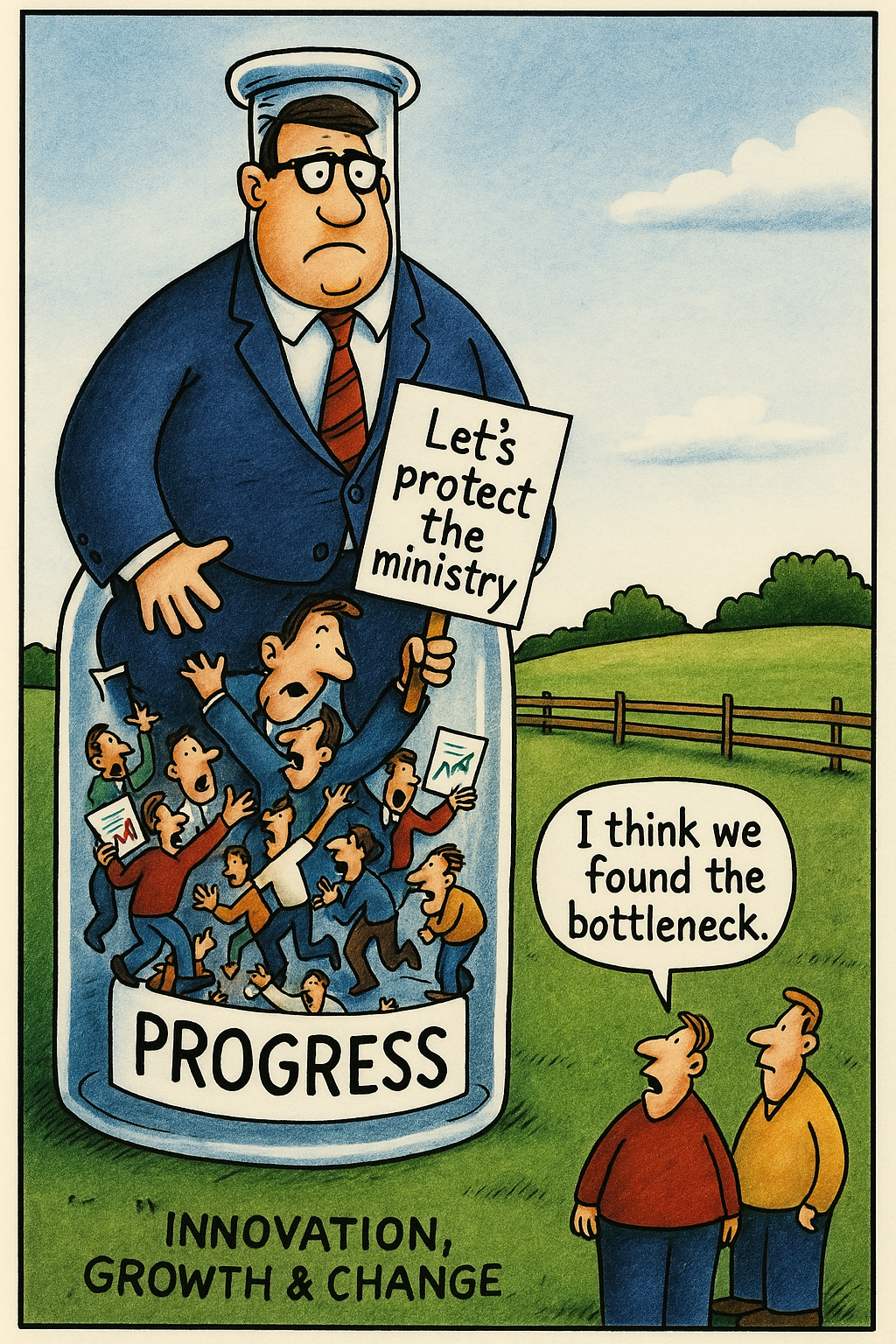
The Bottleneck to Ministry – #122

Index for all posts in the Gospel Sync Series

ENGLISH / ESPAÑOL

Welcome Back! Today, we’ll be looking at the Gospels of Mark and Luke to see how Jesus addressed trying to protect the ministry with restrictions and centralization.

So let’s get started.

(Click here to get a copy of the Gospel Sync document) 

Mark 9:38-41, Luke 9:49–50

John said to Him, “Teacher, Master, we saw someone else driving out demons in Your name, and we tried to stop him, because he does not accompany us.” “Do not stop him,” Jesus replied. “For no one who performs a miracle in My name can turn around and speak evil of Me. For whoever is not against us is for us and whoever is not against you is for you. Indeed, if anyone gives you even a cup of water because you bear the name of Christ, truly I tell you, he will never lose his reward.

My Thoughts 

The clique had formed. “If you ain’t part of our little group, you don’t get to play.” Sounds pretty immature doesn’t it? And yet, like John and his companions, we do it all the time. I call it the “curse of centralization.” In an effort to protect and preserve we start to narrow the “who can and who can’t” circle. 

Now don’t get me wrong. I like the fact that we have a centralized driver’s training and license distribution system (if you have driven in other countries, you know what I mean). I’m also glad we don’t just let any old Joe perform brain surgeries. So there’s a place for qualifications, restrictions, and vetting. This all comes under the desire to protect people and therefore we centralize. 

But in Christendom we have taken it way too far. I call them bottlenecks to the gospel (and watch out, I’m about to step on some toes). The first is “who can and who can’t share the gospel.” Don’t laugh, I’ve actually heard people say that it’s the pastor’s job and anyone else, well, they’re just not qualified. The problem is, we are all commanded to share the gospel (Matthew 28:18-20, Mark 16:15).

Two more are “who can and who can’t” baptize and serve the Lord’s supper. We are told you have to have certain credentials to do either one of these. Really? Where in the Bible does it say that? First, we are again commanded to baptize. The great commission informs us that we are to make disciples. This means making disciples by going, teaching all of His commands, AND baptizing. Have you ever heard a preacher say “Only obey ¾ of the Great Commission but leave the baptisms to me.” I bet you have, in so many words, you just might be recognizing it for the first time. 

And what about the Lord’s supper, communion? Who says you can’t remember Jesus as a family around the dinner table or as a group of normal everyday disciples enjoying a sunset on the beach. We do see it’s a serious offence to abuse the Lord’s Supper (1 Corinthians 11:17-34). Some people were even dying as a result of their misconduct. So does that give us a reason to ratchet down and make one person the “communion expert” to protect the poor ignorant people from killing themselves? I don’t think so!

Ananias and Sapphira died when they abused the spiritual discipline of giving. Why don’t we save the people from themselves by having the pastor practice all the charity? If I’m sounding a bit snarky it’s because I’m terribly disturbed by the bottleneck we’ve created for the gospel and ministry for the sake of protecting it. These are all moves to “protect” the sanctity of the spiritual discipline. Protection and restriction are not the answer, education and training are.

My Story

I am a big champion of the Priesthood of the Believer (1 Peter 2:9). I think we should be training people to do the ministry and not outsourcing it to paid professionals. Once upon a time I was a paid professional and was the very bottleneck I just spoke about. But three things have compelled me to change. The example of Jesus, the Scriptures, and the immense need for laborers to reach the world for Christ. 

I see Jesus delegating elements of ministry to men that the “paid professional” of the day would never let do the ministry. By John chapter 4, the disciples were doing all the baptisms. By Matthew 9 and Luke 9 they were healing the sick and casting out demons. Yes, Jesus modeled, taught, and trained these men (and women) but He also deployed them pretty quickly. And remember these weren’t the sharpest knives in the drawer and one of them wasn’t even in the kingdom.

From Acts it’s pretty evident that normal everyday disciples were sharing the gospel, sharing the Lord’s supper, and even being missionaries (Acts 2:46; 8:12; 11:19-21). When Luke talks about the gospel spreading so rapidly in certain regions it was not because Paul spoke to every person in Asia. It was because the residents of Asia took the ball and ran with it (Acts 19:10).

The job is too big and too important to cut out the major workforce needed to reach every tribe, tongue, and nation with the gospel. There’s just too much work to do to not train every single man and woman, boy and girl to make disciples and be the church to the best of their abilities. We need every believer putting their hands to the plow to advance the kingdom of God and complete the Great Commission. I’m pretty passionate about this, can you tell?

The answer to protecting the ministry is not restriction and centralization. The answer is good training and decentralization. 

Our Action Plan

Now it’s time for application. Here’s some ideas;

My brothers and sisters, let’s quit bottling up the ministry with restrictions and let every believer share the good news and make disciples. Train ‘em up, send ‘em out, and watch God’s kingdom grow like the mustard seed!

Index for all posts in the Gospel Sync Series

El Obstáculo del Ministerio – #122

¡Bienvenidos de nuevo! Hoy analizaremos los Evangelios de Marcos y Lucas para ver cómo Jesús abordó el intento de proteger el ministerio con restricciones y centralización.

Comencemos.

Marcos 9:38-41, Lucas 9:49-50

Juan le dijo: «Maestro, Maestro, vimos a otro expulsando demonios en tu nombre, y tratamos de impedírselo, porque no viene con nosotros». Jesús respondió: «No se lo impidan. Porque nadie que haga un milagro en mi nombre puede volverse atrás y hablar mal de mí. Porque el que no está contra nosotros, está con nosotros, y el que no está contra ustedes, está con ustedes. De hecho, cualquiera que les dé aunque sea un vaso de agua por el hecho de llevar el nombre de Cristo, de cierto les digo que no perderá su recompensa».

Mis Pensamientos

Se había formado la camarilla. «Si no formas parte de nuestro grupito, no tienes derecho a participar». Suena bastante inmaduro, ¿verdad? Y, sin embargo, al igual que John y sus compañeros, lo hacemos constantemente. Yo lo llamo la «maldición de la centralización». En un esfuerzo por proteger y preservar, empezamos a reducir el círculo de «quién puede y quién no».

No me malinterpreten. Me gusta que tengamos un sistema centralizado de formación y distribución de licencias de conducir (si han conducido en otros países, saben a qué me refiero). También me alegra que no dejemos que cualquiera realice neurocirugías. Así que hay lugar para requisitos, restricciones y verificaciones. Todo esto se enmarca en el deseo de proteger a la gente y, por lo tanto, centralizamos.

Pero en la cristiandad lo hemos llevado demasiado lejos. Yo los llamo cuellos de botella para el evangelio (y cuidado, estoy a punto de pisar algunos callos). El primero es «quién puede y quién no puede compartir el evangelio». No se rían, de hecho he escuchado a gente decir que es trabajo del pastor y que cualquier otra persona, bueno, simplemente no está calificada. El problema es que a todos se nos manda compartir el evangelio (Mateo 28:18-20, Marcos 16:15).

Dos más son “quién puede y quién no puede” bautizar y servir la Santa Cena. Se nos dice que hay que tener ciertas credenciales para hacer cualquiera de estas dos cosas. ¿En serio? ¿Dónde dice eso en la Biblia? Primero, se nos manda de nuevo bautizar. La Gran Comisión nos informa que debemos hacer discípulos. Esto significa hacer discípulos yendo, enseñando todos sus mandamientos y bautizando. ¿Alguna vez han escuchado a un predicador decir: “Solo obedezcan tres cuartas partes de la Gran Comisión, pero déjenme los bautismos a mí”? Apuesto a que sí, con tantas palabras que quizás lo estén reconociendo por primera vez.

¿Y qué hay de la Santa Cena, la comunión? ¿Quién dice que no se puede recordar a Jesús como una familia alrededor de la mesa o como un grupo de discípulos comunes y corrientes disfrutando de un atardecer en la playa? Vemos que abusar de la Cena del Señor es una ofensa grave (1 Corintios 11:17-34). Algunas personas incluso morían como resultado de su mala conducta. Entonces, ¿nos da eso razón para reducir la responsabilidad y convertir a una persona en el “experto en la comunión” para proteger a los pobres ignorantes de suicidarse? ¡No lo creo!

Ananías y Safira murieron cuando abusaron de la disciplina espiritual de dar. ¿Por qué no salvamos a la gente de sí misma haciendo que el pastor practique toda la caridad? Si sueno un poco sarcástico es porque me preocupa terriblemente el cuello de botella que hemos creado para el evangelio y el ministerio con el fin de protegerlos. Todas estas son medidas para “proteger” la santidad de la disciplina espiritual. La protección y la restricción no son la solución; la educación y la capacitación sí lo son.

Mi Historia

Soy un gran defensor del Sacerdocio del Creyente (1 Pedro 2:9). Creo que deberíamos capacitar a personas para ejercer el ministerio y no subcontratarlo a profesionales. Hubo un tiempo en que yo era un profesional remunerado y era precisamente el cuello de botella del que acabo de hablar. Pero tres cosas me han impulsado a cambiar: el ejemplo de Jesús, las Escrituras y la inmensa necesidad de obreros que alcancen al mundo para Cristo.

Veo a Jesús delegando elementos del ministerio a hombres que los “profesionales remunerados” de la época jamás permitirían. Para Juan capítulo 4, los discípulos ya realizaban todos los bautismos. Para Mateo 9 y Lucas 9, sanaban a los enfermos y expulsaban demonios. Sí, Jesús modeló, enseñó y capacitó a estos hombres (y mujeres), pero también los desplegó con bastante rapidez. Y recuerden, estos no eran los cuchillos más afilados del cajón, y uno de ellos ni siquiera estaba en el reino.

De Hechos se desprende claramente que discípulos comunes y corrientes compartían el evangelio, la Santa Cena e incluso eran misioneros (Hechos 2:46; 8:12; 11:19-21). Cuando Lucas habla de la rápida propagación del evangelio en ciertas regiones, no fue porque Pablo hablara a todos los habitantes de Asia, sino porque los habitantes de Asia se pusieron manos a la obra (Hechos 19:10).

La tarea es demasiado grande e importante como para prescindir de la mano de obra necesaria para alcanzar a cada tribu, lengua y nación con el evangelio. Hay demasiado trabajo por hacer como para no capacitar a cada hombre, mujer, niño y niña para hacer discípulos y ser la iglesia al máximo de sus capacidades. Necesitamos que cada creyente ponga manos a la obra para avanzar el reino de Dios y completar la Gran Comisión. Me apasiona mucho esto, ¿se nota?

La respuesta para proteger el ministerio no es la restricción ni la centralización. La respuesta es una buena capacitación y la descentralización.

Nuestro Plan de Acción

Ahora es momento de aplicar. Aquí les dejo algunas ideas:

Realicen un estudio bíblico sobre la diferencia entre el sacerdocio del antiguo pacto y el obrero del nuevo pacto.

Vean mi Parábola de los Pozos (Hagan clic en el enlace o busquen esto en YouTube).

MAWL los Discípulos: Modelar, Ayudar, Vigilar y Lanzar

Hermanos y hermanas, dejemos de limitar el ministerio y dejemos que cada creyente comparta las buenas nuevas y haga discípulos. ¡Formen a los creyentes, envíenlos y vean cómo el reino de Dios crece como la semilla de mostaza!

Si ve un problema importante en la traducción, envíeme una corrección por correo electrónico a charleswood1@gmail.com

Kingdom Kernel #16 – “Thy Kingdom Come”

Kingdom Kernel Collection

The Significance of “Thy Kingdom Come”: A Prayer for God’s Reign Through Christ

Introduction: The Prayer of Jesus and Its Context

In Matthew 6:9-13 and Luke 11:2-4, Jesus teaches His disciples how to pray, offering a model that encapsulates the heart of God’s redemptive plan. Central to this prayer is the petition “Thy kingdom come,” a plea rich with theological depth and prophetic hope. Spoken in a Roman-occupied Judea, where earthly kings dominated, Jesus redirects His followers to the ultimate sovereignty of God. This essay explores the linguistic roots, theological significance, and christological fulfillment of “Thy kingdom come,” revealing Jesus as the Messiah-King whose lordship transforms believers today and anticipates the fullness of God’s eternal reign.

Etymological Roots: Defining “Thy Kingdom Come”

The phrase “Thy kingdom come” in Matthew 6:10 (Greek: ἐλθάτω ἡ βασιλεία σου, elthatō hē basileia sou) and Luke 11:2 centers on basileia (G932 in Strong’s Concordance), meaning “kingdom” or “reign.” Derived from basis (“foundation”) and bainō (“to walk”), it suggests a dynamic rule grounded in authority. The verb elthatō (from erchomai, G2064), meaning “to come” or “arrive,” conveys urgency and expectation. In Aramaic, which Jesus likely spoke, the phrase parallels the Hebrew malkut (kingdom), often tied to God’s covenantal reign in the Old Testament (e.g., Psalm 145:13). This linguistic foundation frames the prayer as a request for God’s active, sovereign intervention—fulfilled supremely in Jesus, the Messianic King.

Theological Significance: The Kingdom and God’s Will

Theologically, “Thy kingdom come” is inseparable from “Thy will be done” (Matthew 6:10), linking God’s reign to His purpose. In heaven, His will is perfectly executed; on earth, it contends with human rebellion. Jesus, as the obedient Son, models this alignment, praying in Gethsemane, “Not My will, but Yours, be done” (Luke 22:42). His life—teaching, healing, and defeating evil—embodies the kingdom’s inbreaking (Matthew 12:28). This prayer thus reveals divine attributes: God’s holiness (“Hallowed be Your name”), sovereignty, and redemptive intent. It prophetically anticipates Christ’s return, when “the kingdom of the world” becomes “the kingdom of our Lord and of His Christ” (Revelation 11:15).

Christological Fulfillment: Jesus as King Now and Forever

Jesus is the perfect exemplar of this prayer. As Messiah, He inaugurates God’s kingdom, declaring, “The kingdom of God is at hand” (Mark 1:15). His miracles and authority over sin and death (John 11:25-26) demonstrate His present lordship, not merely a future hope. Yet, the kingdom’s ultimate fulfillment awaits His return (Matthew 25:31-34). This dual reality—Christ reigning now amid a fallen world, yet fully in eternity—echoes Hebrews 2:8-9: “At present, we do not yet see everything in subjection to Him. But we see Jesus… crowned with glory.” Praying “Thy kingdom come” aligns us with His kingship today while yearning for its consummation.

Implications for Believers: Transformative Prayer

For contemporary Christians, this prayer is transformative. It reorients us to God as Father/Son-King, fosters dependence (John 15:5), and compels kingdom living—justice, mercy, and humility (Micah 6:8). Modeled by Jesus, it calls disciple-makers to teach others to seek God’s will, embodying His reign in a broken world. Its power lies in its revelation of Jesus’ lordship—real now, yet expansive in eternity—uniting ancient hope with present faith.

Conclusion: A Prayer That Shapes Eternity

“Thy kingdom come” is more than words; it’s a declaration of God’s redemptive plan through Christ. From its linguistic richness to its theological depth, it unveils a King who reigns today and forever. For believers, it’s a call to live under Jesus’ lordship now, anticipating the day when every knee bows (Philippians 2:10-11). This prayer, taught by the Messiah Himself, bridges heaven and earth, past and future, inviting us into the eternal values of God’s kingdom.

Disciple-Maker’s Short Story

The Road Home

The minivan rumbled over the frost-dusted road, tires grinding against the February grit. Sam’s hands rested steady on the wheel, his eyes flicking between the windshield and the rearview mirror, where the kids’ silhouettes jostled in the back. Beside him, Julie tugged her scarf loose, her breath fogging faintly in the chilly cabin as she scrolled through her phone—likely skimming the church app’s sermon notes.

“So,” Sam said, his voice cutting through the hum of the engine, “what did you two think of the Lord’s Prayer today? You know, when Pastor Bill had us all say it?”

Eleven-year-old Mia twisted a strand of dark hair, her sneakers scuffing the seatback. “It’s kinda old-timey. ‘Hallowed be Thy name’—who even says ‘Thy’ anymore?”

“Yeah,” Ethan piped up, nine and wiry, his tone brimming with mischief. “And ‘Thy kingdom come’? I saw God dropping out of the sky with a giant crown, like—BOOM!—‘Here’s My kingdom, peasants!’” He flung his arms wide, smacking Mia’s elbow.

“Ow! Stop it!” Mia shoved him back, her scowl sharpening. “It’s not a cartoon, dummy. It’s serious.”

Sam’s lips quirked, but he kept his eyes on the road. “Hey, no brawling back there. Ethan, hands to yourself. Mia, easy on the names. But you’re both in the ballpark. What do you think happens when we pray ‘Thy kingdom come’?”

Ethan leaned forward, seatbelt taut, grinning unabashedly. “Maybe aliens invade! God’s kingdom’s a spaceship, and Jesus is the captain, zapping bad guys with lasers!”

Julie stifled a laugh, tucking her phone into her coat pocket. “Lasers? Creative, but I think Jesus has better moves. What about you, Mia?”

Mia crossed her arms, staring out at the skeletal trees whipping past. “I dunno. Maybe… it’s asking for everything to be perfect? Like no more fights or mean people. But that sounds boring. Nothing would happen.”

The van quieted, the engine’s drone filling the space. Sam’s fingers tightened on the wheel, his mind brushing against that essay Julie had shared—how “Thy kingdom come” wasn’t a passive wish, but a bold cry for Jesus’ reign to crash into the now. He caught Julie’s eye, and she nodded, picking up the thread.

“That’s not boring, Mia,” Julie said, her voice warm but steady. “Think about Jesus—He didn’t wait for perfect. He healed people, fed them, faced down the Pharisees. When we pray that, we’re asking for His kingdom to break in—right here, messy as it is.”

Ethan’s brow furrowed, his earlier glee softening into curiosity. “So… it’s not just God zapping stuff? We do stuff too?”

Sam eased the van around a curve, his tone brightening with that quiet fire Julie adored. “You got it, bud. Jesus said the kingdom’s already here—like a seed growing. Remember how He prayed in the garden? ‘Not My will, but Yours’? He didn’t dodge the hard stuff. He stepped into it, trusting God. Praying ‘Thy kingdom come’ means we want that too—His will, His way, even when it’s tough.”

Mia uncrossed her arms, her voice thinning. “But what if I mess up? I yelled at Ethan today, and I wasn’t nice to Lily at recess last week. Does that mean the kingdom’s not coming?”

Julie turned in her seat, the red glow of a stoplight washing over her face as Sam slowed the van. “No, sweetie. It’s not about being perfect. It’s about wanting to be like Jesus—bit by bit. He’s the King who forgives, who keeps shaping us. Praying it means letting Him change us, not just the world.”

Ethan’s eyes widened, his voice unusually soft. “So it’s like… asking to be brave like Him? Like when He faced the cross?”

Sam reached back with one hand, ruffling Ethan’s hair while keeping the other on the wheel. “Nailed it. Brave, kind, full of love—even when it’s scary. That’s His kingdom breaking in. And every time we try that, it’s like heaven touches down a little.”

The light flipped green, and Sam nudged the van forward, the road unfurling like a whispered vow. Mia nudged Ethan—a peace offering—and he grinned, muttering something about Jesus with a lightsaber. Laughter erupted, raw and free, mingling with the engine’s hum.

As the familiar streets of their neighborhood emerged from the blur of trees, Julie felt it—a spark of that kingdom, fragile yet fierce, flickering in their voices, their questions, their untamed hope. She murmured a prayer under her breath: Thy kingdom come—in us, through us, like You, Jesus. The road home stretched on, and somehow, it shimmered with something sacred.

Kingdom Kernel Collection