
Index for all posts in the Gospel Sync Series
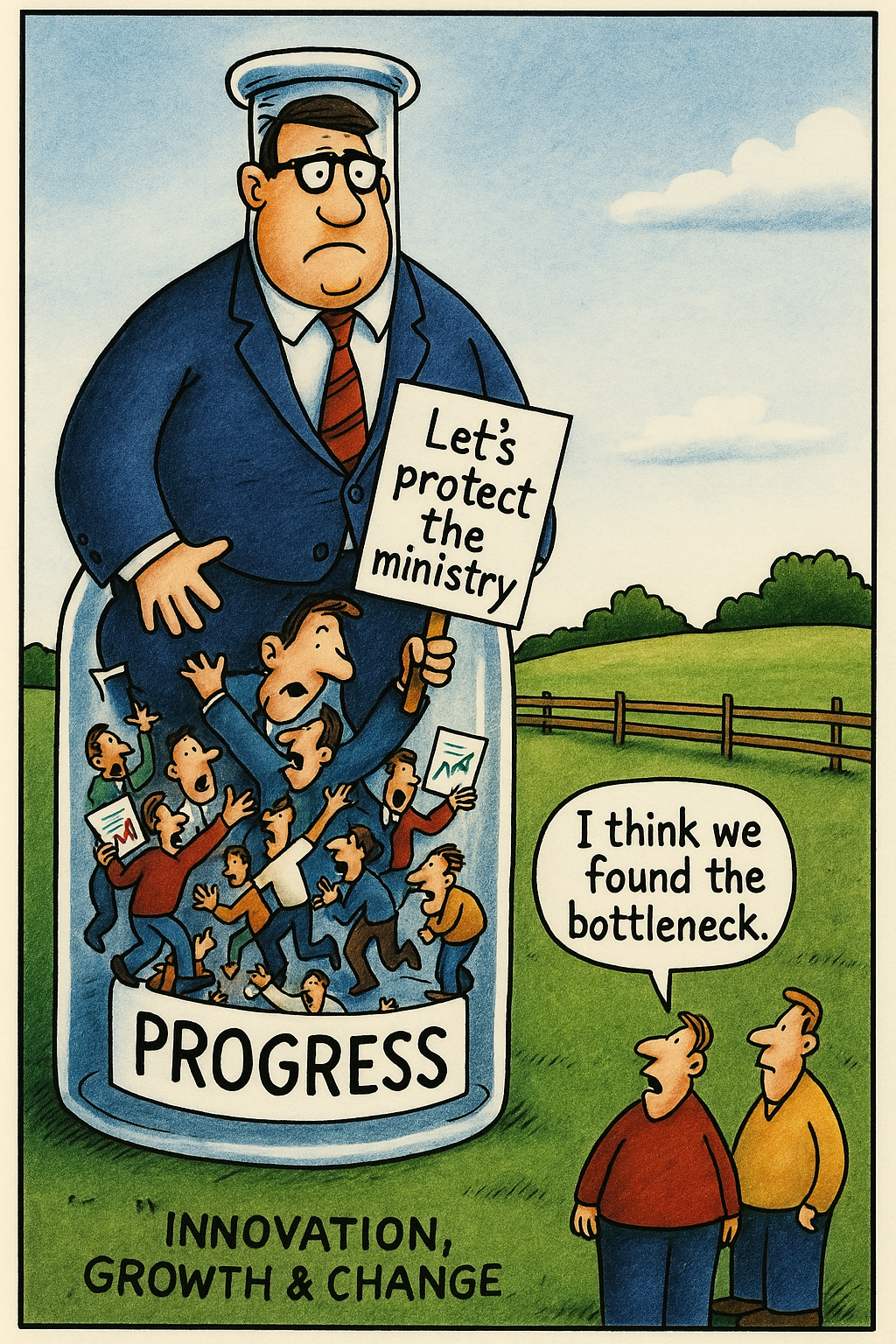
Welcome Back! Today, we’ll be looking at the Gospels of Mark and Luke to see how Jesus addressed trying to protect the ministry with restrictions and centralization.
So let’s get started.
(Click here to get a copy of the Gospel Sync document)
Mark 9:38-41, Luke 9:49–50
John said to Him, “Teacher, Master, we saw someone else driving out demons in Your name, and we tried to stop him, because he does not accompany us.” “Do not stop him,” Jesus replied. “For no one who performs a miracle in My name can turn around and speak evil of Me. For whoever is not against us is for us and whoever is not against you is for you. Indeed, if anyone gives you even a cup of water because you bear the name of Christ, truly I tell you, he will never lose his reward.
My Thoughts
The clique had formed. “If you ain’t part of our little group, you don’t get to play.” Sounds pretty immature doesn’t it? And yet, like John and his companions, we do it all the time. I call it the “curse of centralization.” In an effort to protect and preserve we start to narrow the “who can and who can’t” circle.
Now don’t get me wrong. I like the fact that we have a centralized driver’s training and license distribution system (if you have driven in other countries, you know what I mean). I’m also glad we don’t just let any old Joe perform brain surgeries. So there’s a place for qualifications, restrictions, and vetting. This all comes under the desire to protect people and therefore we centralize.
But in Christendom we have taken it way too far. I call them bottlenecks to the gospel (and watch out, I’m about to step on some toes). The first is “who can and who can’t share the gospel.” Don’t laugh, I’ve actually heard people say that it’s the pastor’s job and anyone else, well, they’re just not qualified. The problem is, we are all commanded to share the gospel (Matthew 28:18-20, Mark 16:15).
Two more are “who can and who can’t” baptize and serve the Lord’s supper. We are told you have to have certain credentials to do either one of these. Really? Where in the Bible does it say that? First, we are again commanded to baptize. The great commission informs us that we are to make disciples. This means making disciples by going, teaching all of His commands, AND baptizing. Have you ever heard a preacher say “Only obey ¾ of the Great Commission but leave the baptisms to me.” I bet you have, in so many words, you just might be recognizing it for the first time.
And what about the Lord’s supper, communion? Who says you can’t remember Jesus as a family around the dinner table or as a group of normal everyday disciples enjoying a sunset on the beach. We do see it’s a serious offence to abuse the Lord’s Supper (1 Corinthians 11:17-34). Some people were even dying as a result of their misconduct. So does that give us a reason to ratchet down and make one person the “communion expert” to protect the poor ignorant people from killing themselves? I don’t think so!
Ananias and Sapphira died when they abused the spiritual discipline of giving. Why don’t we save the people from themselves by having the pastor practice all the charity? If I’m sounding a bit snarky it’s because I’m terribly disturbed by the bottleneck we’ve created for the gospel and ministry for the sake of protecting it. These are all moves to “protect” the sanctity of the spiritual discipline. Protection and restriction are not the answer, education and training are.
My Story
I am a big champion of the Priesthood of the Believer (1 Peter 2:9). I think we should be training people to do the ministry and not outsourcing it to paid professionals. Once upon a time I was a paid professional and was the very bottleneck I just spoke about. But three things have compelled me to change. The example of Jesus, the Scriptures, and the immense need for laborers to reach the world for Christ.
I see Jesus delegating elements of ministry to men that the “paid professional” of the day would never let do the ministry. By John chapter 4, the disciples were doing all the baptisms. By Matthew 9 and Luke 9 they were healing the sick and casting out demons. Yes, Jesus modeled, taught, and trained these men (and women) but He also deployed them pretty quickly. And remember these weren’t the sharpest knives in the drawer and one of them wasn’t even in the kingdom.
From Acts it’s pretty evident that normal everyday disciples were sharing the gospel, sharing the Lord’s supper, and even being missionaries (Acts 2:46; 8:12; 11:19-21). When Luke talks about the gospel spreading so rapidly in certain regions it was not because Paul spoke to every person in Asia. It was because the residents of Asia took the ball and ran with it (Acts 19:10).
The job is too big and too important to cut out the major workforce needed to reach every tribe, tongue, and nation with the gospel. There’s just too much work to do to not train every single man and woman, boy and girl to make disciples and be the church to the best of their abilities. We need every believer putting their hands to the plow to advance the kingdom of God and complete the Great Commission. I’m pretty passionate about this, can you tell?
The answer to protecting the ministry is not restriction and centralization. The answer is good training and decentralization.
Our Action Plan
Now it’s time for application. Here’s some ideas;
- Do a Bible study on the difference between the old covenant priesthood and the new covenant laborer.
- Check out my Parable of the Wells (Click the link or search YouTube for this)
- MAWL the Disciples – Model, Assist, Watch, and Launch
My brothers and sisters, let’s quit bottling up the ministry with restrictions and let every believer share the good news and make disciples. Train ‘em up, send ‘em out, and watch God’s kingdom grow like the mustard seed!
Index for all posts in the Gospel Sync Series
El Obstáculo del Ministerio – #122
¡Bienvenidos de nuevo! Hoy analizaremos los Evangelios de Marcos y Lucas para ver cómo Jesús abordó el intento de proteger el ministerio con restricciones y centralización.
Comencemos.
Marcos 9:38-41, Lucas 9:49-50
Juan le dijo: «Maestro, Maestro, vimos a otro expulsando demonios en tu nombre, y tratamos de impedírselo, porque no viene con nosotros». Jesús respondió: «No se lo impidan. Porque nadie que haga un milagro en mi nombre puede volverse atrás y hablar mal de mí. Porque el que no está contra nosotros, está con nosotros, y el que no está contra ustedes, está con ustedes. De hecho, cualquiera que les dé aunque sea un vaso de agua por el hecho de llevar el nombre de Cristo, de cierto les digo que no perderá su recompensa».
Mis Pensamientos
Se había formado la camarilla. «Si no formas parte de nuestro grupito, no tienes derecho a participar». Suena bastante inmaduro, ¿verdad? Y, sin embargo, al igual que John y sus compañeros, lo hacemos constantemente. Yo lo llamo la «maldición de la centralización». En un esfuerzo por proteger y preservar, empezamos a reducir el círculo de «quién puede y quién no».
No me malinterpreten. Me gusta que tengamos un sistema centralizado de formación y distribución de licencias de conducir (si han conducido en otros países, saben a qué me refiero). También me alegra que no dejemos que cualquiera realice neurocirugías. Así que hay lugar para requisitos, restricciones y verificaciones. Todo esto se enmarca en el deseo de proteger a la gente y, por lo tanto, centralizamos.
Pero en la cristiandad lo hemos llevado demasiado lejos. Yo los llamo cuellos de botella para el evangelio (y cuidado, estoy a punto de pisar algunos callos). El primero es «quién puede y quién no puede compartir el evangelio». No se rían, de hecho he escuchado a gente decir que es trabajo del pastor y que cualquier otra persona, bueno, simplemente no está calificada. El problema es que a todos se nos manda compartir el evangelio (Mateo 28:18-20, Marcos 16:15).
Dos más son “quién puede y quién no puede” bautizar y servir la Santa Cena. Se nos dice que hay que tener ciertas credenciales para hacer cualquiera de estas dos cosas. ¿En serio? ¿Dónde dice eso en la Biblia? Primero, se nos manda de nuevo bautizar. La Gran Comisión nos informa que debemos hacer discípulos. Esto significa hacer discípulos yendo, enseñando todos sus mandamientos y bautizando. ¿Alguna vez han escuchado a un predicador decir: “Solo obedezcan tres cuartas partes de la Gran Comisión, pero déjenme los bautismos a mí”? Apuesto a que sí, con tantas palabras que quizás lo estén reconociendo por primera vez.
¿Y qué hay de la Santa Cena, la comunión? ¿Quién dice que no se puede recordar a Jesús como una familia alrededor de la mesa o como un grupo de discípulos comunes y corrientes disfrutando de un atardecer en la playa? Vemos que abusar de la Cena del Señor es una ofensa grave (1 Corintios 11:17-34). Algunas personas incluso morían como resultado de su mala conducta. Entonces, ¿nos da eso razón para reducir la responsabilidad y convertir a una persona en el “experto en la comunión” para proteger a los pobres ignorantes de suicidarse? ¡No lo creo!
Ananías y Safira murieron cuando abusaron de la disciplina espiritual de dar. ¿Por qué no salvamos a la gente de sí misma haciendo que el pastor practique toda la caridad? Si sueno un poco sarcástico es porque me preocupa terriblemente el cuello de botella que hemos creado para el evangelio y el ministerio con el fin de protegerlos. Todas estas son medidas para “proteger” la santidad de la disciplina espiritual. La protección y la restricción no son la solución; la educación y la capacitación sí lo son.
Mi Historia
Soy un gran defensor del Sacerdocio del Creyente (1 Pedro 2:9). Creo que deberíamos capacitar a personas para ejercer el ministerio y no subcontratarlo a profesionales. Hubo un tiempo en que yo era un profesional remunerado y era precisamente el cuello de botella del que acabo de hablar. Pero tres cosas me han impulsado a cambiar: el ejemplo de Jesús, las Escrituras y la inmensa necesidad de obreros que alcancen al mundo para Cristo.
Veo a Jesús delegando elementos del ministerio a hombres que los “profesionales remunerados” de la época jamás permitirían. Para Juan capítulo 4, los discípulos ya realizaban todos los bautismos. Para Mateo 9 y Lucas 9, sanaban a los enfermos y expulsaban demonios. Sí, Jesús modeló, enseñó y capacitó a estos hombres (y mujeres), pero también los desplegó con bastante rapidez. Y recuerden, estos no eran los cuchillos más afilados del cajón, y uno de ellos ni siquiera estaba en el reino.
De Hechos se desprende claramente que discípulos comunes y corrientes compartían el evangelio, la Santa Cena e incluso eran misioneros (Hechos 2:46; 8:12; 11:19-21). Cuando Lucas habla de la rápida propagación del evangelio en ciertas regiones, no fue porque Pablo hablara a todos los habitantes de Asia, sino porque los habitantes de Asia se pusieron manos a la obra (Hechos 19:10).
La tarea es demasiado grande e importante como para prescindir de la mano de obra necesaria para alcanzar a cada tribu, lengua y nación con el evangelio. Hay demasiado trabajo por hacer como para no capacitar a cada hombre, mujer, niño y niña para hacer discípulos y ser la iglesia al máximo de sus capacidades. Necesitamos que cada creyente ponga manos a la obra para avanzar el reino de Dios y completar la Gran Comisión. Me apasiona mucho esto, ¿se nota?
La respuesta para proteger el ministerio no es la restricción ni la centralización. La respuesta es una buena capacitación y la descentralización.
Nuestro Plan de Acción
Ahora es momento de aplicar. Aquí les dejo algunas ideas:
Realicen un estudio bíblico sobre la diferencia entre el sacerdocio del antiguo pacto y el obrero del nuevo pacto.
Vean mi Parábola de los Pozos (Hagan clic en el enlace o busquen esto en YouTube).
MAWL los Discípulos: Modelar, Ayudar, Vigilar y Lanzar
Hermanos y hermanas, dejemos de limitar el ministerio y dejemos que cada creyente comparta las buenas nuevas y haga discípulos. ¡Formen a los creyentes, envíenlos y vean cómo el reino de Dios crece como la semilla de mostaza!
Si ve un problema importante en la traducción, envíeme una corrección por correo electrónico a charleswood1@gmail.com


