Kingdom Kernel #36 – The Parable of the Tares: Counterfeits and Judgement

Unveiling Christ’s Kingship and the Kingdom’s Culmination

Kingdom Kernel Collection

Jesus presented another parable to them, saying, “The kingdom of heaven may be compared to a man who sowed good seed in his field. But while his men were sleeping, his enemy came and sowed tares among the wheat, and went away. But when the wheat sprouted and bore grain, then the tares became evident also. The slaves of the landowner came and said to him, ‘Sir, did you not sow good seed in your field? How then does it have tares?’ And he said to them, ‘An enemy has done this!’ The slaves said to him, ‘Do you want us, then, to go and gather them up?’ But he said, ‘No; for while you are gathering up the tares, you may uproot the wheat with them. Allow both to grow together until the harvest; and in the time of the harvest I will say to the reapers, “First gather up the tares and bind them in bundles to burn them up; but gather the wheat into my barn.”’” (Matthew 13:24-30)

Introduction

The Parable of the Tares in Matthew 13:24-30, 36-43 is a vivid illustration of the Kingdom of Heaven, delivered by Jesus to reveal the coexistence of good and evil in this age and the certainty of divine judgment at its end. Set within a series of kingdom parables, it addresses the reality of opposition within God’s redemptive plan, emphasizing Christ’s sovereign authority as the Son of Man.

Key Words and Phrases

Tares – the Greek term zizania (Strong’s G2215) refers to a weed, likely darnel, resembling wheat but toxic and fruitless. Etymologically, its precise origins are unclear, but it denotes something counterfeit, sown by the enemy (the devil, v. 39) to disrupt the harvest.

The End of the Age – The term sunteleia (Strong’s G4930), meaning “completion” or “consummation,” paired with aionos (Strong’s G165), “age,” points to the climactic end of the present world order. Together, these terms frame a narrative of deception within the kingdom and its ultimate resolution under Christ’s judgment.

Theological Significance

The parable reveals the Kingdom of God as a mixed reality in this age, where the “sons of the kingdom” (v. 38) coexist with the “sons of the evil one.” Christ, the Son of Man (v. 37), is the sovereign sower, planting truth while permitting the devil’s tares to grow—a testament to His patience and wisdom (2 Peter 3:9). This reflects divine attributes of forbearance and justice, as premature uprooting risks harming the wheat (v. 29). The “end of the age” signals Christ’s return, when angels execute His judgment, casting tares into the “furnace of fire” (v. 42) while the righteous “shine forth as the sun” (v. 43). This eschatological separation fulfills prophecies like Daniel 12:3, underscoring Christ’s role as the messianic King who consummates God’s redemptive plan. Jesus’ call to “endure to the end” in Matthew 24:13 complements this, promising salvation to those who persevere through trials, linking present faithfulness to eschatological reward.

Christological Fulfillment

The parable portrays Jesus as the authoritative Son of Man, a title echoing Daniel 7:13-14, with dominion over the world (v. 38). His lordship is not merely future but active now, as He sows truth and oversees the kingdom’s growth despite opposition (Matthew 28:18). The tares reveal the enemy’s futile attempt to undermine Christ’s reign, yet His patience ensures the salvation of many. At the “end of the age,” His kingship culminates in judgment, purifying His kingdom and establishing eternal righteousness, fulfilling Revelation 19:11-16.

Transformative Power for Believers

For contemporary Christians, the parable offers hope and guidance. It calls disciples to trust Christ’s present lordship, resisting discouragement amid evil’s presence (John 16:33). Disciple-makers should warn of judgment, encourage endurance, and leave separation to God, fostering communities of grace. The promise of shining “as the sun” inspires believers to live righteously, reflecting Christ’s light now while awaiting His eternal kingdom.

Conclusion

The Parable of the Tares reveals Jesus as the sovereign King, patiently overseeing His kingdom’s growth and decisively judging at the end of the age. The terms zizania and sunteleia aionos illuminate the tension between deception and divine consummation, pointing to Christ’s redemptive and judicial authority. His lordship, real now and fully realized in eternity, transforms believers to live faithfully, embodying the expansive, eternal nature of God’s kingdom.

Disciple-Makers Short Story

To Judge or Not to Judge

The kitchen island gleamed under the warm glow of a pendant light, its quartz surface cluttered with empty coffee mugs and a half-eaten tray of Pam’s homemade oatmeal cookies. The Wednesday night Bible study group had dispersed, their laughter and chatter fading into the crisp autumn night. Eric and Shandra lingered, their chairs pulled close to the island, while Pam and Dennis moved with quiet familiarity, rinsing dishes and wiping crumbs. The air held a gentle weight, the kind that settles when hard questions wait to be asked.

Eric’s fingers traced the rim of his mug, his brow furrowed. Shandra sat beside him, her hands folded tightly, her eyes darting between her husband and the older couple. The silence stretched until Eric finally spoke, his voice low but steady. “My brother, Jake… he’s getting married next month. To a guy. My family’s all going, and they keep saying Jesus would be there, you know, loving everyone, not judging. But I’m not sure. Shandra and I—we’re torn.”

Shandra nodded, her voice softer, almost hesitant. “We’ve been reading Matthew 13, the parable about the wheat and the tares. And then there’s that part about not throwing pearls before swine, and knowing a tree by its fruit in Matthew 7. It’s confusing. Are we supposed to go and show love, or… or are we supposed to step back?”

Pam set down a dish towel, her eyes kind but searching, and leaned against the counter. Dennis, drying a mug, glanced at her before settling into a chair across from the young couple. “That’s a real tension you’re feeling,” Pam said, her voice steady like a teacher guiding a student through a knotty problem. “It’s good you’re wrestling with it. Shows you’re listening to the Spirit and wanting to obey God’s Word.”

Eric shifted, his jaw tight. “My family says judging is wrong, period. They point to that parable—how the landowner says to let the wheat and tares grow together until the harvest. They say it means we leave all judgment to Jesus. But then I read about not throwing pearls before swine, and I wonder… are we supposed to be okay with everything? Just go along?”

Dennis set the mug down, his weathered hands folding on the island. “Let’s unpack that parable first,” he said, his voice calm but firm. “The wheat and tares—it’s about the kingdom, the world, not just one person’s choices. Jesus is saying the final judgment, the one that separates the righteous from the unrighteous, that’s His job, not ours. The angels will sort it out at the end. But that doesn’t mean we’re blind to what’s happening now.”

Pam nodded, picking up the thread. “There’s a difference between judging to condemn and judging to discern. Condemning someone’s soul—that’s God’s territory. But discerning? That’s wisdom. That’s what Jesus means when He talks about knowing a tree by its fruit. You look at someone’s actions, their patterns, not to write them off, but to understand their heart.”

Shandra’s shoulders relaxed slightly, but her brow remained creased. “So, are you saying we shouldn’t go to the wedding? Because it’s… I don’t know, approving something we don’t believe is right?”

Eric cut in, his voice sharper. “But if we don’t go, aren’t we just pushing Jake away? I want him to know I love him. I want him to see Jesus in me. Isn’t that what Jesus would do—show up, love people, like He did with sinners?”

Dennis leaned back, his eyes narrowing thoughtfully. “Let’s think about Jesus for a second. He ate with tax collectors and sinners, sure. But He never just went along to get along. Every time He sat with them, He was calling them to something higher—repentance, transformation. He didn’t condemn them, but He didn’t celebrate their sin either. He loved them enough to speak truth.”

Pam reached for a cookie, breaking it in half and offering a piece to Shandra, who took it absently. “Think about the pearls before swine,” Pam said. “It’s not about calling someone a pig—it’s about knowing what’s precious. Your faith, your witness, that’s the pearl. You don’t throw it away by pretending everything’s fine when it’s not. But you also don’t hoard it by cutting people off. It’s a balance.”

Eric’s eyes flicked to the open Bible on the island, its pages marked with Shandra’s neat underlines. “So, what does that look like for us? Do we go or not?”

Dennis took a slow breath, his gaze steady. “Here’s the thing. You’re not God. You don’t get to decide Jake’s eternal fate—that’s the harvest, and it’s in Jesus’ hands. But you are called to be wise, to be a light. Going to the wedding might feel like love to your family, but what’s it saying? Is it celebrating something that goes against what God calls good? Are there other ways to communicate your love for your brother without endorsing his gay marriage?”

Shandra’s voice trembled slightly. “I just keep thinking… what would Jesus do? I want to be like Him. I want Jake to see that, to want that too.”

Pam’s smile was warm, her eyes glistening. “That’s the heart of it, Shandra. Wanting to be like Jesus—it’s not just about what you do, but why. Jesus loved people enough to meet them where they were, but He never left them there. He always pointed them to the Father. He did fellowship with tax collectors and prostitutes but He never celebrated their actions. He had a clear call for repentance and desire for them to enter the kingdom of God. If you don’t go, it’s not about rejecting him—it’s about holding fast to what’s holy, trusting God to work in his heart.”

Eric rubbed his face, exhaling heavily. “So, we pray for wisdom. We figure out how to love Jake without endorsing what we don’t believe. But how do we know what’s right?”

Dennis chuckled softly, a sound of empathy rather than amusement. “You’re already doing it. You’re here, asking, wrestling. That’s what disciples do. You seek God’s heart. You read His Word. You pray. And you trust the Spirit to guide you. James 1:5—God gives wisdom generously to those who ask.”

Pam reached across the island, her hand resting lightly on Shandra’s. “And you keep loving Jake. Not the shallow love that says everything’s fine, but the deep kind—the kind Jesus showed.  The kind that prays for him, that speaks truth gently, that stays faithful even when it’s hard. Celebrate birthdays, thanksgiving, Christmas with family. You can associate at those kinds of events without approving of their marriage.”

The kitchen fell quiet again, the only sound the faint hum of the refrigerator. Eric and Shandra exchanged a glance, their hands finding each other’s under the island. The weight of the decision still hung heavy, but there was a flicker of clarity in their eyes, a resolve to seek not just answers, but to honor the One who embodied love and truth in perfect measure.

As Pam and Dennis walked them to the door, the cool night air greeted them, carrying the scent of fallen leaves. Eric paused, turning back. “Thanks,” he said simply. “For helping us see… that being like Jesus is not just going along with our culture because we are afraid to appear judgmental. We need to live out our convictions and still demonstrate the love of Christ.. It’s about getting wisdom from Him to do that.”

Dennis clapped a hand on his shoulder. “That’s the goal, brother. It’s not easy but stay strong and pursue His guidance through the Word and the Spirit.”

And as the young couple stepped into the night, the stars above seemed a little brighter, a quiet reminder that the harvest would come—but for now, their call was to love, to discern, and to walk humbly in the footsteps of their Savior.

Kingdom Kernel Collection

The Fear of Losing Community – #143

Index for all posts in the Gospel Sync Series
ENGLISH / ESPAÑOL

Welcome Back! Today, we’ll be looking at the Gospel of John to see how an older couple chose to fear the wrong relationship. 

So let’s get started.

(Click here to get a copy of the Gospel Sync document) 

John 9:17-23

So once again they asked the man who had been blind, “What do you say about Him, since it was your eyes He opened?” “He is a prophet,” the man replied. The Jews still did not believe that the man had been blind and had received his sight until they summoned his parents and asked, “Is this your son, the one you say was born blind? So how is it that he can now see?” His parents answered, “We know he is our son, and we know he was born blind. But how he can now see or who opened his eyes, we do not know. Ask him. He is old enough to speak for himself.” His parents said this because they were afraid of the Jews. For the Jews had already determined that anyone who confessed Jesus as the Christ would be put out of the synagogue. That was why his parents said, “He is old enough. Ask him.”

My Thoughts 

Fear is such a powerful motivator. It can be leveraged for good and evil. For instance; “The fear of the Lord is the beginning of wisdom” (Proverbs 9:10). But fear can also be very destructive, especially the fear of people. In this case, to acknowledge Jesus having healed their blind son, they would have to forfeit their community. They were afraid of getting kicked out of the synagogue. It would be like being excommunicated from your beloved church. You would lose all of your closest friends and maybe even some of your relatives. These days it may not seem like that big of a deal, we’d just go down the street and find another church. But that’s because most people don’t view the church the same as these people viewed the synagogue. It was their spiritual family, the avenue for hearing God’s Word, and might have had something to do with their livelihood as well. (www.kesherjournal.com)

Fear of losing your fellowship with family and other believers is almost an irresistible current. Like I said, it can be used for good and for evil. But when given a choice, people or God, the choice should be obvious. I found as a disciple maker that even though the answer should be simple, it’s not always easy. The tug of community is a strong pull and God usually tests our loyalties in this area. Jesus felt this pull many times with family and friends. He passed the test each time by knowing the right hard to do rather than choosing the wrong easy. He required the same of His disciples (Matthew 12:48–50, Mark 10:6–9, Luke 14:26–27, John 19:26–27).

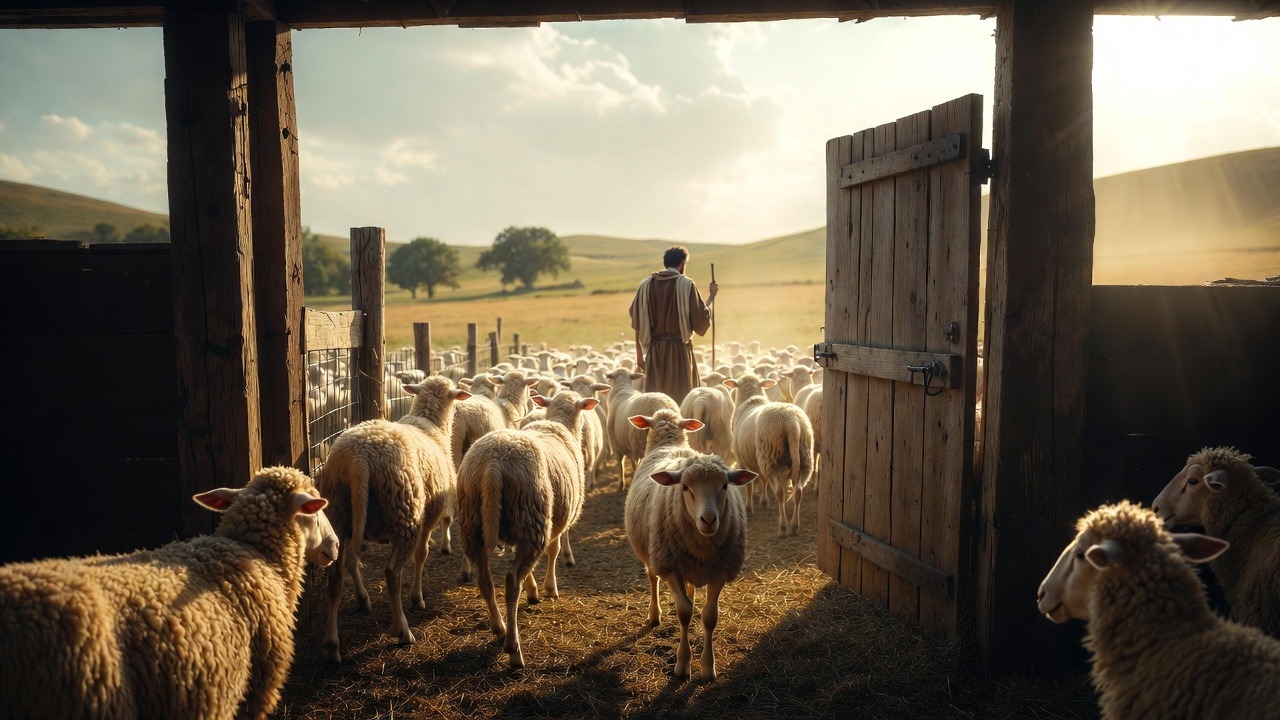
Here’s where it gets tricky as a disciple maker; Are you setting people up to be loyal to you or to God? Are you disappointed when someone you are discipling chooses to go against your counsel because they believe God is calling them to do something different? Do you see people as your possessions or as God’s precious sheep in His flock and you are an undershepherd? These questions need to be answered because as a mentor, servant, friend, God will test both you and them to see where the supreme love lies. God will not be second. 

My Story

Losing our spiritual family is probably one of the hardest things I’ve ever experienced. Deb and I felt like God was calling us in a different direction and it caused a lot of friction. Thirty year friendships were being tested. There were mistakes and hurt feelings on both sides of the conflict. It was a “Paul & Barnabas Moment” (Acts 15:36-41). But I felt like I needed to risk the relationships rather than resist the calling of the Holy Spirit. My loyalties were to Jesus first. 

I like to say that God is obligated to test our loyalties to Him. It is the only way to see if we love Him with all our heart, soul, mind, and strength (Mark 12:30). These tests often come with plenty of misunderstandings, bruised egos, and anger. But we have to trust that God has our and the offended party’s best interest at heart. If we feel like God is calling us to something different, we need to obey God rather than fear the loss of relationships, no matter how dear they are to us. And we need to facilitate that separation in the most loving and peaceful manner possible (Romans 12:18).

Our Action Plan

Now it’s time for application. Here’s some ideas and questions;

  • When was the last time you disappointed family or friends to obey God?
  • Read Matthew 12:48–50 together and ask those you are discipling how they would apply the passage.
  • What would you fear most if you were asked to leave your church?

Fear is a God given emotion but like any other emotion, the enemy can leverage it for evil. Let’s let our loyalties to God be our chief motivation when it comes to our relationships with others. 

Organic Writing – No Artificial Intelligence or Sweeteners Added

Index for all posts in the Gospel Sync Series

El Miedo a Perder la Comunidad – #143

¡Bienvenidos de nuevo! Hoy analizaremos el Evangelio de Juan para ver cómo una pareja mayor decidió temer la relación equivocada.

Comencemos.

Juan 9:17-23

Así que volvieron a preguntarle al hombre que había sido ciego: «¿Qué dices de él, ya que te abrió los ojos?». «Es un profeta», respondió el hombre. Los judíos seguían sin creer que el hombre había sido ciego y había recuperado la vista, hasta que llamaron a sus padres y les preguntaron: «¿Es este tu hijo, el que dices que nació ciego? ¿Cómo es que ahora ve?». Sus padres respondieron: «Sabemos que es nuestro hijo y que nació ciego. Pero cómo ahora ve o quién le abrió los ojos, no lo sabemos. Pregúntenle a él. Tiene edad suficiente para hablar por sí mismo». Sus padres dijeron esto porque tenían miedo de los judíos, pues estos ya habían decidido que cualquiera que confesara que Jesús era el Cristo sería expulsado de la sinagoga. Por eso sus padres dijeron: «Tiene edad suficiente. Pregúntenle a él».

Mis Pensamientos

El miedo es un motivador muy poderoso. Puede usarse para bien o para mal. Por ejemplo: «El temor del Señor es el principio de la sabiduría» (Proverbios 9:10). Pero el miedo también puede ser muy destructivo, especialmente el miedo a las personas. En este caso, para reconocer que Jesús había sanado a su hijo ciego, tendrían que renunciar a su comunidad. Tenían miedo de ser expulsados ​​de la sinagoga. Sería como ser excomulgados de su amada iglesia. Perderían a todos sus amigos más cercanos y tal vez incluso a algunos familiares. Hoy en día puede que no parezca gran cosa; simplemente iríamos a la calle y buscaríamos otra iglesia. Pero eso se debe a que la mayoría de la gente no ve la iglesia de la misma manera que estas personas veían la sinagoga. Era su familia espiritual, la vía para escuchar la Palabra de Dios, y podría haber tenido algo que ver también con su sustento. (www.kesherjournal.com)

El miedo a perder la comunión con la familia y otros creyentes es casi una corriente irresistible. Como dije, se puede usar para bien y para mal. Pero cuando se da la opción, entre las personas o Dios, la elección debería ser obvia. Como hacedor de discípulos, descubrí que, aunque la respuesta debería ser simple, no siempre es fácil. La atracción de la comunidad es fuerte, y Dios suele poner a prueba nuestra lealtad en este aspecto. Jesús sintió esta atracción muchas veces con familiares y amigos. Superó la prueba cada vez al saber qué hacer bien, aunque difícil, en lugar de elegir qué hacer mal, aunque fácil. Exigió lo mismo de sus discípulos (Mateo 12:48-50; Marcos 10:6-9; Lucas 14:26-27; Juan 19:26-27).

Aquí es donde la cosa se complica como hacedor de discípulos: ¿Estás preparando a las personas para que sean leales a ti o a Dios? ¿Te decepcionas cuando alguien a quien discipulas decide ir en contra de tu consejo porque cree que Dios lo llama a hacer algo diferente? ¿Ves a las personas como tus posesiones o como las preciosas ovejas de Dios en su rebaño, y tú eres un pastor auxiliar? Estas preguntas necesitan respuesta porque, como mentor, siervo y amigo, Dios los pondrá a prueba a ambos para ver dónde reside el amor supremo. Dios no será el segundo.

Mi Historia

Perder a nuestra familia espiritual es probablemente una de las cosas más difíciles que he experimentado. Deb y yo sentíamos que Dios nos llamaba en una dirección diferente, lo que causó mucha fricción. Treinta años de amistad se estaban poniendo a prueba. Hubo errores y sentimientos heridos en ambos lados del conflicto. Fue un “momento Pablo y Bernabé” (Hechos 15:36-41). Pero sentí que debía arriesgar la relación en lugar de resistir el llamado del Espíritu Santo. Mi lealtad era primero para Jesús.

Me gusta decir que Dios está obligado a poner a prueba nuestra lealtad hacia él. Es la única manera de ver si lo amamos con todo nuestro corazón, alma, mente y fuerzas (Marcos 12:30). Estas pruebas a menudo vienen acompañadas de muchos malentendidos, egos heridos e ira. Pero debemos confiar en que Dios vela por nuestro bien y el de la parte ofendida. Si sentimos que Dios nos llama a algo diferente, debemos obedecerlo en lugar de temer la pérdida de relaciones, por muy queridas que sean. Y debemos facilitar esa separación de la manera más amorosa y pacífica posible (Romanos 12:18).

Nuestro Plan de Acción

Ahora es momento de aplicarlo. Aquí tienes algunas ideas y preguntas:

¿Cuándo fue la última vez que decepcionaste a familiares o amigos al no obedecer a Dios?

Lean juntos Mateo 12:48-50 y pregunten a quienes están discipulando cómo aplicarían el pasaje.

¿Qué temerías más si te pidieran que dejaras tu iglesia?

El miedo es una emoción dada por Dios, pero como cualquier otra emoción, el enemigo puede usarla para el mal. Dejemos que nuestra lealtad a Dios sea nuestra principal motivación en nuestras relaciones con los demás.

Escritura Orgánica – Sin Inteligencia Artificial ni Edulcorantes Añadidos

Si ve un problema importante en la traducción, envíeme una corrección por correo electrónico a charleswood1@gmail.com

Kingdom Kernel #35 – The Smallest to the Most Significant

The Parable of the Mustard Seed: The Growth of God’s Kingdom Under Christ’s Lordship

Kingdom Kernel Collection

And He said, “How shall we picture the kingdom of God, or by what parable shall we present it? It is like a mustard seed, which, when sown upon the soil, though it is smaller than all the seeds that are upon the soil, yet when it is sown, it grows up and becomes larger than all the garden plants and forms large branches; so that THE BIRDS OF THE AIR can NEST UNDER ITS SHADE.” (Mark 4:30-32)

Introduction

The Parable of the Mustard Seed, recorded in Matthew 13:31-32, Mark 4:30-34, and Luke 13:18-19, vividly portrays the Kingdom of God’s extraordinary growth from humble origins to global expanse. Jesus, teaching in Galilee and Judea, used this parable to unveil the Kingdom’s dynamic nature to those spiritually eager, emphasizing its expansion under His sovereign rule.

Key Words and Phrases

In Mark 4:32, “grows” is auxanō (G837, Strong’s Concordance), meaning to increase or enlarge, rooted in auxō, which denotes natural or divinely empowered growth. In Luke 13:19, “grew” employs auxanō in the aorist tense, indicating a completed action with enduring impact. Etymologically, auxanō suggests organic vitality and supernatural multiplication, as seen in contexts like spiritual growth (Colossians 1:5-6). In the parable, the mustard seed’s transformation into a tree symbolizes the Kingdom’s exponential growth under Christ’s authority, reflecting His divine power to amplify the insignificant.

Key Theological Implications

The mustard seed’s growth illustrates the Kingdom’s trajectory through Christ’s redemptive mission. As the Messiah, Jesus plants the seed through His life, death, and resurrection, initiating a Kingdom that begins modestly but grows universally (Daniel 2:44). The term auxanō underscores Christ’s omnipotence, transforming the small into the substantial. The Kingdom’s expansion, offering “shade” and “branches” for all nations (Ezekiel 17:23), fulfills messianic prophecies. Christ’s lordship is not only future but operative now, as the Kingdom grows through the Church’s Spirit-empowered mission (Acts 1:8).

Messianic Model – Focus on Jesus’ Example

The parable reveals Jesus as the patient, omniscient King who nurtures Kingdom growth. His private explanations to disciples (Mark 4:34) reflect His desire for spiritual understanding, while the seed’s growth foreshadows His eternal reign, where all nations find refuge (Revelation 7:9). The present reality of His lordship is evident in the Church’s expansion despite opposition, mirroring the seed’s unlikely transformation. This encourages believers to adopt a growth-oriented mindset, trusting Christ’s sovereign power.

The Transformative Power of the Growth of the Kingdom

For modern Christians, the parable inspires disciple-makers to sow Kingdom seeds faithfully, trusting God for increase (1 Corinthians 3:6). Emulating Jesus, believers should teach with relatable imagery, explain truths to eager learners, and foster inclusive communities where diverse individuals encounter Christ’s love. The imagery of birds nesting in branches challenges disciples to create spaces reflecting the Kingdom’s hospitality. Recognizing Christ’s active lordship empowers believers to live with confidence, knowing the Kingdom’s growth is divinely assured.

Conclusion

The Parable of the Mustard Seed portrays Jesus as the sovereign King who transforms the humble into the glorious. The term auxanō captures this divine growth, pointing to Christ’s redemptive plan and eternal reign. His lordship, active today and culminating in eternity, calls disciples to participate in the Kingdom’s expansion with faith and perseverance. By trusting in Christ’s power, believers reflect the hope of a Kingdom that grows beyond imagination, offering rest to all who seek its shade.

Disciple-Maker’s Short Story

The Seed in the Silence

The parking lot stretched out like a cracked, gray canvas, its faded lines barely holding the memory of the bustling days when Juan and Carlos had preached here. Across the street, the refugee center stood quiet, its windows dark, its doors locked. Once, scores of Latin American immigrants had gathered here—laughing, weeping, praying—many were even baptized, their faces alight with new hope. Now, the lot was a ghost town, littered with brittle leaves and the faint echo of those fervent moments. Juan kicked a pebble, watching it skitter into a pothole. “Three years, Carlos,” he said, his voice low, “and what do we have to show for it?”

Carlos leaned against their beat-up pick-up truck, arms crossed, his dark eyes scanning the empty lot. “We shared the gospel. People met Jesus. Isn’t that enough?” But his tone carried a shadow of doubt, a weariness that matched Juan’s. They’d poured their hearts into this city, moving from one makeshift pulpit to another—parking lots, community centers, street corners. They’d seen miracles: a woman healed of chronic pain, a man weeping as he surrendered to Christ. But the faces blurred now, scattered across the country or lost to the grind of survival. What was the point if nothing lasted?

George, their mentor, sat on the truck’s tailgate, his weathered hands folded over a worn Bible. He’d been listening quietly, his gray beard catching the late afternoon light. “You boys sound like you’re carrying the weight of the world,” he said, a faint smile tugging at his lips. “Ever think maybe it’s not your job to see everything God is doing?”

Juan frowned, shoving his hands into his jacket pockets. “It’s hard to keep going when it feels like we’re shouting into the wind. We baptize, we pray, we move on. Then what? This place—” he gestured at the desolate lot—“it’s like we were never here.”

George opened his Bible, the pages crinkling softly. “Let me tell you a story Jesus told. It’s about a mustard seed.” He paused, letting the words settle. “Tiny thing, smaller than a grain of sand. You drop it in the dirt, and it looks like nothing. But it grows. Becomes a tree so big birds nest in its branches. You don’t see the growth day by day, but it’s happening. God’s doing the work, not you.”

Carlos straightened, his brow furrowing. “So you’re saying our work here… it’s like that seed?”

“Exactly,” George said, his voice steady but warm. “You plant. You water. They move on. But God’s the one who makes it grow. You don’t get to see the tree, maybe, but that doesn’t mean it’s not there.”

Juan scuffed his shoe against the asphalt, his jaw tight. He thought of Maria, a young Guatemalan mother who’d clung to his hand after her baptism, tears streaming as she whispered, “I’ve never felt this free.” He thought of Diego, a wiry teenager who’d memorized John 3:16 and recited it proudly, his chest puffed out. Where were they now? Had the gospel taken root, or had it withered in the chaos of their lives? “I want to believe that, George,” Juan said. “But it’s hard when it feels so… small.”

George stood, his knees creaking, and placed a hand on Juan’s shoulder. “Jesus started with twelve men, Juan. Looked pretty small, didn’t it? But He changed the world. You want to be like Him? Keep planting. Keep loving. Trust the growth to God.”

The words sank into Juan, heavy and light at once. He glanced at Carlos, who was staring across the street, his expression softening. The refugee center’s sign was faded, but Juan could still make out the words: “Esperanza para un Nuevo Comienzo” – Hope for a New Beginning. He thought of Jesus, walking dusty roads, speaking to crowds who didn’t always understand, planting seeds He wouldn’t see bloom in His lifetime. Yet He kept going, driven by a love that saw beyond the moment.

Carlos broke the silence. “Remember Luis? The guy who said he’d never forgive his brother?” Juan nodded, picturing the man’s hardened face. “Last week, he called me. Said he’s been reading the Bible we gave him. Said he’s thinking about reaching out to his brother. Said it’s because of what we told him about forgiveness.”

Juan’s breath caught. A seed, sprouting in silence. He looked at the parking lot again, not as a ghost town but as a field, quiet now but alive beneath the surface. Maybe their work wasn’t about permanence but about faith—faith that God was weaving their fleeting moments into something eternal.

George closed his Bible, his eyes bright. “The Kingdom’s growing, boys. You’re part of it. Keep being like Jesus—sow the seed, love the people, and let God handle the rest.”

As the sun dipped below the horizon, painting the lot in hues of gold, Juan felt a spark reignite. He didn’t need to see the tree to know it was growing. He just needed to keep sowing.

Kingdom Kernel Collection

Best Reads (or Listens) of 2025

Earlier today, while listening to a Substack post from Abigail Wilson, she challenged her readers to share their best reads of 2025. That prompt pushed this “listener more than reader” to look back over the books that shaped this past year. Some I read, most I listened to, but all of them left a mark.

1. Winning the War in Your Mind

By Craig Groeschel

This is not the most beautifully written or brilliantly narrated book on the market, but its content makes it my number one book of 2025.

For as long as I can remember in my Christian life, I have wrestled with my thought life—everything from sexual temptation, to legalism, to harsh, judgmental critiques. At some point it felt easier to give up than to keep trying to corral the monkeys jumping around in my head. About three years ago, though, I finally drew a line in the sand and committed to taking every thought captive (2 Corinthians 10:5). I had memorized the key passages, but I was still losing the battle.

Groeschel’s book was a true game changer for me. The way he unpacks patterns of thinking, spiritual warfare, and practical strategies for renewal helped me experience real progress. My thought life is still not perfect, but compared to where I was, it has improved a hundredfold.

My personal Bible study on the Kingdom of God – Kingdom Kernel Collection

2. A Year Immersed in the Kingdom of God

2025 has really been “the year of the Kingdom of God” for me. Over the last 18 months, I have zeroed in on Old and New Testament passages on the Kingdom, and the study has been incredibly rich. Along the way, several books broadened and clarified my thinking.

A two volume set stands out “Empire of the Risen Son” by Steve Gregg. The two are titled:

There Is Another King and

All the King’s Men

Both helped me see the Kingdom not just as a future destination but as a present reality under the rule of Christ.

Another influential work was:

The Scandal of the Kingdom

By Dallas Willard, with an introduction by John Mark Comer

Willard’s insights into discipleship and the reign of God, combined with Comer’s framing, gave me a deeper, more practical vision of what it means to live under King Jesus every day.

3. A Shepherd Looks at Psalm 23

By W. Phillip Keller

A friend recommended this book, and honestly, I wish I had read it years ago—for two reasons.

First, it offers profound personal comfort. Keller, writing as a shepherd, walks slowly through Psalm 23 and opens up the imagery in ways that soothe anxious hearts. Second, it provides rich insight for pastoral ministry. If you are navigating a tough season or trying to better understand the challenges and burdens of ministry, this little book is a wise, gentle guide.

4. Two Classics That Shaped Me Early On

These next two are not 2025 publications, but they remain pillars in my library and resurfaced in my reading this year:

Hudson Taylor’s Spiritual Secret

By Dr. Howard Taylor and Geraldine Taylor

The Master Plan of Evangelism

By Robert Coleman

I first read these when I was a very young Christian, and they were foundational for my faith and my understanding of disciple‑making.

Hudson Taylor’s Spiritual Secret is, in many ways, a must‑read for every believer. It traces the inner life and trust in God that fueled Taylor’s missionary work, and it still challenges me to lean more deeply into God’s faithfulness.

The Master Plan of Evangelism is exactly what the title suggests: a master work on Jesus’ model of ministry. Coleman doesn’t just theorize about evangelism; he traces the actual strategy Jesus used to form disciples who would carry the gospel to the ends of the earth. For anyone who takes the Great Commission seriously, this book is essential.

5. Honorable Mentions

These final titles may not be must‑reads for everyone, but they were informative, challenging, and genuinely enjoyable. If any of these topics interest you, they are well worth your time:

Designed to Lead

By Eric Geiger and Kevin Peck

A thoughtful look at building leadership culture in the church.

A Chance to Die

By Elisabeth Elliot

A powerful biography of Amy Carmichael and a moving call to sacrificial obedience.

The Civil War: A Narrative, Volumes I & II

By Shelby Foote

Immersive, detailed history that reads almost like a novel while treating the subject with depth and seriousness.

Midnight in Chernobyl

By Adam Higginbotham

A gripping, meticulously researched account of the Chernobyl disaster and the human decisions behind it.

Those are the books that most shaped 2025 for me—some for my inner life, some for ministry, and some simply for the joy of learning. Here’s to more good reading (and listening) in the year ahead.

Lessons from the Blindside – #142

Index for all posts in the Gospel Sync Series

ENGLISH / ESPAÑOL

Welcome Back! Today, we’ll be looking at the Gospel of John to learn the lesson on teachability.

So let’s get started.

(Click here to get a copy of the Gospel Sync document) 

John 9:8-16

At this, his neighbors and those who had formerly seen him begging began to ask, “Isn’t this the man who used to sit and beg?” Some claimed that he was, but others said, “No, he just looks like him.” But the man kept saying, “I am the one.” “How then were your eyes opened?” they asked. He answered, “The man they call Jesus made some mud and anointed my eyes, and He told me to go to Siloam and wash. So I went and washed and received my sight.” “Where is He?” they asked. “I do not know,” he answered.

They brought to the Pharisees the man who had been blind. Now the day on which Jesus had made the mud and opened his eyes was a Sabbath. So the Pharisees also asked him how he had received his sight. The man answered, “He put mud on my eyes, and I washed, and now I can see.” Because of this, some of the Pharisees said, “This man is not from God, for He does not keep the Sabbath.” But others said, “How can a sinful man perform such signs?” And there was division among them.

My Thoughts 

The religious leaders were so engrossed with the Law that they missed the Law Giver. They had become so fixated on the secondary that they became blind to the Primary. This is the downfall of pride. A person becomes so sure of themself’s that when the easy right answer slaps them in the face, it is unrecognizable. 

This gross error can happen to all of us but especially to those who are in professions of precision. You have to get things right and you work so hard at doing so, that you begin to believe you are the only one with the right answers. From scientists, to college professors, to generals, to doctors, and especially the religious, it is the potential blind spot of every “expert.”

This is why it is essential for us as disciple-makers to stay humble and teachable. The moment we think we are experts and stop learning is the moment we cease to be good disciples of Jesus ourselves. We need to strive to stay humble enough to even be taught by our students. 

My Story

I was sure I had him dead to rights! We had been arguing about a point for some minutes when I pinned him to the mat.  He had been trying to convince me that it was every disciple’s goal to become just like Jesus. Preposterous right? I confidently retorted “Jesus was God, He raised people from the dead.” I had him on the run now. I was a seminary grad and a pastor. He was just a…well… just a layman. 

His calm look and hushed question was like running into a wall at ninety miles an hour. “And no other human raised a person from the dead, right?” 

RATS! It was a reversal of my intellectual headlock and I was the one now receiving the ten count. Of course, Elijah, Elisha, Peter and Paul all raised people from the dead. As humility traded places with over confidence, the teacher was now being taught by the underling. I was now teachable and would soon learn from many others, including Jesus Himself, that discipleship was indeed the process of becoming more like the Master (Matthew 10:24-25, Luke 6:40, Romans 8:29, 1 John 2:6). 

Humble pie is very nourishing if digested properly. Stay teachable!

Our Action Plan

Now it’s time for application. Here’s some ideas;

  • Are you still learning or just in a teaching only mode?
  • Do you ask questions from a curiosity stance or just to instruct?
  • When was the last time you learned something from those you are mentoring?

Most of the religious leaders of Jesus’ day thought they had it all figured out. It is imperative we don’t fall into the same trap. Let’s commit ourselves to being life long learners and never think someone is too young or uneducated to teach us.

Organic Writing – No Artificial Intelligence or Sweeteners Added

Index for all posts in the Gospel Sync Series

Lecciones desde la Ciego – #142

¡Bienvenidos de nuevo! Hoy analizaremos el Evangelio de Juan para aprender la lección sobre la capacidad de aprender.

Comencemos.

Juan 9:8-16

Ante esto, sus vecinos y quienes antes lo habían visto mendigar comenzaron a preguntar: “¿No es este el hombre que se sentaba a mendigar?”. Algunos afirmaban que sí, pero otros decían: “No, solo se le parece”. Pero el hombre insistía: “Soy yo”. “¿Cómo, pues, se te abrieron los ojos?”, le preguntaron. Él respondió: “El hombre al que llaman Jesús hizo barro, me ungió los ojos y me dijo que fuera a Siloé a lavarme. Así que fui, me lavé y recobré la vista”. “¿Dónde está?”, preguntaron. “No lo sé”, respondió.

Llevaron ante los fariseos al hombre que había sido ciego. El día en que Jesús hizo barro y le abrió los ojos era sábado. Así que los fariseos también le preguntaron cómo había recobrado la vista. El hombre respondió: “Me puso barro en los ojos, me lavé y ahora veo”. Por eso algunos de los fariseos decían: «Este hombre no viene de Dios, porque no guarda el sábado». Pero otros decían: «¿Cómo puede un pecador realizar estas señales?». Y hubo división entre ellos.

Mis Pensamientos

Los líderes religiosos estaban tan absortos en la Ley que se perdieron al Legislador. Se habían obsesionado con lo secundario, cegando así a lo Primario. Esta es la ruina del orgullo. Una persona se vuelve tan segura de sí misma que, cuando la respuesta fácil y correcta le da una bofetada, es irreconocible.

Este grave error nos puede pasar a todos, pero especialmente a quienes se dedican a la precisión. Hay que hacer las cosas bien y se trabaja tan duro para lograrlo, que se empieza a creer que uno es el único con las respuestas correctas. Desde científicos hasta profesores universitarios, generales, médicos y, especialmente, los religiosos, es el punto ciego potencial de todo “experto”.

Por eso es esencial que, como hacedores de discípulos, nos mantengamos humildes y dispuestos a aprender. En el momento en que nos creemos expertos y dejamos de aprender, dejamos de ser buenos discípulos de Jesús. Debemos esforzarnos por mantener la humildad suficiente para que nuestros alumnos nos enseñen.

Mi Historia

¡Estaba seguro de que lo tenía en la mira! Llevábamos unos minutos discutiendo sobre un punto cuando lo tiré al suelo. Intentaba convencerme de que el objetivo de todo discípulo era ser como Jesús. ¿Absurdo, verdad? Repliqué con seguridad: «Jesús era Dios, resucitó a gente de entre los muertos». Ya lo tenía a la fuga. Yo era un graduado del seminario y pastor. Él era solo un… bueno… solo un laico.

Su mirada tranquila y su pregunta silenciosa fueron como chocar contra un muro a ciento cuarenta kilómetros por hora. «Y ningún otro ser humano resucitó a alguien de entre los muertos, ¿verdad?».

¡Ratas! Fue un cambio radical en mi llave intelectual y ahora era yo quien recibía la cuenta de diez. Por supuesto, Elías, Eliseo, Pedro y Pablo resucitaron a gente de entre los muertos. Mientras la humildad se intercambiaba con el exceso de confianza, el maestro ahora recibía la enseñanza del subordinado. Ahora era dócil y pronto aprendería de muchos otros, incluyendo a Jesús mismo, que el discipulado era, en efecto, el proceso de asemejarse más al Maestro (Mateo 10:24-25, Lucas 6:40, Romanos 8:29, 1 Juan 2:6).

La humildad es muy nutritiva si se digiere bien. ¡Mantén la disposición!

Nuestro Plan de Acción

Nuestro Plan de Acción

Ahora es momento de aplicarlo. Aquí tienes algunas ideas:

¿Sigues aprendiendo o solo te dedicas a enseñar?

¿Haces preguntas por curiosidad o solo para instruir?

¿Cuándo fue la última vez que aprendiste algo de quienes mentoreas?

La mayoría de los líderes religiosos de la época de Jesús creían tenerlo todo resuelto. Es imperativo que no caigamos en la misma trampa. Comprometámonos a aprender durante toda la vida y nunca pensemos que alguien es demasiado joven o inculto para enseñarnos.

Escritura Orgánica: Sin Inteligencia Artificial ni Edulcorantes Añadidos

Si ve un problema importante en la traducción, envíeme una corrección por correo electrónico a charleswood1@gmail.com