
| Gospel Sync | Kingdom Kernels | On the Road Podcast | Website |
Welcome Back! Today, we’ll be looking at the gospel of John to see how Jesus discreetly chose to avoid persecution.
So let’s dive in.
John 10:39–42
At this, they tried again to seize Him, but He escaped their grasp. Then Jesus went back across the Jordan to the place where John had first been baptizing, and He stayed there. Many came to Him and said, “Although John never performed a sign, everything he said about this man was true.” And many in that place believed in Jesus.
My Thoughts
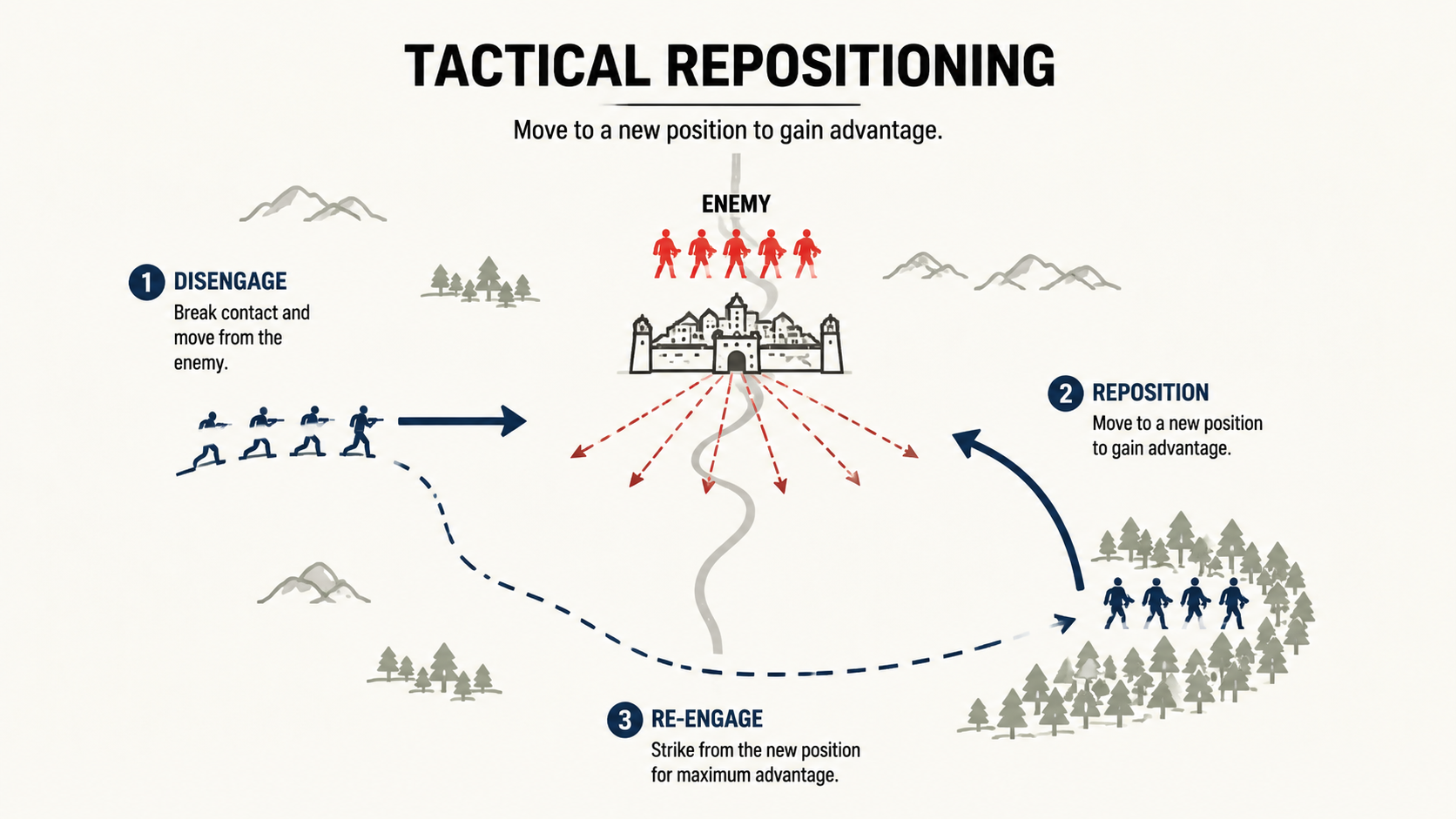
It’s interesting how Jesus responds to the heat He’s getting from the religious leaders in this season of His ministry. This is what we used to call in the Army a “tactical repositioning” not a “retreat.” In other words, “Run, run away. Live to fight another day.” It’s not an act of cowardice. No one could ever rightfully call Jesus a coward. It’s an act of stewardship. Jesus knows when to duck and weave and when to take a punch. There would come a day when He literally let’s them kill Him. But not this day. There was still work to do.
Notice how Jesus was in fact modeling for the disciples what He commanded them to do when things got a little too dicey on their mission.
“But whenever they persecute you in one city, flee to the next…” (Matthew 10:23)
Discretion is the better part of valor. There is a time to stand your ground and a time to move on.
So how did Jesus know when was the right time for a “tactical repositioning” and a time to go to the cross. Answer: Abiding deeply in the Father (John 5:39). And Jesus instructs us to abide in Him the way He abided in the Father. This is when we will know which to choose as we are living life and making disciples.
My Story
As an Army Chaplain, I had to learn early on which hills were truly worth dying on.
Sure, we encountered situations that felt sketchy, and a few that were just flat-out wrong. But I didn’t bat an eye when instructed to provide a Quran to a Muslim soldier or to ensure a Wiccan soldier wasn’t persecuted for their faith.
The Army was crystal clear on the difference between providing and performing. My job was to provide access to religious support for all soldiers. However, I was not required to perform a service that violated my personal convictions or my endorsing body’s theological standards.
Under our Constitution, every person has the right to practice their faith, provided it doesn’t infringe on the rights of others. As chaplains, we were the guardians of those rights.
If you think through the day-to-day scenarios, you can see where this gets a little tricky. There is a massive amount of gray area—or maybe not so massive, depending on your convictions—that a chaplain has to navigate.
One area I wrestled with was the expectation of “non-sectarian prayers.”
By definition, a non-sectarian prayer is kept general, intended to be inclusive of people from various faiths or no faith at all. My problem was simple: I don’t have a generic God.
The Triune God of the Christian faith specifically instructs us to invoke the name of the Son, the Lord Jesus Christ. I couldn’t bring myself to pray to a “vanilla god” or a “government god.” I could only pray to the God of all creation—the One who truly answers.
For years, I went about my duties without this being an issue, consistently praying in Jesus’ name. But eventually, it caught up with me. I was officially asked to resign my commission as an Army officer and chaplain.
This was the hill I was willing to die on.
Ironically, the situation was ultimately resolved when a higher-ranking chaplain stepped in and plainly pronounced, “Chaplain Wood has Constitutional rights, too.”
Ultimately, the instructions of Jesus helped me pick my battles wisely.
As we are discipling others for Him, it is only a matter of time before they face this kind of hostility. When that day comes, we will need to be ready to point them right back to His example.
Our Action Plan
Now it’s time for application. Here’s some questions and ideas.
- Do you know how to discern when and when not to “fall on your sword?”
- Are you training the folks you’re mentoring how to handle push back and persecution?
- Read and study Daniel chapter 1 and learn how Daniel navigated some tricky situations.
It’s always good to prepare for the storm before it comes. And they will come. Let’s take a page out of Jesus’ playbook and be wise stewards of the life and circumstances God has given us.
| Gospel Sync | Kingdom Kernels | On the Road Podcast | Website |


