
Index for all posts in the Gospel Sync Series
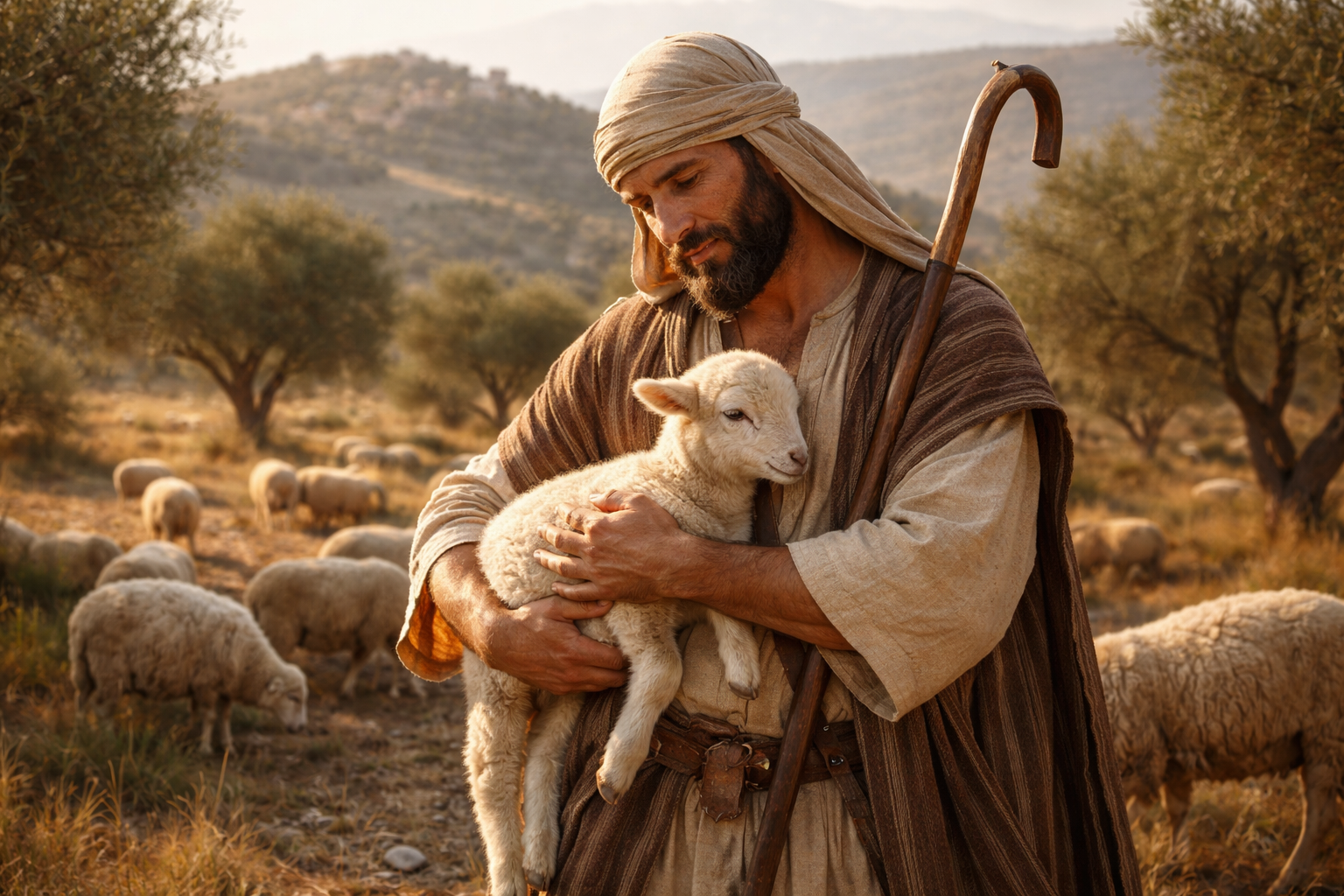
Welcome Back! Today, we’ll be looking at the Gospel of John to see what Jesus says about being the Good Shepherd.
So let’s dive in.
(Click here to get a copy of the Gospel Sync document)
John 10:11–16
I am the good shepherd. The good shepherd lays down His life for the sheep. The hired hand is not the shepherd, and the sheep are not his own. When he sees the wolf coming, he abandons the sheep and runs away. Then the wolf pounces on them and scatters the flock. The man runs away because he is a hired servant and is unconcerned for the sheep. I am the good shepherd. I know My sheep and My sheep know Me, just as the Father knows Me and I know the Father. And I lay down My life for the sheep. I have other sheep that are not of this fold. I must bring them in as well, and they will listen to My voice. Then there will be one flock and one shepherd.
My Thoughts
As we continue to explore Jesus’ metaphors about Himself we come to His moniker of the Shepherd. But not just any shepherd, the Good Shepherd. What makes Him so good? Four distinct characteristics. First, His sheep know His voice. In verses 3-4 of chapter 10, He says,
“The sheep hear his voice, and he calls his own sheep by name and leads them out. When he puts forth all his own, he goes ahead of them, and the sheep follow him because they know his voice. A stranger they simply will not follow, but will flee from him, because they do not know the voice of strangers.”
A true disciple of Christ hears and knows the voice of the Savior. They follow Him. They flee from other voices.
Secondly, He lays His life down for His sheep. The hired hand will run at the first sign of danger because the sheep don’t belong to them. Not Jesus, He proved His sacrificial love by the way He lived and by the way died.
Third, He knows the sheep. He knows them as well as the Father knows Him and He knows the Father. How well do they know each other? Completely! How does it feel to be known and understood to the nth degree?
And lastly, He gathers the whole flock. He says,
“I have other sheep that are not of this fold. I must bring them in as well”
This is what He came to do, “to seek and to save the lost” (Luke 19:10). And it’s all the lost people, not just the Jews but Gentiles alike. And not just in one particular place but the entire globe (Acts 1:8).
When Jesus says He’s the Good Shepherd, He is not exaggerating. He has an accurate assessment of His identity and purpose.
What does this mean for us as disciple makers? Well, simply put, we are not THE Good Shepherd, He is. We hate to admit it but we’d probably cut and run when the flock is assaulted. So it’s essential that we keep pointing people to Jesus as THEIR Good Shepherd and help them follow His lead and look to Him for ultimate protection.
My Story
When you ask me what my spiritual gifts are, shepherd comes up as one of the top. I have a compassion for people and want to see them taken care of. I like to pray for people and I try to think the best of them and paint them in a good light. But there is a weakness that comes with the gift of shepherding and that is letting your shepherding get in the way of The Good Shepherd. You can start to think that you are the answer to everyone’s problems and over estimate your abilities to be the solution.
This has some significant consequences. The first error in thinking this way is that you begin to lead the sheep astray. People start making you their “Holy Spirit” and depending on you to answer all the questions and fix all their boo boos. This is a huge mistake for a disciple maker. So I’ve trained myself to ask the questions, “What did Jesus say? Or “What do you think Jesus wants you to do?” This keeps me in the right place of authority, an under-shepherd.
Another thing that I have learned is that you can’t shepherd people adequately by just preaching at them. You have to roll up your sleeves and get down into the messes of the flock’s lives. Making disciples takes a “hands on” approach. You can’t very well take care of the sheep if you have no clue what’s going on in their lives (Proverbs 27:23). Being with them and asking a lot of questions helps you be a better shepherd.
Lastly, I’ve learned that I can’t shepherd everyone and solve every problem. I have capacity issues. But you know what? So did Jesus! He was confined to time, space, and energy just like us and He had to rest, steward relationships, and even say “no” when it was appropriate. Not even the Messiah had the ”messiah complex.” Remember, burn out is not a badge of honor. It’s a character flaw.
So disciple makers, shepherd wisely. Know your limitations. Know your lane. Point them to THE Good Shepherd.
Our Action Plan
Now it’s time for application. Here’s some questions and ideas;
- Are we becoming a Jr. holy spirit to those we are discipling?
- What are some indicators that we are interfering with what the Good Shepherd is doing?
- Ask those you are discipling “What does Jesus want you to do?”
Are we pointing people to Jesus as THE Good Shepherd? Or are we getting in the way of an intimate vibrant relationship He wants to have with His own sheep. Let’s keep reminding them and ourselves that there is only one Good Shepherd.
Index for all posts in the Gospel Sync Series
Organic Writing – No Artificial Intelligence or Sweeteners Added
Una puerta, un pastor y un cordero (Parte 2) – #147
¡Bienvenidos de nuevo! Hoy analizaremos el Evangelio de Juan para ver lo que Jesús dice sobre ser el Buen Pastor.
Así que, ¡comencemos!
Juan 10:11-16
Yo soy el buen pastor. El buen pastor da su vida por las ovejas. El asalariado no es el pastor, ni las ovejas son suyas. Cuando ve venir al lobo, abandona las ovejas y huye. Entonces el lobo las ataca y dispersa el rebaño. El hombre huye porque es un asalariado y no le importan las ovejas. Yo soy el buen pastor. Conozco a mis ovejas y mis ovejas me conocen, así como el Padre me conoce y yo conozco al Padre. Y doy mi vida por las ovejas. Tengo otras ovejas que no son de este redil; también a ellas debo traerlas, y oirán mi voz. Entonces habrá un solo rebaño y un solo pastor.
Mis Pensamientos
Mientras continuamos explorando las metáforas que Jesús usa para describirse a sí mismo, llegamos a su título de Pastor. Pero no cualquier pastor, sino el Buen Pastor. ¿Qué lo hace tan bueno? Cuatro características distintivas. Primero, sus ovejas conocen su voz. En los versículos 3 y 4 del capítulo 10, dice:
“Las ovejas oyen su voz; él llama a sus ovejas por su nombre y las saca. Cuando ha sacado a todas las suyas, va delante de ellas, y las ovejas lo siguen porque conocen su voz. A un extraño no lo seguirán, sino que huirán de él, porque no conocen la voz de los extraños.”
Un verdadero discípulo de Cristo oye y conoce la voz del Salvador. Lo siguen. Huyen de otras voces.
En segundo lugar, da su vida por sus ovejas. El asalariado huye al primer signo de peligro porque las ovejas no le pertenecen. No así Jesús; demostró su amor sacrificial con su vida y con su muerte.
En tercer lugar, conoce a las ovejas. Las conoce tan bien como el Padre lo conoce a Él, y Él conoce al Padre. ¿Qué tan bien se conocen? ¡Completamente! ¿Cómo se siente ser conocido y comprendido a la perfección?
Y por último, reúne a todo el rebaño. Dice:
“También tengo otras ovejas que no son de este redil; a esas también debo traerlas.”
Esto es lo que vino a hacer: “buscar y salvar a los perdidos” (Lucas 19:10). Y se refiere a todos los perdidos, no solo a los judíos, sino también a los gentiles. Y no solo en un lugar en particular, sino en todo el mundo (Hechos 1:8).
Cuando Jesús dice que es el Buen Pastor, no exagera. Tiene una evaluación precisa de su identidad y propósito.
¿Qué significa esto para nosotros como hacedores de discípulos? Bueno, en pocas palabras, nosotros no somos EL Buen Pastor, Él lo es. Nos cuesta admitirlo, pero probablemente huiríamos cuando el rebaño sea atacado. Por lo tanto, es esencial que sigamos señalando a Jesús como SU Buen Pastor y que les ayudemos a seguir su ejemplo y a buscar en Él la protección definitiva.
Mi Historia
Cuando me preguntan cuáles son mis dones espirituales, el de pastor es uno de los primeros que me vienen a la mente. Siento compasión por las personas y deseo verlas bien atendidas. Me gusta orar por ellas e intento pensar lo mejor de cada una y verlas con buenos ojos. Pero este don de pastoreo conlleva una debilidad: dejar que nuestro papel de pastor se interponga entre las personas y el Buen Pastor. Podemos empezar a creer que somos la solución a los problemas de todos y sobreestimar nuestra capacidad para resolverlos.
Esto tiene consecuencias importantes. El primer error de este modo de pensar es que empezamos a desviar a las ovejas del camino correcto. Las personas comienzan a vernos como su “Espíritu Santo” y a depender de nosotros para que respondamos a todas sus preguntas y solucionemos todos sus problemas. Este es un grave error para quien se dedica a formar discípulos. Por eso, me he acostumbrado a preguntar: “¿Qué dijo Jesús?” o “¿Qué crees que Jesús quiere que hagas?”. Esto me mantiene en el lugar de autoridad que me corresponde: el de un subpastor.
Otra cosa que he aprendido es que no se puede pastorear a las personas adecuadamente solo predicándoles. Hay que arremangarse y adentrarse en las dificultades de la vida del rebaño. Formar discípulos requiere un enfoque práctico. No se puede cuidar bien de las ovejas si no se tiene ni idea de lo que ocurre en sus vidas (Proverbios 27:23). Estar con ellas y hacerles muchas preguntas ayuda a ser un mejor pastor.
Por último, he aprendido que no puedo pastorear a todos ni resolver todos los problemas. Tengo mis limitaciones. ¿Pero saben qué? ¡Jesús también las tenía! Él estaba limitado por el tiempo, el espacio y la energía, al igual que nosotros, y tenía que descansar, cultivar sus relaciones e incluso decir “no” cuando era necesario. Ni siquiera el Mesías tenía el “complejo de mesías”. Recuerden, el agotamiento no es una medalla de honor, sino una debilidad de carácter.
Así que, formadores de discípulos, pastoreen con sabiduría. Conozcan sus limitaciones. Manténganse en su lugar. Señalen a las personas hacia EL Buen Pastor.
Nuestro Plan de Acción
Ahora es el momento de la aplicación práctica. Aquí tienes algunas preguntas e ideas:
¿Nos estamos convirtiendo en una especie de “mini Espíritu Santo” para aquellos a quienes discipulamos?
¿Cuáles son algunos indicadores de que estamos interfiriendo con la obra del Buen Pastor?
Pregúntales a quienes discipulas: “¿Qué quiere Jesús que hagas?”.
¿Estamos guiando a las personas hacia Jesús como EL Buen Pastor? ¿O nos estamos interponiendo en la relación íntima y vibrante que Él desea tener con sus ovejas? Recordemos, tanto a ellos como a nosotros mismos, que solo hay un Buen Pastor.
Escritura orgánica: sin inteligencia artificial ni aditivos.
Si ve un problema importante en la traducción, envíeme una corrección por correo electrónico a charleswood1@gmail.com






 ToBeLikeJesus