
The WIGTake for Spiritual Generations
By Pheaney (Peter) Lindell and Chuck Wood
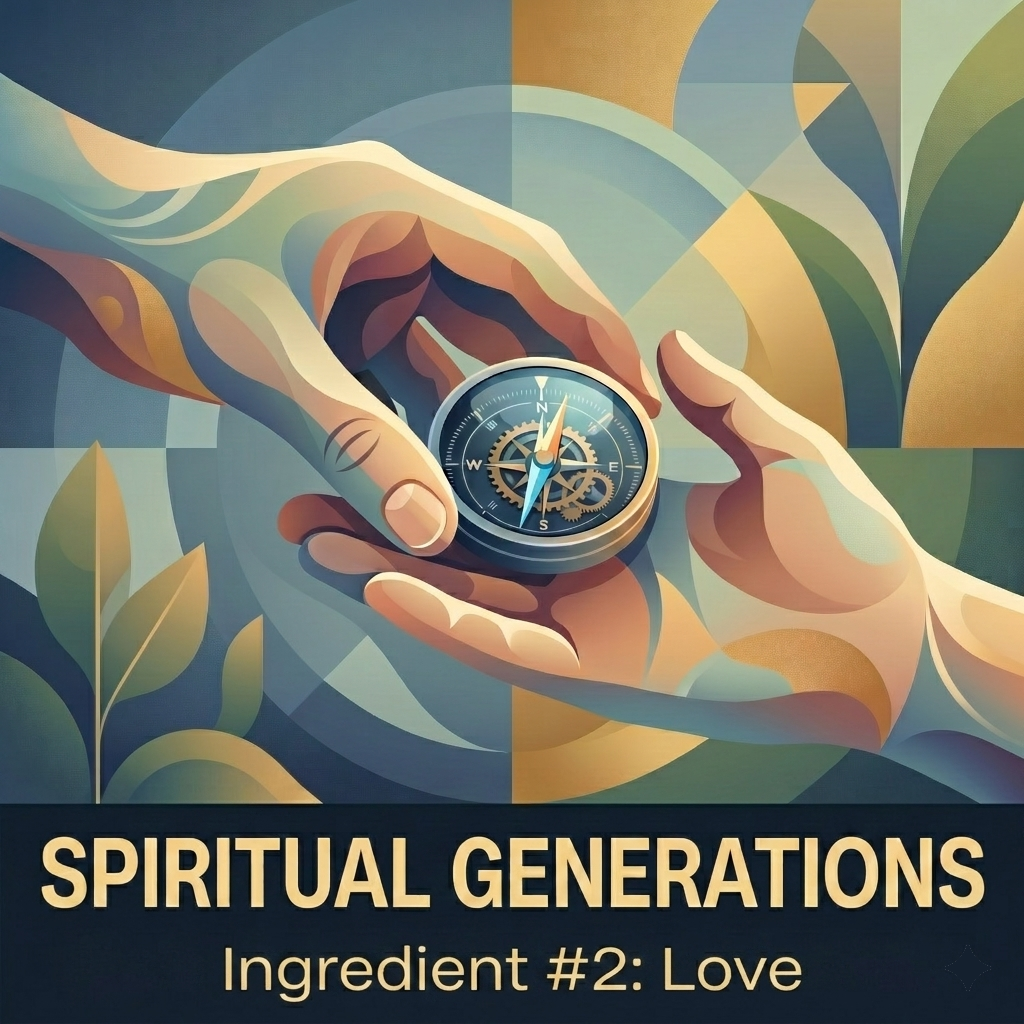
Last week, we looked at the foundation: being the right kind of person. But character in a vacuum is just morality. To move from a “good person” to a generational leader, that character must be set on fire by the engine of love.
Originally we placed this ingredient as #8. But after consideration, we were compelled to move this ingredient to the front. Ultimately, the engine that drives spiritual reproduction is love. Without it, vision casting becomes manipulation and “time with” becomes a burden. Jesus made love the non-negotiable hallmark of His ministry, stating clearly: “Just as the Father has loved Me, I have also loved you; abide in My love” (John 15:9).
The Jesus Model
Notice the flow of this love: it originates with the Father, flows to the Son, and then extends to the disciples. Jesus did not manufacture love for His followers out of human willpower; He loved them out of the overflow of His relationship with the Father. This is crucial because the disciples were not always lovable. They were ambitious, dense, and prone to failure. Yet, Jesus “having loved His own who were in the world, He loved them to the end” (John 13:1). His love was not a response to their performance; it was a reflection of His source.
This command to “abide” means that love is the atmosphere in which discipleship happens. It is not just a feeling; it is a commitment to the highest good of the other person. Jesus’ love was tough enough to rebuke Peter but tender enough to wash Judas’ feet. It was a love that sacrificed everything for their redemption.
The Scriptural Model
When Paul wrote to the Philippians, he didn’t sound like a distant CEO running a non-profit; he sounded like a father missing his kids. He confessed, “For it is only right for me to feel this way about you all, because I have you in my heart… For God is my witness, how I long for you all with the affection of Christ Jesus” (Philippians 1:7-8).
The word for “affection” (splanchna) refers to the gut, the seat of intense emotion. Paul didn’t just tolerate these people; he delighted in them. His ministry wasn’t fueled by duty but by a deep-seated emotional attachment that mirrored the heart of Jesus. He shows us that you cannot separate the mission from the relationship. You cannot efficiently mass-produce disciples; you have to love them individually.
Stories
When Cecil moved my brother and me into his basement, he didn’t just give us a roof; he gave us a home. We were more than mentees; we became family. Every night, we sat at the dinner table—a true luxury for two single guys, especially for an Army sergeant like me used to eating at the mess hall. They cared for us as if we were their own sons.
But my most vivid memory isn’t a Sunday School Lesson in a classroom; it’s a joystick in a convenience store.
It became a daily ritual. I would get home from work, and Cecil and I would walk the four blocks to the store. On that pavement, we talked about everything: life, the struggles of manhood, what we were reading in Scripture, and how to help other men follow Jesus.
The store had three arcade cabinets: Centipede, Ms. Pac-Man, and OUR battlefield, Pac-Man. The stakes were low but serious: whoever lost the last game paid. We’d spend a buck-fifty and twenty minutes chasing ghosts before heading home for dinner.
Looking back forty-five years later, the specific words of those conversations have faded. I can’t quote the advice he gave me between levels. But I remember the man, and I remember that Cecil loved me with a depth I had never experienced before.
He didn’t just teach me a curriculum; he loved me. That was the key ingredient I’ve carried ever since. As 1 John 4:19 reminds us, “We love, because He first loved us.” God loved Cecil. Cecil loved me. And because of that, I learned to love God and the men I disciple. It wasn’t the game that changed my life; it was the player standing next to me.
Another Story from a Friend
A friend and I have been meeting for a couple of years for mutual discipleship. He challenges me with his bold witness; I challenge him to disciple people. But at this particular meeting, he was dealing with the grief of his wife’s recent miscarriage.
He said: “Honestly, I’m tired of talking about it, because people just don’t get it.” I responded: “We can talk about it if it’s helpful, or we can talk about whatever else you want… I just want to help you, brother.”
He paused and said, “You’re different. I know you actually care for me. Most other people in my life don’t actually know me well enough to empathize, but I know you do.”
That’s the type of love we’re aiming for.
Suggestions
- Inconvenient Service: Look for a practical need they have (a ride to the airport at 4 AM, help moving apartments, a hospital visit) and meet it, even if it messes up your schedule.
- Verbalize It: It may feel awkward, but tell them, “I love you, and I am for you.” Many young adults… and most adult men in particular…today have never heard an older mentor express genuine, non-transactional affection.
- Active Listening: When they are talking, put your phone away. Give them your eyes and your undivided attention. Listening is one of the purest forms of love.
Application for Disciple Makers
For us, the WIGTake is recognizing that you cannot effectively disciple someone you do not genuinely love. People can tell when they are projects to be managed rather than people to be cherished. Paul carried his spiritual children in his heart, not just in his calendar. If you want to impact the next generation, you must ask God to give you His heart for them. We must love those we are discipling not for what they can do for us or our organization, but for who they are in Christ. When people feel safe in the security of your love—a love that is both a decision to abide and an emotion to cherish—they are free to grow, ask hard questions, and eventually, pass that same love on to others.
Love is the atmosphere, but love without focus can lead to exhaustion. Next week, we’ll look at why the most loving thing Jesus did for the world was to be highly selective with His time: Ingredient #3: Finding the Right People.
The Top 12 Ingredients –
- Being the Right Kind of Person
- Love
- Finding the Right Kind of Person
- Authoritative Vision Casting
- Prayer and the Hand of God
- 2nd Generation Conviction
- Time With
- Spiritual Parenting
- Serving
- Reminding (Constantly)
- Trusting the Promises of God
- Perseverance


