Welcome Back! Today, we’ll be looking at the Gospels of Matthew, Mark, and Luke to see where to give credit when one of Jesus’ men comes up with a good answer.
Then Jesus and His disciples went on to the villages around Caesarea Philippi. One day, on the way, Jesus was praying in private and He questioned His disciples: “Who do people say I, the Son of Man, am?” They replied, “Some say John the Baptist; others say Elijah; and still others, Jeremiah or one of the prophets of old has arisen.” “But what about you?” Jesus asked. “Who do you say I am?” Simon Peter answered, “You are the Christ, the Son of the living God.” Jesus replied, “Blessed are you, Simon son of Jonah! For this was not revealed to you by flesh and blood, but by My Father in heaven. And I tell you that you are Peter, and on this rock I will build My church, and the gates of Hades will not prevail against it. I will give you the keys of the kingdom of heaven. Whatever you bind on earth will be bound in heaven, and whatever you loose on earth will be loosed in heaven.” Then He strictly admonished the disciples not to tell anyone that He was the Christ.
My Thoughts
Once again the “Master of the Question” gets to the core of the disciple’s faith. They had been with Jesus for some time now and Jesus wanted to measure His impact. He starts with those outside the intimate circle; “Who do people say I, the Son of Man, am?” The masses were just guessing. They really had no clue who Jesus was. Then He asks His own. (Surely His disciples would have a fighting chance to come up with the correct answer.) And once again, it’s Peter; “You are the Christ, the Son of the living God.”
It would be very natural for us to say; “Wow Peter! You’re on it like a bonnet!” Surely we’d like to take credit if we made such a simple and yet profound statement. But that’s where we would be so so wrong. (Peter will prove in just a few minutes that he’s not all that we and he thinks he is. More on that later.)
No, Peter has nothing to be proud of. He was given the right answer “by the Father in heaven.” And this underscores two essential qualities we are looking for in our disciple-making. First, humility and second, that the people we are mentoring are hearing from God Himself.
My Story
It’s happened to me a hundred times. I’ll be talking, preaching, or writing and I’ll walk away from the experience saying; “WOW, There is no way I came up with that on my own!” Yes, I feel an incredible sense of joy to know that I’m not that smart or wise or intuitive or…whatever. It was a gift from heaven and just as Jesus pointed that out to Peter, I think we need to remind ourselves and those we are discipling that the Holy Spirit is actually speaking through us.
But as I’m writing this I’m wondering; “As I have gotten older and more experienced, am I starting to think I’m coming up with all this good stuff?” Or even worse, in my pride I might be telling God, “I got this Lord, don’t worry, I’m on the job.” I think that would be a huge mistake!
So let me give credit to where credit is due. If you have thought something I said was wise, or you’ve read something I wrote and it was transformative, let’s give all glory to God. Let’s acknowledge where the true wisdom comes from and be exhilarated as disciple-makers that He is actually using us to advance His kingdom. If you’ve thought just the opposite and thought I was way off, I’ll take full credit for that. But, would you let me know where I’m messing up…gently, please. 😀
Our Action Plan
Now it’s time for application. Here’s some ideas;
If you have experienced the Holy Spirit giving you things to say that you know you didn’t come up with, take time right now to thank God and acknowledge His gift.
Do some reflection. Did you take credit for something God had done? Make that right by confession and repentance.
Are those you’re discipling growing in humility and acknowledging God’s work in their lives?
At the end of the day, it’s all about giving credit where credit is due—God’s the one who gives us the right words and wisdom. Let’s stay humble, thank Him for working through us, and keep cheering each other on as we grow in faith together.
No soy tan inteligente – #111
¡Bienvenidos de nuevo! Hoy analizaremos los Evangelios de Mateo, Marcos y Lucas para ver a quién reconocer cuando uno de sus discípulos da una buena respuesta.
¡Comencemos!
Mateo 16:13-20, Marcos 8:27-30, Lucas 9:18-21
Luego, Jesús y sus discípulos se dirigieron a los pueblos de los alrededores de Cesarea de Filipo. Un día, en el camino, Jesús estaba orando en privado y preguntó a sus discípulos: «¿Quién dice la gente que soy yo, el Hijo del Hombre?». Ellos respondieron: «Unos dicen que Juan el Bautista; otros, que Elías; y otros, que Jeremías o uno de los antiguos profetas ha surgido». «¿Y ustedes, qué?», preguntó Jesús. «¿Quién dicen que soy yo?». Simón Pedro respondió: «Tú eres el Cristo, el Hijo de Dios vivo». Jesús respondió: «¡Bienaventurado eres, Simón, hijo de Jonás! Porque esto no te lo reveló carne ni sangre, sino mi Padre celestial. Y yo te digo que tú eres Pedro, y sobre esta roca edificaré mi iglesia, y las puertas del Hades no prevalecerán contra ella. Te daré las llaves del reino de los cielos. Todo lo que ates en la tierra quedará atado en los cielos, y todo lo que desates en la tierra quedará desatado en los cielos». Luego amonestó severamente a los discípulos para que no dijeran a nadie que él era el Cristo.
Mis Pensamientos
Una vez más, el “Maestro de la Pregunta” llega al corazón de la fe de los discípulos. Llevaban tiempo con Jesús, y Jesús quería medir su impacto. Comienza con quienes estaban fuera de su círculo íntimo: “¿Quién dice la gente que soy yo, el Hijo del Hombre?”. La gente solo adivinaba. No tenían ni idea de quién era Jesús. Entonces les pregunta a los suyos. Seguramente sus discípulos tendrían una oportunidad de dar la respuesta correcta. Y una vez más, es Pedro: “Tú eres el Cristo, el Hijo de Dios vivo”.
Sería muy natural que dijéramos: “¡Guau, Pedro! ¡Estás en lo más alto!”. Seguramente nos gustaría atribuirnos el mérito si hiciéramos una afirmación tan simple y a la vez tan profunda. Pero ahí es donde estaríamos totalmente equivocados. (Pedro demostrará en unos minutos que no es todo lo que nosotros y él cree ser. Hablaremos de eso más adelante).
No, Pedro no tiene nada de qué enorgullecerse. Recibió la respuesta correcta “del Padre celestial”. Y esto subraya dos cualidades esenciales que buscamos en nuestro discipulado: primero, la humildad; y segundo, que las personas a quienes mentoreamos escuchen a Dios mismo.
Mi Historia
Me ha pasado cientos de veces. Estoy hablando, predicando o escribiendo y al final de la experiencia me voy diciendo: “¡Guau! ¡Es imposible que se me haya ocurrido eso solo!”. Sí, siento una alegría increíble al saber que no soy tan inteligente, ni sabio, ni intuitivo, ni nada. Fue un regalo del cielo y, tal como Jesús se lo señaló a Pedro, creo que debemos recordarnos a nosotros mismos y a quienes estamos discipulando que el Espíritu Santo realmente está hablando a través de nosotros.
Pero mientras escribo esto, me pregunto: “Con la edad y la experiencia que he adquirido, ¿estoy empezando a pensar que se me están ocurriendo todas estas cosas buenas?”. O peor aún, en mi orgullo, podría estarle diciendo a Dios: “Ya lo tengo, Señor, no te preocupes, estoy trabajando”. ¡Creo que sería un gran error!
Así que, permítanme reconocer quién lo merece. Si has pensado que algo que dije fue sabio, o has leído algo que escribí y te resultó transformador, demos toda la gloria a Dios. Reconozcamos de dónde proviene la verdadera sabiduría y, como hacedores de discípulos, sintamos la alegría de que Él realmente nos esté usando para el avance de su reino. Si has pensado justo lo contrario y has pensado que estaba muy equivocado, me atribuyo todo el mérito. Pero, ¿podrías decirme dónde me estoy equivocando? Con delicadeza, por favor. 😀
Nuestro Plan de Acción
Ahora es momento de aplicar. Aquí tienes algunas ideas:
Si has sentido que el Espíritu Santo te ha dado cosas que decir que sabes que no se te ocurrieron, tómate un tiempo ahora mismo para agradecer a Dios y reconocer su don.
Reflexiona. ¿Te atribuyeste el mérito de algo que Dios hizo? Repártelo con la confesión y el arrepentimiento.
¿Están tus discípulos creciendo en humildad y reconociendo la obra de Dios en sus vidas?
Al final, se trata de reconocer a quien lo merece: Dios es quien nos da las palabras y la sabiduría adecuadas. Mantengámonos humildes, agradezcamos su obra a través de nosotros y animémonos mutuamente mientras crecemos juntos en la fe.
Si ve un problema importante en la traducción, envíeme una corrección por correo electrónico a charleswood1@gmail.com
“And let us not grow weary of doing good, for in due season we will reap, if we do not give up.”
Galatians 6:9
Voyage to Rephidim-5
The Stellar Scout F2-90 sliced through the void, its fusion drives pulsing with a rhythmic hum that reverberated through the ship’s skeleton. Lieutenant Wade Kovacs stood behind the navigator’s seat, his cybernetic hand resting lightly on the edge of the bulkhead. The faint whir of servos accompanied his every movement—a reminder of both his sacrifice and the technology that now defined him. Across from him, Jay Ringler, the ship’s pilot, adjusted their trajectory with deft precision, his fingers dancing across the controls.
“Course correction complete,” Jay announced, his voice calm but clipped. “We’re locked on for Rephidim-5. ETA: 72 hours.”
Wade nodded, his gaze fixed on the holographic display in front of him. The screen showed a three-dimensional map of their route, with Rephidim-5 marked as a faint red dot on the edge of known space. The Scout was a reconnaissance vessel, not a warship, and its mission was simple: recon and surveillance. But Wade couldn’t shake the feeling that something was waiting for them out there.
“Keep an eye on those long-range sensors,” Wade said, his voice low but firm. “I don’t want any surprises.”
Jay smirked but didn’t look up from his station. “Relax, Ranger. If there’s anything out there bigger than a stray asteroid, I’ll spot it before it spots us.”
Behind them, Ensign Kristen Kovacs—Wade’s wife and the ship’s medic—entered the bridge carrying two steaming mugs of synth-coffee. She handed one to Wade and placed the other beside Jay before leaning against the opposite bulkhead from Wade.
“You two look like you’ve been glued to those stations for hours,” she said with a hint of amusement. “Take a break before you burn out.”
Wade took a sip of the bitter liquid and gave her a grateful nod. “Thanks, Kris. But I’d rather stay sharp than get caught off guard.”
Kristen raised an eyebrow but didn’t argue. She knew Wade well enough to recognize when he was in “mission mode.” It was one of the things she admired about him—and one of the things that sometimes drove her crazy.
Life Aboard the Stellar Scout
The first weeks aboard the Scout had been an exercise in adaptation for all four crew members—especially as two newly married couples. As individuals and pairs, things got a little awkward; with no time to adjust to married life before the mission, they had to figure it out on the fly amidst the ship’s demands. The vessel itself didn’t help: small and cramped, its corridors were barely wide enough for two people to pass without brushing shoulders. Every inch of space was utilized for equipment or storage, leaving little room for personal comforts—or the privacy newlyweds might crave.
Wade had struggled most with the transition. His training as a Marine and Ranger had prepared him for vast open spaces, but the ship’s cramped quarters felt suffocating. His cybernetic hand didn’t help matters; it seemed to snag on every loose cable or protruding panel.
One particularly frustrating incident occurred during their second week aboard. Wade had been stowing gear in their shared quarters when his prosthetic caught on Kristen’s medkit, sending its contents spilling across the floor.
“Blast it!” he muttered under his breath as he knelt to pick up scattered syringes and diagnostic tools.
Kristen crouched beside him, her expression calm but tinged with exasperation. “You know,” she said dryly, “it wouldn’t kill you to slow down once in a while.”
Wade sighed and handed her a roll of synth-skin patches. “Sorry. Still getting used to this… thing.” He flexed his mechanical fingers as if to emphasize his point.
Kristen placed a hand on his shoulder and gave him a reassuring squeeze. “It’s not just about the hand, Wade. You’re not out there anymore—you’re here, with us. Try to remember that.”
Her counseling skills and emotional intelligence made all the difference in smoothing over these tensions—not just for Wade, but for Jay and Mayumi too, as they navigated their own clumsy moments of married life. Still, even Kristen wore down occasionally, her patience fraying into a bad day every now and then, though she’d never let it show for long.
Drills and Discipline
The crew quickly settled into a routine designed to keep them sharp and prepared for any eventuality. Four-hour shifts at their respective stations were interspersed with maintenance drills and simulated combat scenarios. Early on, they had agreed that Wade would be in command, though with the caveat that there was room to discuss options and even disagree—but ultimately, his orders were to be obeyed.
In one such drill, Wade led Jay and Mayumi Ringler through a mock boarding scenario in the cargo bay. The space was dimly lit, its walls lined with crates and equipment that served as makeshift cover.
“Mayumi! Secure comms and relay our position to command!” Wade barked as he crouched behind a crate.
“Aye, sir!” Mayumi replied, her fingers flying over her portable console.
“Jay! Cover our flank!” Wade continued.
Jay rolled his eyes but complied, taking up position behind another crate with his training rifle at the ready.
“You know this is just practice, right? No one’s actually trying to kill us.”
“That’s what they always say—until someone is,” Wade shot back without missing a beat.
The exchange drew a quiet huff from Mayumi, who glanced at Jay as if to say, He’s not wrong, but still…
She didn’t voice it, though—she knew the deal: Wade’s word was final, even if they could debate it later. A clear leader kept them focused in a crisis, yet the space for discussion ensured their skills and morale stayed sharp—a balance that could mean survival out here.
Kristen watched from the sidelines, arms crossed and lips quirked in a faint smile. She admired her husband’s dedication but couldn’t help wondering if he sometimes took things too seriously. Still, she appreciated the balance he allowed—space for discussion, even if obedience was non-negotiable.
Faith Under Pressure
Amid their grueling schedule, the crew—all committed disciples of Jesus—had established a regular rhythm of gathering for reflection, a time they’d come to look forward to, taking turns facilitating discussions through Galatians. In the dimly lit common room, they’d sit around the table with ration packs, sharing the role of reading scripture and opening up about the highs and lows they were experiencing. They knew unresolved conflict could fracture the team, risking mission failure—not to mention falling short of the Great Commands to love God and each other.
One evening, it was Mayumi’s turn, the newest believer among them, still finding her footing in the faith. She read steadily from Galatians: “And let us not grow weary of doing good, for in due season we will reap if we do not give up.” Her voice held a quiet resolve, and she paused before adding, “I’m still wrapping my head around this ‘due season’ part. Sometimes it feels like we’re sowing into a void out here.”
Wade looked up from his hands—one flesh, one metal—and nodded, his tone raw. “I get that. Following Him’s never been the hard part for me—it’s trusting the timing when all I see is metal walls and no harvest. Some days, I wonder if I’m still the Ranger fighting my own battles instead of letting Him lead.”
Jay leaned back, fidgeting with a piece of freeze-dried fruit, his usual bravado softened. “Honestly? I’ve been wrestling with self-doubt again. I’ll grumble about no one back home caring, but deep down, I want them to notice us—to notice me. I’m wondering if I can hack it. I don’t want to let the team down. I’ve got to trust God to shore up my weaknesses.”
Kristen’s faint smile carried a warmth tempered by weariness. “You’re not alone there, Jay. My high’s been clinging to that promise of reaping—it’s what keeps me steady. But my low? I catch myself doubting if I’m loving you all well enough when I’m worn thin. Even disciples stumble.”
Mayumi tilted her head, her eyes searching theirs. “That’s what keeps tripping me up—how do you keep going when you stumble? I’m new at this, and half the time I feel like I’m faking it, like I don’t belong with you all yet.”
Wade leaned forward, his voice firm but kind. “You belong because He says you do, Mayumi. Faking it’s just part of the fight—we all feel that sometimes. It’s why we’re here, calling it out.”
Jay grinned, a flicker of his old spark returning. “Yeah, and if I can admit I’m a doubting Thomas, you can admit you’re still learning. We’re in this together—disciples under construction.”
Kristen reached across, resting a hand near Mayumi’s. “It’s not about never stumbling—it’s about not giving up. That’s what Paul’s getting at, and it’s what Jesus is shaping in us, void or not.”
These regular sessions balanced tactical precision with introspection, a steady anchor they relied on as much as their drills kept them sharp. Unspoken conflicts aired out here couldn’t fester into dysfunction—or worse.
Beyond Resupply: A Deeper Need
The Stellar Scout emerged from hyperspace with a faint ripple, its hull shimmering briefly as it transitioned back into realspace. Rephidim-5 hung before them, a desolate red sphere marred by jagged canyons and iron-rich dust storms that swirled across its surface. Wade sat in the navigator’s seat, his eyes scanned the tactical display.
“Rephidim-5 Control,” Jay’s voice crackled over the comms, calm and professional. “This is Stellar Scout, Confederation Navy designation RS-1127. Requesting clearance for landing in Hangar Alpha.”
The reply was immediate but tinged with static. “Acknowledged, Stellar Scout. Hangar Alpha is prepared to receive you. Welcome to Rephidim-5.”
Wade glanced at Jay, who was skillfully guiding the ship into the hanger. “Bringing her in slow and steady,” he said, his tone confident and calm.
The Stellar Scout descended through the thin, toxic atmosphere, its hull glowing faintly from reentry friction. The hangar doors below slid open with a mechanical groan, revealing an environmentally controlled space lit by harsh industrial lights. The ship settled onto the deck with a soft thud, its landing struts giving slightly as they rested on the reinforced floor.
“Touchdown complete,” Jay reported briskly. “Atmospheric seals engaged in the hangar.”
“Good work,” Wade said as he rose from his seat. “Let’s get this resupply done. We’ve got a schedule to keep.”
The airlock hissed open, and the crew emerged, clad in full Marine armor.
The resupply operation was a well-rehearsed ballet of logistics. Water tanks were refilled, ration crates were uploaded, and fuel cells were replaced. The settlers of Rephidim-5, a hardy but weary group of pioneers and misfits, assisted in the process, their faces gaunt and weathered. But beneath the surface of cooperation, Kristen sensed a simmering resentment. They moved with a sluggishness that spoke of suppressed frustration, their gazes lingering on the Scout with a mixture of envy and accusation.
Kristen noticed an older woman, her face etched with lines of hardship, watching them with a mixture of hope and apprehension. The woman approached her hesitantly, her voice raspy and cracking.
“Are you with the Navy?” she asked.
“Yes, ma’am,” Kristen replied. “We’re here to resupply.”
The woman nodded slowly, her eyes scanning the crates being loaded. “We’ve been waiting a long time for our own resupply. Supplies are low, morale is even lower.” She paused, her gaze searching Kristen’s. “Tell me, Ensign…do you think anyone back in the Confederation even remembers we’re out here?”
Kristen met her gaze steadily, her voice filled with conviction. “Yes, ma’am. We remember. And we won’t forget.”
The woman managed a wan smile, but it quickly faded. “Remembering isn’t enough, Ensign. We’re feeding your war effort while our children go hungry.” Her voice hardened, the earlier hope replaced by a weary anger. “Why should we sacrifice for a Confederation that barely acknowledges our existence?”
Kristen recognized the desperation in the woman’s words. “Ma’am, I understand your frustration. We’re not blind to the sacrifices you’re making. We’re here to help, and we want to ensure you get what you need.” Kristen paused, choosing her words carefully. “Perhaps we can discuss how to better allocate the resources we have. I’m confident we can find a solution that addresses your immediate needs while still fulfilling our mission.”
The woman’s eyes narrowed, suspicion clouding her features. “What do you know about our needs? You come and go in your fancy ship, while we’re stuck here scratching out a living on this dustball.”
Kristen took a step closer, her voice low and sincere. “I may not know everything, but I’m willing to listen. I think the way to solve our problems is by tackling them head on and really caring about people. And more than that, I have a deep faith that there is a God that cares about each and every person on this planet.”
The woman’s expression softened slightly, intrigued by Kristen’s words. “A God that cares? What makes you say that, Ensign?”
Kristen smiled gently. “Because He has shown me, personally, that He cares. He sent His Son, Jesus, to die for us, to offer us forgiveness and new life. He’s given me hope and strength in the face of challenges, and I believe He can do the same for you.”
Wade, having overheard the conversation, approached with Jay and Mayumi, sensing an opportunity to share their faith.
“It’s true,” Wade said, his voice resonating with conviction. “Before I came to faith, I was driven by duty and vengeance. But God has given me peace and purpose beyond anything I could have imagined. The same can be true for you.”
Mayumi stepped forward, her eyes shining with sincerity. “I used to feel lost and alone, searching for meaning in all the wrong places. But when I found Jesus, I found a love and acceptance that changed everything.”
Jay nodded in agreement. “I always thought I had to earn God’s love. But the truth is, He loved us even when we didn’t love Him. His love is a gift we can’t earn, only receive.”
The woman listened intently, her initial hostility giving way to a flicker of curiosity. “So, this God…what does He want from us?”
Kristen smiled. “He wants a relationship with us. He wants us to turn from our selfish ways and trust Him, to love Him, and to share His love with others. He wants to be our comfort and our strength, especially in times of hardship.”
The woman was silent for a moment, absorbing their words. “I don’t know,” she said finally, her voice tinged with uncertainty. “It sounds too good to be true.”
“I understand your hesitation,” Kristen replied. “But I encourage you to consider it. Read the Scriptures. Pray and ask God to reveal Himself to you. He’s waiting with open arms.”
The woman’s gaze flickered between the crew members, a glimmer of hope beginning to ignite in her eyes. “Maybe…maybe there’s something to this,” she whispered. “Maybe there is a God who cares.”
As the crew prepared to wrap up the resupply and return to their mission schedule, a diagnostic alert interrupted their plans. Mayumi, running a final systems check on the F-290 Scout, discovered microfractures in the gravitic coil—a critical cylindrical module laced with rare-earth superconductors that stabilized hyperspace transitions. The damage, likely caused by navigating through the corrosive dust in the atmosphere, made safe hyperspace travel impossible. With no replacement coil available on the remote planet, the team requisitioned one from the nearest supply depot, a week’s journey away. The delay, though frustrating, felt providential to the crew, offering a chance to deepen their connection with the settlers.
The team’s excitement surged at the opportunity to disciple the new believers during this unexpected stay. Kristen, Wade, Jay, and Mayumi saw the week as a divine opening to guide the settlers, whose raw faith and hunger for truth inspired them. They eagerly planned nightly Scripture studies and prayer meetings, sharing their own journeys to help the pioneers navigate their newfound faith in this harsh environment. Their enthusiasm peaked as they witnessed the settlers’ bold commitment, especially their willingness to be baptized with precious reclaimed water—a profound act of devotion. The crew felt a renewed sense of purpose, knowing they were planting a spiritual foundation that could sustain Rephidim-5 long after their departure, while also strengthening their own faith. As they prepared to depart, a small church had been planted, the first church of Rephidim-5.
Helping Both Ways
The next day as the crew performed routine maintenance on the Scout, a figure approached. He was a burly man, his face lined with years of hard labor, his eyes carrying a mixture of weariness and authority. He wore a stained mining jumpsuit and a battered helmet hung loosely from his hand. This was Elkiah , the mining boss of Rephidim-5.
“Lieutenant Kovacs?” Elkiah’s voice was gravelly, like the iron ore he oversaw being extracted.
Wade stepped forward, extending a gloved hand. “That’s right. You must be Elkiah .”
Elkiah gripped Wade’s hand firmly. “Aye. I appreciate you comin’ out here. It’s been too long.” He gestured toward a datapad he carried. “I’ve got a list of critical supplies we’re running low on. Things the requisition forms never seem to cover.”
Wade took the datapad and scanned the list. It contained items ranging from replacement drill bits and specialized lubricants to medical supplies not covered in the standard Confederation allotment. “I’ll see what I can do, sir. No promises, but I’ll make sure command knows what you need.”
As Wade spoke with Elkiah, Mayumi discreetly slipped away to a secluded corner of the hangar. She activated her comm device and, using a prearranged code, sent a message to General Redside. The message detailed the dire situation on Rephidim-5 and the specific needs of the mining colony. She ended with a coded request for additional aid, adding a request for Bibles.
One week later, a small transport ship arrived at Rephidim-5, its arrival unannounced. It carried a consignment of the requested supplies, marked as “priority cargo.” Among the crates of drill bits and lubricants was a special delivery: a crate filled with Bibles and Christian literature, courtesy of General Redside’s personal initiative. He included a memorandum that this was the first of several shipments.
The arrival of the supplies and Bibles was met with a joyous celebration among the settlers. The practical aid lifted their spirits, while the spiritual nourishment filled a deep void in their lives. The church that had begun in the woman’s home grew rapidly, drawing in new members each day, eager to learn more about the God who had remembered them.
During the commotion of unloading, Elkiah approached Wade, a grim expression on his face. “Lieutenant, there’s something you need to know.” He led Wade away from the bustling crowd, toward a quieter section of the hangar. “We’ve been shipping iron ore off-world for years, as per our contract with the Confederation. But lately, something’s been off.”
“Off how?” Wade asked, his senses on high alert.
“Some of the shipments aren’t headed back to Confederation space,” Elkiah explained. “They’re going deeper into the void. I’ve been tracking the manifests. There’s a CoreSys freighter, called The Transapora, that’s been diverting its cargo to unknown coordinates. I don’t know what they’re up to, but it can’t be good.”
Wade’s cybernetic hand tightened into a fist. “Do you have The Transapora’s last known trajectory?”
Elkiah nodded, handing Wade another datapad. “Here. I’ve compiled everything I could find. Course, speed, transponder codes… everything.”
Wade studied the data, his mind racing. A rogue freighter diverting strategic resources into the unknown reaches of space… the implications were chilling. “Thank you, Elkiah. This is invaluable.”
As the Stellar Scout prepared for launch, the crew gathered with the settlers for a final farewell. The atmosphere was markedly different from their arrival. The resentment had vanished, replaced by gratitude and a sense of shared purpose. The settlers, their material and spiritual needs being met, beamed with renewed hope. Jay prayed for the crowd who had come to see them off.
“Thank you for everything,” the woman who had first approached Kristen said, her eyes shining with tears. “You brought us more than just supplies. You brought us hope.”
“The pleasure was ours,” Kristen replied, smiling. “God bless you and we’ll keep you in our prayers.”
As preparations for departure began, Wade addressed Elkiah one last time regarding The Transapora.
“We’ll look into this freighter situation,” he assured him. “You’ve done your part; now we’ll do ours.”
Elkiah nodded solemnly before offering his hand again. “Good luck out there… and thanks for everything.”
With a final wave, the crew of the Stellar Scout boarded their ship amidst heartfelt farewells from settlers who now radiated hope instead of despair.
As they launched into orbit and set course toward The Transapora’s last known trajectory, Wade couldn’t help but reflect on how much had changed during their brief time on Rephidim-5—not just for its people but also for himself and his crew.
“Jay,” he said as he settled into the navigator’s chair, “let’s see where this rogue freighter leads us.”
“Aye, sir,” Jay replied confidently as his fingers danced across his console.
And with that, the Stellar Scout surged forward into hyperspace—a lone beacon chasing shadows in humanity’s vast frontier while carrying both truth and faith into uncharted territory.
1 Give thanks to the LORD, for He is good; for His lovingkindness is everlasting. 2 Oh let Israel say, “His lovingkindness is everlasting.” 3 Oh let the house of Aaron say, “His lovingkindness is everlasting.” 4 Oh let those who fear the LORD say, “His lovingkindness is everlasting.” 5 From my distress I called upon the LORD; the LORD answered me and set me in a large place. 6 The LORD is for me; I will not fear; what can man do to me? 7 The LORD is for me among those who help me; therefore I will look with satisfaction on those who hate me. 8 It is better to take refuge in the LORD than to trust in man. 9 It is better to take refuge in the LORD than to trust in princes. 10 All nations surrounded me; in the name of the LORD I will surely cut them off. 11 They surrounded me, yes, they surrounded me; in the name of the LORD I will surely cut them off. 12 They surrounded me like bees; they were extinguished as a fire of thorns; in the name of the LORD I will surely cut them off. 13 You pushed me violently so that I was falling, but the LORD helped me. 14 The LORD is my strength and song, and He has become my salvation. 15 The sound of joyful shouting and salvation is in the tents of the righteous; the right hand of the LORD does valiantly. 16 The right hand of the LORD is exalted; the right hand of the LORD does valiantly. 17 I will not die, but live, and tell of the works of the LORD. 18 The LORD has disciplined me severely, but He has not given me over to death. 19 Open to me the gates of righteousness; I shall enter through them, I shall give thanks to the LORD. 20 This is the gate of the LORD; the righteous will enter through it. 21 I shall give thanks to You, for You have answered me, and You have become my salvation. 22 The stone which the builders rejected has become the chief corner stone. 23 This is the LORD’S doing; it is marvelous in our eyes. 24 This is the day which the LORD has made; let us rejoice and be glad in it. 25 O LORD, do save, we beseech You; O LORD, we beseech You, do send prosperity! 26 Blessed is the one who comes in the name of the LORD; we have blessed you from the house of the LORD. 27 The LORD is God, and He has given us light; bind the festival sacrifice with cords to the horns of the altar. 28 You are my God, and I give thanks to You; you are my God, I extol You. 29 Give thanks to the LORD, for He is good; for His lovingkindness is everlasting.
Psalm 118
Introduction: Unveiling the Heart of Divine Sovereignty
Psalm 118 offers a profound exploration of God’s lovingkindness (חֶסֶד, hesed, Strong’s H2617) and His role as the divine King. This concept of hesed, often translated as “steadfast love” or “lovingkindness,” is central to understanding God’s character and His relationship with His people.
Linguistic Roots: Decoding the Depth of Hesed
The Hebrew term hesed encompasses loyalty, faithfulness, and covenant love. It appears repeatedly in Psalm 118, emphasizing the enduring nature of God’s love. This lovingkindness is not merely an emotion but an active force that protects, saves, and sustains.
Royal Manifestation: God as the Protective Sovereign
In the context of kingship, Psalm 118 portrays God as the ultimate sovereign who provides refuge, strength, and salvation. The psalmist declares, “The LORD is my strength and my song; he has become my salvation” (v. 14). This imagery of God as a protective and saving King foreshadows the coming of Jesus Christ, the Messiah.
Christological Fulfillment: Jesus as the Living Hesed
Jesus, as the perfect embodiment of God’s hesed, fulfills and exemplifies this kingly lovingkindness. He demonstrates God’s protective love through His sacrificial death and resurrection. The psalm prophetically points to Christ in verse 22: “The stone the builders rejected has become the cornerstone.” Jesus himself applies this verse to His own ministry (Matthew 21:42), highlighting His role as the foundation of God’s kingdom.
Transformative Implications: Living in the Kingdom of Lovingkindness
The concept of God’s kingly lovingkindness finds its ultimate expression in Jesus’ teachings and actions. He proclaims the arrival of God’s kingdom (Mark 1:15) and demonstrates divine love through healing, forgiveness, and self-sacrifice. Jesus’ parables often depict God as a merciful king, echoing the psalmist’s portrayal.
Conclusion: The Eternal Reign of Covenant Love
For believers, this understanding of God’s lovingkindness as exemplified in Christ transforms our approach to life and faith. It assures us of God’s unfailing love and protection, encourages trust in divine sovereignty, and calls us to extend this same lovingkindness to others. As we recognize Jesus as the cornerstone of our faith, we are invited to build our lives on His teachings and example, participating in the expansion of God’s kingdom characterized by love, justice, and mercy.
Psalm 118’s exploration of God’s lovingkindness and kingly protection finds its fullest realization in Jesus Christ. As the Messiah and King, Jesus embodies the hesed of God, offering salvation, protection, and eternal love to all who trust in Him. This concept continues to shape Christian understanding of God’s character and calls believers to live as citizens of His kingdom, marked by unwavering love and faithfulness.
The trout sizzled in the cast-iron skillet, its skin crisping golden-brown over the campfire. Steve watched the flames dance, his thoughts darker than the gathering dusk in the mountain valley below. The weekend camping trip had been Kevin’s idea—his mentor’s attempt to create space for the conversations Steve had been avoiding.
“You know what I can’t shake?” Steve broke the contemplative silence, his voice barely audible over the crackling fire. “Every time I try to pray, I hear his voice instead.” He didn’t need to specify whose voice; Kevin knew about Steve’s father, about the years of verbal abuse that had carved deep ravines in his soul.
Kevin adjusted a log with a stick, sending sparks spiraling into the darkening sky. “I brought something I’d like to share with you,” he said, pulling out his weathered Bible. “It’s a psalm that helped me when I was struggling with similar thoughts.”
Steve tensed slightly but nodded. The mountain air carried the sharp scent of pine and woodsmoke as Kevin began reading Psalm 118 aloud. His steady voice gave weight to each word: “From my distress I called upon the LORD; The LORD answered me and set me in a large place.”
“That’s what this feels like,” Steve gestured to the vast wilderness around them. “A large place. But sometimes it feels too large, too empty.”
“Keep listening,” Kevin encouraged, continuing to read. When he reached verse thirteen, Steve’s breath caught: “You pushed me violently so that I was falling, But the LORD helped me.”
“The psalmist knew violence,” Kevin said softly. “He knew what it meant to be pushed down. But look what he discovered—God didn’t just stop the falling. He became his strength, his song, his salvation.”
The trout needed turning. As Steve carefully flipped the fish, Kevin continued reading about the cornerstone the builders rejected. “You know who that refers to, right?”
“Jesus,” Steve whispered.
“The very one. Think about it—even Jesus knew rejection. But God made Him the cornerstone, the foundation of everything. When your father rejected you, Steve, he was just like those builders. He couldn’t see your true worth. But God, your true Father, sees you differently.”
Tears gathered in Steve’s eyes, reflecting the firelight. “But how do I trust that? How do I believe in a Father’s love when all I’ve known is—” he gestured helplessly.
“Look at verse 8,” Kevin pointed. “It is better to take refuge in the LORD than to trust in man. Your earthly father broke that trust, but your heavenly Father’s lovingkindness is everlasting. It’s right there in verse 1, and again in verse 29. Like bookends holding everything together.”
The fish was done. As they shared the meal, Steve kept glancing at the open Bible. “You know what stands out to me?” he finally said. “Verse 18: The LORD has disciplined me severely, But He has not given me over to death. That’s different from abuse, isn’t it? There’s… purpose in it. Love, even.”
Kevin nodded. “God’s discipline shapes us, but it never destroys us. His love is different from anything we’ve experienced on earth. It’s perfect, unchanging, eternal.”
Above them, stars began appearing in the velvet sky, countless points of light breaking through the darkness. Steve picked up the Bible, his finger tracing verse 24: “This is the day which the LORD has made; Let us rejoice and be glad in it.”
“Even this day?” he asked, vulnerability raw in his voice.
“Especially this day,” Kevin replied. “Because today, you’re starting to see yourself through His eyes instead of your father’s. You’re beginning to build your life on the true Cornerstone.”
A log shifted in the fire, sending up a shower of sparks that merged with the stars above. Steve watched them rise, feeling something shift within him too—like the first stone being set on a new foundation.
Welcome Back! Today, we’ll be looking at the Gospel of Mark to see how Jesus uses a very unique way to heal a blind man and why He would do something so…unexpected.
When they arrived at Bethsaida, some people brought a blind man and begged Jesus to touch him. So He took the blind man by the hand and led him out of the village. Then He spit on the man’s eyes and placed His hands on him. “Can you see anything?” He asked. The man looked up and said, “I can see the people, but they look like trees walking around.” Once again Jesus placed His hands on the man’s eyes, and when he opened them his sight was restored, and he could see everything clearly. Jesus sent him home and said, “Do not go back into the village.”
My Thoughts
Have you ever prayed and asked God to do something, only for Him to do something totally unexpected?
Imagine you’re reading this for the first time (and maybe some of you are). A blind man is brought to Jesus by “some people.” I hope it was his family or friends, not just some folks wanting to see the “Jesus Freak Show.” Anyways, I digress. There’s great anticipation that the Master is going to do what they’ve all heard about: “Heals the sick, raises the dead, and even casts out demons.”
As the man is brought forward with shaky steps, the crowd goes silent. The blind man’s eyes are lifeless, but his ears are finely tuned out of necessity. He hears “Ptooey”—and spray splashes his eyelids. In shock, he’s thinking to himself, “Did the Healer just spit in my eyes!? Wait! Now He’s rubbing it in with His hands. LIGHT! I CAN SEE LIGHT! And men like trees!”
Jesus places His hands on the man’s eyes again—and he can see clearly. Hallelujah!!!
Wait a minute. Spit!? Yup. Probably the last thing the man, the people, or His disciples expected. And that’s probably where we got the saying, “God works in mysterious ways.” But that’s not the only time God has done something totally unexpected to heal, communicate His grace, or even pass judgment.
The list is long, but my favorite example in the Old Testament is Naaman the Leper. Elisha tells a mighty general of a foreign army to go dip himself seven times in the Jordan River to be healed. The commander is furious, saying that “there are cleaner rivers back home. Why would I go dunk myself in a mudhole like the Jordan—and do that multiple times?” His servants talk some sense into him, and he obeys the prophet’s strange command. He is cleansed and has skin like that of a child!
Was it the Jordan that healed his leprosy? No. Was it the magic number seven? No. It was obedience in faith. And that, my friends, carries a major lesson about our discipleship methods.
I think Jesus healed in multiple different ways for two reasons:
Because the Father told Him to.
Because He didn’t want the method to get in the way of God’s glory—or of the faith and obedience of the recipient.
So be careful not to let your methods hijack either one!
My Story
I was just telling this story to a new friend last night. I was having a very successful career in the Army and one morning, decided to head to a nearby lake and spend some concerted time in prayer. As I was looking across the lake I noticed how full and vibrant the trees were. One tree in particular stood out. It was a bit weirdly shaped and had three distinct branches. The first was moderately full of leaves, the second more and than the third was absolutely exploding with leaves. Then God spoke. Not in an audible voice but clear as day. (For those who have had this happen to you, and there are many, you know what I’m talking about).
God was telling me this was a picture of the fruitfulness of my life. Phase one was now over. I had experienced some fruitfulness and I was very excited about what Jesus was doing in and through Deb and I’s lives. But He was telling me that phase was now ending and I was heading into the second branch. Even more fruit! He was telling me He was going to change my life. It was shortly after that God called me out of the Army to go to college and seminary and then go back into the Army as a chaplain. I definitely didn’t see that one coming! The Holy Spirit uses a weird looking tree to call me into the next fruitful phase of my life. A tree.
Now that wasn’t His last word on the calling. There was confirmation from my Bible reading, answered prayer, wise counsel, and circumstances that lined up. But it all started with the Holy Spirit showing me a vision for what could be through a tree.
Our Action Plan
Now it’s time for application. Here’s some ideas;
Ask those you are discipling, “How has God done something totally unexpected in your life?”
Ask them if they think He does that “unexpected thing” everytime or with everyone.
Ask “What is the crucial lesson that comes from God’s creative ways of speaking and ministering to His people?”
God’s ways are often unexpected, but they always serve a purpose far greater than we can imagine. Whether through spit, a tree, or a muddy river, He calls us to trust Him fully, obey in faith, and let His glory shine through the unconventional.
¿Escupir? – #110
¡Bienvenidos de nuevo! Hoy analizaremos el Evangelio de Marcos para ver cómo Jesús sana a un ciego de una forma tan singular y por qué hizo algo tan… inesperado.
¡Comencemos!
Marcos 8:22-26
Al llegar a Betsaida, trajeron a un ciego y le rogaron a Jesús que lo tocara. Él, tomándolo de la mano, lo sacó del pueblo. Luego, escupió en los ojos del ciego y le impuso las manos. “¿Ves algo?”, le preguntó. El hombre levantó la vista y dijo: “Veo a la gente, pero parecen árboles que caminan”. Jesús volvió a poner las manos sobre los ojos del ciego, y al abrirlos, recuperó la vista y pudo ver todo con claridad. Lo envió a su casa y le dijo: “No vuelvas al pueblo”.
Mis Pensamientos
¿Alguna vez has orado y le has pedido a Dios que haga algo, solo para que Él haga algo totalmente inesperado?
Imagina que estás leyendo esto por primera vez (y quizás algunos de ustedes lo estén haciendo). Un hombre ciego es llevado ante Jesús por “algunas personas”. Espero que hayan sido su familia o amigos, no solo algunos que quieren ver el “Espectáculo de Jesús Freak”. En fin, me estoy desviando del tema. Hay una gran expectación de que el Maestro haga lo que todos han oído: “Sana enfermos, resucita muertos e incluso expulsa demonios”.
Mientras el hombre es llevado al frente con pasos temblorosos, la multitud guarda silencio. Los ojos del ciego están inertes, pero sus oídos están afinados por necesidad. Oye “Ptooey” y el agua salpica sus párpados. En estado de shock, piensa: “¿¡El Sanador me acaba de escupir en los ojos!? ¡Espera! Ahora me lo frota con las manos. ¡LUZ! ¡PUEDO VER LA LUZ! ¡Y los hombres como árboles!”
Jesús vuelve a poner las manos sobre los ojos del hombre, y este puede ver con claridad. ¡Aleluya!
Un momento. ¿¡Escupir!? Sí. Probablemente lo último que el hombre, la gente o sus discípulos esperaban. Y de ahí probablemente viene el dicho: “Dios obra de maneras misteriosas”. Pero esa no es la única vez que Dios ha hecho algo totalmente inesperado para sanar, comunicar su gracia o incluso juzgar.
La lista es larga, pero mi ejemplo favorito del Antiguo Testamento es el de Naamán el leproso. Eliseo le dice a un poderoso general de un ejército extranjero que se sumerja siete veces en el río Jordán para sanar. El comandante se enfurece y dice: “Hay ríos más limpios en casa. ¿Por qué me sumergiría en un charco de lodo como el Jordán, y lo haría varias veces?” Sus sirvientes lo convencen de entrar en razón, y obedece la extraña orden del profeta. ¡Queda limpio y tiene la piel como la de un niño!
¿Fue el Jordán lo que sanó su lepra? No. ¿Fue el mágico número siete? No. Fue la obediencia en la fe. Y eso, amigos míos, nos enseña una lección importante sobre nuestros métodos de discipulado.
Creo que Jesús sanó de muchas maneras diferentes por dos razones:
Porque el Padre se lo ordenó.
Porque no quería que el método interfiriera con la gloria de Dios ni con la fe y la obediencia del receptor.
Así que tengan cuidado de no dejar que sus métodos se apropien de ninguno de los dos.
Mi Historia
Anoche le contaba esta historia a un nuevo amigo. Tenía una carrera muy exitosa en el ejército y una mañana decidí ir a un lago cercano y dedicar un tiempo a la oración. Mientras miraba al otro lado del lago, noté lo frondosos y vibrantes que estaban los árboles. Un árbol en particular destacaba. Tenía una forma un poco extraña y tres ramas distintas. La primera estaba bastante llena de hojas, la segunda más y la tercera estaba completamente llena de hojas. Entonces Dios habló. No con una voz audible, sino con la claridad del día. (Para quienes les haya pasado esto, y hay muchos, saben de qué hablo).
Dios me decía que esto era una imagen de la fecundidad de mi vida. La primera fase ya había terminado. Había experimentado cierta fecundidad y estaba muy emocionado por lo que Jesús estaba haciendo en y a través de la vida de Deb y la mía. Pero Él me decía que esa fase estaba terminando y que me dirigía hacia la segunda rama. ¡Aún más fruto! Me decía que iba a cambiar mi vida. Poco después, Dios me llamó a dejar el ejército para ir a la universidad y al seminario, y luego a regresar al ejército como capellán. ¡Definitivamente no lo vi venir! El Espíritu Santo usa un árbol de aspecto extraño para llamarme a la siguiente etapa fructífera de mi vida. Un árbol.
Esa no fue su última palabra sobre el llamado. Hubo confirmación en mi lectura de la Biblia, oración contestada, consejos sabios y circunstancias que se alinearon. Pero todo comenzó cuando el Espíritu Santo me mostró una visión de lo que podría suceder a través de un árbol.
Nuestro Plan de Acción
Ahora es momento de aplicarlo. Aquí tienes algunas ideas:
Pregúntales a quienes estás discipulando: “¿Cómo ha hecho Dios algo totalmente inesperado en tu vida?”.
Pregúntales si creen que Él hace esa “cosa inesperada” siempre o con todos.
Pregúntales: “¿Cuál es la lección crucial que se desprende de las maneras creativas en que Dios habla y ministra a su pueblo?”.
Los caminos de Dios a menudo son inesperados, pero siempre tienen un propósito mucho mayor del que podemos imaginar. Ya sea a través de saliva, un árbol o un río fangoso, Él nos llama a confiar plenamente en Él, a obedecer con fe y a dejar que su gloria brille a través de lo inusual.
Si ve un problema importante en la traducción, envíeme una corrección por correo electrónico a charleswood1@gmail.com
They will fight against you, but they will not overcome you, for I am with you to deliver you,” declares the LORD.
Jeremiah 1:19
Preparation for Graduation
The mirror in Wade’s quarters reflected a stranger – a Ranger in gleaming powered armor, its titanium-ceramic plates catching the light. The Marine Corps’ iconic anchor and globe insignia was emblazoned on the chest plate, the gold relief standing proud against the iridescent armor coating. His fingers traced the emblem’s raised edge, remembering how that same symbol had once felt impossibly out of reach. Now it sat naturally on his armor, earned through blood, sweat, and more than a few nightmares.
“Your power coupling is misaligned,” Jay announced from the doorway, already suited in his own armor, the servos humming quietly with each movement. He crossed the room and adjusted Wade’s shoulder pauldron with practiced precision. “The field harmonics need to be perfect for the neural interface. Old tradition – supposedly helps sync your movements with the armor’s response systems.”
Wade stood still, letting his friend make the adjustment. “You actually believe that?”
“After everything we’ve seen?” Jay’s helmet lights blinked in amusement. “I believe in being thorough. Speaking of which…” He produced his ragged copy of the Ranger handbook. “Metro’s got a betting pool going on which squad will mess up the Ranger Creed.” They both laughed.
The familiar routine of preparation settled over them, but this time it felt different. This wasn’t like gearing up for a combat drop or a live-fire exercise. Every motion carried the weight of ceremony, of history.
Down the corridor, other Rangers-to-be were going through their own preparations. The usual banter was muted, replaced by a focused intensity. Someone was practicing the creed in a low voice: “Recognizing I volunteered as a Ranger. Fully knowing the hazards of my chosen profession…”
Wade caught fragments of conversations as he walked the halls, his armor’s boots clicking against the deck plating, checking on his platoon one last time as their platoon sergeant:
“Did you hear? General Redside himself is conducting the ceremony—”
“My great-grandfather’s Marine Corps medallion. Been through three planetary campaigns—”
“Make sure your armor’s neural interface is calibrated exactly to—”
On the parade ground, maintenance crews were transforming the open space into something appropriately ceremonial. The battle-scarred dropships had been arranged in a perfect crescent. Each ship’s running lights pulsed in sync, creating a rippling wave of red energy that seemed to echo the heartbeats of the graduating class.
Metro was there, meticulously adjusting the holographic displays that would show their achievements to the assembled dignitaries. “They’re going to play the combat footage,” he said without looking up. “…from the Zoo on Carthis 7. The brass thinks it’ll inspire the next generation.”
Wade watched the silent replay of their most harrowing moment, now sanitized and edited for ceremony. The footage showed their squad moving through the twisted architecture of the Skravak nest, plasma rifles blasting, armor covered in the black fluid of their alien prey. The recording couldn’t capture the acidic stench of the nest, the way the ground seemed to pulse beneath their feet, or how time seemed to stretch and compress. But maybe that was the point of graduation – to transform raw experience into something that was a little more patriotic and inspire future recruits.
The chronometer above the barracks doors counted down the minutes until the ceremony. With each passing minute, the air seemed to grow thicker with anticipation. This wasn’t just about getting a Ranger Tab. This was about becoming part of something larger than themselves – a lineage of Rangers who had pushed back the boundaries of known space, who had faced the impossible and found ways to survive it.
Wade made one final check of his armor’s systems in the reflection of a viewport. Beyond the reinforced glass, Rinart 3’s earthlike landscape. A fresh rainfall created a rainbow arch over the graduation grounds. With God rays piercing the clouds. It seemed fitting – The Creator’s artwork giving approval to their endeavor to bring peace in His creation.
Now they stood ready to cross that final threshold, not as individuals but as Rangers. The tab they would ware wasn’t just protection – it was a promise to face the unknown, to push beyond the comfortable boundaries of human experience, to explore not just space but the very limits of human potential.
“Time check,” Jay announced, his voice carrying the same precision he used in the cockpit.
“Thirty minutes to formation,” Metro confirmed, his armor’s status lights glowing steady green.
Wade nodded, feeling the familiar weight of leadership settle onto his shoulders. This time, though, it wasn’t about leading them through danger or uncertainty. It was about leading them into their future, walking worthy of the tab they had earned to wear and uphold their Spartan tradition.
“Well then,” he said, cradling his helmet in the crook of his arm, “Let’s not keep the universe waiting.”
Unexpected Attendees
The parade ground buzzed with a flurry of unexpected faces, each one representing a chapter in their grueling journey. General Redside, who had been more than just a commanding officer – a constant guardian and mentor throughout their transformation – stood tall and proud, his decorated uniform gleaming in the morning sun. He took his place next to the Ranger School Commandant and Sergeant Major, his weathered face betraying a hint of paternal pride as he prepared to give his honorary remarks.
As the formation executed their precise movements in front of the gathered guests, Wade’s eyes swept across the crowd, his heart thundering against his ribcage when he spotted them – Admiral Kitzler, his presence commanding as ever, and Mrs. Kitzler, soft and looking as proud as a natural mother would be of her son. And beside her… Kristen! She stood there in a blue dress that caught the morning light, her radiant smile and unwavering gaze speaking volumes of the sleepless nights, the endless worry, and most importantly, her unshakeable love and faith in him. The sight of her nearly brought him to his knees, even in formation. “But how in the world…” His thoughts were interrupted by reminding himself he was in a parade.
Next to Kristen, arm in arm with a quiet dignity that seemed to radiate from within, stood Lieutenant Mayumi Kato. Her usual intelligent smile played across her features, but today it was softened with an almost maternal pride as she nodded respectfully towards Wade. Her presence represented the bridge between his past and future, a reminder of the path that had led him here. He knew Jay would be thrilled she made the trek to Rinart 3.
The shock of seeing his people, these pillars of his life gathered in one place, sent waves of emotion crashing through his chest, almost overwhelming his carefully maintained military bearing.
Metro’s wife stood nearby, her hands clasped tightly in front of her dress, her presence a living testament to the countless sacrifices made by all military families. The quiet strength in her bearing, the subtle way she held herself, spoke of lonely nights, delayed dinners, and unwavering support through countless deployments. Metro’s posture subtly shifted when their eyes met across the parade ground – he stood a little taller, his shoulders squaring just a fraction more, drawing strength from their silent exchange.
As the ceremony began in earnest, Wade felt a surge of emotion that threatened to break through his professional façade. These people – his mentors who had pushed him beyond his limits, his loved ones who had believed in him even when he doubted himself, his brothers and sisters in arms who had bled and suffered alongside him – had all played crucial roles in sculpting him into the Ranger he had become. Their presence here, at this moment of triumph, transformed what was already a significant achievement into something profound and deeply personal.
Metro gave the command for the platoon to halt and face the grandstand. With a crisp salute he report 56 Rangers of the 200 who had started were present and accounted for. The Commandant returned his salute and a familiar face stepped to the podium, Chaplain Bronson! He gave a short but powerful invocation and thanked Jesus Christ for the strength He had given these warriors. Wade was so taken back, he forgot to bow his head and Bronson said Amen, he gave a proud nod to Wade and took his seat next to the Sergeant Major. Redside adjusted the microphone and grasped the podium like he was confidently wrestling a lion. His remarks were mercifully short.
Redside stepped forward in front of the formation, holding the compact laser embosser with reverence. The metallic device hummed with technological sophistication, its weight representing the gravity of the moment. With careful movements that spoke of years of tradition, he positioned the device against the left shoulder of Wade’s armor, then Jay’s. The high-intensity beam triggered with a soft whine, cutting through the morning air with its sharp burst of yellow light. The crisp, permanent mark it left behind wasn’t just a symbol – it was a physical manifestation of their transformation, their suffering, their triumph. The Ranger tab now etched into their armor would forever remind them of this moment, of these people, and of the warriors they had become.
As the ceremony drew to a close, the formal atmosphere dissolved into a sea of congratulations, firm handshakes, and heartfelt embraces. Proud families surged forward, photos taken, and the air filled with laughter and well-wishes for the future. But for Wade, the crowd seemed to fade away, his focus narrowing to a single point – Kristen.
He moved through the throng with purpose, his newly-embossed Ranger tab catching the sunlight on his shoulder. When he reached her, his movements became deliberately gentle, conscious of the hard edges of his combat armor as he drew her into an embrace. Kristen melted into his arms despite the rigid plates between them, her fingers finding purchase on the familiar contours of his gear.
“I knew you would come back,” she whispered against his chest, her voice thick with emotion. “We had a promise. God made us a promise. I knew you would come back for me.” The words carried the weight of countless nights of prayer, of unwavering faith tested but never broken.
Wade gently eased her to arm’s length, his gloved hands resting lightly on her shoulders. He looked deep into her eyes, finding there all the strength and love that had sustained him through the darkest moments of his training. In that gaze was their shared past and their promised future, every prayer spoken, every moment of separation that had led to this reunion.
“Always,” he said simply, the word carrying the weight of an oath.
Then he pulled her close once more, feeling her warmth even through his armor, standing as an anchor in the swirling celebration around them. In that moment, the newly etched Ranger tab on his shoulder felt like more than just a symbol of military achievement – it was a promise kept, a path that had led him back to her, just as he’d sworn it would.
Secret Recon Mission
After the pomp and circumstance of graduation, Wade, Kristen, Jay, and Mayumi were ushered into a private briefing room. General Redside and Admiral Kitzler stood at the head of the table, their faces serious.
Redside spoke in measured tones. “Congratulations on your graduation,” he began. “But I’m afraid the real work is just beginning. And you won’t be going to the Ranger Regiment anytime soon. I’ve chosen you all for a top-secret reconnaissance mission of utmost importance to the Confederation.”
Wade and Jay stood stunned.
The room fell silent as the gravity of his words sank in. Redside continued, outlining a dangerous mission deep into uncharted space, where intelligence suggested a path to the origins of the Skravak “aliens” and the roots of the conspiracy.
“You’ll start with this mining operation and follow the breadcrumbs to their origins. Your unique skills and experiences make you the ideal team for this mission,” Redside explained. “We need your expertise in tactics, your advanced piloting skills, psychological and photographic memories and your technical expertise.”
Suddenly Wade realizes Redside is not just talking about him and Jay. He included Mayumi and Kristen. It was hard for him to contain the confusion and concern.
As the briefing progressed, Wade noticed Kristen’s quiet confidence. It was then that Redside dropped another bombshell.
“Dr. Kitzler,” he addressed Kristen, “your father and I have discussed your exceptional abilities, and we believe you’re ready for this. Do you accept this mission and the rank that comes with it?”
Kristen stood tall. “I do, sir.”
In a brief but meaningful ceremony, Kristen was sworn in as a Navy Ensign. Wade’s chest swelled with pride for her but was completely confused by what was happening.
The Revelation
As General Redside finished administering the oath and lowered his right hand, he turned to Wade and Jay. Something in the General’s demeanor – a barely concealed smile playing at the corners of his mouth – suggested this wasn’t standard operating procedure.
“Gentlemen,” he began, his voice pitched low enough that only they could hear, “I believe I owe you an explanation about our unexpected guest.” His eyes flickered briefly toward Kristen.
The two men remained silent, but their postures shifted subtly – Wade’s spine straightening, Jay’s head tilting slightly as if to better catch every word.
“It’s quite remarkable, really,” Redside continued, settling into the rhythm of his story. “After your ‘death,’ Kovacs, we thought we had every loose end tied up. Every base covered.” He gave a rueful shake of his head. “We didn’t count on Dr. Kitzler’s… persistence.”
A knowing smile crossed Wade’s face before he could suppress it. Kristen had always been like a dog with a bone when something didn’t add up.
“First came the questions,” Redside said, his voice taking on an almost admiring tone. “Small ones at first – inconsistencies in the official report, discrepancies in the timeline. But they grew. Evolved. Soon she was constructing elaborate psychological profiles, probability matrices…” He paused, letting out a short laugh. “She even cornered me in my own office – twice.”
The General’s expression sobered. “But it was her presentation to Admiral Kitzler that truly changed everything. Her own father, mind you. She walked into his office with a three-inch binder full of evidence suggesting you were alive, Kovacs. Evidence that, quite frankly, was disturbingly accurate.”
Wade felt his chest tighten. He could picture Kristen, fierce and determined, fighting for what she believed in. It was one of the things he’d always loved about her.
“The Admiral was impressed, naturally. But bringing a civilian into a secure operation of this sensitivity?” Redside spread his hands. “Unprecedented doesn’t begin to cover it.”
He began to pace, three steps one way, three steps back. “That’s when she surprised us all. Offered to accept a direct commission into the Navy. Said her psychiatric expertise and her…” he glanced at Wade, “personal insights could prove invaluable to the mission.”
Jay let out a low whistle. Wade stood frozen, processing the implications.
“We had a choice to make,” Redside continued. “Continue the charade and risk pushing away someone who’d already pieced together most of the puzzle, or… bring this amazing woman on the team.”
Redside looked at Wade, “And once I told her about your cockamamie plan to go to ranger school so you could stay in the fight…and get back to her, she was all the more resolved.”
The General stopped pacing and faced them squarely. “I want you both to understand something. Dr. Kitzler didn’t just stumble into this position. She fought for it. Earned it. And given what we’re up against with this Skravak situation, her insights could be the edge we need.”
Wade felt the weight of the moment settle over him like a physical thing. Kristen hadn’t just waited for him – she’d fought her way through bureaucracy, protocol, and military hierarchy to stand beside him. The mission ahead suddenly seemed both more complex and more promising.
“Sir,” he finally managed, his voice rough with emotion, “what are our next steps?”
Redside gave Wade and Jay a rueful grin. “In the past I offered you both battlefield commissions to Lieutenant. And you both turned me down. You don’t have a choice this time. You are both here by promoted to 2nd lieutenant and I don’t want to hear any quibbling. Is that clear?”
Wade and Jay exchanged a glance before respectfully accepting.
Redside had them raise their right hands and administered the oath.
“Thank you, sir,” Wade said, “We won’t let you down.”
Redside nodded, a hint of approval in his eyes. “Very well. Your mission begins in 48 hours. You’ll be briefed in greater detail on the ISC Dominion and fully kitted out. It’s a short fuse so no time for a honeymoon.”
The four looked at each other with some amusement.
Vows Among the Stars
As the briefing concluded, Admiral Kitzler stepped forward and Sarah Kitzler was ushered into the briefing room. “Before you embark on this mission, there’s one more order of business.” The Admiral smiled, a rare sight that transformed his usually stern face. “I believe we have some vows to exchange.”
In a scene that seemed almost surreal, Admiral Kitzler performed a double wedding ceremony right there in the briefing room. Wade and Kristen stood hand in hand, their eyes locked in a gaze of pure love and commitment. Beside them, Jay and Mayumi mirrored their pose, their own journey of love having blossomed in the midst of war and uncertainty.
As Wade recited his vows, he felt a profound sense of peace wash over him. This moment, this union, was a testament to his journey of faith. From the lost and broken teenager he had once been to the man standing here now, he could see God’s hand guiding him every step of the way.
“I, Wade, take you, Kristen, to be my lawfully wedded wife. Before God and these witnesses, I vow to love you, protect you, and stand by your side through whatever challenges we may face. In war and in peace, in danger and in safety, my heart is yours, now and always.”
Kristen’s voice was steady as she repeated her own vows, her eyes shining with unshed tears of joy. As Admiral Kitzler pronounced them husband and wife, Wade felt as if his heart might burst with happiness.
The vows recited by Jay and Mayumi were equally moving, their love a beacon of hope in the uncertain future that lay ahead.
New Lives, New Mission
As the newlyweds prepared to board the Stellar-Scout, the gravity of their mission settled over them. They were embarking on a journey into the unknown, facing dangers that they could scarcely imagine. Yet, as Wade looked at Kristen, at Jay and Mayumi, at the friends and family gathered to see them off, he felt a surge of hope.
“Ready for our next adventure, Mrs. Kovacs?” he asked, squeezing Kristen’s hand.
She smiled up at him, her eyes full of love and determination. “Always, Mr. Kovacs.”
With a final wave to their loved ones, the two couples boarded the Stellar-Scout. As the ship’s engines hummed to life, Jay took his place at the controls, Wade beside him. They exchanged a look of understanding – whatever lay ahead, they would face it together.
The Stellar-Scout lifted off, carrying with it not just four elite warriors, but four hearts full of love, faith, and hope for the future. As Rinart 3 faded into the distance, Wade offered a silent prayer of thanks and protection. Their journey was far from over – in fact, it was just beginning.
In 1 Chronicles 29:11, we read: “Yours, O Lord, is the greatness and the power and the glory and the victory and the majesty, for all that is in the heavens and in the earth is yours. Yours is the kingdom, O Lord, and you are exalted as head above all.”
Linguistic Analysis: Unpacking the Hebrew Term
The Hebrew word for “exalted” here is נָשָׂא (nasa) [Strong’s H5365], which means to lift, bear up, carry, or exalt. This term conveys the idea of elevation or raising to a higher position, both literally and figuratively. In the context of God, it signifies His supreme authority and transcendent nature.
The Nature of Divine Self-Exaltation
God’s self-exaltation is not rooted in arrogance or pride, but in the reality of His supreme being and perfect nature. Unlike human self-exaltation, which often stems from insecurity or a desire for recognition, God’s self-exaltation is a revelation of His true nature and position in the universe. It is an expression of truth rather than a bid for attention or approval.
Jesus: The Perfect Model of Divine Exaltation
Jesus Christ, as the incarnate Son of God, provides the perfect example of how divine self-exaltation differs from human arrogance. Throughout His earthly ministry, Jesus consistently pointed to His Father’s glory while also affirming His own divine nature. His approach was not one of self-aggrandizement, but of revealing the truth about His identity and mission.
Consider John 17:5, where Jesus prays, “Now, Father, glorify Me together with Yourself, with the glory which I had with You before the world was.” This statement demonstrates God glorifying Himself through the Son and that exaltation is not from self-promotion but a statement of fact.
Theological Implications of Divine Exaltation
The concept of God exalting Himself is intrinsically linked to the nature of His kingdom. As the sovereign ruler of all creation, God’s self-exaltation is a declaration of His rightful place and an invitation for His creation to recognize and respond to His authority.
This self-exaltation serves multiple purposes:
1. It reveals God’s character and attributes to His creation.
2. It establishes the proper order in the universe, with God at the center.
3. It provides a foundation for worship and devotion.
4. It points to the ultimate exaltation of Christ as King of kings.
Christological Fulfillment
The Old Testament concept of God’s self-exaltation finds its ultimate fulfillment in Jesus Christ. Philippians 2:9-11 describes how God has “highly exalted” Jesus and given Him “the name that is above every name.” This exaltation is not for Christ’s personal glory alone, but “to the glory of God the Father”.
A Call to Worship and Understanding
God’s self-exaltation, far from being arrogant, is a necessary revelation of His nature and position. It establishes the foundation for proper relationship between Creator and creation, and finds its perfect expression in the person and work of Jesus Christ. As believers, understanding this concept should lead us to humble worship and a recognition of God’s supreme authority in our lives and in the universe.
Disciple-Maker’s Short Story
“The Dawn of Understanding”
The soft glow of a desk lamp illuminated the cramped dorm room, casting long shadows across the worn carpet. Pete’s eyes, still heavy with sleep, struggled to focus on the small print of his Bible. Across from him, Trevor sat cross-legged on his bed, his own Bible open on his lap, eager to get started.
“Remind me again why we’re doing this at 7 AM?” Pete grumbled, stifling a yawn.
Trevor’s lips curved into a patient smile. “Because, my friend, this is how we build a foundation. One verse, one chapter, one day at a time.”
Pete nodded reluctantly, turning his attention back to the text. They had been meeting like this for weeks now, Trevor guiding Pete through the unfamiliar terrain of daily devotionals. It was a new world for Pete, one he approached with equal parts curiosity and skepticism.
As they started their Old Testament reading, Trevor directed them to 1 Chronicles 29:11. Pete’s brow furrowed as he read aloud, his voice growing incredulous with each word:
“Yours, O Lord, is the greatness and the power and the glory and the victory and the majesty, for all that is in the heavens and in the earth is yours. Yours is the kingdom, O Lord, and you are exalted as head above all.”
Pete’s head snapped up, eyes wide with disbelief. “Wait a minute. If God is the author of His Word, isn’t He talking about Himself here? That’s not very humble of God, is it?! I mean, isn’t He basically bragging here?”
Trevor leaned forward, his expression thoughtful. “I can see why you might think that, Pete. But there’s a crucial difference between divine self-exaltation and human arrogance.”
“How so?” Pete challenged, his tone a mixture of curiosity and skepticism.
Trevor took a deep breath, choosing his words carefully. “When we, as humans, exalt ourselves, it often comes from a place of insecurity or a need for recognition. But God’s self-exaltation is different. It’s a declaration of truth, an expression of His very nature.”
Pete’s brow furrowed. “I’m not sure I follow.”
“Think of it this way,” Trevor continued, his eyes alight with passion. “God isn’t trying to convince anyone of His greatness. He’s simply stating what is. It’s like the sun declaring its brightness – it’s not boasting, it’s just expressing its inherent nature.”
Pete leaned back, considering this. “But doesn’t that still seem… I don’t know, a bit much?”
Trevor smiled. “That’s where Jesus comes in. He showed us what true divine exaltation looks like. Remember John 17:5, where Jesus prays, “Now, Father, glorify Me together with Yourself, with the glory which I had with You before the world was.” This statement demonstrates God glorifying Himself through the Son and that glorification is not from self-promotion but a statement of fact.
A look of realization dawned on Pete’s face. “So, it’s not about self-promotion…”
“Exactly,” Trevor nodded enthusiastically. “It’s about revealing truth and inviting us into a right relationship with our Creator. When God exalts Himself, He’s establishing the proper order of the universe, with Him at the center.”
Pete sat in silence for a moment, turning this new perspective over in his mind. “I never thought about it that way before,” he admitted quietly.
“That’s why we do this, Pete. Every morning, we’re not just reading words on a page. We’re uncovering truths that can transform how we see God, ourselves, and the world around us.”
As the first rays of sunlight began to filter through the dusty dorm room window, Pete felt something shift within him. The words he had read, once a source of confusion, now sparked a desire to understand more, to dig deeper.
“You know,” Pete said, a new determination in his voice, “I think I’m starting to get why this morning routine matters. It’s not just about checking a box or following a rule. It’s about… becoming more like Jesus, isn’t it? Understanding His heart, His perspective.”
Trevor’s face lit up with a broad smile. “Now you’re getting it, Pete. That’s exactly what this is all about.”
As they closed their Bibles and prepared for the day ahead, Pete felt a sense of anticipation he hadn’t experienced before. The journey of understanding God was just beginning, and for the first time, he found himself eager to see where this new found relationship might lead.
When they crossed to the other side, the disciples forgot to take bread, except for one loaf they had with them in the boat. “Watch out!” Jesus cautioned them. “Beware of the leaven of the Pharisees, Sadducees, and of Herod.” So they began to discuss with one another the fact that they had no bread. They concluded, “It is because we did not bring any bread.”
Aware of their conversation, Jesus said, “You of little faith, why are you debating among yourselves about having no bread? Do you still not understand? Do you have such hard hearts? ‘Having eyes, do you not see? And having ears, do you not hear?’ Do you not remember the five loaves for the five thousand. When I broke the five loaves for the five thousand, how many basketfuls of broken pieces did you collect?” “Twelve,” they answered. “And when I broke the seven loaves for the four thousand, how many basketfuls of broken pieces did you collect?” “Seven,” they said. How do you not understand that I was not telling you about bread? But beware of the leaven of the Pharisees and Sadducees.” Then they understood that He was not telling them to beware of the leaven used in bread, but of the teaching of the Pharisees and Sadducees.
My Thoughts
“Keep your head on a swivel!” This is a common admonition of many infantry leaders to their troops going into hostile territory. In other words, “Watch out! Keep looking around for the enemy!” And that’s what Jesus is saying to His men here about the leadership in their country, both religious and secular.
The religious leaders I mentioned in the last post had “lost the bubble” in their spirituality by becoming focused on their own ambitions and success. They were playing a religious game to maintain control of the people and reap the financial benefits. Jesus basically gives His disciples this warning, “Look out! You’re in enemy territory and you could fall into the same trap they had succumbed to. Whatever ambush had waylaid them, could also take you out!”
And it’s interesting in Mark’s rendition, Jesus even includes Herod, a secular leader. So this ambush isn’t just taking out the religious. It’s getting the political leadership as well. And I think if we looked at it closely, we would see the potential danger for ALL leaders.
So what is the sneaky ambush the enemy had used on these leaders to warrant such a warning from the Messiah? What is the “leaven?” Here’s my guess. I’ve seen in the Scriptures and in life that leaders are normally taken out by two things; Power and Greed. Sex, alcohol, drugs, crime and many more things are pretty obvious when it comes to the danger zones for leaders. But power and greed are subtle. They sneak up on you a little at a time… like leaven leavens the whole lump of dough. They are the enemy’s ambush hiding in the bushes.
Let me give you two really prevalent examples;
A ministry leader starts with a humble vision, guiding his Christian organization with a servant’s heart. As his influence grows, so does the taste for power. He relishes the way his words sway the organization and how his decisions shape their lives. Slowly, the thrill of control intoxicates him—staff meetings become battlegrounds, and dissent feels like betrayal. His once-warm counsel turns into commands, his care for souls overshadowed by a need to dominate. Unaware, he trades his calling as a servant for the mantle of fear. The meek man who once knelt in prayer now stands tall, clutching authority like a scepter. His organization, once partners in faith, shrink into subjects under his unyielding grip.
A pastor begins his journey with noble intentions, shepherding a small congregation while earning a modest salary to supplement his part-time job. His heart burns with zeal for the Lord and a genuine love for his flock. Then comes an unexpected call to a larger church, offering a full-time salary that promises stability. He accepts, feeling it’s a divine step forward. Over the years, more calls follow—each to a bigger church, each with a heftier paycheck. He moves from one pulpit to the next, convinced he’s following a higher purpose. Yet, beneath the surface, something shifts. He fails to notice that his fiery devotion to God and his tender care for people are quietly eroding, steadily replaced by an unspoken greed for more money and the comforts it brings. The thrill of a larger salary begins to outweigh the joy of ministry. By the time he’s leading a sprawling congregation, his sermons feel polished but hollow, his prayers more routine than heartfelt. The man who once sought to serve now chases the next raise, blind to how far he’s drifted from the calling that once defined him.
These are just two real-life examples of many I’ve seen over my 45 years in the faith. They are examples of people that did not keep their “head on a swivel.” They did not “watch out.” Sad but true. “Beware of the leaven of the Pharisees, Sadducees, and of Herod.”
My Story
I have to admit that there have been times where I didn’t follow Jesus’ advice to “keep my head on a swivel” and watch out for “the leaven of the Pharisees, Sadducees, and of Herod.” One such time when we were restructuring a leadership team. The “Director” asked us what we thought a potential title we should be called and much to my chagrin I said “Directors of XYZ.” It just makes sense right? He was the Director over the whole and we were Directors over the parts.
I have regretted the word “Director” coming out of my mouth ever since. My heart wasn’t right and this was immediately apparent as soon as I took “charge.” I rushed into a problem area like the Master Sergeant I once was in the Army and made the situation even more of a disaster than it already was. You should have heard the “beep, beep, beep” as I threw my leadership in reverse when I realized I had grabbed the tiger by the tail. These people were not going to follow me or change no matter what my title was.
I had let the power go to my head and it was a painful lesson. Fortunately, pain is a great teacher and I have not used that power play since. I have a whole different philosophy of spiritual leadership as a result. If I had to do it over again, when asked what my position should have been called? I would say “Servant of XYZ” not “Director.”
If you want more lessons learned about spiritual leadership, just ask. I’ve got stories coming out of my ears.
Our Action Plan
Now it’s time for application. Here’s some ideas;
Have you seen or experienced the pull of these two insidious poisons; Power or Greed?
How did you recognize them and what did you do about them?
Do a Bible study on these two ambushes with those you’re discipling.
“Keep your head on a swivel” and beware the leaven of power and greed. This remains a timeless caution for leaders, as these subtle ambushes can quietly corrupt even the most well-intentioned hearts. By staying vigilant and rooted in servanthood, we can avoid the traps that ensnared the Pharisees, Sadducees, and Herod. Let’s ensure our leadership reflects the humility and purpose of Christ.
¡Gira la cabeza! – #109
¡Bienvenidos de nuevo! Hoy analizaremos los Evangelios de Mateo y Marcos para escuchar la advertencia de Jesús sobre las emboscadas en las que cayeron los líderes de su época.
¡Comencemos!
Mateo 16:5-12, Marcos 8:14-21
Cuando cruzaron al otro lado, los discípulos olvidaron llevar pan, excepto uno que llevaban en la barca. «¡Cuidado!», les advirtió Jesús. «Cuídense de la levadura de los fariseos, de los saduceos y de Herodes». Así que comenzaron a discutir entre sí sobre la falta de pan. Concluyeron: «Es porque no trajimos pan».
Al tanto de su conversación, Jesús dijo: «Hombres de poca fe, ¿por qué discuten entre ustedes sobre la falta de pan? ¿Aún no entienden? ¿Tienen un corazón tan duro? «Teniendo ojos, ¿no ven? ¿Y teniendo oídos, ¿no oyen?» ¿No recuerdan los cinco panes para los cinco mil? Cuando partí los cinco panes para los cinco mil, ¿cuántas cestas llenas de pedazos recogieron? «Doce», respondieron. Y cuando partí los siete panes para los cuatro mil, ¿cuántas cestas llenas de pedazos recogieron? «Siete», dijeron. «¿Cómo no entienden que no les estaba hablando del pan? Pero cuídense de la levadura de los fariseos y de los saduceos». Entonces comprendieron que no les estaba diciendo que se cuidaran de la levadura del pan, sino de la enseñanza de los fariseos y de los saduceos.
Mis Pensamientos
“¡Manténganse alerta!” Esta es una advertencia común de muchos líderes de infantería a sus tropas al entrar en territorio hostil. En otras palabras: “¡Cuidado! ¡Manténganse alertas por si ven al enemigo!”. Y eso es lo que Jesús les dice a sus hombres aquí sobre el liderazgo en su país, tanto religioso como secular.
Los líderes religiosos que mencioné en la publicación anterior habían perdido la espiritualidad al centrarse en sus propias ambiciones y éxito. Estaban jugando un juego religioso para mantener el control del pueblo y obtener beneficios económicos. Jesús básicamente les advierte a sus discípulos: “¡Cuidado! Están en territorio enemigo y podrían caer en la misma trampa en la que ellos sucumbieron. Cualquier emboscada que los haya acechado, ¡también podría acabar con ustedes!”.
Y es interesante que, en la interpretación de Marcos, Jesús incluso incluya a Herodes, un líder secular. Así que esta emboscada no solo está acabando con los religiosos, sino también con el liderazgo político. Y creo que, si lo analizamos con atención, veremos el peligro potencial para TODOS los líderes. Entonces, ¿cuál es la emboscada furtiva que el enemigo había usado contra estos líderes para justificar tal advertencia del Mesías? ¿Qué es la “levadura”? Mi suposición es esta: he visto en las Escrituras y en la vida que los líderes normalmente son derrotados por dos cosas: el poder y la codicia. El sexo, el alcohol, las drogas, el crimen y muchas otras cosas son bastante obvias cuando se trata de las zonas de peligro para los líderes. Pero el poder y la codicia son sutiles. Te acechan poco a poco… como la levadura leuda toda la masa. Son la emboscada del enemigo escondida entre los arbustos.
Permítanme darles dos ejemplos muy comunes:
Un líder ministerial comienza con una visión humilde, guiando a su organización cristiana con un corazón de siervo. A medida que su influencia crece, también crece su deseo de poder. Disfruta de cómo sus palabras influyen en la organización y cómo sus decisiones moldean sus vidas. Poco a poco, la emoción del control lo embriaga: las reuniones de personal se convierten en campos de batalla y la disidencia se siente como una traición. Sus consejos, antes cálidos, se convierten en órdenes; su preocupación por las almas se ve eclipsada por la necesidad de dominar. Sin darse cuenta, cambia su llamado de siervo por el manto del miedo. El hombre manso que una vez se arrodilló para orar ahora se yergue erguido, aferrándose a la autoridad como a un cetro. Su organización, antes compañera en la fe, se reduce a súbditos bajo su férreo control.
Un pastor comienza su camino con nobles intenciones, pastoreando una pequeña congregación mientras gana un salario modesto para complementar su trabajo de medio tiempo. Su corazón arde de celo por el Señor y un amor genuino por su rebaño. Entonces llega un llamado inesperado a una iglesia más grande, ofreciéndole un salario de tiempo completo que promete estabilidad. Acepta, sintiendo que es un paso divino hacia adelante. Con el paso de los años, siguen más llamados, cada uno a una iglesia más grande, cada uno con un sueldo más cuantioso. Pasa de un púlpito a otro, convencido de que persigue un propósito superior. Sin embargo, bajo la superficie, algo cambia. No se da cuenta de que su ardiente devoción a Dios y su tierno cuidado por los demás se están erosionando silenciosamente, reemplazados constantemente por una codicia tácita de más dinero y las comodidades que este brinda. La emoción de un salario mayor comienza a superar la alegría del ministerio. Para cuando dirige una congregación extensa, sus sermones se sienten pulidos pero vacíos, sus oraciones más rutinarias que sinceras. El hombre que una vez buscó servir ahora persigue el siguiente aumento, ciego a cuánto se ha desviado del llamado que una vez lo definió.
Estos son solo dos ejemplos reales de muchos que he visto en mis 45 años de fe. Son ejemplos de personas que no mantuvieron la cabeza en alto. No se cuidaron. Triste pero cierto. «Cuídense de la levadura de los fariseos, de los saduceos y de Herodes».
Mi Historia
Debo admitir que a veces no seguí el consejo de Jesús de “mantener la cabeza alerta” y cuidarme de “la levadura de los fariseos, saduceos y Herodes”. Una de esas ocasiones, cuando estábamos reestructurando un equipo de liderazgo, el “Director” nos preguntó qué título creíamos que deberíamos llamar y, para mi disgusto, dije “Directores de XYZ”. Tiene sentido, ¿verdad? Él era el Director del todo y nosotros, los Directores de las partes.
Desde entonces, me he arrepentido de haber pronunciado la palabra “Director”. No tenía buen corazón y esto se hizo evidente en cuanto asumí el “cargo”. Me precipité en un área problemática como el Sargento Mayor que una vez fui en el Ejército y agravé la situación. Deberían haber oído el “bip, bip, bip” cuando di marcha atrás en mi liderazgo al darme cuenta de que había agarrado al tigre por la cola. Estas personas no iban a seguirme ni a cambiar, sin importar mi título. Se me había subido el poder a la cabeza y fue una lección dolorosa. Por suerte, el dolor es un gran maestro y no he vuelto a usar ese poder desde entonces. Como resultado, tengo una filosofía de liderazgo espiritual completamente diferente. Si tuviera que volver a empezar, si me preguntaran cómo debería haberse llamado mi puesto, diría “Servidor de XYZ”, no “Director”.
Si quieres aprender más lecciones sobre liderazgo espiritual, solo pregúntame. Tengo historias que me salen de los oídos.
Nuestro Plan de Acción
Ahora es momento de aplicar. Aquí tienes algunas ideas:
¿Has visto o experimentado la atracción de estos dos venenos insidiosos: el poder o la avaricia?
¿Cómo los reconociste y qué hiciste al respecto?
Realiza un estudio bíblico sobre estas dos emboscadas con tus discípulos.
Mantén la cabeza alerta y cuidate de la levadura del poder y la avaricia. Esta es una advertencia intemporal para los líderes, ya que estas sutiles emboscadas pueden corromper silenciosamente incluso los corazones mejor intencionados. Al mantenernos vigilantes y arraigados en el servicio, podemos evitar las trampas que atraparon a los fariseos, saduceos y Herodes. Asegurémonos de que nuestro liderazgo refleje la humildad y el propósito de Cristo.
Si ve un problema importante en la traducción, envíeme una corrección por correo electrónico a charleswood1@gmail.com
The morning sun painted Reynard 3’s sky in shades of amber and rose, casting long shadows across the fertile fields surrounding the base. Wade inhaled deeply, letting the rich scent of damp soil fill his lungs. Around him, the whine of anti-grav engines and the thunderous roar of atmospheric thrusters created a familiar symphony – one that had once filled him with childlike awe. Now, each sound carried a different weight, each vessel overhead a reminder of missions yet to come.
Beside him at the edge of the landing pad, Jay and Metro stood in contemplative silence. The moss beneath their boots released its earthy fragrance with each shift of their weight. Metro’s fingers absently traced the raised scar tissue on his forearm – a permanent reminder of their firefight on Carthis 7. The gesture wasn’t lost on Wade; every mark they carried told a story of survival, of lessons learned in blood and fire.
“Three months,” Metro murmured, his voice barely audible above the ambient hum of the base. “Feels like three lifetimes.” The words hung in the air, heavy with shared memories of lost comrades and near misses.
The barracks welcomed them with the sterile efficiency of military quarters, their gear stowed with the practiced precision that had become second nature. When dawn broke the next day, they found themselves facing a different kind of challenge. Gone were the thundering voices and predatory stares of their previous instructors. This phase of Ranger training carried a deceptive gentility, but Wade knew better – sometimes the deadliest predators wore the most disarming smiles.
Their first test waited below on the practice course: the Badger hovercraft. Its sleek hull caught the alien sunlight like liquid mercury, beautiful and lethal in equal measure. Wade’s pulse quickened at the sight. He’d survived combat drops and close-quarters firefights, yet something about this elegant machine made his mouth go dry. Perhaps it was the way it demanded perfection, offering no margin for the brute force solutions that had sometimes served him in training and combat.
“Sergeant Kovacs.” The instructor’s voice carried the calm assurance of someone who had seen countless recruits face this moment. “Show us what you got.”
The Badger’s cockpit enveloped Wade like a second skin, familiar yet foreign. His fingers found the controls, feeling the subtle vibrations that spoke of barely contained power. No violent shaking like the drop pods, no brutal impact of atmospheric entry – this was a dance of precision, of finesse.
The craft lifted with a whisper, responding to his touch like a living creature. Wade felt sweat bead on his forehead as he guided it forward, the rocky course stretching before him like an obstacle course designed by a sadistic enemy. A massive boulder formation loomed ahead, its jagged surface a challenge he would have once approached with hesitation.
But the Corps had changed him. Where he once saw obstacles, he now saw opportunities. The Badger responded to his subtle adjustments, banking against the natural curve of the rocks. He wasn’t fighting the terrain anymore – he was partnering with it, using the formation’s own geometry to maintain his momentum while bleeding off excess speed.
“Better,” the instructor’s voice crackled through his helmet, carrying a note of approval that meant more than any shouted praise. “But remember, Kovacs – she’s not a weapon to be wielded. She’s a partner in the dance. Let her lead sometimes.”
From their position in the observation stand, Jay and Metro watched with the knowing eyes of men who had shared suffering and success. Metro’s fingers tapped an unconscious rhythm against his leg, his body tensed as if he could feel every adjustment Wade made. They’d seen this side of him before, in moments when split-second decisions meant the difference between life and death. It wasn’t just skill they were watching – it was the quiet confidence of a born leader.
The F2-90 Stellar Scout
The days blurred together as they mastered the Badger, each session building on the last until the craft felt like an extension of their will. Then came the transition to the F2-90 Stellar-Scout simulators. The cockpit welcomed Wade and Jay like an old friend, its neural interface headset settling against their temples with intimate familiarity. This wasn’t just about flying anymore – it was about fusion, about two minds working as one.
“Pilots,” the instructor’s voice carried through the PA system, “you’ve proven you can handle the basics. Now we’ll see if you can dance in the devil’s ballroom. This neutron star field simulation has humbled better crews than yours. Remember – out there, pride kills faster than any enemy.”
The simulation erupted around them in a symphony of light and shadow. Gravimetric warnings screamed across Wade’s console like banshees, but beneath the chaos, he felt something clicking into place. This wasn’t about raw calculations anymore – it was about rhythm, about feeling the ship’s pulse and anticipating Jay’s next move before he made it.
“Gravitational shear spiking,” Jay reported, his voice carrying the same steady calm he’d maintained during their worst circumstances in training and combat. His hands moved across the controls with surgical precision, threading their way between competing gravity wells that could tear their ship apart in seconds. “Need new vectors, Wade.”
Wade’s mind raced through possibilities, combat instincts merging with mathematical precision. Perfect solutions could get you killed – he’d learned that lesson watching better men die while chasing optimal outcomes. “Feeding you new vectors… now.”
The Stellar-Scout responded like a creature born to dance among the stars, riding gravitational currents with ethereal grace. Warning indicators cascaded from danger to safety, but neither man celebrated. They weren’t just surviving anymore – they were transcending.
Hours bled into days, days into weeks, each session building not just skill but understanding. Every simulation reinforced what combat had already taught them: that trust wasn’t just about faith in each other’s abilities, but about reading the microscopic tensions in a shoulder, the subtle shifts in breathing that telegraphed intentions before words could form.
Late one night, reviewing flight logs in his quarters, Wade found himself smiling at a realization. The eager recruit who had first arrived on Rinart 3 would have seen these challenges as hurdles to overcome, tests to pass. Now he understood – they weren’t obstacles at all, but gifts. Each simulation, each flight, was another chance to refine the skills that would keep his team alive when theory gave way to brutal reality.
The familiar terrain of Reynard 3 hadn’t changed, but its meaning had. Every field, every training course, every moment in the cockpit wasn’t just about personal achievement anymore. It was about preparation for the moment when skill and trust would mean the difference between bringing everyone home or adding more names to the memorial wall.
The moment of truth arrived when they finally got to tour an actual F2-90 Stellar Scout. Lieutenant Commander Goering, a veteran Navy Flight Instructor with weather-worn features and sharp eyes, met them at the landing pad where the sleek spacecraft waited.
“Gentlemen,” he said, running a hand along the Scout’s polished hull, “this beauty is going to become your second home. She’s built for deep space exploration and reconnaissance – the kind where you might not see another human face for months.”
Wade watched Jay’s eyes light up as they approached the vessel. The morning sun caught the Scout’s aerodynamic curves, highlighting its military precision while hinting at something more elegant.
Goering led them to a recessed panel in the hull. With a practiced gesture, he pressed his palm against the access pad, and a section of the hull smoothly retracted, revealing a compact lift system. “Primary access point,” he explained as they stepped inside. “Gets you directly to the main deck. There’s emergency access hatches too, but this is your day-to-day entry.”
The lift hummed softly as it carried them upward, depositing them just aft of the Central Command Station. “CCS is your nerve center,” Goering said, stepping into the cockpit. “Two-person crew configuration – pilot and nav/comms. Everything within arm’s reach, no wasted motion.”
“Twin VTOL engines,” he continued, gesturing to the holographic displays. “She’ll lift off and land smooth as silk on just about any terrain you can imagine. Those retractable landing struts aren’t just for show – they’ll adapt to everything from crystalline ice fields to volcanic rock.”
Moving aft, he opened a sealed compartment. “And here’s something you’ll want to get familiar with – stasis pods. Latest generation cryo-sleep systems. For those extra-long hauls where even Rangers need to conserve resources. Four pods, medical-grade monitoring systems. They’ll keep you fresh for the deep space legs of your mission.”
“Armament seems light,” Wade observed, noting the modest weapon systems on a nearby display.
Goering nodded. “She’s not built for slugging it out with hostiles. But don’t let that fool you – she’s got enough teeth to get you out of a pinch. Remember, your job is to observe and report, not pick fights.”
“What about communications range?” Jay asked, his technical curiosity evident.
Goering smiled. “Thought you’d ask. State-of-the-art microwave antenna array and military-grade encryption suite. You could probably call home from the edge of known space – assuming Command lets you.”
They explored the galley and common area, where clever storage solutions and transforming furniture showed the Scout’s dual nature as both military vessel and exploration craft. “Every cubic centimeter serves a purpose,” Goering explained. “Take the crew quarters – six individual berths, but they don’t feel cramped. The designers knew Rangers spend months out there. Had to make it livable.”
A narrow stairwell led them to the lower deck, where the lab and specimen storage spaces waited. “This is where the real science happens,” Goering said, gesturing to the advanced analysis equipment. “You’re not just Marines out there – you’re explorers.”
At last, they reached the rear cargo bay. Goering touched another control panel, and the massive rear ramp began to lower, hydraulics humming smoothly. Sunlight streamed in, illuminating a rugged Badger secured in its berth. “And here’s your ground transport,” he said, patting the vehicle. “Because sometimes the only way to explore is to get your boots dirty.”
Standing at the base of the ramp, looking back at the Scout, Wade felt a new appreciation for the vessel. Goering’s voice carried the weight of experience as he concluded, “The F2-90 isn’t the biggest or most powerful ship in the fleet. But for what you Rangers do – pushing the boundaries of known space, facing the unknown – there’s nothing better. Treat her right, and she’ll bring you home.”
Their transition from simulators to the actual F2-90 Stellar-Scout proved smoother than even their instructors anticipated. The countless hours spent in virtual training had built muscle memory that translated seamlessly to the real craft. Where most trainees required six weeks to achieve basic proficiency, Wade and Jay demonstrated advanced maneuvering capabilities in just three. Their natural synchronization in the cockpit drew attention from the senior instructors, who began using their flight recordings as teaching materials for other crews. The duo’s ability to anticipate each other’s actions and maintain perfect coordination during complex maneuvers spoke to something beyond mere technical skill – it was the kind of intuitive trust that couldn’t be taught, only earned through shared experiences both in combat and training.
The familiar had indeed become new again, transformed not by time or circumstance, but by the weight of purpose that now infused every action, every decision, every breath.
Romance and Revelations
The barracks’ overhead lights had dimmed to their night-cycle setting, casting long shadows across the titanium-alloy floor panels. Wade’s boots barely made a sound as he returned from his evening maintenance shift, mind still churning over the day’s training flights. He stopped short at the familiar cadence of a voice – soft, melodic, Japanese accent distinctly out of place in the utilitarian surroundings.
“I can’t say I miss all that adventure but I sure miss you,” Mayumi’s holographic message flickered in the dim light. “I even miss your terrible jokes.”
Wade froze, suddenly feeling like an intruder. Through the half-open door, he caught a glimpse of Jay sitting on his bunk, head bowed toward the projection, a smile playing at the corners of his mouth that Wade had never seen before. It wasn’t the practiced grin Jay wore during training or the fierce determination that emerged in combat – this was something entirely different, something private.
“I keep asking Commander Chen when our security status is going to be downgraded and I would be up for reassignment,” Mayumi continued, her translucent image seeming to glow with warmth. “She told me there’s no telling when, but…” She paused, her expression softening. “Just make sure you stay in one piece, okay? The stars aren’t quite as beautiful without you here to name all the constellations wrong.”
Wade backed away silently, his mind racing through calculations of a different sort. How long had this been going on? The Jay he knew from training was all precision and protocol – seeing this other side of him was like discovering a new dimension to a familiar star chart.
His thoughts shifted to Kristen. Could she still be waiting for him? Is there any possible way she saw through the ruse of him being dead? He had to believe that the promises they made to one another as they trusted God for their relationship had to be his resting place. He reminded himself; “Always.”
Hours later, in the quiet corner of the station’s observation deck, Wade found Jay staring out at Rinart 3’s three moons. The aurora painted sheets of green and purple across the star studded sky.
“So,” Wade said, settling against the railing. “You and Mayumi?”
Jay’s shoulders tensed for a moment before relaxing. He turned, and in the shifting light from the aurora, Wade could see both embarrassment and pride warring on his friend’s face. “After what you told me about her reassignment in the Delphi Quadrant, I tracked her down and sent her a message. Just to check in, you know? I know I shouldn’t be trying to connect with the security risk and all, but then…”
“One message became two, became twenty?” Wade finished, remembering his own fumbling attempts at trying to pace himself when he was dating Kristen, trying not to seem too obsessed.
“Something like that.” Jay’s fingers traced the handrail as he leaned toward the stars. “She understands things – not just the quantum mechanics she works with, but…” he struggled for words, unusual for someone so precise in the cockpit. “She gets what it means to be out here, on the edge of everything. To love the void as much as you fear it. And Wade, her relationship with Jesus has grown leaps and bounds. It’s very…attractive.”
Wade nodded, letting the silence stretch comfortably between them. He thought about their shared history – the terror of the Skravak ship, the grueling training that followed, sharing the gospel and leading her to Christ, the way life had carried them all in unexpected directions. Yet here they were, still finding new ways to surprise each other.
“You know what’s funny?” Jay said finally, his reflection overlapping with the stars beyond. “All our training, all the simulation hours, everything we’ve survived in combat… and sending that first message to her was still the scariest thing I’ve done since enlisting.”
Wade clapped his friend’s shoulder, feeling the familiar weight of their shared experiences and this new dimension of their friendship. “Well, for what it’s worth, now I know why your landing approaches have been a little off lately. Maybe you’re a little twitterpated?”
Jay’s laugh echoed into the darkness, genuine and unguarded. “Don’t you worry bro. Even twitterpated, I’m a better pilot than you.” Playfully punching Wade in the chest.
Jay’s expression turned serious. ‘Have you tried to contact Kristen at all? Since… you know.’
Wade’s shoulders slumped. ‘You know I can’t, Jay. Not with everything that’s happened. The security protocols are there for a reason.’
‘But surely there’s some way—’ Jay started.
‘No,’ Wade cut him off firmly, though his voice carried a weight of sadness. ‘I won’t put her at risk. Not even a chance of it. The conspiracy we uncovered… it runs deep. Until everything’s fully exposed and dealt with, contacting her would be selfish.’
Jay studied his friend’s face. ‘You really love her, don’t you?’
‘Yeah,’ Wade admitted quietly, flexing his prosthetic hand. ‘That’s why I have to protect her, even if it means staying away. But I haven’t lost hope. I’m trusting God’s timing on this one.’
‘Well,’ Jay said, bumping Wade’s shoulder with his own, ‘then I’ll keep praying. This isn’t the end of the story.'”
As they stood there, watching Rinart 3’s moons slowly set beneath the horizon, Wade realized that some of the most important discoveries in space weren’t made on distant planets among the stars. They happened in these quiet moments, when the Holy Spirit reminded you that even in the vastness of space, the human heart could still chart unexpected courses.
Exploration Training
The holographic alien landscape shimmered around them, so detailed that Wade could smell what seemed like rotting vegetation. The simulation had rendered a jungle world with triple-gravity and a toxic atmosphere – exactly the kind of environment Rangers were expected to handle. Sweat trickled down his spine inside the environment suit, each movement requiring conscious effort against the crushing gravitational pull.
“Contact, two o’clock,” Jay’s voice crackled through the comm, steady despite the strain. “Biological signature. Nothing in the database matches.”
Wade’s heads-up display highlighted the movement – something serpentine sliding through the phosphorescent underbrush. Their squad had already lost two holographic members to similar unknowns. The simulation was brutally effective at teaching survival priorities: analyze, adapt, or die.
“Hold position,” Wade commanded, forcing his breathing to steady as he activated his suit’s biological analysis suite. The crushing gravity made even the smallest movements exhaust precious oxygen reserves. “Running spectral analysis.”
The creature emerged into the clearing – a writhing mass of tentacles and what appeared to be photoreceptors. Wade’s scanner beeped a warning: highly acidic secretions detected. He remembered their xenobiology instructor’s words: “Out there, everything wants to kill you. Your job is to figure out how…before it succeeds.”
“Pattern analysis suggests predatory behavior,” Metro reported from his position, the words coming in short bursts as he fought against the gravity. “Similar to the Skravak Sliders we studied from the Cygnus sector.”
Jay had already adjusted his position, using the terrain to create a crossfire zone. Three months ago, he would have just opened fire. Now, he waited, gathering data. Rangers weren’t just Marines; they were explorers, scientists, and when necessary, executioners of hostile life forms.
“Acid-based neurotoxin from the twin venom glands nestled beneath its iridescent carapace, it projects with laser-like precision.” Wade announced on the comms, watching the creature’s movements through his scope. “Similar to the Skravak’s secondary defense tactics. Metro, remember the countermeasures we developed during our last dance at the Zoo?”
“Already on it.” Metro’s suit dispensed a stream of base chemicals, creating a protective barrier around their position. The training scenarios weren’t random – they built upon real experiences, forcing the Rangers to apply past lessons to new threats.
The creature lunged, faster than its mass suggested possible. Wade’s squad responded with surgical persision, their movements economic in the crushing gravity. Their coordinated response wasn’t just about survival – it was about data collection, threat assessment, and preservation of valuable xenobiological samples.
“Clear,” Jay called out as the holographic creature dissipated. “But we’ve got atmospheric degradation incoming. Looks like this planet’s sun is about to go nova.”
Wade checked his suit’s readings. They had seventeen minutes of oxygen remaining, a damaged sample collection unit, and five kilometers of hostile terrain between them and their extraction point. In other words, a typical day in Ranger training.
“Status check,” he ordered, already calculating their optimal route.
“Suit integrity at sixty percent,” Metro reported. “But I saved the biological samples.”
“Nav system’s glitching from magnetic interference,” Jay added. “Going to have to do this old school.”
Wade allowed himself a grim smile behind his faceplate. Three months ago, this scenario would have seemed impossible. Now it was just another challenge to overcome. “Metro, take center with the samples. Jay, take point and plot us a course using stellar positioning. I’ll watch our six.”
As they moved through the hostile landscape, Wade reflected on how far they’d come. Flight school had taught them to master their vessels, but exploration training was teaching them to master themselves. Every challenge forced them to combine their skills in new ways – Jay’s intuitive grasp of spatial navigation, Metro’s encyclopedic knowledge of xenobiology, Wade’s tactical expertise.
The extraction ship appeared as a distant speck in the purple sky, a testament to their successful navigation. As the simulation faded around them, Wade caught Jay’s eye. They didn’t need words to express their shared understanding: this wasn’t just training anymore. This was preparation for a future where humanity would need every skill they were learning, and probably a few they hadn’t imagined yet.
The instructors had a saying: “In space, you improvise, adapt, and overcome or… you die. Rangers are masters of the first three.” With each passing day, Wade understood that philosophy more deeply. They were trained to the hilt and ready to graduate. They had passed the most extreme military gauntlet the Confederation had to offer. They were qualified Deep Space Rangers.
The concept of “Ask of Me, and I will surely give the nations as Your inheritance, And the very ends of the earth as Your possession” from Psalm 2:8 presents a profound theological insight into the nature of God’s kingdom and the role of the Messiah. This verse is part of a larger context in Psalm 2:1-12, which depicts the rebellion of earthly rulers against God and His anointed king.
Linguistic Roots: Understanding the Hebrew Term for Nations
The Hebrew word for “nations” in this passage is “גּוֹיִם” (goyim, Strong’s H1471), which typically refers to Gentile nations or peoples distinct from Israel. Etymologically, it comes from the same root as “גֵּוָה” (gevah), meaning “body” or “corpse,” suggesting a collective body of people. In the context of Psalm 2, these nations are portrayed as rebelling against God’s authority.
Jesus: The Perfect Fulfillment of Messianic Prophecy
Jesus, as the perfect fulfillment of this Messianic prophecy, exemplifies the inheritance of the nations. His global mission and the Great Commission (Matthew 28:19-20) directly correlate with this concept of possessing the nations. Christ’s kingship extends beyond Israel to encompass all peoples, fulfilling God’s promise to Abraham that all nations would be blessed through his seed (Genesis 22:18).
Theological Significance: Divine Sovereignty and Universal Kingship
The concept of inheriting the nations reveals several key aspects of God’s nature and plan:
1. Divine Sovereignty: God has ultimate authority over all nations and can distribute them as He wills.
2. Universal Kingship: The Messiah’s rule is not limited to Israel but extends to the ends of the earth.
3. Redemptive Purpose: God’s plan includes bringing all nations under His loving rule, not just a select few.
Christological Fulfillment: Christ’s Global Reign
Jesus embodies this concept in several ways:
1. He claims all authority in heaven and on earth (Matthew 28:18).
2. His kingdom is described as eternal and universal (Daniel 7:13-14).
3. The book of Revelation depicts people from every nation worshipping Him (Revelation 7:9).
Implications for Believers: A Global Kingdom Perspective
This concept transforms our understanding of mission and the Church’s role:
1. It motivates global evangelism and discipleship.
2. It encourages a multicultural, inclusive view of God’s kingdom.
3. It provides hope for the ultimate triumph of God’s rule over all earthly powers.
The Expansive Nature of God’s Kingdom
The concept of inheriting the nations in Psalm 2:8 powerfully illustrates the expansive nature of God’s kingdom and Christ’s role as the universal king. It challenges believers to participate in God’s global mission, recognizing that Jesus’ lordship extends to every corner of the earth. This promise, fulfilled in Christ, assures us of the eventual complete realization of God’s reign over all creation.
Disciple-Maker’s Short Story
A Heart for the Nations
The warm glow of table lamps cast gentle shadows across Sarah and Mark’s living room as their dinner guests, Andrew and Tessa Mitchell, settled into the overstuffed couch. The aroma of freshly brewed coffee mingled with the lingering scents of their shared meal, creating an atmosphere of comfortable intimacy. At seventy-two, Andrew’s silver hair caught the lamplight, while Tessa’s kind eyes sparkled with the vitality of remembered youth.
“You mentioned during dinner that you’re interested in missions work,” Andrew began, his weathered hands cupped around a steaming mug. “Would you like to hear how God led us to Japan?”
Sarah leaned forward eagerly, her young face alight with curiosity. “Please. We’ve been praying about missions ourselves, haven’t we, Mark?”
Mark nodded, pulling his chair closer. “We’d love to hear your story.”
Tessa exchanged a knowing glance with her husband. “It’s remarkable how God works,” she said, her voice soft with wonder even after all these years. “We were about your age when it all began. Both of us had grown up in the church, but something changed when we started really diving into Scripture and reading about missionaries like Hudson Taylor and Jim Elliot.”
“It wasn’t just reading about their lives,” Andrew added, leaning forward. “It was seeing Christ in them – how they embodied His words: ‘As the Father has sent me, so I send you.’ Their stories showed us what it meant to truly follow Jesus, to take up our cross daily.”
“But the real turning point,” Tessa continued, “came during what we thought was just an ordinary spring morning in 1993. I had been reading my Bible before breakfast, and something in Psalm 2 stopped me in my tracks.”
Andrew’s eyes lit up. “Verse 8,” he said, and Tessa nodded, smiling.
“‘Ask of me, and I will make the nations your heritage, and the ends of the earth your possession,'” they quoted together, causing Sarah and Mark to exchange surprised looks.
“We didn’t know it then,” Andrew explained, “but God had led us both to the same verse that morning. Later that day, we went for a walk in the park, each of us nervous about sharing what we felt God was calling us to do.”
Tessa reached for Andrew’s hand. “I remember standing by the duck pond, my heart pounding. I finally gathered the courage to tell Andrew about the verse and my growing conviction about missions. Before I could finish, he pulled out his Bible and showed me where he’d underlined the very same words that morning.”
“We just stood there,” Andrew chuckled, “staring at each other in amazement. It was like God was saying, ‘Yes, this is the path I have for you.'”
“But why Japan?” Mark asked, his expression thoughtful.
Andrew’s face grew serious. “We spent months praying and researching different countries. Then we learned that despite being one of the most developed nations in the world, less than 1% of Japan’s population knew Christ. We couldn’t shake the feeling that God was directing us there.”
“It wasn’t easy,” Tessa admitted. “We had to learn a completely different language, adapt to a new culture. There were times when we felt overwhelmed, inadequate. But in those moments, we’d remember Christ’s words about taking up our cross, about becoming servants just as He became a servant.”
She paused, her expression softening. “Of course, God had different plans for how our service would unfold. After ten years in Japan, health challenges forced us to return to the States. I developed severe rheumatoid arthritis, and Andrew had some heart issues that required consistent medical care.”
“But God wasn’t finished with our ministry,” Andrew interjected, his eyes bright. “We became what they call Non-Resident Missionaries – NRMs. For the past twenty years, we’ve been making regular trips back to Japan, staying connected through video calls, and mentoring leaders we’d trained over the years.”
“Sometimes,” Tessa added, “what seems like an obstacle becomes God’s way of expanding your ministry. We’ve actually been able to support more churches and leaders as NRMs than we could when we were stationed in one location. Technology has been such a blessing – we can participate in Bible studies, counsel young couples, and even attend important church events virtually.”
“The beautiful thing about following Jesus,” Andrew reflected, “is that He doesn’t call us to be successful by the world’s standards. He calls us to be faithful. Looking back over thirty years of ministry, we see how God used our simple obedience – and even our limitations – to touch lives in ways we never could have imagined.”
Sarah wiped away a tear. “How did you maintain your commitment for so long, especially after having to leave?”
“By keeping our eyes on Jesus,” Tessa answered simply. “We wanted to be like Him – to love as He loved, to serve as He served. Every morning, we’d remind ourselves that we were there to demonstrate His heart for the nations, whether in person or from afar.”
“And now,” Andrew concluded, his voice thick with emotion, “sitting here with you young couples, seeing that same fire in your eyes that we had… it reminds us that God’s work continues. The torch passes from generation to generation, each playing their part in God’s grand mission to draw all nations to Himself. Sometimes the path looks different than we expect, but His purposes never fail.”
The room fell silent for a moment, heavy with the weight of possibility. Through the window, the last rays of sunset painted the sky in hues of promise, much like the dawn that had broken over Andrew and Tessa’s lives so many years ago.
Then the Pharisees and Sadducees came and began to argue with Jesus and test Him by demanding Him to show them a sign from heaven. Jesus sighed deeply in His spirit and said, “Why does this generation demand a sign? “When evening comes, you say, ‘The weather will be fair, for the sky is red,’ and in the morning, ‘Today it will be stormy, for the sky is red and overcast.’ You know how to interpret the appearance of the sky, but not the signs of the times. A wicked and adulterous generation demands a sign, Truly I tell you, no sign will be given to this generation except the sign of Jonah.” And He left them, got back into the boat, and crossed to the other side.
My Thoughts
Jesus took a lot of heat from the religious leaders of the day. They were constantly bringing accusations and badgering Him for signs that would give them clear authentication that He had authority to do and say the things He did and said. These attacks started pretty early in Jesus’ ministry. But why? Why so much hate for a simple carpenter turned rabbi with a following of common people?
Here’s some of the things we pick up from the Scriptures about these religious leaders;
They were jealous (John 7:48-49).
They were envious (Matthew 27:18, Mark 15:10)
He was a threat to their authority (John 7:48-49).
He violated their traditions (Matthew 15:1-9).
He caused Sabbath controversies (John 5:18).
He claimed divine Sonship (John 5:18).
He performed miracles (John 11:53, John 12:10-11).
They were suppressing the truth (Romans 1:18).
He called out their hypocrisy (Matthew 23:13-36).
They did not understand the Scriptures (1 Peter 2:7, Matthew 21:42, John 5:39).
They feared losing their position (John 11:48).
He associated with sinners (Matthew 9:11).
They thought He was in league with Satan (Matthew 12:24).
That’s quite the list! As a disciple-maker have you ever met resistance like any mentioned above? And here’s the real kicker. Have you ever caused harm to a brother or sister with the kind of weapons mentioned above?
When we read the accounts of Jesus and His disciples in the New Testament, it always seems like it’s the “religious” that are doing the most harm. It’s almost like you need to fear the “insiders” more than the “outsiders.” Jesus gave ample warning, “If they persecute Me, they will persecute you.” (Matthew 10:22, Luke 21:12, John 15:20). But in our zeal we need to be careful that we are not the ones doing the persecuting.
As we used to say in the Army, “Friendly fire ain’t so friendly.”
My Story
Continuing with this line of thinking, I can also say “Social media ain’t so social.” I am shocked how “Christian” people feel the freedom to spew anger, hate, and bitterness. And over the smallest issues. Instead of dialog, we’ve chosen to judge the whole person’s character by “sound bites.” I’ve been the recipient of such harsh criticism for doing church in a home. Really? Are we going to go to war with a brother over that?
Now to be sure there are some things on social media that are way out there and some down right heresy. But does that give us the freedom to load both verbal barrels and open fire? I see a lot of that when we should seek to understand first, lovingly correct in private second, and try to bring people back to central truths by pointing them to the Bible.
I don’t want to fall into the trap of being angry at angry people. But I just see so much anger out there that something needs to be said. Let’s talk, discuss, dialogue and try to bring the truth in love as the first move instead of being uncharitable, spiteful, or even cruel.
Look back at your social media posts. Were you mean spirited in any of them? Do you need to apologize?
Look at the posts of those you are discipling. Is correction needed?
War game with those you are discipling “how to correct someone in love.”
As followers of Jesus, let’s ensure our actions and words reflect His love whether online or in person. Let’s strive to speak the truth in love, seek understanding first, and avoid becoming the very source of harm we aim to stand against, remembering that our ultimate goal is to glorify God by becoming like His Son.
Detractores de la religión – #108
¡Bienvenidos de nuevo! Hoy analizaremos los Evangelios de Mateo y Marcos para ver cómo respondió Jesús a los detractores de la religión.
Comencemos.
Mateo 16:1-4, Marcos 8:11-13
Entonces los fariseos y los saduceos vinieron y comenzaron a discutir con Jesús y a tentarlo, exigiéndole que les mostrara una señal del cielo. Jesús suspiró profundamente y dijo: “¿Por qué esta generación pide una señal? Al anochecer, dicen: ‘Buen tiempo habrá, porque el cielo está rojo’, y por la mañana: ‘Hoy habrá tormenta, porque el cielo está rojo y nublado’. Saben interpretar el aspecto del cielo, pero no las señales de los tiempos. Una generación malvada y adúltera pide una señal. De cierto les digo que a esta generación no se le dará otra señal que la de Jonás”. Y los dejó, volvió a la barca y cruzó a la otra orilla.
Mis Pensamientos
Jesús recibió muchas críticas de los líderes religiosos de la época. Constantemente lo acusaban y lo acosaban para que les diera señales que les confirmaran claramente que tenía autoridad para hacer y decir lo que hacía y decía. Estos ataques comenzaron bastante temprano en el ministerio de Jesús. Pero ¿por qué? ¿Por qué tanto odio hacia un simple carpintero convertido en rabino con un grupo de seguidores de la gente común?
Aquí hay algunas cosas que aprendemos de las Escrituras sobre estos líderes religiosos:
Tenían celos (Juan 7:48-49).
Tenían envidia (Mateo 27:18; Marcos 15:10).
Él era una amenaza para su autoridad (Juan 7:48-49).
Violaba sus tradiciones (Mateo 15:1-9).
Provocaba controversias sobre el sábado (Juan 5:18).
Afirmaba ser hijo divino (Juan 5:18). Obró milagros (Juan 11:53, Juan 12:10-11).
Estaban suprimiendo la verdad (Romanos 1:18).
Denunció su hipocresía (Mateo 23:13-36).
No entendían las Escrituras (1 Pedro 2:7, Mateo 21:42, Juan 5:39).
Temían perder su posición (Juan 11:48).
Se relacionó con pecadores (Mateo 9:11).
Pensaron que estaba aliado con Satanás (Mateo 12:24).
¡Menuda lista! Como hacedor de discípulos, ¿alguna vez te has encontrado con resistencia como las mencionadas anteriormente? Y aquí está la clave: ¿alguna vez has causado daño a un hermano o hermana con las armas mencionadas? Cuando leemos los relatos de Jesús y sus discípulos en el Nuevo Testamento, siempre parece que son los religiosos los que más daño causan. Es casi como si debiéramos temer más a los de adentro que a los de afuera. Jesús dio una amplia advertencia: «Si me persiguen a mí, os perseguirán a vosotros» (Mateo 10:22; Lucas 21:12; Juan 15:20). Pero en nuestro celo, debemos tener cuidado de no ser nosotros quienes persigamos.
Como solíamos decir en el ejército: «El fuego amigo no es tan amigo».
Mi Historia
Siguiendo con esta línea de pensamiento, también puedo decir: “Las redes sociales no son tan sociales”. Me sorprende cómo los cristianos se sienten libres de expresar ira, odio y amargura, incluso por los problemas más pequeños. En lugar de dialogar, hemos optado por juzgar el carácter integral de la persona por frases breves. He recibido duras críticas por tener la iglesia en casa. ¿En serio? ¿Vamos a entrar en guerra con un hermano por eso?
Claro que hay cosas en las redes sociales que son muy raras y otras que son una auténtica herejía. Pero ¿nos da eso la libertad de usar la palabra y abrir fuego? Veo mucho de eso cuando deberíamos buscar primero comprender, luego corregir con amor en privado y tratar de que la gente vuelva a las verdades fundamentales guiándoles hacia la Biblia.
No quiero caer en la trampa de enojarme con la gente enojada. Pero veo tanta ira que es necesario decir algo. Hablemos, discutamos, dialoguemos y tratemos de llevar la verdad en el amor como primer paso en lugar de ser poco caritativos, rencorosos o incluso crueles.
Nuestro Plan de Acción
Ahora es momento de aplicar. Aquí tienes algunas ideas:
Revisa tus publicaciones en redes sociales. ¿Fuiste cruel en alguna? ¿Necesitas disculparte?
Mira las publicaciones de quienes estás discipulando. ¿Es necesaria la corrección?
Entrena a quienes estás discipulando: “¿Cómo corregir a alguien con amor?”.
Como seguidores de Jesús, asegurémonos de que nuestras acciones y palabras reflejen su amor, ya sea en línea o en persona. Esforcémonos por hablar la verdad con amor, busquemos primero la comprensión y evitemos convertirnos en la causa del daño que buscamos combatir, recordando que nuestro objetivo final es glorificar a Dios siendo como su Hijo.
Si ve un problema importante en la traducción, envíeme una corrección por correo electrónico a charleswood1@gmail.com









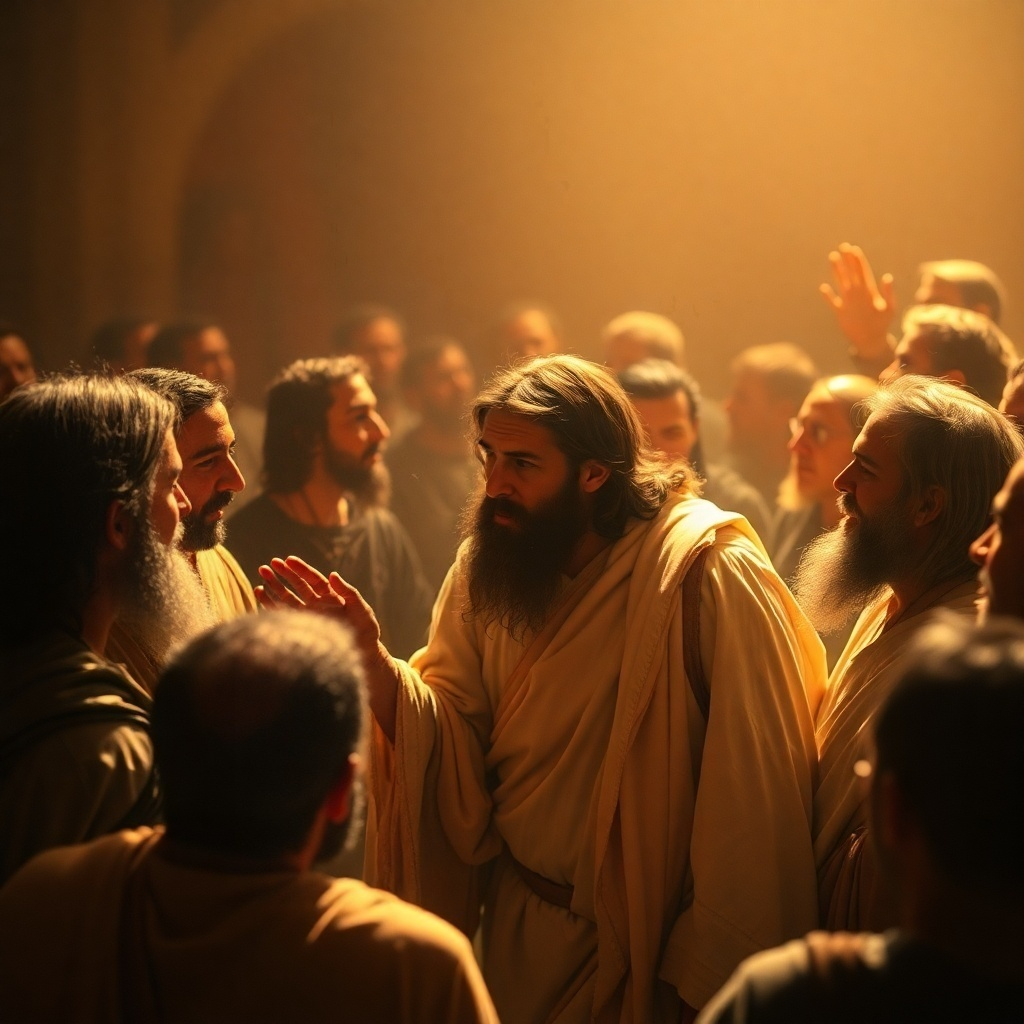
 ToBeLikeJesus