Zechariah 14:9 states, “And the LORD will be king over all the earth; in that day the LORD will be the only one, and His name the only one.” This passage encapsulates a pivotal eschatological vision where the LORD’s sovereignty is universally acknowledged. This essay explores the concept of the LORD’s rulership, focusing on “LORD” and its implications for Jesus Christ, emphasizing that His lordship is not merely a future reality but profoundly present in this age, though not yet in its ultimate form.
Etymology and Linguistic Analysis
In Zechariah 14:9, “LORD” translates from the Hebrew YHWH (Strong’s H3068), often pronounced as “Yahweh” (YAH-way), symbolizing God’s eternal and self-existent nature. In the New Testament, this translates to Kyrios (Strong’s G2962) when referring to Jesus, affirming His divine identity and authority (Philippians 2:11). This linguistic connection underscores that the God of the Old Testament is the same as Jesus in the New Testament, highlighting continuity in divine sovereignty.
Theological Significance
The proclamation of YHWH as king over all the earth in Zechariah signifies not only a future hope but also a present reality through Jesus Christ. His lordship is active in this age, influencing the lives of believers through the Holy Spirit and the Church’s mission. This dual aspect of Christ’s reign – present and future – is central to Christian theology, where He is already reigning in the hearts of His followers, even as we await the full manifestation of His kingdom.
Christological Fulfillment
Jesus, recognized as Kyrios, embodies this kingship in both His earthly ministry and His ongoing spiritual presence. Scriptures like Matthew 28:18, where Jesus declares, “All authority in heaven and on earth has been given to me,” affirm His current lordship. His life, death, and resurrection are seen as the inauguration of God’s kingdom on earth, a kingdom that continues to grow and exert influence through the Church.
Implications for Understanding the Kingdom of God
This understanding of Christ’s lordship reveals:
Immediate Applicability: The kingdom’s principles are to be lived out now; justice, love, and peace are to be enacted in the present through His followers individually and corporately as the Church.
Divine Attributes: Christ’s current reign showcases His attributes like wisdom, power, and mercy, which believers are to emulate.
Redemption: His lordship in this age is part of the ongoing redemptive work, transforming individuals and societies.
Transformative Power for Believers
For believers, recognizing Jesus’ lordship in the present:
Guides Daily Living: It shapes ethical decisions, community life, and personal holiness, reflecting the kingdom’s values.
Inspires Mission: The Church is called to proclaim this lordship, making disciples and extending Christ’s reign through love and service.
Provides Hope: Even as we await the ultimate fulfillment, the current reality of Christ’s lordship offers comfort and direction.
Conclusion
The rule and reign of God is manifested through the Father, the Son, and the Holy Spirit throughout all ages and is past, present, and future (Although not fully exhibited until the end). The lordship of Jesus Christ, as prophesied in Zechariah 14:9, is both a future expectation and a present reality. Through His resurrection, Jesus has already begun His reign, offering a foretaste of the kingdom to come. This dual reality – present yet not fully consummated – informs Christian life, worship, and mission, urging believers to live under His lordship now while anticipating its full revelation in the age to come. Thus, Christ’s kingship bridges the temporal with the eternal, grounding our faith in both the now and the not yet.
Disciple-maker’s Short Story
Flight of Faith
Anne stared out the plane window, the clouds beneath them like a vast canvas being painted by the setting sun. The half-empty cabin hummed with white noise as passengers dozed or worked quietly on laptops.
“I can’t stop thinking about that conversation on our last flight,” Anne said, turning to her mother Mary beside her.
Mary looked up from her Bible. “With the engineering student? James, was it?”
“Yes.” Anne’s voice carried both conviction and concern. “I shared my testimony, told him about God’s love, but I feel like I missed something essential.”
Mary studied her daughter’s troubled expression. “What do you think you missed?”
“I talked about how Jesus loves us and died for us,” Anne said, her fingers tracing the outline of her own Bible in her lap. “But I never clearly explained what the gospel actually demands of us.”
The plane hit a patch of turbulence, causing a momentary tremor through the cabin. The pilot’s calm voice announced they’d be experiencing some “light chop” for the next few minutes.
“You know,” Mary said thoughtfully, “Jesus began His entire ministry with specific words: ‘Repent, for the kingdom of heaven is at hand.’ He didn’t start with ‘God loves you and has a wonderful plan for your life.'”
Anne nodded slowly. “Repentance. I didn’t really emphasize that part.”
“It’s become unfashionable,” Mary said. “We want to present a Jesus who only comforts and never confronts. But that’s not the Jesus of Scripture.”
A flight attendant passed by, offering drinks. Both women asked for tea.
“Paul said he declared the whole counsel of God,” Mary continued, turning pages in her Bible until she found Acts 20. “He proclaimed ‘repentance toward God and faith in our Lord Jesus Christ.’ Both elements are essential.”
Anne leaned back in her seat. “So the gospel isn’t just that Jesus died for our sins?”
“That’s central, absolutely. ‘Christ died for our sins according to the Scriptures, was buried, and rose again the third day,'” Mary quoted from memory. “But the proper response to that message includes both receiving Him as Savior who forgives and submitting to Him as Lord who commands.”
Outside, the sky was darkening. Anne thought about the discipleship conference they were flying to attend, how much she still had to learn.
“I think I’ve been afraid,” she admitted quietly. “Afraid that if I tell people they need to repent—to turn from sin and submit to Christ as King—they’ll reject the message. It’s easier to just talk about God’s love.”
Mary reached for her daughter’s hand. “The message we’re called to proclaim isn’t primarily about making people comfortable. It’s about calling them to a completely new life under a new King.”
The cabin lights dimmed as several passengers prepared for sleep. In the subtle glow, Anne opened her own Bible to Matthew’s gospel.
“‘From that time Jesus began to preach, saying, “Repent, for the kingdom of heaven is at hand,”‘” she read aloud softly. “Kingdom. Lordship. Not just forgiveness, but a whole new allegiance.”
Mary smiled. “That’s why Jesus told us to make disciples, not just converts. He calls people to ‘deny themselves, take up their cross daily, and follow Me.’ The gospel is an announcement that the rightful King has come and calls all people everywhere to surrender to His rule.”
Anne sat quietly for a moment, conviction growing. “I need to be clearer next time. The gospel isn’t just that Jesus died for our sins—though He did, praise God. It’s that through His death and resurrection, He’s established His kingdom and calls everyone to turn from sin and self-rule to follow Him as Lord.”
“That’s right,” Mary affirmed. “And that message requires words—clear, bold proclamation. Our kindness might adorn the gospel, but it can never replace speaking the actual message.”
As the plane continued through the night sky, Anne felt a renewed sense of purpose. The conference awaiting them wasn’t just about strategy or technique—it was about faithfulness to the King’s commission. Next time she had an opportunity to share her faith, she would speak of both the grace of the Savior and the claims of the Lord, calling for the repentance Jesus Himself demanded.
The gospel was good news, but it was also royal news—the announcement of a Kingdom that would never end, under a King who deserved nothing less than complete allegiance.
Welcome Back! Today, we’ll be looking at the Gospels of Matthew, Mark, and Luke to align ourselves more closely with Jesus’ definition of discipleship.
Then Jesus called the crowd to Him along with His disciples, and He said to all of them, “If anyone wants to come after Me, he must deny himself and take up his cross daily and follow Me. For whoever wants to save his life will lose it, but whoever loses his life for My sake and for the gospel will save it. What will it profit a man if he gains the whole world, yet loses or forfeit his soul, his very self? For what can a man give in exchange for his soul?
My Thoughts
We ought to notice that Jesus is not only talking to His disciples but to the crowd as well. He says “if anyone…” In other words, this statement applies to “All y’all.” I’ve heard people try to make a distinction between a Convert and a Disciple. They would describe a convert as one who believes in Jesus and is going to heaven but a disciple is one who is the “Special Forces” of the faith. They do the harder things that Jesus talks about like “denies themselves and takes up their cross.”
The mentality of intellectual assent and stating that they’re on “Team Jesus” is not what He was looking for. He was looking for people who are “All In.” Watering down His commands distorts the “believer’s” identity and purpose. It reduces their identity to a shallow, passive state of the “casual Christian.” They are totally disconnected from the transformative, obedient lifestyle every disciple is called to. They failed the first step of entering the kingdom, repentance. And this misunderstanding of the true fellowship with the Master shrinks their purpose from an active mission to glorify God, make disciples, and advance His kingdom into a self-focused, consumerism that has become the god of our time. This faulty thinking leaves the would-be followers empty and under the delusion of being saved when in fact they are deceived by the Father of Lies.
Jesus makes no distinction. A convert is a disciple and a disciple is a convert. “If anyone wishes to come after me he must…”
My Story
I was recently reading a book that talked about this very issue. In fact it went into greater detail of how we have taken the idea of discipleship and dumbed it down into something that undermines Jesus’ original intent. (Of course I believe in the sovereignty of God, so nothing can really undermine His intentions, despite our worst efforts.) They expressed it this way; “Discipleship is not something the church“bolts on.” It should be “baked in” to everything we do as the church.” I really like that.
Said another way, I once had a commander who coined the phrase; “Training is everything and everything is training.” He was trying to convey the idea that everything we did as soldiers should lead to greater effectiveness as war fighters. I took that to heart and coined my own phrase as a disciple of Jesus; “Everything is about following Jesus and following Jesus is everything.” And that my friends is what Jesus was communicating when it comes to being His disciple.
You may ask, “Where’s the grace in all of this?” The grace is found in the fact that people actually decide to follow Jesus as His disciples. It is a gift of God. They reject the standards set by the world and have a mind set to please the One they call their King. When you see a person like that, you see a person who has had the grace of God lavished on them. They’re not perfect but their heart has been surrendered to the Great Disciple-Maker.
Our Action Plan
Now it’s time for application. Here some ideas;
Ask those you are mentoring, “What is a disciple of Jesus?”
Compare and contrast the cultural definition of discipleship with Jesus’ definition of discipleship.
Start discipling people the way Jesus discipled people.
So let’s not overcomplicate it—Jesus made it clear: following Him means surrender, obedience, and daily devotion. Discipleship isn’t optional or elite; it’s the normal Christian life for anyone who truly wants to come after Him.
El Mayor Hacedor de Discípulos Dijo… – #113
¡Bienvenidos de nuevo! Hoy, estaremos viendo los evangelios de Mateo, Marcos y Lucas para alinearnos más de cerca con la definición de discipulado de Jesús.
Así que, ¡comencemos!
Mateo 16:24–26, Marcos 8:34-37, Lucas 9:23–25
Entonces Jesús llamó a la multitud junto con sus discípulos, y les dijo a todos: “Si alguien quiere venir en pos de mí, debe negarse a sí mismo, tomar su cruz cada día y seguirme. Porque el que quiera salvar su vida, la perderá; pero el que pierda su vida por causa de mí y del evangelio, la salvará. ¿De qué le sirve al hombre ganar el mundo entero, si pierde su alma, su propio ser? ¿O qué puede dar el hombre a cambio de su alma?
Mis Pensamientos
Debemos notar que Jesús no solo está hablando a sus discípulos, sino también a la multitud. Él dice: “Si alguien…” En otras palabras, esta declaración aplica a todos ustedes.
He escuchado a personas tratar de hacer una distinción entre un converso y un discípulo. Describen al converso como alguien que cree en Jesús y va al cielo, pero al discípulo como uno que pertenece a las “fuerzas especiales” de la fe —aquellos que hacen las cosas difíciles que Jesús menciona como “negarse a sí mismos y tomar su cruz”.
La mentalidad de que solo el asentimiento intelectual o declararse cristiano es suficiente, sin perseguir el discipulado como Jesús manda, distorsiona la identidad y el propósito del creyente. Reduce su identidad a un estado superficial y pasivo de “cristiano casual”, desconectado del discípulo transformado y obediente llamado a reflejar a Cristo y a ser parte activa de Su cuerpo (2 Corintios 5:17, 1 Corintios 12:27). Al mismo tiempo, encoge su propósito de una misión activa para glorificar a Dios, hacer discípulos y avanzar Su reino, a una existencia mínima y enfocada en sí mismo que descuida el crecimiento espiritual, el impacto comunitario y la Gran Comisión (Juan 15:8, Mateo 28:18-20). Este pensamiento defectuoso alimenta la inmadurez espiritual, el aislamiento y la desobediencia, limitando el testimonio del creyente y su rol en la obra redentora de Dios.
Jesús no hace distinción. Un converso es un discípulo, y un discípulo es un converso. “Si alguien quiere venir en pos de mí, debe…”
Mi Historia
Recientemente estaba leyendo un libro que hablaba exactamente de este tema. De hecho, profundizaba aún más en cómo hemos tomado la idea del discipulado y la hemos empaquetado de una forma que casi socava la intención original de Jesús. (Por supuesto, creo en la soberanía de Dios, así que nada puede realmente socavar Sus propósitos, a pesar de nuestros mejores esfuerzos).
Lo expresaron de esta manera: “El discipulado no es algo que la iglesia ‘añade’ por fuera. Debe estar ‘integrado’ en todo lo que hacemos como iglesia.” Me encantó esa frase.
Dicho de otra forma, una vez tuve un comandante que acuñó la frase: “El entrenamiento lo es todo y todo es entrenamiento.” Él intentaba transmitir la idea de que todo lo que hacíamos como soldados debía llevarnos a ser más efectivos como combatientes. Tomé esa idea en serio y acuñé mi propia frase como discípulo de Jesús: “Todo se trata de seguir a Jesús, y seguir a Jesús lo es todo.” Y eso, mis amigos, es exactamente lo que Jesús estaba comunicando cuando se trata de ser Su discípulo.
Nuestro Plan de Acción
Ahora es momento de aplicar lo aprendido. Aquí van algunas ideas:
Pregúntales a aquellos que estás discipulando: “¿Qué es un discípulo de Jesús?”
Compara y contrasta la definición cultural de discipulado con la definición de Jesús.
Comienza a discipular a las personas como Jesús discipuló a las personas.
Así que no lo compliquemos demasiado—Jesús lo dejó claro: seguirle significa entrega, obediencia y devoción diaria. El discipulado no es opcional ni exclusivo; es la vida cristiana normal para cualquiera que realmente desea venir en pos de Él.
Si ve un problema importante en la traducción, envíeme una corrección por correo electrónico a charleswood1@gmail.com
Daniel 4:34-37 – The Humility and Repentance of a King Who Realizes His Subordination to the King of Kings
34 “But at the end of that period, I, Nebuchadnezzar, raised my eyes toward heaven and my reason returned to me, and I blessed the Most High and praised and honored Him who lives forever;
For His dominion is an everlasting dominion,
And His kingdom endures from generation to generation.
35 “All the inhabitants of the earth are accounted as nothing,
But He does according to His will in the host of heaven
And among the inhabitants of earth;
And no one can ward off His hand
Or say to Him, ‘What have You done?’
36 At that time my reason returned to me. And my majesty and splendor were restored to me for the glory of my kingdom, and my counselors and my nobles began seeking me out; so I was reestablished in my sovereignty, and surpassing greatness was added to me. 37 Now I, Nebuchadnezzar, praise, exalt and honor the King of heaven, for all His works are true and His ways just, and He is able to humble those who walk in pride.”
(Daniel 4:34-37)
Introduction
In Daniel 4:34-37, we witness a profound transformation in King Nebuchadnezzar as he acknowledges the supreme authority of the Most High God. This passage provides a powerful illustration of the biblical concepts of humility and repentance, particularly in the context of recognizing one’s subordination to the King of kings.
Background and Context
The passage from Daniel 4:34-37 is part of the Book of Daniel in the Old Testament, which recounts events during the Babylonian captivity of the Jewish people (circa 6th century BCE). This specific chapter is a first-person narrative attributed to King Nebuchadnezzar II, the powerful ruler of the Neo-Babylonian Empire, known for his military conquests, including the siege of Jerusalem, and his grand building projects, such as the Hanging Gardens.
In Daniel 4, Nebuchadnezzar describes a divine judgment that led to his humbling. Earlier in the chapter, he recounts a troubling dream of a great tree being cut down, which the prophet Daniel interprets as a warning from God (verses 4-27). The dream foretells that Nebuchadnezzar, due to his pride and failure to acknowledge God’s sovereignty, would lose his sanity and kingdom for a period, living like a beast until he recognizes the Most High as the true ruler over all.
How Nebuchadnezzar Arrived at His Humble State
Nebuchadnezzar’s descent into humility began with his pride and self-exaltation as a ruler who attributed his success solely to his own power (Daniel 4:30). Despite Daniel’s warning to repent and show mercy to the oppressed to avoid judgment (4:27), Nebuchadnezzar did not heed the advice. As a result, God’s judgment came upon him: he was driven from his throne, lost his sanity, and lived like an animal for a set period, often interpreted as seven years (4:31-33).
The passage in verses 34-37 marks the moment of Nebuchadnezzar’s restoration. After the decreed period, he lifts his eyes to heaven, signifying repentance and acknowledgment of God’s supreme authority. His reason returns, and he praises God, recognizing His eternal dominion and justice. Consequently, God restores Nebuchadnezzar’s sanity, kingdom, and even greater glory, leading him to proclaim God’s ability to humble the proud.
This narrative underscores themes of divine sovereignty, the consequences of pride, and the power of repentance, with Nebuchadnezzar’s transformation serving as a testimony to God’s ultimate authority over earthly rulers.
Linguistic Analysis
The Hebrew word for “humble” used in Daniel 4:37 is שְׁפַל (shᵉphal, Strong’s H8214), which means to bring low or abase. This term emphasizes the action of lowering oneself or being brought low by an external force. In contrast, “pride” is derived from גֵּוָה (geʼvah, Strong’s H1466), signifying majesty or arrogance.
The phrase “my reason returned to me” in verses 34 and 36 uses the Aramaic word מַנְדַּע (mandaʻ, Strong’s H4486), which denotes knowledge or understanding. This return of reason signifies a spiritual awakening and recognition of divine sovereignty.
Theological Significance
The Nature of True Humility
True humility, as exemplified by Jesus Christ, involves a correct understanding of one’s position in relation to God. Jesus, though equal with God, “humbled himself by becoming obedient to death—even death on a cross” (Philippians 2:8). This perfect example of humility demonstrates that it is not about self-deprecation, but about recognizing God’s supreme authority and aligning oneself with His will.
Repentance as a Response to Divine Revelation
Nebuchadnezzar’s experience illustrates how divine revelation can lead to repentance. When his “reason returned,” he recognized the Most High God’s sovereignty, leading to a dramatic change in his attitude and actions. This mirrors the Christian experience of conversion, where the Holy Spirit brings conviction and leads to repentance.
Implications for Understanding the Kingdom of God
God’s Sovereignty Over Earthly Kingdoms
The passage emphasizes God’s eternal dominion and His authority over all earthly rulers. This concept is central to understanding the Kingdom of God, which transcends and supersedes all human kingdoms.
The Transformative Power of Humility
Nebuchadnezzar’s transformation from pride to humility demonstrates the power of God to change even the most arrogant heart. This change is a key aspect of entering and participating in God’s Kingdom, as Jesus taught, “Blessed are the poor in spirit, for theirs is the kingdom of heaven” (Matthew 5:3).
Christological Fulfillment
Jesus Christ, as the perfect embodiment of humility, fulfills and exemplifies the principles seen in Nebuchadnezzar’s experience. His life, death, and resurrection demonstrate the ultimate submission to God’s will and the exaltation that follows true humility.
Conclusion
The concepts of humility and repentance, as illustrated in Daniel 4:34-37, are foundational to understanding our relationship with the King of kings. By following Christ’s example of perfect humility, believers can experience the transformative power of God’s kingdom and participate in His eternal reign.
Disciple-Maker’s Short Story
The Weight of Grace
The morning dew clung to the grass like tiny crystals, catching the first rays of sunlight as Jeremy and Manny made their way along the park’s winding trail. Their breathing had settled after their run, but Jeremy could sense an unusual tension in his mentor’s silence. They stopped at a wooden bench overlooking a small pond, where a family of ducks glided across the still water.
“Your teaching last night,” Manny began, his voice gentle but firm. “You’ve got good insights, Jeremy. But I noticed something that reminded me of my younger self.”
Jeremy felt his shoulders tighten. He’d been proud of last night’s discussion on spiritual disciplines. The group had been engaged, taking notes, nodding along. “What do you mean?”
Manny watched the ducks for a moment. “Do you remember the story of Nebuchadnezzar?”
“The king who lost his mind and ate grass?” Jeremy shifted on the bench. “Sure, but what’s that got to do with—”
“He was brilliant, capable, successful,” Manny continued. “Built mighty Babylon. But he forgot something crucial: where his authority came from.” He turned to face Jeremy. “Last night, when Sarah tried to share her perspective on contemplative prayer, you shut her down pretty quickly.”
The memory made Jeremy wince. He’d dismissed her contribution as “too mystical,” asserting that his more structured approach was clearly biblical.
“I was just trying to keep things doctrinally sound,” he defended, but the words felt hollow as they left his mouth.
“Like Nebuchadnezzar, we can become so convinced of our own wisdom that we forget who the real King is.” Manny’s voice carried no judgment, only compassion. “Jesus, who had all authority, chose to wash feet. To listen to the overlooked. To guide with questions and self discovery.”
The morning breeze carried the scent of wildflowers, and Jeremy found himself thinking of Jesus’ parables about seeds and growth—how the Kingdom often came through gentle nurture rather than force.
“I thought being a strong leader meant having all the answers,” Jeremy admitted, his voice barely above a whisper. “But that’s not really like Jesus at all, is it?”
Manny smiled. “The strongest trees bend with the wind, brother. Real authority, like Jesus showed us, comes from serving, from creating space for others to grow.” He patted Jeremy’s shoulder. “It’s not about having an iron fist, but about having an open hand.”
Jeremy watched a young duck break away from its family, experimenting with its own path before rejoining the group. He thought about Sarah’s uncommon insight, about other voices he might have silenced without realizing it.
“I want to be more like Him,” Jeremy said finally. “More like Jesus. But I guess that means I need to do some unlearning first.”
“That’s the beauty of grace,” Manny replied, standing up. “It gives us room to grow, to fail, to learn. Just like you give your church members that same grace.” He gestured toward the trail ahead. “Ready for another lap?”
Jeremy nodded, feeling somehow both humbled and lifted up. As they resumed their walk, the morning sun warming their shoulders, he began to see his role differently—not as a ruler of his small kingdom, but as a servant in a far greater one.
“The getting of treasures by a lying tongue is a fleeting vapor and a snare of death.”
Proverbs 21:6
Intelligence Treasure Trove
The Stellar Scout hung like a wraith amid the shattered husks of the debris field, its matte-black stealth coating drinking in the feeble starlight that dared to pierce this desolate reach of the galaxy. The twisted remnants of forgotten battles drifted lazily past, jagged silhouettes against the faint shimmer of a distant nebula. Inside the cramped command deck, the air buzzed with the hum of electronics and the unspoken tension of a crew teetering on the edge of a decision that could ripple through the war-torn stars.
Wade hunched over the tactical display, his synthetic fingers dancing across the controls as he fine-tuned the feed. The holographic projection flickered, then stabilized, revealing the Skravak repair base in all its menacing glory—a grotesque lattice of alien metallurgy, half-entombed in the skeletal remains of derelict hulks. Its spires jutted like claws, grasping at the void, and Wade’s gut tightened at the sight. He’d seen Skravak outposts before, but this one felt… wrong. Too quiet. Too deliberate.
“Movement detected,” Mayumi’s voice sliced through the stillness, sharp and precise as a laser scalpel. She leaned forward in her sensor station, her almond eyes narrowing as she parsed the incoming data. “The Transapora is pulling into dock.”
Every head snapped to the main viewscreen, the Confederation freighter filled the display, its massive, utilitarian bulk a stark contrast to the predatory elegance of the Skravak base. The Transapora was a leviathan of commerce—blocky, unlovely, and painted in the muted grays of the Confederation Merchant Fleet—yet here it was, gliding toward the alien dock with a grace that belied its tonnage. Its running lights blinked in slow, methodical patterns, and the faint shimmer of its maneuvering thrusters cast ghostly reflections off the surrounding debris.
“They’re taking on fuel,” Jay muttered, his fingers hovering over the helm controls like a pianist poised for a crescendo. His brow creased as he studied the freighter’s approach vector. “But why here? Why now? This isn’t some backwater refueling stop.”
Wade’s mind churned, a storm of possibilities battering his thoughts. He straightened, his broad shoulders squaring as he turned to face his crew. “We’ve got a choice to make,” he said, his baritone steady but edged with steel. “The destroyer’s still out there, prowling the perimeter. We could follow it when it breaks orbit—stick to the original plan. Or…” He gestured toward the Transapora on the screen. “We shadow that freighter and figure out what in the world it’s doing cozying up to the Skravak.”
Kristen crossed her arms, her lean frame taut with unease as she studied the image. Her dark eyes flicked from the freighter to the alien base and back again, her lips pressing into a thin line. “A Confederation freighter this far out raises too many questions,” she said, her voice low and measured. “The destroyer’s just doing its job—patrolling, sniffing for trouble. But that ship…” She shook her head, a strand of black hair escaping her tight bun. “It’s not supposed to be here. No trade routes, no resupply lanes, nothing. What’s it hauling in Skravak space?”
“Exactly,” Wade agreed, his gaze locking with hers. “The destroyer’s a known quantity—Skravak muscle flexing for the sector. But the Transapora? That’s a wild card. It might lead us to something bigger—supply lines, black-market deals, maybe even a traitor in the Confederation ranks.”
Mayumi swiveled her chair to face them, her fingers still poised over her console. “If we’re going to Command with this, we need more than a hunch,” she cautioned, her tone clipped but not dismissive. “Intel has to be actionable—timely and accurate—or it’s just noise. Following the Transapora could give us the meat we need, but it’s a gamble. We lose the destroyer, and we might miss a tactical shift in their patrol patterns.”
Jay snorted, leaning back in his seat with a wry grin. “Yeah, and if we stick with the destroyer, we might just end up chasing our tails while that freighter waltzes off with the real prize. I say we take the shot—follow the Transapora. My gut’s screaming there’s more to this than fuel cells and spare parts.”
“Your gut’s been almost always right,” Kristen affirmed, though her tone encouraging. She tapped a finger against her forearm, her mind clearly racing. “Still… you can see how neat this feels. A Confederation ship docking with the Skravak like it’s a scheduled pit stop? That’s not sloppy smuggling—that’s coordination.”
Wade nodded, his jaw tightening. “Then we’re agreed. The Transapora’s our mark. Mayumi, prep an intel burst for Command—everything we’ve got so far. Skravak base coordinates, the freighter’s ID, docking timestamp, the works. Flag it priority alpha—Command needs to know what we’re chasing and why.”
Mayumi’s hands flew across her console, her movements a blur of efficiency. “Composing now,” she said, her voice tight with focus. “Skravak repair base at grid Zulu-Niner-Four, confirmed active. Confederation freighter Transapora, registry CFM-4472, docked at 0317 hours galactic standard. Observed fueling operation, no visible escort. Intent to pursue and report further findings.” She paused, glancing up at Wade. “Adding our positional data and a request for backup if this turns hot. Encryption’s set—quantum key’s cycling—but the relay’s going to be dicey this deep in the debris field. We’re relying on the tight-beam buoy at the sector edge, and it’s a long haul to Command.”
“How long?” Wade pressed, his voice betraying a flicker of impatience.
“Best case, eight days,” Mayumi replied, her expression grim. “Worst case, twelve—if the buoy’s compromised or the signal scatters. We’ll be on our own until then.”
“Too long,” Jay muttered, his grin fading. “If that freighter’s carrying what I think it is, twelve days could see it vanish into some Skravak bolt-hole—or worse, link up with a battle group we can’t handle.”
“Then we don’t let it out of our sight,” Wade said firmly, uncrossing his arms and stepping toward the tactical display. “Jay, when she moves plot a shadow course—keep us in their baffles, low-emission profile. We stay ghosts until we know what we’re dealing with.”
“Got it,” Jay replied, his fingers diving into the helm controls. The Stellar Scout’s engines thrummed faintly as he began calculating vectors, threading a needle through the debris field to trail the Transapora without tripping its sensors. “Course laid in—ready to move when she does.”
Wade watched the freighter on the viewscreen, its hull now kissed by the faint blue glow of Skravak fuel conduits snaking into its ports. His pulse quickened, a mix of adrenaline and dread coiling in his chest. “Send the report, Mayumi,” he ordered. “And let’s pray that it hits Command’s desk before this blows up in our faces.”
Mayumi tapped the transmit key, and a faint chirp confirmed the burst had launched into the void. “Sent,” she said, exhaling sharply. “Now we wait—and hope the buoy’s still in one piece.”
The crew fell silent, the weight of their choice settling over them like a shroud. The Transapora loomed on the screen, an enigma wrapped in Confederation colors, and beyond it, the Skravak base pulsed with alien menace. Whatever lay ahead, the Stellar Scout was committed now—adrift in the echoes of the void, chasing shadows that might just lead them to salvation… or doom.
Heading to No Where
Hours bled into one another on the command deck steeped in a silence so thick it seemed to hum against the bulkheads. The crew watched the Transapora with predatory focus, their breaths shallow, their nerves taut as monofilament wire. The Confederation freighter hung in the void, its fueling complete, its hull now sealed and gleaming under the Skravak base’s eerie indigo glow. Then, without warning, its engines flared—a sudden bloom of plasma that lit the debris field like a supernova’s echo. The massive ship pivoted with ponderous grace and surged forward, carving a path through the wreckage.
“She’s moving,” Jay announced, his voice a low growl of anticipation. His hands danced over the helm, coaxing the Stellar Scout from its hiding place among the derelict husks. The scout ship slipped into the freighter’s wake, a shadow trailing its prey, its stealth systems purring as they masked its emissions. “Matching velocity—keeping us in her baffles. They won’t see us unless they’re looking hard.”
“Good,” Wade replied, his eyes fixed on the viewscreen. “Stay sharp. We don’t know where she’s headed—or what’s waiting.”
The Transapora didn’t disappoint. It executed a series of precise hyperspace jumps, each one a calculated plunge into the uncharted abyss beyond Confederation borders. The Stellar Scout followed, its own jump drive whining under the strain as Jay threaded them through the quantum eddies left in the freighter’s wake. With every transition, the stars shifted, their patterns growing stranger, more alien, until the familiar constellations of charted space were little more than a memory. Wade felt the weight of isolation pressing in, a cold hand on the back of his neck. They were far from home now—far from reinforcements, far from anything resembling safety.
Arriving at Answers
At last, the freighter’s final jump spat them out above a planet that looked like a wound in the cosmos. Its surface was a mottled expanse of rust-red and ochre, scarred by swirling dust storms that churned with savage fury. Bands of grayish haze streaked its atmosphere, and jagged peaks thrust upward like the broken teeth of some long-dead beast. The Transapora didn’t hesitate—it angled downward, its descent a pre-programmed ballet of thrusters and stabilizers, cutting through the turbulent skies toward a landing zone lost in the haze.
“Designated KX-19,” Mayumi said, her voice clipped as she pulled up the scant data from the scout’s databanks. “No official Confed record—just a survey marker from a probe flyby decades ago. No life signs detected.” She paused, her fingers hovering over the sensor controls as the readings refined. “But there’s activity down there. Massive energy signatures—thermal plumes, electromagnetic spikes. It’s… mining operations, but on a scale I’ve never seen. And it’s all automated. AI-driven, no biological signatures anywhere.”
Wade’s jaw tightened, a muscle twitching beneath his stubble. “AI mining on an uncharted rock, serviced by a Confed freighter in Skravak space? That’s not a coincidence—it’s part of the conspiracy, I’m sure of it.” He turned to his crew, his decision crystallizing. “We need eyes on the ground. Jay, prep the Badger for drop. Kristen, you’re with me. Mayumi, take us down within ten clicks from the nearest structure to drop the Badger, keep low and bring the Scout back to low orbit—watch the Transapora and scream if anything changes.”
“Badger’s hot in five,” Jay said, already unstrapping from his seat and heading for the shuttle bay. “I’ll get you all close enough to read serial numbers—assuming I don’t have too much fun gettin’ you there.”
Kristen shot him a dry look as she grabbed her gear. “Try not to. I’d hate to walk back.”
The descent through KX-19’s atmosphere was a brutal gauntlet. The Badger—a squat, armored hovercraft built for punishment—shuddered as Jay punched the accelerator and it shot off the back ramp of the Scout into roiling clouds of rust-colored dust. Winds howled against its hull, clawing at the stabilizers, but Jay’s hands were steady on the controls, his piloting a masterclass in precision. Wade gripped the co-pilot’s chair, his stomach lurching as the craft bucked, while Kristen braced herself in the troop bay, her rifle already slung across her chest. The viewscreen flickered with static, then cleared as they broke through the storm layer, revealing the structures ahead.
It was a mechanical cacophony. A sprawling network of drills, conveyors, and processing plants stretched to the horizon, their skeletal forms illuminated by the dull red glow of the planet’s sun filtering through the haze. Towering rigs plunged into the earth, their rhythmic hammering a low thunder that vibrated through the Badger’s frame. Conveyor belts snaked across the terrain, ferrying heaps of glittering ore to cyclopean smelters that belched plumes of acrid smoke. Drones flitted through the air—sleek, insect-like machines with no markings, their movements synchronized to a fault. Everything operated with cold, relentless precision, a symphony of automation devoid of a single human hand.
“She touched down two klicks east,” Jay reported, nodding toward the Transapora’s landing site as he eased the Badger into a controlled hover. The freighter squatted amid the chaos, its cargo bay yawning open as a swarm of loader drones began unloading crates stamped with Confederation seals. “Looks like she’s offloading fast—whatever they’re hauling, they don’t want it sitting long.”
Wade’s eyes narrowed as he studied the scene. “Ore’s one thing, but those crates… that’s not raw material. That’s processed—maybe weapons-grade.” He unbuckled his harness and stood, his voice hardening. “Take us behind that ridge, Jay. We’re going in close. I want to know what the Skravak and the Confed are cooking up down here—and why it’s worth hiding from the galaxy.”
Jay grinned, a flash of teeth against his dark skin. “On it boss.” The Badger skimmed the terrain until it settled behind a jagged outcrop of rock, its engines winding down to a whisper. Dust swirled around them, settling slowly in the thin atmosphere as the hatch hissed open.
Wade was first out, his boots crunching against the gritty soil as he swept the area with his rifle’s scope. “Clear,” he called, his voice coming across the comms in Kristen’s helmet. “But stay low—these drones might not care about us, but I’d rather not test their programming.”
Kristen followed, her own weapon at the ready, her gaze locked on the distant Transapora. Beyond the freighter, the mining complex pulsed with activity, its AI overseers oblivious—or indifferent—to the intruders in their midst. Whatever secrets this planet held, they were buried deep in that ore—and in the shadowed alliance that had brought a Confederation ship to this forsaken rock. The Stellar Scout’s crew had chased the Transapora this far; now, it was time to peel back the void’s veil and see what lay beneath.
Kristen crouched low behind a rusted ore hauler, her scanner humming softly as it drank in the machine’s secrets. “This tech,” she said, her voice a mix of awe and unease, “it’s Confederation-derived, no question. But it’s… mutated. The servos, the power grid—it’s like it’s been rewriting itself for decades, adapting to this dust-choked rock without a human hand to guide it.” Her fingers traced the air above the hauler’s hull, following the faint glow of her holo-display as it mapped the machine’s innards: a lattice of self-repairing circuits and fractal energy conduits that no sane engineer would’ve dreamed up.
Wade grunted, his eyes narrow as he swept his pulse rifle’s scope across the barren landscape. The mining facility sprawled before them like a mechanical cancer—towering smelters belching plumes of ash, conveyors grinding endlessly under their own inscrutable logic, and skeletal cranes clawing at the sky. “No human’s ever set foot here,” he muttered, his voice taut with the certainty of a man who’d seen these things before. “This is all automated. A ghost op running on borrowed time and stolen blueprints. Whoever—whatever—built this didn’t want us poking around.”
Compromised
Before Kristen could reply, a piercing wail shredded the stillness—an alarm, sharp and synthetic, rising from the facility’s core like the scream of a wounded beast. Wade’s comm crackled to life, Mayumi’s voice cutting through the static: “Skravak sentinel drones incoming! Multiple contacts—bearing two-seven-zero, closing fast!”
Wade snapped his rifle to his shoulder, his posture shifting from wary observer to predator in an instant. “Back to the Badger!” he roared, his boots kicking up clouds of reddish dust as he broke into a sprint. Kristen fell in beside him, she dropped her scanner to dangle on a short lanyard as she drew her sidearm—a compact plasma pistol that whined as it charged. Sleek, predatory shapes breached the horizon: Skravak mech drones, their hulls glinting like obsidian under the weak sun, their weapon ports already glowing with the promise of death.
The air ignited with the hiss and snap of plasma bolts, each shot a streak of violet fire that seared the ground where they’d stood moments before. One bolt grazed a nearby hauler, slagging its flank into molten ruin; another punched a fist-sized hole through a conveyor strut, sending sparks cascading like a meteor shower. Wade fired on the move, his pulse rifle barking in controlled bursts—each shot a pinpoint of blue-white energy that splashed harmlessly against the drones’ shields. “What?” he snarled under his breath. “Didn’t even scratch it!”
They dove into the Badger’s hatch, the air thrumming with the basso growl of its engines. Jay had the ship prepped and roaring. “Go, go, go!” Wade bellowed, slamming the hatch control. The Badger lurched forward with a bone-rattling shudder, its thrusters screaming as Jay poured every ounce of power weaving in between mining apparatus to throw the drones off.
They swarmed after them, a pack of mechanical wolves nipping at their heels. Their weapons fire stitched a deadly pattern across the Badger’s hull—plasma rounds and kinetic penetrators leaving blackened scars and hairline fractures in the ceramsteel plating. Jay threw the ship into a series of gut-churning evasions, banking hard and spiraling through the thinning dusty surface like a madman dancing on a razor’s edge. A drone’s missile streaked past, detonating in a fireball that rocked the Badger and sent a cascade of warning icons across the cockpit displays.
“They’re too fast!” Kristen shouted, bracing herself against a bulkhead as the deck bucked beneath her. “We can’t shake them!”
Wade stabbed a finger at the comm panel, his voice a whipcrack of command. “Mayumi! We need extraction—now!”
The Stellar Scout’s reply was immediate—a shadow falling across the sky as the larger ship dropped from its overwatch orbit, its hull scarred but unbowed one foot off the ground. The back ramp yawned open like the maw of some ancient leviathan, a beacon of salvation amid the chaos. Jay’s hands gripped over the controls, his jaw clenched tight as he lined up the approach. “Hold onto something!” he yelled, and then the Badger dove for it, threading a needle no sane pilot would attempt. Metal screamed as the smaller ship grazed the Scout’s bay edges, shedding paint and a shower of sparks before slamming home with a jolt that threw Wade and Kristen to the deck.
Steel Away
The ramp slammed shut, and the Scout’s engines roared to full power, clawing for orbit as the drones peppered its hull with desperate parting shots. Jay found his way to the nav/comms seat and took control of the Scout. Mayumi was only too glad to relinquish command to the superior pilot. Armor plating buckled under the barrage, and a proximity alert wailed as a plasma salvo grazed the starboard nacelle, sending a tremor through the ship’s frame. “Jumping in 3… 2… 1…” Jay called out, his voice steady despite the chaos.
The universe twisted as hyperspace engulfed them, the familiar gut-punch of transition silencing the alarms for a blessed moment. Then reality snapped back, and the command control station glowed an ominous red under emergency lighting. Damage reports scrolled across every screen: hull breaches sealed by auto-foam, power conduits overloaded, and a dozen minor systems flickering on the edge of failure. The Badger, nestled in the Scout’s bay, groaned like a wounded animal, its hull pocked and smoking.
Wade dragged himself to his feet, his breath ragged as he met Kristen’s wide-eyed stare. Sweat streaked her face, and her hand still gripped the plasma pistol like a lifeline. They’d escaped—barely—but the cost was etched in the shuddering deck beneath them and the flickering displays overhead. “What on earth was the Transpora doing there?” Kristen whispered, her voice trembling with the weight of what they’d seen.
Wade shook his head, his mind racing as he stowed his rifle. “Something to do with the conspiracy I’m sure. And the whole planet was…automated. Something similar but beyond our tech. And something that didn’t want us snooping around.” He glanced at the scrolling damage logs, then back at her. “We’ve kicked a hornet’s nest, Kris. Question is, how important is this—and what’s it hiding?”
The adrenaline ebbed, leaving a cold clarity in its wake. They’d survived, but survival was just the opening salvo. Whatever lay buried in that forsaken mining world, it was no mere relic. It was alive, in its own way—and it had secrets that could reshape everything they thought they knew. The real fight, Wade realized, was now assessing the Scout’s flight worthiness and getting the intel back to command.
“Now when the attendant of the man of God had risen early and gone out, behold, an army with horses and chariots was circling the city. And his servant said to him, “Alas, my master! What shall we do?” So he answered, “Do not fear, for those who are with us are more than those who are with them.” Then Elisha prayed and said, “O LORD, I pray, open his eyes that he may see.” And the LORD opened the servant’s eyes and he saw; and behold, the mountain was full of horses and chariots of fire all around Elisha. When they came down to him, Elisha prayed to the LORD and said, “Strike this people with blindness, I pray.” So He struck them with blindness according to the word of Elisha.”
2 Kings 6:15-18
The Hunt Interrupted
The Stellar Scout F290 leapt into hyperspace, its fusion drives humming as it chased The Transapora’s course into the void. Wade Kovacs settled into the navigator’s chair, the glow of the tactical display reflecting in his eyes. Rephidim-5’s red dust and desperate settlers faded into memory, replaced by the weight of Elkiah’s warning—a rogue freighter spiriting ore to unknown ends. The crew buzzed with purpose, their faith bolstered by the fledgling church they’d left behind. Kristen’s quiet prayer lingered in the air, a steady anchor as they plunged deeper into uncharted space. Jay adjusted their course with his usual precision, while Mayumi pored over manifests, hunting for clues in the freighter’s cryptic path. Hours blurred into days, the ship’s rhythm—shifts, drills, scripture—a lifeline against the endless black. They were hunters now, tracking shadows with a higher calling. Exhaustion crept in, and Wade finally surrendered to sleep, trusting Jay’s steady hands at the helm.
The rhythmic hum of the twin engines had lulled Wade into a deep sleep. In his dreams, he was back on Earth, walking through a sun-dappled forest with Kristen by his side, the scent of pine and her laughter filling the air. Suddenly, he was back at Ranger school in a live fire with the Skravaks. He jolted awake as the ship’s warning system sliced through his subconscious like a jagged blade, ripping him from his dreams back to reality.”
Wade’s eyes snapped open, his body tensing as he reached for his data pad beside the bunk. The soft blue lighting of his individual berth had switched to a pulsing red glow, casting eerie shadows across the compact space. The clever storage solutions—recessed shelves and fold-out panels—that usually made the crew quarters feel spacious now seemed to close in around him, the walls vibrating faintly with the ship’s growing urgency.
“Warning. Skravak vessel detected. All personnel report to battle stations immediately,” the ship’s AI announced, its synthetic calm a jarring counterpoint to the chaos bleeding through the hull.
Wade’s heart thudded as he threw off his covers and grabbed his flight suit from the locker. He yanked on his boots, the Skravak name igniting a phantom ache in his titanium hand. His mind lurched back to that day—two years ago, pinned in the waste hatch of a Skravak derelict. He’d been last out, adrenaline pumping after the Argus had been ambushed. The hatch had been their escape, a rusted maw they’d pried open. He could still hear the hiss of his suit sealing, feel the cold metal brushing his glove—then the scream of hydraulics as the AI rebooted. The hatch slammed shut, shearing through flesh and bone, his arm a mangled ruin spurting crimson into the void. Jay’s hands had clamped his sleeve, Bikram’s desperate blow severing the last threads, the shuttle’s corpsmen a blur as the freighter exploded behind them. That day, vengeance had burned in him—a Ranger’s rage at the Skravaks’ cold efficiency. Now, as the destroyer closed in, fear clawed at that old wound—not for himself, but for Kristen, Jay, Mayumi. What if he lost them to this unforgiving enemy? The blare of the ship’s alarm snapped him back to the present.
Red Alert Rising
“How close?” he barked at the AI, his voice rough with sleep and adrenaline.
“Skravak vessel is approximately 50,000 kilometers and closing rapidly,” the AI replied, its tone maddeningly even.
He stumbled into the narrow corridor, nearly colliding with Kristen, who clutched her medical kit with white-knuckled hands. Her dark hair was pulled back tightly, her hazel eyes sharp despite the tension etched into her posture. “CCS?” she said, using the military shorthand for the Central Command Station. Wade nodded, and they sprinted down the passage, boots clanging against the metal deck.
The CCS door hissed open, revealing a scene of controlled pandemonium. Jay Ringler hunched over the pilot’s station, his wiry frame taut as his hands darted across the controls, adjusting thruster outputs with practiced precision. Mayumi Ringler sat in the nav/comms seat, her face illuminated by the flickering light of holographic displays, her fingers a blur as she parsed incoming data. The cockpit’s tight, two-person configuration kept everything within arm’s reach—just as Lieutenant Commander Goering had promised during their grueling training sims back at Command.
“Status report,” Wade demanded, bracing himself against the bulkhead as the ship shuddered faintly—likely Jay tweaking their course.
“Skravak destroyer on an intercept course,” Jay said, eyes locked on his screen, his voice clipped but steady. “It’s taken a beating already—sensor array’s partially fried, probably from a recent scrap. Closing fast, though.”
Wade leaned over the tactical display, its 3D projection between Jay and Mayumi painting the enemy ship in stark reds and oranges—a hulking, predatory silhouette bristling with weapon ports. “How bad’s the damage?”
“Their long-range active scans are crippled,” Mayumi said, her Japanese accent sharpening as she focused. Her fingers danced over the interface, pulling up a diagnostic overlay. “They’re leaning hard on passive sensors and visuals—closing in to compensate for the blind spots.”
Wade’s mind raced, snagging on a memory from high school history class—old submarine tactics, vessels lurking silent on the ocean floor while destroyers rained depth charges from above. A flicker of an idea took root. “Jay, how’s our EMP capacitor?”
Jay glanced up, a spark of realization in his hazel eyes. “Fully charged—been sitting at max since our last resupply. You thinking what I think you’re thinking?”
Wade’s lips curled into a grim smile. “We hit them with an EMP, drop to that planet’s surface”—he jabbed a finger at a rocky, storm-lashed world spinning slowly on the display—”deploy decoys, and go dark. Like subs in the old wars, waiting out the hunters.”
Faith vs Flight
“EMP, decoys, and hide?” Jay spun in his seat, hazel eyes narrowing. “We’ve got hyperspace juice—why not jump now, outrun them?” His fingers hovered over the controls, itching to act.
“Submarines?” Kristen asked, arching an eyebrow as she slung her med kit over her shoulder.
“Read about it in school.” Wade said, the memory sharpening. “They’d sink to the bottom, kill all systems but the bare minimum, and sit tight while the enemy pounded the water. If the Skravaks think we’re slag, they might leave—or better yet, lead us somewhere useful.”
Mayumi’s head snapped up from her console. “Their intercept speed’s too high—43,000 klicks and closing. They’d catch us mid-jump, shred us before we’re gone.”
Kristen frowned, slinging her med kit tighter. “What about a distress call? Command could scramble backup—we’re not equipped for this.”
Wade’s jaw tightened, Elkiah’s datapad flashing in his mind—rogue ore shipments, shadows in the void. “No signal,” he said. “We’re too deep, and this ties to The Transapora. We run, we lose the lead. We fight smart instead.” He tapped the display, the planet’s storms swirling below. “EMP blinds them and then we drop, go dark. Old sub tactics and we’ll outlast the hunter.”
Jay scoffed, tension cracking his bravado. “Your history hunch better pan out, boss. One pulse misfire, we’re toast.”
“More are with us than with them,” Wade shot back, voice steady, echoing 2 Kings 6:16. “We’ve got the edge—faith and tech. They’re crippled already.”
Mayumi nodded, numbers aligning in her head. “Their sensors are shaky—an EMP could finish them.”
Kristen exhaled. “Risky, but I’m in. Let’s move.”
Wade met their eyes—doubt lingered, but trust won. “Then let’s hit it.”
Mayumi nodded, her analytical mind already running the numbers. “They’d have to get close to confirm a kill—real close.”
“And if we tail them after,” Jay added, his hands hovering over the controls, “we might track them to a repair base. That destroyer’s too busted to limp far without a dock. We turn this into a recon goldmine.”
“Exactly,” Wade said, adrenaline surging. “What’ve we got for decoys?”
Mayumi tapped her console, pulling up the cargo manifest. “Spare parts—engine coils, hull plating—plus empty specimen containers and that busted sensor buoy we were hauling back to base. I can rig them to mimic our EM and heat signatures.”
“Do it,” Wade ordered. “Jay, plot a descent to the planet—low and fast, use the terrain. Kristen, prep the EMP burst—wide dispersal, max yield. Mayumi, get those decoys into the launch bay. We’ve got one shot before they’re on us.”
The next fifteen minutes dissolved into a frantic symphony of motion. Kristen knelt at the panel, hands steady as she rerouted power to the EMP capacitor. She wasn’t just the Scout’s medic anymore—necessity had forged her into its engineer too, a prodigy’s mind bending to the ship’s demands. Back on New Annapolis, her photographic memory had stunned Psych-school profs; she’d recite textbooks verbatim, diagnose rare conditions in seconds. The Scout’s cramped reality—four souls, no dedicated technician—had forced her to evolve. Kristen had devoured the ship’s manuals in a night, every schematic etched in her brain. She’d rewired shorted consoles during a meteor storm, patched a breached hull with scavenged plating, all while stitching up Jay’s gashed arm. Now, tying the EMP into the comm array, she visualized each circuit—blueprints unrolling in her mind’s eye. Her fingers danced, splicing lines with surgical precision, a medic’s calm fused with an engineer’s grit. “Max yield, wide spread,” she muttered, the stakes as familiar as a patient’s pulse. Wade’s nod anchored her; she’d become the ship’s lifeline, one crisis at a time.
In the cargo bay, Mayumi and Jay tore into the decoy drones—sleek, expendable pods the size of a man. They stripped out non-essentials, stuffing them with hull fragments, scorched wiring, and the sensor buoy’s radioactive core. “Boosting their emitters,” Mayumi said, soldering a connection. “They’ll scream our signature loud enough to wake the dead.”
Jay hefted a chunk of engine shielding into place. “Mass distribution’s key—they’ve got to scatter like a real wreck, or the Skravaks’ll smell the ruse.”
Pulse of Survival
Back in the CCS, Wade tracked the destroyer’s approach on passive sensors—its sleek, obsidian hull glinting as it closed the gap, plasma weapon ports glowing faintly violet. “Forty thousand klicks,” he muttered. “They’re not slowing down.”
“EMP’s primed,” Kristen called, sliding back into her seat. “Say the word.”
“Decoys loaded,” Mayumi reported over the intercom, her voice taut. “Spread pattern’s set—2-kilometer dispersal on launch.”
“Descent locked,” Jay said, hands gripping the yoke. “We’ll skim at 500 meters—canyons and dust storms’ll give us cover.”
Wade took a steadying breath, the weight of command settling on his shoulders. “Hit it.”
Kristen slammed the trigger. A silent pulse erupted from the Scout, an invisible shockwave rippling outward. The Skravak destroyer faltered mid-flight, its running lights stuttering as the EMP slammed into its crippled systems. Wade pictured their bridge crew scrambling…if they had a crew… long-range sensors dissolving into a haze of static.
“Now, Jay—drop us!” he shouted.
The Scout plunged toward the planet, engines howling as Jay threaded through swirling dust clouds and jagged, rust-red peaks. The hull groaned, G-forces pinning the crew to their seats, loose gear rattling in the compartments. At 500 meters, Mayumi punched the launch command. A dozen decoys streaked from the bay, fanning out across a 12-kilometer arc, their emitters blaring the Scout’s heat, EM, and transponder signals like desperate ghosts.
Jay nosed the ship into a shadowed ravine—a deep, wind-carved gash in the planet’s surface—and settled it amid a cluster of boulders. “Powering down,” he said, flipping switches in rapid succession. The engines’ hum faded to silence, the lights dimmed to a faint emergency glow, and the CCS went still save for the soft hiss of life support. Only passive sensors stayed live, feeding a grainy, monochrome view of the sky above.
Wade lowered his voice to a whisper. “Here they come.”
The Skravak destroyer loomed into low orbit, its plasma weapons igniting like miniature suns. Violet beams lanced downward, striking the decoys with surgical precision. Each hit erupted in a molten plume, vaporizing metal and kicking up geysers of dust. Then the bombardment widened—random, furious salvos of plasma raining across the surface, gouging craters and shaking the ground beneath the Scout. The hull trembled with each distant impact, the air thick with the crew’s held breaths.
“They’re buying it,” Mayumi murmured, her eyes glued to the sensor feed. “Targeting’s locked on the decoy spread—erratic, though. They’re madder than a wet hen.”
Wade clenched his prosthetic hand, the submarine analogy anchoring him. “Stay quiet. We wait them out—just like those old crews under the sea.”
Kristen shot him a sidelong glance. “You really think this’ll work?”
“Worked for them,” Wade said softly. “Depth charges or plasma bolts, same game. They’ll tire out and move on.”
The barrage stretched on, minutes bleeding into an hour. Dust plumes clogged the atmosphere, veiling the Scout’s position in a hazy shroud. The crew sat rigid, the silence broken only by the occasional thud of a stray bolt or the creak of settling metal. Finally, the plasma fire tapered off. The destroyer lingered, deploying a trio of sleek probes to sift through the wreckage—charred debris and melted alloys passing for the Scout’s corpse.
“They’re scanning,” Mayumi whispered, her voice barely audible. “Standard salvage pattern—looking for proof.”
Wade’s jaw tightened. “Let them look. We’re a ghost.”
Kristen prayed out loud in a whisper, “Father, blind them like You blinded the enemies of Elisha. Protect us and turn this to our advantage, in Jesus’ name.”
Ghosts of Recon
The probes circled for agonizing minutes, their faint hum detectable through the hull’s audio pickups. At last, the destroyer recalled them, emitting a short, encrypted burst. Mayumi’s eyes narrowed. “Victory signal—Skravak ‘target neutralized’ protocol. We’ve cracked enough of those to know the pattern.”
“Good,” Wade said, exhaling. “Now the fun part. Jay, they moving?”
Jay studied the feed. “Climbing out—slowly. Vector’s shifting toward sector seven-nine-three. They’re limping—engines at half output.”
“The EMP softened them up,” Wade said. “Mayumi, their sensors?”
“Long-range are toast,” she confirmed. “That pulse overloaded what was left—they’ll need a dock to fix it.”
Wade leaned forward, a predatory glint in his eye. “Then we follow. Jay, ease us up—five percent thrust, shadow their course. Mayumi, engage the hull’s stealth coating. Kristen, cycle our heat through the specimen sinks. We’re hunting now.”
“What’s the play?” Kristen asked, her hands already on the controls.
“We tail them to their base,” Wade said. “A destroyer that size doesn’t crawl home without repairs. We map it, study it, bring the intel back to Command. The Scout’s built for sneaking—let’s prove it.”
The next ten hours tested their skill and patience. Jay nursed the Scout upward, using the planet’s storms as cover, nudging the ship with minimal thruster bursts to avoid detection. Mayumi tuned the hull’s metamaterials—military-grade coatings that bent light and absorbed scans—until their signature vanished into the background noise. Kristen rerouted engine heat into the lab’s cryogenic storage, the near-absolute-zero chambers swallowing their thermal trail.
“They’re adjusting course,” Jay reported, his voice hoarse from focus. “Turning toward a dense debris field—looks artificial.”
Mayumi magnified the feed, excitement creeping into her tone. “Not natural—too uniform. Spectral spikes suggest a camouflage screen. Probably a repair outpost.”
Wade nodded, his mind racing. “Take us in slow, Jay. Find a spot to park among the junk—power down to life support and passives. We watch, we learn, we gather intel.”
The Scout glided into the debris field—a sprawling graveyard of twisted hulls, shattered satellites, and faint interference waves pulsing from hidden emitters. Jay wove through the chaos, settling the ship behind a jagged hulk—a derelict freighter’s gutted frame. Systems winked out one by one, the CCS plunging into near-darkness as the crew shifted to minimal power.
The Skravak destroyer maneuvered deeper into the field, its plasma-scarred hull vanishing behind a curtain of debris. Mayumi recorded its every move, her console logging entry patterns and signal bursts. “Complex approach,” she murmured. “They’re hiding something big.”
“Look at this,” Kristen said, pointing to a sensor spike. “The debris is generating a jamming field—broad-spectrum, low intensity. No wonder we’ve never pinged this place.”
Wade’s prosthetic hand flexed unconsciously, the stakes sinking in. They’d turned a desperate escape into a recon coup—penetrating a Skravak stronghold no human had ever glimpsed. “Settle in, friends,” he said, voice low but firm. “We’re here for the long haul. Map their defenses, analyze their ships, log everything. This could change the war.”
Jay cracked a tired grin. “Beats getting plasma-fried.”
“You got that right,” Mayumi said, already tweaking the passive arrays for better resolution.
Kristen leaned back, exhaling. “Guess your submarine trick paid off, Wade.”
He smirked faintly. “Old wars, new tricks. Now let’s make it count.”
As the Scout went dark, pride surged in Wade’s chest. The F290 had outfoxed a destroyer—and now it would peel back the Skravaks’ secrets, one silent scan at a time. The real mission had just begun.
The Temporal Nature of Earthly Kingdoms: A Biblical Analysis of Supreme Loyalty to the Eternal King
“Then the iron, the clay, the bronze, the silver and the gold were crushed all at the same time and became like chaff from the summer threshing floors; and the wind carried them away so that not a trace of them was found. But the stone that struck the statue became a great mountain and filled the whole earth… In the days of those kings the God of heaven will set up a kingdom which will never be destroyed, and that kingdom will not be left for another people; it will crush and put an end to all these kingdoms, but it will itself endure forever. Inasmuch as you saw that a stone was cut out of the mountain without hands and that it crushed the iron, the bronze, the clay, the silver and the gold, the great God has made known to the king what will take place in the future; so the dream is true and its interpretation is trustworthy.”
Daniel 2:35,44-45
Introduction
The short answer to the question is “Yes, but… . In Daniel 2:31-45, we encounter a profound prophecy that should temper our loyalties and allegiance to any earthly nation. This passage, particularly the phrase “not a trace of them was found” from Daniel 2:35, offers a striking contrast between the transient nature of earthly kingdoms and the eternal reign of God’s kingdom. This concept is pivotal in understanding the biblical call for supreme loyalty to the King of Kings over patriotic allegiance to earthly nations.
Linguistic Analysis
The phrase “not a trace of them was found” in Daniel 2:35 is translated from the Aramaic “וְלָא־הִשְׁתֲּכַח לְהוֹן כָּל־אֲתַר” (wə·lā- hiš·tə·ḵaḥ lə·hō·wn kāl-‘ă·ṯar). The key term here is “הִשְׁתֲּכַח” (hiš·tə·ḵaḥ, Strong’s H7912), which means “to be found” or “to be present.” In this context, it’s used with a negative particle to emphasize complete absence or disappearance.
Theological Significance
This linguistic nuance underscores the utter dissolution of earthly powers in the face of God’s kingdom. It echoes Jesus’ teachings about the temporary nature of worldly authority and the supremacy of God’s reign (Matthew 6:19-20). The concept reveals God’s sovereignty and the futility of placing ultimate trust in human institutions.
Jesus as the Perfect Example
Jesus exemplified the perfect balance between respecting earthly authorities and maintaining supreme loyalty to God’s kingdom. His statement, “Render to Caesar the things that are Caesar’s, and to God the things that are God’s” (Mark 12:17), demonstrates this principle. Jesus showed respect for earthly authorities but never compromised His allegiance to the Father’s will.
Implications for Understanding the Kingdom of God
The phrase “not a trace of them was found” points to the comprehensive nature of God’s kingdom. It suggests that when God’s reign is fully established, all competing powers will be completely eradicated. This concept aligns with Jesus’ parables about the kingdom of God, such as the mustard seed (Matthew 13:31-32), which grows to overshadow all else.
Divine Attributes and Redemptive Plan
This concept reveals God’s omnipotence and eternal nature. It demonstrates His ability to overcome all earthly powers and establish His everlasting kingdom. The prophetic vision in Daniel points to Christ’s eternal reign, fulfilling God’s redemptive plan for humanity.
Christological Fulfillment
Jesus fulfills the vision of the rock “cut out, but not by human hands” that shatters the statue of earthly kingdoms—Babylon, Persia, Greece, and Rome—demonstrating His divine authority over all human powers. This rock, symbolizing Christ, strikes the statue’s feet and becomes a great mountain that fills the earth, representing His everlasting kingdom established through His redemptive work and the spread of the gospel across all nations. Unlike the temporary empires of the vision, Jesus’ reign as the Messiah ushers in a divine kingdom not built by human effort but by God’s sovereign will. His triumph as the rock and mountain signifies the eternal rule of God, bringing justice, peace, and salvation to the world.
Transformative Power for Believers
Understanding this concept transforms how believers view their citizenship. While we may have earthly nationalities, our primary allegiance is to Christ’s kingdom. This perspective should shape our priorities, values, and actions, leading us to invest in eternal matters rather than temporary earthly concerns.
Conclusion
As Christians, we can indeed take pride in our country’s heritage, show respect to leaders and national symbols like flags, and even serve in the military to defend our nation. These actions can be expressions of good citizenship and stewardship of the blessings God has given us through our national identity. However, it’s crucial to maintain a balanced perspective. The vision in Daniel 2 serves as a powerful reminder that all earthly kingdoms, no matter how great, are ultimately temporal. The stone cut without hands, representing God’s kingdom, will one day crush all earthly powers, leaving not a trace of them behind. This prophetic image cautions us against allowing our national allegiance to compete with or supersede our supreme loyalty to God. While we can honor our earthly nations, we must always remember that our true citizenship is in heaven (Philippians 3:20), and our ultimate allegiance belongs to the eternal Kingdom of God, which will endure forever.
The aroma of sizzling burgers and crispy fries wafted through the air as Alex and Jose settled into their booth at Burger Haven. The familiar chatter of lunchtime patrons and the clink of trays provided a comforting backdrop to their conversation.
Alex took a sip of his soda, his eyes twinkling with purpose. “So, Jose,” he began, carefully selecting his words, “I’ve been meaning to ask you something important. Are you a Christian?”
Jose’s eyebrows shot up, a hint of indignation coloring his features. He set down his half-eaten burger with a soft thud. “I’m an American, aren’t I?” he retorted, his tone carrying a mix of pride and defensiveness.
Alex leaned forward, his expression softening. “I hear you, my friend, but being an American and being a Christian are two very different things. Let me explain.”
As Jose listened, his initial defensiveness began to melt away, replaced by genuine curiosity. Alex’s words painted a vivid picture of two distinct realms – the temporal and the eternal.
“You see,” Alex continued, gesturing with a french fry, “our citizenship here in America is a blessing, no doubt. But there’s another citizenship that transcends borders and time itself – citizenship in the Kingdom of God.”
Jose’s brow furrowed. “Kingdom of God? Sounds pretty abstract to me.”
Alex nodded, understanding his friend’s skepticism. “It might seem that way at first, but it’s as real as the burger in your hand. Think of it this way: our nation, as great as it is, will one day not exist and won’t even be remembered. But God’s kingdom? It’s eternal.”
Alex leaned forward, his eyes shining with conviction. “Jose, let me share something personal with you. There was a time when I felt lost and guilty. A friend explained to me that God loves us so much that He sent Jesus to Earth. Jesus lived a perfect life, died on the cross for our sins, and was buried, but the good news is He rose again three days later, proving He’s the true King.”
Jose listened intently, his burger forgotten.
Alex continued, “I prayed, asking God for forgiveness and for Jesus to be my King. I immediately felt forgiven and free. It changed my life forever. Have you ever considered asking God for forgiveness and making Jesus your King, Jose?”
Jose shook his head slowly, absorbing the information.
“You see,” Alex explained, “there are actually two kingdoms at war with each other. We’re born into the kingdom of darkness, ruled by Satan. He’s a liar who says you don’t have to serve him, you can serve yourself, but in the end, he brings death, darkness, and destruction. But Jesus is the King of the Kingdom of Light. He offers life, light, and love for eternity if we turn from our selfish ways and serve Him as our King.”
Alex paused, letting the weight of his words sink in. “We live in this brief bubble called life, Jose. In 70 or 80 years, it pops. Whichever king we served is where we’re going to spend all eternity. My question for you is: which king are you serving?”
Jose sat back, his expression thoughtful. “I’ve never thought about it like that before. It’s a lot to take in.”
Alex nodded understandingly. “I know it can seem overwhelming, but it’s the most important decision you’ll ever make. The good news – the gospel – is at the heart of this. Jesus preached the gospel of the kingdom, and that’s what I’m sharing with you now.”
Jose gathered his tray, his eyes reflecting a mix of curiosity and contemplation. “Thanks for sharing this, Alex. I have a lot to think about.”
As they stepped out into the sunlight, Jose felt as though he was seeing the world through new eyes. The American flag waving in front of the restaurant took on a different meaning now – a symbol of earthly citizenship, important but no longer ultimate.
“You know what, Alex?” Jose said, a newfound determination in his voice. “I think I’d like to hear more about this Jesus and how I can follow Him as my King.”
Alex smiled encouragingly. “Remember, Jose, it’s not about being an American or following a religion. It’s about choosing which kingdom you want to be part of – the Kingdom of Light or the kingdom of darkness. The decision is yours, but I’m here if you want to talk more about it.”
And with that, the two friends set off, their conversation no longer just about countries and borders, but about a kingdom that would outlast all others – a kingdom where true freedom and eternal purpose awaited.
Welcome Back! Today, we’ll be looking at the Gospels of Matthew, Mark, and Luke to see where to give credit when one of Jesus’ men comes up with a good answer.
Then Jesus and His disciples went on to the villages around Caesarea Philippi. One day, on the way, Jesus was praying in private and He questioned His disciples: “Who do people say I, the Son of Man, am?” They replied, “Some say John the Baptist; others say Elijah; and still others, Jeremiah or one of the prophets of old has arisen.” “But what about you?” Jesus asked. “Who do you say I am?” Simon Peter answered, “You are the Christ, the Son of the living God.” Jesus replied, “Blessed are you, Simon son of Jonah! For this was not revealed to you by flesh and blood, but by My Father in heaven. And I tell you that you are Peter, and on this rock I will build My church, and the gates of Hades will not prevail against it. I will give you the keys of the kingdom of heaven. Whatever you bind on earth will be bound in heaven, and whatever you loose on earth will be loosed in heaven.” Then He strictly admonished the disciples not to tell anyone that He was the Christ.
My Thoughts
Once again the “Master of the Question” gets to the core of the disciple’s faith. They had been with Jesus for some time now and Jesus wanted to measure His impact. He starts with those outside the intimate circle; “Who do people say I, the Son of Man, am?” The masses were just guessing. They really had no clue who Jesus was. Then He asks His own. (Surely His disciples would have a fighting chance to come up with the correct answer.) And once again, it’s Peter; “You are the Christ, the Son of the living God.”
It would be very natural for us to say; “Wow Peter! You’re on it like a bonnet!” Surely we’d like to take credit if we made such a simple and yet profound statement. But that’s where we would be so so wrong. (Peter will prove in just a few minutes that he’s not all that we and he thinks he is. More on that later.)
No, Peter has nothing to be proud of. He was given the right answer “by the Father in heaven.” And this underscores two essential qualities we are looking for in our disciple-making. First, humility and second, that the people we are mentoring are hearing from God Himself.
My Story
It’s happened to me a hundred times. I’ll be talking, preaching, or writing and I’ll walk away from the experience saying; “WOW, There is no way I came up with that on my own!” Yes, I feel an incredible sense of joy to know that I’m not that smart or wise or intuitive or…whatever. It was a gift from heaven and just as Jesus pointed that out to Peter, I think we need to remind ourselves and those we are discipling that the Holy Spirit is actually speaking through us.
But as I’m writing this I’m wondering; “As I have gotten older and more experienced, am I starting to think I’m coming up with all this good stuff?” Or even worse, in my pride I might be telling God, “I got this Lord, don’t worry, I’m on the job.” I think that would be a huge mistake!
So let me give credit to where credit is due. If you have thought something I said was wise, or you’ve read something I wrote and it was transformative, let’s give all glory to God. Let’s acknowledge where the true wisdom comes from and be exhilarated as disciple-makers that He is actually using us to advance His kingdom. If you’ve thought just the opposite and thought I was way off, I’ll take full credit for that. But, would you let me know where I’m messing up…gently, please. 😀
Our Action Plan
Now it’s time for application. Here’s some ideas;
If you have experienced the Holy Spirit giving you things to say that you know you didn’t come up with, take time right now to thank God and acknowledge His gift.
Do some reflection. Did you take credit for something God had done? Make that right by confession and repentance.
Are those you’re discipling growing in humility and acknowledging God’s work in their lives?
At the end of the day, it’s all about giving credit where credit is due—God’s the one who gives us the right words and wisdom. Let’s stay humble, thank Him for working through us, and keep cheering each other on as we grow in faith together.
No soy tan inteligente – #111
¡Bienvenidos de nuevo! Hoy analizaremos los Evangelios de Mateo, Marcos y Lucas para ver a quién reconocer cuando uno de sus discípulos da una buena respuesta.
¡Comencemos!
Mateo 16:13-20, Marcos 8:27-30, Lucas 9:18-21
Luego, Jesús y sus discípulos se dirigieron a los pueblos de los alrededores de Cesarea de Filipo. Un día, en el camino, Jesús estaba orando en privado y preguntó a sus discípulos: «¿Quién dice la gente que soy yo, el Hijo del Hombre?». Ellos respondieron: «Unos dicen que Juan el Bautista; otros, que Elías; y otros, que Jeremías o uno de los antiguos profetas ha surgido». «¿Y ustedes, qué?», preguntó Jesús. «¿Quién dicen que soy yo?». Simón Pedro respondió: «Tú eres el Cristo, el Hijo de Dios vivo». Jesús respondió: «¡Bienaventurado eres, Simón, hijo de Jonás! Porque esto no te lo reveló carne ni sangre, sino mi Padre celestial. Y yo te digo que tú eres Pedro, y sobre esta roca edificaré mi iglesia, y las puertas del Hades no prevalecerán contra ella. Te daré las llaves del reino de los cielos. Todo lo que ates en la tierra quedará atado en los cielos, y todo lo que desates en la tierra quedará desatado en los cielos». Luego amonestó severamente a los discípulos para que no dijeran a nadie que él era el Cristo.
Mis Pensamientos
Una vez más, el “Maestro de la Pregunta” llega al corazón de la fe de los discípulos. Llevaban tiempo con Jesús, y Jesús quería medir su impacto. Comienza con quienes estaban fuera de su círculo íntimo: “¿Quién dice la gente que soy yo, el Hijo del Hombre?”. La gente solo adivinaba. No tenían ni idea de quién era Jesús. Entonces les pregunta a los suyos. Seguramente sus discípulos tendrían una oportunidad de dar la respuesta correcta. Y una vez más, es Pedro: “Tú eres el Cristo, el Hijo de Dios vivo”.
Sería muy natural que dijéramos: “¡Guau, Pedro! ¡Estás en lo más alto!”. Seguramente nos gustaría atribuirnos el mérito si hiciéramos una afirmación tan simple y a la vez tan profunda. Pero ahí es donde estaríamos totalmente equivocados. (Pedro demostrará en unos minutos que no es todo lo que nosotros y él cree ser. Hablaremos de eso más adelante).
No, Pedro no tiene nada de qué enorgullecerse. Recibió la respuesta correcta “del Padre celestial”. Y esto subraya dos cualidades esenciales que buscamos en nuestro discipulado: primero, la humildad; y segundo, que las personas a quienes mentoreamos escuchen a Dios mismo.
Mi Historia
Me ha pasado cientos de veces. Estoy hablando, predicando o escribiendo y al final de la experiencia me voy diciendo: “¡Guau! ¡Es imposible que se me haya ocurrido eso solo!”. Sí, siento una alegría increíble al saber que no soy tan inteligente, ni sabio, ni intuitivo, ni nada. Fue un regalo del cielo y, tal como Jesús se lo señaló a Pedro, creo que debemos recordarnos a nosotros mismos y a quienes estamos discipulando que el Espíritu Santo realmente está hablando a través de nosotros.
Pero mientras escribo esto, me pregunto: “Con la edad y la experiencia que he adquirido, ¿estoy empezando a pensar que se me están ocurriendo todas estas cosas buenas?”. O peor aún, en mi orgullo, podría estarle diciendo a Dios: “Ya lo tengo, Señor, no te preocupes, estoy trabajando”. ¡Creo que sería un gran error!
Así que, permítanme reconocer quién lo merece. Si has pensado que algo que dije fue sabio, o has leído algo que escribí y te resultó transformador, demos toda la gloria a Dios. Reconozcamos de dónde proviene la verdadera sabiduría y, como hacedores de discípulos, sintamos la alegría de que Él realmente nos esté usando para el avance de su reino. Si has pensado justo lo contrario y has pensado que estaba muy equivocado, me atribuyo todo el mérito. Pero, ¿podrías decirme dónde me estoy equivocando? Con delicadeza, por favor. 😀
Nuestro Plan de Acción
Ahora es momento de aplicar. Aquí tienes algunas ideas:
Si has sentido que el Espíritu Santo te ha dado cosas que decir que sabes que no se te ocurrieron, tómate un tiempo ahora mismo para agradecer a Dios y reconocer su don.
Reflexiona. ¿Te atribuyeste el mérito de algo que Dios hizo? Repártelo con la confesión y el arrepentimiento.
¿Están tus discípulos creciendo en humildad y reconociendo la obra de Dios en sus vidas?
Al final, se trata de reconocer a quien lo merece: Dios es quien nos da las palabras y la sabiduría adecuadas. Mantengámonos humildes, agradezcamos su obra a través de nosotros y animémonos mutuamente mientras crecemos juntos en la fe.
Si ve un problema importante en la traducción, envíeme una corrección por correo electrónico a charleswood1@gmail.com
Welcome Back! Today, we’ll be looking at the Gospel of Mark to see how Jesus uses a very unique way to heal a blind man and why He would do something so…unexpected.
When they arrived at Bethsaida, some people brought a blind man and begged Jesus to touch him. So He took the blind man by the hand and led him out of the village. Then He spit on the man’s eyes and placed His hands on him. “Can you see anything?” He asked. The man looked up and said, “I can see the people, but they look like trees walking around.” Once again Jesus placed His hands on the man’s eyes, and when he opened them his sight was restored, and he could see everything clearly. Jesus sent him home and said, “Do not go back into the village.”
My Thoughts
Have you ever prayed and asked God to do something, only for Him to do something totally unexpected?
Imagine you’re reading this for the first time (and maybe some of you are). A blind man is brought to Jesus by “some people.” I hope it was his family or friends, not just some folks wanting to see the “Jesus Freak Show.” Anyways, I digress. There’s great anticipation that the Master is going to do what they’ve all heard about: “Heals the sick, raises the dead, and even casts out demons.”
As the man is brought forward with shaky steps, the crowd goes silent. The blind man’s eyes are lifeless, but his ears are finely tuned out of necessity. He hears “Ptooey”—and spray splashes his eyelids. In shock, he’s thinking to himself, “Did the Healer just spit in my eyes!? Wait! Now He’s rubbing it in with His hands. LIGHT! I CAN SEE LIGHT! And men like trees!”
Jesus places His hands on the man’s eyes again—and he can see clearly. Hallelujah!!!
Wait a minute. Spit!? Yup. Probably the last thing the man, the people, or His disciples expected. And that’s probably where we got the saying, “God works in mysterious ways.” But that’s not the only time God has done something totally unexpected to heal, communicate His grace, or even pass judgment.
The list is long, but my favorite example in the Old Testament is Naaman the Leper. Elisha tells a mighty general of a foreign army to go dip himself seven times in the Jordan River to be healed. The commander is furious, saying that “there are cleaner rivers back home. Why would I go dunk myself in a mudhole like the Jordan—and do that multiple times?” His servants talk some sense into him, and he obeys the prophet’s strange command. He is cleansed and has skin like that of a child!
Was it the Jordan that healed his leprosy? No. Was it the magic number seven? No. It was obedience in faith. And that, my friends, carries a major lesson about our discipleship methods.
I think Jesus healed in multiple different ways for two reasons:
Because the Father told Him to.
Because He didn’t want the method to get in the way of God’s glory—or of the faith and obedience of the recipient.
So be careful not to let your methods hijack either one!
My Story
I was just telling this story to a new friend last night. I was having a very successful career in the Army and one morning, decided to head to a nearby lake and spend some concerted time in prayer. As I was looking across the lake I noticed how full and vibrant the trees were. One tree in particular stood out. It was a bit weirdly shaped and had three distinct branches. The first was moderately full of leaves, the second more and than the third was absolutely exploding with leaves. Then God spoke. Not in an audible voice but clear as day. (For those who have had this happen to you, and there are many, you know what I’m talking about).
God was telling me this was a picture of the fruitfulness of my life. Phase one was now over. I had experienced some fruitfulness and I was very excited about what Jesus was doing in and through Deb and I’s lives. But He was telling me that phase was now ending and I was heading into the second branch. Even more fruit! He was telling me He was going to change my life. It was shortly after that God called me out of the Army to go to college and seminary and then go back into the Army as a chaplain. I definitely didn’t see that one coming! The Holy Spirit uses a weird looking tree to call me into the next fruitful phase of my life. A tree.
Now that wasn’t His last word on the calling. There was confirmation from my Bible reading, answered prayer, wise counsel, and circumstances that lined up. But it all started with the Holy Spirit showing me a vision for what could be through a tree.
Our Action Plan
Now it’s time for application. Here’s some ideas;
Ask those you are discipling, “How has God done something totally unexpected in your life?”
Ask them if they think He does that “unexpected thing” everytime or with everyone.
Ask “What is the crucial lesson that comes from God’s creative ways of speaking and ministering to His people?”
God’s ways are often unexpected, but they always serve a purpose far greater than we can imagine. Whether through spit, a tree, or a muddy river, He calls us to trust Him fully, obey in faith, and let His glory shine through the unconventional.
¿Escupir? – #110
¡Bienvenidos de nuevo! Hoy analizaremos el Evangelio de Marcos para ver cómo Jesús sana a un ciego de una forma tan singular y por qué hizo algo tan… inesperado.
¡Comencemos!
Marcos 8:22-26
Al llegar a Betsaida, trajeron a un ciego y le rogaron a Jesús que lo tocara. Él, tomándolo de la mano, lo sacó del pueblo. Luego, escupió en los ojos del ciego y le impuso las manos. “¿Ves algo?”, le preguntó. El hombre levantó la vista y dijo: “Veo a la gente, pero parecen árboles que caminan”. Jesús volvió a poner las manos sobre los ojos del ciego, y al abrirlos, recuperó la vista y pudo ver todo con claridad. Lo envió a su casa y le dijo: “No vuelvas al pueblo”.
Mis Pensamientos
¿Alguna vez has orado y le has pedido a Dios que haga algo, solo para que Él haga algo totalmente inesperado?
Imagina que estás leyendo esto por primera vez (y quizás algunos de ustedes lo estén haciendo). Un hombre ciego es llevado ante Jesús por “algunas personas”. Espero que hayan sido su familia o amigos, no solo algunos que quieren ver el “Espectáculo de Jesús Freak”. En fin, me estoy desviando del tema. Hay una gran expectación de que el Maestro haga lo que todos han oído: “Sana enfermos, resucita muertos e incluso expulsa demonios”.
Mientras el hombre es llevado al frente con pasos temblorosos, la multitud guarda silencio. Los ojos del ciego están inertes, pero sus oídos están afinados por necesidad. Oye “Ptooey” y el agua salpica sus párpados. En estado de shock, piensa: “¿¡El Sanador me acaba de escupir en los ojos!? ¡Espera! Ahora me lo frota con las manos. ¡LUZ! ¡PUEDO VER LA LUZ! ¡Y los hombres como árboles!”
Jesús vuelve a poner las manos sobre los ojos del hombre, y este puede ver con claridad. ¡Aleluya!
Un momento. ¿¡Escupir!? Sí. Probablemente lo último que el hombre, la gente o sus discípulos esperaban. Y de ahí probablemente viene el dicho: “Dios obra de maneras misteriosas”. Pero esa no es la única vez que Dios ha hecho algo totalmente inesperado para sanar, comunicar su gracia o incluso juzgar.
La lista es larga, pero mi ejemplo favorito del Antiguo Testamento es el de Naamán el leproso. Eliseo le dice a un poderoso general de un ejército extranjero que se sumerja siete veces en el río Jordán para sanar. El comandante se enfurece y dice: “Hay ríos más limpios en casa. ¿Por qué me sumergiría en un charco de lodo como el Jordán, y lo haría varias veces?” Sus sirvientes lo convencen de entrar en razón, y obedece la extraña orden del profeta. ¡Queda limpio y tiene la piel como la de un niño!
¿Fue el Jordán lo que sanó su lepra? No. ¿Fue el mágico número siete? No. Fue la obediencia en la fe. Y eso, amigos míos, nos enseña una lección importante sobre nuestros métodos de discipulado.
Creo que Jesús sanó de muchas maneras diferentes por dos razones:
Porque el Padre se lo ordenó.
Porque no quería que el método interfiriera con la gloria de Dios ni con la fe y la obediencia del receptor.
Así que tengan cuidado de no dejar que sus métodos se apropien de ninguno de los dos.
Mi Historia
Anoche le contaba esta historia a un nuevo amigo. Tenía una carrera muy exitosa en el ejército y una mañana decidí ir a un lago cercano y dedicar un tiempo a la oración. Mientras miraba al otro lado del lago, noté lo frondosos y vibrantes que estaban los árboles. Un árbol en particular destacaba. Tenía una forma un poco extraña y tres ramas distintas. La primera estaba bastante llena de hojas, la segunda más y la tercera estaba completamente llena de hojas. Entonces Dios habló. No con una voz audible, sino con la claridad del día. (Para quienes les haya pasado esto, y hay muchos, saben de qué hablo).
Dios me decía que esto era una imagen de la fecundidad de mi vida. La primera fase ya había terminado. Había experimentado cierta fecundidad y estaba muy emocionado por lo que Jesús estaba haciendo en y a través de la vida de Deb y la mía. Pero Él me decía que esa fase estaba terminando y que me dirigía hacia la segunda rama. ¡Aún más fruto! Me decía que iba a cambiar mi vida. Poco después, Dios me llamó a dejar el ejército para ir a la universidad y al seminario, y luego a regresar al ejército como capellán. ¡Definitivamente no lo vi venir! El Espíritu Santo usa un árbol de aspecto extraño para llamarme a la siguiente etapa fructífera de mi vida. Un árbol.
Esa no fue su última palabra sobre el llamado. Hubo confirmación en mi lectura de la Biblia, oración contestada, consejos sabios y circunstancias que se alinearon. Pero todo comenzó cuando el Espíritu Santo me mostró una visión de lo que podría suceder a través de un árbol.
Nuestro Plan de Acción
Ahora es momento de aplicarlo. Aquí tienes algunas ideas:
Pregúntales a quienes estás discipulando: “¿Cómo ha hecho Dios algo totalmente inesperado en tu vida?”.
Pregúntales si creen que Él hace esa “cosa inesperada” siempre o con todos.
Pregúntales: “¿Cuál es la lección crucial que se desprende de las maneras creativas en que Dios habla y ministra a su pueblo?”.
Los caminos de Dios a menudo son inesperados, pero siempre tienen un propósito mucho mayor del que podemos imaginar. Ya sea a través de saliva, un árbol o un río fangoso, Él nos llama a confiar plenamente en Él, a obedecer con fe y a dejar que su gloria brille a través de lo inusual.
Si ve un problema importante en la traducción, envíeme una corrección por correo electrónico a charleswood1@gmail.com
They will fight against you, but they will not overcome you, for I am with you to deliver you,” declares the LORD.
Jeremiah 1:19
Preparation for Graduation
The mirror in Wade’s quarters reflected a stranger – a Ranger in gleaming powered armor, its titanium-ceramic plates catching the light. The Marine Corps’ iconic anchor and globe insignia was emblazoned on the chest plate, the gold relief standing proud against the iridescent armor coating. His fingers traced the emblem’s raised edge, remembering how that same symbol had once felt impossibly out of reach. Now it sat naturally on his armor, earned through blood, sweat, and more than a few nightmares.
“Your power coupling is misaligned,” Jay announced from the doorway, already suited in his own armor, the servos humming quietly with each movement. He crossed the room and adjusted Wade’s shoulder pauldron with practiced precision. “The field harmonics need to be perfect for the neural interface. Old tradition – supposedly helps sync your movements with the armor’s response systems.”
Wade stood still, letting his friend make the adjustment. “You actually believe that?”
“After everything we’ve seen?” Jay’s helmet lights blinked in amusement. “I believe in being thorough. Speaking of which…” He produced his ragged copy of the Ranger handbook. “Metro’s got a betting pool going on which squad will mess up the Ranger Creed.” They both laughed.
The familiar routine of preparation settled over them, but this time it felt different. This wasn’t like gearing up for a combat drop or a live-fire exercise. Every motion carried the weight of ceremony, of history.
Down the corridor, other Rangers-to-be were going through their own preparations. The usual banter was muted, replaced by a focused intensity. Someone was practicing the creed in a low voice: “Recognizing I volunteered as a Ranger. Fully knowing the hazards of my chosen profession…”
Wade caught fragments of conversations as he walked the halls, his armor’s boots clicking against the deck plating, checking on his platoon one last time as their platoon sergeant:
“Did you hear? General Redside himself is conducting the ceremony—”
“My great-grandfather’s Marine Corps medallion. Been through three planetary campaigns—”
“Make sure your armor’s neural interface is calibrated exactly to—”
On the parade ground, maintenance crews were transforming the open space into something appropriately ceremonial. The battle-scarred dropships had been arranged in a perfect crescent. Each ship’s running lights pulsed in sync, creating a rippling wave of red energy that seemed to echo the heartbeats of the graduating class.
Metro was there, meticulously adjusting the holographic displays that would show their achievements to the assembled dignitaries. “They’re going to play the combat footage,” he said without looking up. “…from the Zoo on Carthis 7. The brass thinks it’ll inspire the next generation.”
Wade watched the silent replay of their most harrowing moment, now sanitized and edited for ceremony. The footage showed their squad moving through the twisted architecture of the Skravak nest, plasma rifles blasting, armor covered in the black fluid of their alien prey. The recording couldn’t capture the acidic stench of the nest, the way the ground seemed to pulse beneath their feet, or how time seemed to stretch and compress. But maybe that was the point of graduation – to transform raw experience into something that was a little more patriotic and inspire future recruits.
The chronometer above the barracks doors counted down the minutes until the ceremony. With each passing minute, the air seemed to grow thicker with anticipation. This wasn’t just about getting a Ranger Tab. This was about becoming part of something larger than themselves – a lineage of Rangers who had pushed back the boundaries of known space, who had faced the impossible and found ways to survive it.
Wade made one final check of his armor’s systems in the reflection of a viewport. Beyond the reinforced glass, Rinart 3’s earthlike landscape. A fresh rainfall created a rainbow arch over the graduation grounds. With God rays piercing the clouds. It seemed fitting – The Creator’s artwork giving approval to their endeavor to bring peace in His creation.
Now they stood ready to cross that final threshold, not as individuals but as Rangers. The tab they would ware wasn’t just protection – it was a promise to face the unknown, to push beyond the comfortable boundaries of human experience, to explore not just space but the very limits of human potential.
“Time check,” Jay announced, his voice carrying the same precision he used in the cockpit.
“Thirty minutes to formation,” Metro confirmed, his armor’s status lights glowing steady green.
Wade nodded, feeling the familiar weight of leadership settle onto his shoulders. This time, though, it wasn’t about leading them through danger or uncertainty. It was about leading them into their future, walking worthy of the tab they had earned to wear and uphold their Spartan tradition.
“Well then,” he said, cradling his helmet in the crook of his arm, “Let’s not keep the universe waiting.”
Unexpected Attendees
The parade ground buzzed with a flurry of unexpected faces, each one representing a chapter in their grueling journey. General Redside, who had been more than just a commanding officer – a constant guardian and mentor throughout their transformation – stood tall and proud, his decorated uniform gleaming in the morning sun. He took his place next to the Ranger School Commandant and Sergeant Major, his weathered face betraying a hint of paternal pride as he prepared to give his honorary remarks.
As the formation executed their precise movements in front of the gathered guests, Wade’s eyes swept across the crowd, his heart thundering against his ribcage when he spotted them – Admiral Kitzler, his presence commanding as ever, and Mrs. Kitzler, soft and looking as proud as a natural mother would be of her son. And beside her… Kristen! She stood there in a blue dress that caught the morning light, her radiant smile and unwavering gaze speaking volumes of the sleepless nights, the endless worry, and most importantly, her unshakeable love and faith in him. The sight of her nearly brought him to his knees, even in formation. “But how in the world…” His thoughts were interrupted by reminding himself he was in a parade.
Next to Kristen, arm in arm with a quiet dignity that seemed to radiate from within, stood Lieutenant Mayumi Kato. Her usual intelligent smile played across her features, but today it was softened with an almost maternal pride as she nodded respectfully towards Wade. Her presence represented the bridge between his past and future, a reminder of the path that had led him here. He knew Jay would be thrilled she made the trek to Rinart 3.
The shock of seeing his people, these pillars of his life gathered in one place, sent waves of emotion crashing through his chest, almost overwhelming his carefully maintained military bearing.
Metro’s wife stood nearby, her hands clasped tightly in front of her dress, her presence a living testament to the countless sacrifices made by all military families. The quiet strength in her bearing, the subtle way she held herself, spoke of lonely nights, delayed dinners, and unwavering support through countless deployments. Metro’s posture subtly shifted when their eyes met across the parade ground – he stood a little taller, his shoulders squaring just a fraction more, drawing strength from their silent exchange.
As the ceremony began in earnest, Wade felt a surge of emotion that threatened to break through his professional façade. These people – his mentors who had pushed him beyond his limits, his loved ones who had believed in him even when he doubted himself, his brothers and sisters in arms who had bled and suffered alongside him – had all played crucial roles in sculpting him into the Ranger he had become. Their presence here, at this moment of triumph, transformed what was already a significant achievement into something profound and deeply personal.
Metro gave the command for the platoon to halt and face the grandstand. With a crisp salute he report 56 Rangers of the 200 who had started were present and accounted for. The Commandant returned his salute and a familiar face stepped to the podium, Chaplain Bronson! He gave a short but powerful invocation and thanked Jesus Christ for the strength He had given these warriors. Wade was so taken back, he forgot to bow his head and Bronson said Amen, he gave a proud nod to Wade and took his seat next to the Sergeant Major. Redside adjusted the microphone and grasped the podium like he was confidently wrestling a lion. His remarks were mercifully short.
Redside stepped forward in front of the formation, holding the compact laser embosser with reverence. The metallic device hummed with technological sophistication, its weight representing the gravity of the moment. With careful movements that spoke of years of tradition, he positioned the device against the left shoulder of Wade’s armor, then Jay’s. The high-intensity beam triggered with a soft whine, cutting through the morning air with its sharp burst of yellow light. The crisp, permanent mark it left behind wasn’t just a symbol – it was a physical manifestation of their transformation, their suffering, their triumph. The Ranger tab now etched into their armor would forever remind them of this moment, of these people, and of the warriors they had become.
As the ceremony drew to a close, the formal atmosphere dissolved into a sea of congratulations, firm handshakes, and heartfelt embraces. Proud families surged forward, photos taken, and the air filled with laughter and well-wishes for the future. But for Wade, the crowd seemed to fade away, his focus narrowing to a single point – Kristen.
He moved through the throng with purpose, his newly-embossed Ranger tab catching the sunlight on his shoulder. When he reached her, his movements became deliberately gentle, conscious of the hard edges of his combat armor as he drew her into an embrace. Kristen melted into his arms despite the rigid plates between them, her fingers finding purchase on the familiar contours of his gear.
“I knew you would come back,” she whispered against his chest, her voice thick with emotion. “We had a promise. God made us a promise. I knew you would come back for me.” The words carried the weight of countless nights of prayer, of unwavering faith tested but never broken.
Wade gently eased her to arm’s length, his gloved hands resting lightly on her shoulders. He looked deep into her eyes, finding there all the strength and love that had sustained him through the darkest moments of his training. In that gaze was their shared past and their promised future, every prayer spoken, every moment of separation that had led to this reunion.
“Always,” he said simply, the word carrying the weight of an oath.
Then he pulled her close once more, feeling her warmth even through his armor, standing as an anchor in the swirling celebration around them. In that moment, the newly etched Ranger tab on his shoulder felt like more than just a symbol of military achievement – it was a promise kept, a path that had led him back to her, just as he’d sworn it would.
Secret Recon Mission
After the pomp and circumstance of graduation, Wade, Kristen, Jay, and Mayumi were ushered into a private briefing room. General Redside and Admiral Kitzler stood at the head of the table, their faces serious.
Redside spoke in measured tones. “Congratulations on your graduation,” he began. “But I’m afraid the real work is just beginning. And you won’t be going to the Ranger Regiment anytime soon. I’ve chosen you all for a top-secret reconnaissance mission of utmost importance to the Confederation.”
Wade and Jay stood stunned.
The room fell silent as the gravity of his words sank in. Redside continued, outlining a dangerous mission deep into uncharted space, where intelligence suggested a path to the origins of the Skravak “aliens” and the roots of the conspiracy.
“You’ll start with this mining operation and follow the breadcrumbs to their origins. Your unique skills and experiences make you the ideal team for this mission,” Redside explained. “We need your expertise in tactics, your advanced piloting skills, psychological and photographic memories and your technical expertise.”
Suddenly Wade realizes Redside is not just talking about him and Jay. He included Mayumi and Kristen. It was hard for him to contain the confusion and concern.
As the briefing progressed, Wade noticed Kristen’s quiet confidence. It was then that Redside dropped another bombshell.
“Dr. Kitzler,” he addressed Kristen, “your father and I have discussed your exceptional abilities, and we believe you’re ready for this. Do you accept this mission and the rank that comes with it?”
Kristen stood tall. “I do, sir.”
In a brief but meaningful ceremony, Kristen was sworn in as a Navy Ensign. Wade’s chest swelled with pride for her but was completely confused by what was happening.
The Revelation
As General Redside finished administering the oath and lowered his right hand, he turned to Wade and Jay. Something in the General’s demeanor – a barely concealed smile playing at the corners of his mouth – suggested this wasn’t standard operating procedure.
“Gentlemen,” he began, his voice pitched low enough that only they could hear, “I believe I owe you an explanation about our unexpected guest.” His eyes flickered briefly toward Kristen.
The two men remained silent, but their postures shifted subtly – Wade’s spine straightening, Jay’s head tilting slightly as if to better catch every word.
“It’s quite remarkable, really,” Redside continued, settling into the rhythm of his story. “After your ‘death,’ Kovacs, we thought we had every loose end tied up. Every base covered.” He gave a rueful shake of his head. “We didn’t count on Dr. Kitzler’s… persistence.”
A knowing smile crossed Wade’s face before he could suppress it. Kristen had always been like a dog with a bone when something didn’t add up.
“First came the questions,” Redside said, his voice taking on an almost admiring tone. “Small ones at first – inconsistencies in the official report, discrepancies in the timeline. But they grew. Evolved. Soon she was constructing elaborate psychological profiles, probability matrices…” He paused, letting out a short laugh. “She even cornered me in my own office – twice.”
The General’s expression sobered. “But it was her presentation to Admiral Kitzler that truly changed everything. Her own father, mind you. She walked into his office with a three-inch binder full of evidence suggesting you were alive, Kovacs. Evidence that, quite frankly, was disturbingly accurate.”
Wade felt his chest tighten. He could picture Kristen, fierce and determined, fighting for what she believed in. It was one of the things he’d always loved about her.
“The Admiral was impressed, naturally. But bringing a civilian into a secure operation of this sensitivity?” Redside spread his hands. “Unprecedented doesn’t begin to cover it.”
He began to pace, three steps one way, three steps back. “That’s when she surprised us all. Offered to accept a direct commission into the Navy. Said her psychiatric expertise and her…” he glanced at Wade, “personal insights could prove invaluable to the mission.”
Jay let out a low whistle. Wade stood frozen, processing the implications.
“We had a choice to make,” Redside continued. “Continue the charade and risk pushing away someone who’d already pieced together most of the puzzle, or… bring this amazing woman on the team.”
Redside looked at Wade, “And once I told her about your cockamamie plan to go to ranger school so you could stay in the fight…and get back to her, she was all the more resolved.”
The General stopped pacing and faced them squarely. “I want you both to understand something. Dr. Kitzler didn’t just stumble into this position. She fought for it. Earned it. And given what we’re up against with this Skravak situation, her insights could be the edge we need.”
Wade felt the weight of the moment settle over him like a physical thing. Kristen hadn’t just waited for him – she’d fought her way through bureaucracy, protocol, and military hierarchy to stand beside him. The mission ahead suddenly seemed both more complex and more promising.
“Sir,” he finally managed, his voice rough with emotion, “what are our next steps?”
Redside gave Wade and Jay a rueful grin. “In the past I offered you both battlefield commissions to Lieutenant. And you both turned me down. You don’t have a choice this time. You are both here by promoted to 2nd lieutenant and I don’t want to hear any quibbling. Is that clear?”
Wade and Jay exchanged a glance before respectfully accepting.
Redside had them raise their right hands and administered the oath.
“Thank you, sir,” Wade said, “We won’t let you down.”
Redside nodded, a hint of approval in his eyes. “Very well. Your mission begins in 48 hours. You’ll be briefed in greater detail on the ISC Dominion and fully kitted out. It’s a short fuse so no time for a honeymoon.”
The four looked at each other with some amusement.
Vows Among the Stars
As the briefing concluded, Admiral Kitzler stepped forward and Sarah Kitzler was ushered into the briefing room. “Before you embark on this mission, there’s one more order of business.” The Admiral smiled, a rare sight that transformed his usually stern face. “I believe we have some vows to exchange.”
In a scene that seemed almost surreal, Admiral Kitzler performed a double wedding ceremony right there in the briefing room. Wade and Kristen stood hand in hand, their eyes locked in a gaze of pure love and commitment. Beside them, Jay and Mayumi mirrored their pose, their own journey of love having blossomed in the midst of war and uncertainty.
As Wade recited his vows, he felt a profound sense of peace wash over him. This moment, this union, was a testament to his journey of faith. From the lost and broken teenager he had once been to the man standing here now, he could see God’s hand guiding him every step of the way.
“I, Wade, take you, Kristen, to be my lawfully wedded wife. Before God and these witnesses, I vow to love you, protect you, and stand by your side through whatever challenges we may face. In war and in peace, in danger and in safety, my heart is yours, now and always.”
Kristen’s voice was steady as she repeated her own vows, her eyes shining with unshed tears of joy. As Admiral Kitzler pronounced them husband and wife, Wade felt as if his heart might burst with happiness.
The vows recited by Jay and Mayumi were equally moving, their love a beacon of hope in the uncertain future that lay ahead.
New Lives, New Mission
As the newlyweds prepared to board the Stellar-Scout, the gravity of their mission settled over them. They were embarking on a journey into the unknown, facing dangers that they could scarcely imagine. Yet, as Wade looked at Kristen, at Jay and Mayumi, at the friends and family gathered to see them off, he felt a surge of hope.
“Ready for our next adventure, Mrs. Kovacs?” he asked, squeezing Kristen’s hand.
She smiled up at him, her eyes full of love and determination. “Always, Mr. Kovacs.”
With a final wave to their loved ones, the two couples boarded the Stellar-Scout. As the ship’s engines hummed to life, Jay took his place at the controls, Wade beside him. They exchanged a look of understanding – whatever lay ahead, they would face it together.
The Stellar-Scout lifted off, carrying with it not just four elite warriors, but four hearts full of love, faith, and hope for the future. As Rinart 3 faded into the distance, Wade offered a silent prayer of thanks and protection. Their journey was far from over – in fact, it was just beginning.
In 1 Chronicles 29:11, we read: “Yours, O Lord, is the greatness and the power and the glory and the victory and the majesty, for all that is in the heavens and in the earth is yours. Yours is the kingdom, O Lord, and you are exalted as head above all.”
Linguistic Analysis: Unpacking the Hebrew Term
The Hebrew word for “exalted” here is נָשָׂא (nasa) [Strong’s H5365], which means to lift, bear up, carry, or exalt. This term conveys the idea of elevation or raising to a higher position, both literally and figuratively. In the context of God, it signifies His supreme authority and transcendent nature.
The Nature of Divine Self-Exaltation
God’s self-exaltation is not rooted in arrogance or pride, but in the reality of His supreme being and perfect nature. Unlike human self-exaltation, which often stems from insecurity or a desire for recognition, God’s self-exaltation is a revelation of His true nature and position in the universe. It is an expression of truth rather than a bid for attention or approval.
Jesus: The Perfect Model of Divine Exaltation
Jesus Christ, as the incarnate Son of God, provides the perfect example of how divine self-exaltation differs from human arrogance. Throughout His earthly ministry, Jesus consistently pointed to His Father’s glory while also affirming His own divine nature. His approach was not one of self-aggrandizement, but of revealing the truth about His identity and mission.
Consider John 17:5, where Jesus prays, “Now, Father, glorify Me together with Yourself, with the glory which I had with You before the world was.” This statement demonstrates God glorifying Himself through the Son and that exaltation is not from self-promotion but a statement of fact.
Theological Implications of Divine Exaltation
The concept of God exalting Himself is intrinsically linked to the nature of His kingdom. As the sovereign ruler of all creation, God’s self-exaltation is a declaration of His rightful place and an invitation for His creation to recognize and respond to His authority.
This self-exaltation serves multiple purposes:
1. It reveals God’s character and attributes to His creation.
2. It establishes the proper order in the universe, with God at the center.
3. It provides a foundation for worship and devotion.
4. It points to the ultimate exaltation of Christ as King of kings.
Christological Fulfillment
The Old Testament concept of God’s self-exaltation finds its ultimate fulfillment in Jesus Christ. Philippians 2:9-11 describes how God has “highly exalted” Jesus and given Him “the name that is above every name.” This exaltation is not for Christ’s personal glory alone, but “to the glory of God the Father”.
A Call to Worship and Understanding
God’s self-exaltation, far from being arrogant, is a necessary revelation of His nature and position. It establishes the foundation for proper relationship between Creator and creation, and finds its perfect expression in the person and work of Jesus Christ. As believers, understanding this concept should lead us to humble worship and a recognition of God’s supreme authority in our lives and in the universe.
Disciple-Maker’s Short Story
“The Dawn of Understanding”
The soft glow of a desk lamp illuminated the cramped dorm room, casting long shadows across the worn carpet. Pete’s eyes, still heavy with sleep, struggled to focus on the small print of his Bible. Across from him, Trevor sat cross-legged on his bed, his own Bible open on his lap, eager to get started.
“Remind me again why we’re doing this at 7 AM?” Pete grumbled, stifling a yawn.
Trevor’s lips curved into a patient smile. “Because, my friend, this is how we build a foundation. One verse, one chapter, one day at a time.”
Pete nodded reluctantly, turning his attention back to the text. They had been meeting like this for weeks now, Trevor guiding Pete through the unfamiliar terrain of daily devotionals. It was a new world for Pete, one he approached with equal parts curiosity and skepticism.
As they started their Old Testament reading, Trevor directed them to 1 Chronicles 29:11. Pete’s brow furrowed as he read aloud, his voice growing incredulous with each word:
“Yours, O Lord, is the greatness and the power and the glory and the victory and the majesty, for all that is in the heavens and in the earth is yours. Yours is the kingdom, O Lord, and you are exalted as head above all.”
Pete’s head snapped up, eyes wide with disbelief. “Wait a minute. If God is the author of His Word, isn’t He talking about Himself here? That’s not very humble of God, is it?! I mean, isn’t He basically bragging here?”
Trevor leaned forward, his expression thoughtful. “I can see why you might think that, Pete. But there’s a crucial difference between divine self-exaltation and human arrogance.”
“How so?” Pete challenged, his tone a mixture of curiosity and skepticism.
Trevor took a deep breath, choosing his words carefully. “When we, as humans, exalt ourselves, it often comes from a place of insecurity or a need for recognition. But God’s self-exaltation is different. It’s a declaration of truth, an expression of His very nature.”
Pete’s brow furrowed. “I’m not sure I follow.”
“Think of it this way,” Trevor continued, his eyes alight with passion. “God isn’t trying to convince anyone of His greatness. He’s simply stating what is. It’s like the sun declaring its brightness – it’s not boasting, it’s just expressing its inherent nature.”
Pete leaned back, considering this. “But doesn’t that still seem… I don’t know, a bit much?”
Trevor smiled. “That’s where Jesus comes in. He showed us what true divine exaltation looks like. Remember John 17:5, where Jesus prays, “Now, Father, glorify Me together with Yourself, with the glory which I had with You before the world was.” This statement demonstrates God glorifying Himself through the Son and that glorification is not from self-promotion but a statement of fact.
A look of realization dawned on Pete’s face. “So, it’s not about self-promotion…”
“Exactly,” Trevor nodded enthusiastically. “It’s about revealing truth and inviting us into a right relationship with our Creator. When God exalts Himself, He’s establishing the proper order of the universe, with Him at the center.”
Pete sat in silence for a moment, turning this new perspective over in his mind. “I never thought about it that way before,” he admitted quietly.
“That’s why we do this, Pete. Every morning, we’re not just reading words on a page. We’re uncovering truths that can transform how we see God, ourselves, and the world around us.”
As the first rays of sunlight began to filter through the dusty dorm room window, Pete felt something shift within him. The words he had read, once a source of confusion, now sparked a desire to understand more, to dig deeper.
“You know,” Pete said, a new determination in his voice, “I think I’m starting to get why this morning routine matters. It’s not just about checking a box or following a rule. It’s about… becoming more like Jesus, isn’t it? Understanding His heart, His perspective.”
Trevor’s face lit up with a broad smile. “Now you’re getting it, Pete. That’s exactly what this is all about.”
As they closed their Bibles and prepared for the day ahead, Pete felt a sense of anticipation he hadn’t experienced before. The journey of understanding God was just beginning, and for the first time, he found himself eager to see where this new found relationship might lead.

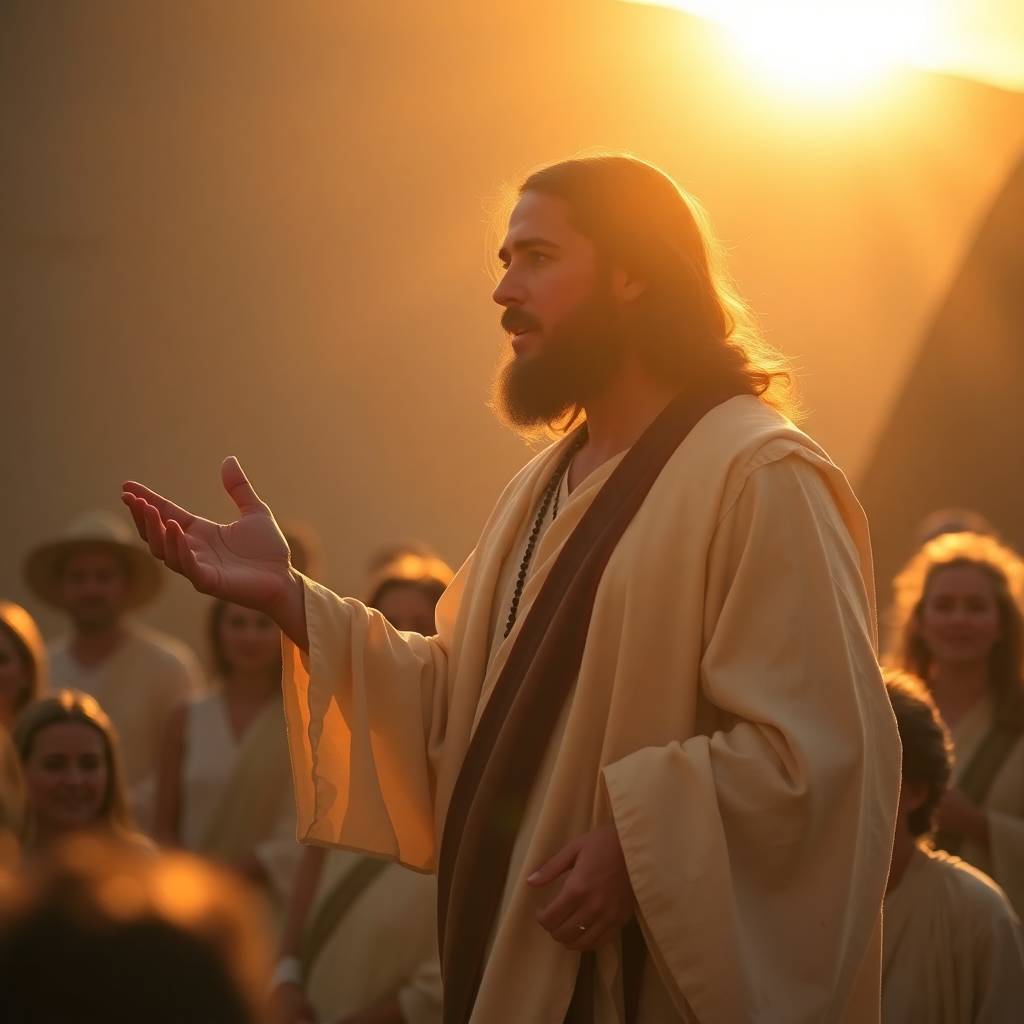






 ToBeLikeJesus