
Humility as the Gateway to the Kingdom of God

At that time the disciples came to Jesus and said, “Who then is greatest in the kingdom of heaven?” And He called a child to Himself and set him before them, and said, “Truly I say to you, unless you are converted and become like children, you will not enter the kingdom of heaven. Whoever then humbles himself as this child, he is the greatest in the kingdom of heaven. And whoever receives one such child in My name receives Me; but whoever causes one of these little ones who believe in Me to stumble, it would be better for him to have a heavy millstone hung around his neck, and to be drowned in the depth of the sea. (Matthew 18:1-6)
Introduction
In Matthew 18:1-6, Mark 9:42-48, and Luke 22:24-30, Jesus responds to the disciples’ disputes about greatness in the kingdom of heaven. By placing a child before them, He redefines greatness through the lens of humility, declaring, “Unless you are converted and become like children, you will not enter the kingdom of heaven”(Matthew 18:3). This essay analyzes the concept of becoming like a child, focusing on humility as the explicit attribute, exploring its linguistic roots, theological significance, and its revelation of Jesus as Messiah and King, whose lordship is real now and eternal.
Key Words and Phrases
“Converted” – στρέφω (Strong’s G4762 – strephō) means to turn or change direction, implying a transformative reorientation toward God’s kingdom, akin to repentance Acts 3:19.
“become like children” – παιδίον (Strong’s G3813 – paidion) denotes a young child, symbolizing vulnerability, dependence, and trust—qualities Jesus elevates as kingdom virtues.
“Humbles” – ταπεινόω (Strong’s G5013 – tapeinoō) means to lower oneself, reflecting humility as a posture of submission, contrasting worldly pride. In the Septuagint, tapeinoō describes God’s favor toward the humble Psalm 18:27.
The Messianic Model – Focus on Jesus’ Example
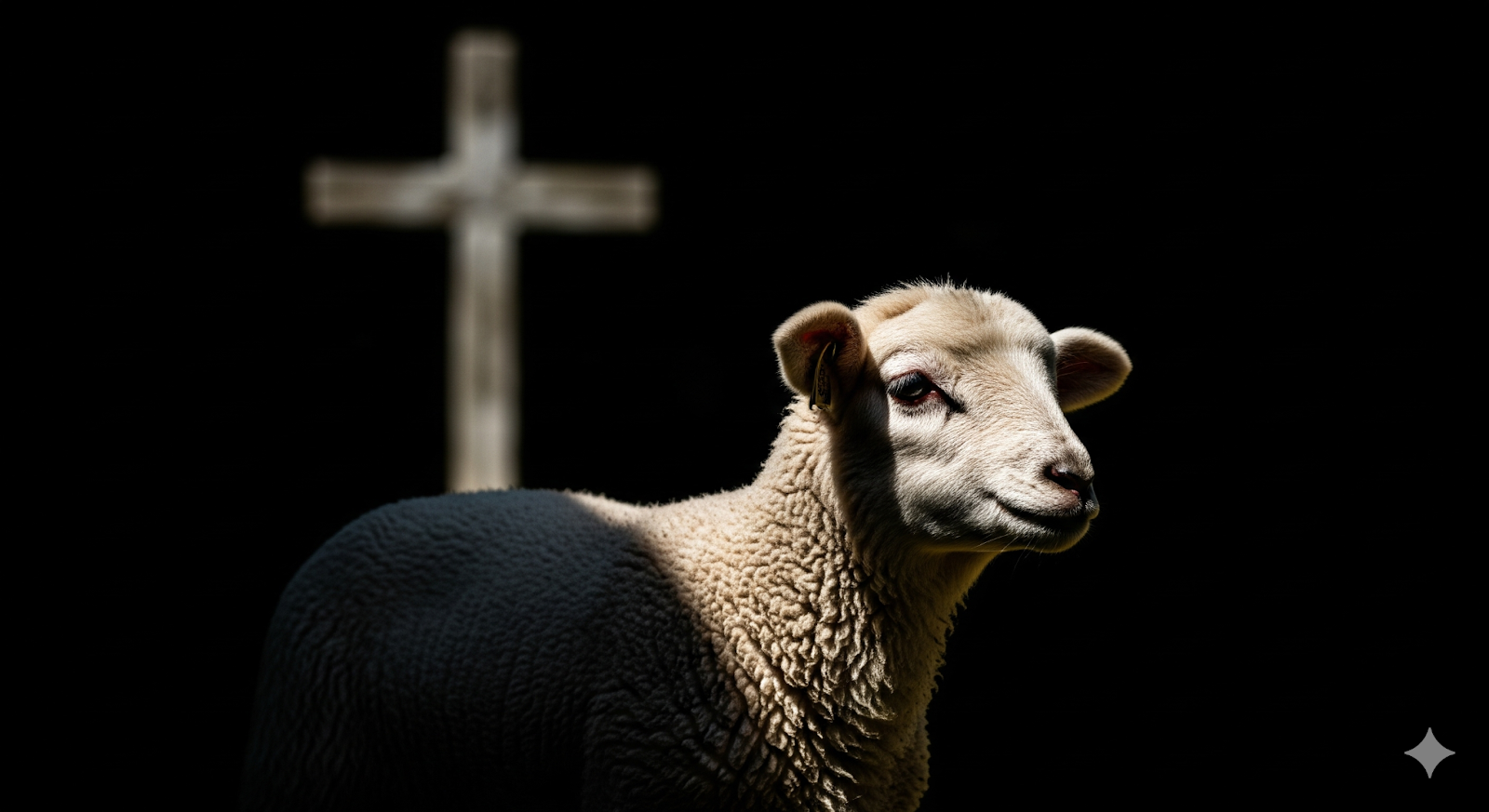
The Messianic Model is defined less by what Jesus said and more by what He did. His humility was not merely a teaching topic; it was the very fabric of His earthly existence. It began with the Incarnation, where the Almighty God emptied Himself to become a man, entering human history as a helpless child. This act of self-emptying (Philippians 2:7) set the trajectory for His entire life. He exhibited humility at every turn, culminating in the ultimate paradox: the Creator allowing His own creation to crucify Him. By choosing to die at the hands of those He made, Jesus demonstrated that true greatness is found in radical submission and self-sacrifice, embodied from the manger to the cross.
Key Theological Implications
This focus on humility is not merely a behavioral suggestion but a revelation of divine attributes. Scripture declares that “God is opposed to the proud, but gives grace to the humble” (James 4:6). Jesus personifies this as the Servant-King who characterized His messianic identity through self-emptying obedience. He “humbled Himself” even to the point of the cross (Philippians 2:8), directly fulfilling Isaiah’s ancient prophecy of a suffering servant (Isaiah 53:3-5). In doing so, He aligned Kingdom values with God’s redemptive plan, proving that true exaltation comes only through humility (1 Samuel 2:7-8).
Contemporary Spiritual Significance
The humility of the King is not just a historical fact or a future hope; it is active right now. Christ reigns in the lives of believers who have been transferred to His kingdom through submission to His lordship (Colossians 1:13). The call to “become like children” serves as a prophetic pointer to Christ’s eternal reign, establishing a reality where the humble will eventually rule with Him (2 Timothy 2:12). This present reality challenges us to view our current spiritual state not as a ladder to climb, but as a position of service within His sovereign rule.
The Transformative Power of Humility
Humility is the catalyst that fundamentally alters a disciple of Jesus in both character and practice. In character, it shifts the heart from self-reliance to total dependence on God, mirroring the childlike humility Jesus commended. It dismantles pride, allowing the believer to find their identity securely in Christ rather than in worldly status. In practice, this internal reality manifests as tangible service. It moves a believer from seeking to be served to actively serving others, just as Christ did (Luke 22:27). This practical obedience—valuing others above oneself—is the evidence of Jesus’ Lordship in a person’s life. By living this way, believers not only prepare for their future rule with Christ (Revelation 3:21 ) but also become living invitations to His Kingdom today.
Conclusion
Ultimately, entrance into the Kingdom of Heaven hinges on an essential, non-negotiable step: we must “become like children” (Matthew 18:3). Jesus explicitly ties our very inclusion in His Kingdom to this radical conversion—a turning away from the pursuit of status and toward a posture of humble dependence. In a culture that idolized power, Jesus elevated the child—socially powerless and dependent—as the archetype of the Kingdom citizen. This implies that the requirement for entry is not strength, but trust. To enter His Kingdom and share in His reign, we must strip away the illusion of self-sufficiency and embrace the vulnerability of a child, fully relying on the grace of our Father and the example of our Servant-King.
Disciple-Maker’s Short Story
TThe Crux of the Climb
The Colorado sun sank behind Eldorado Canyon’s rugged cliffs, painting golden streaks across the granite where Charlie and Lorenzo climbed. The air was sharp with pine and dust as Charlie belayed his mentor, Lorenzo, who was tackling a tricky overhang. Lorenzo’s fingers clung to a narrow crack, his body taut with focus.
“You got this, Lorenzo!” Charlie shouted, feeding rope through the belay device. “Just have that childlike faith!”
Lorenzo’s foot found a hold, and with a smooth pull, he cleared the crux, grinning as he clipped the anchor. “Thanks for the hype, Charlie!” he called down, his voice bouncing off the canyon walls.
Later, sprawled on the tailgate of Lorenzo’s weathered pickup, they sipped water from dented canteens, the rock face looming like a silent witness. Lorenzo, wiping chalk from his hands with a rag, looked over at Charlie with a thoughtful smile.
“I appreciate the encouragement up there,” Lorenzo said. “But it got me thinking. You know the phrase ‘childlike faith’ isn’t actually in the Bible?”
Charlie paused mid-sip, his eyebrows knitting together. He sifted through memories—Sunday school, sermons, aimlessly thumbing through his worn Bible—but drew a blank. “Wait, really? I thought Jesus talked about kids and the Kingdom all the time.”
“He does,” Lorenzo nodded, his tone gentle. “But we often mix up our own sayings with Scripture. It’s like assuming the Bible mentions ‘three wise men visiting baby Jesus’ or Paul getting knocked off his horse—traditions we add to the text. Jesus doesn’t explicitly say ‘have faith like a child.’ He points to something even harder to swallow.”
Charlie leaned in, curious. “Okay, so what’s the real deal?”
“Humility,” Lorenzo said, his voice steady. “In Matthew 18:3-4, Jesus says, ‘Unless you are converted and become like children, you will not enter the kingdom of heaven.’ And then He drops the hammer: ‘Whoever humbles himself as this child, he is the greatest.’”
“So it’s not about believing hard enough?”
“Faith is crucial, obviously,” Lorenzo explained. “But in that context, Jesus was addressing disciples who were arguing about who was the greatest. He wasn’t telling them to be innocent or gullible. In that culture, a child had zero status. They were totally dependent on their father for survival. To ‘become like a child’ isn’t just about trusting; it’s about lowering yourself. It’s admitting you bring nothing to the table.”
Charlie nodded slowly, looking back at the cliff they had just ascended. “So, when I said ‘childlike faith’…”
“You were focusing on our determination to believe and that’s good,” Lorenzo finished for him. “But here, Jesus is focusing on the posture of the heart. It’s like climbing. You didn’t get up that wall by just believing you could do it. You also had the attitude, respecting gravity, trusting your climbing buddy, and realizing you’re small compared to the rock. That’s humility. It’s submitting to the reality that God is God and we are not.”
Lorenzo tapped the tailgate. “Jesus modeled this perfectly. He didn’t just have a positive attitude; His faith was demonstrated through humility. He ‘humbled Himself by becoming obedient’ to the point of death (Philippians 2:8). And that’s another aspect of the Kingdom. He redefined greatness. It’s not about how much you know or how strong you are—it’s about how low you’re willing to go to serve.”
Charlie gazed at the darkening canyon, the lesson sinking in deeper than the climb. “I guess I’ve been using a cliché without realizing what Jesus really said.”
Lorenzo smiled, clapping a hand on Charlie’s shoulder. “We all do, kid. And look at you! Admitting your weakness! You got that child-like humility already. And that’s the climb. We study the Word to get the holds right, and we practice a little humility to keep from falling.”As they packed up, Charlie felt a shift. He realized that following Jesus wasn’t just about bold declarations of faith, but just as much about quietly, humbly walking with the Lord—mirroring the King who served (Mark 10:45).







 ToBeLikeJesus