Following the King and Entering His Kingdom has a Cost
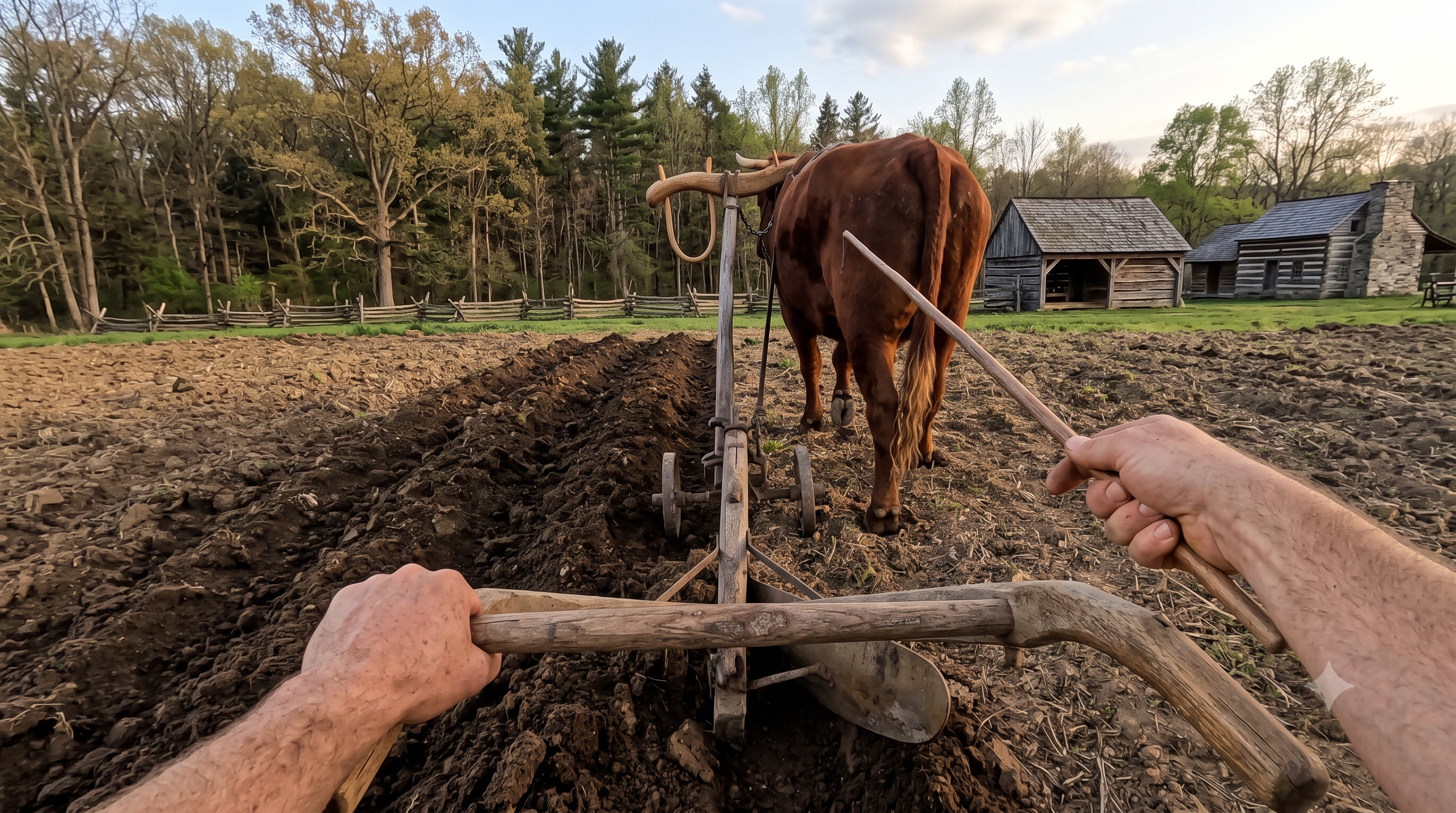
As they were going along the road, someone said to Him, “I will follow You wherever You go.” And Jesus said to him, “The foxes have holes and the birds of the air have nests, but the Son of Man has nowhere to lay His head.” And He said to another, “Follow Me.” But he said, “Lord, permit me first to go and bury my father.” But He said to him, “Allow the dead to bury their own dead; but as for you, go and proclaim everywhere the kingdom of God.” Another also said, “I will follow You, Lord; but first permit me to say good-bye to those at home.” But Jesus said to him, “No one, after putting his hand to the plow and looking back, is fit for the kingdom of God.” (Luke 9:57-62 NASB95)
Introduction
In this essay we will look at the challenge Jesus issues to all His would be followers. Some call this the cost of discipleship which is an entirely accurate statement. I would suggest it is the cost of entrance into the kingdom of God as well; Being willing to forsake all to follow Jesus.
Key Words and Phrases
Follow – ἀκολουθέω (Strong’s G190 – akoloutheō) to follow one who precedes, join him as his attendant, accompany him, to join one as a disciple, become or be his disciple, side with his party.
Looking back – βλέπω (Strong’s G991 – blepō) Looking – to see, discern, of the bodily eye, to see with the mind’s eye, in a geographical sense of places. Ὀπίσω (Strong’s G3694 – opisō) Back – back, behind, after, afterwards.
In a literal sense, looking back means the plowed rows become crooked if the farmer looks back instead of forward. Spiritually it is a lack of commitment to follow Jesus’ example, instructions, and commands.
Messianic Model – Focus on Jesus’ Example
“The foxes have holes and the birds of the air have nests, but the Son of Man has nowhere to lay His head.” – Jesus set an example of sacrificing comfort in order to advance the kingdom of God. He was more than willing to endure hardship to accomplish the Father’s desires.
“Allow the dead to bury their own dead; but as for you, go and proclaim everywhere the kingdom of God.” – Jesus prioritized the kingdom of God above all things including family. On one occasion Jesus’ mother and brothers were waiting outside for Him and requested His presence. Jesus continued to teach His disciples and responded with, “Who is My mother and who are My brothers?” And stretching out His hand toward His disciples, He said, “Behold My mother and My brothers! For whoever does the will of My Father who is in heaven, he is My brother and sister and mother.” (Matthew 12:48–50)
“No one, after putting his hand to the plow and looking back, is fit for the kingdom of God.” – Jesus was the epitome of focus and commitment. He only did what the Father was doing and only said what the Father told Him to say. (John 5:19, 12:49)
Key Theological Implications
Once again, this may seem like Jesus is establishing “salvation by works” or merit. Some have attempted to separate discipleship from conversion because of this apparent contradiction. The problem is that Jesus never said to make converts or ever insinuates that He expects anything less than discipleship. Jesus commands us to make disciples in the great commission, not converts. This is precisely why we have such spiritually weak people in the church and weak churches in turn. We are preaching free passes into heaven and not the goal of following and becoming like Jesus. We come across passages like this and we put those who take it seriously into a category of a “super saint” or the “special forces” of Christianity. There is no such distinction. Jesus expects all that profess Him as Savior to follow Him as Lord.
Now there is a distinction between a healthy disciple and an unhealthy disciple. An unhealthy disciple is one who pursues very little Christ-likeness in his or her own life. A healthy disciple is not perfect but aggressively pursuing their life in Christ. One is pretty obvious and the other we will leave for God and themselves to judge as to whether they are truly a disciple, really saved. (2 Corinthians 13:5)
All believers are to follow Christ’s example and be His disciples, not just “convert.” There is no such thing as “just a convert.”
If we enter the kingdom of God by grace and are sustained by His grace, then it is also by grace that we put our hands to the plow and do not look back. And if we do look back, it is by His grace that our eyes are turned again to the straight and narrow. “With God nothing is impossible.” (Mark 10:25–27)
It must be said, the standard Jesus expresses is a real expectation. And although it is by grace that any of us even move toward this standard of following Him, we must be willing to pursue it. To casually dismiss the requirements the King establishes as normative, is to reject the very grace required to achieve any advancement toward the goal. (Romans 6:1-2)
Contemporary Spiritual Significance
As stated earlier, one reason for such lethargy in the church is the false distinction between becoming a convert and the expectations of being a disciple of Jesus Christ. Discipleship, becoming like Jesus, must take center stage in our preaching, teaching, and training of the people of God. The fact that Jesus preached the “gospel of the kingdom” underscores there is a King and He sets the standards for living and faith. This should be taught from day one just as Jesus did. Failure to do so puts us in grave danger of preaching a false gospel. Yes, salvation is by grace. And by grace a true disciple of Jesus would be more than willing to place his or her life under the lordship of Christ. This should impact every part of what we think, do, and say as Christians.
The Transformative Power of the Cost of Discipleship
If we have taken Jesus’ call to be His disciple seriously, the very desire pulls at the heartstrings of God. It stands to reason God will respond in like manner to provide not only the grace to be forgiven but the grace to walk in His Son’s commands. But this is an ongoing process of maturity. As our desires conform to His and we renew our commitment day by day we’ll do exactly what the Apostle Peter said,
But grow in the grace and knowledge of our Lord and Savior Jesus Christ. To Him be the glory, both now and to the day of eternity. Amen. (2 Peter 3:18)
Conclusion
To be sure, the standard Jesus sets for following Him and living in His kingdom, discipleship, seems to be an impossible goal to achieve. And it is in any human strength. But with a willing and repentant heart the power of God’s grace is employed and conforms us to the image of His Son. We dare not make separate categories for those who just want to get into heaven and those who truly desire to follow Jesus as their King. Jesus’ call to all is to be His disciple, to become like Him. To aim at anything less is a very dangerous proposition.
Disciple-Maker’s Short Story
The Straight Line
The first cool breeze of early fall drifted through 74th Street, stirring the paper lantern above Mala’s Mochi & Tea, a tiny South Asian-owned shop wedged between a Bengali tailor and a Nepalese grocery.
Inside the community room upstairs—a windowless space the owner rented for “study groups”—five seekers huddled around a scarred table. The door was closed. One of them had checked it twice.
Ezra, a former Muslim-background believer himself, twenty years into following Isa, sat at the head of the table. He spent dozens of hours every week down in the shop, talking to anyone who wanted to ask questions. He loved the masses. But he only invited these specific five upstairs for deep training. He was intentionally practicing selection, and tonight, he was going to test the soil with one of the Master’s sharpest filters.
Sweating cups of mango passion fruit tea and guava slush crowded the table’s center. A plate of honey-drizzled mochi sat untouched.
Armaan, a Pakistani graduate student with quiet eyes, kept his phone face-down but within reach. Meera, from Sri Lanka, sat straight-backed, fingers wrapped around milk tea as if steadying something inside herself. Bibek, a jovial Nepali Uber driver, bounced his knee—his car was parked two blocks away with his Injil locked in the trunk. Next to him, Sutha, a Tamil mother of two, checked the time again. Her mother thought she was at English class. Farid, Afghan-born and a former interpreter, wore the expression of a man still deciding if hope was permitted.
Ezra set down his tea and smiled gently.
“Luke 9:57-62,” he said. “Isa’s high bar for following Him. You ready?”
Five heads nodded, though not evenly.
They read the passage aloud, voices soft and layered—Urdu, Tamil, Nepali, Sinhala—a mosaic of accents that somehow made the ancient words feel closer. Then, silence.
Ezra leaned back. “What do you see? What challenges you?”
Somewhere below, a scooter revved. Someone shouted in Urdu about cricket scores. Finally, Meera broke the stillness. “Isa… He doesn’t soften anything.” She stared at the text. “He tells this man He has nowhere to lay His head. Growing up, we learned Isa was honored, a great prophet. But this… This Isa asks for everything.”
Bibek laughed nervously. “I’ve slept in my car between airport runs. Following Isa wasn’t the reason, but it didn’t feel holy.” He tried to make it a joke. No one laughed.
Ezra nodded. “Why does He begin with discomfort?”
Armaan traced his finger along the page. “Because a disciple follows where the master goes. If Isa chose hardship, I can’t pretend comfort is my right.” His voice barely rose above a whisper. “But when I say that out loud, I feel exposed.”
The others nodded. They understood “exposed.”
Ezra let the moment breathe, gently turning the filter. “What about the next man? The one who wants to bury his father?”
Farid shifted, his Afghan accent thickening. “That line is harsh. Family is everything. Duty. Honor. If my father died and someone told me the Kingdom matters more…” He paused. “My relatives would say I have no heart.”
“And Isa?” Ezra prompted.
Farid looked up, eyes darker than his tea. “Isa says the Kingdom matters more than expectations. More than reputation.” His voice dropped. “More than shame.”
A long silence followed. Sutha had been quiet all evening. Now her hands trembled slightly around her cup.
“Sutha?” Ezra’s voice was gentle.
She swallowed hard. “My mother found my Injil last week.” The word came out in a whisper. Safer. “She didn’t burn it. Worse. She cried.” Sutha’s voice cracked. “She said, ‘After everything we sacrificed to raise you properly, you shame us with this shirk.'”
She pressed her palms together. “When I came tonight, I took two trains and walked four extra blocks so no one from the masjid would see me. I told my husband I’m at English tutoring.” She looked up, tears pooling. “Is this what Isa asks? To walk away even when your own mother weeps? When you’re called kafir by your own blood?”
No one breathed.
Farid’s jaw tightened. “My cousin stopped speaking to me last month. Not because I was baptized—I haven’t been. Just for reading about Isa. He said, ‘You’re dead to us.’ Just like that.”
Armaan added quietly, “My brother said if I’m ever baptized, I’m finished. Not metaphorically.”
The room felt smaller.
Ezra reached for his cup but didn’t drink. He didn’t offer a platitude. He was looking for 4th-soil believers, and 4th-soil requires deep roots to survive this kind of heat. “Let’s sit with the last image,” he said softly. “A farmer at the plow. Eyes forward. Not looking back. What is Isa really confronting here?”
Armaan spoke first. “Commitment. Focus. If the farmer looks back, the lines go crooked.” He mimed plowing. “The field becomes useless.”
“And spiritually?” Ezra asked.
Armaan exhaled slowly. “If I keep looking at what I left behind… I’ll never really follow Isa. The rows will always be crooked.”
The truth settled over them like a heavy weight.
Meera leaned forward. “But it feels impossible. My cousins ask why I study this book more than I ever studied the Quran. I try to explain I’m becoming like Isa. They laugh. They say no one lives like that anymore. And sometimes… I look back and wonder if they’re right.”
Ezra’s expression softened. “Let me ask you something. All of you. When you imagine becoming like Isa… what do you feel?”
Sutha’s voice broke. “Longing.” Farid nodded. “Hunger.” Armaan whispered, “Hope. And terror.” Bibek said, “Unworthiness.” Meera added, “Desire. And so much frustration.”
Ezra smiled, and something shifted in the room. “These feelings? They’re signs of grace. Not perfection. That ache to be like Him—that’s where following begins. Not in flawless obedience, but in willing pursuit.”
He tapped the page. “This text isn’t Isa pushing people away. It’s Isa telling the truth about life in the Kingdom. He lived it first. He carried the discomfort. He redefined family. He never turned from the Father’s will. He walked the straight line so we could learn to walk behind Him.”
Golden light from a street lamp slanted through the single high window.
Farid ran his thumb over his cup’s rim. “Ezra… when Isa says ‘follow Me,’ do you ever wonder if we’ll fail Him the way we’ve failed others?”
Ezra turned his cup slowly. “Every single day.” He looked up. “But discipleship isn’t about never looking back. It’s about what you do after you’ve looked. Do you turn forward again? By His grace, yes. The Spirit straightens our eyes. And that desire to become like Isa? That is evidence He’s already shaping you.”
The room fell into a deeper silence—not empty, but full.
Then Ezra lifted his Injil. He was ready to issue the invitation to the few. “Let’s do what we do. Answer honestly: What does Isa want you to do in response to this passage? Not as a group. You. Personally.”
One by one, they spoke.
Armaan: “Stop bargaining with comfort. Follow even into uncertainty.” Meera: “Fix my eyes forward. Stop romanticizing who I used to be.” Bibek: “Talk to my brother. Tell him I’m choosing Isa. No more jokes or deflecting.” Farid: “Return to real prayer. I’ve been avoiding God because I’m afraid He expects more than I can give.” Sutha hesitated longest. “I need to tell my mother the truth. Not defensively. Not fearfully. Just truthfully. I follow Isa because I want to become like Him. Even if she cries again.”
Ezra nodded as if receiving sacred vows. “And what will you do this week?”
The answers came slowly—texts they’d send, conversations they’d begin, prayers they’d attempt with trembling hands. When they finished, Ezra gathered his words carefully.
“Then we pray. Not that you become perfect, but that you grow into the likeness of Al-Masih. That your hearts stay forward. That grace keeps your rows straight.”
They bowed their heads. The smell of cardamom tea and roasted coffee drifted up from below. Ezra prayed simply, asking for courage and clarity, for the fear of cost to fade and the desire for the King to grow. He prayed in English but slipped into Arabic for one phrase: “Isa, ya Rabb…” Lord Jesus.
When they lifted their heads, something had shifted—not louder or softer, but more aligned. Like a field after the first straight row.
As they gathered their things, Meera glanced back at the table. Something in her chest loosened. She turned to Ezra. “You said Isa walked the straight line so we could walk behind Him.”
He nodded.
“So following Him isn’t about being fearless?”
“No,” Ezra said gently. “It’s about being willing.”
“And not looking back?”
“Not letting what’s behind you define what you do next.”
Meera breathed deeply. “Then I think I’m ready for the next step.”
Across the table, Sutha smiled—weak but brave. Farid adjusted his jacket as if preparing for something heavier than weather. Bibek lifted the last piece of mochi in a silent toast. Armaan’s eyes brightened with quiet resolve.
Ezra stood, fully confident in his selection. “Then let’s walk. One straight row at a time.”
They descended the narrow stairs single file, emerging onto 74th Street as the evening deepened. The sidewalk bustled with families, vendors, and couples walking hand-in-hand. The neon signs glowed in Bengali, Urdu, Tamil, and Nepali—a neighborhood holding a dozen worlds at once.
The disciples stepped into the flow of the crowd, carrying their hidden Injils, their unspoken questions, and the unsteady but undeniable desire to become like Isa. The lantern above Mala’s flickered to life, a small reminder that even ordinary streets in Queens can become Kingdom roads when the eyes of a disciple look forward.
And when they are willing to walk the straight line, no matter the cost.