Last week, we discussed the stewardship of finding the right people. But once we have identified those “good soil” individuals, what are we calling them to? We aren’t calling them to a hobby; we are calling them to a King’s mandate.
Once Jesus found the right people, He did not just hang out with them; He cast a compelling, authoritative vision for their lives. In our modern context, we often view “vision casting” as a corporate buzzword or a gentle suggestion. But for Jesus, vision was a command wrapped in a promise.
The Jesus Model
Look at His initial invitation in Matthew 4:19: “Follow Me, and I will make you fishers of men” (Matthew 4:19). This was not a vague offer of friendship; it was a clear trajectory. He defined the relationship (“Follow Me”) and the result (“fishers of men”). He spoke with the authority of someone who knew exactly what He could produce in their lives if they submitted to His process.
This authority culminated in the Great Commission. Jesus did not ask His followers to try their best; He declared, “All authority has been given to Me in heaven and on earth. Go therefore and make disciples…” (Matthew 28:18-20). The vision for spiritual generations is anchored in the imperative. It is a command driven by His absolute lordship. He did not offer the mission as an option for the spiritual elite but as the standard operating procedure for every believer.
The Scriptural Model
When Paul took the baton of leadership, he mirrored Jesus’ authoritative tone. He did not suggest ministry ideas to Timothy; he issued orders like a general on a battlefield. He writes, “I solemnly charge you in the presence of God and of Christ Jesus and of His chosen angels, to maintain these principles without bias” (1 Timothy 5:21).
Paul’s vision casting was not rooted in his own charisma but in the authority of God’s command and promise. In his final letter, facing execution, he intensified this language: “I solemnly charge you in the presence of God and of Christ Jesus… preach the word” (2 Timothy 4:1-2). The Greek word for “solemnly charge” (diamartyromai) implies testifying under oath. Paul was binding Timothy’s conscience to the mission. He understood that to endure the hardships of ministry, Timothy needed more than a pep talk; he needed a divine mandate.
Stories
The face on my laptop screen looked tired. I was on a Zoom call with Sam, a missionary who had been grinding away in his field for a decade. He was faithful and hardworking, but he was frustrated. He wasn’t seeing “generations”—that spiritual multiplication where disciples make disciples who make disciples.
“I just don’t know why it’s stalling out,” he admitted, rubbing his eyes.
For the next thirty minutes, I didn’t try to fix it. I just listened. He explained the ins and outs of his ministry, the cultural hurdles, and the endless schedule. Finally, when he paused for air, I asked a simple question.
“Sam, what do you use for a vision cast to guide your people? When you’re trying to rally them, what do you say?”
His posture straightened immediately. He had an answer ready. He recited a beautifully crafted vision statement. It was comprehensive and strategic, detailing exactly how they planned to reach his city, expand to the province, and eventually impact the entire country.
I took a deep breath. I knew what I had to say would sting, but it was necessary.
“Sam,” I said gently, “Your vision has no authority.”
He blinked, clearly taken aback.
I leaned in toward the camera. “That is Sam’s vision to reach the city and the country. It sounds great, and it clearly motivates you because it’s your vision. But it holds no weight with anyone else. If you want your folks to be inspired, compelled, and truly committed, you have to stop giving them your vision and start giving them Jesus’ vision.”
I quoted the Great Commission in Matthew 28:18-20;
“And Jesus came up and spoke to them, saying, “All authority has been given to Me in heaven and on earth. Go therefore and make disciples of all the nations, baptizing them in the name of the Father and the Son and the Holy Spirit, teaching them to observe all that I commanded you; and lo, I am with you always, even to the end of the age.” (Matthew 28:18-20)
I continued “This may not fix all your problems but at least your vision will have the authority to command a life. Use that, and you won’t just be sharing a plan; you’ll be delivering a command from the King.”
Suggestions
Memorize the Mandate: Commit the Great Commission (Matthew 28:18-20) to memory. When you challenge someone, have the Word of God ready on your lips, not just a good idea in your head.
Pray Through It: Pray through the Great Commission and other Scripture asking God to make you a generational leader.
The “Eternity” Conversation: Take the person you are discipling out for coffee and ask, “What do you want your life to look like in 50 years?” Use their answer to pivot to a Kingdom vision that outlasts their career.
Application for Disciple Makers
For us, the WIGTake involves shaking off our hesitancy to call people to something greater. We often fear seeming demanding, so we settle for low-bar invitations. But those you are discipling crave a cause worth dying for. To be clear, we are not asking you to sell a slick version of your own personal vision. We are pointing them to Jesus’ vision—the one that holds all authority.
Biblical vision casting means looking someone in the eye and saying, “Jesus commanded us to go and make disciples. I can help you do that. If you’re all in, let’s get after it.” It involves the “solemn charge” to prioritize the Kingdom above comfort. It is not about controlling people, but about confidently connecting them to the destiny Jesus has already commanded. When you cast vision with this kind of authority, you aren’t imposing your will; you are clarifying God’s.
An authoritative vision is a heavy weight to carry. If we try to shoulder it alone, we will crumble. Next week, we look at our total dependence on the Father: Ingredient #5: Prayer and the Hand of God.
Jesus answered and said to him, “Truly, truly, I say to you, unless one is born again he cannot see the kingdom of God.” Nicodemus said to Him, “How can a man be born when he is old? He cannot enter a second time into his mother’s womb and be born, can he?” Jesus answered, “Truly, truly, I say to you, unless one is born of water and the Spirit he cannot enter into the kingdom of God.” (John 3:3-5)
Introduction
When Jesus sat down with Nicodemus under the cover of night, He completely upended the religious leader’s paradigm by introducing a radical concept: spiritual rebirth. In this Kernel, we are investigating what it actually means to be “born again.” We are going to explore the nuances between “seeing” and “entering” the Kingdom of God, and unpack the vital distinction Jesus makes between being born of “water” and being born of the “Spirit.”
Key Words and Phrases
Born again – In Jesus’ expression, being “born again” refers to salvation from sin and inheriting eternal life. It is the shedding of the old self and being entirely regenerated into the new (2 Corinthians 5:17; Titus 3:5). Jesus makes a stark distinction between natural birth and spiritual birth; both are required to see and enter the Kingdom of God. The Apostle Peter is the only other New Testament writer to explicitly use this exact phrase (1 Peter 1:3, 23). However, both Paul and the writer of Hebrews refer to the concept of spiritual infancy, often using it to lovingly correct believers for a lack of spiritual maturity and a continued reliance on “milk” rather than solid food (1 Corinthians 3:1-2; Hebrews 5:12-13).
See the kingdom of God – “See” uses the Greek word horaō (Strong’s G3708), meaning to see with the eyes, to perceive, to know, or to become acquainted with by experience. In this specific context, becoming “acquainted with by experience” is the best fit. Without spiritual rebirth, a person cannot even perceive or experience the reality of God’s Kingdom.
Enter into the kingdom of God – This phrase is synonymous with salvation, being saved, and eternal life. The best example of these terms being used interchangeably is the story of the rich young ruler. He asks Jesus how to “inherit eternal life,” Jesus tells His disciples how hard it is for the wealthy to “enter the kingdom of God,” and the disciples respond by asking, “Then who can be saved?” (Matthew 19:16-30; Mark 10:17-31; Luke 18:18-30).
Born of water – This is frequently misinterpreted as a reference to water baptism. However, if we follow the logic of Jesus’ discourse, He is clearly referring to the amniotic fluid involved in natural, physical birth. Natural birth (water) comes from the flesh, is initiated by human choice, and results in temporary physical life in the natural world. Spiritual birth (Spirit) comes from the Spirit of God, is initiated by His divine power, and results in eternal life within the Kingdom of God.
Born of the Spirit – The only way to truly enter the Kingdom of God is to repent and believe in the gospel that Jesus preached (Mark 1:15; John 14:6). Through faith and the unmerited grace of God, a person is born again—washed, regenerated, and officially ushered into the Kingdom by the power of the Holy Spirit (Titus 3:5).
Messianic Model – Focus on Jesus’ Example
Once again, Jesus is the ultimate model for us to follow, but in this specific instance, there is a profound theological twist. For Jesus, the order of birth was actually reversed out of divine necessity. Jesus was born of the Spirit first (Matthew 1:18-20; Luke 1:35) and then subsequently born of water, taking on human flesh (John 1:14).
Though He was fully God, He was also fully human, experiencing the exact same physical limitations of time, space, and energy that we do (Matthew 4:2; John 4:6; Hebrews 2:14). Because of this, we clearly see His reliance on the Holy Spirit throughout His life. The Spirit descended on Him at His baptism (Matthew 3:16), led Him into the wilderness (Matthew 4:1), and empowered His entire earthly ministry just as the prophets foretold (Luke 4:14, 18).
Key Theological Implications
Man has proposed countless ways to achieve salvation. In fact, it is often said in our culture that “all roads lead to heaven.” To a certain extent, I wholeheartedly agree. Everyone will eventually get to heaven to stand before God and be judged (Hebrews 9:27). Getting there isn’t the issue; the real issue is how long you will stay.
Only one thing can keep a person from being cast “into the eternal fire which has been prepared for the devil and his angels” (Matthew 25:41). That singular requirement is to be born again—to repent, believe in God’s act of redemption through Jesus Christ, and enter into His Kingdom. The gospel is incredibly good news for those who embrace His love, but it is devastating news for those perishing in unbelief.
Contemporary Spiritual Significance
What was true for Nicodemus in the first century is still absolutely true for us today. Being born again to enter the Kingdom of God is a foundational principle, not just a religious method. A principle is an eternal truth that stands the test of time, culture, and circumstance, guiding reality regardless of the shifting sands of human opinion. While the phrase “born again” may be metaphorical, the requirement is an unbending spiritual law. You simply must be born again to enter the Kingdom.
The Transformative Power of Being Born Again
There are three profoundly transformative realities that occur when we are “born again.”
First, we are radically and irrevocably changed into “new creatures.” We are justified, meaning our standing with God is now one of righteousness and blamelessness, and we are spiritually seated with Him in the heavenly places (2 Corinthians 5:17, 21; Ephesians 1:4; Ephesians 2:6-7). This rebirth is the immediate beginning of the eternal life Jesus described in His high priestly prayer: “This is eternal life, that they may know You, the only true God, and Jesus Christ whom You have sent” (John 17:3).
Second, every truly born-again believer is endowed, sealed, and empowered by the Holy Spirit. While we won’t be perfect, we are continually sanctified, bearing the fruit of the Spirit and demonstrating clear evidence of our Kingdom citizenship (Ephesians 1:13; Galatians 5:22-23; 2 Corinthians 3:18).
Finally, being born again means we get to look forward to the day when we will meet our God face-to-face and be completely glorified. It is the ultimate culmination of the Christian life—a time to embrace our eternal reward and reign with our King forever as His co-regents (Philippians 3:20; 2 Timothy 2:12; Revelation 3:21).
Conclusion
Being “born again” is not a 1970s colloquialism invented by hippies during the Jesus Movement. They were simply reading their Bibles and discovering that the radical life change they were experiencing was actually coined by Jesus Himself. It represents the total conversion and regeneration of the soul—a profound transformation where God imparts brand-new life into the one who believes. It is not merely improving one’s moral standing or adopting better habits; it is the complete remaking of a person from within by the power of the Holy Spirit.
This new birth awakens us to spiritual realities, sets us free from the dominion of sin, and officially initiates our participation in the mission of the Kingdom. Thus, the invitation Jesus gave to Nicodemus in the dark still stands in the light for every generation: unless you are born of water and the Spirit, you cannot enter the Kingdom of God.
Disciple-Maker’s Short Story
Where Wind and Water Meet
The sun hung low over the Fijian inlet, painting the sky in gradients of copper and violet. Maya sat on the weathered dock, her feet dangling above water so clear she could count the starfish twenty feet below. Salt crystals dried on her shoulders, residue from the afternoon dive. Beside her, Kiera twisted her hair into a rope, wringing out the last of the ocean.
“I still can’t believe we saw that turtle,” Kiera said, her voice carrying the breathlessness of someone still processing wonder. “The way it just… floated there. Like gravity didn’t exist.”
Maya smiled but didn’t answer immediately. She was watching the younger woman’s profile—the way Kiera’s jaw tightened slightly, a tell Maya had learned to recognize over their two years of meeting weekly. Something was lodged beneath the surface.
“What’s on your mind?” Maya asked.
Kiera’s hands stilled. She looked down at the dock planks, weathered gray by years of salt and sun. “It’s stupid.”
“Doubt that.”
A pause. Then: “On the flight from Auckland, I sat next to this guy. Mid-thirties, business casual, reading some thriller novel. We started talking—just small stuff at first. Weather, travel plans.” She pulled her knees to her chest. “Then he asked what I did, and I told him about working with the youth group at church. His whole demeanor shifted.”
Maya waited.
“He said he was a Christian too. Went to church on holidays, believed in being a good person, all that. So I asked him about his relationship with Jesus, and…” Kiera exhaled sharply through her nose. “He laughed. Not a mean laugh, exactly, but dismissive. Then he asked if I was ‘one of those born-again Christians.’ The way he said it—like I was part of some fringe cult.”
The sun dropped another inch, bleeding red into the horizon line.
“What did you say?” Maya asked.
“I froze. I managed something about Jesus being important to me, but it came out defensive. Shaky. He just nodded and went back to his book.” Kiera’s voice dropped. “I’ve been replaying it for three days. All the things I should have said. The clarity I didn’t have.”
Maya drew her feet up onto the dock, cross-legged. “Can I tell you what I’m hearing?”
“Please.”
“You encountered someone who claimed the name of Christ but dismissed the transformation that name requires. And instead of feeling angry or superior, you’re wrestling with your own inadequacy.” Maya tilted her head. “That’s not weakness, Kiera. That’s spiritual sensitivity.”
Kiera looked up, eyes red-rimmed but dry. “Doesn’t feel very sensitive. Feels like I failed.”
“Do you remember what we studied last month? John chapter three?”
“Nicodemus.”
“Right. A religious expert—a teacher of Israel—comes to Jesus under cover of darkness. And Jesus doesn’t ease him into revelation. He speaks paradox: ‘Unless one is born again, he cannot see the kingdom of God.'” Maya ran her finger along a crack in the dock wood. “Nicodemus responds exactly like your seatmate might have. ‘How can a man be born when he is old? He cannot enter a second time into his mother’s womb, can he?'”
A fish broke the water’s surface, concentric rings spreading outward.
“Jesus is deliberate in His language,” Maya continued. “He distinguishes between seeing and entering the kingdom. Seeing comes first—a spiritual awakening, an ability to perceive what was always there but invisible. Then entering—actually passing through, taking up residence, being transformed by kingdom citizenship.”
Kiera picked at a splinter. “The guy on the plane claimed to see it. To be part of it.”
“Did he? Or did he claim association with religious culture?” Maya’s tone held no judgment, only precision. “Jesus tells Nicodemus that birth requires both water and Spirit. The water represents natural birth—the physical process we all undergo. No controversy there. But the Spirit… that’s where the scandal begins.”
The sun touched the horizon now, and the temperature dropped perceptibly. Kiera pulled her towel around her shoulders.
“Natural birth happens to us,” Maya said. “We don’t choose our parents, our DNA, our entry into the world. It’s utterly passive from our perspective. But we see the effects—a baby exists where none existed before. Jesus says spiritual birth follows similar logic. The Spirit moves like wind: you hear its sound, see its effects, but can’t control its direction or origin. Being born of the Spirit isn’t about deciding to be better or signing up for religious membership. It’s about being radically, irrevocably remade.”
“So when the guy said he believed in being a good person…”
“He was describing improvement. Modification. Like repainting a house.” Maya leaned forward. “Jesus is talking about demolition and reconstruction. The old self doesn’t get renovated—it dies. Paul calls it being a new creation. The former things pass away; everything becomes new. It’s violent in its completeness.”
A wave broke against the inlet’s rocks, the sound like exhaled breath.
Kiera was quiet for a long moment. Then: “So being ‘born again’ isn’t about joining a subculture or saying the right words.”
“No. It’s about surrender to a process you can’t orchestrate. Nicodemus couldn’t understand because he was still operating in the economy of human achievement—what must I do to earn this? But Jesus was describing receptivity. Spiritual birth happens to you, though you must receive it willingly. The Spirit convicts, opens blind eyes, makes the dead alive. That’s why Jesus could tell Nicodemus, a master teacher, ‘You must be born again.’ It wasn’t negotiable based on prior merit.”
The sun was halfway below the horizon now, the sky’s colors deepening.
“Your seatmate might attend church,” Maya continued. “He might be moral, kind, even religiously informed. But if he hasn’t been born of the Spirit—if he hasn’t experienced that fundamental death and resurrection—he can’t see the kingdom, much less enter it. It remains a nice idea, a moral framework, a cultural inheritance. But not reality. Not transformation.”
Kiera’s eyes tracked a seabird’s flight across the darkening water. “How do you explain that to someone in thirty seconds before they shut down?”
“You probably can’t,” Maya said gently. “Not comprehensively. But you can point to the necessity. Jesus used the strongest possible language: ‘Truly, truly’—His way of saying ‘Listen carefully to what I’m about to tell you.’ Unless one is born again, he cannot see the kingdom. Not ‘might not,’ not ‘will struggle to’—cannot. It’s a category of impossibility. Like asking the color blind to describe sunset.”
She gestured toward the horizon where the sun was now three-quarters submerged.
“And then He makes it even more specific: ‘Unless one is born of water and the Spirit, he cannot enter the kingdom of God.’ Seeing isn’t enough. You must pass through. Be birthed into. Become a citizen of a realm that operates on entirely different physics.”
“So the transformation is… what? How do you know it’s real?”
Maya counted on her fingers: “You’re justified—your legal standing before God shifts from condemned to righteous. You’re sanctified—progressively transformed into the image of Christ. You’re sealed—marked as belonging to Him, secure. You’re empowered—given spiritual gifts for service. And ultimately, you’ll be glorified—made perfect when you see Him face to face.”
Kiera absorbed this. “So it’s not that I’m in some exclusive club and that guy isn’t.”
“No. It’s that you’ve experienced death and resurrection, and he’s describing good conduct and religion. One is supernatural intervention; the other is human effort. They’re not even in the same category.”
The sun disappeared completely, leaving only its afterglow.
“Can I tell you what I think happened on that plane?” Maya asked.
“Yeah.”
“I think the Spirit gave you opportunity to plant a seed. Your response—or lack of perfect response—doesn’t negate that. The kingdom isn’t advanced by your eloquence. It’s advanced by God’s power working through willing vessels. You showed up. You spoke when prompted. The rest isn’t yours to carry.”
Kiera exhaled slowly. “I just want to be like Jesus. To have His clarity, His courage.”
“Then remember: Jesus was born of the Spirit before He was born of water. His ministry was empowered by that same Spirit. At His baptism, the Spirit descended. In the wilderness, the Spirit led. Throughout His work, the Spirit filled Him. He didn’t operate from mere human capacity—He lived in complete dependence on the Father through the Spirit.”
Maya reached over and squeezed Kiera’s shoulder. “That’s the pattern. Not superhuman confidence, but supernatural dependence. You want to be like Him? Then recognize that being born again isn’t the end—it’s the beginning. Every day, you yield to the Spirit’s leading. Every conversation, you trust His power rather than your preparation. Every failure, you remember that He’s the one who opens blind eyes, not you.”
The first stars appeared, pinpricks against deepening blue.
“The man on the plane,” Kiera said slowly, “might think he’s already arrived. That checking the ‘Christian’ box is sufficient.”
“And Jesus would tell him the same thing He told Nicodemus: You must be born again. Not improved, not affiliated—reborn. It’s the only way to see, and the only way to enter.”
Kiera nodded, some tension releasing from her shoulders. “I think I get it now. Or at least I’m starting to.”
“That’s all any of us can do—start. But here’s the beautiful thing: once you’re born again, you keep growing. Spiritual infancy becomes childhood becomes maturity. The transformation that began in a single moment continues across a lifetime.” Maya stood, offering her hand. “Like learning to dive. First day, you’re terrified of the regulator. By day three, you’re swimming with sea turtles. But you had to be willing to go under first.”
Kiera took her hand and rose. “To die to breathing air.”
“To trust the equipment would sustain you in a medium that would otherwise kill you.”
They walked back toward the beach house, the dock creaking beneath their feet. Behind them, the ocean continued its rhythmic conversation with the shore—ancient, patient, indifferent to human urgency.
“Thank you,” Kiera said quietly.
“For what?”
“For not having all the answers on that plane. For wrestling through this with me instead of just delivering a sermon.”
Maya laughed. “That’s the thing about being born again—it doesn’t make you omniscient. It makes you His. And He’s patient with our stumbling toward clarity.”
The lights from the house spilled golden across the sand. Inside, dinner waited, and tomorrow would bring new dives, deeper waters. But for now, there was this: two women walking together, one leading slightly ahead, both following the same invisible current that had remade them from within.
“Do you think he’ll remember the conversation?” Kiera asked.
“I think the Spirit remembers,” Maya said. “And that’s what matters.”
They reached the house, pausing at the door. Kiera turned back toward the ocean, now barely visible in the gathering dark.
“One more thing,” she said. “Next time—I’ll remember what you said. That I don’t have to have perfect words. Just faithful presence.”
“And the rest?”
Kiera smiled. “The rest is wind I can’t see but can trust is moving.”
They went inside, leaving the ocean to its ancient work—wave after wave, endlessly arriving, endlessly transforming everything it touched.
At that time the Feast of Dedication took place in Jerusalem. It was winter, and Jesus was walking in the temple courts in Solomon’s Colonnade. So the Jews gathered around Him and demanded, “How long will You keep us in suspense? If You are the Christ, tell us plainly.” “I already told you,” Jesus replied, “but you did not believe. The works I do in My Father’s name testify on My behalf. But because you are not My sheep, you refuse to believe. My sheep listen to My voice; I know them, and they follow Me. I give them eternal life, and they will never perish. No one can snatch them out of My hand. My Father who has given them to Me is greater than all. No one can snatch them out of My Father’s hand. I and the Father are one.” At this, the Jews again picked up stones to stone Him.
My Thoughts
Can you imagine what it was like to tag along with Jesus? Sure, He made a lot of people happy by healing the sick and raising the dead. He even got a few winks from people who found His teaching entertaining, even if they didn’t quite get the punchline. But on the other hand, there were contingents who hated His guts and wanted Him—and His followers—dead.
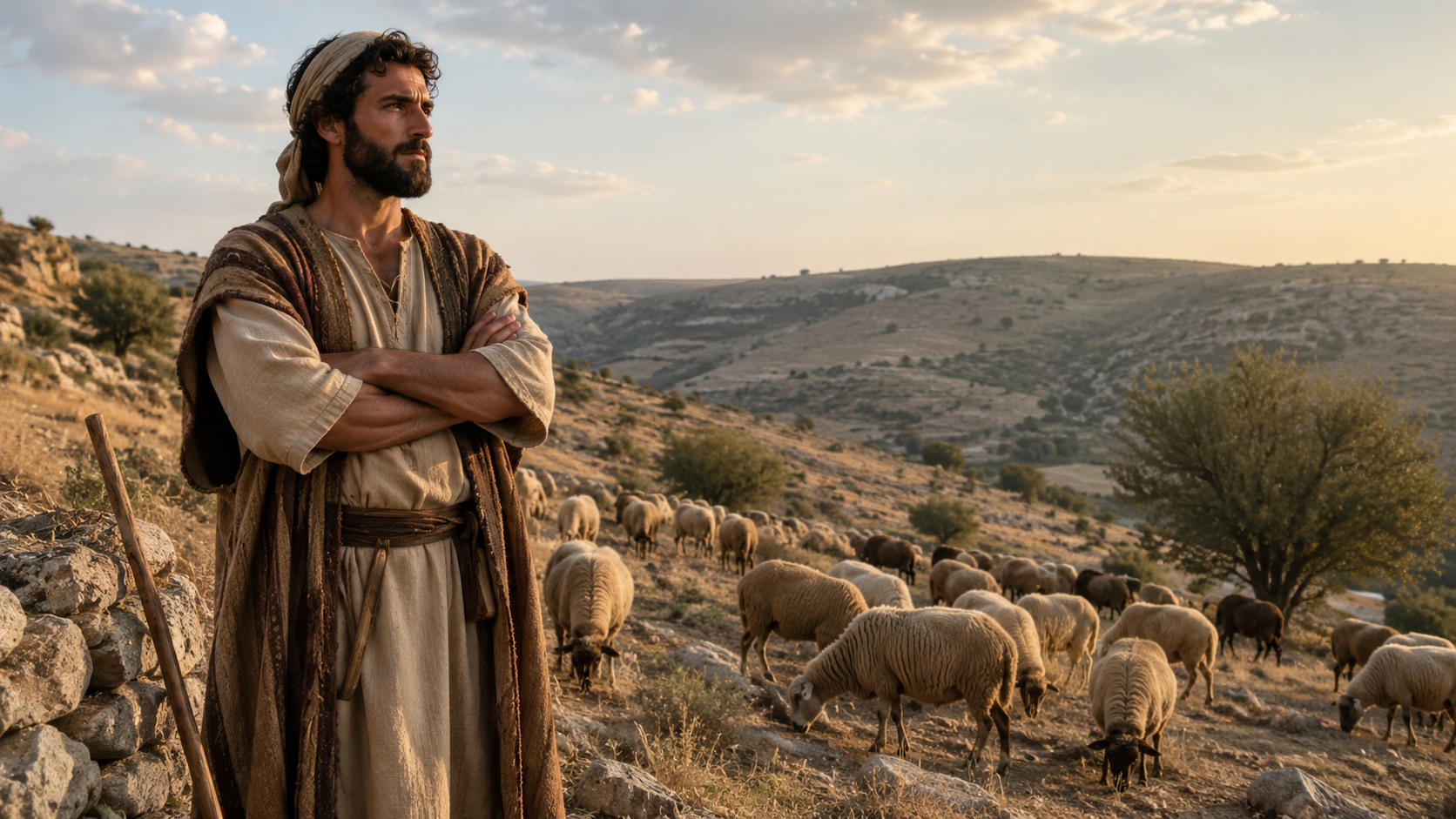
Jesus walked right into the lion’s den on multiple occasions, seemingly poking the biggest lions right in the eye. I can just picture His disciples wincing and taking a few steps back in response to some of His replies to the religious leaders of the day. And yet, Jesus insisted that the safest place to be in the midst of all that hostility was right by His side. His sheep know His voice, know they are secure, and know they will never perish.
As disciple-makers, we are not only meant to possess this kind of confidence and courage, but we must also instill it in others. How do we do that? First and foremost, by helping them know their Master personally instead of vicariously.
Too often, “disciple-making” causes those being discipled to lean on the disciple-maker rather than on Jesus Himself. We need to take any dependence they might have on us and help them radically secure it on the Savior. This happens by teaching them to feed themselves on the Scriptures and encouraging them to go to God for answers, rather than coming to us. This also includes the vital element of prayer.
We may also have to endure the pain of not coming to their rescue in dire situations, simply to avoid getting between the sheep and the Shepherd. Really, when you think about it, it’s a lot like raising kids. You don’t want your children to remain completely dependent on you forever. They have to learn how to navigate life on their own, with Jesus as their true comforter and guide.
My Story
There’s an old joke in the Army: The fastest way to get promoted to corporal is to go to Korea as a sergeant.
If you aren’t familiar with the rank structure, that’s a direct demotion. Between the sexual temptations and the off-base distractions the second a soldier steps off the plane, it is notoriously easy to lose your stripes. So, when my orders came down for the “Land of the Morning Calm,” I was a brand-new believer—and inside, there was zero calm happening. I was terrified.
I put myself on a strict, self-imposed curfew. The moment the sun started dipping below the horizon, I was safely tucked away in the barracks. In those early days, I looked out at the chaos around me and honestly wondered, Can God even be in a place where sin is this easy?
It turns out, He doesn’t just operate there; He takes the ground.
When we treat Jesus as our actual, day-to-day battle buddy, the intimidation factor starts to shrink. It wasn’t that the environment magically lost its hazards, but that our shared mission brought clarity. Within a week, I had a small Bible study off the ground. I found some exceptional missionaries to mentor me, and within the first month, I started discipling a couple of guys who were trying to find their footing, too.
I even managed to brave inter-branch rivalry, win the heart of an Air Force colonel’s daughter, and marry her without a single ounce of trepidation. Well maybe a little. 🙂
What started as an assignment I dreaded turned into one of the greatest ventures of faith, relationship, and mission of my life. It taught me a fundamental truth about following Him: when we are actively stepping into what He has for us, anywhere in the world can be a wildly dangerous, perfectly safe place to be with Jesus.
Our Action Plan
Now it’s time for application. Here’s some ideas:
What scares you? Look at Scripture to address this very specific fear.
Are you instilling confidence in those you are discipling in the Master Himself?
Do something “dangerious” with those you are discipling and learn to trust the Good Shepherd together.
It’s no secret that both we and those we disciple live with various fears. The real question is: Are we overcoming them by trusting in Jesus, or have we become so risk-averse that our faith is rarely tested? Choose to walk in total confidence in the Good Shepherd.
Organic Writing – No Artificial Intelligence or Sweeteners Added
Last week, we teased the WIGTake (What’s It Gonna take?) to seeing spiritual generations of disciples for Jesus. Making good on our promise, we start today by focusing on you—the number one ingredient. In the economy of the Kingdom, you cannot impart what you do not possess. The first and most critical ingredient for spiritual generations is not a strategy, a curriculum, or a charismatic personality—it is you. Specifically, it is the quality of your walk with God and your character.
The Jesus Model
If we want to become a generational leader, we need to look no further than Jesus. He is the right person, We see this vividly in His life. Before He preached a sermon or healed a leper, the Father established His identity. At His baptism, a voice came out of the heavens: “You are My beloved Son, in You I am well-pleased” (Mark 1:11). Jesus operated from a place of beloved security, not a desperate need for approval.
Furthermore, Jesus did not emerge from the womb fully formed in His humanity; He submitted to the process of growth. Scripture tells us He “continued to grow and become strong, increasing in wisdom; and the grace of God was upon Him” (Luke 2:40, 52). If the Son of God prioritized spiritual and personal development, how much more must we? This growth created a person who was magnetic yet holy. The Father later reiterated on the Mount of Transfiguration, “This is My Son, My Chosen One; listen to Him!” (Luke 9:35). His authority to lead flowed directly from His identity as the Chosen Son.
We also see the heart of His leadership in His priestly role. Jesus was never a mechanical taskmaster driving His followers to production; He was a sympathetic partner committed to their restoration. Scripture tells us He “always lives to make intercession for them” (Hebrews 7:25), meaning His primary work was going to the Father on their behalf. He remained approachable and safe, a High Priest who “sympathizes with our weaknesses” (Hebrews 4:14-16), understanding the struggle rather than condemning the stumbler.
At its core, being a disciple of Jesus means becoming like Him (Matthew 10:24-25; Luke 6:40; 1 John 2:6). We must “master the Master,” as the late Howard Hendricks famously put it. If we want to see generations impacted, we must look closely at His ways, His words, and His intent, aligning our lives to the pattern He set.
The Scriptural Model
When we move from the Gospels to the Epistles, we see this principle codified in the life of Paul. Writing to his spiritual son, Timothy, Paul reflects on his own calling: “I thank Christ Jesus our Lord, who has strengthened me, because He considered me faithful, putting me into service” (1 Timothy 1:12).
Notice the order of operations. Paul does not say Christ considered him “talented,” “educated,” or “strategic.” He considered him faithful. The Greek word here implies trustworthiness. Before Paul was entrusted with the care of the churches, he had to be entrusted with the character of Christ. The appointment to service was the result, not the cause, of his faithfulness.
This challenges our modern tendency to promote people based on potential or charisma. In the Scriptures, the “right kind of person” is one who has proven they can be trusted. This aligns with the explicit requirement for stewardship: “In this case, moreover, it is required of stewards that one be found trustworthy” (1 Corinthians 4:2). Paul acknowledges that the capacity for ministry comes from Christ (“who has strengthened me“), but the requirement for the assignment was his own faithfulness. This creates a powerful dynamic: we rely on His strength, but He requires our faithfulness. God is looking for a vessel that is reliable, one that won’t crack under the weight of the ministry He intends to pour into it.
Stories
The words hit me like a rifle report. My mentor leaned across the table. “You know the kind of men Jesus chose, Chuck? Fishermen. Working men. Men who’d drop their nets and follow.”
I was a young Army sergeant then, hungry to prove myself. But something in those words planted deep.
I wanted to be that kind of man.
The decision came at Fort Campbell. I’d just finished my tour as an Air Assault Instructor—a prestigious assignment, a golden ticket upward. The smart move was to become a squad leader in the Ranger Battalion, pad my résumé, and play the army promotion game. Instead, I volunteered to be a Ranger Instructor.
“Back-to-back instructor jobs?! Career suicide,” my peers said, shaking their heads. “You’ll never recover.”
But I saw something they didn’t. Ranger School meant predictable hours, no deployments. Time I could pour into ministry and into becoming the man I’d promised to be.
The Army’s promotion timeline is brutal. E7, Sergeant First Class, in seven and a half years? Ask any leader—they’ll tell you it’s theoretically possible but practically impossible.
Yet there I stood, receiving my stripes ahead of everyone who’d played it safe. Even ahead of those who called me foolish.
Matthew 6:33 became my compass: “Seek first His kingdom and His righteousness, and all these things will be given to you.”
God honored that sacrifice in ways I couldn’t have engineered. Not just the promotion, but something better—He surrounded me with men and women cut from the same cloth. People who’d drop their nets. People who understood that some things matter more than career trajectories.
I’d become the kind of person Jesus was looking for.
And He gave me a whole platoon of the same kind of men.
Suggestions
The “Secret” Meeting: Schedule a daily, non-negotiable appointment with Jesus before you meet with anyone else. If your public ministry exceeds your private intimacy, you are heading for a crash. Saturate yourself in the Scriptures, especially the Gospels.
Integrity Audit: Ask a trusted friend or spouse, “Where is my character inconsistent with my message?” Give them permission to be brutally honest, and then take action on what they say.
Holistic Health: Do not neglect your physical or emotional health in the name of “spiritual” service. Establish a regular rhythm of exercise and rest to ensure you are a vessel built to last.
Application for Disciple Makers
For us, being the “right kind of person” requires embodying the full spectrum of this biblical witness. We must lead from a place of secure identity, knowing we are beloved by the Father (like Jesus), while simultaneously proving ourselves trustworthy in the small things (like Paul). We must commit to our own growth, constantly increasing in wisdom so our lives carry the weight of experience. And we must lead with sympathy, offering a safe harbor for others’ struggles. The WIGTake here is simple but weighty: the ceiling of your influence on those you are discipling is your own personal transformation in Christ.
Next Week: Character is the vessel, but what good is a vessel if it’s empty? Next week, we look at the fire that fills the vessel and the engine that drives spiritual reproduction: Ingredient #2: Love.
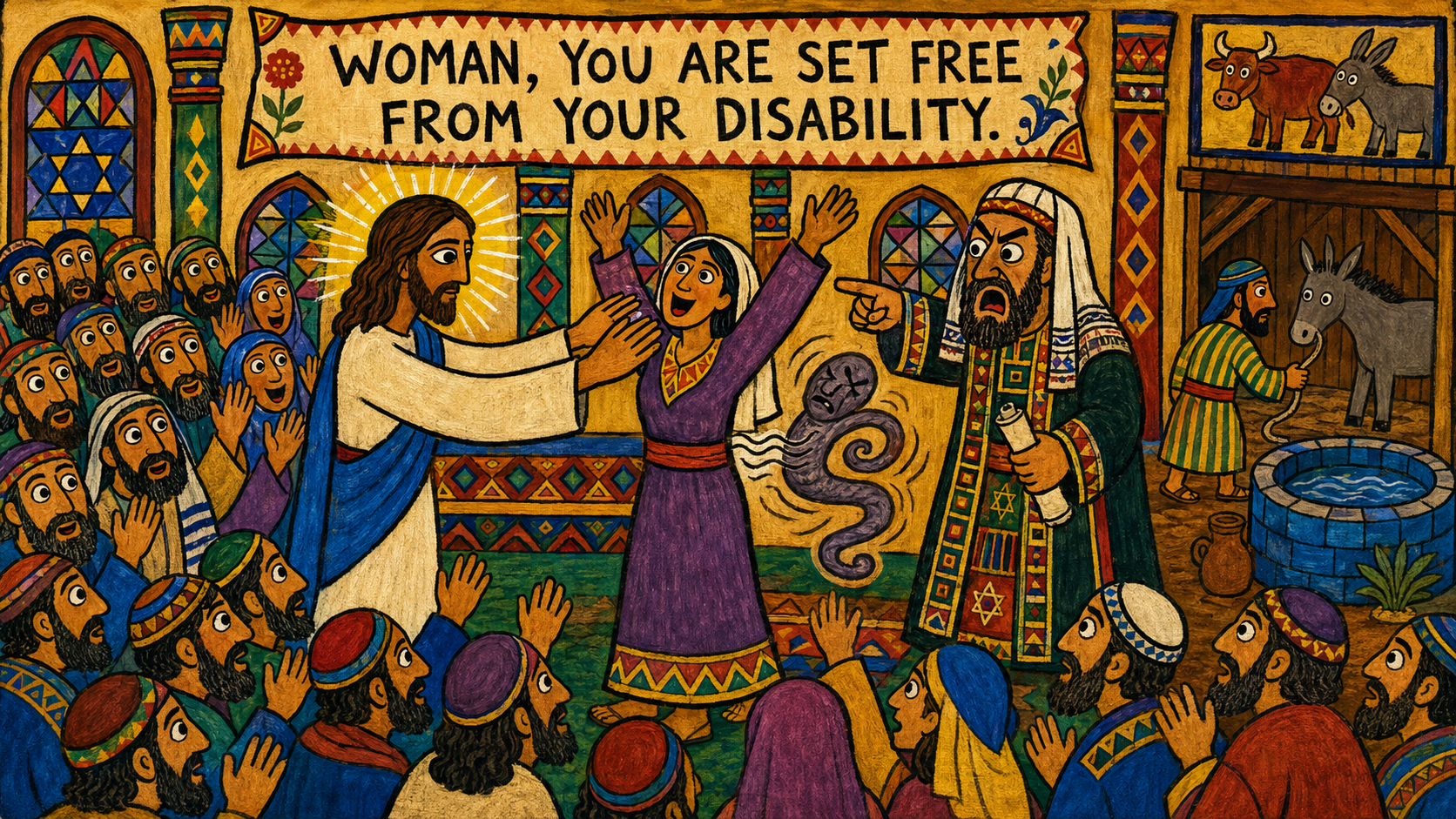
One Sabbath Jesus was teaching in one of the synagogues, and a woman there had been disabled by a spirit for eighteen years. She was hunched over and could not stand up straight. When Jesus saw her, He called her over and said, “Woman, you are set free from your disability.” Then He placed His hands on her, and immediately she straightened up and began to glorify God. But the synagogue leader was indignant that Jesus had healed on the Sabbath. “There are six days for work,” he told the crowd. “So come and be healed on those days and not on the Sabbath.” “You hypocrites!” the Lord replied. “Does not each of you on the Sabbath untie his ox or donkey from the stall and lead it to water? Then should not this daughter of Abraham, whom Satan has kept bound for eighteen long years, be released from her bondage on the Sabbath day?” When Jesus said this, all His adversaries were humiliated. And the whole crowd rejoiced at all the glorious things He was doing.
My Thoughts
There is so much freedom being handed out in this passage. First, the obvious physical healing: Jesus sets this woman free from a debilitating, eighteen-year bondage. But he doesn’t stop there. He names the spiritual reality, setting her free from the direct grip of Satan.
And then, look at how He handles the synagogue leader. In that moment, Jesus is setting the people there—and us today—free from the crushing bondage of legalism. He cuts right through the red tape of religious rules to get to the heart of God’s compassion.
This shouldn’t surprise us. It’s exactly what the Scriptures promised the Messiah would do. Isaiah 61:1 says:
“The Spirit of the Lord GOD is upon me, Because the LORD has anointed me To bring good news to the afflicted; He has sent me to bind up the brokenhearted, To proclaim liberty to captives And freedom to prisoners…”
Jesus is the Great Rescuer. But as incredible as physical healing is, His absolute greatest rescue mission was the one He accomplished on the cross: rescuing us from our sins. Remember the angel’s words in Matthew 1:21:
“She will bear a Son; and you shall call His name Jesus, for He will save His people from their sins.”
Here’s the takeaway for us today: As disciple-makers, we are called to join this rescue mission. We don’t do the saving—only Jesus saves people from their sins. But we get the incredible privilege of carrying the powerful message of the Gospel. We get a front-row seat to watch the captives be set free.
Who needs that message of freedom from you today?
My Story
Freedom is one of my highest values. I think I first recognized that in elementary school. I used to sit and watch the clock on the classroom wall, counting down the minutes until 3:00 p.m., when the bell would ring and we would be released from what felt like prison. That mindset continued through high school, although I often took matters into my own hands and simply stopped going to class.
Ironically, after dropping out, I joined the Army. Before long, I found myself anxiously waiting for basic training to end, then infantry training, and then one demanding school and assignment after another. I seemed trapped in an endless cycle of waiting for the next release. No matter where I was, I was always looking forward to being somewhere else.
At the same time, I recognized my bondage to sin. I knew I was heading in the wrong direction. When someone shared the Gospel with me, I didn’t try to justify myself or make excuses. I knew beyond a shadow of a doubt that I was a sinner. The problem was that I couldn’t clean myself up. I was chained to substance abuse, sexual immorality, and a host of other behaviors that I knew did not please God.
Then came the day when I finally surrendered. I did an about-face, stopped trying to fix myself, and received God’s gift of forgiveness through Christ Jesus. For the first time in my life, I was truly free. Many of the sins that had dominated my life simply vanished overnight. Don’t get me wrong—I still had plenty of areas where I needed to grow, and I still do. But the crushing weight of so many things that had burdened my soul was gone.
I was a new man, and I was free. I am so glad a Special Forces Sergeant had the guts to share the gospel with me.
Our Action Plan
Now it’s time for application. Here’s some ideas:
Think about the times in life you were “set free.” Thank God for those times!
Join God on His rescue mission and share the gospel regularly.
Reflect on our ultimate freedom in heaven, where we will be forever free from sin and death. Share your thoughts with a friend.
We have the incredible privilege of joining Jesus in the great rescue mission. Let’s get out and share the best news humanity has ever heard and truly let freedom ring!
Si los estás leyendo en español, envíame un correo electrónico y seguiré traduciéndolos.
We all want our lives to count for something that outlasts us. However, there is a distinct difference between leading a ministry that adds followers and leading a life that multiplies generations. The latter requires a shift in mindset—from performing a role to stewardship of a life.
What does it actually take to see spiritual generations emerge from your time on campus, in your workplace, or in your city? It requires a holistic approach that touches everything from your personal character to your exit strategy.
We have tried to identify the key ingredients that bridge the gap between good intentions and generational impact. Whether it is the “Authoritative Vision Casting” required to inspire action, or the “Time With” necessary to build trust, these are the elements that define a ministry of spiritual reproduction.
A quick note before we begin: This list is not exhaustive or a silver bullet. The Kingdom of God is vast, and there are certainly more than twelve components to a thriving ministry. However, these are the top ingredients that have risen to the surface in our own journey. They are the non-negotiables that we want to pass on from our experience—the ones we have seen consistently produce fruit over decades of ministry.
To fully grasp this “WIGTake”—What It’s Gonna Take—we cannot rely on theory alone. We will explore these essential ingredients through four distinct lenses, a framework we call JSSS:
Jesus: We begin with the ultimate model. We will examine how Jesus Himself embodied these ingredients.
Scripture: We broaden our scope to the rest of the Bible to see how the early church and others applied these principles.
Stories: We will share personal stories to illustrate what these ingredients look like in real life.
Suggestions: We will offer practical advice for cultivating these ingredients.
So next week we’ll get started in earnest by looking at what kind of person it’s gonna take to see generations of disciples.
A note on this series: Chuck and Deb did the bulk of the writing work, and when you read ‘we’ you should think of them. Peter “Pheaney” Lindell added some stories, editing, and streamlining.
Some of the most important people in Scripture are not kings, prophets, or warriors. They are craftsmen.
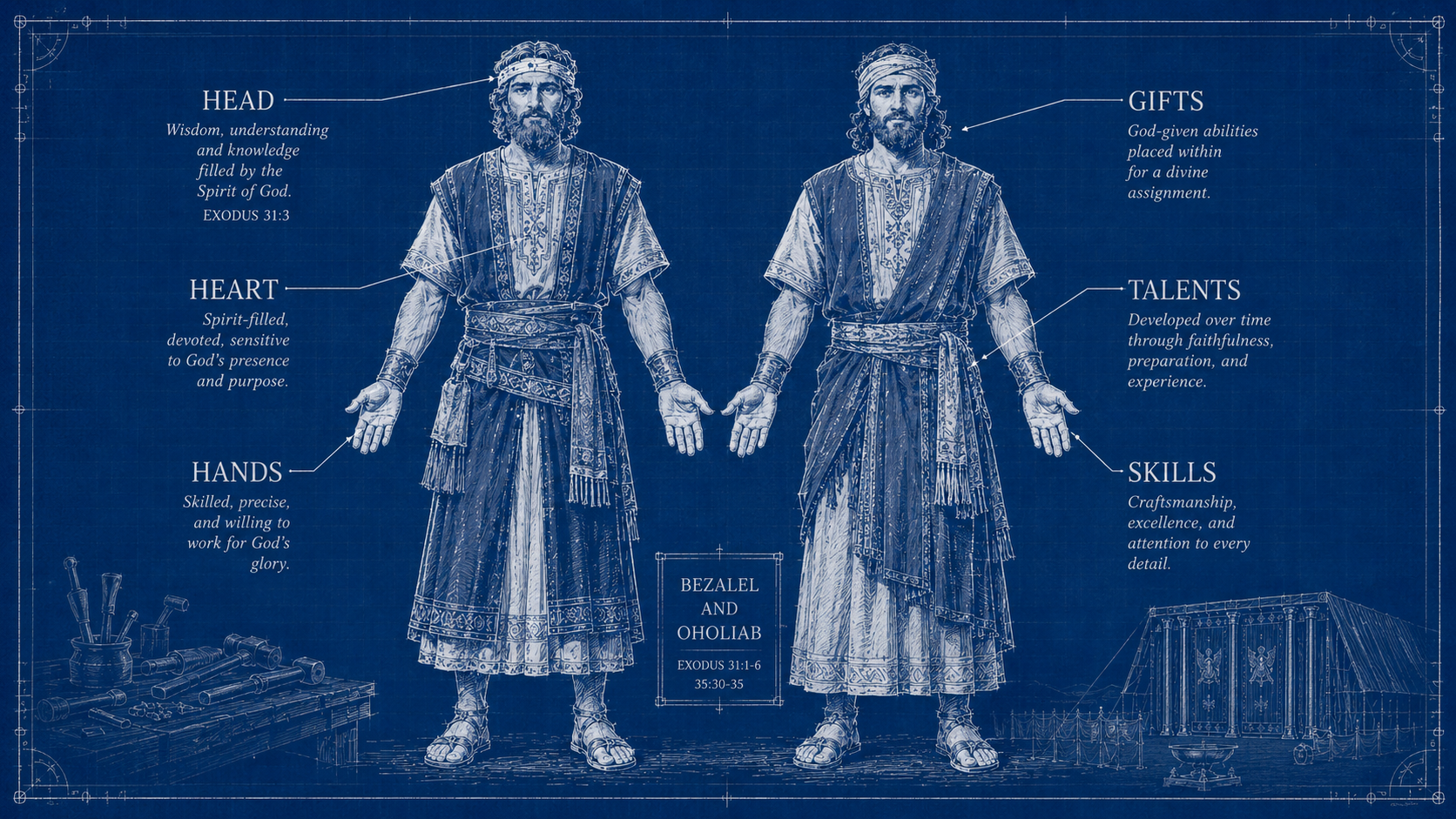
In Exodus 31, God names Bezalel and Oholiab and entrusts them with one of the most sacred assignments in Israel’s history: building the tabernacle, the dwelling place of God among His people. This was not a random appointment. The Lord said, “I have chosen Bezalel… and I have filled him with the Spirit of God, with wisdom, with understanding, with knowledge and with all kinds of skills” (Exodus 31:2–3).
That statement reveals something profound about the way God works through people. He does not merely recognize natural ability. He fills, directs, and empowers it.
Chosen and Filled
Bezalel and Oholiab were not just gifted men. They were Spirit-filled men. Their craftsmanship was not merely technical — it was spiritual. Their work was an act of worship.
This gives us a helpful framework: head, heart, and hands. They had wisdom and knowledge in the mind. They had spiritual sensitivity in the heart. They had skill and precision in the hands. Their calling was narrow in one sense — craftsmanship — but staggering in its reach. Through their work, the entire nation of Israel would encounter the presence of God.
And neither man worked alone. Moses did not do the building himself. God chose men to help him. Bezalel did not carry the assignment by himself — Oholiab was appointed alongside him. And their work was never meant to stop with just the two of them. God also gave them the ability to teach others, so that the work could multiply beyond what any one person could accomplish.
God’s work is never designed to be a solo venture.
Prepared Over Time
It is unlikely these men received all their skill in a single moment. God could have granted instant ability if He wished — but Scripture shows another pattern: preparation before presentation, development before distinction, training before the crowning contribution.
Moses was shaped over forty years in the wilderness. Joseph was formed through suffering and long delays before his defining moment. The patriarchs endured seasons of obscurity before their purposes became clear. In the same way, Bezalel and Oholiab were almost certainly being prepared long before Exodus 31 for the moment when their gifts would be needed most. What looked like ordinary work in the early years was God’s quiet preparation for an extraordinary assignment.
Jesus Himself models this perfectly. He grew in wisdom and stature. He lived as a carpenter. He spent years at a workbench before His public ministry began — and every hour of that hidden life prepared Him for His ultimate work on the cross. If the Son of God walked the path of quiet development and faithful obscurity, we should not despise the seasons in which God is shaping us. Faithfulness in the hidden years is never wasted.
Publicly Commissioned
In Exodus 35:30–35, Moses publicly announces their calling before the whole congregation. This was not a private arrangement between God and two craftsmen. It was an open commissioning before the entire community — because the work they were doing mattered to the whole nation.
They were building the place where God would dwell among His covenant people. This was not merely creative labor. It was sacred work.
Verse 34 becomes especially significant: God gave them the ability to teach others. That is the multiplication principle at work. They were not only to build — they were to train. Not only to work — but to reproduce their skill in others, ensuring the work could outlast any single season of effort.
The Work Begins
Exodus 36:1–2 marks the turn from calling to action. Moses summons Bezalel, Oholiab, and every skilled person whose heart had been stirred and whose ability had been given by God. The work begins.
Now the weight of the assignment becomes real. They were constructing the meeting place between a holy God and His people. That required exactness, reverence, and obedience. Every curtain, every piece of furniture, every detail had to be made according to God’s command.
The hardest part of a crowning contribution is often simply starting. Fear can freeze us. Doubt can delay us. We may think the assignment is too large — or we may dismiss it as too small. But Ephesians 2:10 makes this clear: “For we are His workmanship, created in Christ Jesus for good works, which God prepared beforehand so that we would walk in them.” Every assignment is intentional. Every calling matters. We cannot afford to hesitate.
Contribution, Not Achievement
This is where we have to make a distinction that cuts close.
Achievement is measured by applause, visibility, and personal success. It asks, What did I accomplish? Contribution is measured by faithfulness, service, and lasting impact. It asks, What did I give? Who did I build up? What did I help others become?
Bezalel and Oholiab were not chasing achievement. They were making a contribution to the worship life of Israel — one that would shape the spiritual formation of an entire nation.
This is exactly why Matthew 28:18–20 and 2 Timothy 2:2 fit so naturally into their story. In the Great Commission, the risen Christ does not merely call people to admire Him — He sends His disciples to make disciples of all nations, to baptize and teach and reproduce His followers across generations. In 2 Timothy, Paul gives Timothy the same pattern in compact form: what you have received, entrust to faithful people who will be able to teach others also. That is a four-generation chain of ministry. Discipleship is meant to be passed on, not held.
Bezalel and Oholiab lived that principle centuries before it was written down. Multiplication is not a modern strategy. It is a biblical standard.
Finishing Well
It is one thing to cast a grand vision, but it is another entirely to drive the final nail. The gap between starting a project and completing it is where most of us give up, yet Scripture captures Bezalel’s follow-through with striking simplicity: “Now Bezalel the son of Uri, the son of Hur, of the tribe of Judah, made all that the LORD had commanded Moses. With him was Oholiab the son of Ahisamach, of the tribe of Dan…” (Exodus 38:22-23).
They finished.
That is no small thing. Many start well and do not finish well. Many receive a calling but never see it through. Passion fades. Endurance gives out. The assignment gets set aside. Bezalel and Oholiab stand out precisely because they carried their work all the way to completion. They did not stop when the work was mostly done. They did not settle for close enough. They finished — faithfully, obediently, thoroughly.
Their legacy is not the tabernacle itself, which no longer stands. Their legacy is the example they leave: that faithfulness, precision, perseverance, and obedience are not minor virtues. They are the marks of a life well spent.
A Final Challenge
Every believer should sit with some honest questions.
What has God been preparing you for — even since childhood? What gifts, talents, and skills has He placed in your hands? Do you know the difference between doing something in your own strength and doing it empowered by the Holy Spirit? Is any assignment from God too great for you — or have you been dismissing something as too small?
Who are you meant to train, strengthen, or build up so that the work continues beyond you? Are you chasing achievement, or are you pursuing contribution?
And here is perhaps the hardest question of all: What if your crowning contribution is still ahead of you — and you have been waiting instead of working?
Not every calling will be public. Not every assignment will be dramatic or celebrated. But every assignment given by God is holy.
Bezalel and Oholiab were hidden heroes. Their names appear in a handful of chapters, in a book most people skim. But they built the place where heaven met earth, trained those who came after them, and finished everything God asked of them.
The question is not whether your life will impress the world. The question is whether you will step into the work God prepared for you, develop what He has placed in your hands, multiply it in others — and finish well.
Then Jesus told this parable: “A man had a fig tree that was planted in his vineyard. He went to look for fruit on it, but did not find any. So he said to the keeper of the vineyard, ‘Look, for the past three years I have come to search for fruit on this fig tree and haven’t found any. Therefore cut it down! Why should it use up the soil?’ ‘Sir,’ the man replied, ‘leave it alone again this year, until I dig around it and fertilize it. If it bears fruit next year, fine. But if not, you can cut it down.’”
My Thoughts
This is one of those quotes from Jesus that doesn’t preach well to a congregation that only wants a loving Savior and not a Lord with expectations. Jesus is clearly expressing in story form what He not only desires of every follower but demands. Jesus talks about fruit (or fruitlessness) a lot. He says that we know a tree by its fruit (Matthew 7:16-20), that we can’t bear fruit without Him (John 15:5), bearing much fruit glorifies the Father (John 15:8), and He sent us to bear fruit (John 15:16). And I think He even gives us an object lesson before His entry into Jerusalem when He curses the fig tree (Matthew 21:18–22). The writers of the rest of the New Testament have some things to say about bearing fruit as well. Paul talks about the fruit of the Spirit (Galatians 5:22-23). The writer of Hebrews describes praise and worship as “the fruit of lips that confess His name” (Hebrews 13:15). James says righteousness is “sown in peace by those who make peace.” Peace-making produces righteous fruit (James 3:17-18). And Peter teaches that growing in Christian virtues keeps believers from being “unfruitful” in the knowledge of Christ (2 Peter 1:5-8). Just to name a few.
So what is the fruit Jesus and His Apostles are talking about? It can be several things:
Repentance
Christlike character
Obedience
Holiness
Good works
Perseverance
Worship and praise
Generosity
Disciple-making
Kingdom impact
Righteous living
Spiritual maturity
But if we spend all our time just defining what spiritual fruit looks like without actually bearing it, we miss the heart of Jesus’ parable. The Master expects a harvest. He is incredibly patient with us, graciously supplying the soil, the water, fertilizer, and the time we need to grow. But as we see in Luke 13:6-9, that patience isn’t a pass for endless stagnation. A tree that continually refuses to yield fruit is eventually “cut down.”
When it comes to discipleship, our responsibility doesn’t stop at our own personal growth. We are called to instruct, encourage, and boldly exhort those we are discipling to step into that same fruitful reality. We have to be willing to pass on both the gracious, high expectations of the Master, as well as His sobering warnings.
My Story
For a few years, Deb and I spent our summers in New York. We rented a small one-bedroom apartment with a beautiful private entryway — stone walls on either side, and neglected garden plots lining the walkway. You could tell someone had tended them once, but the beds had long since been overtaken by weeds. The one conspicuous exception was a single type of flower — Impatiens — a single color, scattered sporadically throughout the overgrowth, quietly thriving despite being nearly hidden from view.
I’m no green thumb — quite the opposite, really — but we decided to clean the beds up and plant more of what was already doing well. Impatiens it was.
We headed to the local Home Depot and bought three dozen little planters. It wouldn’t come close to filling all the space we’d cleared, but it was a start — more of an experiment than anything else. We got them in the ground, added a little fertilizer, and kept them watered. If you know anything about Impatiens, you know they have little seedling pods that pop when you touch them. They literally explode with seeds and can cover a pretty good area in no time. By the end of that summer both sides of the walkway were filled with color. The neighbors even started commenting on our horticultural expertise. Ha!
We were so pleased with those little flowers that we’d sit out on the stoop just to admire them. There was something wonderful about watching something so simple become something so beautiful — the seedlings dropping and spreading until the whole walkway was covered in blooms.
I’m sure God feels the same way about our fruitfulness.
Our Action Plan
Now it’s time for application. Here’s some ideas:
Conduct a focused Bible study specifically on “fruit.”
Discuss with those you are discipling what it truly means to bear fruit in their lives.
Identify the categories of spiritual fruit present in your life and pinpoint areas for improvement.
The Master’s expectation is clear: our lives must produce fruit. The challenge lies in identifying what that Biblical fruit is, and actively producing it. Let’s commit to being fruitful disciples of Jesus and help those we disciple do the same, moving beyond definition to demonstration.
Esta es una de esas citas de Jesús que no resulta fácil de predicar ante una congregación que solo desea un Salvador amoroso, y no un Señor con expectativas. Jesús expresa claramente, a través de una historia, aquello que no solo desea de cada seguidor, sino que también exige. Jesús habla mucho acerca del fruto (o de la falta de fruto). Él dice que conocemos al árbol por sus frutos (Mateo 7:16-20), que no podemos dar fruto sin Él (Juan 15:5), que dar mucho fruto glorifica al Padre (Juan 15:8), y que Él nos envió para dar fruto (Juan 15:16). Y creo que incluso nos ofrece una lección práctica, justo antes de su entrada en Jerusalén, cuando maldice la higuera (Mateo 21:18–22). Los autores del resto del Nuevo Testamento también tienen algo que decir sobre el dar fruto. Pablo habla del fruto del Espíritu (Gálatas 5:22-23). El autor de Hebreos describe la alabanza y la adoración como «el fruto de labios que confiesan su nombre» (Hebreos 13:15). Santiago afirma que la justicia es «sembrada en paz por aquellos que hacen la paz». El hacer la paz produce un fruto de justicia (Santiago 3:17-18). Y Pedro enseña que crecer en las virtudes cristianas evita que los creyentes sean «infructuosos» en el conocimiento de Cristo (2 Pedro 1:5-8). Por nombrar solo algunos ejemplos.
Entonces, ¿a qué fruto se refieren Jesús y sus apóstoles? Puede tratarse de varias cosas:
Arrepentimiento
Carácter semejante al de Cristo
Obediencia
Santidad
Buenas obras
Perseverancia
Adoración y alabanza
Generosidad
Hacer discípulos
Impacto en el Reino
Vida justa
Madurez espiritual
Pero si pasamos todo nuestro tiempo simplemente definiendo cómo es el fruto espiritual sin llegar a producirlo realmente, nos perdemos el corazón de la parábola de Jesús. El Maestro espera una cosecha. Él es increíblemente paciente con nosotros, proveyendo con gracia la tierra, el agua, el abono y el tiempo que necesitamos para crecer. Pero, como vemos en Lucas 13:6-9, esa paciencia no constituye un permiso para una inactividad perpetua. Un árbol que se niega continuamente a dar fruto termina siendo «cortado». En lo que respecta al discipulado, nuestra responsabilidad no se limita a nuestro propio crecimiento personal. Estamos llamados a instruir, alentar y exhortar con valentía a aquellos a quienes discipulamos, para que entren en esa misma realidad fructífera. Debemos estar dispuestos a transmitir tanto las benévolas y elevadas expectativas del Maestro, como sus serias advertencias.
Mi Historia
Durante unos años, Deb y yo pasamos nuestros veranos en Nueva York. Alquilamos un pequeño apartamento de un dormitorio con una hermosa entrada privada: muros de piedra a ambos lados y unos parterres descuidados que bordeaban el sendero. Se notaba que alguien los había cuidado en el pasado, pero hacía mucho tiempo que la maleza se había apoderado de ellos. La única excepción notable eran los pensamientos: de un solo color, dispersos esporádicamente entre la vegetación silvestre, prosperando silenciosamente a pesar de estar casi ocultos a la vista.
No tengo mano para la jardinería —más bien todo lo contrario, a decir verdad—, pero decidimos limpiar los parterres y plantar más de aquello que ya estaba prosperando. Y así, nos decidimos por los pensamientos.
Fuimos al Home Depot local y compramos tres docenas de pequeñas macetas. Aquello no bastaría ni de lejos para llenar todo el espacio que habíamos despejado, pero era un comienzo; más que nada, un experimento. Los plantamos en la tierra, añadimos un poco de fertilizante, los regamos con regularidad y, para el final de aquel verano, ambos lados del sendero estaban rebosantes de color. Los vecinos incluso empezaron a comentar nuestra pericia en la jardinería.
Quedamos tan complacidos con aquellas florecillas que solíamos sentarnos en el porche solo para admirarlas. Había algo maravilloso en ver cómo algo tan sencillo se transformaba en algo tan hermoso: las plantitas echando raíces y extendiéndose hasta que todo el sendero quedaba cubierto de flores.
Estoy seguro de que Dios siente lo mismo respecto a nuestra propia fecundidad.
Nuestro Plan de Acción
Ahora es el momento de la aplicación. Aquí tienes algunas ideas:
Realiza un estudio bíblico enfocado específicamente en el «fruto».
Conversa con aquellos a quienes estás discipulando sobre lo que significa verdaderamente dar fruto en sus vidas.
Identifica las categorías de fruto espiritual presentes en tu propia vida y señala las áreas que requieren mejora.
La expectativa del Maestro es clara: nuestras vidas deben producir fruto. El desafío radica en identificar cuál es ese fruto bíblico y producirlo activamente. Comprometámonos a ser discípulos fructíferos de Jesús y ayudemos a quienes discipulamos a hacer lo mismo, pasando de la definición a la demostración.
Si ve un problema importante en la traducción, envíeme una corrección por correo electrónico a charleswood1@gmail.com
At that time some of those present told Jesus about the Galileans whose blood Pilate had mixed with their sacrifices. To this He replied, “Do you think that these Galileans were worse sinners than all the other Galileans, because they suffered this fate? No, I tell you. But unless you repent, you too will all perish. Or those eighteen who were killed when the tower of Siloam collapsed on them: Do you think that they were more sinful than all the others living in Jerusalem? No, I tell you. But unless you repent, you too will all perish.”
My Thoughts
When we hear about horrific tragedies like those described in this passage, we often jump to the conclusion that the victims did something to deserve it. This is exactly the assumption the people were bringing to Jesus.
Was Jesus confirming their suspicions, saying, “They deserved it!” or was He saying, “They didn’t”? I don’t believe He was trying to distinguish between justice and fate. Instead, He was leveling the playing field, addressing the universal reality of sin. In essence, He was making the same point Paul would later articulate in Romans:
“For all have sinned and fall short of the glory of God.” (Romans 3:23)
In truth, we all probably deserve far worse fates. Jesus is addressing a deeper issue here, drawing a sharp line between real spiritual consequences and mere superstition.
Mixing superstition with truth is dangerous. It distorts our understanding of God’s true character and blurs our own identities. Jesus wanted His listeners to grapple with the truth that we are all sinners—and ultimately, to understand the nature of God’s grace and justice.
As disciple-makers, we will inevitably face this same challenge. People come to us with a “theological cocktail”—a blend of world religions, cultural myths, and self-manufactured ideas about God. It is our task to dive into the Word of God to separate truth from fiction, reality from myth. We have to help them cut away the baggage of superstition.
My Story
I was recently explaining a friend’s medical condition to my respiratory therapist. As I was describing the dire details, he kept knocking on the wooden chair beside him. He was “knocking on wood,” practicing a superstitious act to prevent jinxing himself. I couldn’t tell if he was just playing around or genuinely trying to ward off bad luck, but I wanted him to know that I wouldn’t trust my friend’s fate to the “god of luck” or any other substitute for the One True God. I told him that I believe in the Great Physician, and I choose to place my friend’s future in His capable and trustworthy hands. Let’s draw a clear line of distinction between superstition and the One who is the Truth.
Our Action Plan
Now it’s time for application. Here’s some questions and ideas:
What superstitious practices have we borrowed from the world and need to jettison?
Listen carefully to those you are discipling. What superstitions do you need to address?
Do a Bible study on what God thinks about superstitions.
We are all swimming in a world of half truths and flat out lies from the enemy. Our culture will explain circumstance, good and bad, through alternatives to anything but the truth. Let’s be careful to make a clear distinction between Biblical truth and worldly superstition.
Cuando oímos hablar de tragedias horribles, como las descritas en este pasaje, a menudo nos apresuramos a concluir que las víctimas hicieron algo para merecerlas. Esta es exactamente la suposición que la gente planteaba ante Jesús.
¿Estaba Jesús confirmando sus sospechas al decir: «¡Se lo merecían!»?, ¿o estaba diciendo: «No se lo merecían»? No creo que Él estuviera intentando distinguir entre la justicia y el destino. Más bien, estaba nivelando el terreno de juego, abordando la realidad universal del pecado. En esencia, estaba planteando el mismo argumento que Pablo articularía más tarde en Romanos:
«Por cuanto todos pecaron y están destituidos de la gloria de Dios». (Romanos 3:23)
En verdad, es probable que todos nosotros merezcamos destinos mucho peores. Aquí, Jesús aborda una cuestión más profunda, trazando una línea clara entre las verdaderas consecuencias espirituales y la mera superstición.
Mezclar la superstición con la verdad es peligroso. Distorsiona nuestra comprensión del verdadero carácter de Dios y desdibuja nuestras propias identidades. Jesús quería que sus oyentes se confrontaran con la verdad de que todos somos pecadores y, en última instancia, que comprendieran la naturaleza de la gracia y la justicia de Dios.
Como formadores de discípulos, inevitablemente nos enfrentaremos a este mismo desafío. La gente acude a nosotros con un «cóctel teológico»: una mezcla de religiones mundiales, mitos culturales e ideas sobre Dios fabricadas por ellos mismos. Nuestra tarea consiste en sumergirnos en la Palabra de Dios para separar la verdad de la ficción, la realidad del mito. Debemos ayudarles a desprenderse de la carga de la superstición.
Mi Historia
Recientemente le estaba explicando la condición médica de un amigo a mi terapeuta respiratorio. Mientras describía los sombríos detalles, él no dejaba de golpear la silla de madera que tenía a su lado. Estaba «tocando madera», realizando un acto supersticioso para evitar echarse la mala suerte encima. No lograba discernir si simplemente estaba bromeando o si realmente intentaba ahuyentar la mala fortuna; sin embargo, quería que supiera que yo no confiaría el destino de mi amigo al «dios de la suerte» ni a ningún otro sustituto del Único Dios Verdadero. Le dije que creo en el Gran Médico y que elijo depositar el futuro de mi amigo en Sus manos capaces y dignas de confianza. Tracemos una clara línea divisoria entre la superstición y Aquel que es la Verdad.
Nuestro Plan de Acción
Ahora es el momento de la aplicación práctica. Aquí tienen algunas preguntas e ideas:
¿Qué prácticas supersticiosas hemos adoptado del mundo y necesitamos desechar?
Escuchen atentamente a aquellos a quienes están discipulando. ¿Qué supersticiones necesitan abordar?
Realicen un estudio bíblico sobre lo que Dios piensa acerca de las supersticiones.
Todos navegamos en un mundo repleto de verdades a medias y mentiras descaradas provenientes del enemigo. Nuestra cultura tiende a explicar las circunstancias —tanto las buenas como las malas— recurriendo a cualquier alternativa, salvo a la verdad misma. Tengamos el cuidado de establecer una clara distinción entre la verdad bíblica y la superstición mundana.
Si ve un problema importante en la traducción, envíeme una corrección por correo electrónico a charleswood1@gmail.com
I have come to ignite a fire on the earth, and how I wish it were already kindled! But I have a baptism to undergo, and how distressed I am until it is accomplished! Do you think that I have come to bring peace to the earth? No, I tell you, but division. From now on, five in one household will be divided, three against two and two against three. They will be divided, father against son and son against father, mother against daughter and daughter against mother, mother-in-law against daughter-in-law and daughter-in-law against mother-in-law.”
My Thoughts
Make no mistake about it, Jesus is divisive. He is the most polarizing figure in all of history. You are either with Him or against Him. Oh, there are those who try to find the middle and call Him a good man, one with a great moral compass, a kind figure in the annals of the past, but certainly not someone to be exclusively worshiped as the One and only true God. Those trying to stand on the “middle ground” are in just as much danger as the outright rebellious. There is no middle ground with Jesus. Jesus said, ‘I know your deeds, that you are neither cold nor hot; I wish that you were cold or hot. So because you are lukewarm, and neither hot nor cold, I will spit you out of My mouth. (Revelation 3:15-16).
But you may say, “Chuck, what does this have to do with us? We are disciple makers. We are all in. How does this apply to us?” I’m glad you asked. 🙂 Have you noticed where most of our culture stands, especially here in the West? No one wants to be exclusive or appear divisive. Everyone wants to take the middle ground on religion. And as you are sharing the gospel you’ve heard it a million times, “I believe in Jesus.” But when you press in a little deeper, universalism is the flavor of the day.
Part of our task as disciple makers is to “fill in the gaps.” I was recently studying Acts 18. The Apostle Paul finds twelve disciples of John the Baptist. They don’t know about Jesus so Paul fills in the gaps and they are baptized and receive the Holy Spirit. Then Paul enters the synagogue and tries to “fill in some gaps” and gets the boot. So what’s the difference between the two groups of people? Receptivity. The twelve received the truth and responded in obedience to the gospel and the folks in the synagogue rejected the message, the messenger, and the Master.
Notice Paul didn’t try to soften the blow or candy coat the truth of the gospel in either case. And that is the key lesson for us as disciple makers. Some have unwittingly changed the gospel to make it more palatable to be “Seeker Friendly.” Some are preaching discipleship with no cost. Some are minimizing obedience for the sake of corrupted grace. Jesus (nor Paul) didn’t do that. They told it like it is. Now this doesn’t give us license to be a jerk but we dare not water down the truth either.
My Story
Lately, we’ve been trying a new approach to sharing the gospel. It focuses on four simple questions about the kingdom of God, stepping away from older illustrations and starting right where Jesus began His ministry.
We usually open by reading Mark 1:15 together: “The time is fulfilled, and the kingdom of God is at hand; repent and believe in the gospel.”
Then, we ask the first question: “What does it mean that the kingdom of God is at hand?”
It sometimes takes a little friendly prompting, but people almost always land on the core truth: Jesus the King has arrived as the ruler of His kingdom.
From there, we move to question two: “What are the three components of a kingdom?”
Most of the time, folks don’t need much help with this one. They quickly piece together the trio: a King, His domain, and His people.
Question three is where the gears really start turning: “What are the three ways people can respond to a King?”
The first two usually come out immediately: allegiance or rebellion. The third option can be a bit of a head-scratcher. But when we ask, “What sits right in the middle of allegiance and rebellion?” the lightbulb goes on. “Indifference!” Exactly.
This sets up the fourth and final question: “Of those three responses to King Jesus, which one describes you?”
It is eye-opening how many people—probably 95% of those we talk to—honestly identify as indifferent. That vulnerability opens the door perfectly.
From there, we’ll often share Revelation 3:15-16—the passage about being lukewarm—and let that lead us right into a genuine conversation about what real, active faith actually looks like.
We are trying to get closer to “filling in the gaps” like Jesus and Paul.
Our Action Plan
Now it’s time for application. Here’s some questions and ideas.
Are you trying to “soften the blow of the truth” in any way?
Do a study on how Jesus shared the truth in love.
Do an assessment on the way you share the gospel compared to Jesus or the Apostles.
As disciple makers we are filling in the gaps for people. In order for us to do this in an effective way we are going to have to go places that may make us and those we are talking to feel uncomfortable. But this truth telling is the most loving thing we can do for those who are in jeopardy of losing their souls.
Que no quepa duda alguna: Jesús es una figura divisiva. Es la figura más polarizante de toda la historia. O estás con Él o estás contra Él. Oh, ciertamente hay quienes intentan buscar un punto medio y lo califican como un buen hombre, alguien con una gran brújula moral, una figura bondadosa en los anales del pasado, pero, sin duda alguna, no alguien a quien se deba adorar exclusivamente como el Único y verdadero Dios. Aquellos que intentan mantenerse en el «punto medio» corren tanto peligro como los que son abiertamente rebeldes. Con Jesús no existe el punto medio. Jesús dijo: «Conozco tus obras: que ni eres frío ni caliente. ¡Ojalá fueras frío o caliente! Así que, por cuanto eres tibio, y no frío ni caliente, te vomitaré de mi boca» (Apocalipsis 3:15-16).
Pero tal vez te preguntes: «Chuck, ¿qué tiene que ver esto con nosotros? Nosotros somos hacedores de discípulos. Estamos comprometidos al cien por cien. ¿Cómo se aplica esto a nuestra labor?». Me alegra que lo preguntes. 🙂 ¿Te has percatado de cuál es la postura de la mayor parte de nuestra cultura, especialmente aquí en Occidente? Nadie quiere ser excluyente ni parecer divisivo. Todo el mundo prefiere adoptar una postura intermedia en lo que respecta a la religión. Y, a medida que compartes el evangelio, habrás escuchado esa frase un millón de veces: «Yo creo en Jesús». Pero cuando indagas un poco más a fondo, te das cuenta de que el universalismo es la tendencia del momento.
Parte de nuestra tarea como hacedores de discípulos consiste en «llenar los vacíos». Recientemente estuve estudiando el capítulo 18 del libro de los Hechos. El apóstol Pablo se encuentra con doce discípulos de Juan el Bautista. Ellos no tienen conocimiento acerca de Jesús, así que Pablo «llena esos vacíos»; como resultado, ellos son bautizados y reciben el Espíritu Santo. Luego, Pablo entra en la sinagoga e intenta «llenar algunos vacíos» allí también, pero termina siendo expulsado. Entonces, ¿cuál es la diferencia entre estos dos grupos de personas? La receptividad. Los doce recibieron la verdad y respondieron con obediencia al evangelio; en cambio, la gente de la sinagoga rechazó el mensaje, al mensajero y al Maestro.
Observa que Pablo no intentó suavizar el golpe ni «edulcorar» la verdad del evangelio en ninguno de los dos casos. Y esa es la lección clave para nosotros como hacedores de discípulos. Algunos han modificado el evangelio —quizás sin darse cuenta— para hacerlo más «digerible» y así lograr que resulte más «amigable para los buscadores». Algunos predican un discipulado sin costo alguno. Otros minimizan la obediencia en aras de una gracia adulterada. Jesús (ni tampoco Pablo) actuaron así; ellos decían las cosas tal como son. Ahora bien, esto no nos da licencia para comportarnos como patanes, pero tampoco debemos atrevernos a diluir la verdad.
Mi Historia
Últimamente, hemos estado probando un nuevo enfoque para compartir el evangelio. Se centra en cuatro preguntas sencillas sobre el reino de Dios, dejando de lado las ilustraciones más antiguas y comenzando justo donde Jesús inició su ministerio.
Por lo general, comenzamos leyendo juntos Marcos 1:15: «El tiempo se ha cumplido y el reino de Dios se ha acercado; arrepiéntanse y crean en el evangelio».
Luego, planteamos la primera pregunta: «¿Qué significa que el reino de Dios se ha acercado?».
A veces hace falta un pequeño estímulo amistoso, pero casi siempre la gente llega a la verdad fundamental: Jesús, el Rey, ha llegado como el gobernante de su reino.
A partir de ahí, pasamos a la segunda pregunta: «¿Cuáles son los tres componentes de un reino?».
La mayoría de las veces, la gente no necesita mucha ayuda con esta. Rápidamente identifican el trío: un Rey, su dominio y su pueblo.
La tercera pregunta es donde realmente empiezan a funcionar los engranajes: «¿Cuáles son las tres formas en que las personas pueden responder a un Rey?».
Las dos primeras suelen surgir de inmediato: lealtad o rebelión. La tercera opción puede resultar un tanto desconcertante. Pero cuando preguntamos: «¿Qué se sitúa justo entre la lealtad y la rebelión?», se les enciende la bombilla. «¡Indiferencia!». Exacto.
Esto da pie a la cuarta y última pregunta: «De esas tres respuestas ante el Rey Jesús, ¿cuál te describe a ti?».
Resulta revelador ver cuántas personas —probablemente el 95 % de aquellas con las que hablamos— se identifican honestamente como indiferentes. Esa vulnerabilidad abre la puerta de manera perfecta.
A partir de ahí, a menudo compartimos Apocalipsis 3:15-16 —el pasaje sobre ser tibios— y dejamos que eso nos conduzca directamente a una conversación genuina sobre cómo es realmente una fe auténtica y activa.
Estamos intentando acercarnos más a «llenar los vacíos», tal como lo hacían Jesús y Pablo.
Nuestro Plan de Acción
Ahora es el momento de la aplicación práctica. Aquí tienes algunas preguntas e ideas:
¿Estás intentando, de alguna manera, «suavizar el golpe de la verdad»?
Realiza un estudio sobre cómo Jesús comunicaba la verdad con amor.
Haz una evaluación de la forma en que compartes el evangelio, comparándola con la manera en que lo hacían Jesús o los apóstoles.
Como formadores de discípulos, estamos supliendo las carencias de las personas. Para poder hacerlo de manera eficaz, tendremos que adentrarnos en terrenos que tal vez nos hagan sentir incómodos —tanto a nosotros como a aquellos con quienes hablamos—. Sin embargo, decir la verdad de este modo es el acto de amor más grande que podemos realizar por aquellos que corren el riesgo de perder sus almas.
Si ve un problema importante en la traducción, envíeme una corrección por correo electrónico a charleswood1@gmail.com